World

IAEA chief praises progress on Fukushima decommissioning

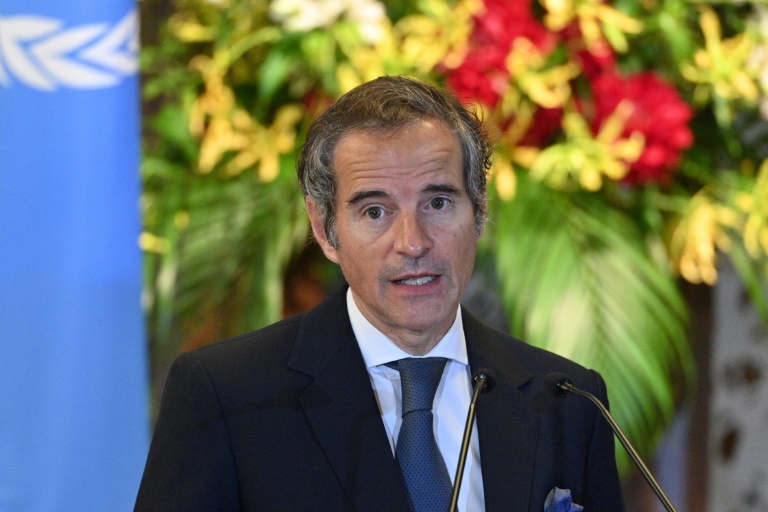
Work on the decommissioning of the stricken Fukushima nuclear plant has made “remarkable progress”, the UN’s nuclear watchdog chief said Thursday after a site visit, pledging to continue monitoring the process.

International Atomic Energy Agency (IAEA) head Rafael Mariano Grossi is in Japan on a two-day trip to assess efforts to dismantle the Fukushima Daiichi plant after the 2011 disaster caused by a devastating tsunami.

The process is expected to last decades and has encountered various difficulties including the build-up of contaminated water.

But Grossi said he was “really impressed by the remarkable progress that, in spite of the pandemic, has been done over the past two years.”

“We are going to be here before, during and after the (decommissioning) process,” he added.

“We are in the before, and it’s going well.”

A March 11, 2011, undersea earthquake off Japan’s east coast triggered a massive tsunami that overwhelmed cooling systems at several of the Fukushima Daiichi plant’s reactors and caused the worst nuclear accident since Chernobyl.

Decommissioning is expected to take around four decades, with painstaking work to remove molten fuel from damaged reactors among the tasks ahead.

A more immediate challenge involves disposing of more than a million tonnes of treated water from the site that is currently stored in massive tanks.

Japan’s government has endorsed a plan to release the water into the ocean after treating it to remove almost all radionuclides and diluting it.

The process will take place over many years, and has been backed by the IAEA and, this week, Japan’s Nuclear Regulation Authority.

In a video message tweeted by Grossi from Fukushima, he insisted the release would “be done in full conformity with the international standards and therefore it will not cause any harm to the environment.”

But the plan has worried local fishing communities concerned about the reputation of their catch and prompted criticism from China and South Korea.

The disaster in northeast Japan left around 18,500 people dead or missing, with most killed by the tsunami.

Tens of thousands of residents around the Fukushima plant were ordered to evacuate their homes, or chose to do so.

Around 12 percent of Fukushima was once declared unsafe but no-go zones now cover just 2.4 percent of the prefecture, although populations in many towns remain far lower than before.

Indonesia to lift ban on palm oil exports from Monday

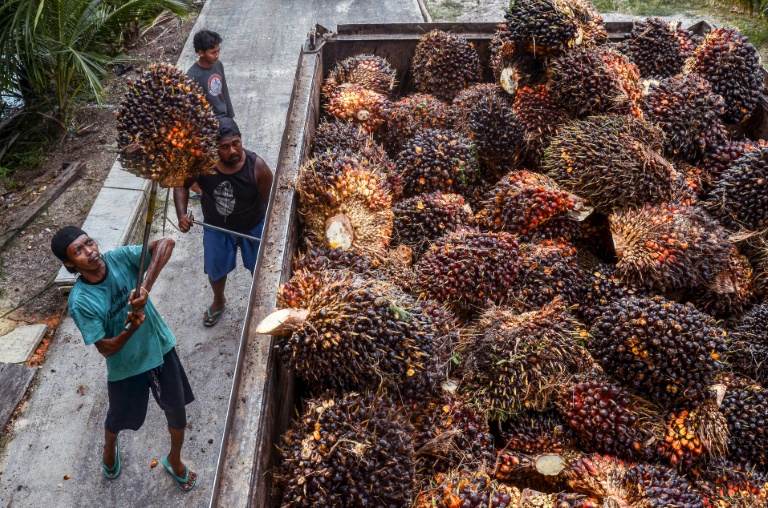
Indonesia will lift its ban on palm oil exports next week, President Joko Widodo said Thursday, relieving pressure on the global vegetable oil market after prices spiked because of the suspension and the war in Ukraine.

The archipelago nation issued the ban last month to secure supplies of the commodity, used in a range of goods from chocolate spreads to cosmetics, in the face of a domestic shortage.

“Based on the supply… of cooking oil and considering there are 17 million people in the palm oil industry — farmers and other supporting workers — I decided that cooking oil exports will reopen on Monday, May 23,” Widodo told an online briefing.

“The government will still be monitoring everything strictly to ensure the demand will be met with affordable prices,” he said.

Authorities had rigorously enforced the export ban, with the Indonesian navy seizing a tanker carrying palm oil out of the country in violation of the order earlier this month.

After the ban came into force, Widodo said supplying the country’s 270 million people was the “highest priority” of his government.ere are yo

But Jakarta came under pressure for further saddling prices that were already skyrocketing after Russia’s invasion of agricultural powerhouse Ukraine.

Palm oil producers staged protests last week in the centre of Jakarta and several towns in Indonesia complaining that the prices for palm oil fruits had dropped dramatically.

– ‘Return to normal’ –

The Indonesian leader said he was reversing the suspension because the domestic supply and price of cooking oil had improved since the ban came into effect on April 28.

Widodo said prices had fallen from 19,800 rupiah ($1.35) per litre to about 17,200 rupiah ($1.17) since the ban.

Domestic supplies of cooking oil also tripled after the ban from 64,500 tonnes per month to 211,000 tonnes, he said.

Industry figures hailed the decision to resume exports.

Eddy Martono, secretary general of the Indonesian Palm Oil Association (GAPKI), said the organisation “is very grateful to the government, especially to the president” for lifting the ban.

“It is a fact that the condition on the ground is very difficult because the tanks have been all full. We hope with the export reopening, the palm oil production can return to normal.”

Oil Palm Farmers Association chairman Gulat Manurung thanked Widodo and said oil palm farmers would repay his decision by boosting domestic supplies. 

“We, oil palm farmers, pledge to help ensure that domestic supplies of cooking oil will be available,” he told AFP.

Palm oil is the most widely used vegetable oil in Indonesia and, despite being the world’s biggest producer, the country has been facing a cooking oil shortage for months because of poor regulation and producers reluctant to sell at home.

The shortages have in some cases forced consumers to spend hours in queues at distribution centres.

Indonesia produces about 60 percent of the world’s palm oil, with one-third consumed by its domestic market. India, China, the European Union and Pakistan are among its major export customers.

Indonesia to lift ban on palm oil exports from Monday

Indonesia will lift its ban on palm oil exports next week, President Joko Widodo said Thursday, relieving pressure on the global vegetable oil market after prices spiked because of the suspension and the war in Ukraine.

The archipelago nation issued the ban last month to secure supplies of the commodity, used in a range of goods from chocolate spreads to cosmetics, in the face of a domestic shortage.

“Based on the supply… of cooking oil and considering there are 17 million people in the palm oil industry — farmers and other supporting workers — I decided that cooking oil exports will reopen on Monday, May 23,” Widodo told an online briefing.

“The government will still be monitoring everything strictly to ensure the demand will be met with affordable prices,” he said.

Authorities had rigorously enforced the export ban, with the Indonesian navy seizing a tanker carrying palm oil out of the country in violation of the order earlier this month.

After the ban came into force, Widodo said supplying the country’s 270 million people was the “highest priority” of his government.ere are yo

But Jakarta came under pressure for further saddling prices that were already skyrocketing after Russia’s invasion of agricultural powerhouse Ukraine.

Palm oil producers staged protests last week in the centre of Jakarta and several towns in Indonesia complaining that the prices for palm oil fruits had dropped dramatically.

– ‘Return to normal’ –

The Indonesian leader said he was reversing the suspension because the domestic supply and price of cooking oil had improved since the ban came into effect on April 28.

Widodo said prices had fallen from 19,800 rupiah ($1.35) per litre to about 17,200 rupiah ($1.17) since the ban.

Domestic supplies of cooking oil also tripled after the ban from 64,500 tonnes per month to 211,000 tonnes, he said.

Industry figures hailed the decision to resume exports.

Eddy Martono, secretary general of the Indonesian Palm Oil Association (GAPKI), said the organisation “is very grateful to the government, especially to the president” for lifting the ban.

“It is a fact that the condition on the ground is very difficult because the tanks have been all full. We hope with the export reopening, the palm oil production can return to normal.”

Oil Palm Farmers Association chairman Gulat Manurung thanked Widodo and said oil palm farmers would repay his decision by boosting domestic supplies. 

“We, oil palm farmers, pledge to help ensure that domestic supplies of cooking oil will be available,” he told AFP.

Palm oil is the most widely used vegetable oil in Indonesia and, despite being the world’s biggest producer, the country has been facing a cooking oil shortage for months because of poor regulation and producers reluctant to sell at home.

The shortages have in some cases forced consumers to spend hours in queues at distribution centres.

Indonesia produces about 60 percent of the world’s palm oil, with one-third consumed by its domestic market. India, China, the European Union and Pakistan are among its major export customers.

Ukraine steelworks defenders surrender as Russian pleas for forgiveness

Russia said Thursday that 1,730 Ukrainian soldiers had surrendered this week at the Azovstal steel plant in Mariupol, showing some emerging on crutches after an all-out battle that has become emblematic of the nearly three-month-old war.

The number included 80 who were wounded and taken to a hospital in Russia-controlled territory in eastern Ukraine, the defence ministry in Moscow said.

The ministry released a video appearing to show the surrendered soldiers hobbling out of the sprawling plant after it was besieged for weeks. Russian troops patted them down and inspected their bags as they exited.

The International Committee of the Red Cross said it had registered “hundreds of Ukrainian prisoners of war” from the plant in Mariupol, a port city levelled by Russian shelling.

Ukraine accuses Moscow’s forces of war crimes against civilians in Mariupol and elsewhere, and has begun the first prosecution of a Russian soldier. 

Vadim Shishimarin, a shaven-headed Russian sergeant from Irkutsk in Siberia, pleaded guilty to a war crime and faces a life sentence.

He admitted to shooting dead Oleksandr Shelipov, an unarmed 62-year-old man, in Ukraine’s Sumy region on February 28 — four days into the invasion. 

Shishimarin was remorseful as he took the dock for a second day on Thursday.

“I know that you will not be able to forgive me, but nevertheless I ask you for forgiveness,” he said, addressing Shelipov’s wife in the cramped courtroom in Kyiv.

– Folk celebration –

But while Mariupol has fallen, Ukraine’s President Volodymyr Zelensky said the wider invasion was an “absolute failure” as he marked “Vyshyvanka Day”, an annual celebration of Ukrainian folk traditions.

Wearing an embroidered shirt instead of his usual military khaki top, Zelensky said on the Telegram social media platform that his people remained “strong, unbreakable, brave and free”.

Zelensky’s defiance, and his army’s dogged resistance, have earned the West’s admiration and a steady flow of military support. G7 finance ministers were meeting in Germany to thrash out more cash support.

G7 partners have to “assure Ukraine’s solvency within the next days, few weeks”, German Finance Minister Christian Lindner told the newspaper Die Welt.

But German Chancellor Olaf Scholz said there could be “no shortcuts” to membership of the European Union for Ukraine. Ukraine’s Foreign Minister Dmytro Kuleba condemned the “second-class treatment” of his country.

– Famine warning –

Russia’s actions are already redrawing the security map of Europe. 

US President Joe Biden was to host the leaders of Finland and Sweden later Thursday to discuss their bids to join NATO, after the Nordic neighbours decided to abandon decades of military non-alignment.

“I warmly welcome and strongly support the historic applications from Finland and Sweden for membership in NATO,” Biden said, offering US support against any “aggression” while their bids are considered.

Beyond Europe, the invasion also threatens to bring famine, UN Secretary-General Antonio Guterres said.

“Malnutrition, mass hunger and famine” could follow “in a crisis that could last for years,” Guterres warned, urging Russia to release grain exports from occupied Ukraine.

Russia and Ukraine produce 30 percent of the global wheat supply, and the war has already sent food prices surging around the world.

– ‘Time to run’ –

Despite their last-ditch resistance in places such as Mariupol, and the successful defence of Kyiv, Ukrainian forces are retreating in the east.

The losses often come after weeks of battles over towns and small cities that are pulverised by the time the Russians surround them in a slow-moving wave.

“I tell everyone that there is no reason to worry when the banging is from outgoing fire,” Volodymyr Netymenko said as he packed up his sister’s belongings before evacuating her from the burning village of Sydorove in eastern Ukraine.

“But when it is incoming, it is time to run. And things have been flying at us pretty hard for the past two or three days.”

In the Russian region of Kursk, one person died and others were injured in an attack on a village on the border with Ukraine, the local governor said.

– War crimes trials –

A second war crimes trial was due to open in Ukraine Thursday.

The International Criminal Court is deploying its largest-ever field team to Ukraine, with 42 investigators, forensic experts and support staff to gather evidence of alleged war crimes.

Ukrainian civilians are bearing the brunt of incessant Russia mortar fire raining down on the eastern city of Severodonetsk.

Nella Kashkina sat in the basement next to an oil lamp and prayed.

“I do not know how long we can last,” the 65-year-old former city worker said.

“We have no medicine left and a lot of sick people — sick women — need medicine. There is simply no medicine left at all.”

burs-jit/lc

1.5 tonnes of elephant ivory seized in southeast DR Congo

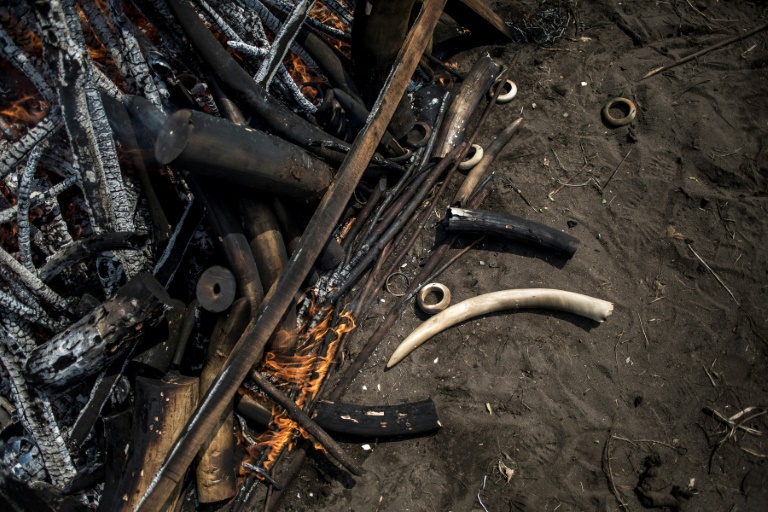
Authorities in southeastern DR Congo have seized one and a half tonnes of elephant ivory, legal and environmental officials said, in one of the largest hauls in Africa in years.

Officers discovered the smuggled tusks aboard trucks in the city of Lubumbashi on Saturday, according to a legal official who declined to be named due involvement in an ongoing investigation into the affair. 

Police arrested five people but two fled after questioning, the official said. He added that the haul amounted to 1.5 tonnes.

Both the origin and intended final destination of the ivory remain unclear. 

Sabin Mande, a lawyer for a coalition of environmental groups, told AFP that he had seen 18 bags of seized ivory in the state prosecutor’s office in Lubumbashi on Wednesday. 

The contraband represents 80 to 100 slaughtered elephants, he said. 

The seizure marks one of the largest in Africa in years. In 2013, Kenyan officials made several seizures including one of four tonnes. Togolese authorities likewise seized four tonnes of ivory over the course of one week in 2014.

In 2019, Vietnamese officials discovered over nine tonnes of elephant ivory in a shipment carrying timber from the Republic of Congo, also known as Congo-Brazzaville, in the largest recent haul worldwide.  

China and Southeast Asia are major markets for African ivory, which is mainly used for purported cures in traditional medicine. 

Trapped Indonesian ferry with more than 800 on board dislodged

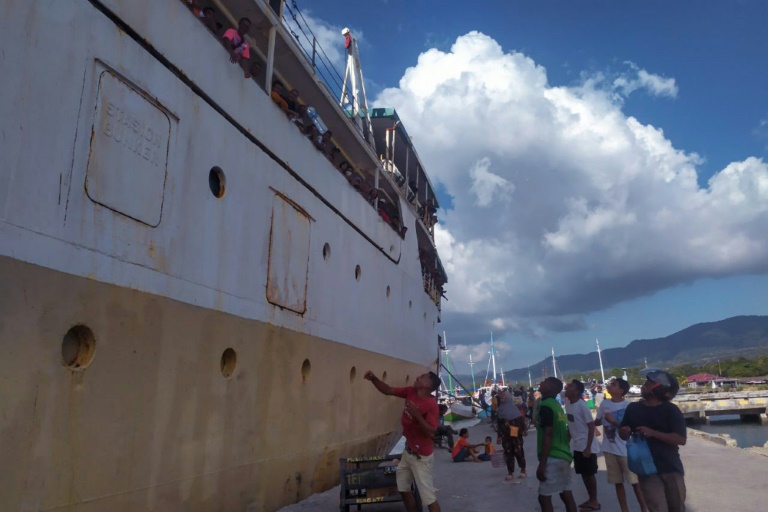
An Indonesian ferry carrying more than 800 people that had run aground was dislodged on Thursday and taken safely to dock at a nearby port, officials said.

KM Sirimau, carrying 784 passengers and 55 crew members, became stuck on Tuesday in shallow waters in East Nusa Tenggara province.

Efforts to free the boat succeeded and it was dislodged at noon after a tugboat sent by state-owned shipping company PT Pelni arrived to help, the head of local naval base Dwi Yoga told AFP. 

The ferry docked in Lewoleba port on the island of Lembata for checks two hours after it was freed, local search and rescue chief Putu Sudayana said.

“All passengers are in good health,” he told AFP.

Once the ferry was dislodged, relieved and tired passengers erupted in cheers, passenger Itha Tating said.

“We all shouted in joy when we found out the boat was free, the passengers and crew all started to clap happily,” Tating told AFP by phone.

The ship will later leave the port to continue its journey to the town of Maumere on the island of Flores, the final destination of most passengers. 

Passengers became worried after being stuck on the boat for two days, Tating said, with one woman panicking because she ran out of milk formula for her five-month-old baby.

“The waves were very strong this morning. I got scared and very dizzy from seasickness,” Tating said, adding that she would not travel on ferries soon because she is still traumatised.

The military boarded the ship on Thursday morning to distribute water and snacks to the passengers, including children and the elderly.

Rescuers waited for the tide to rise before they towed the ferry, Yoga added.

Marine accidents are common in Indonesia, an archipelago of more than 17,000 islands, where people rely on ferries and other boats to travel despite poor safety standards. 

In 2018, about 160 people drowned when a ferry sank into the depths of one of the world’s deepest lakes on Sumatra island.

Russia seeking to wrest seized nuclear plant from Ukraine

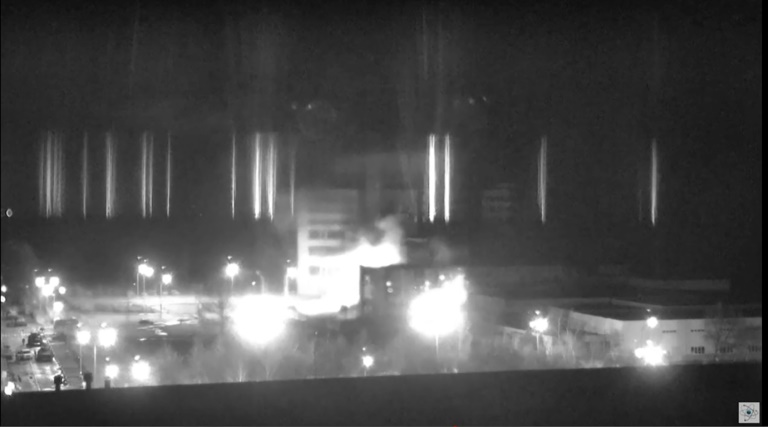
Russia has hinted it is seeking to cut off Ukraine from Europe’s largest nuclear plant unless Kyiv pays Moscow for electricity.

The Zaporizhzhia plant was captured by Russian troops following President Vladimir Putin’s special military operation in Ukraine launched on February 24.

“If the energy system of Ukraine is ready to receive and pay, then (the plant) will work for Ukraine. If not, then ( the plant) will work for Russia,” Russian Deputy Prime Minister Marat Khusnullin said during a trip to the region on Wednesday, Russian news agencies reported. 

His remarks came after Russian officials indicated that Moscow intends to remain in territories it controls in southern Ukraine, such as the Kherson region and large parts of Zaporizhzhia. 

“We have a lot of experience of working with nuclear power plants, we have companies in Russia that have this experience,” Khusnullin said.

He said there was “no doubt” the Zaporizhzhia plant will remain operational.

Ukraine’s nuclear agency Energoatom said Thursday that the plant continued to feed the national power grid. 

Russians “do not have the technical capacity to supply energy from the Zaporizhzhia nuclear power plant to Russia or Crimea,” Energoatom spokesman Leonid Oliynyk told AFP. 

“This requires cost and time…. And in a month or two we will have everything under Ukrainian control again,” he added. 

– ‘Future lies with Russia’ –

Oliynyk said Russia did not have the ability to cut off electricity supplies to Ukraine, as “Ukraine controls all the relevant equipment”.

In 2021, before the outbreak of conflict, the plant accounted for one fifth of Ukraine’s annual electricity production and almost half the electricity generated in the country’s nuclear power plants.

Russian soldiers in early March took control of the plant in the city of Enerhodar, separated by the Dnipro river from the regional capital Zaporizhzhia which is still under Kyiv’s control. 

Clashes erupted in the plant in the first days of the conflict, raising fears of a possible nuclear disaster in a country where a nuclear reactor exploded at the Chernobyl plant in 1986. 

Khusnullin further hinted that Russia was there to stay.

“I consider that the future of this region is to work within the friendly Russian family. That’s why I came here, to help with integration as much as possible,” he said.

Russian officials and Moscow-appointed authorities said last week that the Ukrainian region of Kherson — which provides a land bride to the annexed Crimean peninsula — will likely become part of Russia. 

While launching the Ukraine campaign, Putin had assured that Russia does not seek to occupy Ukrainian territories. 

North Korea 'ready for nuclear test' with Biden due in Seoul

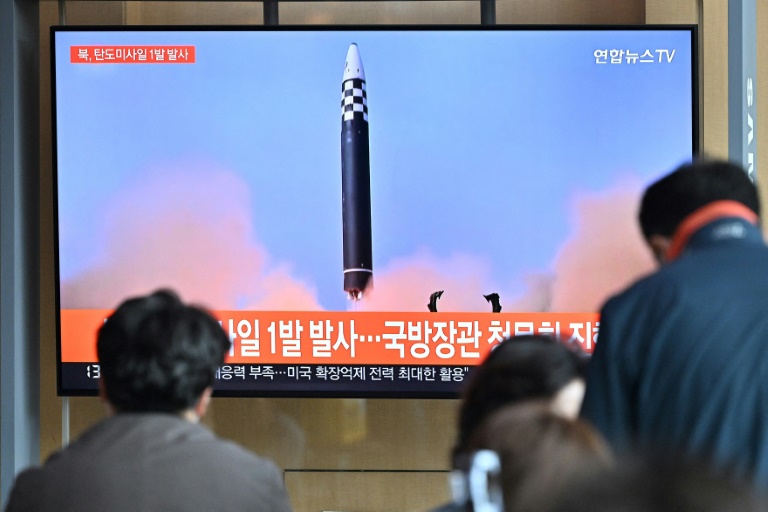
North Korea is poised to conduct a nuclear test, Seoul said Thursday, as the United States warned it could come as President Joe Biden visits South Korea this week.

The visits to Seoul, followed by Tokyo, are being touted as proof that Washington is seeking to cement its years-long pivot to Asia, where rising Chinese commercial and military power is undercutting decades of US dominance.

However, Biden’s first trip as president to the region looks set to be overshadowed by an increasingly belligerent North Korea.

Despite a spiralling Covid outbreak, Pyongyang’s “preparations for a nuclear test have been completed and they are only looking for the right time”, South Korean lawmaker Ha Tae-keung said after being briefed by Seoul’s spy agency.

US intelligence says there is a “genuine possibility” that North Korea’s Kim Jong Un could stage this “provocation” after Biden arrives in Seoul late Friday, his administration said.

This could mean “further missile tests, long-range missile tests or a nuclear test, or frankly both” around the time of Biden’s trip, National Security Advisor Jake Sullivan said.

Satellite imagery indicates North Korea is preparing to conduct what would be its seventh nuclear test — which would cap a record-breaking blitz of launches this year, including intercontinental ballistic missiles.

“North Korea will want to attract global attention by conducting a nuclear test during President Biden’s visit,” Cheong Seong-chang of the Center for North Korea Studies at the Sejong Institute told AFP.

– Military adjustments –

Biden, who will visit some of the nearly 30,000 US troops stationed in South Korea, is ready to make “adjustments” to the US military posture in the region, and Seoul’s hawkish new President Yoon Suk-yeol is eager for stronger ties.

Both Biden and Yoon have said they’re open for talks with Pyongyang but they expect to see real progress on denuclearisation — which analysts say is anathema to Kim and will stall talks.

“Biden judges that the North Korean issue can’t be resolved through impromptu meetings between the leaders as Trump did,” said Woo Jung-yeop, a researcher at the Sejong Institute.

North Korea will be watching the outcome of the Yoon-Biden meeting Saturday very closely, said Yang Moo-jin, a professor at the University of North Korean Studies.

“Depending on the result, North Korea will decide on whether it will speed up or slow down its ICBM and nuclear tests,” Yang said.

Sullivan said the security situation regarding North Korea was being “closely” coordinated with South Korea and Japan and that he had also spoken about the issue with his Chinese counterpart on Wednesday.

It is likely that Kim is still debating what to do, in particular due to this US pressure on Beijing — Kim’s sole major ally — to help rein in Pyongyang’s nuclear and ICBM tests, the Sejong Institute’s Cheong said.

Kim is also well aware of the gridlock at the UN Security Council after Russia’s invasion of Ukraine — so it is “highly likely” a nuke or ICBM test will come during Biden’s Asia tour, Cheong added.

Moscow would likely block any attempt at the UN to impose further sanctions on Pyongyang over a weapons test.

– Strategic neglect? –

After Seoul, Biden heads to Japan on Sunday for talks with Tokyo’s top leaders, before joining a Quad summit — a grouping of Australia, India, Japan, and the United States.

Sullivan said Biden is bound for Asia with “the wind at our back” after successful US leadership in the Western response to President Vladimir Putin’s now almost three-month-long invasion of Ukraine.

The high military, diplomatic and economic cost imposed on Russia is seen in Washington as a cautionary tale for China, given its stated ambitions to gain control over democratic-ruled Taiwan, even if that means going to war.

But the fact he arrives in Asia under the shadow of a possible North Korean nuclear test is partly due to his “strategic neglect” of the region since he took office, said Park Won-gon, a professor at Ewha University.

Talks between Washington and Pyongyang have been stalled for years, after an extraordinary show of diplomacy between then US president Donald Trump and Kim — brokered by Yoon’s predecessor Moon Jae-in — ultimately ended in failure.

Trump held three headline-grabbing meetings with Kim and claimed that the two were “in love”, but analysts say little to no progress was made in dismantling the North’s nuclear programmes.

At a vast military parade in Pyongyang recently, Kim said he was strengthening his nuclear arsenal “at the fastest possible speed”.

“In terms of denuclearisation and US-North Korea ties, we have returned to a situation where it’s difficult to find any progress,” Park said.

“There is no way to really stop North Korea now.”

Cyprus police arrest one after protesting farmers set hay ablaze

Cyprus police said Thursday they had arrested one man a day after farmers set hay bales ablaze outside the presidential palace to protest against high input prices and a milk glut.

The goat and sheep farmers also emptied milk churns at the gates of the palace and police say they have issued arrest warrants for two other people who took part in the 300-strong demonstration. 

The farmers face a unique squeeze driven in part by the war in Ukraine, which has propelled the cost of wheat and fuel higher, making it more expensive to feed and transport their animals. 

On top of that, farmers have been unable to sell all their sheep and goat milk because, they complain, producers of the Mediterranean island’s renowned halloumi cheese are opting largely in favour of cow milk, a cheaper alternative.

Halloumi exports earned Cyprus 266.5 million euros ($279 million) in 2020 and last year won Protected Designation of Origin (PDO) status from the European Union, giving the country a monopoly on producing halloumi branded cheese.

The PDO status is also meant to ensure minimum quotas for the use of goat and sheep milk in the production process, but the farmers accuse halloumi makers of flouting that. 

Police spokesperson Christos Andreou told state broadcaster CyBC that video footage of Wednesday’s protest was being reviewed and suspects face charges of reckless behaviour and conspiracy to commit a crime.

The one man arrested so far is 42 and has been charged in writing and released to appear in court at a later date. 

Agriculture Minister Costas Kadis said goat and sheep farmers’ anger was “justified” and pledged more financial support.

Climate fight rages in rich Australian suburbs

In a land struck by ferocious bushfires and floods, Australian voters frustrated by climate inaction are flocking to a band of right-leaning green-minded independents, threatening to flip a string of conservative strongholds from blue to “teal”.

More than 20 candidates — highly qualified, well financed and mostly women — are barnstorming some of Australia’s wealthiest suburbs ahead of Saturday’s election, aiming to snatch parliamentary seats held by ruling conservatives for generations.

Polls indicate these “teal” independents — somewhere between conservative blue and environmental green on the political spectrum — could not just win seats, but hold the balance of power in a hung parliament.

Among the districts up for grabs are those previously held by four conservative Liberal Party prime ministers and the district of current Treasurer Josh Frydenberg, who is seen as a possible future party leader and prime minister.

More than 17 million voters are registered for the May 21 polls, which will choose all 151 seats in the lower chamber and 40 of the 76 seats in the Senate.

The independents are sticking a dagger into the conservatives’ exposed flank on the climate and other major concerns such as corruption and the treatment of women in government.

Australia’s 2019-2020 “Black Summer” bushfires and subsequent east coast floods highlighted the deadly and catastrophic consequences of climate change.

But Morrison’s Liberal-National coalition backs coal mining and burning into the distant future, and has resisted calls to cut carbon emissions from 2005 levels faster than its current commitment of up to 28 percent by 2030. 

The government has also failed to deliver a promised federal anti-corruption watchdog.

Analysts say the climate is a national concern but is more likely to sway votes in leafy suburban seats where people feel no threat from a cut to mining jobs.

Some conservative voters feel they have been “left in the wilderness” by the Liberal Party’s drift to the right, said Zoe Daniel, a former ABC journalist turned independent who is now a front-runner in the polls in the wealthy Melbourne seat of Goldstein.

– ‘Powerful influences’ –

A YouGov poll published May 11 put Daniel slightly ahead of the incumbent Liberal Party member for Goldstein, Tim Wilson.

The “umbrella issue” for voters is integrity, Daniel told AFP, not just the need for a federal anti-corruption watchdog but also transparency in spending taxpayers’ money and political donations.

That spills over into other issues such as the climate, said Daniel, who supports a 60-percent cut in carbon emissions by 2030, far more than the government or opposition Labor Party.

“I think the penny has started to drop for people that there are powerful influences in the background and that’s why our climate policy looks the way it does,” she said.

It is no secret that the Liberal Party has close links to the mining industry, said Paul Williams, associate professor at Griffith University. “And the mining industry is Australia’s most powerful lobby group.”

Labor, which relies on support from unions including those representing mine workers, has proposed a 43-percent cut in carbon pollution by 2030.

Monique Ryan, another independent favouring climate action and clean politics, led treasurer Frydenberg in the Melbourne seat of Kooyong, the survey indicated.

Once a safe Liberal Party seat, Kooyong is also the former constituency of Australia’s longest-serving prime minister, the late Robert Menzies.

– Close fight –

Allegra Spender, another “teal” independent candidate in Wentworth — a rich beachside Sydney suburb that includes Bondi Beach — is also in a close fight, surveys indicate, with moderate Liberal Party member Dave Sharma.

Spender, like Ryan and Daniel, is among 22 independents who have secured campaign financing from Climate 200, a fund set up by activist-philanthropist Simon Holmes a Court.

In the case of a hung parliament, just a few independents could wield some influence on national policy.

Independent candidates have already helped to elevate issues such as the climate and integrity, said Daniel.

“Independents have changed the national conversation because they are able to raise hard issues that won’t necessarily be popular.”

Close Bitnami banner
Bitnami