World

Google's Russian subsidiary to file for bankruptcy

The Russian subsidiary of US tech giant Google said Thursday it will file for bankruptcy after authorities seized its bank account following a series of spats with Moscow.

Google has been under increasing pressure in Russia for several months and even more so after the start of President Vladimir Putin’s military campaign in Ukraine at the end of February. 

“Google Russia has published a notice of its intention to file for bankruptcy,” a spokesperson for the company told AFP.

“The Russian authorities’ seizure of Google Russia’s bank account has made it untenable for our Russia office to function, including employing and paying Russia-based employees, paying suppliers and vendors, and meeting other financial obligations,” the company said.  

It however said it will continue to provide free services “such as Search, YouTube, Gmail, Maps, Android and Play” to customers in Russia.

In late April, a Russian court fined Google 11 million rubles ($135,000 at the time) for ignoring the state regulator’s orders to remove contentious YouTube videos about the Kremlin’s military operation in Ukraine.

The tech giant also infuriated Russian officials by blocking the lower house of parliament’s official media channel and deleting the YouTube channels of many pro-Kremlin media. 

As part of efforts to control the information available to a domestic audience, Russian courts have already banned Facebook and Instagram, calling them “extremist” organisations, as well as Twitter.

Green ministers outshine Scholz as stars of German government

German Chancellor Olaf Scholz has seen his popularity slide over his cautious stance on the war in Ukraine, eclipsed by two ministers from the Green party who have taken a more decisive approach.

Scholz, whose Social Democrats (SPD) are in power with the Greens and the liberal FDP, has faced a barrage of criticism over his perceived weak response to the war, including his hesitancy over sending heavy weapons to Ukraine.

Meanwhile, Green party Foreign Minister Annalena Baerbock and Economy Minister Robert Habeck have impressed with their more vocal approach, topping a recent survey of the country’s most popular politicians. 

Scholz sought to redress the balance with a speech to the Bundestag parliament on Thursday.

“(Russian President Vladimir) Putin still believes that he can forge peace by dictatorship, but he is wrong — just as he was wrong about Ukraine’s determination and the unity of our alliances,” he said.

Scholz also tried to shake off accusations that he is dragging his feet in dealing with Moscow over fears of escalating the crisis.

“I want to say clearly that helping a brutally attacked country to defend itself is not an escalation but a contribution to repelling an attack and thereby ending the violence as quickly as possible,” he told parliament.

But the chancellor has his work cut out to turn around public opinion.

– Sitting tight –

In a nod to just how badly this reticent stance has played with the public, the SPD suffered a crushing defeat in a key regional election at the weekend — losing to the conservative CDU with its worst-ever result in Germany’s most populous state of North Rhine-Westphalia.

The Greens, meanwhile, almost tripled their score compared with five years ago to finish in third place and look almost certain to be part of the next regional government.

Der Spiegel magazine called the result a “personal defeat” for Scholz after he was heavily involved in the election campaign, appearing on posters and at rallies.

In a bid to win back the public, Scholz has in recent days given lengthy television interviews.

But in a devastating reading of his performance on screen, the weekly Focus said “his language is poor, his facial expressions monotone and his body language too understated.”

According to Der Spiegel, the chancellor’s communications strategy seems to revolve around one mantra: “Repeat, repeat, repeat.”

Other media have accused him of stubbornly sticking to the same plan and ignoring what is going on around him.

“His party is plummeting, but the chancellor feels that he has done everything right… Doubts and questions rain down on him, but Olaf simply sits tight,” said Der Spiegel.

– ‘Strong moral underpinning’ –

Scholz’s spokesman Steffen Hebestreit has defended the chancellor, suggesting that the public value his calm demeanour and would find it “inauthentic” if he tried to turn himself into Barack Obama.

But for political scientist Ursula Muench, Scholz does not come across as calm and measured but rather “imprecise” compared with his colleagues from the Green party.

Baerbock, meanwhile, has turned around her public image after a series of blunders during the 2021 election campaign, coming across as clearer and more decisive than Scholz in her response to the Ukraine crisis.

The 41-year-old former trampolinist has become the face of Germany at international summits, from the G7 to NATO, and in early May became the first German minister to visit Kyiv.

Habeck, meanwhile, has impressed with his dedication to weaning Germany off Russian energy. 

For the first time in their 42-year history, according to Der Spiegel, the Greens are being judged not on “expectations and promises” but on their performance in government.

“The strong moral underpinning of the Greens’ policies and the fact they openly struggle with their own principles comes across as approachable and therefore very credible,” according to Muench.

“Of course, this increases their clout compared with the chancellor.”

She therefore predicts an “increase in tensions” between the Greens, the SPD and the FDP, with life not expected to get easier for Scholz any time soon.

Ukraine steelworks defenders surrender but Kyiv vows 'unbreakable' spirit

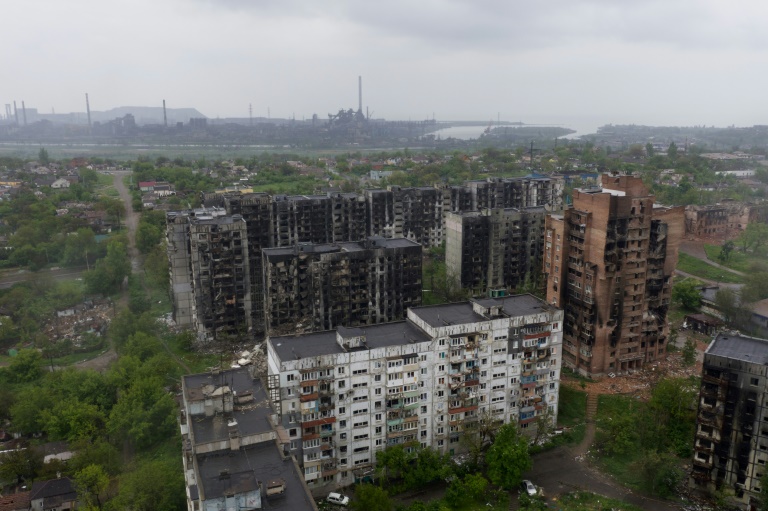
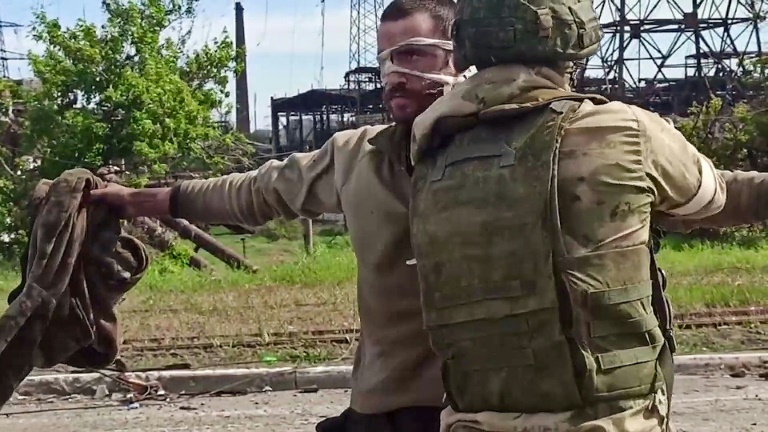
Russia said Thursday that 1,730 Ukrainian soldiers had surrendered this week at the Azovstal steel plant in Mariupol, showing some emerging on crutches after an all-out battle that has become emblematic of the nearly three-month-old war.

The number included 80 who were wounded and taken to a hospital in Russia-controlled territory in eastern Ukraine, the defence ministry in Moscow said.

The ministry released a video appearing to show the surrendered soldiers hobbling out of the sprawling plant after it was besieged for weeks. Russian troops patted them down and inspected their bags as they exited.

The International Committee of the Red Cross said it had registered “hundreds of Ukrainian prisoners of war” from the plant in Mariupol, a port city levelled by Russian shelling.

But while Mariupol has fallen, Ukraine’s President Volodymyr Zelensky said the wider invasion was an “absolute failure” as he marked “Vyshyvanka Day”, an annual celebration of Ukrainian folk traditions.

Wearing an embroidered shirt instead of his usual military khaki top, Zelensky said on the Telegram social media platform that his people remained “strong, unbreakable, brave and free”.

Zelensky’s defiance, and his army’s dogged resistance, have earned the West’s admiration and a steady flow of military support. G7 finance ministers were meeting in Germany to thrash out more cash support.

G7 partners have to “assure Ukraine’s solvency within the next days, few weeks”, German Finance Minister Christian Lindner told the newspaper Die Welt.

But German Chancellor Olaf Scholz said there could be “no shortcuts” to membership of the European Union for Ukraine. Ukraine’s Foreign Minister Dmytro Kuleba condemned the “second-class treatment” of his country.

– Famine warning –

Russia’s actions are already redrawing the security map of Europe. 

US President Joe Biden was to host the leaders of Finland and Sweden later Thursday to discuss their bids to join NATO, after the Nordic neighbours decided to abandon decades of military non-alignment.

“I warmly welcome and strongly support the historic applications from Finland and Sweden for membership in NATO,” Biden said, offering US support against any “aggression” while their bids are considered.

Beyond Europe, the invasion also threatens to bring famine, UN Secretary-General Antonio Guterres said.

“Malnutrition, mass hunger and famine” could follow “in a crisis that could last for years,” Guterres warned, urging Russia to release grain exports from occupied Ukraine.

Russia and Ukraine produce 30 percent of the global wheat supply, and the war has also sent food prices surging around the world.

– ‘Time to run’ –

Despite their last-ditch resistance in places such as Mariupol, and the successful defence of Kyiv, Ukrainian forces are retreating in the east.

The losses often come after weeks of battles over towns and small cities that are pulverised by the time the Russians surround them in a slow-moving wave.

“I tell everyone that there is no reason to worry when the banging is from outgoing fire,” Volodymyr Netymenko said as he packed up his sister’s belongings before evacuating her from the burning village of Sydorove in eastern Ukraine.

“But when it is incoming, it is time to run. And things have been flying at us pretty hard for the past two or three days.”

In the Russian region of Kursk, one person died and others were injured in an attack on a village on the border with Ukraine, the local governor said.

– War crimes trials –

Ukraine’s first trial for war crimes began in a cramped Kyiv courtroom on Wednesday.

Vadim Shishimarin, a shaven-headed Russian sergeant from Irkutsk in Siberia, pleaded guilty to a war crime and faces a life sentence.

He admitted to shooting dead an unarmed 62-year-old man in Ukraine’s Sumy region four days into the invasion.

Russia’s government has no information on Shishimarin, Kremlin spokesman Peskov said, adding that many such cases reported by Ukraine are “simply fake or staged”.

A second war crimes trial was due to open in Ukraine Thursday.

The International Criminal Court is deploying its largest-ever field team to Ukraine, with 42 investigators, forensic experts and support staff to gather evidence of alleged war crimes.

Ukrainian civilians are bearing the brunt of incessant Russia mortar fire raining down on the eastern city of Severodonetsk.

Nella Kashkina sat in the basement next to an oil lamp and prayed.

“I do not know how long we can last,” the 65-year-old former city worker said.

“We have no medicine left and a lot of sick people — sick women — need medicine. There is simply no medicine left at all.”

burs-jit/spm

Flood-ravaged Australians feel forgotten as election looms

For Karey Patterson, the lingering memory of the February floods that devastated Australia’s east coast was wondering how long he could hold his daughter’s head above water as the torrent consumed their home.

“It was like a disaster movie, but I was in it,” he told AFP, standing in the still-gutted shell of his house in the town of Lismore.

In the aftermath of the floods, the worst the city had ever seen, there was a flurry of news coverage, visits from the prime minister and opposition leader, and promises of help.

Three months on, the floodwater has mostly receded and with it public attention.

On the eve of Saturday’s election, the fact that more than 1,500 citizens in one of the world’s richest nations are still in emergency accommodation barely gets a mention in the campaign.

Many others have slipped through the statistics, sleeping on friends’ couches, staying in caravans, or camping in their flood-wrecked homes.

“I think we have been forgotten,” said Bec Barker, who has been living with her husband in a small caravan in the backyard of the home they spent more than a decade renovating.

“I don’t think people realise that we don’t have houses to come back to, we don’t have furniture, we don’t have anything.”

Battling her insurer and ineligible for grants, Barker cannot picture herself living again in the home she thought she would grow old in.

While many flood victims feel forgotten, some also worry climate change’s low billing on the campaign trail will guarantee more Australians are hit by increasingly extreme droughts, fires and floods.

Barker wants to see better government preparedness before new disasters strike — so neighbours are not left to rescue one another in the dead of night.

“This can happen to anyone, really. I don’t live in a high flood zone area,” she said.

“It happened to us.”

– A town abandoned –

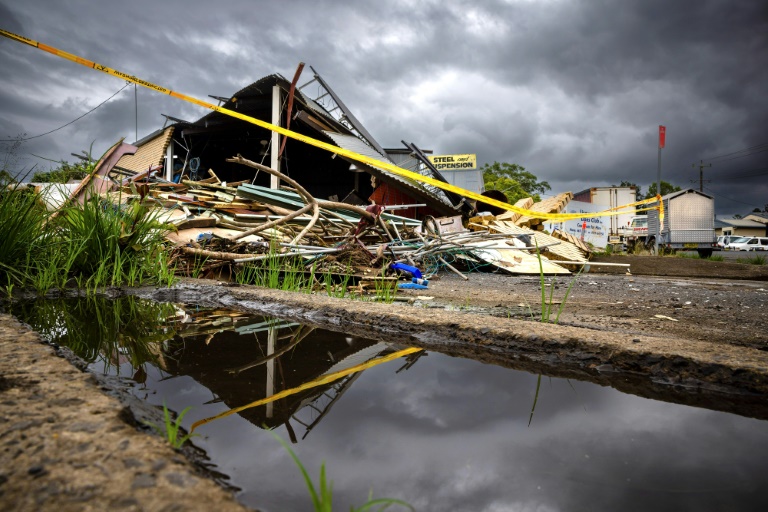
By night, Lismore’s once-bustling centre is now nearly pitch black as thousands of homes and businesses stand empty.

Daylight reveals a city where recovery has stalled.

Condemned houses swept from their foundations by the floodwaters wait to be demolished. Trees are still littered with plastic, chairs and family photos.

Locals line up for basic necessities from charities such as the one run by “The Koori Mail”, Australia’s national Indigenous newspaper.

Much of the nearby university, Southern Cross, has been given over to the recovery effort — three schools have moved in, as have displaced businesses, doctors and the local police.

For months, many locals have been “in limbo”, Lismore resident Rahima Jackson said, waiting for the council to decide about new flood regulations or a land swap deal allowing people to move to higher ground — which could take years.

“The community here is definitely angry because every response has been too slow,” she said.

As the February flood drowned Jackson’s house, something sparked a fire and she watched on from a neighbour’s window as it burned in the middle of an inland sea.

She has been hoping to buy a caravan to live in, behind her ruined home with its charred roof crumpled like a piece of paper.

For the community, she said, the stress is starting to take a toll: “I know most people have panic attacks at the sound of rain.”

So far, the state government has paid out less than a fifth of the 38,037 applications for grant assistance it received from individuals and businesses.

Like many people affected by the floods, Ron Maher, 77, has found himself ineligible for any government grants — because his pension, not his farm, has been his primary source of income.

“I’m not bitter about it. Disappointed is a better word than bitter,” he said.

Maher, who lost a third of his cattle as floodwaters swept through his rural property north of Lismore, told AFP he was worried for the town’s future.

“I don’t know whether I’m talking out of school here, but I’m a bit afraid that north and south Lismore will turn into a bit of a shantytown because they can’t afford to build,” he said.

Insurance is another stumbling block.

By 2030, half a million homes across Australia will be uninsurable, too vulnerable to floods, bushfires, tides or high winds, according to the Climate Council.

Many Lismore residents could not afford flood insurance, even before the latest disaster.

– ‘Our community underwater’ –

Marine scientist Hanabeth Luke has decided to run for office to help put things right.

She survived the 2002 Bali bombings in Indonesia, and became known as “the Angel of Bali” after being photographed carrying a young man from the wreckage of the Sari Club.

She said the floods were an “echo” of that tragedy, which killed her first love.

She is running as an independent on a climate-focused platform.

“This is our home. This is the place that we love. This is our community underwater,” she said.

“We’ve got to look at best evidence. We’ve got to trust what the science is telling us. And that is that we must act now on climate.”

Despite the 14-metre (46-foot) surge, Karey Patterson, his eight-year-old daughter and two sons survived.

He eventually managed to smash a hole through the hardwood ceiling with a barbell before the water got to the roof.

A friend paddled a kayak through surging floodwaters for hours to deliver each of them to safety.

For now, Patterson sleeps on his friend’s sofa, unsure about what comes next. One thing he is sure of is that, for sanity’s sake, he cannot return. 

“I’m not coming back to live in this house.”

Flood-ravaged Australians feel forgotten as election looms

For Karey Patterson, the lingering memory of the February floods that devastated Australia’s east coast was wondering how long he could hold his daughter’s head above water as the torrent consumed their home.

“It was like a disaster movie, but I was in it,” he told AFP, standing in the still-gutted shell of his house in the town of Lismore.

In the aftermath of the floods, the worst the city had ever seen, there was a flurry of news coverage, visits from the prime minister and opposition leader, and promises of help.

Three months on, the floodwater has mostly receded and with it public attention.

On the eve of Saturday’s election, the fact that more than 1,500 citizens in one of the world’s richest nations are still in emergency accommodation barely gets a mention in the campaign.

Many others have slipped through the statistics, sleeping on friends’ couches, staying in caravans, or camping in their flood-wrecked homes.

“I think we have been forgotten,” said Bec Barker, who has been living with her husband in a small caravan in the backyard of the home they spent more than a decade renovating.

“I don’t think people realise that we don’t have houses to come back to, we don’t have furniture, we don’t have anything.”

Battling her insurer and ineligible for grants, Barker cannot picture herself living again in the home she thought she would grow old in.

While many flood victims feel forgotten, some also worry climate change’s low billing on the campaign trail will guarantee more Australians are hit by increasingly extreme droughts, fires and floods.

Barker wants to see better government preparedness before new disasters strike — so neighbours are not left to rescue one another in the dead of night.

“This can happen to anyone, really. I don’t live in a high flood zone area,” she said.

“It happened to us.”

– A town abandoned –

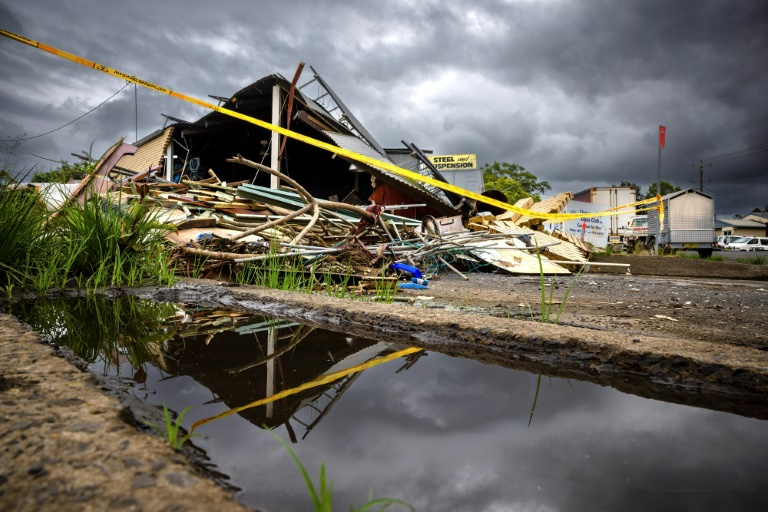
By night, Lismore’s once-bustling centre is now nearly pitch black as thousands of homes and businesses stand empty.

Daylight reveals a city where recovery has stalled.

Condemned houses swept from their foundations by the floodwaters wait to be demolished. Trees are still littered with plastic, chairs and family photos.

Locals line up for basic necessities from charities such as the one run by “The Koori Mail”, Australia’s national Indigenous newspaper.

Much of the nearby university, Southern Cross, has been given over to the recovery effort — three schools have moved in, as have displaced businesses, doctors and the local police.

For months, many locals have been “in limbo”, Lismore resident Rahima Jackson said, waiting for the council to decide about new flood regulations or a land swap deal allowing people to move to higher ground — which could take years.

“The community here is definitely angry because every response has been too slow,” she said.

As the February flood drowned Jackson’s house, something sparked a fire and she watched on from a neighbour’s window as it burned in the middle of an inland sea.

She has been hoping to buy a caravan to live in, behind her ruined home with its charred roof crumpled like a piece of paper.

For the community, she said, the stress is starting to take a toll: “I know most people have panic attacks at the sound of rain.”

So far, the state government has paid out less than a fifth of the 38,037 applications for grant assistance it received from individuals and businesses.

Like many people affected by the floods, Ron Maher, 77, has found himself ineligible for any government grants — because his pension, not his farm, has been his primary source of income.

“I’m not bitter about it. Disappointed is a better word than bitter,” he said.

Maher, who lost a third of his cattle as floodwaters swept through his rural property north of Lismore, told AFP he was worried for the town’s future.

“I don’t know whether I’m talking out of school here, but I’m a bit afraid that north and south Lismore will turn into a bit of a shantytown because they can’t afford to build,” he said.

Insurance is another stumbling block.

By 2030, half a million homes across Australia will be uninsurable, too vulnerable to floods, bushfires, tides or high winds, according to the Climate Council.

Many Lismore residents could not afford flood insurance, even before the latest disaster.

– ‘Our community underwater’ –

Marine scientist Hanabeth Luke has decided to run for office to help put things right.

She survived the 2002 Bali bombings in Indonesia, and became known as “the Angel of Bali” after being photographed carrying a young man from the wreckage of the Sari Club.

She said the floods were an “echo” of that tragedy, which killed her first love.

She is running as an independent on a climate-focused platform.

“This is our home. This is the place that we love. This is our community underwater,” she said.

“We’ve got to look at best evidence. We’ve got to trust what the science is telling us. And that is that we must act now on climate.”

Despite the 14-metre (46-foot) surge, Karey Patterson, his eight-year-old daughter and two sons survived.

He eventually managed to smash a hole through the hardwood ceiling with a barbell before the water got to the roof.

A friend paddled a kayak through surging floodwaters for hours to deliver each of them to safety.

For now, Patterson sleeps on his friend’s sofa, unsure about what comes next. One thing he is sure of is that, for sanity’s sake, he cannot return. 

“I’m not coming back to live in this house.”

War in Ukraine: Latest developments

Here are the latest developments in the war in Ukraine:

– ‘No shortcuts’ to EU for Ukraine, says Scholz –

German Chancellor Olaf Scholz says there can be “no shortcuts” to EU membership for Ukraine, the second EU leader to quash Kyiv’s hope of fast-track membership in as many weeks.

Scholz says that making an exception for Ukraine would be unfair to the Western Balkan countries also seeking membership. 

“The accession process is not a matter of a few months or years,” he warns.

On May 9, France’s President Emmanuel Macron warned it could take “decades” for Ukraine to join the bloc and suggested building a broader European club beyond the EU that could accommodate aspiring members.

Ukraine’s Foreign Minister Dmytro Kuleba condemns what he calls the “second-class treatment” of his country.

– Over 1,730 Mariupol fighters have surrendered: Russia –

Russia says that the number of Ukrainian soldiers who have surrendered at the besieged Azovstal steel plant in Mariupol has risen to 1,730 after a third group of fighters laid down arms.

In the past 24 hours, a further 771 militants emerged from the sprawling steel mill that has become a symbol of Ukrainian resistance, the Russian defence ministry says. A small number of fighters are believed to remain inside.

Ukraine persuaded the men to stand down to save their lives after weeks spent in the underground complex, with dire shortages of food, water and medicine. 

Dozens of wounded have been taken to a hospital in a part of Ukraine’s eastern Donetsk region that is controlled by pro-Russian separatists and the rest are being kept in a prison colony, according to separatist leader Denis Pushilin.

Kyiv is hoping to exchange them for Russian prisoners but Pushilin suggested that some of them could be put on trial.

– Biden to meet leaders of Finland, Sweden –

US President Joe Biden is set to meet President Sauli Niinisto of Finland and Sweden’s Prime Minister Magdalena Andersson in Washington after offering strong backing for the Nordic nations’ NATO membership applications.

Sweden and Finland applied for NATO membership on Wednesday, renouncing decades of military non-alignment, over fears they could be future targets of Russian aggression.

Public support in the two countries for NATO membership skyrocketed after the Ukraine invasion.

Their applications face strong resistance, however, from NATO member Turkey, which accuses the two nations of harbouring anti-Turkish extremists.

– Russian soldier pleads guilty to war crimes – 

A 21-year-old Russian soldier pleads guilty to killing an unarmed Ukrainian civilian at a war crimes trial in Kyiv, in the first such case to go to court since the start of the invasion.

Vadim Shishimarin from Irkutsk in Siberia admits to gunning down the 62-year-old man near the central village of Chupakhivka to prevent him from reporting a carjacking by fleeing Russian troops.

He faces possible life imprisonment for war crimes and premeditated murder after the case is heard by a district court in Kyiv.

– One dead in attack on Russian village –

Russia blames Ukraine for an attack on a border village in southwestern Russia that killed one person and wounded an unspecified number of others.

The governor of Kursk region says the victim in Tyotkino was a truck driver who was making a delivery to a distillery, which was struck “several times”. 

Authorities in Russian regions bordering Ukraine have repeatedly accused Ukrainian forces of launching attacks.

– G7 to meet on Ukraine budget crisis –

Finance ministers from G7 nations hope to find a solution to Ukraine’s budget troubles at a meeting in Germany.

G7 partners have to “assure Ukraine’s solvency within the next days, few weeks”, German Finance Minister Christian Lindner tells the daily Die Welt ahead of the meeting.

The war has blown a hole in Ukraine’s finances, as tax revenue has dropped sharply, leaving it with a shortfall of around $5 billion a month. 

burs-cb/spm

Asian, European markets drop after Wall St battering

Markets in Europe and Asia posted losses Thursday, after Wall Street suffered one of its worst batterings in two years.

Downcast earnings reports from retailers had exacerbated worries about consumer resilience and corporate profitability Wednesday, sparking a rough day’s trade.

Hong Kong slumped 2.5 percent, while Tokyo closed down by 1.89 percent.

Among the biggest losers in Hong Kong were Chinese tech giants after Tencent reported lacklustre profits, fuelling wider concerns for a grim earnings season as China’s economic outlook worsens.

Tencent plunged more than eight percent in early trading before paring losses slightly, a day after it posted its slowest revenue gain since going public in 2004.

Alibaba dropped more than six percent, while Baidu and Xiaomi were also down.

Elsewhere in the region, Australia posted its lowest jobless rate in 48 years, in a potential boost to Prime Minister Scott Morrison two days ahead of a tightly contested federal election.

The unemployment rate dipped to 3.9 percent, the official statistics body said, the lowest rate since 1974.

But stocks in Sydney were still down, as were those in Singapore, Seoul and Taipei.

Jakarta and Shanghai eked out small gains.

Europe’s main stock markets opened lower too. London’s benchmark FTSE 100 index fell 0.8 percent, while Frankfurt lost 1.5 percent and Paris shed 1.4 percent.

– Retailer woes –

“Sentiment… is highly negative as traders and investors are largely concerned about an economic downturn and soaring inflation,” said AvaTrade analyst Naeem Aslam.

Stephen Innes at SPI Asset Management called Wednesday’s losses “the most significant daily decline since June 2020”.

“The weakness came as Target’s quarterly earnings added fuel to the recession risk narrative,” he added.

Target, the North American-focused big-box retailer, plunged around 25 percent after earnings missed expectations despite higher sales.

The company pointed to the hit from higher operating costs in results that echoed those of bigger rival Walmart.

The retailers said profits were under pressure and some consumers were avoiding discretionary purchases as prices for food, gasoline and other household staples rise.

All three major US indices dove Wednesday, with the Dow sinking 3.6 percent and the Nasdaq plunging 4.7 percent.

“The big falls in shares of these retails… highlights the damage inflation is inflicting on the sector’s profit margins,” said Fawad Razaqzada at City Index.

“What’s more, consumers are getting squeezed as well and if they now start to cut back on spending then retailers could suffer even further.”

In some of his most hawkish remarks to date, Federal Reserve Chair Jerome Powell said Tuesday that the US central bank would raise interest rates until there is “clear and convincing” evidence that inflation is in retreat. 

“We’ve had investors for the most part who’ve lived through three or four decades of declining interest rates, rising multiples for equities and strong earnings for the most part,” Christopher Smart, chief global strategist at Barings LLC, told Bloomberg Television.

“Now you’re entering a very new phase where we’re not really quite sure where inflation is going to level off.”

— Bloomberg News contributed to this report —

– Key figures at around 0820 GMT –

Hong Kong – Hang Seng Index: DOWN 2.54 percent at 20,120.60 (close)

Shanghai – Composite: UP 0.36 percent at 3,096.96 (close)

Tokyo – Nikkei 225: DOWN 1.89 percent at 26,402.84 (close)

London – FTSE 100: DOWN 0.8 percent at 7,376.16

Brent North Sea crude: UP 0.58 percent at $109.74 per barrel

West Texas Intermediate: UP 0.05 percent at $109.65 per barrel

Euro/dollar: UP at $1.0485 from $1.0479

Pound/dollar: UP at $1.2382 from $1.2346

Euro/pound: DOWN at 84.68 pence from 84.88 pence

Dollar/yen: DOWN at 128.00 yen from 128.58

New York – Dow: DOWN 3.6 percent at 31,490.07 (close)

Tokyo med school ordered to pay over gender discrimination

A medical school in Tokyo that made it harder for female students to pass entrance exams was on Thursday ordered to pay compensation to 13 women for gender discrimination.

Juntendo University said in 2018 that it had raised the bar for women in the exams in order to “narrow the gap with male students”, as a scandal over medical school admissions uncovered improper practices at several institutions.

The university argued at the time that women had better communication skills, and were therefore at an advantage in the interview part of their applications.

A Tokyo district court spokesman told AFP that Juntendo had been ordered to pay the plaintiffs, with local media reporting the total compensation came to around eight million yen ($62,000). The university declined to comment.

A government investigation was launched four years ago after another school, Tokyo Medical University, admitted it had systematically lowered the scores of female applicants to keep women in the student body at around 30 percent.

The government report said female applicants were discriminated against at four of the 81 schools it studied, with media at the time saying admissions staff believed women would leave the medical profession or work fewer hours when they married and had children.

Tokyo Medical School, Juntendo University and Kitasato University admitted the issue and apologised, while St. Marianna University of Medicine denied the claims.

Several lawsuits have been filed against the universities since the report’s publication in 2018.

Brothers keep Swiss mountains in high spirits

Depopulation threatens the future of Switzerland’s picturesque mountain villages, but three brothers are trying to keep theirs alive by capturing its essence in a bottle.

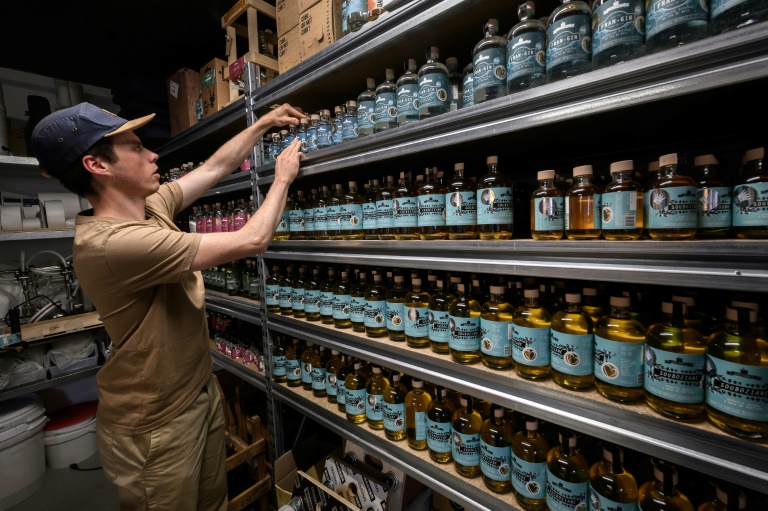
In the one-road hamlet of Souboz, nearly 900 metres (2,950 feet) up in the Jura mountains, the nature-loving Gyger brothers distill whatever they forage, such as gentian roots and juniper, in a bid to sustain the local economy.

Switzerland is trying to stave off the slow-motion extinction of its remote communities as young people move to the cities for jobs and opportunities.

Thanks to a grant from the Swiss Mountain Aid foundation, the Gygers were able transform their grandfather’s old home into the Gagygnole distillery, turning professional a couple of years ago.

The name comes from eldest brother Gaetan’s nickname Gagy, and gnole — French slang for a drop of the hard stuff.

On the ground floor of an old farmhouse, the scent of coriander and juniper berries hangs in the air, while warmth emanates from the 2.5-metre-high copper still in which Gaetan distills gin over a wood fire.

“This production site has been in our lives since we were very young. We really have roots anchored in our village,” he told AFP.

An agronomist by training, Gaetan, now 30, had studied in Geneva.

“We didn’t want to set up in the city,” he said, despite the bigger potential client base.

– Mountains in Swiss DNA –

The brothers’ choice is a rare one in Switzerland.

The mountains cover 70 percent of the country, but three-quarters of the population lives on the plain between the Juras in the north and the Alps in the south and east.

Geneva, Lausanne, Bern and Zurich all lie in the area of relatively flat terrain between the two mountain ranges.

The mountain villages are emptying, their grocery stores are closing and, as in Souboz, the schools are shutting, too, as the population gradually shifts ever more towards the lower-lying towns and cities.

The population of Souboz has dropped from 135 in 2012 to 85 last year.

Faced with the slow-motion exodus, some villages are trying everything they can to reverse the tide, including financial incentives to attract newcomers, such as offering empty houses for a symbolic sum of one Swiss franc.

And Swiss Mountain Aid provides funding to hundreds of entrepreneurs, such as the Gyger brothers, to bring jobs and business to the hills.

The mountains are “part of our genes, our DNA”, but “if we want to keep the mountains alive, there must be people”, said the foundation’s chairman Willy Gehriger.

“We act like the spark,” he explained.

Established in 1943 to help lift mountain dwellers out of poverty, the privately-funded foundation mainly supported farmers initially — but broadened its scope around a dozen years ago.

Now it helps small businesses, installs Wi-Fi, pays for computer courses and funds the transformation of dilapidated listed buildings into tourist accommodation.

Gehriger said the agricultural sector alone was no longer enough to keep the mountains thriving.

– Message in a bottle –

Dressed in baseball caps and t-shirts and armed with an iPad, the Gygers are far from the stocky, rustic, grumpy stereotype of mountain men.

They are on a mission to repopulate Souboz and revive the economy in the local Juras.

“We’re aware of doing something good for Souboz. Our mountain regions have enormous potential. They’re really something that we Swiss should be proud of,” said middle brother Luca, 27.

Their gamble has paid off as the family business has a handful of employees and occasionally takes on local artisans and farmers to help bottle up the brothers’ original gin, whisky and vodka recipes.

Last year, they produced 18,000 bottles of spirits.

Gagygnole’s eaux de vie are sold in 200 shops around Switzerland and one of their concoctions was voted the best gin in the country last year — while the brothers’ gin fondue is also a hit.

The Gygers think it is still too early to consider exporting.

“We always refused because it was difficult in terms of logistics, but why not… as long as it goes with our philosophy,” said 26-year-old Tim.

Asian markets drop after Wall St battering

Asian markets posted losses Thursday, after Wall Street suffered one of its worst batterings in two years in the previous session.

Downcast earnings reports from retailers had exacerbated worries about consumer resilience and corporate profitability Wednesday, sparking a rough day’s trade.

By Thursday afternoon, Hong Kong was down by more than two percent, while Tokyo closed down by 1.89 percent.

Among the biggest losers in Hong Kong were Chinese tech giants, after Tencent reported lacklustre profits, fuelling wider concerns for a grim earnings season as China’s economic outlook worsens.

Tencent shares plunged more than eight percent in early trading before paring losses slightly, a day after it posted its slowest revenue gain since going public in 2004.

Alibaba dropped more than six percent, while Baidu and Xiaomi were both down.

Elsewhere in the region, Australia posted its lowest jobless rate in 48 years, in a potential boost to Prime Minister Scott Morrison two days ahead of tightly contested federal elections.

The unemployment rate dipped to 3.9 percent, the official statistics body said, the lowest rate since 1974.

But stocks in Sydney were still down, as were those in Singapore, Seoul and Taipei.

Jakarta and Shanghai eked out small gains.

Stephen Innes at SPI Asset Management called Wednesday’s losses “the most significant daily decline since June 2020”.

“The weakness came as Target’s quarterly earnings added fuel to the recession risk narrative,” he added.

Target, the North American-focused big-box retailer, plunged around 25 percent after earnings missed expectations despite higher sales.

The company pointed to the hit from higher operating costs in results that echoed those of bigger rival Walmart.

The retailers said profits were under pressure and some consumers were avoiding discretionary purchases as prices for food, gasoline and other household staples rise.

All three major US indices dove, with the Dow sinking more than 1,150 points or 3.6 percent, and the Nasdaq plunging 4.7 percent.

European bourses were also down.

“The big falls in shares of these retails… highlights the damage inflation is inflicting on the sector’s profit margins,” said Fawad Razaqzada at City Index.

“What’s more, consumers are getting squeezed as well and if they now start to cut back on spending then retailers could suffer even further,” he added.

In some of his most hawkish remarks to date, Federal Reserve Chair Jerome Powell said Tuesday that the US central bank would raise interest rates until there is “clear and convincing” evidence that inflation is in retreat. 

“We’ve had investors for the most part who’ve lived through three or four decades of declining interest rates, rising multiples for equities and strong earnings for the most part,” Christopher Smart, chief global strategist at Barings LLC, told Bloomberg Television.

“Now you’re entering a very new phase where we’re not really quite sure where inflation is going to level off.”

— Bloomberg News contributed to this report —

– Key figures at around 0700 GMT –

Hong Kong – Hang Seng Index: DOWN 2.39 percent at 20,150.33 

Shanghai – Composite: UP 0.33 percent at 3,096.04 (close)

Tokyo – Nikkei 225: DOWN 1.89 percent at 26,402.84 (close)

Brent North Sea crude: UP 1.33 percent at $110.56 per barrel

West Texas Intermediate: UP 0.62 percent at $110.27 per barrel

Euro/dollar: DOWN at $1.0479 from $1.0487

Pound/dollar: DOWN at $1.2346 from $1.2349

Euro/pound: DOWN at 84.88 pence from 84.93 pence

Dollar/yen: UP at 128.58 from 128.54 yen

New York – Dow: DOWN 3.6 percent at 31,490.07 (close)

London – FTSE 100: DOWN 1.1 percent at 7,438.09 (close)

Close Bitnami banner
Bitnami