World

Most automakers fall short on climate goals: report

Only two of the world’s 12 top automakers plan to make enough electric vehicles by 2030 to stay in step with Paris Agreement climate goals, experts said Wednesday.

Globally, more than half of all new vehicles coming off of production lines in 2029 would need to be electric for the sector to be compliant with the goal of capping global warming at 1.5 degrees Celsius above preindustrial levels, according to Influence Map, a research NGO that evaluates corporate climate goals and policies.

At the same time, 11 of the 12 carmakers — while publicly supporting the Paris Agreement — have actively opposed government policies to accelerate the shift to electric vehicles, especially the phase-out internal combustion engines, Influence Map said.

Japanese auto giants Toyota, Honda and Nissan are especially far off the mark, with non-polluting cars accounting for only 14, 18 and 22 percent, respectively, of their planned production in 2029, the report said. 

South Korea’s Hyundai, US manufacturer Ford and France’s Renault — with 27, 28 and 31 percent of their global fleets projected to be electric in seven years — were only marginally more on track.

The standout exception is US-based Tesla, a “pure player” manufacturer that has only ever made electric cars and trucks.

– Lagging behind –

“Almost all automakers are failing to keep pace with the transition to zero emissions,” said Influence Map program Manager Ben Youriev.

“Those lagging the furthest behind are also the most negative when it comes to climate policy advocacy.”

Ford, Stellantis, Volkswagen and BMW come closer to the 52 percent threshold for compatibility with Paris temperature target, with 36 to 46 percent of their fleets planned to be electric in 2029.

Besides Tesla, only Mercedes-Benz — at 56 percent — is projecting a transition in keeping with that target.

To evaluate automaker trajectories, Influence Map cross-references different datasets.

Researchers used the International Energy Agency’s (IEA) scenario for decarbonising the transport sector rapidly enough to not jeopardise the 1.5C goal, which would need 57.5 percent of all cars produced in 2030 to be electric.

The IEA’s Net Zero by 2050 report also assumes the share of renewables in global electricity generation would be about 60 percent in 2030.

The Influence Map report then compared this goal with IHS Markit production forecasts to 2029, corresponding to a 52 percent share of electric vehicles in the IEA schema. 

Collectively, the combined global production of battery electric vehicles by all automakers is forecast to only reach 32 percent by 2029.

That means the auto industry would need to boost production of zero-emission cars by 80 percent in order to hit the IEA 2030 production target.

– Impact of government policy –

The report findings reveal the critical impact of government policy on the pace of the transition away from internal combustion engines, which account for around 16 percent of global energy-related CO2 emissions, according to the UN’s Intergovernmental Panel on Climate Change (IPCC).

In the European Union, which aims to cut greenhouse gas emissions to 55 percent below 1990 levels by 2030, Toyota’s produced fleet is projected to be 50 percent electric by 2029. 

But in the United States, where fuel emissions standards are less stringent, that figure is only four percent.

Similarly, Ford’s EU-based production is forecast to be 65 percent electric by 2029 — nearly double it’s global average.

One pension fund with shares in Toyota and Volkswagen expressed concern about the Influence of the Map findings.

“As investors, we are concerned with the picture painted which confirms that some companies in the auto industry are placing themselves on the wrong side of history when actively opposing much needed climate change-related rules and regulations,” Anders Schelde, CIO of Denmark’s AkademikerPension, with $20 billion of assets under management, told AFP.

“We are also worried about Toyota scoring worst among peers on climate lobbying as the company is jeopardizing its valuable brand.”

US reopens embassy in Kyiv after closure forced by war

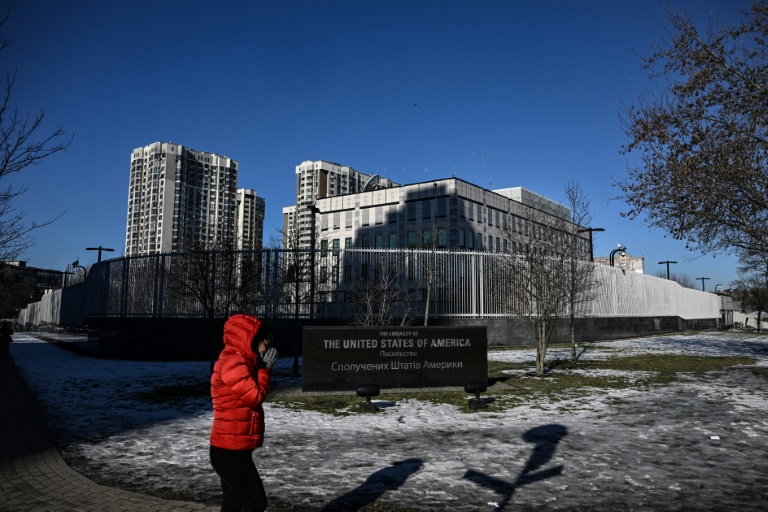
The United States reopened its embassy in Kyiv Wednesday after closing it for three months due to the Russian invasion of Ukraine, the State Department said.

“The Ukrainian people, with our security assistance, have defended their homeland in the face of Russia’s unconscionable invasion, and, as a result, the Stars and Stripes are flying over the embassy once again,” Secretary of State Antony Blinken said in a statement.

“We stand proudly with, and continue to support, the government and people of Ukraine as they defend their country from the Kremlin’s brutal war of aggression.”

The State Department closed the embassy in Kyiv on February 14, 10 days before Russian troops poured over the border in a long-anticipated effort to oust the Ukraine government and install one more in line with Moscow.

US diplomats continued to offer services from the far-west city of Lviv, at times staying overnight in neighboring Poland due to security concerns.

The return to Kyiv came weeks after Ukraine forces soundly defeated Russian efforts to seize control of northern Ukraine and the capital, and the war became centered in the east and south of the country.

“As we take this momentous step, we have put forward additional measures to increase the safety of our colleagues who are returning to Kyiv and have enhanced our security measures and protocols,” said Blinken.

'Historic’ equal pay deal for US men and women soccer teams

The US men’s and women’s national soccer teams will receive equal pay under a “historic” agreement announced by the US Soccer Federation on Wednesday, following years of pressure from female players.

The move makes the federation the first in the world to equalize World Cup prize money awarded to its men’s and women’s teams.

“This is a truly historic moment. These agreements have changed the game forever here in the United States and have the potential to change the game around the world,” said US Soccer president Cindy Parlow Cone.

The terms of Wednesday’s landmark agreement include “identical compensation for all competitions, including the FIFA World Cup, and the introduction of the same commercial revenue sharing mechanism for both teams,” USSF said.

The deal stipulates that players from both teams “pool and share” the otherwise unequal prize money paid by FIFA for participation in their respective World Cups.

Equalizing World Cup pay had been a major stumbling block given the huge discrepancy in FIFA’s payouts for the men’s and women’s events.

“The accomplishments in this CBA (collective bargaining agreement) are a testament to the incredible efforts of WNT players on and off the field,” said US women’s captain Becky Sauerbrunn, president of the women’s players’ association.

She added that she hoped the agreement “will similarly serve as the foundation for continued growth of women’s soccer both in the United States and abroad.”

– ‘They said it was not possible’ –

The US men received $5.375 million from FIFA for reaching the round of 16 at the 2014 World Cup — the last they played in — while the women received $1.725 million for winning the 2015 tournament.

FIFA awarded France $38 million for winning the 2018 men’s World Cup but only $4 million to the United States for their 2019 Women’s World Cup triumph.

For non-World Cup tournaments, US players from “both teams will earn an equal amount of the total prize money paid when both teams participate in the same competition.”

In February, the US national women’s team won a $24 million payout and a promise of equal pay in a major settlement with US Soccer, that was contingent on the new collective bargaining agreement.

The question of World Cup prize money had formed a prominent part of the lawsuit, which was filed in 2019 and accused the federation of “stubbornly refusing” to pay its men and women’s players equally.

The agreement, which runs through 2028, also aims to improve “player health and safety, data privacy and the need to balance responsibilities to both club and country,” USSF said.

Women’s star Megan Rapinoe, who has forged a reputation as an unflinching advocate for social justice causes including equal pay and conditions for her and team-mates, said in February that the settlement marked a moment in which “US Soccer changed for the better.”

Center-back Walker Zimmerman, a member of the men’s team players association, welcomed Wednesday’s deal saying that “we hope this will awaken others to the need for this type of change.”

“They said equal pay for men and women was not possible, but that did not stop us and we went ahead and achieved it,” he added.

The United States women have won four Women’s World Cup titles and four Olympic gold medals. They are chasing an unprecedented third consecutive Women’s World Cup crown after hoisting trophies in 2015 at Canada and 2019 in France. They last won Olympic gold in London in 2012.

French towns sweat in record May heat

Several southern French towns sizzled in record high temperatures for May on Wednesday, while the month as whole is on track to be the hottest since records began, the national weather service said. 

Towns such as Albi, Toulouse and Montelimar in southern France set records of between 33.4-33.9 degrees Celsius (92.1-93.0 degrees Fahrenheit) on Wednesday, while areas on the west and northern coasts also logged unprecedented highs, Meteo-France said.

The country has been in the grip of an extraordinary warm spell for this time of year, with the last 37 days in a row featuring temperatures above the average.

It was “highly probable” that May 2022 would be the hottest since records began, surpassing the previous high set in May 2011, Meteo-France said.

“It’s a warm period, long-lasting, wide-reaching and intense, that is exceptional for this time of year,” meteorologist Matthieu Sorel from Meteo-France told AFP.

The warm spell did not meet the technical definition of a heatwave — when average nation-wide temperatures need to surpass 25.3C for three consecutive days.

But it is causing major problems for farmers and warnings that it might affect France’s wheat crop which enters a crucial growth stage in May.

Wheat prices are at record levels globally, mostly due to the war in Ukraine, which was a major exporter of the cereal before Russia’s attack began in February.

All heatwaves today bear the unmistakable and measurable fingerprint of global warming, a new academic report from experts in the World Weather Attribution (WWA) consortium said last week.

Temperatures in India and Pakistan have hit records recently, while Spain has also issued warnings about extreme heat in some southern areas this week.

New York agency accuses Amazon of workforce discrimination

New York state accused Amazon Wednesday of discriminating against pregnant workers and staff with disabilities by refusing to make reasonable accommodations.

The New York State Division of Human Rights’ complaint faulted Amazon for allowing worksite managers to override accommodations consultants when they urged flexibility for workers protected under human rights law. 

“My administration will hold any employer accountable, regardless of how big or small, if they do not treat their workers with the dignity and respect they deserve,” said New York Governor Kathy Hochul in a news release that described Amazon as having 23 worksites in New York with more than 39,000 workers total.

In one case, a pregnant worker asked not to be required to lift packages over 25 pounds. The worksite manager refused to make the accommodation, resulting in an injury that forced the employee into “indefinite unpaid leave,” the agency said.

In another case, a worksite manager denied a request from a worker with a documented disability who presented medical documentation justifying the need for a specific sleep schedule. 

After initially recommending the accommodation, the consultant reversed position after the site manager refused to grant the change, the agency said.

“Since the 1970s — years before the (federal) Americans with Disabilities Act — New York State has prohibited discrimination against pregnant employees in the workplace,” said Melissa Franco, deputy commissioner for enforcement at the agency. “The division will work to ensure that everyone in our state is fully afforded the rights and dignities that the law requires.”

The agency is seeking an administrative order requiring Amazon to cease the current conduct, train managers on how to handle requests for reasonable accommodation and pay civil fines.

Amazon did not immediately reply to an AFP request for comment.

One of last Rwanda genocide fugitives 'died in 2002'

One of the last five fugitives wanted for his role in the 1994 genocide in Rwanda, Pheneas Munyarugarama, died in Democratic Republic of Congo in 2002, UN prosecutors said Wednesday.

Munyarugarama, a local army commander, “died of natural causes” and was buried in Kankwala, in the eastern DRC, the Mechanism for International Criminal Tribunals (MICT) announced in The Hague.

The news comes less than a week after the tribunal announced the death of Protais Mpiranya, the top remaining wanted suspect over the deaths of some 800,000 Tutsis and moderate Hutus in a 100-day slaughter.

“For the victims and survivors of Munyarugarama’s crimes in the Bugesera region, we hope this result brings some closure,” the tribunal’s chief prosecutor Serge Brammertz said in a statement.

A former lieutenant-colonel in the Rwandan Armed Forces (FAR), Munyarugarama, who was born in 1948, was charged by the International Criminal Tribunal for Rwanda with eight counts including genocide and crimes gainst humanity.

“Munyarugarama was alleged to be responsible for mass killings, attacks, and sexual violence against Tutsi civilians at various locations in the Bugesera region, including the attacks on Tutsi refugees at the Ntarama and Nyamata Catholic Churches,” the MICT said.

The tribunal said that after a “comprehensive and challenging investigation”, prosecutors established that Munyarugarama “died from natural causes on or about 28 February 2002 in Kankwala… where he was also buried.”

The tribunal said only four fugitives now remained on its books: Fulgence Kayishema, Charles Sikubwabo, Charles Ryandikayo and Aloys Ndimbati.

Top fugitive and alleged genocide financier Felicien Kabuga was arrested near Paris in 2020.

– ‘Unmarked grave’ –

The Libya and Belgian-trained Munyarugarama fled to the former Zaire shortly after the 1994 genocide where he joined remnants of the Rwandan armed forces, according to a summary of his movements, made by the tribunal’s prosecutors.

In 1998, he helped recruit ex-Rwandan soldiers for the Democratic Forces for the Liberation of Rwanda (FDLR) rebel group, largely basing himself in the DRC’s eastern Kivu provinces as a senior FDLR leader.

In late 2001, the Hutu-supremacist movement was to gather in Kinshasa for talks on how to integrate itself into one structure, prosecutors said.

Munyarugarama, escorted by two relatives and FDLR escorts, “made a lengthy journey on foot… heading for Kinshasa”, prosecutors said.

“The journey lasted several months and involved crossing arduous terrain including jungle, swamps and several difficult river crossings.”

Munyarugarama “had difficulty with the river crossings… and nearly drowned, and afterwards started reporting feeling unwell to his travelling companions,” prosecutors said.

Several days after reaching the small village of Kankwala in North Katanga along the way, “Munyarugarama fell ill” and died in 2002.

“Although the exact cause of death is unknown, due to a lack of trained medical staff and facilities, it was from natural causes,” prosecutors said, adding he was buried there the next day “in a coffin in an unmarked grave”.

Prosecutors last week too announced the death from tuberculosis of leading fugitive Mpiranya in Zimbabwe in 2006.

Mpiranya was allegedly among those who ordered the murder of then prime minister Agathe Uwilingiyimana, 10 Belgian soldiers protecting her, and several other leading politicians and their families on April 7, 1994, in the early hours of the genocide.

War in Ukraine: Latest developments

Here are the latest developments in the war in Ukraine:

– Nearly 1,000 Mariupol fighters remain: separatist –

More than 1,000 Ukrainian soldiers including senior commanders, remain inside the besieged Azovstal steel plant in Ukraine’s port city of Mariupol, a pro-Russian separatist leader, Denis Pushilin, says.

Russia says that a total of 959 Ukrainian soldiers have surrendered at the plant, including 80 wounded, since Monday.

It said that the injured are being treated in a hospital in a part of the eastern Donetsk region controlled by pro-Russian rebels.

Kyiv’s defence ministry says it will do “everything necessary” to rescue the personnel still in the plant’s tunnels.

Ukraine says it hopes to exchange Azovstal fighters for Russian soldiers it is holding.

– First war crimes trial starts – 

A 21-year-old Russian soldier pleads guilty to killing an unarmed Ukrainian civilian at a war crimes trial in Kyiv, in the first such case to go to court since the start of the offensive.

Vadim Shishimarin from Irkutsk in Siberia admitted gunning down the 62-year-old man near the central village of Chupakhivka to prevent him reporting a carjacking by fleeing Russian troops.

He faces possible life imprisonment for war crimes and premeditated murder after the case heard by a district court in Kyiv.

“By this first trial, we are sending a clear signal that every perpetrator, every person who ordered or assisted in the commission of crimes in Ukraine shall not avoid responsibility,” Ukraine’s chief prosecutor Iryna Venediktova tweeted.

– Finland, Sweden submit NATO bids –

Finland and Sweden submit their bids to join NATO, sealing their decision to jettison decades of military non-alignment, despite threats of reprisals from Moscow.

NATO chief Jens Stoltenberg calls it a “historic step”. He has promised to welcome them “with open arms” despite Turkey’s threat to veto their membership over its claim that the Nordic neighbours harbour members of armed groups opposed to Ankara.

NATO ambassadors are expected to discuss the applications on Wednesday.

Finland, which shares a 1,300-kilometre (800-mile) border with Russia, and Sweden fear they could be future targets of Russian aggression following Moscow’s invasion of Ukraine. Public support in the two countries for NATO membership skyrocketed after the war began.

– Moscow expels dozens of diplomats –

Russia expels dozens of French, Italian and Spanish diplomats in tit-for-tat responses to the expulsion of Russian diplomats over the Ukraine conflict.

The foreign ministry says 27 Spanish, 24 Italian and 34 French diplomats have been declared “persona non grata”.

All three countries condemn the move, with Italian Prime Minister Mario Draghi calling it a “hostile act” which will make resolving the war through peaceful means more difficult.

– Peace talks on hold –

Russia and Ukraine both admit that peace talks have stalled, with both accusing the other of blocking progress.

Kyiv accuses Moscow of failing to find areas for compromise. 

Kremlin spokesman Dmitry Peskov blames the “complete lack of will of Ukrainian negotiators to continue this process.” 

The two sides reported progress at talks in Istanbul in late March but the process stalled shortly after, following revelations of atrocities in towns that were controlled by Russian forces.

– Russia closes CBC offices –

Russia says it is closing the Moscow offices of the Canadian Broadcasting Corporation in retaliation for Ottawa’s banning of Russian state media outlet RT.

– US ends debt exemption –

The United States will likely end an exemption allowing Moscow to pay its foreign debts with dollars held in Russia, the US treasury secretary Janet Yellen says, a move that could push it into default.

– Russian fire intensifies in north –

Russian forces have intensified artillery fire on Ukrainian border settlements around the city of Sumy to the north and close to the Russian border and Chernihiv to the east of the capital over the past few weeks, the Ukrainian army reports.

Moscow has switched its focus from the north to Donbas, a region near the Russian border that is home to pro-Russian separatists.

burs-cb-jmy/pvh

Tom Cruise: 'I make movies for the big screen'

Tom Cruise made it clear there was no chance “Top Gun: Maverick” would be released first on a streaming platform despite multiple pandemic delays, as he visited Cannes on Wednesday. 

“I make movies for the big screen… I love this experience and I want other filmmakers to have that experience,” Cruise told an audience at the Cannes Film Festival. 

He was speaking ahead of the European premiere of the much-anticipated sequel to his 1986 blockbuster. 

The film was supposed to have its first big screening in Cannes way back in 2020 before the festival was cancelled by the Covid pandemic, which was followed by a series of postponements to the film’s release. 

Asked if he had considered debuting “Top Gun: Maverick” on a streaming platform — as happened with several big productions in 2020 and 2021 — Cruise was emphatic: “That was not going to happen, ever.”

“Look at us all together, we’re all united, we all speak different languages, different cultures… but we’re able to come together around a shared experience,” he said of his love for movie theatres. 

“Cinema is my love, my passion. I always go to movies when they come out. I’ll put my cap on and sit in the audience with everyone. I’ve spent a lot of time with theatre owners.” 

Cruise has become an ambassador for cinemas — even sneaking into a screening of Christopher Nolan’s “Tenet” at the height of the pandemic in summer 2020 in a bid to boost sales.

With “Top Gun” out worldwide next week, and two “Mission: Impossible” sequels due in 2023 and 2024, Cruise hopes to play a key role in helping theatres recover from the ongoing slump triggered by the pandemic.

“I go to cinemas and there’s people there who are serving the popcorn and running these theatres. I tell them: ‘I know what you’re going through, just know we’re making ‘Mission: Impossible’, ‘Top Gun’ is coming out…” 

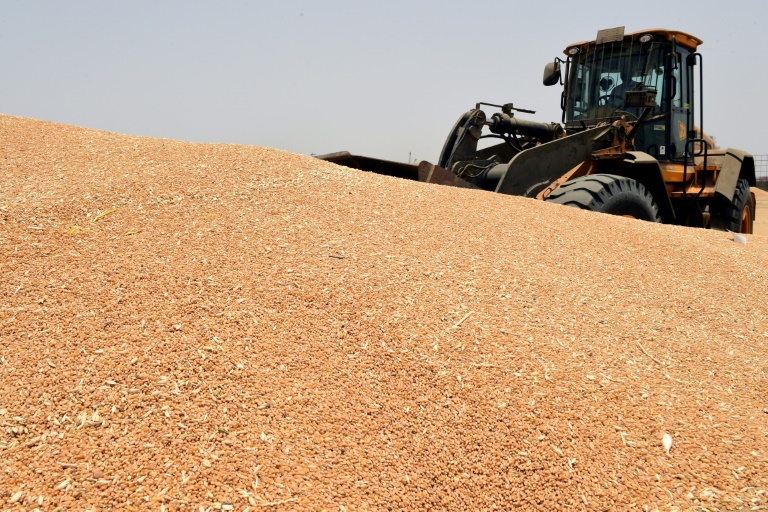
World Bank to provide additional $12 bn to address 'devastating' global food crisis

The World Bank announced Wednesday an additional $12 billion in funding to mitigate the “devastating effects” of severe growing global food insecurity driven by climate change and Russia’s invasion of Ukraine.

The move, which will bring total available funding for projects over the next 15 months to $30 billion, was unveiled hours before a major United Nations meeting on global food security.

Amid the growing shortages intensified by the war in Ukraine, a key grain producer, the new funding will help boost food and fertilizer production, facilitate greater trade and support vulnerable households and producers, the World Bank said.

“Food price increases are having devastating effects on the poorest and most vulnerable,” World Bank President David Malpass said in a statement. 

“It is critical that countries make clear statements now of future output increases in response to Russia’s invasion of Ukraine.”

The bank previously announced $18.7 billion in funding for projects linked to “food and nutrition security issues” for Africa and the Middle East, Eastern Europe and Central Asia, and South Asia.

Russia’s invasion of Ukraine and international economic sanctions on Moscow have disrupted supplies of fertilizer, wheat and other commodities from both countries, pushing up prices for food and fuel, especially in developing nations.

And India over the weekend banned wheat exports, which sent prices for the grain soaring.

“Countries should make concerted efforts to increase the supply of energy and fertilizer, help farmers increase plantings and crop yields, and remove policies that block exports and imports, divert food to biofuel, or encourage unnecessary storage,” Malpass said.

– Ukraine only ‘latest shock’ –

Washington welcomed the decision, which is part of a joint action plan by multilateral lenders and regional development banks to address the food crisis.

“The Russian war against Ukraine is the latest global shock that is exacerbating the sharp increase in both acute and chronic food insecurity in recent years driven by conflict, climate change and economic downturns, such as those associated with the Covid-19 pandemic,” the Treasury Department said, applauding the institutions for working swiftly to address the issues.

The situation will only grow worse because of the Ukrainian war, experts warn, as Russia and Ukraine alone produce 30 percent of the global wheat supply.

Secretary of State Antony Blinken is due in New York on Wednesday to chair a UN meeting on global food security.

Vellamvelly Muraleedharan, India’s minister of state for external affairs, also is due to participate in the meeting.

Washington’s UN ambassador, Linda Thomas-Greenfield, on Monday urged New Delhi to revoke the ban announced Saturday in the face of falling production caused primarily by an extreme heatwave.

She said Wednesday’s session aims to “bring countries together to look at what countries might be able to help fill the gap” in wheat supplies caused by the Russian invasion of Ukraine.

But food insecurity had begun to spike even before Moscow invaded its neighbor on February 24.

UN data showed that 193 million people in 53 countries were acutely food insecure last year, meaning they needed urgent assistance to survive.

World Bank to provide additional $12 bn to address 'devastating' global food crisis

The World Bank announced Wednesday an additional $12 billion in funding to mitigate the “devastating effects” of severe growing global food insecurity driven by climate change and Russia’s invasion of Ukraine.

The move, which will bring total available funding for projects over the next 15 months to $30 billion, was unveiled hours before a major United Nations meeting on global food security.

Amid the growing shortages intensified by the war in Ukraine, a key grain producer, the new funding will help boost food and fertilizer production, facilitate greater trade and support vulnerable households and producers, the World Bank said.

“Food price increases are having devastating effects on the poorest and most vulnerable,” World Bank President David Malpass said in a statement. 

“It is critical that countries make clear statements now of future output increases in response to Russia’s invasion of Ukraine.”

The bank previously announced $18.7 billion in funding for projects linked to “food and nutrition security issues” for Africa and the Middle East, Eastern Europe and Central Asia, and South Asia.

Russia’s invasion of Ukraine and international economic sanctions on Moscow have disrupted supplies of fertilizer, wheat and other commodities from both countries, pushing up prices for food and fuel, especially in developing nations.

And India over the weekend banned wheat exports, which sent prices for the grain soaring.

“Countries should make concerted efforts to increase the supply of energy and fertilizer, help farmers increase plantings and crop yields, and remove policies that block exports and imports, divert food to biofuel, or encourage unnecessary storage,” Malpass said.

– Ukraine only ‘latest shock’ –

Washington welcomed the decision, which is part of a joint action plan by multilateral lenders and regional development banks to address the food crisis.

“The Russian war against Ukraine is the latest global shock that is exacerbating the sharp increase in both acute and chronic food insecurity in recent years driven by conflict, climate change and economic downturns, such as those associated with the Covid-19 pandemic,” the Treasury Department said, applauding the institutions for working swiftly to address the issues.

The situation will only grow worse because of the Ukrainian war, experts warn, as Russia and Ukraine alone produce 30 percent of the global wheat supply.

Secretary of State Antony Blinken is due in New York on Wednesday to chair a UN meeting on global food security.

Vellamvelly Muraleedharan, India’s minister of state for external affairs, also is due to participate in the meeting.

Washington’s UN ambassador, Linda Thomas-Greenfield, on Monday urged New Delhi to revoke the ban announced Saturday in the face of falling production caused primarily by an extreme heatwave.

She said Wednesday’s session aims to “bring countries together to look at what countries might be able to help fill the gap” in wheat supplies caused by the Russian invasion of Ukraine.

But food insecurity had begun to spike even before Moscow invaded its neighbor on February 24.

UN data showed that 193 million people in 53 countries were acutely food insecure last year, meaning they needed urgent assistance to survive.

Close Bitnami banner
Bitnami