World

US, EU team up on chip making and Russia disinformation

The United States and the European Union announced on Monday a joint effort to boost microchip manufacturing and tackle Russian disinformation around the war in Ukraine.

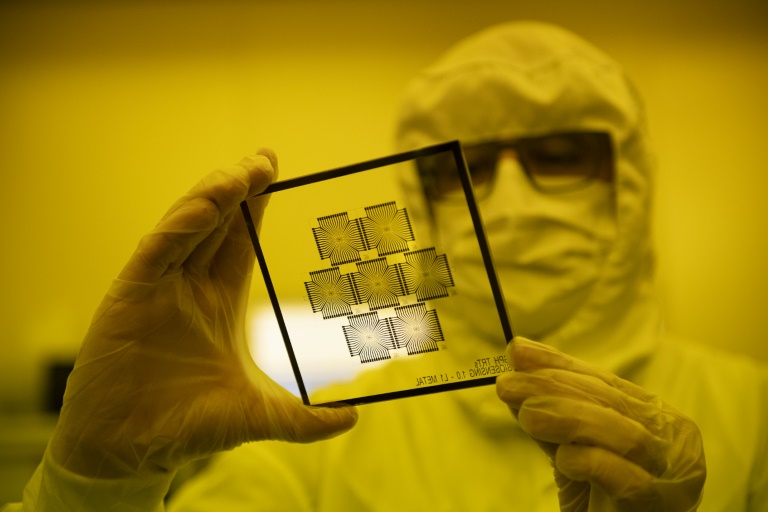
The two sides met outside Paris as part of the Trade and Technology Council (TTC), a forum created last year aimed largely at countering China’s increasingly powerful position in the technology sector.

But EU and US officials focused much of their efforts instead on Russia, issuing a statement that accused Moscow of an “all-out assault on the truth”.

They vowed to tackle Russian disinformation at home and abroad, accusing Moscow of seeking to blame Western sanctions for food supply shortages in Asia and Africa.

“We see the damage from the Russian invasion spreading across the world,” EU competition commissioner Margrethe Vestager told a press conference in Saclay, a technology hub south of Paris.

The council’s statement said practical actions could include funding or other support to promote access to “trustworthy and fact-based information”.

– No ‘subsidy race’ –

The TTC, which held its first meeting in the US city of Pittsburgh last September, has working groups that cover issues from Artificial Intelligence to export controls.

Officials said its work had already helped undermine Russia’s war effort by limiting exports of advanced technology in aerospace and cyber-surveillance.

Although Russia was the main focus, several of the council’s goals are aimed at China.

The TTC is trying to calm the two-year supply chain crisis in the chip industry, where China is a major global player.

The crisis is being blamed on a surge in demand for electronic gadgets during the pandemic coupled with the global supply chain crunch.

EU and US officials pledged to give the chip industry the maximum possible subsidies, but said they wanted to invest in a coordinated way to avoid “subsidy races”.

The forum also announced an “early warning system” that would highlight disruptions in the supply of semiconductors — materials like silicon that form the basis of chips.

The US already has an early warning system that proved useful “in helping us get ahead of a couple of potential shutdowns earlier this year”, according to one US official.

The official added that the two sides were already looking ahead to supply disruptions caused by pandemic lockdowns in China — the only major economy still hewing to a zero-Covid strategy.

– ‘A shrinking pie’ –

A related issue is a long-running shortage of rare earth elements, which are vital for the manufacture of products including electric vehicles.

The forum’s final statement highlighted that EU and US companies did not have “prominent positions” in the supply chain for rare earths.

“Nearly all production stages are concentrated in China,” the statement said, in one of only a handful of direct mentions of China.

Both the US and EU trumpeted their efforts to boost capacity to procure and process these elements and promised to “take utmost care to avoid unnecessary barriers to trade” across the Atlantic.

Russia’s war has handed the TTC a wider brief than initially envisaged, but US Trade Representative Katherine Tai argued that the forum had shown “agility” in adapting to what she described as a challenge to the whole logic of globalisation.

“This invasion results in a shrinking pie, not just for Russia, Ukraine or the EU, but for the entire world,” she told reporters.
Sweden enters 'new era' with NATO bid

Sweden on Monday officially announced it will apply for NATO membership as a deterrent against Russian aggression, entering a “new era” and reversing two centuries of military non-alignment.

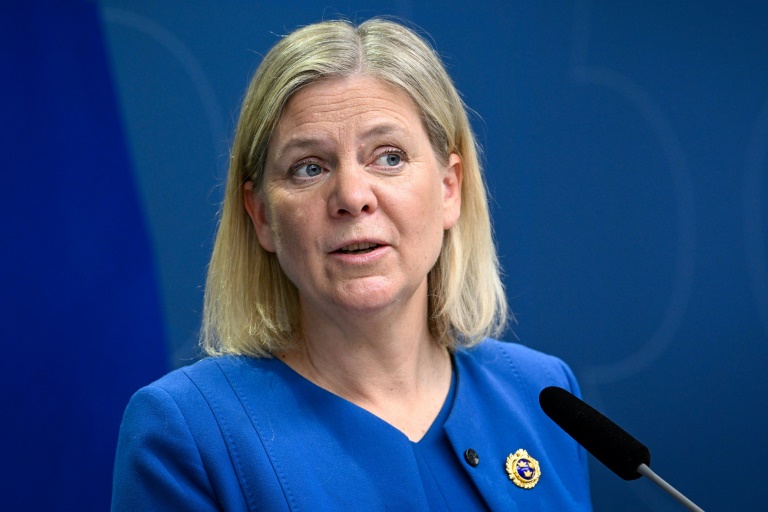
“The government has decided to inform NATO that Sweden wants to become a member of the alliance,” Prime Minister Magdalena Andersson told reporters a day after neighbouring Finland made a similar announcement.

“We are leaving one era and beginning another,” Andersson said of the dramatic turnaround of her country’s position less than three months after Russia’s invasion of Ukraine.

Sweden’s NATO ambassador would “shortly” inform NATO, she said.

Sweden and Finland have both expressed a desire to act in lockstep on NATO membership. They are expected to submit their applications jointly this week.

Russian President Vladimir Putin on Monday warned that NATO’s expansion may trigger a response from Moscow.

It poses “no direct threat for us… but the expansion of military infrastructure to these territories will certainly provoke our response,” Putin said during a televised summit meeting of the Collective Security Treaty Organisation, a Moscow-led military alliance. 

Andersson acknowledged Sweden would be “vulnerable” in the interim period before its application is ratified. 

Stockholm has received security assurances from several key partners, including the United States, Britain, Germany, France and the Nordic countries, she added.

Sweden’s Supreme Commander of the Armed Forces, Micael Byden, said the risk of a Russian military attack was “pretty low”, but the country could expect to see “disinformation campaigns, cyberattacks, sabotage, (and) subversion”.

– Soaring support –

Sweden’s announcement was expected after Andersson’s Social Democratic party on Sunday backed membership, in a dramatic U-turn. Sweden had opposed the idea since the birth of the Western military alliance.

The premier had earlier in the day consulted parliament by convening a debate, though lawmakers did not vote on the issue.

Six of eight parties in parliament, constituting a very broad majority, are in favour of joining. Swedish public support has also risen dramatically to around 50 percent — with about 20 percent against.

In Helsinki, support has surged even more dramatically, with more than three-quarters of Finns in favour of membership, almost triple the level seen before the war in Ukraine began on February 24.

Finnish lawmakers on Monday launched a marathon debate with over 150 of 200 MPs asking to speak, following a NATO membership proposal presented on Sunday by President Sauli Niinisto and Prime Minister Sanna Marin.

“Our security environment has fundamentally changed,” Marin told parliament.

“The only country that threatens European security, and is now openly waging a war of aggression, is Russia”, she said.

– Memories of war –

Finland, which shares a 1,300-kilometre (800-mile) border with Russia, has a long shared history with Russia.

It spent more than a century as part of the Russian empire until it gained independence in 1917. Finland was then invaded by the Soviet Union in 1939. 

Finns put up a fierce fight during the bloody Winter War, but were ultimately forced to cede a huge stretch of their eastern Karelia province in a peace treaty with Moscow.

An overwhelming majority of Finland’s 200 MPs — at least 85 percent — back the decision to join NATO.

During the debate in Sweden’s parliament, Andersson acknowledged that Sweden’s decision to join NATO was closely tied to Finland’s.

As the only country in the Baltic Sea region outside of NATO, Sweden would find itself “in a very vulnerable position”, she told parliament.

She also stressed Sweden’s “extensive military cooperation” with Finland.

If Sweden doesn’t join, and “Finland as a NATO member focuses more on its cooperation with NATO countries, Sweden’s defence capability decreases at a time when it instead needs to be strengthened.”

“The best thing for our country’s security is therefore for Sweden to apply for membership in NATO and to do it together with Finland,” she said.

Andersson later said “it shouldn’t take more than a year” for the alliance’s 30 members to unanimously ratify Sweden’s membership application.

NATO has said the two countries would be welcomed “with open arms”, but Turkish President Recep Tayyip Erdogan has expressed last-minute objections.

Ankara is angered by what it considers to be the two countries’ leniency, in particular Stockholm’s, towards the Kurdistan Workers’ Party (PKK), which is on the EU’s list of terrorist organisations.

Swedish Defence Minister Peter Hultqvist said Monday Sweden was sending a delegation to Turkey for talks with officials.

Kamala Harris leads high-level US team to meet new UAE leader

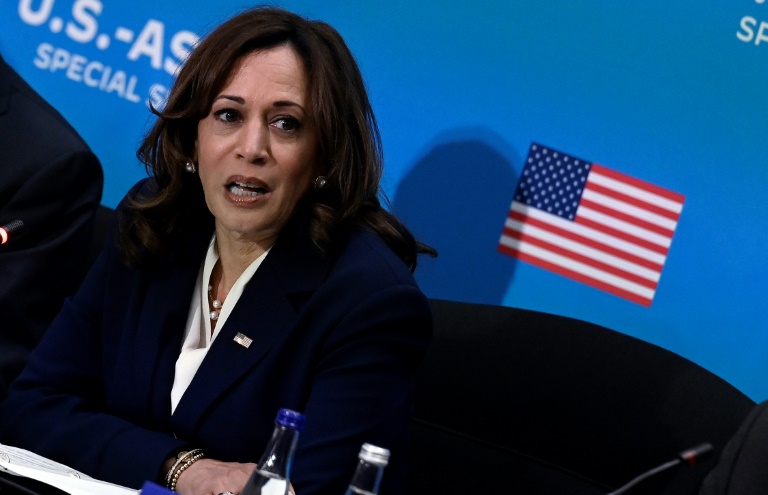
US Vice President Kamala Harris was Monday leading a high-level delegation to meet the United Arab Emirates’ new president, who takes over after his half-brother’s death, following months of strained ties between Washington and the oil-rich Gulf state.

Harris, whose team includes Secretary of State Antony Blinken, Defense Secretary Lloyd Austin and CIA chief William Burns, is heading the strongest delegation to visit UAE since President Joe Biden took office last year.

Sheikh Mohamed bin Zayed Al Nahyan or “MBZ”, for years the de facto ruler, was chosen as president on Saturday, a day after the death of his long-ailing half-brother, former leader Sheikh Khalifa.

Harris congratulated Sheikh Mohamed on his election as UAE president, the office of the vice president said in a statement.

“She underscored the strength of the United States’ partnership with the UAE and the Biden-Harris Administration’s commitment to deepening ties to advance the interests of the American and Emirati people,” it said.

“The Vice President noted that she is looking forward to the future of the relationship under Sheikh Mohamed’s leadership, and that our friendship and partnership is enduring.”

World leaders have flocked to Abu Dhabi to pay their respects, demonstrating the rising prominence of the major oil exporter after the decline of some of the Middle East’s traditional powers.

On Monday, Saudi Arabia’s Crown Prince Mohammed bin Salman was in Abu Dhabi to offer his condolences, while Britain’s Prince William also flew in.

The high-level US visit appears intended to repair a relationship that has deteriorated since Biden replaced Donald Trump in the White House in January 2021.

“We were here to discuss the strength of that partnership and that friendship and our commitment, going forward, to continue to work at the strength of that relationship,” said Harris. 

Ties have soured over issues including Abu Dhabi’s refusal to condemn Russia’s invasion of Ukraine and Washington’s reopening of nuclear talks with Iran, long accused by Gulf states of creating regional chaos.

Yousef al-Otaiba, the Emirati ambassador to the US, admitted in March that relations were going through a “stress test”.

– ‘Close cooperation’ –

Blinken, who arrived in Abu Dhabi early Monday morning ahead of the delegation, offered his “warm congratulations” to Sheikh Mohamed on becoming president. 

“He will carry on the legacy of Sheikh Khalifa bin Zayed. I look forward to continuing our two peoples’ close cooperation,” Blinken tweeted on Sunday. 

John Kerry, the special presidential envoy for climate, and Brett McGurk, the National Security Council coordinator for the Middle East and North Africa, are also in the US team. 

The UAE hosts US troops and has been a strategic partner to Washington for decades, but it has recently also grown closer to Russia economically and politically.

After a period of cosier ties under Trump, Biden shifted to a tougher stance on human rights and arms deals.

Relations were further strained when the UAE abstained from voting on a UN Security Council resolution demanding a Russian withdrawal from Ukraine.

Abu Dhabi has also shown no interest in increasing oil production after prices were sent sky-rocketing by the Russian invasion.

It has repeatedly urged Washington to “support re-designating” Yemen’s Iran-backed Huthi rebels as a “foreign terrorist organisation” — a label imposed by Trump but rescinded by the Biden administration.

The UAE is part of the Saudi-led military coalition that has been fighting for Yemen’s internationally recognised government in a civil war against the Huthis since 2015.

In December, the UAE threatened to scrap its mega-purchase of US F-35 fighter jets, protesting stringent conditions set by Washington.

In January, three oil workers were killed in a Huthi drone and missile attack on Abu Dhabi. US forces based there fired Patriot interceptors to help thwart a further attack.

Renault hands Russian assets to Moscow, McDonald's says will exit Russia

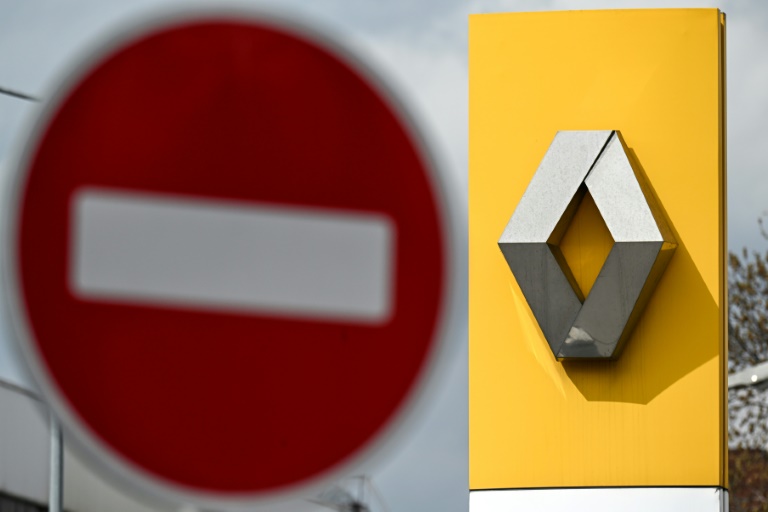
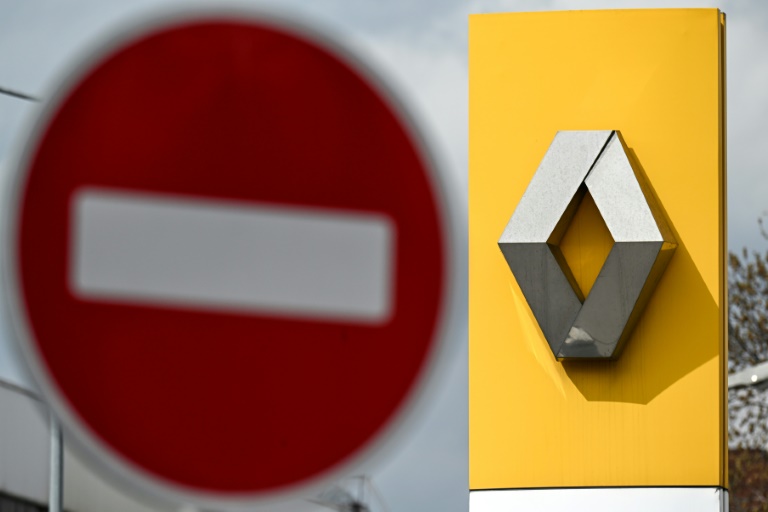
The exodus of Western businesses from Russia deepened on Monday as French automaker Renault’s local assets were effectively nationalised and fast food giant McDonald’s said it would exit the market.

Renault handed over its local assets to the Russian government, both parties announced, marking the first major nationalisation since the onset of sanctions over Moscow’s military campaign in Ukraine.

Meanwhile, American fast-food giant McDonald’s said it would exit the Russian market and sell its business after more than 30 years of operations in the country.

Renault controlled 68 percent of AvtoVAZ, the largest carmaker in Russia with the country’s top brand Lada, but was under pressure to pull out of the country since the start of Russia’s military intervention in Ukraine in late February.

Renault has funnelled billions of euros into the Soviet-era factory since the two automakers signed a strategic partnership agreement in 2008.

No financial details were provided on Monday, but Russian Industry and Trade Minister Denis Manturov said in April that Renault planned to sell its Russian assets for “one symbolic ruble”.

“Agreements were signed on the transfer of Russian assets of the Renault Group to the Russian Federation and the government of Moscow,” the industry ministry said in a statement.

Under the agreement Renault will retain a six-year option to buy back the stake in AvtoVAZ.

The deal also included Renault’s Moscow plant, which makes Renault and Nissan models.

“It was a brave and quick decision,” Renault chief executive Luca de Meo told reporters.

– ‘New page in history’ –

De Meo said Russia and its car industry will likely “continue to suffer for a long time” from sanctions imposed over Ukraine. 

He added that the company’s Russian operations would have quickly faced bankruptcy and 45,000 people would have lost their jobs. 

“We didn’t have many choices. I think we did the right thing,” he said.

De Meo did not disclose the financial details of the deal. 

Renault indicated that a non-cash writedown of 2.2 billion euros will be made on the firm’s Russia assets in the first half of 2022.

Renault’s shares skidded 0.7 percent lower on Monday, and are down more than a third from before the invasion began.

Thanks to AvtoVAZ, Russia was Renault Group’s second-largest market behind Europe last year, with around half a million vehicles sold.

Moscow mayor Sergei Sobyanin said production of passenger cars at the Renault plant would resume under the Soviet-era Moskvich (Muscovite) brand, which the French automaker had discontinued.

“We cannot allow thousands of workers to be left without work,” Sobyanin said in a statement.

“In 2022, we will open a new page in the history of Moskvich,” he added.

The first Moskvich cars were produced in 1946 and were inspired by Germany’s Opel Kadett K38, but the brand’s vehicles were notorious for their shoddiness.

Political commentator Anton Orekh said that it was unclear what Moscow authorities planned to do with the plant, but trying to make a new car from scratch in the absence of access to foreign technologies and components would be akin to throwing “billions to the wind.”

– McDonald’s exiting Russia  –

Since President Vladimir Putin sent troops into Ukraine on February 24, Renault has had difficulty keeping its operations going due to a lack of components following the imposition of Western sanctions.

The conflict and sanctions have triggered an exodus of foreign corporations.

Russian authorities said they were ready to nationalise foreign assets, and some officials assured Russians that their favourite brands would have domestic alternatives.

In March, citing “unspeakable suffering to innocent people”, McDonald’s closed all of its 850 restaurants in the country.

On Monday, the company said it was looking to sell “its entire portfolio of McDonald’s restaurants in Russia to a local buyer”.

The company added that after the sale, the restaurants would no longer be able to use the McDonald’s name, logo, branding or menu.

The restaurant chain, which launched in Moscow in January 1990 to great fanfare almost two years before the Soviet Union was dissolved, characterised the withdrawal as difficult but necessary.

“We’re exceptionally proud of the 62,000 employees who work in our restaurants, along with the hundreds of Russian suppliers who support our business, and our local franchisees,” chief executive Chris Kempczinski said in a statement. 

“However, we have a commitment to our global community and must remain steadfast in our values.”

McDonald’s shares were down 0.6 percent in midday trading in New York.

Renault hands Russian assets to Moscow, McDonald's says will exit Russia

The exodus of Western businesses from Russia deepened on Monday as French automaker Renault’s local assets were effectively nationalised and fast food giant McDonald’s said it would exit the market.

Renault handed over its local assets to the Russian government, both parties announced, marking the first major nationalisation since the onset of sanctions over Moscow’s military campaign in Ukraine.

Meanwhile, American fast-food giant McDonald’s said it would exit the Russian market and sell its business after more than 30 years of operations in the country.

Renault controlled 68 percent of AvtoVAZ, the largest carmaker in Russia with the country’s top brand Lada, but was under pressure to pull out of the country since the start of Russia’s military intervention in Ukraine in late February.

Renault has funnelled billions of euros into the Soviet-era factory since the two automakers signed a strategic partnership agreement in 2008.

No financial details were provided on Monday, but Russian Industry and Trade Minister Denis Manturov said in April that Renault planned to sell its Russian assets for “one symbolic ruble”.

“Agreements were signed on the transfer of Russian assets of the Renault Group to the Russian Federation and the government of Moscow,” the industry ministry said in a statement.

Under the agreement Renault will retain a six-year option to buy back the stake in AvtoVAZ.

The deal also included Renault’s Moscow plant, which makes Renault and Nissan models.

“It was a brave and quick decision,” Renault chief executive Luca de Meo told reporters.

– ‘New page in history’ –

De Meo said Russia and its car industry will likely “continue to suffer for a long time” from sanctions imposed over Ukraine. 

He added that the company’s Russian operations would have quickly faced bankruptcy and 45,000 people would have lost their jobs. 

“We didn’t have many choices. I think we did the right thing,” he said.

De Meo did not disclose the financial details of the deal. 

Renault indicated that a non-cash writedown of 2.2 billion euros will be made on the firm’s Russia assets in the first half of 2022.

Renault’s shares skidded 0.7 percent lower on Monday, and are down more than a third from before the invasion began.

Thanks to AvtoVAZ, Russia was Renault Group’s second-largest market behind Europe last year, with around half a million vehicles sold.

Moscow mayor Sergei Sobyanin said production of passenger cars at the Renault plant would resume under the Soviet-era Moskvich (Muscovite) brand, which the French automaker had discontinued.

“We cannot allow thousands of workers to be left without work,” Sobyanin said in a statement.

“In 2022, we will open a new page in the history of Moskvich,” he added.

The first Moskvich cars were produced in 1946 and were inspired by Germany’s Opel Kadett K38, but the brand’s vehicles were notorious for their shoddiness.

Political commentator Anton Orekh said that it was unclear what Moscow authorities planned to do with the plant, but trying to make a new car from scratch in the absence of access to foreign technologies and components would be akin to throwing “billions to the wind.”

– McDonald’s exiting Russia  –

Since President Vladimir Putin sent troops into Ukraine on February 24, Renault has had difficulty keeping its operations going due to a lack of components following the imposition of Western sanctions.

The conflict and sanctions have triggered an exodus of foreign corporations.

Russian authorities said they were ready to nationalise foreign assets, and some officials assured Russians that their favourite brands would have domestic alternatives.

In March, citing “unspeakable suffering to innocent people”, McDonald’s closed all of its 850 restaurants in the country.

On Monday, the company said it was looking to sell “its entire portfolio of McDonald’s restaurants in Russia to a local buyer”.

The company added that after the sale, the restaurants would no longer be able to use the McDonald’s name, logo, branding or menu.

The restaurant chain, which launched in Moscow in January 1990 to great fanfare almost two years before the Soviet Union was dissolved, characterised the withdrawal as difficult but necessary.

“We’re exceptionally proud of the 62,000 employees who work in our restaurants, along with the hundreds of Russian suppliers who support our business, and our local franchisees,” chief executive Chris Kempczinski said in a statement. 

“However, we have a commitment to our global community and must remain steadfast in our values.”

McDonald’s shares were down 0.6 percent in midday trading in New York.

Stocks dip on recession worries

Stocks mostly slipped lower on Monday with traders assessing recession risks as high inflation causes central banks to hike interest rates.

However, movements were more muted than during the volatile trading last week that saw huge swings higher and lower. 

Recession worries were sparked by data showing China’s retail sales slumped 11.1 percent on-year in April. Industrial production sank 2.9 percent — the lowest showing since March 2020.

The economic haemorrhaging has been driven by China’s Covid-19 lockdowns, with Shanghai in particular under strict virus restrictions since April, shuttering factories and pausing port activity. 

“Sentiment continues to remain cautious… as it becomes ever more apparent that the Chinese economy is likely to stay in the doldrums for a while yet, with the damage caused by Covid restrictions unlikely to improve significantly until well into the summer,” said Michael Hewson at CMC Markets UK.

Economist Clifford Bennett of ACY Securities said “there is a very real risk, even likelihood of a triple northern hemisphere recession across the US, Europe and China simultaneously and virtually immediately”.

He added that all eyes will be on how the Federal Reserve acts in the coming months, specifically whether it will further raise US interest rates to combat surging inflation. 

Wall Street’s three main stock indices were lower in late morning trading, with the tech-heavy Nasdaq slumping. 

While London ended with a gain, both Frankfurt and Paris ended lower amid more signs of economic fragility in the eurozone.

Brussels on Monday sharply cut its eurozone growth forecast for 2022, blaming skyrocketing energy prices caused by Russia’s invasion of Ukraine.

In commodities trading, wheat prices surged to a record after India banned exports of the commodity owing to a heatwave hitting production.

Global wheat prices had already soared on tight supply concerns since Russia’s February invasion of agricultural powerhouse Ukraine, which previously accounted for 12 percent of world exports.

The price jumped to 435 euros ($453) per tonne as the European market opened Monday.

Despite the recession concerns, oil prices rose on Monday as traders focused on risks of supply disruptions as EU nations continue to move towards a ban on Russian oil imports.

On the corporate front Monday, American fast-food giant McDonald’s said it would exit the Russian market and sell its business in the country to a local buyer in the wake of the Ukraine war.

Shares in McDonald’s shed 0.9 percent at the open of trading in New York.

French automaker Renault has meanwhile handed over its Russian assets to the Russian government, marking the first major nationalisation since the onset of sanctions over Moscow’s military campaign.

Renault shares skidded 0.7 percent lower.

– Key figures at around 1530 GMT –

New York – Dow: DOWN 0.3 percent at 32,087.89 points

EURO STOXX 50: DOWN 0.1 percent at 3,600.19

London – FTSE 100: UP 0.6 percent at 7,464.80 (close)

Frankfurt – DAX: DOWN 0.5 percent at 13,964.38 (close)

Paris – CAC 40: DOWN 0.2 percent at 6,347.77 (close)

Hong Kong – Hang Seng Index: UP 0.2 percent at 19,950.21 (close)

Shanghai – Composite: DOWN 0.3 percent at 3,073.75 (close)

Tokyo – Nikkei 225: UP 0.5 percent at 26,547.05 (close)

Brent North Sea crude: UP 0.5 percent at $112.05 per barrel

West Texas Intermediate: UP 1.0 percent at $111.62 per barrel

Euro/dollar: DOWN at $1.0402 from $1.0417 at 2130 GMT Friday

Pound/dollar: DOWN at $1.2247 from $1.2262

Euro/pound: UNCHANGED at 84.92 pence

Dollar/yen: DOWN at 129.12 yen from 129.19 yen

McDonald's to exit Russia, sell business in country

American fast-food giant McDonald said Monday it will exit Russia in the wake of the Ukraine invasion, ending a more than three-decade run begun in the hopeful period near the end of the Cold War.

The restaurant chain, which launched in Moscow in January 1990 to great fanfare almost two years before the Soviet Union was dissolved, characterized the withdrawal as difficult but necessary.

“The humanitarian crisis caused by the war in Ukraine, and the precipitating unpredictable operating environment, have led McDonald’s to conclude that continued ownership of the business in Russia is no longer tenable, nor is it consistent with McDonald’s values,” the company said in a statement.

The chain is looking to sell “its entire portfolio of McDonald’s restaurants in Russia to a local buyer.”

The burger giant is one of numerous foreign firms that have pulled out of the country or suspended operations following Moscow’s invasion of Ukraine in late February.

Earlier on Monday, French automaker Renault announced it had handed over its Russian assets to the government, marking the first major nationalization since the onset of Western sanctions against Moscow’s military campaign.

Russia’s President Vladimir Putin ordered troops into pro-Western Ukraine on February 24, triggering unprecedented sanctions and sparking an exodus of foreign corporations including H&M, Starbucks and Ikea.

In March, citing “unspeakable suffering to innocent people,” McDonald’s closed all of its 850 restaurants in the country, where it says it employs 62,000 workers.

But on Monday the “Big Mac” maker went a step further, saying the company “is pursuing the sale of its entire portfolio of McDonald’s restaurants in Russia to a local buyer.”

After the sale, the restaurants would no longer be able to use the McDonald’s name, logo, branding or menu, though the company will retain its trademark in the country, the company said.

Russia currently accounts for nine percent of the company’s revenue and three percent of its operating profit.

McDonald’s expects to a one-time charge of $1.2 billion to $1.4 billion to write off the investment.

– A ‘new era’ –

The withdrawal offers a stark contrast to the optimism that surrounded the arrival of the quintessentially American brand in Russia in the waning days of the Cold War.

The company began discussing the Russian business at the 1976 Olympics in Canada where the McDonald’s let Russian athletes use the “Big Mac Bus” in a sign of good will.

That led to 14 years of negotiations, “culminating in the glorious day in January of 1990 when the first McDonald’s opened to so much hope and excitement in Pushkin Square,” recalled McDonald’s Chief Executive Chris Kempczinski in a message to employees.

“In the history of McDonald’s, it was one of our proudest and most exciting milestones,” Kempczinski said. “After nearly half a century of Cold War animosity, the image of the Golden Arches shining above Pushkin Square heralded for many, on both sides of the Iron Curtain, the beginning of a new era.”

In the subsequent decades, McDonald’s operations in Russia expanded far beyond Moscow as the company invested billions of dollars and grew its supply chain.

But Kempczinski said the Russia investment was no longer viable in terms of business, or consistent with company values. 

Still, he closed his message on a hopeful note, saying, “let us not end by saying, ‘goodbye’… (but) ‘Until we meet again.'”

The company’s decision to divest “underlines a view that relations with Russia will not soon be normalized,” said Neil Saunders, a retail expert at GlobalData.

The conditions of the exit, including the financial challenges facing prospective Russian buyers means “it is unlikely the sale price will be anywhere near the pre-invasion book value of the business,” said Saunders, adding that the departure “will leave a hole” in McDonald’s growth plans “that is not easily filled in the near-term.”

Shares of McDonald’s fell 0.4 percent to $243.24 in mid-morning trading.

Colombian rebels announce presidential election ceasefire

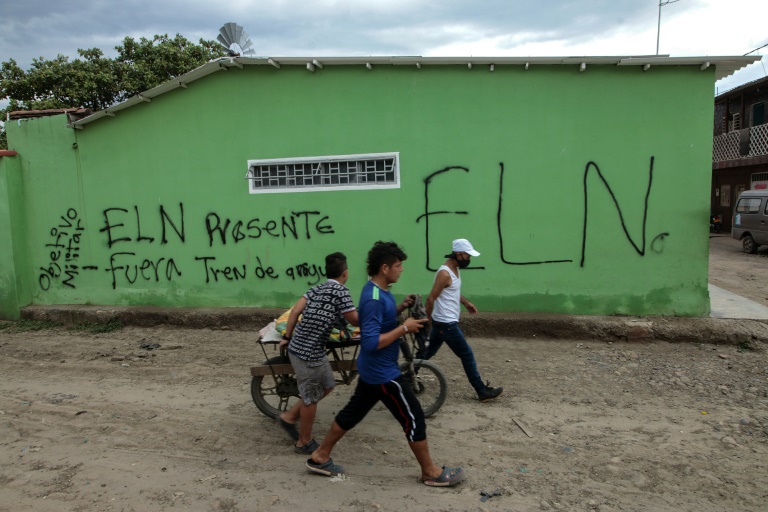
Colombia’s last remaining recognized rebel group on Monday announced a 10-day ceasefire to allow presidential elections later this month to pass off peacefully.

Colombians head to the polls on May 29 with leftist former guerrilla Gustavo Petro the favorite.

“We are declaring a ceasefire from 0:00 on May 25 until 24:00 on June 3, so that those that want to vote can do so in peace,” said the Marxist National Liberation Army (ELN) in a statement.

The ELN said it had taken the decision in its own interests to generate a “better atmosphere… so that we can see who could be the winning candidate.”

The ceasefire includes a halt to actions against Colombia’s security forces but the ELN said “we reserve the right to defend ourselves if attacked.”

After the Revolutionary Armed Forces of Colombia (FARC) signed a peace deal with the state in 2016, ELN became the violence-ridden South American country’s last remaining recognized rebel group.

Former president Juan Manuel Santos had been in negotiations with the ELN to also make peace but his right-wing successor Ivan Duque put an end to those discussions following a car bomb attack on a police academy in Bogota claimed by the Marxist guerrillas that killed at least 20 people.

The government has not commented on this latest ceasefire. The ELN also called a six-day truce in March during legislative elections and presidential primaries.

Formed in 1964 in the wake of the Cuban communist revolution, the ELN can count on around 2,5000 fighters and an extensive support network in urban centers, mostly on the border with Venezuela and along the Pacific coast.

It is largely funded through drug trafficking.

Following the election, Petro is expected to face a second round run-off on June 19 against right-wing candidate Federico Gutierrez.

Petro used to be a member of the 19th of April Movement (M-19), an urban left-wing nationalist guerrilla group that laid down its arms in 1990.

After that he entered politics and served as mayor of Bogota from 2012 to 2015. Petro is currently a senator and has vowed to negotiate with rebels if elected president.

Colombia is the world’s largest producer and exporter of cocaine and has been gripped by more than half a century of a multi-faceted conflict involving leftist guerrillas, right-wing paramilitaries, drug-traffickers and the state.

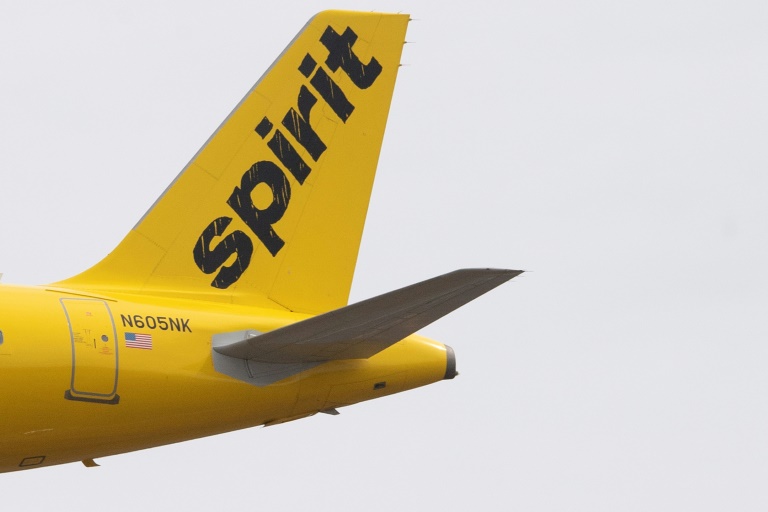
US carrier JetBlue launches hostile takeover of Spirit Airlines

Low-cost US carrier JetBlue Airlines announced on Monday a hostile takeover bid for its rival Spirit Airlines, which had rejected a previous offer in favor of a merger with Frontier.

Earlier this month, Spirit reiterated its support for a deal with Frontier Airlines, saying the $3.6 billion JetBlue offer involved excessive regulatory risk.

It said the US Justice Department’s challenge of JetBlue’s alliance with American Airlines raised the odds that a takeover of Spirit might get blocked.

JetBlue called the antitrust concerns a “smokescreen” and said the deal with Frontier will face similar regulatory scrutiny.

“They based their rejection on unsupportable claims that are easily refuted,” JetBlue Chief Executive Officer Robin Hayes said in a letter to Spirit shareholders.

“The Spirit Board of Directors has failed to act in the best interests of their shareholders by refusing to engage constructively on our clearly superior proposal,” he said.

The company offered a cash buyout of Spirit at $30 a share — adding that it was prepared to return to its original offer of $33 if Spirit agreed to return to the negotiating table.

JetBlue launched a “Vote No” campaign asking Spirit shareholders to reject the proposed merger with Frontier at a meeting June 10.

“JetBlue offers more value — a significant premium in cash — more certainty, and more benefits for all stakeholders,” Hayes said.

“We are confident we can address any regulatory concerns the Spirit Board, regulators or courts may have.”

– Airline competition –

Asked about the competing deals, US Transportation Secretary Pete Buttigieg said competition in the industry is critical.

It “needs to be demonstrated that this would not have a negative effect on competition in order to meet those legal hurdles,” he said on CNBC.

Amid growing concentration in the airline sector, he said it is up to the Justice Department do decide “where you draw the line.”

In early February, budget carriers Spirit and Frontier announced they were combining to create a competitive low-cost carrier that aims to test the dominance of larger rivals.

The merger would create the nation’s fifth-largest airline by seat capacity, behind American, United, Delta and Southwest.

But in April, JetBlue challenged the deal, offering a similar argument about challenging larger US carriers.

Spirit shares jumped 10 percent in midmorning trading, while JetBlue fell 4.5 percent. Frontier rose 5.5 percent.

N. Korea's Kim slams officials over pandemic response, deploys army

North Korea’s Kim Jong Un criticised “irresponsible” officials over the country’s pandemic response and ordered the army to help distribute medicine, state media said on Monday, as Seoul offered Covid-19 aid.

More than a million people have been ill with what Pyongyang refers to as “fever”, state media said, despite leader Kim ordering nationwide lockdowns in a bid to slow the spread of disease through the unvaccinated population.

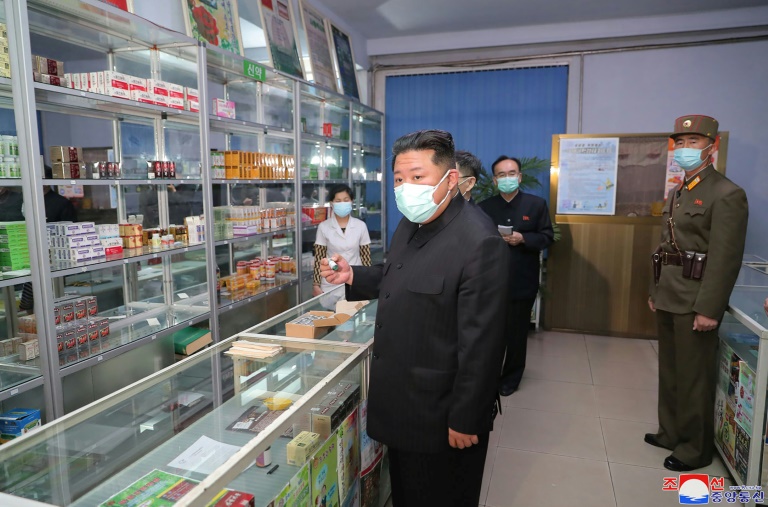
In a sign of how serious the situation may be, Kim “strongly criticised” healthcare officials for what he called a botched response to epidemic prevention — specifically a failure to keep pharmacies open 24/7 to distribute medicine.

He ordered the army to get to work “on immediately stabilising the supply of medicines in Pyongyang”, the capital, where Omicron was detected last week in North Korea’s first reported cases of Covid-19.

Kim has put himself front and centre of North Korea’s disease response, overseeing near-daily emergency Politburo meetings on the outbreak, which he has said is causing “great upheaval” in the country.

The failure to distribute medicine properly was “because officials of the Cabinet and public health sector in charge of the supply have not rolled up their sleeves, not properly recognising the present crisis”, state media KCNA reported Kim as saying.

Kim, who inspected pharmacies first hand, “strongly criticised the Cabinet and public health sector for their irresponsible work attitude”, KCNA said.

He also criticised lapses in official legal oversight, flagging “several negative phenomena in the nationwide handling and sale of medicines”.

North Korea has one of the world’s worst healthcare systems, with poorly-equipped hospitals, few intensive care units, and no Covid-19 treatment drugs or mass testing ability, experts say.

“While visiting a pharmacy, Kim Jong Un saw with his eyes the shortage of medicines in North Korea,” Cheong Seong-jang, researcher at the Sejong Institute told AFP.

“He may have guessed but the situation may have been more serious than he had expected.”

KCNA said that as of May 15, a total of 50 people had died, with 1,213,550 cases of “fever” and over half a million currently receiving medical treatment.

North Korea had maintained a rigid blockade since the pandemic began, but with massive Omicron outbreaks in neighbouring countries, experts said it was inevitable Covid would sneak in.

– Seoul’s help? –

Kim’s public criticism is a sign that the situation on the ground is grim, said Yang Moo-jin, professor at the University of North Korean Studies in Seoul.

“He is pointing out the overall inadequacy of the quarantine system,” he said.

North Korea is likely to need international assistance to get through the massive Omicron surge, Yang said, and will turn to China first — but maybe the United States or South Korea if it gets desperate.

North Korea has previously rejected offers of Chinese-made vaccines, but Kim has said they will “actively learn” from Beijing’s so-called zero-Covid disease management approach.

South Korea’s new President Yoon Suk-yeol said Monday that he would “not hold back on providing necessary assistance to the North Korean people”.

“If the North Korean authorities accept, we will not spare any necessary support such as medicine — including Covid-19 vaccines, medical supplies and healthcare personnel,” he told South Korea’s National Assembly.

Pyongyang has not responded to Seoul’s most recent official communication detailing the Covid aid offer, the unification ministry said.

The decision on whether to accept help may depend more on Kim’s nuclear testing plans than the medical situation, said the Sejong Institute’s Cheong.

The World Health Organization said on Monday it was concerned about the situation and willing to provide both technical support and medical supplies.

“With the country yet to initiate Covid-19 vaccination, there is risk that the virus may spread rapidly among the masses unless curtailed with immediate and appropriate measures,” regional WHO director Poonam Khetrapal Singh said in a statement. 

Despite the public health crisis, new satellite imagery indicates North Korea has resumed construction at a long-dormant nuclear reactor.

The United States and South Korea have warned that Kim is preparing to conduct another nuclear test — the regime’s seventh.

“Receiving help from South Korea will hurt its ego,” Cheong told AFP. “If Kim Jong Un is determined to conduct a test, he will not accept South Korea’s help.”

Analysts have warned Kim could speed up testing plans to distract the population from the coronavirus outbreak.

US President Joe Biden is set to visit Seoul later this week, with discussions of Pyongyang’s weapons programs and Covid-19 outbreak likely to top the agenda.

Close Bitnami banner
Bitnami