World

US shaken by weekend of deadly shootings

The racist mass shooting at a supermarket in upstate New York dominated a bloody weekend of gun violence across the United States, a scourge that has increased since the pandemic began.

While the murder of ten Black people by a white supremacist teenager in Buffalo captured news headlines, smaller incidents elsewhere embodied how common public shootings have become in America.

One person was killed and four others wounded after a shooting at a church near Los Angeles on Sunday while the Milwaukee Bucks canceled a party after 20 people were wounded in shootings outside their arena Friday.

More than 45,000 Americans died from guns — slightly over half by suicide — in 2021, up from just over 39,000 in 2019, according to the Gun Violence Archive website.

As of May 16, some 7,000 people have already died from homicide shootings or unintentional gunshots in the United States this year, with shootings in public places an almost daily occurrence.

There have been 202 mass shootings, defined as an incident in which four or more people are injured or killed, already in 2022, according to the archive. 

Experts say the rise in gun crime is being fueled by social dislocation caused by the pandemic and the proliferation of so-called “ghost guns” which can be assembled at home and are virtually impossible to trace.

“Unless the United States really works on getting a consistent process in place to regulate, license and monitor gun ownership, you’re going to continue to have these types of incidents and they will increase,” Keith Taylor, a gun violence expert at John Jay College of Criminal Justice in New York, told AFP.

Also this past weekend, two people were killed and three injured when a gunfight broke out at a flea market in Houston, Texas, on Sunday.

“One weekend in America,” tweeted New Jersey governor Phil Murphy, before listing the weekend’s spate of shootings.

“It is well past time for outrage and action. It is well past time for Congress to step up and pass real nationwide gun safety legislation,” he wrote.

– ‘Hate crime’ –

But facing a powerful pro-gun lobby, past congressional efforts at tightening the nation’s gun laws have generally fallen short — even after horrific shootings.

Under pressure to clamp down on the violence, President Joe Biden will visit Buffalo on Tuesday to “grieve with the community that lost ten lives in a senseless and horrific mass shooting.”

Residents in the city have been holding vigils and laying flowers honoring the dead since Sunday. 

Eighteen-year-old suspect Payton Gendron drove more than 200 miles (322 kilometers) from his home to the predominantly Black area surrounding Tops Friendly Market in Buffalo with the “express purpose of taking as many Black lives as he possibly could,” officials say.

Wearing heavy body armor and wielding an AR-15 assault rifle, he livestreamed the shooting on Twitch before the site removed it within two minutes.

Media reports linked the shooter to a 180-page manifesto that described a white supremacist ideology and laid out a plan to target a mainly Black neighborhood.

Gendron was charged late Saturday on a single count of first-degree murder and held without bail.

“The killings are being investigated as a racist hate crime,” said the Erie County district attorney, John Flynn.

The incident evoked memories of recent US history’s most devastating attacks, including a white man’s 2015 massacre of nine worshippers in a predominantly Black South Carolina church, and the 2019 attack by a white man in Texas that claimed 23 lives, most of them Latino.
Macron names first French female PM in three decades

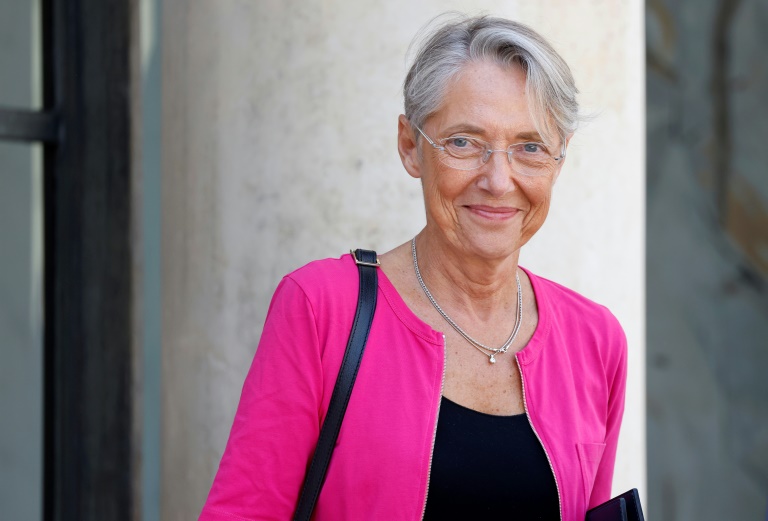
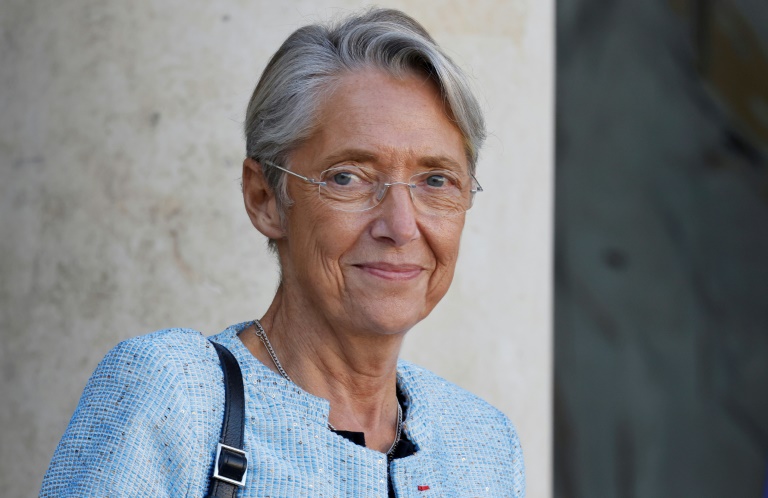
President Emmanuel Macron on Monday named Labour Minister Elisabeth Borne as prime minister to lead his ambitious reform plans, the first woman to head the French government in over 30 years.

Outgoing French Prime Minister Jean Castex earlier handed his resignation to the president, part of a widely expected reshuffle to make way for a new government following Macron’s re-election in April and ahead of legislative elections in June.

The centrist Macron will need a legislative majority to push through his domestic agenda following his re-election, with a new left-wing alliance and the far-right threatening to block his programme.

The last woman premier, Edith Cresson, briefly headed the cabinet from May 1991 to April 1992 under president Francois Mitterrand.

Ending weeks of speculation, the Elysee confirmed Borne’s nomination in a statement and she then headed to the Matignon residence of the premier in Paris for the handover with Castex.

“Nothing can stop the fight for the place of women in our society,” she said at the handover, dedicating her appointment to “all the little girls” who should “realise their dreams”.

A former environment minister, Borne also notably urged a “quicker and stronger” reaction to the “climatic and ecological challenge”.

In a tweet addressed to “Madam Prime Minister”, Macron set out their priorities.

“Ecology, health, education, full employment, democratic revival, Europe and security. Together, with the new government, we will continue to act tirelessly for French people,” he said.

– ‘High time’ –

Borne, 61, is seen as an able technocrat who can negotiate prudently with unions, as the president embarks on a new package of social reforms that notably include a rise in the retirement age which risks sparking protests.

A French presidential official, who asked not to be named, described Borne as a woman of “conviction, action and realisation”, noting her “capacity to carry out reforms”.

“It was high time there was another woman,” Cresson, who knows Borne personally, told BFMTV.

“She is a remarkable person, with great experience in the public and private sectors… She’s a very good choice because she’s a remarkable person, not because she’s a woman,” she added.

She expressed amazement that it had taken France — which has never had a female head of state — so long to have another woman prime minister.

“France is very behind — not the French population but the political class,” added Cresson, who was the target of numerous sexist attacks during her time in office.

– ‘Inability to unite’ –

Macron, 44, registered a solid victory in April 24 presidential polls against far-right leader Marine Le Pen, winning by 59 to 41 percent.

Le Pen and defeated hard-left leader Jean-Luc Melenchon are both eyeing comebacks in the parliamentary elections on June 12 and 19 that would give them the ability to thwart Macron.

Melenchon recently persuaded the Socialist, Communist and Greens parties to enter an alliance under his leadership that unites the left around a common platform for the first time in decades. 

Macron’s rivals were less complimentary about Borne, whose appointment Le Pen said showed the president’s “inability to unite and his desire to pursue his policy of contempt”.

Melenchon scoffed at the idea that Borne had come from the left, describing her as “among the harshest figures of social abuse” in France’s ruling elite.

Castex had intended to resign immediately after the presidential election in line with French tradition, but was persuaded by Macron to stay on while he lined up a replacement.

The bespectacled 56-year-old from rural southwest France has a no-frills style and a strong regional accent which has endeared him to many French people.

He will mostly be remembered for his management of the latter stages of the Covid-19 pandemic but also windmill arm gestures and a habit of forgetting where he had placed his glasses.

“For nearly two years, he worked with passion and commitment in the service of France,” said Macron in a farewell tweet to Castex, who has made clear he has no plans for higher office.

Uber bolsters platform for post-pandemic life

Uber said Monday it is revving up to be a “go anywhere and get anything” service, testing delivery robots, weaving in Google voice commands and more as people shed their pandemic lifestyles.

The San Francisco-based tech firm unveiled enhancements to its platform as it navigates tough economic conditions but looks to ride a busy travel season.

“After two years of pandemic living, 2022 is looking like a sea change,” said Uber chief executive Dara Khosrowshahi.

“One of the busiest travel seasons is upon us, a record-breaking number of weddings will be held this year, and climate is at the center of the global conversation.”

The suite of products unveiled by Uber was intended to help users “go anywhere and get anything,” he added, building on Uber’s goal of being an app used for far more than simply summoning rides.

“Today, we’re talking a lot about travel and reconnecting with places and people you care about,” Uber Rides head of product Jen You told AFP.

“But broadly speaking, we want to be your daily one-stop shop for anything, whether it’s for travel, work, social, even personal errands.”

Uber is testing autonomous, electric delivery robots in Los Angeles to shuttle orders from local merchants to customers in neighborhoods, Khosrowshahi said.

The delivery bots are part of an Uber goal for every ride in North America and Europe to be electric-powered by the year 2030.

Uber laid out how it is further meshing its food delivery and ride services by letting riders use the app to have orders waiting at airport or sports stadium restaurants upon arrival in a smattering of locations.

Uber said it is also weaving in the ability to let users connect Google mail, calendar and digital assistant features into the app to enable voice commands or get help with arranging travel.

“These are all part of the ultimate vision to have more touch points with consumers across their daily activities,” You said.

Along with its rides service, Uber has an Eats food delivery arm that boomed during the pandemic and a Freight platform that matches truckers with shipments in a way similar to how it pairs passengers with drivers.

Uber bolsters platform for post-pandemic life

Uber said Monday it is revving up to be a “go anywhere and get anything” service, testing delivery robots, weaving in Google voice commands and more as people shed their pandemic lifestyles.

The San Francisco-based tech firm unveiled enhancements to its platform as it navigates tough economic conditions but looks to ride a busy travel season.

“After two years of pandemic living, 2022 is looking like a sea change,” said Uber chief executive Dara Khosrowshahi.

“One of the busiest travel seasons is upon us, a record-breaking number of weddings will be held this year, and climate is at the center of the global conversation.”

The suite of products unveiled by Uber was intended to help users “go anywhere and get anything,” he added, building on Uber’s goal of being an app used for far more than simply summoning rides.

“Today, we’re talking a lot about travel and reconnecting with places and people you care about,” Uber Rides head of product Jen You told AFP.

“But broadly speaking, we want to be your daily one-stop shop for anything, whether it’s for travel, work, social, even personal errands.”

Uber is testing autonomous, electric delivery robots in Los Angeles to shuttle orders from local merchants to customers in neighborhoods, Khosrowshahi said.

The delivery bots are part of an Uber goal for every ride in North America and Europe to be electric-powered by the year 2030.

Uber laid out how it is further meshing its food delivery and ride services by letting riders use the app to have orders waiting at airport or sports stadium restaurants upon arrival in a smattering of locations.

Uber said it is also weaving in the ability to let users connect Google mail, calendar and digital assistant features into the app to enable voice commands or get help with arranging travel.

“These are all part of the ultimate vision to have more touch points with consumers across their daily activities,” You said.

Along with its rides service, Uber has an Eats food delivery arm that boomed during the pandemic and a Freight platform that matches truckers with shipments in a way similar to how it pairs passengers with drivers.

Wheat prices hit record high after Indian export ban

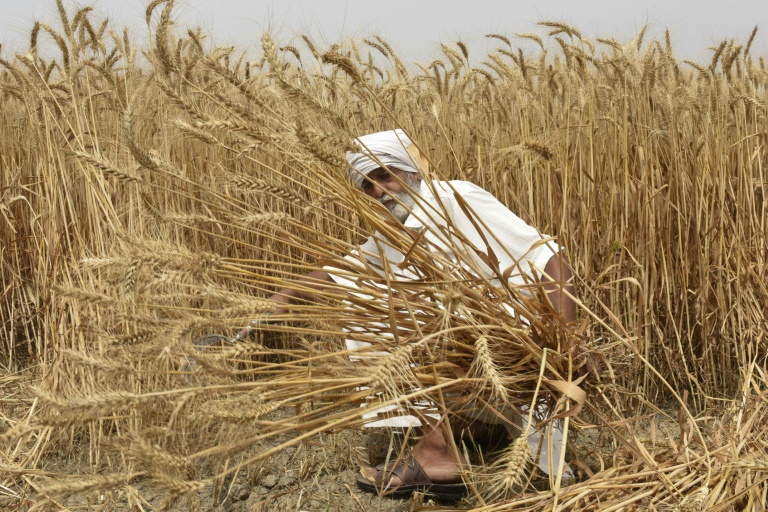
Wheat prices surged to a new record high in European trading on Monday after India decided to ban exports of the commodity as a heatwave hit production.

The price jumped to 438.25 euros ($456.68) per tonne as the Euronext market closed, breaking the previous closing record of 422.40 struck on March 7, according to trader Damien Vercambre at grains brokerage Inter-Courtage. 

It had earlier set a record opening price of 435 euros.

On the Chicago Board of Trade, wheat was trading nearly six percent higher in midday trading at $12.48 per bushel.

Global wheat prices have soared 40 percent on supply fears since Russia’s February invasion of agricultural powerhouse Ukraine, which previously accounted for 12 percent of global exports.

The spike, exacerbated by fertiliser shortages and poor harvests, has fuelled inflation globally and raised fears of famine and social unrest in poorer countries.

India, the world’s second-largest wheat producer, said on Saturday that it was banning exports after its hottest March on record, with traders needing express government approval to enter into new deals.

New Delhi said the move was needed to protect the food security of its own 1.4 billion people in the face of lower production and sharply higher global prices.

Some parts of India have seen prices in wheat and flour jump 20 to 40 percent in recent weeks, Commerce Secretary BVR Subrahmanyam said on Sunday.

Because of the sharp rise in global prices, some farmers were selling to traders and not to the government.

This got the government worried about its buffer stock of almost 20 million tonnes — depleted by the pandemic  — needed for handouts to millions of poor families and to avert any possible famine.

“Contrary to Russia which has had an export quota and tax system in place for years, India no doubt has more difficulty in controlling exports,” said Damien Vercambre at grains brokerage Inter-Courtage.

The export ban drew sharp criticism from the Group of Seven industrialised nations, which said that such measures “would worsen the crisis” of rising commodity prices.

– ‘Worsen the crisis’ –

Export deals agreed before the directive issued on May 13 could still be honoured but future shipments needed government approval, it said.

However, exports could also take place if New Delhi approved requests from other governments “to meet their food security needs”.

India, which possesses major buffer stocks, previously said it was ready to help fill some of the supply shortages caused by the Ukraine war.

Only last week India said it would send delegations to Egypt, Turkey and elsewhere to discuss boosting wheat exports. It was unclear whether these visits will now go ahead.

India recorded its warmest March on record — blamed on climate change — and in recent weeks has seen a scorching heatwave with temperatures upwards of 45 degrees Celsius (113 Fahrenheit).

This hit farmers in wheat-producing northern India, prompting the government to predict output would fall at least five percent this year from 109 million tonnes in 2021.  

The downturn could not come at a worse time as Ukraine, which was in line to become the world’s number three wheat exporter, will see its output cut by a third due to the fighting there, according to forecasts by the US Department of Agriculture. 

The USDA expects Ukraine to export around 10 million tonnes of wheat this year, down from 19 million tonnes last year. Dry weather in the United States and western Europe has added to supply concerns.

Ukraine 'unhappy' as Hungary stalls EU Russian oil ban

Ukraine’s foreign minister urged the EU Monday to overcome Hungary’s resistance to an embargo on Russian oil and then look to “kill” all of Moscow’s exports to starve its war machine of funds.  

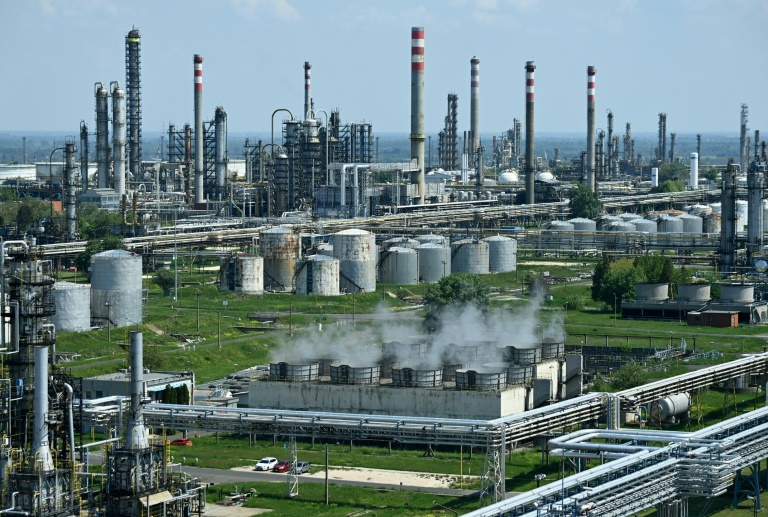
Budapest has been holding up a push by Brussels, backed by other European Union states, to ban Moscow’s vital oil exports, the cornerstone of a planned sixth package of sanctions, arguing that it would hammer its own economy.

“We are unhappy with the fact that the oil embargo is not there,” Ukraine’s top diplomat Dmytro Kuleba said after meeting EU foreign ministers in Brussels. 

“It’s clear who’s holding up the issue. But time is running out because every day Russia keeps making money and investing this money into the war.”

Kuleba said he was convinced the oil embargo would come and “the only question is when and what will be the price that the European Union will have to pay to make it happen.”

He then called on the 27-nation bloc to move on to a seventh package of sanctions that would “kill Russian exports” and deliver a crushing blow to President Vladimir Putin’s coffers.

Brussels is desperate to avoid the appearance of division in the face of the Kremlin’s onslaught on Ukraine, and officials are scrambling behind the scenes to patch up a compromise with Hungary after making the oil proposal on May 4.

“The whole union is being held hostage by one member state who cannot help us find the consensus,” Lithuanian Foreign Minister Gabrielius Landsbergis declared

EU foreign affairs chief Josep Borrell said discussions to break the deadlock would go back to ambassadors after Hungary laid out the economic costs of the move. 

“I cannot tell you if it’s going to take one week or two,” he said. 

– Hungary hikes cost –

Brussels has offered Hungary, the Czech Republic and Slovakia long grace periods to phase out Russian oil imports but that has not yet convinced Budapest to budge. 

Bulgaria’s Prime Minister Kiril Petkov said that Sofia was also seeking a two year exemption on enforcing the ban to allow it to put in place new infrastructure.

Hungary, often the odd one out in EU decision making, has demanded to be exempted from the embargo for at least four years and wants 800 million euros ($830 million) in EU funds to re-tool a refinery and boost the capacity of a pipeline to Croatia.  

And Foreign Minister Peter Szijjarto on Monday appeared to up the price tag for ditching Russian oil by saying it would cost 15 to 18 billion euros ($16 to $19 billion) to prepare its economy for the move.  

“It is legitimate for Hungarians to expect a proposal” from the European Commission to cushion that blow, Szijjarto said in comments broadcast on his Facebook page.

“A complete modernisation of the Hungarian energy infrastructure is needed to the scale of 15 to 18 billion euros.”

Putin’s invasion at the end of February has seen the EU slap unprecedented sanctions on Moscow and send weapons to Ukraine in a strong show of unity that now risks cracking. 

The protracted dispute over the oil embargo has led some EU diplomats to believe achieving a ban on Russian natural gas is beyond their reach. 

The EU plans to cut its reliance on Russian gas by two thirds this year, but it has been reluctant to halt imports as Germany opposes such a move.

New French PM: technocrat and Macron loyalist

Elisabeth Borne, who is taking the reins of President Emmanuel Macron’s government as the first female prime minister in over 30 years, is an experienced technocrat who enjoys the full confidence of the French leader.

The 61-year-old engineer proved her loyalty to Macron during his first term, serving as transport, environment and finally labour minister from 2020. 

Borne is known for handling controversial transport and benefits reforms, which will be seen as a mighty advantage as Macron seeks to push through a highly-contested bid to raise France’s retirement age during his second mandate. 

Borne will seek to make a greater impact than France’s first female prime minister Edith Cresson, who lasted less than a year in the early 1990s.

Macron had indicated he wanted a woman with left-wing and environmental credentials, and Borne ticked many boxes. 

The president promised before the runoff vote in presidential elections in April to put the climate crisis at the heart of his second term and to task his prime minister with “ecological planning”.

As labour minister during the Covid-19 pandemic, Borne backed a range of measures to boost employment of the younger generation. 

Borne, who is said to discreetly vape at the National Assembly parliament, was regularly on television at the height of the pandemic to remind the French to work from home and to defend the government’s job retention scheme. 

Hospitalised due to the virus in March 2021, she was administered oxygen, an experience she described as nerve-wracking.

– ‘A real technocrat’ –

Far from being an extrovert figure who could overshadow the president in any way, she is a safe pair of hands who Macron can trust at a delicate time.

“She’s a real technocrat,” said a union source who asked not to be named.

And in the corridors of the ministries where she served, it is said she was nicknamed “Borne out” for her supposed harshness towards her collaborators, a play on words with “burn out”.

France’s second-ever female prime minister was born in Paris and studied at the elite Ecole Polytechnique. 

According to an April survey by the Ifop pollster, 45 percent of people polled did not know who she was. 

Little is known about her private life, apart from that she was born to a father who died when she was young and to a mother with very little income. 

A lover of maths, Borne has said she finds in numbers “something quite reassuring, quite rational”.

Ukraine 'unhappy' as Hungary stalls EU Russian oil ban

Ukraine’s foreign minister urged the EU Monday to overcome Hungary’s resistance to an embargo on Russian oil and then look to “kill” all of Moscow’s exports to starve its war machine of funds.  

Budapest has been holding up a push by Brussels, backed by other European Union states, to ban Moscow’s vital oil exports, the cornerstone of a planned sixth package of sanctions, arguing that it would hammer its own economy.

“We are unhappy with the fact that the oil embargo is not there,” Ukraine’s top diplomat Dmytro Kuleba said after meeting EU foreign ministers in Brussels. 

“It’s clear who’s holding up the issue. But time is running out because every day Russia keeps making money and investing this money into the war.”

Kuleba said he was convinced the oil embargo would come and “the only question is when and what will be the price that the European Union will have to pay to make it happen.”

He then called on the 27-nation bloc to move on to a seventh package of sanctions that would “kill Russian exports” and deliver a crushing blow to President Vladimir Putin’s coffers.

Brussels is desperate to avoid the appearance of division in the face of the Kremlin’s onslaught on Ukraine, and officials are scrambling behind the scenes to patch up a compromise with Hungary after making the oil proposal on May 4.

“The whole union is being held hostage by one member state who cannot help us find the consensus,” Lithuanian Foreign Minister Gabrielius Landsbergis declared

Dutch Foreign Minister Wopke Hoekstra said he “would have liked us to agree today on the sixth package” and that he hoped it would be clinched by the end of the week. 

Portugal’s top diplomat Joao Gomes Cravinho estimated that it could take “a couple of weeks” — a timescale that would take  the debate up to the next full summit of EU leaders.

– Hungary hikes cost –

Brussels has offered Hungary, the Czech Republic and Slovakia long grace periods to phase out Russian oil imports but that has not yet convinced Budapest to budge. 

Hungary’s Prime Minister Viktor Orban, often the odd man out in EU decision making, has demanded to be exempted from the embargo for at least four years and wants 800 million euros ($830 million) in EU funds to re-tool a refinery and boost the capacity of a pipeline to Croatia.  

And Foreign Minister Peter Szijjarto on Monday appeared to up the price tag for ditching Russian oil by saying it it would cost 15 to 18 billion euros ($16 to $19 billion) to prepare its economy for the move.  

“It is legitimate for Hungarians to expect a proposal” from the European Commission to cushion that blow, Szijjarto said in comments broadcast on his Facebook page.

“A complete modernisation of the Hungarian energy infrastructure is needed to the scale of 15 to 18 billion euros.”

Putin’s invasion at the end of February has seen the EU slap unprecedented sanctions on Moscow and send weapons to Ukraine in a strong show of unity that now risks cracking. 

The protracted dispute over the oil embargo has led some EU diplomats to believe achieving a ban on Russian natural gas is beyond their reach. 

The EU plans to cut its reliance on Russian gas by two thirds this year, but it has been reluctant to halt imports as Germany opposes such a move.

Macron names first French female PM in over 30 years

President Emmanuel Macron on Monday named Labour Minister Elisabeth Borne as his new prime minister, the first woman to head the French government in over 30 years, the Elysee said in a statement.

Outgoing French Prime Minister Jean Castex earlier handed his resignation to the president, part of a widely expected reshuffle to make way for a new government in the wake of Macron’s re-election in April.

The departure of Castex, who was a surprise choice for the role in 2020, enables Macron to reshape the cabinet ahead of crucial parliamentary polls in June.

The centrist will need a legislative majority to push through his domestic agenda following his re-election, with a new left-wing alliance and the far right threatening to block his programme.

Speculation has been rife in recent weeks about Castex’s replacement, with Macron indicating he wanted a woman with left-wing and environmental credentials.

Those criteria reflect his desire to focus on schools and health in the early part of his second term, as well as the climate crisis which he has promised to prioritise.

Borne, 61, is seen as an able technocrat who can negotiate prudently with unions, as the president embarks on a new package of social reforms that ris sparking protests.

– ‘Need lots of courage’ –

The last woman premier, Edith Cresson, told the Journal du Dimanche newspaper on Sunday that French politics remained “macho” more than 30 years after she briefly headed the cabinet from May 1991 to April 1992 under president Francois Mitterrand.

“She’ll need lots of courage,” Cresson said.

Macron, 44, registered a solid victory in April 24 presidential polls against far-right leader Marine Le Pen, winning by 59 to 41 percent.

Le Pen and defeated hard-left leader Jean-Luc Melenchon are both eyeing comebacks in the parliamentary elections on June 12 and 19 that would give them the ability to thwart Macron.

Melenchon recently persuaded the Socialist, Communist and Greens parties to enter an alliance under his leadership that unites the left around a common platform for the first time in decades. 

Castex had intended to resign immediately after the presidential election in line with French tradition, but was persuaded by Macron to stay on while he lined up a replacement.

The bespectacled 56-year-old from rural southwest France has a no-frills style and a strong regional accent which has endeared him to many French people.

He will mostly be remembered for his management of the latter stages of the Covid-19 pandemic, delivering regular TV briefings on infection figures, shutdowns and social distancing measures.

El Salvador gang arrests top 30,000 in 50 days

El Salvador has arrested more than 30,000 suspected gang members since President Nayib Bukele in March launched his “war” on criminal groups terrorizing the country, police said on Monday.

Bukele announced a state of emergency in late March following a bloody weekend in which 87 people were killed in gang-related violence.

Since then, the police and military have been rounding up suspected gang members using emergency powers that have done away with the need for arrest warrants.

The small Central American country has also increased sentences for gang membership five-fold, to up to 45 years.

The national civil police force said on Twitter that “536 terrorists were arrested on Sunday May 15, the date at which we reached 50 days since the beginning of the state of emergency.”

“The total number captured since the beginning of the war on gangs is 30,506.”

The wave of detentions is unprecedented in a country of 6.5 million people that has suffered decades of violent crime driven by powerful gangs such as Mara Salvatrucha (MS-13) and Barrio 18.

These gangs count some 70,000 members, and including the recent detentions about 46,000 of them are behind bars, according to authorities.

Rights groups have denounced the arrest of many minors with no gang links.

Earlier this month, Vice President Felix Ulloa told representatives from the International Committee of the Red Cross that the arrests were necessary to fight the gangs.

“The Salvadoran state is assisted by Jus ad Bellum (Latin for ‘right to war’) to defend the people against gang criminal violence,” he said.

Jus ad bellum is an international set of criteria to be consulted before the use of armed force or resorting to war.

Close Bitnami banner
Bitnami