World

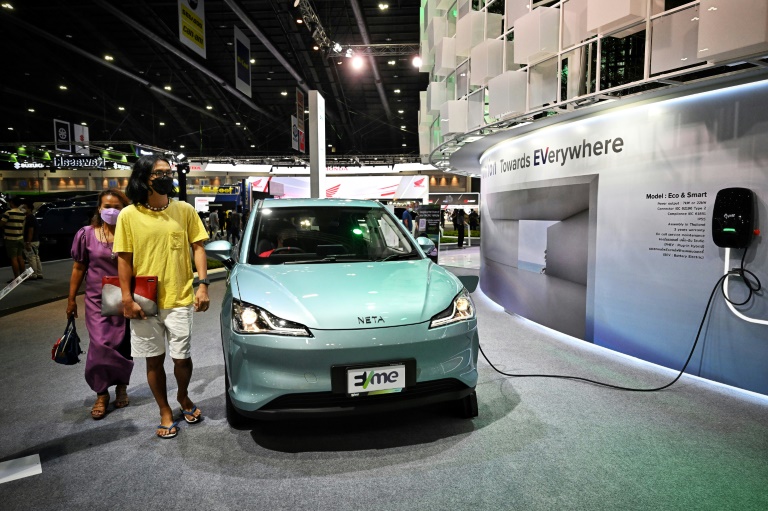
Dirty liberal pipe-dream: 3 myths about electric cars

Sceptics say that far from helping save the planet, electric cars are a liberal pipe-dream whose environmental benefits are exaggerated.

But even if there is no such thing as an all-green car, studies show that battery-powered ones cause fewer harmful greenhouse gas overall than their petrol-driven ancestors.

AFP Fact Check examined three common claims about them.

‘Coal-powered’

“Coal Powered Electric Cars…. Helping liberals pretend they are solving a make-believe crisis,” reads a text shared on Facebook, with a photo of cars plugged in at a charging station.

The humorous meme implies that electric cars do not help lower climate-changing greenhouse gas emissions because coal is burned to feed the electricity grid.

The US Environmental Protection Agency has a calculator tool on its website to compare a petrol car’s emissions with those of an electric one depending on where it is charged.

It calculates that an electric car charged in St Louis, Missouri -– part of the subregion that relies the most on coal –- on average will produce 247 grams of carbon dioxide per mile, lower than the average 381 grams of a gasoline vehicle.

Experts at Carbon Brief agree an electric car’s emissions depend on what region or country it is charged in.

They would be higher in Poland or in an Asian country where more coal is burned than in France, where most electricity comes from nuclear power.

Overall, the International Council on Clean Transportation (ICCT) found electric cars are lower-emitting than their petrol-driven equivalents across their life cycle, from mining components to recycling.

An electric car is also much more efficient in its use of energy than a petrol-powered one, according to the US Department of Energy and other sources.

‘200 tonnes of earth’

Making the vehicles’ batteries is an energy-intensive process that includes mining and trucking raw materials, assembly in factories, and shipping worldwide. Recycling them is costly.

Another viral text shared on Facebook claimed that 500,000 pounds (227 metric tonnes) of earth are dug up to extract the metals for one electric car battery.

The estimate appeared to originate from a 2020 analysis by the Manhattan Institute, a climate-sceptic research group.

Several experts consulted by AFP said the figures were misleading. Peter Newman, professor of sustainability at Australia’s Curtin University, judged it a “gross exaggeration” and said the quantity mined would vary depending on geography and the type of battery.

Mining has other impacts not immediately related to the global climate. About 70 percent of cobalt — a battery ingredient — comes from the Democratic Republic of Congo, where use of child labour in mines has been documented.

Access to the ingredients also raises strategic supply concerns, with many of the raw materials held by China, according to the International Energy Agency.

Georg Bieker, a Berlin-based researcher at the ICCT, said the environmental damage from oil-drilling made gasoline production no better.

The risk of devastation driven by greenhouse gas emissions, projected in recent reports by the UN Intergovernmental Panel on Climate Change, would be even worse.

“It is correct to demand improvements, e.g. as considered by voluntary standards in the industry and by mandatory due diligence requirements that are foreseen in the upcoming EU battery regulation,” he said.

“In any case, it’s clear that the social and environmental impact of global warming is catastrophic, at a different scale than the mining of battery raw materials.”

‘Stuck in snow’

After a snowstorm stranded hundreds of motorists in Virginia in January, users on Facebook shared posts warning that electric vehicles would run out of power and make the traffic jam even worse.

“All those people would be stuck in freezing temperatures without a heated vehicle. And all the cars would be stuck unable to move because you can’t bring a charging station to them,” read the text.

“All those electric cars would become roadblocks to the gasoline powered vehicles.”

Several fact-checking organisations scrutinised the claim. They found there was no evidence that electric cars would fare worse in a storm.

Studies such as one published in 2015 by the American Chemical Society have found that electric vehicles do consume energy less efficiently when driving in the cold.

However various experts said that if stuck in a storm, an electric vehicle would consume less power than a gasoline one, which would have to keep its engine running to power the heating.

British consumer affairs magazine Which? tested an electric SUV by simulating a traffic jam, with the car’s radio, air conditioning, seat-heating and headlights on, plus a tablet device plugged in playing a film.

That used up a negligible two percent of the battery, or eight miles’ worth of range, in an hour and a quarter – admittedly in summer conditions.

China's retail sales slump as lockdowns cause chaos

China’s retail sales and factory output slumped to their lowest levels in around two years, official data showed Monday, capturing the dismal economic fallout from Beijing’s zero-Covid policy.

The world’s second-largest economy has persisted with strict virus measures, choking up global supply chains as dozens of Chinese cities — including key business hub Shanghai — grapple with restrictions. 

Although officials have said they plan to gradually reopen the city, there is no sign of Beijing shifting from the strict zero-Covid approach which analysts warn is severely hitting the economy.

The latest cut came Monday when the National Bureau of Statistics (NBS) announced data showing that retail sales shrank 11.1 percent on-year in April.

It is the biggest slump since March 2020, as consumers remained cooped up at home or jittery over restrictions as China battles its worst Covid outbreak since the early days of the pandemic.

“In April, the epidemic had a big impact on economic operations,” NBS spokesman Fu Linghui told reporters Monday, adding that the outbreak had a “significantly larger-than-expected” effect.

But he stressed that the hit would be “short-term”.

Industrial production growth sank 2.9 percent on-year, reflecting damage from shuttered factories and transportation woes as officials ramped up Covid restrictions last month.

This is down from 5.0 percent growth in March.

“The prolonged Shanghai lockdown and its ripple effect through China, as well as logistics delays resulting from highway controls…have severely affected domestic supply chains,” said Tommy Wu of Oxford Economics.

He added that household consumption was “hit even harder” and disruptions could extend into June.

Home sales dropped 32 percent on-year in the first four months, NBS data showed, reflecting weakness in the key property sector which was struggling even before the latest lockdowns.

Several Chinese developers have sagged under the weight of massive borrowing and defaulted on million-dollar debt repayments.

– Shanghai shutdowns –

Shanghai came under heavy restrictions in early April with some 25 million ordered to stay home in what was originally portrayed as an eight-day lockdown across two halves of the city.

But the shutdowns have dragged for weeks and wreaked havoc on supply chains, spreading frustration among residents.

Officials promised over the weekend to start reopening the city in phases in the next month, while Xinhua news agency said US electric car giant Tesla had made its second overseas shipment after suspending production for nearly three weeks.

But small business owners remain sceptical.

“I don’t have even the slightest expectation about (being able to reopen soon),” one restaurant owner told AFP, asking to remain anonymous.

“Why are people still believing them?”

The urban unemployment rate also climbed in April to 6.1 percent — the highest in more than two years.

Beijing has announced measures to help young people find jobs, including social insurance subsidies for smaller firms that hire more graduates, and officials have lowered the mortgage rate for first-time homebuyers.

But there is fear that stifling restrictions will hamper growth plans.

Financial services firm Gavekal said in a recent note that previous suggestions that “meaningful policy easing is on the horizon have not played out.”

“As Shanghai and Beijing struggle to reopen…officials may yet be forced to crank up stimulus sooner,” Gavekal added.

Economic experts urged support for businesses and consumers at a forum on Saturday, with a top university professor saying the industrial chain cannot be forgotten while reducing infections.

But China cannot “rely on expanding investment and launching large projects,” or on handouts to boost consumption, Premier Li Keqiang said in a speech published by state media Saturday.

Instead, he said, practice has proved that tax and fee reductions are “effective, fair and inclusive”.

Afghan money exchangers reopen after strike: brokers

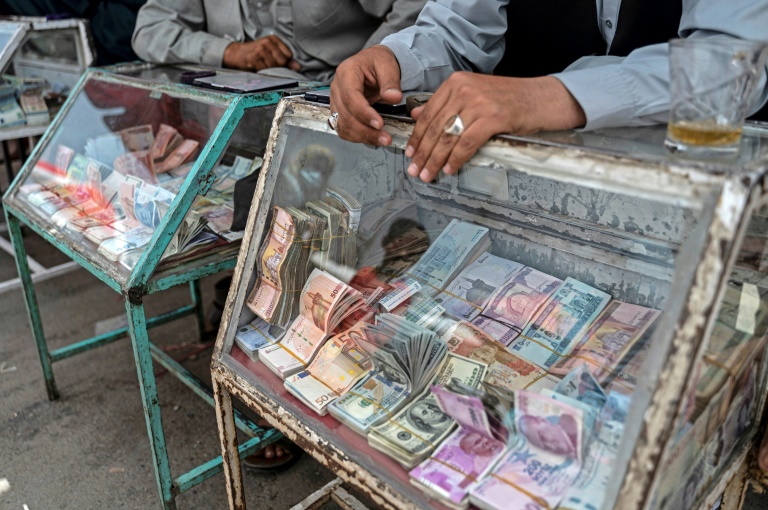
Thousands of money exchangers in Afghanistan ended their strike on Monday, the brokers commission said, a day after they shut their shops to protest a steep hike in licence fees imposed by Taliban authorities.

Afghanistan’s formal banking system collapsed when the Taliban swept back to power in August last year, ending two decades of US-led military intervention in the deeply impoverished nation.

Since then money exchangers — who swap currencies, make informal cash transfers and even give loans — have played a key role in meeting the financial needs of many of Afghanistan’s 38 million citizens mired in humanitarian crisis. 

“Today, the money exchange markets across Afghanistan are open,” Abdul Rahman Zeerak, spokesman for Afghanistan’s Money Exchange Commission, told AFP.

“They (Taliban leaders) requested that we should open the markets and that they will resolve our problems fully.” 

Money exchangers in Kabul and other cities, including Herat and Kunduz, went on strike on Sunday after the central bank raised their licence fees to five million Afghanis ($56,000) from 300,000.

Zeerak said the central bank had also told currency traders to conduct transactions online, and that they must have a minimum of 50 million Afghanis to operate.

On Tuesday the commission will have a meeting with the finance ministry and the governor of Afghanistan’s central bank, he said.

Experts said the central bank’s new directives were motivated by the Taliban’s desire to cut off funding paths to militant groups. 

Many foreign nations have made assistance to Afghanistan conditional on the Taliban regime guaranteeing human rights and preventing international terror groups from operating in the country.

Afghanistan’s money market had been volatile for several months after the US seized billions of dollars in Afghan assets during its hasty withdrawal when the Taliban seized power.

Since then there has been a shortage of dollars as international donors also suspended the massive aid inflows that had propped up the Afghan economy for two decades during the US presence in the country.

Adani in $10.5bn deal for Holcim India cement business

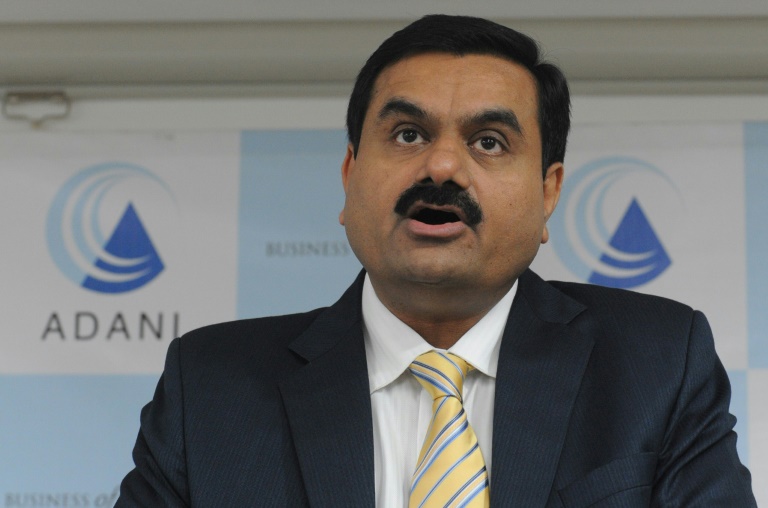
Indian billionaire Gautam Adani struck a $10.5 billion deal to buy Swiss cement giant Holcim’s local business, the companies said, betting on a construction boom predicted in coming decades.

In his biggest acquisition to date, the deal will give coal-to-ports magnate Adani — who vies with fellow Indian Mukesh Ambani for the title of Asia’s richest person — a controlling stake in India’s second-largest cement manufacturer.

“Our move into the cement business is yet another validation of our belief in our nation’s growth story,” Adani, 59, said in a statement late Sunday.

“Not only is India expected to remain one of the world’s largest demand-driven economies for several decades, India also continues to be the world’s second largest cement market,” he added.

The deal marks Holcim’s exit from the Indian market after 17 years and is a part of a global restructuring strategy after the Swiss cement giant’s 2015 merger with France’s Lafarge.

Once approved by regulators and shareholders, the firm will acquire Holcim’s stakes in local producers Ambuja Cements and ACC.

The acquisitions will make Adani the country’s second-biggest cement maker with a capacity of 70 million tonnes per year.

India, already home to 1.4 billion people, is projected by the United Nations to become the planet’s most populous nation by the middle of the decade.

The International Energy Agency said in a report last year that an estimated 270 million people will be added to India’s urban population by 2040 — the equivalent of adding a new city the size of Los Angeles each year.

This will also likely increase emissions in the world’s third-biggest polluter, since the manufacture of cement produces carbon dioxide.

Shares in Ambuja Cements were up 3.80 percent, while shares in ACC Ltd rose six percent in Mumbai following the announcement.

Facebook changing with times a decade after stock debut

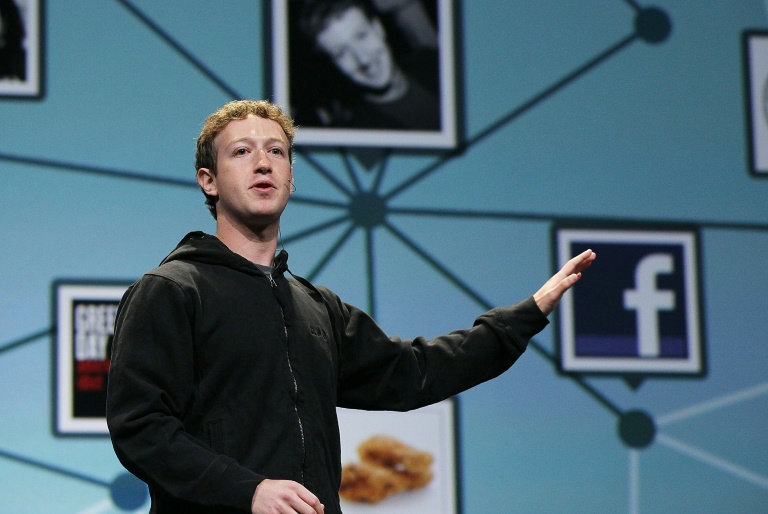
Facebook boss Mark Zuckerberg rang the opening bell remotely to cheers 10 years ago as the beloved social network made its stock market debut, culminating an all-night hackathon that included street hockey, costumes and music.

The Silicon Valley tech colossus rebranded as Meta has since seen its image tainted by accusations it has become a tech tyrant, putting profit over user privacy and even the good of society.

Meanwhile, the likes of TikTok, LinkedIn, Pinterest, Twitter and even Apple now vye with Meta for people’s online attention as Facebook social network is increasingly seen as a place for older people.

“At the time it went public, Facebook was considered to be young, edgy and connecting people,” Creative Strategies analyst Carolina Milanesi told AFP.

“Now to most people it sounds like political manipulation and advertising; Facebook is considered a data-hungry company.”

– Ad-powered machine –

When Facebook became publicly traded on May 18, 2012,  it was seen as a darling of the internet generation, connecting people in a “pure” way, Milanesi said.

But like other free online platforms, Facebook makes its money from ads targeted at people’s interests.

The company tapped into information about people’s online activities to become a digital advertising behemoth, raking in billions of dollars.

Critics say Meta focused on growth at the expense of safeguarding people’s data as the number of users on its “family” of apps climbed into the billions.

In 2016, Facebook was embroiled in controversy over Russia’s alleged use of it and other social media platforms to influence the outcome of the election that put Donald Trump in the White House.

The social network was caught up in scandal anew two years later after it was revealed that British consulting firm Cambridge Analytica stealthily harvested data of millions at Facebook and used it for political purposes, including trying to rally support for Trump.

Regulators in Europe passed a groundbreaking law to give people more control over their online data. Apple tweaked its mobile software to stymy apps like Facebook from snatching up people’s data essential to effective ad targeting.

– Tough to beat –

Last year, the company changed its name to Meta in a nod to the metaverse — the virtual world which Zuckerberg sees as the future of the internet.

Critics blasted the move as an effort to distract from scandals pounding Facebook.

With 2.94 billion monthly users, Facebook remains the biggest social media platform and a habit for the masses.

“Facebook is so far ahead that it is difficult to conquer,” independent expert David Bchiri said.

Meta has spotted and adapted to threats. It has mimicked what makes rivals popular — like launching Reels short-form videos in response to the TikTok phenomenon.

Meanwhile, businesses have come to embrace Meta’s skill at targeting advertising and the ease with which they can connect with audiences through its apps.

Meta owns Facebook, Instagram, WhatsApp, Messenger and a virtual reality unit that includes Oculus.

Meta remains a valuable part of any ad campaign, said Keith Kakadia, founder and chief of marketing strategy firm SociallyIN.

“It’s so data rich; that allows us to have robust targeting,” Kakadia said.

“We’re able to get in front of exactly who we need to get in front of and that gives a huge advantage to our clients.”

– Into the metaverse –

While Meta is a powerhouse now, website-born Facebook was dangerously late adapting to smartphones becoming the center of people’s lives.

That misstep is seen as part of the reason Zuckerberg is pouring billions of dollars into leading the way into the metaverse.

“They want to be there before they miss another wave of transition,” Milanesi said of Meta rushing to virtual worlds where people live as avatars.

“There’s more monetization opportunity when you’re bringing digital and real life together in a more immersive way; they want to do it before somebody else does.”

Meta investors, though, are concerned about the time and money it will take for Zuckerberg to fulfill his metaverse dream.

Facebook bought virtual reality gear maker Oculus seven years ago for $2 billion.

“I don’t think they want to be the social media of the metaverse,” Milanesi said.

“I’m expecting a much stronger pivot to linking consumers and businesses,  either to buy stuff or to attend events, and less about people connecting on a personal level.”

In the metaverse, Facebook users are more likely going to be shopping than checking what friends did on vacation, the analyst said.

“All brands want to jump on the metaverse band wagon; all have a big fear of missing out,” said independent expert David Bchiri.

“Facebook will be low hanging fruit for those who don’t want to invest too much time and resources but still want to be on it.”

Facebook: from Harvard dorm to global phenomenon

Key chapters in the history of Facebook, the world’s biggest social media application, which marks the tenth anniversary Wednesday of its stock market debut.

– In the beginning – 

In 2003, 19-year-old Harvard computer whiz Mark Zuckerberg begins working out of his dormitory room on an online network aimed initially at connecting Harvard students.

The following year he launched thefacebook.com with three Harvard roommates and classmates: Chris Hughes, Eduardo Saverin and Dustin Moskovitz.

As membership is opened up to other colleges around North America Zuckerberg quits his studies and moves to Silicon Valley.

The new company receives its first investment from PayPal co-founder Peter Thiel, who stumps up $500,000, and officially changes its name to Facebook in 2005.

– Not for sale –

In 2006, US media conglomerate Viacom and Yahoo make separate plays for Facebook, but both are turned down.

Microsoft takes a $240 million stake in the company a year later, by which time Facebook has 50 million users.

That year sees Zuckerberg admitting to privacy-related “mistakes” for the first time, over an ad platform called Beacon that tracked purchases made by Facebook members and let their friends know what they had bought.

In 2008, the platform topples MySpace to become the world’s most popular social networking website and launches its first mobile app the following year.

– Protest platform –

David Fincher’s story of the origins of Facebook, “The Social Network,” hits movie theaters in 2010 and wins Oscars for best adapted screenplay, original score and film editing.

Time magazine that year names Zuckerberg as Person of the Year for “transforming the way we live our lives every day.”

As membership rockets, Facebook plays a growing role in shaping public debate.

In 2011, the platform plays a key role in giving a voice to disillusioned Arab youth in the Arab Spring of revolts that began that year in Tunisia.

– Stock market entry –

In 2012, Facebook snaps up photograph-sharing app Instagram for $1 billion and files for an initial public offering. 

The biggest IPO ever in the tech sector raises some $16 billion and values the company at $104 billion. 

A hoodie-clad Zuckerberg remotely rings the Nasdaq bell from Facebook’s California headquarters on the first day of trading.

By October 2012, Facebook’s membership has topped one billion.

– Social media conglomerate –

In 2014, Facebook pays a small fortune to try boost its popularity among younger smartphone users by buying messaging platform WhatsApp in a cash and stock deal valued at $19 billion.

As it continues moving up in the world, it moves into new Frank Gehry-designed headquarters in Silicon Valley, with a rooftop park and “the largest open floor plan in the world.”

– Congressional grilling –

In 2016, Facebook is embroiled in controversy over Russia’s alleged use of it and other social media platforms to try influence the outcome of the election that brought Donald Trump to the White House.

In 2018, Facebook is again at the center of scandal after it emerges that British consulting firm Cambridge Analytica stealthily harvested the personal data of millions of Facebook users and used it for political purposes, including trying to rally support for Trump.

Zuckerberg is grilled in the US Congress over Facebook’s handling of user data and the way the network is being manipulated to undermine democracy.

The Facebook boss vows to do more to combat fake news, foreign interference in elections and hate speech and to tighten data privacy.

– From Facebook to Meta –

In 2021, Zuckerberg announces that Facebook has changed its company name to Meta — Greek for “beyond” but also meaning the metaverse — the virtual world which he sees as representing the future of the internet.

On February 3, 2022, the company’s share price plunges, wiping more than $200 billion off its market value after it warns of slowing revenue growth.

As young users increasingly desert it for the likes of TikTok or Snapchat, the company admits to losing a million active daily users. But with 1.96 billion users, one- quarter of the globe’s population it remains the biggest social media platform.

Crisis-hit Lebanon votes but few expect major change

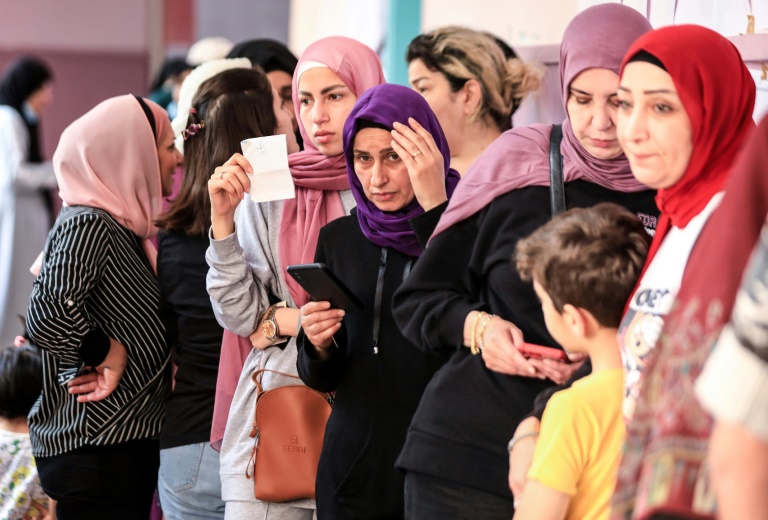
Lebanon held its first election Sunday since a painful economic crisis dragged it to the brink of becoming a failed state, a major test for new opposition groups bent on ousting the ruling elite.

But few observers expected a seismic shift, with all levers of political power firmly in the hands of traditional sectarian parties and an electoral system seen as rigged in their favour.

Lebanon shares power among its religious communities, and politics is often treated as a family business. By convention, the president is a Maronite Christian, the premier a Sunni Muslim, and the parliament speaker a Shiite.

“I voted for change, of course,” said Nabil Bazerji, 64. “Because we can’t continue like this, Lebanon was never in the position that it is in now.”

A new generation of independent candidates ran hoping to kindle the kind of change that a 2019 protest movement failed to deliver, and they looked likely to do better than the single assembly seat they clinched last time.

But most of parliament’s 128 seats are expected to remain in the grip of the entrenched groups blamed for the country’s woes — chiefly the economic downturn that is the worst crisis since the 1975-1990 civil war.

Turnout in the election was low, with about 32 percent of registered voters casting their ballots by 5:00 pm (1400 GMT), according to the interior ministry.

Most polls closed two hours later, with a few stations remaining open for those still waiting inside, as the vote count began, Lebanon’s national news agency said.

Results are expected Monday.

“It seems almost impossible to imagine Lebanon voting for more of the same,” said Sam Heller, an analyst with the Century Foundation. “And yet that appears to be the likeliest outcome.”

– Years of crisis –

Lebanon’s crisis has been so severe that more than 80 percent of the population is now considered poor by the United Nations, with the most desperate increasingly attempting perilous boat crossings to flee to Europe.

The Lebanese pound has lost 95 percent of its value, people’s savings are blocked in banks, the minimum wage won’t fill a car with fuel and mains electricity comes on only two hours a day.

Deepening the country’s woes, much of the capital Beirut was devastated by the deadly August 2020 explosion of volatile chemicals that had been left for years in a portside warehouse, one of the largest non-nuclear blasts ever recorded.

Top political barons have stalled an investigation into the disaster, and legal proceedings against the Central Bank governor over alleged financial crimes are equally floundering.

Lebanon, once described as the Switzerland of the Middle East, ranked second-to-last behind Afghanistan in the latest World Happiness Index released in March.

The army deployed across the country Sunday to secure the election, which Lebanon’s international donors have stressed is a prerequisite for financial aid crucial to rescue it from bankruptcy.

After an underwhelming campaign stifled by the all-consuming economic turmoil, voting was only disrupted by minor incidents in some polling stations.

The Iran-backed Hezbollah group and its allies threatened independent observers of the Lebanese Association for Democratic Elections (Lade) at polling stations, the association said.

– ‘Getting back our Lebanon’ –

Despite government assurances that polling stations would have power on election day, some voters had to use their phones’ torches.

Videos shared online showed people sporting their candidate’s colours and shepherding voters into polling booths, continuing a decades-old trend of vote buying.

The outgoing parliament was dominated by the Shiite movement Hezbollah and its two main allies, the Shiite Amal party of speaker Nabih Berri, who has held the job since 1992, and President Michel Aoun’s Christian Free Patriotic Movement.

One of the most notable changes in the electoral landscape was the absence of former prime minister Saad Hariri, which leaves parts of the Sunni vote up for grabs by new players.

Supporters of Hariri skipped elections and, in Beirut, some set up inflatable swimming pools to show their boycott of the vote.

For many voters, the election was a chance to vent their anger at the entire ruling elite.

“These elections are first and foremost a means of rooting out this political class and getting back our Lebanon,” said Shadi, a 38-year-old whose flat was destroyed in the port explosion, declining to give his second name.

Like many others who posted pictures on social media Sunday, he chose to dip his middle figure in the bottle of electoral blue ink after casting his ballot.

US mourn victims of racist mass shooting at store

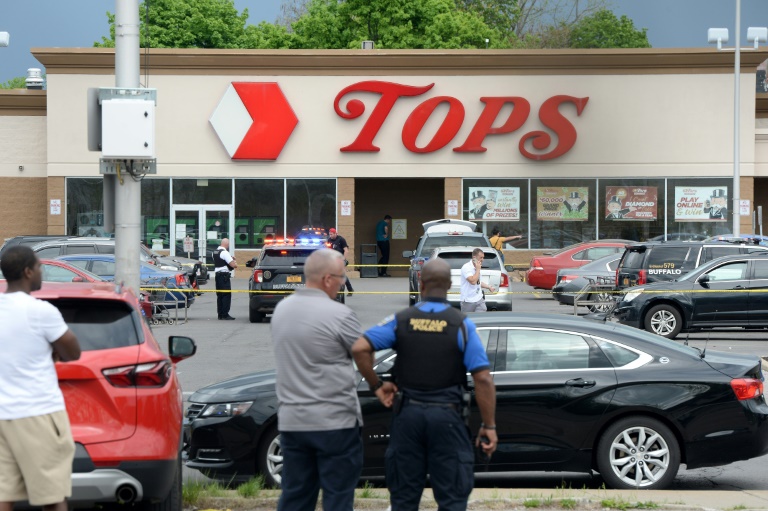
Shocked residents of Buffalo, New York gathered Sunday at vigils and church services to mourn 10 people fatally shot by an alleged white supremacist in an act one official described as “domestic terrorism, pure and simple.”

The suspected shooter, identified as 18-year-old Payton Gendron, was arrested at the scene, a grocery store in a predominantly Black neighborhood after police rushed to respond to emergency calls. 

He had driven from his home town of Conklin, more than 200 miles (320 kilometers) away, police said.

Gendron was arraigned late Saturday on a single count of first-degree murder and held without bail, the Erie County district attorney’s office said. He pleaded not guilty.

The shooter was wearing body armor, carried an assault rifle and live-streamed the attack, police said, adding that of the 10 dead and three wounded, 11 were African Americans.

– ‘Military-style execution’ –

Residents gathered outside the store for the vigil, while New York Governor Kathy Hochul, the state’s Attorney General Letitia James and Buffalo Mayor Byron Brown addressed a service at the city’s True Bethel Baptist Church.

In alternately angry and mournful tones, speakers denounced the latest eruption of racist violence and the ready availability of high-power guns in what has become a sadly familiar scene across America.

Hochul, herself a Buffalo native, described the crime as a “military-style execution” — she said the shooter carried an AR-15 assault weapon — and said racist messaging was “spreading like wildfire.”

Hochul called on officials of both political parties to “make sure these people crawl back into their holes and stay there.”

Speaking on ABC, she described social media as “instruments of this evil,” saying the platforms allowed racist themes to “spread like a virus.”

The attack evoked memories of some of the worst racist attacks in recent US history, including the 2015 killing by a young white man of nine worshippers in a Black church in South Carolina, and the 2019 attack by a white man in Texas that claimed 23 lives, most of them Latino.

Attorney General James, who is Black, described Saturday’s attack as “domestic terrorism, plain and simple” and said the shooter would be prosecuted “to the fullest extent of the law.”

Mayor Brown, speaking Sunday on CNN, admonished “lawmakers in Washington” who he said “fail to act” on gun control.

“The message to this country is these mass shootings have to end. There has to be sensible gun control,” Brown said.

“Enough is enough.”

– ‘Mother and missionary’ –

The gunman shot four people in the store’s parking lot, three of them fatally, before entering the supermarket.

Among those killed inside was a retired police officer working as a security guard. He fired several shots at the assailant before being shot himself, police said.

When police arrived, the shooter put the gun to his neck, but was talked down and surrendered.

The victims were ordinary shoppers and store workers.

One, according to a Twitter post, was a 77-year-old “mother, grandma & missionary” who “loved singing, dancing & being with family” and who for 25 years had run a weekly pantry to feed the poor. 

At a Sunday vigil in Buffalo’s Elim Christian Fellowship church, pastor T. Anthony Bronner urged both prayer and political action.

“Some of us are very angry this morning,” he said, but “we respond in prayer — and we respond on our feet.”

– Hate crime –

The shooting is being investigated as a hate crime and “racially motivated violent extremism,” Stephen Belongia, special agent in charge of the FBI’s Buffalo field office, told reporters.

Media reports linked the shooter to a 180-page manifesto that described a white supremacist ideology and laid out a plan to target a mainly Black neighborhood.

A spokesperson for streaming service Twitch told AFP the shooter used the platform to broadcast the attack live, and that the company had removed the stream “less than two minutes after the violence started.”

In addition to mentioning the South Carolina church shooting, the gunman reportedly said he had been “inspired” by the gunman who killed 51 people in a New Zealand mosque in March 2019. 

A semi-automatic weapon used in Saturday’s shooting also had a racial epithet written on its barrel, according to local daily The Buffalo News, citing a local official.

In a video call to True Bethel Baptist Church, New York Senator Charles Schumer called racism “the poison of America” and said: “We must tackle the scourge of gun violence and finally ban the weapons of war from our streets.”

But in the face of a strong pro-gun lobby, past efforts by the US Congress at tightening the nation’s gun laws have generally fallen short — even after horrific shootings.

The United States suffered 19,350 firearm homicides in 2020, up nearly 35 percent compared to 2019, the Centers for Disease Control and Prevention said in its latest data.

NATO assures Ukraine open-ended military support against Russia

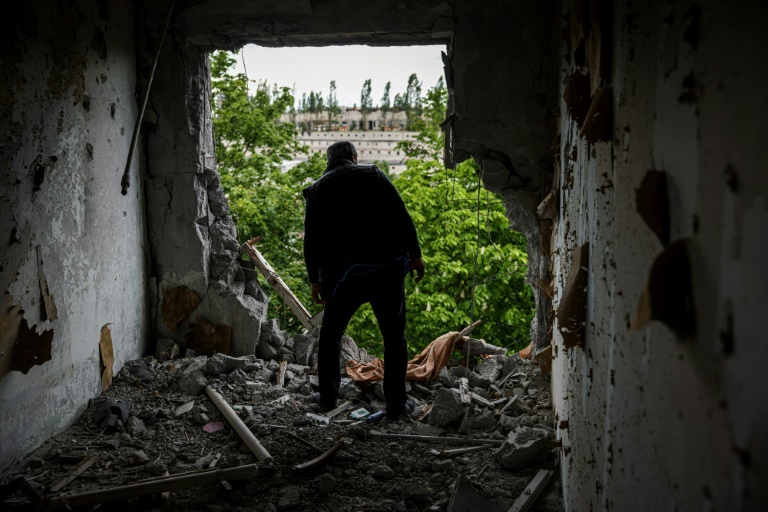
NATO on Sunday pledged open-ended military support for Ukraine, as Finland hailed its “historic” bid to join the alliance and with Western claims that Russia had suffered heavy losses in its push east.

The promise came after Finland jettisoned decades of military non-alignment for a bulwark against Russia, redrawing the balance of power in Europe and angering the Kremlin.

On the ground in Ukraine, Russia announced air strikes in the east, as well as in Lviv, near the Polish border in the west which has largely been spared the destruction of elsewhere.

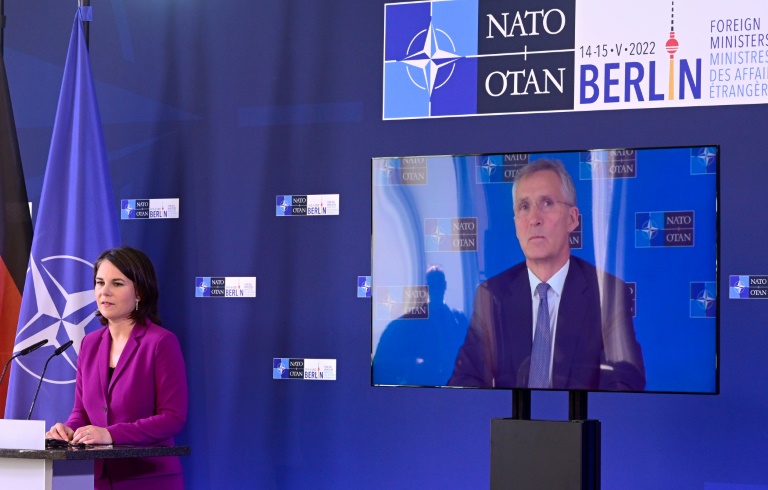
At a meeting of alliance foreign ministers in Berlin, Germany’s Annalena Baerbock said it would provide military assistance “for as long as Ukraine needs this support for the self-defence of its country”.

“Ukraine can win this war. Ukrainians are bravely defending their homeland,” NATO chief Jens Stoltenberg added.

Sweden’s ruling party said it was in favour of joining NATO just hours after Finland’s announcement, in a remarkable turnaround in political and public opinion following Russia’s invasion of Ukraine.

Stoltenberg said the alliance would look to provide both with interim security guarantees while the applications are processed, including possibly by increasing troops in the region.

In Berlin, US Secretary of State Antony Blinken said he heard “almost across-the-board, very strong support” for the bids, despite misgivings from Turkey.

Ankara has accused both Sweden and Finland of harbouring Kurdish extremists but Stoltenberg said it was not blocking their membership and was confident of finding common ground.

The Kremlin insists the Nordic nations have nothing to fear, in apparent retaliation, has pulled the plug on electricity supplies to Finland, with which it shares a 1,300-kilometre (800-mile) border.

Earlier, Western intelligence claimed that Russia has suffered huge military losses in Ukraine and that it will get bogged down in the strategic east because of stiff local resistance. 

Away from the conflict, Ukraine was basking in the morale-boosting glory of the landside win of its entry to the Eurovision Song Contest, the world’s biggest live music event. 

– ‘Lost momentum’ –

On the battlefield, Russia’s defence ministry claimed it had carried out “high-precision” missile strikes on four artillery munitions depots in the Donetsk area in the east of Ukraine.

Airstrikes had also destroyed two missile-launching systems and radar, while 15 Ukrainian drones were taken out around Donetsk and Lugansk, it added.

In Lviv, the regional governor, Maksym Kozytsky, said four Russian missiles hit military infrastructure near the border with Poland.

No casualties were reported and Ukrainian armed forces said they destroyed two cruise missiles over the region. 

Lviv was last hit by Russian missiles on May 3. 

UK defence chiefs said Russia’s offensive in the eastern Donbas region had “lost momentum”.

Demoralised Russian troops had failed to make substantial gains and Moscow’s battle plan was “significantly behind schedule”, UK Defence Intelligence said.

“Russia has now likely suffered losses of one third of the ground combat force it committed in February. 

“Under the current conditions, Russia is unlikely to dramatically accelerate its rate of advance over the next 30 days.”

Exact, reliable casualty figures have been hard to come by, with Ukraine and Russia regularly publishing claims of enemy dead.

Kyiv says its troops have killed nearly 20,000 Russian troops. Moscow on March 25 said its forces had killed at least 14,000 Ukrainian military personnel.

But both figures are widely suspected to be inflated, and have not been verified by AFP or independent conflict monitors.

The Kremlin said in late March that some 1,351 of its troops had been killed.

A senior NATO military official estimated at the same time that between 7,000 and 15,000 Russian soldiers could have been killed in the fighting up to that point.

– Eastern push – 

Russia has increasingly turned its attentions to eastern Ukraine after failing to capture Kyiv. 

Western leaders have predicted a drawn-out war of attrition stretching into next year.

But Ukrainian commanders have been more upbeat and expect a turning point by August. 

Russia has been trying to cross a river and encircle the city of Severodonetsk but have been repelled, with heavy losses of equipment, according to the governor of the Lugansk.

Local officials in Ukraine’s second city of Kharkiv in the north have said Russian troops were withdrawing from the surrounding region, and Ukrainian forces were counter-attacking. 

Ukrainian troops have been fighting a rear-guard battle from a network of underground tunnels and bunkers in the bowels of a steelworks in the devastated southern port city of Mariupol. 

Families of the estimated 600 troops still holed up at the vast Azovstal plant have appealed to China to intervene to secure the release of the dead and wounded. 

The United Nations and Red Cross helped to evacuate women, children and the elderly from the plant whey there were sheltering earlier this month. 

Petro Andryushchenko, an adviser to the mayor of the city, said on Telegram that a “huge convoy” of 500 to 1,000 cars had arrived in the city of Zaporizhzhia. 

– Eurovision win –

In war-weary Kyiv, news of Ukraine’s runaway Eurovision success was met with outpourings of joy and relief, bringing some respite from a daily barrage of grim reports of the conflict.

“It’s a small ray of happiness. It’s very important now for us,” said Iryna Vorobey, a 35-year-old businesswoman, adding that the show of support from across Europe was “incredible”.

“I’m very glad,” said Andriy Nemkovych, a 28-year-old project manager. “This win is so very good for our mood.”

The Kalush Orchestra’s “Stefania”, a rap lullaby combining folk and modern hip-hop rhythms, won the popular vote of viewers, pushing the UK into second place. 

President Volodymyr Zelensky praised the group, whose lyrics about home took on extra poignancy with six million Ukrainians currently displaced outside the country.

But some were lukewarm. 

“Now, it’s not the most important thing,” said Vadym Zaplatnikov, 61, who insisted that “having Crimea back” would be a much more welcome announcement.

burs-phz/gw

War in Ukraine: Latest developments

Here are the latest developments in the war in Ukraine:

– Finland and Sweden set to make NATO bids –

The Finnish government officially announces its intention to join NATO while Sweden’s ruling Social Democratic Party says it is in favour of membership in response to Russia’s invasion of Ukraine.

Less than three months after Russia invaded Ukraine on February 24, it is a stunning reversal of Finland and Sweden’s policy on military non-alignment.

“This is a historic day. A new era is opening”, Finnish President Sauli Niinisto tells reporters at a joint news conference with Prime Minister Sanna Marin on Sunday.

– NATO chief says Turkey not blocking bids… –

NATO Secretary-General Jens Stoltenberg says that Turkey is not blocking potential membership bids by Sweden and Finland and voiced confidence at resolving Ankara’s stated concerns.

“Turkey made it clear that its intention is not to block membership,” Stoltenberg tells reporters virtually after alliance foreign ministers met in Berlin.

– …says Ukraine can win war –

Stoltenberg says Ukraine can defeat Russia’s invasion, urging the alliance to keep sending military aid to Kyiv.

“Ukraine can win this war. Ukrainians are bravely defending their homeland,” says the defence chief, adding that “we must continue to step up and sustain our… support to Ukraine”.

– Eurovision win lifts spirits –

Ukrainians receive a much-needed boost as a folk rap lullaby wins the Eurovision song contest. 

“Stefania”, which beat out a host of over-the-top acts at the quirky annual musical event, was written by frontman Oleh Psiuk as a tribute to his mother before the war — but its nostalgic lyrics have taken on wider meaning because of the conflict.

“Please help Ukraine and Mariupol! Help Azоvstal right now,” Psiuk says in English from the stage, referring to the port city’s underground steelworks where Ukrainian soldiers are surrounded by Russian forces.

– ‘Very difficult’ situation in east Ukraine –

Ukraine President Volodymr Zelensky warns that the military situation in Ukraine’s southeastern Donbas region is “very difficult”.

Russia has increasingly turned its attention to the country’s south and east since the end of March, after failing to take the capital Kyiv.

Western analysts believe President Vladimir Putin has his sights on annexing southern and eastern Ukraine in the months ahead but his troops appear to be encountering stiff resistance.

– Zelensky urges support to prevent world famine –

President Zelensky warns that the war in his country risks triggering global food shortages as he calls for more international backing.

“Now support for Ukraine — and especially with weapons — means working to prevent global famine,” Zelensky says.

“The sooner we liberate our land and guarantee Ukraine’s security, the sooner the normal state of the food market can be restored,” he adds.

Before the invasion, Ukraine exported 4.5 million tonnes of agricultural produce per month through its ports -– 12 percent of the planet’s wheat, 15 percent of its corn and half of its sunflower oil.

burs-jwp/har

Close Bitnami banner
Bitnami