World

Afghan money exchangers on strike after licence fee hike

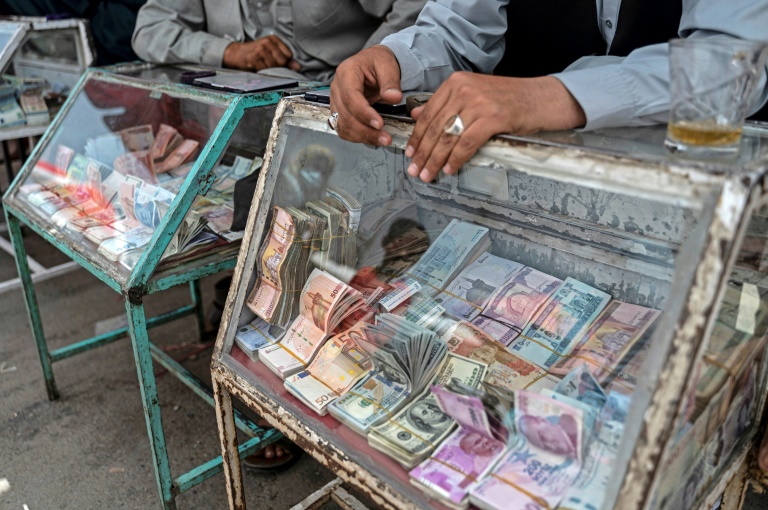
Thousands of money exchangers shut shop across Afghanistan on Sunday after Taliban authorities imposed a steep hike in licence fees, the brokers’ commission said, in a bid to slow down money laundering and terrorism financing according to financial analysts. 

Afghanistan’s formal banking system collapsed when the Taliban swept back to power in August last year, ending two decades of US-led military intervention in the deeply impoverished nation. 

Since then money exchangers — who swap currencies, make informal cash transfers and even give loans — have played a key role in meeting the financial needs of 38 million citizens mired in humanitarian crisis. 

“Thousands of money exchangers are shut in most parts of the country to protest against the central bank’s conditions,” Abdul Rahman Zeerak, spokesman for Afghanistan’s Money Exchange Commission, told AFP.

He said the central bank had raised licence fees to five million Afghanis ($56,000) from around 300,000. 

Zeerak also claimed the bank is insisting transactions are conducted online under new licences and brokers must have a minimum of 50 million Afghanis to operate. 

“This is a lot of money,” he said. “Money exchangers are not that strong financially.” 

The brokers’ commission said currency traders in the capital Kabul and cities such as Herat and Kunduz were shut as part of the strike. 

Meanwhile, Afghanistan’s central bank — Da Afghanistan Bank — warned that exchangers operating without a licence “will face legal action”. 

Spokesman Mohammad Sabir Momand said in a statement that the institution was “committed to transparency and security” in the financial sector. 

While informal money exchangers provide a vital service, they also lack oversight and analysts say their system can be used to launder money and finance militant organisations. 

Afghanistan central bank’s former deputy governor Khan Afzal Hadawal said the Taliban’s new initiative was motivated by a desire to demonstrate to the international community that it is stymying terror groups in the nation. 

“The easiest way for money launderers and terrorists was to go through the money exchangers,” Hadawal told AFP. 

“What they (Taliban government) have done is they have increased the requirements, so that those who cannot qualify … by default they will be shut down.”

After making a hasty withdrawal, the US seized billions of dollars in Afghan assets and international donors suspended the massive influx of aid money which was propping up the Afghan economy. 

Many foreign nations have made assistance to the nation conditional on the Taliban regime guaranteeing human rights and preventing international terror groups from organising in Afghanistan.
Palestinians mourn Israel's creation amid outcry over funeral raid

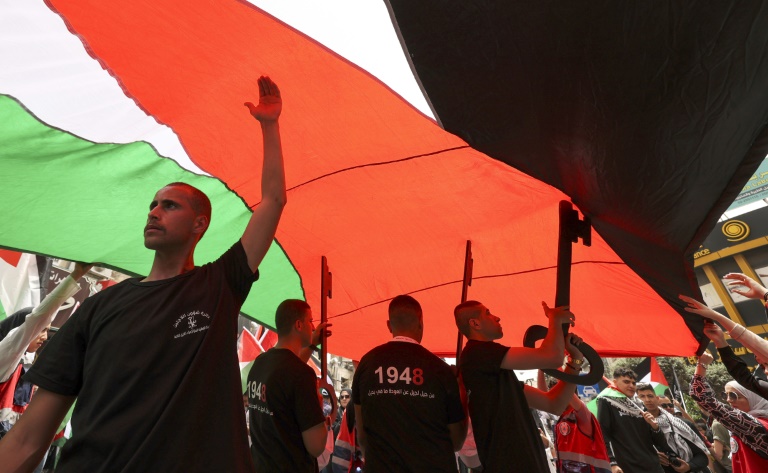
Palestinians rallied Sunday to mark the “Nakba,” or catastrophe, 74 years after Israel’s creation, with condemnation spreading over a police raid on the funeral of a slain journalist.

The annual demonstrations across the occupied West Bank, annexed east Jerusalem and inside Israel came with tensions high over the killing of 51-year-old Al Jazeera reporter Shireen Abu Akleh.

The Palestinian-American was shot dead Wednesday during an Israeli raid in Jenin, a West Bank flashpoint. A Palestinian militant wounded in clashes there, Daoud al-Zubaidi, died from his injuries in an Israeli hospital Sunday.

Israeli police have vowed to investigate the chaos that marred the day of Abu Akleh’s funeral, after television footage seen worldwide showed pallbearers struggling to stop the casket from toppling to the ground as baton-wielding police descended upon them, grabbing Palestinian flags.

The scenes Friday sparked international condemnation, including from the United States, United Nations and the European Union, with US Secretary of State Antony Blinken on Sunday calling for a “credible” investigation into Abu Akleh’s death as he offered condolences to her family.

Late South African Archbishop Desmond Tutu’s foundation said Israeli police “attacking pallbearers” was “chillingly reminiscent of the brutality” seen at the funerals of anti-apartheid activists.

– ‘Unbridled brutality’ –

Israeli commentators joined the chorus lambasting the raid as Abu Akleh’s coffin emerged a Jerusalem hospital.

In leading Israeli daily Yediot Ahronot, Oded Shalom said the footage “documented a shocking display of unbridled brutality and violence”.

“The Jerusalem District Police decided to come down like a tonne of bricks on anyone who dared to hold a Palestinian flag,” Shalom wrote.

“As if holding up a flag — a mere piece of cloth, for God’s sake — at a funeral procession for an hour or two could have had any impact whatsoever” on Israeli claims to control over Jerusalem, he added.

Israeli police regularly crack down on people holding Palestinian flags.

Thousands of Palestinians streamed through central Ramallah for the main Nakba rally, with crowds also turning out in Gaza City, in the Israeli-blocked strip. 

At a student Nakba event at Tel Aviv University (TAU), police said three Arabs were arrested “for attacking demonstrators and police officers.” 

The arrests followed a confrontation with Im Tirtzu, a right-wing Israeli movement holding a counter rally. 

Arab TAU student Aline Nasra said that demonstrators were assaulted by police as they moved to protect one of their members from Im Tirtzu threats.

The right-wing Israelis taunted the Arab students, including with calls that Israel is only for “Jewish people,” Nasra said.

– Posthumous report –

Al Jazeera on Sunday posthumously aired a piece produced by Abu Akleh on the Nakba, which marks Israel’s 1948 declaration of independence.

A highly respected reporter, she was killed while wearing a helmet and a bulletproof vest marked “Press”.

Israel’s army said an interim investigation could not determine who fired the fatal bullet, noting that stray Palestinian gunfire or Israeli sniper fire aimed at militants were both possible causes.

The Palestinian public prosecution said an initial probe proved Israeli troops were to blame.

Abu Akleh’s posthumously aired piece retraced the fate of the Palestinian people since 1948, with a particular focus on refugees and the displaced.

More than 700,000 Palestinians fled or were forced from their homes during the conflict that surrounded Israel’s creation.

One of the latest casualties of the Israeli-Palestinian conflict, Daoud al-Zubaidi, was the brother of Zakaria, who headed the armed wing of Palestinian president Mahmud Abbas’s Fatah movement and briefly escaped from an Israeli prison last year.

The most recent Israeli fatality was special forces police officer Noam Raz, 46, who was shot Friday in Jenin. He was being buried on Sunday.

Finland announces 'historic' NATO bid, as Sweden holds key meet

The Finnish government officially announced its intention to join NATO on Sunday, as Sweden’s ruling party held a decisive meeting that could pave the way for a joint application.

Less than three months after Russia invaded Ukraine on February 24, the move is a stunning reversal of Finland’s policy on military non-alignment dating back more than 75 years.

Sweden, which has been militarily non-aligned for more than two centuries, is expected to follow suit with a similar announcement, possibly on Monday.

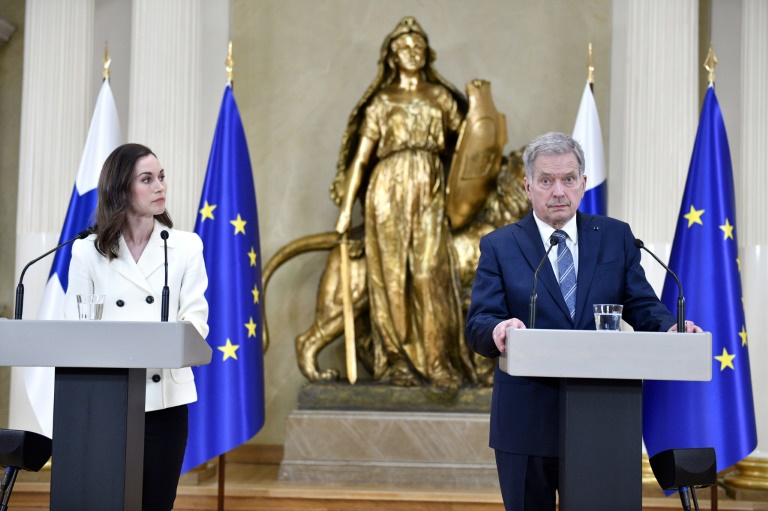
“This is a historic day. A new era is opening”, Finnish President Sauli Niinisto told reporters at a joint press conference with Prime Minister Sanna Marin on Sunday.

NATO membership needs to be approved and ratified by all 30 members of the alliance.

Turkey’s President Recep Tayyip Erdogan has expressed last-minute objections, but NATO Secretary General Jens Stoltenberg said Sunday that Ankara was not opposed to the two countries’ bids.

“Turkey made it clear that its intention is not to block membership,” Stoltenberg told reporters virtually after alliance foreign ministers met in Berlin.

“I am confident we’ll be able to find common ground, consensus on how to move on membership issues,” Stoltenberg said, adding that he was in touch with Turkish Foreign Minister Mevlut Cavusoglu.

Cavusoglu meanwhile lauded Finland’s conciliatory approach in their talks, but criticised Sweden’s foreign minister for “provocative” statements.

Turkey’s objections, directed in particular at Stockholm, focus on what it considers to be the countries’ leniency towards the Kurdistan Workers’ Party (PKK), which is on the EU’s list of terrorist organisations.

US Secretary of State Antony Blinken nonetheless insisted he was “very confident that we will reach consensus” on the two countries’ NATO bids.

Niinisto said he was “prepared to have a new discussion with President Erdogan about the problems he has raised”.

– Overwhelming Finnish support –

Finland’s parliament will convene to debate the membership proposal on Monday. 

“We hope the parliament will confirm the decision to apply for NATO membership during the coming days. It will be based on a strong mandate”, premier Marin said.

A vast majority of Finnish MPs back the decision after Marin’s Social Democratic Party on Saturday said it was in favour of joining. 

“Hopefully, we can send our applications next week together with Sweden,” Marin had said on Saturday.

The two Nordic countries broke their strict neutralities after the end of the Cold War by joining the EU and becoming partners to NATO in the 1990s, solidifying their affiliation with the West.

But the concept of full NATO membership was a non-starter in the countries until the war in Ukraine saw public and political support for joining the alliance soar.

Finland, which shares a 1,300-kilometre (800-mile) border with Russia, has been leading the charge, while Sweden appears anxious at being the only non-NATO country around the Baltic Sea.

Finland is also Sweden’s closest defence cooperation partner.

Many Swedish politicians have said their support is conditional on Finland joining.

On Saturday, the Finnish head of state phoned his Russian counterpart President Vladimir Putin to inform him of his country’s desire to join NATO, in a conversation described as “direct and straightforward”.

Moscow has repeatedly warned both countries of consequences if they join the alliance. 

Putin warned Niinisto that joining “would be a mistake since there is no threat to Finland’s security”, according to a Kremlin statement.

Niinisto said Sunday that while Helsinki is prepared for a Russian response, “little by little, I’m beginning to think that we’re not going to face actual military operations.”

“After the phone call with Putin, I think so even more.”

– No other choice –

Former Finnish prime minister Alexander Stubb told the BBC on Sunday that Putin was “the reason we’re joining” NATO.

“We could easily call it Vladimir Putin’s NATO enlargement”, he said.

According to recent polls, the number of Finns who want to join the alliance has risen to over three-quarters, almost triple the level seen before the war in Ukraine.

In Sweden, support has also risen dramatically, to around 50 percent — with about 20 percent against.

Sweden’s Social Democrats, led by Prime Minister Magdalena Andersson, were meeting Sunday to decide whether the party should abandon its historic stance against joining, last reaffirmed at the party’s annual congress in November.

A green light from the party would secure a firm parliamentary majority in favour of joining.

Stoltenberg meanwhile reiterated on Sunday that NATO would look at providing security guarantees for Finland and Sweden during the interim period from their application for membership to accession.

Crisis-hit Lebanon goes to polls but few expect major change

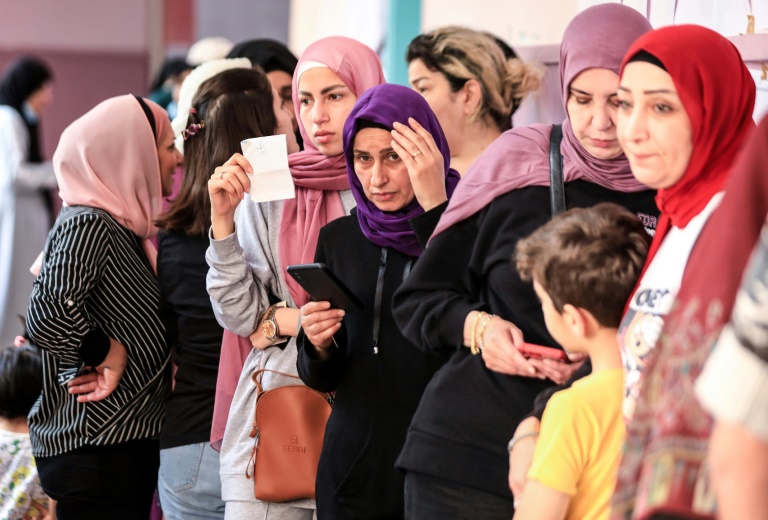
Lebanon held its first election Sunday since a painful economic crisis dragged it to the brink of becoming a failed state, a major test for new opposition groups bent on ousting the ruling elite. 

But few observers expected a seismic shift, with all levers of political power firmly in the hands of traditional sectarian parties and an electoral system seen as rigged in their favour.

Lebanon shares power among its religious communities, and politics is often treated as a family business. By convention, the president is a Maronite Christian, the premier a Sunni Muslim, and the parliament speaker a Shiite.

“We tried this current political class before, and now is the time to bring in new faces,” said 28-year-old Beirut voter Nayla after casting her ballot.

A new generation of independent candidates hopes to kindle the kind of change that a 2019 protest movement failed to deliver, and looked likely to do better than the single assembly seat they clinched last time.

But most of parliament’s 128 seats are expected to remain in the grip of the entrenched groups blamed for the country’s woes — chiefly the economic downturn that is the worst crisis since the 1975-1990 civil war.

Turnout in the election was low, with only about 25 percent of registered voters casting their ballots by 3:00 pm, according to the interior ministry.

“It seems almost impossible to imagine Lebanon voting for more of the same,” said Sam Heller, an analyst with the Century Foundation. “And yet that appears to be the likeliest outcome.”

– Years of crisis –

Lebanon’s crisis has been so severe that more than 80 percent of the population is now considered poor by the United Nations, with the most desperate increasingly attempting perilous boat crossings to flee to Europe.

The Lebanese pound has lost 95 percent of its value, people’s savings are blocked in banks, the minimum wage won’t buy a tank of petrol and mains electricity comes on only two hours a day.

Deepening the country’s woes, much of the capital was devastated by the deadly August 2020 explosion of volatile chemicals that had been left for years in a portside warehouse, one of the largest non-nuclear blasts ever recorded.

Top political barons have stalled an investigation into the disaster, and legal proceedings against the Central Bank governor over alleged financial crimes are equally floundering.

Lebanon, once described as the Switzerland of the Middle East, ranked second-to-last behind Afghanistan in the latest World Happiness Index released in March.

The army deployed across the country Sunday to secure the election, which Lebanon’s international donors have stressed is a prerequisite for financial aid crucial to rescue it from bankruptcy.

After an underwhelming campaign stifled by the all-consuming economic turmoil, voting was only disrupted by minor incidents in some polling stations.

– ‘Getting back our Lebanon’ –

Despite government assurances that polling stations would have power on election day, local media reported blackouts in some centres.

Videos shared online showed people sporting their candidate’s colours and shepherding voters into polling booths, continuing a decades-old trend of vote buying.

At one candidate’s rally in the northern city of Tripoli, some well-wishers disappointed by the lack of cash handouts made off with the plastic chairs.

The outgoing parliament was dominated by the Iran-backed Shiite movement Hezbollah and its two main allies, the Shiite Amal party of speaker Nabih Berri, who has held the job since 1992, and President Michel Aoun’s Christian Free Patriotic Movement.

One of the most notable changes in the electoral landscape is the absence of former prime minister Saad Hariri, which leaves parts of the Sunni vote up for grabs by new players.

For many voters, the election was a chance to vent their anger at the entire ruling elite.

“These elections are first and foremost a means of rooting out this political class and getting back our Lebanon,” said Shadi, a 38-year-old whose flat was destroyed in the port explosion.

Like many others who posted pictures on social media Sunday, he chose to dip his middle figure in the bottle of electoral blue ink after casting his ballot.

bur-jmm/fz

Ukraine youth seek respite from war where they can

Saturday night was always time for the trendy youth of Lviv to sip cocktails on the terrace or lose themselves in the rhythms of the basement DJ at “People Place”.

Yet while the nightlife on offer to urban cool cats ostensibly caters to typical young adult tastes, some customers are in contrast seeking refuge from the war on their doorstep which has shattered normality.

In almost three months of conflict, Lviv, some 70 kilometres (45 miles) from the Polish border, has not experienced the destruction of large swathes of Ukraine’s east.

Yet the city has just suffered its first air strike in more than a week — and the shadow of the war hangs heavy over a city of some 700,000 which has seen major inflows of refugees from areas hit by fighting.

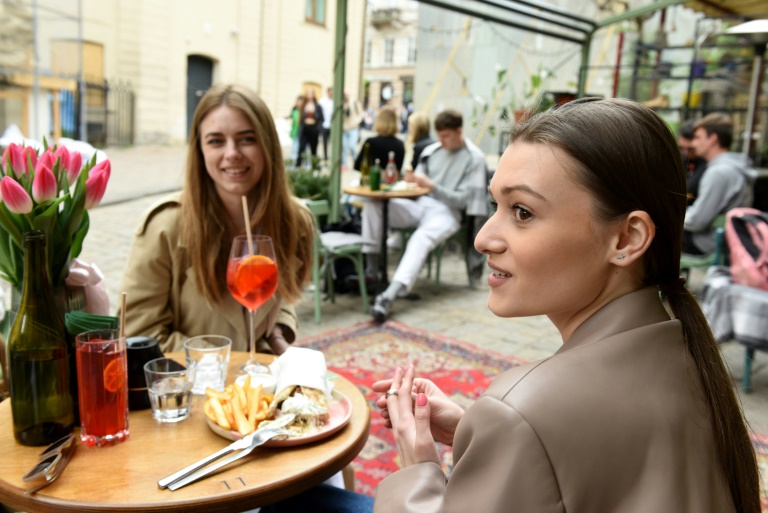
Saturday night is therefore a chance for young residents to seek respite where they can and enjoy the rising temperatures of early summer while teasing out a semblance of pre-war “normality” in clubs, eateries and watering holes.

Cradling a Spritz cocktail at “People Place”, 25-year-old Bohdan Sharhulenk drinks in a moment’s calm a month on from his own arrival in Lviv after the hellish experience of seeing his southern hometown of Mykolaiv, near the frontline, bombarded.

“It’s very hard to have a normal life when you know your friends are fighting with the Russian aggressor,” he explains, dragging nervously on a cigarette.

But, he adds, “it’s important to party, your mind can relax.

“Once, I danced a bit of techno.”

Since his arrival in town he has spent several evenings with a clutch of acquaintances from across the country — most of that time spent in houses or apartments as the city is subject to an 11 pm curfew.

Sat nearby at the same venue around a bouquet of tulips are Sofya Romanuyk and Marta Yavorska, both 24.

They are still coming to terms with what they have experienced and their displacement.

Romanuyk, neatly made up and elegantly dressed, says in the early days of the Russian offensive in late February she was so shocked she didn’t wash her hair for days.

“Psychologists say that for the first 21 days, it’s very hard to live in war, and then it becomes normal,” she explains.

Now, I “try to enjoy the good things: just to sit in a cafe, eat, drink, meet friends” — though she’s in no mood to party.

– ‘I try, but I can’t’ –

Her friend Marta, who has recently arrived from Warsaw, says it bothered her to see the Poles drinking liquor after Ukraine banned alcohol sales as part of martial law.

Local authorities were afforded some leeway and with Lviv having loosened its ban Marta can chink glasses with Sofia — even if she feels pangs of guilt in so doing. 

“This is terrible that we think war is normal, but life must go on.”

Dima Dmitrenko, 25, finds that a tall order.

He arrived in Lviv from the eastern, battle-scarred city of Kharkiv a month ago.

What he lived through there has scarred him.

Perched on a chaise longue he is not relaxing but bashing away at his computer, trying to make a living from taking punts on cryptocurrencies. 

“Nothing is normal. Nothing. Nothing. It’s terrible,” he says.

Two weeks ago he did venture down to check out the basement DJ and his sound system.

“I saw a real party like we had in Kharkiv before the war. I tried to relax but I could not. I try but I can’t.”

Oksana Gariacha, 29, has been working at the bar since leaving Kyiv — but likewise just can’t face partying in the current context, despite her love of salsa.

“People are dying, we can’t do real hard parties.

“I miss dancing. After we win, I hope we will dance every night until the morning.”

2,000 attend new Tunisia opposition alliance demo

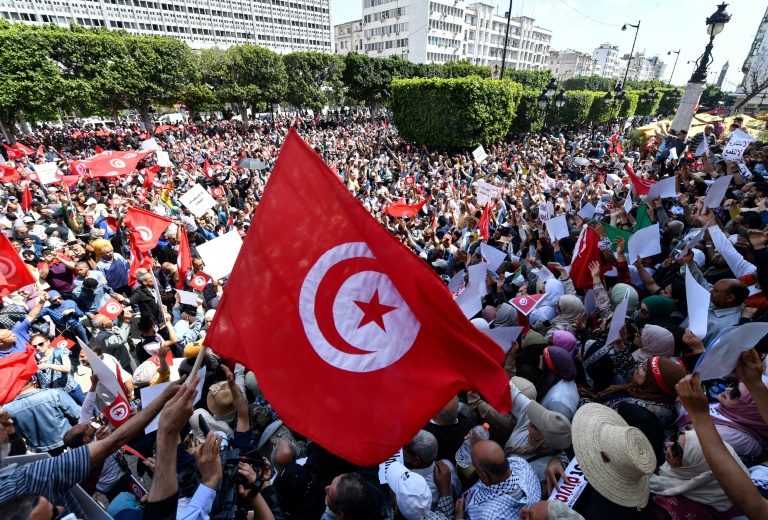
A crowd estimated at more than 2,000, lower than expected, took part Sunday in the first demonstration of a new alliance to oppose a power grab by President Kais Saied.

“We shall overcome,” and “We are united, not divided,” read banners of the National Salvation Front protesters gathered in front of the municipal theatre on Bourguiba Avenue, a traditional hub of demonstrations in central Tunis.

“The people want… respect for the constitution and a return to democracy,” they chanted.

Veteran opposition figure Ahmed Nejib Chebbi announced the formation of the new alliance on April 26 to “save” Tunisia from deep crisis following Saied’s power grab last year.

Chebbi, 78, was a prominent opponent of dictator Zine el Abidine Ben Ali’s rule.

Demonstrators said they were disappointed by the numbers that turned out for the first public show of support for the alliance.

“A larger crowd” was expected, said Salah Tzaoui, a 57-year-old teacher, especially by those who had lived under Ben Ali who was ousted in a 2011 popular uprising that sparked the Arab Spring revolts around the region.

Saied — a former law professor elected in 2019 amid public anger against the political class — on July 25 sacked the government, suspended parliament and seized wide-ranging powers.

He later gave himself powers to rule and legislate by decree, and seized control over the judiciary.

“He wants to govern alone. It’s not possible. I’m here for my children and grandchildren,” Tzaoui told AFP.

Khaled Benabdelkarim, a 60-year-old fellow teacher who voted for Saied three years ago, said the president had “betrayed the people and stolen democracy. He has no political project, no economic project.”

The National Salvation Front comprises five political parties including Saied’s nemesis the Islamist-inspired Ennahdha party, along with five civil society groups involving independent political figures.

Saied’s initial power grab was welcomed by many Tunisians sick of the often-stalemated post-revolution political system.

But an increasing array of critics say he has moved the country down a dangerous path back towards autocracy in what was the only democracy to emerge from the Arab Spring.

Saied has argued that the North African country’s 2014 constitution allowed him to take “exceptional measures”.

Kenya presidential hopeful Ruto picks ex-Kenyatta aide as running mate

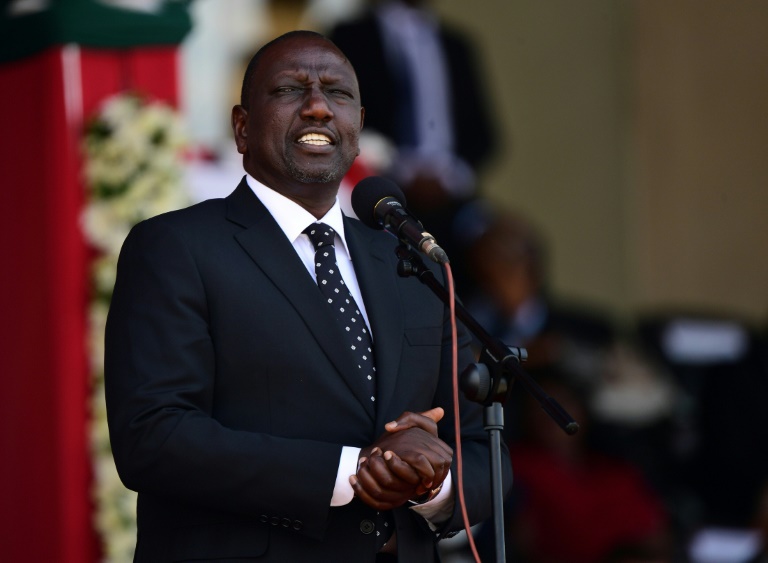
Kenya’s Deputy President William Ruto on Sunday picked a former aide turned fierce critic of President Uhuru Kenyatta to be his running mate in the country’s high-stakes election in August.

Rigathi Gachagua, who served as Kenyatta’s personal assistant between 2001 and 2006, was picked after a months-long, secretive process marked by intense lobbying that stretched late into the night on Saturday.

“The consensus pointed to an individual who scored excellent points on every evaluative parameter… an astute debater with prodigious persuasive responsibility,” Ruto told a televised press briefing at his home in the capital Nairobi. 

Gachagua said he was “honoured by the responsibility and faith” Ruto had placed in him, vowing to “deliver Kenyans from economic oppression.”

Prior to becoming a lawmaker in 2017, Gachagua served as an administrator in the authoritarian government of Daniel arap Moi and is regarded as an effective campaigner.

But he has also faced corruption allegations and was charged last year with acquiring more than 7.3 billion Kenyan shillings ($62.8 million, 60.3 million euros) suspected to be proceeds of crime. The case is ongoing.

This year’s presidential contest is shaping up to be a two-horse race between Ruto and Raila Odinga, a former political prisoner and prime minister who has secured Kenyatta’s support.

Ruto, 54, was initially anointed by Kenyatta as his successor but found himself marginalised after the 2018 pact between the president and former foe Odinga. 

Since then Ruto has positioned himself as a leader looking to upend the status quo and stand up for the “hustlers” trying to survive in a country ruled by “dynasties” — a reference to the Kenyatta and Odinga families which have dominated politics for decades. 

– Tribal allegiances –

The choice of a deputy president will play a key role in determining the winner of the August 9 poll, with tribal and community allegiances affecting the outcome of previous elections.

The East African powerhouse has traditionally been ruled by presidents from the dominant Kikuyu tribe like Kenyatta or the Kalenjin tribe like Ruto. 

Gachagua — a Kikuyu — hails from the populous Mount Kenya region, which has produced three of the country’s four presidents since independence in 1963. 

With its diverse population and ethnic voting blocs, elections in Kenya have often been marred by violence. 

Both Kenyatta and Ruto had been indicted by the International Criminal Court on crimes against humanity charges for their alleged role in orchestrating post-poll violence in 2007 that cost more than 1,100 lives.

The case collapsed in 2016 after the court declared a mistrial citing troubling incidences of witness interference. 

After post-election fighting in 2017 left dozens dead, Kenyatta and Odinga announced a rapprochement, saying they hoped to end repeated cycles of poll-related violence. 

Odinga, who belongs to the Luo tribe, is expected to announce his running mate on Monday.

Finland announces 'historic' NATO bid, as Sweden holds key meet

The Finnish government officially announced its intention to join NATO on Sunday, as Sweden’s ruling party was to hold a decisive meeting that could pave the way for a joint application.

Less than three months after Russia invaded Ukraine on February 24, the move is a stunning reversal of Finland’s policy on military non-alignment dating back more than 75 years.

Sweden, which has been militarily non-aligned for more than two centuries, is expected to follow suit with a similar announcement, possibly on Monday.

“Today, the President of the Republic and the Government’s Foreign Policy Committee have jointly agreed that Finland will apply for NATO membership, after consulting parliament,” Finnish President Sauli Niinisto told reporters at a joint press conference with Prime Minister Sanna Marin on Sunday.

“This is a historic day. A new era is opening”, Niinisto said. 

Despite last-minute objections by Turkey, NATO members are on “good track” in their discussions on welcoming Sweden and Finland into the Western military alliance, Croatia’s foreign minister, Gordan Grlic Radman, said as he arrived for talks with NATO counterparts in Berlin.

Finland’s parliament will convene to debate the membership proposal on Monday. 

“We hope the parliament will confirm the decision to apply for NATO membership during the coming days. It will be based on a strong mandate”, premier Marin said.

An overwhelming majority of Finnish MPs back the decision after Marin’s Social Democratic Party on Saturday said it was in favour of joining. 

“Hopefully, we can send our applications next week together with Sweden,” Marin had said on Saturday.

The two Nordic countries broke their strict neutralities after the end of the Cold War by joining the EU and becoming partners to NATO in the 1990s, solidifying their affiliation with the West.

But the concept of full NATO membership was a non-starter in the countries until the war in Ukraine saw public and political support for joining the alliance soar.

Finland, which shares a 1,300-kilometre (800-mile) border with Russia, has been leading the charge, while Sweden appears anxious at being the only non-NATO country around the Baltic Sea.

Finland is also Sweden’s closest defence cooperation partner.

Many Swedish politicians have said their support is conditional on Finland joining.

On Saturday, the Finnish head of state phoned his Russian counterpart President Vladimir Putin to inform him of his country’s desire to join NATO, in a conversation described as “direct and straightforward”.

“Avoiding tensions was considered important,” Niinisto said in a statement after the call.

But Putin responded by warning that joining NATO “would be a mistake since there is no threat to Finland’s security”, according to a Kremlin statement.

Moscow has repeatedly warned both countries of consequences if they join NATO. 

Niinisto said Sunday that while Helsinki expects Russia to respond to its decision, “little by little, I’m beginning to think that we’re not going to face actual military operations.”

“After the phone call with Putin, I think so even more.”

– No other choice –

According to recent polls, the number of Finns who want to join the alliance has risen to over three-quarters, almost triple the level seen before the war in Ukraine.

In Sweden, support has also risen dramatically, to around 50 percent — with about 20 percent against.

Sweden’s Social Democrats, led by Prime Minister Magdalena Andersson, were meeting Sunday to decide whether the party should abandon its historic stance against joining, last reaffirmed at the party’s annual congress in November.

A green light from the party would secure a firm parliamentary majority in favour of joining.

While the party’s leading politicians have seemed ready to reverse the decision, critical voices within have denounced the change in policy as rushed.

But analysts say it is unlikely that the party will oppose the move.

NATO membership needs to be approved and ratified by all 30 members of the alliance.

While Finland and Sweden claim to have received favourable signals from Ankara, Turkish President Recep Tayyip Erdogan on Friday expressed hostility to the idea.

Turkey’s objections, directed in particular at Stockholm, focus on what it considers to be the countries’ leniency towards the Kurdistan Workers’ Party (PKK), which is on the EU’s list of terrorist organisations.

Niinisto said Sunday he was “prepared to have a new discussion with President Erdogan about the problems he has raised”.

At NATO’s meeting in Berlin, Slovakia’s Foreign Minister Ivan Korcok said he was “absolutely certain that we will find a solution”, while Luxembourg Foreign Minister Jean Asselborn said “the signs don’t look bad” for Sweden and Finland.

Finland confirms NATO bid as West claims heavy Russian losses in Ukraine

Finland on Sunday confirmed its bid for NATO membership as a bulwark against Russia, redrawing the balance of power in Europe after decades of military non-alignment.

In Helsinki, President Sauli Niinisto called the move “historic”. “A new era is opening,” he said, before the decision is put before parliament for approval.

Finland’s move, expected to be followed by neighbouring Sweden, has angered the Kremlin, which insists the Nordic nations have nothing to fear and promised reprisals.

Russia has already pulled the plug on electricity supplies to Finland, with whom it shares a 1,300-kilometre (800-mile) border, prompting grid bosses to ask Sweden for back-up.

The announcement came as Western intelligence claimed that Russia has suffered huge military losses in Ukraine and that it will get bogged down in the strategic east as it faces stiff resistance. 

And away from the conflict, Ukraine was basking in the morale-boosting glory of the landside win of its entry to the Eurovision Song Contest, the world’s biggest live music event. 

– ‘Lost momentum’ –

On the battlefield, Russia’s defence ministry claimed it had carried out “high-precision” missile strikes on four artillery munitions depots in the Donetsk area in the east of Ukraine.

Airstrikes had also destroyed two missile-launching systems and radar, while 15 Ukrainian drones were taken out around Donetsk and Lugansk, it added. 

The claims came as UK defence chiefs said Russia’s offensive in the Donbas region had “lost momentum”.

Demoralised Russian troops had failed to make substantial gains and Moscow’s battle plan was “significantly behind schedule”, UK Defence Intelligence said in an update.

“Russia has now likely suffered losses of one third of the ground combat force it committed in February. 

“Under the current conditions, Russia is unlikely to dramatically accelerate its rate of advance over the next 30 days.”

Exact, reliable casualty figures have been hard to come by, with Ukraine and Russia regularly publishing claims of enemy dead.

Kyiv says its troops have killed nearly 20,000 Russian military. Moscow on March 25 said its forces had killed at least 14,000 Ukrainian military personnel.

But both figures are widely suspected to be inflated, and have not been verified by AFP or independent conflict monitors.

The Kremlin said in late March that some 1,351 of its troops had been killed.

A senior NATO military official estimated at the same time that between 7,000 and 15,000 Russian soldiers could have been killed in the fighting up to that point.

– Eastern push – 

Russia has increasingly turned its attentions to eastern Ukraine after failing to capture Kyiv. 

Western leaders have predicted a drawn-out war of attrition stretching into next year, but Ukrainian commanders have been more upbeat and predicted a turning point by August. 

Russia has been trying to cross a river and encircle the city of Severdonetsk, according to the governor of the eastern Lugansk region.

But Serhiy Gaidai said Ukrainian forces had repelled the push. 

Aerial images showed dozens of destroyed armoured vehicles on the river bank and wrecked pontoon bridges. 

Local officials in Ukraine’s second city of Kharkiv in the north have said Russian troops were withdrawing, and Ukrainian forces were counter-attacking. 

Ukrainian troops have been fighting a rearguard battle from a network of underground tunnels and bunkers in the bowels of a steelworks in the devastated southern port city of Mariupol. 

Families of the estimated 600 troops still holed up at the Azovstal plant and facing heavy bombardment have appealed to China to intervene to secure their release. 

The United Nations and Red Cross helped to evacuate women, children and the elderly from the plant whey there were sheltering earlier this month. 

Petro Andryushchenko, an adviser to the mayor of the city, said on Telegram that a “huge convoy” of 500 to a thousand cars had arrived in the city of Zaporizhzhia. 

– Eurovision win –

In war-weary Kyiv, news of Ukraine’s runaway Eurovision success was met with outpourings of joy and relief, bringing some respite from a daily barrage of grim reports of the conflict.

“It’s a small ray of happiness. It’s very important now for us,” said Iryna Vorobey, a 35-year-old businesswoman, adding that the show of support from across Europe was “incredible”.

“I’m very glad,” said Andriy Nemkovych, a 28-year-old project manager. “This win is so very good for our mood.”

The Kalush Orchestra’s “Stefania”, a rap lullaby combining folk and modern hip-hop rhythms, won the popular vote of viewers, pushing the UK into second place. 

President Volodymyr Zelensky praised the group, whose lyrics about home took on extra poignancy with six million Ukrainians currently displaced outside the country.

“Our courage impresses the world, our music conquers Europe!” he wrote on Facebook. 

But others greeted the victory with more tepid emotions. 

“Now, it’s not the most important thing,” said Vadym Zaplatnikov, 61, who insisted that “having Crimea back” would be a much more welcome announcement.

burs-phz/spm

Finland announces 'historic' NATO bid, as Sweden holds key meet

The Finnish government officially announced its intention to join NATO on Sunday, as Sweden’s ruling party was to hold a decisive meeting that could pave the way for a joint application.

Less than three months after Russia’s February 24 invasion of Ukraine, the move is a stunning reversal of Finland’s policy on military non-alignment dating back more than 75 years.

Sweden, which has been militarily non-aligned for more than two centuries, is also seen following suit, with a similar announcement expected on Monday.

“Today, the President of the Republic and the Government’s Foreign Policy Committee have jointly agreed that Finland will apply for NATO membership, after consulting parliament. This is a historic day. A new era is opening”, Finnish President Sauli Niinisto told reporters on Sunday.

Despite last-minute objections voiced by Turkey, NATO members are on “good track” in their discussions on welcoming Sweden and Finland into the Western military alliance, Croatia’s foreign minister, Gordan Grlic Radman, said as he arrived for talks with NATO counterparts in Berlin.

Finland’s parliament will convene to debate the  membership proposal on Monday. 

“We hope the parliament will confirm the decision to apply for NATO membership during the coming days. It will be based on a strong mandate”, Prime Minister Sanna Marin said.

An overwhelming majority of Finnish MPs back the decision, after Marin’s Social Democratic Party on Saturday said it was in favour of membership. 

“Hopefully we can send our applications next week together with Sweden,” Marin said on Saturday.

The two Nordic countries broke their strict neutralities after the end of the Cold War by joining the EU and becoming partners to NATO in the 1990s, solidifying their affiliation with the West.

But the concept of full NATO membership was a non-starter in the countries until the war in Ukraine saw public and political support for joining the military alliance soar.

Finland, which shares a 1,300-kilometre (800-mile) border with Russia, has been leading the charge, while Sweden appears anxious at being the only non-NATO country around the Baltic Sea.

Many Swedish politicians have even said their support is conditional on Finland joining.

On Saturday, the Finnish head of state phoned his Russian counterpart President Vladimir Putin to inform him of his country’s desire to join NATO, in a conversation described as “direct and straightforward”.

“Avoiding tensions was considered important,” Niinisto was quoted as saying in a statement by his office.

But Putin responded by warning that joining NATO “would be a mistake since there is no threat to Finland’s security”, according to a Kremlin statement.

On Sunday, Niinisto said that while Finland expects Russia to respond to its decision, “little by little, I’m beginning to think that we’re not going to face actual military operations.”

“After the phone call with Putin, I think so even more.”

– No other choice –

According to recent polls, the number of Finns who want to join the alliance has risen to over three-quarters, almost triple the level seen before the war in Ukraine.

In Sweden, support has also risen dramatically, to around 50 percent — with about 20 percent against.

The senior leadership of Sweden’s Social Democrats, led by Prime Minister Magdalena Andersson, is due to meet on Sunday afternoon to decide whether the party should abandon its historic stance against joining, last reaffirmed at the party’s annual congress in November.

A green light from the ruling Social Democrats would secure a firm majority in Sweden’s parliament in favour of joining.

While the party’s leading politicians have seemed ready to reverse the decision, critical voices within have denounced the change in policy as rushed.

But analysts say it is unlikely that the party will oppose the move.

“There will perhaps not be the same sense of urgency,” as in Finland, defence researcher Robert Dalsjo, an analyst at the Swedish Defence Research Institute (FOI), told AFP.

“But the leaders in Sweden have realised that they really don’t have another choice, once Finland has,” he added.

NATO membership needs to be approved and ratified by all 30 members of the alliance.

While Finland and Sweden claim to have had favourable signals from Ankara, Turkish President Recep Tayyip Erdogan has expressed his opposition.

Turkey’s objections, directed in particular at Stockholm, focus on what it considers to be the countries’ leniency towards the Kurdistan Workers’ Party (PKK), which is on the EU’s list of terrorist organisations.

However, Turkish Foreign Minister Mevlut Cavusoglu said he was ready to discuss the matter with both countries, as well as with other NATO nations. 

Finnish Foreign Minister Pekka Haavisto said he was “confident” of reaching an agreement with Turkey.

Close Bitnami banner
Bitnami