World

Ferdinand Marcos Jr claims victory in Philippine election

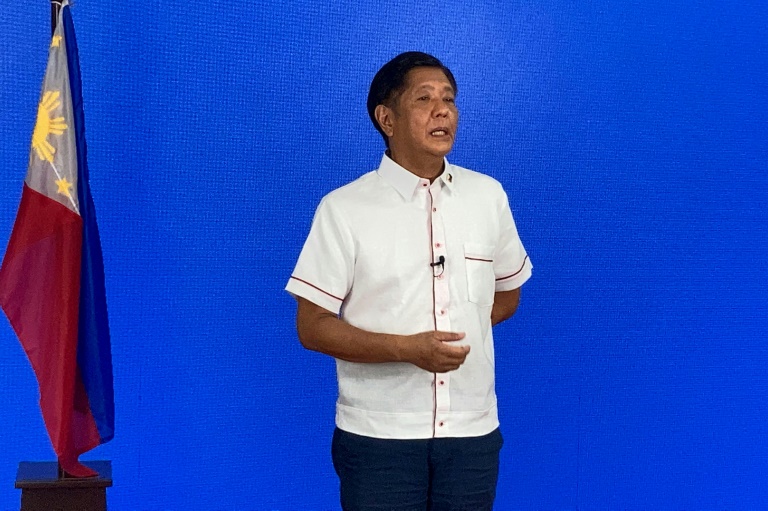
The son of the late Philippines dictator Ferdinand Marcos on Wednesday claimed victory in the presidential election, vowing to be a leader “for all Filipinos”, his spokesman said.

With an initial count almost complete, Ferdinand Marcos Jr, popularly known as “Bongbong”, has secured over 56 percent of the vote and more than double the tally of his nearest rival, liberal Leni Robredo.

The win is an astonishing reversal in the fortunes of the Marcos family, who have gone from the presidential palace to pariahs and back again in the space of a few decades.

“To the world, he says: Judge me not by my ancestors, but by my actions,” spokesman Vic Rodriguez said in a statement.

Voters had been predicted to back Marcos by a landslide in Monday’s election, after relentless online whitewashing of the family’s past, the backing of powerful political dynasties and public disenchantment with post-dictatorship governments. 

For years pro-Marcos accounts have flooded social media, leaving many young Facebook-educated Filipinos believing his father’s rule was a golden period of peace and prosperity.

In reality, Marcos senior left the Philippines bankrupt, and killed, tortured and jailed tens of thousands of opponents during his corrupt dictatorship.

Hours after his thumping victory Marcos Jr visited his father’s grave at the national heroes’ cemetery in Manila. 

Photos posted on official Marcos social media accounts on Wednesday showed him standing before the oversized tomb with his head slightly bowed and covering his eyes with his right hand, as if crying.

“This is a victory for all Filipinos, and for democracy,” Rodriguez said in the statement. 

“To those who voted for Bongbong, and those who did not, it is his promise to be a President for all Filipinos. To seek common ground across political divides, and to work together to unite the nation.”

Marcos is waiting for the vote count to finish before he fronts the media to declare victory, Rodriguez told reporters at Marcos’s campaign headquarters in Manila.

Marcos arrived at the building a short time later and was greeted by a crush of supporters outside. 

The crowd erupted in cheers when he grabbed a cardboard sign from a fan that read “Thank you 31 million”, referring to the number of votes he won. 

“I am so happy, so overwhelmed,” said Joseph Bugayong, a 30-year-old gardener standing outside the headquarters.

“I saw him in person and even shook his hand. My wait was worth it.”

– Questions over leadership style –

The Marcos family’s astounding journey from ignominy back to political favour has overshadowed questions about what Marcos Jr’s administration would do.

There were few hints on the campaign trail after Marcos snubbed televised debates and largely avoided media interviews as he sought to avoid own goals.

Rights groups, Catholic church leaders and political analysts fear the huge win could embolden Marcos to rule with a heavy fist and push through constitutional changes that could entrench his rule. 

Marcos’s running mate Sara Duterte, the daughter of the outgoing president, also won the vice presidency, which is elected separately, in a landslide.

Their success at the ballot box means the two offspring of authoritarian leaders will hold the highest elected positions for the next six years. 

The overwhelming win has devastated Robredo’s supporters, who saw the election as a make-or-break moment for the country’s fragile democracy.

Many of them went door to door across the vast archipelago in a months-long effort to convince voters to support the liberal candidate for the top job.

Robredo, a 57-year-old lawyer and the current vice president, has admitted “clear disappointment” about the result but vowed to continue the fight against poor governance.

Marcos will have to contend with this opposition that could congeal into a potent pro-democracy movement.  

“I think they could still be in a position to check the worst instincts of the incoming Marcos and Duterte administration,” said political analyst Richard Heydarian. 

'The Rock' diamond goes under the hammer

“The Rock”, the biggest white diamond ever to be sold at auction, will go under the hammer in Geneva on Wednesday and could fetch up to $30 million — or more.

The 228.31-carat stone, larger than a golf ball, is “a truly exceptional pear-shaped diamond”, said Max Fawcett, head of the jewels department at Christie’s auction house in Geneva.

It is “the largest white diamond ever to be offered at auction”, he told AFP at a preview.

The Magnificent Jewels auction at the luxury Hotel des Bergues in Geneva begins at 1400 GMT. 

The Rock, currently in the hands of an unnamed owner from North America, is lot 26 in the sale and could break records at the sale. 

“It’s perfectly symmetrical and is estimated at $20 to $30 million — and I expect there to be fireworks” at the auction, Fawcett said.

The equivalent in euros is 19 to 28 million.

The expert said that there were only a handful of diamonds of similar size and quality to The Rock. The Christie’s record for a similar white diamond is $33.7 million, fetched in Geneva in 2017 for a 163.41-carat gem.

The large diamond was extracted from a mine in South Africa in the early 2000s and has been shown in Dubai, Taipei and New York ahead of the sale in Geneva.

– Red Cross gem –

The Rock is up for grabs alongside a historic intense yellow diamond associated for more than a century with the Red Cross, which will receive some of the profits from its sale.

The Red Cross Diamond is a cushion-shaped, 205.07-carat canary yellow jewel, which has a price estimate of seven to 10 million Swiss francs ($7.09 to $10.13 million).

“I expect that it will achieve much more on the day of sale,” said Fawcett.

A large chunk of the proceeds will be donated to the International Committee of the Red Cross, which is headquartered in Geneva.

The original rough stone was found in 1901 in a De Beers company mine in South Africa and is said to have weighed around 375 carats.

As well as ranking among the largest diamonds in the world, a striking feature is its pavilion, which naturally bears the shape of a Maltese cross.

The stone was first put up for sale on April 10, 1918 at Christie’s in London. It was offered by the Diamond Syndicate in aid of the British Red Cross Society and the Order of St John.

The Red Cross Diamond fetched £10,000 — approximately £600,000 ($740,000) in today’s money. It was bought by the London jewellers S.J. Phillips.

It was sold again by Christie’s in Geneva in 1973, fetching 1.8 million Swiss francs, and is now being offered by the auction house for a third time.

– Russia restrictions –

Several other diamond rings, necklaces and bracelets could fetch over $1 million at the auction.

Also being sold is a tiara that belonged to princess Irma of Furstenberg (1867-1948), a member of one of the most pre-eminent aristocratic families in the Habsburg Empire.

It is estimated to go for 400,000 to 600,000 Swiss francs.

“The diamond market at the moment is very, very strong,” said Fawcett.

He said rising demand, supply constraints due to “geopolitical issues” and inflationary pressure on commodities, including precious stones, was pushing the market to highs not seen since its 2013-2014 peak.

The Russian invasion in Ukraine has had a major impact.

More than 40 percent of the world’s diamonds are mined in Russia, including the famous Alrosa mine, but international markets no longer have access to Russian gems, said Fawcett.

The supply constraint has created major price hikes and with the sanctions imposed on Moscow following the February 24 invasion, “prices will only continue to increase”, he said.

Every heatwave enhanced by climate change: experts

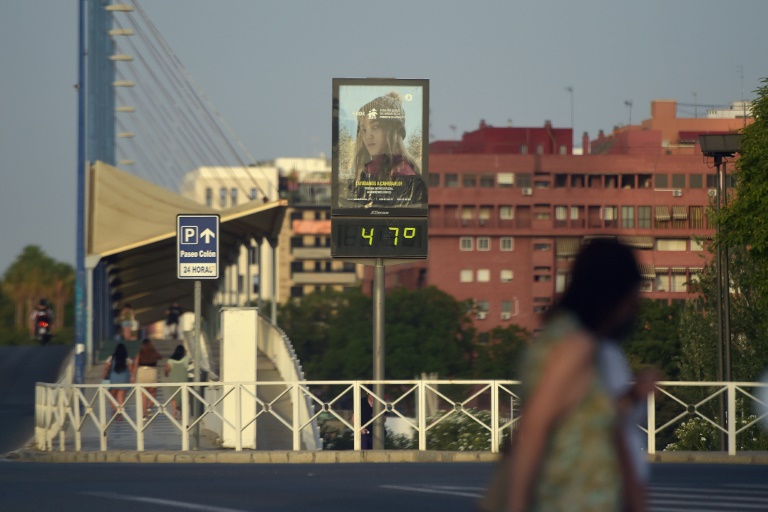
All heatwaves today bear the unmistakable and measurable fingerprint of global warming, top experts on quantifying the impact of climate change on extreme weather said Wednesday.

Burning fossil fuels and destroying forests have released enough greenhouse gases into the atmosphere to also boost the frequency and intensity of many floods, droughts, wildfires and tropical storms, they detailed in a state-of-science report.

“There is no doubt that climate change is a huge game changer when it comes to extreme heat,” Friederike Otto, a scientist at Imperial College London’s Grantham Institute, told AFP.

Extreme hot spells such as the heatwave that gripped South Asia in March and April are already the most deadly of extreme events, she added.  

“Every heatwave in the world is now made stronger and more likely to happen because of human-caused climate change,” Otto and co-author Ben Clarke of the University of Oxford said in the report, presented as a briefing paper for the news media.

Evidence of global warming’s impact on extreme weather has been mounting for decades, but only recently has it been possible to answer the most obvious of questions: To what extent was a particular event caused by climate change?

The most scientists could say before is that an unusually severe hurricane, flood or heatwave was consistent with general predictions of how global warming would eventually influence weather.

News media, meanwhile, sometimes left climate change out of the picture altogether or, at the other extreme, mistakenly attributed a weather disaster entirely to rising temperatures.

With more data and better tools, however, Otto and other pioneers of a field known as event attribution science have been able to calculate — sometimes in near realtime — how much more likely or intense a particular storm or hot spell has become due to global warming.

– Courtroom evidence –

Otto and colleagues in the World Weather Attribution (WWA) consortium, for example, concluded that the heatwave that gripped western North America last June — sending temperatures in Canada to a record 49.6 C (121 F) — would have been “virtually impossible” without human-induced climate change.

A heatwave that scorched India and Pakistan last month is still under review, Otto told AFP, but the larger picture is frighteningly clear.

“What we see right now in terms of extreme heat will be very normal, if not cool, in a 2-degree to 3-degree Celsius world,” she said, referring to average global temperatures above preindustrial levels.

The world has warmed nearly 1.2C so far. 

That increase made record-setting rainfall and flooding last July in Germany and Belgium that left more than 200 dead up to nine times more likely, the WWA found. 

But global warming is not always to blame.

A two-year drought in southern Madagascar leading to near famine conditions attributed by the UN to climate change was in fact a product of natural variability in the weather, experts reported.  

Quantifying the impact of global warming on extreme weather events using peer-reviewed methods has real-world policy implications.

Attribution studies, for example, have been used as evidence in landmark climate litigation in the United States, Australia and Europe.

In one case set to resume later this month, Saul Luciano Lliuya v. RWE AG, a Peruvian farmer is suing the German energy giant for the costs of preventing harmful flooding from a glacial lake destabilised by climate change. 

A scientific assessment entered into evidence concluded that human-caused global warming is directly responsible for creating a “critical threat” of a devastating outburst, putting a city of some 120,000 people in the path of potential floodwaters.

Malaysia central bank hikes interest rate to tame inflation

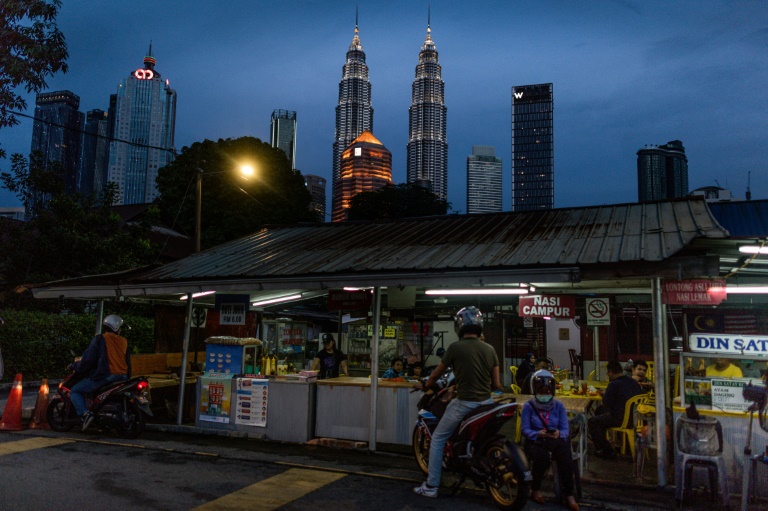
Malaysia’s central bank raised its key interest rate on Wednesday for the first time since 2020, in a surprise move aimed at taming inflation.

Bank Negara Malaysia joins other central banks around the world in tightening monetary policy as the cost of everyday goods is pushed higher by supply chain problems and surging commodity prices.

The bank lifted its main rate 25 basis points to two percent, despite most economists having predicted no change until later in the year.

It was the first hike since July 2020, when rates were slashed to a historic low to combat the impact of the coronavirus pandemic. 

“Inflationary pressures have increased sharply due to a rise in commodity prices, strained supply chains and strong demand conditions, particularly in the US,” the central bank said in a statement. 

With life returning to normal as the pandemic abates, the Malaysian economy is now on a “firmer footing”, giving policymakers room to start tightening policy to head off inflation, it said. 

Malaysia’s headline inflation was 2.2 percent in March, lower than in many other countries, but food inflation jumped four percent and economists expect further increases.

Fears are growing that inflation could accelerate further worldwide as China’s pandemic lockdowns heighten pressure on global supply chains and the Ukraine war pushes up commodity prices.

India relaxes environment rules for coal mines, citing heatwave

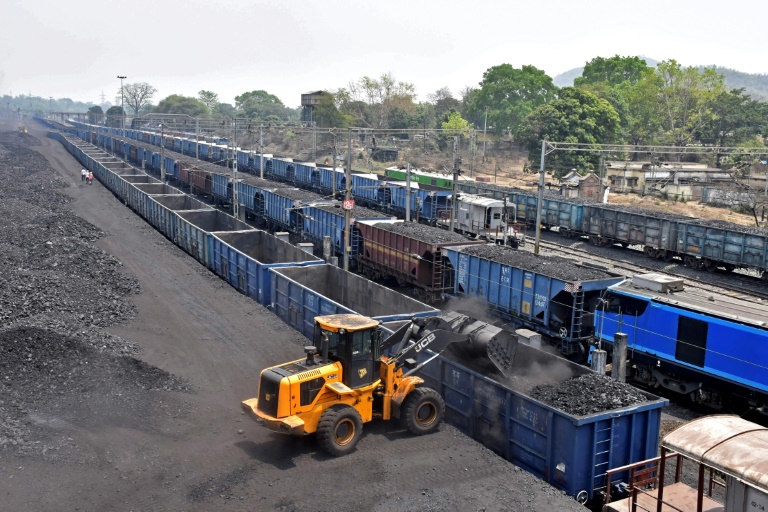
India has relaxed environmental compliance rules for coal mines seeking to ramp up production as power outages exacerbate a sweltering heatwave, a government notice showed.

Coal makes up more than two-thirds of India’s energy needs, even as unseasonably hot weather illustrates the threat from climate change caused by burning fossil fuels.

Soaring temperatures have prompted higher energy demand in recent weeks and left India facing a 25-million-tonne shortfall at a time when coal spot prices have skyrocketed since the start of the year.

In a letter dated May 7 seen by AFP, the Environment Ministry said it has allowed a “special dispensation” to the Ministry of Coal to relax certain requirements — like public consultations — so mines could operate at increased capacities. 

The relaxation comes after it received a request from the Ministry of Coal “stating that there is huge pressure on domestic coal supply in the country and all efforts are being made to meet the demand of coal for all sectors”.

Coal mining projects previously cleared to operate at 40-percent capacity may now increase capacity to 50 percent without undertaking fresh environment impact studies, the authority said.

The letter coincided with the government launching a new scheme last week to lease abandoned state-owned coal pits to private mining companies, assuring them of fast-track environment approvals.

“The Ministry of Environment and Forests understands that they need to cut out the red tape,” coal ministry official Anil Kumar Jain said at the launch event Friday.

The government hopes to woo private mining giants — like Vedanta and Adani — to revive more than 100 dormant coal mines previously deemed too expensive to operate, using new technology and fresh capital.

– Coal needs set to double –

India needs a billion tonnes of coal annually to meet its current domestic demand. 

Most of its needs are met by domestic producers, with a record 777 million tonnes mined in the fiscal year to the end of March.

The shortfall is imported from countries like Indonesia, Australia and South Africa.

The government says it plans to increase domestic coal production to 1.2 billion tonnes in the next two years to support a post-pandemic economic recovery.

Despite a commitment to increase its renewable energy capacity to 175 gigawatts by 2022 and 500 gigawatts by 2030, Coal and Mines Minister Pralhad Joshi said Friday that India’s coal needs are set to double by 2040.

A renewed focus on accelerating coal production risks India missing Prime Minister Narendra Modi’s COP26 commitment to meet 50 percent of energy demand through renewable energy by 2030, according to experts.

The world’s third-biggest carbon emitter, already home to 1.4 billion people, is projected by the UN to become the planet’s most populous nation by the middle of the decade.

Hong Kong defence fund trustee arrested at airport: sources

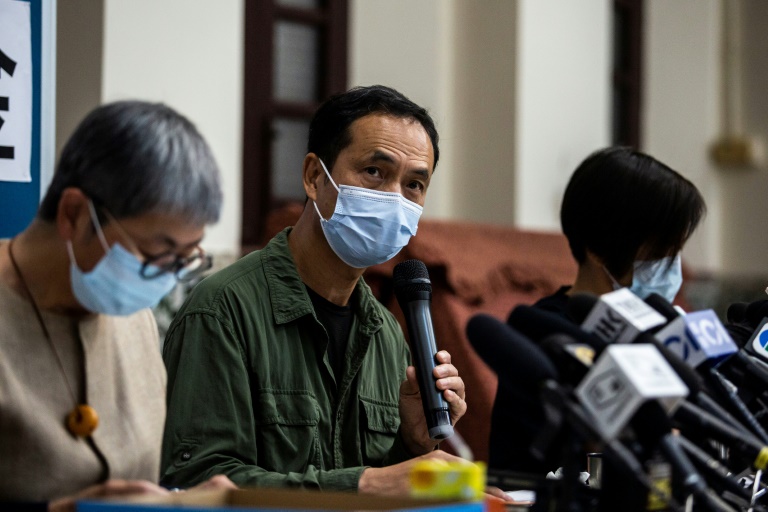
A Hong Kong scholar who helped run a now-disbanded defence fund for democracy protesters was arrested at the airport under the national security law, two legal sources told AFP on Wednesday.

Hui Po-keung, a prominent cultural studies scholar, was on his way to take up an academic post in Europe before he was detained on Tuesday, the sources said, asking not to be named.

The arrest was confirmed by a second legal source. Police have yet to respond to a request for comment.

Hui was arrested for “collusion with foreign forces”, one source said, an offence under a new security law that Beijing imposed on Hong Kong in response to huge protests three years ago.

The law has crushed dissent in the once outspoken business hub and can carry up to life in jail.

Hui was one of six trustees of the “612 Humanitarian Relief Fund” which helped arrested protesters pay for their legal and medical bills.

Other trustees of the fund include retired cleric Cardinal Joseph Zen, veteran barrister Margaret Ng, gay rights activist and pop singer Denise Ho as well jailed democracy activist Cyd Ho.

The fund disbanded last year after the city’s national security police demanded it hand over operational details including information about its donors and beneficiaries.

Shortly before the fund closed, Hong Kong’s Lingnan University confirmed that its contract with Hui had ended the month before but declined to state a reason on personal privacy grounds.

Academics who played prominent roles in Hong Kong’s now largely decimated democracy movement have often found themselves dropped by universities and are struggling to find work.

An active social commentator and prolific author, Hui taught for more than two decades at Lingnan University and was credited by prominent former student leader Nathan Law for inspiring his political career.

Where's the money? Japan town sues after $360,000 subsidy mix-up

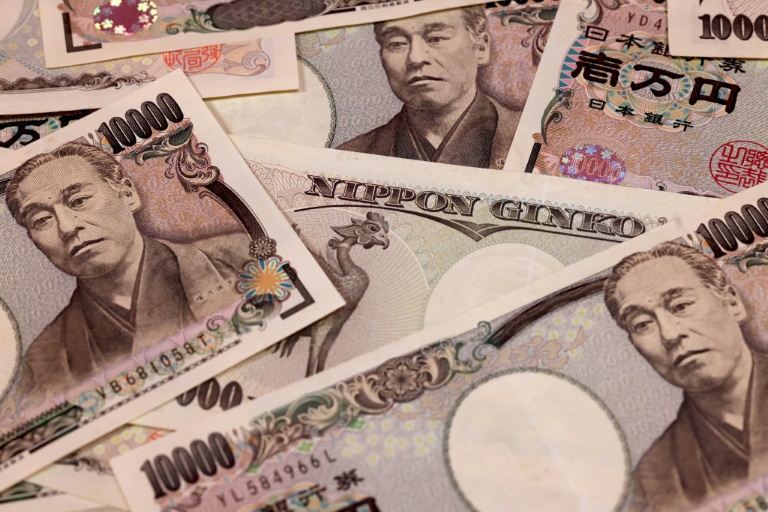
A Japanese town that accidentally sent a resident $360,000 in financial aid said on Wednesday it has been forced to file a lawsuit after the recipient refused to return the funds.

“We’re sorry to cause trouble to residents… We’re now suing this household,” an official from Abu told AFP, adding that the decision would be approved at a council meeting on Thursday.

Last month, the town in western Yamaguchi prefecture, sent 100,000 yen ($768) each to 463 low-income households affected by the pandemic. 

But in the process, they mistakenly transferred an additional lump sum of 46.3 million yen to a single household. 

Red-faced officials immediately visited the recipient, who has not been identified, and were told the money would be returned.

But despite frantic follow-up letters and calls, there was no sign of the money.

When they finally made face-to-face contact again, according to a letter released by the mayor, the recipient admitted having “moved the money and being unable to return it but said they were willing to atone for the sin.”

The incident has made headlines in Japan, with the local mayor releasing a video of apology to his contituents, saying he was “deeply sorry” for the mistake.

Sri Lanka orders 'offensive' to contain riots

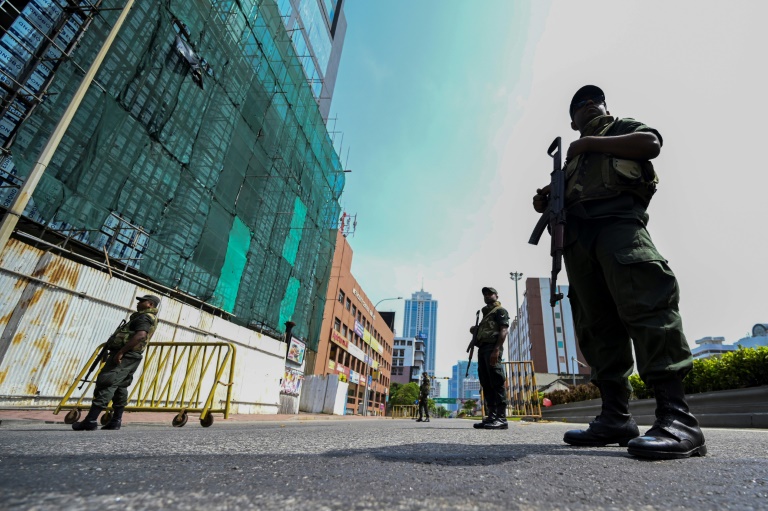
Sri Lankan police have been ordered to go on the offensive and use live ammunition to prevent “anarchy”, a top official told AFP Wednesday after another night of sporadic arson attacks.

Police say eight people have died since Monday, when frustration at a dire economic crisis erupted into violence between backers and opponents of President Gotabaya Rajapaksa, injuring over 200.

Even with a curfew and thousands of security forces told to “shoot on sight” to prevent further unrest, a luxury hotel said to belong to a Rajapaksa relative was set ablaze Tuesday evening.

“It is no longer spontaneous anger, but organised violence,” the senior security official said on condition of anonymity.

“If the situation is not brought under control, there could be total anarchy.” 

He said the 85,000-strong police “have been asked to adopt an offensive stance”, and have been ordered to use live ammunition against troublemakers.

As well as the hotel fire, on Tuesday evening police said they shot into the air at two locations to disperse mobs trying to torch vehicles. 

They also stepped up security for several judges, saying they were targeted too.

– Gota go –

On Wednesday, protestors defied the curfew and remained camped out in front of the president’s office.

“We want the whole Rajapaksa clan out because they are so, so corrupt. They have been eating into Sri Lanka like a caterpillar eating into some fruit or leaf,” activist Kaushalya Fernando told AFP.

In a tweet, Rajapaksa on Wednesday called for “all Sri Lankans to join hands as one, to overcome the economic, social & political challenges”.

But the main opposition SJB party reiterated they will not be a part of any government with Rajapaksa still president, even after his brother Mahinda’s resignation as prime minister on Monday.

Rajapaksa’s government in 2020 restored the president’s constitutional right to appoint and fire ministers as well as judges.

“In the guise of angry mobs, violence is being incited so military rule can be established,” SJB head Sajith Premadasa tweeted.

“Rule of law should be maintained through the constitution not with GUNS. It is time to empower citizens not disempower them.”

– Turning point –

Sri Lankans have been suffering shortages of essential goods, fuel and medicines for months in the island’s worst downturn since independence in 1948.

But the crisis moved into a darker phase on Monday when government supporters with sticks and clubs attacked demonstrators who had been protesting peacefully for weeks demanding the president’s resignation.

Mobs then retaliated across the country late into the night, torching dozens of homes of ruling-party politicians. 

Mahinda Rajapaksa had to be rescued in a pre-dawn military operation on Tuesday and taken to a naval dockyard for safety after protesters tried to storm his official residence.

One ruling-party politician gunned down two people on Monday night after his car was surrounded. Another shot dead a 27-year-old man and them himself, police said.

Echoing the UN rights chief and the European Union, the United States on Tuesday said it was concerned both with the violence and the deployment of the military.

“We stress that peaceful protesters should never be subjected to violence or intimidation, whether that’s on the part of the military force or civilian units,” State Department spokesman Ned Price told reporters.

India, meanwhile, was forced to deny social media rumours — some using old images of Mahinda boarding a helicopter — that it was helping family members to flee.

“The High Commission would like to categorically deny speculative reports in sections of media and social media about India sending her troops to Sri Lanka,” it said.

With vital tourism torpedoed by the pandemic, Sri Lanka last month defaulted on its foreign debts of $51 billion, some of it stemming from Rajapaksa vanity projects built with Chinese loans.

The International Monetary Fund this week began a “virtual mission” of staff-level talks on a possible bailout.

IMF mission chief Masahiro Nozaki said the lender aimed to be “fully prepared for policy discussions once a new government has been formed.”

Triumphant Marcos faces high expectations from Philippines poor

Despite his Oxford education and jet-set lifestyle, the Philippines’s president-elect Ferdinand Marcos Junior sailed to victory this week as a champion of the poor.

Now they expect him to deliver.

Residents of the impoverished Baseco neighbourhood in Manila do not think of 64-year-old Marcos, nicknamed Bongbong, as the mega-rich scion of a political dynasty famed for extorting billions, stockpiling designer shoes and treating public coffers like an all-you-can-eat buffet.

In this thick lattice of roads, lanes and alleyways jam-packed with street kids, push trikes and hawkers, Marcos means hope.

“A lot of change will happen when he becomes president,” 30-year-old JR Foras says matter-of-factly, as he waits for customers in a stuffy port-side barbershop brightened by a florescent striplight and posters of K-Pop hair models.

He predicts that by the end of Marcos Jr’s six-year term “there will be a lot of jobs”, enough to go around.

“Maybe I’ll get another job. Maybe — I’ll become a security guard,” he says while admitting he lacks the necessary training.

Like many young Filipinos, Foras has bought into the torrent of misinformation that has reinvented the Marcos family image.

For believers, Marcos senior’s bloody decades-long rule has been transformed into a gilded age for the Philippines, making Bongbong the obvious choice to restore those imagined glories.

“I voted for him because of what his father accomplished,” says Foras. “We were number one in Asia. I just feel like he would do it again.”

The Marcos rebranding was so successful that, according to initial results, Baseco voters narrowly backed him as president over Isko Moreno, an actor-turned-politician who grew up in the poverty of a nearby slum.

– Covid side effects –

But economists warn that even if Marcos’s government does not descend into another free-for-all of corruption and cronyism, he will have a hard time meeting lofty promises.

In a country where 43 percent consider themselves poor, and 39 percent say they are on the borderline, the Covid-19 crisis hit especially hard.

Kiosk owner Rolando Castillo, 47, says long lockdowns were ruinous, leaving him with no profit, no source of income.

“There were times we had to use up stocks from our store because we had nothing to eat.”

He voted for Marcos “because I want our economy to perform better”.

“Filipinos are expecting a lot from him,” he says.

But Marcos’s father left the Philippines as one of the most indebted countries in the world, and his son will have limited cash to invest in recovery or — crucially — stabilising the price of basic goods.

Fifty-year-old Patricio Gomez has struggled to find full-time work since his right leg was amputated below the knee, but for now, he helps out on his brother’s food stall.

They survived the last few years by delivering Sisig — a local dish of mince and offal seasoned with soy and citrus — and other homecooked meals door-to-door.

But one of Covid’s many side effects, inflation, continues to make life tough.

“Before the pandemic, electricity was 400 pesos (US$8) a month, now it is 800,” he says.

He is counting on Marcos to put that right.

“He promised the price of rice and electricity will go down,” says Gomez.

Older Baseco residents — who have seen the presidency rotate between a handful of uber-rich political dynasties — are hopeful life will improve under Marcos, but are not counting on it.

“Let’s just see what he’ll do,” says fishmonger Mary Jane Serdoncillo, signalling her expectations are low. 

“I’ve always sold fish,” she says. “This is what I’m used to. I’ve sold fish since I was young, until I had children and grandchildren.”

“I don’t have a dream anymore.”

Ferdinand Marcos Jr claims victory in Philippine election

The son of the late Philippines dictator Ferdinand Marcos on Wednesday claimed victory in the presidential election, vowing to be a leader “for all Filipinos”, his spokesman said.

With an initial count almost complete, Ferdinand Marcos Jr, popularly known as “Bongbong”, has secured over 56 percent of the vote and more than double the tally of his nearest rival, liberal Leni Robredo.

The win is an astonishing reversal in the fortunes of the Marcos family, who have gone from the presidential palace to pariahs and back again in the space of a few decades.

“To the world, he says: Judge me not by my ancestors, but by my actions,” spokesman Vic Rodriguez said in a statement.

Voters had been predicted to back Marcos by a landslide in Monday’s election, boosted by online whitewashing of the family’s past, the backing of powerful political dynasties and public disenchantment with post-dictatorship governments. 

For years pro-Marcos accounts have flooded social media, leaving many young Facebook-educated Filipinos believing his father’s rule was a golden period of peace and prosperity.

In reality, Marcos senior left the Philippines bankrupt, and killed, tortured and jailed tens of thousands of opponents during his corrupt dictatorship.

Hours after his thumping victory Marcos Jr visited his father’s grave at the national heroes’ cemetery in Manila. 

Photos posted on official Marcos social media accounts on Wednesday showed him standing before the oversized tomb with his head slightly bowed and covering his eyes with his right hand, as if crying.

“This is a victory for all Filipinos, and for democracy,” Rodriguez said in the statement. 

“To those who voted for Bongbong, and those who did not, it is his promise to be a President for all Filipinos. To seek common ground across political divides, and to work together to unite the nation.”

– Questions over leadership style –

The Marcos family’s astounding journey from ignominy back to political favour has overshadowed questions about what Marcos’ administration would do.

There were few hints on the campaign trail after Marcos snubbed televised debates and largely avoided media interviews as he sought to avoid own goals.

Rights groups, Catholic church leaders and political analysts fear the huge win could embolden Marcos to rule with a heavy fist and push through constitutional changes that could entrench his rule. 

Marcos’s running mate Sara Duterte, the daughter of the outgoing president, also won the vice presidency, which is elected separately, in a landslide.

Their success at the ballot box means the two offspring of authoritarian leaders will hold the highest elected positions for the next six years. 

The overwhelming win has devastated Robredo’s supporters, who saw the election as a make-or-break moment for the country’s fragile democracy.

Many of them went door to door across the vast archipelago in a months-long effort to convince voters to support the liberal candidate for the top job.

Robredo, a 57-year-old lawyer and the current vice president, has admitted “clear disappointment” about the result but vowed to continue the fight against poor governance.

Marcos will have to contend with this opposition that could congeal into a potent pro-democracy movement.  

“I think they could still be in a position to check the worst instincts of the incoming Marcos and Duterte administration,” said political analyst Richard Heydarian. 
Close Bitnami banner
Bitnami