World

ECB signals rate hike as soon as July to combat inflation

European Central Bank chief Christine Lagarde hinted Wednesday at a first interest rate hike in July to tackle soaring inflation, echoing the actions of other major central banks and heralding the end of the eurozone’s cheap money era.

The ECB should end its bond-buying stimulus “early in the third quarter” and could raise interest rates “only a few weeks” later, Lagarde said in a speech in the Slovenian capital Ljubljana. 

The comment is the clearest sign yet from Lagarde that the ECB is ready to move on rates sooner rather later, as the institution trails rate hikes made by the US Federal Reserve and others to tame global inflation.

Any hike would be the ECB’s first in over a decade and would lift rates from their current historically low levels.

These include a minus 0.5 deposit rate which effectively charges banks to park their excess cash at the ECB overnight.

Inflation in the eurozone climbed to 7.5 percent in April, an all-time high for the currency club and well above the ECB’s own two-percent target.

The surge, driven in no small part by steep increases in prices for energy due to the Russian invasion of Ukraine, has strengthened calls for the ECB to follow its peers towards hikes. 

ECB policymakers will decide their course of action in upcoming June 9 and July 21 meetings, with the July date now seen as the most likely opportunity for a rate announcement.

– Rate rise –

At its last meeting in April, the ECB’s governing council resolved to end its vast monthly bond purchases “in the third quarter”.

Over recent years, the scheme has hoovered up billions of euros in government and corporate bonds each month to stoke economic growth and keep credit flowing in the 19-nation currency club.

The ECB should draw a line under it “early” in the third quarter, which starts in July, Lagarde specified on Wednesday.

Ending net purchases under the programme would open the door to an interest rate rise that could follow “only a few weeks” after, she said. 

After the initial move the process of monetary policy “normalisation”, taking interest rates out of negative territory, would be “gradual”.

– July pressure –

“To sum up Lagarde’s speech: first rate hike on July 21,” Carsten Brzeski, head of macro at ING bank, said on Twitter.

Decisions by the Fed and the Bank of England to raise rates aggressively to counter inflation have added to the pressure on the ECB to act.

German central bank president Joachim Nagel said Tuesday he “will advocate a first step normalising ECB interest rates in July”.

The call made by the head of the traditionally conservative Bundesbank has been echoed by other members of the governing council.

On Wednesday, the head of the French central bank Francois Villeroy de Galhau also said the ECB would “progressively raise rates from the summer” to steer inflation towards the ECB’s two-percent target. 

The central bank is set to ratchet up interest rates at a delicate moment for the economy.

The war in Ukraine has both pushed up prices and added to supply chain disruptions, putting further strain on households and businesses.

In response to the invasion, the European Union has sought to reduce its reliance on Russian energy imports and is in discussions over an embargo of Russian oil that would add to the economic stress.

The ECB would raise its rates in July “followed by a return to zero in September” Gilles Moec, chief economist at Axa insurance, told AFP.

But “between the war in Ukraine, a complicated coronavirus situation in China”, which has seen a series of lockdowns and spillovers from rate hikes in the United States, the ECB will not be able to “pursue normalisation easily”, Moec said.
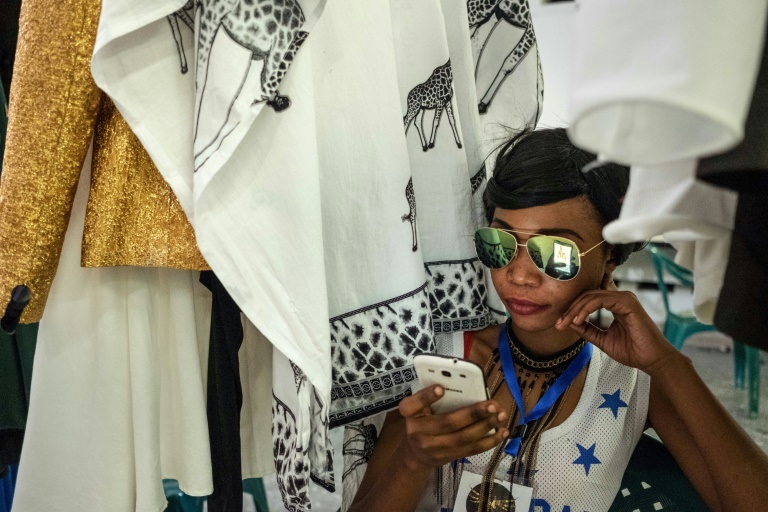
Africa grapples with way forward on cybercrime

Cyber experts are urging Africa to up its game in the face of criminals targeting the continent’s fast-growing internet economy with scams and theft.

Countries south of the Sahara are some of the world’s fastest-growing online markets — which makes them both attractive and vulnerable to cybercrime, say specialists.

“The issue of cybersecurity has to be raised to the core duties of the state,” Chadian economist Succes Masra said at a cyber conference in Abidjan, Ivory Coast’s economic hub, which ended on Tuesday.

“If you do that, you will get follow-through. There’s incomplete awareness about this problem, and we have to speed things up.”

Half a billion people in Africa are connected to the internet, according to Interpol — a figure that in raw numbers places the continent ahead of other regions such as South America or the Middle East.

There is plenty of room for growth, as more than 60 percent of the continent’s population is still offline.

Major attacks on the internet itself are very rare in Africa, the most spectacular being a brief takedown of the web across the West African state of Liberia in 2016.

Instead, say experts, fraud and theft are flourishing, inflicting an estimated economic cost of $4 billion a year.

“Less than five percent of the attacks which we have in Ivory Coast are pure attacks on computer systems,” said Colonel Guelpetchin Ouattara, in charge of the country’s anti-cybercrime unit.

“Ninety-five percent come from online fraud or money transfers via a mobile, video blackmail, etcetera.”

Many Africans use their mobile phones to make instant transfers of money, often through shops, in order to avoid the expense and time of using a bank.

The trends in Africa are a lesson to the continent not to follow other parts of the world in how they tackle online crime, said Ouattara.

“We have to shape our response to the local problem. You can’t compare Africa with other parts of the world which have their own specificities, their own digital environment, their own risks,” he said.

Several countries in Africa have already implemented a strategic plan for cybersecurity, setting up units with specialised investigators and launching awareness campaigns.

– Security ‘reflex’ –

In Ivory Coast, for instance, the Platform for Fighting Cybercrime (PLCC) has 200,000 followers on its Facebook page, where it provides the public with tips and informs them of emerging threats and arrests.

“Digital security has to become a reflex for the public, exactly the same as when you lock your door at night,” said Ouattara.

The software protection market is also booming.

According to the consultancy PWC, sales rose to $2.32 billion in 2020 from $1.33 billion in 2017.

“There’s an awareness and real demand,” said Franck Kie, who organised the Cyber Africa Forum.

Seminars at the two-day event ranged from the risks to Africa’s financial industries and e-commerce, to enhancing data protection and beefing up pan-African cooperation in fighting cybercrime.

Around 20 companies promoted their products or services on the sidelines of the conference.

Templeton Prize-winning physicist pushes back against anti-intellectualism

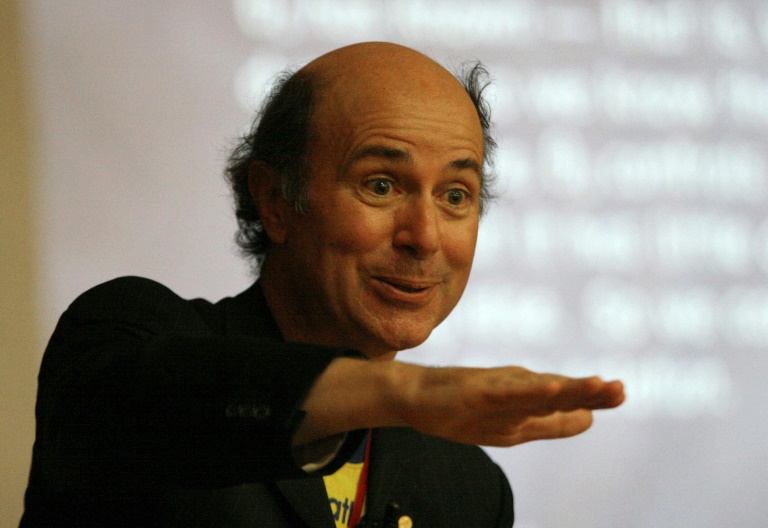
Frank Wilczek, the Nobel-winning theoretical physicist whose research transformed humanity’s understanding of the fundamental forces of nature, was announced Wednesday as the winner of the prestigious 2022 Templeton Prize.

The 70-year-old told AFP he saw the award as a testament to the inspiring power of science, at a time when scientists themselves are increasingly under fire by anti-intellectual elements in society.

“In the United States, where I live, it’s in our face in recent years, and a whole political party is dedicated towards it. It’s very unfortunate,” the MIT professor said.

“These people are saying, ‘Oh, I can find my own information on the internet.’ There wouldn’t be an internet without understanding quantum mechanics and science, and all the hard work that engineers have put into this!”

Such designers and builders of complex systems, Wilczek said, “should get a certain amount of credibility from that: they build bridges that don’t fall down usually, and vaccines that work.”

But he acknowledged some alienation was due to “perceived arrogance” by certain members of the scientific community, who he said must earn their credibility through patience, tolerance and honesty.

Valued at more than $1.3 million, the Templeton Prize is one of the world’s largest annual individual awards, honoring those who explore the deepest questions of the universe and humankind’s place within it. 

Past laureates include Mother Teresa and Jane Goodall.

“Throughout Dr Wilczek’s philosophical reflections, there is a spiritual quality to his ideas,” said Heather Templeton Dill, president of the John Templeton Foundation, in a statement.

“By uncovering a remarkable order in the natural world, Dr. Wilczek has come to appreciate different ways of thinking about reality, and through his written work, he has invited all of us to join him in the quest for understanding.”

– Demystifying dark matter –

Wilczek’s achievements in physics include an explanation for one of the four fundamental forces of nature: the so-called “strong interaction” between elementary particles called quarks — for which he and two others won the 2004 Nobel prize in physics.

He also proposed a leading explanation for dark matter, which is believed to constitute 80 percent of the matter of the universe, though its nature is not yet known.

More than four decades ago, Wilczek suggested that a type of subatomic particle called an “axion” was responsible for the mysterious matter — but it is only recently that experiments have come closer to confirming their existence, thanks to advances in technology.

If these experiments succeed, “we would make our understanding of fundamental laws considerably more beautiful. And it would also confirm that the universe is comprehensible,” he said.

In 2020, French scientists confirmed the existence of another particle that Wilczek named in the 1980s: the “anyon,” which can maintain a form of memory of their interactions with one another.

Microsoft is investing in this curiosity of theoretical physics to develop the next generation of quantum computing, which Wilczek says could revolutionize that nascent field.

“Without denigrating the existing platform (of quantum computing), it’s like having vacuum tubes and then having transistors,” he said, recalling the technology leap responsible for today’s computer chips.

Beyond his research, Wilczek is known for his public engagement through his talks and popular books, including “A Beautiful Question” and “The Lightness of Being,” as well as columns for The Wall Street Journal.

Bridging the gap between science and the public is vital, he said, “especially for scientists who do research that’s curiosity driven and has no obvious applications.”

“What they’re producing is a cultural product, and it should be brought into the culture.”

South Korea's new president opens Blue House to the public

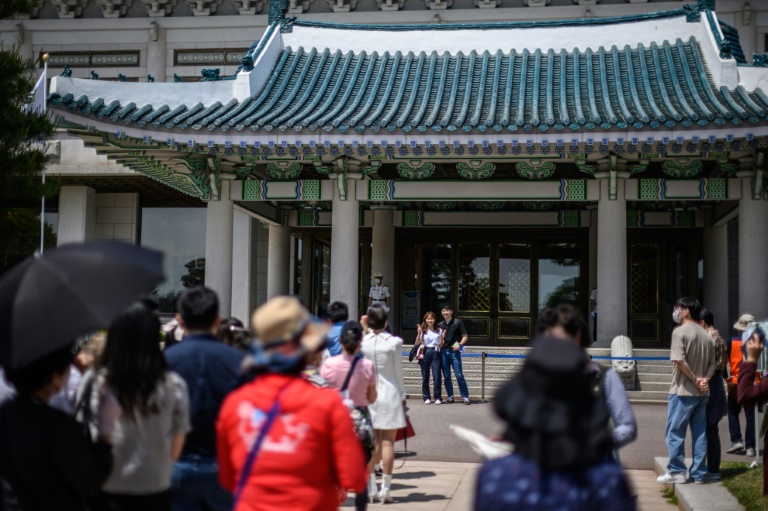
Thousands of South Koreans poured into the presidential Blue House in leafy northern Seoul on Wednesday, after President Yoon Suk-yeol made good on a campaign promise to return the once-fortified compound to the people.

The building, named for the approximately 150,000 hand-painted blue tiles that adorn its roof, has been home to South Korea’s leaders since 1948, and was largely restricted to the public. 

That has changed since Yoon, a former top prosecutor who was sworn in on Tuesday, refused to move in, saying the hilltop headquarters — on a site once used by former colonial power Japan — fostered an “imperial” presidency and undermine communication with the public. 

Instead, Yoon is working from the 10-storey defence ministry building — an undistinguished office block in downtown Seoul, hastily adorned with the presidential seal.

Critics have slammed the move as a costly waste of time and money, which could also put the country’s security in jeopardy at a time of high tensions with the nuclear-armed North.

But on opening day, South Koreans flocked to the 250,000-square-metre complex, which is flanked by mountains and nestled behind the royal Gyeongbokgung Palace. 

“It is an honour of my life to come here and actually see the presidential office,” Choi Jung-bun, 70, told AFP as she ate a packed lunch by a stream in its garden.

“This is a deeply storied site that conjures up old Korean kings and modern-day presidents. I am sure it will become one of the major tourist attractions.” 

– Back to the people –

According to officials, more than 25,000 people toured the complex on the first day of full opening, having signed up in advance. 

Visitors seemed thrilled to finally be allowed inside, with huge queues in front of the main building as people waited patiently to take photographs.

That was despite the fact that the building itself has not yet been opened to visitors over security concerns, for example over communications equipment that still needs to be removed.

Up to 39,000 visitors per day will be allowed to visit the complex, officials said, during the first phase of the public opening, which runs until May 22.

In the past, the presidential office ran a much smaller tour program that allowed 1,500 visitors per day, with restrictions on many areas. 

However, the changes may not be permanent if the opposition has its way. 

“When the Democratic Party wins the next presidency, we will go back to the Blue House,” former party chairman Song Young-gil said last week in an interview with local media.

But Cho Ok-kyung, a 61-year-old visitor from Bucheon, west of Seoul, said the compound had been returned to the people — and it should stay that way.

“I’d like this place to keep open indefinitely so that future generations can enjoy it too.” 

– Bad feng shui? –

Yoon’s critics have said his desire to move the office was tied to his belief in feng shui, a traditional religious practice which stresses the importance of harmony between humans and nature.

The former prosecutor has been dogged by accusations of ties to a shaman, which he has denied.

The Blue House has long been rumoured to foster bad luck for its residents, given the assassination, impeachment, corruption trials and imprisonment that have befallen South Korean presidents.

Yoon’s vow that he would not spend a single day in the Blue House compound even drew criticism from his predecessor Moon Jae-in, who called the decision “dangerous” amid heightened tensions with North Korea.

“It is hard to understand how the decision was formulated to determine Yoon would not spend a day at the Blue House,” Moon said last month.

The move is also to blame for Yoon’s record-low approval rating of just 41 percent, according to a recent Gallup poll.

Yoon started his term in office with a security briefing in an underground bunker, as he faces an increasingly belligerent Pyongyang. 

North Korea has conducted a record 15 weapons tests since January, including two launches just days before his inauguration.

Al Jazeera journalist killed during Israel West Bank raid

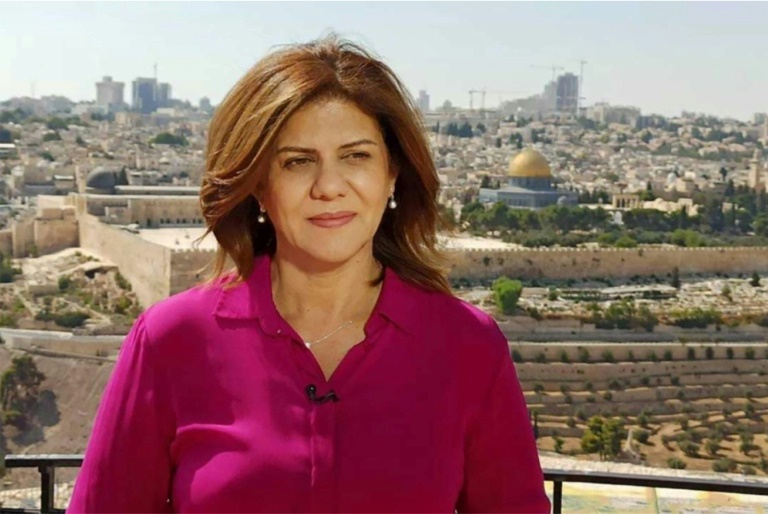
Veteran Al Jazeera journalist Shireen Abu Aqleh, a Palestinian-American who was among the network’s most prominent figures, was shot dead Wednesday as she covered an Israeli army raid in the occupied West Bank. 

The Qatar-based TV channel said Israeli forces shot Abu Aqleh, 51, deliberately and “in cold blood” while she was covering unrest in the Jenin refugee camp. 

Israeli Prime Minister Naftali Bennett however said it was “likely” that Palestinian gunfire killed her. 

Another Al Jazeera journalist, producer Ali al-Samudi, was wounded in the incident, the broadcaster added.

An AFP photographer said Abu Aqleh was wearing a press flak jacket when she was shot. The photographer reported that Israeli forces were firing in the area and then saw Abu Aqleh’s body lying on the ground. 

There were no Palestinian gunmen visible in the area when Abu Aqleh was killed, the AFP photographer added. 

The Israeli army confirmed it had conducted an operation in the camp early Wednesday but firmly denied it had deliberately targeted a reporter. 

The army said there was an exchange of fire between suspects and security forces and that it was “investigating the event and looking into the possibility that journalists were hit by the Palestinian gunmen”.

“The (army) of course does not aim at journalists,” a military official told AFP.

A statement from Al Jazeera said: “The Israeli occupation forces assassinated in cold blood Al Jazeera’s correspondent in Palestine.” 

It called on the international community to hold the Israeli forces accountable for their “intentional targeting and killing” of the journalist.

– Joint investigation –

Foreign Minister Yair Lapid said Israel was seeking a “joint pathological investigation into the sad death of journalist Shireen Abu Aqleh”.

“Journalists must be protected in conflict zones and we all have a responsibility to get to the truth,” Lapid added. 

Senior Palestinian Authority official Hussein al-Sheikh said there had been no contact from Israel about any joint probe and held Israel “responsible” for Abu Aqleh’s killing. 

In a sign of her prominence in the West Bank, residents laid flowers on the roadside as the vehicle carrying her body moved towards Nablus, where an autopsy was scheduled before her burial in her native Jerusalem.   

US ambassador to Israel Tomas Nides called for a “thorough investigation” into the killing of the US citizen. 

– ‘Palestinian gunmen’? –

The Israeli premier said: “According to the information we’ve gathered, it appears likely that armed Palestinians — who were indiscriminately firing at the time — were responsible for the unfortunate death of the journalist.”

The wounded Al Jazeera producer, Samudi, said there were no Palestinian fighters in the area where Abu Aqleh was shot. 

“If there were resistance fighters, we would not have gone into the area,” he said in testimony posted online.

In recent weeks, the army has stepped up operations in Jenin, a historic flashpoint in the Israeli-Palestinian conflict. Several of the suspects blamed for deadly attacks on Israelis in recent weeks were from the area. 

The army said that during its operation in the camp, “massive fire was shot toward Israeli forces by tens of armed Palestinian gunmen”.

People in the camp “also hurled explosive devices toward the soldiers, endangering their lives. The soldiers responded with fire toward the sources of the fire and explosive devices.”

– Rising tensions –

The fatal shooting comes nearly a year after an Israeli air strike destroyed a Gaza building that housed the offices of Al Jazeera and news agency AP.

Israel has said the building also hosted offices used by key members of the Hamas Islamist group, which controls the Israeli-blockaded Gaza strip. 

Tensions have risen in recent months as Israel has grappled with a wave of attacks which has killed at least 18 people since March 22, including an Arab-Israeli police officer and two Ukrainians.

An 18-year-old Palestinian was killed by Israeli troops during clashes near Ramallah on Wednesday. The army said its forced had used rubber bullets. 

Wednesday’s deaths brought the number of Palestinians killed since March 22 to 31, according to an AFP tally.  

Three Israeli Arabs have died during the same period, according to an AFP tally, among them perpetrators of attacks and those killed by Israeli security forces in West Bank operations.

China censors zero-Covid debate after WHO criticises policy

China’s censors scrambled to wipe out online debate over its zero-Covid strategy on Wednesday after the World Health Organisation (WHO) criticised the country’s hardline approach to crushing the virus.

China is the last major economy glued to a zero-Covid policy and enforces some of the most stringent virus controls anywhere in the world. 

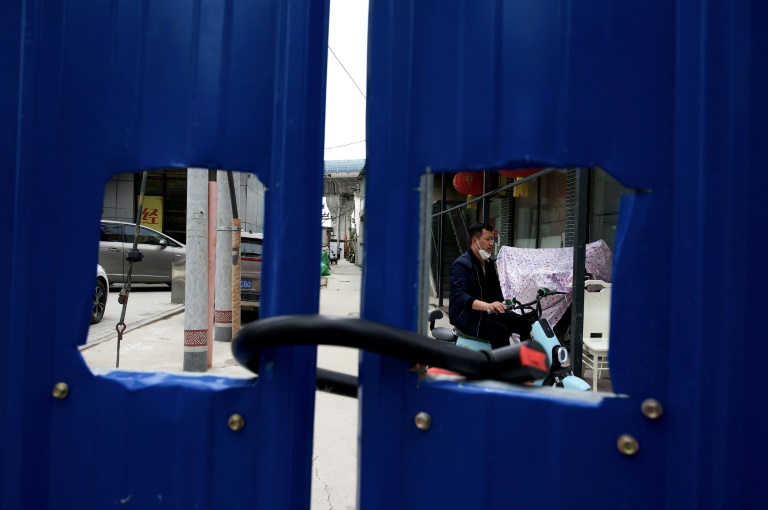
Those restrictions have trapped most of Shanghai’s 25 million people in a lockdown with no clear end date, while Beijing has also gradually corralled many of its residents indoors as it battles its biggest outbreak since the pandemic began.

On Tuesday WHO chief Tedros Adhanom Ghebreyesus urged China to change tack, saying the approach “will not be sustainable” in the face of new fast-spreading variants.

The intervention prompted China’s army of internet censors to race to snuff out his comments. 

Searches for the hashtags “Tedros” and “who” on the popular Weibo social media platform displayed no results, while users of the WeChat app were unable to share an article posted on an official United Nations account.

A social media hashtag about the WHO’s comments, which had been a rallying point for lively online discussion, appeared to have been blocked by mid-morning.

Before they were expunged from the internet, comments had questioned zero-Covid, with one saying “even the WHO’s Tedros has now changed his stance”.

Another wrote: “Will our government listen to the WHO director general’s recommendations?”

Virus controls are causing mounting anger and frustration, especially in Shanghai where residents have raged against seemingly endless lockdowns, spartan quarantine facilities and heavy-handed enforcement.

The city has witnessed repeated protests and violent scuffles with police, rare images which have pinballed across social media before censors can catch up.

The ruling Communist Party says its virus strategy places life before material concerns and has averted the public health crises seen in other nations.

A foreign ministry spokesman brushed off questions about the WHO’s comments on Wednesday, saying Beijing’s policy “can stand the test of history” and was “scientific and effective.”

“We hope that relevant individuals can take an objective and rational view of China’s epidemic prevention and control policies … and refrain from making irresponsible remarks,” Zhao Lijian said at a regular press conference.

Abandoning zero-Covid and allowing Omicron to rip across the country could result in 1.6 million deaths, according to a paper published Tuesday in the peer-reviewed journal Nature by researchers at Shanghai’s Fudan University.

Health officials have said vaccination rates are low among the elderly and warn rural health facilities risk collapse under an Omicron surge. 

On Monday, vice-premier Sun Chunlan reminded disease control officials of the political imperatives attached to zero-Covid.

It is necessary to “create the conditions for the victorious convening of the 20th Party Congress”, she said, according to state news agency Xinhua.

The twice-a-decade conclave scheduled for later this year is expected to see President Xi Jinping secure an unprecedented third consecutive term as the leader of the world’s number two economy.

Discussing Beijing’s zero-Covid strategy on Tuesday, Tedros said WHO experts “don’t think that it’s sustainable, considering the behaviour of the virus now and what we anticipate in the future”.

Hu Xijin, the influential former editor of Chinese state tabloid Global Times, slammed the comments in a message to his 24 million Weibo followers, saying “in the end, the WHO’s attitude isn’t important”.

Solomons PM dismisses concerns over China maritime deal

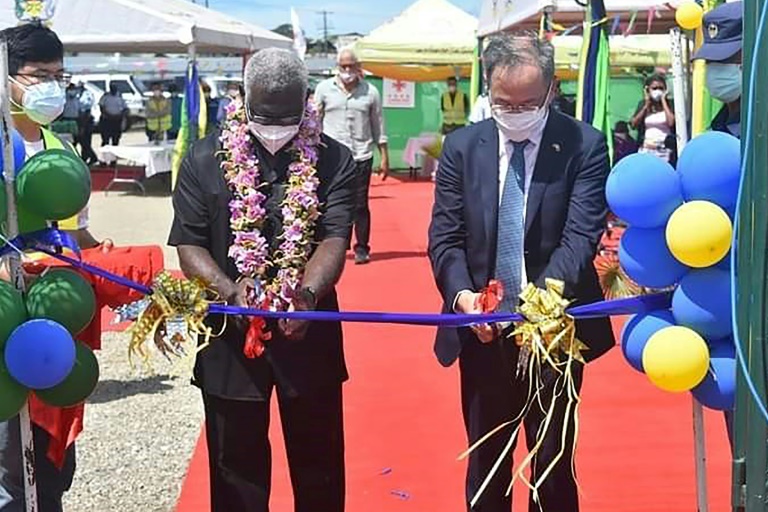
Solomon Islands’ prime minister dismissed criticism of a new maritime investment deal with China on Wednesday, saying there was nothing “sinister” in the draft agreement.

The new agreement, a copy of which has been leaked to the media, comes after a controversial security pact was signed last month.

The security pact gave Beijing a military foothold in the South Pacific, and sparked alarm in Australia and the United States.

On Wednesday, Solomon Islands Prime Minister Manasseh Sogavare shrugged off criticism about the separate leaked memorandum of understanding on maritime investment, describing it as a “normal bilateral development initiative” that is yet to be formalised.

“There is nothing sinister nor trivial about the Blue Economy Memorandum of Understanding,” his office said in a statement.

A day earlier, Australian Prime Minister Scott Morrison had expressed concern regarding the memorandum, which covers undersea cables, port wharves, shipbuilding and other areas.

Morrison said he was “very concerned, as many other Pacific leaders are, about the interference and intrusion of the Chinese Government into these types of arrangements”.

Solomon Islands’ warming ties with China have been a key issue in Australia’s election campaign since a draft of the Solomons security agreement with China was first leaked on social media in March.

That draft allowed for Chinese naval deployments in the Solomon Islands, eliciting a warning from the United States that it would “respond accordingly” if China installed a military base in the Pacific archipelago. 

In April, Solomon Islands PM Sogavare said that his government would not allow a Chinese military base to be built in his country “under its watch”. 

The latest leaked maritime investment deal, dated just “2022”, covered investment in wharves, shipbuilding and ship repair, offshore gas and oil exploration and other “blue economy” industries.

Sogavare’s Wednesday statement said the memorandum of understanding was a broad document, which would be followed by a more detailed agreement.

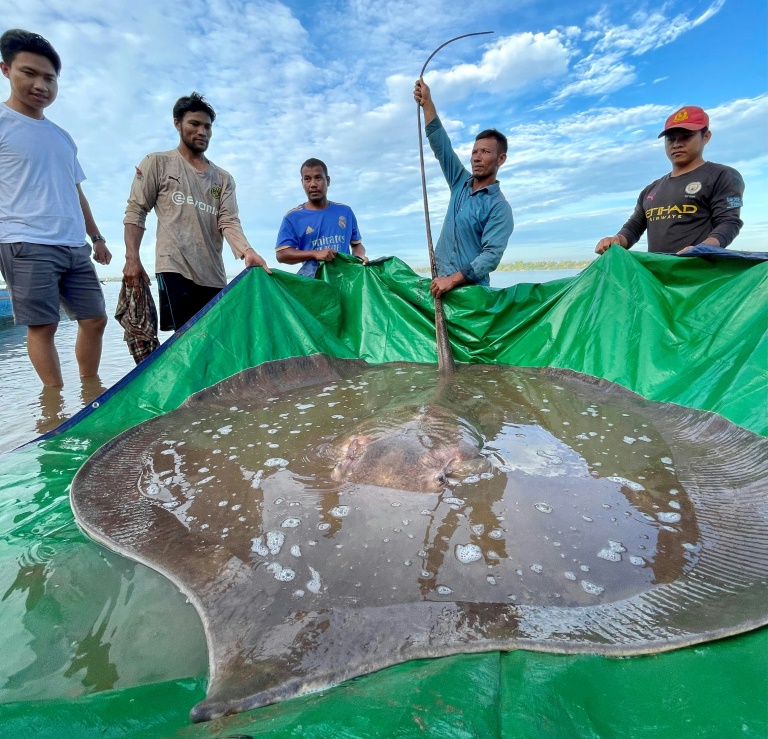
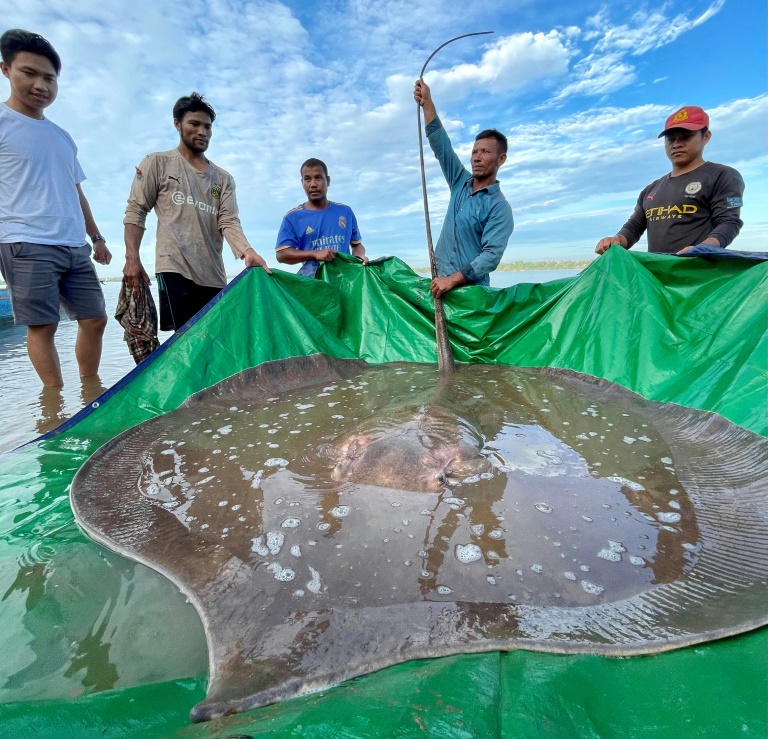
It was this big! Cambodian fishermen hook giant endangered stingray

Cambodian fishermen on the Mekong River got a shock when they inadvertently hooked an endangered giant freshwater stingray four metres long and weighing 180 kilos, scientists said on Wednesday.

The female leviathan, one of Southeast Asia’s largest and rarest species of fish, was caught by accident last week in Stung Treng province when it swallowed a smaller fish that had taken a baited hook.

An international team of experts on the US-funded Wonders of the Mekong project worked with the fishermen to unhook the ray before weighing and measuring it and returning it unharmed to the river.

The giant Mekong is a crucial habitat for a vast array of species large and small, but project leader Zeb Hogan, a fish biologist from the University of Nevada, said the river’s underwater ecosystem was poorly understood.

“They are unseen worlds, underappreciated and out of sight,” he said in a statement issued by his university.

More than 1,000 fish species call the Mekong home and the stingray is not the only giant lurking in the muddy waters — the giant catfish and giant barb also reach up to three metres long and 270 kilos in weight.

The study group said in the statement that the remote location where the ray was caught has pools up to 80 metres deep and could harbour even bigger specimens.

But they also warned that underwater video footage showed plastic waste even in the deepest stretches of the Mekong, along with “ghost nets” — abandoned by fishers but still able to snare fish. 

Environmentalists have long voiced concerns about dam building along the Mekong River that will destroy fish stocks

The famous waterway starts in China and twists south through parts of Thailand, Laos, Myanmar, Cambodia and Vietnam, feeding 60 million people through its basin and tributaries.

It was this big! Cambodian fishermen hook giant endangered stingray

Cambodian fishermen on the Mekong River got a shock when they inadvertently hooked an endangered giant freshwater stingray four metres long and weighing 180 kilos, scientists said on Wednesday.

The female leviathan, one of Southeast Asia’s largest and rarest species of fish, was caught by accident last week in Stung Treng province when it swallowed a smaller fish that had taken a baited hook.

An international team of experts on the US-funded Wonders of the Mekong project worked with the fishermen to unhook the ray before weighing and measuring it and returning it unharmed to the river.

The giant Mekong is a crucial habitat for a vast array of species large and small, but project leader Zeb Hogan, a fish biologist from the University of Nevada, said the river’s underwater ecosystem was poorly understood.

“They are unseen worlds, underappreciated and out of sight,” he said in a statement issued by his university.

More than 1,000 fish species call the Mekong home and the stingray is not the only giant lurking in the muddy waters — the giant catfish and giant barb also reach up to three metres long and 270 kilos in weight.

The study group said in the statement that the remote location where the ray was caught has pools up to 80 metres deep and could harbour even bigger specimens.

But they also warned that underwater video footage showed plastic waste even in the deepest stretches of the Mekong, along with “ghost nets” — abandoned by fishers but still able to snare fish. 

Environmentalists have long voiced concerns about dam building along the Mekong River that will destroy fish stocks

The famous waterway starts in China and twists south through parts of Thailand, Laos, Myanmar, Cambodia and Vietnam, feeding 60 million people through its basin and tributaries.

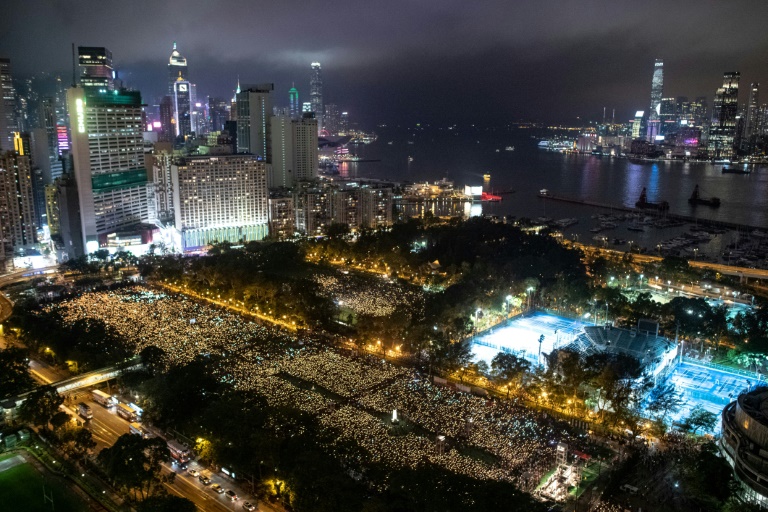
Hong Kong Tiananmen vigil organisers labelled 'foreign agents'

A Hong Kong court ruled on Wednesday that prosecutors could label organisers of the city’s annual Tiananmen vigil “foreign agents” without having to reveal who the group is accused of working for.

The decision was made on national security grounds but those being prosecuted argue that the precedent-setting ruling makes it harder to prepare their defence ahead of trial.

For three decades, the now-disbanded Hong Kong Alliance held vigils commemorating victims of China’s deadly 1989 crackdown on democracy protesters in Beijing’s Tiananmen Square.

Those commemorations have been driven underground since Beijing imposed a sweeping national security law on Hong Kong following democracy protests three years ago.

Authorities charged the alliance with “incitement to subversion”, a national security offence, and ordered it to turn over years of data about its membership, finances and overseas ties.

Police arrested five alliance leaders, including vice chair Chow Hang-tung, last year after they openly defied the order to surrender information.

As basis for their data demand, police accused the alliance of working as a “foreign agent” — rhetoric that matches Beijing’s stance that the Tiananmen protests were instigated by foreign forces rather than being a popular movement.

Pre-trial hearings under Hong Kong’s national security law are often shrouded in secrecy and covered by strict reporting restrictions. 

But this week’s hearing was a rare session held in open court.

Chow, a barrister who is representing herself, and other defence lawyers asked prosecutors to identify who they are accused of working with. 

But magistrate Peter Law on Wednesday said prosecutors can redact details of ongoing police investigations in documents provided to the defence.

“To have a full disclosure of all the documents will definitely be a real risk of serious prejudice to an important public interest, i.e. national security,” Law said.

Prosecutors applied for public interest immunity -– a feature of common law usually invoked to protect sensitive information such as the identities of undercover officers.

Albert Wong, a defence barrister, said disclosure was necessary because the court will need to determine at trial whether the alliance was in fact a foreign agent.

Wong warned police could “put a blank label of foreign agent to anybody” without having to back the claim up.

But Magistrate Law ultimately sided with the prosecution and allowed them to redact their evidence.

Three Alliance defendants, including Chow, will go on trial on July 13, which coincides with the fifth anniversary of the death of Nobel Peace Prize laureate and Tiananmen activist Liu Xiaobo.

Two others have already pleaded guilty.

Close Bitnami banner
Bitnami