World

Global stocks end mostly up as demand worries weigh on oil prices

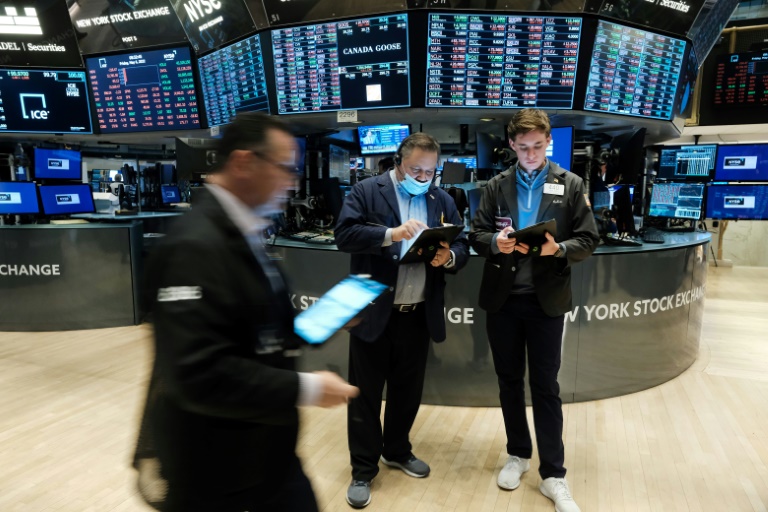
European and US stocks mostly rose Tuesday, partially rebounding from the prior session’s rout, while oil prices continued to retreat on worries slowing global growth will dent demand.

A volatile day on Wall Street ended with two of the three major equity indices in positive territory amid talk that stocks may be oversold as concerns about inflation, tightening monetary policy and the war in Ukraine that have weighed on markets for much of 2022. 

“The big question” is whether the market is at the end of the sell-off “or the beginning of a recovery,” said Quincy Krosby, chief equity strategist of LPL Financial.

“Statistically, we probably have more to go on the downside.”

While the Dow fell for the fourth straight day, the broader S&P 500 edged back up above 4,000 points and the Nasdaq jumped one percent. 

London ended the day with a gain of 0.4 percent, Paris added 0.5 percent and Frankfurt rose 1.2 percent.

“European markets have seen a modest rebound from yesterday’s two-month lows, after the carnage of the last three days, as investors look for signs of a possible base,” said market analyst Michael Hewson at CMC Markets UK.

Between rising prices eating into the disposable income of consumers and higher borrowing costs, investors have been increasingly concerned about the possibility of recession.

“There’s clearly a huge amount of worry about a recession in the markets at the minute as central banks continue to aggressively tighten against the backdrop of a slowing economy and a cost-of-living crisis,” said Craig Erlam, senior market analyst at online trading platform OANDA.

Asian equities mostly sank following sharp losses on Wall Street on Monday.

Oil prices also resumed their slide lower with the benchmark US crude contract, WTI, falling under $100 a barrel.

“This week’s oil price weakness has been largely driven by reports that the EU is having difficulty in reaching a consensus on its Russian oil ban,” Hewson said.

“Yesterday’s weak China trade numbers have also weighed into the overall calculus, as concerns grow over Chinese demand, with the major cities of Beijing and Shanghai on the receiving end of new restrictions.”

Meanwhile, Bitcoin on Tuesday slumped briefly under $30,000, reaching a 10-month low.

The volatile cryptocurrency has lost more than half its value since a November surge saw it reach a record high of nearly $69,000.

– Key figures at around 1630 GMT –

New York – Dow: DOWN 0.3 percent at 32,160,74 (close)

New York – S&P 500: UP 0.3 percent at 4,001.05 (close)

New York – Nasdaq: UP 1.0 percent at 11,737.67 (close)

London – FTSE 100: UP 0.4 percent at 7,243.22 (close) 

Frankfurt – DAX: UP 1.2 percent at 13,534.74 (close)

Paris – CAC 40: UP 0.5 percent at 6,116.91 (close)

EURO STOXX 50: UP 0.8 percent at 3,554.80 (close)

Hong Kong – Hang Seng Index: DOWN 1.8 percent at 19,633.69 (close)  

Shanghai – Composite: UP 1.1 percent at 3,035.84 (close)

Tokyo – Nikkei 225: DOWN 0.6 percent at 26,167.10 (close)

Brent North Sea crude: DOWN 3.3 percent at $102.46 per barrel

West Texas Intermediate: DOWN 3.2 percent at $99.76 per barrel

Euro/dollar: DOWN at $1.0534 from $1.0561 on Monday 

Pound/dollar: DOWN at $1.2319 from $1.2332

Euro/pound: DOWN at 85.49 pence from 85.64 pence

Dollar/yen: UP at 130.41 yen from 130.29 yen

burs-jmb/hs
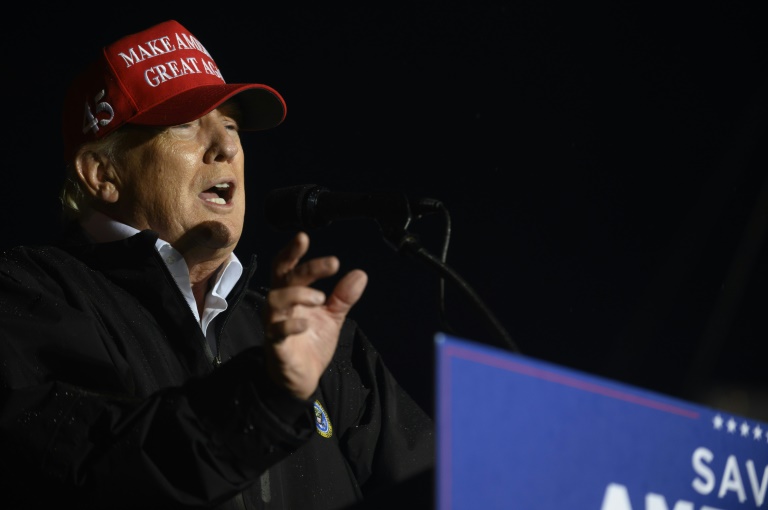
Elon Musk says he would lift Twitter ban on Trump

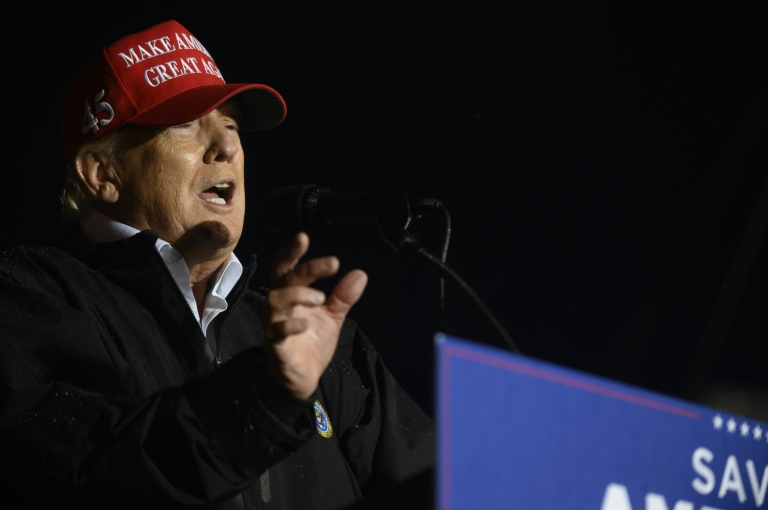
Elon Musk on Tuesday said that as owner of Twitter he would lift the ban on Donald Trump, contending that kicking the former US president off the platform “alienated a large part of the country.”

Musk’s endorsement of a Trump return to the global messaging platform quickly triggered fears among activists that Musk would “open the floodgates of hate.”

“I would reverse the permanent ban,” the billionaire said at a Financial Times conference, noting that he doesn’t own Twitter yet, so “this is not like a thing that will definitely happen.”

The Tesla chief’s $44-billion deal to buy Twitter must still get the backing of shareholders and regulators, but he has voiced enthusiasm for less content moderation and “time-outs” instead of bans.

“I do think that it was not correct to ban Donald Trump,” Musk said.

“I think that was a mistake because it alienated a large part of the country, and did not ultimately result in Donald Trump not having a voice.”

Trump was booted from Twitter and other online platforms after supporters fired up by his tweets and speech alleging election fraud attacked the US Capitol on January 6, 2021 in a deadly bid to stop Joe Biden from being certified as the victor in the US presidential election.

“Elon Musk would open the floodgates of hate and disinformation on Twitter,” said Media Matters for America president Angelo Carusone.

“Whether Elon Musk is a fully red-pilled right-wing radical or just someone very interested in enabling right-wing extremists, the result is the same.”

Backing off on fighting misinformation and extremists on Twitter would put pressure on other social networks to do likewise in a race to the bottom, Carusone contended.

Musk reasoned that permanent bans at Twitter should be rare, and reserved for accounts that are spam, scams or run by software “bots.”

“That doesn’t mean that somebody gets to say whatever they want to say,” Musk said.

“If they say something that is illegal or otherwise just destructive to the world, then there should be a perhaps a timeout, a temporary suspension, or that particular tweet should be made invisible or have very limited attraction.”

Musk maintained that permanent bans undermine trust in Twitter as an online town square where everyone can be heard.

Trump has stated publicly that he would not come back to Twitter if permitted, opting instead to stick with his own social network, which has failed to gain traction.

– Ad boycott? –

Activist groups have called on Twitter advertisers to boycott the service if it opens the gates to abusive and misinformative posts with Musk as its owner.

“Under Musk’s management, Twitter risks becoming a cesspool of misinformation, with your brand attached,” said an open letter signed by more than two dozen groups including Media Matters, Access Now and Ultraviolet.

Twitter makes most of its revenue from ads, and that could be jeopardized by advertisers’ reaction to content posted on the platform, the San Francisco-based tech firm said in a filing with US regulators.

While Musk has not revealed nitty-gritty details of how he would run the business side of Twitter, he has expressed a preference for making money from subscriptions.

As of the end of March, an average 229 million people used Twitter daily, the company said in a regulatory filing.

“We believe that our long-term success depends on our ability to improve the health of the public conversation on Twitter,” the company said in the filing.

Efforts toward that goal include fighting abuse, harassment, and spam, Twitter told regulators.

“Elon Musk owes the world a better explanation of how the platform will deal with the likes of Trump than an edict that his ouster was wrong because it proved unpopular in some places,” said Suzanne Nossel, chief of human rights nonprofit PEN America.

Elon Musk says he would lift Twitter ban on Trump

Elon Musk on Tuesday said that as owner of Twitter he would lift the ban on Donald Trump, contending that kicking the former US president off the platform “alienated a large part of the country.”

Musk’s endorsement of a Trump return to the global messaging platform quickly triggered fears among activists that Musk would “open the floodgates of hate.”

“I would reverse the permanent ban,” the billionaire said at a Financial Times conference, noting that he doesn’t own Twitter yet, so “this is not like a thing that will definitely happen.”

The Tesla chief’s $44-billion deal to buy Twitter must still get the backing of shareholders and regulators, but he has voiced enthusiasm for less content moderation and “time-outs” instead of bans.

“I do think that it was not correct to ban Donald Trump,” Musk said.

“I think that was a mistake because it alienated a large part of the country, and did not ultimately result in Donald Trump not having a voice.”

Trump was booted from Twitter and other online platforms after supporters fired up by his tweets and speech alleging election fraud attacked the US Capitol on January 6, 2021 in a deadly bid to stop Joe Biden from being certified as the victor in the US presidential election.

“Elon Musk would open the floodgates of hate and disinformation on Twitter,” said Media Matters for America president Angelo Carusone.

“Whether Elon Musk is a fully red-pilled right-wing radical or just someone very interested in enabling right-wing extremists, the result is the same.”

Backing off on fighting misinformation and extremists on Twitter would put pressure on other social networks to do likewise in a race to the bottom, Carusone contended.

Musk reasoned that permanent bans at Twitter should be rare, and reserved for accounts that are spam, scams or run by software “bots.”

“That doesn’t mean that somebody gets to say whatever they want to say,” Musk said.

“If they say something that is illegal or otherwise just destructive to the world, then there should be a perhaps a timeout, a temporary suspension, or that particular tweet should be made invisible or have very limited attraction.”

Musk maintained that permanent bans undermine trust in Twitter as an online town square where everyone can be heard.

Trump has stated publicly that he would not come back to Twitter if permitted, opting instead to stick with his own social network, which has failed to gain traction.

– Ad boycott? –

Activist groups have called on Twitter advertisers to boycott the service if it opens the gates to abusive and misinformative posts with Musk as its owner.

“Under Musk’s management, Twitter risks becoming a cesspool of misinformation, with your brand attached,” said an open letter signed by more than two dozen groups including Media Matters, Access Now and Ultraviolet.

Twitter makes most of its revenue from ads, and that could be jeopardized by advertisers’ reaction to content posted on the platform, the San Francisco-based tech firm said in a filing with US regulators.

While Musk has not revealed nitty-gritty details of how he would run the business side of Twitter, he has expressed a preference for making money from subscriptions.

As of the end of March, an average 229 million people used Twitter daily, the company said in a regulatory filing.

“We believe that our long-term success depends on our ability to improve the health of the public conversation on Twitter,” the company said in the filing.

Efforts toward that goal include fighting abuse, harassment, and spam, Twitter told regulators.

“Elon Musk owes the world a better explanation of how the platform will deal with the likes of Trump than an edict that his ouster was wrong because it proved unpopular in some places,” said Suzanne Nossel, chief of human rights nonprofit PEN America.

Shoot-on-sight orders in Sri Lanka after deadly violence

Sri Lankan authorities issued shoot-on-sight orders on Tuesday to quell unrest that has seen buildings and vehicles set ablaze a day after the island was rocked by deadly violence and rioting.

With thousands of security forces enforcing a curfew, the defence ministry said troops “have been ordered to shoot on sight anyone looting public property or causing harm to life”.

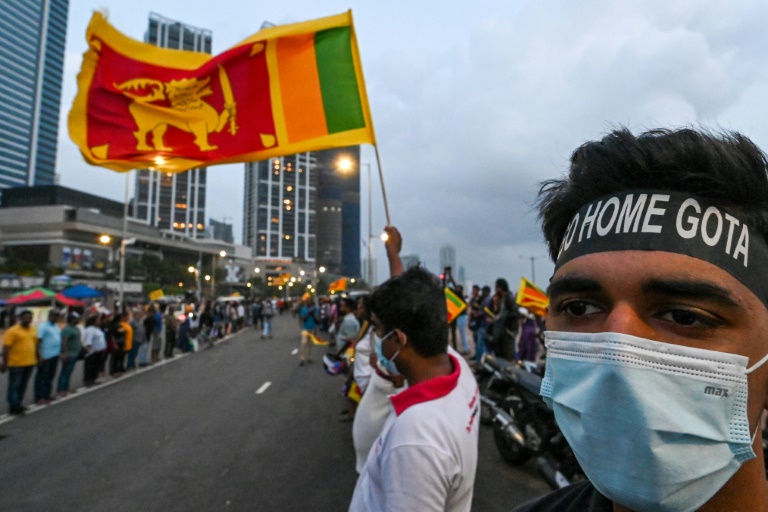
On Monday, government supporters with sticks and clubs attacked demonstrators in Colombo protesting peacefully for weeks over a dire economic crisis and demanding President Gotabaya Rajapaksa’s resignation.

Mobs then retaliated across the country late into the night, torching dozens of homes of ruling-party politicians and trying to storm the prime minister’s official residence in the capital.

Police said Tuesday eight people had died.

Protests continued on Tuesday despite the curfew, with some people defying the shoot-on-sight order to torch buildings and vehicles. 

A luxury hotel said to belong to a Rajapaksa relative was set on fire on Tuesday evening on the edge of the Sinharaja rainforest.

And police shot into the air at two locations to disperse mobs trying to burn vehicles.

Earlier, a crowd had attacked and set fire to a vehicle carrying Colombo’s most senior policeman.

Officers fired warning shots and sent in reinforcements to rescue Senior Deputy Inspector-General Deshabandu Tennakoon, who was rushed to hospital but later released.

In another sign of deteriorating security, vigilante groups blocked the main road to Colombo airport to check for any Rajapaksa loyalists trying to leave the island, witnesses said.

As well as those killed, more than 225 people were injured on Monday, which also saw the resignation of prime minister Mahinda Rajapaksa.

His departure, however, failed to quell public anger, with his brother still president and wielding widespread powers including command over security forces.

Mahinda had to be rescued in a pre-dawn military operation after thousands of angry protesters stormed his official residence overnight and lobbed petrol bombs.

Protester Chamal Polwattage said he expected demonstrations to swell again and vowed they would not leave “until the president goes”.

“People are angry about the attacks launched against us yesterday… We have a lot of volunteers bringing food and water for us,” the 25-year-old told AFP.

– ‘Deeply troubled’ –

The Rajapaksa clan’s hold on power has been shaken by months of blackouts and shortages of essential goods in Sri Lanka’s worst economic crisis since independence in 1948.

The pandemic torpedoed vital tourism and forced the government to halt most imports to save foreign currency needed to pay its debts, on which it has now defaulted.

But after weeks of peaceful demonstrations, Monday’s attacks on protesters by government supporters represented a turning point.

In the ensuing violence, police fired tear gas and water cannon to disperse crowds and declared a curfew across the entire South Asian nation until Wednesday, but later extended it by another day to Thursday.

Angry crowds set alight the homes of at least 42 pro-Rajapaksa politicians.

Several Rajapaksa homes were torched, while a family museum in their ancestral village was trashed.

Outside Colombo, ruling-party lawmaker Amarakeerthi Athukorala shot two people — killing one of them — when surrounded by a crowd of protesters, police said.

The MP later took his own life, officers said, but the ruling party said he had been murdered. The lawmaker’s bodyguard was also killed.

Another ruling-party politician who was not named shot dead two protesters and wounded five others in the south, police added.

UN rights chief Michelle Bachelet said Tuesday she was “deeply troubled” by the violence committed both by supporters of the government and the subsequent “mob violence” against ruling party members.

Bachelet in a statement called for an investigation and urged the government to “engage in meaningful dialogue with all parts of society”.

The US State Department also reiterated a call for an investigation into the clashes, saying Washington was both concerned with the escalating violence and the deployment of the military.

“We stress that peaceful protesters should never be subjected to violence or intimidation, whether that’s on the part of the military force or civilian units,” spokesman Ned Price told reporters.

– Unity government? –

Washington also urged Sri Lanka’s political authorities to quickly “ensure public safety” and identify “solutions to achieve long term economic and political stability.”

Mahinda Rajapaksa said his resignation was intended to pave the way for a unity government, but it was unclear if the opposition would join any administration led by his brother.

The president has the power to appoint and fire ministers as well as judges, and enjoys immunity from prosecution.

Political sources said attempts were under way to arrange an online meeting between the president and all political parties.

“Unless President Rajapaksa steps down, no one — whether the masses in the streets or key political stakeholders — will be appeased,” analyst Michael Kugelman from the Wilson Center told AFP.

Ex-Honduran leader pleads not guilty to US drug charges, former top cop extradited

Former Honduran president Juan Orlando Hernandez pleaded not guilty to drug trafficking in a US federal court in New York on Tuesday as his country’s onetime police chief was extradited to America for allegedly assisting him.

The 53-year-old Hernandez was brought to the United States last month to answer charges that he aided the smuggling of hundreds of tons of cocaine to America in return for millions of dollars in bribes from drug traffickers.

Hernandez, whose 2014 to 2022 stint as president was plagued by allegations of corruption, is expected to go on trial early next year and faces life in prison if found guilty.

He is accused of having facilitated the smuggling of some 500 tons of cocaine — mainly from Colombia and Venezuela — to the United States via Honduras since 2004, starting long before his presidency.

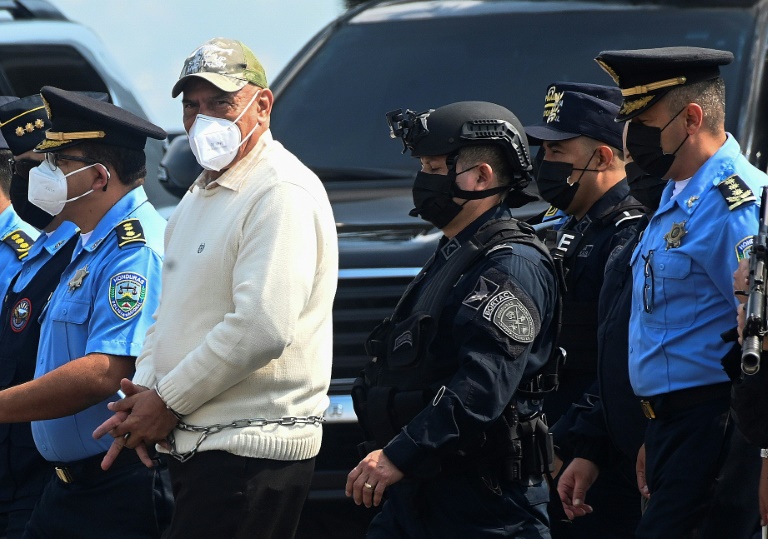
His plea came as ex-Honduran police chief Juan Carlos Bonilla was extradited to the United States, where he stands accused of supervising drug trafficking operations on behalf of Hernandez.

An airplane belonging to the US Drug Enforcement Agency took off from a military base in Tegucigalpa with a handcuffed Bonilla aboard, an AFP journalist at the scene saw.

Bonilla, 61, was implicated during a trial in a New York court in which Hernandez’s ex-congressman brother Tony was convicted of drug trafficking and sentenced to life in prison.

Bonilla “allegedly abused his positions in Honduran law enforcement to flout the law and play a key role in a violent international drug trafficking conspiracy,” then federal prosecutor Geoffrey Berman said in a statement in April 2020.

In the name of the Hernandez brothers, he also “oversaw the transshipment of multi-ton loads of cocaine bound for the US, used machine guns and other weaponry to accomplish that, and participated in extreme violence, including the murder of a rival trafficker, to further the conspiracy.”

Bonilla — known as “The Tiger” — could face life in prison if convicted.

He served as police chief from 2012 to 2013, when Hernandez was the leader of the Honduran legislature.

He was arrested in March and the Supreme Court ratified his extradition a month later.

Security Minister Ramon Sabillon said Bonilla had submitted to the extradition to “shorten the process.”

Several days ago, Bonilla wrote an open letter claiming he had been targeted “unfairly by unknown people acting outside the law” to implicate him.

He said he would travel to the United States “with head held high” and a “clean conscience.”

US prosecutors say Hernandez turned Honduras into a “narco-state” by involving the military, police and civilians in drug trafficking.

Several drug traffickers have told US prosecutors they paid bribes to Hernandez’s inner circle. By the time he left office, DEA agents were ready to move against him.

His family claims he is the “victim of revenge by the drug traffickers he himself had extradited or forced to flee to the United States.”

burs-pdh/sst

US set to approve $40 bn for Ukraine, warning of long war ahead

US lawmakers were set to vote Tuesday on a $40 billion aid package for Ukraine as Washington warned Russia was likely girding for a long conflict with its neighbor.

The defense, humanitarian and economic funding should pass comfortably, with the two parties having reached an agreement on the details, and it will likely move quickly through Congress.

“Time is of the essence — and we cannot afford to wait,” House Speaker Nancy Pelosi said in a letter to her Democratic colleagues.

“With this aid package, America sends a resounding message to the world of our unwavering determination to stand with the courageous people of Ukraine until victory is won.

Congressional leaders struck a deal Monday to release $6.8 billion more than the $33 billion previously requested by the White House to help the Eastern European nation ward off Moscow’s invasion.

The financial boost would include an extra $3.4 billion for both military and humanitarian assistance on top of the funding requested by the administration.

If the package passes as planned, US spending to bolster Ukraine’s defenses against Russia’s invasion and address the ensuing humanitarian crisis will soar to around $54 billion. 

The action comes as a top US official warned that Russian President Vladimir Putin is preparing for a long war that may not end with Russian victory in the east.

“We assess President Putin is preparing for prolonged conflict in Ukraine during which he still intends to achieve goals beyond the Donbas,” Director of National Intelligence Avril Haines said at a hearing on Capitol Hill.

She added that Putin was counting on US and EU resolve to weaken as the conflict continues to cause food shortages and inflation, including spiraling energy prices.

– Covid aid complications –

The House of Representatives was due to vote on the legislation later Tuesday, likely followed by the Senate at the end of the week or next week. 

The Democratic leadership had hoped to tie the Ukraine money to $10 billion in new funding for Covid-19 tests, therapeutics and vaccines, with the United States experiencing a new spike in cases as it nears one million deaths.

But they decided against the move as they were unwilling to get drawn into another fight over border control.

Republicans stopped the Covid aid package last month, demanding an amendment vote to keep in place Title 42, the pandemic-related provision used to deny asylum requests and allow the quick expulsion of migrants. 

With the policy due to end on May 23, Democrats are reluctant to allow a vote, as several of their moderate lawmakers, and those in tough re-election fights, would likely vote with Republicans.

President Joe Biden said in a statement Monday he was prepared to accept the decoupling of Ukraine and Covid aid, with “approximately 10 days” to go until the current funding runs out,

Two senators — Republican Lindsey Graham and Democrat Richard Blumenthal — unveiled a resolution Tuesday calling on Secretary of State Antony Blinken to designate Russia as a state sponsor of terrorism.

“If there is anybody who embodies terrorism, totalitarianism and torture, it is Vladimir Putin,” Blumenthal said at a news conference.

The White House has so far resisted calls to add Russia to the list, which currently features Cuba, Iran, North Korea and Syria, as Russia is already facing many of the consequences a terror sponsor designation would bring.

Graham said however the label would make clear how strongly the United States supports Ukraine in its effort to repel the Russian invasion.

La Liga post losses of €892m for pandemic-hit 2020/21 season

La Liga posted losses of 892 million euros for the pandemic-hit 2020-21 season, with Barcelona accounting for more than half of the shortfall, according to figures announced by the Spanish league on Tuesday.

Barca were responsible for 56 per cent of La Liga’s net pre-tax losses during that season as Spanish clubs suffered the financial consequences of empty stadiums and reduced matchday income.

Less transfer activity, compressed television schedules and a drop-off in commercial income also had a significant impact, the league said.

La Liga clubs posted total revenues of 3.818 billion euros (4.022 billion dollars) for 2020/21, which represented a 24.1 per cent decrease on the 2019/20 season, which was also hit by the Covid-19 pandemic, but only in the last few months.

Matchday income and player sales were down 53 per cent and 52 per cent respectively in 2020/21.

It is the first time La Liga has made a loss since 2012 but the league expects to recover completely in the next two seasons.

“The high financial solvency and responsibility of most clubs has helped Spanish professional football overcome this crisis,” the league said in a statement. “A strong recovery is expected in the 2021/22 season while in 2023/24 full normality should be achieved.”

La Liga’s losses were exacerbated by Barcelona’s dreadful financial situation, which led to the resignation of the club’s president Josep Maria Bartomeu in October 2020 and Lionel Messi leaving for free in August last year.

Bartomeu’s successor, Joan Laporta, said last September the club was 1.35 billion euros in debt and that salaries represented 103 per cent of its total income.

Barca have so far resisted signing up to the deal agreed by La Liga with private equity fund CVC, which will invest almost 2 billion euros in Spanish football and its clubs, in return for an 8.2 per cent share in a company that will manage the league’s broadcasting rights for the next 50 years.

Five clubs have rejected the deal, including Barcelona and Real Madrid, who remain committed to launching a European Super League because of the potential financial rewards.

La Liga said its losses in 2020/21 represented a “softer reduction in relative terms than what was experienced by European professional football as a whole”.

“According to UEFA…including player transfer revenue, the total revenue decrease in European professional football as a whole amounts to more than €10 billion,” the statement added.

Mexican president threatens to boycott Biden's Americas summit

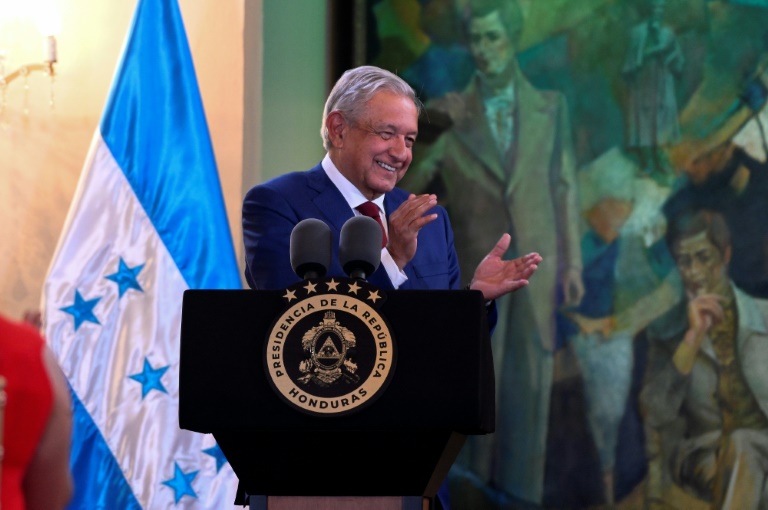
Mexican President Andres Manuel Lopez Obrador said Tuesday that he would skip a Summit of the Americas in Los Angeles in June unless Washington invites all countries in the region.

If US President Joe Biden’s administration excludes Cuba, Nicaragua and Venezuela from the talks, Mexico will send Foreign Minister Marcelo Ebrard instead, Lopez Obrador told reporters.

“If not everyone is invited, a representative of the Mexican government will go, but I would not go,” the leftist leader said.

“I don’t want the same policy to continue in America, and I want, in fact, to assert independence and sovereignty and show universal fraternity,” Lopez Obrador added.

White House Press Secretary Jen Psaki said in response that “a final decision has not been made yet” on whether Cuba, Nicaragua and Venezuela would be invited to the talks.

“We know that the summit is a valuable opportunity to focus on some of the most important issues like the ongoing fight for freedom and democracy for every country, our shared climate goals and stronger, more collaborative Covid-19 response, and addressing the root causes of migration,” she told reporters.

On Sunday, Mexico’s president visited Cuba where he urged an end to US sanctions against the island and full regional participation in the June 6-10 Summit of the Americas.

The United States has stepped up criticism of Cuban authorities following the arrest of hundreds of people for taking part in anti-government protests last July.

The Biden administration refuses to recognize Venezuelan President Nicolas Maduro or Nicaraguan President Daniel Ortega due to alleged election irregularities.

The United States and around 60 other countries recognized Venezuelan opposition leader Juan Guaido as interim president after a 2018 election that many nations deemed illegitimate.

Last November’s re-election of Ortega, a former left-wing guerrilla leader in power since 2007, was widely branded a farce by the international community after dozens of opposition figures were detained including some who were running for president.

Cuba hotel blast death toll rises to 42

Two more bodies were pulled Tuesday from the rubble of a Havana hotel destroyed in an explosion, taking the death toll to 42.

The ministry of health said another 54 people were injured and 17 of those are receiving hospital treatment.

The latest confirmed deaths were a 77-year-old woman and a popular local councilor.

Juan Carlos Diaz, 55, was held in high regard by local residents for his efforts to improve their lives.

“We felt everyone’s pain but especially his because he worked as a delegate in the moments that were necessary,” Havana resident Lazara Phinney told AFP.

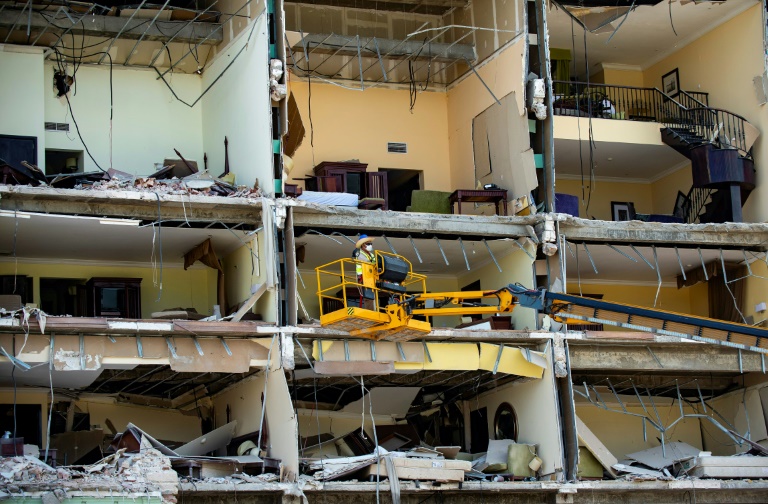
The luxury Saratoga hotel in the old quarter of Havana was destroyed on Friday morning, seemingly due to a gas leak.

The five-star hotel was being renovated at the time and had no guests. It had been closed for two years, initially due to the coronavirus pandemic that decimated Cuba’s vital tourism industry.

But it had been due to reopen on Tuesday.

Roberto Enrique Calzadilla, a representative of the state Gaviota company that owned the hotel, said there were 51 workers on the site at the time of the explosion.

Of them, 23 died, three survivors are receiving hospital treatment, 22 are safe and three more are missing.

Preliminary assessments indicate that 80 percent of the hotel has been affected by the blast.

The explosion, which an official said happened while a gas tank was being refilled by a tanker truck, tore off large parts of the facade, blew out windows and destroyed cars parked outside the hotel.

The first four floors of the hotel were gutted.

The luxury property is known for having hosted celebrities such as Madonna, Beyonce, Mick Jagger and Rihanna.

Rising US inflation is main economic, political challenge for Biden

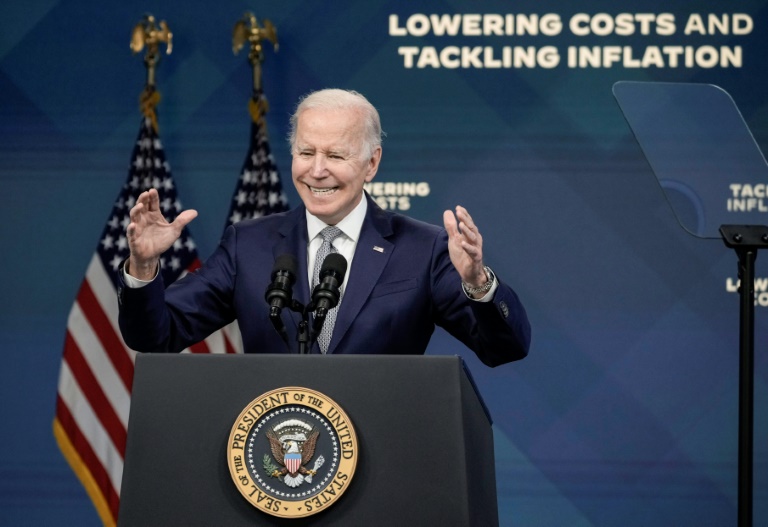
With surging prices undermining wage gains and hurting American families, US President Joe Biden said Tuesday fighting inflation is his top priority, but he may have limited tools to tackle the issue.

Biden, whose popularity has taken a hit amid the highest inflation in four decades, highlighted his efforts to combat the flare-up in prices while drawing a stark contrast with policies proposed by opposition Republicans.

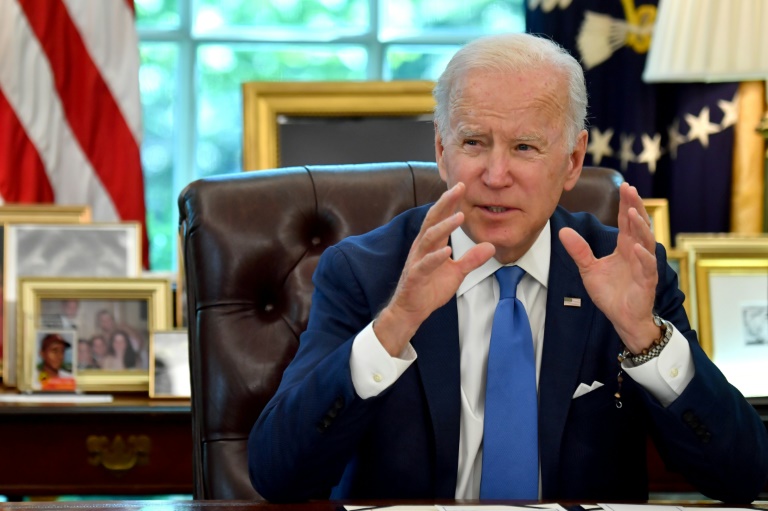
“I want every American to know that I’m taking inflation very seriously, and it’s my top domestic priority,” Biden said at the White House.

“I know that families all across America are hurting because of inflation.”

The US president put much of the blame for the recent spike on Russian leader Vladimir Putin and his invasion of Ukraine

The attack in late February caused a sharp spike in energy prices, and then began pushing food prices higher, as well.

“I know you’ve got to be frustrated… believe me, I understand the frustration,” the Democrat said, addressing Americans directly.

Calling out Republicans’ “extreme agenda,” Biden said that “they’ve done everything to slow down” his attempts to manage economic stresses.

– Hot US economy –

Biden assured Americans that the Federal Reserve is acting to tamp down the inflation pressures, which he called the “top challenge” facing the economy.

The US central bank last week announced the biggest increase in the benchmark lending rate since 2000, the second hike since March as it moves to quickly pull back on stimulus put in place during the pandemic.

The world’s largest economy came roaring back from the economic damage inflicted by the Covid-19 pandemic, helped by bargain borrowing costs and massive government stimulus.

But with the pandemic still gripping other parts of the world, global supply chain snarls caused prices to surge for automobiles and other products, while housing prices soared amid a flood of new buyers.

And the conflict in Ukraine sent global oil prices above $100 a barrel. 

US prices at the pump hit a new record on Tuesday, rising to an average $4.374 a gallon, topping the previous record set March 11, according to AAA.

A year ago, the price averaged $2.967.

US consumer prices jumped 8.5 percent in the 12 months that ended in March, and though economists think that may have been the peak, the rate is likely to remain high for months to come.

The Labor Department is set to release the April CPI data on Wednesday, which economists project will show a much more modest monthly increase, slowing the torrid annual pace.

Republicans have blamed Biden, saying his programs injecting billions of dollars into the US economy at the height of the pandemic spurred the inflationary cycle.

The White House says those packages effectively saved the country from a disastrous recession.

Addressing another politically sensitive aspect of the inflation puzzle, Biden said he was considering lifting trade tariffs imposed by his predecessor Donald Trump on China.

“We’re discussing that right now,” he told reporters, adding that “no decision has been made on it.”

Biden is under pressure from some quarters to remove the tariffs in a bid to cut the roaring inflation by making US imports cheaper.

Trump imposed the tariffs to punish allegedly unfair trade practices by Beijing. Lifting the measures would likely bring a political risk for the White House, which does not want to be branded as weak on China.

But Jason Furman, a former White House economic advisor under Barack Obama, said removing the tariffs is one of the few things Biden can do to directly address inflation.

“This would be the biggest step he could take,” Furman said on MSNBC.

Close Bitnami banner
Bitnami