World

European stocks rebound, oil extends losses

European stock markets rebounded Tuesday following days of losses on fears over rising US interest rates fuelled by surging inflation and the impact of China’s prolonged Covid lockdowns.

US stocks also bounced higher at the start of trading but gave up their gains as the day wore on.

Meanwhile, oil prices also resumed their slide lower with the benchmark US crude contract, WTI, falling under $100 per barrel.

World stock markets have been on a tempestuous ride this year, and have seen sharp losses after the US Federal Reserve last week hiked interest rates by half a percentage point to get a grip on surging inflation.

Between rising prices eating into the disposable income of consumers and higher borrowing costs, investors have been increasingly concerned about the possibility of recession.

“European markets have seen a modest rebound from yesterday’s two-month lows, after the carnage of the last three days, as investors look for signs of a possible base,” said market analyst Michael Hewson at CMC Markets UK.

London ended the day with a gain of 0.4 percent, Paris added 0.5 percent and Frankfurt rose 1.2 percent.

“We’re seeing a small recovery in stock markets on Tuesday, as investors dust themselves off following the rout at the start of the week,” said Craig Erlam, senior market analyst at online trading platform OANDA.

“There’s clearly a huge amount of worry about a recession in the markets at the minute as central banks continue to aggressively tighten against the backdrop of a slowing economy and a cost-of-living crisis,” he added.

Asian equities mostly sank following sharp losses on Wall Street on Monday.

Oil prices have also taken a drubbing in recent days on worries about demand.

“This week’s oil price weakness has been largely driven by reports that the EU is having difficulty in reaching a consensus on its Russian oil ban,” said CMC Markets’s Hewson.

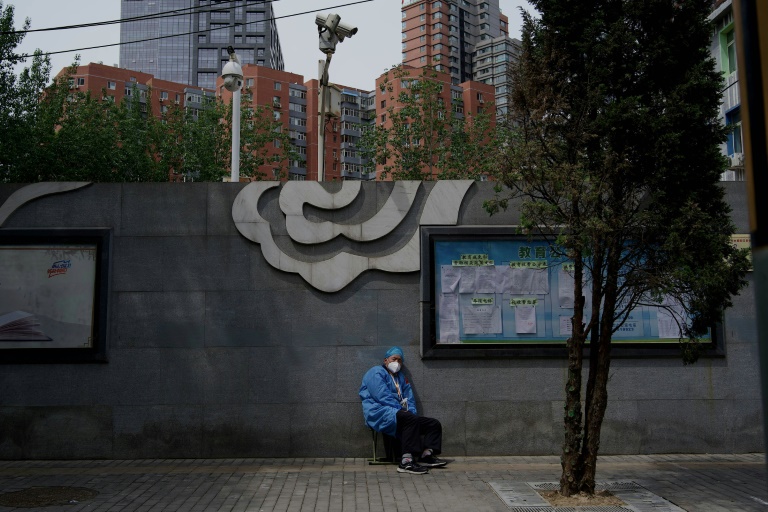
“Yesterday’s weak China trade numbers have also weighed into the overall calculus, as concerns grow over Chinese demand, with the major cities of Beijing and Shanghai on the receiving end of new restrictions.”

– Bitcoin woes –

Bitcoin on Tuesday slumped briefly under $30,000, reaching a 10-month low.

The volatile cryptocurrency has lost more than half its value since a November surge saw it reach a record high of nearly $69,000.

While crypto enthusiasts view bitcoin as a hedge against inflation, an influx of more traditional investors tend to view it as a riskier asset.

They have been offloading bitcoin and other digital tokens along with other volatile assets like tech stocks as the US Federal Reserve moves to hike interest rates to tackle decades-high inflation.

Data on Tuesday showed inflation in Greece jumping by 10.2 percent in April, its highest level since 1995, while it reached its highest rate since 1984 in Denmark at 6.7 percent.

Inflation began to rise after countries emerged from Covid pandemic restrictions last year, but it worsened following Russia’s invasion of Ukraine, which pushed energy and food prices even higher.

The Ukrainian economy is set to contract by almost one third this year in the wake of Russia’s invasion, the European development bank said.

Ukraine’s output is set to contract 30 percent compared with an EBRD forecast of minus 20 percent given in March shortly after Moscow’s military offensive.

– Key figures at around 1630 GMT –

New York – Dow: DOWN 1.0 percent at 31,937.12 points

EURO STOXX 50: UP 0.7 percent at 3,508.47

London – FTSE 100: UP 0.4 percent at 7,243.22 (close) 

Frankfurt – DAX: UP 1.2 percent at 13,534.74 (close)

Paris – CAC 40: UP 0.5 percent at 6,116.91 (close)

Hong Kong – Hang Seng Index: DOWN 1.8 percent at 19,633.69 (close)  

Shanghai – Composite: UP 1.1 percent at 3,035.84 (close)

Tokyo – Nikkei 225: DOWN 0.6 percent at 26,167.10 (close)

Brent North Sea crude: DOWN 3.1 percent at $102.64 per barrel

West Texas Intermediate: DOWN 3.2 percent at $99.82 per barrel

Euro/dollar: DOWN at $1.0539 from $1.0563 on Monday 

Pound/dollar: DOWN at $1.2320 from $1.2331

Euro/pound: DOWN at 85.55 pence from 85.64 pence

Dollar/yen: DOWN at 130.12 yen from 130.26 yen

burs-rl/imm
UK and EU polarised over post-Brexit N.Irish trade rules

The UK and the EU appeared on a collision course Tuesday over post-Brexit trading arrangements in Northern Ireland, after London branded them unsustainable but European leaders insisted they would not be renegotiated. 

It comes as political tensions rise in the UK province after historic elections last week saw pro-Irish nationalists Sinn Fein become the biggest party for the first time and now bid to lead a power-sharing executive.

UK Prime Minister Boris Johnson said in a call with his Irish counterpart Micheal Martin that the so-called Northern Ireland Protocol governing trade there “was not sustainable in its current form”.

In the latest threat to take unilateral steps to address the “very serious” situation, he added his government “would take action to protect peace and political stability in Northern Ireland if solutions could not be found”.

But the warning prompted a swift response from German Chancellor Olaf Scholz and Belgian Prime Minister Alexander De Croo.

“No one should unilaterally scrap or break or in any way change the arrangement we agreed on together,” Scholz told a joint press conference in Berlin. 

Flanking the German leader, De Croo added: “Our message is quite clear. Don’t touch this, this is something we agreed on.”

European Commission vice-president Maros Sefcovic, who has been leading months of talks between the two sides, said the 27-member bloc was “united” in its stance.

“The Protocol, as a cornerstone of the Withdrawal Agreement, is an international agreement. Its renegotiation is not an option,” he added.

– ‘Disruption’ –

Signed as part of the UK’s EU divorce, the protocol keeps Northern Ireland largely in the EU’s single market and imposes sweeping checks on goods heading there from Great Britain (England, Scotland and Wales).

The compromise was introduced to avoid the return of hard border infrastructure between Northern Ireland and EU member Ireland to the south.

Keeping the border open was a key plank of the 1998 Good Friday Agreement that ended decades of sectarian violence over British rule in Northern Ireland.

But the protocol has infuriated pro-UK unionists who claim the checks on trade across the Irish Sea undermine the province’s place within the UK.

The DUP, the largest unionist party, has vowed not to nominate ministers to the Northern Ireland executive in Belfast until the protocol is overhauled, raising the prospect of post-election paralysis. 

“In the absence of agreement with the EU, then the UK Government must act to safeguard the political institutions in Northern Ireland, to safeguard the political process,” its leader Jeffrey Donaldson said.

Johnson and his ministers have said they share unionists’ concerns about how the protocol is being implemented and have repeatedly threatened to trigger a suspension clause in the terms.

They have accused the EU of inflexibility and overzealous interpretation of the rules, causing “economic and political disruption” in Northern Ireland.

In their call, Johnson told Martin the province’s 1998 peace agreement “was being undermined”, his office said.

– Unilateral actions –

The EU is insistent the UK must abide by the terms of the deal it signed up to and that it risks a possible trade war with the bloc if it unilaterally suspends any of the protocol.

Sefcovic has urged London to dial down the rhetoric and work on finding solutions within the existing framework.

Martin’s office said the Taoiseach “set out clearly his serious concerns at any unilateral action at this time, which would be destabilising in Northern Ireland and erode trust”.

However, The Times said Foreign Secretary Liz Truss could move to scrap large parts of the deal from British law by as early as next week.

The newspaper said officials had drawn up draft legislation to remove the need for checks on goods from Great Britain for use in the province.

If passed, Northern Irish companies could also ignore EU rules and regulations and strip the European Court of Justice of oversight powers on disputes, it added.

Honduran ex-police chief extradited to US to face drug charges

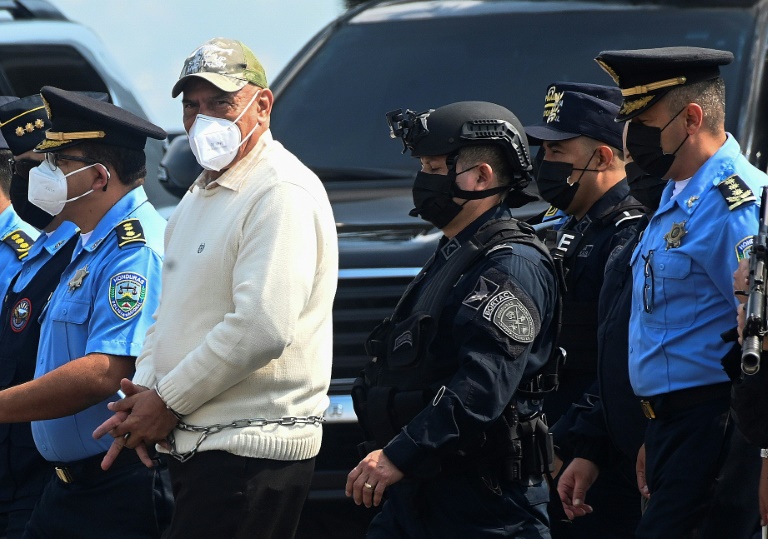
Former Honduran police chief Juan Carlos Bonilla was extradited Tuesday to the United States, where he stands accused of supervising drug trafficking operations on behalf of ex-president Juan Orlando Hernandez.

Hernandez, 53, was extradited to the United States last month to face drug trafficking charges, less than three months after he left the presidency following eight years in office.

An airplane belonging to the US Drug Enforcement Agency took off from a military base in Tegucigalpa with a handcuffed Bonilla aboard, an AFP journalist at the scene saw.

Bonilla, 61, was implicated during a trial in a New York court in which Hernandez’s ex-congressman brother Tony was convicted of drug trafficking and sentenced to life in prison.

Bonilla “allegedly abused his positions in Honduran law enforcement to flout the law and play a key role in a violent international drug trafficking conspiracy,” then federal prosecutor Geoffrey Berman said in a statement in April 2020.

In the name of the Hernandez brothers, he also “oversaw the transshipment of multi-ton loads of cocaine bound for the US, used machine guns and other weaponry to accomplish that, and participated in extreme violence, including the murder of a rival trafficker, to further the conspiracy.”

Bonilla — known as “The Tiger” — could face life in prison if convicted.

He served as police chief from 2012 to 2013, right at the beginning of Hernandez’s mandate.

He was arrested in March and the Supreme Court ratified his extradition a month later.

Security Minister Ramon Sabillon said Bonilla had submitted to the extradition to “shorten the process.”

Several days ago, Bonilla wrote an open letter claiming he had been targeted “unfairly by unknown people acting outside the law” to implicate him.

He said he would travel to the United States “with head held high” and a “clean conscience.”

Hernandez, who was due to appear in court later Tuesday, has denied involvement in drug trafficking.

US prosecutors say the former president turned Honduras into a “narco-state” by involving the military, police and civilians in drug trafficking.

Several drug traffickers have told US prosecutors they paid bribes to Hernandez’s inner circle. By the time he left office, DEA agents were ready to move against him.

His family claims he is the “victim of revenge by the drug traffickers he himself had extradited or forced to flee to the United States.”

European stocks rebound, oil extends losses

European stock markets rebounded Tuesday following days of losses on fears over rising US interest rates fuelled by surging inflation and the impact of China’s prolonged Covid lockdowns.

US stocks also bounced higher at the start of trading but gave up their gains as the morning wore on.

World stock markets have been on a tempestuous ride this year, but have seen sharp losses after the US Federal Reserve last week hiked interest rates by half a percentage point to get a grip on surging inflation.

Between rising prices eating into the disposable income of consumers and higher borrowing costs, investors have been increasingly concerned about the possibility of recession.

“European markets have seen a modest rebound from yesterday’s two-month lows, after the carnage of the last three days, as investors look for signs of a possible base,” said market analyst Michael Hewson at CMC Markets UK.

London ended the day with a gain of 0.4 percent, Paris added 0.5 percent and Frankfurt rose 1.2 percent.

“We’re seeing a small recovery in stock markets on Tuesday, as investors dust themselves off following the rout at the start of the week,” said Craig Erlam, senior market analyst at online trading platform OANDA.

“There’s clearly a huge amount of worry about a recession in the markets at the minute as central banks continue to aggressively tighten against the backdrop of a slowing economy and a cost-of-living crisis,” he added.

Asian equities mostly sank following sharp losses on Wall Street on Monday.

– Bitcoin woes –

Bitcoin on Tuesday slumped briefly under $30,000, reaching a 10-month low.

The volatile cryptocurrency has lost more than half its value since a November surge saw it reach a record high of nearly $69,000.

While crypto enthusiasts view bitcoin as a hedge against inflation, an influx of more traditional investors tend to view it as a riskier asset.

They have been offloading bitcoin and other digital tokens along with other volatile assets like tech stocks as the US Federal Reserve moves to hike interest rates to tackle decades-high inflation.

Data on Tuesday showed inflation in Greece jumping by 10.2 percent in April, its highest level since 1995, while it reached its highest rate since 1984 in Denmark at 6.7 percent.

Inflation began to rise after countries emerged from Covid pandemic restrictions last year, but it worsened following Russia’s invasion of Ukraine, which pushed energy and food prices even higher.

The Ukrainian economy is set to contract by almost one third this year in the wake of Russia’s invasion, the European development bank said.

Ukraine’s output is set to contract 30 percent compared with an EBRD forecast of minus 20 percent given in March shortly after Moscow’s military offensive.

Elsewhere Tuesday, oil prices fell further but the losses were less severe than the drops of more than six percent Monday on weaker demand concerns.

– Key figures at around 1530 GMT –

New York – Dow: DOWN 0.3 percent at 32,144.47 points

EURO STOXX 50: UP 0.8 percent at 3,511.72

London – FTSE 100: UP 0.4 percent at 7,243.22 (close) 

Frankfurt – DAX: UP 1.2 percent at 13,534.74 (close)

Paris – CAC 40: UP 0.5 percent at 6,116.91 (close)

Hong Kong – Hang Seng Index: DOWN 1.8 percent at 19,633.69 (close)  

Shanghai – Composite: UP 1.1 percent at 3,035.84 (close)

Tokyo – Nikkei 225: DOWN 0.6 percent at 26,167.10 (close)

Brent North Sea crude: DOWN 1.9 percent at $103.95 per barrel

West Texas Intermediate: DOWN 1.8 percent at $101.20 per barrel

Euro/dollar: DOWN at $1.0539 from $1.0563 on Monday 

Pound/dollar: DOWN at $1.2300 from $1.2331

Euro/pound: UP at 85.67 pence from 85.64 pence

Dollar/yen: UP at 130.30 yen from 130.26 yen

burs-rl/lcm

Putin ready for long war beyond Donbas: US intelligence chief

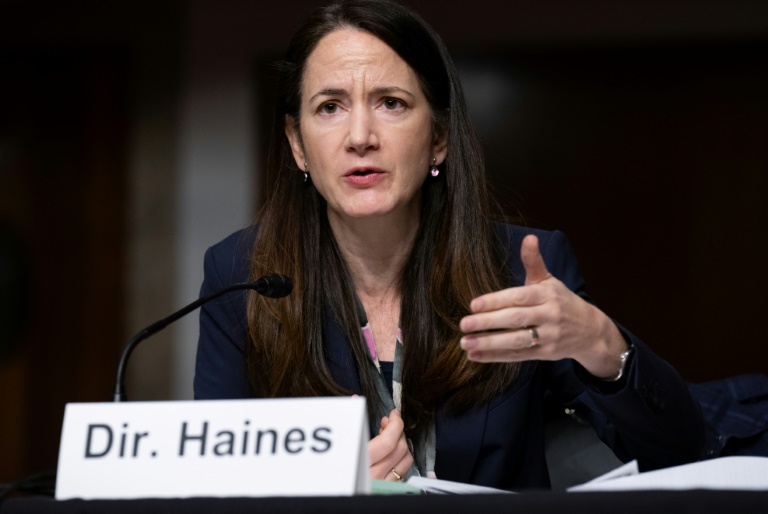
President Vladimir Putin will not end the Ukraine war with the Donbas campaign and is determined to build a land bridge to Russian-controlled territory in Moldova, US Director of National Intelligence Avril Haines said Tuesday.

US intelligence also views it increasingly likely that Putin will mobilize his entire country, including ordering martial law, and is counting on his perseverance to wear down Western support for Ukraine.

“We assess President Putin is preparing for prolonged conflict in Ukraine during which he still intends to achieve goals beyond the Donbas,” Haines said.

US intelligence thinks Putin’s decision to concentrate Russian forces in the eastern Donbas region is “only a temporary shift” after their failure to capture Kyiv in the north.

Russian forces still intend to win territory across the Black Sea coast, in part to secure water resources for Crimea, which Moscow seized in 2014, Haines told the Senate Armed Services Committee.

“We… see indications that the Russian military wants to extend the land bridge to Transnistria,” Haines said, referring to the Moscow-backed separatist region of Moldova along Ukraine’s southwest border.

– Possible martial law –

However, she said the current Russian force is not large or strong enough to capture and hold all that territory without a more general mobilization of troops and resources from Russian society.

The Russia leader “faces a mismatch between his ambitions and Russia’s current conventional military capabilities,” she said.

That “likely means the next few months could see us moving along a more unpredictable and potentially escalatory trajectory,” she said.

“The current trend increases the likelihood that President Putin will turn to more drastic means, including imposing martial law, reorienting industrial production, or potentially escalatory military options to free up the resources needed to achieve his objectives,” Haines told the panel.

Russian forces will put more efforts into interrupting Western military supplies for Ukraine, and Moscow could attempt to retaliate for economic sanctions.

She said that the Russian leader is counting on being able to outlast Western support for Ukraine as the war drags on.

“Putin most likely also judges that Russia has a greater ability and willingness to endure challenges than his adversaries, and he is probably counting on US and EU resolve to weaken as food shortages, inflation and energy prices get worse,” Haines said.

– ‘Stalemate’ –

In the same hearing, US Defense Intelligence Agency Director Lt. Gen. Scott Berrier characterized the current fighting, with both forces facing down along a long front in the Donbas region, as “a bit of a stalemate.”

He said that could change if Moscow formally declares war and orders a general military mobilization to boost the size of its forces.

“If Russia doesn’t declare war and mobilize, the stalemate is going to last for a while and I don’t see a breakout on either side,” Berrier said.

“If they do mobilize and they do declare war, that will bring thousands more soldiers to the fight, and even though they may not be as well-trained and competent, they will still bring mass and a lot more ammunition,” he said.

– Nuclear rhetoric –

Haines, who oversees the entire US intelligence community, including the CIA and National Security Agency, said they do not believe the Russia leader is prepared to escalate the conflict by deploying nuclear weapons.

Putin uses nuclear “rhetoric” to scare the West from backing Ukraine, according to Haines. 

As he perceives the West as ignoring those threats, she said Russia could step up the rhetoric by launching a new nuclear forces exercise involving the dispersal of his land, air and submarine nuclear threats.

Nevertheless, Haines said US intelligence believes Putin would only approve the use of even smaller “tactical” nuclear weapons if Russia itself was under “existential threat.”

She said Moscow would escalate its signaling to make clear at what point it was ready to use a nuclear weapon.

US set to approve $40 bn for Ukraine, warning of long war ahead

US lawmakers were set to begin debate Tuesday on a nearly $40 billion aid package for Ukraine as Washington warned Russia was likely girding for a long conflict with its neighbor.

The defense, humanitarian and economic funding should pass comfortably, with the two parties having reached an agreement on the details, and it will likely move quickly through Congress.

“This is a large package but the need is great and time is of the essence… The president has called on both chambers of Congress to act quickly on the Ukrainian aid package, so act quickly we must,” Chuck Schumer, who leads the Senate Democratic majority, said on the floor.

Congressional leaders struck a deal Monday to release $6.8 billion more than the $33 billion previously requested by the White House to help the Eastern European nation ward off Moscow’s invasion.

The financial boost would include an extra $3.4 billion for both military and humanitarian assistance on top of the funding requested by the administration.

If the package passes as planned, US spending to bolster Ukraine’s defenses against Russia’s invasion and address the ensuing humanitarian crisis will soar to around $54 billion. 

The action comes as a top US official warned that Russian President Vladimir Putin is preparing for a long war that may not end with Russian victory in the east.

“We assess President Putin is preparing for prolonged conflict in Ukraine during which he still intends to achieve goals beyond the Donbas,” Director of National Intelligence Avril Haines said at a hearing on Capitol Hill.

She added that Putin was counting on US and EU resolve to weaken as the conflict continues to cause food shortages and inflation, including spiraling energy prices.

– Covid aid complications –

Debate and a vote on the legislation is expected in the House as early as Tuesday, likely followed by the Senate at the end of the week or next week. 

The Democratic leadership had hoped to tie the Ukraine money to a new round of funding for Covid-19 tests, therapeutics and vaccines, with the United States experiencing a new spike in cases as it nears one million deaths.

But they decided against the move as they were unwilling to get drawn into another fight over border control, the issue that sank the previous attempt at a Covid funding deal before Easter.

House Democratic leaders are pushing for nearly $20 billion in additional pandemic preparedness funding, in line with what the White House said it needs. 

The Senate had been considering a narrower package worth around $10 billion.

Republicans stopped the Covid aid package last month, demanding an amendment vote to keep in place Title 42, the pandemic-related provision used to deny asylum requests and allow the quick expulsion of migrants. 

With the policy due to end on May 23, Democrats are reluctant to allow a vote, as several of their moderate lawmakers, and those in tough re-election fights, would likely vote with Republicans.

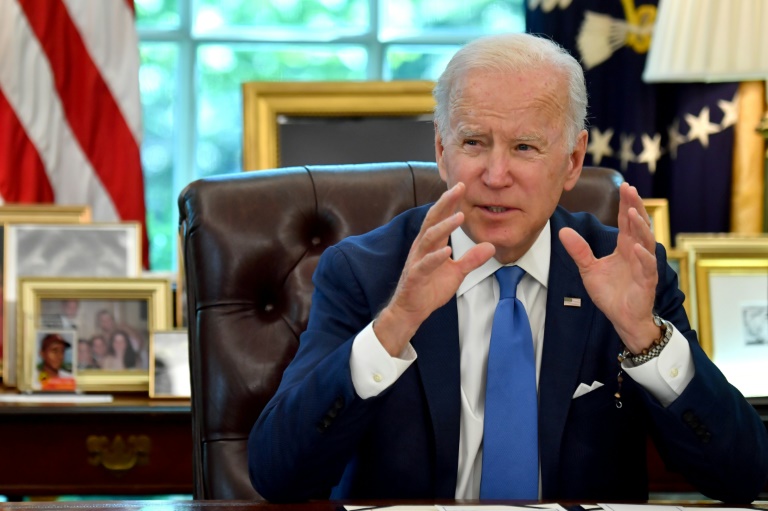
President Joe Biden said in a statement Monday that he was prepared to accept the decoupling of Ukraine and Covid aid, with “approximately 10 days” to go until the current funding runs out,

Biden signed into law the creation of a lend-lease program on Monday that will make it easier for the United States to send military equipment to Ukraine, more than 80 years after a similar program began America’s involvement in World War II. 

Shoot-on-sight orders in Sri Lanka after deadly violence

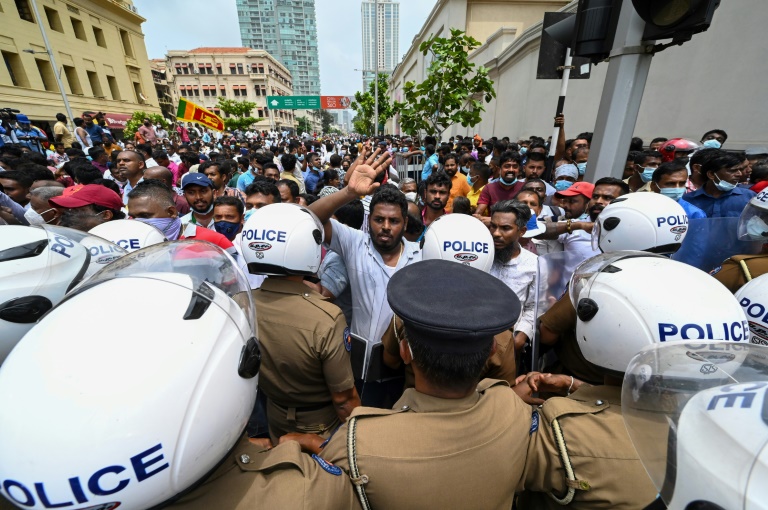
Sri Lankan authorities issued shoot-on-sight orders on Tuesday to quell further unrest a day after the island was rocked by deadly violence and rioting.

With thousands of security forces enforcing a curfew, the defence ministry said troops “have been ordered to shoot on sight anyone looting public property or causing harm to life”.

On Monday, government supporters attacked with sticks and clubs demonstrators in Colombo protesting peacefully for weeks over a dire economic crisis and demanding the resignation of President Gotabaya Rajapaksa.

Mobs then retaliated across the country late into the night, torching dozens of homes of ruling-party politicians and trying to storm the prime minister’s official residence in the capital.

Police said Tuesday that in total eight people died.

Protests continued on Tuesday despite the curfew.

A crowd attacked and set fire to a vehicle carrying Colombo’s most senior policeman.

Officers fired warning shots and sent in reinforcements to rescue Senior Deputy Inspector-General Deshabandu Tennakoon, who was rushed to hospital but later released after treatment.

In another sign of rapidly deteriorating security, vigilante groups blocked the main road to Colombo airport to check for any Rajapaksa loyalists trying to leave the island, witnesses said.

As well as those killed, more than 225 people were injured on Monday, which also saw the resignation of prime minister Mahinda Rajapaksa.

His departure however failed to quell public anger, with his brother still president and wielding widespread powers and command over the security forces.

Mahinda had to be rescued in a pre-dawn military operation after thousands of angry protesters stormed his official residence overnight and lobbed petrol bombs.

Protester Chamal Polwattage said he expected demonstrations to swell again and vowed they would not leave “until the president goes”.

“People are angry about the attacks launched against us yesterday… We have a lot of volunteers bringing food and water for us,” the 25-year-old told AFP.

– ‘Deeply troubled’ –

The Rajapaksa clan’s hold on power has been shaken by months of blackouts and shortages of essential goods in Sri Lanka’s worst economic crisis since independence in 1948.

The pandemic torpedoed vital tourism and forced the government to halt most imports to save foreign currency needed to pay its debts, on which it has now defaulted.

But after weeks of peaceful demonstrations, Monday’s attacks on protesters by government supporters represented a turning point.

In the ensuing violence, police fired tear gas and water cannon to disperse crowds and declared a curfew across the entire South Asian nation until Wednesday.

Angry crowds set alight the homes of at least 41 pro-Rajapaksa politicians.

Several Rajapaksa homes were torched, while a family museum in their ancestral village was trashed.

Outside Colombo, ruling-party lawmaker Amarakeerthi Athukorala shot two people — killing one of them — when surrounded by a crowd of protesters, police said.

The MP later took his own life, officers said, but the ruling party said he had been murdered. The lawmaker’s bodyguard was also killed.

Another ruling-party politician who was not named shot dead two protesters and wounded five others in the south, police added.

UN rights chief Michelle Bachelet said Tuesday she was “deeply troubled” by the violence committed both by supporters of the government and the subsequent “mob violence” against ruling party members.

Bachelet in a statement called for an investigation and urged the government to “engage in meaningful dialogue with all parts of society”.

– Unity government? –

Mahinda Rajapaksa said his resignation was intended to pave the way for a unity government, but it was unclear if the opposition would join any administration led by his brother.

The president has the power to appoint and fire ministers as well as judges, and enjoys immunity from prosecution.

Political sources said attempts were under way to arrange an online meeting between the president and all political parties.

“Unless President Rajapaksa steps down, no one — whether the masses in the streets or key political stakeholders — will be appeased,” analyst Michael Kugelman from the Wilson Center told AFP.

Oil refinery workers caught in Germany's energy dilemma

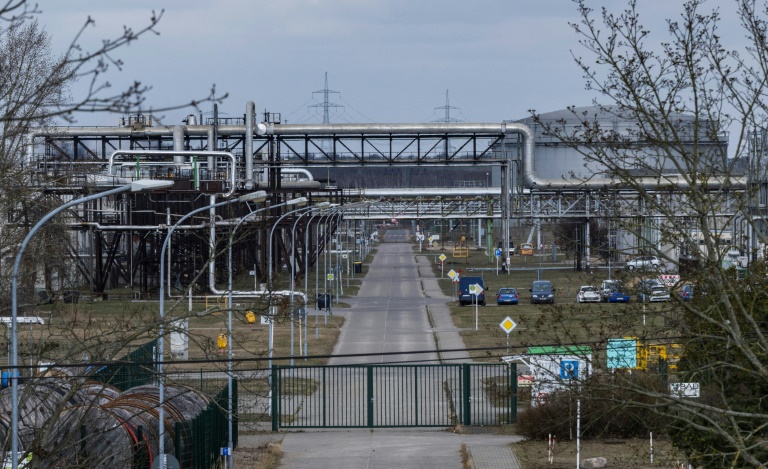
Germany is seeking to ban Russian oil by the end of this year over the war in Ukraine, but workers at the PCK oil refinery outside Berlin are less than happy about the plans.

“We need Russian oil. We have our houses, our families. If (the government) wants to stop it, then the area here will be dead,” Thorsten Scheer, 60, told AFP at the refinery in the town of Schwedt, on the border with Poland.

The plant, which employs 1,200 people, exclusively processes Russian crude oil from a branch of the Druzhba pipeline, the world’s longest oil pipeline.

It supplies around 90 percent of the oil consumed in Berlin and the surrounding region, including Berlin-Brandenburg airport, and many local businesses depend on the cash it brings to the area.

Economy Minister Robert Habeck travelled to Schwedt on Monday to hold a question-and-answer session with the refinery’s employees, where he met a mixed reception.

Standing on a table outside the staff canteen, Habeck sought to reassure the crowd of workers in green and orange overalls that the government would seek alternative ways to keep the plant running.

– ‘Not Germany’s concern’ –

But employees accused him of serving US interests in seeking to drive a wedge between Germany and Russia.

“Yes, war is rubbish. That is perfectly clear to us,” one worker told the crowd.

“But on the other hand, why should we suddenly ban a business partner who has delivered reliably for decades? We get a raw material and we process it. If this raw material is interrupted out of political correctness, that is not right in my eyes.”

Another worker, 48, who did not want to give his name, told AFP the situation was “stressful for everyone” as their jobs were “hanging in the balance”.

“In my opinion, the war is not Germany’s concern,” he said. “If (the oil embargo) would end the war, fine. But it won’t. Putin will peddle his oil somewhere else.”

Habeck, a member of the Green party, was also met with protests from environmental campaigners, who said they had managed to turn off the oil supply to the PCK plant in advance of his visit.

Germany has ruled out an immediate embargo on all Russian energy in response to the war in Ukraine, especially gas. 

However, Europe’s biggest economy has already slashed its oil imports from Russia to 12 percent of the total from 35 percent before Russia’s invasion.

– Sticky problem –

But the PCK refinery presents it with a sticky problem — especially since the site is majority owned by Russian oil giant Rosneft, controlled by the Kremlin.

In late 2021, Rosneft announced plans to increase its stake in the refinery from 54 to 92 percent by buying shares from Shell.

Germany’s Federal Cartel Office approved the transaction a few days before the outbreak of the war but the Economy Ministry is examining whether it can still be stopped. 

Habeck laid out three elements that would have to come together to keep the plant alive: new oil deliveries from other countries via ships arriving in the port of Rostock; financial aid from the government; and a new ownership structure to wrest control from Rosneft.

The minister said he was “well aware” that there was “a lot of uncertainty” for the workers. 

“I would be happy if you would see me not just as your enemy, but as someone who is really trying to save this site and keep it alive and lead it into the future,” he said.

But after the meeting, as the workers stood in line to help themselves to barbecued burgers and sausages, many remained unconvinced by his plans.

“It’s an experiment. We all just have to hope it works out,” said Steffen Thierbach, 64.

Hold the world's madness, Eurovision has begun

Just in time, against a backdrop of war in Europe, comes Eurovision, the world’s biggest live music event with its quirky, camp celebration of culture and song. 

Watched by millions, the song contest held this year in Italy’s northwestern city of Turin is providing a welcome moment of celebration and solidarity amid the geopolitical turmoil caused by Russia’s invasion of Ukraine.

With a first semi-final Tuesday night and a second on Thursday, the 40 competing countries will whittle down to 25 to battle in the finale Saturday.

Ukraine’s rap folk band Kalush Orchestra is the favourite to win. 

Fans gathered outside the PalaOlimpico sporting arena Tuesday expressed cheer at the atmosphere of camaraderie.

“I think it’s amazing that this year Eurovision can happen again, especially now with the circumstances in Europe,” German fan Matthias Korte, 30, told AFP. 

“Because the value of Eurovision is Europe coming together and sharing this unique experience and sharing some music together.” 

– Give That Wolf a Banana –

The European smorgasbord of musical kitsch and culture has enthralled the continent for decades, serving up a steady supply of no-holds-barred belting, flamboyant costumes, onstage pyrotechnics and awkward presenter banter in heavily accented English.

In its 66th year — 2020’s edition was cancelled because of coronavirus — the cultural mash-up is camp and over-the-top, and often just outright odd.

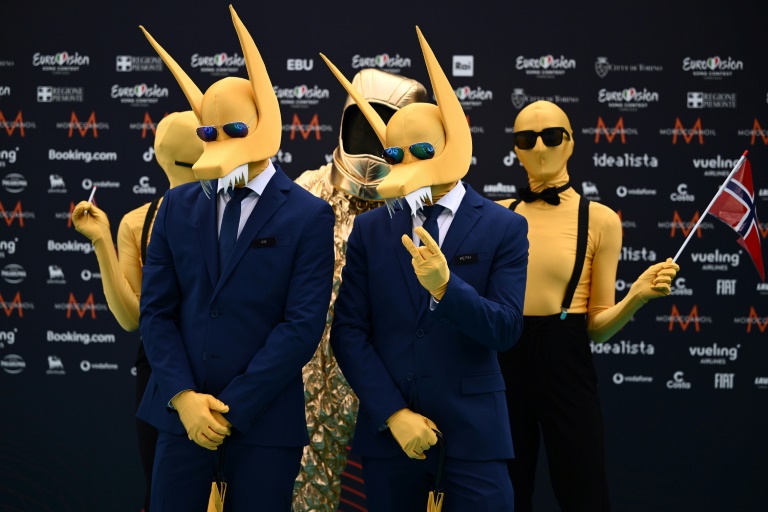
This year appears to be no exception as seen by Norway’s Subwoolfer, who perform their upbeat “Give That Wolf a Banana” wearing cartoonish yellow wolf masks complete with white teeth, or Latvia’s entry “Eat Your Salad” by Citi Zeni with its naughty lyrics and planet-loving message.

Enjoying a flood of popular support and tipped by bookmakers to win the cult competition is Ukraine’s Kalush Orchestra, with the brisk rap lullaby “Stefania”. 

The song addressed to a mother, which mixes hip-hop and traditional Ukrainian music, was written before Russia’s February invasion of Ukraine. 

But with striking lyrics such as “I’ll always find my way home even if all the roads are destroyed”, the song has become “really close to the hearts of many Ukrainians”, said frontman rapper Oleh Psiuk, who along with the band received special government authorisation to attend Eurovision. 

“There are efforts that have been made now to destroy and discredit Ukrainian culture, but we are here to show that Ukrainian music and Ukrainian culture exists,” Psiuk said Sunday during the official kickoff to the competition. 

“They are authentic, original and really unique, and this is what we want to showcase.”

 – Mechanical bulls and fiddles –

Although watched by viewers of all ages, the competition sometimes verges on the provocative. 

During rehearsals, San Marino contestant Achille Lauro gyrated atop a red mechanical bull dressed head to toe in lacy, transparent Gucci while Albania’s Ronela Hajati belted out “Sekret” amid nubile, undulating dancers in an energetic, risque performance. 

Sheldon Riley of Australia — one of the handful of non-European countries to compete — showed off a voluminous white ostrich feather cape worthy of Liberace, while Moldova’s Zdob si Zdub & Advahov Brothers have brought a high-octane dose of energy with their accordion and fiddle-laden “Trenuletul”.

Meanwhile, the UK’s long-haired, ever-grinning Sam Ryder is giving Brits a long overdue whiff of possible victory with his entry “Space Man”, after a quarter of a century of disappointment.

Last year’s winners, Italy’s leather-clad glam band Maneskin, will perform at the finale Saturday with a new single, “Supermodel”.

At the Coachella festival in California last month, Maneskin frontman Damiano David shouted out “Free Ukraine” and an expletive levelled at Russian President Vladimir Putin.

The European Broadcasting Union, which organises Eurovision, excluded Russia from the show on February 25, the day after its invasion.

During the official kickoff, performers walked the turquoise carpet runway flanked by press from corresponding nations.

Votes are cast by music industry professionals and the public from each country. Out of fairness, nobody can vote for their own nation.

Last year, 183 milion people watched the contest.

'Rich also cry': Russia's sanctioned oligarchs lose luxuries

From superyachts and mansions to private jets and works of art, mega-rich Russians are being deprived of their expensive playthings, under swingeing sanctions that implicate them in Vladimir Putin’s war in Ukraine.

The seizing and freezing of assets is proving the toughest trial yet for the Kremlin-favoured “oligarchs”, many of whom got rich on the back of the collapse of the Soviet Union.

In Britain, more than 100 oligarchs and their families have been slapped with restrictions. The United States has sanctioned 140 and the European Union more than 30.

UK Transport Secretary Grant Shapps has said the move was designed to hit them where it hurts — denying them “access to their luxury toys”.

The British capital has for years been dubbed “Londongrad” after becoming a haven for Russians to keep their money, educate their children and pursue litigation.

“The welcome mat is now being taken away from Russian oligarchs,” The Economist wrote.

Even the high-profile Roman Abramovich has been targeted, forcing him to put Chelsea Football Club, which he bought in 2003, up for sale.

But acting against so many in a highly globalised major economy is “totally uncharted territory”, said researcher Alex Nice, from the Institute for Government think-tank.

Whenever the war ends, a deep rift between the West and Russia will remain, even if the assets are just frozen, rather than expropriated, he added. 

“There doesn’t seem to be any prospect that these sanctions will be lifted any time soon,” said Nice.

In Moscow, the independent Russian political analyst Konstantin Kalachev said Putin’s “special operation” in Ukraine could last “for years” — and even be widened to fulfil his dream of recreating the Russian empire.

If the decision is down to Ukraine, “they will never lift them (sanctions)”, he told AFP.

– Avalanche –

There’s no question that the sanctions have hit home.

Forbes magazine last month removed 34 Russians from its annual billionaire list citing the “avalanche of sanctions”.

“The war is an absolute disaster for them,” said Elisabeth Schimpfoessl, a lecturer in sociology at Aston University in Birmingham, central England, and author of a book called “Rich Russians”.

Petr Aven, known for his extensive collection of Russian art, told The Financial Times newspaper he was unsure if he was “allowed to have a cleaner or a driver” and faced expulsion from the UK.

His long-term business partner, Mikhail Fridman, told Bloomberg news agency he was “in shock” and also struggling to pay a cleaner.

Many oligarchs have multiple citizenships and are not rushing back to Russia.

The West has been a “base that they can go to at any moment when they fear prosecution in Russia”, said Schimpfoessl.

“Oligarchs never bothered developing Russia’s rule of law.”

– Soap opera –

The scale of assets targeted is staggering.

The UK government estimates that Abramovich alone is worth over £9 billion ($11 billion, 10.5 billion euros).

It has also targeted two of his associates worth up to £10 billion.

Abramovich is rumoured to own half a dozen luxury superyachts, two of which docked in Turkey in March, thereby avoiding sanctions.

EU members have reported freezing nearly $30 billion in Russian assets, including almost $7 billion in yachts, helicopters, property and works of art.

Washington has said it has sanctioned or blocked boats and aircraft worth over $1 billion.

US President Joe Biden has proposed permanent sanctions, saying oligarchs should not be allowed to enjoy luxuries while Ukrainian children die.

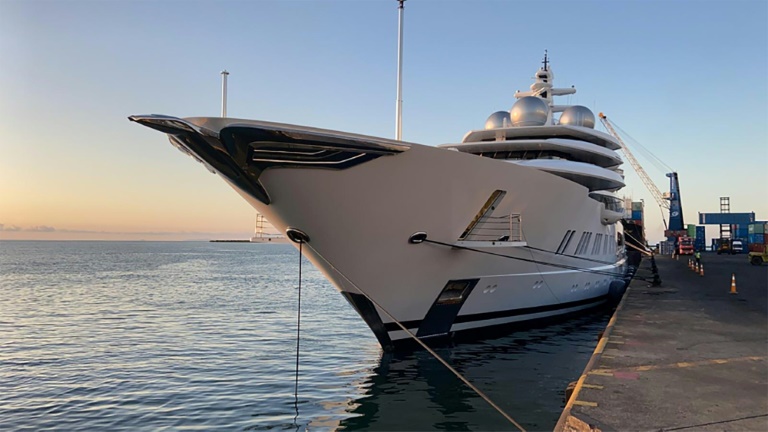
In Fiji last week, police seized a 348-foot (106-metre) yacht called “Amadea” worth some $300 million and linked to Suleiman Kerimov, a reticent billionaire senator, on Washington’s request.

Images of impounded yachts and shuttered mansions of Putin cronies prompt Schadenfreude in Russia, too.

“Ordinary Russians like to see ‘the rich also cry’,” said Kalachev, citing a Mexican soap opera Russians watched in the early 1990s.

What is not clear is whether sanctions affect Moscow’s decisions.

They cannot influence Putin, because he meets such business figures “only to tell them things — it’s not a dialogue”, argued Kalachev.

“The record of using economic coercion to try to force change in foreign policy is not a good one,” said Nice.

But sanctions “are undoubtedly going to weaken Russia’s capacity to fight”, he added.

– Opposition –

Abramovich has been involved in talks aimed at ending the war, with consent of both sides. Other oligarchs have criticised the conflict.

On Instagram the UK-sanctioned entrepreneur and banker Oleg Tinkov slammed “this crazy war” and Russia’s “shitty army”.

Fridman urged an end to the bloodshed and Oleg Deripaska, sanctioned by the UK, the EU and the US, said continuing fighting was “madness”.

But experts questioned the likelihood of them allying against Putin.

“It’s hard to see that happening,” said Nice. 

“It would not be in their interests ever to speak out against Putin prematurely,” said Schimpfoessl.

Close Bitnami banner
Bitnami