World

Inbreeding won't doom the last of the vaquitas, but fishing might: study

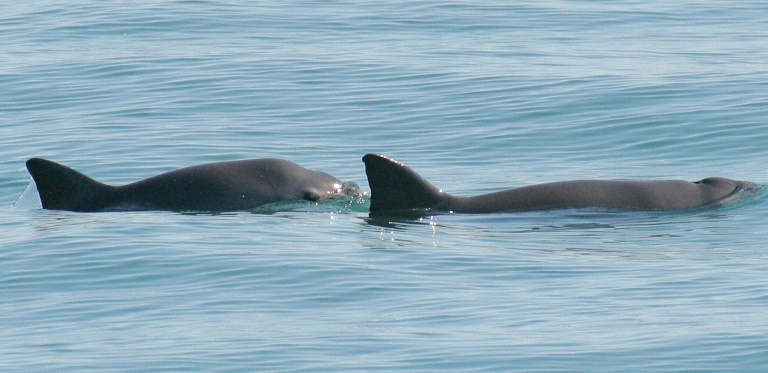
Vaquita porpoises are on the edge of extinction, with just 10 left in their sole habibat within Mexico’s Gulf of California.

However, a new study published Thursday in the journal Science offers some hope: the world’s rarest marine mammals aren’t doomed by a lack of genetic diversity, and can recover if illegal “gillnet” fishing ceases immediately. 

“We’re trying to push back on this idea that there’s no hope, that nothing we do could save them at this point. It’s just not an accurate assumption,” lead author Jacqueline Robinson of the University of California San Francisco told AFP.

Porpoises are closely related to dolphins, and share many things in common including great intelligence. 

The vaquita, whose name means “little cow” in Spanish, measures four to five feet (about 1.5 meters) in length, making it the smallest of all cetaceans.

Shy and elusive, they are known for distinctive dark circles around their eyes, and relatively large dorsal fins, which are thought to help them dissipate heat in their warm habitat.

Vaquita numbers were decimated in the 20th century as a result of being accidentally trapped and drowning in gillnets: long walls of nets hanging in open water that are used to catch fish and shrimp. 

Fishermen sought in particular the totoaba, a large fish about the size of the vaquita, whose swim-bladder is prized in traditional Chinese medicine.

The totoaba itself is endangered and its fishing is illegal, but the ban isn’t always respected.

The vaquita’s historical abundance was unknown, but by the time of the first survey, in 1997, only around 570 remained.

There were fears that harmful mutations among the surviving vaquitas could seal the species’ fate due to inevitable inbreeding.

To find out whether that was the case, the researchers analyzed the genomes of 20 vaquitas that lived between 1985 and 2017, and discovered that over the past 250,000 years their population had never exceeded a few thousand.

They also learned that their genetic diversity had always been low, relative to other cetacean species such as dolphins, orcas, and other whales. 

– Benefits to low genetic diversity –

“Generally, we would think of low genetic diversity as being a bad thing. But in this case, it is somewhat advantageous for the vaquitas for their possibility of future recovery,” said Robinson. 

Inbreeding increases the chances offspring will inherit two copies of harmful mutations, leading to genetic disorders.

But it turned out that the frequency of these mutations are very low in vaquitas to begin with, because the population has always been small.

“So those mutations were historically weeded out much more effectively, than in a larger population, where those mutations could persist and remain hidden from natural selection,” explained Robinson.

There are other species that appear more resistant to so-called “inbreeding depression,” including mountain gorillas and narwhals, for similar reasons.

The team then carried out simulations to forecast the species’ future. 

Encouragingly, there is only a six percent chance of vaquitas’ extinction if gillnet fishing is eliminated.

But if such fishing is only reduced, then the extinction risk rises drastically. 

Even with an 80 percent reduction in fishing, the porpoises have a 62 percent chance of disappearing.

“While we now know that the species’ ability to recover is not limited by their genetics, vaquitas have very little time left,” said co-author Christopher Kyriazis of the University of California, Los Angeles, in a statement.

“If we lose them, it would be the result of our human choices, not inherent genetic factors.”
Putin apologised for Russia Hitler claims: Israel PM's office

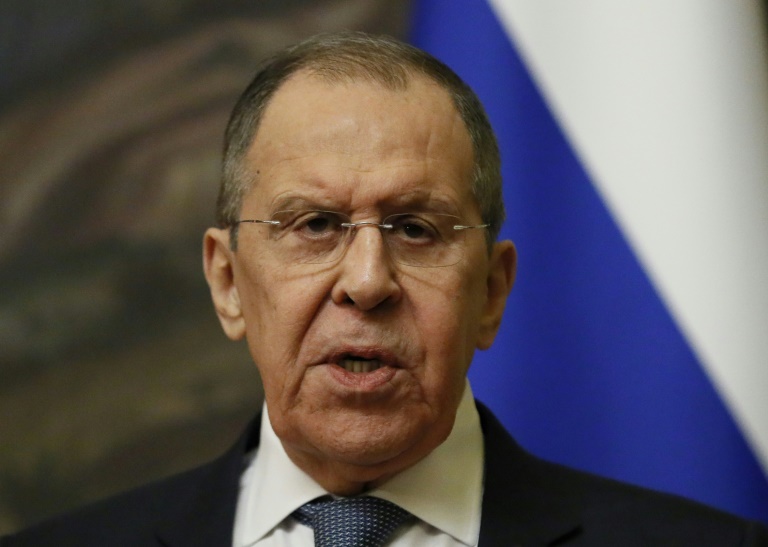
Russian President Vladimir Putin has apologised for remarks made by his Foreign Minister Sergei Lavrov, who claimed Adolf Hitler may have had “Jewish blood”, Israel said on Thursday.

Lavrov’s comments sparked outrage in Israel, which has sought to maintain ties with Russia following the invasion of Ukraine. 

“The Prime Minister accepted President Putin’s apology for Lavrov’s remarks and thanked him for clarifying his attitude towards the Jewish people and the memory of the Holocaust,” Bennett’s office said in a statement. 

A Kremlin summary of the Bennett-Putin call, which came as Israel marked 74 years since the creation of the Jewish state, made no mention of a Putin apology. 

It did, however, note that the leaders discussed the “historic memory” of the holocaust. 

In an interview with an Italian media outlet released on Sunday, Lavrov claimed that Ukrainian President Volodymyr Zelensky “puts forward an argument of what kind of Nazism can they have if he himself is Jewish”.

Lavrov, according to a transcript posted on the Russian foreign ministry website, then added: “I could be wrong, but Hitler also had Jewish blood”.

Israeli Foreign Minister Yair Lapid labelled the comments “an unforgivable and outrageous statement as well as a terrible historical error.”

Bennett denounced the comments as “lies” that he said effectively “accuse the Jews themselves of the most awful crimes in history”, perpetrated against themselves.

Russia’s ambassador to Israel was summoned to “clarify” the remarks.

The Russian Foreign Ministry initially doubled down on the remarks. In a statement on Tuesday it called Lapid’s criticism “anti-historical,” and accused Israel of supporting neo-Nazi’s in Ukraine.

On Thursday, following a call with Lapid, Ukraine’s Foreign Minister Dymtro Kuleba tweeted that “antisemitism has a long track record among Russian elites,” and called on Lavrov to publicly apologise.

Israel has sought to tread a delicate line since Russia invaded Ukraine in February, with Bennett stressing Israel’s close ties to both Moscow and Kyiv.

Bennett has in particular sought to preserve Russian cooperation with Israeli strikes in Syria, where Russian forces are on the ground. 

Israel has so far refused Ukraine’s requests for military support, instead suppling bullet proof vests and helmets for medical workers, as well as an Israeli field hospital.

The reticence has frustrated Kyiv. In a harsh address to the Israeli parliament in March, Zelensky called on Israel to step up its military aid, and provide Ukraine with Israel’s Iron Dome missile defence system, which he dubbed “the best in the world.”

Bennett has attempted to mediate in the conflict and is among a handful of world leaders to meet with Putin since the invasion, travelling to Moscow in early March.

Last month, Israel’s Immigration and Absorption Ministry said more than 6,000 Russian Jews had emigrated to Israel since the invasion.

Scholz sends foreign minister as Zelensky invites him to Kyiv

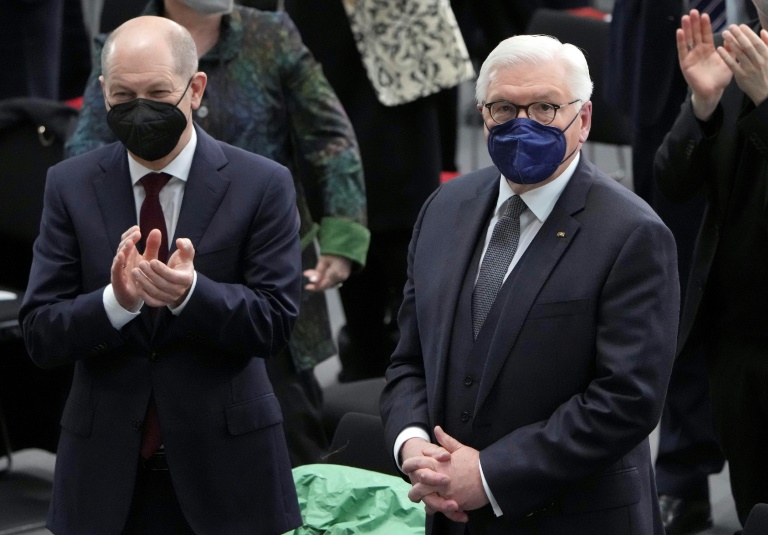
German Chancellor Olaf Scholz has yet to commit to visiting Kyiv, even after Ukraine’s leader on Thursday invited him and President Frank-Walter Steinmeier, three weeks after the German president was snubbed by Kyiv.

President Volodymyr Zelensky made the invitation during a telephone call with Steinmeier, a source from the German president’s office told AFP. 

During the talks, “past irritations were cleared up” and Steinmeier expressed his “solidarity, respect and support” for Ukraine, added the source.

Scholz, speaking later Thursday at a press conference, called it a “good thing” that the two presidents have spoken to each other.

But asked if he was taking up Zelensky’s invitation, he said that following his own discussions with Steinmeier, “the result of the talks was that the foreign minister will soon be in Ukraine.”

A diplomatic spat had been rumbling between the two countries since Steinmeier admitted last month he had offered to visit but was “not wanted in Kyiv”.

Scholz had voiced irritation over the snub, and as recently as this week said it stood “in the way” of him visiting Kyiv.

On Wednesday, he said it was on Kyiv to “make its own contribution” to patching up with Steinmeier. 

Steinmeier and Scholz are both Social Democrats (SPD), who have over the years pushed for closer ties with Russia — including energy ties that have left Germany heavily dependent on Russian gas.

Steinmeier admitted in April that he had made a “mistake” in pushing for Nord Stream 2, the controversial pipeline built to double Russian gas imports to Germany.

– An affront –

The German president, also a former foreign minister, has come under heavy criticism since Russia’s invasion of Ukraine in February for his years-long detente policy towards Moscow.

Ukraine’s ambassador to Germany in March boycotted a solidarity concert hosted by Steinmeier, protesting that the soloists featured on the programme were all Russians.

“In the middle of a war against civilians! An affront. Sorry I’m staying away,” Andrij Melnyk wrote on Twitter.

Criticism has also mounted against former chancellor and fellow SPD member Gerhard Schroeder, who is a lobbyist for Russian gas and has close ties to Russian President Vladimir Putin.

Scholz, meanwhile, has been under fire for his own failure to visit Kyiv, as well as his hesitancy over providing heavy weapons to help Ukraine resist Russia’s invasion.

Germany has joined in waves of sanctions imposed by the West on Russia. 

Berlin has also said last week it would send anti-aircraft tanks to Ukraine, in a clear switch in Berlin’s cautious policy on military backing for Kyiv.

But critics have warned that Scholz was not moving fast enough in providing support to Ukraine.

The chancellor has hit back at criticism of the SPD, accusing his opponents of a “distorted and slanderous depiction” of its Russia policy.

In the telephone call on Thursday, Steinmeier said Germany “stands with united forces in solidarity at Ukraine’s side”, the source from the president’s office said.

Both presidents described the talks as “very important and very good”, the source said.

US tech titans look to ditch passwords

Apple, Google and Microsoft said Thursday they are looking to get rid of passwords and replace them with a more secure way to access accounts or devices.

The US tech titans jointly announced support for a common standard that will let people sign in by unlocking their mobile phones, say, with fingerprint or face recognition.

“The complete shift to a passwordless world will begin with consumers making it a natural part of their lives,” said Microsoft vice president Alex Simons.

“By working together as a community across platforms, we can at last achieve this vision and make significant progress toward eliminating passwords.”

Reliance on passwords alone is decried as a major security flaw on the internet, with people keeping them overly simple or using the same one repeatedly to make it easier to manage many accounts.

Adopting standards created by the FIDO Alliance and the Word Wide Web Consortium will let websites and device makers build secure, passwordless options into their offerings, the groups said in a release.

Using secure keys instead of passwords would stymy phishing scams that trick people into disclosing log-in credentials and hackers that steal such data.

“Today is an important milestone in the security journey to encourage built-in security best practices and help us move beyond passwords,” US cybersecurity and infrastructure security agency director Jen Easterly said.

Support for password-free log-ins will be woven into Android and Chrome software over the course of the coming year, said Google product manager and FIDO Alliance president Sampath Srinivas.

Apple and Microsoft announced plans to do likewise with their software.

“This will simplify sign-ins across devices, websites, and applications no matter the platform – without the need for a single password,” Srinivas said in a blog post.

“When you sign into a website or app on your phone, you will simply unlock your phone.”

Mobile phones will store a FIDO credential referred to as a “passkey” that will be used to unlock online accounts, Srinivas explained.

“To sign into a website on your computer, you’ll just need your phone nearby and you’ll simply be prompted to unlock it for access,” Srinivas said.

Eliminating passwords was billed as more secure than two-factor authentication that involves getting one-time passcodes texted or emailed as secondary confirmation when logging into sites or services.

Palestinians lose two-decade court battle over land

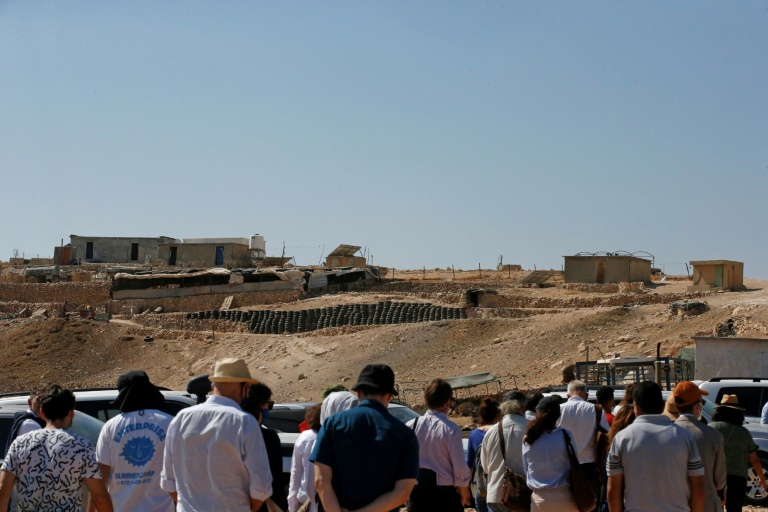
Israeli civil rights groups on Thursday denounced a High Court decision that approved the eviction of roughly 1,000 Palestinian villagers to make way for a military training zone.

Residents of eight villages had been in court for around 20 years fighting Israeli government efforts to evict them.

The case of Masafer Yatta — or Firing Zone 918 — an agriculture area near Hebron in the occupied West Bank, has been one of Israel’s longest running legal battles. 

In the early 1980s the army declared the 3,000-hectare (30 square kilometre) territory a restricted military area and claimed it was uninhabited. 

The roughly 1,000 Palestinians living there said it was their people’s home long before Israeli soldiers set foot in the West Bank, which the Jewish state has occupied since 1967.

It captured the territory from Jordan in the Six-Day War and the West bank is now home to more than 475,000 settlers — Jewish Israelis living in communities widely regarded as illegal under international law.

In its decision late on Wednesday the High Court said the villagers “failed to prove” their claim to permanent residence before its declaration as a training zone.

A court review of aerial photographs proved the army right, Judge David Mintz said.

First kicked out in 1999, about 200 families filed their court challenge the following year with help from the Association for Civil Rights in Israel (ACRI).

They secured a temporary reprieve which allowed the Palestinians to stay on the land until a final resolution of the case.

ACRI on Thursday said there were “unprecedented consequences” to the top court’s ruling handed down “without warning in the middle of the night”.

It “allows the expulsion of approximately 1,000 women, men, children and elderly Palestinians,” the organisation said in a statement.

Another rights watchdog, B’Tselem, described the decision as weaving “baseless legal interpretation with decontextualized facts”. It added “there is no crime which the high court justices will not find a way to legitimise.”

Lawyers said they were still trying to see whether or not there were any further legal avenues to stop the expulsions.

UN sends rescue convoy as Ukraine denies Russian truce at steel plant

The United Nations on Thursday said a new convoy was en route to evacuate civilians from the “hell” of a besieged steel plant in Mariupol, even as Ukraine accused Russia of breaking its promise to pause fire at the site.

Hundreds of Ukrainian soldiers and civilians have for weeks been holed up at the sprawling factory, trapped under heavy Russian fire, in what has become the last pocket of resistance in the strategically important southern port city.

President Vladimir Putin said Thursday the Russian army was still ready to allow civilians to leave the sprawling complex, while a Kremlin spokesman said humanitarian corridors were “functioning”.

But a commander of Ukraine’s Azov regiment, Svyatoslav Palamar, denied any evacuations were happening. He said Russian soldiers had broken into the Azovstal site three days ago, triggering “bloody” battles.

The Russian army had earlier announced a daytime ceasefire for three days at Azovstal, that had been due to start on Thursday morning. 

“The Russians violated the promise of a truce and did not allow the evacuation of civilians who continue to hide from shelling in the basement of the plant,” Palamar said in a video on Telegram.

Speaking to Israeli Prime Minister Naftali Bennett, Putin said “the Russian military is still ready to ensure the safe exit of civilians”, according to th Kremlin. 

“As for the militants remaining at Azovstal, the Kyiv authorities must give them an order to lay down their arms,” Putin said.

– Fresh effort –

The mayor of Mariupol estimates that around 200 civilians are still sheltering in dismal conditions in the complex’s Soviet-era underground tunnels. Women and children are among them, according to Ukrainian President Volodymyr Zelensky.

Ukrainian presidential advisor Oleksiy Arestovych said the situation on the ground was unclear and incoming information was “contradictory,” he told Ukrainian television.

Despite the uncertainty, UN humanitarian chief Martin Griffiths said a rescue convoy was on its way. 

“A convoy is proceeding to get to Azovstal by tomorrow morning hopefully to receive those civilians remaining in that bleak hell… and take them back to safety,” he told a Ukraine’s donor conference in Warsaw.

The International Committee of the Red Cross (ICRC) confirmed to AFP “that a safe passage operation is ongoing” in coordination with the UN.

The two organisations already worked together to evacuate some 100 civilians from the plant at the weekend.

– No ‘quick’ progress –

Nearly 10 weeks into a war that has killed thousands, flattened cities and uprooted more than 13 million people, the Kremlin conceded Thursday that Kyiv’s Western partners had prevented a “quick” end to Russia’s military campaign by sharing intelligence and weapons with Ukraine.

The outside help, nevertheless, was “incapable of hindering the achievement” of the goals of Russia’s military operation, Peskov insisted.

Peskov was responding to a New York Times article on Wednesday that said intelligence provided by the United States has helped the Ukrainian military target “many” of the approximately dozen Russian generals who have been killed so far in the war.

Since failing to take Kyiv early on in its invasion, which began on February 24, Russia has focused its efforts on the east and south of Ukraine.

Taking full control of the now flattened city of Mariupol would be a major victory for Moscow, allowing it to create a land bridge between separatist, pro-Russian regions in the east and Crimea, which Moscow annexed in 2014.

It would also be hugely symbolic as Russia readies to celebrate May 9, when it marks the Soviet Union’s victory over the Nazis in World War II.

Ukrainian officials have said they believe that Russia is planning to hold a military victory parade in Mariupol that day.

Some 344 people were already evacuated from Mariupol and nearby areas earlier this week, and taken to the Ukrainian-controlled Zaporizhzhia, Zelensky said Wednesday. 

Zelensky, who has tirelessly campaigned for help from allies, on Thursday launched a global crowdfunding platform to help Kyiv win the war and rebuild the country’s infrastructure.

– ‘One click’ –

“In one click, you can donate funds to protect our defenders, to save our civilians and to rebuild Ukraine,” Zelensky said in English in a video on his Twitter page, launching the United24 platform. “Every donation matters for victory.” 

More than six billion euros ($6.3 billion) were collected at the Ukraine donors’ conference in Warsaw, Polish Prime Minister Mateusz Morawiecki said on Thursday.

Ukraine’s government in April estimated the cost of rebuilding after the war to be at least $600 billion.

Zelensky also invited German President Frank-Walter Steinmeier and Chancellor Olaf Scholz to visit Kyiv, patching up a diplomatic spat between the two countries.

Steinmeier, a former German foreign minister who for years championed closer ties to Moscow, had last month said his offer to travel to Ukraine to show solidarity had been snubbed by Kyiv. 

Fighting continued meanwhile in other parts of Ukraine, especially in the east.

The governor of the Donbas region Pavlo Kyrylenko said at least 25 civilians were wounded in an overnight Russian strike on the city of Kramatorsk.

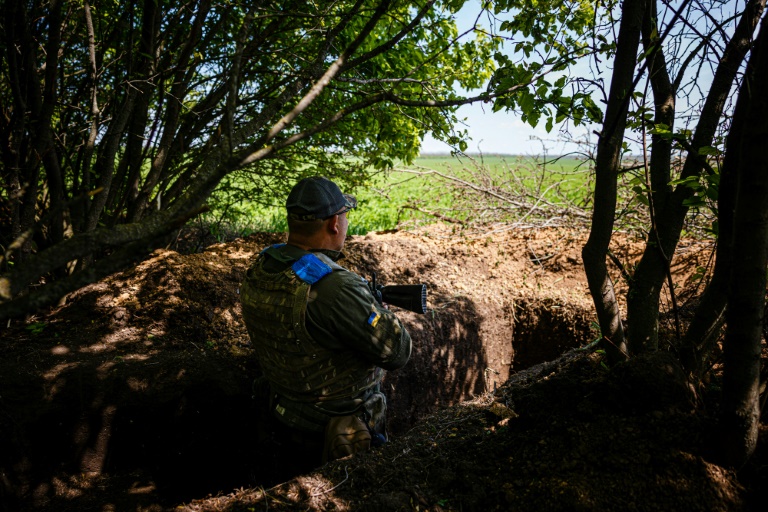
Elsewhere, the Ukrainian army said it had retaken control of “several settlements on the border of Mykolaiv and Kherson regions”.

– Oil embargo –

As well as sending money and weapons to Ukraine, Kyiv’s allies have imposed unprecedented sanctions on Russia to punish it for the invasion.

European Council president Charles Michel on Thursday said the EU should confiscate and sell Russian assets it has seized and use the proceeds to rebuild war-scarred Ukraine.

The European Union on Wednesday proposed a ban on Russian oil imports, in what would be the bloc’s toughest move yet.

The plan would ban Russian crude gradually over the next six months and refined fuels by the end of this year, but Hungary and Slovakia — both highly depending on Moscow’s oil exports — would get until the end of 2023.

Ukrainian Foreign Minister Dmytro Kuleba said EU countries blocking an oil embargo would be “complicit” in Russia’s crimes in Ukraine.

burs-mfp/lc

World needs food system 'transformation' to tackle climate: expert

Food is fundamental to the efforts to tackle climate change, according to a scientist who has spent decades tracing the interactions between global warming and what we eat. 

Cynthia Rosenzweig, head of the Climate Impacts Group at NASA Goddard Institute for Space Studies, was Thursday awarded the prestigious World Food Prize for her research. 

That includes stark warnings about the potential effect climate change will have on food. 

Her comments to AFP have been slightly edited: 

– How do food systems drive climate change? 

Climate change cannot be restrained without attention to greenhouse gas emissions from food systems. Our work, among others, shows that those food system emissions are approximately one third of total human emissions. We’re not going to be able to solve climate change unless these are taken into account. 

At the same time, food security for all is dependent on the changing climate. 

As we move into this crucial decade of action on climate change, food needs to be at the table.

– What are the climate impacts on food?

High temperatures in general are detrimental to crops, because they speed them through their growing period, so they have less time to make the grain. So this is a very big downward pressure on yield. Then we have extreme events affecting the critical growth stages, for example, a heatwave happening during pollination in maize. Those extreme events are already increasing in frequency, duration and intensity in many farming regions around the world. 

Then of course water is absolutely critical for food production. Climate change is projected to change — and is already changing — the hydrological cycle in many agricultural areas, with increased drought as well as heavier downpours because the warmer air holds more water vapour. 

We can already see tremendous impacts of drought in the developed world, for example, in California since the 2000s. In the developing world, there isn’t as much breeding for heat and drought tolerance in farming, there isn’t as much work on pests. This increases tremendously the vulnerability of the world’s 500 million smallholder farmers.

– You founded the Agricultural Model Intercomparison and Improvement Project. What does it do?

There used to be different modelling groups around the world, all working very diligently to develop different crop models. But people would be using different climate scenarios to test climate change impacts — and the results weren’t comparable. So at the heart of AgMIP is improving the rigour of the projections by developing common protocols so that the results from agricultural models can be compared. We do crop modelling, livestock modelling, pest modelling and economic modelling and we always bring in the latest climate scenarios.

Therefore we are able to say in a very clear way: here’s the mean of the model results and here’s the range of the projections. Then decision makers, both at the global scale but also in individual countries, have the evidence base that they need to respond to climate change effectively. 

With the latest climate scenarios, AgMIP’s Global Gridded Crop Modelling Team found that the emergence of impacts on some of the agricultural regions around the world is now projected to be felt earlier, to really start biting even in the 2030s. That’s really soon.

Some of the key areas with these earlier impacts are parts of the US Midwest, Western Africa and East Asia. In West Africa, crop yields are projected to fall by 20 to 40 percent, and potentially more.

– What changes could help cut emissions?

Increasing carbon storage can help to fight climate change. We need to increase efficiency for crop production and reduce food loss and waste — it’s a rough figure but around a third of all food produced is lost or wasted. If we don’t waste as much food, we don’t have to grow as much food — thereby reducing greenhouse gas emissions from agricultural production. 

In developed countries, there’s definitely the potential for dietary choices to make an impact, because animal-based emissions, especially from beef and dairy, are significant. But as we think about consumption, we have to start by saying that all solutions are context specific and they have to take into account equity issues. There are many people in the world who don’t have food choices. 

– Are perceptions changing? 

Yes. I interact with so many different groups in all different parts of the food system, from the production side, supply chain side, retail, packaging, everything. There is definitely a movement towards transformation going on in the food system. 

Food is the fundamental climate impact sector and connects everyone on the planet to climate change. We need to transform the food system, so that it delivers food security for all, as well as a healthy and sustainable planet.

Turkey inflation spirals to nearly 70 percent

Turkey’s official inflation rate spiralled to nearly 70 percent in April, data showed on Thursday, posing a huge challenge to President Recep Tayyip Erdogan, whose unconventional economic policies are often blamed for the economic turmoil. 

The consumer price index rose by 69.97 percent year-on-year in April compared with 61.14 percent in March, the national statistics agency said.

Erdogan insists that sharp cuts in interest rates are needed to bring down soaring consumer prices, flying in the face of economic orthodoxy. 

The collapse of the lira has pushed up the cost of energy imports and foreign investors are now turning away from the once-promising emerging market. 

Russia’s invasion of Ukraine and the coronavirus pandemic have exacerbated the energy price spikes and production bottlenecks.

Turkey’s annual inflation rate — the highest since Erdogan’s ruling AKP party rose to power in 2002, is largely linked to his unconventional economic thinking, analysts say. 

Erdogan has put pressure on the nominally independent central bank to slash interest rates. 

In April, the bank kept its benchmark interest rate steady for the fourth consecutive month, bowing to the pressure despite high inflation. 

The biggest price increases in April were for the transport sector, standing at 105.9 percent, while the prices of food and non-alcoholic drinks jumped 89.1 percent.

– ‘Spectacular failure’ –

“True it’s about food and energy price increases but also the spectacular failure of monetary policy in Turkey,” Timothy Ash, emerging markets strategist at BlueBay Asset Management, said in a note to clients. 

“Low interest rates cause inflation. Period. Fact. The reality,” he said, accusing Erdogan of “trying to re-write economics to say the opposite which is the economics equivalent of calling the earth flat.”

Treasury and Finance Minister Nureddin Nebati on Monday brushed aside concerns, saying that the current inflationary trend was fleeting and would “not spread over the long term and be permanent”. 

“We will increase the welfare and purchasing power of our citizens over the past level,” he said.

At a bazaar in an Istanbul neighbourhood on the European side, shoppers vented their anger over soaring prices. 

“People are starving! I feel ashamed when I am shopping,” Rita Ezel, a retired woman, told AFP.

“My monthly pension vanishes in 10 days.”

Another retiree, Seckin Gozuyasli, said: “The prices change on a weekly basis. Milk, cheese, meat, everything, detergent, everything you can imagine is so expensive now.”

She blamed the “wrong economic policies” as well as Turkey’s playing home to 3.6 million Syrians who fled the war back home for surging prices. 

-‘We barely make ends meet’-

Turkey has cut taxes on some goods and offered subsidies for electricity bills for vulnerable households but even this has failed to stem inflation.

“I am a seller at the bazaar for 35 years now. In the past, one person in the family would work and we could get by. Now in my home four of us work and we hardly make ends meet,” Yuksel Cinar complained as he was tidying his vegetable stalls. 

The Turkish currency lost 44 percent of its value against the dollar last year and more than 11 percent since the start of January, making the cost of imported goods and fuel very expensive. 

Erdogan’s government has responded by using state banks to buy up liras in a bid to cut the currency’s losses. 

There is also speculation that the central bank sells dollars to stem the lira’s slide. 

The former deputy general manager of Turkey’s state bank Ziraat shared information he received from banking circles, Turkish media reported. 

“The central bank sells $2.5-3 billion a week through public banks,” he was quoted as saying this week. 

Jason Tuvey, emerging markets economist at the London-based Capital Economics, predicted that inflation would hover around the current high rates for much of this year.

He said there were “no signs that policymakers are about to shift tack and hike interest rates as they remain wedded to the ‘new economic model’,” of the government. 

Erdogan, who faces a crucial presidential vote next year, has also shifted policy to mend broken alliances with cash-rich Gulf states to draw financial support. 

Last week, he visited Saudi Arabia in a bid to reset relations that had been strained since the 2018 killing of Riyadh critic journalist Jamal Khashoggi in the kingdom’s consulate in Istanbul. 

Erdogan said his government agreed with Saudi Arabia to “reactivate a big economic potential”. 

Armed gang robs Chanel boutique in Paris

An armed gang on Thursday robbed a Chanel watch and jewellery store near the swanky Place Vendome in central Paris in broad daylight, police told AFP.

Nobody was hurt during the heist, and there was no immediate indication of the bounty’s value.

Police said at least one of the four, who were all masked and wore helmets, carried an assault rifle, with a witness saying that the others also had automatic weapons.

They made their getaway on two motorbikes in a scene that was filmed by a bystander and widely shared on social media.

The clip shows three people dressed in black leaving the boutique while a fourth, carrying an assault rifle on a shoulder strap, waited on a motorcycle.

A witness, 26-year-old Anastasia Martino who works in a clothes store across from Chanel said she was on a cigarette break when she noticed “a man with a Kalashnikov on a motorbike”, at around 2:30 pm (1230 GMT).

“Two minutes later, three other men left the boutique carrying big black bags. They, too, had automatic weapons, got on two motorbikes and left in a hurry.”

Her colleague, 31-year-old Cyril Ngo, said the heist lasted a full 10 minutes. “These weren’t professionals,” he said.

The Chanel shop is located on Rue de La Paix, close to Place Vendome, an area with a high concentration of luxury jewellery stores.

Police cordoned off the area shortly after the robbery, and the store was shuttered.

Chanel, founded in 1910 by Coco Chanel, is one of France’s leading fashion houses, selling haute couture and ready-to-wear clothes, perfumes, accessories and other luxury items.

Spain spy chief in hot seat over phone hacking scandal

Spain’s top spymaster was grilled behind closed doors by lawmakers on Thursday over mobile phone hacking revelations that have roiled the country’s fragile coalition government.

Paz Esteban, the first woman to head Spain’s CNI intelligence agency, appeared before a parliamentary committee for questioning over the affair which has dominated headlines for days.

The scandal broke last month when Canadian cybersecurity watchdog Citizen Lab said the phones of over 60 people linked to the Catalan separatist movement had been tapped using Pegasus spyware after a failed independence bid in 2017.

Catalan separatists immediately pointed the finger at the CNI and threatened to withdraw their support for Socialist Prime Minister Pedro Sanchez’s minority government unless heads roll.

Sanchez’s government depends on Catalan separatist party ERC to pass legislation and remain in power until the next general election due in late 2023.

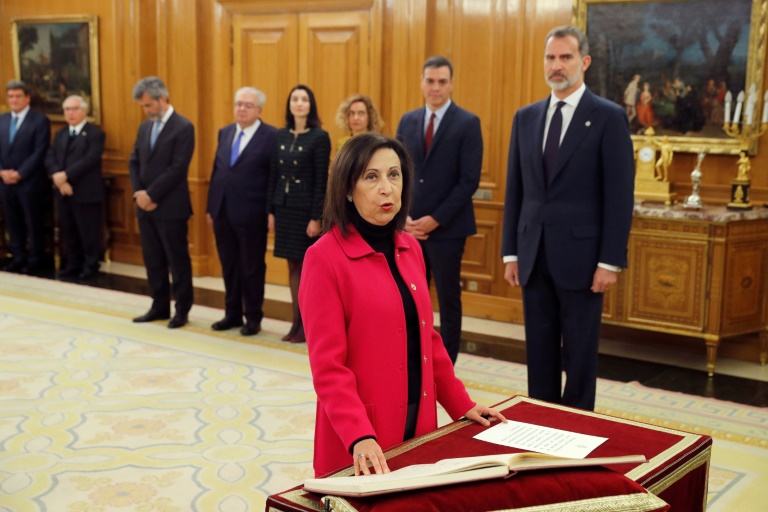
The government said on Monday that the phones of Sanchez and Defence Minister Margarita Robles, whose ministry oversees the CNI, were hacked last year by the same spyware, made by Israel’s NSO group.

Sanchez is the first serving head of government confirmed to have been targeted by controversial Pegasus spyware.

The revelation raised questions over who is to blame and whether Spain has adequate security protocols.

Robles herself faced questioning on Wednesday during an open-door parliamentary commission meeting, and said the CNI always acted “within the law”.

Catalan separatists and hard-left party Podemos, Sanchez’s junior coalition partners, call for the defence minister resign over the affair.

Pablo Echenique, a top Podemos member, said Robles “knows what she should do for her own dignity as well as for the dignity of the government”.

– ‘Spies targeted 18 separatists’ –

Esteban acknowledged during the hearing that the CNI spied on Catalan separatists but always with court approval, Cuca Gamarra, the conservative Popular Party’s number two, told reporters after she left the meeting.

Spanish media reported that Esteban told the committee the CNI targeted 18 Catalan separatists, including regional Catalan leader Pere Aragones, far less than alleged by Citizen Lab.

Asked if Esteban, who has headed the CNI since 2020, will remain in her post, government spokeswoman Isabel Rodriguez said on Tuesday she did not want to “talk of future scenarios”.

Spanish media blame Morocco for the hacking of Sanchez and Robles’ phones since Rabat was locked in a diplomatic spat with Madrid at the time.

But Spain says it has no evidence of who may be responsible.

Pegasus spyware infiltrates mobile phones to extract data or activate a camera or microphone to spy on their owners.

The Israel-based NSO Group, which owns Pegasus, claims the software is only sold to government agencies to target criminals and terrorists, with the green light of Israeli authorities.

The company has been criticised by global rights groups for violating users’ privacy around the world and it faces lawsuits from major tech firms such as Apple and Microsoft.

Amnesty International, the London-based rights group, said the software has been used to hack up to 50,000 mobile phones worldwide.

Close Bitnami banner
Bitnami