World

EU members seek opt-outs from Russian oil embargo

EU officials late Tuesday handed over a draft plan to member states on a new package of sanctions to punish Russia for its invasion of Ukraine, but some members are jockeying to opt out of an oil embargo.

Several EU officials and European diplomats in Brussels told AFP there were divisions over the plan.

It was only adopted late at night due to the stance of one of the member states. 

Ambassadors from the 27 European Union countries will meet on Wednesday to give the plan a once-over, and it will need unanimous approval before going into effect.

The commission’s proposal would phase in a ban on oil imports from Russia over six to eight months, with Hungary and Slovakia allowed to take a few months longer, EU officials told AFP.

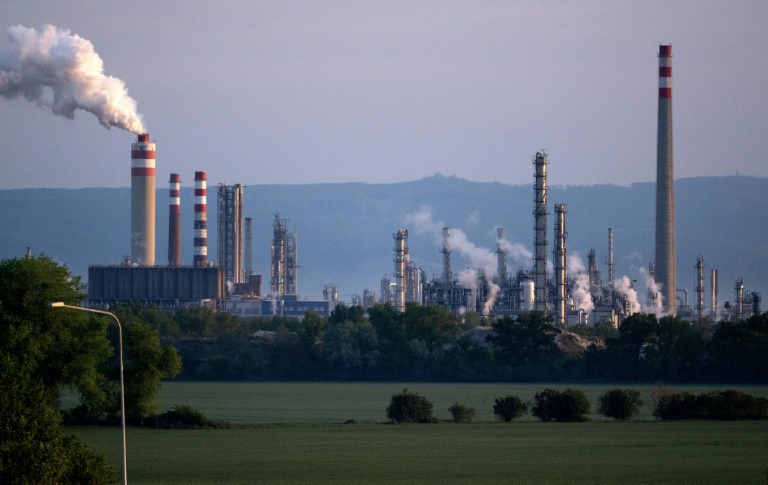
But Slovakia, which like Hungary is almost 100 percent dependent for fuel on Russian crude coming through the Druzbha pipeline, has said it will need several years.

Slovakia’s refinery is designed to work with Russian oil and would need to be thoroughly overhauled or replaced to deal with imports from elsewhere — an expensive and lengthy process.

Other officials, speaking on condition of anonymity during the legally and diplomatically fraught negotiation, said Bulgaria and the Czech Republic could also seek sanctions opt-outs.

One European diplomat warned that granting exemptions to one or two highly-dependent states could trigger a domino effect of exemption demands that would undermine the embargo.

The European Commission is not planning to unveil the draft in public before its president, Ursula von der Leyen, addresses the European Parliament on Wednesday. 

Brazil responds to less than 3% of deforestation alerts: study

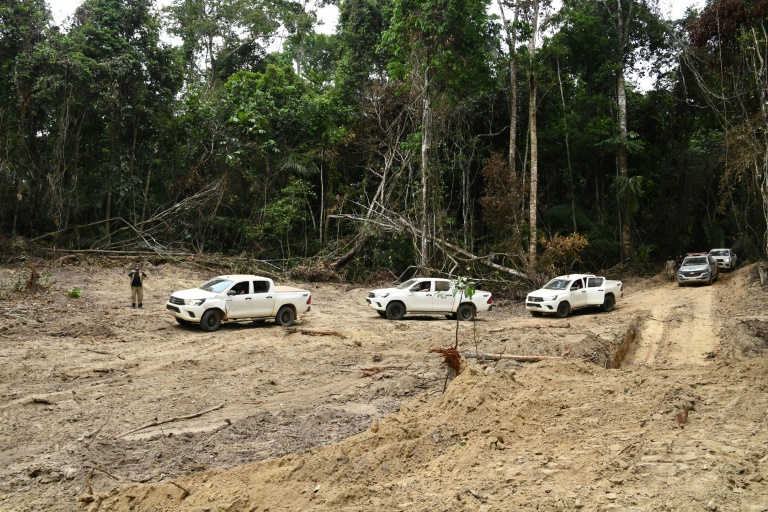
President Jair Bolsonaro’s government has responded to less than three percent of deforestation alerts, a sign that “impunity reigns” in the destruction of Brazil’s forests, an environmental monitor said Tuesday.

MapBiomas, a consortium that uses satellite images to track the destruction of the Amazon rainforest and other regions in Brazil, said it had launched a new platform to cross-check reported deforestation with government records on fines, arrests and other responses by environmental authorities.

It said that since Bolsonaro took office in January 2019, the federal government had responded to just 2.17 percent of deforestation alerts.

“Despite the abundance of information and evidence of environmental crimes, oversight measures from the government are still far short of what’s needed to curb deforestation,” Ana Paula Valdiones of the Center of Life Institute (ICV), one of the groups involved in the platform, said in a statement.

The cases in which federal authorities responded corresponded to 13.1 percent of the total deforested area from January 2019 to March 2022, MapBiomas said.

It is the latest awkward news on the environment for Bolsonaro, who has drawn international condemnation for a surge in clear-cutting and fires in the Amazon, a key resource in the race to curb climate change.

Under the far-right president, who has pushed to open protected lands to agribusiness and mining, average annual deforestation in the Brazilian Amazon has increased by more than 75 percent from the previous decade, according to official figures.

Environmental groups accuse the Bolsonaro government of encouraging deforestation with its pro-agribusiness policies and rhetoric, and of turning a blind eye to infractors.

According to the Climate Observatory, a coalition of environmental groups, Brazil’s environmental protection agency (Ibama) spent just 41 percent of its allocated policing budget last year.

The findings from the new MapBiomas platform “show that impunity still reigns when it comes to illegal deforestation in Brazil,” said Tasso Azevedo, general coordinator for the consortium of universities, environmental groups and tech companies.

The environment ministry did not immediately respond to a request for comment.

'Death shadow' dinosaur unearthed in Argentina

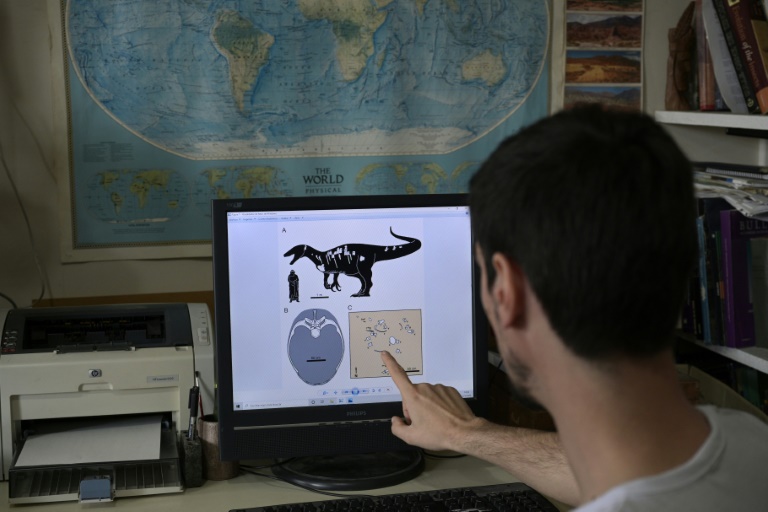
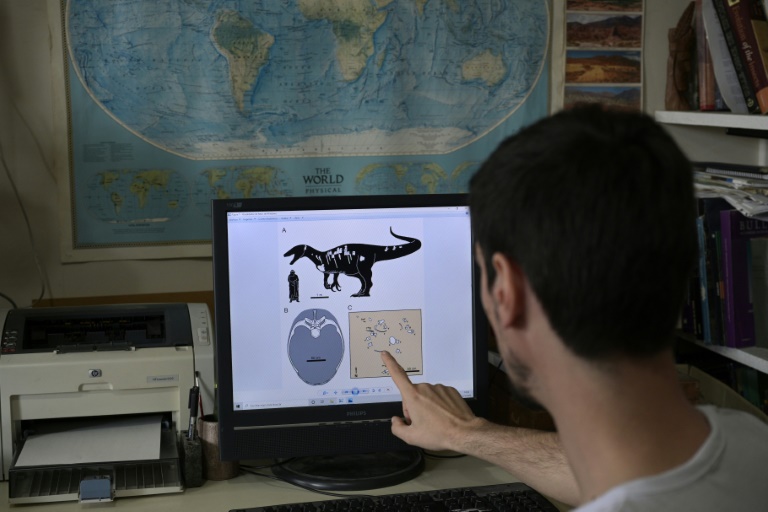
Argentine paleontologists have announced the discovery of an apex-predator dinosaur that measured three stories from nose to tail and eviscerated its prey with sharp, curved claws. 

The six-ton giant, the largest megaraptor unearthed to date, fed on smaller dinosaurs that it ripped to shreds with its talons before digging into their intestines, paleontologist Mauro Aranciaga told AFP.

It would have been the “apex predator” of its time, said Aranciaga — well deserving of its chilling scientific name “Maip macrothorax.”

The first part, “Maip,” is derived from an “evil” mythological figure of Patagonia’s indigenous Aonikenk people.

The character was associated with “the shadow of the death” that “kills with cold wind” in the Andes mountains, according to a study reporting the find in the Nature journal Scientific Reports.

The second part, “macrothorax,” refers to the enormous expanse of the creature’s chest cavity — some 1.2 meters (3.9 feet) wide.

– ‘Childhood dream’ –

The newly-identified monster measured nine to 10 meters in length, larger than any previously discovered type of megaraptor — a group of flesh-eating giants that once roamed what is now South America, according to Aranciaga’s team.

It lived about 70 million years ago towards the end of the Cretaceous period in what was then a tropical forest, long before the Andes mountain range and glaciers that now define Patagonia.

The killer reptile had two sharp, curved claws per front paw, each talon some 40 centimeters (15.7 inches) long.

Aranciaga, now 29, had the good fortune of finding the first piece of Maip on his first-ever professional expedition three years ago to Argentina’s Santa Cruz province.

This led to months of meticulous digging, cleaning and classification of a large cache of bones: vertebrae as well as bits of rib, hip, tail and arm.

“When I lifted the vertebra and saw that it had the characteristics of a megaraptor, it was really a huge thrill,” recalled Aranciaga.

“Somehow I fulfilled my childhood dream… finding a new fossil and it turning out to be a megaraptor: the group in which I specialize,” he told AFP.

Maip was one of the last megaraptors to inhabit Earth before the dinosaurs went extinct about 66 million years ago, according to Fernando Novas of the Argentine Museum of Natural Sciences’ Laboratory of Comparative Anatomy.

It is also the southernmost megaraptor ever found, added Aranciaga, a doctoral fellow at Argentina’s National Scientific and Technical Research Council (Conicet).

Tears and relief, as Azovstal evacuees reach safety

Their bunker couldn’t withstand a direct hit from ferocious Russian bombardment, food was running out and finding water could get them killed — yet that ordeal finally ended Tuesday for Azovstal evacuees in the banal safety of a shopping centre car park. 

They had survived in tunnels below the steel works in the devastated city of Mariupol among holdout Ukrainian troops, having to pick bomb-shattered glass from their food and hope someone would finally get them out of there. 

It was aboard a caravan of white city buses that they made it to the Ukrainian-held city of Zaporizhzhia, where they were met at a makeshift reception centre by crying loved ones and dozens of journalists.

“Under permanent fire, sleeping on improvised mats, being pounded by the blast waves, running with your son and being knocked to the ground by an explosion — everything was horrible,” evacuee Anna Zaitseva told reporters. 

She carried her six-month-old baby in her arms and cried when expressing her gratitude to everyone from the troops who found formula for her child to the urgent international rescue effort that got them to safety.

“Thank you,” she said before being escorted to a private area inside the shopping centre. 

A group of some 100 civilians who become trapped in their refuges beneath the steel works were granted passage in an agreement worked out with the invading Russian forces, and which took days to carry out as the world watched. 

The fate of civilians, but also the Ukraine troops still there, turned into an international issue and has been the subject of repeated negotiations.

Yet Ukrainian officials noted that some civilians had been left behind during the operation, prompting fresh concerns for their fate after Kyiv announced that Russian forces had launched an offensive with tanks and armoured vehicles at the giant site. 

Stretching over 11 square kilometres (4.2 square miles), the Azovstal complex is a sprawling warren of rail lines, warehouses, coal furnaces, factories, chimneys and tunnels seen as ideal for guerrilla warfare.  

– ‘Left behind’ –

The terror of her refuge at the steel works was fresh for Elyna Tsybulchenko, 54, who used to work at the site doing quality control before the war trapped her there.

“They bombed like every second… everything was shaking. Dogs barked and children screamed,” she said. “But the hardest moment was when we were told our bunker would not survive a direct hit.”

“We understood that it would just be a mass grave and no one could save us under fire,” she added. “It would be impossible to save us.”

She sought shelter there after shelling destroyed her home and water was running short in the city, yet even getting water inside the plant carried immense risks.

“To find water we had move between buildings. The men did that for us, including my dad,” said Zaitseva, the young mother. “He was wounded but thank god it wasn’t fatal.”

She said Ukrainian troops located formula for her infant son, and when that ran out, they came up with semolina that she cooked over candles.

“Raising a child is a difficult thing,” she added, noting about 70 people were sheltering in the same place as her. “It’s even harder in a bunker with no light.”

Mariupol is among the most battered cities in Ukraine, and the Azovstal site was the place that Kyiv’s troops have managed to hold out against Russian forces.

The risk to civilians has been repeatedly decried, with accusations that Moscow has done little to protect the city’s people from its explosive strikes.

“We personally tried to evacuate three times. One time everyone went out and shooting started. The truce was broken,” Zaitseva said. 

“And, of course, after that, we were very wary. We thought we had been left behind. But in the end, that turned out not to be true.”

Pfizer sees high demand for Covid-19 pill as profits jump

Pfizer executives said Tuesday they are confident of strong demand for the company’s Covid-19 antiviral treatment amid easing pandemic rules as the big drugmaker reported another round of strong earnings.

The US pharmaceutical giant, reporting surging first-quarter profits based on a big jump in revenues from its Covid-19 vaccine, said its Paxlovid treatment for the virus would be a valuable means for governments to limit the severity of outbreaks as they ease social distancing and masking rules.

Pfizer Chief Executive Albert Bourla said the company is seeing “very strong signs of increasing demand for Paxlovid as it remains one of the best tools we have.”

Citing rising vaccine fatigue, Bourla said the company is also focused on a Covid-19 vaccine booster that provides immunity for a year.

“People are tired of the repeated booster, so it is extremely important to come to a vaccine that could be a yearly vaccine,” Bourla told analysts on a conference call, adding that while the company has made progress on this front, “it’s not technically easy to achieve.”

“There’s a tremendous pressure across the world to get our lives back,” Bourla said of the social and political impetus to ease pandemic rules. “As a result of these things it’s very clear that we will have waves” of Covid-19 infections.

– ‘Rebound’ risk –

The US drugmaker reported first-quarter profits of $7.9 billion, up 61 percent, based on a 77 percent surge in revenues to $25.7 billion.

Pfizer lowered its full-year adjusted profits by 10 cents to $6.25 to $6.45 a share, due in part to currency movements.

But the company confirmed its full-year revenue forecast of about $100 billion, which is an approximately 23 percent increase on the 2021 level. More than half the revenues are expected to come from the Covid-19 vaccine and therapeutic.

Pfizer, which has shipped some 3.4 billion doses of vaccine to 179 countries, has won regulatory approval for its shot in most age groups, but continues to study its use in children younger than five.

In the first quarter, Paxlovid took in $1.5 billion in global sales. But Pfizer expects 2022 sales of the medicine of $22 billion as it ramps up production and distribution.

The company expects to produce 120 million courses of the Paxlovid oral pills in 2022, with distribution programs scaling up in the United States and other markets.

The treatment has received emergency or conditional approval in 40 countries so far, the company said.

“What we are seeing is… there is demand for this product,” said Pfizer biopharmaceuticals group president Angela Hwang, citing the removal of mask mandates as a factor in spreading cases. 

“What we’re also seeing is that we don’t have any inventory on hand,” Hwang said. “Every dose that we produce is being shipped out.”

Pfizer executives said they were researching “rebound” Covid-19 cases in which some patients who took Paxlovid have reported renewed symptoms. 

But company officials said the data thus far suggests that the amount of cases is small and may have to do with unusual patient characteristics rather than the drug itself. 

The World Health Organization last month “strongly recommended” the antiviral pill Paxlovid for patients with milder forms of the disease who were still at a high risk of hospitalization. 

But WHO said it was “extremely concerned” that low- and middle-income countries would be “pushed to the end of the queue” amid tight global supplies.

Shares of Pfizer rose 2.0 percent Tuesday to $49.29.

Pfizer sees high demand for Covid-19 pill as profits jump

Pfizer executives said Tuesday they are confident of strong demand for the company’s Covid-19 antiviral treatment amid easing pandemic rules as the big drugmaker reported another round of strong earnings.

The US pharmaceutical giant, reporting surging first-quarter profits based on a big jump in revenues from its Covid-19 vaccine, said its Paxlovid treatment for the virus would be a valuable means for governments to limit the severity of outbreaks as they ease social distancing and masking rules.

Pfizer Chief Executive Albert Bourla said the company is seeing “very strong signs of increasing demand for Paxlovid as it remains one of the best tools we have.”

Citing rising vaccine fatigue, Bourla said the company is also focused on a Covid-19 vaccine booster that provides immunity for a year.

“People are tired of the repeated booster, so it is extremely important to come to a vaccine that could be a yearly vaccine,” Bourla told analysts on a conference call, adding that while the company has made progress on this front, “it’s not technically easy to achieve.”

“There’s a tremendous pressure across the world to get our lives back,” Bourla said of the social and political impetus to ease pandemic rules. “As a result of these things it’s very clear that we will have waves” of Covid-19 infections.

– ‘Rebound’ risk –

The US drugmaker reported first-quarter profits of $7.9 billion, up 61 percent, based on a 77 percent surge in revenues to $25.7 billion.

Pfizer lowered its full-year adjusted profits by 10 cents to $6.25 to $6.45 a share, due in part to currency movements.

But the company confirmed its full-year revenue forecast of about $100 billion, which is an approximately 23 percent increase on the 2021 level. More than half the revenues are expected to come from the Covid-19 vaccine and therapeutic.

Pfizer, which has shipped some 3.4 billion doses of vaccine to 179 countries, has won regulatory approval for its shot in most age groups, but continues to study its use in children younger than five.

In the first quarter, Paxlovid took in $1.5 billion in global sales. But Pfizer expects 2022 sales of the medicine of $22 billion as it ramps up production and distribution.

The company expects to produce 120 million courses of the Paxlovid oral pills in 2022, with distribution programs scaling up in the United States and other markets.

The treatment has received emergency or conditional approval in 40 countries so far, the company said.

“What we are seeing is… there is demand for this product,” said Pfizer biopharmaceuticals group president Angela Hwang, citing the removal of mask mandates as a factor in spreading cases. 

“What we’re also seeing is that we don’t have any inventory on hand,” Hwang said. “Every dose that we produce is being shipped out.”

Pfizer executives said they were researching “rebound” Covid-19 cases in which some patients who took Paxlovid have reported renewed symptoms. 

But company officials said the data thus far suggests that the amount of cases is small and may have to do with unusual patient characteristics rather than the drug itself. 

The World Health Organization last month “strongly recommended” the antiviral pill Paxlovid for patients with milder forms of the disease who were still at a high risk of hospitalization. 

But WHO said it was “extremely concerned” that low- and middle-income countries would be “pushed to the end of the queue” amid tight global supplies.

Shares of Pfizer rose 2.0 percent Tuesday to $49.29.

In eastern Ukraine, a funeral shop becomes a place of refuge

Antonina Boloto sits at a small table decorated with flowers solving a crossword in her funeral supply store, with a view of a building destroyed by Russian shelling in the east Ukrainian town of Severodonetsk.

Several coffins are perched against a wall behind her. 

As Moscow’s forces shell Severodonetsk — the easternmost town on the frontline of Russia’s war against Ukraine — Boloto has turned the  shop into a refuge for herself and her relatives. 

It is a surreal combination of life and death. 

“It’s not a morgue, it’s a just a funeral supply store,” Boloto, 60, told AFP on Tuesday, adding that the facility has a cellar where people can shelter in case of bombing. 

“We are just hiding here.”

In the store’s sole dimly-lit room, four coffins, adorned with delicate white and red satin with price tags still on them, lean against a wall. They are surrounded by wreaths and wooden crosses.

With the city under bombardment, residents  bury their dead on their own.

Boloto, who keeps warm in a red hat, has no more customers. So her main focus is keeping her improvised home running. 

“We just want this to end,” Boloto said. “We just want peace.”

– ‘Alive and healthy’ – 

“This is where we store water,” Boloto said, lifting the lid off a giant metal cooking pot placed on the floor and filled to the brim with water. 

Next to it lay a stack of firewood, which Boloto stores inside the shop to keep it dry and then uses to cook food on a small handmade grill outside.

If the firewood were to run out, Boloto said she would not hesitate to ask the owner to burn the wooden coffins for warmth and food.

“If it came to that, we will do it,” she said.

Her family of eight, mostly elderly people, has enough to eat thanks to an NGO that provides them with potatoes, pasta, oil, ham and preserves. 

Outside the shop, two elderly women sit on small chairs enjoying the sun: Boloto’s mother Nina, 92, clad in a dressing gown, and her sister-in-law.  

Boloto says it was getting too crowded inside and the women kept quarrelling in front of her. Outside, they are free to bicker while remaining close to the cellar in case the neighbourhood is shelled.

In this space dedicated to mourning, which was miraculously spared from bombardment, Boloto says she has made her peace with the idea of dying. 

“Whatever will be, will be. You can go somewhere and be run over by a car when crossing the road,” said Boloto, adding she prays every night for the war to end.

“We hope for peace and that we will stay alive and healthy.” 

'Death shadow' dinosaur unearthed in Argentina

Argentine paleontologists have announced the discovery of an apex-predator dinosaur that measured three stories from nose to tail and eviscerated its prey with sharp, curved claws. 

The six-ton giant, the largest megaraptor unearthed to date, fed on smaller dinosaurs that it ripped to shreds with its talons before digging into their intestines, paleontologist Mauro Aranciaga told AFP.

It would have been the “apex predator” of its time, said Aranciaga — well deserving of its chilling scientific name “Maip macrothorax.”

The first part, “Maip,” is derived from an “evil” mythological figure of Patagonia’s indigenous Aonikenk people.

The character was associated with “the shadow of the death” that “kills with cold wind” in the Andes mountains, according to a study reporting the find in the Nature journal Scientific Reports.

The second part, “macrothorax,” refers to the enormous expanse of the creature’s chest cavity — some 1.2 meters (3.9 feet) wide.

– ‘Childhood dream’ –

The newly-identified monster measured nine to 10 meters in length, larger than any previously discovered type of megaraptor — a group of flesh-eating giants that once roamed what is now South America, according to Aranciaga’s team.

It lived about 70 million years ago towards the end of the Cretaceous period in what was then a tropical forest, long before the Andes mountain range and glaciers that now define Patagonia.

The killer reptile had two sharp, curved claws per front paw, each talon some 40 centimeters (15.7 inches) long.

Aranciaga, now 29, had the good fortune of finding the first piece of Maip on his first-ever professional expedition three years ago to Argentina’s Santa Cruz province.

This led to months of meticulous digging, cleaning and classification of a large cache of bones: vertebrae as well as bits of rib, hip, tail and arm.

“When I lifted the vertebra and saw that it had the characteristics of a megaraptor, it was really a huge thrill,” recalled Aranciaga.

“Somehow I fulfilled my childhood dream… finding a new fossil and it turning out to be a megaraptor: the group in which I specialize,” he told AFP.

Maip was one of the last megaraptors to inhabit Earth before the dinosaurs went extinct about 66 million years ago, according to Fernando Novas of the Argentine Museum of Natural Sciences’ Laboratory of Comparative Anatomy.

It is also the southernmost megaraptor ever found, added Aranciaga, a doctoral fellow at Argentina’s National Scientific and Technical Research Council (Conicet).

'Death shadow' dinosaur unearthed in Argentina

Argentine paleontologists have announced the discovery of an apex-predator dinosaur that measured three stories from nose to tail and eviscerated its prey with sharp, curved claws. 

The six-ton giant, the largest megaraptor unearthed to date, fed on smaller dinosaurs that it ripped to shreds with its talons before digging into their intestines, paleontologist Mauro Aranciaga told AFP.

It would have been the “apex predator” of its time, said Aranciaga — well deserving of its chilling scientific name “Maip macrothorax.”

The first part, “Maip,” is derived from an “evil” mythological figure of Patagonia’s indigenous Aonikenk people.

The character was associated with “the shadow of the death” that “kills with cold wind” in the Andes mountains, according to a study reporting the find in the Nature journal Scientific Reports.

The second part, “macrothorax,” refers to the enormous expanse of the creature’s chest cavity — some 1.2 meters (3.9 feet) wide.

– ‘Childhood dream’ –

The newly-identified monster measured nine to 10 meters in length, larger than any previously discovered type of megaraptor — a group of flesh-eating giants that once roamed what is now South America, according to Aranciaga’s team.

It lived about 70 million years ago towards the end of the Cretaceous period in what was then a tropical forest, long before the Andes mountain range and glaciers that now define Patagonia.

The killer reptile had two sharp, curved claws per front paw, each talon some 40 centimeters (15.7 inches) long.

Aranciaga, now 29, had the good fortune of finding the first piece of Maip on his first-ever professional expedition three years ago to Argentina’s Santa Cruz province.

This led to months of meticulous digging, cleaning and classification of a large cache of bones: vertebrae as well as bits of rib, hip, tail and arm.

“When I lifted the vertebra and saw that it had the characteristics of a megaraptor, it was really a huge thrill,” recalled Aranciaga.

“Somehow I fulfilled my childhood dream… finding a new fossil and it turning out to be a megaraptor: the group in which I specialize,” he told AFP.

Maip was one of the last megaraptors to inhabit Earth before the dinosaurs went extinct about 66 million years ago, according to Fernando Novas of the Argentine Museum of Natural Sciences’ Laboratory of Comparative Anatomy.

It is also the southernmost megaraptor ever found, added Aranciaga, a doctoral fellow at Argentina’s National Scientific and Technical Research Council (Conicet).

Armenia detains 200 protesters as pressure on PM grows

Police in Armenia on Tuesday detained more than 200 anti-government protesters as opposition parties upped pressure on Prime Minister Nikol Pashinyan over his handling of a territorial dispute with Azerbaijan.

Protests erupted in Yerevan on Sunday with the opposition demanding Pashinyan’s resignation accusing him of plotting to cede to Baku all the disputed Nagorno-Karabakh region over which the two countries went to war in 2020.

Fresh demonstrations took place on Monday and on Tuesday morning police cracked down on protesters who blocked traffic in central Yerevan, provoking chaotic scenes and the largest protests in the country since elections last September.

The interior ministry said “237 demonstrators were detained” in Yerevan and several provincial cities.

Later in the evening, several thousand opposition supporters marched in downtown Yerevan, waving Armenian and Karabakh flags and shouting “Nikol, resign!”

The protests highlight bitterness over Pashinyan’s leadership since the six-week war in 2020 that claimed more than 6,500 lives before ending with a Russian-brokered ceasefire agreement.

Armenia and Azerbaijan have been locked in a decades-long dispute over Karabakh, Azerbaijan’s Armenian-populated region.

Armenia’s security service warned Saturday of “a real threat of turmoil in the country,” but Pashinyan’s ally and parliament speaker Alen Simonyan downplayed the risk of instability, insisting “there is no political crisis in Armenia.”

“Political forces, which lost parliamentary elections in 2021, are aggressively trying to mount a wave of protests, but our citizens have already made their choice and will stay away from their attempts,” he told a news conference Tuesday.

– ‘Symbol of defeat’ –

Opposition leader and parliament vice speaker Ishkhan Saghatelyan said: “Pashinyan is a traitor and permanent street protests, which are mounting, will force him to resign.”

He called for a protest rally later Tuesday in Yerevan’s central Square of France where thousands rallied against Pashinyan on Sunday and Monday.

“Nikol must go, he will go, because he is a symbol of defeat and Armenia has no future with such a leader,” said 57-year-old blacksmith Sergei Hovhannisyan, one of the protesters.

“He is ready to give away Karabakh for which we have shed our blood,” he told AFP.

Opposition parties accuse Pashinyan of plans to give away all of Karabakh to Azerbaijan after he told lawmakers last month that the “international community calls on Armenia to scale down demands on Karabakh”.

Under the Moscow-brokered deal, Armenia ceded swathes of territory it had controlled for decades, and Russia deployed some 2,000 peacekeepers to oversee the truce.

The pact was seen in Armenia as a national humiliation and sparked weeks of anti-government protests, leading Pashinyan to call snap parliamentary polls which his party, Civil Contract, won last September.

Ethnic Armenian separatists in Nagorno-Karabakh broke away from Azerbaijan when the Soviet Union collapsed in 1991. The ensuing conflicts claimed around 30,000 lives.

Close Bitnami banner
Bitnami