World

On both sides of US abortion debate, protesters vow to 'fight'

Shouts of “My body! My choice!” clashed with “Abortion is violence” as rival demonstrators for and against abortion rights faced off outside the US Supreme Court for a second day on Tuesday.

Crowds have been gathering in front of the Washington building since the leak of a draft ruling suggesting the court is poised to overturn the nationwide right to an abortion — something feared or hoped for by those on either side of the hot-button issue in the United States. 

“I’ll fight it with every breath I have,” said Lynn Hart, a retired grandmother of four in her 70s, who said she had an abortion as a teenager — before the landmark 1973 Supreme Court case Roe v. Wade made the procedure a constitutionally protected right.

She had another abortion when it was legal — a decision she and her husband made together and one she is “horrified” could be “stripped away from my grandsons and granddaughters.”

Nearby a young woman crouched on her knees as she stamped sheet after sheet of paper with “My body, my choice,” before taping them to wire hangers on a fence — in reference to the dangerous methods used in some illegal abortions before Roe v. Wade.

Mikaela, a 20-year-old from Texas, said she had come “because I don’t think the government should have any say over anything that I choose to do with my body.”

“Texas and Oklahoma have some of the strictest abortion laws in America. And so I think we’ve been kind of sounding the alarm for a while longer than the rest of the places,” she said. 

But for a small, vocal crowd decked out in bright capes and stick-on gemstones, banging on black buckets, the draft decision is what they’ve been hoping for.

Kristin Monaghan, a 30-year-old anti-abortion activist from Seattle who describes herself as a long-time “left-wing feminist pro-lifer” and an atheist, said she’d been skeptical that the conservative-majority court would overturn Roe v. Wade, but now “they’re showing themselves a little bit.”

A fellow demonstrator with the Progressive Anti-Abortion Uprising group, 22-year-old Archie Smith said “there’s still a lot of work to be done,” but that he was “hoping the justices will side with life.” 

– ‘Fight is not over’ –

As the group chanted, sang and drummed, other protesters stood in their midst holding signs reading “Catholics support abortion access.”

On an issue often painted as pitting anti-abortion religious conservatives against secular liberals in favor of abortion rights, a spokesman for the organization Catholics for Choice said they came out to “give a voice” to the Catholic majority.

“It’s understandable that people would have that misperception about Catholic support for abortion, but we’re here to just state the truth, which is that most Catholics are pro-choice,” the group’s press secretary John Becker told AFP.

Becker emphasized the leaked document was a draft, saying, “No matter what the court decides in June this fight is not over.”

US President Joe Biden has already weighed in on the politically explosive issue, urging voters to elect officials who back abortion rights and calling on Congress to enshrine legal abortion in US law, warning that the ruling, if finalized, would have implications beyond abortion.

It’s a view shared by one protester, 37-year-old Jen Miller, who worried that the draft ruling could “hurt a lot of marginalized communities.”

“This is very much a litmus test of where our country is going to go,” said Miller, who works in a bookstore in northern Virginia.

As the noisy crowd swelled to more than 1,000 people, including many members of the media, she showed her anger silently, leaning against a barrier with her back to the imposing marble steps of the country’s highest court, one finger up.

“I’m just flicking off the Supreme Court. It just makes me feel better.”

Sudan's electric rickshaws cut costs, help environment

Sudanese entrepreneur Mohamed Samir watches proudly as workers assemble garishly coloured rickshaws, unique in the North African nation because they run on electricity in a bid to tackle soaring costs.

In Sudan, three-wheeler vehicles — tuk-tuk rickshaws for passengers, and motorbike tricycles with a trailer attached for carrying goods — have long been a popular and affordable transport. Tens of thousands ply the streets of the capital Khartoum alone.

But with Sudan gripped by a dire economic crisis made worse by political unrest following a military coup last October, the cost of running petrol-oil engines has soared.

“People who use the fuel-run rickshaws are in pain, and they know the value of what we are offering,” 44-year-old engineer Samir said at the factory in North Khartoum. 

“We want to offer solutions.”

There is a critical environmental impact too.

Smoky petrol-powered vehicles, aside from fuelling climate change, cause “significant noise and air pollution”, the United Nations Environment Programme warned in a report from 2020.

“Emissions from the three-wheelers reduce visibility, cause damage to vegetation and lead to respiratory illnesses in people,” it added.

Samir says the new electric vehicles check three boxes of the UN’s sustainable development goals: the fight against poverty, protection of health and protection of the environment.

“It also makes much less noise,” he added.

– ‘Daily income doubled’ –

Samir faced years of grinding challenges to get his factory up and running, but once he opened, business has been brisk, selling over 100 goods tricycles and 12 passenger rickshaws since last year.

Fuel costs have more than doubled since the coup. On top of that, repeated fuel shortages have left drivers queueing up for hours outside filling stations to top up their tanks.

Drivers complain of earning less than they spend.

That was the key reason fruit seller Bakry Mohamed sold his old petrol-powered tuk-tuk and bought an electric tricycle last year.

“It used to cost more than it brought in,” said Mohamed, who uses his vehicle to carry a stall of fruits through the streets. “Plus, I had to worry about where to find fuel, and where to change the engine oil.”

Mohamed speaks proudly of his new electric tricycle.

“It has been extremely cost efficient,” Mohamed said. “Now, there are no more fuel queues. I charge it once, and it keeps running the entire week. My daily income doubled.”

Some drivers struggle when they first make the switch, but Samir said there have been no major complaints — and the electric batteries require less maintenance than fuel-run engines.

“It’s new, and they are not used to electric-run vehicles,” he said.

– Sunshine power –

The three-wheelers take about eight hours to be fully charged, with a tuk-tuk tricycle able to cover 80-100 kilometres (50 to 60 miles), while a rickshaw’s range is even further, between 100 and 120 kilometres.

But amid the economic crisis, Sudan’s electricity supplies have suffered too, with frequent power cuts.

In January, the government hiked electricity prices, with households seeing an increase of about 500 percent in the bills.

Yet Samir said the electric rickshaws are still more efficient and far cheaper to run than alternatives.

“The cost of charging the battery remains less than that of the fuel,” Samir said, with a single electric charge costing less than half a litre of fuel.

Others, looking skywards to Sudan’s year-round sunshine, have freed themselves from dependency on the power grid too.

Amjad Hamdan Hameidan, who bought several electric-powered rickshaws, powers his three-wheeler on the go.

“I use flexible solar panels,” Hameidan said. “We place them on top of the rickshaw while driving, and it keeps the batteries charged.”

Samir argues his factory is helping Sudan keep pace in a fast-developing world.

“Everything run by fuel will be replaced with electricity sooner or later,” Samir said. “We have the opportunity now to keep up with the rest of the world.”

Sudan's electric rickshaws cut costs, help environment

Sudanese entrepreneur Mohamed Samir watches proudly as workers assemble garishly coloured rickshaws, unique in the North African nation because they run on electricity in a bid to tackle soaring costs.

In Sudan, three-wheeler vehicles — tuk-tuk rickshaws for passengers, and motorbike tricycles with a trailer attached for carrying goods — have long been a popular and affordable transport. Tens of thousands ply the streets of the capital Khartoum alone.

But with Sudan gripped by a dire economic crisis made worse by political unrest following a military coup last October, the cost of running petrol-oil engines has soared.

“People who use the fuel-run rickshaws are in pain, and they know the value of what we are offering,” 44-year-old engineer Samir said at the factory in North Khartoum. 

“We want to offer solutions.”

There is a critical environmental impact too.

Smoky petrol-powered vehicles, aside from fuelling climate change, cause “significant noise and air pollution”, the United Nations Environment Programme warned in a report from 2020.

“Emissions from the three-wheelers reduce visibility, cause damage to vegetation and lead to respiratory illnesses in people,” it added.

Samir says the new electric vehicles check three boxes of the UN’s sustainable development goals: the fight against poverty, protection of health and protection of the environment.

“It also makes much less noise,” he added.

– ‘Daily income doubled’ –

Samir faced years of grinding challenges to get his factory up and running, but once he opened, business has been brisk, selling over 100 goods tricycles and 12 passenger rickshaws since last year.

Fuel costs have more than doubled since the coup. On top of that, repeated fuel shortages have left drivers queueing up for hours outside filling stations to top up their tanks.

Drivers complain of earning less than they spend.

That was the key reason fruit seller Bakry Mohamed sold his old petrol-powered tuk-tuk and bought an electric tricycle last year.

“It used to cost more than it brought in,” said Mohamed, who uses his vehicle to carry a stall of fruits through the streets. “Plus, I had to worry about where to find fuel, and where to change the engine oil.”

Mohamed speaks proudly of his new electric tricycle.

“It has been extremely cost efficient,” Mohamed said. “Now, there are no more fuel queues. I charge it once, and it keeps running the entire week. My daily income doubled.”

Some drivers struggle when they first make the switch, but Samir said there have been no major complaints — and the electric batteries require less maintenance than fuel-run engines.

“It’s new, and they are not used to electric-run vehicles,” he said.

– Sunshine power –

The three-wheelers take about eight hours to be fully charged, with a tuk-tuk tricycle able to cover 80-100 kilometres (50 to 60 miles), while a rickshaw’s range is even further, between 100 and 120 kilometres.

But amid the economic crisis, Sudan’s electricity supplies have suffered too, with frequent power cuts.

In January, the government hiked electricity prices, with households seeing an increase of about 500 percent in the bills.

Yet Samir said the electric rickshaws are still more efficient and far cheaper to run than alternatives.

“The cost of charging the battery remains less than that of the fuel,” Samir said, with a single electric charge costing less than half a litre of fuel.

Others, looking skywards to Sudan’s year-round sunshine, have freed themselves from dependency on the power grid too.

Amjad Hamdan Hameidan, who bought several electric-powered rickshaws, powers his three-wheeler on the go.

“I use flexible solar panels,” Hameidan said. “We place them on top of the rickshaw while driving, and it keeps the batteries charged.”

Samir argues his factory is helping Sudan keep pace in a fast-developing world.

“Everything run by fuel will be replaced with electricity sooner or later,” Samir said. “We have the opportunity now to keep up with the rest of the world.”

Can pee help feed the world?

“Go pee on the rhubarb!”

Engineer Fabien Esculier has never forgotten his grandmother’s unconventional approach to gardening — in fact, it has inspired his career. 

Human urine may seem like a crude way of fertilising plants in the era of industrial agriculture, but as researchers look for ways to reduce reliance on chemicals and cut environmental pollution, some are growing increasingly interested in the potential of pee.    

Plants need nutrients — nitrogen, phosphorus and potassium — and we ingest these through food, before “excreting them, mostly through urine”, said Esculier, who runs the OCAPI research programme in France looking at food systems and human waste management. 

This presents an opportunity, scientists think. 

Fertilisers using synthetic nitrogen, in use for around a century, have helped drive up yields and boost agricultural production to feed a growing human population.

But when they are used in large quantities, they make their way into river systems and other waterways, causing choking blooms of algae that can kill fish and other aquatic life. 

Meanwhile, emissions from this agricultural ammonia can combine with vehicle fumes to create dangerous air pollution, according to the United Nations. 

Chemical fertilisers also create emissions of the potent greenhouse gas nitrous oxide, contributing to climate change. 

But the pollution does not just come directly from the fields. 

“Modern-day sanitation practices represent one of the primary sources of nutrient pollution,” said Julia Cavicchi, of the United States Rich Earth Institute, adding that urine is responsible for around 80 percent of the nitrogen found in wastewater and more than half of the phosphorus.  

To replace chemical fertilisers, you would need many times the weight in treated urine, she said.

But she added: “Since the production of synthetic nitrogen is a significant source of greenhouse gases, and phosphorus is a limited and non-renewable resource, urine diverting systems offer a long-term resilient model for human waste management and agricultural production.” 

One 2020 study by UN researchers found that global wastewater has the theoretical potential to offset 13 percent of the world’s demand for nitrogen, phosphorus and potassium in agriculture.

But pee diversion is easier said than done. 

– ‘Very radical’ – 

In the past, urban excrement was transported to agricultural fields to be used as fertiliser along with animal manure, before chemical alternatives began to displace them.

But now if you want to collect urine at source, you need to rethink toilets and the sewage system itself. 

A pilot project to do just that began in Sweden in the early 1990s in a selection of eco-villages. 

Now there are projects in Switzerland, Germany, the US, South Africa, Ethiopia, India, Mexico and France. 

“It takes a long time to introduce ecological innovations and especially an innovation such as urine separation which is very radical,” said Tove Larsen, a researcher at Switzerland’s Eawag aquatic research institute. 

She said the early urine-diverting toilets were considered unsightly and impractical, or raised concerns about unpleasant odours. 

But she hopes a new model — developed by the Swiss company Laufen and Eawag — should solve these difficulties, with a design that funnels urine into a separate container. 

Once the pee is collected it needs to be processed. 

Urine is not normally a major carrier of disease, so the World Health Organization recommends leaving it for a period of time, although it is also possible to pasteurise it. 

Then there are various techniques for concentrating or even dehydrating the liquid, reducing its volume and the cost of transporting it to the fields. 

– ‘Surprise’ –

Another challenge is overcoming public squeamishness. 

“This subject touches on the intimate,” said Ghislain Mercier, of the publicly-owned planning authority Paris et Metropole Amenagement. 

It is developing an eco-district in the French capital with shops and 600 housing units, which will use urine collection to fertilise green spaces in the city. 

He sees significant potential in large buildings like offices, as well as houses not connected to mains drainage.  

Even restaurants. Also in Paris is the 211 restaurant, equipped with waterless toilets that collect urine. 

“We have had quite positive feedback,” said owner Fabien Gandossi.

“People are a little surprised, but they see little difference compared to a traditional system.”

But are people ready to go to the next level and eat urine-fertilised foods? 

One study on the subject highlighted found differences from country to country. The acceptance rate is very high in China, France and Uganda for example, but low in Portugal and Jordan. 

– Water works – 

Prices of synthetic fertilisers are currently soaring because of shortages caused by Russia’s invasion of Ukraine, which has also spurred countries to consider shoring up their food security.

That could be an opportunity help “make the subject more visible”, said Mercier. 

Marine Legrand, an anthropologist working with Esculier at the OCAPI network, said that there are still “obstacles to overcome”.

But she believes that water shortages and increased awareness of the toll of pollution will help change minds.

“We are beginning to understand how precious water is,” she told AFP.  

“So it becomes unacceptable to defecate in it.” 

Markets on edge as Fed prepares renewed salvo against inflation

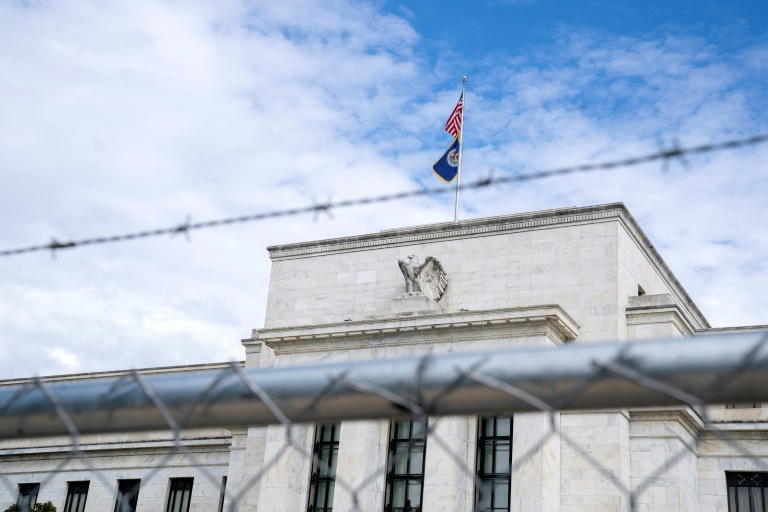
Wall Street has grown nervous as the Federal Reserve is set to make its biggest rate hike in more than two decades to crush inflation that has reached levels not seen since the 1980s.

The central bank’s policy setting Federal Open Market Committee (FOMC) wraps up its two-day meeting on Wednesday and is expected to announce a half-percentage point rate hike, taking the key borrowing rate above 0.75 percent after sitting at zero from the start of the pandemic through 2021, even as inflation picked up speed.

The expected hike is part of what the Fed has billed as a tightening cycle likely to continue throughout this year and into 2023, with the goal of taking the steam out an inflation wave that has pushed consumer prices to the highest levels in four decades.

The US central bank hiked rates by a quarter percentage point in March, the first increase since 2018, but top officials including Fed Chair Jerome Powell have said officials will move quickly and front-load the increases. 

While Wall Street sentiment has showed signs of improving this week, the central bank’s hawkish posture played a role in the equity bloodletting seen in recent weeks.

April was the worst month for the S&P 500 since the pandemic, while the Nasdaq’s tech stocks, which are particularly sensitive to higher interest rates, suffered their biggest loss since October 2008.

The Fed’s goal is to engineer a “soft landing,” reining in inflation but avoiding a contraction in economic activity.

But with China’s pandemic lockdowns worsening global supply snarls and the war in Ukraine pushing commodity prices higher, analysts fear factors beyond the central bank’s control could undermine that goal, and perhaps plunge the world’s largest economy into a recession.

“We don’t know if a recession will be realized; it will depend critically upon what the Fed does and how quickly the Ukrainian situation is resolved,” Robert Eisenbeis of Cumberland Advisors said in a note. 

He warned, “Near-term probabilities are not favorable and suggest caution.”

– Many shocks –

Interest rate hikes are aimed at dampening demand, to take the steam out of consumer prices that jumped 8.5 percent over the 12 months to March, the biggest annual jump since December 1981, caused in part by consumers spending more for scarce goods.

Fed officials have signaled they view the economy as healthy enough to withstand higher rates, since unemployment has retreated almost to where it was before the pandemic, and recent data has shown strong consumer and business spending, even though the economy fell in the first quarter.

However, in addition to the external factors, central bankers cannot engineer a solution for the worker shortages that have challenged businesses and raised fears of a wage-price spiral, when employees demand higher salaries and fuel price increases. 

Powell, who will speak following the FOMC meeting — the announcement is scheduled for 1800 GMT — and could provide more insight on the Fed’s thinking.

The policy committee also is expected to provide details on the plans for shedding its massive holdings of bonds built up during the pandemic, a strategy to keep credit flowing through the economy. 

That also could unsettle financial markets and act as a brake on activity.

Kathy Bostjancic of Oxford Economics said that for the moment, signals point to “relatively low but rising odds of a recession in the next 12 months” but she warned the chances will increase if the factors driving inflation worsen.

Marvel's 'Doctor Strange' tests appeal of movie 'multiverse'

After 27 box office-shattering blockbusters, the Marvel superhero films have no more worlds to conquer — so they are headed off to parallel universes instead.

The highly anticipated “Doctor Strange in the Multiverse of Madness,” out Friday, sends Benedict Cumberbatch’s sorcerer hopping between colorful, creepy and downright bizarre new dimensions, with the help of teenager America Chavez (Xochitl Gomez).

It explores the “multiverse” concept popularized by superhero comic books, in which infinite universes — and infinite versions of each hero and villain — exist side-by-side.

“Oh yeah, we crack that door wide open,” said Cumberbatch at this week’s Los Angeles world premiere.

“And I’ll tell you one thing about it. It’s beautiful. It’s very, very beautiful.”

But for a Hollywood franchise that has thrived by making the sometimes arcane world of comic-book lore accessible to the broadest possible audiences, is it all getting a little too complicated? 

“Multiverse of Madness” — the second standalone “Doctor Strange” movie — is packed with references not just to films that preceded it, but also to Disney+ television series “WandaVision” and “Loki.”

A review from The Hollywood Reporter says the parallel universes concept — on top of Marvel films’ previous time-travel forays — “starts to look like a franchise-sustaining crutch.”

Marvel films already contain “a practically infinite number of weird characters and unlikely events” without the “rapidly aging plot device” of parallel universes, wrote reviewer John Defore.

Variety’s Owen Gleiberman said Marvel is already “the kind of place that even the most ardent comic-book fans have to dedicate themselves to keeping up with.”

Gleiberman called the film “a ride, a head trip… a what-is-reality Marvel brainteaser and, at moments, a bit of an ordeal.”

“It’s a somewhat engaging mess, but a mess all the same.”

– ‘Perfect time’ –

Still, recent history has taught Hollywood watchers to never underestimate the allure of the “Marvel Cinematic Universe” (MCU).

The franchise turned conventional wisdom about attention spans of Gen Z teens upside-down with hits like 2019’s “Avengers: Endgame” — the culmination of more than 20 interconnected movies and storylines going back to the original “Iron Man” (2008).

It earned almost $2.8 billion at the global box office, briefly becoming the highest grossing film of all time.

“Marvel are the epitome of success in Hollywood right now,” said Jeff Bock, senior analyst at Exhibitor Relations.

“And that’s why when we talk about $150 million, $200 million openings, nobody blinks an eye anymore.”

Kevin Feige, the president of Marvel Studios, said last week that planning for “the next decade” of the superhero films is well underway.

And the concept of multiple versions of beloved characters has already been successful, including December’s smash hit “Spider-Man: No Way Home.”

“Characters have come out of other universes into our own in the last Spider-Man picture,” said director Sam Raimi at Monday’s premiere.

“But this will be the first time that characters from our MCU journey out into other universes.”

Beyond the Marvel franchise, the recent, critically adored indie sci-fi hit “Everything Everywhere All at Once” also explores the idea of parallel universes.

“I think ‘Doctor Strange’ actually hits at the perfect time because everybody’s still talking about how great this multiverse concept is — it’s not played out,” said Bock.

– ‘Opening a box’ –

So far, “Multiverse of Madness” has a highly respectable — if below the Marvel average — 79 percent on review aggregator website Rotten Tomatoes.

IndieWire called the movie a “a violent, wacky, drag-me-to-several-different-hells at once funhouse of a film.”

“We are opening a box. And there’s going to be a lot of opportunities for storytelling moving forward,” said Elizabeth Olsen, who reprises her role as Wanda Maximoff.

“I’m looking forward to seeing what we do with that.”

Airbnb says record bookings signal travel rebound

Bookings on Airbnb hit a new high in this year’s first quarter, the home rental platform reported Tuesday, in a fresh signal that travel demand stifled by the Covid-19 pandemic is being unleashed.

Despite the Omicron surge and a persistent level of infections, Airbnb bookings for lodging and travel “experiences” topped 102 million in the first three months of this year, setting a new quarterly record, the company said in an earnings release.

“Guests are booking more than ever before,” Airbnb told shareholders in a letter.

“Looking ahead, we see strong sustained pent-up demand.”

The company’s stock price rose more than 3 percent to $150.50 in after-market trades following the release of the earnings figures.

Revenue in the first quarter was $1.5 billion, up 70 percent from the same period a year earlier, the company said, adding that its quarterly loss shrank to $19 million from a loss of $1.2 billion in the first quarter of 2021.

The San Francisco-based company’s earnings reflect an ongoing recovery in the travel industry and show that Airbnb is gaining share in the market, Baird analyst Colin Sebastian said in an investment note.

“Airbnb exceeded expectations on almost every line item, with strong bookings trends for the summer and balance of the year,” Sebastian told investors.

“Looking further ahead, travel recovery in urban areas, cross-border and (the Asia-Pacific region) should fuel additional bookings growth.”

The company said that trends of people booking stays away from urban areas and staying relatively close to home continue, but that guests are returning to cities and making cross-border trips.

The strong earnings come a week before a May 11 event at which chief executive Brian Chesky is to announce what the company bills as the biggest change to Airbnb in a decade.

“We will introduce a new Airbnb for a new world of travel,” the company said in their earnings letter, adding that “with a completely new way to search, guests will be able to discover millions of unique homes they never thought to search for.”

The booking platform has found traction around the globe, but is fighting various regulatory challenges in several jurisdictions.

In March, the European Union’s top court ruled that the property rental platform must share booking data with regional tax authorities in Brussels.

Flamingo massacre: Fox kills dozens of birds at US National Zoo

A wild fox that breached an enclosure at Washington’s National Zoo killed 25 flamingos and one duck before escaping, the facility said Tuesday, one month after a rabid fox went on a biting spree near the Capitol.

Birdkeepers arrived early Monday to discover the carnage and spotted a fox inside the flamingo yard, the Smithsonian National Zoo said.

Staff “are devastated and mourning the loss of 25 American flamingos and one Northern pintail duck killed by a wild fox yesterday in the Zoo’s outdoor flamingo habitat,” it added.

Three flamingos were additionally injured and are being treated at the zoo’s veterinary hospital.

“This is a heartbreaking loss for us and everyone who cares about our animals,” zoo director Brandie Smith said.

The remaining flock, whittled down from 74 flamingos before the attack, has been moved to an indoor barn while the ducks have been relocated to a covered outdoor space, the zoo said.

According to zoo officials, a softball-sized hole in the metal mesh surrounding the flamingo yard was discovered, but the dig barrier around the enclosure remained intact.

“The barrier we used passed inspection and is used by other accredited zoos across the country,” Smith said. “Our focus now is on the well-being of the remaining flock and fortifying our habitats.”

In early April, a fox was put down after biting at least nine people including a congressman at the US Capitol and testing positive for rabies.

Schultz vows new investments as Starbucks aims to head off union push

Interim Starbucks CEO Howard Schultz unveiled fresh investments in US stores and employees Tuesday as the company seeks to head off a unionization campaign, while it reported strong North American sales that offset weakness in China.

Schultz, the longtime architect of Starbucks tapped as interim CEO in March, said the company plans $200 million in additional investments in “our core US business” in 2022.

“We do not have adequate capacity,” said Schultz, outlining new investments on store equipment and technology needed to address rising and shifting demand as more consumers order via mobile channels.

Schultz also announced another wage hike in light of staff turnover that accelerated during the pandemic..

“We’ve always been ahead of the curve, but we have to recognize that we haven’t done enough,” said Schultz. “And I think we have to recognize that there is a lot of pressure on our people.”

The announcement came as Starbucks reported a 2.3 percent rise in profits to $674.5 million in the quarter ending April 3 following a 14.5 percent jump in revenues to $7.6 billion.

The coffee giant scored a 12 percent jump in comparable sales in North America, while suffering a 23 percent slide in China amid that country’s latest Covid-19 outbreak.

In light of uncertainty over China and the inflation outlook, Starbucks did not offer a forecast for the rest of the year.

Still, shares rocketed higher during the conference call, as Schultz emphasized the solidity of demand, noting the company had enacted multiple price hikes over the last year with only a “negligible” impact on sales.

– ‘Even more’ –

The new employee investments come as Starbucks faces a unionization campaign at US stores that has accelerated since a pair of upstate New York stores voted to unionize in December. 

Some 250 Starbucks stores have launched unionization campaigns in the United States, with employees voting for a union in 47 stores, said the group, Starbucks Workers United.

The movement has been propelled by mostly younger staff frustrated over pandemic working conditions and seeking more say. 

Schultz, who has long resisted unionization at Starbucks, tried to reset the debate even as he sketched out the reasons for his opposition to the union. 

“We are highly empathic to the root causes of the frustration and anxieties that Gen Z Americans are facing, having come of age during turbulent moments in our history,” Schultz said. 

But Schultz defended the company, noting it has historically paid better than peers and offered better benefits, such as education aid.

Schultz said Starbucks was committed to doing “even more,” such as allowing customers to tip baristas directly through the app.

“Ensuring success through wages and benefits with our partners is among our core values and has been for 50 years,” Schultz said. “And our values are not and never have been the result of demands or interference from any outside entity.”

While previously announced pay hikes will still go into effect at unionized Starbucks, the company is barred under federal law from additional benefits at any stores that have voted to unionize, Schultz said. 

“Partners at (unionized) stores will receive the wages increases that we announced in October 2021 but federal law prohibits us from promising new wages and benefits at stores involved in union organizing and by law we cannot implement unilateral changes at stores that have a union,” said Schultz, who is participating in the search for a new CEO who is expected to be announced later in 2022. 

Shares of Starbucks jumped 5.1 percent to $78.10 in after-hours trading.

Families of crash victims challenge Boeing settlement in US court

The families of victims of the two Boeing 737 MAX crashes in October 2018 and March 2019 asked a Texas judge Tuesday to overturn a $2.5-billion settlement between the aircraft manufacturer and the US government. 

Under that agreement, Boeing admitted to having committed fraud in exchange for the Department of Justice dropping some of the proceedings against it over the deadly crashes of Lion Air in Indonesia and Ethiopian Airlines, which killed 346 people total and caused the MAX to be grounded globally for 20 months. 

This January 7, 2021 arrangement was the focus of a court hearing Tuesday in Fort Worth, Texas.

“They messed up by making the crime fraud rather than manslaughter,” said Catherine Berthet, a French woman who lost her 28-year-old daughter when the Ethiopian Airlines plane crashed near Addis Ababa on March 10, 2019.

“We believe that the rights of the victims’ families have not been respected,” she told AFP. “We have not been consulted. We ask to be heard.”

The January 2021 agreement included a $500 million compensation fund for victims’ relatives, $1.77 billion in compensation to the airlines and a $243 million criminal fine. 

Boeing has admitted that two of its employees had misled a group within the Federal Aviation Authority that was to prepare training for pilots in using Boeing’s new MCAS flight software, which was implicated in both crashes.

“The judge listened carefully and I think had a lot of concerns about how was it that the Justice Department can seal this agreement from the families,” said Paul Cassell, lawyer for the families in the audience.

Relatives of the victims are now hoping for a quick decision from the Fort Worth judge.

“It’s been three years and I never go to sleep before four or five in the morning,” Berthet said. “I still have panic attacks. There are things I don’t do anymore. There are films that I can no longer see, music that I can no longer listen to.”

“I would like to see that the US Department of Justice is responsible enough to make sure that corporations don’t get away with murder,” said Paul Njoroge, who lost his 33-year-old wife, his children aged nine months, four and six, as well as his mother-in-law in the Ethiopia crash.

Close Bitnami banner
Bitnami