World

Russia struggles to turn Black Sea rule into amphibious attack

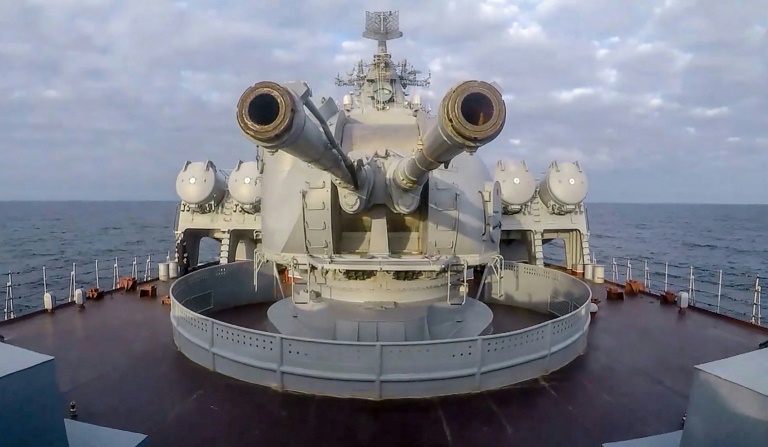
Russia may rule the Black Sea but any amphibious assault on the Ukrainian coast seems risky so long as Kyiv’s defences threaten any warships that venture too close, experts say.

According to British intelligence sources, Russia operates around 20 warships in the Black Sea, although the numbers are static as Turkey, which controls the Bosphorus, blocks any access by vessels belonging to a warring party.

“It’s their ‘Mare Nostrum’,” said Captain Eric Lavault, a spokesman for the French navy — a reference to the Latin term meaning “Our Sea” used in ancient Rome to describe the Mediterranean.

Apart from Russia, all the other Black Sea countries already belong to NATO or hope to join it, but this has not cowed Moscow’s claim on supremacy.

On paper, Russia’s recent capture of the Ukrainian port of Mariupol and its control of the entire Sea of Azov should underline its dominance, Lavault said.

These gains should allow Moscow’s troops to establish a direct logistical link between its fighters in the Donbas region and the eastern port of Novorossiysk.

– ‘Bayraktars are working’ –

But whether the Kremlin can lever this advantage to attack the Ukrainian-controlled coast between Odessa and Romania is in doubt.

The threat comes not from Kyiv’s navy, which has been destroyed, but from land-based sea-skimming missiles and drones.

Last month, Russia dramatically lost its flagship in the Black Sea, the missile cruiser Moskva, while on Monday, Kyiv said it had sunk two Russian Raptor patrol boats.

Ukraine says it hit the Moskva with Neptune missiles — a weapon that will be joined by Britain’s Harpoon — and used Turkish-made Bayraktar drones to sink the Raptors near Snake Island.

Snake Island became a symbol of Ukrainian resistance after a radio exchange went viral at the start of the war, in which Ukrainian soldiers used an expletive in rebuffing a demand by the Moskva to surrender.

The threat from land-based assets may well prevent any attempt by Russia to land near Odessa to the west, with the aim of surrounding the Ukrainian heartland and linking up Russian forces with separatists in Moldova’s Transnistria region.

“That zone presents a threat that the Russians must take into account,” said defence expert Igor Delanoe at the French-Russian Monitor, a political analysis body based in Moscow.

Any such landing is currently “out of reach” for the Russians, said Delanoe.

Russian progress in the Donbas region could open up new options, he said, “but they will have to neutralise the coastal defences,” he cautioned.

– ‘Not Russia’s any more’ –

Russian forces have had great trouble locating and destroying Ukrainian surface-to-air missiles because of their mobility, said Michael Petersen, director of the Russia Maritime Studies Institute and an associate professor at the US Naval War College.

“I suspect that would also be the case for any mobile coastal defense cruise missile system that Ukraine may have,” he said, adding that the exact number of Neptunes — which have a range of some 300 kilometres (200 miles) — available to Ukrainian forces was unknown.

Russia’s failure to establish air superiority, and its apparent inability to precision-target missiles, are not helping its efforts to knock out Ukraine’s coastal defences, added French navy spokesman Lavault.

He said this had allowed the defenders to create “a maritime cordon sanitaire” and threaten Russian southern supply lines between Kherson and Nikolayev.

In addition, Ukraine has deployed mines, and is expected to take delivery of naval surface drones promised by the US, although it is not certain that they will be armed.

“More likely, if Ukraine is provided with unmanned systems, they would be used to provide surveillance and reconnaissance for weapon systems,” Petersen said.

British Defence Secretary Ben Wallace meanwhile went as far as contesting Russia’s centuries-old supremacy in the Black Sea altogether.

“The Russians can’t control the Black Sea,” he told Sky News. “It’s not theirs anymore.”

Whatever the outcome of the Ukraine war, Russia will not give up its Black Sea role quietly, experts agreed.

But as other Black Sea countries, notably Romania and Turkey, deploy their own coastal missile systems based on Ukraine’s example, Moscow’s role will become harder to maintain.

“Certainly Russia will be less secure in the Black Sea than they were before the war,” said Petersen.
Pope wants to meet Putin, compares Ukraine war to Rwanda

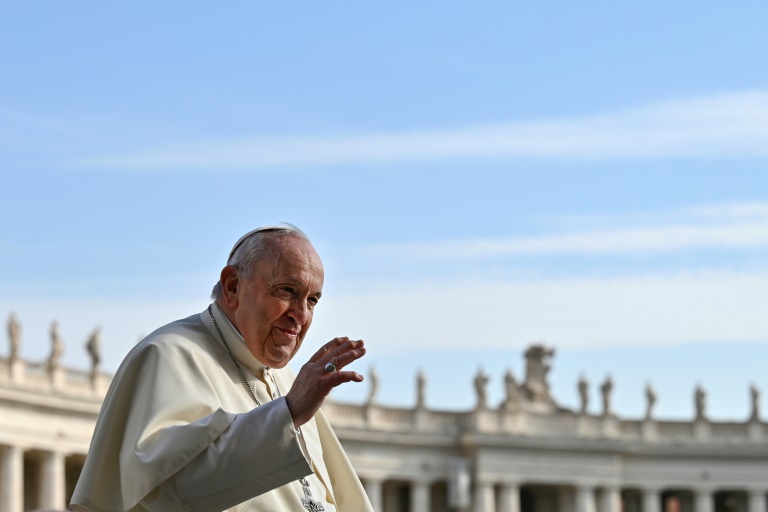
Pope Francis said in an interview published Tuesday that he requested a meeting with Russian President Vladimir Putin over Ukraine, while comparing the scale of the bloodshed to Rwanda’s genocide.

The pontiff told Italy’s Corriere Della Sera newspaper that he had sent a message to Putin around 20 days into the conflict saying that “I was willing to go to Moscow”.

“We have not yet received a response and we are still insisting, though I fear that Putin cannot, and does not, want to have this meeting at this time,” Francis said.

“But how is it possible to not stop such brutality? Twenty-five years ago, we lived through the same thing with Rwanda,” he said.

About 800,000 people were killed between April and July 1994 as the extremist Hutu regime tried to wipe out Rwanda’s Tutsi minority, in one of the 20th century’s biggest massacres.

The pope has repeatedly called for peace in Ukraine and denounced a “cruel and senseless war” without mentioning Putin or Moscow by name.

“I’m not going to Kyiv for now. I feel I shouldn’t go. I have to go to Moscow first, I have to meet Putin first,” he said.

Francis also said Russian Orthodox Patriarch Kirill, a close Putin ally, “cannot become Putin’s altar boy”.

Dialogue with the Orthodox Church, which separated from the Catholic Church in 1054, is a priority of Francis’s pontificate.

But since Russia invaded Ukraine on February 24, the pope’s calls for peace have contrasted with Kirill’s defence of Putin’s fight against Russia’s “external and internal enemies”.

– Knee pain –

In the interview, the pope also addressed the pain in his knee that has forced him to cancel various public engagements in recent months.

“I have a torn ligament, I will undergo an intervention with infiltration, and we’ll see,” he said.

The Vatican would not say what the pontiff was being injected with or when, but a source told AFP the ligament problem was linked to chronic arthritis in his right knee.

Infiltration can involve injecting drugs directly into inflamed or damaged joints and has an immediate effect.

“I’ve been like this for a while, I can’t walk,” Francis told Corriere della Sera.

“Once upon a time, popes were carried on gestatorial chairs,” he said, referring to the ancient shoulder-carried ceremonial throne on which popes were borne aloft until 1978.

He appeared to rule out reviving the throne.

“A bit of pain, of humility, is necessary,” he said.

Francis told a newspaper in Argentina in April he was treating the torn ligament by putting ice on it and taking some painkillers.

Asian markets drop as traders brace for Fed hike

Asia stocks fell Tuesday as markets braced for a sharp US interest rate hike and similar moves by other central banks as they struggle to control inflation, with traders increasingly worried about another possible recession.

Surging prices, moves to tighten monetary policy, China’s Covid lockdowns, the Ukraine war and a stronger dollar have come together in recent weeks to cause a massive headache for investors, sending them running to the hills.

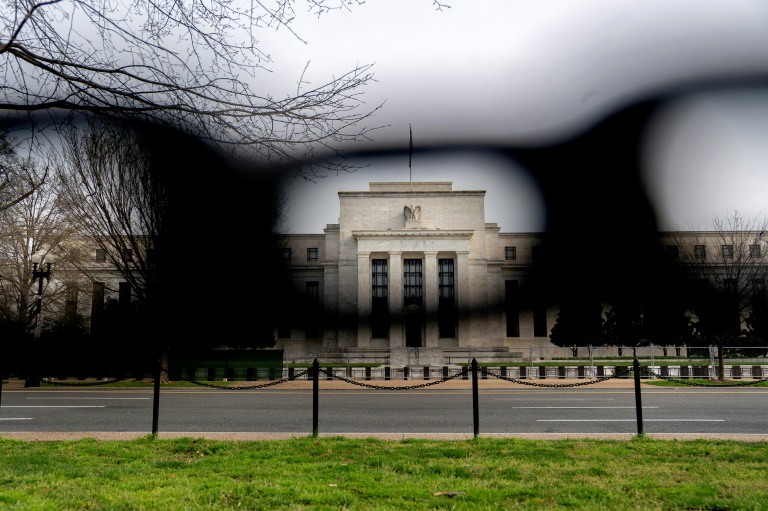
All eyes are on the conclusion Wednesday of the US Federal Reserve’s two-day policy meeting, where it is expected to lift borrowing costs 0.5 percentage points for the first time since 2000.

However, while officials see a hawkish move as necessary to control 40-year high inflation while still allowing for economic growth, there is a growing unease that they could knock the fragile pandemic recovery off course and even cause a recession.

Meanwhile, the policy board is also expected to discuss offloading the trillions of dollars worth of bonds bought to help keep prices subdued in the past, a move known as quantitative easing.

“With a 50 basis point hike… all but certain, the (post meeting) press conference will provide important colour around the prospects of a soft landing, the neutral fed funds rate and balance sheet normalisation,” said SPI Asset Management’s Stephen Innes.

“One question on everyone’s mind: Are 75 basis point increments on the table?”

Forecasts for a swift run-up in rates this year have hammered tech firms who are reliant on debt to fund growth, though dip-buying helped them record a much-needed gain Monday in New York.

– Australia rate hike –

Asian traders were unable to track the positive lead with liquidity thinned by public holidays around the region.

Sydney fell after the Reserve Bank of Australia lifted interest rates 25 basis points, the first hike since 2010 and more than the 15 points expected. Officials also indicated further increases were in the pipeline.

The move sent the Australian dollar briefly rallying more than one percent against the greenback before settling back slightly.

Shares in Seoul, Taipei, Bangkok and Wellington were also down, while London was on the back foot in early trade. Frankfurt and Paris edged up.

Tokyo, Shanghai, Mumbai, Singapore and Jakarta were closed for holidays.

Hong Kong returned from a long weekend break to shed more than two percent in early exchanges before reversing the losses to extend a more than four percent surge Friday.

Alibaba was a key support in the bounce as it recovered from an initial drop of more than nine percent in reaction to a report by Chinese state broadcaster CCTV that officials in Hangzhou, where the firm is based, had imposed curbs on an individual surnamed Ma — raising worries about founder Jack Ma.

The losses were soon erased, however, after police indicated the accused person’s name was spelled with three Chinese characters. Jack Ma’s Chinese name is Ma Yun.

Investors were also reeling from a sharp slowdown in Chinese activity caused by lockdowns in key parts of the country including financial hub Shanghai, and strict containment in Beijing.

The measures, and Chinese leaders’ refusal to shift from their zero-Covid policy, have hamstrung the world’s number two economy and figures in other countries including the United States suggest they are now having a global impact.

The strife in China weighed on oil prices owing to fears about the impact on demand from the biggest crude importer.

Oil prices edged up as European Union chiefs discuss a possible embargo on shipments from Russia linked to its invasion of Ukraine.

A sanctions plan is being put together by the European Commission that could be put to member states Wednesday, sources said, adding that the ban would be introduced over six to eight months to give countries time to diversify their supply.

– Key figures at around 0810 GMT –

Hong Kong – Hang Seng Index: UP 0.1 percent at 21,101.89 (close)

London – FTSE 100: DOWN 0.1 percent at 7,538.33

Tokyo – Nikkei 225: Closed for a holiday

Shanghai – Composite: Closed for a holiday

Euro/dollar: UP at $1.0522 from $1.0506 on Monday

Pound/dollar: UP at $1.2552 from $1.2489

Euro/pound: DOWN at 83.84 pence from 84.09 pence

Dollar/yen: DOWN at 130.15 yen from 130.16 yen

West Texas Intermediate: DOWN 0.5 percent at $104.66 per barrel

Brent North Sea crude: DOWN 0.6 percent at $106.92 per barrel

New York – Dow: UP 0.3 percent at 33,061.50 (close)

Asian markets drop as traders brace for Fed hike

Asia stocks fell Tuesday as markets braced for a sharp US interest rate hike and similar moves by other central banks as they struggle to control inflation, with traders increasingly worried about another possible recession.

Surging prices, moves to tighten monetary policy, China’s Covid lockdowns, the Ukraine war and a stronger dollar have come together in recent weeks to cause a massive headache for investors, sending them running to the hills.

All eyes are on the conclusion Wednesday of the US Federal Reserve’s two-day policy meeting, where it is expected to lift borrowing costs 0.5 percentage points for the first time since 2000.

However, while officials see a hawkish move as necessary to control 40-year high inflation while still allowing for economic growth, there is a growing unease that they could knock the fragile pandemic recovery off course and even cause a recession.

Meanwhile, the policy board is also expected to discuss offloading the trillions of dollars worth of bonds bought to help keep prices subdued in the past, a move known as quantitative easing.

“With a 50 basis point hike… all but certain, the (post meeting) press conference will provide important colour around the prospects of a soft landing, the neutral fed funds rate and balance sheet normalisation,” said SPI Asset Management’s Stephen Innes.

“One question on everyone’s mind: Are 75 basis point increments on the table?”

Forecasts for a swift run-up in rates this year have hammered tech firms who are reliant on debt to fund growth, though dip-buying helped them record a much-needed gain Monday in New York.

– Australia rate hike –

Asian traders were unable to track the positive lead with liquidity thinned by public holidays around the region.

Hong Kong returned from a long weekend break to shed more than two percent in early exchanges before paring these losses following a more than four percent surge Friday.

Alibaba was a key support in the bounce as it recovered from an initial drop of more than nine percent in reaction to a report by state broadcaster CCTV that officials in Hangzhou, where the firm is based, had imposed curbs on an individual surnamed Ma — raising worries about founder Jack Ma.

The losses were soon erased, however, after police indicated the accused person’s name was spelled with three Chinese characters. Jack Ma’s Chinese name is Ma Yun.

Sydney fell after the Reserve Bank of Australia lifted interest rates 25 basis points, the first hike since 2010 and more than the 15 points expected. Officials also indicated further increases were in the pipeline.

The move sent the Australian dollar briefly rallying more than one percent against the greenback before settling back slightly.

Shares in Seoul, Taipei, Bangkok and Wellington were also down, while London opened on the back foot. Frankfurt and Paris edged up.

Tokyo, Shanghai, Mumbai, Singapore and Jakarta were closed for holidays.

Investors were also reeling from a sharp slowdown in Chinese activity caused by lockdowns in key parts of the country including financial hub Shanghai, and strict containment in Beijing.

The measures, and Chinese leaders’ refusal to shift from their zero-Covid policy, have hamstrung the world’s number two economy and figures in other countries including the United States suggest they are now having a global impact.

The strife in China weighed on oil prices owing to fears about the impact on demand from the biggest crude importer.

Oil prices edged up as European Union chiefs discuss a possible embargo on shipments from Russia linked to its invasion of Ukraine.

A sanctions plan is being put together by the European Commission that could be put to member states Wednesday, sources said, adding that the ban would be introduced over six to eight months to give countries time to diversify their supply.

– Key figures at around 0720 GMT –

Hong Kong – Hang Seng Index: DOWN 0.1 percent at 21,066.10

London – FTSE 100: DOWN 0.8 percent at 7,481.02

Tokyo – Nikkei 225: Closed for a holiday

Shanghai – Composite: Closed for a holiday

Euro/dollar: DOWN at $1.0502 from $1.0506 on Monday

Pound/dollar: UP at $1.2518 from $1.2489

Euro/pound: DOWN at 83.84 pence from 84.09 pence

Dollar/yen: DOWN at 130.15 yen from 130.16 yen

West Texas Intermediate: DOWN 0.5 percent at $104.69 per barrel

Brent North Sea crude: DOWN 0.5 percent at $107.08 per barrel

New York – Dow: UP 0.3 percent at 33,061.50 (close)

Australia hikes interest rates for first time since 2010

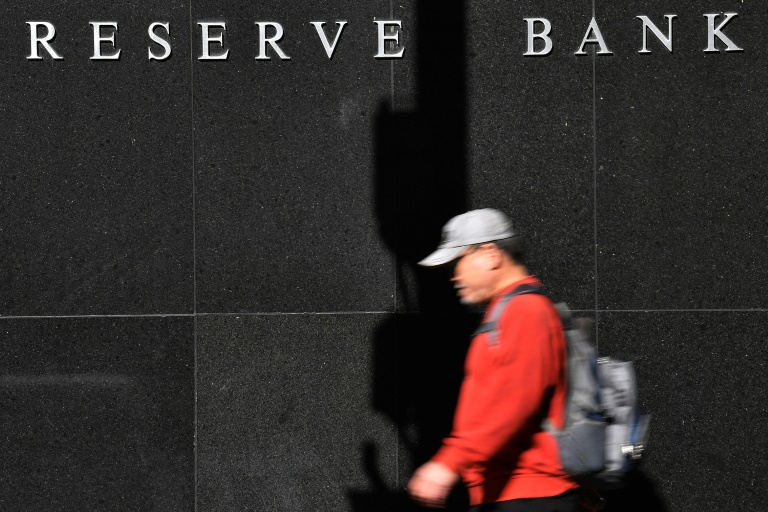
Australia’s central bank raised interest rates for the first time in more than a decade on Tuesday, a pre-election hike designed to tame soaring consumer prices.

The Reserve Bank of Australia raised the main lending rate by 25 basis points to 0.35 percent, the first increase since November 2010. 

Ending record-low rates, the bank said inflation had “picked up significantly and by more than expected” while signalling that “further increases in interest rates” would come.

The move plunged the bank into the centre of a fierce political debate about the health of Australia’s economy, just weeks before a May 21 election. 

Prime Minister Scott Morrison, who is trailing in the polls, said he sympathised with mortgage borrowers who would now face rising costs.

But he insisted Australia is faring better than its peers and that rising inflation is a result of worldwide trends.

Like consumers around the world, Australians have been hit by soaring prices for food and fuel. Australia’s annual inflation rate is currently at 5.1 percent. 

But house prices have been rising for years even as wages have stagnated. Sydney and Melbourne are among the most expensive cities in the world to live. 

Morrison pointed to the impact of supply chain constraints caused by the pandemic and a war in Ukraine that has caused “the single largest energy shock we’ve seen around the world since the 1970s.”

The opposition Labor party painted the rate rise as evidence of a weakening economy and the conservative government’s economic maladministration.

“If only you could pay your mortgage with Scott Morrison’s excuses,” said opposition economic spokesman Jim Chalmers.

The rate rise is expected to be the first of several, which could have serious implications for Australia’s once-perennially growing economy.

Higher interest rates will spell higher borrowing costs for millions of already heavily indebted Australians, in a country where real estate market speculation is something like a national pastime.

Interest rates of two percent would cost the average homeowner about US$362 a month, according to financial services website RateCity.com.au.

“That’s going to be a lot for many borrowers to swallow, particularly anyone already struggling to make the monthly budget add up,” said RateCity’s Sally Tindall.

Australia’s vast resource wealth has for decades provided insulation from global financial headwinds and underpinned high standards of living.

The country is among the world’s largest producers and exporters of iron ore, gas and coal.

But there are growing concerns that the “lucky country’s” run of good fortune may be coming to an end. 

In early 2020 the economy fell into recession for the first time in almost three decades, largely because of devastating bushfires and the start of the Covid-19 pandemic. 

Climate-fuelled floods, bushfires and droughts are proving increasingly costly.

This year’s east coast floods cost an estimated Aus$3.35 billion (US$2.4 billion) in insured losses, making it the costliest flood in Australia’s history, according to the Insurance Council of Australia.

Hong Kong plummets towards bottom of press freedom ranking

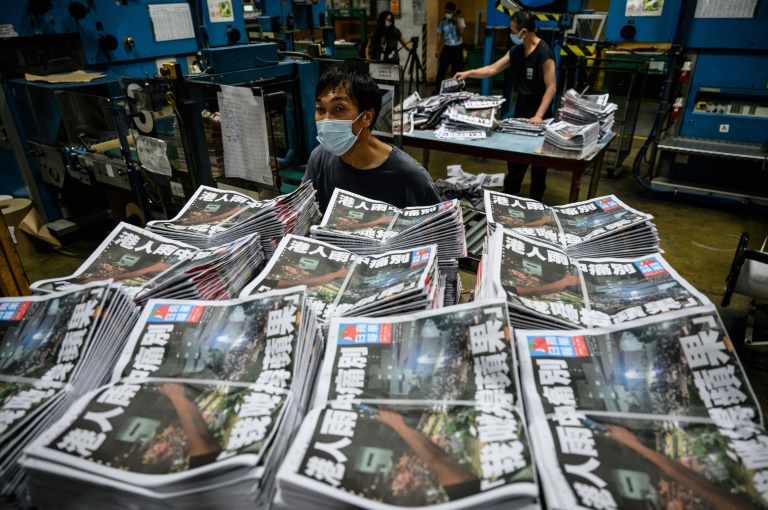
Hong Kong has plummeted down an international press freedom chart as authorities have wielded a draconian new security law to silence critical news outlets and jail journalists, a new report said on Tuesday.

For two decades, media rights watchdog Reporters Without Borders (RSF) has ranked countries and territories around the world by how free their press is.

Hong Kong, a regional hub for both international and local media, has been steadily slipping down the table under Chinese rule.

In the last year it has plunged 68 places to 148th, sandwiching the business hub between the Philippines and Turkey.

“It is the biggest downfall of the year, but it is fully deserved due to the consistent attacks on freedom of the press and the slow disappearance of the rule of law in Hong Kong,” Cedric Alviani, head of RSF’s Taiwan-based East Asia bureau, told AFP.

“In the past year we have seen a drastic, drastic move against journalists,” he added.

China has imposed increasingly authoritarian strictures on Hong Kong following large-scale and sometimes violent pro-democracy protests three years ago.

It implemented a sweeping national security law in 2020 that has crushed dissent and seen dozens of democracy activists jailed as well as journalists.

Alviani said authorities initially used the law to pursue political opponents, but throughout 2021 it began to increasingly be deployed against local media.

– Journalists jailed –

Last year, Apple Daily and Stand News, two popular outlets critical of the government, collapsed after newsroom leaders were arrested and company assets were frozen by the security law.

Alviani said RSF’s database lists 13 Hong Kong media workers in jail, a number he said was “enormous” and equivalent to almost ten percent of all known journalist detentions in China.

China has consistently been ranked by RSF as one of the world’s most hostile countries for journalists, and currently sits at 175th out of 180.

But until recently Hong Kong was a comparative oasis of free speech thanks to a “One Country, Two Systems” formula, in which Beijing promised the city could keep key freedoms and autonomy for 50 years after the 1997 handover by Britain.

When RSF published its first report in 2002, Hong Kong had some of the freest media in Asia and ranked 18th worldwide.

For now, the security law has been directed against local media but questions swirl over the future of the international press there. 

Multiple major news outlets — including AFP, Bloomberg, CNN, the Economist and the Financial Times — have longstanding Asia headquarters in the city.

“No media can do without correspondents in Hong Kong. But do the media need to have their regional headquarters in Hong Kong?” asked Alviani. 

“Is it safe to leave your computer archive, to leave your server, to leave your management team in Hong Kong? In the current situation maybe not.

Shortly before the rankings were announced, city leader Carrie Lam described the city’s media scene was “as vibrant as ever”, citing the continued “presence of international and regional media”.

She added, however, that media organisations must “comply with the law”.

Last week, the Foreign Correspondents’ Club Hong Kong (FCCHK) scrapped Asia’s most prestigious human rights awards, citing the threat posed by the security law.

Timothy McLaughlin, an independent journalist who resigned last week from the FCCHK’s press freedom committee in protest over the cancellation, said the media environment was unlikely to improve.

“What appears far more likely is [the introduction of] additional laws that will further constrict the space for the press and draw even more red lines for journalists to navigate,” McLaughlin told AFP.

Abortion rights supporters, opponents face off at US Supreme Court

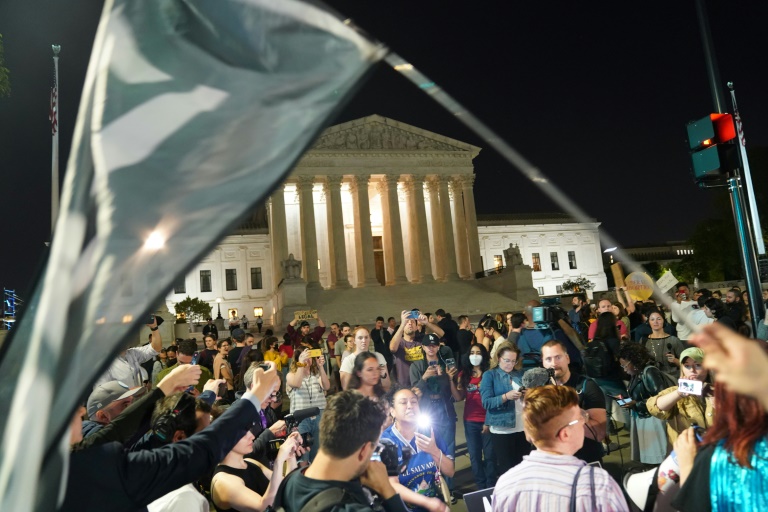
Hundreds of pro-choice and anti-abortion activists gathered in front of the US Supreme Court on Monday night, hours after a stunning leak of a draft opinion that signals the institution may be set to strike down the right to abortion.

According to the draft majority opinion obtained by news outlet Politico, the top US court is poised to overturn the historic 1973 Roe v. Wade ruling that enshrined the right to abortion in the United States.

Squaring off on either side of the white marble building a stone’s throw from the Capitol, the pro-choice and anti-abortion groups railed at each other.

“Roe v. Wade is going to go,” anti-abortion protesters taunted, while the pro-choice crowd yelled: “My body, my choice.”

The two groups chanted and waved placards in the plaza in front of the steps to the Supreme Court, with barriers and a few uniformed police officers barring access to the colonnaded building.

Abby Korb, a 23-year-old graduate student and congressional aide, said she was “in literal shock” when the news broke and quickly headed to the Supreme Court with a friend.

“I’m a woman and my rights are being taken away every single day,” she told AFP.

– ‘More dangerous’ –

Like many others at the spontaneous demonstration, Korb, originally from Wisconsin, is now calling for legislation at the federal level to protect access to abortion.

“We need access to safe abortion because making it illegal isn’t going to stop it, it’s just going to make it more dangerous,” she said.

The growing crowd took turns to hurl expletives at Supreme Court Justice Samuel Alito, who reportedly wrote the opinion, and called on Democratic Party leaders to “do something”.

Madeline Hren, a 25-year-old from North Carolina, said she was very angry.

“I called everyone I knew to be very angry,” she said, holding a small sign with a drawing of a bloody coat hanger that said “We will not go back.”

“I’m really upset about it… I didn’t cry. I’m mostly just mad,” said Hren, who works for the UN Foundation.

She now fears that an abortion ban will extend to her native North Carolina. 

For opponents of the right to abortion, however, it was time to celebrate. 

“You don’t care if people die,” they sang at the pro-choice crowd.

“I hope they overturn it,” said Claire Rowan, a 55-year-old mother of seven children, some of whom accompanied her to the demonstration.

Rowan said she hopes people will now be “asking God for forgiveness so that the nation can heal.”

Russia steps up Ukraine fight as more Mariupol evacuations expected

Fighting raged in the critical port city of Odessa and across Ukraine’s east as fresh evacuations of civilians from war-ravaged Mariupol were set to take place Tuesday.

The United States was warning that Moscow is preparing to formally annex regions in the east, while the European Union told member states to brace for a complete breakdown in Russian gas supplies as it prepared a new package of sanctions.

Russia’s Foreign Minister Sergei Lavrov meanwhile sparked outrage by alleging Adolf Hitler may have “had Jewish blood”, invoking a conspiracy theory in a bid to discredit Ukraine’s President Volodymyr Zelensky — who is of Jewish ancestry.

Israel — which has sought to keep a delicate balance between the two sides since Russia’s invasion of Ukraine — condemned the remarks and summoned Moscow’s ambassador. 

Zelensky also slammed Lavrov’s remarks as “anti-Semitic”, and said they showed Russia had “forgotten all the lessons of World War II”.

“It is no coincidence that they are waging a so-called total war to destroy all living things, after which only the burned ruins of entire cities and villages remain,” he added.

– ‘We don’t live, we survive’ –

The war has seen Moscow, after failing to take the capital Kyiv, shift its two-month-old invasion to largely Russian-speaking areas and step up pressure on Odessa, a cultural hub that is a crucial port on the Black Sea.

Odessa’s city council said a Russian strike hit a residential building housing five people.

A 15-year-old boy was killed and a girl was hospitalised, the council said on Telegram.

Russia’s invasion has killed thousands of people and displaced more than 13 million in a war the scale of which has not been seen in Europe for generations.

Among the most battered cities is Mariupol, where an untold number have died and survivors have little access to food, water and medicine as Russia battles to connect the southern and eastern strips of land under its control.

The city is now largely calm, AFP journalists saw on a recent press tour organised by Russian forces, apart from the muffled rumble of explosions coming from the direction of the Azovstal steel plant, the last holdout of Ukrainian forces in Mariupol.

Daily life is now dominated by the hunt for the most basic of essentials, locals say. 

“We don’t live, we survive,” said Irina, a 30-year-old video game designer wearing a grey sweatshirt, the little face of a Yorkshire Terrier sticking out from her backpack. 

Kyiv said more than 100 civilians were evacuated over the weekend from the sprawling Azovstal complex, where soldiers and civilians have been sheltering in a maze of underground tunnels.

Sviatoslav Palamar, deputy commander of Ukraine’s Azov military unit, said another 20 people were transferred out on Monday evening, but only after a five-hour delay as “the enemy’s artillery caused new rubble and destruction”.

Mariupol’s city council said evacuations were set to restart at 7:00 am local time (0400 GMT) on Tuesday. AFP could not confirm if the evacuations had started.

Ukraine and Russia have been coordinating civilian evacuations with United Nations agencies and the International Committee of the Red Cross.

Ukrainian forces have recaptured some territory in recent days, including the village of Ruska Lozova, which evacuees said had been occupied for two months.

“It was two months of terrible fear. Nothing else, a terrible and relentless fear,” Natalia, a 28-year-old evacuee from Ruska Lozova, told AFP after reaching Kharkiv, Ukraine’s second-biggest city.

But Kyiv has admitted that Russian forces have captured a string of villages in the east and has asked Western powers to deliver more heavy weapons to bolster its defences there.

Ukraine’s defence ministry said Monday that its drones had sunk two Russian patrol boats near the Black Sea’s Snake Island, which became a symbol of Ukrainian resistance after soldiers there rebuffed Russian demands to surrender.

– ‘Sham referenda’ –

The fresh onslaught came as the United States warned that Moscow was preparing imminently to annex both Lugansk and neighbouring Donetsk.

Pro-Russian separatists in the two regions declared independence in 2014, but Moscow has so far stopped short of formally incorporating them as it did that year with the Crimean peninsula.

“Russia plans to engineer referenda upon joining sometime in mid-May,” said Michael Carpenter, the US ambassador to the Organisation for Security and Co-operation in Europe.

He said Russia was considering a similar plan in a third region, Kherson, where Moscow has recently solidified control and imposed use of its ruble currency.

“We think the reports are highly credible,” Carpenter told reporters in Washington.

As with Crimea, he vowed that the international community would not support Russian-dictated changes to Ukraine’s borders.

“Such sham referenda — fabricated votes — will not be considered legitimate, nor will any attempts to annex additional Ukrainian territory,” Carpenter said.

“But we have to act with a sense of urgency.”

– Bracing for new sanctions –

Western powers have levelled unprecedented sanctions against Russia over the war while delivering money and weapons to Ukraine, including a $33 billion (31 billion euro) arms and support package announced by US President Joe Biden last week.

The European Commission will on Tuesday propose a new package, including an embargo on Russian oil, officials said.

It will also involve “more Russian banks” being pushed out of the global SWIFT payment network, the bloc’s top diplomat Josep Borrell said Monday.

And British Prime Minister Boris Johnson will announce another £300 million ($376 million, 358 million euros) in military aid for Kyiv, his office said.

In a remote address to Ukraine’s parliament — the first by a foreign leader to the Verkhovna Rada since Russia invaded on February 24 — Johnson is set to hail the country’s resistance as its “finest hour”.

After talks on Monday, the European Union warned member states to prepare for a possible complete breakdown in gas supplies from Russia, insisting it would not cede to Moscow’s demand that imports be paid for in rubles.

Germany, Europe’s largest economy, was heavily dependent on Russian gas prior to the war, but European views quickly hardened after the invasion.

EU and French officials said the 27-member bloc was united with Poland and Bulgaria, whose gas supplies were cut last week after they refused to pay in rubles.

Western nations have been trying to show support by reopening embassies in Kyiv that were closed due to the invasion, with Denmark the latest to make the move Monday.

Kristina Kvien, the US charge d’affaires, announced in the western city of Lviv that Washington hopes to have diplomats back in Kyiv by the end of May.

burs-oho/axn

BP plunges into $20.4-bn loss on Russia exit

British energy giant BP on Tuesday plunged into a huge net loss in the first quarter after it decided to exit Russia over the country’s invasion of neighbour Ukraine.

The loss after tax stood at $20.4 billion (19.4 billion euros) following BP’s decision in February to pull its 19.75-percent stake in energy group Rosneft, ending more than three decades of investment in Russia.

BP had posted a net profit of $4.7 billion in the first quarter of 2021.

“Our decision… to exit our shareholding in Rosneft resulted in the material non-cash charges and headline loss,” BP chief executive Bernard Looney said in a statement.

The group booked a pre-tax charge of $25.5 billion owing to its break with Rosneft.

That wiped out the benefit of surging energy prices, which have been fuelled by fears of tight supplies following the invasion by major oil and gas producer Russia.

BP revenue jumped 40 percent to $51 billion in the first quarter from a year earlier.

“In a quarter dominated by the tragic events in Ukraine and volatility in energy markets, BP’s focus has been on supplying the reliable energy our customers need,” Looney said. 

The European Commission will on Tuesday propose to member states a new package of sanctions to punish President Vladimir Putin’s Kremlin for its invasion of Ukraine, including an embargo on Russian oil, officials said.

It comes after the EU on Monday warned member states to prepare for a possible complete breakdown in gas supplies from Russia, insisting it would not cede to Moscow’s demand that imports be paid for in rubles.

Australia hikes interest rates for first time since 2010

Australia’s central bank raised interest rates for the first time in more than a decade on Tuesday, a pre-election hike designed to curb soaring consumer prices.

The Reserve Bank of Australia raised the main lending rate by 25 basis points to 0.35 percent, the first increase since November 2010. 

Ending record-low rates, the bank cited inflation levels that had “picked up more quickly, and to a higher level, than was expected”. 

The move thrusts the bank to the centre of a fierce political debate about the health of Australia’s economy just weeks before the May 21 elections. 

The opposition Labor party has seized on the prospect of a rate rise as evidence of a weakening economy and the conservative government’s economic maladministration.

Prime Minister Scott Morrison, who is trailing in the polls, has insisted inflation is a result of worldwide trends, including the war in Ukraine. 

The annual inflation rate is currently at 5.1 percent. 

Like consumers around the world, Australians have been hit by soaring prices for food and fuels. 

But house prices have been rising for years even as wages have stagnated. Sydney and Melbourne are among the world’s most expensive cities in the world to live. 

The rate rise is expected to be the first of several, which could have serious implications for Australia’s once-perennially growing economy.

Higher interest rates will spell higher borrowing costs for millions of already heavily indebted Australians, in a country where real estate market speculation at times appears to be a national pastime.

Interest rates of two percent would cost the average homeowner about US$362 a month, according to financial services website RateCity.com.au. 

“That’s going to be a lot for many borrowers to swallow, particularly anyone already struggling to make the monthly budget add up,” said RateCity’s Sally Tindall.

Australia’s vast resource wealth has for decades provided insulation from global financial headwinds and underpinned high standards of living.

The country is among the world’s largest producers and exporters of iron ore, gas and coal. 

But there are growing concerns that the “lucky country’s” run of good fortune may be coming to an end. 

In early 2020 the economy fell into recession for the first time in almost three decades, largely because of devastating bushfires and the start of the Covid-19 pandemic. 

Climate-fuelled floods, bushfires and droughts are proving increasingly costly.

This year’s east coast floods cost an estimated Aus$3.35 billion (US$2.4 billion) in insured losses, making it the costliest flood in Australia’s history, according to the Insurance Council of Australia.

Close Bitnami banner
Bitnami