World

Floods, fires drive Australian home insurance 'crisis'

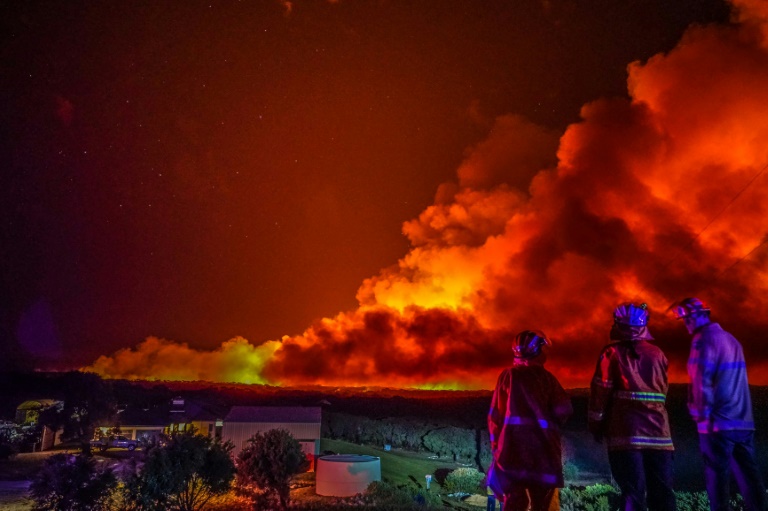
Fiercer floods, winds and bushfires whipped up by warmer temperatures mean more than half a million homes in Australia will cost too much to insure by 2030, according to an analysis by a climate advocacy group published Tuesday.

The Climate Council non-profit group issued the report after storms and floods battered Australia’s east coast in February-March this year, and following the 2019-20  “Black Summer” bushfires that killed 33 people as well as an estimated tens of millions of wild animals.

“Climate change is creating an insurability crisis in Australia due to worsening extreme weather and sky-rocketing insurance premiums,” the report said.

By 2030, about 520,940 properties — or about one in 25 of the national total — would suffer projected annual damage equal to one percent of the entire replacement cost, it said, making insurance policies effectively too pricey to afford.

“It’s striking how the number of affected properties grows under higher emissions scenarios,” said Karl Mallon, chief executive of Climate Valuation, which conducted the analytical work based on property, geographical, extreme weather and climate data for every address in Australia.

“Reducing emissions would potentially save thousands of homes from worsening damage,” he said.

The Climate Council analysis echoes similar warnings by Australia’s insurance industry, which has called for federal and state governments to invest more heavily in stronger homes and protection, such as flood levees, against extreme weather events. 

– ‘Big decisions’ –

This year’s east coast floods cost an estimated 3.35 billion Australian dollars (US$2.4 billion) in insured losses, making it the costliest flood in the country’s history, the Insurance Council of Australia said on Tuesday.

“The string of extreme weather, particularly in the last decade, has made us very much at the top of the list when it comes to costly payouts,” Insurance Council of Australia chief executive Andrew Hall told AFP.

A 2015 study estimated that about two percent of Australia’s housing stock was at risk of constant flooding and 15 percent was at risk of occasional flooding, he said.

During this year’s east coast floods, which claimed at least 21 lives, the northeastern New South Wales town of Lismore was among the worst hit.

Record 14.3-metre (47-foot) floodwaters engulfed homes, swept away cars and stranded locals on the roofs of their homes awaiting rescue by boat or helicopter.

This week, Lismore City Council released a “discussion paper”, calling for feedback to a series of proposals to rebuild after the floods left thousands of people homeless and damaged many businesses.

It proposed a “retreat” from the highest flood-risk areas of the city, saying it would call on the state and federal governments to pay for a land swap allowing residents to abandon their land and move to higher ground.

“With rising temperatures predicted to significantly increase the likelihood of more frequent and heavier rain events leading to more frequent and severe flooding, Lismore is facing some big decisions about rebuilding and future growth,” the council said in a statement.
Floods, fires drive Australian home insurance 'crisis'

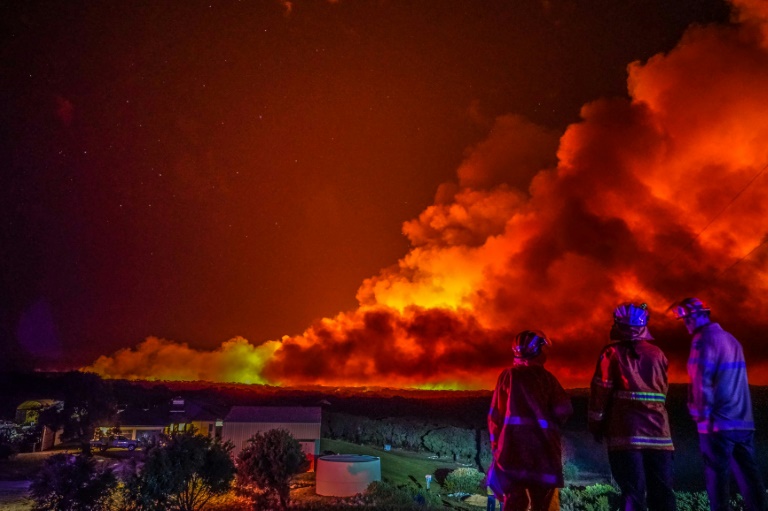
Fiercer floods, winds and bushfires whipped up by warmer temperatures mean more than half a million homes in Australia will cost too much to insure by 2030, according to an analysis by a climate advocacy group published Tuesday.

The Climate Council non-profit group issued the report after storms and floods battered Australia’s east coast in February-March this year, and following the 2019-20  “Black Summer” bushfires that killed 33 people as well as an estimated tens of millions of wild animals.

“Climate change is creating an insurability crisis in Australia due to worsening extreme weather and sky-rocketing insurance premiums,” the report said.

By 2030, about 520,940 properties — or about one in 25 of the national total — would suffer projected annual damage equal to one percent of the entire replacement cost, it said, making insurance policies effectively too pricey to afford.

“It’s striking how the number of affected properties grows under higher emissions scenarios,” said Karl Mallon, chief executive of Climate Valuation, which conducted the analytical work based on property, geographical, extreme weather and climate data for every address in Australia.

“Reducing emissions would potentially save thousands of homes from worsening damage,” he said.

The Climate Council analysis echoes similar warnings by Australia’s insurance industry, which has called for federal and state governments to invest more heavily in stronger homes and protection, such as flood levees, against extreme weather events. 

– ‘Big decisions’ –

This year’s east coast floods cost an estimated 3.35 billion Australian dollars (US$2.4 billion) in insured losses, making it the costliest flood in the country’s history, the Insurance Council of Australia said on Tuesday.

“The string of extreme weather, particularly in the last decade, has made us very much at the top of the list when it comes to costly payouts,” Insurance Council of Australia chief executive Andrew Hall told AFP.

A 2015 study estimated that about two percent of Australia’s housing stock was at risk of constant flooding and 15 percent was at risk of occasional flooding, he said.

During this year’s east coast floods, which claimed at least 21 lives, the northeastern New South Wales town of Lismore was among the worst hit.

Record 14.3-metre (47-foot) floodwaters engulfed homes, swept away cars and stranded locals on the roofs of their homes awaiting rescue by boat or helicopter.

This week, Lismore City Council released a “discussion paper”, calling for feedback to a series of proposals to rebuild after the floods left thousands of people homeless and damaged many businesses.

It proposed a “retreat” from the highest flood-risk areas of the city, saying it would call on the state and federal governments to pay for a land swap allowing residents to abandon their land and move to higher ground.

“With rising temperatures predicted to significantly increase the likelihood of more frequent and heavier rain events leading to more frequent and severe flooding, Lismore is facing some big decisions about rebuilding and future growth,” the council said in a statement.
Floods, fires drive Australian home insurance 'crisis'

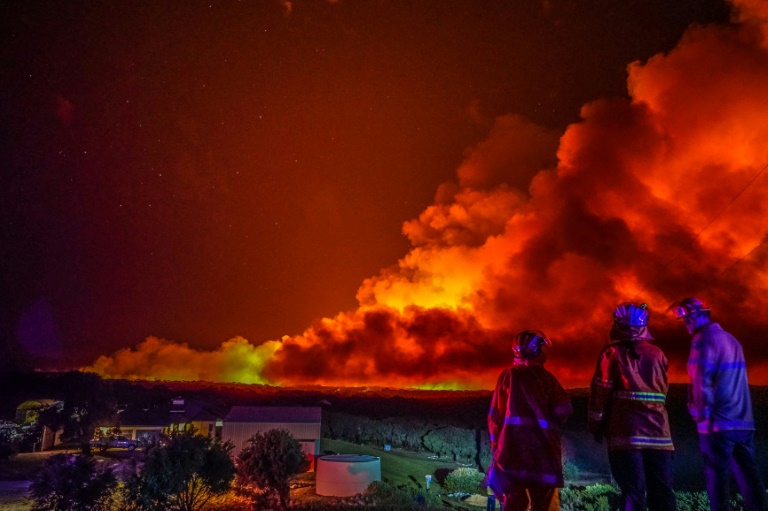
Fiercer floods, winds and bushfires whipped up by warmer temperatures mean more than half a million homes in Australia will cost too much to insure by 2030, according to an analysis by a climate advocacy group published Tuesday.

The Climate Council non-profit group issued the report after storms and floods battered Australia’s east coast in February-March this year, and following the 2019-20  “Black Summer” bushfires that killed 33 people as well as an estimated tens of millions of wild animals.

“Climate change is creating an insurability crisis in Australia due to worsening extreme weather and sky-rocketing insurance premiums,” the report said.

By 2030, about 520,940 properties — or about one in 25 of the national total — would suffer projected annual damage equal to one percent of the entire replacement cost, it said, making insurance policies effectively too pricey to afford.

“It’s striking how the number of affected properties grows under higher emissions scenarios,” said Karl Mallon, chief executive of Climate Valuation, which conducted the analytical work based on property, geographical, extreme weather and climate data for every address in Australia.

“Reducing emissions would potentially save thousands of homes from worsening damage,” he said.

The Climate Council analysis echoes similar warnings by Australia’s insurance industry, which has called for federal and state governments to invest more heavily in stronger homes and protection, such as flood levees, against extreme weather events. 

– ‘Big decisions’ –

This year’s east coast floods cost an estimated 3.35 billion Australian dollars (US$2.4 billion) in insured losses, making it the costliest flood in the country’s history, the Insurance Council of Australia said on Tuesday.

“The string of extreme weather, particularly in the last decade, has made us very much at the top of the list when it comes to costly payouts,” Insurance Council of Australia chief executive Andrew Hall told AFP.

A 2015 study estimated that about two percent of Australia’s housing stock was at risk of constant flooding and 15 percent was at risk of occasional flooding, he said.

During this year’s east coast floods, which claimed at least 21 lives, the northeastern New South Wales town of Lismore was among the worst hit.

Record 14.3-metre (47-foot) floodwaters engulfed homes, swept away cars and stranded locals on the roofs of their homes awaiting rescue by boat or helicopter.

This week, Lismore City Council released a “discussion paper”, calling for feedback to a series of proposals to rebuild after the floods left thousands of people homeless and damaged many businesses.

It proposed a “retreat” from the highest flood-risk areas of the city, saying it would call on the state and federal governments to pay for a land swap allowing residents to abandon their land and move to higher ground.

“With rising temperatures predicted to significantly increase the likelihood of more frequent and heavier rain events leading to more frequent and severe flooding, Lismore is facing some big decisions about rebuilding and future growth,” the council said in a statement.
Online media fuelling divisions, global tensions: report

Unregulated online content has spread disinformation and propaganda that have amplified political divisions worldwide, fanned international tensions and even contributed to Russia’s invasion of Ukraine, a media watchdog warned Tuesday.

Reporters Without Borders said democratic societies are increasingly fractured by social media spreading disinformation and more opinion media pursuing a so-called “Fox News model”, referring to the controversial right-wing television network in the United States.

At the same time, despotic and autocratic regimes that tightly control information in their societies are using their “asymmetric” position to wage “propaganda wars” against democracies and fuel divisions within them, the watchdog said in the 2022 edition of its annual World Press Freedom Index. 

“Polarisation on these two levels is fuelling increased tension,” Reporters Without Borders, widely known by its French acronym RSF, said in a five-page summary.

It noted Russia, where state-run media overwhelmingly dominate and independent outlets are increasingly stifled, invaded Ukraine following a propaganda war.

“The creation of media weaponry in authoritarian countries eliminates their citizens’ right to information but is also linked to the rise in international tension, which can lead to the worst kind of wars,” RSF Secretary-General Christophe Deloire said.

He added the “Fox News-isation” of Western media also poses a “fatal danger for democracies because it undermines the basis of civil harmony and tolerant public debate”.

Deloire urged countries to adopt appropriate legal frameworks to protect democratic online information spaces.

– Record ‘very bad’ –

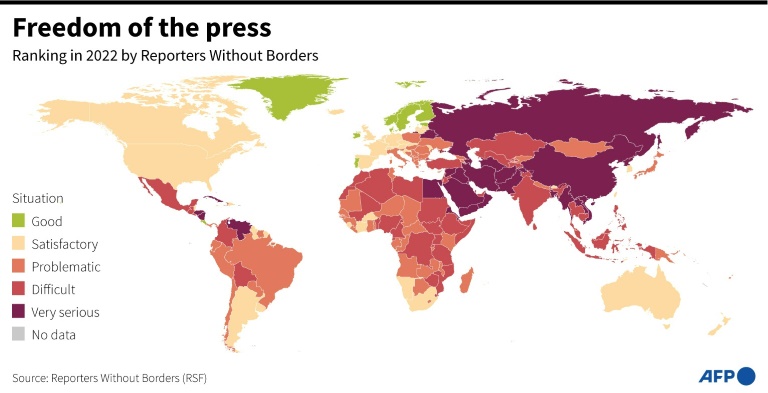
The situation is “very bad” in a record 28 countries, according to this year’s ranking of 180 countries and regions based on the degree of freedom enjoyed by journalists.

The lowest ranked were North Korea (180th), Eritrea (179th) and Iran (178th), with Myanmar (176th) and China (175th) close behind.

Russia (155th) and ally Belarus (153rd) were also on its red list of the most repressive.

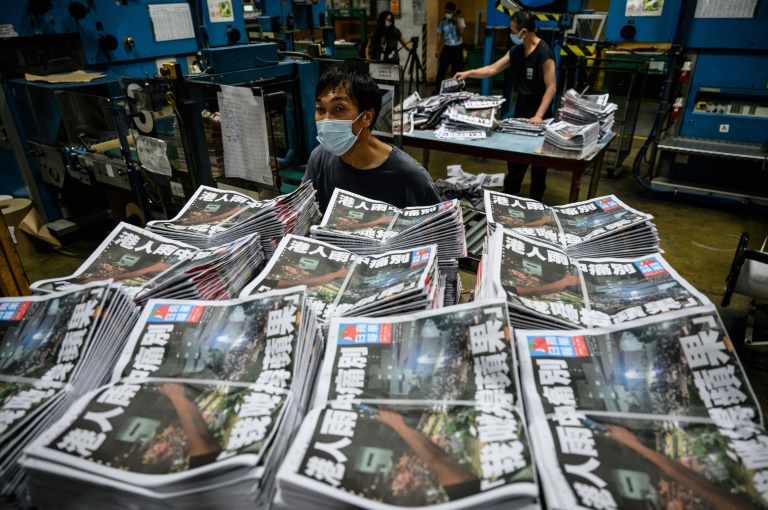
Hong Kong’s position plummeted dozens of places to 148th, reflecting Beijing’s efforts to use “its legislative arsenal to confine its population and cut it off from the rest of the world”, RSF said.

Nordic countries Norway, Denmark and Sweden again topped the index, serving as a democratic models “where freedom of expression flourishes”.

The NGO commended Moldova (40th) and Bulgaria (91st) this year due to government changes and “the hope it has brought for improvement in the situation for journalists”. 

But it noted “oligarchs still own or control the media” in both.

Media polarisation was “feeding and reinforcing internal social divisions in democratic societies” such as the United States (42nd).

That trend was even starker in “illiberal democracies” such as Poland (66th), a European Union country where suppression of independent media was also noted by RSF.

The NGO, launched in 1985 and which has published the yearly index since 2002, has become a thorn in the side of autocratic and despotic regimes around the world.

This year’s listing was developed with a new methodology redefining press freedom and using five new indicators — political context, legal framework, economic context, sociocultural context, and security — to reflect its “complexity”.

Hong Kong plummets towards bottom of press freedom ranking

Hong Kong has plummeted down an international press freedom chart as authorities have wielded a draconian new security law to silence critical news outlets and jail journalists, a new report said on Tuesday.

For two decades, media rights watchdog Reporters Without Borders (RSF) has ranked countries and territories around the world by how free their press is.

Hong Kong, a regional media hub for both international and local media, has been steadily slipping down the table under Chinese rule.

In the last year alone it has plunged 68 places to 148th, sandwiching the international business hub between the Philippines and Turkey.

“It is the biggest downfall of the year, but it is fully deserved due to the consistent attacks on freedom of the press and the slow disappearance of the rule of law in Hong Kong,” Cedric Alviani, head of RSF’s Taiwan-based East Asia bureau, told AFP.

“In the past year we have seen a drastic, drastic move against journalists,” he added.

China has imposed increasingly authoritarian strictures on Hong Kong following large-scale and sometimes violent pro-democracy protests three years ago.

It implemented a sweeping national security law in 2020 that has since crushed dissent and seen dozens of democracy activists jailed as well as journalists.

– Focus on international media –

Alviani said authorities initially used the law to pursue political opponents and democracy activists, but throughout 2021 it began to increasingly be deployed against local media.

Last year, Apple Daily and Stand News, two popular outlets that were critical of the government, collapsed after newsroom leaders were arrested and company assets were frozen by the security law.

Alviani said RSF’s database now lists 13 Hong Kong media workers as being in jail, a number he said was “enormous” and equivalent to almost ten percent of all known journalist detentions in China.

China has consistently been ranked by RSF as one of the world’s most hostile countries for journalists, and currently sits at 175th out of 180.

But until recently Hong Kong was a comparative oasis of free speech thanks to a “One Country, Two Systems” formula, in which Beijing promised the city could keep key freedoms and autonomy for 50 years after the 1997 handover by Britain.

When RSF published its first report in 2002, Hong Kong had some of the freest media in Asia and ranked 18th worldwide.

For now, the security law has been directed against local media but questions have swirled over the future of the international press based in the territory.

Last week, the city’s foreign press club scrapped Asia’s most prestigious human rights awards, citing the threat posed by the security law. 

Multiple major news outlets — including AFP, Bloomberg, CNN, the Economist and the Financial Times — have longstanding Asia headquarters in the city.

“No media can do without correspondents in Hong Kong. But do the media need to have their regional headquarters in Hong Kong?” asked Alviani. 

“Is it safe to leave your computer archive, to leave your server, to leave your management team in Hong Kong? In the current situation maybe not.”

War in Ukraine: Latest developments

Here are the latest developments in the war in Ukraine:

– Israel slams Lavrov Hitler comments –

Israeli Foreign Minister Yair Lapid slams his Russian counterpart Sergei Lavrov for alleging Adolf Hitler may have “had Jewish blood” in a bid to discredit Kyiv. 

Lavrov’s comments — which invoked a conspiracy theory exploiting a gap in the dictator’s ancestry — see Israel summon Moscow’s ambassador for “clarifications” and condemn the “unforgivable and outrageous statement”.

– EU to propose new sanctions on Russia –

The European Commission is set to propose a new package of measures, including an embargo on Russian oil, officials say.

The anti-Russian measures will also target the country’s largest bank, Sberbank, which will be excluded from the global banking communications system SWIFT, diplomats said.

– Boris Johnson to address Ukraine parliament –

UK Prime Minister Boris Johnson will deliver an address to Ukraine’s parliament — the first by a foreign leader since Russia invaded on February 24 — where he is set to hail the country’s resistance as its “finest hour”.

He will also announce another 300 million pounds ($376 million, 358 million euros) in military aid for Kyiv, his office says.

– ‘Russia plans to annex east’ –

Russia is planning imminently to “annex” the two eastern regions of Ukraine battered by its invasion after failing to overthrow the government in Kyiv, a senior US official says.

Their plan is to annex the “Donetsk People’s Republic” and “Lugansk People’s Republic” to Russia using referenda on the question, says Michael Carpenter, US ambassador to the OSCE. 

– Teen killed in Odessa –

A 15-year-old boy is killed in a fresh Russian strike on Ukraine’s Black Sea port of Odessa, the southern city’s council says.

A missile hit a residential building that had five people inside, said the statement, adding that a girl had been hospitalised.

– EU readies for end to Russian gas supplies –

The European Union warns member states to prepare for a possible complete breakdown in gas supplies from Russia, insisting it will not cede to Moscow’s demand that imports be paid for in rubles.

The European Commission will on Tuesday propose to member states a new package of sanctions to punish the Kremlin for its invasion of Ukraine, including an embargo on Russian oil, officials say.

– Top Russian general visits Ukraine –

Russia’s top general, Valery Gerasimov, visited the Donbas front in the Ukraine war last week, a Pentagon official says, but reports that he was injured in a Ukrainian attack could not be confirmed.

– Russian clubs banned from Champions League –

Russian clubs have been banned by UEFA from participating in the Champions League and all other European competitions next season, European football’s governing body announces.

– Around 100 evacuated from steel plant –

An initial group of around 100 civilians has been evacuated from the besieged Azovstal steel plant in the southern port city of Mariupol, Ukrainian President Volodymyr Zelensky says.

Moscow says some civilians were handed over to the United Nations and the Red Cross.

– Bolshoi scraps some performances –

Russia’s Bolshoi Theatre announces it is cancelling the performances directed by Kirill Serebrennikov and Timofey Kulyabin, who have both spoken out against Moscow’s military campaign in Ukraine.

– Finnish group scraps nuclear plant deal –

Finnish-led consortium Fennovoima says it has terminated a contract with Russian group Rosatom to build Finland’s third nuclear power plant, citing the Ukraine conflict.

“The war in Ukraine has worsened the risks for the project,” Fennovoima says in a statement, also citing “significant delays”.

burs-ach/oho/qan

EU readies for end of Russia gas, warns won't pay in rubles

The European Union warned member states Monday to prepare for a possible complete breakdown in gas supplies from Russia, insisting it would not cede to Moscow’s demand that imports be paid for in rubles.

The European Commission will on Tuesday propose to member states a new package of sanctions to punish President Vladimir Putin’s Kremlin for its invasion of Ukraine, including an embargo on Russian oil, officials said.

But energy and environment ministers meeting in Brussels on Monday addressed the larger and potentially more complicated issue of Russia’s natural gas, upon which several countries — including EU top economy Germany — depend for much of their power generation.

Moscow has demanded clients from “unfriendly countries” — including EU member states — pay for gas in rubles, a way to sidestep Western financial sanctions against its central bank. It has cut off Bulgaria and Poland after their firms refused to comply.

After the talks, the French chair of the meeting, ecological transition minister Barbara Pompili, and the European commissioner for energy, Kadri Simson, said the 27 member states were united with Poland and Bulgaria and would stockpile gas to be prepare for a breakdown.

Simson said that “following the full procedure as set out by Russia constitutes a breach of sanctions” imposed by the European Union.

She said that, to her knowledge, no European company was preparing to follow Putin’s decree and change its payment methods.

– ‘Tricky’ problem –

But several countries are to renew supply contracts at the end of May, and reports suggest some could seek to work around the sanctions by following the method put forward by Moscow.

This would entail a firm opening two accounts in Russian state energy giant Gazprom’s bank. Payments would be deposited in one account in euros or dollars, then be passed through the sanctioned Russian central bank, before arriving in the second account in rubles.

Kadri and some ministers seemed to say that this would still constitute a sanctions breach. But other member states demanded further clarification from the European Commission’s experts.

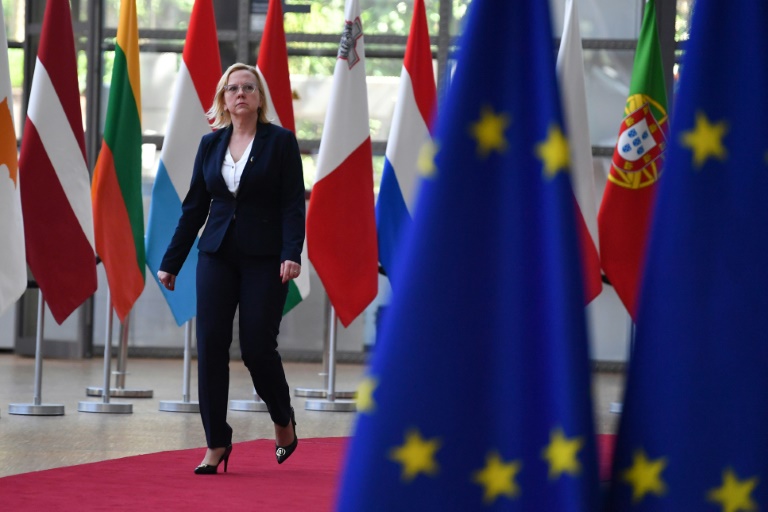
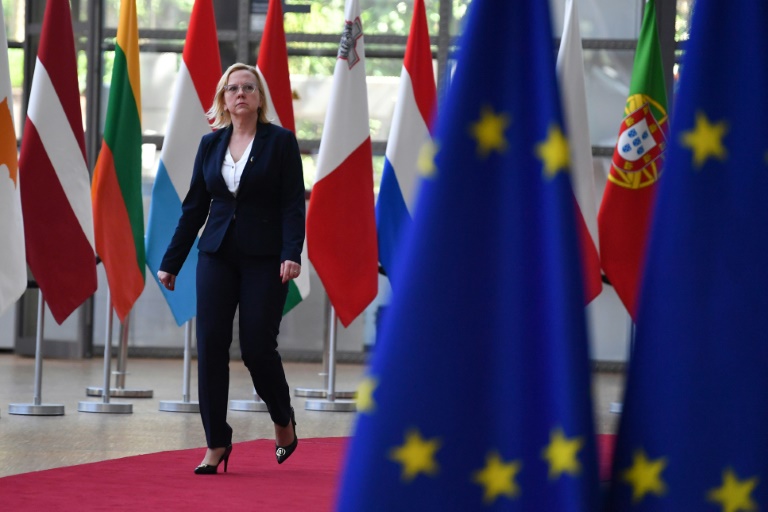
“What has happened today is that the European Commission and the presidency have confirmed that paying in rubles is unacceptable, that it is a breach of sanctions and a breach of European solidarity,” Poland’s environment minister Anna Moskwa said.

“Many countries, including the Baltic states, Denmark, the Netherlands and Finland, have today reaffirmed solidarity and that they will certainly not pay in rubles,” she said.

But Sweden’s Khashayar Farmanbar, minister for energy and digital development, said: “I think the clarification is still ongoing … it is a complex process.” 

“I mean, paying with one currency is one thing, but if that involves another country’s central bank, then it becomes part of a different part of the package, and that is going to be a bit tricky.”

The Czech minister of industry and trade, Jozef Sikela, said he had asked for a “clear explanation of how to proceed”.

During the meeting, European officials were forced to deal with media reports that Italy wants to continue to pay in rubles until there is a legal alternative.

Kadri said she had spoken to Italian minister Roberto Cingolani, who did not attend the meeting, and that the report was “misleading” — but she promised to provide him and all EU capitals with clearer guidance on resisting Putin’s ultimatum.

She added that Russia’s actions showed “they are not reliable suppliers and that means that all the member states have to have plans in place for full disruption”.

– Phased-out oil –

Germany’s minister for economic affairs and climate Robert Habeck said Berlin would follow EU policy but also suggested the dual Gazprombank accounts plan could be “a face-saving solution for Putin”. 

On Tuesday, the EU will propose a phased-out ban on imports of Russian oil — but not gas. 

The commission will propose a tapered ban over six to eight months, to give time to diversify supply. One senior official said there could be opt-outs for the most dependent countries, like Hungary. 

The sixth package of anti-Russian measures will also target the country’s largest bank, Sberbank, which will be excluded from the global banking communications system SWIFT, diplomats said. 

On Monday, the EU’s top diplomat, Josep Borrell, said the new sanctions package would result in “more Russian banks that will leave SWIFT” during a visit to Panama. 

EU readies for end of Russia gas, warns won't pay in rubles

The European Union warned member states Monday to prepare for a possible complete breakdown in gas supplies from Russia, insisting it would not cede to Moscow’s demand that imports be paid for in rubles.

The European Commission will on Tuesday propose to member states a new package of sanctions to punish President Vladimir Putin’s Kremlin for its invasion of Ukraine, including an embargo on Russian oil, officials said.

But energy and environment ministers meeting in Brussels on Monday addressed the larger and potentially more complicated issue of Russia’s natural gas, upon which several countries — including EU top economy Germany — depend for much of their power generation.

Moscow has demanded clients from “unfriendly countries” — including EU member states — pay for gas in rubles, a way to sidestep Western financial sanctions against its central bank. It has cut off Bulgaria and Poland after their firms refused to comply.

After the talks, the French chair of the meeting, ecological transition minister Barbara Pompili, and the European commissioner for energy, Kadri Simson, said the 27 member states were united with Poland and Bulgaria and would stockpile gas to be prepare for a breakdown.

Simson said that “following the full procedure as set out by Russia constitutes a breach of sanctions” imposed by the European Union.

She said that, to her knowledge, no European company was preparing to follow Putin’s decree and change its payment methods.

– ‘Tricky’ problem –

But several countries are to renew supply contracts at the end of May, and reports suggest some could seek to work around the sanctions by following the method put forward by Moscow.

This would entail a firm opening two accounts in Russian state energy giant Gazprom’s bank. Payments would be deposited in one account in euros or dollars, then be passed through the sanctioned Russian central bank, before arriving in the second account in rubles.

Kadri and some ministers seemed to say that this would still constitute a sanctions breach. But other member states demanded further clarification from the European Commission’s experts.

“What has happened today is that the European Commission and the presidency have confirmed that paying in rubles is unacceptable, that it is a breach of sanctions and a breach of European solidarity,” Poland’s environment minister Anna Moskwa said.

“Many countries, including the Baltic states, Denmark, the Netherlands and Finland, have today reaffirmed solidarity and that they will certainly not pay in rubles,” she said.

But Sweden’s Khashayar Farmanbar, minister for energy and digital development, said: “I think the clarification is still ongoing … it is a complex process.” 

“I mean, paying with one currency is one thing, but if that involves another country’s central bank, then it becomes part of a different part of the package, and that is going to be a bit tricky.”

The Czech minister of industry and trade, Jozef Sikela, said he had asked for a “clear explanation of how to proceed”.

During the meeting, European officials were forced to deal with media reports that Italy wants to continue to pay in rubles until there is a legal alternative.

Kadri said she had spoken to Italian minister Roberto Cingolani, who did not attend the meeting, and that the report was “misleading” — but she promised to provide him and all EU capitals with clearer guidance on resisting Putin’s ultimatum.

She added that Russia’s actions showed “they are not reliable suppliers and that means that all the member states have to have plans in place for full disruption”.

– Phased-out oil –

Germany’s minister for economic affairs and climate Robert Habeck said Berlin would follow EU policy but also suggested the dual Gazprombank accounts plan could be “a face-saving solution for Putin”. 

On Tuesday, the EU will propose a phased-out ban on imports of Russian oil — but not gas. 

The commission will propose a tapered ban over six to eight months, to give time to diversify supply. One senior official said there could be opt-outs for the most dependent countries, like Hungary. 

The sixth package of anti-Russian measures will also target the country’s largest bank, Sberbank, which will be excluded from the global banking communications system SWIFT, diplomats said. 

On Monday, the EU’s top diplomat, Josep Borrell, said the new sanctions package would result in “more Russian banks that will leave SWIFT” during a visit to Panama. 

Leni Robredo: 'Last woman standing' in Philippines presidential race

Leni Robredo was a neophyte congresswoman in 2016 when she came from behind to narrowly beat Ferdinand Marcos Junior for Philippines vice president. She hopes to repeat the feat in their May 9 rematch for president.

The only woman in a field of 10 candidates, Robredo is the last obstacle to the Marcos family regaining the presidency they lost in 1986 following a popular uprising.

But this time, the former lawyer and economist faces a much bigger gap with Marcos Jr, the late dictator’s only son, who voter surveys show is heading towards a landslide victory.

Relentless attacks from President Rodrigo Duterte, who once called her a “scatterbrain”, and a vicious social media misinformation campaign waged by pro-Marcos groups have hurt the soft-spoken Robredo’s popularity.

Her pledge to “defeat the archaic and rotten style of politics” in the feudal and corrupt democracy has resonated with progressive voters fed up with Duterte’s authoritarian style.

Many also fear a repeat of the Marcos dictatorship, when billions of dollars were plundered from state coffers and widespread human rights abuses were committed.

“I am often told I am weak because I’m a woman, but I’ve never shirked from a challenge,” Robredo, 57, told a forum in February.

“I am offering a brand of leadership that is trustworthy, competent, industrious and dependable. You will not be fooled, you will not be robbed, you will never be left behind,” she said.

“In 2022, the last man standing will still be a woman.”

– ‘President of all colours’ –

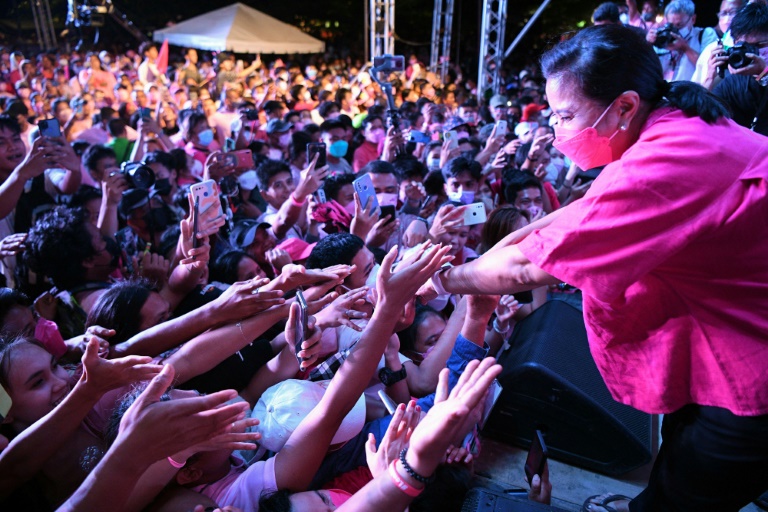
Volunteers wearing Robredo’s pink campaign colour have gone door to door across the vast archipelago nation in an against-the-odds effort to win over voters.

It has sparked comparisons with the people-driven movement for former president and democracy leader Corazon Aquino in the 1986 snap election that led to the ousting of Ferdinand Marcos Senior.

Like Aquino, whose husband was shot dead by state forces in 1983, Robredo was reluctantly thrust into politics after the death of her husband.

Jesse Robredo, a respected cabinet member in former president Benigno Aquino’s administration, died in a plane crash in 2012.

Originally a lawyer for poor farmers and battered women, Robredo served a single term in the House of Representatives, where she pushed for laws promoting transparency and accountability.

After winning the vice presidency in 2016 — a result Marcos Jr fought for five years to overturn — Robredo transformed her small-budget, largely ceremonial office into one that fed the needy, empowered women and helped typhoon victims.

But she earned the ire of Duterte by criticising his deadly drug war and opposing his plan to bring back the death penalty.

She also challenged his decision to allow the embalmed body of Marcos Sr to be buried at the national heroes’ cemetery.

In the Philippines, the vice president and president are elected separately.

After months of pressure from supporters and opposition groups to join the presidential race, she announced a run for the top job on October 7 — two days after Marcos Jr.

“The corruption, the incompetence, the lack of compassion must be replaced by competence and integrity in leadership,” Robredo said at the time.

Like the Aquino-Marcos contest more than three decades ago, Robredo is the underdog in the battle against Marcos Jr.

Some analysts say Robredo, who has three daughters, lacks the feisty personality Filipino voters look for in a female leader. She has also been criticised for making her decision to run too late.

Marcos Jr has benefited from an alliance with vice presidential candidate and first daughter Sara Duterte and a years-long social media effort to revamp the family brand.

But a bump in the polls and huge turnouts at Robredo’s rallies have fuelled hope among her fervent fans that her campaign is gaining traction.

Vowing to be a “president of all colours”, Robredo recently implored her supporters to “embrace everyone” as they tried to woo voters.

“The future of the country rests on us all,” she said.

In devastated Mariupol, a daily struggle to survive

In another life, not so long ago, Inna was a hairdresser. Now she spends her days chasing down food and water, in a struggle to simply survive in the Russian-held Ukrainian city of Mariupol.

“You run to find a water distribution point. After, to where they are handing out bread. Then you line up to get rations,” said the 50-year-old, holding two empty water cans.

“You run all the time.”

After a weeks-long siege, Russian and pro-Moscow separatist forces took almost complete control of Mariupol in southeastern Ukraine in mid-April.

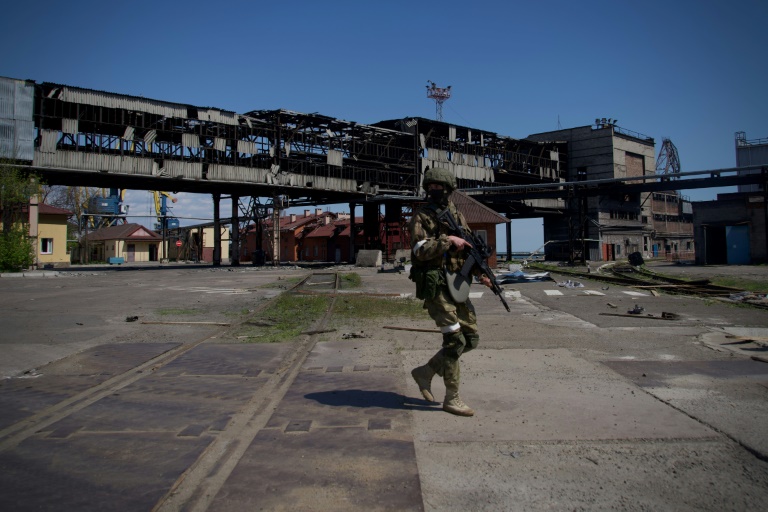
The city is now largely calm, AFP journalists saw on a recent press tour organised by Russian forces, apart from the muffled rumble of explosions coming from the direction of the Azovstal steel plant, the last holdout of Ukrainian forces. 

After living for weeks in underground shelters or shut in at home, Mariupol’s residents are emerging to find their once-vibrant port city a devastated ruin.

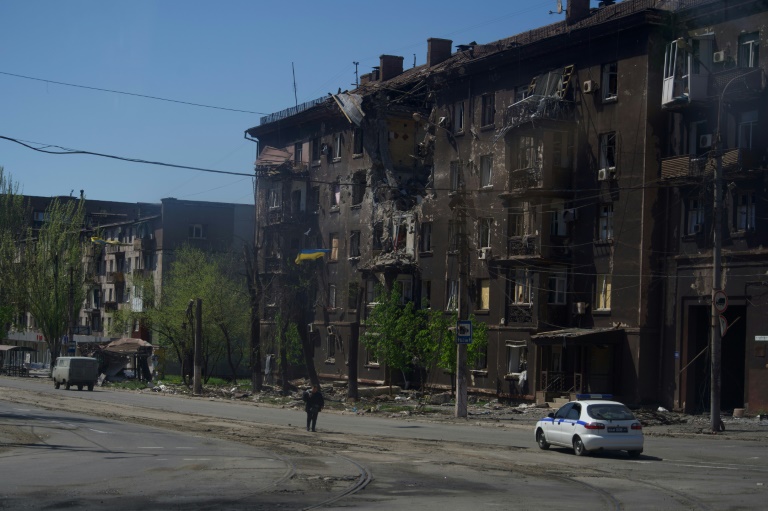
In one eastern district, none of the nine-storey Soviet-era apartment blocks lining the streets are intact. The buildings’ facades are charred and torn apart by shelling, and some have collapsed entirely. 

Shops have been looted and several freshly dug graves can be seen in the grassy alley that runs in the middle of a boulevard.

There is no running water, no electricity, no gas, no mobile network and no internet — daily life is now dominated by the hunt for the most basic of essentials. 

On the day AFP was in the city, separatist authorities organised aid distribution in front of the pockmarked walls and shattered windows of a local school.

– ‘We don’t live, we survive’ –

Some 200 people massed behind a military truck as volunteers handed out food packages — pasta, oil, some preserves — marked with the letter “Z” that symbolises support for Russia’s military campaign in Ukraine. Not far away, two tanker trucks distributed drinkable water.

An old man with narrowed eyes pushed a rickety pram filled to the brim with cans and parcels.

Residents gathered in front of a building at improvised gas stoves heating pots and teapots, the acrid smell rising into the air. Beside them, clothes were steeping in two big blue barrels turned into makeshift washing machines.

“We don’t live, we survive,” said Irina, a 30-year-old video game designer lost inside a grey sweatshirt, the little face of a Yorkshire Terrier sticking out from her backpack. 

Many residents of the city — home to about 450,000 people before the conflict — fled as Russian forces advanced.

It is unclear how many remain but those left behind now see little hope of being able to leave.

“I would like to go, but where?” asked Kristina Burdiuk, a 25-year-old pharmacist heading home with her two young girls, each hugging a large loaf of bread to her chest.

“There is nothing left” elsewhere in Ukraine, she said, and “there are already so many” Ukrainians in Poland. Russia, she said simply, is not an option.

Burdiuk said she saw cars carrying families riddled with bullets when they tried to escape the city at the start of the siege. She does not know who shot them. 

So she prefers to stay in Mariupol, with her husband, mother and grandmother. She plans to take up offers of work from the new authorities, clearing up rubble, removing bodies or helping with demining — the salary now paid in Russian rubles.

“I am ready to do anything,” she said.

– Anger and frustration –

Irina, the video game designer, said she cannot work without the internet or phone lines and — far worse — cannot reach her loved ones outside the city.

She worries about her twin sister who, the last she heard, was in the capital Kyiv.

Her only sources of information are a pro-Russian channel she can hear on a neighbour’s battery-powered radio, or the rumours that spread among neighbours.

The lack of reliable news and continued uncertainty have left the city boiling with anger and frustration.

During the aid distribution, a woman of around 60 began questioning an official and soon a group formed around him.

“When will we get our pensions? When will the schools re-open? What about the shops?” they asked. 

“We are doing our best,” said the official, dressed in a camouflage uniform and military cap. “The priority is to ensure security and clean up.”

Despite the presence of several armed soldiers, a young man exploded: “We asked you concrete questions, give us concrete answers!”

As she prepared to head home from the aid distribution point with food and water, Irina wanted to believe “the worst is over”. 

She hopes she can “hold on a few more weeks, a few months, until the situation gets better.”

Most of all, she wants communications restored so she can reach out to her twin.

“I want to tell her: ‘I am alive, your sister is alive.'”

Close Bitnami banner
Bitnami