World

War in Ukraine: Latest developments

Here are the latest developments in the war in Ukraine:

– Donbas offensive –

Russia says its forces have carried out dozens of air strikes in eastern Ukraine as part of a new offensive in the Donbas region that had been expected for days.

Moscow says the strikes targeted Ukrainian positions in parts of the Donbas as well as in towns close to the eastern frontline. 

“We are gradually implementing our plan to liberate the Donetsk and Lugansk People’s Republics,” Defence Minister Sergei Shoigu says, referring to eastern Ukraine’s two rebel regions, which Moscow has recognised as independent states.

– Fighting in Mariupol –

Fighting between Ukrainian and Russian forces is “ongoing” in the strategic port of Mariupol, Pavlo Kyrylenko, governor of Ukraine’s eastern Donetsk region, says.

Russia earlier on Tuesday called on Ukrainian forces in Mariupol to “immediately” lay down their arms in a new ultimatum.

Russian forces are believed to have gradually pushed their way into the city, pinning Ukrainian troops down to giant factories near the port, which are equipped with vast underground tunnels.

– Biden talks with allies 

US President Joe Biden holds a virtual meeting of allies to discuss the Ukraine conflict.

The videoconference brings together the leaders of France, Britain, Germany, Romania, Poland, Italy, Canada and Japan.

The United States and the European Union have reached a “broad consensus” on the need to increase pressure on Russia through new sanctions, the Italian government says after the talks.

German Chancellor Olaf Scholz says after the meeting Russian President Vladimir Putin is responsible for war crimes in Ukraine that have already left thousands of civilians dead.

– Easter truce call –

UN Secretary-General Antonio Guterres denounces Russia’s fresh offensive in eastern Ukraine and calls for a four-day truce to mark Orthodox Holy Week.

“Hundreds of thousands of lives hang in the balance,” the United Nations chief says, adding a truce would allow safe passage for civilians to flee the eastern war zone, and for humanitarian aid to be delivered to the hardest-hit areas.

– New US arms delivery –

The first shipments of a new US military aid package have arrived at Ukraine’s borders to be handed over, a senior Pentagon official says.

The package includes 18 155mm howitzers for the first time, as well as 40,000 artillery rounds, 200 M113 armoured personnel carriers, 11 Mi-17 helicopters and 100 armoured multi-purpose vehicles.

– Growth hit –

The “seismic” impact of the war in Ukraine is spreading worldwide, causing the IMF to sharply downgrade its 2022 global growth forecast to 3.6 percent, 0.8 points lower than in January.

The latest World Economic Outlook shows Ukraine suffering a 35 percent collapse this year, while Russia sees a drop of 8.5 percent.

– Diplomats expelled –

Russia says it is expelling 36 diplomats from Belgium and the Netherlands in retaliation for similar measures taken against its envoys in the two EU countries.

– Nearly 5 mn have fled Ukraine: UN –

More than 4.9 million Ukrainians have fled their country following the Russian invasion, says the UN’s refugee agency.

the UNHCR says 4,980,589 Ukrainians had left since Russia invaded on February 24 — a figure up 46,174 on Monday’s total.

burs-cdw/cb-jmy/ach 
Judge halts work on Mexico president's contentious tourist train

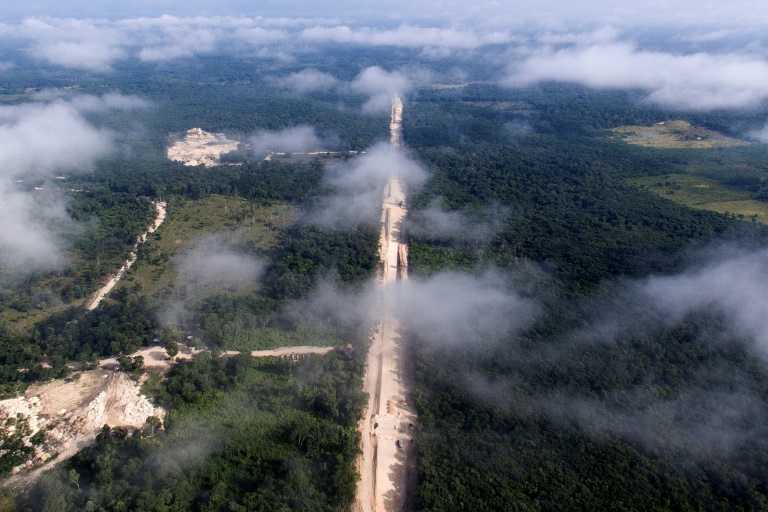
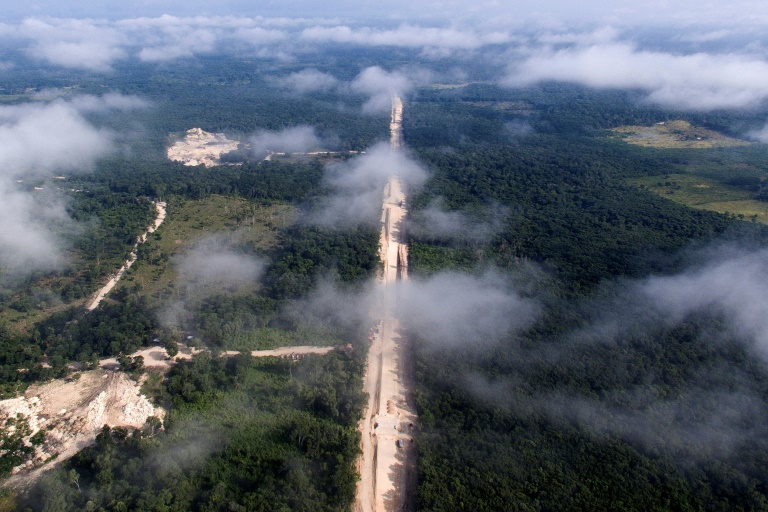
A Mexican judge has suspended construction of part of President Andres Manuel Lopez Obrador’s flagship tourist train project in the Yucatan peninsula due to a lack of environmental impact studies.

The Mayan Train, a roughly 1,500-kilometer (950 mile) rail loop linking popular Caribbean beach resorts and archeological ruins, has met with opposition from environmentalists and indigenous communities.

A court in the southeastern state of Yucatan on Monday ordered the suspension of “works related to its construction, infrastructure… or destruction of biodiversity.”

The halt to work between the resorts of Playa del Carmen and Tulum is temporary, pending resolution of an injunction sought by scuba divers, who are concerned about the impact on water-filled sinkholes known as cenotes.

The original plan for the disputed section was for an overpass over a highway, but the route was modified to go through jungle at ground level.

The change prompted protests from environmental groups, who complained that the line will now pass over underground rivers and cenotes connected to a giant aquifer under the jungle.

Often filled with stunning emerald or turquoise waters illuminated by a shaft of light from above, the sinkholes are a major attraction for tourists and a source of drinking water for indigenous communities.

Lopez Obrador on Tuesday dismissed the criticism of his signature project, which is supported by some residents as a potential source of jobs and economic prosperity.

“There are more and more environmentalists who didn’t exist before,” the president told reporters.

“We’re going to wait to see what they’re claiming now and find a way to defend ourselves legally,” he said.

Judge halts work on Mexico president's contentious tourist train

A Mexican judge has suspended construction of part of President Andres Manuel Lopez Obrador’s flagship tourist train project in the Yucatan peninsula due to a lack of environmental impact studies.

The Mayan Train, a roughly 1,500-kilometer (950 mile) rail loop linking popular Caribbean beach resorts and archeological ruins, has met with opposition from environmentalists and indigenous communities.

A court in the southeastern state of Yucatan on Monday ordered the suspension of “works related to its construction, infrastructure… or destruction of biodiversity.”

The halt to work between the resorts of Playa del Carmen and Tulum is temporary, pending resolution of an injunction sought by scuba divers, who are concerned about the impact on water-filled sinkholes known as cenotes.

The original plan for the disputed section was for an overpass over a highway, but the route was modified to go through jungle at ground level.

The change prompted protests from environmental groups, who complained that the line will now pass over underground rivers and cenotes connected to a giant aquifer under the jungle.

Often filled with stunning emerald or turquoise waters illuminated by a shaft of light from above, the sinkholes are a major attraction for tourists and a source of drinking water for indigenous communities.

Lopez Obrador on Tuesday dismissed the criticism of his signature project, which is supported by some residents as a potential source of jobs and economic prosperity.

“There are more and more environmentalists who didn’t exist before,” the president told reporters.

“We’re going to wait to see what they’re claiming now and find a way to defend ourselves legally,” he said.

Six killed in blasts at Shiite school in Afghan capital

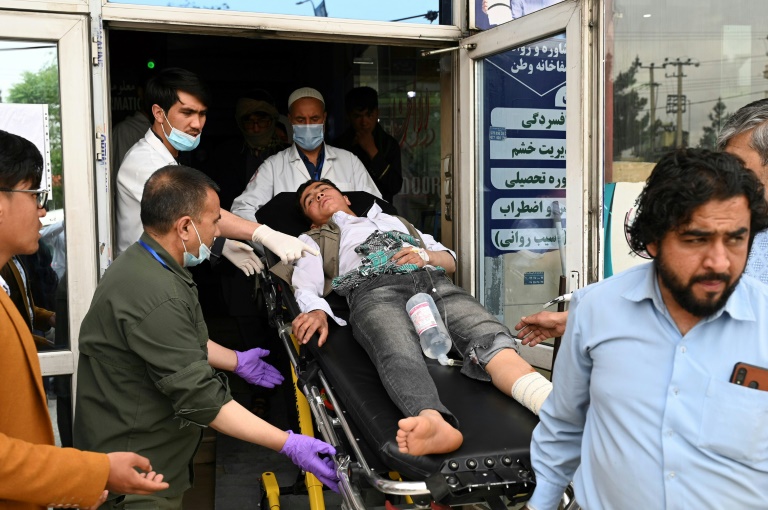
At least six people were killed and 24 wounded on Tuesday by two bomb blasts that struck a boys’ school in a Shiite Hazara neighbourhood of the Afghan capital, police and hospital staff said.

The number of attacks in Afghanistan has significantly declined since the Taliban ousted the US-backed government in August, but the jihadist Islamic State group has claimed several since then.

Several bodies were strewn outside the gate of the school in the densely populated Shiite Dasht-e-Barchi neighbourhood in Kabul, alongside patches of blood, burnt books and school bags, according to images posted on social media.

“We were leaving school and had just stepped out from the rear gate when the explosion occurred,” Ali Jan, a student who was wounded in the first blast, told AFP at a hospital.

The second blast took place as rescuers arrived to ferry victims from the first explosion to hospitals.

“Some of our friends have lost hands, while some were covered in blood,” said Saeed Rahmatullah Haidari, a student at the school.

“There were pieces of broken glass and pools of blood… my whole body was shaking.”

Outside a hospital treating the wounded, Taliban fighters beat back the families of students who had gathered, slapping or pushing some of them as they searched for information.

Women cried out as they scanned through pictures of victims posted on nearby walls by medics. 

Kabul police spokesman Khalid Zadran told AFP that the attack outside the Abdul Rahim Shahid school was caused by two improvised explosive devices, killing six people.

A grenade was also thrown at a nearby English language centre in the same area, wounding one person, he later said.

Two hospitals said they were treating 24 wounded patients. 

– ‘Reprehensible attacks’ –

Amnesty International condemned Tuesday’s ‘reprehensible attacks’ against the Hazara community.

“It also shows that the Taliban, as the de-facto authorities, are failing to protect civilians, especially those from ethnic and religious minority groups, from harm,” Amnesty International’s South Asia Campaigner Samira Hamidi said in a statement.

The European Union’s special envoy to Afghanistan, Tomas Niklasson, said those behind the “heinous” attacks must be held accountable.

The Dasht-e-Barchi neighbourhood is mainly home to the Hazara community and has been previously targeted by the Islamic State group — a rival of the Taliban, also a hardline Sunni Islamist movement.

The Hazara community, which makes up between 10 and 20 percent of the country’s 38 million people, has long been the target of mass-casualty attacks, some blamed on the Taliban during their 20-year insurgency. 

Since seizing power the Taliban have regularly carried out raids on suspected IS hideouts, mainly in the eastern Nangarhar province.

Taliban officials insist their forces have defeated IS, but analysts say the jihadist group is a key security challenge.

It has claimed some of the deadliest attacks in Afghanistan in recent years.

In May last year at least 85 people — mainly girl students — were killed and about 300 wounded when three bombs exploded near their school in Dasht-e-Barchi.

No group claimed responsibility, but in October 2020 IS claimed a suicide attack on an educational centre in the same area that killed 24, including students.

In May 2020, the group was blamed for a bloody gun attack on a maternity ward of a hospital in the neighbourhood that killed 25 people, including new mothers.

Shutdown of Libya oil sites spreads to second terminal

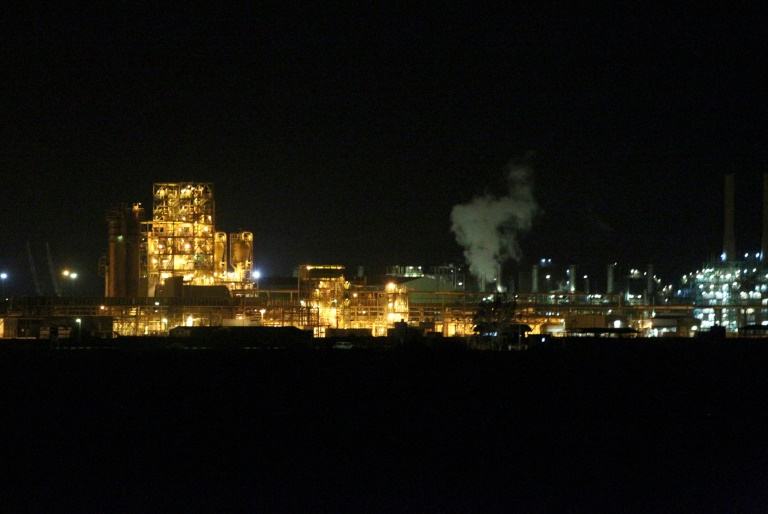
Libya’s National Oil Corporation announced Tuesday the closure of a second export terminal, paralysing the vital energy sector in a North African country gripped by political crisis.

The suspension of operations at Brega terminal, which has an export capacity of 60,000 barrels per day (bpd), follows a force majeur and closure on Monday of Zueitina port and several other major sites in the “Oil Crescent” region of eastern Libya.

The NOC, in a statement, said it “declares a state of force majeure on the oil port of Brega because it is impossible to implement its commitments towards the oil market”.

Force majeure, a legal move, allows parties to free themselves from contractual obligations when factors such as fighting or natural disasters make meeting them impossible.

The NOC made a similar declaration on Monday at another major oil field, Al-Sharara.

“A group of individuals put pressure on workers in the Al-Sharara oil field, which forced them to gradually shut down production,” it said.

Oil installations have often been attacked or blockaded by armed groups who hold sway in Libya.

Libya has had two rival executives since the eastern-based parliament in February appointed a new prime minister in a direct challenge to the UN-brokered government in the capital Tripoli.

The latest standoff pits Prime Minister Abdulhamid Dbeibah’s interim government against that of former interior minister Fathi Bashagha, who was chosen by the parliament.

The groups blocking the oil facilities are demanding “a fair distribution” of income and the transfer of power to Bashagha.

They have led to combined losses in production estimated at 600,000 bpd, about half of Libya’s daily output.

The NOC warned that Libya would pay a high price.

“At a time when oil prices are recovering significantly due to increased global demand… Libyan crude is being subjected to a wave of illegal closures, which will have serious damage to wells, reservoirs and surface equipment… as well as the loss of state treasury opportunities at prices that may not be repeated for decades to come,” it said.

The NOC is one of the few institutions in the troubled country to have stayed intact — and largely neutral — since the 2011 NATO-backed uprising that ousted longtime dictator Moamer Kadhafi.

Oil revenues are vital to the economy of a country sitting on Africa’s largest known reserves.

Shutdown of Libya oil sites spreads to second terminal

Libya’s National Oil Corporation announced Tuesday the closure of a second export terminal, paralysing the vital energy sector in a North African country gripped by political crisis.

The suspension of operations at Brega terminal, which has an export capacity of 60,000 barrels per day (bpd), follows a force majeur and closure on Monday of Zueitina port and several other major sites in the “Oil Crescent” region of eastern Libya.

The NOC, in a statement, said it “declares a state of force majeure on the oil port of Brega because it is impossible to implement its commitments towards the oil market”.

Force majeure, a legal move, allows parties to free themselves from contractual obligations when factors such as fighting or natural disasters make meeting them impossible.

The NOC made a similar declaration on Monday at another major oil field, Al-Sharara.

“A group of individuals put pressure on workers in the Al-Sharara oil field, which forced them to gradually shut down production,” it said.

Oil installations have often been attacked or blockaded by armed groups who hold sway in Libya.

Libya has had two rival executives since the eastern-based parliament in February appointed a new prime minister in a direct challenge to the UN-brokered government in the capital Tripoli.

The latest standoff pits Prime Minister Abdulhamid Dbeibah’s interim government against that of former interior minister Fathi Bashagha, who was chosen by the parliament.

The groups blocking the oil facilities are demanding “a fair distribution” of income and the transfer of power to Bashagha.

They have led to combined losses in production estimated at 600,000 bpd, about half of Libya’s daily output.

The NOC warned that Libya would pay a high price.

“At a time when oil prices are recovering significantly due to increased global demand… Libyan crude is being subjected to a wave of illegal closures, which will have serious damage to wells, reservoirs and surface equipment… as well as the loss of state treasury opportunities at prices that may not be repeated for decades to come,” it said.

The NOC is one of the few institutions in the troubled country to have stayed intact — and largely neutral — since the 2011 NATO-backed uprising that ousted longtime dictator Moamer Kadhafi.

Oil revenues are vital to the economy of a country sitting on Africa’s largest known reserves.

Washington Mormon Temple to welcome public for first time in half a century

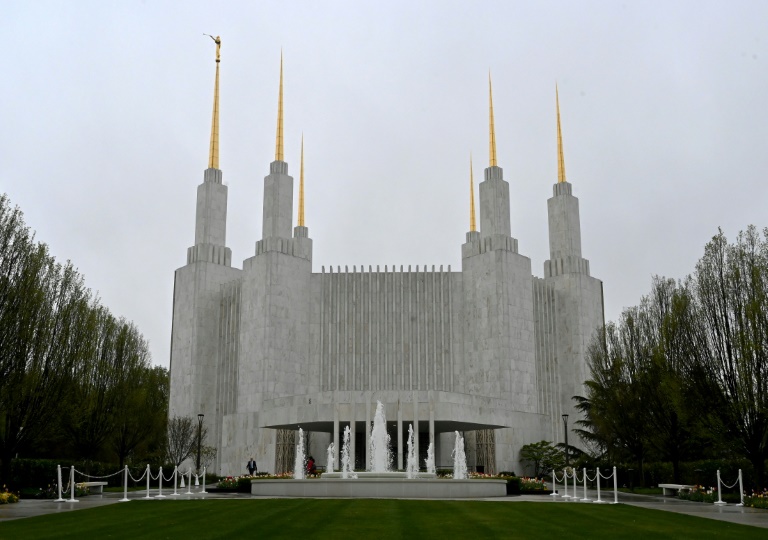
Like something from a science fiction novel, with its six golden spires and pristine white walls rising above the surrounding trees, the Washington Mormon Temple has for decades intrigued those barred from entering.

Their curiosity will soon be satisfied, however, as for the first time in almost half a century, the temple this month will open its doors to the general public.

The building, one of the most mysterious in the US capital, is usually only open to members of the Church of Jesus Christ of Latter-day Saints, for whom family, chastity and mission work are central values. 

“People feel like what we do inside is a secret, but as you saw today, it’s just sacred. It’s very sacred for us,” Kevin Duncan, a senior official in the Church, told AFP.

On Monday, during an open day for the media, the temple welcomed non-members for the first time since 1974, when it was dedicated. 

The visitors had to put on white slippers to view the hushed, luxurious interior with its pristine thick carpets and gilt surfaces. 

The last time the public was allowed to cross the threshold, 750,000 people, according to the Church, had swarmed the site in Kensington, Maryland, a few miles (kilometers) outside the bounds of Washington proper. Among them was the First Lady, Betty Ford. 

The temple closed in 2018 for renovations and was due to re-open in 2020, before the Covid-19 pandemic upended the schedule.

– Baptisms for the dead –

Future visitors must reserve free tickets to enter the site from the end of April to the beginning of June. 

Inside they will be able to discover the rituals of the Church, where as soon as members enter what they consider to be one of the most sacred places on Earth, they abandon their street clothes to dress in white. 

“It’s a reset. A symbol of equality, purity,” said David Bednar, one of the 12 apostles of the Church, who came from Utah for the occasion. 

The curious can also visit the baptistry, where a small pool is mounted on the backs of 12 life-size white marble bulls representing the 12 tribes of Israel. 

In the Mormon faith, baptism by immersion inside the temple is reserved for the dead. 

The Church allows its flock to be baptized on behalf of their ancestors, and it is then up to the souls of the deceased — if they exist, and the Church firmly believes they do — to accept the “gift” or not. 

Ordinary baptisms take place in other buildings. 

Among the other spaces in the sprawling temple is the “sealing room,” where marriages are celebrated (or “sealed”) around a white marble altar upholstered with beige velvet. 

Unions are exclusively between a man and a woman and are deemed to last not just a lifetime but into death, because “family is essential to the Father’s plan,” said Bednar. 

Family ties between parents and children can also be “sealed” for eternity in a ceremony in these same rooms.

The Church says it expects to welcome several hundred thousand visitors during its open house period.

Oil prices plunge after IMF cuts global growth forecast

Oil prices plunged by more than five percent Tuesday as investors worried about a drop in demand after the International Monetary Fund cut its global growth forecast.

Around 1530 GMT the price of Brent crude, the main international oil contract, was down 5.4 percent to $107.11 per barrel, while the main US oil contract, WTI, fell 5.5 percent to $102.30.

European stocks were all down at close, as traders fretted over the IMF’s pessimistic outlook for 2022.

The IMF sharply downgraded its 2022 global growth forecast to 3.6 percent in its latest outlook report Tuesday, 0.8 percentage points lower than its previous estimate in January.

Energy prices are surging, debt levels are rising and shortages remain acute, the IMF noted, as multiple crises including the Ukraine war and coronavirus pandemic fuel an acceleration of inflation.

“The economic effects of the war are spreading far and wide — like seismic waves that emanate from the epicenter of an earthquake,” IMF chief economist Pierre-Olivier Gourinchas said in the report.

The downgrade was sharper for the eurozone, which is now expected to grow by 2.8 percent instead of 3.9 percent.

Michael Hewson, chief market analyst at CMC Markets UK, said Tuesday’s “sharp decline in oil prices offsets concerns that the start of a renewed Russian offensive on the Donbass region (in the east) could increase the pressure on the EU to look at a complete embargo on Russian oil and gas”.

Wall Street was up in late morning trading, with the three major indices reporting rises of more than one percent, a marked change from Monday when markets were lower over worries about higher interest rates.

Hewson noted that the IMF’s cut to the US growth forecast, from 4.0 percent to 3.7 percent, was more modest than that to the eurozone.

Asian markets diverged as the region weighed the impact of Covid lockdowns in China, analysts at Charles Schwab investment firm said in a note.

China’s economic growth accelerated in the first quarter of the year to 4.8 percent, official data showed Monday, but the government warned of “significant challenges” ahead.

– Key figures around 1530 GMT –

London – FTSE 100: DOWN 0.2 percent at 7,601.28 points (close)

Frankfurt – DAX: DOWN 0.07 percent at 14,153.46 (close)

Paris – CAC 40: DOWN 0.8 percent at 6,534.79 (close)

EURO STOXX 50: DOWN 1.0 percent at 3,744.35 (close)

Tokyo – Nikkei 225: UP 0.69 percent at 26,985.09 (close)

Shanghai – Composite: DOWN 0.05 percent at 3,194.03 (close)

Hong Kong – Hang Seng Index: DOWN 2.28 percent at 21,027.76 (close)

New York – Dow: UP 1.1 percent at 34,812.40

Dollar/yen: UP at 128.55 yen from 126.54 yen

Euro/dollar: DOWN at $1.0793 from $1.0802

Pound/dollar: DOWN at $1.3001 from $1.3023

Euro/pound: UP at 83.01 pence from 82.87 pence

Brent North Sea crude: DOWN 5.4 percent at $107.11 per barrel

West Texas Intermediate: DOWN 5.5 percent at $102.30 per barrel

burs-raz/rl

New 'phase' of Ukraine war as Russia attacks east

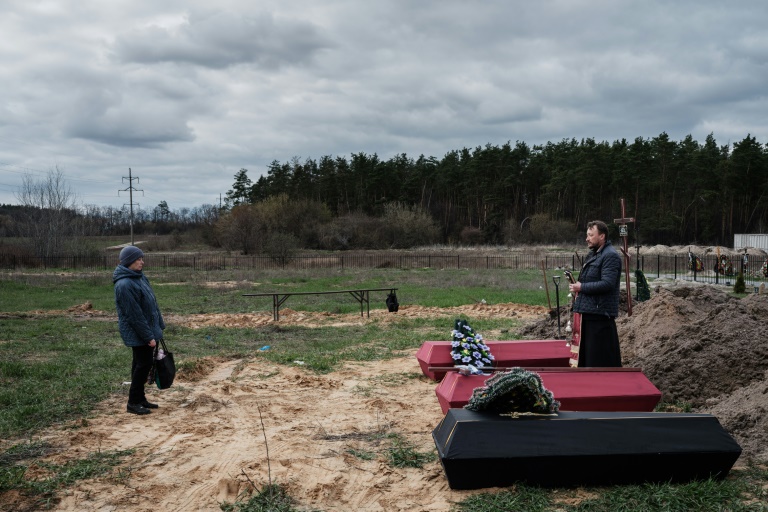
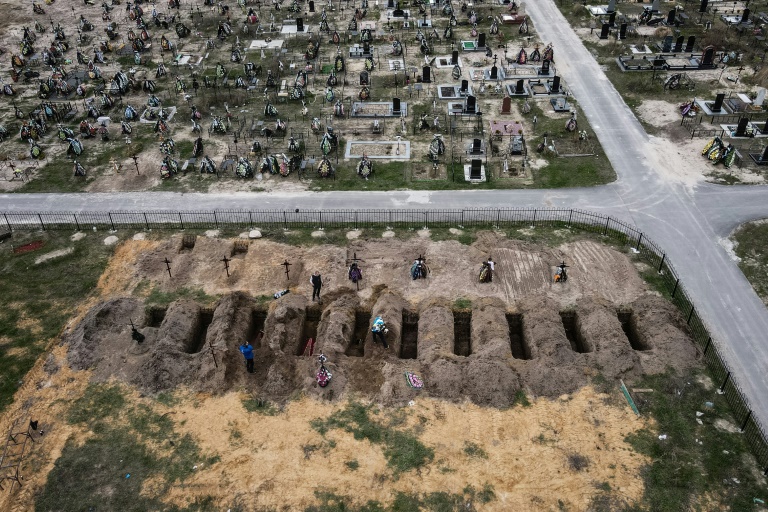
Moscow launched dozens of air strikes across eastern Ukraine overnight, its defence ministry said Tuesday, with Russia’s top diplomat acknowledging “another phase” of the conflict was beginning as fighting raged in the Donbas region.

Russia’s defence ministry said that “high-precision air-based missiles” had hit 13 Ukrainian positions in parts of the Donbas while other air strikes “hit 60 military assets”, including in towns close to the eastern frontline. 

Ukraine’s armed forces also confirmed that fighting had increased throughout the east, just hours after President Volodymyr Zelensky said Russia had kicked off the widely anticipated offensive in Ukraine’s industrial heartland.  

“The Russian occupiers intensified offensive operations along the entire line of contact,” the general staff of Ukraine’s armed forces said in a report published early Tuesday. 

Russia’s Foreign Minister Sergei Lavrov appeared to acknowledge the new offensive during an interview with a leading Indian media outlet. 

“Another phase of this operation is beginning and I am sure it will be a very important moment in this entire special operation,” Lavrov told India Today on Tuesday.

Ahead of the advance, Ukrainian authorities had urged people in Donbas to flee west to escape, even as officials called off evacuations for a third straight day from frontline cities due to ongoing fighting. 

“No matter how many Russian soldiers are brought here, we will fight. We will defend ourselves,” Zelensky said on Telegram late Monday.

– ‘Bombed everywhere’ –

Russian President Vladimir Putin has said he launched the so-called military operation on February 24 to save Russian speakers in Ukraine from a “genocide” carried out by a “neo-Nazi” regime.

But in the Donbas town of Novodruzhesk, Nadya, 65, said “we are bombed everywhere”.

“It’s a miracle that we’re still alive,” she said, her voice trembling.

“We were lying on the ground and waiting. Since February 24 we’ve been sleeping in the cellar.”

Control of Donbas and the besieged port of Mariupol would allow Moscow to create a southern corridor to the Crimean peninsula that it annexed in 2014, and deprive Ukraine of much of its coastline and a major revenue resource.

In the south, Russia continued its push to capture the besieged port city of Mariupol, as Moscow issued a fresh call for the city’s defenders to surrender and announced the opening of a humanitarian corridor for Ukrainian troops who agreed to lay down their arms.

During an interview broadcast on CNN Tuesday, Pavlo Kyrylenko — who oversees the Donetsk region’s military administration — said Mariupol remained contested. 

“The Ukrainian flag is flying over the city,” said Kyrylenko. “I can’t say the Russians are controlling them. It is just these streets are sustaining heavy fighting.”

– $800 million boost –

The first shipments of a new $800-million (740 million euros) US military aid package had begun to arrive at Ukraine’s borders this week, for use against Russian forces.

Washington was due to hold a video meeting with allies Tuesday to discuss the conflict in Ukraine, even as it increasingly provoked the ire of Moscow.

“The United States and Western states under its control are doing everything to drag out the military operation for as long as possible,” said Russia’s defence chief Sergei Shoigu in a televised meeting with his military commanders.

“The growing volume of foreign weapons supplies graphically demonstrate their intention to provoke the Kyiv regime to fight to the last Ukrainian.”

– ‘Seismic waves’ –

While much of the focus has remained in Ukraine’s east, Moscow has also targeted the country’s west with air strikes, killing at least seven people in the city of Lviv near the Polish border on Monday.

Lviv has largely been spared bombardment since Russia invaded on February 24, and the city and its surroundings had become a haven for those seeking safety from the war zone.

But even as strikes continued to hit targets across the country, the east appeared to be Russia’s primary focus. 

The regional governor of the eastern Lugansk region Sergiy Gaiday said Ukrainian forces continued to hold their ground amid heavy fighting.

“We have positional battles in the cities of Rubizhne and Popasna. The enemy cannot do anything though. They are losing people and equipment there,” Gaiday said.  

“Our guys are shooting down drones there.  Shooting down planes on the border of the Lugansk and Kharkiv regions, so they are holding on,” he added. 

Later Tuesday, the UN Secretary-General Antonio Guterres denounced Russia’s ongoing offensive as he issued calls for a four-day truce to mark Orthodox Holy Week.

“The intense concentration of forces and firepower makes this battle inevitably more violent, bloody and destructive,” said Guterres as he called for a “humanitarian pause” from Holy Thursday until Easter Sunday on April 24. 

As fighting raged, the International Monetary Fund (IMF) published a grim forecast for the warring nations on Tuesday, while also predicting the conflict would drag down the global economy — hitting poorest nations the hardest.  

“The economic effects of the war are spreading far and wide — like seismic waves that emanate from the epicenter of an earthquake,” said IMF chief economist Pierre-Olivier Gourinchas. 

The report predicted Ukraine suffering a 35 percent collapse of its economy this year, while Russia’s GDP will drop 8.5 percent — more than 11 points below the pre-war expectations.

burs-ds/yad

First killing by police in Sri Lanka protests

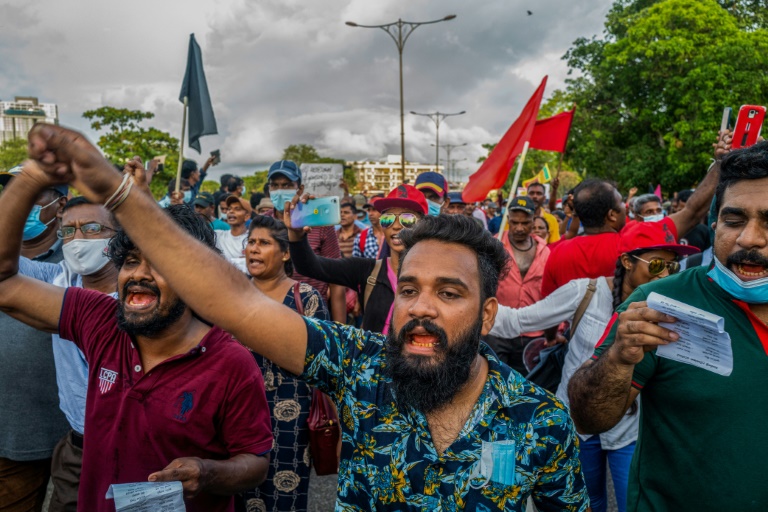
Sri Lanka police shot dead a protester and wounded 24 others on Tuesday in the first fatal clash with residents demonstrating against the government over a crippling economic crisis. 

The South Asian country is in the grip of its most painful economic downturn since independence in 1948, with regular blackouts and severe shortages of fuel and other goods causing widespread misery.

Huge protests have called for the resignation of the government, which is preparing to negotiate an urgently needed bailout with the International Monetary Fund.

Police fired live rounds at a crowd that had blockaded a railway line and highway connecting the capital Colombo with the central city of Kandy to protest oil shortages and high prices. 

“One man died of gunshot injuries,” a hospital official told AFP by telephone. 

Another 16 protesters were wounded, with eight in need of emergency surgery, while a further eight police officers were injured, the hospital official said.

Police said the crowd were about to set alight a tanker carrying diesel when officers fired tear gas to disperse them at the town of Rambukkana, 95 kilometres (60 miles) east of the capital.

“Instead of dispersing, the mob began pelting stones. At that point officers fired at them,” police spokesman Nihal Thalduwa said in a statement.

An indefinite curfew was imposed in the area, officials said.

Local media reports said demonstrators had thrown back tear gas canisters fired by officers in running street battles.

The protest was one of many spontaneous gatherings staged around Sri Lanka on Tuesday, after the country’s main petrol retailer hiked prices by nearly 65 percent. 

Local media footage showed dozens of police officers wearing anti-riot gear firing tear gas into the crowd.

“Fire, fire and chase them out,” a senior officer is heard shouting while directing his men to attack the crowds with tear gas.

Police said demonstrators had stopped road and train traffic for hours by the time of the shooting.

Footage from the local hospital showed victims being rushed into the facility and a man pleading for someone to treat his brother, who had been shot in the abdomen.

“Please rush quickly, my brother is bleeding,” the man shouted.

– US condemns violence –

The US ambassador to Sri Lanka, Julie Chung, said she was “deeply saddened” by the incident.

“I condemn any violence,” Chung said on Twitter.

“A full, transparent investigation is essential and the people’s right to peaceful protest must be upheld.”

Sri Lanka’s Bar Association also called for an impartial probe into the violence.

Elsewhere tens of thousands of angry motorists blocked arterial roads around the country with parked buses and burning tyre mounds to protest the latest rise in fuel prices and months of acute shortages. 

In the capital Colombo, a large crowd has been camped outside the seafront office of President Gotabaya Rajapaksa for more than a week, demanding the leader step down. 

Doctors at Sri Lanka’s main children’s hospital also staged a protest on Tuesday over a severe shortage of medicines and equipment.

– ‘I deeply regret it’ –

Rajapaksa acknowledged public anger over the ruling family’s mismanagement on Monday after appointing a new cabinet to navigate the country out of the crisis.

“People are suffering because of the economic crisis and I deeply regret it,” he said.

Sri Lanka’s economic meltdown began after the coronavirus pandemic torpedoed vital revenue from tourism and remittances. 

The government last week announced a default on its $51 billion foreign debt and the Colombo Stock Exchange has suspended trading to prevent an anticipated market collapse.

Rajapaksa’s administration has urged citizens abroad to donate foreign exchange to help pay for desperately needed essentials.

Colombo has sent a delegation to Washington and opened bailout talks with the International Monetary Fund.

Close Bitnami banner
Bitnami