World

Under shadow of drought, Santiago ditches exotic plants

With drought casting a constant shadow over Santiago’s 7.1 million residents, there has been a recent rush to replace thirsty, exotic plants with hardier, native ones in the hopes of staving off water rationing.

One of Latin America’s most urbanized cities has experienced more than a decade of drought, and managing water access for its fast-growing population is becoming increasingly difficult.

Last year saw the driest winter — the rainy season in Chile — this century, with 71 percent lower rainfall for Santiago than usual, according to the national meteorological office.

Predictions are equally dire for the southern-hemisphere winter about to start with the Mapocho River at 57 percent of capacity, the Maipo River at 61 percent and the El Yeso reservoir at just over two-thirds full.

City authorities are bracing for tough times ahead.

“We can’t make it rain. That is out of our hands, but we can prepare for… an extreme situation,” said Claudio Orrego, governor of Santiago.

Last week, the municipal government announced a four-step crisis plan that starts with encouraging voluntary water conservation but could end in a “Red Alert” phase of rationing.

If the water runs out, cuts will be rolled out to one sector of the city at a time, for a maximum of 24 hours each, under the plan.

It could affect some 142,000 households supplied by the Mapocho River, which bypasses Santiago from east to west, and another 1.5 million that rely on the Maipo River to the south.

– 100,000 trees –

Every day, agricultural engineer Pablo Lacalle — head of water resources at the Santiago Metropolitan Park (Parquemet) — guages the level of the Mapocho River.

Last year, the water level fell by more than half, according to official data.

“We have to plan… to know how much irrigation capacity we will have,” Lacalle told AFP with a concerned look.

“We have a deficit of about 87 percent of water in the park compared to previous years… Fifteen years ago the park had enough water to irrigate everything.”

Faced with the new reality, the park is rolling out a drought-busting re-planting plan.

“We have replaced exotic forest with native forest,” with 100,000 trees replanted in three years on the park’s northern slope, Parquemet director Eduardo Villalobos said.

Last year, pasture in the park was reduced by 50,000 square meters and replaced with endemic plants.

– Every drop ‘precious’ –

In the city itself, some are starting to take aim at green grass.

Urban architect Joaquin Cerda in 2021 launched a movement against “European-style” grass-lined sidewalks.

His project, “Vereda Nativa” (Native Sidewalk), has so far replaced some 150 square meters (1,600 square feet) of grass in the neighborhood of Pedro de Valdivia Norte with 25 native plant species. 

These were more adept, he said, to the climate of Santiago, “to prolonged drought and to live a long time without water,” he told AFP.

Now, “we water here once a week for half-an-hour using drip irrigation,” said Cerda, reducing water consumption to less than a tenth of what it was before.

“Every drop of water is very precious.”

According to the World Bank, annual precipitation in Chile’s coastal regions has decreased by 15 to 30 percent in the last century, leading to multiple periods of severe drought.

Climate change would likely change the frequency and magnitude of hazards such as wildfires and droughts, with risks for economic growth and public health, it says.

Access to water has become an increasingly contentious point in Chile.

Legally, water is a resource for public use, but the government has granted almost all exploitation rights to the private sector.

Industry accounts for about 20 percent of consumption and agriculture another 70 percent, with avocado — a major Chilean export — a particularly thirsty crop.

This all posed little problem in times of abundance, but drought brought a furious reaction in 2020 when some communities started running out of water.

Protesters occupied a well managed by a copper mining company, demanding it be used to provide water to communities instead.

The Constitutional Convention drafting a proposed new founding law for Chile on Monday approved an article stating that water is an “inalienable public good.”

20 million risk starvation as Horn of Africa drought worsens: UN

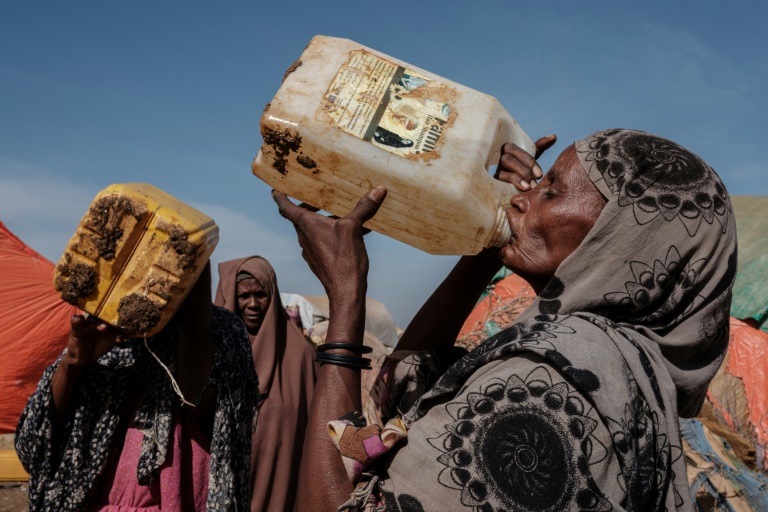
Twenty million people are at risk of starvation this year as delayed rains worsen an already brutal drought in Kenya, Somalia and Ethiopia, the UN warned Tuesday. 

A months-long drought has left the Horn of Africa on the verge of a humanitarian catastrophe, destroying crops and livestock and forcing huge numbers of people to leave their homes in search of food and water.

As long-awaited rains fail to materialise nearly a month into the current rainy season, “the number of hungry people due to drought could spiral from the currently estimated 14 million to 20 million through 2022,” the UN’s World Food Programme (WFP) said.

Six million Somalis or 40 percent of the population were facing extreme levels of food insecurity and there was “a very real risk of famine in the coming months” if current conditions prevailed, WFP said. 

In Kenya, half a million people were on the brink of a hunger crisis, with communities in the north of the country especially at risk due to their reliance on livestock. 

The number of Kenyans in need of assistance has risen more than fourfold in less than two years, the agency said. 

Malnutrition rates in drought-hit southern and southeastern Ethiopia have surged above emergency thresholds, while the north of the country has been in the grip of a 17-month war between government forces and Tigrayan rebels.

Parts of the drought-hit Horn of Africa region are already reeling from the effects of ongoing conflict, poverty and a locust invasion, the UN’s Food and Agriculture Organization (FAO) said Tuesday. 

“We must act now… if we want to prevent a humanitarian catastrophe,” FAO’s representative to the African Union, Chimimba David Phiri, told a UN briefing in Geneva.

– Lack of funding –

The dire conditions have been exacerbated by the conflict in Ukraine, which has contributed to soaring food and fuel costs and disrupted global supply chains, WFP said.

The agency warned that a lack of funding could spell disaster, calling for $473 million (438 million euros) over the next six months. 

A previous appeal in February raised less than four percent of the cash needed, it said.

Meanwhile, FAO was short of more than 60 percent of funds it required to meet the needs of 1.5 million people in the three countries.   

“We know from past experience that acting early to avert a humanitarian catastrophe is vital, yet our ability to launch the response has been limited due to a lack of funding to date,” said Michael Dunford, WFP’s regional director for East Africa.

East Africa endured a harrowing drought in 2017 but early humanitarian action averted a famine in Somalia.

In contrast, 260,000 people — half of them children under the age of six — died of hunger or hunger-related disorders when a famine struck the country in 2011.

Experts say extreme weather events are happening with increased frequency and intensity due to climate change.

Netflix shares plunge as subscribers drop

Netflix shares lost a quarter of their value Tuesday after the company revealed its ranks of subscribers shrank in the first quarter of this year.

It was the first time in a decade that the leading streaming television service had lost subscribers. The company blamed the quarter-over-quarter erosion to suspension of its service in Russia due to Moscow’s invasion of Ukraine.

Netflix ended the first quarter of this year with 221.6 million subscribers, slightly less than the final quarter of last year. 

The Silicon Valley tech firm reported a net income of $1.6 billion in the recently ended quarter, compared to $1.7 billion in the same period a year earlier. Netflix shares were down more than 25 percent to $259.30 in after-market trades that followed release of the earnings figures.

Netflix believes that factors hampering its growth includes subscribers sharing their accounts with people not living in their homes.

The streaming giant estimated that while it has nearly 222 million households paying for its service, accounts are shared with more than 100 million other households not paying subscription fees.

“When we were growing fast it wasn’t a high priority, and now we’re working super hard on it,” chief executive Reed Hastings said of account sharing during an earnings call.

“These are over a hundred million households that already are choosing to view Netflix; they love the service, we’ve just got to get paid in some degree for them.”

Netflix is testing ways to make money from people sharing accounts, such as by adding a feature that lets subscribers pay slightly more to add other households.

“If you’ve got a sister, let’s say that’s living in a different city, and you want to share Netflix with her – that’s great,” chief product officer Greg Peters said on the earnings call.

“We’re not trying to shut down that sharing, but we’re going to ask you to pay a bit more to be able to share with her.”

Another factor crimping Netflix growth is intense competition from titans such as Apple and Disney.

– Inflation squeeze –

Netflix and its rivals in streaming television are also up against a rate of inflation that has people likely taking stock of how many entertainment subscriptions they have racked up, according to analyst Rob Enderle of Enderle Group.

“With inflation taking hold, people are starting to watch their pennies,” Enderle said. “You get a situation where people are thinking through the subscriptions they have and the subscriptions that they keep.”

A big player in the market like Netflix will find it hard to grow in that kind of economic environment, especially in a market like the United States where it is deeply penetrated, Enderle told AFP.

Netflix recently announced subscription price bumps in the United States, with the basic option now costing $9.99, and the most expensive going up to $19.99. 

Netflix is looking at possibly adding a lower-priced subscription tier subsidized by advertising, a model that Hastings had long snubbed.

“It’s pretty clear that it’s working for Hulu,” Hastings said.

“It you still want the ad-free option, you will be able to have that. If you’d rather pay a lower price and you’re ad-tolerant, we’re going to cater to you also.”

Weaving ads into Netflix for revenue is “inevitable” given the recent earnings figures, said Upholdings portfolio manager Robert Cantwell.

The streaming television race is heating up, with Disney showing earlier this year that it was closing the gap with market leader Netflix, whose stride has slowed.

Like the Prime video streaming service fielded by Amazon, Disney is copying Netflix’s tactic of investing in local content that appeals to the language, culture and tastes in respective international markets.

Netflix has made that approach work, backing original blockbusters such as “Squid Game” from South Korea and France’s “Lupin.”

Florida governor calls to end Disney's self-governing status at theme park

Florida governor Ron DeSantis asked the US state’s congress Tuesday to vote to eliminate a statute that allows entertainment giant Disney to act as a local government in Orlando, where it has its theme park.

The move is the latest episode in a dispute between DeSantis’ administration and Disney, after the company criticized the passage in March of a law banning school lessons on sexual orientation.

The Republican governor demanded the state congress address eliminating Disney’s special status during a congressional session convened to redraw the electoral map.

“Yes, they will be considering the congressional map, but they also will be considering termination of all special districts that were enacted in Florida prior to 1968 — and that includes the Reedy Creek Improvement District,” DeSantis told a press conference.

The Reedy Creek Improvement District was an area created by Florida’s congress in 1967 to facilitate the construction of Disney World in Orlando.

The area is about 38 square miles (100 square kilometers) and includes two cities and land in Orange and Osceola counties, in central Florida.

Under that agreement, Disney runs the district as the entertainment juggernaut were a local government, including collecting taxes and guaranteeing essential public services such as garbage collection and water treatment.

The dispute began after DeSantis in early March signed into law a bill that bans lessons on sexual orientation and gender identity in elementary schools, the latest effort by Republicans in the United States to reshape education policy along conservative lines.

Opponents and LGBTQ rights activists lobbied against what they call the “Don’t Say Gay” law, which will affect kids in kindergarten through third grade, when they are eight or nine years old.

Disney CEO Bob Chapek slammed the law and halted all of Disney’s political donations in Florida — a move that came after weeks of outcry, particularly among LGBTQ staff, over the company not taking a public stand against the legislation.

“Florida’s HB 1557, also known as the ‘Don’t Say Gay’ bill, should never have passed and should never have been signed into law,” Chapek said after DeSantis signed the bill.

The governor responded by calling Disney’s attitude “dishonest” and announcing in late March that his administration could withdraw the company’s special privileges.

Cheers and jeers in US as plane mask mandates are lifted

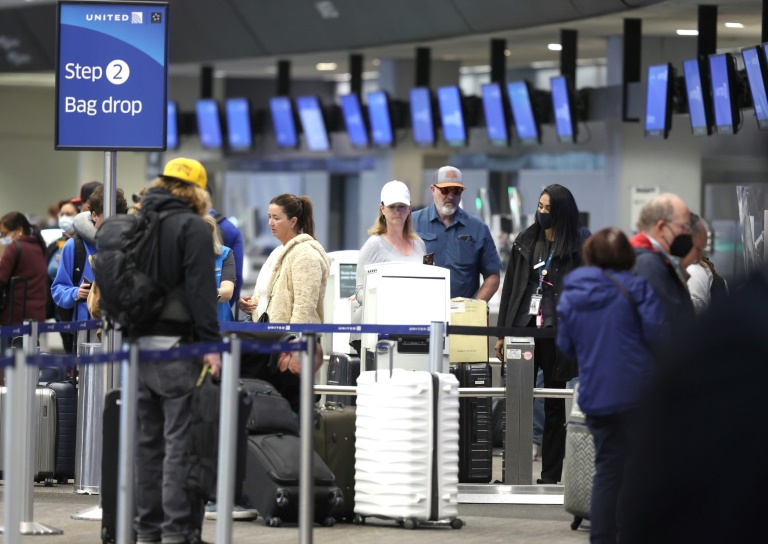
Airlines, subways and bus services across the United States moved quickly Tuesday to remove mask requirements following a federal court ruling that struck down face-covering mandates on public transportation, a hot-button issue throughout the pandemic.

Uber, Lyft and Amtrak were among the firms that announced an end to masking requirements hours after the decision was released, prompting reactions from travelers on social media.

In one clip, a Delta Air Lines pilot announcing the shift mid-flight is greeted by loud cheers. “Finally!” yells one passenger.

Considerably less enthusiastic was Scott Hechinger, an expert in public defender law, who also heard cheers at the airport, but became increasingly alarmed during the flight. 

“There is so much sneezing and coughing. And people just breathing it in. Freedom,” Hechinger tweeted.

Policymakers in Washington had decided last week to extend the federal mask mandate through May 3, but a federal judge struck that down on Monday, prompting an immediate wave of announcements from major airlines, including United Airlines and American Airlines.

On Tuesday, both Uber and Lyft shifted to a policy intended to be respectful of those who wish to continue wearing masks, while no longer requiring it. 

“While mask usage is still recommended, we’ve updated our Covid safety policies,” Uber said. “Let’s move forward, safely together.”

Rail company Amtrak also changed its policy, announcing that while masks were no longer required, “anyone needing or choosing to wear one is encouraged to do so.”

One prominent transportation provider holding firm was New York’s Metropolitan Transit Authority, which will continue to require face coverings on the city’s subways and buses, a spokesman said. In Washington, the Metro bus and rail system lifted its mandate.

– Majority support –

The changes come on the heels of Monday’s ruling from US federal judge Kathryn Kimball Mizelle who found that the mask mandate exceeds the statutory authority of the Centers for Disease Control and Prevention (CDC).

Mizelle, a nominee of Republican former president Donald Trump, issued her ruling in a lawsuit filed in July 2021 by a conservative non-profit organization called the Health Freedom Defense Fund and two individual plaintiffs. 

Although the public has a “strong interest” in combating the spread of Covid-19, the judge said, the mask mandate “exceeded the CDC’s statutory authority,” and the agency “failed to adequately explain its decisions.”

The Justice Department and CDC said late Tuesday that they disagreed with Mizelle’s ruling.

They described the masking order as a “valid exercise of the authority Congress has given CDC to protect public health,” according to a Justice Department statement that said potential next steps depended on a CDC public health assessment.

“If CDC concludes that a mandatory order remains necessary for the public’s health after that assessment, the Department of Justice will appeal the district court’s decision,” the statement added.

Polling suggests continued majority support for indoor mask mandates, but with a clear minority opposed.

A YouGov America poll conducted April 18, shortly before the ruling, found 63 percent “strongly” or “somewhat” support US government requirements for masks on public transport. 

Of the remainder, 19 percent were “strongly” opposed, 10 percent were “somewhat” opposed and nine percent weren’t sure.

Mask requirements have been a contentious topic throughout the pandemic and have proven particularly nettlesome on planes, where there has been a sharp uptick in assaults of flight attendants.

Flight attendants have been divided on whether to maintain the rule, Sara Nelson, president of the Association of Flight Attendants union said on CNBC Tuesday.

“There’s absolutely a sigh of relief from flight crews, but there are also people who are really concerned,” said Nelson, adding that the union did not take a position on whether to extend the mandate.

Representative Sam Graves of Missouri, the senior Republican on the House Transportation Committee, applauded Mizelle’s ruling. 

“It’s about time,” said Graves. “This hypocritical and overreaching mandate was never about health or science, since mask mandates were gone practically everywhere else. It’s time for this mandate to go once and for all.”

But Tatiana Prowell, an oncology professor at Johns Hopkins University School of Medicine, said she was hearing from those who are immunocompromised and others with cancer.

“In addition to wearing N95 masks, I’m advising them to travel on less popular days/times if possible during the pandemic for fewer crowds,” Prowell said on Twitter.

Russia tycoon denounces Kremlin's 'massacre' in Ukraine

Russian tycoon Oleg Tinkov on Tuesday denounced Moscow’s “massacre” in pro-Western Ukraine and urged the West to help end “this insane war”.

Offering some of the strongest criticism of the Kremlin’s military action in Ukraine by a prominent Russian, Tinkov claimed online that 90 percent of Russians were “AGAINST this war” and called the country’s forces a “shit army.”

One of Russia’s best-known entrepreneurs, Tinkov founded Tinkoff Bank in 2006. He has been based outside Russia in recent years. 

Russian President Vladimir Putin sent troops to Ukraine on February 24 to “de-Nazify” the pro-Western country. The conflict has killed thousands of people and displaced more than 12 million in the largest refugee crisis in Europe since World War II.

“Waking up with a hangover, the generals realised that they have a shit army,” Tinkov, 54, said in a post on Instagram.

“And how will the army be good, if everything else in the country is shit and mired in nepotism, sycophancy and servility?”

The businessman, who has been targeted by Western sanctions, added: “I don’t see a SINGLE beneficiary of this insane war! Innocent people and soldiers are dying.”

Switching to English, Tinkov, who stepped down as chairman of Tinkoff Bank in 2020, said:

“Dear ‘collective West’ please give Mr.Putin a clear exit to save his face and stop this massacre. Please be more rational and humanitarian.”

He posted his statement on the 55th day of Moscow’s military campaign, with Russian forces unleashing a major new offensive in the eastern Donbas region.

“90 percent of Russians ARE against this war!” Tinkov said. “Of course there are morons who draw Z but 10 percent of any country are morons,” he said, referring to what has become a Russian symbol of support for the war.

He added that Kremlin officials were “in shock” that they and their children will no longer be able to spend their summer holidays on the Mediterranean. “Businessmen are trying to rescue what’s left of their property,” he added.

Russian authorities have sought to muffle dissent over Moscow’s invasion of Ukraine, impose  prison terms of up to 15 years for publishing “fake news” about the army.

Tinkoff Bank said in a statement it would not comment on Tinkov’s “private opinion”, saying he no longer took decisions regarding operations across companies under the Tinkoff brand.

“He is not a Tinkoff employee, has not been in Russia for a long time and has been dealing with health issues in recent years,” the statement added.

Temporary aid can offset inflation hit to families: IMF official

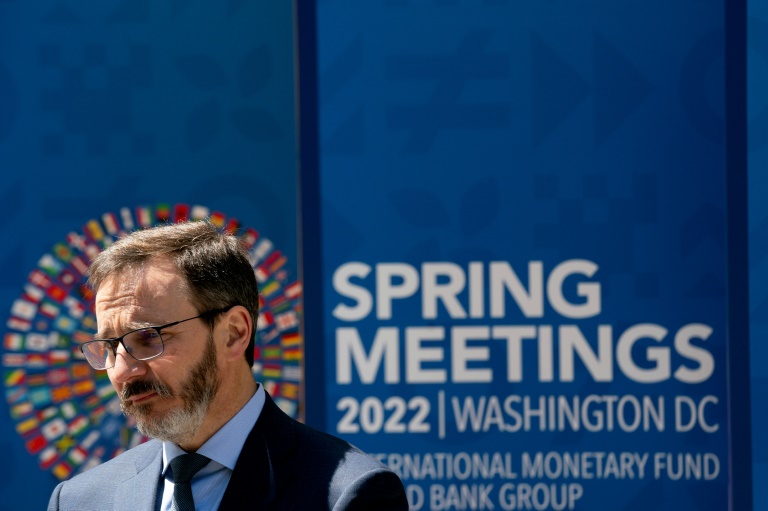
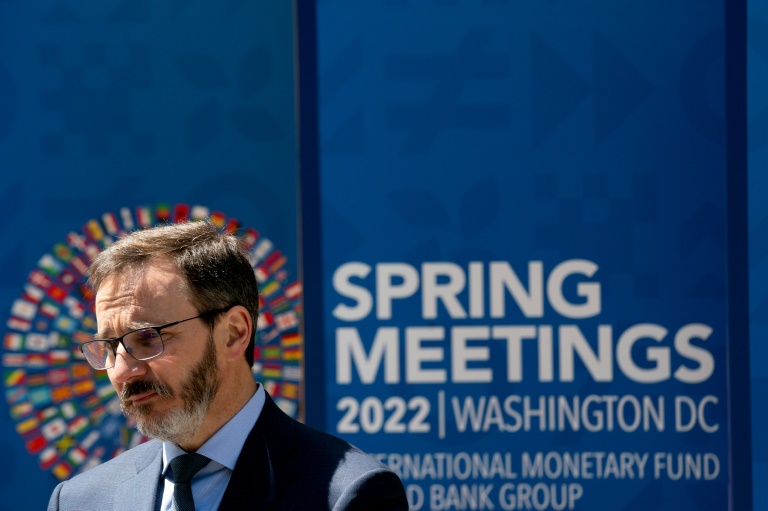
Faced with surging inflation that is hitting poor families especially hard, which has sparked unrest in some countries, policymakers should take immediate steps to offset the pain with targeted and temporary relief, IMF chief economist Pierre-Olivier Gourinchas said Tuesday.

“We’ve seen already in some countries people protesting when they see the price of food or basic items increasing very rapidly,” the official told AFP in an interview.

Governments can alleviate impact of the price jumps with “targeted measures to try to support vulnerable populations,” which can include steps like utility bill discounts or direct payments to poor families, he said.

Gourinchas earlier Tuesday unveiled the IMF’s latest World Economic Outlook which flags rising inflation as a key risk, made worse by the Russian invasion of Ukraine that has caused a surge in prices of fuel and food.

The damage the conflict is wreaking on the world economy, including the highest inflation in decades, is the key focus of global finance officials who are gathered this week for the spring meetings of the IMF and World Bank.

Support also could include “energy price subsidies, as long as they’re clear, they’re transparent and they’re temporary, so that they are not going to affect the budget for too long,” Gourinchas said.

That is an unusual stance for the Washington-based crisis lender, which historically abhorred subsidies and demanded countries eliminate them and tighten spending in exchange for financial support.

The IMF has often been cast as the villain in popular protests against austerity measures imposed by governments seeking to right their economies with the help of a loan package.

In recent weeks, demonstrators have taken to the streets in Peru and Sri Lanka to demand action from their leaders as the conflict in Ukraine and Western sanctions on Russia drove food and fuel prices to soar and created shortages that officials warn could cause a food crisis.  

Sri Lanka defaulted on its $51 billion in debt.

– Faster debt relief –

Gourinchas said some low income countries “with very limited fiscal space and elevated levels of debt,” will need outside help.

“The fund and other organizations are working on trying to address this food insecurity crisis, provide funding and food supplies to affected countries,” he said.

But for other countries the debt will become unsustainable and they will need to restructure those loans, he said, noting that about 60 percent of low income countries already face or are at high risk of debt distress.

During the Covid-19 pandemic, the Group of 20 adopted a Common Framework to provide a path to orderly debt restructuring, but only three countries have even applied for relief.

“It’s not been very successful yet, so we absolutely need to have a more rapid process,” he said, although he acknowledged that the process is complex.

Temporary aid can offset inflation hit to families: IMF official

Faced with surging inflation that is hitting poor families especially hard, which has sparked unrest in some countries, policymakers should take immediate steps to offset the pain with targeted and temporary relief, IMF chief economist Pierre-Olivier Gourinchas said Tuesday.

“We’ve seen already in some countries people protesting when they see the price of food or basic items increasing very rapidly,” the official told AFP in an interview.

Governments can alleviate impact of the price jumps with “targeted measures to try to support vulnerable populations,” which can include steps like utility bill discounts or direct payments to poor families, he said.

Gourinchas earlier Tuesday unveiled the IMF’s latest World Economic Outlook which flags rising inflation as a key risk, made worse by the Russian invasion of Ukraine that has caused a surge in prices of fuel and food.

The damage the conflict is wreaking on the world economy, including the highest inflation in decades, is the key focus of global finance officials who are gathered this week for the spring meetings of the IMF and World Bank.

Support also could include “energy price subsidies, as long as they’re clear, they’re transparent and they’re temporary, so that they are not going to affect the budget for too long,” Gourinchas said.

That is an unusual stance for the Washington-based crisis lender, which historically abhorred subsidies and demanded countries eliminate them and tighten spending in exchange for financial support.

The IMF has often been cast as the villain in popular protests against austerity measures imposed by governments seeking to right their economies with the help of a loan package.

In recent weeks, demonstrators have taken to the streets in Peru and Sri Lanka to demand action from their leaders as the conflict in Ukraine and Western sanctions on Russia drove food and fuel prices to soar and created shortages that officials warn could cause a food crisis.  

Sri Lanka defaulted on its $51 billion in debt.

– Faster debt relief –

Gourinchas said some low income countries “with very limited fiscal space and elevated levels of debt,” will need outside help.

“The fund and other organizations are working on trying to address this food insecurity crisis, provide funding and food supplies to affected countries,” he said.

But for other countries the debt will become unsustainable and they will need to restructure those loans, he said, noting that about 60 percent of low income countries already face or are at high risk of debt distress.

During the Covid-19 pandemic, the Group of 20 adopted a Common Framework to provide a path to orderly debt restructuring, but only three countries have even applied for relief.

“It’s not been very successful yet, so we absolutely need to have a more rapid process,” he said, although he acknowledged that the process is complex.

Six killed in blasts at Shiite school in Afghan capital

At least six people were killed and 24 wounded on Tuesday by two bomb blasts that struck a boys’ school in a Shiite Hazara neighbourhood of the Afghan capital, police and hospital staff said.

The number of attacks in Afghanistan has significantly declined since the Taliban ousted the US-backed government in August, but the jihadist Islamic State group has claimed several since then.

Several bodies were strewn outside the gate of the school in the densely populated Shiite Dasht-e-Barchi neighbourhood in Kabul, alongside patches of blood, burnt books and school bags, according to images posted on social media.

“We were leaving school and had just stepped out from the rear gate when the explosion occurred,” Ali Jan, a student who was wounded in the first blast, told AFP at a hospital.

The second blast took place as rescuers arrived to ferry victims from the first explosion to hospitals.

“Some of our friends have lost hands, while some were covered in blood,” said Saeed Rahmatullah Haidari, a student at the school.

“There were pieces of broken glass and pools of blood… my whole body was shaking.”

Outside a hospital treating the wounded, Taliban fighters beat back the families of students who had gathered, slapping or pushing some of them as they searched for information.

Women cried out as they scanned through pictures of victims posted on nearby walls by medics. 

Kabul police spokesman Khalid Zadran told AFP the attack outside the Abdul Rahim Shahid school was caused by two improvised explosive devices, killing six people.

A grenade was also thrown at a nearby English language centre in the same area, wounding one person, he later said.

Two hospitals said they were treating 24 wounded patients. 

– ‘Reprehensible attacks’ –

Amnesty International condemned Tuesday’s “reprehensible attacks” against the Hazara community.

“It also shows that the Taliban, as the de-facto authorities, are failing to protect civilians, especially those from ethnic and religious minority groups, from harm,” Amnesty International’s South Asia Campaigner Samira Hamidi said in a statement.

The European Union’s special envoy to Afghanistan, Tomas Niklasson, said those behind the “heinous” attacks must be held accountable, while the UN Secretary-General Antonio Guterres warned that attacks against civilians are “strictly prohibited under international humanitarian law.”

The Dasht-e-Barchi neighbourhood is mainly home to the Hazara community and has been previously targeted by the Islamic State group — a rival of the Taliban, also a hardline Sunni Islamist movement.

The Hazara community, which makes up between 10 and 20 percent of the country’s 38 million people, has long been the target of mass-casualty attacks, some blamed on the Taliban during their 20-year insurgency. 

Since seizing power, the Taliban have regularly carried out raids on suspected IS hideouts, mainly in the eastern Nangarhar province.

Taliban officials insist their forces have defeated IS, but analysts say the jihadist group is a key security challenge.

It has claimed some of the deadliest attacks in Afghanistan in recent years.

In May last year at least 85 people — mainly girl students — were killed and about 300 wounded when three bombs exploded near their school in Dasht-e-Barchi.

No group claimed responsibility, but in October 2020, IS claimed a suicide attack on an educational centre in the same area that killed 24, including students.

In May 2020, the group was blamed for a bloody gun attack on a maternity ward of a hospital in the neighbourhood that killed 25 people, including new mothers.

Cheers and jeers in US as plane mask mandates are lifted

Airlines, subways and bus services across the United States moved quickly Tuesday to remove mask requirements following a federal court ruling that struck down face-covering mandates on public transportation, a hot-button issue throughout the pandemic.

Uber, Lyft and Amtrak were among the firms that announced an end to masking requirements hours after the decision was released, prompting reactions from travelers on social media.

In one clip, a Delta Air Lines pilot announcing the shift mid-flight is greeted by loud cheers. “Finally!” yells one passenger.

Less enthusiastic was Scott Hechinger, an expert in public defender law, who also heard cheers at the airport, but became increasingly alarmed during the flight. 

“There is so much sneezing and coughing. And people just breathing it in. Freedom,” Hechinger tweeted.

Policymakers in Washington had decided last week to extend the federal mask mandate through May 3, but a federal judge struck that down on Monday, prompting an immediate wave of announcements from major airlines, including United Airlines and American Airlines.

On Tuesday, both Uber and Lyft shifted to a policy intended to be respectful of those who wish to continue wearing masks, while no longer requiring it. 

“While mask usage is still recommended, we’ve updated our Covid safety policies,” Uber said. “Let’s move forward, safely together.”

Rail company Amtrak also changed its policy, announcing that while masks were no longer required, “anyone needing or choosing to wear one is encouraged to do so.”

One prominent transportation provider holding firm was New York’s Metropolitan Transit Authority, which will continue to require face coverings on the city’s subways and buses, a spokesman said. In Washington, the Metro bus and rail system lifted its mandate.

– Majority support –

The changes come on the heels of Monday’s ruling from US federal judge Kathryn Kimball Mizelle who found that the mask mandate exceeds the statutory authority of the Centers for Disease Control and Prevention (CDC).

Mizelle, a nominee of Republican former president Donald Trump, issued her ruling in a lawsuit filed in July 2021 by a conservative non-profit organization called the Health Freedom Defense Fund and two individual plaintiffs. 

Although the public has a “strong interest” in combating the spread of Covid-19, the judge said, the mask mandate “exceeded the CDC’s statutory authority,” and the agency “failed to adequately explain its decisions.”

White House Press Secretary Jen Psaki called the ruling a “disappointing decision,” but it was unclear whether the Biden administration intended to appeal — as some public health advocates have urged.

Polling suggests continued majority support for indoor mask mandates, but with a clear minority opposed.

A YouGov America poll conducted April 18, shortly before the ruling, found 63 percent “strongly” or “somewhat” support US government requirements for masks on public transport. 

Of the remainder, 19 percent were “strongly” opposed, 10 percent were “somewhat” opposed and nine percent weren’t sure.

Mask requirements have been a contentious topic throughout the pandemic and have proven particularly nettlesome on planes, where there has been a sharp uptick in assaults of flight attendants.

Flight attendants have been divided on whether to maintain the rule, Sara Nelson, president of the Association of Flight Attendants union said on CNBC Tuesday.

“There’s absolutely a sigh of relief from flight crews, but there are also people who are really concerned,” said Nelson, adding that the union did not take a position on whether to extend the mandate.

Representative Sam Graves of Missouri, the senior Republican on the House Transportation Committee, applauded Mizelle’s ruling. 

“It’s about time,” said Graves. “This hypocritical and overreaching mandate was never about health or science, since mask mandates were gone practically everywhere else. It’s time for this mandate to go once and for all.”

But Tatiana Prowell, an oncology professor at Johns Hopkins University School of Medicine, said she was hearing from those who are immunocompromised and others with cancer.

“In addition to wearing N95 masks, I’m advising them to travel on less popular days/times if possible during the pandemic for fewer crowds,” Prowell said on Twitter.

Close Bitnami banner
Bitnami