World

Shanghai reports more Covid deaths as officials push work resumption

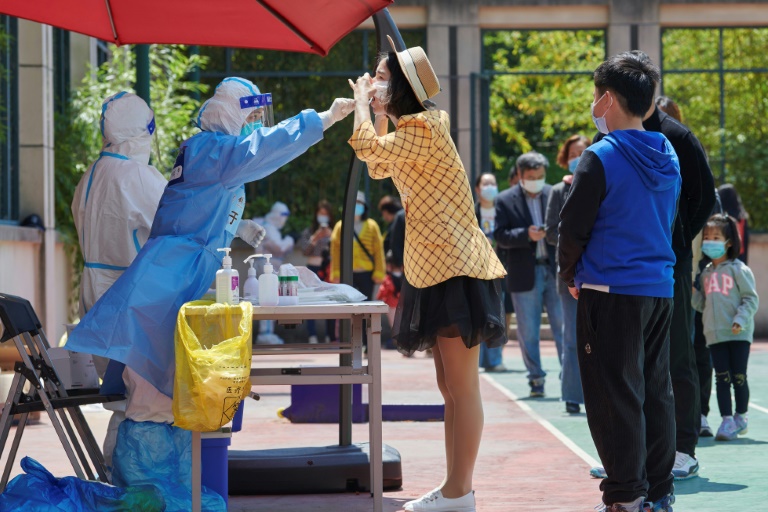
China reported seven more Covid-19 deaths in Shanghai on Tuesday, as major firms such as Tesla forged ahead to resume production after a damaging weeks-long lockdown.

Supply chains have clogged and businesses have been forced to halt production in the metropolis of 25 million, as authorities cling to a zero-Covid approach to combat China’s worst outbreak since the virus first emerged in late 2019.

Beijing’s strategy of eliminating clusters as they surface — through hard lockdowns and mass testing — has kept fatalities low, but the measures are taking a toll on economic growth.

Authorities have called for a “whitelist” of key industries and companies to be drawn up so production can continue, with over 600 firms identified for early work resumption in Shanghai.

US electric car giant Tesla “officially resumed production” on Tuesday, state media reported, after suspending work at its multi-billion-dollar “gigafactory” in the city for over 20 days.

But this will take place in a “closed-loop system”, with staff sleeping on site and being tested for Covid, Bloomberg News reported.

Chinese automaker SAIC Motor said this week it was “launching production resumption stress tests”.

– Seven new deaths –

Tuesday’s fatalities bring Shanghai’s death toll since its lockdown to 10.

Some have cast doubt on official figures in a nation where the vast elderly population has a low vaccination rate. 

By comparison, Hong Kong — which also has a high number of unvaccinated people over the age of 60 — has tallied nearly 9,000 deaths among 1.18 million Covid-19 cases since the Omicron variant surged there in January.

Unverified social media posts have claimed Shanghai’s deaths are going unreported, and the messages have been quickly scrubbed from the internet.

Shanghai health officials said Sunday that less than two-thirds of residents over 60 had received two Covid jabs and under 40 percent had received a booster.

The seven newly reported deaths were all unvaccinated patients, city health official Wu Qianyu told a press conference on Tuesday.

They were aged between 60 and 101, and suffered from underlying conditions such as heart disease and diabetes, according to the Shanghai Municipal Health Commission.

The patients “became severely ill after admission to hospital, and died after ineffective rescue efforts, with the direct cause of death being underlying diseases”, the commission said.

Shanghai logged more than 20,000 new and mostly asymptomatic Covid cases Tuesday, defying officials’ efforts to stamp out the infection.

Many of the city’s residents have been confined to their homes since March, with some flooding social media with complaints of food shortages, spartan quarantine conditions and heavy-handed enforcement.

Protest footage has circulated faster than government censors can delete it.

Chinese officials have scrambled in recent weeks to contain an outbreak spanning multiple regions, largely driven by the fast-spreading Omicron variant.

By one estimate on Monday, at least 44 cities are currently under some form of lockdown in China, affecting around 350 million people.
Shanghai reports more Covid deaths as officials push work resumption

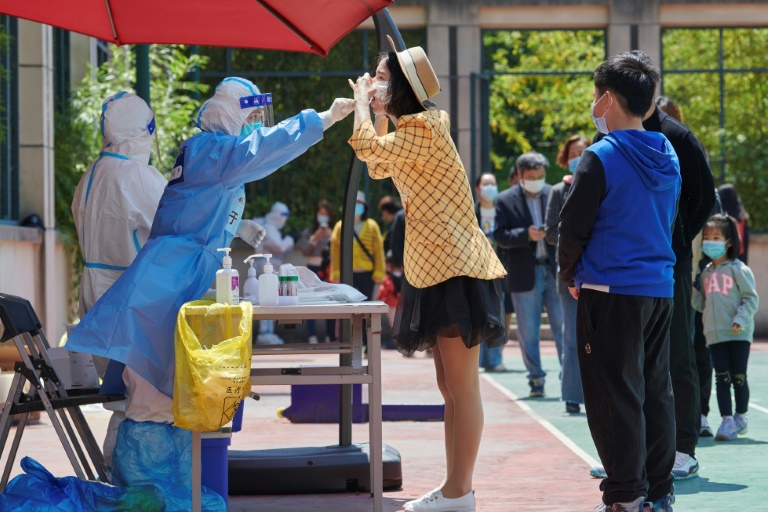
China reported seven more Covid-19 deaths in Shanghai on Tuesday, as major firms such as Tesla forged ahead to resume production after a damaging weeks-long lockdown.

Supply chains have clogged and businesses have been forced to halt production in the metropolis of 25 million, as authorities cling to a zero-Covid approach to combat China’s worst outbreak since the virus first emerged in late 2019.

Beijing’s strategy of eliminating clusters as they surface — through hard lockdowns and mass testing — has kept fatalities low, but the measures are taking a toll on economic growth.

Authorities have called for a “whitelist” of key industries and companies to be drawn up so production can continue, with over 600 firms identified for early work resumption in Shanghai.

US electric car giant Tesla “officially resumed production” on Tuesday, state media reported, after suspending work at its multi-billion-dollar “gigafactory” in the city for over 20 days.

But this will take place in a “closed-loop system”, with staff sleeping on site and being tested for Covid, Bloomberg News reported.

Chinese automaker SAIC Motor said this week it was “launching production resumption stress tests”.

– Seven new deaths –

Tuesday’s fatalities bring Shanghai’s death toll since its lockdown to 10.

Some have cast doubt on official figures in a nation where the vast elderly population has a low vaccination rate. 

By comparison, Hong Kong — which also has a high number of unvaccinated people over the age of 60 — has tallied nearly 9,000 deaths among 1.18 million Covid-19 cases since the Omicron variant surged there in January.

Unverified social media posts have claimed Shanghai’s deaths are going unreported, and the messages have been quickly scrubbed from the internet.

Shanghai health officials said Sunday that less than two-thirds of residents over 60 had received two Covid jabs and under 40 percent had received a booster.

The seven newly reported deaths were all unvaccinated patients, city health official Wu Qianyu told a press conference on Tuesday.

They were aged between 60 and 101, and suffered from underlying conditions such as heart disease and diabetes, according to the Shanghai Municipal Health Commission.

The patients “became severely ill after admission to hospital, and died after ineffective rescue efforts, with the direct cause of death being underlying diseases”, the commission said.

Shanghai logged more than 20,000 new and mostly asymptomatic Covid cases Tuesday, defying officials’ efforts to stamp out the infection.

Many of the city’s residents have been confined to their homes since March, with some flooding social media with complaints of food shortages, spartan quarantine conditions and heavy-handed enforcement.

Protest footage has circulated faster than government censors can delete it.

Chinese officials have scrambled in recent weeks to contain an outbreak spanning multiple regions, largely driven by the fast-spreading Omicron variant.

By one estimate on Monday, at least 44 cities are currently under some form of lockdown in China, affecting around 350 million people.

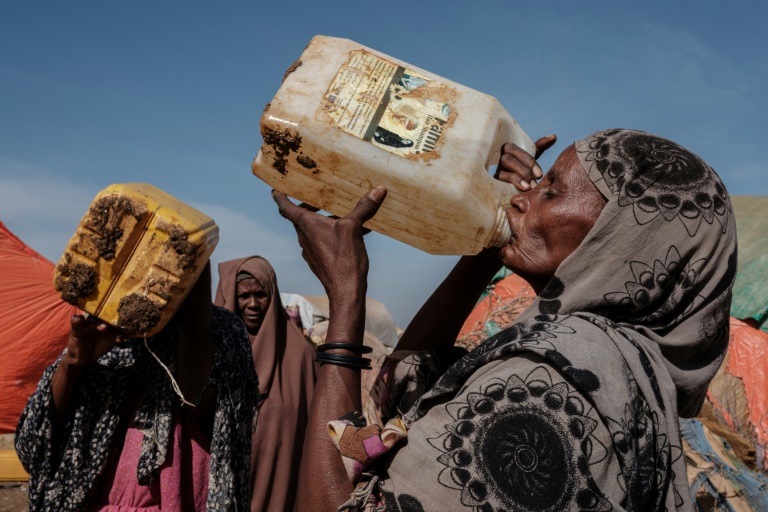
20 million risk starvation as Horn of Africa drought worsens: UN

Twenty million people are at risk of starvation this year as delayed rains worsen an already brutal drought in Kenya, Somalia and Ethiopia, the UN warned Tuesday. 

A months-long drought has left the Horn of Africa on the verge of a humanitarian catastrophe, destroying crops and livestock and forcing huge numbers of people to leave their homes in search of food and water.

As long-awaited rains fail to materialise nearly a month into the current rainy season, “the number of hungry people due to drought could spiral from the currently estimated 14 million to 20 million through 2022,” the UN’s World Food Programme (WFP) said.

Six million Somalis or 40 percent of the population were facing extreme levels of food insecurity and there was “a very real risk of famine in the coming months” if current conditions prevailed, WFP said. 

In Kenya, half a million people were on the brink of a hunger crisis, with communities in the north of the country especially at risk due to their reliance on livestock. 

The number of Kenyans in need of assistance has risen more than fourfold in less than two years, the agency said. 

Malnutrition rates in drought-hit southern and southeastern Ethiopia have surged above emergency thresholds, while the north of the country has been in the grip of a 17-month war between government forces and Tigrayan rebels.

Parts of the drought-hit Horn of Africa region are already reeling from the effects of ongoing conflict, poverty and a locust invasion, the UN’s Food and Agriculture Organization (FAO) said Tuesday. 

“We must act now… if we want to prevent a humanitarian catastrophe,” FAO’s representative to the African Union, Chimimba David Phiri, told a UN briefing in Geneva.

– Lack of funding –

The dire conditions have been exacerbated by the conflict in Ukraine, which has contributed to soaring food and fuel costs and disrupted global supply chains, WFP said.

The agency warned that a lack of funding could spell disaster, calling for $473 million (438 million euros) over the next six months. 

A previous appeal in February raised less than four percent of the cash needed, it said.

Meanwhile, FAO was short of more than 60 percent of funds it required to meet the needs of 1.5 million people in the three countries.   

“We know from past experience that acting early to avert a humanitarian catastrophe is vital, yet our ability to launch the response has been limited due to a lack of funding to date,” said Michael Dunford, WFP’s regional director for East Africa.

East Africa endured a harrowing drought in 2017 but early humanitarian action averted a famine in Somalia.

In contrast, 260,000 people — half of them children under the age of six — died of hunger or hunger-related disorders when a famine struck the country in 2011.

Experts say extreme weather events are happening with increased frequency and intensity due to climate change.

French court fines Deliveroo for 'undeclared labour'

A Paris court on Tuesday handed the food delivery group Deliveroo a fine of 375,000 euros ($405,000) after finding it guilty of “undeclared labour” by using freelance delivery riders who should have been considered employees.

It was the latest move by courts to recognise the rights of “gig economy” workers who are often classified as independent contractors by start-ups and other firms, and thus ineligible for health insurance and other benefits.

The court ordered the maximum fine sought by prosecutors and also handed suspended one-year prison sentences to two former French executives at the Britain-based Deliveroo.

A third executive got a suspended four-month sentence and a 10,000 euro fine for complicity in the system, and Deliveroo was ordered to pay 50,000 euros each in damages to five labour unions who joined the case as plaintiffs.

State prosecutor Celine Ducournau also sought in vain to question Deliveroo’s American founder and CEO Will Shu over a “fraud” that gave “all the benefits to the employer… without any of the inconveniences.”

Over 100 Deliveroo riders were plaintiffs in the case prosecutors opened in 2015 but which got fresh impetus in 2020, when France’s URSSAF agency in charge of employer social security collections demanded millions of euros in back payments.

Several riders told the court they had sought jobs that offered “flexibility” in terms of scheduling, only to find intense pressure to work at peak meal times, strict oversight of their routes and days off, and penalties if orders weren’t delivered fast enough.

Deliveroo France had already been convicted of undeclared labour in a civil case in February 2000, when a labour court sided with a rider seeking to be recognised as an employee and not a contractor.

URSSAF is seeking to recover some 9.7 million euros from Deliveroo, and a court had already ordered in 2020 the seizure of three million euros in Deliveroo’s account while the case was ongoing.

A Deliveroo spokesman said after the verdict that the company was “considering” an appeal.

War in Ukraine: Latest developments

Here are the latest developments in the war in Ukraine:

– Donbas offensive –

Russia says its forces have carried out dozens of air strikes in eastern Ukraine as part of a new offensive in the Donbas region that had been expected for days.

Moscow says the strikes targeted Ukrainian positions in parts of the Donbas as well as in towns close to the eastern frontline. 

“We are gradually implementing our plan to liberate the Donetsk and Lugansk People’s Republics,” Defence Minister Sergei Shoigu says, referring to eastern Ukraine’s two rebel regions, which Moscow has recognised as independent states.

– New Mariupol ultimatum –

Russia issues a new ultimatum to Ukrainian troops and militia holed up at a steelworks in the besieged port city of Mariupol.

Moscow says they will be “guaranteed survival” if they lay down their arms starting at noon (0900 GMT) on Tuesday and allowed to leave the city through a humanitarian corridor. Hours later it says it has opened the corridor.

Ukrainian forces in Mariupol ignored a previous such ultimatum on Sunday.

– New US arms delivery –

The first shipments of a new US military aid package have arrived at Ukraine’s borders to be handed over, a senior Pentagon official says.

The package includes 18 155mm howitzers for the first time, as well as 40,000 artillery rounds, 200 M113 armoured personnel carriers, 11 Mi-17 helicopters and 100 armoured multi-purpose vehicles.

– Biden convenes allies –

US President Joe Biden will convene a meeting of allies on Tuesday to discuss the Ukraine conflict, the White House says.

The video call will also cover “efforts to hold Russia accountable”, it says.

– Putin honours Bucha-linked brigade –

Russian President Vladimir Putin bestows an honorary title on a brigade accused by Ukraine of “war crimes” and mass killings in the town of Bucha.

A decree signed by Putin gives the 64th Motor Rifle Brigade the title of “Guards” for defending the “Motherland and state interests” and praises the “mass heroism and valour, tenacity and courage” of its members.

– Diplomats expelled –

Russia says it is expelling 36 diplomats from Belgium and the Netherlands in retaliation for similar measures taken against its envoys in the two EU countries.

– Deaths in Lviv –

At least seven people are killed and eight wounded in missile strikes on the western city of Lviv, which had been seen as a safe haven by refugees fleeing the fighting in other parts of the country, local officials say.

Russia says it has also destroyed an arms depot near Lviv containing weapons recently delivered to Ukraine as part of a barrage of attacks following the sinking of Russia’s guided-missile cruiser Moskva in the Black Sea.

– Tycoon seeks prisoner exchange –

Russian state television broadcasts a video of two men it says are captured Britons asking to be exchanged for Viktor Medvedchuk, a recently captured Ukrainian tycoon close to Russian President Vladimir Putin.

Ukraine’s security services then puts out a video of Medvedchuk asking to be exchanged for Ukrainian civilians and soldiers trapped in the strategic besieged port of Mariupol.

– Nearly 5 mn have fled Ukraine: UN –

More than 4.9 million Ukrainians have fled their country following the Russian invasion, says the UN’s refugee agency.

The UNHCR says 4,934,415 Ukrainians have now left the country, up more than 65,000 on the previous day.

burs-cdw/cb/yad

Six killed in blasts at Shiite school in Afghan capital

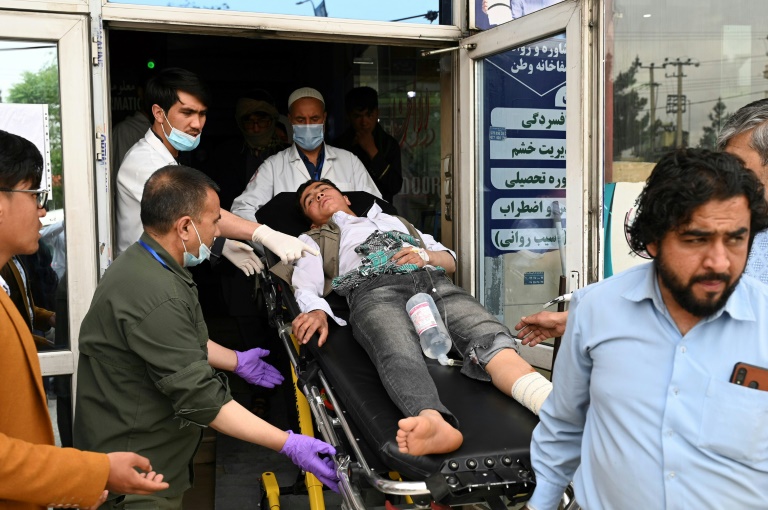
At least six people were killed and 24 wounded on Tuesday by two bomb blasts that struck a boys’ school in a Shiite Hazara neighbourhood of the Afghan capital, police and hospital staff said.

The number of attacks in the country has significantly declined since the Taliban ousted the US-backed Afghan government in August, but the jihadist Islamic State group has claimed several attacks since then.

Several bodies were strewn outside the gate of a school in the densely populated Shiite Dasht-e-Barchi neighbourhood in Kabul, alongside patches of blood, burnt books and school bags, according to images posted on social media.  

“We were leaving school and had just stepped out from the rear gate when the explosion occurred,” Ali Jan, a student who was wounded in the first blast, told AFP at a hospital in the area where the blasts occurred.

The second blast took place as rescuers arrived to ferry victims from the first explosion to hospitals.

“Some of our friends have lost hands, while some were covered in blood,” said Saeed Rahmatullah Haidari, a student at the school.

“There were pieces of broken glass and pools of blood… my whole body was shaking.”

Outside a hospital treating the wounded, Taliban fighters beat back the families of students who had gathered searching for information.

Women cried out as they scanned through pictures of victims posted on nearby walls by medics. 

Kabul police spokesman Khalid Zadran told AFP that the attack outside the Abdul Rahim Shahid school was caused by two improvised explosive devices, killing six people.

A grenade was also thrown at a nearby English language centre in the same area, wounding one person, he later said.

Two hospitals said they were treating 24 wounded patients. 

– Back-to-back blasts –

The Dasht-e-Barchi neighbourhood is mainly home to the Hazara community and has been previously targeted by the jihadist Islamic State group — a rival of the Taliban, also a hardline Sunni Islamist movement.

The Hazara community, which makes up between 10 and 20 percent of the country’s 38 million people, has long been the target of mass-casualty attacks, some blamed on the Taliban during their 20-year insurgency. 

Since seizing power the Taliban have regularly carried out raids on suspected IS hideouts, mainly in the eastern Nangarhar province.

Taliban officials insist their forces have defeated IS, but analysts say the jihadist group is a key security challenge.

IS has claimed some of the deadliest attacks in Afghanistan in recent years.

In May last year at least 85 people — mainly girl students — were killed and about 300 wounded when three bombs exploded near their school in Dasht-e-Barchi.

No group claimed responsibility, but in October 2020 IS claimed a suicide attack on an educational centre in the same area that killed 24, including students.

In May 2020, the group was blamed for a bloody gun attack on a maternity ward of a hospital in the neighbourhood that killed 25 people, including new mothers.

China says it has signed security pact with Solomon Islands

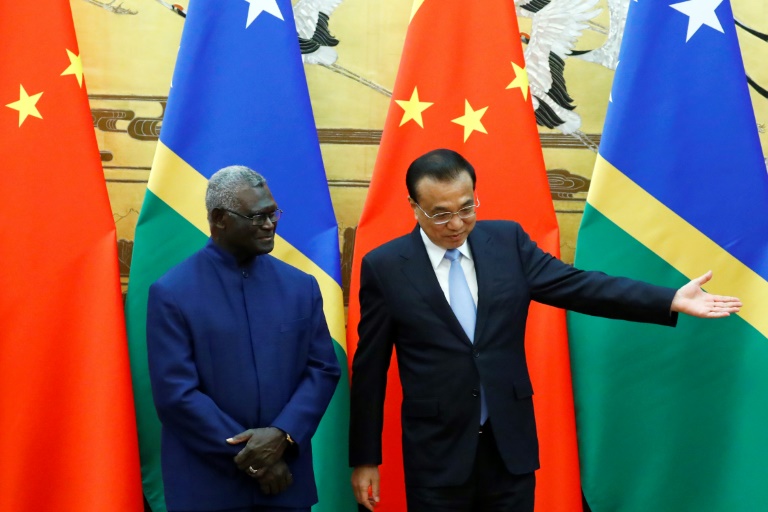
China said Tuesday it has sealed a wide-ranging security pact with the Solomon Islands, an agreement the United States and its regional allies fear could give Beijing a military foothold in the South Pacific.

The confirmation came a day after Washington discouraged a security agreement between the countries, with top US diplomats headed to the South Pacific this week to curb Beijing’s inroads.

But Chinese foreign ministry spokesman Wang Wenbin told reporters on Tuesday: “The foreign ministers of China and the Solomon Islands officially signed the framework agreement on security cooperation recently.”

He did not say when or where the signing took place.

A draft version of the agreement leaked last month rattled Western governments, with provisions allowing for Chinese security and naval deployments to the crisis-hit Pacific island nation.

According to the draft, armed Chinese police could be deployed at the Solomon Islands’ request to maintain “social order”.

Australia said Tuesday it was “deeply disappointed” by the signing of the deal.

“We are concerned about the lack of transparency with which this agreement has been developed, noting its potential to undermine stability in our region,” said a joint statement by Australian foreign minister Marise Payne and Pacific minister Zed Seselja.

Earlier this month, Seselja travelled to Honiara, the former British protectorate’s capital, to ask the prime minister in person not to ink the deal.

Australia is worried the agreement could see Beijing establish a military presence less than 2,000 kilometres (1,200 miles) away.

Wang on Tuesday accused Western powers of “deliberately exaggerating tensions” over the pact, and questioned the motives behind US officials’ upcoming visit.

The security deal represents a “normal exchange and cooperation between two sovereign and independent countries,” Wang said.

“Attempts to interfere and obstruct the cooperation of island countries with China are… doomed to fail,” he added at a regular press briefing.

– ‘Broad nature’ –

Solomons Prime Minister Manasseh Sogavare’s assurances that he does not intend to allow China to build a military base there has done little to alleviate Western concerns.

“The broad nature of the security agreement leaves open the door for the deployment of PRC military forces to the Solomon Islands,” US State Department spokesman Ned Price said Monday, referring to China.

The signing of the pact “could increase destabilisation within the Solomon Islands and will set a concerning precedent for the wider Pacific Island region,” he added.

The White House’s high-level delegation to the Solomons is expected to discuss its concerns, as well as the reopening of the US embassy in Honiara.

The US and its Asian allies have voiced growing concern about China’s assertiveness in the Pacific, where it is locked in several territorial disputes with neighbouring countries.

The Solomon Islands’ switch of diplomatic recognition from self-ruled Taiwan to Beijing in 2019 unlocked huge amounts of Chinese investment, but the issue has been fraught with tensions.

The island nation of 800,000 has been wracked by political and social unrest, and many of its people live in poverty.

In November, protesters tried to storm the parliament and went on a deadly three-day rampage, torching much of Honiara’s Chinatown.

The unrest was sparked by a range of tensions, including opposition to Sogavare’s rule, inter-island rivalries and high unemployment, while anti-China sentiment also played a role.

Russia launches major 'offensive' in eastern Ukraine

Moscow launched dozens of air strikes across eastern Ukraine overnight, its defence ministry said Tuesday, after Kyiv accused Russian forces of unleashing a major new offensive in the Donbas region.

Russia’s defence ministry said that “high-precision air-based missiles” had hit 13 Ukrainian positions in parts of the Donbas while other air strikes “hit 60 military assets”, including in towns close to the eastern frontline. 

Ukraine’s armed forces also confirmed that fighting had increased throughout the east just hours after President Volodymyr Zelensky said Russia had kicked off the widely anticipated offensive in the Donbas region on Monday.  

“The Russian occupiers intensified offensive operations along the entire line of contact,” the general staff of Ukraine’s armed forces said in a report published early Tuesday. 

Later Tuesday, Russia’s defence chief stopped short of confirming any new offensive but said his forces were committed to capturing swathes of eastern Ukraine. 

“We are gradually implementing our plan to liberate the Donetsk and Lugansk People’s Republics,” Sergei Shoigu said referring to eastern Ukraine’s two rebel regions, which Moscow has recognised as independent states.

“We are taking measures to restore peaceful life,” he said in a televised meeting with Russian military commanders.

Ahead of the advance, Ukrainian authorities had urged people in Donbas to flee west to escape, even as officials called off evacuations for a third straight day from frontline cities due to ongoing fighting. 

“No matter how many Russian soldiers are brought here, we will fight. We will defend ourselves,” Zelensky said on Telegram late Monday.

In the Donbas town of Novodruzhesk, Nadya, 65, said “we are bombed everywhere”.

“It’s a miracle that we’re still alive,” she said, her voice trembling.

“We were lying on the ground and waiting. Since February 24 we’ve been sleeping in the cellar.”

Control of Donbas would allow Moscow to create a southern corridor to the occupied Crimean peninsula.

However, Zelensky’s advisor Oleksiy Arestovich offered an alternate view during an interview on Ukrainian television Tuesday, saying the offensive in the Donbas had been ongoing for 12 days. 

 “They advance by looking for weak points in our defences. As soon as they find them, they infiltrate them,” he added. 

In the south, Russia continued its push to capture the besieged port city of Mariupol, as Moscow issued a fresh call for the city’s defenders to surrender.

But despite the desperate situation in the city, a senior US Defence Department official on Monday said Mariupol “is still contested”.

– $800 million boost –

The first shipments of a new $800-million (740 million euros) US military aid package had begun to arrive at Ukraine’s borders this week, for use against Russian forces.

Washington was due to hold a video meeting with allies Tuesday to discuss the conflict in Ukraine, even as it increasingly provoked the ire of Moscow.

“The United States and Western states under its control are doing everything to drag out the military operation for as long as possible,” said Russia’s defence chief Shoigu on Tuesday.

“The growing volume of foreign weapons supplies graphically demonstrate their intention to provoke the Kyiv regime to fight to the last Ukrainian.”

His comments came as government sources in Spain said Prime Minister Pedro Sanchez was planning to travel to Kyiv “soon” but did not confirm when for security reasons. 

While much of the focus has remained in Ukraine’s east, Moscow has also targeted the country’s west with air strikes, killing at least seven people in the city of Lviv near the Polish border on Monday.

Lviv has largely been spared bombardment since Russia invaded on February 24, and the city and its surroundings had become a haven for those seeking safety from the war zone.

But even as strikes continued to hit targets across the country, the east appeared to be Russia’s primary focus. 

The regional governor of the eastern Lugansk region Sergiy Gaiday said Ukrainian forces continued to hold their ground amid heavy fighting.

“We have positional battles in the cities of Rubizhne and Popasna. The enemy cannot do anything though. They are losing people and equipment there,” Gaiday said.  

“Our guys are shooting down drones there.  Shooting down planes on the border of the Lugansk and Kharkiv regions, so they are holding on,” he added. 

– ‘Heavy attacks’ –

Russian President Vladimir Putin has said he launched the so-called military operation on February 24 to save Russian speakers in Ukraine from a “genocide” carried out by a “neo-Nazi” regime.

On Monday, Putin lauded the 64th Motor Rifle Brigade — which is accused of committing atrocities near Kyiv — bestowing battle honours on them for “heroism and valour, tenacity and courage”.

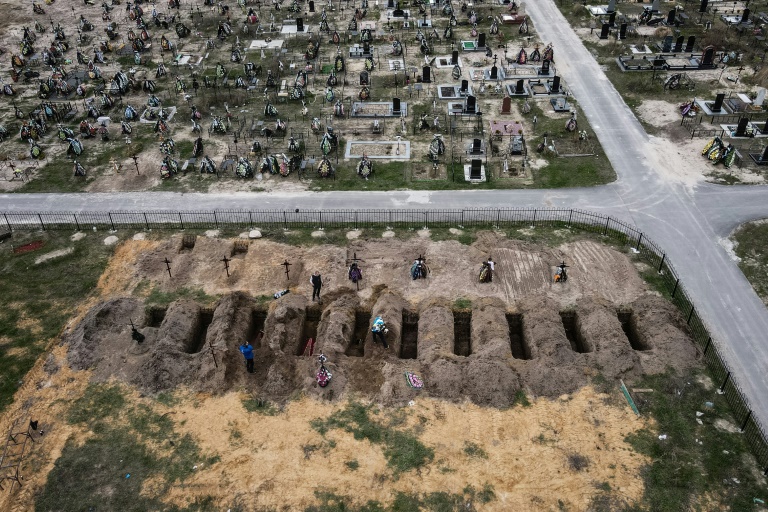
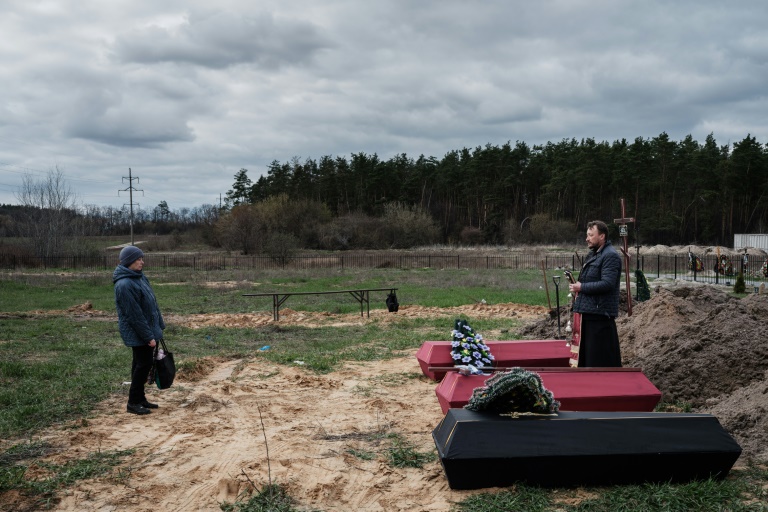
Ukraine has alleged the brigade committed war crimes while occupying the suburb of Bucha on the outskirts of Kyiv, where residents were shot dead, some with their hands bound.

The European Union condemned Russia’s “indiscriminate” bombing of Ukrainian civilians.

Its foreign policy chief Josep Borrell pointed to “particularly heavy attacks” in eastern and southern Ukraine and an offensive against second city Kharkiv, where officials said Russian shelling killed three people.

Seeking to strengthen ties and accelerate its admission to the 27-nation bloc, Zelensky said that Ukraine hoped to receive EU candidate country status within weeks.

burs-ds/gw

No surprises as Pakistan's new PM names cabinet

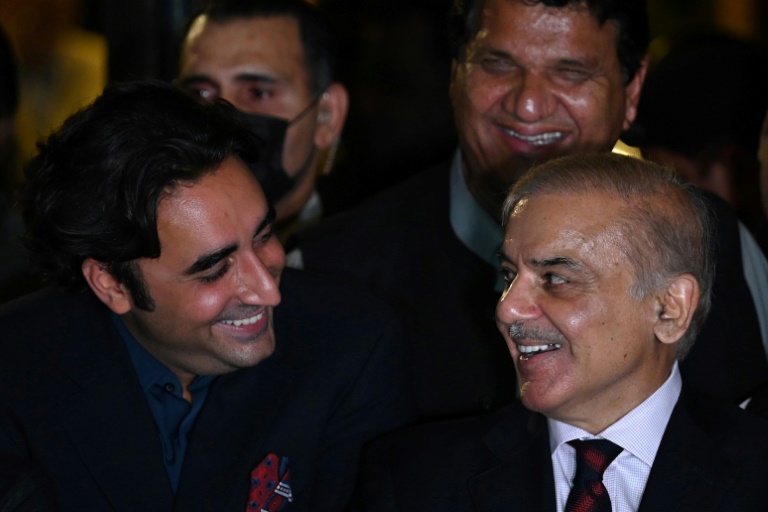
Pakistan Prime Minister Shehbaz Sharif sprang no big surprises in naming his new cabinet Tuesday, doling out key portfolios to officials from the two parties that combined to oust Imran Khan after weeks of political crisis.

The cabinet is drawn mostly from Sharif’s Pakistan Muslim League-N (PML-N) and the Pakistan Peoples Party (PPP), two usually-feuding dynastic groups who combined to force a no-confidence vote that ousted Khan on April 10.

How long the government lasts remains to be seen, however, as most of Khan’s Pakistan Tehreek-e-Insaf (PTI) lawmakers have quit parliament and the former cricketer turned politician has taken his fight to the streets to press for an early election — which must be held by October next year.

“It will be an uphill task for the prime minister to pull them together in one direction because some parties have local and regional interests, and some have national interests,” analyst Hasan Askari told AFP.

“If they handle economic issues, other problems will settle down — but if the situation worsens, everyone will blame the PML-N, which is in majority.”

Sharif, brother of three-time prime minister Nawaz Sharif, did not name a foreign minister but that role is expected to go to the scion of another political family, 33-year-old Bilawal Zardari Bhutto.

The PPP’s Bhutto is the son of former president Asif Ali Zardari and assassinated ex-premier Benazir Bhutto, as well as the grandson of another prime minister, Zulfikar Ali Bhutto, who was executed in 1979.

If confirmed, the Oxford-educated Bhutto would be one of the world’s youngest foreign ministers and tasked with repairing links with the West that frayed under the leadership of Khan, who accused Washington of conspiring to oust him.

Hina Rabbani Khar, Pakistan’s first woman foreign minister in the last PPP government, was named deputy.

– Economy in doldrums –

The key finance ministry returns to Miftah Ismail, a PML-N loyalist who served as deputy and briefly minister during the party’s last tenure from 2013-2018.

He inherits an economy in the doldrums, with crippling debt, galloping inflation and a feeble rupee.

In meetings leading up to his appointment, Ismail said improving relations with the International Monetary Fund and getting a loan program back on track was a key priority, as was improving tax collection. 

New Interior Minister Rana Sanaullah, meanwhile, will have to tackle rising militancy and the threat of civil unrest from the huge public rallies Khan has called across the country in the months ahead.

He was arrested on drug charges in July 2019 by the anti-narcotics squad in a case that is still unresolved.

Sanaullah is one of at least four new ministers — including premier Sharif — facing criminal investigation or charges from when they last held office, a frequent occurrence in Pakistan politics when there is a change of government.

There were just five women in Sharif’s 37-member cabinet, including outspoken Mariyum Aurangzeb returning in charge of information and responsible for selling the government’s message in what promises to be a heated lead up to any next election.

Myanmar's Suu Kyi expects first verdict in corruption case

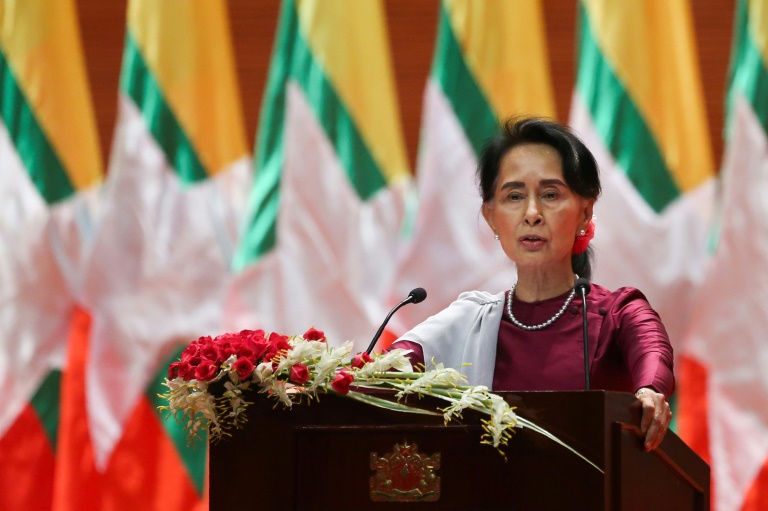
Ousted Myanmar leader Aung San Suu Kyi is expected to hear the first verdict in one of her corruption trials next week, a source close to the case told AFP Tuesday, where she faces a possible 15 years in jail.

The Nobel laureate has been detained since her government was forced out in a coup last year that triggered mass protests, and she faces a raft of charges that could see her sentenced to more than 150 years in jail.

The 76-year-old has already been handed a six-year sentence for violating Covid-19 rules and walkie-talkie import regulations, but this is the first of her corruption cases to return a verdict.

The junta court is expected to rule Monday on the allegation that she took a bribe from former Yangon chief minister Phyo Min Thein, a source with knowledge of the case told AFP. A guilty verdict could mean a sentence of up to 15 years.

Journalists are barred from the proceedings and her lawyers have been banned from speaking to the press.

In November, she and 15 other officials, including Myanmar’s former president Win Myint, were also charged with alleged electoral fraud during the 2020 elections.

Since the coup, many of her political allies have been arrested, with one chief minister sentenced to 75 years in jail. Others have gone into hiding.

Under a previous junta regime, Suu Kyi spent long periods under house arrest in her family mansion in Yangon.

Close Bitnami banner
Bitnami