World

Air strikes hit western Ukraine as Russia forces mass in the east

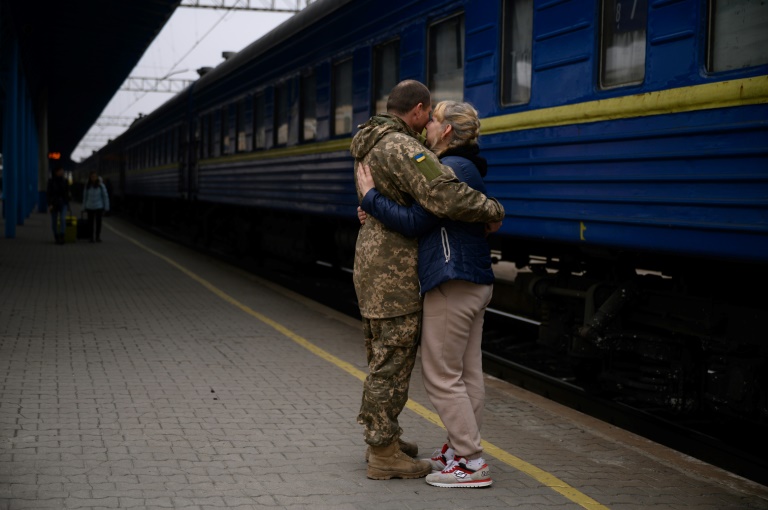
Air strikes killed at least six people in Ukraine’s western city of Lviv on Monday, as Russia pounded targets across the country while massing forces for an expected all-out assault in the east. 

The “powerful” air strikes in the west came hours after President Volodymyr Zelensky accused Moscow of wanting to “destroy” the entire eastern region of Donbas near the border with Russia. 

During its latest briefing, Russia’s defence ministry said it had hit over a dozen military targets with air strikes at various locations across Ukraine.

Following the attack on Lviv, black smoke billowed from the gutted roof of a car repair shop above the railway tracks in the northwest of the city as air raid sirens wailed.

“Fires were set off as a result of the strikes. They are still being put out. The facilities were severely damaged,” the Lviv regional governor Maksym Kozytsky said on social media. 

In the south, Russia continued its push to capture the besieged city of Mariupol where the last remaining Ukranian forces in the strategic port prepared for a final stand.

Ukraine has pledged to fight on and defend the strategic port city, defying a Russian ultimatum issued Sunday that called on the remaining fighters inside the encircled Azovstal steel plant to lay down their arms and surrender.

Mariupol has become a symbol of Ukraine’s unexpectedly fierce resistance since Russian troops invaded the former Soviet state on February 24.

“The city still has not fallen,” Prime Minister Denys Shmyhal said.

“There’s still our military forces, our soldiers. So they will fight to the end,” he told ABC’s “This Week”.

“We will not surrender.”

While several large cities were under siege, he said, not one — with the exception of Kherson in the south — had fallen, and more than 900 towns and cities had been re-captured.

Capturing Mariupol would allow Russia to have a land bridge between the Crimea peninsula, which it annexed in 2014, and the two Moscow-backed separatist statelets in Ukraine’s east. 

– ‘Last chance to save you’ –

In the east, Ukrainian authorities urged people in Donbas to move west to escape a large-scale Russian offensive to capture its composite regions of Donetsk and Lugansk.

“Russian troops are preparing for an offensive operation in the east of our country in the near future. They want to literally finish off and destroy Donbas,” Zelensky said in a statement late Sunday.

Lugansk governor Sergiy Gaiday said the coming week would be “difficult”.

“It may be the last time we have a chance to save you,” he wrote on Facebook.

Heavy bouts of shelling also resumed in the country’s second city of Kharkiv on Monday morning, according to an AFP reporter in the city. 

The shelling comes a day after at least five people were killed and 20 wounded in during a string of strikes in the city just 21 kilometres (13 miles) from the Russian border on Sunday.

Maksym Khaustov, the head of the Kharkiv region’s health department, confirmed the deaths there following the strikes that had ignited fires throughout the city and torn roofs from buildings.

“The whole home rumbled and trembled,” 71-year-old Svitlana Pelelygina told AFP as she surveyed her wrecked apartment. “Everything here began to burn.”

– ‘Catastrophe’ –

Ukraine officials also said on Monday they were halting the evacuation of civilians from frontline town and cities in the east of the country for the second consecutive day, accusing Russian forces of blocking and shelling escape routes.

“Unfortunately, today, April 18, there will be no humanitarian corridors. In violation of international humanitarian law, the Russian occupiers have not stopped blocking and shelling humanitarian routes,” Deputy Prime Minister Iryna Vereshchuk said in a statement on social media.

But Lugansk governor Gaiday announced earlier that he had proceeded with evacuations.

“At our own peril and risk, we took out several dozen people anyway, but it’s already dangerous,” he told Ukrainian media.

During an interview with CNN broadcast on Sunday, Zelensky said he had invited his French counterpart Emmanuel Macron to visit Ukraine to see for himself evidence that Russian forces have committed “genocide” — a term Macron has avoided.

“I talked to him yesterday,” Zelensky told CNN in an interview recorded on Friday and broadcast Sunday.

“I just told him I want him to understand that this is not war, but nothing other than genocide. I invited him to come when he will have the opportunity. He’ll come and see, and I’m sure he will understand.”

Zelensky, describing the situation in Mariupol as “inhuman”, has called on the West to immediately provide heavy weapons — a request he frequently airs.

But Russia has warned the United States this week of “unpredictable consequences” if it sent its “most sensitive” weapons systems to Ukraine.

Its defence ministry claimed Saturday to have shot down a Ukrainian transport plane in the Odessa region that was carrying weapons supplied by Western nations.

On Sunday, spokesman Igor Konashenkov said Russian missiles had destroyed ammunition, fuel and lubricant depots in eastern Ukraine and 44 Ukrainian military facilities, including command posts.

Russian air defence systems shot down two Ukrainian MiG-29 aircraft in the Kharkiv region and a drone near the city of Pavlograd, he added.

burs-ds/yad
Shanghai reports first Covid deaths since start of lockdown

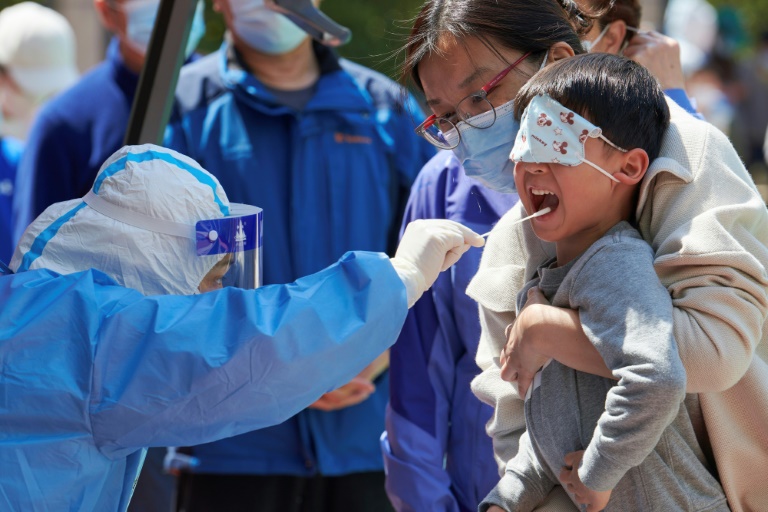
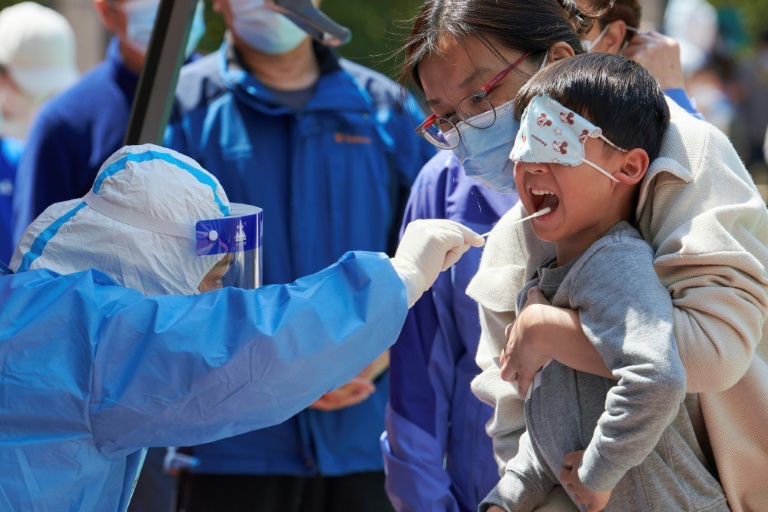
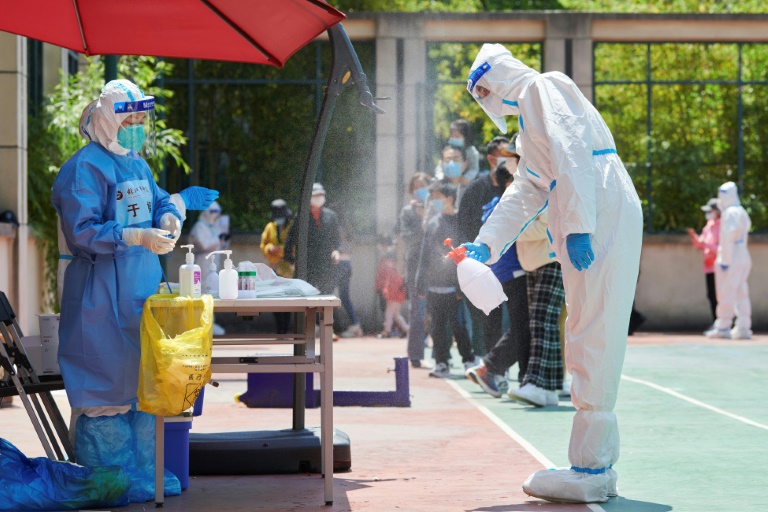
China said Monday that just three people have died from Covid-19 in Shanghai since a gruelling lockdown began last month, despite recording hundreds of thousands of cases of the fast-spreading Omicron variant in the eastern megacity.

Authorities said the first deaths from China’s biggest outbreak since the virus wave in Wuhan over two years ago were three people aged 89 to 91, all of whom had underlying health issues and had not received Covid vaccines.

Beijing insists that its zero-Covid policy of hard lockdowns, mass testing and lengthy quarantines has averted fatalities and the public health crises that have engulfed much of the rest of the world.

But some have cast doubt on official figures in a nation with low vaccination rates among its vast elderly population. Shanghai health officials noted Sunday that less than two-thirds of residents over 60 had received two Covid jabs and less than 40 percent had received a booster. 

Unverified social media posts have also claimed unreported deaths — typically before being scrubbed from the internet. Hong Kong, meanwhile, has attributed nearly 9,000 deaths to Covid-19 since Omicron first surged there in January. 

The three reported victims in Shanghai “deteriorated into severe cases after going into hospital”, according to a government account, with city health official Wu Qianyu telling a Monday press conference that “underlying disease” was the direct cause of death.

The eastern business hub has simmered under lockdowns since March, with many of its 25 million residents confined to their homes as daily caseloads have topped 25,000 — a modest figure by global standards but virtually unheard of in China.

Many inhabitants have flooded social media with complaints of food shortages, spartan quarantine conditions and heavy-handed enforcement, circulating footage of rare protests faster than government censors can delete them.

But officials have vowed to continue isolating anyone who tests positive regardless of whether they show signs of the disease — with asymptomatic infections accounting for nearly 90 percent of the more than 22,000 new local cases on Monday.

China last reported new Covid-19 deaths on March 19 — two people in the northeastern rustbelt province of Jilin — the first such acknowledged deaths in more than a year.

– Political play –

China’s ruling Communist Party has touted its hardline pandemic approach as proof that it places human life above material concerns — unlike many Western democracies, which it argues have sacrificed lives by failing to stop the virus.

Beijing has also acknowledged that dropping restrictions could let the pathogen run amok through its under-resourced healthcare system, potentially causing millions of deaths — particularly among the elderly, who are at risk of developing more severe disease.

But experts say political considerations are also at play, with the party staking popular legitimacy on crushing emerging outbreaks in a year that will likely see President Xi Jinping secure a precedent-busting third term in office.

“This is a sensitive and critical year for the regime,” said Lynette Ong, associate professor of political science at the University of Toronto.

“China has always given so much prominence to social stability, and a health crisis is a potentially big disrupter.”

– Desperation –

Those concerns may have motivated officials in Shanghai to zealously implement curbs “to the point that it becomes silly”, even as the highly transmissible Omicron strain refuses to be quelled, Ong said.

Videos on social media have illustrated creeping public desperation, with clips showing residents scuffling with hazmat-suited police and bursting through barricades demanding food.

Internet users have also blasted the filmed killing of a pet corgi by a health worker and a now-softened policy of separating infected children from their virus-free parents.

Other posts — not verified by AFP — and overseas media outlets have previously said that elderly patients in the city had died after contracting Covid-19 even as no fatalities appeared in official figures.

The United States Embassy in Beijing said Monday it had “reconfigured operations” to assist more than 40,000 Americans in its Shanghai consular district.

Chinese officials accused Washington of making “groundless accusations” about its Covid policy earlier this month after the surge prompted the consulate to evacuate non-essential staff.

Volunteer rescuers step in to save Shanghai's locked-down pets

With quarantine looming after a positive Covid-19 test, Shanghai resident Sarah Wang said her first worry was who would look after her cat. 

China’s pursuit of “zero-Covid” means anyone who catches the virus is sent to central facilities, sometimes for weeks, leaving their pets at the mercy of local authorities. 

Aside from fears the animals will be unfed or abandoned, a video showing a health worker in Shanghai bludgeoning a corgi dog to death this month caused uproar among residents — with some taking matters into their own hands. 

The clip created “pure panic”, said Erin Leigh, the main organiser of an emergency rescue service that has been formed to help pets who could otherwise become casualties of the hardline virus approach.

In the last few weeks, Leigh, 33, has expanded her group from a pet-sitting firm to a network of thousands of unpaid volunteers.

The group has found Wang’s fortunate feline a temporary home with a sitter across town.

The relieved financial worker told AFP her cat “wouldn’t have survived my apartment being disinfected”.

“Her conditions would have been pretty bleak without anyone coming to feed her,” the 28-year-old said.

“For some pets in the city, it comes down to life or death,” said Leigh, adding that owners felt “helpless”. 

Across China, local governments’ urgency to stamp out every virus case has pushed animal well-being down the list of authorities’ priorities.  

In January, Hong Kong culled around 2,000 hamsters after one tested positive for Covid-19, and at least three cats and a dog were among animals killed by health workers in the mainland last year.

After the recent video of the corgi killing, Leigh said she has been inundated with pleas from owners “desperate to get their animals saved”.

“People are like, ‘Get my dog to safety. I don’t even want it in my house.'”

– ‘Help needed’ –

Pet ownership in China has ballooned in recent years, particularly in cosmopolitan hubs like Shanghai.

The financial centre has been at the heart of China’s worst Covid-19 outbreak since the peak of the first virus wave in Wuhan over two years ago, and has been under a patchwork of lockdown restrictions since March which has left most of its 25 million residents confined to their homes.

As Shanghai officials ramped up control measures, Leigh and others mobilised online to share information about the pets left behind when people were taken into centralised quarantine.

A handful of administrators work day and night to record cases of distressed animals, classifying them by location and noting those that most urgently need food, shelter or other care.

The network then raises the alarm on social media, sharing “help needed” posters in both Chinese and English until a saviour is found.

They also connect owners and sitters with homebound vets “so they can all help each other in case there are any medical emergencies”, said volunteer Joey Ang, a 20-year-old student from Singapore.

The team has aided hundreds of cats and dogs — plus a few birds, fish and snakes.

Evacuated pets must be steered through the often-baffling lockdown restrictions, sometimes travelling hours to reach short-term homes just a few streets away.

– Hungry huskies –

In one memorable example, volunteers rallied to bring food to a locked-down pet shop housing around 50 hungry huskies, Leigh said.

But the road to freedom is rarely smooth in a city where officials sweat over the potential consequences of bending vaguely defined lockdown rules.

Security guards often get jittery about carrying disinfected crates containing animals into and out of housing compounds — a key step in the process as most residents in lockdown can’t leave their apartment complexes, volunteers said.

And drivers have jacked up fees for ferrying pets.

Rescuers this week spent an hour and a half transferring a dog from its owner’s apartment to another block just 600 metres (0.4 miles) away, according to Leigh.

A “carrot-and-stick” approach is often key to making officials “consider the negative reaction if the pet comes to any harm,” said Ocean Zhang, who helped negotiate the canine’s release.

“There is strength in numbers. If we continue to work together, then even emergencies… can be resolved within a couple of hours.”

Asian markets slide on inflation, Covid fears

Asian stocks closed lower on Monday in cautious trade, as figures showed China’s economic growth accelerated in the first quarter of the year, but the government warned of “significant challenges” ahead.

Tokyo’s benchmark Nikkei 225 ended down more than one percent and Shanghai posted small losses, while Hong Kong and Sydney were closed for holidays.

Shanghai reported its first Covid-19 deaths since the start of its weeks-long lockdown.

China’s largest city and economic powerhouse has stewed under a patchwork of restrictions this year amid the country’s worst Covid-19 outbreak since the start of the pandemic.

The country reported first-quarter economic growth of 4.8 percent, the National Bureau of Statistics said, as the pandemic threatens Beijing’s ambitious annual growth target.

That figure was up from 4.0 percent in the final months of 2021.

The world’s second-biggest economy was already losing steam in the latter half of last year as it endured a property slump and regulatory crackdowns.

“We must be aware that with the domestic and international environment becoming increasingly complicated and uncertain, economic development is facing significant difficulties and challenges,” said NBS spokesman Fu Linghui.

“Overall, the data suggest that China started the year well, but as the quarter has moved on, the headwinds have gotten stronger,” said Jeffrey Halley, senior market analyst with OANDA.

“A slowing property market, sweeping Covid restrictions, the Ukraine invasion pushing up base commodity and energy prices, and a central bank still intent on deleveraging sectors of the economy, have all combined to weigh on China’s growth.

“About the only thing missing is a meaningful rise in inflation, which is some small sliver of comfort.”

Oil prices, which have been elevated since Russia’s February invasion of Ukraine, were up again, with Brent Crude topping $111 a barrel.

Stephen Innes of SPI Asset Management said the rise was “likely to fuel inflation fears and rate hike jitters around the meaningful Fed action required to snuff those fears out”.

Russia is a major global oil and gas supplier, and — along with Ukraine — is also a key player in the grain sector.

The conflict has shaken markets for these commodities, and the impact has been felt from the Middle East to South America.

The war has sent oil prices soaring, with reports swirling about further energy sanctions on Russia.

Central banks in several major economies including the United States, Canada and Britain have already started raising interest rates to contain prices, but the European Central Bank on Thursday kept its stimulus plans and rates unchanged.

– Key figures around 0730 GMT –

Tokyo – Nikkei 225: DOWN 1.08 percent at 26,799.71 (close)

Shanghai – Composite: DOWN 0.49 percent at 3,195.52 (close)

Hong Kong – Hang Seng Index: Closed for a holiday

Euro/dollar: UP at $1.0802 from $1.0798

Pound/dollar: DOWN at $1.3023 from $1.3037

Euro/pound: UP at 82.95 pence from 82.83 pence

Dollar/yen: UP at 126.54 yen from 126.53 yen

Brent North Sea crude: UP 0.04 percent at $111.75 per barrel

West Texas Intermediate: UP 0.05 percent at $106.90 per barrel

New York – Dow: DOWN 0.3 percent at 34,451.23 (close)

London – FTSE 100: UP 0.5 percent at 7,616.38 (close)

Ukraine says Russia wants to 'destroy' Donbas as Mariupol prepares final defence

Ukrainian President Volodymyr Zelensky accused Russia of wanting to “destroy” the entire eastern region of Donbas, as the last remaining forces in the strategic port of Mariupol prepared Monday for a final defence.

Moscow is pushing for a major victory in the southern city as it works to wrest control of Donbas and forge a land corridor to already-annexed Crimea.

But Ukraine has pledged to fight on and defend the city, defying a Russian ultimatum Sunday that called on the remaining fighters inside the encircled Azovstal steel plant to lay down their arms and surrender.

Ukrainian authorities have urged people in Donbas to move west to escape a large-scale Russian offensive to capture its composite regions of Donetsk and Lugansk.

“Russian troops are preparing for an offensive operation in the east of our country in the near future. They want to literally finish off and destroy Donbas,” Zelensky said in an evening statement.

Mariupol has become a symbol of Ukraine’s unexpectedly fierce resistance since Russian troops invaded the former Soviet state on February 24.

“The city still has not fallen,” Prime Minister Denys Shmyhal said.

“There’s still our military forces, our soldiers. So they will fight to the end,” he told ABC’s “This Week”.

“We will not surrender.”

While several large cities were under siege, he said, not one — with the exception of Kherson in the south — had fallen, and more than 900 towns and cities had been re-captured.

– ‘Last chance to save you’ –

Lugansk governor Sergiy Gaiday said the coming week would be “difficult”.

“It may be the last time we have a chance to save you,” he wrote on Facebook.

Russian forces continued to shell the eastern Lugansk region and two people died in the town of Zolote, he told Ukrainian media earlier in the day.

And five “powerful” Russian missile strikes hit Lviv early Monday, in a rare attack on a western city that has so far been spared much of the fighting since the invasion began almost two months ago.

Two people also died and four were wounded in attacks on the towns of Marinka and Novopol, west of Donetsk — regional governor Pavlo Kyrylenko said on Telegram — and an air strike hit an armaments factory in the capital Kyiv.

In the country’s second city of Kharkiv, at least five people were killed and 20 wounded in a series of strikes just 21 kilometres (13 miles) from the Russian border.

Maksym Khaustov, the head of the Kharkiv region’s health department, confirmed the deaths there following a series of strikes that AFP journalists on the scene said had ignited fires throughout the city and torn roofs from buildings.

“The whole home rumbled and trembled,” 71-year-old Svitlana Pelelygina told AFP as she surveyed her wrecked apartment. “Everything here began to burn.”

“I called the firefighters. They said, ‘We are on our way, but we were also being shelled.'”

In the eastern city of Kramatorsk, Orthodox Palm Sunday granted its residents some respite before the expected Russian onslaught.

In the Orthodox Svyato-Pokrovsky church, around 40 people — mostly women wearing colourful headscarves — attended the service.

“It’s very hard and scary right now,” said a congregant as she arrived at the red-brick church topped with four gleaming domes.

One young mother, Nadia, said she refused to be evacuated for fear of travelling alone with her two children and leaving her relatives in Kramatorsk.

“We don’t go to the basement each time there’s a (bomb) siren. It’s too stressful for them (the children),” she said. 

“We have our spot in the basement just in case, but we prefer to stay in the house if possible. We dim the lights.”

And in Kharkiv, the city’s metro stations are now home to residents of the eastern metropolis fearful of the battle raging above.

Those impromptu living spaces have become host to makeshift stages, where poets and puppeteers work to lift spirits.

“A person cannot live only with war,” Serhiy Zhadan — a literary celebrity in poetry-obsessed Ukraine — said.

“It is very important for them to hear a word, to be able to sing along, to be able to express a certain emotion.”

– ‘Catastrophe’ –

Ukrainian Deputy Prime Minister Iryna Vereshchuk has urged Russian forces to let people flee besieged Mariupol, saying that humanitarian corridors allowing civilians to escape would not open on Sunday after failing to agree terms with Moscow forces.

But Lugansk governor Gaiday said he had proceeded with evacuations.

“At our own peril and risk, we took out several dozen people anyway, but it’s already dangerous,” he told Ukrainian media.

The UN World Food Programme says that more than 100,000 civilians in Mariupol are on the verge of famine and lack water and heating.

And Ukraine’s Minister of Digital Transformation Mykhailo Fedorov said the city was on “the verge of a humanitarian catastrophe”, saying they were compiling evidence of alleged Russian atrocities there.

“We will hand everything over to The Hague. There will be no impunity.”

The mayor of Bucha — a town near Kyiv where the discovery of dead civilians sparked international condemnation and war crimes accusations — said Russian troops had raped men as well as women and children there.

Zelensky said he had invited his French counterpart to visit Ukraine to see for himself evidence that Russian forces have committed “genocide” — a term President Emmanuel Macron has avoided.

“I talked to him yesterday,” Zelensky told CNN in an interview recorded on Friday but broadcast Sunday.

“I just told him I want him to understand that this is not war, but nothing other than genocide. I invited him to come when he will have the opportunity. He’ll come and see, and I’m sure he will understand.”

Zelensky, describing the situation in Mariupol as “inhuman”, has called on the West to immediately provide heavy weapons.

But Russia has warned the United States this week of “unpredictable consequences” if it sent its “most sensitive” weapons systems to Ukraine.

Its defence ministry claimed Saturday to have shot down a Ukrainian transport plane in the Odessa region, carrying weapons supplied by Western nations.

On Sunday, spokesman Igor Konashenkov said Russian missiles had destroyed ammunition, fuel and lubricant depots in eastern Ukraine and 44 Ukrainian military facilities, including command posts.

Russian air defence systems shot down two Ukrainian MiG-29 aircraft in the Kharkiv region and a drone near the city of Pavlograd, he added.

burs-oho/cwl

Mexican lawmakers reject power reforms opposed by US

Mexican lawmakers on Sunday rejected constitutional electricity reforms at the center of diplomatic tensions with the United States, in a blow to President Andres Manuel Lopez Obrador.

Lopez Obrador promoted the changes to strengthen the state-owned electricity provider and roll back the effects of liberalization under previous governments that he says favored private companies.

But his plans alarmed the United States and Canada, prompting warnings that Mexico is in danger of violating its trade commitments by favoring state-run entities heavily dependent on fossil fuels.

After a marathon session in the lower house of Congress on Easter Sunday, Lopez Obrador’s Morena party failed to secure the two-thirds majority needed to amend the constitution.

There were 275 votes in favor and 223 against the bill, with no abstentions, the president of the lower house, Sergio Gutierrez, announced.

Gutierrez had earlier accused the opposition of wanting to remain “imperialist lackeys” at the service of foreign companies.

But Jorge Romero of the conservative National Action Party argued that the bill would put the country “back 50 years” in efforts to protect the environment.

Lopez Obrador’s Morena party and its allies only have 277 seats out of a total of 500 in the Chamber of Deputies, and the opposition bloc had vowed to vote against the legislation.

Earlier during the debate, supporters of Lopez Obrador held a rally outside the Chamber of Deputies calling for the reforms to be passed, with one carrying a sign that said “Don’t sell out the nation.”  

– ‘A big defeat’ –

The bill’s failure represents “a big defeat for Morena and Lopez Obrador because it is one of the central axes of their project to nationalize energy,” Jose Antonio Crespo, a political analyst at the Center for Research and Teaching in Economics, told AFP.

The United States had warned that Mexico’s reforms risk bringing “endless litigation” that would impede investment and undermine joint efforts to fight climate change.

“Mexico’s energy policies damage the environment, US business and investor interests in multiple sectors, and hamper joint efforts to mitigate climate change,” US Trade Representative Katherine Tai said last month according to her office.

Canada and Spain are also concerned about the consequences for their energy companies that have invested in Mexico.

The changes would have ensured that the state-owned Federal Electricity Commission (CFE) has at least 54 percent of the electricity market — a move the government says is needed to prevent soaring power prices.

A defeat for the constitutional reform bill does not, however, necessarily mean the end of Lopez Obrador’s electricity industry changes.

Mexico’s Supreme Court this month endorsed a reform aimed at strengthening the CFE that was approved by Congress in 2021 but has become bogged down in legal challenges. 

Shanghai reports first Covid deaths since start of lockdown

China said Monday that just three people have died from Covid-19 in Shanghai since a gruelling lockdown began last month, despite recording hundreds of thousands of cases of the fast-spreading Omicron variant in the eastern megacity.

Authorities said the first deaths from China’s biggest outbreak since the virus wave in Wuhan over two years ago were three elderly people aged 89 to 91, all of whom had underlying health issues.

Beijing insists that its zero-Covid policy of hard lockdowns, mass testing and lengthy quarantines has curbed fatalities and avoided the public health crises that have engulfed much of the rest of the world.

But some have cast doubt on official figures in a nation with low vaccination rates among its vast elderly population. Hong Kong, in comparison, has attributed nearly 9,000 deaths to Covid-19 since Omicron first surged there in January.

Unverified social media posts have also claimed unreported deaths — typically before being scrubbed from the internet.

The three reported victims “deteriorated into severe cases after going into hospital”, according to an official Shanghai government account. The city’s health commissioner on Sunday noted that 62 percent of residents aged over 60 had two vaccine doses, while only 38 percent in the demographic had three.  

The eastern business hub has groaned under a patchwork of restrictions since March, with many of the city’s 25 million residents confined to their homes as daily caseloads topped 25,000 — a modest figure by global standards but virtually unheard of in China.

Many inhabitants have chafed under the curbs, flooding social media with complaints of food shortages, spartan quarantine conditions and heavy-handed enforcement, and circulating footage of rare protests faster than government censors can delete them.

But officials have remained inflexible, vowing to continue isolating anyone who tests positive regardless of whether they show signs of the disease.

Asymptomatic infections have driven the surge, with nearly 90 percent of the more than 22,000 new cases on Monday displaying no illness, according to the municipal health commission.

China last reported new Covid-19 deaths on March 19 — two people in the northeastern rustbelt province of Jilin — the first such acknowledged deaths in more than a year.

– Political play –

China’s ruling Communist Party has touted its hardline pandemic approach as proof that it places human life above material concerns — unlike many Western democracies, which it argues have sacrificed lives by failing to stop the virus.

Beijing has also acknowledged that dropping restrictions could let the pathogen run amok through its creaking and under-resourced healthcare system, potentially causing millions of deaths.

The fast-ageing nation’s hundreds of millions of elderly are a particular concern. Official figures show vaccination rates lag significantly among those over 60 — a group more likely than others to develop severe disease if they contract the virus.

But experts say political considerations are also at play, with the party staking a degree of its legitimacy on crushing emerging outbreaks in a year that will likely see President Xi Jinping secure a precedent-busting third term in office.

“This is a sensitive and critical year for the regime,” said Lynette Ong, associate professor of political science at the University of Toronto.

“China has always given so much prominence to social stability, and a health crisis is a potentially big disrupter.”

– Desperation –

Those concerns may have continued to motivate officials in Shanghai, who have zealously implemented lockdown curbs “to the point that it becomes silly” even as the highly transmissible Omicron strain refuses to be quelled, Ong said.

Videos on social media have illustrated creeping desperation in the city, with clips showing residents scuffling with hazmat-suited police and bursting through barricades demanding food.

Internet users have also blasted the filmed killing of a pet corgi by a health worker and a now-softened policy of separating infected children from their virus-free parents.

Other posts — not verified by AFP — and overseas media outlets have previously said that elderly patients in the city had died after contracting Covid-19 even as no fatalities appeared in official figures.

City health official Wu Qianyu said at a Monday press conference that the “direct cause” of the three confirmed deaths was “underlying disease”.

China economy accelerates in Q1 but virus stalks outlook

China’s economic growth accelerated in the first quarter of the year to 4.8 percent, official data showed Monday, but the government warned of “significant challenges” ahead while massive Covid-19 lockdowns started to bite.

The world’s second-biggest economy had lost steam in the latter half of last year with a property slump and regulatory crackdowns, pulling down growth.

But it exceeded expectations in the first three months of 2022, growing 4.8 percent on-year, the National Bureau of Statistics (NBS) said, with Lunar New Year spending and factory production cajoling growth.

The weeks ahead, however, appear treacherous for the economy with Beijing’s unrelenting zero-Covid approach to outbreaks clogging supply chains and locking down tens of millions of people — including in the economic dynamos of Shanghai and Shenzhen as well as the northeastern grain basket of Jilin.

Virus restrictions in March have already gouged at retail sales, as consumers shied away from shopping, and drove up unemployment.

“With the domestic and international environment becoming increasingly complicated and uncertain, economic development is facing significant difficulties and challenges,” NBS spokesman Fu Linghui said on Monday.

The pandemic rebound — as well as the sanctions binding Russia’s economy — ups the ante on officials to deliver Beijing’s full-year growth target of around 5.5 percent.

The target comes in a pivotal political year for President Xi Jinping who is eyeing another term in power at the Party Congress to be held this autumn.

The current virus outbreak is the worst since the peak of the first wave which emerged in Wuhan in late 2019, and the economy is beginning to weaken. 

Industrial production growth eased to 5.0 percent in March, NBS data showed, down from the January-February period.

Meanwhile, retail sales sank 3.5 percent and the urban unemployment rate ticked up to a 22-month high of 5.8 percent last month.

“March activity data suggests that China’s economy slowed, especially in household consumption,” Tommy Wu, lead China economist at Oxford Economics, said in a note.

– ‘Worse to come’ –

China’s government is trying to balance “minimising disruption against controlling the latest wave of Covid infections”, Wu said, but he warned of a drag on economic activity into May or beyond.

Last week, carmakers including XPeng and Volkswagen warned of severe disruptions to supply chains and possibly even a halt on production completely if the lockdown on Shanghai’s 25 million inhabitants persisted.

Already, goods are piling up at the world’s busiest container port in Shanghai, prompting shipping giant Maersk to say it will stop taking new bookings for refrigerated containers into the city.

“Further impacts from lockdowns are imminent,” said Iris Pang, chief economist for Greater China at ING.

As Shanghai struggles to rein in an outbreak that has seen tens of thousands of daily cases, Pang said other cities may attempt to replicate Shenzhen’s success in reopening swiftly by resorting to strict measures with just a few Covid patients.

The southern tech powerhouse went into full lockdown for almost a week in March, but has since eased restrictions.

Julian Evans-Pritchard of Capital Economics cautioned that “the worst is still to come”.

Fu of the NBS warned of high commodity prices on Monday with the Russia-Ukraine conflict leading to a decline in the availability of commodities such as corn and wheat.

Although China’s central bank has announced a reserve ratio cut, lowering the amount of cash banks must hold in a push to support small businesses, experts say officials were taking a restrained approach to stimulus.

But economists expect officials will eventually publish a growth figure consistent with official targets, as part of doubts that the numbers may be massaged for political reasons.

China economy accelerates in Q1 but virus stalks outlook

China’s economic growth accelerated in the first quarter of the year to 4.8 percent, official data showed Monday, but the government warned of “significant challenges” ahead while massive Covid-19 lockdowns started to bite.

The world’s second-biggest economy had lost steam in the latter half of last year with a property slump and regulatory crackdowns, pulling down growth.

But it exceeded expectations in the first three months of 2022, growing 4.8 percent on-year, the National Bureau of Statistics (NBS) said, with Lunar New Year spending and factory production cajoling growth.

The weeks ahead, however, appear treacherous for the economy with Beijing’s unrelenting zero-Covid approach to outbreaks clogging supply chains and locking down tens of millions of people — including in the economic dynamos of Shanghai and Shenzhen as well as the northeastern grain basket of Jilin.

Virus restrictions in March have already gouged at retail sales, as consumers shied away from shopping, and drove up unemployment.

“With the domestic and international environment becoming increasingly complicated and uncertain, economic development is facing significant difficulties and challenges,” NBS spokesman Fu Linghui said on Monday.

The pandemic rebound — as well as the sanctions binding Russia’s economy — ups the ante on officials to deliver Beijing’s full-year growth target of around 5.5 percent.

The target comes in a pivotal political year for President Xi Jinping who is eyeing another term in power at the Party Congress to be held this autumn.

The current virus outbreak is the worst since the peak of the first wave which emerged in Wuhan in late 2019, and the economy is beginning to weaken. 

Industrial production growth eased to 5.0 percent in March, NBS data showed, down from the January-February period.

Meanwhile, retail sales sank 3.5 percent and the urban unemployment rate ticked up to a 22-month high of 5.8 percent last month.

“March activity data suggests that China’s economy slowed, especially in household consumption,” Tommy Wu, lead China economist at Oxford Economics, said in a note.

– ‘Worse to come’ –

China’s government is trying to balance “minimising disruption against controlling the latest wave of Covid infections”, Wu said, but he warned of a drag on economic activity into May or beyond.

Last week, carmakers including XPeng and Volkswagen warned of severe disruptions to supply chains and possibly even a halt on production completely if the lockdown on Shanghai’s 25 million inhabitants persisted.

Already, goods are piling up at the world’s busiest container port in Shanghai, prompting shipping giant Maersk to say it will stop taking new bookings for refrigerated containers into the city.

“Further impacts from lockdowns are imminent,” said Iris Pang, chief economist for Greater China at ING.

As Shanghai struggles to rein in an outbreak that has seen tens of thousands of daily cases, Pang said other cities may attempt to replicate Shenzhen’s success in reopening swiftly by resorting to strict measures with just a few Covid patients.

The southern tech powerhouse went into full lockdown for almost a week in March, but has since eased restrictions.

Julian Evans-Pritchard of Capital Economics cautioned that “the worst is still to come”.

Fu of the NBS warned of high commodity prices on Monday with the Russia-Ukraine conflict leading to a decline in the availability of commodities such as corn and wheat.

Although China’s central bank has announced a reserve ratio cut, lowering the amount of cash banks must hold in a push to support small businesses, experts say officials were taking a restrained approach to stimulus.

But economists expect officials will eventually publish a growth figure consistent with official targets, as part of doubts that the numbers may be massaged for political reasons.

Sri Lanka fuel prices up ahead of IMF talks

A key fuel retailer in Sri Lanka raised prices by up to 35 percent on Monday as the cash-strapped government was set to open crucial bailout talks with the International Monetary Fund.

Sri Lanka is in the grip of its worst economic crisis since independence from Britain in 1948. It has led to shortages of fuel, food and essential medicines.

Lanka IOC, a fuel retailer which accounts for a third of the local market, said it raised the diesel price by 75 rupees to 327 a litre while petrol was increased by 35 rupees to 367 rupees ($1.20).

The state-run Ceylon Petroleum Corporation, which accounts for two-thirds of the market and imposed fuel rationing last week, did not immediately raise its prices, but most of its pumping stations were without fuel.

Lanka IOC, a local unit of the Indian Oil Corporation, said the sharp depreciation of the local currency forced it to carry out the latest revision, three weeks after a 20 percent hike.

Since the start of the year, petrol prices have increased by 90 percent while diesel — commonly used for public transport — has gone up by 138 percent.

“The rupee devaluation by more than 60 percent during last one month compelled Lanka IOC to again increase its retail selling prices with effect from today,” the company said.

The increase came as Sri Lanka’s new finance minister Ali Sabry led a delegation to Washington seeking between $3 billion and $4 billion from the IMF to overcome the balance-of-payments crisis and boost depleted reserves.

The government last week announced a sovereign default on its huge foreign debt and the Colombo Stock Exchange announced trading would be halted for five days from Monday amid fears of a market collapse.

Sri Lanka was in a deep economic crisis when the Covid-19 pandemic hit, reducing foreign-worker remittances and crippling the lucrative tourism sector — a key source of dollars for the economy.

The government imposed a broad import ban in March 2020 to save foreign currency. It is now facing record inflation.

Close Bitnami banner
Bitnami