World

Air strikes hit western Ukraine as Russian forces mass in the east

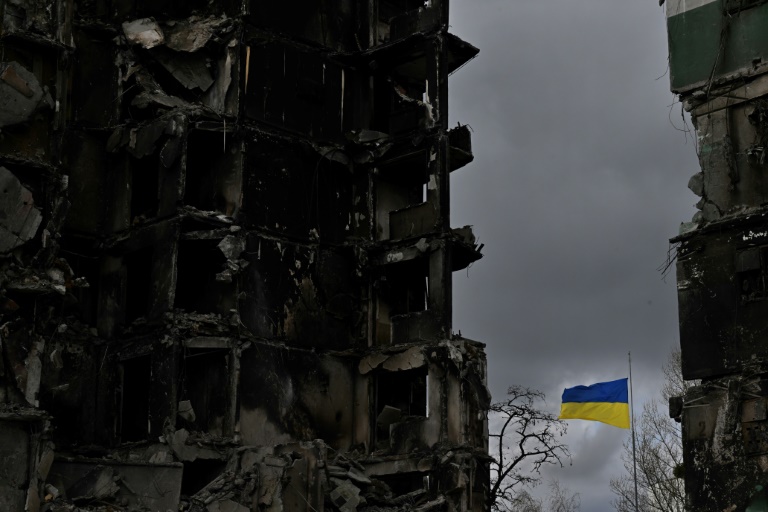
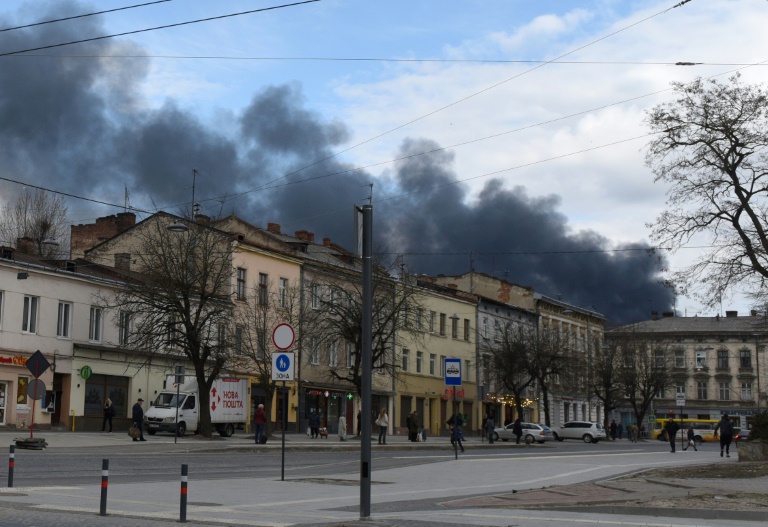
Air strikes killed at least seven people in Ukraine’s western city of Lviv on Monday, as Russia pounded targets across the country and massed forces for an expected all-out assault in the east. 

The air strikes in Lviv came just hours after Ukrainian President Volodymyr Zelensky accused Moscow of wanting to “destroy” the entire eastern region of Donbas bordering Russia. 

Russia’s defence ministry said it had hit 16 military targets at various locations across Ukraine.

Following the attack on Lviv, black smoke billowed from the gutted roof of a car repair shop in the northwest of the city as air raid sirens wailed.

“Fires were set off as a result of the strikes. They are still being put out. The facilities were severely damaged,” Lviv regional governor Maksym Kozytsky said on social media. 

In the south, Russia continued its push to capture the besieged port city of Mariupol where the last remaining Ukrainian forces prepared for a final stand.

Ukraine has pledged to fight on and defend the strategic city, defying a Russian ultimatum for remaining fighters inside the encircled Azovstal steel plant to lay down their arms and surrender.

– Prisoner swap –

Russian state TV on Monday broadcast a video of what it described as “Britons” captured fighting for Ukraine and demanding that Prime Minister Boris Johnson negotiate their release.

The two haggard-looking men asked to be exchanged for Viktor Medvedchuk, a Ukrainian tycoon close to President Vladimir Putin, who was recently arrested in the pro-Western country.

Ukraine then aired its own video featuring Medvedchuk calling for his exchange in return for an evacuation of civilians and troops from Mariupol.

“I want to ask Russian President Vladimir Putin and Ukrainian President Volodymyr Zelensky to exchange me for Ukrainian defenders and residents of Mariupol,” he said in the video published by Kyiv’s security services, wearing black clothes and looking directly into the camera.

Mariupol has become a symbol of Ukraine’s unexpectedly fierce resistance since Russian troops invaded the former Soviet state on February 24.

While several large cities were under siege, according to Prime Minister Denys Shmyhal, not one — with the exception of Kherson in the south — had fallen, and more than 900 towns and cities had been re-captured.

Capturing Mariupol would allow Russia to have a land bridge between the Crimea peninsula, which it annexed in 2014, and the two Moscow-backed separatist statelets in Ukraine’s east. 

– ‘Last chance to save you’ –

In the east, Ukrainian authorities urged people in Donbas to move west to escape a large-scale Russian offensive to capture its composite regions of Donetsk and Lugansk.

“Russian troops are preparing for an offensive operation in the east of our country in the near future. They want to literally finish off and destroy Donbas,” Zelensky said.

Lugansk governor Sergiy Gaiday said the coming week would be “difficult”.

“It may be the last time we have a chance to save you,” he wrote on Facebook.

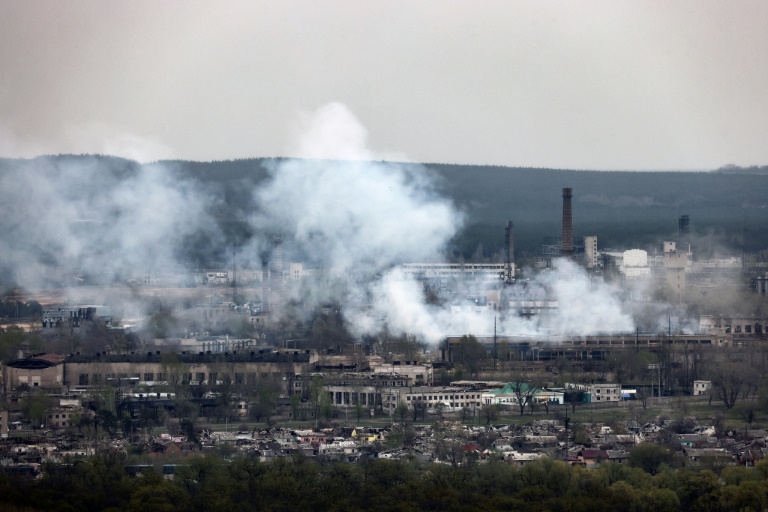
Heavy bouts of shelling also resumed in the country’s second city of Kharkiv on Monday morning, according to an AFP reporter on the ground. 

The shelling comes a day after at least five people were killed and 20 wounded during a string of strikes in the city just 21 kilometres (13 miles) from the Russian border on Sunday.

More than 4.9 million Ukrainians have fled their country, the United Nations said Monday warning of the risks of women and child refugees being exploited.

“Refugees from Ukraine, the vast majority women and children, face increased risks of sexual exploitation, abuse and human trafficking,” the UN refugee agency said.

– ‘Genocide’ –

Ukraine officials also said on Monday they were halting the evacuation of civilians from frontline towns and cities in the east for a second day, accusing Russian forces of blocking and shelling escape routes.

“In violation of international humanitarian law, the Russian occupiers have not stopped blocking and shelling humanitarian routes,” Deputy Prime Minister Iryna Vereshchuk said on social media.

But Lugansk governor Gaiday announced earlier that he had proceeded with evacuations.

“At our own peril and risk, we took out several dozen people anyway, but it’s already dangerous,” he told Ukrainian media.

During an interview with CNN broadcast on Sunday, Zelensky said he had invited his French counterpart Emmanuel Macron to visit Ukraine to see for himself evidence that Russian forces have committed “genocide” — a term Macron has avoided.

“I just told him I want him to understand that this is not war, but nothing other than genocide.”

Zelensky, describing the situation in Mariupol as “inhuman”, has called on the West to immediately provide heavy weapons — a request he frequently airs.

But Russia has warned the United States this week of “unpredictable consequences” if it sent its “most sensitive” weapons systems to Ukraine.

burs-ds/ach 
Deadly strike disrupts relative safety of Ukraine's Lviv

Inside a hotel housing displaced families in western Ukraine, a cleaner swept away shattered glass between washing machines and drying racks after a Russian missile hit a nearby garage during breakfast.

Five “powerful” Russian missiles hit the western city of Lviv on Monday, killing seven people and wounding eight more, local officials say.

Next to the hotel, at least one missile hit a car repair shop overlooking the train tracks on the western edge of the city.

In the guest house’s backyard, snowflakes fell on a glistening sea of glass shards below gaping windows.

A woman who appeared in her seventies said she had arrived just weeks ago at the hotel after being evacuated from the eastern region of Lugansk.

“We had just finished eating and wanted to go back to our rooms, when we heard an explosion,” she said, without giving her name.

Lviv has largely been spared the Russian bombardment that has rained down on other parts of the country since Russia invaded on February 24.

The city and its surroundings have instead become a relatively safe haven for those seeking to escape the fighting further east.

On the first floor of the hotel, women and children in warm coats shifted their bags from one room to the next as they waited to hear if they should move location.

Their belongings included a cat carrier and scratching post.

– No ‘safe places’ –

In the hallway, a bank employee who gave her name as Natalia said she was looking into finding 20 new rooms somewhere else for families she had helped evacuate from the embattled east of the country.

“Our people were lucky that they were in the breakfast room,” she said, dressed in a light blue coat.

She said she and other volunteers had thought Lviv was a safe location to shelter those escaping war.

“Today we understood clearly that we don’t have any safe places in Ukraine. It’s very dangerous,” she said, before rushing off to the next room.

Iryna, the hotel’s manager, said no one had been wounded in the hotel but she was still alarmed.

“We had many guests at the hotel from other cities of Ukraine,” she said, without giving her second name.

When the air raid siren had rung out shortly before 0800 am, she said, some had ignored the siren because they thought warnings in Lviv were not as serious as in the regions they fled.

– ‘Happened so fast’ –

Hundreds of metres away, next to the smouldering tyre shop, firemen stood near the skeletons of scorched cars, peering into a crater in the road above the train track.

Municipal workers in orange jackets worked to clear white debris scattered all over the grassy slopes on either side of the railway.

Shortly after the end of a second air raid warning, a train slowly passed under the wreckage.

Passengers, including a young child, peered up the grassy knoll at all the journalists gathered opposite the strike site.

Across the road, policeman Orest Mazin waited for colleagues to come and inspect his family’s silver Mercedes.

He had been driving to work along the railway when the missile suddenly came flying through the trees, he said.

“It flew right in front of me,” he said, still feeling a little shell-shocked.

“It happened so fast, I didn’t even hear the explosion.”

He pointed to a hole in his windscreen, where a flying shard of metal had crashed through.

On the floor of the passenger seat still sat his packed lunch of potato stew and chicken breast.

US announces global Covid summit May 12

A global summit to chart an end to the Covid-19 crisis and plan for future upheavals will occur May 12, the White House said Monday, even as President Joe Biden struggles to get vital pandemic funding from Congress.

The virtual gathering will be co-chaired by the United States, along with current G7 president Germany, G20 president Indonesia, African Union chair Senegal, and Belize, the current chair of the CARICOM Caribbean grouping.

“The summit will redouble our collective efforts to end the acute phase of the Covid-19 pandemic and prepare for future health threats,” the countries said in a joint statement.

This will be the second global huddle on the pandemic, which has killed more than six million people and triggered profound disruption to leading economies and trading patterns in the two years since it began to spread.

Biden hosted a similar summit last September, at which he urged partners to surge vaccines and ensure that 70 percent of every country has been vaccinated by September this year.

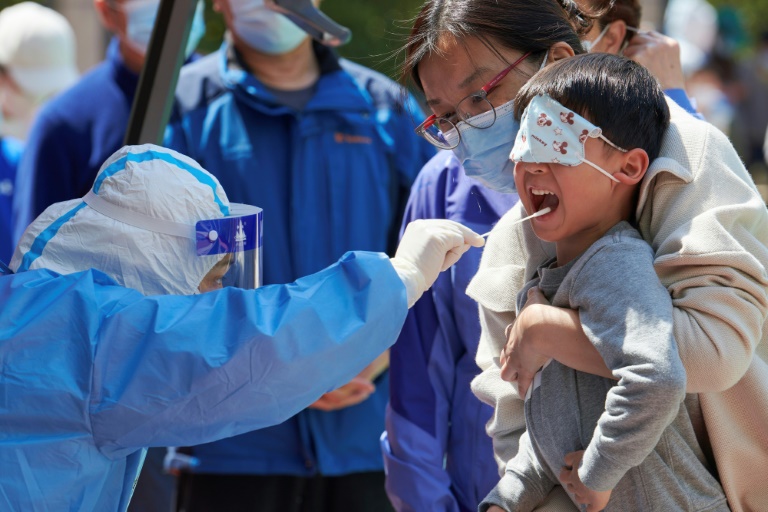
Although death rates are plummeting world wide, the virus continues to spread, preventing many leading countries from fully lifting restrictions, while Shanghai in China is in the midst of a draconian lockdown.

Summit hosts appealed for maintaining the sense of urgency.

“In advance of the May 12 summit, we are calling on world leaders, members of civil society, non-governmental organizations, philanthropists, and the private sector to make new commitments and bring solutions to vaccinate the world, save lives now, and build better health security — for everyone, everywhere,” the joint statement said.

“The emergence and spread of new variants, like Omicron, have reinforced the need for a strategy aimed at controlling Covid-19 worldwide,” it said.

And while the latest variants are less lethal, the summit statement stressed there must be a focus on stopping similar future catastrophes from taking the world by surprise.

“We know we must prepare now to build, sustain, and finance the global capacity we need, not only for emerging Covid-19 variants, but also future health crises,” the statement said.

– Biden goals face headwinds –

Biden took office in 2021 promising to overcome the pandemic at home but also putting a heavy accent on efforts to vaccinate poor areas of the world. 

The United States has pledged to deliver at least 1.1 billion Covid-19 vaccine doses for global use before 2023 and has so far shipped around half of that.

However, Biden’s ambition to make the United States an “arsenal for vaccines” similar to US leadership in World War II now faces political headwinds.

A package ensuring $10 billion in continued funding for the domestic Covid response has yet to be passed by Congress, while there is no agreement at all on more funding for vaccine donations abroad.

“It’s vital Congress acts now so the US can continue our momentum in the international effort to get shots in arms in every part of the world, no matter how remote, and to prevent the spread of the next Covid variant with our international allies and partners,” a senior administration official told AFP.

Also muddying the waters is the war in Ukraine, which is sapping diplomatic attention in the world’s most powerful countries. A source familiar with the issue told AFP that nevertheless the pandemic response remains seen as fundamentally important.

Ukraine shows video of detained Putin ally calling for Mariupol swap

Ukraine on Monday aired a video showing Viktor Medvedchuk, a detained pro-Russia tycoon and ally of President Vladimir Putin, seeking to be exchanged in return for an evacuation of civilians and troops from the besieged port city of Mariupol.

Mariupol has become a symbol of Ukraine’s unexpectedly fierce resistance since Russian troops invaded the former Soviet state and pro-democratic country on February 24.

“I want to ask Russian President Vladimir Putin and Ukrainian President Volodymyr Zelensky to exchange me for Ukrainian defenders and residents of Mariupol,” he said in the video published by Kyiv’s security services, wearing black clothes and looking directly into the camera.

Medvedchuk, who escaped from house arrest after Russia’s invasion and was detained last week, said the troops and residents there “do not have the possibility of a safe exit through humanitarian corridors”.

Medvedchuk is one of Ukraine’s richest people and is known for his close ties to Putin. He is also a politician. 

He says Putin is the godfather to his youngest daughter, Darya.

The Kremlin had earlier rejected the idea of exchanging him for Ukrainians detained by Russia, and Zelensky floated the idea of a swap.

“He is a foreign politician,” Putin’s spokesman Dmitry Peskov, explained last week.

Separately on Monday Russian state TV broadcast a video Monday of what it described as “Britons” captured fighting for Ukraine demanding that Prime Minister Boris Johnson negotiate their release.

The two men shown in the video asked to be exchanged for Medvedchuk, who had been accused of treason and attempting to steal natural resources from Russia-annexed Crimea and of handing Ukrainian military secrets to Moscow. 

10,000 soldiers in South Africa flood relief effort

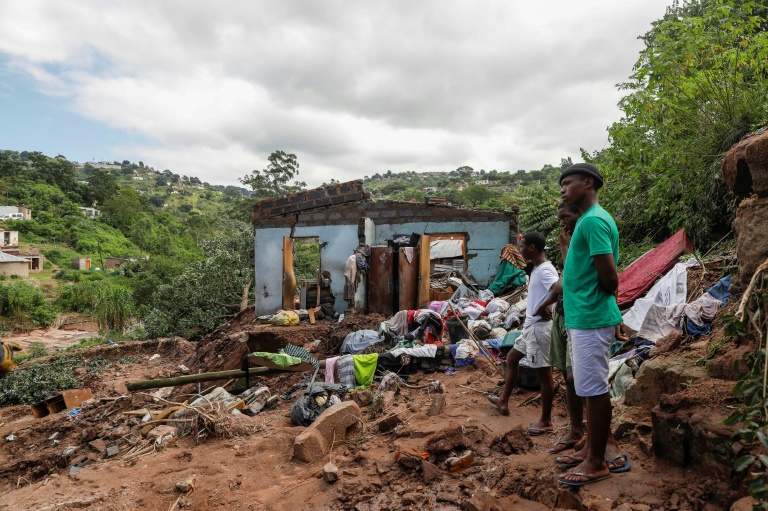
A week after deadly storms started lashing South Africa’s east coast, the army said Monday 10,000 troops were on the ground to help restore key services and aid the search for 63 people who remain missing.

The death toll stands at 443, but with each passing day, hopes diminish of finding more survivors.

“The tragedy currently unfolding in our province is one of the worst natural disasters in the recorded history of our country,” KwaZulu-Natal provincial government said.

Funerals were being held across the city of Durban, which bore the brunt of the storms, as grim tales of the catastrophe continued to emerge.

One woman was found dead with her three grandchildren after their car was washed away, while rescuers reported finding bodies washed into dams, local media reported.

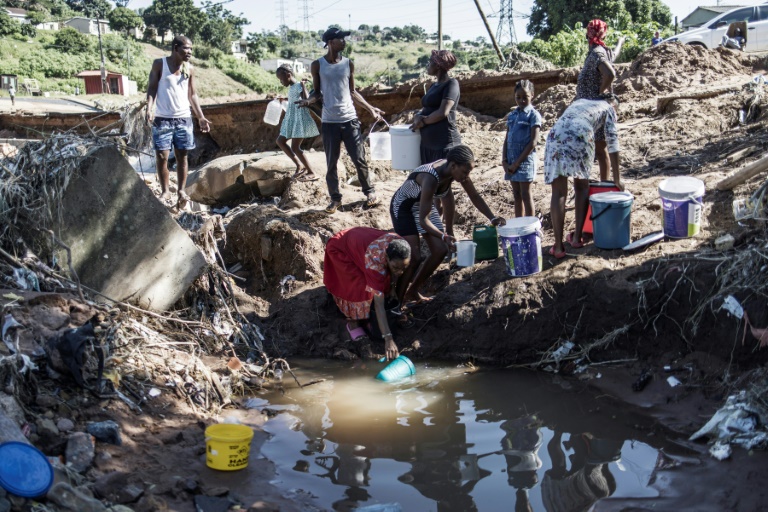
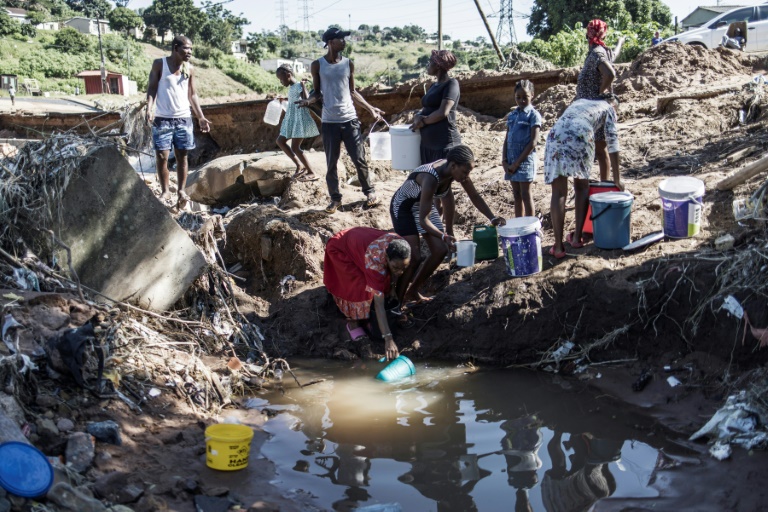
Swathes of eThekwini, the municipality that includes Durban, remain without power or water, and the province said it could take time before services are restored.

“There are areas that have suffered extensive damage which will take longer to repair,” it said in a statement.

Many streets remain slathered with mud, although the main roads have been cleared enough to allow water tankers to the hardest-hit areas.

But eThekwini deputy mayor Philani Mavundla said in a television interview that 80 percent of the city’s water works were down, making it difficult to even fill the tankers.

Some of the troops include plumbers and electricians who joined the mammoth task of trying to get life back to normal.

Soldiers are also providing field accommodation and water purification systems, the army said.

The deadliest storm on record dumped apocalyptic levels of rain on Durban and surrounding areas of KwaZulu-Natal.

Some 40,000 people were left homeless and more than 550 schools and nearly 60 health care facilities have been damaged, according to government tallies.

South Africa is winding down a long weekend for the Easter holidays. Many children are due to return to school on Tuesday, but authorities warned that 271,000 students may not be able to attend due to damaged schools.

The government has announced an immediate one billion rand ($68 million) in emergency relief.

Nearly three dozen search teams were deployed across the region Monday, said coordinator Dave Steyn.

“The rescue operations have stopped. It’s now more of a search and recovery,” he told AFP.

– Shock –

Blue skies finally reappeared Monday, giving hope that the rains have at last subsided.

But the normally azure waters at Durban’s famed beaches have been turned a muddy brown by the mountains of earth and debris washed to the shore.

The intensity of the floods took South Africa, the most economically advanced African country, by surprise.

While the southeastern region has suffered some flooding before, the devastation has never been so severe. South Africans have previously watched similar tragedies hit neighbouring countries such as cyclone-prone Mozambique.

The country is still struggling to recover from the Covid pandemic and deadly riots last year that killed more than 350 people, mostly in the now flood-struck southeastern region.

War in Ukraine: Latest developments

Here are the latest developments in the war in Ukraine:

– Seven killed in Lviv strikes –

Five “powerful” Russian missiles hit the western city of Lviv, killing at least seven people and wounding eight, local officials say.

The attack comes as Russia hits targets across the country ahead of an expected campaign in the east.

– Tycoon at centre of prisoner exchange –

Russian state television broadcasts video of two men it says are captured Britons, who ask to be exchanged for Viktor Medvedchuk, a wealthy Ukrainian tycoon who has for years been close to Russian President Vladimir Putin and who was captured recently.

Moments later, Ukraine’s security services put out a video of Medvedchuk asking to be exchanged for the Ukrainian civilians and soldiers trapped in the strategic besieged Ukrainian port of Mariupol.

– Civilian evacuation paused for second day –

Ukraine says it is halting for a second day in a row the evacuation of civilians from the frontline towns and cities in the east of the country.

“Unfortunately, today, April 18, there will be no humanitarian corridors,” Deputy Prime Minister Iryna Vereshchuk says in a statement on social media. “In violation of international humanitarian law, the Russian occupiers have not stopped blocking and shelling humanitarian routes.”

– Russia seeking to ‘destroy’ Donbas: Zelensky –

Ukraine’s president Volodymyr Zelensky says Russia is seeking to destroy the region of Donbas, the country’s industrial heartland, and vows to defend it, including Mariupol where patches of Ukrainian forces are trapped in the port’s giant industrial parks. 

“Russian troops are preparing for an offensive operation in the east of our country in the near future. They want to literally finish off and destroy Donbas,” Zelensky says in an evening statement.

– Mariupol will ‘fight to the end’ – 

Ukraine’s prime minister Denys Shmyhal tells ABC’s “This Week” that Mariupol “has not fallen” — adding the encircled forces defending the city from Russian attack will “fight to the end”. 

– Macron invited to see evidence of ‘genocide’ in Ukraine –

Zelensky says he has invited his French counterpart to visit Ukraine to see for himself evidence that Russian forces have committed “genocide” — a term President Emmanuel Macron has avoided.

“I talked to him yesterday,” Zelensky tells CNN.

“I just told him I want him to understand that this is not war, but nothing other than genocide. I invited him to come when he will have the opportunity. He’ll come and see, and I’m sure he will understand.”

– Loaned Russian paintings stuck –

Dozens of paintings by renowned Russian artists including Wassily Kandinsky are stuck in Seoul after an exhibition because of  sanctions imposed on Russia over its war in Ukraine.

The exhibition at the Sejong Museum of Art wrapped up on Sunday, but the paintings are stuck in the South Korean capital as all available flight options have been shut down by the sanctions.

— 200,000 in Moscow risk job losses —

Some 200,000 employees of foreign companies in Moscow could lose their jobs due to sanctions over Russia’s military campaign in Ukraine, the city’s mayor says.

Sergei Sobyanin says authorities had last week approved a $41-million programme to support employment in the Russian capital.

What's behind South Africa's flood disaster

South Africa, the continent’s most industrialised country, has largely escaped the tropical cyclones that regularly hit its neighbours.

But last week, storms pummelled the east coast city of Durban, triggering heavy floods and landslides that killed more than 440.

Here are the main questions behind the floods and devastation.

– Did climate change play a role – 

Meteorologists say the storms were not tropical.

Instead, the rains were part of a normal South African weather system called a “cut-off low” which can bring heavy rain and cold weather.

“Cut-off low pressure systems are common. Their frequency becomes high during autumn and spring seasons, and they are differing in strength,” said Puseletso Mofokeng with the South African Weather Service.

Some of these systems are very intense, causing heavy rain, hail, strong and potentially damaging winds and heavy snowfall.

A cut-off low in April 2019 killed 85 people in Eastern Cape and KwaZulu-Natal provinces.

If the storm system itself is a known phenomenon, the difference this time was the intensity of the the deluge.

Here, experts point the finger at climate change — warmer seas charge the atmosphere with more moisture, which then gets dumped as rainfall.

“We’ve seen in Durban three (severe) floods in less than 10 years. Does it have to do with climate change? Definitely,” said Mary Galvin of the University of Johannesburg.

“We are feeling the impact of what will certainly be unpredictable, more frequent, severe and extreme weather events.”

A recent UN report says what was once considered a one-in-a-hundred-year flood event could end up happening several times a year by 2050.

– Why is Durban prone to floods? –

Durban experiences floods every year, but not as severe as these. 

The city is built on a hilly area with many gorges and ravines — a topography that University of KwaZulu-Natal urban planner Hope Magidimisha-Chipungu says is conducive to floods.

If the soil is not properly “stabilised in the hilly areas, it’s obvious you were going to have landslides,” she said.

Some have suggested Durban’s storm-water drainage system may not have been well maintained, which authorities of the 187-year-old city dispute.

Durban city is not alone in experiencing extreme weather conditions in South Africa.

Along the west coast, Cape Town almost ran out of water in a 2018 drought.

“Climate predictions and all models show wet areas will get wetter and dry areas will get dryer. So Durban… unfortunately will be wetter,” said Galvin.

– What about planning? –

Durban is one of South Africa’s fastest-growing cities, with economic growth outpacing the national average by 2015. 

Massive, unplanned migration created housing shortages, which resulted in the mushrooming of shack dwellings, locally called informal settlements. 

“The ways in which South African cities were designed were very exclusionary in nature,” said planner Magidimisha-Chipungu.

“The spatial planning and the apartheid legacy (placed) the urban poor in the periphery and in the low-lying areas” along riverbanks, she said.

Around a quarter of the metro’s 3.9 million people live in 550 informal settlements around the city. At least 164 of them were built on floodplains, according to Galvin. 

A host of recent crises have further sapped resources — the coronavirus pandemic, massive unemployment and riots and looting that erupted last year.

It’s “like the seven plagues” happening in succession, said Galvin.

What's behind South Africa's flood disaster

South Africa, the continent’s most industrialised country, has largely escaped the tropical cyclones that regularly hit its neighbours.

But last week, storms pummelled the east coast city of Durban, triggering heavy floods and landslides that killed more than 440.

Here are the main questions behind the floods and devastation.

– Did climate change play a role – 

Meteorologists say the storms were not tropical.

Instead, the rains were part of a normal South African weather system called a “cut-off low” which can bring heavy rain and cold weather.

“Cut-off low pressure systems are common. Their frequency becomes high during autumn and spring seasons, and they are differing in strength,” said Puseletso Mofokeng with the South African Weather Service.

Some of these systems are very intense, causing heavy rain, hail, strong and potentially damaging winds and heavy snowfall.

A cut-off low in April 2019 killed 85 people in Eastern Cape and KwaZulu-Natal provinces.

If the storm system itself is a known phenomenon, the difference this time was the intensity of the the deluge.

Here, experts point the finger at climate change — warmer seas charge the atmosphere with more moisture, which then gets dumped as rainfall.

“We’ve seen in Durban three (severe) floods in less than 10 years. Does it have to do with climate change? Definitely,” said Mary Galvin of the University of Johannesburg.

“We are feeling the impact of what will certainly be unpredictable, more frequent, severe and extreme weather events.”

A recent UN report says what was once considered a one-in-a-hundred-year flood event could end up happening several times a year by 2050.

– Why is Durban prone to floods? –

Durban experiences floods every year, but not as severe as these. 

The city is built on a hilly area with many gorges and ravines — a topography that University of KwaZulu-Natal urban planner Hope Magidimisha-Chipungu says is conducive to floods.

If the soil is not properly “stabilised in the hilly areas, it’s obvious you were going to have landslides,” she said.

Some have suggested Durban’s storm-water drainage system may not have been well maintained, which authorities of the 187-year-old city dispute.

Durban city is not alone in experiencing extreme weather conditions in South Africa.

Along the west coast, Cape Town almost ran out of water in a 2018 drought.

“Climate predictions and all models show wet areas will get wetter and dry areas will get dryer. So Durban… unfortunately will be wetter,” said Galvin.

– What about planning? –

Durban is one of South Africa’s fastest-growing cities, with economic growth outpacing the national average by 2015. 

Massive, unplanned migration created housing shortages, which resulted in the mushrooming of shack dwellings, locally called informal settlements. 

“The ways in which South African cities were designed were very exclusionary in nature,” said planner Magidimisha-Chipungu.

“The spatial planning and the apartheid legacy (placed) the urban poor in the periphery and in the low-lying areas” along riverbanks, she said.

Around a quarter of the metro’s 3.9 million people live in 550 informal settlements around the city. At least 164 of them were built on floodplains, according to Galvin. 

A host of recent crises have further sapped resources — the coronavirus pandemic, massive unemployment and riots and looting that erupted last year.

It’s “like the seven plagues” happening in succession, said Galvin.

Sri Lanka leader trims cabinet of relatives ahead of IMF talks

Sri Lanka’s embattled leader dropped two of his brothers and a nephew from his cabinet Monday, following public anger over the ruling family’s mismanagement of a crippling economic crisis and calls for his resignation.

President Gotabaya Rajapaksa has presided over the island nation’s most painful downturn in memory and his government is preparing for imminent bailout talks with the International Monetary Fund.

Dozens of lawmakers have turned against the administration and opposition parties have rebuffed invitations to join a unity government from the president, who insists he will remain in office to guide Sri Lanka through the crisis.

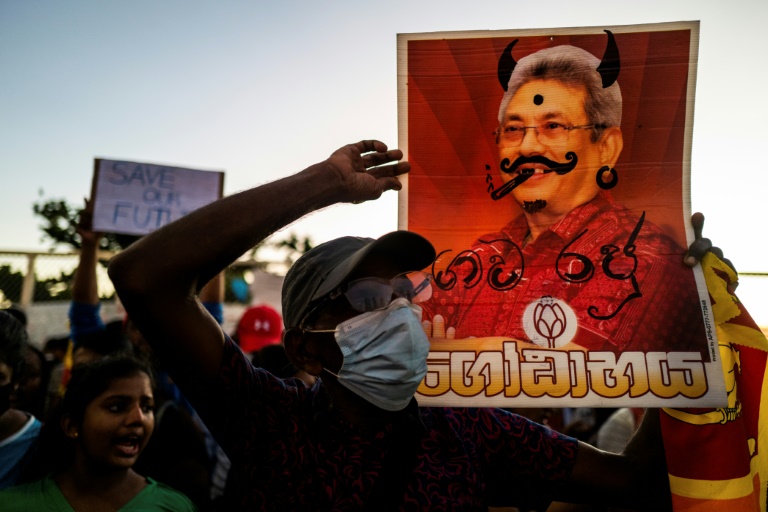
Huge protests have nonetheless demanded Rajapaksa stand down, including tens of thousands of people camped outside his seafront office for more than a week. 

The new cabinet retains Prime Minister Mahinda Rajapaksa, Gotabaya’s older brother and the head of Sri Lanka’s ruling clan, while leaving out eldest sibling Chamal and younger brother Basil, the former finance minister. 

Mahinda’s eldest son Namal, who ran the sports ministry and had been touted as a future leader before the crisis, was also dropped.

The 21-member cabinet is seven people fewer than its predecessor, which resigned en masse two weeks ago in response to public outrage over nepotism and corruption.

Ministers are entitled to several SUVs, a large contingent of bodyguards and unlimited fuel, as well as state housing and entertainment allowances.

New finance minister Ali Sabry led a delegation to Washington over the weekend to open talks with the International Monetary Fund from Tuesday, officials said.

Sri Lanka is seeking three to four billion dollars from the IMF to overcome its balance-of-payments crisis and boost depleted reserves.

– Fuel costs jump again –

Alongside the acute shortages, Sri Lanka is also facing record inflation and lengthy electricity blackouts, as the government has run out of foreign currency to import fuel.

Lanka IOC, a petrol retailer which accounts for a third of the local market, announced yet another steep hike in fuel costs on Monday to account for the collapse in value of the local currency. 

The cost of diesel, the fuel most commonly used for public transport, has risen by 138 percent since the start of the year while petrol prices have nearly doubled. 

The government last week announced a default on Sri Lanka’s $51 billion foreign debt and the Colombo Stock Exchange has suspended trading to prevent an anticipated market collapse.

Rajapaksa’s parliamentary majority has been thrown into question after former allies deserted the ruling coalition.

The opposition has said it will attempt to topple the government through a no-confidence vote in the coming weeks.

Monday marked the tenth straight day of protests outside Rajapaksa’s office, with demonstrators establishing a protest camp that they say will continue until the leader stands aside.

Activists shone digital projections on the office denouncing corruption and demanding the president “go home”, prompting police to hold up large screens to block the light beams. 

Sri Lanka leader trims cabinet of relatives ahead of IMF talks

Sri Lanka’s embattled leader dropped two of his brothers and a nephew from his cabinet Monday, following public anger over the ruling family’s mismanagement of a crippling economic crisis and calls for his resignation.

President Gotabaya Rajapaksa has presided over the island nation’s most painful downturn in memory and his government is preparing for imminent bailout talks with the International Monetary Fund.

Dozens of lawmakers have turned against the administration and opposition parties have rebuffed invitations to join a unity government from the president, who insists he will remain in office to guide Sri Lanka through the crisis.

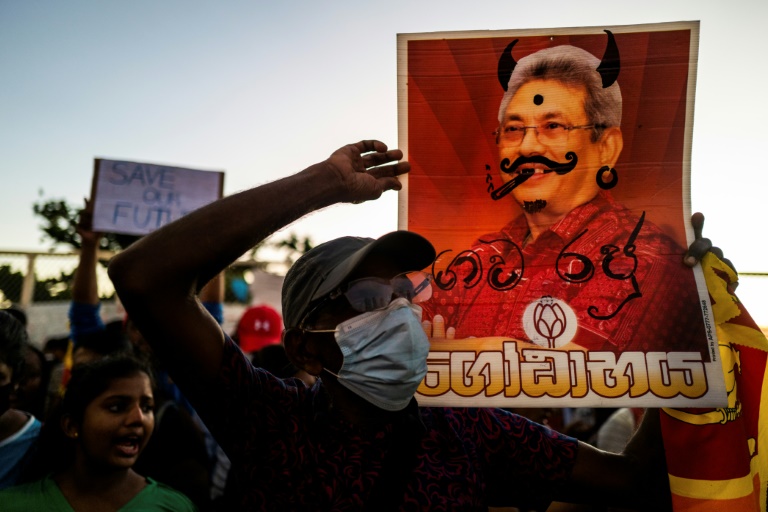
Huge protests have nonetheless demanded Rajapaksa stand down, including tens of thousands of people camped outside his seafront office for more than a week. 

The new cabinet retains Prime Minister Mahinda Rajapaksa, Gotabaya’s older brother and the head of Sri Lanka’s ruling clan, while leaving out eldest sibling Chamal and younger brother Basil, the former finance minister. 

Mahinda’s eldest son Namal, who ran the sports ministry and had been touted as a future leader before the crisis, was also dropped.

The 21-member cabinet is seven people fewer than its predecessor, which resigned en masse two weeks ago in response to public outrage over nepotism and corruption.

Ministers are entitled to several SUVs, a large contingent of bodyguards and unlimited fuel, as well as state housing and entertainment allowances.

New finance minister Ali Sabry led a delegation to Washington over the weekend to open talks with the International Monetary Fund from Tuesday, officials said.

Sri Lanka is seeking three to four billion dollars from the IMF to overcome its balance-of-payments crisis and boost depleted reserves.

– Fuel costs jump again –

Alongside the acute shortages, Sri Lanka is also facing record inflation and lengthy electricity blackouts, as the government has run out of foreign currency to import fuel.

Lanka IOC, a petrol retailer which accounts for a third of the local market, announced yet another steep hike in fuel costs on Monday to account for the collapse in value of the local currency. 

The cost of diesel, the fuel most commonly used for public transport, has risen by 138 percent since the start of the year while petrol prices have nearly doubled. 

The government last week announced a default on Sri Lanka’s $51 billion foreign debt and the Colombo Stock Exchange has suspended trading to prevent an anticipated market collapse.

Rajapaksa’s parliamentary majority has been thrown into question after former allies deserted the ruling coalition.

The opposition has said it will attempt to topple the government through a no-confidence vote in the coming weeks.

Monday marked the tenth straight day of protests outside Rajapaksa’s office, with demonstrators establishing a protest camp that they say will continue until the leader stands aside.

Activists shone digital projections on the office denouncing corruption and demanding the president “go home”, prompting police to hold up large screens to block the light beams. 

Close Bitnami banner
Bitnami