World

North Korea marks founder's birth without a military parade

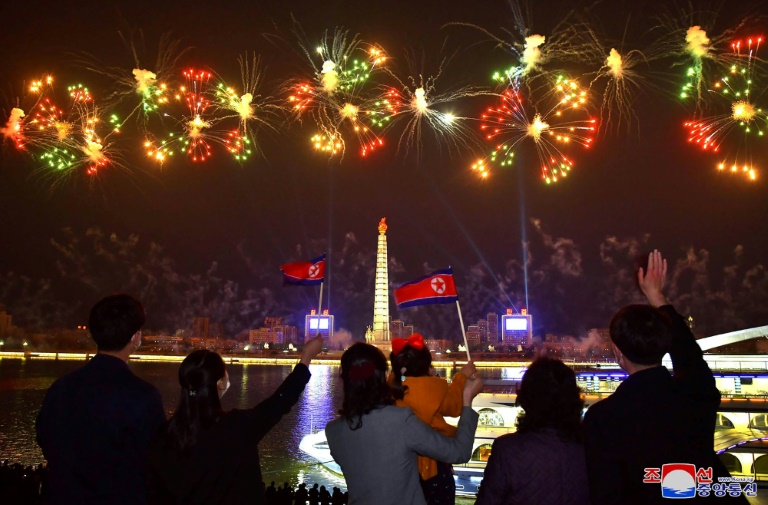
Kim Jong Un oversaw a huge public procession to celebrate the birthday of North Korea’s founding leader, state media images showed Saturday, but the anniversary passed without an anticipated show of military strength.

Known as the Day of the Sun in the nuclear-armed country, the April 15 birthday of the late Kim Il Sung — grandfather of current leader Kim Jong Un — is one of the most important dates in Pyongyang’s political calendar.

Analysts and South Korean and US officials had widely predicted a military parade or even a nuclear test, but the celebrations Friday involved a civilian parade, synchronised dancing and fireworks.

Photographs released by the state-run Korean Central News Agency showed thousands of colourfully dressed people marching through the capital’s Kim Il Sung Square as Kim Jong Un looked on from a balcony.

“Columns of workers, peasant dancers and others marched past the square,” carrying banners and boards bearing socialist slogans, and a giant national flag, KCNA said.

Three generations of the Kim family have ruled the country since 1948.

Kim also visited the Kumsusan Palace of the Sun, where the bodies of Kim Il Sung and his son and successor Kim Jong Il lie in state.

– Civilian, not military –

There was a steady drumbeat of celebratory coverage in state media leading up to the day, including the opening of new apartment complexes, light festivals and floral tributes.

It was a calculated decision to highlight new apartments and citizens with smartphones taking pictures of flowers, said Leif-Eric Easley, associate professor of international studies at Ewha Womans University in Seoul.

“The Kim regime needs more sources of national pride and legitimacy than military parades,” he said.

“So the public commemorations around its founder’s birthday tried to portray an economy that is not only resilient but growing.”

The anniversary celebrations came three weeks after North Korea staged its largest intercontinental ballistic missile test ever — the first time Kim’s most powerful weapon had been fired at full range since 2017.

That test was the culmination of a record-breaking blitz of sanctions-busting launches this year and signalled an end to a self-imposed moratorium on long-range and nuclear tests.

The absence of military activity on the holiday “does not represent a shift away from North Korea’s military build-up”, Easley added.

Satellite imagery has shown signs of new activity at a tunnel at the Punggye-ri nuclear testing site, which North Korea said was demolished in 2018 ahead of a summit between Kim and then-US president Donald Trump.

South Korean officials have said Pyongyang could still stage a military parade or carry out a weapons test on or around April 25, the anniversary of the founding of the Korean People’s Army.

China's 'space dream': A Long March to the Moon and beyond

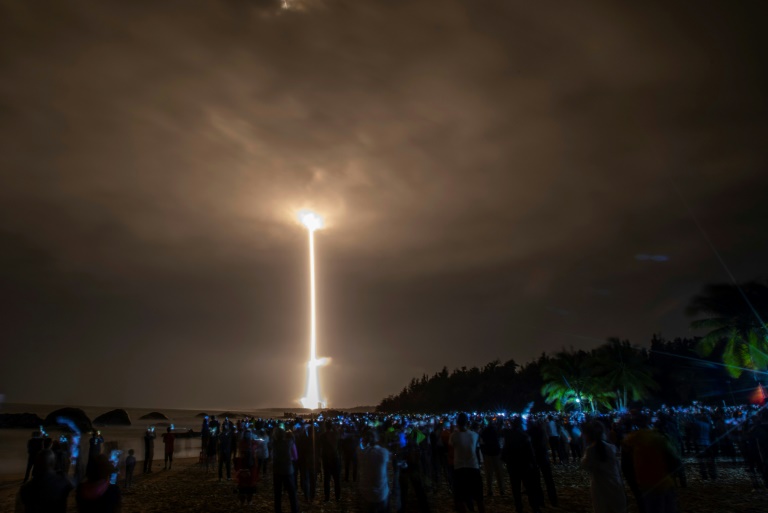
The return to Earth of three astronauts on Saturday after six months at China’s new space station marks a landmark step in the country’s space ambitions, ending its longest crewed mission ever.

The world’s second-largest economy has put billions into its military-run space programme, with hopes of eventually sending humans to the Moon.

China has come a long way in catching up with the United States and Russia, whose astronauts and cosmonauts have decades of experience in space exploration.

Here is a look at the country’s space programme, and where it is headed:

– Mao’s vow –

Soon after the Soviet Union launched Sputnik in 1957, Chairman Mao Zedong pronounced: “We too will make satellites.”

It took more than a decade, but in 1970, China launched its first satellite on a Long March rocket.

Human spaceflight took decades longer, with Yang Liwei becoming the first Chinese “taikonaut” in 2003.

As the launch approached, concerns over the viability of the mission caused Beijing to cancel a live television broadcast at the last minute.

But it went smoothly, with Yang orbiting the Earth 14 times during a 21-hour flight aboard the Shenzhou 5.

China has launched seven crewed missions since.

– Space station and ‘Jade Rabbit’ –

Following in the footsteps of the United States and Russia, China began planning to build its own space station circling the planet.

The Tiangong-1 lab was launched in 2011.

In 2013, the second Chinese woman in space, Wang Yaping, gave a video class from inside the space module to children across the world’s most populous country.

The craft was also used for medical experiments and, most importantly, tests intended to prepare for the construction of a space station.

That was followed by the “Jade Rabbit” lunar rover in 2013, which initially appeared a dud when it turned dormant and stopped sending signals back to Earth.

It made a dramatic recovery, however, ultimately surveying the Moon’s surface for 31 months — well beyond its expected lifespan.

In 2016, China launched its second orbital lab, the Tiangong-2. Astronauts who visited the station have run experiments on growing rice and other plants.

– ‘Space dream’ –

Under President Xi Jinping, plans for China’s “space dream” have been put into overdrive.

Beijing is looking to finally catch up with the United States and Russia after years of belatedly matching their milestones.

Besides a space station, China is also planning to build a base on the Moon, and the country’s National Space Administration said it aims to launch a crewed lunar mission by 2029.

But lunar work was dealt a setback in 2017 when the Long March-5 Y2, a powerful heavy-lift rocket, failed to launch on a mission to send communication satellites into orbit.

That forced the postponement of the Chang’e-5 launch, originally scheduled to collect Moon samples in the second half of 2017.

Another robot, the Chang’e-4, landed on the far side of the Moon in January 2019 — a historic first.

This was followed by one that landed on the near side of the Moon last year, raising a Chinese flag on the lunar surface.

The unmanned spacecraft returned to Earth in December with rocks and soil — the first lunar samples collected in four decades.

And in February 2021, the first images of Mars were sent back by the five-tonne Tianwen-1, which then landed a rover on the Martian surface in May that has since started to explore the surface of the Red Planet.

– Palace in the sky –

A trio of astronauts docked successfully in October with the core Tianhe module of the Chinese space station, which was placed in orbit in April 2021.

The astronauts stayed at the station for six months before returning safely to Earth on Saturday, ending China’s longest crewed mission to date.

The Chinese space station Tiangong — meaning “heavenly palace” — will need a total of around 11 missions to bring more parts and assemble them in orbit.

Once completed, it is expected to remain in low Earth orbit at between 400 and 450 kilometres (250 and 280 miles) above our planet for at least 10 years — realising an ambition to maintain a long-term human presence in space.

While China does not plan to use its space station for global cooperation on the scale of the International Space Station, Beijing said it is open to foreign collaboration.

It is not yet clear how extensive that cooperation will be.

China's 'space dream': A Long March to the Moon and beyond

The return to Earth of three astronauts on Saturday after six months at China’s new space station marks a landmark step in the country’s space ambitions, ending its longest crewed mission ever.

The world’s second-largest economy has put billions into its military-run space programme, with hopes of eventually sending humans to the Moon.

China has come a long way in catching up with the United States and Russia, whose astronauts and cosmonauts have decades of experience in space exploration.

Here is a look at the country’s space programme, and where it is headed:

– Mao’s vow –

Soon after the Soviet Union launched Sputnik in 1957, Chairman Mao Zedong pronounced: “We too will make satellites.”

It took more than a decade, but in 1970, China launched its first satellite on a Long March rocket.

Human spaceflight took decades longer, with Yang Liwei becoming the first Chinese “taikonaut” in 2003.

As the launch approached, concerns over the viability of the mission caused Beijing to cancel a live television broadcast at the last minute.

But it went smoothly, with Yang orbiting the Earth 14 times during a 21-hour flight aboard the Shenzhou 5.

China has launched seven crewed missions since.

– Space station and ‘Jade Rabbit’ –

Following in the footsteps of the United States and Russia, China began planning to build its own space station circling the planet.

The Tiangong-1 lab was launched in 2011.

In 2013, the second Chinese woman in space, Wang Yaping, gave a video class from inside the space module to children across the world’s most populous country.

The craft was also used for medical experiments and, most importantly, tests intended to prepare for the construction of a space station.

That was followed by the “Jade Rabbit” lunar rover in 2013, which initially appeared a dud when it turned dormant and stopped sending signals back to Earth.

It made a dramatic recovery, however, ultimately surveying the Moon’s surface for 31 months — well beyond its expected lifespan.

In 2016, China launched its second orbital lab, the Tiangong-2. Astronauts who visited the station have run experiments on growing rice and other plants.

– ‘Space dream’ –

Under President Xi Jinping, plans for China’s “space dream” have been put into overdrive.

Beijing is looking to finally catch up with the United States and Russia after years of belatedly matching their milestones.

Besides a space station, China is also planning to build a base on the Moon, and the country’s National Space Administration said it aims to launch a crewed lunar mission by 2029.

But lunar work was dealt a setback in 2017 when the Long March-5 Y2, a powerful heavy-lift rocket, failed to launch on a mission to send communication satellites into orbit.

That forced the postponement of the Chang’e-5 launch, originally scheduled to collect Moon samples in the second half of 2017.

Another robot, the Chang’e-4, landed on the far side of the Moon in January 2019 — a historic first.

This was followed by one that landed on the near side of the Moon last year, raising a Chinese flag on the lunar surface.

The unmanned spacecraft returned to Earth in December with rocks and soil — the first lunar samples collected in four decades.

And in February 2021, the first images of Mars were sent back by the five-tonne Tianwen-1, which then landed a rover on the Martian surface in May that has since started to explore the surface of the Red Planet.

– Palace in the sky –

A trio of astronauts docked successfully in October with the core Tianhe module of the Chinese space station, which was placed in orbit in April 2021.

The astronauts stayed at the station for six months before returning safely to Earth on Saturday, ending China’s longest crewed mission to date.

The Chinese space station Tiangong — meaning “heavenly palace” — will need a total of around 11 missions to bring more parts and assemble them in orbit.

Once completed, it is expected to remain in low Earth orbit at between 400 and 450 kilometres (250 and 280 miles) above our planet for at least 10 years — realising an ambition to maintain a long-term human presence in space.

While China does not plan to use its space station for global cooperation on the scale of the International Space Station, Beijing said it is open to foreign collaboration.

It is not yet clear how extensive that cooperation will be.

Russia hits Kyiv missile factory after flagship sunk

Russia pounded a Ukrainian rocket factory following the sinking of its Black Sea flagship, as President Volodymyr Zelensky said his allies could shorten the war by delivering the weapons he had requested.

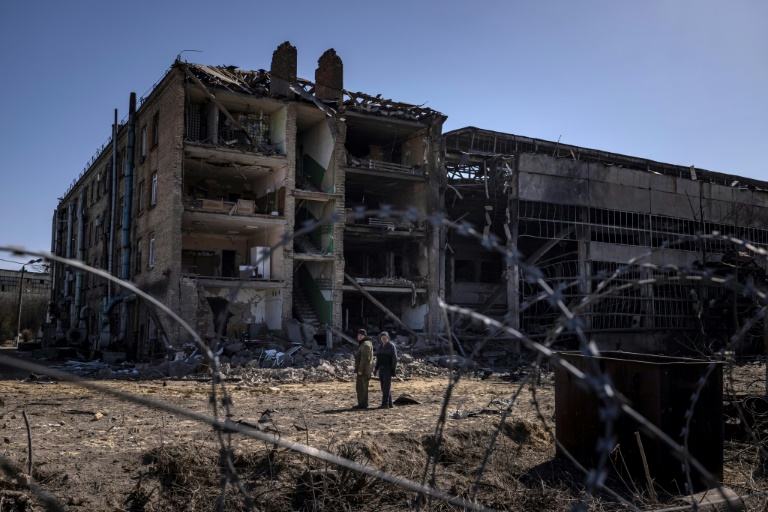
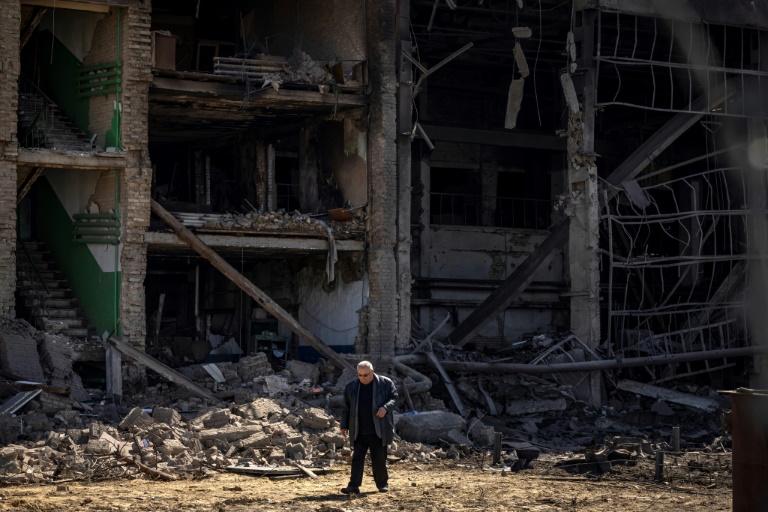
The Vizar factory, near Kyiv’s international airport, was seriously damaged in the overnight strikes, an AFP journalist saw on Friday.

Russia said it had used sea-based long-range missiles to hit the plant, which Ukraine’s state weapons manufacturer says produced Neptune cruise missiles — the projectiles both Kyiv and Washington say were used to sink the Moskva warship. 

“There were five hits. My employee was in the office and got thrown off his feet by the blast,” Andrei Sizov, the 47-year-old owner of a nearby wood workshop, told AFP.

“They are making us pay for destroying the Moskva,” he said.

A Pentagon official briefing reporters said the ship had been hit with two Neptunes — contradicting Russia’s claim that the ship lost balance in rough seas as it was towed to port after ammunition exploded.

The Moskva had been leading Russia’s naval effort in the seven-week conflict, and the fate of its crew of more than 500 was uncertain.

The Pentagon official said survivors were observed being recovered by other Russian vessels, but Ukrainian authorities said bad weather had made rescue operations impossible.

The Russian fleet in the Black Sea has been blockading the besieged port city of Mariupol, where Russian officials say they are in full control although Ukrainian fighters are still holed up in the city’s fortress-like steelworks.

– Weapons plea –

In his nightly address, Zelensky made another plea for allies to send more firepower to boost the defence efforts. 

“You can make the war much shorter,” he said. “The more and the sooner we get all the weapons we have requested, the stronger our position will be and the sooner peace will come.”

The head of Ukraine’s army had made a similar point in a phone call to the chairman of the US Joint Chiefs of Staff Mark Milley, the military said on Saturday.

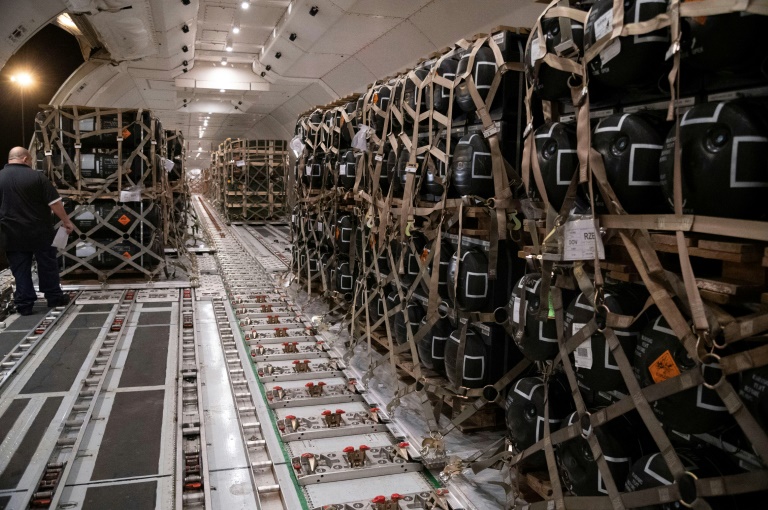
The United States has already pledged a new $800-million military aid package for Ukraine this week, including helicopters, howitzers and armoured personnel carriers, and on Friday the German government said it plans to release more than a billion euros ($1.1 billion) in aid as well.

US media reported that Russia had sent a formal complaint to Washington about its support of Kyiv this week.

In the diplomatic note, Moscow warned the United States and NATO against sending the “most sensitive” weapons, saying such shipments were “adding fuel” to the situation and could come with “unpredictable consequences”, the Washington Post reported.

Zelensky warned Friday that Russia might use nuclear weapons out of desperation as its invasion falters, echoing recent comments by CIA director William Burns.

“They could do it, I mean they can,” Zelensky told CNN. “For them, life of the people is nothing.”

– ‘Wait for quieter times’ –

The attack on the Vizar factory was the first major Russian strike around the Ukrainian capital in more than two weeks.

Russian forces last month started withdrawing from around Kyiv as they were redeployed to focus on the east of the country, but the city remains vulnerable to missiles.

Kyiv regional governor Oleksandr Pavliuk said there were at least two other Russian strikes on the city Friday, adding civilians thinking about returning should “wait for quieter times.”

The Russian defence ministry has in fact warned it will target Kyiv “in response to any terrorist attacks or sabotage committed by the Kyiv nationalist regime on Russian territory”.

For now, Russia’s military focus seems set on seizing the eastern Donbas region, where Russian-backed separatists control the Donetsk and Lugansk areas.

This would allow Moscow to create a southern corridor to the occupied Crimean peninsula, and Ukrainian authorities have been urging people in the region to quickly move west in advance of a large-scale Russian offensive.

The UN’s World Food Programme has appealed for access to those who cannot get out.  

“It’s one thing when people are suffering from the devastation of war. It’s another thing when they’re being starved to death,” WFP director David Beasley said in a statement.

– Shelling in Kharkiv –

Ahead of the anticipated Russian push, towns and cities in the east been subjected to what residents say is incessant shelling.

On Friday AFP witnessed the aftermath of several strikes in the industrial district of Kharkiv, where authorities said 10 people were killed and 35 injured.

The charred remains of three rockets were visible, and around a dozen football-sized craters were spotted across the area AFP saw in a short visit.

One 38-year-old man was killed when shrapnel burst into his apartment as he smoked by the window.

“Everything started, the glass fell down and I saw him lying in a pool of blood,” his mother said. “I told him before that we should leave. He said we should stay.”

For its part, Russia on Friday claimed Ukraine was preparing a missile strike on its own refugees at a railway station in the Kharkiv region, in the town of Lozova.

The allegations echoed Russia’s widely dismissed claim that Kyiv was responsible for a missile strike on April 18 that killed scores at another railway station.

Moscow has been accused of widespread war crimes by Ukraine and its allies, and international experts have already arrived in the country to begin investigations. 

A team of French experts has been working for several days in the town of Bucha, which has become synonymous with alleged Russian atrocities.

Local authorities say hundreds were killed there, and on Friday the region’s police chief said 95 percent died from gunshot wounds.

– Financial support –

As well as military aid, Zelensky appealed for financial support in his address late Friday.

“The sooner the democratic world recognises that the oil embargo against Russia and the complete blockade of its banking sector are necessary steps towards peace, the sooner the war will end,” he said.

Last week European countries announced expanded efforts to wean themselves off Russian gas, and Germany on Friday released nearly three billion euros ($3.2 billion) to acquire floating liquefied natural gas import terminals.

But Berlin does not consider it realistic to be able to do without Russian gas before mid-2024.

The war in Ukraine has also had a profound effect on European countries’ security considerations, with Finland and Sweden considering joining NATO.

Moscow, which invaded Ukraine partly because of deepening ties between Kyiv and NATO, on Friday warned of consequences should they join the US-led defence alliance.

“They will automatically find themselves on the NATO frontline,” Russian foreign ministry spokeswoman Maria Zakharova said.

Shortly afterwards, Finland’s European Affairs Minister Tytti Tuppurainen said it was “highly likely” that her country would apply for NATO membership.

Unlike Sweden, Finland neighbours Russia, from which it declared independence in 1917 after 150 years of Russian rule.

burs-reb/mtp

War in Ukraine: Latest developments

Here are the latest developments in the war in Ukraine:

– Russia threatens Kyiv –

A Ukrainian military factory outside Kyiv is partially destroyed by overnight Russian strikes, AFP reports, as Moscow warns it will intensify attacks on the capital in response to Ukrainian strikes on Russian soil.

The factory produced missiles allegedly used to hit Russia’s Moskva warship.

“The number and scale of missile strikes against targets in Kyiv will increase in response to any terrorist attacks or sabotage committed by the Kyiv nationalist regime on Russian territory,” the defence ministry in Moscow says.

Russian officials accuse Ukraine of sending two helicopters across the border to bomb a town in Russia’s southern Bryansk region, wounding eight people. Ukraine denies the allegations.

– Russia complains over US weaponry –

Russia formally complains to the United States over its military aid to Ukraine, warning of “unpredictable consequences” if shipments of advanced weaponry go forward, US media report.

The diplomatic note comes the same week that US President Joe Biden pledged a new $800-million military aid package for Ukraine, including helicopters, howitzers and armoured personnel carriers.

– Germany offers military aid –

The German government says it plans to release more than a billion euros ($1.1 billion) in military aid for Ukraine, following complaints by Kyiv it is not receiving heavy weapons from Berlin.

Berlin has decided to increase its international aid in the defence sector “to two billion euros” with “the largest part being planned in the form of military aid in favour of Ukraine”, a government spokeswoman tells AFP.

– Five million flee Ukraine –

More than five million people have now fled Ukraine since the Russian invasion on February 24, the United Nations says.

– Russian flagship sinks –

Russia’s missile cruiser Moskva sinks in the Black Sea after being damaged, Russia’s defence ministry says.

Kyiv claims to have hit the warship with Neptune missiles. 

“The Moskva cruiser strike hit not only the ship itself: it hit the enemy’s imperial ambitions. We are all aware that we will not be forgiven for this,” Natalia Gumeniuk, a spokeswoman for Ukraine’s southern military forces, says.

A senior Pentagon official says the warship was hit by two Ukrainian missiles before it sank, confirming Kyiv’s account and calling it a “big blow” for Moscow.

– Warship stamp becomes collector’s item –

A stamp depicting a Ukrainian soldier making an obscene hand gesture at the Moskva becomes a collector’s item for Ukrainians who see it as a sign of “victory”.

The missile cruiser gained notoriety in the early stages of the invasion when its crew called on a unit of Ukrainian border guards to surrender, only for them to defiantly refuse.

– Finland NATO bid ‘highly likely’ –

Finland’s European Affairs Minister Tytti Tuppurainen says it is “highly likely” that Finland will apply for NATO membership, just hours after Russia warns of unspecified “consequences” should it and Sweden join the military alliance.

Moscow’s military actions in Ukraine have sparked a dramatic U-turn in public and political opinion in non-aligned Finland and Sweden, which is also discussing joining the alliance.

– EU gas, oil embargo will take ‘months’ –

The EU is working on broadening sanctions on Russia to include oil and gas embargoes but such measures will take “several months”, European officials tell AFP.

Russian energy exports are Moscow’s main hard currency earner, and its oil and gas sales to the EU account for between a quarter of a billion to a billion euros per day, per different estimates.

Russia warns US of 'consequences' of Ukraine military aid: reports

Russia has formally complained to the United States over its military aid to Ukraine, warning of “unpredictable consequences” if shipments of advanced weaponry go forward, US media reported.

In a diplomatic note this week, Moscow warned the United States and NATO against sending the “most sensitive” weapons for Kyiv to use in the conflict with Russia, saying such shipments were “adding fuel” to the situation and could come with “unpredictable consequences,” the Washington Post reported.

The warning came the same week that US President Joe Biden pledged a new $800 million military aid package for Ukraine, including helicopters, howitzers and armored personnel carriers.

“What the Russians are telling us privately is precisely what we’ve been telling the world publicly — that the massive amount of assistance that we’ve been providing our Ukrainian partners is proving extraordinarily effective,” the Post quoted a senior administration official — who spoke on condition of anonymity about the note — as saying.

The State Department declined to comment on reports of the formal note.

“We won’t confirm any private diplomatic correspondence,” a State Department spokesperson said.

“What we can confirm is that, along with allies and partners, we are providing Ukraine with billions of dollars’ worth of security assistance, which our Ukrainian partners are using to extraordinary effect to defend their country against Russia’s unprovoked aggression and horrific acts of violence.”

According to the New York Times citing US officials, the note was sent through normal channels, and was not signed by any senior Russian officials.

The formal correspondence indicates Russia is concerned about the United States’ ongoing material support for Ukraine, an anonymous US official told CNN. 

CNN also reported that one source familiar with the document said the complaint could mean Moscow is getting ready to adopt a more aggressive stance against the United States and NATO as the invasion of Ukraine continues. 

Biden told his Ukrainian counterpart Volodymyr Zelensky of the new weapons aid package over the phone Wednesday, as Russia refocused its efforts eastward, the new frontline of the seven-week-old war.

“As Russia prepares to intensify its attack in the Donbas region, the United States will continue to provide Ukraine with the capabilities to defend itself,” Biden said.

“This new package of assistance will contain many of the highly effective weapons systems we have already provided and new capabilities tailored to the wider assault we expect Russia to launch in eastern Ukraine.”

Zelensky for his part tweeted that he and Biden had discussed the “additional package of defensive and possible macro-financial aid.”

The new assistance included some of the heavier equipment that Washington had previously refused to provide to Kyiv for fear of escalating the conflict with nuclear-armed Russia, and comes after previous weapons aid already supplied to the Ukrainian army.

Three Chinese astronauts return to Earth after six months in space

Three Chinese astronauts returned to Earth on Saturday after 183 days in space, ending China’s longest crewed mission as it continues its quest to become a major space power.

The Shenzhou-13 spacecraft was the latest mission in Beijing’s drive to rival the United States, after landing a rover on Mars and sending probes to the Moon.

Live footage from state broadcaster CCTV showed the capsule landing in a cloud of dust, with ground crew who had kept clear of the landing site rushing in helicopters to reach the capsule.

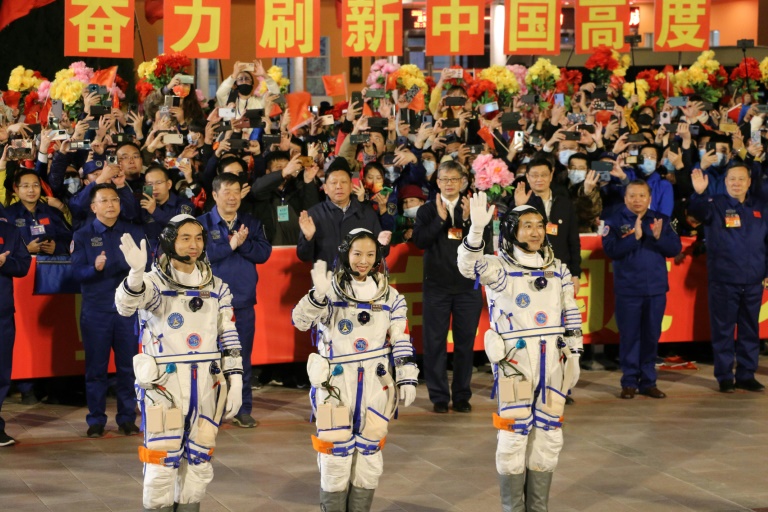
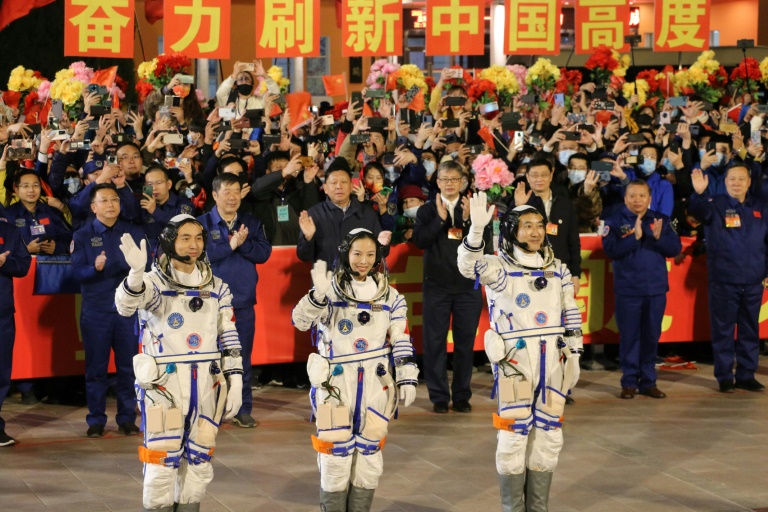
The two men and one woman — Zhai Zhigang, Ye Guangfu and Wang Yaping — returned to Earth shortly before 10 am Beijing time (0200 GMT), after six months aboard the Tianhe core module of China’s Tiangong space station.

Ground crew applauded as the astronauts each took turns to report that they were in good physical condition.

Zhai was the first to emerge from the capsule roughly 45 minutes after the landing, waving and grinning at cameras as he was lifted by ground crew into a specially designed chair before being bundled into a blanket.

“I’m proud of our heroic country,” Zhai said in an interview with CCTV shortly after leaving the capsule. “I feel extremely good.”

The trio originally launched in the Shenzhou-13 from China’s northwestern Gobi Desert last October, as the second of four crewed missions during 2021-2022 sent to assemble the country’s first permanent space station — Tiangong, which means “heavenly palace.”

Wang became the first Chinese woman to spacewalk last November, as she and her colleague Zhai installed space station equipment during a six-hour stint.

Mission commander Zhai, 55, is a former fighter pilot who performed China’s first spacewalk in 2008, while Ye is a People’s Liberation Army pilot.

The trio have completed two spacewalks, carried out numerous scientific experiments, set up equipment and tested technologies for future construction during their time in orbit. 

The astronauts spent the past few weeks tidying up and preparing the cabin facilities and equipment for the crew of the incoming Shenzhou-14, expected to be launched in the coming months.

China’s previous record spaceflight mission length was set by last year’s Shenzhou-12 deployment, which lasted 92 days. 

Six months will become the normal astronaut residence period aboard the Chinese space station, according to state broadcaster CCTV.

– Space race –

The world’s second-largest economy has poured billions into its military-run space programme, with hopes of having a permanently crewed space station by 2022 and eventually sending humans to the Moon.

The country has come a long way in catching up with the United States and Russia, whose astronauts and cosmonauts have decades of experience in space exploration.

But under Chinese President Xi Jinping, the country’s plans for its heavily-promoted “space dream” have been put into overdrive.

Besides a space station, Beijing is also planning to build a base on the Moon, and the country’s National Space Administration said it aims to launch a crewed lunar mission by 2029.

China has been excluded from the International Space Station since 2011, when the US banned NASA from engaging with the country.

While China does not plan to use its space station for global cooperation on the scale of the ISS, Beijing has said it is open to foreign collaboration although the scope of that cooperation is not yet clear.

The ISS is due for retirement after 2024, although NASA has said it could  remain functional until 2030.

Three Chinese astronauts return to Earth after six months in space

Three Chinese astronauts returned to Earth on Saturday after 183 days in space, ending China’s longest crewed mission as it continues its quest to become a major space power.

The Shenzhou-13 spacecraft was the latest mission in Beijing’s drive to rival the United States, after landing a rover on Mars and sending probes to the Moon.

Live footage from state broadcaster CCTV showed the capsule landing in a cloud of dust, with ground crew who had kept clear of the landing site rushing in helicopters to reach the capsule.

The two men and one woman — Zhai Zhigang, Ye Guangfu and Wang Yaping — returned to Earth shortly before 10 am Beijing time (0200 GMT), after six months aboard the Tianhe core module of China’s Tiangong space station.

Ground crew applauded as the astronauts each took turns to report that they were in good physical condition.

Zhai was the first to emerge from the capsule roughly 45 minutes after the landing, waving and grinning at cameras as he was lifted by ground crew into a specially designed chair before being bundled into a blanket.

“I’m proud of our heroic country,” Zhai said in an interview with CCTV shortly after leaving the capsule. “I feel extremely good.”

The trio originally launched in the Shenzhou-13 from China’s northwestern Gobi Desert last October, as the second of four crewed missions during 2021-2022 sent to assemble the country’s first permanent space station — Tiangong, which means “heavenly palace.”

Wang became the first Chinese woman to spacewalk last November, as she and her colleague Zhai installed space station equipment during a six-hour stint.

Mission commander Zhai, 55, is a former fighter pilot who performed China’s first spacewalk in 2008, while Ye is a People’s Liberation Army pilot.

The trio have completed two spacewalks, carried out numerous scientific experiments, set up equipment and tested technologies for future construction during their time in orbit. 

The astronauts spent the past few weeks tidying up and preparing the cabin facilities and equipment for the crew of the incoming Shenzhou-14, expected to be launched in the coming months.

China’s previous record spaceflight mission length was set by last year’s Shenzhou-12 deployment, which lasted 92 days. 

Six months will become the normal astronaut residence period aboard the Chinese space station, according to state broadcaster CCTV.

– Space race –

The world’s second-largest economy has poured billions into its military-run space programme, with hopes of having a permanently crewed space station by 2022 and eventually sending humans to the Moon.

The country has come a long way in catching up with the United States and Russia, whose astronauts and cosmonauts have decades of experience in space exploration.

But under Chinese President Xi Jinping, the country’s plans for its heavily-promoted “space dream” have been put into overdrive.

Besides a space station, Beijing is also planning to build a base on the Moon, and the country’s National Space Administration said it aims to launch a crewed lunar mission by 2029.

China has been excluded from the International Space Station since 2011, when the US banned NASA from engaging with the country.

While China does not plan to use its space station for global cooperation on the scale of the ISS, Beijing has said it is open to foreign collaboration although the scope of that cooperation is not yet clear.

The ISS is due for retirement after 2024, although NASA has said it could  remain functional until 2030.

Myanmar rebel troupe takes aim at junta with folk satire

A troupe of Myanmar folk singers and satirists are taking their new show on a jungle tour, hoping to rally anti-coup fighters far from their families with barbs against the junta and jokes about home. 

Myanmar has been in chaos since last year’s coup sparked renewed fighting with ethnic rebels and sprouted dozens of “People’s Defence Forces” that have battled the junta across the country.

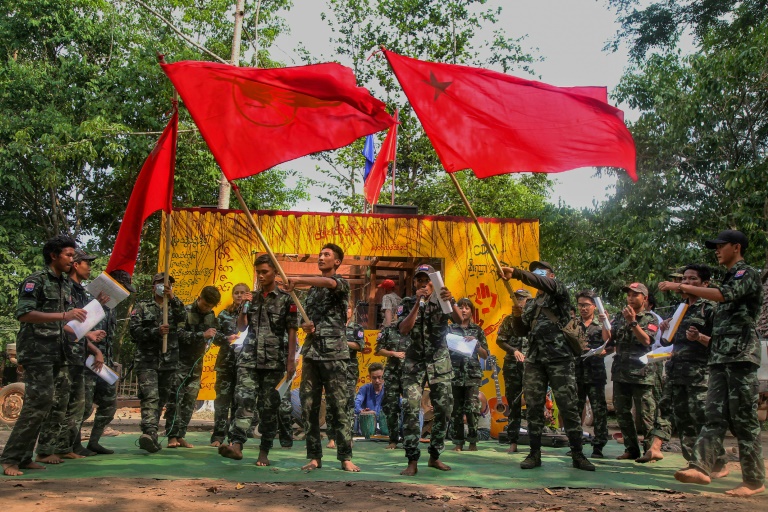
In eastern Kayin state, the “Peacock Generation” activist troupe are trying to boost morale with traditional “Thangyat” performances of poetry, comedy and satirical songs against the junta. 

Near the Thai border, their makeshift tour bus — with a three-finger salute popular with pro-democracy protesters in Hong Kong and Thailand painted on one side — bumps along a dusty track en route to a camp. 

Upon arrival, the unfazed troupe of around 15 mostly young performers rehearse their lines.

“We are expecting the battle like we hope for rains,” they sing, stepping in unison across a makeshift stage, accompanied by drums and cymbals.

“Let’s start the bullets raining.” 

Slam-poetry-like “Thangyat” is traditionally performed around the new year, and has been used for centuries in Myanmar to poke fun at politics and society and vent against injustices small and large. 

But the military has waged a brutal crackdown on dissent since the February 2021 coup.

More than 1,700 civilians have been killed and over 13,000 people arrested, including dozens of journalists, according to a local monitoring group. 

A handful of media outlets have also been forced to shut down. 

At the camp, a handful of young fighters in camouflage uniforms sit cross-legged, some clapping along.

“We also want to live like you — peacefully with cigarettes and coffee,” the troupe sings to a row of smartphones in the audience — a message that will reach those sitting at home when the performance is broadcast online later.

“We are still young and we are missing our mothers who always scold us.”

The few dozen at the camp are some of the hundreds, according to analyst estimates, who have trekked into border areas held by Myanmar’s established rebel groups to receive weapons training.

– ‘Freedom’ –

“Thangyat gives us some freedom of expression in our culture,” said veteran performer Zay Yar Lwin, 32, who fled to the jungle after the coup and refounded the Peacock Generation group he had performed with in previous years.

Thangyat performances are usually held in streets and parks at the Thingyan festival that welcomes in the new year and is usually marked by boisterous water fights in the streets.

But celebrations this year have been muted as many stay away from junta-sponsored events.

“Most of what we’re saying is targeting the military dictatorship,” Zay Yar Lwin said. 

But they also tease the shadow ‘National Unity Government’ dominated by lawmakers from Suu Kyi’s ousted party that is working to overturn the coup for failing to secure the weapons anti-coup fighters say they need. 

“Are we getting weapons from the NUG?” calls the troupe leader. “Yeah we are, but only wind guns,” comes the response, a jibe implying the opposition body is all talk and no action.

Rebel recruit Ma Yu, 30, said she feels especially homesick during Thingyan because under normal circumstances she would celebrate with a feast at home with her parents and family.

“But I felt blessed while watching others practising for the performance, and so I joined it to have a new experience,” she said.

Thangyat performances were prohibited under the previous junta regime which ruled for almost 50 years, and it was not until 2013 that the ban was lifted. 

But even after democracy hero Aung San Suu Kyi’s government was sworn into power, there were strict limits on free speech — especially when it came to the armed forces.

In 2019 Zay Yar Lwin and several other “Peacock Generation” members were jailed for a performance that a judge found was “disrespectful” to the military. 

Living in the jungle, he said it was satisfying to perform Thangyat and rebel against the military.

“You can rebel against them with hip hop or electropop or Thangyat. People are ready to support you during this time,” Zay Yar Lwin said.

Belgium trial for alleged accomplices of 2015 Paris attacks

Fourteen people charged as accomplices to jihadists who carried out deadly bomb and gun attacks in Paris in 2015 will go on trial in Belgium from Tuesday.

Proceedings will take place under high security in NATO’s former headquarters and are expected to last until May 20, with a verdict likely to take several more weeks.

They are happening in parallel with a trial in Paris of 20 suspects charged in France, which opened in September and is expected to run until the end of June.

The November 2015 Paris attacks saw 130 people killed, with the Islamic State group claiming responsibility. 

Assailants set off suicide belts outside the Stade de France stadium, as a group of gunmen in a car cut down people outside restaurants and bars. Three jihadists then killed 90 people attending a performance at the popular Bataclan music venue.

Part of the attack was planned in Belgium, according to prosecutors. 

The 14 accused in the Belgian trial — 13 men and one woman — are suspected of transporting, housing or financially helping some of the perpetrators of the attacks. 

Charges include driving an alleged attacker to the airport for a trip to Syria.

Some of the suspects are close to Salah Abdeslam, a 32-year-old French national who is the only surviving suspected assailant after failing to set off his bomb belt. Abdeslam is on trial in Paris.

Prosecutors allege they had knowledge of the jihadist group’s intentions, or helped Abdeslam — who was living in the Brussels neighbourhood of Molenbeek — go to ground in the four months following the attacks that he was a fugitive.

– Two tried in absentia –

One of the suspects is Abid Aberkane, Abdeslam’s cousin who lived nearby him in Molenbeek. He is charged with hiding Abdeslam at his mother’s house in the days before his March 2016 arrest.

Others are friends of the attacks’ mastermind, Abdelhamid Abaaoud, or of two brothers who were suicide bombers during later attacks in Brussels on March 22, 2016 that killed 32 people.

Another is Ibrahim Abrini, brother of Mohamed Abrini, an alleged assailant who decided not blow himself up during the part of the 2016 attack in Brussels’ airport.

Ibrahim Abrini is suspected of helping his brother get to Syria in June 2015, by buying him a phone.

Two of the 14 suspects charged will be tried in absentia. The two, both Belgians, are thought to have died in Syria.

They are Sammy Djedou, whose death was announced by the Pentagon in December 2016, and Youssef Bazarouj, linked to the Islamic State group’s external operations cell and who is believed to have been killed in combat.

Djedou, born to an Ivorian father, went to fight in Syria in October 2012. He is the only one in the trial to be described by prosecutors as a leader of a “terrorist group”.

Most of the suspects are charged with “participating in the activities of a terrorist group”, which carries punishment of up to five years in prison.

Two are to be tried on linked charges: one for allegedly violating laws on guns and explosives, and the other — the only woman on trial — for allegedly providing false identity documents to the assailants in Paris and Brussels.

Close Bitnami banner
Bitnami