World

Taliban warns Pakistan after rocket attacks kill 5 Afghan children

The Taliban authorities warned Pakistan on Saturday after five children and a woman were killed in Afghanistan in alleged rocket attacks by the Pakistani military in a pre-dawn assault along the border.

Border tensions between Pakistan and Afghanistan have risen since the Taliban seized power last year, with Islamabad claiming militant groups were carrying out attacks from Afghan soil.

The Taliban deny harbouring Pakistani militants, but are also infuriated by a fence Islamabad is erecting along their 2,700-kilometre (1,600-mile) border known as the Durand line, which was drawn up in colonial times.

An Afghan government official and a resident in Afghanistan’s eastern Kunar province bordering Pakistan said Pakistani forces fired rockets early on Saturday that left six people dead.

“Five children and a woman were killed and a man wounded in Pakistani rocket attacks in Shelton district of Kunar,” provincial director of information Najibullah Hassan Abdaal told AFP.

Ehsanullah, a resident of Shelton district who goes by one name as many Afghans do, said the assault was carried out by Pakistani military aircraft. 

A similar pre-dawn assault was carried out in Afghanistan’s Khost province near the border, another Afghan government official said.

“Pakistani helicopters bombarded four villages near the Durand line in Khost province,” he said on condition of anonymity.

“Only civilian houses were targeted and there were casualties,” he added, but did not offer more details.

Afghanistan’s Taliban government warned Islamabad after the attacks.

“The Islamic Emirate of Afghanistan condemns in the strongest possible terms the bombardment and attack that has taken place from the Pakistan side on the soil of Afghanistan,” government spokesman Zabihullah Mujahid told reporters in an audio message.

“We are using all options to prevent repetitions (of such attacks) and calling for our sovereignty to be respected. 

The Pakistani side should know that if a war starts it will not be in the interest of any side. It will cause instability in the region.”

– ‘Military violations’ –

Pakistani military officials were not immediately available for comment.

Afghan Foreign Minister Amir Khan Muttaqi also lodged a protest with Pakistan’s ambassador in Kabul against what he said were “military violations” committed by Pakistan.

TOLO News, Afghanistan’s leading private TV channel, showed footage of houses destroyed in the assault in Khost.

“All the targeted people were innocent civilians who had nothing to do with the Taliban or the government,” Rasool Jan, a resident of Khost, told the channel.

“We don’t know who is our enemy and why we were targeted.”

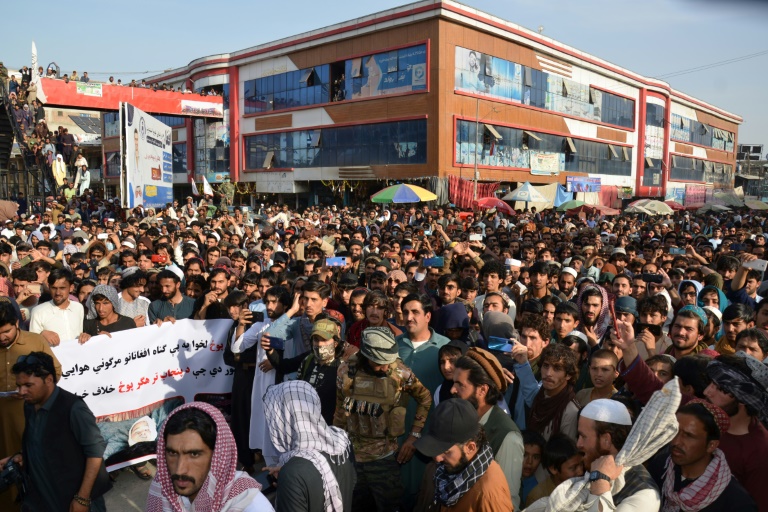
Hundreds of civilians of Khost poured into the streets chanting anti-Pakistan slogans later on Saturday, photographs obtained by AFP showed.

Border areas between the two countries have long been a stronghold for militant groups such as the Tehreek-e-Taliban Pakistan (TTP), which operates across the porous frontier with Afghanistan.

The Afghan Taliban and the TTP are separate groups in both countries, but share a common ideology and draw from people who live on either side of the border.

Thousands of people usually cross the border daily, including traders, Afghans seeking medical treatment in Pakistan, and people visiting relatives.

Since the Taliban returned to power in Afghanistan, the TTP has become emboldened and launched regular attacks against Pakistani forces.

In February, six Pakistan soldiers were killed in firing by the TTP from Afghanistan.

Last month the TTP announced it would launch an offensive against Pakistani security forces from the first day of the Muslim holy month of Ramadan.

The TTP are pressuring the Pakistani authorities to allow militants to return to their hometowns with impunity after foreign fighters were told by the Afghan Taliban to leave Afghanistan.
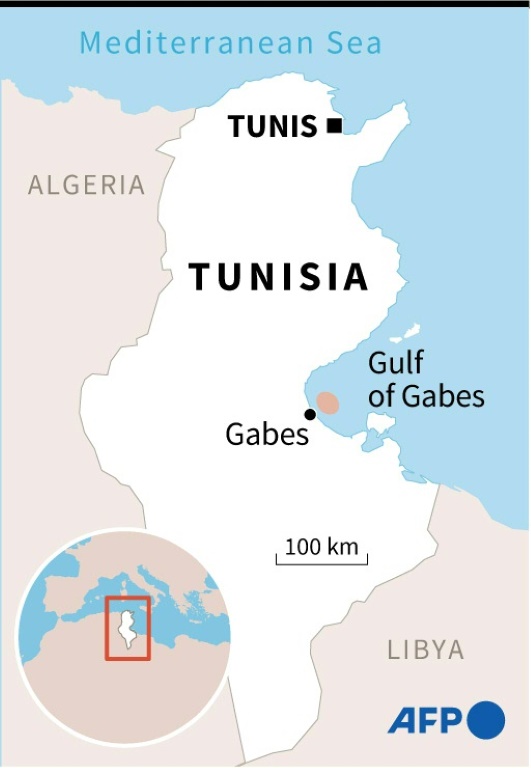

Fuel-laden ship sinks off Tunisia coast

A tanker carrying 750 tonnes of diesel fuel from Egypt to Malta sank Saturday off Tunisia’s southeast coast, but officials said a large spill would likely be avoided.

The crew of the Xelo vessel had issued a distress call on Friday evening and sought shelter in Tunisian waters from bad weather before going down in the Gulf of Gabes in the morning, the authorities said.

Environment Minister Leila Chikhaoui, who travelled to the port of Gabes on Saturday to help oversee the response, said the situation was “under control”.

“We think the hull is still watertight and there is no leakage for the moment,” she told AFP.

“We think that the means we already have at our disposal will allow us to limit the accident,” she said, adding that the government would not hesitate to appeal for foreign assistance if necessary.

The district court in Gabes said it had opened an investigation into the accident.

Court spokesman Mohamed Karray said the tanker had issued a distress call before it “sunk this morning in Tunisian territorial waters”.

The Equatorial Guinea-flagged Xelo was headed from the Egyptian port of Damietta to Malta when it requested entry to Tunisian waters.

The tanker is 58 metres (63 yards) long and nine metres wide, according to ship monitoring website vesseltracker.com.

It began taking water around seven kilometres (over four miles) offshore in the Gulf of Gabes and the engine room was engulfed, according to the Tunisian environment ministry.

It said Tunisian authorities evacuated the seven-member crew.

– Polluted waters –

The environment minister said authorities were waiting for the “weather to improve in terms of both the wind and the swell before sending down divers to check with more certainty on the state of the hull”.

The weather was still too poor to start Saturday, Chikhaoui added.

As a precaution, protective booms to contain any oil slick have been placed in the water around the wreck under the supervision of the military.

Court spokesman Karray said the Georgian captain, four Turks and two Azerbaijanis were briefly hospitalised for checks and were now in a hotel.

The defence, interior, transport and customs ministries were working to avoid “a marine environmental disaster in the region and limit its impact”, the environment ministry said.

Before the ship sank, the ministry had described the situation as “alarming” but “under control”.

The Gulf of Gabes was traditionally a fishing area but activists say it has suffered from pollution from phosphate processing industries based nearby and the presence of a pipeline bringing oil from southern Tunisia.

The last maritime accident involving the country was in October 2018, when Tunisian freighter Ulysse slammed into the Cyprus-based Virginia anchored about 30 kilometres (20 miles) off the northern tip of the French island of Corsica, sending hundreds of tonnes of fuel spilling into the Mediterranean.

It took several days of maritime manoeuvres to disentangle the boats and pump some 520 cubic metres of propulsion fuel, which had escaped tanks.

Macron talks up green credentials ahead of French election

French President Emmanuel Macron promised to put the environmental at the heart of his government if he is re-elected next weekend, in a speech in southern France on Saturday designed to appeal to young and green-minded voters. 

Macron held a major rally in the port city of Marseille while his rival, far-right leader Marine Le Pen, visited a village west of Paris.

Polls show Macron stretching his lead over Le Pen, with a fresh survey on Saturday by Ipsos Sopra/Steria suggesting that Macron would triumph with 55.5 percent versus 44.5 percent for Le Pen.  

“I hear the anxiety that exists in a lot of our young people. I see young people, adolescents, who are fearful about the future of our planet,” Macron told the rally. 

He said a “powerful message” had been sent in the first round of elections on April 10, when nearly eight million voters backed hard-left candidate Jean-Luc Melenchon and his ecology-heavy programme.

“It’s up to us to react and up to us to take action,” Macron said. 

As well as promising to make France “the first major nation to abandon gas, oil and coal”, Macron said he would appoint a prime minister who would be formally tasked with “ecological planning”.

He also promised new investments in renewable technologies, energy-saving residential renovations and organic food production, while pledging crackdowns on air pollution and single-use plastics.

The speech was a clear pitch to the young and left-wing voters who backed Melenchon and other candidates in the first round and will be crucial in the second round on April 24.

Some of them are expected to back Macron, with others drifting to Le Pen or abstaining.

Several hundred activists from the Extinction Rebellion climate activist group blocked a main road in the centre of Paris on Saturday to denounce the “inaction” of French leaders.

“This world is dying. Let’s build the next one,” read one large banner held by protesters. 

– Protests –

Le Pen meanwhile was touring the village of Saint Remy-sur-Avre, about an hour and half’s drive west of the capital, where she came top in last weekend’s first round.  

After hearing complaints about the loss of hospital beds and bus services locally, she promised to “govern the country like a mother, with common sense” and to defend “the most vulnerable”.

She has sought to moderate her image during campaigning this year, stressing her proposed solutions to rising living costs rather than her usual topics of immigration and Islam.

Rallies against the far-right were staged in around 30 cities on Saturday, attended by hundreds of people holding placards reading “No to racism”.

Le Pen has faced repeated questions this week about her proposed ban on the Islamic headscarf in public places, which she has said will be punished with fines by the police.

The 52-year-old mother-of-three admitted on Saturday it was a “complex problem” and would be discussed by parliament if she won.

But “we need to resolve the problem of women who are obliged to wear it under pressure from Islamists”, she said. 

She has also sought to appeal to left-wing voters, who she will need in order to defeat Macron, a centrist who won the presidency standing in his first election in 2017.

“Come out and vote. We are speaking to all the French. We hold out a firm hand but one of friendship and respect,” she tald a rally in the southern city of Avignon on Thursday evening. 

burs-leb-are-adp/gil

In Kyiv, a sunny respite from weeks of war

In a park in central Kyiv, a Ukrainian soldier ushers his wife and children against a backdrop of blooming magnolias, and lifting a phone, tells them to “smile!”

The family are surrounded by other residents, out for a stroll or ordering drinks on terraces, on a calm and warm spring day, bringing a semblance of normality after nearly two months of war.

Winding between strollers and bicycles, 43-year-old Nataliya Makrieva — walking arms linked through the park with her mother — couldn’t believe what she was seeing.

“It’s the first time we’ve been back in the city centre. We wanted to see if public transport was working and people-watch. It’s really making me happy to see people out and about,” the vet sporting large sunglasses told AFP.

Sprawled on the grass, a solider in uniform smoking a pipe was looking up into the clear blue sky. Two other off-duty soldiers were reclined on the branches of a walnut tree above him.

“It’s the first time we’ve been able to breathe after more than a month in Irpin and Gostomel,” says 40-year-old Dmitro Tkachienko, who has been fighting Russian-backed forces in east Ukraine since 2015.

Sitting like she does everyday on a bench in an elegant woollen hat — despite the heat — 82-year-old Hanna Mykhailivna Hryshko was enjoying the spectacle.

“People want to forget the war. But soon there will be more bombings and sirens and we’ll have to go back into hiding,” she says, her smile turning to tears.

Three weeks of relative calm in the city were interrupted this week by two Russian strikes in the last two days on military production facilities near Kyiv. Russia has warned of further attacks on the capital. 

– ‘War has many dimensions’ –

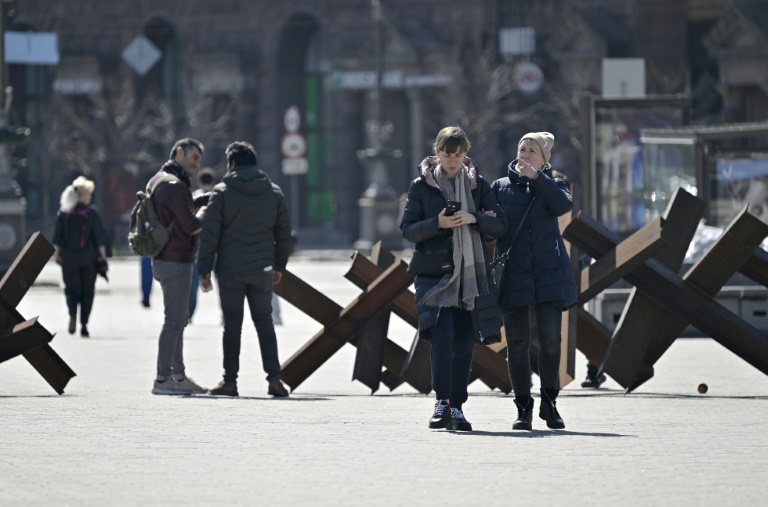
Anti-tank obstacles known as Czech hedgehogs line roads in Kyiv. Sandbags and concrete checkpoints remain but the fighters manning them have mostly moved on.

Billboards no longer broadcast safety instructions, threatening messages aimed at the Russian troops, or warnings of dreaded Russian “infiltrators”. Instead they display patriotic messages.

Signs of war are Kyiv are limited. City authorities said 100 buildings in the city were destroyed or hit by Russian strikes between February 24 and March 22 when Russia last struck the city centre.

The sale of alcohol is banned from 4:00 pm and a curfew is still in place between 9:00 pm and 6:00 am.

Residents now can get food delivered, go to the hairdresser and malls, ride the metro and rent a bike or a scooter.

But schools, universities, most restaurants, concert halls museums and gyms are still closed. 

In the wake of strikes outside the capital in recent days, mayor Vitali Klitschko has urged those who fled — up to half of the 2.8 million inhabitants at the height of the war — not to return to the city.

Local media reports however that around 50,000 are returning to the capital daily.

“War has many dimensions. It’s not just a question of fighting. Kyiv is of course still on a war footing,” says Alyona Bogatshova, 34, sitting with friends on a terrace with a drink.

“Then again, there is so much life here and freedoms being found again. It is an unprecedented situation that doesn’t have a name, that we haven’t lived through before,” she adds, gulping down her drink before curfew.

Fuel-laden ship sinks off Tunisia coast

A tanker carrying 750 tonnes of diesel fuel from Egypt to Malta sank Saturday off Tunisia’s southeast coast, but officials said a large spill could be avoided.

The crew of the Xelo vessel had issued a distress call on Friday evening and sought shelter in Tunisian waters from bad weather before going down in the Gulf of Gabes in the morning, the authorities said.

Environment Minister Leila Chikhaoui said on Saturday that “the situation is under control” in an interview aired on state television.

“There are minimal leaks, which are not even visible to the naked eye and fortunately the oil is evaporating, so there should not be a disaster in the Gulf of Gabes,” said Mohamed Karray, spokesman for a court in Gabes.

The spokesman had said earlier that the tanker carrying 750 tonnes of diesel had issued the distress call before it “sunk this morning in Tunisian territorial waters”.

The Equatorial Guinea-flagged Xelo was headed from the Egyptian port of Damietta to the European island of Malta when it requested entry to Tunisian waters.

The tanker is 58 metres (63 yards) long and nine metres wide, according to ship monitoring website vesseltracker.com. 

It began taking water around seven kilometres (over four miles) offshore in the Gulf of Gabes and the engine room was engulfed, according to a Tunisian environment ministry statement.

It said Tunisian authorities evacuated the seven-member crew.

– Polluted waters –

Environment Minister Leila Chikhaoui was travelling to Gabes “to evaluate the situation… and to take necessary preventive decisions in coordination with the regional authorities”, a ministry statement said.

Authorities have activated “the national emergency plan for the prevention of marine pollution with the aim of bringing the situation under control and avoiding the spread of pollutants”.

Court spokesman Karray said the Georgian captain, four Turks and two Azerbaijanis were briefly hospitalised for checks and were now in a hotel.

The defence, interior, transport and customs ministries were working to avoid “a marine environmental disaster in the region and limit its impact”, the environment ministry said.

Before the ship sank, the ministry had described the situation as “alarming” but “under control”.

The Gulf of Gabes was traditionally a fishing area but activists say it has suffered from pollution from phosphate processing industries based nearby and the presence of a pipeline bringing oil from southern Tunisia.

The last maritime accident involving the country was in October 2018, when Tunisian freighter Ulysse slammed into the Cyprus-based Virginia anchored about 30 kilometres (20 miles) off the northern tip of the French island of Corsica, sending hundreds of tonnes of fuel spilling into the Mediterranean.

It took several days of maritime manoeuvres to disentangle the boats and pump some 520 cubic metres of propulsion fuel, which had escaped tanks.

Crisis-hit Sri Lanka halts share trading as protests spiral

Sri Lanka on Saturday announced a five-day share trading halt after the crisis-hit country hiked interest rates and declared a default on its external debt during the traditional New Year holiday, as trade unions and top cricket stars joined protests demanding the president’s resignation.

The move came ahead of Colombo’s planned talks with the International Monetary Fund in Washington on Monday to negotiate a bailout as the country has run out of foreign exchange to finance even the most essential imports.

The island nation is grappling with its worst economic downturn since independence in 1948, with regular blackouts and acute shortages of food and fuel in addition to record inflation.

The crisis has caused widespread misery for Sri Lanka’s 22 million people and led to weeks of anti-government protests. 

Several trade unions joined demonstrators laying siege to President Gotabaya Rajapaksa’s seafront office for an eighth straight day Saturday demanding that he and his government quit, with thousands of health sector trade workers marching to the Galle Face promenade to join the protest.

Colombo Stock Exchange officials said they were under pressure from brokers and investors not to reopen on Monday to prevent an anticipated collapse of the market.

The CSE said regulators had expressed concern over the “ability to conduct an orderly and fair market” and it would remain closed until Friday due to the “present situation in the country”.

The central bank almost doubled its benchmark interest rate to 14.5 percent following the close on April 8, the last trading day before the holiday.

And in the face of an unprecedented forex crisis the government on Tuesday declared it was suspending interest and capital payments on its huge foreign debt.

The CSE’s All Share Index has shed over 38 percent in the past three months, while the Sri Lankan rupee has fallen by more than 35 percent against the US dollar in the past month.

– ‘Loud and clear’ –

Sri Lanka’s World Cup-winning cricket captain Arjuna Ranatunga and fellow ex-skipper Sanath Jayasuriya became the first high profile sports stars to join the demonstrators outside Rajapaksa’s office.

Cricket is avidly followed in the Indian Ocean island nation and the pair called on other former players to support peaceful protests.

“Cricket is driven by spectators,” Ranatunga said outside the colonial-era building in Colombo on Friday, surrounded by demonstrators, some of whom have been camping overnight since last week.

“Our fans are on the streets today because they no longer can bear the hardships. We must be with our fans when they need us most. Sports stars must physically join the protests.”

Hours later, his fellow former captain Sanath Jayasuriya, known as “Master Blaster”, climbed the barricades in front of Rajapaksa’s office and pledged solidarity.

“Your message is loud and clear,” he told the tens of thousands of protesters. “I hope the authorities will listen and ensure a brighter future for all of us.”

Crowds have been chanting “Gota go home, go home Gota.”

Diplomatic sources said ambassadors have made it clear to top politicians that any use of violence against the peaceful protest could jeopardise the planned bailout talks with the IMF next week.

Sri Lanka is to meet with IMF officials in Washington from Monday to negotiate a financial package to address the balance of payments crisis and the shortage of foreign reserves.

Sri Lanka had sought debt relief from India and China, but both countries instead offered more credit lines to buy commodities from them.

War in Ukraine: Latest developments

Here are the latest developments in the war in Ukraine:

– Russia renews attacks on Kyiv –

Russia steps up air strikes on military facilities in Kyiv, a day after warning it will renew its assault on the capital in response to what it says are Ukrainian attacks on Russian soil.

Moscow says it used sea-based, long-range missiles to hit a tank factory on Saturday.

– Kremlin retaliates over warship –

On Friday, Russian strikes seriously damage the Vizar plant, near Kyiv’s international airport, which produces Neptune cruise missiles.

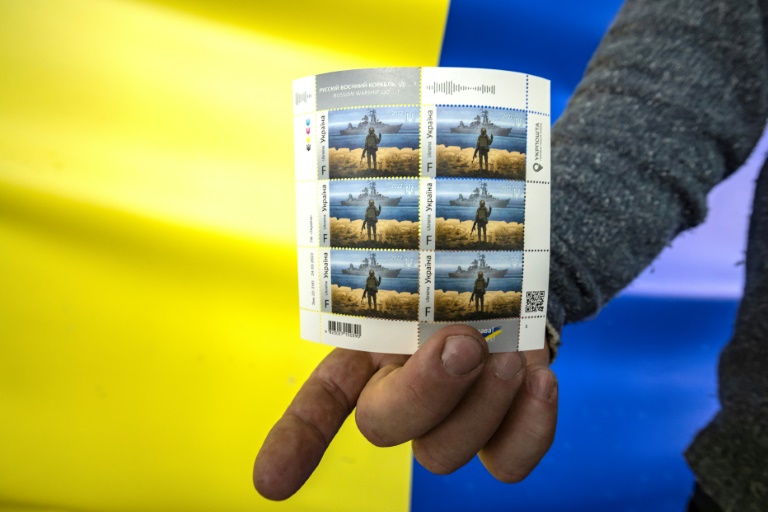
Neptunes were allegedly used to hit Russia’s Moskva warship, the flagship of Russia’s Black Sea fleet. The vessel has sunk.

“The number and scale of missile strikes against targets in Kyiv will increase in response to any terrorist attacks or sabotage committed by the Kyiv nationalist regime on Russian territory,” the defence ministry in Moscow says.

– Zelensky warns over nuclear weapons – 

Ukrainian President Volodymyr Zelensky says Russia could use nuclear weapons out of frustration at battlefield setbacks, echoing comments by CIA director William Burns.

He says “all of the world” should be worried that Russia “began to speak about… nuclear weapons or some chemical weapons”.

“For them, life of the people is nothing,” he tells CNN. “Let’s not be afraid — be ready.”

– Strikes and evacuations –

A Russian missile hits the airport in Aleksandria, 300 kilometres (185 miles) southeast of Kyiv, the city’s mayor reports. There is no immediate news of casualties.

Ten people, including a baby, are killed in Russian strikes on a bus evacuating civilians from the Kharkiv region in the northeast, the authorities say on Friday.

In the southeast, around 2,900 civilians are evacuated to Zaporizhzhie from the besieged port of Mariupol and from Berdiansk, the authorities say.

The UN’s World Food Programme has appealed for access to people trapped in war zones, including the besieged Black Sea port of Mariupol.

“It’s one thing when people are suffering from the devastation of war. It’s another thing when they’re being starved to death,” WFP director David Beasley says.

The Russian defence ministry says its artillery has killed around 30 “Polish mercenaries” in northeastern Ukraine, a move that could worsen already tense ties between Moscow and Warsaw.

– Sanctions and reprisals –

Amid escalating tit-for-tat sanctions, Russia bans entry to British Prime Minister Boris Johnson and several of his senior ministers.

“This step was taken as a response to London’s unbridled information and political campaign aimed at isolating Russia internationally, creating conditions for restricting our country and strangling the domestic economy,” the foreign ministry says. 

The Kremlin also steps up a crackdown on dissent at home. 

The government adds nine prominent Kremlin critics and journalists to its growing list of “foreign agents”, and a Russian court orders the pre-trial jailing of a Siberian news editor for alleging that 11 riot police refused to join the military campaign in Ukraine.

– Five million flee Ukraine –

More than five million people have now fled Ukraine since the Russian invasion on February 24, the United Nations says.

In embattled Ukraine, spring flowers take on patriotic hues

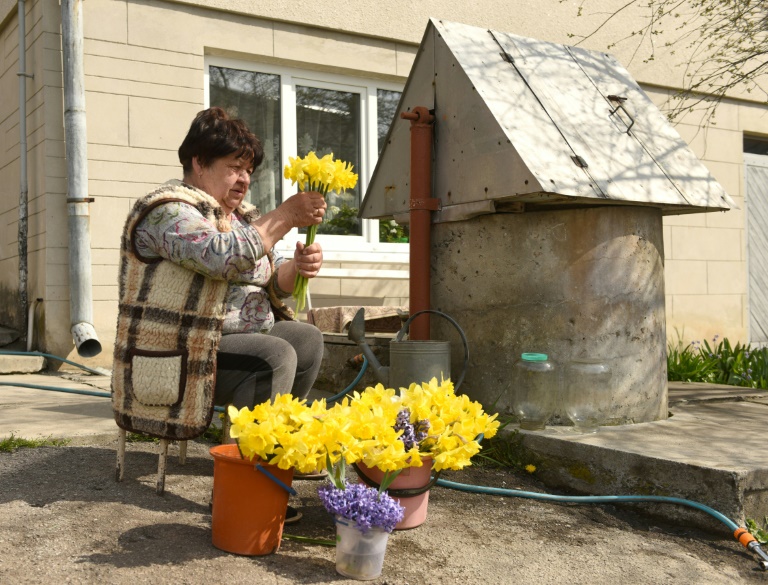
In her garden in western Ukraine, Ivanna Kuziv, a retired accountant in her late 60s, gathers an armful of yellow daffodils and bluebells to sell at the market.

It is purely coincidental that the flowers in her garden are the colours of the national flag this week, she says.

“But I like it. It’s in honour of Ukraine.”

Since Russia invaded her country in February, the population of the surrounding town of Vynnyky has dwindled.

Many mothers and children have fled abroad, leaving the men behind struggling to find work and waiting to be drafted.

“People are anxious,” she says. 

But spring does not wait, and the garden she inherited from her great-grandmother is in bloom.

Most days of the week, Kuziv snaps up some narcissus, drops them into a water-filled bucket, and heads into the city to sell them.

Ukrainian children are taught the national flag is two strips of colour, one representing the blue sky and the other a field of wheat.

In Lviv, those hues have become omnipresent — in fluttering flags jammed into car doors, in patriotic dumplings and cakes served in restaurants, but also in bouquets of flowers.

In the city centre, two women in long coats bring bunches of large saffron and indigo daisies to a well-attended military funeral at the cathedral.

Among the dozens of men and women who walk in silence behind the hearse afterwards, one serviceman holds drooping tulips of both colours in his fist.

On the train station platform, a 22-year-old soldier waits impatiently with 101 yellow tulips bound in blue ribbon for the girlfriend he has not seen in two months to arrive from the embattled east.

– ‘Some positive’ –

Olga Fityo-Styslo sells two kinds of daffodils at the flower market — one their natural colour, the other tinted after feeding off a mixture of water and navy-blue ink.

“We have a war going on, and the colour of the flag is blue and yellow,” she says.

“But since there are no blue flowers in early spring, I decided to give nature a little help.”

The 55-year-old, who has been selling flowers at the market since 1996, said she stopped working for a few days after war erupted.

When she returned in early March, she was surprised to have so many customers.

The city’s population had swollen with families escaping with very little from war-battered eastern and southern Ukraine.

“There were many displaced people, and they wanted flowers,” she says.

“In them, they find some positive.”

– Bright petals –

Even when they are not the colours of the nation, bright petals are everywhere in the western city.

A medical officer on leave waits for her friend to take money out at a cash point, cradling a huge bouquet of fuchsia, roses and tulips. It is the friend’s birthday, and they are going for a stroll.

At the foot of a monument to the Virgin Mary, an old woman prays in front of jars of pink tulips. The statue has been surrounded by scaffolding, but those trying to protect it from Russian bombardment seem to have run out of sandbags.

But the flower business is not as good as it used to be, says florist Myroslava Kumechko.

Beside buckets of daffodils, the 40-year-old says 70 percent of her business before the war came from christenings, anniversaries and weddings.

But that income has now vanished, and she cannot stand at the market for too long because she needs to get home to her three children studying online.

“It’s not like it used to be,” she says.

Sri Lanka declares 5-day share trading halt over crisis

The Colombo Stock Exchange on Saturday announced a five-day trading halt after crisis-hit Sri Lanka hiked interest rates and declared a default on its external debt during the traditional New Year holiday.

The market was due to reopen on Monday after being shut all week for the occasion, but the CSE said it will remain closed from Monday to Friday due to the “present situation in the country”.

The move came ahead of Sri Lanka’s planned talks with the International Monetary Fund in Washington on Monday to negotiate a bailout as the country has run out of foreign exchange to finance even the most essential imports.

Brokers had been expecting shares to be hammered on Monday, after the central bank almost doubled its benchmark interest rate to 14.5 percent following the close on April 8, the last trading day before the holiday.

Faced with an unprecedented forex crisis, the government on Tuesday declared it was suspending interest and capital payments on its huge foreign debt.

The CSE said that regulators believed it was in the best interest of “market participants if they are afforded an opportunity to have more clarity and understanding of the economic conditions”.

The island nation is grappling with its worst economic downturn since independence in 1948, with regular blackouts and acute shortages of food and fuel in addition to record inflation.

The CSE’s All Share Index has shed over 38 percent in the past three months, while the Sri Lankan rupee has fallen by more than 35 percent against the US dollar in the past month.

The crisis has caused widespread misery for Sri Lanka’s 22 million people and led to weeks of anti-government protests. 

Thousands of people were camping outside President Gotabaya Rajapaksa’s office for the eighth straight day Saturday, chanting “Go home Gota”.

Sri Lanka had sought debt relief from India and China, but both countries instead offered more credit lines to buy commodities from them.

Russia shatters Kyiv calm with fresh strikes

Russia stepped up air strikes on Kyiv on Saturday, hitting another military factory a day after Moscow warned it would renew attacks following two weeks of relative calm in the Ukrainian capital.

Smoke rose from the Darnyrsky district in the southeast of the capital after what Moscow said were “high-precision long-range” strikes on the armaments plant.

Kyiv mayor Vitali Klitschko said authorities were still determining whether anyone had been killed or injured in the attack.

A heavy police and military presence was deployed around the factory, the day after a similar strike on a plant that produced the Neptune missiles Kyiv and Washington say sunk Russia’s Black Sea naval flagship on Thursday.

Russia, which used sea-based long-range missiles to hit the Vizar plant on Friday, says that the Moskva missile cruiser sank while being towed back to port after ammunition exploded on board.

Amid escalating tit-for-tat sanctions since President Vladimir Putin invaded Ukraine on February 24, Russia on Saturday said it was banning entry to British Prime Minister Boris Johnson and several other top UK officials.

“This step was taken as a response to London’s unbridled information and political campaign aimed at isolating Russia internationally, creating conditions for restricting our country and strangling the domestic economy,” the foreign ministry said in a statement.

The ministry accused London of “unprecedented hostile actions”, in particular referring to sanctions on Russia’s senior officials.  

“The British leadership is deliberately aggravating the situation surrounding Ukraine, pumping the Kyiv regime with lethal weapons and coordinating similar efforts on the behalf of NATO,” the ministry said. 

– Sanctions –

Britain has been part of an international effort to punish Russia with asset freezes, travel bans and economic sanctions, and Moscow’s new entry blacklist includes Deputy Prime Minister Dominic Raab, Foreign Secretary Liz Truss, and Defence Secretary Ben Wallace.

Saturday’s strike on the Ukrainian capital was among the first since invading Russian forces began withdrawing from regions around Kyiv last month, instead turning their focus on gaining control of the eastern Donbas region.

Kyiv regional governor Oleksandr Pavliuk said there were at least two other Russian strikes on the city Friday and that civilians thinking about returning should “wait for quieter times.”

Residential areas of Kyiv were struck repeatedly at the beginning of Russia’s invasion of Ukraine from late February. Moscow has denied intentionally striking civilian infrastructure.

– ‘Big blow’ –

A Pentagon official said that the sinking of the Moskva, which had been leading Russia’s naval effort in the seven-week conflict, was a “big blow” for Moscow, while the fate of its crew of more than 500 was uncertain.

The official said survivors were observed being recovered by other Russian vessels, but Ukrainian authorities said bad weather had made rescue operations impossible.

“It’s a big blow symbolically,” the Pentagon official said. “There is a pride aspect.” 

Losing the Moskva — one of just three Slava-class cruisers in Moscow’s fleet — creates a “capability gap” for the Russian navy in southern Ukraine, he said.

Under the Montreux convention Turkey keeps the Bosphorus and Dardanelles straits closed to warships in times of conflict, meaning Moscow cannot dispatch a replacement for the Moskva to the Black Sea.

Russia’s Black Sea fleet has been blockading the besieged port city of Mariupol, where Russian officials say they are in full control although Ukrainian fighters are still holed up in the city’s fortress-like steelworks.

The United States pledged a new $800-million military aid package for Ukraine this week, including helicopters, howitzers and armoured personnel carriers, and on Friday the German government said it plans to release more than a billion euros ($1.1 billion) in aid as well.

US media reported that Russia had sent a formal complaint to Washington about its support of Kyiv this week.

In the diplomatic note, Moscow warned the United States and NATO against sending the “most sensitive” weapons, saying such shipments were “adding fuel” to the situation and could come with “unpredictable consequences”, the Washington Post reported.

– Focus on east –

Ukrainian President Volodymyr Zelensky warned Friday that Russia might use nuclear weapons out of desperation as its invasion falters, echoing recent comments by CIA director William Burns.

“They could do it, I mean they can,” Zelensky told CNN. “For them, life of the people is nothing.”

For now, Russia’s military focus seems set on seizing the eastern Donbas region, where Russian-backed separatists control the Donetsk and Lugansk areas.

This would allow Moscow to create a southern corridor to the occupied Crimean peninsula, and Ukrainian authorities have been urging people in the region to quickly move west in advance of a large-scale Russian offensive.

burs-cjo/ach 

Close Bitnami banner
Bitnami