World

Israel to top up shrinking Sea of Galilee with desalinated water

Israel, a leader in making seawater drinkable, plans to pump excess output from its desalination plants into the Sea of Galilee, depleted by overuse and threatened by climate change.

Irregular rainfall, rising temperatures and intensive pumping have overtaxed the world’s lowest freshwater lake, which for decades has served as the Jewish state’s main sweetwater reservoir.

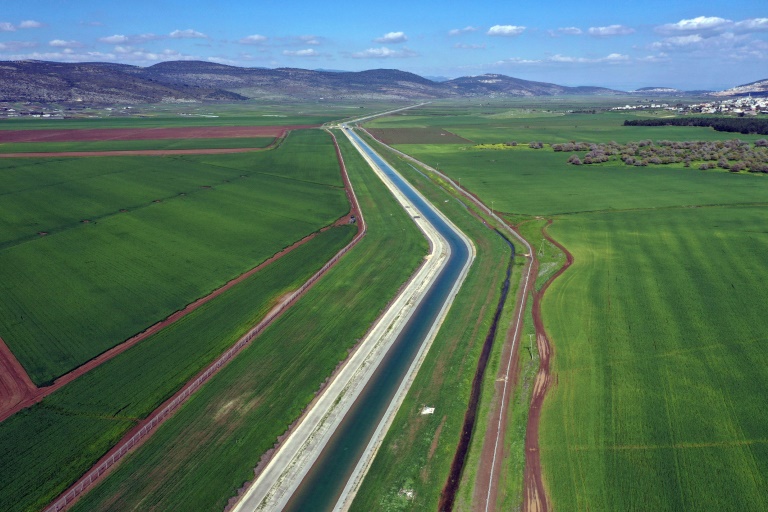
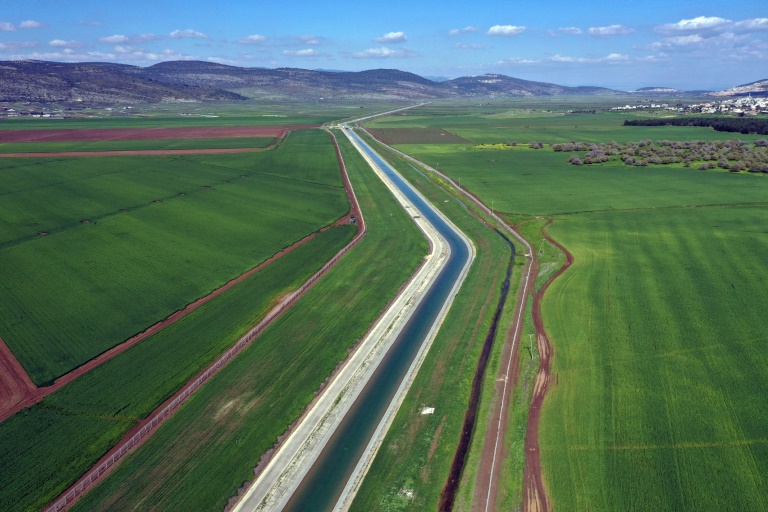
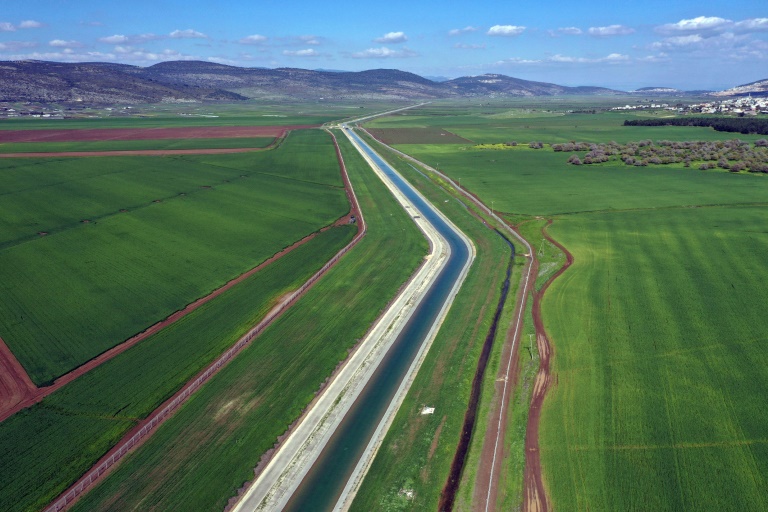
Israel now plans to tackle the challenge by reversing the water flow through its vast network of pumps, pipes and tunnels dating to the 1960s, the National Water Carrier.

Authorities hail the project as a showcase for Israel’s cutting-edge desalination and water management technology, which can also help deepen ties with arid Arab states.

Critics charge that Israel has long short-changed Palestinians out of their fair share of water, leaving much of the occupied West Bank and the Gaza Strip facing severe water stress.

And environmentalists note that the more Israel relies on fossil fuels to power its desalination plants, the more its carbon emissions will worsen climate change.

For now however, experts say, urgent action is needed to brace the country for global warming coupled with rapid population growth.

Israel’s average temperature has risen by two degrees Celsius over the past two decades, said Noam Halfon, a researcher at the Israel Meteorological Service.

A wet winter has just topped up the lake, but its level dipped substantially in the drought years of 2014-2018, a potential harbinger of worse to come.

“Some models predict we will have less precipitation overall, a reduction of 10 or 15 percent in the second half of the 21st century,” Halfon said.

Israel’s rapidly growing population adds to the need for the new water infrastructure project, he said.

“Every 30 years we double the population. Without this project, it would be an awful situation.”

– ‘Scarcity to abundance’ – 

Ziv Cohen, an engineer at Israeli water company Mekorot, was overlooking a work site in northern Israel where a crane was lowering water pipe segments into trenches. 

The verdant hillsides were scattered with blooming spring flowers, but Cohen said appearances are deceiving.

“In recent years, we have all felt a decrease in rainfall” in the lake’s catchment area, he told AFP.

Cohen said the one-billion-shekel (over $300-million) project will, by the end of the year, reverse the flow of the system which previously delivered lake water to areas across the country. 

“The minute water flows through the pipeline, bringing excess water from desalination plants in the centre, we can raise the level of the Sea of Galilee, and it will become an operational reservoir,” he said.

About an hour’s drive away on the Mediterranean coast, David Muhlgay poured himself a glass of water made by the Hadera Desalination Plant, one of five in Israel.

“Israel has gone from water as a scarce product to an abundance of water in 15 years, which is phenomenal,” said Muhlgay, CEO of OMIS Water Ltd.

His plant produces 137 million cubic metres a year — 16 percent of Israel’s drinking water supply — with the capacity to produce 160 million cubic metres. 

“We are ready to go” and connect to the new system, he said.

The seaside plant sits beside the coal and gas-fired plant that powers it, underscoring the contradictions in adapting to the climate crisis through energy-intensive desalination. 

“Electricity needs to be sourced,” Muhlgay said, arguing that for now only fossil fuels can do the job. 

“It cannot only rely, for the moment, on renewable sources.”

– ‘Lots of interest’-

Israel’s desalination expertise has opened new diplomatic avenues in the water-scarce Middle East, where it has established ties with the United Arab Emirates, Bahrain and Morocco. 

Israel, Jordan and the UAE last year agreed in principle on a plan for Jordan to exchange solar power for Israeli water, which authorities told AFP would come from the Galilee. 

Muhlgay said his plant had hosted visitors from Morocco, and the plant operator’s parent company IDE had sent a vice president to visit the UAE.

“There’s lots of interest in the Israeli technology,” Muhlgay said. 

“If everybody is short of water, bringing water can solve a few problems.”

The situation for Palestinians has however scarcely budged despite the new technologies, said Ayman Rabi, executive director of the Palestinian Hydrology Group. 

Israel exercises tight control over water resources in the occupied West Bank, with Palestinians granted limited access to an underground aquifer.

Under the terms of a 1990s peace agreement, Israel sells water back to Palestinians, but allocations have not kept pace with population growth. 

To cope, Rabi said, Palestinians have begun planting crops that require less water, and made a concerted effort to catch rainwater. 

“Of course (Israelis) are marketing themselves as water exporters,” he told AFP. “I don’t think this will impact the Palestinians.” 
Israel to top up shrinking Sea of Galilee with desalinated water

Israel, a leader in making seawater drinkable, plans to pump excess output from its desalination plants into the Sea of Galilee, depleted by overuse and threatened by climate change.

Irregular rainfall, rising temperatures and intensive pumping have overtaxed the world’s lowest freshwater lake, which for decades has served as the Jewish state’s main sweetwater reservoir.

Israel now plans to tackle the challenge by reversing the water flow through its vast network of pumps, pipes and tunnels dating to the 1960s, the National Water Carrier.

Authorities hail the project as a showcase for Israel’s cutting-edge desalination and water management technology, which can also help deepen ties with arid Arab states.

Critics charge that Israel has long short-changed Palestinians out of their fair share of water, leaving much of the occupied West Bank and the Gaza Strip facing severe water stress.

And environmentalists note that the more Israel relies on fossil fuels to power its desalination plants, the more its carbon emissions will worsen climate change.

For now however, experts say, urgent action is needed to brace the country for global warming coupled with rapid population growth.

Israel’s average temperature has risen by two degrees Celsius over the past two decades, said Noam Halfon, a researcher at the Israel Meteorological Service.

A wet winter has just topped up the lake, but its level dipped substantially in the drought years of 2014-2018, a potential harbinger of worse to come.

“Some models predict we will have less precipitation overall, a reduction of 10 or 15 percent in the second half of the 21st century,” Halfon said.

Israel’s rapidly growing population adds to the need for the new water infrastructure project, he said.

“Every 30 years we double the population. Without this project, it would be an awful situation.”

– ‘Scarcity to abundance’ – 

Ziv Cohen, an engineer at Israeli water company Mekorot, was overlooking a work site in northern Israel where a crane was lowering water pipe segments into trenches. 

The verdant hillsides were scattered with blooming spring flowers, but Cohen said appearances are deceiving.

“In recent years, we have all felt a decrease in rainfall” in the lake’s catchment area, he told AFP.

Cohen said the one-billion-shekel (over $300-million) project will, by the end of the year, reverse the flow of the system which previously delivered lake water to areas across the country. 

“The minute water flows through the pipeline, bringing excess water from desalination plants in the centre, we can raise the level of the Sea of Galilee, and it will become an operational reservoir,” he said.

About an hour’s drive away on the Mediterranean coast, David Muhlgay poured himself a glass of water made by the Hadera Desalination Plant, one of five in Israel.

“Israel has gone from water as a scarce product to an abundance of water in 15 years, which is phenomenal,” said Muhlgay, CEO of OMIS Water Ltd.

His plant produces 137 million cubic metres a year — 16 percent of Israel’s drinking water supply — with the capacity to produce 160 million cubic metres. 

“We are ready to go” and connect to the new system, he said.

The seaside plant sits beside the coal and gas-fired plant that powers it, underscoring the contradictions in adapting to the climate crisis through energy-intensive desalination. 

“Electricity needs to be sourced,” Muhlgay said, arguing that for now only fossil fuels can do the job. 

“It cannot only rely, for the moment, on renewable sources.”

– ‘Lots of interest’-

Israel’s desalination expertise has opened new diplomatic avenues in the water-scarce Middle East, where it has established ties with the United Arab Emirates, Bahrain and Morocco. 

Israel, Jordan and the UAE last year agreed in principle on a plan for Jordan to exchange solar power for Israeli water, which authorities told AFP would come from the Galilee. 

Muhlgay said his plant had hosted visitors from Morocco, and the plant operator’s parent company IDE had sent a vice president to visit the UAE.

“There’s lots of interest in the Israeli technology,” Muhlgay said. 

“If everybody is short of water, bringing water can solve a few problems.”

The situation for Palestinians has however scarcely budged despite the new technologies, said Ayman Rabi, executive director of the Palestinian Hydrology Group. 

Israel exercises tight control over water resources in the occupied West Bank, with Palestinians granted limited access to an underground aquifer.

Under the terms of a 1990s peace agreement, Israel sells water back to Palestinians, but allocations have not kept pace with population growth. 

To cope, Rabi said, Palestinians have begun planting crops that require less water, and made a concerted effort to catch rainwater. 

“Of course (Israelis) are marketing themselves as water exporters,” he told AFP. “I don’t think this will impact the Palestinians.” 
Israel to top up shrinking Sea of Galilee with desalinated water

Israel, a leader in making seawater drinkable, plans to pump excess output from its desalination plants into the Sea of Galilee, depleted by overuse and threatened by climate change.

Irregular rainfall, rising temperatures and intensive pumping have overtaxed the world’s lowest freshwater lake, which for decades has served as the Jewish state’s main sweetwater reservoir.

Israel now plans to tackle the challenge by reversing the water flow through its vast network of pumps, pipes and tunnels dating to the 1960s, the National Water Carrier.

Authorities hail the project as a showcase for Israel’s cutting-edge desalination and water management technology, which can also help deepen ties with arid Arab states.

Critics charge that Israel has long short-changed Palestinians out of their fair share of water, leaving much of the occupied West Bank and the Gaza Strip facing severe water stress.

And environmentalists note that the more Israel relies on fossil fuels to power its desalination plants, the more its carbon emissions will worsen climate change.

For now however, experts say, urgent action is needed to brace the country for global warming coupled with rapid population growth.

Israel’s average temperature has risen by two degrees Celsius over the past two decades, said Noam Halfon, a researcher at the Israel Meteorological Service.

A wet winter has just topped up the lake, but its level dipped substantially in the drought years of 2014-2018, a potential harbinger of worse to come.

“Some models predict we will have less precipitation overall, a reduction of 10 or 15 percent in the second half of the 21st century,” Halfon said.

Israel’s rapidly growing population adds to the need for the new water infrastructure project, he said.

“Every 30 years we double the population. Without this project, it would be an awful situation.”

– ‘Scarcity to abundance’ – 

Ziv Cohen, an engineer at Israeli water company Mekorot, was overlooking a work site in northern Israel where a crane was lowering water pipe segments into trenches. 

The verdant hillsides were scattered with blooming spring flowers, but Cohen said appearances are deceiving.

“In recent years, we have all felt a decrease in rainfall” in the lake’s catchment area, he told AFP.

Cohen said the one-billion-shekel (over $300-million) project will, by the end of the year, reverse the flow of the system which previously delivered lake water to areas across the country. 

“The minute water flows through the pipeline, bringing excess water from desalination plants in the centre, we can raise the level of the Sea of Galilee, and it will become an operational reservoir,” he said.

About an hour’s drive away on the Mediterranean coast, David Muhlgay poured himself a glass of water made by the Hadera Desalination Plant, one of five in Israel.

“Israel has gone from water as a scarce product to an abundance of water in 15 years, which is phenomenal,” said Muhlgay, CEO of OMIS Water Ltd.

His plant produces 137 million cubic metres a year — 16 percent of Israel’s drinking water supply — with the capacity to produce 160 million cubic metres. 

“We are ready to go” and connect to the new system, he said.

The seaside plant sits beside the coal and gas-fired plant that powers it, underscoring the contradictions in adapting to the climate crisis through energy-intensive desalination. 

“Electricity needs to be sourced,” Muhlgay said, arguing that for now only fossil fuels can do the job. 

“It cannot only rely, for the moment, on renewable sources.”

– ‘Lots of interest’-

Israel’s desalination expertise has opened new diplomatic avenues in the water-scarce Middle East, where it has established ties with the United Arab Emirates, Bahrain and Morocco. 

Israel, Jordan and the UAE last year agreed in principle on a plan for Jordan to exchange solar power for Israeli water, which authorities told AFP would come from the Galilee. 

Muhlgay said his plant had hosted visitors from Morocco, and the plant operator’s parent company IDE had sent a vice president to visit the UAE.

“There’s lots of interest in the Israeli technology,” Muhlgay said. 

“If everybody is short of water, bringing water can solve a few problems.”

The situation for Palestinians has however scarcely budged despite the new technologies, said Ayman Rabi, executive director of the Palestinian Hydrology Group. 

Israel exercises tight control over water resources in the occupied West Bank, with Palestinians granted limited access to an underground aquifer.

Under the terms of a 1990s peace agreement, Israel sells water back to Palestinians, but allocations have not kept pace with population growth. 

To cope, Rabi said, Palestinians have begun planting crops that require less water, and made a concerted effort to catch rainwater. 

“Of course (Israelis) are marketing themselves as water exporters,” he told AFP. “I don’t think this will impact the Palestinians.” 

South Korea drops most Covid restrictions as cases fall

South Korea will lift almost all social distancing measures, the government said Friday, citing a dramatic fall in reported cases of Covid-19 after an Omicron-fuelled surge, but the mask mandate will remain.

South Koreans will be required to wear masks indoors “for a considerable time ahead,” authorities said, adding that they may lift the requirement to mask outdoors in two weeks’ time, if cases continue to fall.

“The midnight business curfew and a 10-person cap on the size of gatherings will be lifted starting Monday,” said Prime Minister Kim Boo-kyum.

The decision marks the end of two years of strict distancing requirements, which have put huge strain on small businesses, and indicates South Korea is returning to normality.

Restrictions on eating inside facilities such as cinemas will also be lifted from April 25.

But requiring the public to wear masks indoors was “inevitable for a considerable time ahead,” to prevent another outbreak, Kim added.

Officials will reassess whether to lift the outdoor mask requirement in two weeks, he added.

Much evidence suggests the risk of transmission outdoors is extremely low, and many countries, including the United States, have said masks aren’t needed outdoors for vaccinated people.

The move comes after South Korea appears to have passed the peak of an Omicron-driven outbreak, with daily cases falling to below 100,000 last week, down from a peak of over 620,000 in mid-March.

More than 86 percent of the South Korean population of 51 million has been fully vaccinated, with the majority also receiving a booster shot. 

South Korea is rolling out second boosters to vulnerable populations.

Around 20,000 people in South Korea have died from the coronavirus — a 0.13 percent fatality rate, which is one of the world’s lowest.

Get this straight: Curls bounce back in Cairo

“Shaggy,” “messy,” “unprofessional”. Natural curls were once looked down upon in Egypt, where Western beauty standards favoured sleek, straight locks. Now, things are changing.

For Rola Amer and Sara Safwat, their curls were once a career-hindering nuisance. Now part of an aesthetic liberation movement sweeping Egypt in recent years, they own a curly hair salon that caters to women and men like them.

Amer used to spend hours straightening her bouncy curls, she told AFP as she began her day at the Curly Studio, which became Egypt’s first natural hair salon in 2018.

“Curly hair takes a lot longer to cut than straight hair,” Amer said, meticulously snipping her way through a client’s curly mane in an affluent suburb of Cairo.

Three hours later, she can finally show the result to her client, and both are delighted as the salon buzzes around them.

It’s a far cry from Amer’s own experience a few years ago. “If I ever left my hair curly, I’d feel shaggy, like I wasn’t taking care of myself,” she said.

In this rare type of salon in Cairo, the final product fits each client’s curl pattern, and rollers have replaced straightening irons to prevent heat damage.

Safwat, 38, explained the dangers of straightening, adjusting her curly bangs as she spoke.

“One time, a mother brought her three-year-old daughter. She had tried a chemical treatment to straighten her hair, and now it was falling out,” she said. 

The obsession with straight hair, rooted in what Safwat calls “completely false beauty ideals,” compelled generations of women to burn their hair to a crisp using chemical treatments and excessive heat damage.

– A marked change –

With her curls considered “unprofessional” Safwat says that, before she became a hairdresser, she would often be asked in job interviews: “Will you be coming in to work like this?”

In the early 2000s, Lebanese singer Myriam Fares was one of the first curly-haired icons in the Middle East. 

Halfway across the world, Black women in the United States were increasingly embracing their curls in a natural hair care movement. Many of the biggest brands built by Black women at the time would eventually find their way onto the shelves of curly salons in Cairo.

In 2012, Egyptian actress Dina el-Sherbiny became one of the first to break the taboo on screen, flaunting her chestnut curls in hit TV series “Hekayat Banat” (Girls’ Stories).

Ten years later, curly heads feature in TV shows, movies and the billboards that line Cairo’s highways, a marked change in pop culture.

In Hollywood, Egyptian-Palestinian actress May Calamawy even shows off her curls in Marvel’s latest series, “Moon Knight,” helmed by Egyptian director Mohamed Diab.

“There has been a real social movement,” Doaa Gawish told AFP. In 2016, Gawish launched a Facebook group called The Hair Addict to help women give their hair a break from harsh chemicals and blow dryers.

Within months, the online forum had grown from 5,000 to more than 80,000 members, as the local cosmetics market grew by 18 percent, according to Euromonitor International. 

Two years later, Gawish launched her eponymous haircare company.

“A lot of big cosmetics companies started releasing products for curly hair, because they could see it was an essential customer base,” Gawish told AFP.

This base is steadily growing in Egypt’s sizable cosmetics market. With a population of 103 million, the country has about 500,000 salons and more than three million employees, as estimated in 2020 by Mahmoud el-Degwy, head of the hairdressers’ division at the Cairo Chamber of Commerce.

Teacher and natural hair influencer Mariam Ashraf has seen the market’s potential firsthand. Only a hobby at first, her Instagram videos quickly became “a real source of income”, she told AFP before filming a new clip for her 90,000-plus followers.

“Brands are contacting me more and more to showcase curly hair products,” the 26-year-old explained. “And now modelling agencies are contacting me for advertisements.”

– ‘Fragile masculinity’ –

But the world of natural hair care is not accessible to everyone.

While the average monthly income in Egypt is 6,000 pounds ($325), a haircut at the Curly Studio can cost up to one-tenth of that.

Since he inadvertently discovered his curls during Covid-19 lockdown, cybersecurity expert Omar Rahim has been gladly paying to maintain his style.

Today, he maintains an intricate regimen, despite jeers from his friends in a conservative and patriarchal society.

“We have a problem with fragile masculinity; people think a man shouldn’t take care of his hair or buy products,” he told AFP.

“I want people to understand that this is normal, but I’m not ready to fight this fight just yet.”

Get this straight: Curls bounce back in Cairo

“Shaggy,” “messy,” “unprofessional”. Natural curls were once looked down upon in Egypt, where Western beauty standards favoured sleek, straight locks. Now, things are changing.

For Rola Amer and Sara Safwat, their curls were once a career-hindering nuisance. Now part of an aesthetic liberation movement sweeping Egypt in recent years, they own a curly hair salon that caters to women and men like them.

Amer used to spend hours straightening her bouncy curls, she told AFP as she began her day at the Curly Studio, which became Egypt’s first natural hair salon in 2018.

“Curly hair takes a lot longer to cut than straight hair,” Amer said, meticulously snipping her way through a client’s curly mane in an affluent suburb of Cairo.

Three hours later, she can finally show the result to her client, and both are delighted as the salon buzzes around them.

It’s a far cry from Amer’s own experience a few years ago. “If I ever left my hair curly, I’d feel shaggy, like I wasn’t taking care of myself,” she said.

In this rare type of salon in Cairo, the final product fits each client’s curl pattern, and rollers have replaced straightening irons to prevent heat damage.

Safwat, 38, explained the dangers of straightening, adjusting her curly bangs as she spoke.

“One time, a mother brought her three-year-old daughter. She had tried a chemical treatment to straighten her hair, and now it was falling out,” she said. 

The obsession with straight hair, rooted in what Safwat calls “completely false beauty ideals,” compelled generations of women to burn their hair to a crisp using chemical treatments and excessive heat damage.

– A marked change –

With her curls considered “unprofessional” Safwat says that, before she became a hairdresser, she would often be asked in job interviews: “Will you be coming in to work like this?”

In the early 2000s, Lebanese singer Myriam Fares was one of the first curly-haired icons in the Middle East. 

Halfway across the world, Black women in the United States were increasingly embracing their curls in a natural hair care movement. Many of the biggest brands built by Black women at the time would eventually find their way onto the shelves of curly salons in Cairo.

In 2012, Egyptian actress Dina el-Sherbiny became one of the first to break the taboo on screen, flaunting her chestnut curls in hit TV series “Hekayat Banat” (Girls’ Stories).

Ten years later, curly heads feature in TV shows, movies and the billboards that line Cairo’s highways, a marked change in pop culture.

In Hollywood, Egyptian-Palestinian actress May Calamawy even shows off her curls in Marvel’s latest series, “Moon Knight,” helmed by Egyptian director Mohamed Diab.

“There has been a real social movement,” Doaa Gawish told AFP. In 2016, Gawish launched a Facebook group called The Hair Addict to help women give their hair a break from harsh chemicals and blow dryers.

Within months, the online forum had grown from 5,000 to more than 80,000 members, as the local cosmetics market grew by 18 percent, according to Euromonitor International. 

Two years later, Gawish launched her eponymous haircare company.

“A lot of big cosmetics companies started releasing products for curly hair, because they could see it was an essential customer base,” Gawish told AFP.

This base is steadily growing in Egypt’s sizable cosmetics market. With a population of 103 million, the country has about 500,000 salons and more than three million employees, as estimated in 2020 by Mahmoud el-Degwy, head of the hairdressers’ division at the Cairo Chamber of Commerce.

Teacher and natural hair influencer Mariam Ashraf has seen the market’s potential firsthand. Only a hobby at first, her Instagram videos quickly became “a real source of income”, she told AFP before filming a new clip for her 90,000-plus followers.

“Brands are contacting me more and more to showcase curly hair products,” the 26-year-old explained. “And now modelling agencies are contacting me for advertisements.”

– ‘Fragile masculinity’ –

But the world of natural hair care is not accessible to everyone.

While the average monthly income in Egypt is 6,000 pounds ($325), a haircut at the Curly Studio can cost up to one-tenth of that.

Since he inadvertently discovered his curls during Covid-19 lockdown, cybersecurity expert Omar Rahim has been gladly paying to maintain his style.

Today, he maintains an intricate regimen, despite jeers from his friends in a conservative and patriarchal society.

“We have a problem with fragile masculinity; people think a man shouldn’t take care of his hair or buy products,” he told AFP.

“I want people to understand that this is normal, but I’m not ready to fight this fight just yet.”

Russian flagship sinks after Kyiv claims missile hit

Russia’s Black Sea flagship sank on Thursday after an explosion and fire that Ukraine claimed was a successful missile strike, as the Kremlin accused Kyiv of targeting its citizens in sorties across the border.

The Moskva missile cruiser had been leading Russia’s naval effort in the seven-week conflict, in which civilian killings have sparked accusations of genocide from the United States and others.

Russia’s defence ministry said the blast on the vessel was the result of exploding ammunition and added that the resulting damage had caused it to “lose its balance” as it was being towed to port.

“Given the choppy seas, the vessel sank,” the Russian state news agency TASS quoted the ministry as saying.

On the Ukrainian side, Odessa military spokesman Sergey Bratchuk said the ship had been hit by domestic Neptune cruise missiles.

In Washington, Pentagon spokesman John Kirby said he was unable to verify either version, but stressed that the sinking of the Moskva dealt a “big blow” to the Black Sea fleet.

The fleet has been blockading the besieged southern port city of Mariupol, where Russian officials say they are in full control.

Following its pullout from northern Ukraine earlier this month after failing to take the capital, Russia is refocusing on the east, with Kyiv warning of bloody new clashes to come in the Donbas region.

And with Russian setbacks in the war mounting, the CIA warned that President Vladimir Putin could resort to using a tactical or low-yield nuclear weapon.

“We’re obviously very concerned. I know President Biden is deeply concerned about avoiding a third world war, about avoiding a threshold in which, you know, nuclear conflict becomes possible,” CIA director William Burns said in a speech in Atlanta.

But the United States is yet to see “a lot of practical evidence” of actual deployments that would cause more worry, he added.

– ‘No electricity, no water’ –

Seizing Donbas, where Russian-backed separatists control the Donetsk and Lugansk areas, would allow Moscow to create a southern corridor to the occupied Crimean peninsula. 

But rain that has been battering the region for days could favour Ukraine in its fight against invading Russian forces, a senior Pentagon official said Thursday.

“The fact that the ground is softer will make it harder for them to do anything off of paved highways,” said the official, who spoke under condition of anonymity.

In what appeared to be its first official accusation of abuses targeting Russians, the Kremlin said at least six air strikes had hit residential buildings in the border region of Bryansk, wounding seven people including a toddler.

“Using two military helicopters carrying heavy weaponry, Ukrainian armed forces illegally entered Russian air space,” Russia’s Investigative Committee said. 

Russia sparked fears of a return to conflict around Kyiv on Wednesday when it threatened to attack the capital’s strike command centres in retaliation for any strikes on Russian soil.

In the south and east, civilian evacuations had been set to resume Thursday, Deputy Prime Minister Iryna Vereshchuk said, after a day-long pause that Kyiv blamed on Russian shelling.

Tamara Yakovenko, 61, and her 83-year-old mother had decided to run the risk of fleeing Severodonetsk, the last easterly city still held by Ukrainian forces, where “every 10 or 15 minutes there are bombings”. 

“We used to receive humanitarian aid, but now nobody remembers us. Some people try to cook outside on a fire… And boom, boom… everyone has to run back to the basement,” Yakovenko said.

“All night until morning, there is no rest.”

Now little more than a ghost town just kilometres from the front line, Severodonetsk has already buried 400 civilians, according to Lugansk regional governor Sergiy Gaiday.  

“There’s no electricity, no water,” Maria, who lives with her husband and mother-in-law, told AFP amid a din of shelling that she said never stops.

“But I prefer to stay here, at home. If we leave, where will we go?”

– Global hunger –

Beyond the humanitarian crisis, the war’s economic consequences — primarily surging food and fuel prices — were “hitting hardest the world’s most vulnerable people,” IMF Managing Director Kristalina Georgieva warned.

The United Nations announced the release of $100 million to fight hunger in Yemen and six African countries at risk of famine due to the war disrupting food supply chains.

“Hundreds of thousands of children are going to sleep hungry every night while their parents are worried sick about how to feed them,” said UN Emergency Relief Coordinator Martin Griffiths.

“A war halfway around the world makes their prospects even worse. This allocation will save lives.”

Investigators have descended on areas around Kyiv previously occupied by Russian forces, looking into reports of war crimes that President Putin has dismissed as “fakes”.

The atrocities — some of which were witnessed by AFP — have led Biden to accuse Putin of genocide, a term key European partners including France and Germany have hesitated to use.

The French government, which has allocated 100 million euros for humanitarian support to victims of the conflict, said its embassy would return “very soon” to Kyiv from the western city of Lviv, where it had been relocated after the invasion.

burs-ft/bgs/caw/oho/reb

Girls' education ban reveals deep rifts within Taliban

The Taliban prohibition on girls’ education shows the movement’s ultra-conservatives retain tight control of the Islamist group, and exposes a power struggle that puts at risk crucial aid for Afghanistan’s desperate population, experts say.

The ban has triggered international outrage and even left many in the Taliban movement baffled by the decision.

“The order was devastating,” a senior Taliban member told AFP. “The supreme leader himself interfered.” 

All Taliban officials who spoke to AFP on the subject did so on condition of anonymity, due to the sensitivity of the topic.

Secondary schools for girls were ordered to shut last month, just hours after being reopened for the first time since the Taliban’s return to power in August.

The shocking U-turn came after a secret meeting of the group’s leadership in the city of Kandahar, the Taliban’s de facto power centre.

Officials have never justified the ban, apart from saying the education of girls must be according to “Islamic principles”.

But one senior Taliban official told AFP that Supreme Leader Hibatullah Akhundzada and some other senior figures were “ultra-conservative on this issue” and dominated the discussion.

Two groups — the urban and the ultra-conservatives — have emerged in the movement, he said.

“The ultra-conservatives have won this round,” he added, referring to a group of clerics including Chief Justice Abdul Hakim Sharai, Minister for Religious Affairs Noor Mohammad Saqeb and Minister for Promotion of Virtue and Prevention of Vice Mohammad Khalid Hanafi.

– Reimposing Kandahar’s influence  –

The clerics feel excluded from government decisions and voicing their opposition to girls’ education is one way to restore their influence, said Ashley Jackson, a London-based researcher who has worked extensively on Afghanistan.

She told AFP the “outsized influence of this out-of-touch minority” has prevented the country from moving ahead with something the vast majority of Afghans favour — including much of the leadership.

“It shows that Kandahar remains the centre of gravity for Taliban politics,” said International Crisis Group analyst Graeme Smith.

A senior Taliban member said the hardliners were trying to appease thousands of fighters who hail from the deeply conservative countryside.

“For them, even if a woman steps out of her home it is immoral. So, imagine what it means to educate her,” he said.

The Taliban member said Akhundzada was against “modern, secular education” as he associated it with life under former Western-backed presidents Hamid Karzai and Ashraf Ghani.

“That’s his worldview.”

The Taliban returned to power last year as US-led forces ended an occupation in place since an invasion ousted the hardliners in 2001.

In the 20 years between the Taliban’s two reigns, girls were allowed to go to school and women were able to seek employment in all sectors, though the country remained socially conservative.

Activist and Islamic scholar Tafsir Siyaposh noted girls in Afghanistan have always studied in single-sex classes and followed an Islamic curriculum, so the ban shows the Taliban just wanted to “oppress the rights of women by giving excuses”.

– Blow to foreign aid –

A Taliban source in Pakistan confirmed differences at the leadership level on the issue, but said the movement was in no danger of fragmenting.

“There is a debate on this issue … but we are trying to overcome our shortcomings,” he said.

Still, analysts say the ban was a blow to Taliban efforts to gain international recognition and to raise aid to address Afghanistan’s humanitarian crisis.

Jackson said neither Akhundzada nor those closest to him “fully understood or appreciated” the consequences of their edict for an international community that has linked official recognition to the group’s respect for women’s rights.

Even some senior Taliban officials agree.

“We are telling them (the ultra-conservatives) that running a country is different from running a madrassa,” said one Taliban official from Kandahar, using the term for an Islamic school.

“Everything was going smooth until this harsh order came. And it came from our leader so we have to follow it — but we are trying to change it,” he said.

The ban reduces the willingness of governments to cooperate with the Taliban said the ICG’s Smith.

“It raises the question of who exactly they should speak with inside the Taliban.”

Ship stranded off US delights curious, worries environmentalists

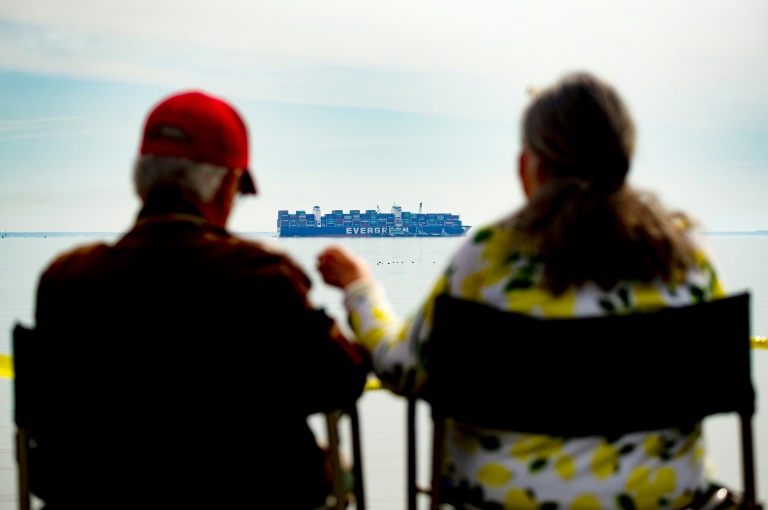
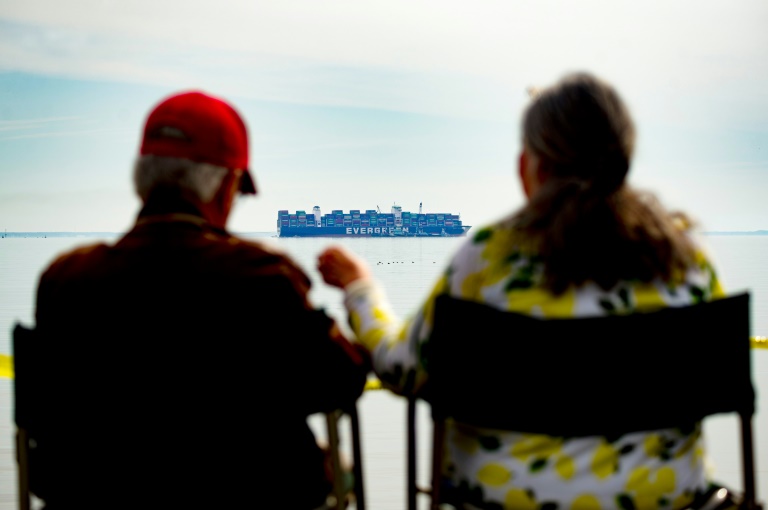
Holding binoculars and toting folding chairs the sightseers are laser-focused: the objective is to see the massive container ship Ever Forward, which has been stranded for a month in the mud of the US East Coast’s Chesapeake Bay.

Some bring their families, while others come with friends, popping a squat at the best vantage point around — a park in the city of Pasadena, Maryland which offers an easy view of the vessel that is lodged in some 20 feet (six meters) of muck a few hundred yards from shore.

“Even with the storms we get here in the bay, we don’t get ships grounding like this,” said Frederick Schroeder, a retiree who traveled from nearby Baltimore with his camera and telephoto lens to document the spectacle, which he called “a once in a lifetime thing.”

The hulking vessel, owned by the Taiwan-based company Evergreen, became stuck on the night of March 13 after missing a turn into deeper water. 

The ship, measuring approximately 1,100 feet long and capable of carrying nearly 12,000 containers, is one of many that ply the heavily trafficked waters of the Chesapeake, a gigantic estuary whose banks harbor both the city of Baltimore and Port of Virginia, the second- and third-most substantial ports on the US East Coast.

– Tugs and dredge boats –

The Ever Forward’s misadventure in the Chesapeake is reminiscent of that of the similarly named Ever Given, another Evergreen container ship which famously became stuck in a sandbank in the Suez Canal in March 2021, blocking traffic for almost a week.

The US Coast Guard has been at work trying to dislodge the Ever Forward for more than three weeks, assisted by tugs and dredge boats, but so far without success.

In recent days, cranes have surrounded the ship, laboring to unburden it of as many containers as possible to make the vessel lighter.

Asked by AFP, the Coast Guard said that a total of more than 130 containers had been unloaded so far, but that even more would be removed before a new attempt to refloat the boat — the date for which is still to be determined.

“The skipper who ran aground, he must be beyond embarrassment to do such a thing,” said John Zeglin, a nearly 80-year-old retiree who traveled to see the Ever Forward from Bethesda, Maryland, a Washington suburb about an hour’s drive from the ship.

– ‘Osprey abundance’ –

Doug Myers, a scientist with the Chesapeake Bay Foundation, an environmental association, told AFP he was alarmed at the possibility of a hull breach, potentially releasing hundreds of gallons of fuel.

“Anytime a vessel is aground, you do have that risk,” said Myers, who says he has a lot of experience with oil spills, particularly from having worked in Texas in the 1990s.

Myers also worries the ship could list and lose containers in the bay during dredging operations.

“There has been damage just by the ship running aground in shallow water — these shallow sandbars and oyster bars contain the clams and worms and other really important fish habitats,” he said.

Birds are the most vulnerable animals to an oil spill after those that live in the water, and the Ever Forward became stuck just as migrating birds stop by the bay and even nest there for summer.

“The bay is kind of the epicenter of osprey abundance,” said Myers, who worries about these fish-eating birds of prey.

He said that authorities have not yet taken into account the environmental risks and wants a containment boom — a type of protective barrier — to be placed around the Ever Forward to prevent any oil leaks from spreading.

Even if the danger is not imminent, such a leak could reach both sides of the bay in an hour or more, he said.

“This bay is everything to Marylanders,” Myers said.

“So many people make their living either directly or indirectly because of the bay, whether it be tourism, whether it be fishing, whether it be you know, just the waterfront property.”

Ship stranded off US delights curious, worries environmentalists

Holding binoculars and toting folding chairs the sightseers are laser-focused: the objective is to see the massive container ship Ever Forward, which has been stranded for a month in the mud of the US East Coast’s Chesapeake Bay.

Some bring their families, while others come with friends, popping a squat at the best vantage point around — a park in the city of Pasadena, Maryland which offers an easy view of the vessel that is lodged in some 20 feet (six meters) of muck a few hundred yards from shore.

“Even with the storms we get here in the bay, we don’t get ships grounding like this,” said Frederick Schroeder, a retiree who traveled from nearby Baltimore with his camera and telephoto lens to document the spectacle, which he called “a once in a lifetime thing.”

The hulking vessel, owned by the Taiwan-based company Evergreen, became stuck on the night of March 13 after missing a turn into deeper water. 

The ship, measuring approximately 1,100 feet long and capable of carrying nearly 12,000 containers, is one of many that ply the heavily trafficked waters of the Chesapeake, a gigantic estuary whose banks harbor both the city of Baltimore and Port of Virginia, the second- and third-most substantial ports on the US East Coast.

– Tugs and dredge boats –

The Ever Forward’s misadventure in the Chesapeake is reminiscent of that of the similarly named Ever Given, another Evergreen container ship which famously became stuck in a sandbank in the Suez Canal in March 2021, blocking traffic for almost a week.

The US Coast Guard has been at work trying to dislodge the Ever Forward for more than three weeks, assisted by tugs and dredge boats, but so far without success.

In recent days, cranes have surrounded the ship, laboring to unburden it of as many containers as possible to make the vessel lighter.

Asked by AFP, the Coast Guard said that a total of more than 130 containers had been unloaded so far, but that even more would be removed before a new attempt to refloat the boat — the date for which is still to be determined.

“The skipper who ran aground, he must be beyond embarrassment to do such a thing,” said John Zeglin, a nearly 80-year-old retiree who traveled to see the Ever Forward from Bethesda, Maryland, a Washington suburb about an hour’s drive from the ship.

– ‘Osprey abundance’ –

Doug Myers, a scientist with the Chesapeake Bay Foundation, an environmental association, told AFP he was alarmed at the possibility of a hull breach, potentially releasing hundreds of gallons of fuel.

“Anytime a vessel is aground, you do have that risk,” said Myers, who says he has a lot of experience with oil spills, particularly from having worked in Texas in the 1990s.

Myers also worries the ship could list and lose containers in the bay during dredging operations.

“There has been damage just by the ship running aground in shallow water — these shallow sandbars and oyster bars contain the clams and worms and other really important fish habitats,” he said.

Birds are the most vulnerable animals to an oil spill after those that live in the water, and the Ever Forward became stuck just as migrating birds stop by the bay and even nest there for summer.

“The bay is kind of the epicenter of osprey abundance,” said Myers, who worries about these fish-eating birds of prey.

He said that authorities have not yet taken into account the environmental risks and wants a containment boom — a type of protective barrier — to be placed around the Ever Forward to prevent any oil leaks from spreading.

Even if the danger is not imminent, such a leak could reach both sides of the bay in an hour or more, he said.

“This bay is everything to Marylanders,” Myers said.

“So many people make their living either directly or indirectly because of the bay, whether it be tourism, whether it be fishing, whether it be you know, just the waterfront property.”

Close Bitnami banner
Bitnami