World

Biden touts US manufacturing know-how on trip to battleground state

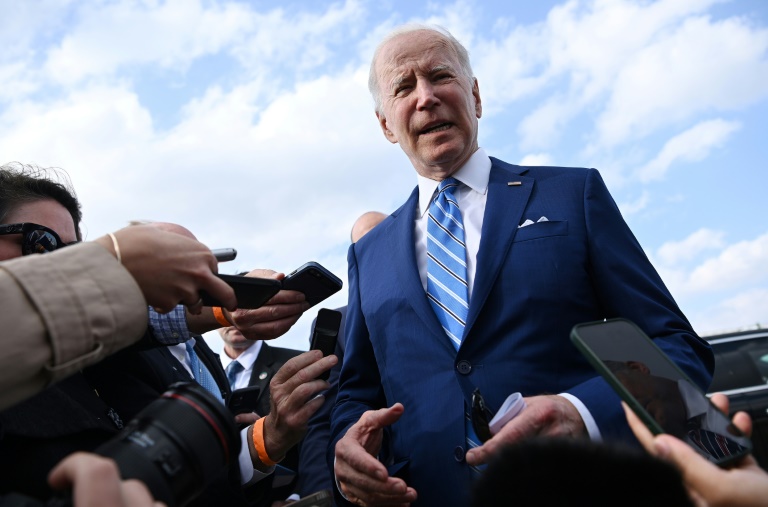
President Joe Biden hailed US innovation Thursday on a visit to the south to promote his efforts to combat inflation, jumpstart high-tech manufacturing and return the United States to pole position in the global economy.

The president said his top priority from his first day in office had been to promote products “made in America” as he met students at the country’s largest historically Black university in Greensboro, North Carolina.

“More is going to change in the next 10 years than has changed in the last 50 years,” Biden told aspiring engineers at a new research complex opened by the North Carolina Agricultural and Technical State University.

“Science and technology is moving so incredibly rapidly. It’s all part of a broader vision that Vice President (Kamala) Harris and I ran on — to build back a better America than even before the pandemic.”

The visit came with the Bureau of Labor Statistics reporting inflation at a 40-year high of 8.5 percent — mainly due, it said, to Russia’s invasion of Ukraine, rent hikes and gas prices.

Biden met faculty and students reading robotics and cybersecurity to discuss how his Bipartisan Innovation Act could boost the economy by improving manufacturing.

“That means stronger supply chains, more manufacturing jobs and lower prices for consumers as we break up the bottlenecks, like semiconductor chips, that have driven inflation over the last year,” the White House said ahead of the trip. 

Deputy press secretary Karine Jean-Pierre told reporters aboard Air Force One that Greensboro was an example of the kind of “regional manufacturing ecosystem” that Biden envisions building across America, to create an industry that can counter China’s growing influence.

One of the administration’s top priorities, the legislation would offer funding to the city of 300,000 and places like it, to promote job creation and business growth.

Biden’s trip — which came with Washington’s political elite bracing for November’s midterm elections — was the political equivalent of a fixture on neutral ground.

North Carolinians have voted for the Republican candidate in every presidential election since the Reagan era except 2008, when the state went for Barack Obama over John McCain.

But five out of its seven governors over the same period have been Democrats, and statistical analytics website FiveThirtyEight described North Carolina in 2020 as a “perennial” swing state.

– Deep underwater –

Biden is deep underwater in recent polling, however, with inflation seen as the Democrats’ biggest challenge if they are to pull off the unlikely feat of holding on to Congress.

A poll released last week by High Point University gave the president a job approval rating of 35 percent in North Carolina, while 53 percent said they disapprove.

His lowest marks were for his handling of inflation (19 percent), including rising gas prices (18 percent), and his stewardship of the economy in general (26 percent).

Nationally, a new Quinnipiac University poll has the president at just 33 percent approval, while 54 percent disapprove of his job performance.

Democrats and Republicans in the House and Senate have been discussing the contours for launching formal negotiations on Biden’s legislation as early as April, with a floor vote expected in May or June.

The Senate passed its own package with a decisive bipartisan 68-32 margin last summer, but that needs to be synced up with a more contentious equivalent passed mostly along party lines in the House.

Republicans argued that the 2,900-page House version wasn’t tough enough on China and overly focused on unrelated issues such as climate change and social equity. 

Biden implored Congress to “take action quickly” to support innovation, saying the “incredibly rapid” changes taking place in manufacturing required an urgent approach.

“Congress: get this bipartisan bill on my desk… national security is on the line,” he said.
'Rare' springtime blizzard wallops parts of Canada

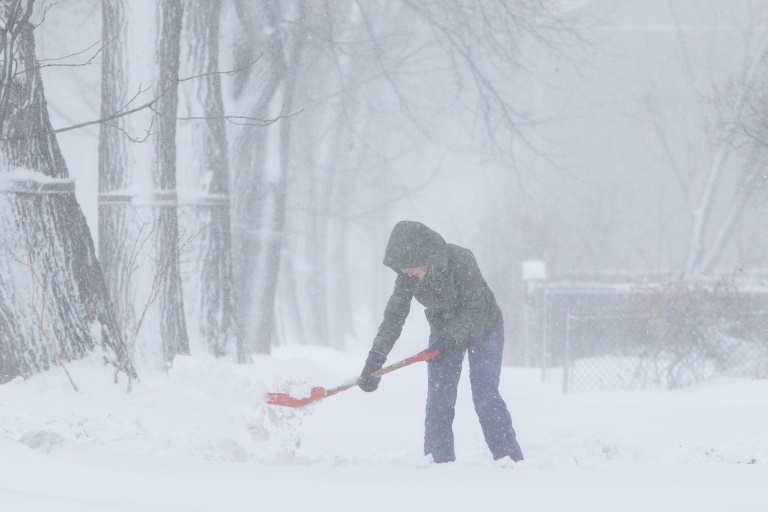
A springtime blizzard walloped Canada’s western Prairies region and parts of Ontario province this week, closing roads, airports and schools, and leaving a dump of snow to shovel.

Whiteouts were also reported in the US states of North Dakota and Montana.

Natalie Hasell, a meteorologist at Environment Canada, told AFP it was “rare” to see a major weather event dropping 30 centimeters (12 inches) of snow in April, when most Canadians are gearing up for spring.

Only two winter storms of this intensity have ever been recorded around this time of year in the region since 1902. The last one of this magnitude, in 1997, pummeled Manitoba province for three days and went into history books as “the storm of the century.”

Just weeks after the last of the 2021-2022 winter snowfall had melted away, forecasts warned of a “historic” winter storm, with an average of 30 to 50 centimeters of fresh snow expected to accumulate in Manitoba and Saskatchewan by the time it ends on Friday, with some parts seeing as much as 80 centimeters of snow coupled with strong winds.

Hasell said the worst-case scenario hadn’t materialized so far, but the snow was continuing to fall, with an additional five to 10 centimeters expected on Thursday in Winnipeg, the capital of Manitoba.

Few power outages were reported, but many schools and roads were closed in and around the city. 

Air Canada told AFP it planned to resume flights Thursday after canceling 21 flights to and from Winnipeg the day before.

A weather alert for Saskatchewan has been lifted, but another was issued for Ontario as the storm tracked eastward.

It is expected to peter out by Friday evening.

Ukraine claims missile strike on Russian warship engulfed in flames

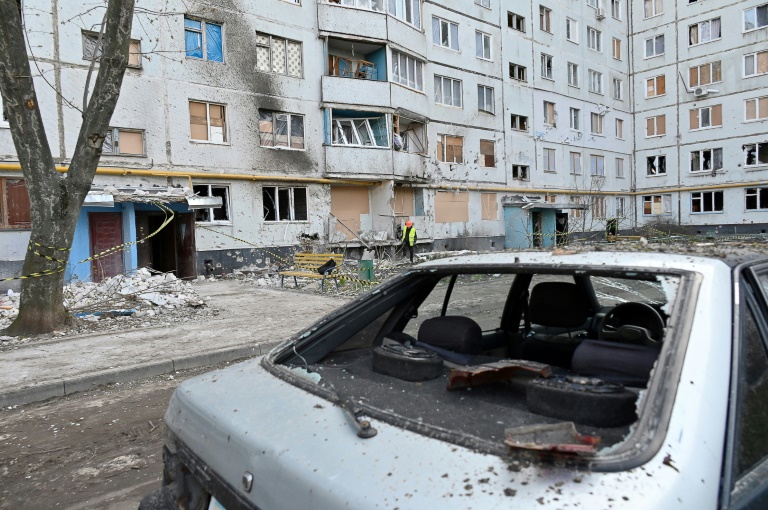
Ukraine said Thursday it had hit Russia’s Black Sea flagship in a rocket attack, igniting an inferno that Moscow said “seriously damaged” the warship as the Kremlin complained that Kyiv was targeting its citizens in sorties across the border.

Moscow accused its neighbor of wounding civilians in helicopter strikes on residential buildings in the Russian border region of Bryansk, even as Ukrainians fled their own homes amid fears of an imminent offensive in the east.

Kyiv denied the accusation, saying Russia was staging “terror attacks” on its own soil to spur “anti-Ukrainian hysteria”.

The guided missile cruiser Moskva has been leading Russia’s naval effort against Ukraine in the seven-week conflict, in which civilian killings have sparked accusations of genocide by US President Joe Biden. 

Russian state media did not mention a missile strike when quoting the defence ministry as saying ammunition detonated on the Moskva after a fire broke out.

The ship was “seriously damaged,” forcing an evacuation, officials added, before the fire was put out, allowing the vessel to remain afloat.

But Odessa military spokesman Sergey Bratchuk said the Moskva was damaged by “Neptune domestic cruise missiles,” in an account largely echoed by the regional governor.

Meanwhile, in Ukraine’s east and south, civilian evacuations had been set to resume Thursday, Deputy Prime Minister Iryna Vereshchuk said, after a day-long pause that Kyiv blamed on Russian shelling.

More than 4.7 million Ukrainians have fled their country in the 50 days since Russia invaded, the United Nations said.

The flagship fire came after the United States unveiled an $800-million military aid package that includes heavy equipment specifically tailored to help Ukraine repel the Russians in the east, from howitzers to armoured personnel carriers and helicopters. 

Following its pullout from northern Ukraine earlier this month after failing to take the capital, Russia is refocusing on the east, with Kyiv warning of bloody new clashes to come in the Donbas region.

– ‘No electricity, no water’ –

Seizing Donbas, where Russian-backed separatists control the Donetsk and Lugansk areas, would allow Moscow to create a southern corridor to occupied Crimea. 

But rain that has been battering the region for days could favor Ukraine in its fight against invading Russian forces, a senior Pentagon official said Thursday.

“The fact that the ground is softer will make it harder for them to do anything off of paved highways,” said the official, who spoke under condition of anonymity.

Moscow’s Black Sea fleet has been blockading the besieged Crimean port city of Mariupol, where Russian officials say they are in full control. 

In what appeared to be its first official accusation of abuses targeting Russians, the Kremlin said at least six air strikes had hit residential buildings in Bryansk, wounding seven people including a toddler.

“Using two military helicopters carrying heavy weaponry, Ukrainian armed forces illegally entered Russian air space,” Russia’s Investigative Committee said in a statement that could not be immediately verified. 

Russia sparked fears of a return to conflict around Kyiv on Wednesday when it threatened to attack the capital’s strike command centres in retaliation for any strikes on Russian soil.

But in eastern Ukraine, civilians say they have “no rest” from bombardment, including in Severodonetsk, the last easterly city still held by Ukrainian forces.

Now little more than a ghost town, the settlement just kilometres from the front line has already buried 400 civilians, according to Lugansk regional governor Sergiy Gaiday.  

“There’s no electricity, no water,” Maria, who lives with her husband and mother-in-law, told AFP amid a din of shelling that she said never stops.

“But I prefer to stay here, at home. If we leave, where will we go?”

– ‘Nobody remembers us’ –

Tamara Yakovenko, 61, and her 83-year-old mother had decided to run the risk of fleeing Severodonetsk, where “every 10 or 15 minutes there are bombings”. 

“We used to receive humanitarian aid, but now nobody remembers us. Some people try to cook outside on a fire… And boom, boom… everyone has to run back to the basement,” Yakovenko said.

“All night until morning, there is no rest.”

Beyond the humanitarian crisis, the war’s economic consequences — primarily surging food and fuel prices — were “hitting hardest the world’s most vulnerable people,” IMF Managing Director Kristalina Georgieva warned in Washington.

The United Nations announced the release of $100 million to fight hunger in Yemen and six African countries at risk of famine due to the war disrupting food supply chains.

“Hundreds of thousands of children are going to sleep hungry every night while their parents are worried sick about how to feed them,” said UN Emergency Relief Coordinator Martin Griffiths.

“A war halfway around the world makes their prospects even worse. This allocation will save lives.”

Investigators have descended on areas around Kyiv previously occupied by Russian forces, looking into reports of war crimes that Russian President Vladimir Putin has dismissed as “fakes”.

The atrocities — some of which were witnessed by AFP — have led Biden to accuse Putin of genocide, a term key European partners including France and Germany have hesitated to use.

The French government, which has allocated 100 million euros for humanitarian support to victims of the conflict, said its embassy would return “very soon” to Kyiv from the western city of Lviv, where it had been relocated after the invasion.

burs-ft/to

341 dead in S.Africa floods as hunt for survivors widens

The death toll from South Africa’s “unprecedented” floods climbed to 341 on Thursday as helicopters fanned out across the southeastern city of Durban in an increasingly desperate search for survivors.

With roads and bridges washed away by freak rainfall this week, rescuers battled to deliver supplies across the city, where some residents have been without power or water since Monday.

“The level of devastation of human life, infrastructure, and service delivery network in the province is unprecedented,” said Sihle Zikalala, the premier of KwaZulu-Natal province.

“A total number of 40,723 people have been affected. Sadly, 341 fatalities have been recorded,” he told a news conference.

At a small airport north of Durban, helicopters carried rescuers in and out. The air support was pulled from military and police, but also a fleet of volunteers, private contractors and schools.

But one day after the rains finally subsided, fewer survivors were being found, said Travis Trower, a director for the volunteer-run organisation Rescue South Africa.

From 85 calls on Thursday, he said his teams had found only corpses.

“It’s unfortunate, but we do the best we can for as many people as we can,” he said.

The government has given no indication of how many people are missing. Zikalala predicted that the bill for damage will run into billions of rand (hundreds of millions of dollars, euros)

– Appeal for shelter –

President Cyril Ramaphosa has declared the region a state of disaster to unlock relief funds. 

Authorities said they had established 17 shelters to accommodate over 2,100 displaced people.

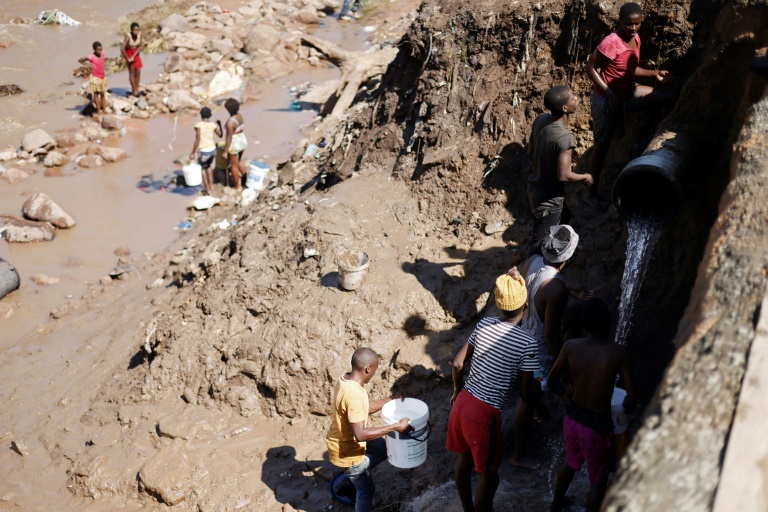
Entering their fourth day without power or water, Durban’s poorest residents lined up on Thursday to collect water from burst pipes and dug through layers of mud to retrieve their few possessions.

There was a sense of despair amid the stench of sewage, growing stronger as the rains which wrought so much devastation stopped and the tropical heat returned.

Sporadic protests erupted in some areas over slow restoration of services and a lack of relief.

Durban’s city government appealed for patience.

“We understand the frustration and anxiety of our residents,” it said in a statement.

“We are working as quickly as we can. Our teams are hard at work to resume services. However, it may take a while to fully restore all services because of the extent of the damage to access roads.”

The government of KwaZulu-Natal province has also put out a public call for aid, urging people to donate non-perishable food, bottled water, clothes and blankets.

But many survivors said they had been left to fend for themselves.

In Amaoti, a township north of Durban, residents balanced precariously on the embankment of a collapsed road, trying to fetch clean water from a broken pipe underneath.

“We don’t have water, there is no electricity… people from (everywhere) are coming to get water,” Thabani Mgoni, 38, told AFP in the midst of the crowd.

Philisiwe Mfeka, a 78-year-old grandmother, said her water supply stopped on Tuesday. 

Even water from the fractured pipe was being rationed to one bucket per person, with children, some as young as 10, coming to fetch one bucket each.

At a riverside, families washed what clothes they could recover in muddy water, amid severed pipes that poked from earth.

 – Brutal storm –

In a pitch-dark hall in Durban’s Glebelands, volunteers in a dingy apartment block used mobile phone torches to illuminate their registration of scores of displaced people overnight.

“We are just helping the people because we care,” said Mabheki Sokhela, 51, who helped organise temporary shelter at a community hall.

He urged fellow residents to shelter the victims. “There is not enough space,” he said.

Many victims slept on chairs or on cardboard on the floor.

Weather experts say apocalyptic levels of rain were dumped on the region over several days.

Some areas received more than 450 millimetres (18 inches) in 48 hours, amounting to nearly half of Durban’s annual rainfall of 1,009 mm, the national weather service said.

The South African Weather Service has issued an Easter weekend warning of thunderstorms and localised flooding in KwaZulu-Natal and neighbouring Free State and Eastern Cape provinces.

The country is still struggling to recover from the two-year-old Covid pandemic and deadly riots last year that killed more than 350 people.

Le Pen urges France to defeat 'elitist bloc' in Macron showdown

French far-right leader Marine Le Pen on Thursday urged France to defeat elitism and oligarchy in elections this month, as she seeks to reach out to left-wing voters to beat President Emmanuel Macron.

Centrist Macron and Le Pen went through to the April 24 run-off vote after finishing first and second in the April 10 first round. 

But analysts say that the choice of voters who backed the third-placed candidate, the hard-left Jean-Luc Melenchon, will be crucial in determining the outcome of the vote.

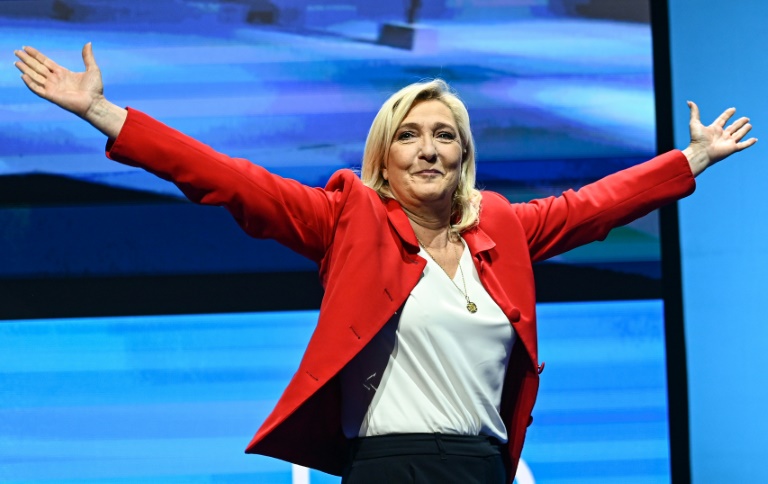
In a major rally in the southern city of Avignon, Le Pen, wearing a red jacket, said she was addressing “patriots of the right, patriots of the left.”

“Victory has never been so near,” she told some 4,000 supporters.

Appearing to address Melenchon voters, she said: “Come out and vote. We are speaking to all the French. We hold out a firm hand but one of friendship and respect.”

– ‘Cohesion of France’ –

Her comments came after Macron received a boost when his predecessor as president Francois Hollande, a Socialist, urged the French to back the incumbent in round two as Le Pen “was putting our principles into doubt”.

Hollande told TF1 television he was calling on France to vote for Macron “for the sake of the cohesion of France” and its “European future”.

Macron had earlier this week also won the backing of right-wing former president Nicolas Sarkozy.

Le Pen, who has sought to moderate her image in order to give her the best launch pad yet for the Elysee, said that “we are almost at the end of the road, a long path that has often been steep and hit by gusts”.

Critics allege that the changes have only been in style, with hardline signature policies in place including making it illegal for women to wear the Muslim headscarf in public.

But she urged France to block a new five-year term for Macron to halt “social desolation and national deconstruction” and put an end to “this caste which governs us with arrogance, these few who rule for the benefit of the few”.

“On April 24, the popular bloc will come face-to-face with the elitist bloc,” she said.

It will be a showdown between the “people and the oligarchy”, she added.

– ‘The last avatar’ –

She took aim at Macron, saying he was “not the man of a new era but the last avatar of a system that has run its course”.

“I think the moment has come to put an end to a system that has run out of breath.”

Le Pen’s choice of Avignon for her rally was symbolic as Melenchon had come out on top in the city in the first round of voting.

Macron, who is due to host a major rally Saturday in the southern city of Marseille, on Thursday visited the northern port city of Le Havre where Melenchon also led in the first round.

“I will try and convince all the voters,” he said, as he went on a walkabout in the city which is run by the heavyweight ex-prime minister Edouard Philippe.

The most recent polls have shown a tight contest between Macron and Le Pen on April 24, albeit with signs that the president may be slightly extending a lead.

An Opinonway poll Wednesday showed Macron on 53 percent and Le Pen on 47 percent.

But even such a margin is too close for comfort for supporters of Macron, who won over 66 percent against Le Pen in their run-off encounter in 2017.

A pivotal moment in the final phase of the campaign will come on April 20 when the two meet for their only live debate of the whole campaign broadcast live on French television.

Germany seizes world's largest yacht owned by Russian oligarch

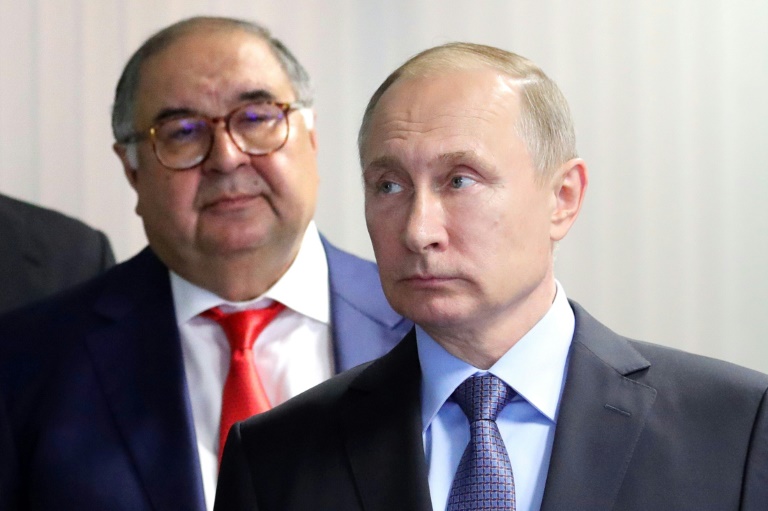
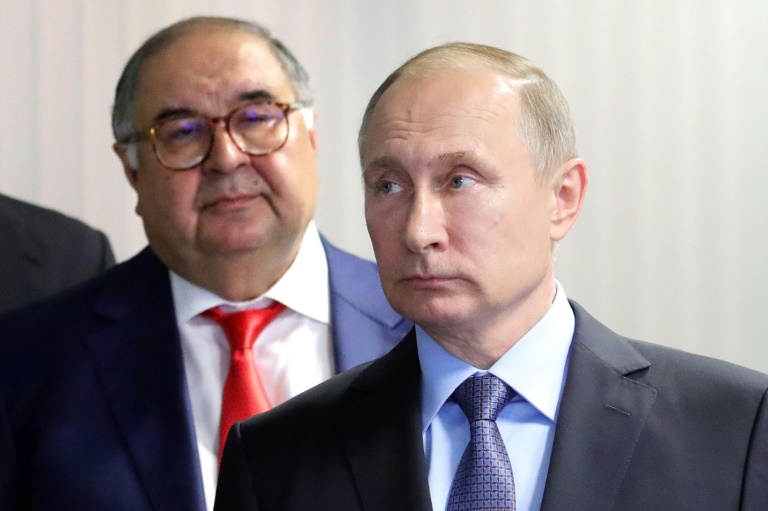
Germany has officially confiscated the world’s largest superyacht owned by Russian oligarch Alisher Usmanov, as part of sanctions against Moscow following the outbreak of war in Ukraine, police sources said Thursday.

The 156-metre (1,680-feet) long “Dilbar” has an estimated value of $600 million ((555 million euros) according to Forbes magazine.

Since last October the boat has been docked for repairs in a Hamburg shipyard.

German customs had been eyeing the superyacht for several weeks, but could not formally seize it earlier due to a legal imbroglio over its ownership.

Eventually the German Federal Judicial Police indicated that they had succeeded “after lengthy investigations, and in spite of concealment via offshore companies, in identifying the owner of the M/S Dilbar and it is Gulbakhor Ismailova, the sister of Alisher Usmanov”.

“The luxury yacht is now under the sanctions regime and so could be confiscated in Hamburg,” police added on Twitter.

The Russian billionaire and his sister are both targeted by European sanctions against Russian oligarchs as well as members of their families.

Usmanov, 68, was ranked sixth in the Sunday Times’ list of the richest people in the UK in 2021.

He is one of dozens of Russian oligarchs hit by Western sanctions since Moscow launched its invasion of Ukraine.

On Wednesday, English Premier League football club Everton suspended its sponsorship agreements with several companies in which Usmanov held shares.  

The confiscation of the “Dilbar” is just the latest in a string of seizures of Russian superyachts under the Western sanctions. 

Germany seizes world's largest yacht owned by Russian oligarch

Germany has officially confiscated the world’s largest superyacht owned by Russian oligarch Alisher Usmanov, as part of sanctions against Moscow following the outbreak of war in Ukraine, police sources said Thursday.

The 156-metre (1,680-feet) long “Dilbar” has an estimated value of $600 million ((555 million euros) according to Forbes magazine.

Since last October the boat has been docked for repairs in a Hamburg shipyard.

German customs had been eyeing the superyacht for several weeks, but could not formally seize it earlier due to a legal imbroglio over its ownership.

Eventually the German Federal Judicial Police indicated that they had succeeded “after lengthy investigations, and in spite of concealment via offshore companies, in identifying the owner of the M/S Dilbar and it is Gulbakhor Ismailova, the sister of Alisher Usmanov”.

“The luxury yacht is now under the sanctions regime and so could be confiscated in Hamburg,” police added on Twitter.

The Russian billionaire and his sister are both targeted by European sanctions against Russian oligarchs as well as members of their families.

Usmanov, 68, was ranked sixth in the Sunday Times’ list of the richest people in the UK in 2021.

He is one of dozens of Russian oligarchs hit by Western sanctions since Moscow launched its invasion of Ukraine.

On Wednesday, English Premier League football club Everton suspended its sponsorship agreements with several companies in which Usmanov held shares.  

The confiscation of the “Dilbar” is just the latest in a string of seizures of Russian superyachts under the Western sanctions. 

Musk says 'not sure' his Twitter buyout bid will succeed

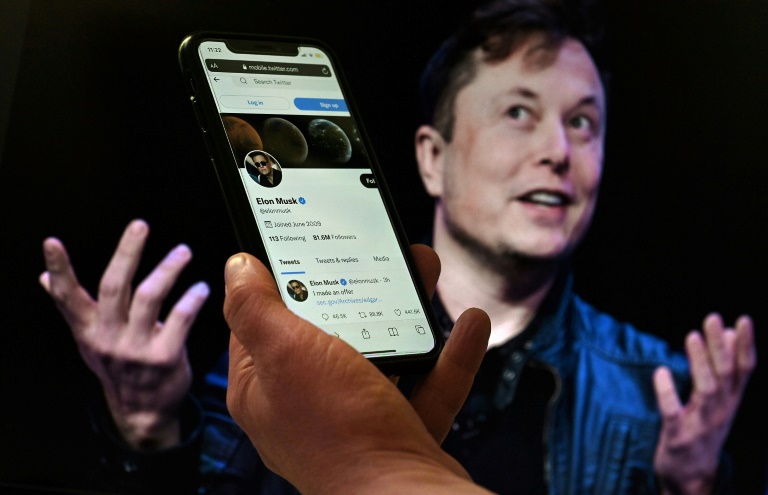
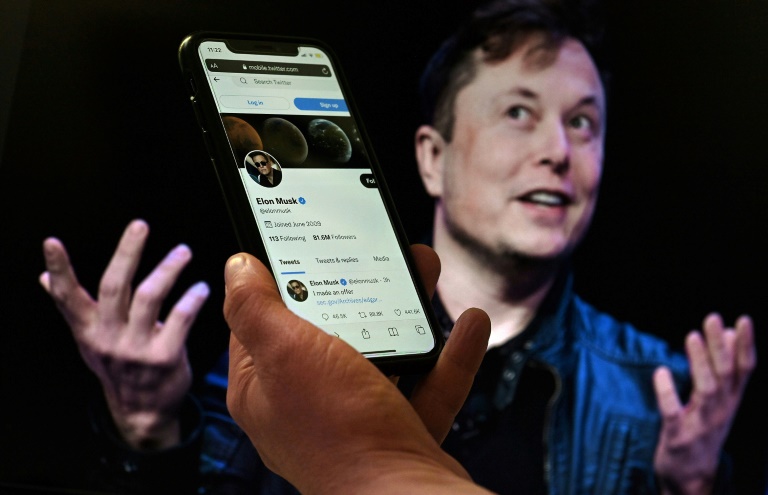
Tesla chief Elon Musk said Thursday he’s not sure his $43 billion bid to buy Twitter will succeed, but asserted he has a “plan B” in case of failure.

In his first spoken comments since the shock offer became public, Musk downplayed his concerns over money, though assembling the funding for an all-cash offer of this size is never simple.

The world’s richest person would need to part with some of his mountains of Tesla stock if his offer gets board backing — which is not guaranteed.  

“I’m not sure that I will actually be able to acquire it,” Musk told a conference in Canada, referring to Twitter. He went on to note that money wasn’t the primary issue, saying “I could technically afford it.”

Musk acknowledged he has a “plan B” if his offer fails, but refused to elaborate when pressed.

“For another time, I think,” the billionaire said.

Musk’s filing to US authorities on the proposal offered an idea of what he’d do if rejected: “My offer is my best and final offer and if it is not accepted, I would need to reconsider my position as a shareholder.”

Musk last week disclosed a purchase of 73.5 million shares — or 9.2 percent — of Twitter’s common stock, which ignited a roller-coaster of events, including his refusal to join the company’s board.

In his comments Thursday, Musk reiterated his statements that the aim of his bid was to promote freedom of speech on Twitter. 

“This is not a way to make money,” he said.

“My strong intuitive sense is that having a public platform that is maximally trusted and broadly inclusive is extremely important to the future of civilization. I don’t care about the economics at all,” he added.

The serial entrepreneur’s endeavors include driving a shift to electric vehicles through his automaker Tesla, private space exploration, and linking computers with brains.

His behavior, however, has raised eyebrows, prompted laughs, and sometimes drawn condemnation or even litigation.

Musk says 'not sure' his Twitter buyout bid will succeed

Tesla chief Elon Musk said Thursday he’s not sure his $43 billion bid to buy Twitter will succeed, but asserted he has a “plan B” in case of failure.

In his first spoken comments since the shock offer became public, Musk downplayed his concerns over money, though assembling the funding for an all-cash offer of this size is never simple.

The world’s richest person would need to part with some of his mountains of Tesla stock if his offer gets board backing — which is not guaranteed.  

“I’m not sure that I will actually be able to acquire it,” Musk told a conference in Canada, referring to Twitter. He went on to note that money wasn’t the primary issue, saying “I could technically afford it.”

Musk acknowledged he has a “plan B” if his offer fails, but refused to elaborate when pressed.

“For another time, I think,” the billionaire said.

Musk’s filing to US authorities on the proposal offered an idea of what he’d do if rejected: “My offer is my best and final offer and if it is not accepted, I would need to reconsider my position as a shareholder.”

Musk last week disclosed a purchase of 73.5 million shares — or 9.2 percent — of Twitter’s common stock, which ignited a roller-coaster of events, including his refusal to join the company’s board.

In his comments Thursday, Musk reiterated his statements that the aim of his bid was to promote freedom of speech on Twitter. 

“This is not a way to make money,” he said.

“My strong intuitive sense is that having a public platform that is maximally trusted and broadly inclusive is extremely important to the future of civilization. I don’t care about the economics at all,” he added.

The serial entrepreneur’s endeavors include driving a shift to electric vehicles through his automaker Tesla, private space exploration, and linking computers with brains.

His behavior, however, has raised eyebrows, prompted laughs, and sometimes drawn condemnation or even litigation.

Islamic State 'Beatle' guilty of all charges in US hostage deaths

El Shafee Elsheikh, a member of the notorious Islamic State kidnap-and-murder cell known as the “Beatles,” was found guilty of all charges on Thursday for the deaths of four American hostages in Syria.

A jury convicted Elsheikh, 33, a former British national, of all eight counts after a two-week trial, the most significant prosecution of an IS member in the United States.

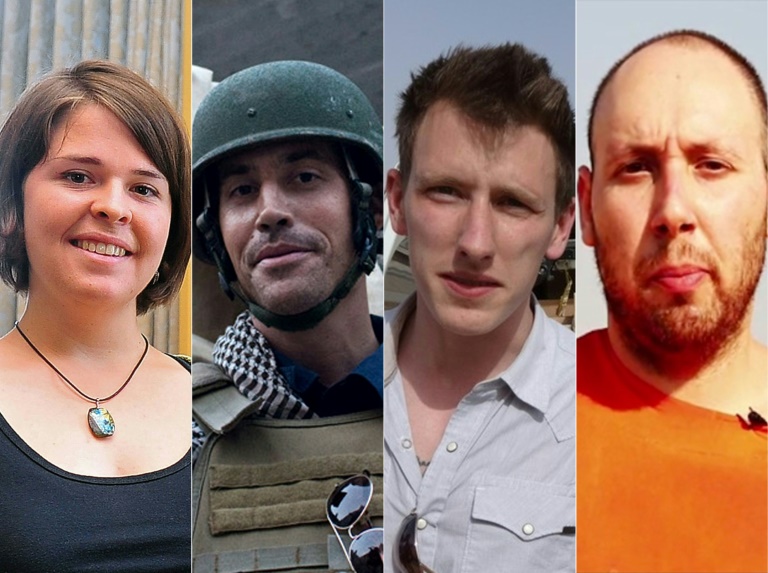
Elsheikh was charged with hostage-taking, conspiracy to murder US citizens — journalists James Foley and Steven Sotloff and aid workers Peter Kassig and Kayla Mueller — and supporting a terrorist organization.

“This is a day that we didn’t need bombs or bullets to bring justice,” said James Foley’s mother Diane, who fought tirelessly to try to secure her son’s release. “I really feel that justice prevailed.”

Kayla Mueller’s father also welcomed the sweeping guilty verdicts.

“We all saw the American justice system do what it does best,” said Carl Mueller, who along with his wife, Marsha, attended the grueling trial in US District Court in Alexandria near the capital Washington.

The 12-person jury deliberated for a total of around six hours over two days before delivering the verdict.

Elsheikh did not display any visible reaction as the guilty findings were read but several members of the families of the slain American hostages who were in the public gallery dabbed at their eyes.

Elsheikh and another former “Beatle,” Alexanda Amon Kotey, 38, were captured by a Kurdish militia in Syria in January 2018 and handed over to US forces in Iraq.

They were flown to the United States in 2020 to face trial. Kotey pleaded guilty in September 2021 and is facing life in prison.

Elsheikh, who was stripped of his citizenship by Britain, also faces a potential life sentence.

“The sentence he’s going to get is probably worse than a death sentence,” Carl Mueller said.

– ‘Loathsome’ –

Elsheikh’s defense attorney, Nina Ginsberg, had argued that while Elsheikh may indeed have been an IS fighter, prosecutors had not proved he actually was a “Beatle.”

Ginsberg said the “Beatles” were responsible for “brutal” and “loathsome” acts but insisted Elsheikh was not one of them.

Besides the deaths of the American hostages, Elsheikh and the other “Beatles” are suspected of involvement in the kidnapping in Syria of some 20 other journalists and relief workers from Europe, Russia and Japan.

During the trial, prosecutors played media interviews for the jury during which Elsheikh acknowledged having interactions with some of the hostages.

In the interviews conducted after his capture in Syria, Elsheikh admitted taking email addresses and proof of life questions from the hostages and to even physically beating them.

Ginsberg said Elsheikh was a “broken man” at that time and only made the admissions to avoid being sent to Iraq, where he would have faced a summary trial and execution.

He wanted to be sent to Britain or the United States “where he could get a fair trial,” she said.

– ‘Brutal legacy’ –

Nicolas Henin, a former French hostage who testified at the trial to his harrowing treatment in captivity, said following the verdict that he was “grateful to the American justice system for having organized this trial.”

“A terrorist crime opens a gaping wound in a society,” Henin said. “Only justice can bring closure to such a monstrous chapter.”

“It does not bring back the dead, it does not heal all the pain, but it soothes,” he said.

Foley, Sotloff and Kassig were beheaded by “Beatle” Mohamed Emwazi, known as “Jihadi John,” and videos of their deaths were released by IS for propaganda purposes.

Mueller was initially held by the “Beatles” but then was turned over to IS leader Abu Bakr al-Baghdadi, who reportedly raped her repeatedly.

IS announced Mueller’s death in February 2015 and said she was killed in a Jordanian airstrike, a claim that was disputed by US authorities.

Baghdadi died during a US special forces raid in 2019. Emwazi was killed by a US drone in Syria in 2015.

In his closing argument, prosecutor Raj Parekh told the jury the government had proved that Elsheikh, Kotey and Emwazi “grew up together, radicalized together, fought as high-ranking IS fighters together and tortured and terrorized hostages together.”

“What these horrific crimes left behind is a legacy of brutal killings and shattered families,” Parekh said.

Close Bitnami banner
Bitnami