World

War in Ukraine: Latest developments

Here are the latest developments in the war in Ukraine:

– Russian flagship ‘seriously damaged’ but afloat –

Ukraine claims its missiles struck the Russian navy’s Black Sea flagship, causing a fire that “seriously damaged” the vessel, according to Moscow. 

The Russian defence ministry says the warship, which has been used to launch missiles at Ukraine’s southern coast and interior, remains afloat.

The “Moskva” gained notoriety early in the war when it called on Ukrainian border troops defending the strategic Snake Island to surrender, only to be defiantly refused.

– Russia accuses Ukraine of attacks –

Kyiv rejects Moscow’s claim that it carried out attacks on Russian soil, accusing Moscow of staging “terror attacks” on its own territory to stir up “anti-Ukrainian hysteria” in the country.

Moscow claims Ukraine sent two helicopters across the border to bomb a town in Russia’s southern Bryansk region,

Russia, which initially reported seven injured in shelling, said at least six residential buildings were damaged and that a toddler was among the injured in the purported helicopter attack.

Elsewhere, the governor of Russia’s Belgorod region claims the village of Spodaryushino, “came under shelling” from the Ukrainian side of the border, and that it and a nearby village had been evacuated as a precaution.

There was no way of immediately verifying the reports.

– Ukraine resumes evacuations –

Ukraine says it is reopening humanitarian corridors through nine routes in the country’s east and south, to facilitate the evacuation of civilians from war-scarred regions after a day-long pause that Kyiv attributed to Russian violations.

– Genocide debate –

Leaders on either side of the Atlantic diverge on whether to label Russia’s actions in Ukraine as “genocide”.

Canadian Prime Minister Justin Trudeau says US President Joe Biden, who has accused Russian President Vladimir Putin of genocide, was “right” in his choice of words.

But French President Emmanuel Macron, who is campaigning for re-election, said such “verbal escalations” were unhelpful, and German Chancellor Olaf Scholz steers clear of using the term. 

Ukraine’s parliament backs a resolution recognising the actions of the Russian military in the country as “genocide”. 

– Bad weather could help Ukraine –

Rainy weather in Ukraine’s eastern Donbas region could favour that country’s army in its fight against invading Russian forces, which are preparing a stronger offensive in the zone, a senior Pentagon official says.

“The fact that the ground is softer will make it harder for them to do anything off of paved highways,” said the official, who spoke under condition of anonymity.

– Diversifying Russian energy exports –

Russian President Vladimir Putin calls for diversification of energy exports towards Asia, while accusing European countries of destabilising the market by moving to cut out Russian deliveries.

Putin says at a televised government meeting on the energy sector Russia should continue in the direction it has taken in recent years and “step-by-step, shift the direction of our exports to the fast-growing markets of the South and East”.

– French embassy returns to Kyiv –

France says its embassy in Ukraine will return to the capital Kyiv from the western city of Lviv, where it had been relocated in early March after the Russian invasion.

“This redeployment will happen very soon and will allow France to deepen its backing for Ukraine even further in all spheres to face the war unleashed by Russia on February 24,” the foreign ministry says

– 4.7 million refugees –

More than 4.7 million Ukrainians have fled their country in the 50 days since Russia invaded, the United Nations says.

Brazil's Petrobras names new CEO amid fuel price row with Bolsonaro

The board of Brazil’s state-run oil company Petrobras on Thursday named Jose Mauro Coelho as its third CEO in just over a year after President Jair Bolsonaro fired his predecessors in a stand-off over fuel prices.

Coelho was appointed for a one-year term, Petrobras announced in a statement.

He was the government’s choice to succeed Joaquim Silva e Luna, ousted by Bolsonaro last month after slightly more than a year in the post.

The far-right president said that the petrol price — set by Petrobras but tied to international market movement — was “unaffordable” and amounted to a “crime” against Brazilians.

Silva e Luna’s predecessor Roberto Castello Branco was fired by Bolsonaro in February 2021 for similar reasons.

Bolsonaro, who is seeking reelection in October, is widely blamed by voters for double-digit inflation, polls show, on the back of skyrocketing global and local fuel prices.

Fuel prices in Brazil have risen by nearly 28 percent in the year to March, even as the economy recovers from the fallout of the coronavirus pandemic.

Russia’s war in Ukraine has led to a sharp rise in crude prices in recent weeks, adding to the pressure.

Bolsonaro’s initial pick for Petrobras CEO, economist Adriano Pires, withdrew his name from the race last week due to a possible conflict of interest over his other role as head of an energy consulting firm.

Another nominee of Bolsonaro, Rodolfo Landim, withdrew to concentrate his attention on the Flamengo football club, of which he is president.

Several other possible candidates had declined the job, according to the Brazilian press.

The government then picked Coelho, who was the government secretary of petroleum, natural gas and biofuels in 2020 and 2021.

With a degree in industrial chemistry, he enters the job with 25 years of experience in the energy sector.

He has served since 2020 as chairman of the board of the PPSA oil and gas company linked to the ministry of mines and energy.

The announcement was met with a slight 0.13 percent drop in Petrobras shares on the Sao Paulo stock exchange, after closing higher on Wednesday.

UK to send asylum seekers to Rwanda

Britain will send migrants and asylum seekers who cross the Channel thousands of miles away to Rwanda under a controversial deal announced Thursday as the government tries to clamp down on record numbers of people making the perilous journey.

“From today… anyone entering the UK illegally as well as those who have arrived illegally since January 1 may now be relocated to Rwanda,” Prime Minister Boris Johnson said in a speech near Dover in southeastern England.

“Rwanda will have the capacity to resettle tens of thousands of people in the years ahead,” Johnson said.

He called the East African nation with a sketchy human rights record “one of the safest countries in the world, globally recognised for its record of welcoming and integrating migrants.” 

Johnson was elected partly on promises to curb illegal immigration but has instead seen record numbers making the risky Channel crossing.

He also announced that Britain’s border agency would hand responsibility for patrolling the Channel for migrant boats to the navy.

More than 28,000 people arrived in Britain having crossed the Channel from France in small boats in 2021.

Around 90 percent of those were male and three-quarters were men aged between 18 and 39.

– ‘Inhumane’ –

The Rwanda plan swiftly drew the ire of opposition politicians who accused Johnson of trying to distract from his fine for breaking coronavirus lockdown rules, while rights groups slammed the project as “inhumane”.

The United Nations’ refugee agency voiced its strong opposition, with Gillian Triggs, the UNHCR assistant high commissioner for protection saying: “People fleeing war, conflict and persecution deserve compassion and empathy. They should not be traded like commodities and transferred abroad for processing.”

Ghana and Rwanda had previously been mentioned as possible locations for the UK to outsource the processing of migrants, but Ghana in January denied involvement.

Instead, Kigali on Thursday announced that it had signed a multi-million-dollar deal to do the job, during a visit by British Home Secretary Priti Patel.

“Rwanda welcomes this partnership with the United Kingdom to host asylum seekers and migrants, and offer them legal pathways to residence” in the East African nation, Foreign Minister Vincent Biruta said in a statement.

The deal with Rwanda will be funded by the UK to the tune of up to £120 million ($157 million, 144 million euros), with migrants “integrated into communities across the country,” it said.

In Dover, where many migrants arrive after crossing the Channel, some residents welcomed the announcement.

“They should be sent back, because it is not our responsibility,” said retiree Andy, 68. 

“Our responsibility is to look after our own people, which we aren’t doing,” the heavily tattooed army veteran told AFP.

“I understand people escaping from repression, I do. But if they’re coming over here for one thing and that is money, to me that is wrong.”

– Backlash –

Refugee Action’s Tim Naor Hilton accused the government of “offshoring its responsibilities onto Europe’s former colonies instead of doing our fair share to help some of the most vulnerable people on the planet”.

“This grubby cash-for-people plan would be a cowardly, barbaric and inhumane way to treat people fleeing persecution and war,” he said.

Nadia Hardman, Refugee and Migrant Rights Researcher at Human Rights Watch, said the plan would “complicate” the process for Syrians seeking refuge in the UK.

“Syrian refugees are desperate to reach a place of safety,” Hardman told AFP.

“The UK’s agreement with Rwanda will only complicate this pursuit.  

“They will arrive and expect to be treated according to the fundamental values the UK says it upholds, but will instead be transferred somewhere, miles away.”

Australia has a policy of sending asylum seekers arriving by boat to detention camps on the Pacific island nation of Nauru, with Canberra vowing no asylum seeker arriving by boat would ever be allowed to permanently settle in Australia.

Since 2015 the UK has “offered a place to over 185,000 men, women and children seeking refuge… more than any other similar resettlement schemes in Europe,” Johnson said.

According to the UN refugee agency, Germany received the highest number of asylum applicants (127,730) in Europe in 2021, followed by France (96,510), while the UK received the fourth largest number of applicants (44,190).

Biden visits battleground state to tout work on US innovation

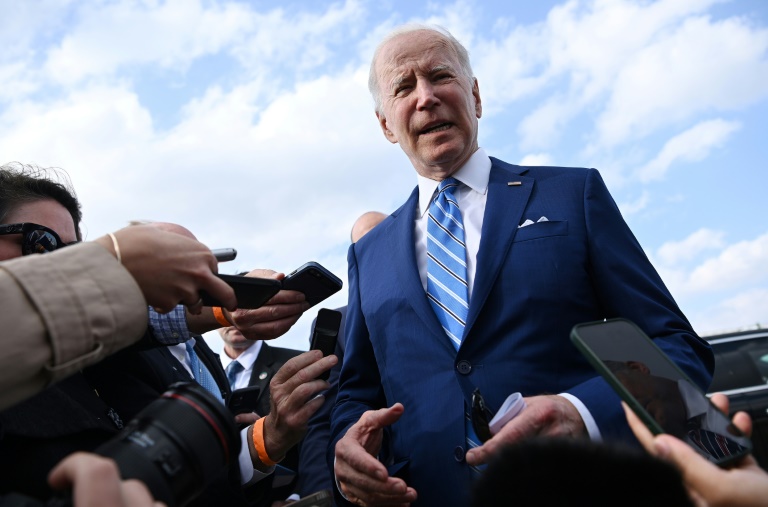
US President Joe Biden traveled to North Carolina on Thursday to tout his efforts on combating inflation and jumpstarting high-tech research and manufacturing to make the United States more competitive in the global economy.

The president is due to visit a new engineering research and innovation complex at North Carolina Agricultural and Technical State University, the largest historically Black university in the country.

The visit comes with the Bureau of Labor Statistics reporting inflation at a 40-year high of 8.5 percent — mainly due, it says, to Russia’s invasion to Ukraine, rent hikes and gas prices.

The White House said Biden would meet faculty and students studying robotics and cybersecurity and discuss how the Bipartisan Innovation Act can boost the economy by improving American manufacturing.

“That means stronger supply chains, more manufacturing jobs, and lower prices for consumers as we break up the bottlenecks, like semiconductor chips, that have driven inflation over the last year,” said Biden’s press secretary, Jen Psaki. 

She added that the initiative would “create more good-paying jobs and lower prices for working families.”

Psaki’s deputy Karine Jean-Pierre told reporters aboard Air Force One that Greensboro was an example of the kind of “regional manufacturing ecosystem” that Biden envisions building across America, to create an industry that can counter China’s growing influence.

One of the administration’s top priorities, the legislation would offer funding to the city of 300,000 and places like it, to promote job creation and business growth.

North Carolinians have voted for the Republican candidate in every presidential election since the Reagan era except 2008, when the state went for Barack Obama over John McCain.

But five out of its seven governors over the same period have been Democrats, and statistical analytics website FiveThirtyEight described North Carolina in 2020 as a “perennial” swing state.

– Deep underwater –

Biden is deep underwater in recent polling, however, with inflation seen as the Democrats’ biggest challenge ahead of November’s midterm elections.

A poll released last week by High Point University gave the president a job approval rating of 35 percent in North Carolina, while 53 percent said they disapprove.

His lowest marks were for his handling of inflation (19 percent), including rising gas prices (18 percent), and his stewardship of the economy in general (26 percent).

Nationally, a new Quinnipiac University poll has the president at just 33 percent approval, while 54 percent disapprove of his job performance.

Democrats and Republicans in the House and Senate have been discussing the contours for launching formal negotiations on Biden’s legislation as early as April, with a floor vote expected in May or June.

The Senate passed its own package with a decisive bipartisan 68-32 vote last summer but that needs to be synched up with a more contentious equivalent passed mostly along party lines in the House.

Republicans argued that the 2,900-page House version wasn’t tough enough on China and overly focused on unrelated issues like climate change and social equity. 

North Carolina Democratic Party Chair Bobbie Richardson said in a statement Biden had been “laser-focused” on lowering costs for voters still recovering from the pandemic.  

But Thom Tillis, one of the state’s two Republican senators, said North Carolinians were “sick of inflation and tired of President Biden’s excuses.” 

“President Biden’s only answer to date is blaming everyone else for his decisions and pushing a multitrillion-dollar tax and spending spree,” Tillis said in a statement, according to Fox News.

US banks see upheaval from Fed shift, Russia challenging economy

Large US banks released a mixed deluge of earnings Thursday, pointing to the continued strength of US households and businesses while warning of rising risks from inflation, geopolitical upheaval and fast-changing monetary policy.

Citigroup, Goldman Sachs and Wells Fargo all reported lower profits compared with the year-ago period, when results were boosted by the release of reserves set aside at the outset of the Covid-19 pandemic in case of bad loans. 

Executives painted a complex picture of puts and takes as uncertainty from the war in Ukraine complicates an already unpredictable economy that’s still grappling with Covid-19 disruptions.

Goldman Sachs Chief Executive David Solomon described a series of “cross currents” coursing through the economy.

“While US unemployment levels are low and wages are increasing, inflation is the highest it’s been in decades,” Solomon said on a conference call with analysts. 

“We’re seeing new stress on supply chain and commodity prices and US households are facing rising gas prices as well as higher prices for food and housing. We’ve also seen an increased risk of stagflation and mixed signals on consumer confidence,” he said.

The Federal Reserve’s shift to a monetary tightening posture adds to the churn, simultaneously helping and hurting banks. 

Wells Fargo, for example, reported higher net interest income reflecting the benefit of being able to charge more for loans.

But the domestic-focused bank, a big player in the US housing market, also experienced its highest quarterly decline since 2003 in the mortgage market as fewer consumers refinance due to higher interest rates.

– Russia exposure –

Citi reported a 46 percent decline in first-quarter profits to $4.3 billion, while revenues dipped two percent to $19.2 billion.

Citi earnings were dragged lower by increased expenses, while its banking operations had a mixed performance.

Chief Executive Jane Fraser cited a difficult geopolitical and macro environment as a factor in weaker investment banking results, while pointing to trade loans and cross-border transactions as areas of strength.

The New York bank, which is more exposed than competitors to Russia, said it set aside a $1.9 billion in reserves related to the invasion.

About $1 billion in the Citi reserves are for direct exposure to Russia, while the $900 million relate to broader economic risks following the invasion, Citi Chief Financial Officer Mark Mason said on a conference call with reporters.

Since the end of 2021, Citi has reduced its overall exposure to Russia from $9.8 billion to $7.8 billion, Mason said.

“There’s somewhat of a wait and see how some of this plays out,” Mason said of the overall environment.

“Clients are worried about inflation,” Mason said. “They’re looking at the impacts from rising rates,” he added, noting that supply chain woes exacerbated by the Russian invasion.

At Goldman Sachs, profits came in $3.8 billion, down 43 percent from the year-ago period on a 27 percent drop in revenues to $12.9 billion.

Goldman sustained a big drop in revenues from asset management and equity and debt underwriting, offset by a strong activity in some trading divisions amid market volatility.

The results also included a $300 million hit from Russia. Solomon described Goldman’s exposure to the conflict as “relatively limited,” saying the bank has been focused on reducing exposure.

Wells Fargo, meanwhile, reported profits of $3.7 billion, down 20.8 percent from the 2021 period. Revenues fell 5.1 percent to $17.6 billion.

– Downside risks –

Thursday’s deluge of earnings reports comes a day after JPMorgan Chase also reported lower profits. Chief Executive Jamie Dimon described a “very strong underlying economy,” but warned that rising interest rates, inflation and the war in Ukraine had lifted the risk of recession.

Wells Fargo Chief Executive Charlie Scharf employed a similar tone, noting that “our internal indicators continue to point towards the strength of our customers’ financial position,” while warning that Fed efforts to counter inflation will “certainly reduce economic growth,” with Ukraine bringing “additional risk to the downside.”

But unlike JPMorgan, which added $902 million in reserves in part because of higher recession risk, Wells Fargo released reserves of $1.1 billion on expectations of fewer bad loans due to upheaval from Covid-19.

Shares of Citi rose one percent to $50.67 in afternoon trading, while Goldman Sachs dipped 0.5 percent to $320.40. Wells Fargo slumped 5.2 percent to $46.00. 

El Shafee Elsheikh, from London to Syria to IS 'Beatle'

El Shafee Elsheikh, convicted on all charges in the deaths of four American hostages, went to Syria a decade ago with two childhood friends from London to wage jihad against the regime of President Bashar al-Assad.

Elsheikh, Alexanda Amon Kotey and Mohamed Emwazi ended up joining the Islamic State and forming a notorious kidnap-and-murder cell known as the “Beatles.”

“They grew up together, radicalized together, fought as high-ranking IS fighters together and tortured and terrorized hostages together,” prosecutor Raj Parekh said in his closing arguments at Elsheikh’s trial.

Elsheikh was born in Sudan in 1988 but moved to Britain as a child. His father left the family when he was seven years old, according to the non-profit Counter Extremism Project (CEP).

Elsheikh studied mechanical engineering at Acton College in London, according to CEP, and was stabbed in a fight with a gang member when he was 19.

He married an Ethiopian woman in Canada when he was 21, but was not allowed to bring her to Britain, allegedly deepening his anger at the British government.

Elsheikh became increasingly radicalized and took part in a “Muslims Against Crusades” demonstration outside the US Embassy in London on September 11, 2011, according to the US indictment.

He traveled to Syria in 2012 to “wage violent jihad on behalf of radical Islamic groups,” first joining an Al-Qaeda affiliate there and then IS, US prosecutors said.

Between 2012 and 2015, Elsheikh and the other “Beatles” seized more than two dozen American, European, Japanese and Russian hostages — mostly journalists and relief workers.

Ten former European and Syrian hostages testified at Elsheikh’s trial accusing the “Beatles” of months of brutal treatment including beatings, electric shocks, waterboarding and mock executions.

– ‘Terrifying’ –

A French journalist said that he and other hostages were forced by their captors to sing a depraved parody of the Eagles song “Hotel California” called “Hotel Osama.”

“It was terrifying for us, a joke for them,” Nicolas Henin told the jury.

“George was into boxing. John kicked a lot. Ringo talked a lot about how he liked wrestling, putting people in headlocks,” said Federico Motka, an Italian relief worker using the nicknames the hostages gave to their captors.

Prosecutors said Elsheikh was the “Beatle” the hostages called “Ringo.”

Elsheikh’s defense attorneys argued that the government had failed to prove he was one of the “Beatles” but the 12-person jury disagreed, convicting him of all charges.

Elsheikh, who was dressed in beige or yellow pants with light and dark blue shirts for his trial, declined the opportunity to testify in court but it was his own words that helped convict him.

Prosecutors repeatedly played excerpts for the jury of interviews Elsheikh gave to media outlets after his capture by Kurdish forces in Syria in January 2018.

He acknowledged interacting with some of the hostages but said he only collected information about them such as email addresses so the captors could be in touch with their families to discuss ransoms.

Elsheikh, who Britain stripped of his nationality, denied ever torturing captives but acknowledged he did not always show them “compassion.”

Elsheikh was convicted of hostage-taking, conspiracy to murder US citizens — journalists James Foley and Steven Sotloff and relief workers Peter Kassig and Kayla Mueller — and supporting a foreign terrorist organization.

Kotey, 38, pleaded guilty in September 2021 to similar charges and is facing life in prison.

Emwazi, the IS executioner known as “Jihadi John” who beheaded Foley, Sotloff and Kassig, was killed by a US drone in Syria in November 2015.

California start-up sends tiny robots on voyage into brains

Sending miniature robots deep inside the human skull to treat brain disorders has long been the stuff of science fiction — but it could soon become reality, according to a California start-up.

Bionaut Labs plans its first clinical trials on humans in just two years for its tiny injectable robots, which can be carefully guided through the brain using magnets.

“The idea of the micro robot came about way before I was born,” said co-founder and CEO Michael Shpigelmacher.

“One of the most famous examples is a book by Isaac Asimov and a film called ‘Fantastic Voyage,’ where a crew of scientists goes inside a miniaturized spaceship into the brain, to treat a blood clot.”

Just as cellphones now contain extremely powerful components that are smaller than a grain of rice, the tech behind micro-robots “that used to be science fiction in the 1950s and 60s” is now “science fact,” said Shpigelmacher. 

“We want to take that old idea and turn it into reality,” the 43-year-old scientist told AFP during a tour of his company’s Los Angeles research and development center.

Working with Germany’s prestigious Max Planck research institutes, Bionaut Labs settled on using magnetic energy to propel the robots — rather than optical or ultrasonic techniques — because it does not harm the human body.

Magnetic coils placed outside the patient’s skull are linked up to a computer that can remotely and delicately maneuver the micro-robot into the affected part of the brain, before removing it via the same route.

The entire apparatus is easily transportable, unlike an MRI, and uses 10 to 100 times less electricity.

– ‘You’re stuck’ –

In a simulation watched by AFP, the robot — a metal cylinder just a few millimeters long, in the shape of a tiny bullet — slowly follows a pre-programed trajectory through a gel-filled container, which emulates the density of the human brain.

Once it nears a pouch filled with blue liquid, the robot is swiftly propelled like a rocket and pierces the sack with its pointed end, allowing liquid to flow out.

Inventors hope to use the robot to pierce fluid-filled cysts within the brain when clinical trials begin in two years.

If successful, the process could be used to treat Dandy-Walker Syndrome, a rare brain malformation affecting children.

Sufferers of the congenital ailment can experience cysts the size of a golf ball, which swell and increase pressure on the brain, triggering a host of dangerous neurological conditions.

Bionaut Labs has already tested its robots on large animals such as sheep and pigs, and “the data shows that the technology is safe for us” human beings, said Shpigelmacher.

If approved, the robots could offer key advantages over existing treatments for brain disorders.

“Today, most brain surgery and brain intervention is limited to straight lines — if you don’t have a straight line to the target, you’re stuck, you’re not going to get there,” said Shpigelmacher.

Micro-robotic tech “allows you to reach targets you were not able to reach, and reaching them repeatedly in the safest trajectory possible,” he added.

– ‘Heating up’ –

The US Food and Drug Administration (FDA) last year granted Bionaut Labs approvals that pave the way for clinical trials to treat Dandy-Walker Syndrome, as well as malignant gliomas — cancerous brain tumors often considered to be inoperable.

In the latter case, the micro-robots will be used to inject anti-cancer drugs directly into brain tumors in a “surgical strike.”

Existing treatment methods involve bombarding the whole body with drugs, leading to potential severe side effects and loss of effectiveness, said Shpigelmacher.

The micro-robots can also take measurements and collect tissue samples while inside the brain.

Bionaut Labs — which has around 30 employees — has held discussions with partners for the use of its tech to treat other conditions affecting the brain including Parkinson’s, epilepsy or strokes.

“To the best of my knowledge, we are the first commercial effort” to design a product of this type with “a clear path to the clinic trials,” said Shpigelmacher.

“But I don’t think that we will be the only one… This area is heating up.”

California start-up sends tiny robots on voyage into brains

Sending miniature robots deep inside the human skull to treat brain disorders has long been the stuff of science fiction — but it could soon become reality, according to a California start-up.

Bionaut Labs plans its first clinical trials on humans in just two years for its tiny injectable robots, which can be carefully guided through the brain using magnets.

“The idea of the micro robot came about way before I was born,” said co-founder and CEO Michael Shpigelmacher.

“One of the most famous examples is a book by Isaac Asimov and a film called ‘Fantastic Voyage,’ where a crew of scientists goes inside a miniaturized spaceship into the brain, to treat a blood clot.”

Just as cellphones now contain extremely powerful components that are smaller than a grain of rice, the tech behind micro-robots “that used to be science fiction in the 1950s and 60s” is now “science fact,” said Shpigelmacher. 

“We want to take that old idea and turn it into reality,” the 43-year-old scientist told AFP during a tour of his company’s Los Angeles research and development center.

Working with Germany’s prestigious Max Planck research institutes, Bionaut Labs settled on using magnetic energy to propel the robots — rather than optical or ultrasonic techniques — because it does not harm the human body.

Magnetic coils placed outside the patient’s skull are linked up to a computer that can remotely and delicately maneuver the micro-robot into the affected part of the brain, before removing it via the same route.

The entire apparatus is easily transportable, unlike an MRI, and uses 10 to 100 times less electricity.

– ‘You’re stuck’ –

In a simulation watched by AFP, the robot — a metal cylinder just a few millimeters long, in the shape of a tiny bullet — slowly follows a pre-programed trajectory through a gel-filled container, which emulates the density of the human brain.

Once it nears a pouch filled with blue liquid, the robot is swiftly propelled like a rocket and pierces the sack with its pointed end, allowing liquid to flow out.

Inventors hope to use the robot to pierce fluid-filled cysts within the brain when clinical trials begin in two years.

If successful, the process could be used to treat Dandy-Walker Syndrome, a rare brain malformation affecting children.

Sufferers of the congenital ailment can experience cysts the size of a golf ball, which swell and increase pressure on the brain, triggering a host of dangerous neurological conditions.

Bionaut Labs has already tested its robots on large animals such as sheep and pigs, and “the data shows that the technology is safe for us” human beings, said Shpigelmacher.

If approved, the robots could offer key advantages over existing treatments for brain disorders.

“Today, most brain surgery and brain intervention is limited to straight lines — if you don’t have a straight line to the target, you’re stuck, you’re not going to get there,” said Shpigelmacher.

Micro-robotic tech “allows you to reach targets you were not able to reach, and reaching them repeatedly in the safest trajectory possible,” he added.

– ‘Heating up’ –

The US Food and Drug Administration (FDA) last year granted Bionaut Labs approvals that pave the way for clinical trials to treat Dandy-Walker Syndrome, as well as malignant gliomas — cancerous brain tumors often considered to be inoperable.

In the latter case, the micro-robots will be used to inject anti-cancer drugs directly into brain tumors in a “surgical strike.”

Existing treatment methods involve bombarding the whole body with drugs, leading to potential severe side effects and loss of effectiveness, said Shpigelmacher.

The micro-robots can also take measurements and collect tissue samples while inside the brain.

Bionaut Labs — which has around 30 employees — has held discussions with partners for the use of its tech to treat other conditions affecting the brain including Parkinson’s, epilepsy or strokes.

“To the best of my knowledge, we are the first commercial effort” to design a product of this type with “a clear path to the clinic trials,” said Shpigelmacher.

“But I don’t think that we will be the only one… This area is heating up.”

NFT of first-ever tweet a dud in online auction

An NFT of the first tweet ever posted on Twitter was struggling to attract bidders on Thursday, with the highest offer so far just shy of $10,000 — a year after it was bought for $2.9 million.

In what could signal waning interest in non-fungible tokens (NFTs) hawked by athletes, artists, celebrities and tech stars, the famed inaugural Twitter post authored by co-founder Jack Dorsey seemed headed for an epic fail.

It has spent more than a week on the auction block at NFT marketplace OpenSea. The top offer was in the cryptocurrency Ether, its current value translating to just under $10,000, according to the website.

The historic first tweet from the account of @Jack reads “just setting up my twttr.”

Malaysia-based entrepreneur Sina Estavi bought the tweet as an authenticated virtual object known as an NFT for $2.9 million early last year, but put it up for auction last week hoping to get some $48 million for it and give a chunk of the money to charity.

Dorsey had originally sold his tweet as an NFT in Ether.

Blockchain technology used in making the tokens allows people to own virtual objects with provable authenticity.

Estavi is among the early players in the NFT market, and is chief executive of blockchain platform Bridge Oracle.

The NFT trend includes a digital work by US artist Beeple selling for $69.3 million at a Christie’s auction.

New aid convoy en route to Ethiopia's Tigray: UN

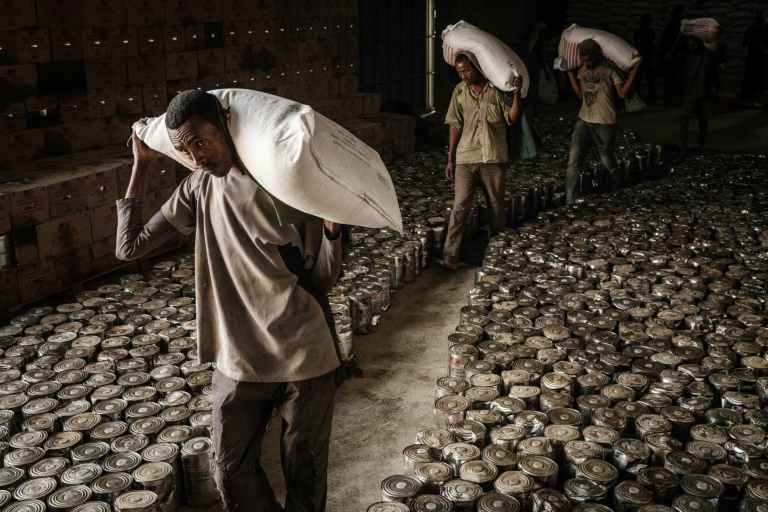
A new aid convoy of 47 trucks and three fuel tankers was on its way to Ethiopia’s war-torn Tigray region, the UN’s World Food Programme said Thursday, following a conditional humanitarian truce between the government and Tigrayan rebels.

The 17-month war between government forces and the Tigray People’s Liberation Front (TPLF) has created a humanitarian crisis in northern Ethiopia and sparked famine fears in Tigray, which has been under a de facto blockade for many months according to the UN.

On April 1, the WFP said 13 trucks loaded with food supplies had reached the Tigrayan capital Mekele, the first aid convoy to reach the stricken region by road since mid-December.

It was followed by another convoy a day later by the International Committee of the Red Cross (ICRC), carrying medical aid, food and water treatment supplies.

On Thursday, the WFP said on Twitter that its second convoy was on its way to Mekele.

“47 trucks with food, nutrition & other life-saving supplies Plus 3 fuel tankers – fundamental to deliver these items to communities in #Tigray,” it said.

The convoy had encountered a “smooth journey so far with support from all authorities,” it added, as the truce between Prime Minister Abiy Ahmed’s government and the TPLF continues to hold, allowing aid to reach the battered region.

A second convoy from the ICRC also arrived in Mekele on Thursday, carrying food and medical supplies, along with household items, the organisation said on Twitter.

“The convoy also carried essential equipment for the orthopedic rehabilitation centre,” it said.

The war has driven hundreds of thousands of people to the brink of famine, displaced more than two million and left more than nine million in need of food aid, according to the UN.

Nearly 40 percent of Tigray’s six million inhabitants face “an extreme lack of food”, the UN said in January, with fuel shortages forcing aid workers to deliver medicines and other crucial supplies sometimes by foot.

Both the warring sides have issued demands in connection with the truce that was announced last month.

The government has called on the rebels to “desist from all acts of further aggression and withdraw from areas they have occupied” in the neighbouring regions of Afar and Amhara.

The rebels have in turn urged the Ethiopian authorities “to go beyond empty promises and take concrete steps to facilitate unfettered humanitarian access” to Tigray.

The conflict erupted in November 2020 when Nobel Peace laureate Abiy sent troops into Tigray to topple the TPLF, the region’s former ruling party, saying the move came in response to rebel attacks on army camps. 

Close Bitnami banner
Bitnami