World

Damaged roads and bridges hamper aid for S. Africa flood victims

Victims of South Africa’s deadliest storm on record scrambled to get help on Thursday as relief teams struggled to cross bridges and roads wrecked by floods and landslip.

At least 306 people died when the heaviest rainfall in six decades swept away homes and destroyed infrastructure in the city of Durban and KwaZulu-Natal province.

The government has declared the region a state of disaster to unlock relief funds. 

But with key roads and bridges washed away, relief workers battled to reach the hardest-hit areas, which have been without water or electricity for up to four days.

President Cyril Ramaphosa, in a visit to the region on Wednesday, described the floods as a “calamity… a catastrophe of enormous proportions.”

Thousands of people have been made homeless and around 250 schools damaged.

Authorities said they had established 17 shelters to accommodate over 2,100 displaced people.

Sporadic protests erupted in some areas over slow restoration of services and lack of relief.

Durban city government appealed for patience.

“We understand the frustration and anxiety of our residents,” it said in a statement.

“We are working as quickly as we can. Our teams are hard at work to resume services. However, it may take a while to fully restore all services because of the extent of the damage to access roads.”

The government of KwaZulu-Natal has also put out a public call for aid, urging people to donate non-perishable food, bottled water, clothes and blankets.

– Appeal for shelter –

But many survivors said they had been left to fend for themselves.

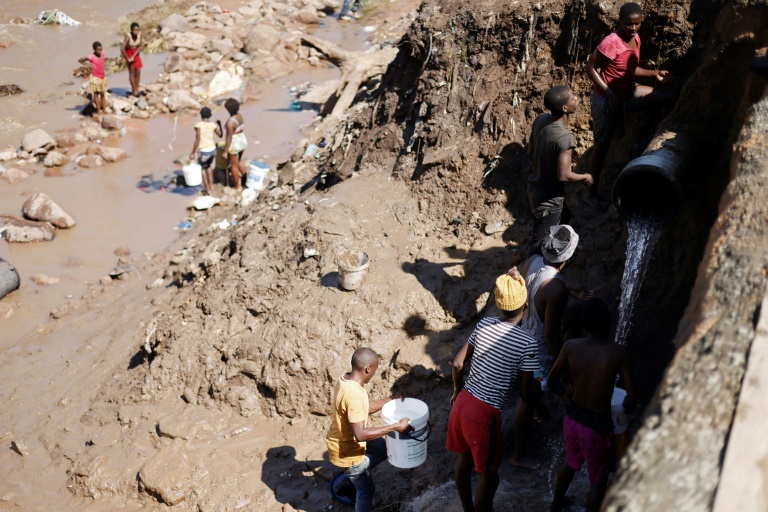
In Amaoti, a township north of Durban, residents balanced precariously on the embarkment of a collapsed road, trying to fetch clean water from a broken pipe underneath.

“We don’t have water, there is no electricity… people from (everywhere) are coming to get water,” Thabani Mgoni, 38, told AFP in the midst of the crowd.

Philisiwe Mfeka, a 78-year-old grandmother, said her water supply stopped on Tuesday. 

Even water from the fractured pipe was being rationed to one bucket per person, with children, some as young as 10, coming to fetch one bucket each.

Volunteers said they were desperate to find food, clothes and other essentials.

In a pitch-dark hall in Durban’s Glebelands dingy apartment block, volunteers used the torches from their cellphones to register scores of displaced people overnight.

“We are just helping the people because we care,” said Mabheki Sokhela, 51, who helped organise temporary shelter at a community hall.

He urged fellow residents to provide a roof for the victims. “There is not enough space,” he said.

Many victims slept on chairs or on cardboard on the floor.

A mortuary worker at the Durban township of Phoenix said more than 100 corpses had been brought in.

“Last night there was queue of people bringing bodies. It’s too much,” the worker said, asking not to be named as he did not have permission to speak to the media.

Burials have been banned until the wet ground stabilises.

 – Brutal storm –

The storm was so severe that crocodile breeding ponds overflowed as perimeter fences fell down, allowing 14 reptiles to escape. They were recaptured a day later.

Weather experts say apocalyptic levels of rain were dumped over  several days.

Some areas received more than 450 millimetres (18 inches) in 48 hours, amounting to nearly half of Durban’s annual rainfall of 1,009 mm, the national weather service said.

The storm caught South African authorities unprepared.

The South African Weather Service has issued an Easter weekend warning of thunderstorms and localised flooding in KwaZulu-Natal and neighbouring Free State and Eastern Cape provinces.

The country is still struggling to recover from the two-year-old Covid pandemic and deadly riots last year that killed more than 350 people.
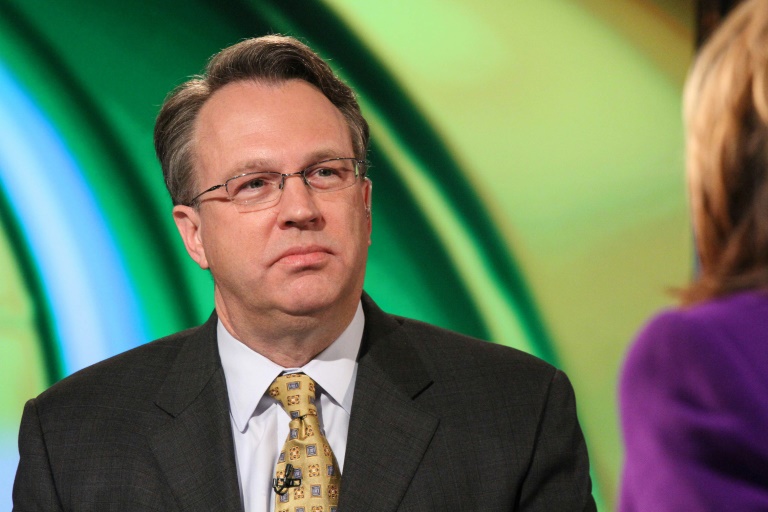
Fed can achieve economic 'soft landing,' but it won't be easy: Williams

The US central bank can bring inflation down by raising interest rates without jeopardizing growth in the world’s largest economy, although it will be a challenge, a top Federal Reserve official said Thursday.

“I think we can achieve a soft landing,” New York Fed President John Williams said in an interview with Bloomberg.

A wave of price increases caused by high demand and supply chain challenges was made worse by the Russian invasion of Ukraine, which hit food and fuel prices, sending US inflation to its highest level in four decades.

But Williams said Fed interest rate hikes are “really well suited” for addressing the imbalances between supply and demand in the US economy without causing a downturn.

The Fed can “just take the froth… out of the economy” to put it on sustainable footing.

But he acknowledged that “it’s not going to be easy,” given the “unique set of circumstances” facing the economy due to the ongoing challenges of the pandemic and the Russian invasion of Ukraine.

Williams serves as vice chair of the Fed’s policy-setting committee, which last month raised the benchmark lending rate for the first time since cutting it to zero at the start of the pandemic in early 2020.

Since then, a steady stream of central bankers have signaled plans for aggressive rate hikes to try to douse the inflation fires, with multiple half-point rate hikes likely starting at the May 3-4 meeting. The Fed also intends to reduce its massive bond holdings, which also should have the effect of tightening policy.

The actions already have had an impact on financial conditions, Williams said, which is “positioning policy well to get the supply and demand back into balance and set us up for bringing inflation down over the next couple of years.”

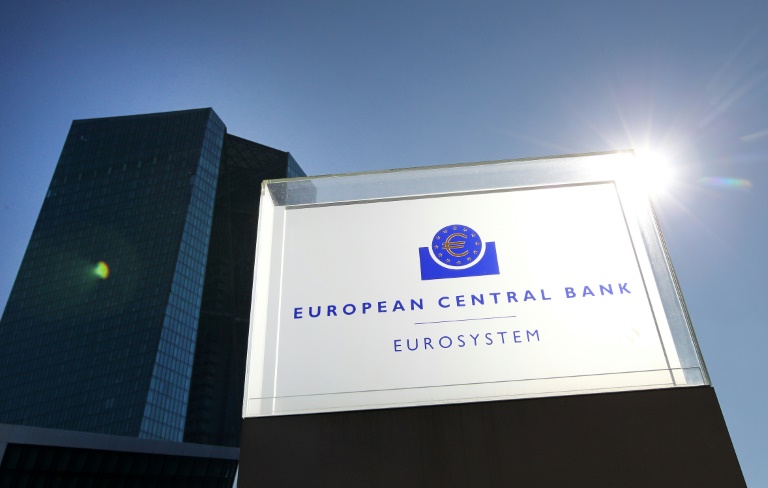
ECB sticks to the plan as inflation, Ukraine shake eurozone

The European Central Bank on Thursday stood still in the face of record inflation, keeping its stimulus plans and rates unchanged, as the war in Ukraine cast a pall over the eurozone economy.

Meeting for the second time since the outbreak of the conflict, the bank’s 25-member governing council stuck to a plan that “should” see its bond-buying scheme come to an end in the third quarter, it said. 

An interest rate hike would follow “some time” after the stimulus programme comes to an end — a delay the ECB’s President Christine Lagarde stressed could be “between a week and several months” — while any increases “will be gradual”.

The decision leaves the ECB further out of step with many of its peers. 

Central banks such as the Bank of England, US Federal Reserve and the Bank of Canada have already triggered their first interest rate rises in response to soaring inflation.

Calls for the ECB to follow suit as soon as possible from within the governing council have grown stronger as price rises in the eurozone have taken off. 

Year-on-year inflation hit 7.5 percent in March, an all-time high for the currency bloc and well above the bank’s own two-percent target.

The surge owes a great deal to the take off in prices for energy, commodities and food as a result of Russia’s invasion of Ukraine. 

At the same time, high energy costs, added disruptions to supply chains and weaker confidence were “severely affecting” the eurozone economy, Lagarde said in a press conference.

The former French finance minister is still testing positive for Covid and had to dial into the press conference via video link.

– ‘Europe is different’ –

The outbreak of the war and the unexpected bound in prices dealt a blow to the ECB’s best-laid plans. 

Lagarde conceded that the bank’s forecasts had been “wrong in the past”, as calls increased for the banks to get out ahead of the inflation wave by raising interest rates.

Minutes from the last ECB meeting in March revealed that many members of the governing council wanted “immediate further steps”.

Central bankers use rate rises as a tool to try and tame inflation, but pulling the trigger too soon risks hurting economic growth.

Any hike would be the ECB’s first in over a decade and would lift rates from their current historic low levels.

The Frankfurt-based institution even set a negative deposit rate of minus 0.5 percent, meaning banks pay to park excess cash at the ECB.

The ECB’s straightforward reiteration of its stimulus planned showed a “somewhat strengthened” commitment to end its bond-buying scheme in the third quarter, said Carsten Brzeski, head of macro at ING bank.

But the status quo stance showed that “Europe is different and the ECB is different” to other countries and central banks, Brzeski said.

The ECB’s gradual plan would see it put an “end to the era of negative interest rates before the end of the year”, he predicted.

– Gas boycott –

Comparing the eurozone with the United States and the policies of the Fed was like “apples and oranges”, Lagarde said.

Just as the risks from the pandemic “have declined”, the European economy will “be more exposed and will suffer more consequences” from the war in Ukraine, she said.

The impact “will depend on how the conflict evolves, on the effect of current sanctions and on possible further measures,” Lagarde said.

Looming over the outlook was the possibility of stop to supplies of Russian gas, which many eurozone countries rely on heavily on the fuel to match their energy needs.

“An abrupt boycott would have a significant impact,” Lagarde said.

While the ECB’s bond-buying stimulus is being phased out, the advent of a fresh crisis has some speculating about the possibility of the bank designing a new tool to contain the impact of the war.

Questioned on the subject, Lagarde simply said the ECB would stay flexible and act “promptly” if new risks emerged and some countries found it harder to finance their response.

War in Ukraine: Latest developments

Here are the latest developments in the war in Ukraine:

– Russian flagship ‘seriously damaged’ –

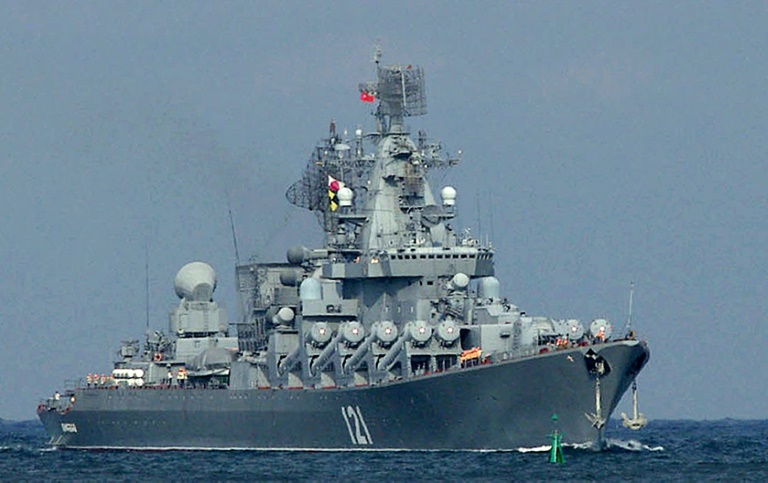
The Russian navy’s Black Sea flagship is “seriously damaged” by an ammunition explosion, state media says. A Ukrainian government official claims the vessel was hit by the country’s missiles.

The Russian defence ministry says it remains afloat.

The “Moskva” gained notoriety early in the war when it called on Ukrainian border troops defending the strategic Snake Island to surrender, only to be defiantly refused.

– Evacuations resume –

Ukraine says it is reopening humanitarian corridors through nine routes in Ukraine’s east and south, to facilitate the evacuation of civilians from war-scarred regions after a day-long pause that Kyiv attributed to Russian violations.

– Ukraine accused –

The governor of Russia’s southern Bryansk region accuses the Ukrainian army of shelling a Russian town about 10 kilometres (six miles) from their joint border, injuring civilians.

The Russian military threatens to strike Ukraine’s command centres in Kyiv as “we are seeing Ukrainian troops’ attempts to carry out sabotage and strike Russian territory”, Moscow’s defence ministry says.

– Genocide debate –

Leaders on either side of the Atlantic diverge on whether to label Russia’s actions in Ukraine as “genocide”.

Canadian Prime Minister Justin Trudeau says US President Joe Biden, who has accused Russian President Vladimir Putin of genocide, was “right” in his choice of words.

But French President Emmanuel Macron, who is campaigning for re-election, said such “verbal escalations” were unhelpful, and German Chancellor Olaf Scholz steers clear of using the term. 

– $800mn US aid package –

The United States unveils a major new package of aid to Ukraine, including equipment such as helicopters, howitzers and armoured personnel carriers.

The package includes equipment Washington had previously refused to provide to Kyiv for fear of escalating the conflict with nuclear-armed Russia.

– Kharkiv offensive continues –

Russia’s offensive on Ukraine’s second city of Kharkiv has claimed a further four lives, governor Oleg Synegubov says. The city near the Russian border has been on the eastern frontline since the start of the war and suffered massive destruction.

– Ukraine a ‘crime scene’ –

The International Criminal Court’s chief prosecutor calls Ukraine “a crime scene” on a visit to the town of Bucha west of Kyiv, one of several towns where Russia is accused of massacring civilians.

The ICC investigates allegations of war crimes, crimes against humanity, genocide and aggression.

– Le Pen for NATO-Moscow rapprochement –

French far-right leader Marine Le Pen says she will back closer ties between NATO and Russia and pull Paris out of the alliance’s military command if elected president in an April 24 runoff with Emmanuel Macron.

Following accusations she is too close to President Vladimir Putin, Le Pen said a “strategic rapprochement” is required and questions need to be asked about the role of the alliance after the end of the Warsaw Pact.

– US warns China –

US Treasury Secretary Janet Yellen warns that China’s stance towards Russia and its invasion of Ukraine could affect countries’ willingness to collaborate and trade with Beijing.

– Prisoner swap –

Ukraine says that 30 prisoners of war are being returned to the country as part of the most recent exchange of captives with Russia, following an order from President Volodymyr Zelensky.

It says in a statement on social media the swap involves five officers and 17 servicemen, along with eight civilians, including one woman.

– 4.7 million refugees –

More than 4.7 million Ukrainians have fled their country in the 50 days since Russia invaded, the United Nations says.

Bankrupt Sri Lanka looks to expand airline fleet

Cash-strapped Sri Lanka’s loss-making national carrier revealed plans Thursday to lease up to 21 aircraft, just two days after the government announced a default on its $51 billion foreign debt.

The island nation is in the grip of its most painful economic downturn since independence in 1948, with severe shortages of essential goods and regular blackouts causing widespread misery. 

Huge protests have called for the resignation of the government, which has begged Sri Lankans abroad to send cash home to help pay for essential imports.

Despite the crisis, state-owned Sri Lankan Airlines has unveiled plans to expand its fleet from 24 to 35 planes in the next three years and replace some of its ageing jets.

“Sri Lankan Airlines has issued four requests for proposal to lease up to 21 aircraft to support its long-term business strategy,” it said in a brief statement.

The announcement came after the government suspended repayment of all its foreign borrowings, ahead of negotiations for a debt restructure with the International Monetary Fund next week.

The national carrier did not say how it planned to finance the leases, with its balance sheet showing a $1.7 billion debt and a carried forward loss of $1.56 billion in March 2020. 

It also came the same day international ratings agency Fitch downgraded $175 million in bonds issued by the airline from C to CC, suggesting the carrier was “near default”.

Fitch said the airline’s new rating, on debt due in June 2024, was in line with Sri Lanka’s default announcement.

The IMF has repeatedly urged Sri Lanka to privatise the airline, saying it was a white elephant the country cannot afford.

The airline was profitable before the government cancelled a management agreement with Emirates of Dubai in 2008, following a personal dispute with current Prime Minister Mahinda Rajapaksa.

The carrier had refused to bump fare-paying passengers and give their seats to members of Rajapaksa’s family, who were returning from a holiday in London.

Rajapaksa removed the Emirates-appointed chief executive of Sri Lankan Airlines and made his brother-in-law Nishantha Wickremasinghe head of the company.

An earlier plan to lease eight Airbus A350 jets during Rajapaksa’s tenure is subject to an ongoing criminal investigation. 

The airline’s then-chief executive Kapila Chandrasena and his wife were arrested two years ago after an international investigation found they received at least $2 million in kickbacks over the order. 

US senators defy China threats with Taiwan visit

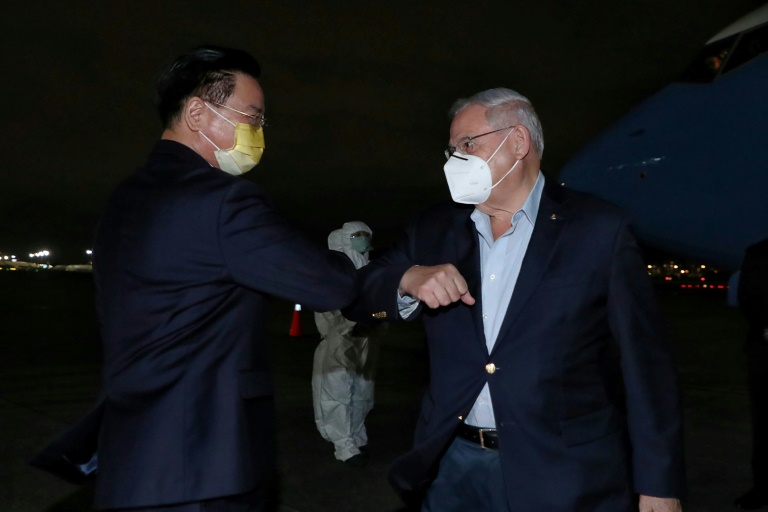
A delegation of United States lawmakers led by vocal China hawk Senator Lindsey Graham arrived in Taiwan on Thursday for a two-day trip as Beijing threatened “strong measures” in response. 

The group, which also includes Senate Foreign Relations Committee chairman Bob Menendez, is making the latest in a string of visits by foreign politicians to the island in defiance of pressure from Beijing. 

A US government plane touched down in Taipei on Thursday evening for what Washington’s de facto embassy said were talks on “US-Taiwan relations, regional security, and other significant issues of mutual interest”.

Taiwan’s foreign ministry said the group would meet President Tsai Ing-wen, foreign minister Joseph Wu and defence officials.

China’s Communist Party has never controlled self-ruled Taiwan but it views the island as part of its territory and has vowed to one day seize it, by force if necessary.

Those threats have become more bellicose under President Xi Jinping, making the security of Taiwan a rare subject of bipartisan support in Washington.

Menendez was among a group of lawmakers who introduced a bill in February to rename Taipei’s de facto embassy in Washington the “Taiwan Representative Office”. 

That would be a diplomatic departure from the tradition of using the word “Taipei”. 

Beijing baulks at use of the word Taiwan on the international stage and opposes any country having official exchanges with the democratic island.

Lithuania’s recent decision to allow Taiwan to use its own name for a representative office triggered Beijing to launch a trade war against Vilnius that has angered the European Union. 

China’s foreign ministry warned the US senators against “going down on the wrong and dangerous path” ahead of their arrival. 

“China will continue to take strong measures to resolutely safeguard its national sovereignty and territorial integrity,” spokesman Zhao Lijian told reporters.

A Swedish parliamentary delegation is also currently in Taiwan.

“The purpose of the visit is very clear,” Swedish lawmaker Charlie Weimers told reporters on Thursday.   

“It is to send a signal of support from Europe to Taiwan. And to make sure that signal is being heard all across the Taiwan Strait.”

Former US secretary of state Mike Pompeo infuriated Beijing when he said the United States should diplomatically recognise Taiwan as “a free and sovereign country” during a visit last month. 

China’s sabre-rattling has spurred greater diplomatic support for Taipei and prompted visits from Western politicians shaken by Beijing’s more muscular tone. 

Russia’s recent invasion of Ukraine has also heightened fears that China might one day follow through on threats to annex its smaller neighbour.

Like most nations, the United States diplomatically recognises Beijing but also maintains de facto diplomatic ties with Taipei and is bound by an Act of Congress to ensure Taiwan can maintain its defence.

US arms sales and diplomatic visits to Taiwan have ticked up under both former president Donald Trump and his successor Joe Biden.

UK to send asylum-seekers to Rwanda

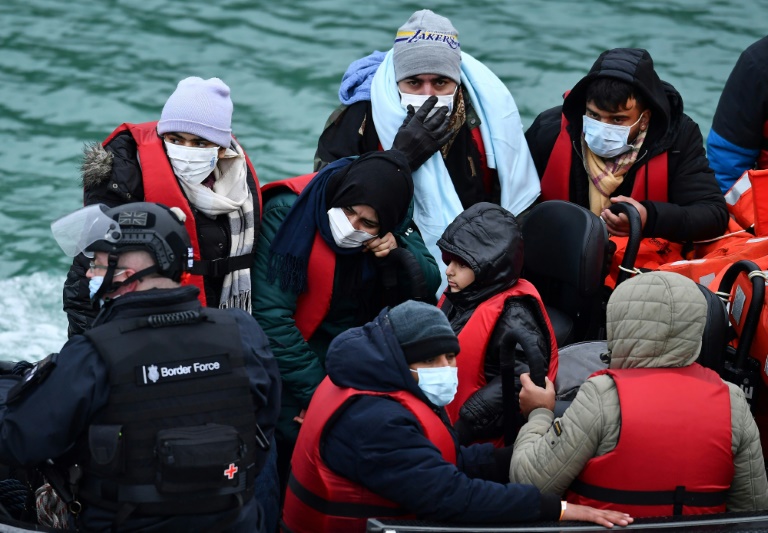
Britain will send migrants and asylum-seekers who cross the Channel thousands of miles away to Rwanda under a controversial deal announced Thursday as the government tries to clamp down on record numbers of people making the perilous journey.

“From today… anyone entering the UK illegally as well as those who have arrived illegally since January 1 may now be relocated to Rwanda,” Prime Minister Boris Johnson said in a speech near Dover in southeastern England.

“Rwanda will have the capacity to resettle tens of thousands of people in the years ahead,” Johnson said.

He called the East African nation with a sketchy human rights record “one of the safest countries in the world, globally recognised for its record of welcoming and integrating migrants.” 

Johnson was elected partly on promises to curb illegal immigration but has instead seen record numbers making the risky Channel crossing.

He also announced that Britain’s border agency would hand responsibility for patrolling the Channel for migrant boats to the navy.

More than 28,000 people arrived in Britain having crossed the Channel from France in small boats in 2021.

Around 90 percent of those were male and three-quarters were men aged between 18 and 39.

The Rwanda plan swiftly drew the ire of opposition politicians who accused Johnson of trying to distract from his being fined for breaking coronavirus lockdown rules, while rights groups slammed the project as “inhumane”.

Ghana and Rwanda had previously been mentioned as possible locations for the UK to outsource the processing of migrants, but Ghana in January denied involvement.

Instead, Kigali on Thursday announced that it had signed a multi-million-dollar deal to do the job, during a visit by British Home Secretary Priti Patel.

“Rwanda welcomes this partnership with the United Kingdom to host asylum seekers and migrants, and offer them legal pathways to residence” in the East African nation, Foreign Minister Vincent Biruta said in a statement.

The deal with Rwanda will be funded by the UK to the tune of up to 120 million pounds ($157 million, 144 million euros), with migrants “integrated into communities across the country,” it said.

In Dover, where many migrants arrive after crossing the Channel, some residents welcomed the announcement.

“They should be sent back, because it is not our responsibility,” said retiree Andy, 68. 

“Our responsibility is to look after our own people, which we aren’t doing,” the heavily tattooed army veteran told AFP.

“I understand people escaping from repression, I do. But if they’re coming over here for one thing and that is money, to me that is wrong.”

– Backlash –

Refugee Action’s Tim Naor Hilton accused the government of “offshoring its responsibilities onto Europe’s former colonies instead of doing our fair share to help some of the most vulnerable people on the planet”.

“This grubby cash-for-people plan would be a cowardly, barbaric and inhumane way to treat people fleeing persecution and war,” he said.

Scotland’s Health Secretary Humza Yousaf said the plan showed that the Conservative government was “institutionally racist”.

The government “rightly provides asylum and refuge to Ukrainians fleeing war, but wants to send others seeking asylum thousands of miles away to Rwanda for ‘processing’,” Yousaf tweeted.

Australia has a policy of sending asylum seekers arriving by boat to detention camps on the Pacific island nation of Nauru, with Canberra vowing no asylum seeker arriving by boat would ever be allowed to permanently settle in Australia.

Since 2015 the UK has “offered a place to over 185,000 men, women and children seeking refuge (…) more than any other similar resettlement schemes in Europe,” Johnson said.

According to the UN refugee agency, Germany received the highest number of asylum applicants (127,730) in Europe in 2021, followed by France (96,510), while the UK received the fourth largest number of applicants (44,190).

Turkey again refuses to raise rates to fight record inflation

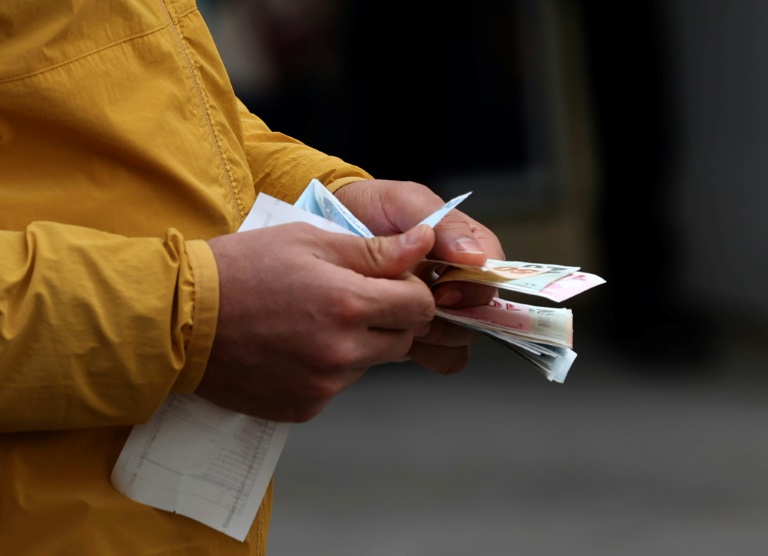
Turkey’s central bank on Thursday brushed aside an inflation reading that has soared past 60 percent and kept its benchmark interest rate steady for the fourth month in a row.

The widely-anticipated decision reflects President Recep Tayyip Erdogan’s unorthodox conviction that high interest rates cause inflation rather than slow it down.

But it means that Turkey will continue to rely on expensive economic support measures that could further deplete state coffers and inhibit foreign investors from returning to the once-promising emerging market.

“It would probably take the emergence of severe strains in the banking sector to bring an interest rate hike on to the agenda,” analyst Jason Tuvey of Capital Economics remarked.

The central bank said its decision to hold the main interest rate at 14 percent was driven by expectations of the “disinflation process” starting soon.

Russia’s invasion of Ukraine and the aftereffects of the coronavirus pandemic have sparked energy price spikes and production bottlenecks that pushed US and European cost of living increases to their highest levels in more than 20 years.

But Turkey’s annual inflation rate of 61.1 percent — the highest since Erdogan’s ruling party stormed to power in 2002 — is largely disconnected from most global factors.

Turkey entered an economic tailspin when Erdogan put pressure on the nominally independent central bank to start slashing interest rates last year.

The powerful Turkish leader believes relatively cheap borrowing costs will propel the economy to sustainable growth that supports long-term employment and helps his re-election chances next year.

But the policy pushed people’s return on bank deposits far below the rate at which the lira was losing value against the dollar.

That forced Turks to start converting their liras into dollars at an even greater pace.

The Turkish currency lost 44 percent of its value against the dollar last year and another nine percent since the start of January.

Erdogan’s government has responded by using state banks to buy up liras in a bid to cut the currency’s losses.

The government has also forced exporters to sell a quarter of their foreign currency earnings to the central bank to help buffer its reserves.

Turkish media reported this week that this rate could soon be raised to at least 40 percent.

Erdogan has also shifted Turkey’s geopolitical alignment and tried to reform broken alliances with cash-rich Gulf states.

“Erdogan strategy is I think clear — try and make friends with everyone internationally so as to secure bilateral external financing to sustain the current FX/rates mix until elections by June 2023,” analyst Timothy Ash of BlueBay Asset Management said.

Elon Musk launches hostile takeover bid for Twitter

Tesla chief Elon Musk has launched a hostile takeover bid for Twitter, insisting it was a “best and final offer” and that he was the only person capable of unlocking the full potential of the platform.

Musk offered $54.20 a share, which values the social media firm at $43.4 billion, in a filing dated Wednesday April 13 with the Securities and Exchange Commission.

Twitter’s board said it would carefully review what it termed Musk’s “unsolicited, non-binding” offer and decide on a course of action that was “in the best interest of the Company and all Twitter stockholders.”

Musk’s latest move toward Twitter comes just days after he turned down a seat on the board following his acquisition of a 9.2 percent stake in the microblogging platform.

“I invested in Twitter as I believe in its potential to be the platform for free speech around the globe, and I believe free speech is a societal imperative for a functioning democracy,” Musk said in his filing.

“However, since making my investment I now realize the company will neither thrive nor serve this societal imperative in its current form,” he said.

“Twitter needs to be transformed as a private company. As a result, I am offering to buy 100% of Twitter for $54.20 per share in cash, a 54% premium over the day before I began investing in Twitter.”

– ‘Popcorn time’ –

Musk, Twitter’s biggest shareholder, said his “offer is my best and final offer” and he would reconsider his position as a shareholder if it was rejected.

“Twitter has extraordinary potential. I will unlock it,” he said.

Wedbush analysts said the Twitter board would likely be forced to accept the bid or seek another buyer. 

“It’s get out the popcorn time as we expect many twists and turns in the weeks ahead as Twitter and Musk walk down this marriage path,” the analysis said, with a host of questions likely to swirl around issues of financing, regulatory aspects and balancing Musk’s time between his many companies.

Currently the world’s richest man, and with more than 80 million followers on the microblogging platform, Musk last week disclosed a purchase of 73.5 million shares — or 9.2 percent — of Twitter’s common stock. His announcement sent Twitter shares soaring more than 25 percent.

He was offered a seat on the board but turned it down at the weekend.

Musk’s move comes after he tweeted Saturday asking whether the social media network was “dying” and to call out users such as singer Justin Bieber, who are highly followed but rarely post.

“Most of these ‘top’ accounts tweet rarely and post very little content,” the Tesla boss wrote, captioning a list of the 10 profiles with the most followers — which includes himself at number eight, with 81 million followers.

In other weekend tweets, Musk posted joke polls on whether to drop the “w” from Twitter’s name and on converting its San Francisco headquarters to a homeless shelter “since no one shows up anyway.”

He also suggested removing ads, Twitter’s main source of revenue.

The billionaire tech entrepreneur is a frequent Twitter user, regularly mixing in inflammatory and controversial statements about issues or other public figures with remarks that are whimsical or business-focused. 

He has also sparred repeatedly with federal securities regulators, who cracked down on his social media use after a purported effort to take Tesla private in 2018 fell apart.

Elon Musk launches hostile takeover bid for Twitter

Tesla chief Elon Musk has launched a hostile takeover bid for Twitter, insisting it was a “best and final offer” and that he was the only person capable of unlocking the full potential of the platform.

Musk offered $54.20 a share, which values the social media firm at $43.4 billion, in a filing dated Wednesday April 13 with the Securities and Exchange Commission.

Twitter’s board said it would carefully review what it termed Musk’s “unsolicited, non-binding” offer and decide on a course of action that was “in the best interest of the Company and all Twitter stockholders.”

Musk’s latest move toward Twitter comes just days after he turned down a seat on the board following his acquisition of a 9.2 percent stake in the microblogging platform.

“I invested in Twitter as I believe in its potential to be the platform for free speech around the globe, and I believe free speech is a societal imperative for a functioning democracy,” Musk said in his filing.

“However, since making my investment I now realize the company will neither thrive nor serve this societal imperative in its current form,” he said.

“Twitter needs to be transformed as a private company. As a result, I am offering to buy 100% of Twitter for $54.20 per share in cash, a 54% premium over the day before I began investing in Twitter.”

– ‘Popcorn time’ –

Musk, Twitter’s biggest shareholder, said his “offer is my best and final offer” and he would reconsider his position as a shareholder if it was rejected.

“Twitter has extraordinary potential. I will unlock it,” he said.

Wedbush analysts said the Twitter board would likely be forced to accept the bid or seek another buyer. 

“It’s get out the popcorn time as we expect many twists and turns in the weeks ahead as Twitter and Musk walk down this marriage path,” the analysis said, with a host of questions likely to swirl around issues of financing, regulatory aspects and balancing Musk’s time between his many companies.

Currently the world’s richest man, and with more than 80 million followers on the microblogging platform, Musk last week disclosed a purchase of 73.5 million shares — or 9.2 percent — of Twitter’s common stock. His announcement sent Twitter shares soaring more than 25 percent.

He was offered a seat on the board but turned it down at the weekend.

Musk’s move comes after he tweeted Saturday asking whether the social media network was “dying” and to call out users such as singer Justin Bieber, who are highly followed but rarely post.

“Most of these ‘top’ accounts tweet rarely and post very little content,” the Tesla boss wrote, captioning a list of the 10 profiles with the most followers — which includes himself at number eight, with 81 million followers.

In other weekend tweets, Musk posted joke polls on whether to drop the “w” from Twitter’s name and on converting its San Francisco headquarters to a homeless shelter “since no one shows up anyway.”

He also suggested removing ads, Twitter’s main source of revenue.

The billionaire tech entrepreneur is a frequent Twitter user, regularly mixing in inflammatory and controversial statements about issues or other public figures with remarks that are whimsical or business-focused. 

He has also sparred repeatedly with federal securities regulators, who cracked down on his social media use after a purported effort to take Tesla private in 2018 fell apart.

Close Bitnami banner
Bitnami