World

Crane ship nearly topples after Norway lifting accident

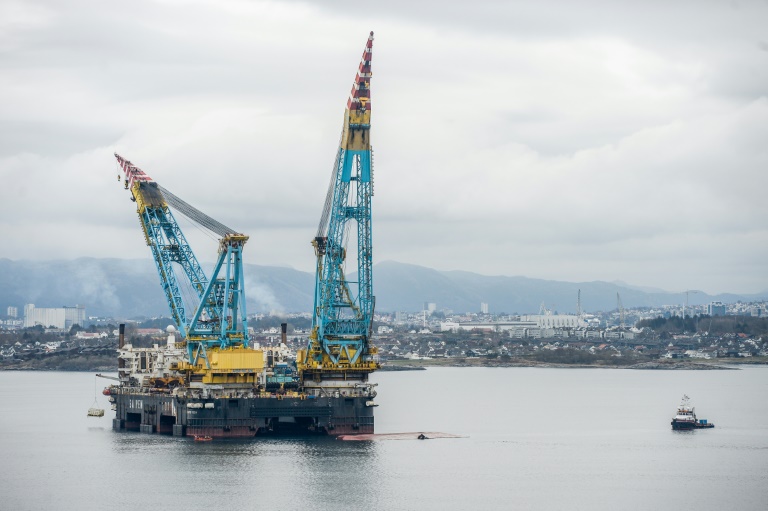
A huge crane ship was left listing outside the harbour of Stavanger in southwestern Norway on Thursday after a steel wire snapped during a loading operation, police said.

The Saipem 7000, operated by Italian oil services company Saipem, ended up tilting sharply, according to witness photos released by the Norwegian media, but no injuries were reported among the 275-strong crew.

The huge specialised vessel, which police say suffered significant material damage, was brought upright according to live footage from public broadcaster NRK.

The accident occurred during a lift at around 10 am (0800 GMT) in a fjord adjacent to Stavanger, a hub of Norway’s offshore oil industry, police said.

“A steel wire snapped during a loading operation,” Brit Randulff, police superintendent, told AFP.

“Witnesses heard a loud bang, but there was no indication of an explosion,” she added when asked about initial media reports mentioning an explosion.

“No people were hurt, but there was damage to the ship and there is a barge that tipped over and is floating upside down,” Randulff said.

Built in Italy in the 1980s, the specialised vessel, one of the largest in the world, can be partially submerged to lay pipelines and lines for the oil industry.

New PM Sharif orders 'Pakistan speed' to fix stagnant economy

Pakistan’s new Prime Minister Shehbaz Sharif said Thursday the country’s economy had stagnated under his predecessor Imran Khan, setting the tone for possibly months of bitterness before an election that must be held by October next year.

Sharif, sworn in Monday after Khan was ousted by a no-confidence vote in parliament, is still finalising his cabinet but has called for “Pakistan speed” to hurry along development projects and fix the economy.

On Thursday the 70-year-old notorious workaholic visited a metro bus project in Rawalpindi and complained about the pace of infrastructure development.

“Almost all sectors of economy remained stagnant under IK,” he later tweeted, referring to his predecessor by his initials.

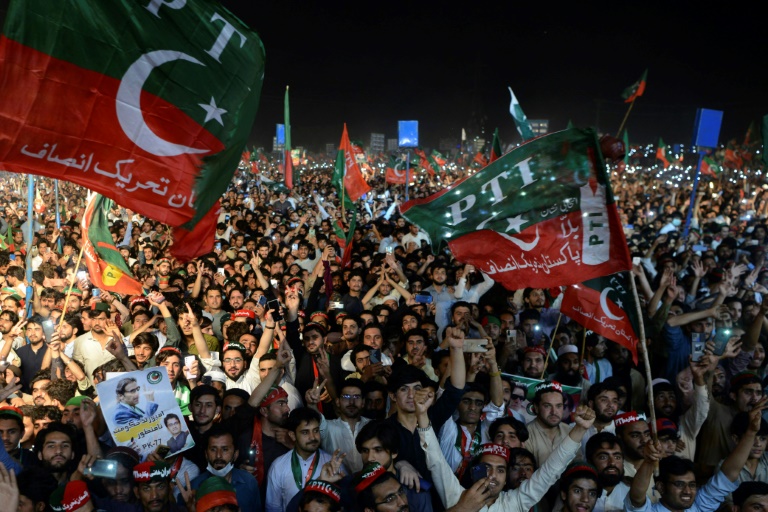
His early-morning visit came after Khan on Wednesday night held a huge rally in Peshawar.

Khan — along with most of his Pakistan Tehreek-e-Insaf (PTI) lawmakers — quit the national assembly after losing Sunday’s no-confidence vote, saying he would take his fight to the people to press for an early election.

On Wednesday, Khan said he would stage twice-weekly rallies across the country until a new poll date was set.

“Young people, get ready, I will take to the streets with you. I will go out in every city, and I will continue to go out until they are forced to hold election.”

Sharif, younger brother of three-time prime minister Nawaz Sharif, set out his stall on Tuesday by ordering the government to adopt a six-day work-week, instead of the previous five, and bringing forward office opening hours to 8 am from 10 am.

His “Pakistan speed” policy is an extension of a similar programme he introduced as chief minister of Punjab, the country’s most populous province, where he was credited with launching a series of high-profile — and vote-catching — projects.

– Broken economy –

The government would take unspecified “emergency measures” to stabilise the economy, Sharif’s office said later, focusing on steps to improve the condition of ordinary people.

Sharif inherits crippling national debt, galloping inflation and a feeble rupee — although analysts say Khan also took over a broken economy in 2018 that was further battered by the Covid-19 pandemic.

Khan’s ouster heralds the return of two dynastic parties that have dominated Pakistan politics for decades.

Sharif’s centrist Pakistan Muslim League-N (PML-N) joined forces with the centre-left Pakistan Peoples Party (PPP) — fiefdom of the Bhutto family — to press the no-confidence vote.

Khan tried everything to stay in power after losing his majority in parliament through defections by his own lawmakers and a coalition partner — including dissolving the assembly and calling a fresh election.

But the Supreme Court deemed all his actions illegal and ordered them to reconvene and vote.

On Thursday Pakistan’s military insisted it played no role in the PM’s ousting, although the head of its public relations wing said Khan had consulted them on his options.

There have been four coups since Pakistan attained independence in 1947 and the country has spent more than three decades under army rule.

“All what happened in recent days was part of a political process,” Major-General Babar Iftikhar told a press conference, urging parties “not to drag the army into politics”.

Khan insists he has been the victim of a “regime change” conspiracy involving Washington and his opponents, and vowed to take his fight to the streets in the hope of forcing an early election.

On Wednesday night Khan told thousands of supporters that the new government was “imported”, saying Pakistan needed to forge an independent global path.

He has said Washington wanted him removed because he refused to take sides in the Russia-Ukraine conflict, and because of his close links to China.

Washington, Moscow and Beijing have all congratulated Sharif since he took over.

New PM Sharif orders 'Pakistan speed' to fix stagnant economy

Pakistan’s new Prime Minister Shehbaz Sharif said Thursday the country’s economy had stagnated under his predecessor Imran Khan, setting the tone for possibly months of bitterness before an election that must be held by October next year.

Sharif, sworn in Monday after Khan was ousted by a no-confidence vote in parliament, is still finalising his cabinet but has called for “Pakistan speed” to hurry along development projects and fix the economy.

On Thursday the 70-year-old notorious workaholic visited a metro bus project in Rawalpindi and complained about the pace of infrastructure development.

“Almost all sectors of economy remained stagnant under IK,” he later tweeted, referring to his predecessor by his initials.

His early-morning visit came after Khan on Wednesday night held a huge rally in Peshawar.

Khan — along with most of his Pakistan Tehreek-e-Insaf (PTI) lawmakers — quit the national assembly after losing Sunday’s no-confidence vote, saying he would take his fight to the people to press for an early election.

On Wednesday, Khan said he would stage twice-weekly rallies across the country until a new poll date was set.

“Young people, get ready, I will take to the streets with you. I will go out in every city, and I will continue to go out until they are forced to hold election.”

Sharif, younger brother of three-time prime minister Nawaz Sharif, set out his stall on Tuesday by ordering the government to adopt a six-day work-week, instead of the previous five, and bringing forward office opening hours to 8 am from 10 am.

His “Pakistan speed” policy is an extension of a similar programme he introduced as chief minister of Punjab, the country’s most populous province, where he was credited with launching a series of high-profile — and vote-catching — projects.

– Broken economy –

The government would take unspecified “emergency measures” to stabilise the economy, Sharif’s office said later, focusing on steps to improve the condition of ordinary people.

Sharif inherits crippling national debt, galloping inflation and a feeble rupee — although analysts say Khan also took over a broken economy in 2018 that was further battered by the Covid-19 pandemic.

Khan’s ouster heralds the return of two dynastic parties that have dominated Pakistan politics for decades.

Sharif’s centrist Pakistan Muslim League-N (PML-N) joined forces with the centre-left Pakistan Peoples Party (PPP) — fiefdom of the Bhutto family — to press the no-confidence vote.

Khan tried everything to stay in power after losing his majority in parliament through defections by his own lawmakers and a coalition partner — including dissolving the assembly and calling a fresh election.

But the Supreme Court deemed all his actions illegal and ordered them to reconvene and vote.

On Thursday Pakistan’s military insisted it played no role in the PM’s ousting, although the head of its public relations wing said Khan had consulted them on his options.

There have been four coups since Pakistan attained independence in 1947 and the country has spent more than three decades under army rule.

“All what happened in recent days was part of a political process,” Major-General Babar Iftikhar told a press conference, urging parties “not to drag the army into politics”.

Khan insists he has been the victim of a “regime change” conspiracy involving Washington and his opponents, and vowed to take his fight to the streets in the hope of forcing an early election.

On Wednesday night Khan told thousands of supporters that the new government was “imported”, saying Pakistan needed to forge an independent global path.

He has said Washington wanted him removed because he refused to take sides in the Russia-Ukraine conflict, and because of his close links to China.

Washington, Moscow and Beijing have all congratulated Sharif since he took over.

UK to send asylum-seekers to Rwanda

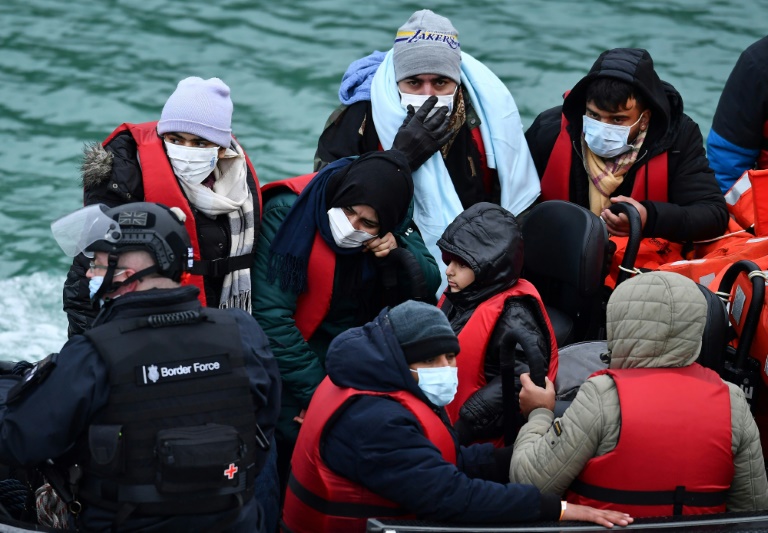
Britain will send migrants and asylum-seekers who cross the Channel thousands of miles away to Rwanda under a controversial deal announced Thursday as the government tries to clamp down on record numbers of people making the perilous journey.

“From today… anyone entering the UK illegally as well as those who have arrived illegally since January 1 may now be relocated to Rwanda,” Prime Minister Boris Johnson said in a speech near Dover in southeastern England.

“Rwanda will have the capacity to resettle tens of thousands of people in the years ahead,” Johnson said.

He called the East African nation with a sketchy human rights record “one of the safest countries in the world, globally recognised for its record of welcoming and integrating migrants.” 

Johnson was elected partly on promises to curb illegal immigration but has instead seen record numbers making the risky Channel crossing.

He also announced that Britain’s border agency would hand responsibility for patrolling the Channel for migrant boats to the navy.

“The Royal Navy will take over operational command from Border Force in the Channel with the aim that no boat makes it to the UK undetected,” Johnson said, announcing extra funds for boats, aircraft and surveillance equipment to help detain people-smugglers at sea.

“This will send a clear message to those piloting the boats. If you risk other people’s lives in the Channel, you risk spending your own life in prison,” he said.

More than 28,000 people arrived in Britain having crossed the Channel from France in small boats in 2021.

Around 90 percent of those were male and three-quarters were men aged between 18 and 39.

The Rwanda plan swiftly drew the ire of opposition politicians who accused Johnson of trying to distract from his being fined for breaking coronavirus lockdown rules, while rights groups slammed the project as “inhumane”.

Ghana and Rwanda had previously been mentioned as possible locations for the UK to outsource the processing of migrants, but Ghana in January denied involvement.

Instead, Kigali on Thursday announcing that it had signed a multi-million-dollar deal to do the job, during a visit by British Home Secretary Priti Patel.

“Rwanda welcomes this partnership with the United Kingdom to host asylum seekers and migrants, and offer them legal pathways to residence” in the East African nation, Foreign Minister Vincent Biruta said in a statement.

The deal with Rwanda will be funded by the UK to the tune of up to 120 million pounds ($157 million, 144 million euros), with migrants “integrated into communities across the country,” it said.

– Backlash –

Refugee Action’s Tim Naor Hilton accused the government of “offshoring its responsibilities onto Europe’s former colonies instead of doing our fair share to help some of the most vulnerable people on the planet”.

“This grubby cash-for-people plan would be a cowardly, barbaric and inhumane way to treat people fleeing persecution and war,” he said.

Detention Action said that those sent there would “likely face indefinite detention under a government notorious for violent persecution of dissent.”

“At the same time, the UK currently gives asylum to Rwandan refugees fleeing political persecution,” the advocacy group said in a statement.

Scotland’s Health Secretary Humza Yousaf said the plan showed that the Conservative government was “institutionally racist”.

The government “rightly provides asylum and refuge to Ukrainians fleeing war, but wants to send others seeking asylum thousands of miles away to Rwanda for ‘processing’,” Yousaf tweeted.

Australia has a policy of sending asylum seekers arriving by boat to detention camps on the Pacific island nation of Nauru, with Canberra vowing no asylum seeker arriving by boat would ever be allowed to permanently settle in Australia.

Since 2015 the UK has “offered a place to over 185,000 men, women and children seeking refuge (…) more than any other similar resettlement schemes in Europe,” Johnson said.

According to the UN refugee agency, Germany received the highest number of asylum applicants (127,730) in Europe in 2021, followed by France (96,510), while the UK received the fourth largest number of applicants (44,190).

Scramble for relief for South Africa's flood victims

Victims of South Africa’s deadliest storm on record scrambled to get help on Thursday as the death toll from floods and landslips that struck the country’s southeast surged beyond 300.

At least 306 people have been killed since the heaviest rainfall in six decades swept away homes and destroyed infrastructure in the city of Durban and KwaZulu-Natal province.

The government has declared a state of disaster in the region and pledged relief to those affected.

President Cyril Ramaphosa, in a visit to the area on Wednesday, described the floods as a “calamity… a catastrophe of enormous proportions.”

Thousands of people have been made homeless, roads and bridges swept away and at least 248 schools have been damaged.

A mortuary worker at the Durban township of Phoenix said more than 100 corpses had been brought to the morgue, which has a capacity of 500 bodies.

“Last night there was queue of people bringing bodies. It’s too much,” the worker said, asking not to be named as he did not have permission to speak to the media.

The government of KwaZulu-Natal has put out a public call for aid, urging people to donate non-perishable food, bottled water, clothes and blankets.

The authorities are assessing “all affected families” for their needs, it said in a statement.

– Appeal for shelter –

But many survivors said they had been left to fend for themselves.

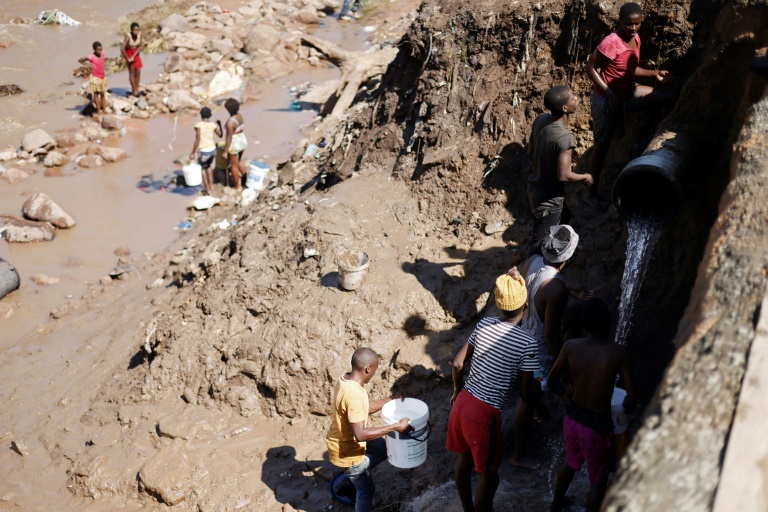
In Amaoti, a township north of Durban, residents balanced precariously on the edge of a broken road, trying to fetch clean water from a broken pipe underneath.

Volunteers said they were desperate to find food, clothes and other essentials.

In a pitch-dark hall in Durban’s Glebelands hostel district, volunteers used the torches from their cellphones to register scores of displaced people overnight.

“We are just helping the people because we care,” said Mabheki Sokhela, 51, who helped organise temporary shelter at a community hall.

“These are our brothers and sisters”

He urged fellow residents to provide a roof for the victims.

“We are trying to accommodate these people. There is not enough space,” he said.

Many victims slept on chairs or on cardboard on the floors of the hall.

– Brutal storm –

Weather experts say apocalyptic levels of rain were dumped over the region over several days, in South Africa’s biggest storm on record.

Some areas received more than 450 millimetres (18 inches) in 48 hours, amounting to nearly half of Durban’s annual rainfall of 1,009 mm, the national weather service said.

The storm caught South African authorities unprepared.

Africa’s most industrialised country has been largely shielded from tropical storms that form over the Indian Ocean and typically batter Mozambique when they make landfall.

The latest rains were caused by a weather system called a “cut-off low” that brought rain and cold weather to much of the country.

The South African Weather Service has issued an Easter weekend warning of thunderstorms and localised flooding in KwaZulu-Natal and neighbouring Free State and Eastern Cape provinces.

The country is still struggling to recover from the two-year-old Covid pandemic and deadly riots last year that killed more than 350 people.

Sri Lankans abandon holiday celebrations for protests

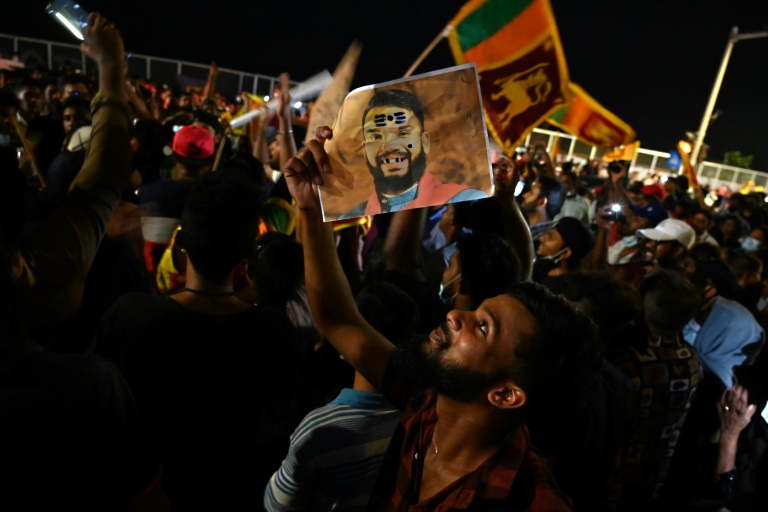
Life usually stops in Sri Lanka’s capital during April’s holiday period, but with an economic crisis derailing traditional home celebrations, Colombo’s city centre is instead teeming with frustrated crowds.

Sri Lankans ritually boil milk on the first day of the island nation’s New Year, but the commodity is one of many in short supply — along with the liquid gas and kerosene used to heat stoves in many Colombo households, and rice to serve family members.

Demonstrators this year brought the custom out of their homes and heated clay pots over makeshift bonfires outside the capital’s Presidential Secretariat, highlighting the plight of households now forced to cook with firewood.

The seafront park by the neoclassical office has since the weekend hosted a running protest vigil, demanding the government’s resignation over Sri Lanka’s worst financial crisis in memory. 

“The economic situation is unbearable for many people,” Hemakumara Perera, who joined the protest from a small town south of the capital, told AFP. 

Perera, his wife and two children camped at the site overnight to “show solidarity” with fellow Sri Lankans suffering through what is usually a joyous family celebration. 

“We support their call for the president and the prime minister to step down,” he said. 

Other New Year customs have been abandoned, such as the buying of new garments to symbolise fresh beginnings.

“We are not in a mood to wear new clothes and celebrate when we know how people are suffering,” said Lakshika Gunawardena, who joined the protest carrying her five-month-old baby. 

– ‘We can’t go’ –

Sri Lanka’s New Year is usually a private affair, with families sharing meals at home and giving sweets to neighbours as commercial activity comes to a standstill.

The crowds now thronging public spaces are an unusual sight for this time of year — as is the silence from the country’s besieged leaders. 

The government skipped its usual handout photographs of top politicians celebrating the occasion with their families. 

And there was no sign of a text message holiday greeting from Prime Minister Mahinda Rajapaksa, sent to every mobile phone in the country in previous years.

Both he and younger brother Gotabaya Rajapaksa — Sri Lanka’s president — have been accused of mismanaging the economy and blindly leading the country into its present predicament. 

The country is now in default of its $51 billion foreign debt ahead of negotiations for an International Monetary Fund bailout, and authorities have begged Sri Lankans abroad to send money home to help alleviate the crisis.

The president has not returned to his office since the protest began on the weekend, and a bolstered security presence is keeping watch over the encampment. 

But interactions between police and the crowd were jovial and even festive, with demonstrators chatting to officers and sharing traditional New Year food and sweets.

“The demonstrators won’t go until the government goes,” said a traffic constable standing watch outside the building while sheltering from the scorching morning sun. 

“And we can’t go until both leave,” he added.

Sri Lankans abandon holiday celebrations for protests

Life usually stops in Sri Lanka’s capital during April’s holiday period, but with an economic crisis derailing traditional home celebrations, Colombo’s city centre is instead teeming with frustrated crowds.

Sri Lankans ritually boil milk on the first day of the island nation’s New Year, but the commodity is one of many in short supply — along with the liquid gas and kerosene used to heat stoves in many Colombo households, and rice to serve family members.

Demonstrators this year brought the custom out of their homes and heated clay pots over makeshift bonfires outside the capital’s Presidential Secretariat, highlighting the plight of households now forced to cook with firewood.

The seafront park by the neoclassical office has since the weekend hosted a running protest vigil, demanding the government’s resignation over Sri Lanka’s worst financial crisis in memory. 

“The economic situation is unbearable for many people,” Hemakumara Perera, who joined the protest from a small town south of the capital, told AFP. 

Perera, his wife and two children camped at the site overnight to “show solidarity” with fellow Sri Lankans suffering through what is usually a joyous family celebration. 

“We support their call for the president and the prime minister to step down,” he said. 

Other New Year customs have been abandoned, such as the buying of new garments to symbolise fresh beginnings.

“We are not in a mood to wear new clothes and celebrate when we know how people are suffering,” said Lakshika Gunawardena, who joined the protest carrying her five-month-old baby. 

– ‘We can’t go’ –

Sri Lanka’s New Year is usually a private affair, with families sharing meals at home and giving sweets to neighbours as commercial activity comes to a standstill.

The crowds now thronging public spaces are an unusual sight for this time of year — as is the silence from the country’s besieged leaders. 

The government skipped its usual handout photographs of top politicians celebrating the occasion with their families. 

And there was no sign of a text message holiday greeting from Prime Minister Mahinda Rajapaksa, sent to every mobile phone in the country in previous years.

Both he and younger brother Gotabaya Rajapaksa — Sri Lanka’s president — have been accused of mismanaging the economy and blindly leading the country into its present predicament. 

The country is now in default of its $51 billion foreign debt ahead of negotiations for an International Monetary Fund bailout, and authorities have begged Sri Lankans abroad to send money home to help alleviate the crisis.

The president has not returned to his office since the protest began on the weekend, and a bolstered security presence is keeping watch over the encampment. 

But interactions between police and the crowd were jovial and even festive, with demonstrators chatting to officers and sharing traditional New Year food and sweets.

“The demonstrators won’t go until the government goes,” said a traffic constable standing watch outside the building while sheltering from the scorching morning sun. 

“And we can’t go until both leave,” he added.

Genocide: legal term source of political controversy

The reluctance of some European states to call out Russian atrocities in Ukraine as “genocide” has sparked tensions with Kyiv, but use of the precise legal term to describe the greatest of all crimes has long been a source of political contention.

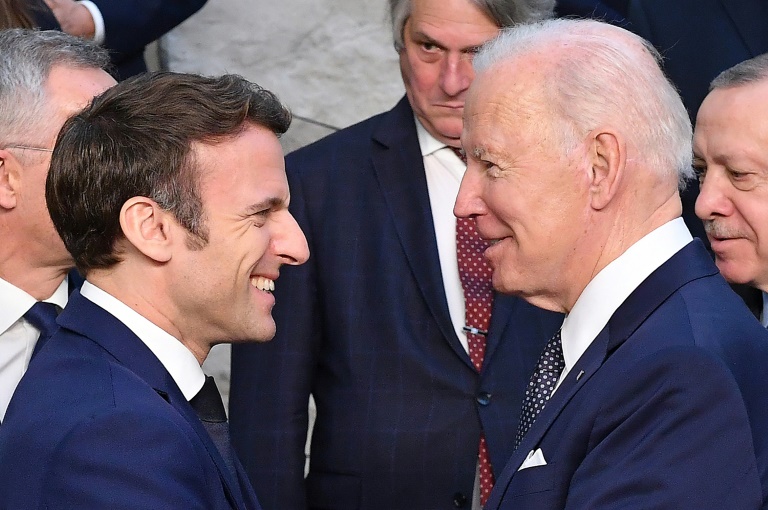
US President Joe Biden this week said Russia’s actions against Ukrainians amounted to genocide, in comments echoed by Canadian Prime Minister Justin Trudeau and British Premier Boris Johnson.

But French President Emmanuel Macron, also backed by Germany’s Chancellor Olaf Scholz, declined to deploy the word in a stance Ukrainian President Volodymyr Zelensky deemed “painful”.

Zelensky has repeatedly branded Russia’s military onslaught a “genocide”, a term first coined by the Polish lawyer Raphael Lemkin in the 1940s.

It was enshrined in the 1948 United Nations Genocide Convention in the wake of the extermination of Jews and other minority groups in World War II.

Under the  convention, acts of genocide are committed “with intent to destroy, in whole or in part, a national, ethnic, racial or religious group.”

Russian President Vladimir Putin has also seized on the word to describe what he says is the persecution of Russian speakers in east Ukraine, a claim rubbished by Kyiv’s Western allies.

– ‘Use with great care’ –

But beyond uncontested examples, such as the Holocaust and the 1994 mass killings of ethnic Tutsis in Rwanda, the employment of “genocide” by politicians has always been loaded.

In his comments, Macron said it was best to avoid “verbal escalations” and be “careful” with the use of the word.

In recent years, genocide has most commonly been called up by activists and some governments and legislatures to label China’s persecution of its Muslim Uyghur minority, and the actions by Myanmar against the Rohingya Muslim minority.

Going further back, Turkey has long rejected Armenia’s stance that the World War I massacres of Armenians by Ottoman forces were genocide.

Ankara has angrily hit back at Western governments that see the massacres as a genocide, including when Biden recognised it as such in 2021.

Ukraine has in past decades also vigorously campaigned in the face of Russian opposition for the Stalin-era famines on its territory in the 1930s — known as the Holodomor — to be recognised as genocide.

Cecily Rose, a professor of international public law at Leiden University in the Netherlands, said there was “extensive evidence” to support the Rohingya and Uyghur genocides.

But she cautioned that the term “should be used by politicians with great care and caution and preferably on the basis of an independent fact-finding body,” she said.

William Schabas, professor of international law at Middlesex University in London, described the word genocide as a “superlative” used when terms like war crimes or crimes against humanity do not seem strong enough.

“The problem with a superlative is that you have nothing further to use. You can only use it once,” he said.

“The word genocide has a precise legal definition but it is also widely used by politicians and activists because of its capacity to inflame and excite,” he added.

– ‘Do same with all conflicts’ –


The International Criminal Court’s chief prosecutor Karim Khan has already opened a probe into Ukraine and held virtual talks with Zelensky over what appears to be the targeted killings of civilians. 

Celine Bardet, a lawyer and international crime investigator, applauded the swift opening of an inquiry but said she wished the “same is now done with all conflicts”.

Urging that emotions should not get in the way of justice, she said the ICC risked reinforcing a reputation that it is an instance that “only works when the West pushes it to do so”.

Biden said Tuesday that use of the term was apt, as it has “become clearer and clearer that Putin is just trying to wipe out the idea of even being able to be a Ukrainian”.

Macron appeared to suggest particular prudence was needed in this context, given that Ukrainians and Russians were “brotherly peoples” with very similar ethnic origins.

But the comment by Macron — who so far has not joined the line of European leaders heading to talks in Kyiv with Zelensky — touched a particularly painful nerve in Ukraine.

“Talk of ‘brotherly’ ties between Russia and Ukraine is misguided. Brothers don’t torture, rape, kill the others’ family,” Ukrainian foreign ministry spokesman Oleg Nikolenko said on Twitter.

Death toll from Philippines landslides, floods hits 133

The death toll from landslides and flooding in the Philippines triggered by tropical storm Megi rose to 133 on Thursday, official figures showed, as more bodies were found in mud-caked villages.

Scores of people are still missing and feared dead after the strongest storm to strike the archipelago nation this year dumped heavy rain over several days, forcing tens of thousands into evacuation centres.

In the central province of Leyte — the worst affected by Megi — devastating landslides smashed farming and fishing communities, wiping out houses and transforming the landscape.

The disaster-prone region is regularly ravaged by storms — including a direct hit from Super Typhoon Haiyan in 2013 — with scientists warning they are becoming more powerful as the world gets warmer because of climate change.

Emergency personnel in Abuyog municipality have retrieved dozens of bodies from the coastal village of Pilar, which was destroyed by a landslide on Tuesday.

At least 42 people died in landslides that hit three villages in the municipality, police said. Another person drowned.  

Most of those deaths were in Pilar, with at least 28 bodies brought by boat to a sandy lot near the municipal government building after roads leading to the settlement were cut off by landslides.

More than 100 remained missing, and Abuyog Mayor Lemuel Traya told AFP there was little hope of finding anyone else alive.

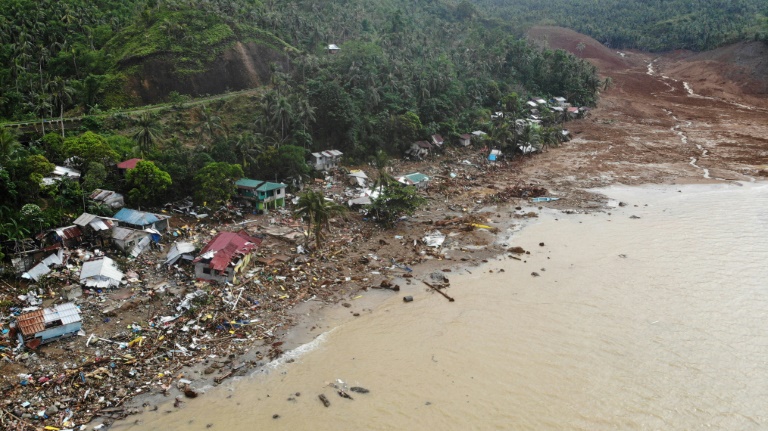
An aerial photo showed a wide stretch of mud and earth that had swept down a mountain to the sea, crushing everything in its path.

The wreckage of houses and debris were scattered along the shore.

Bad weather and thick mud had complicated retrieval efforts in Pilar, where the ground was unstable. Searchers were also combing the coastline after some bodies were swept kilometres away by ocean currents.

“This will not end soon, it could go on for days,” Traya warned. 

Many of those who died had hiked to higher ground to avoid flash floods, villagers told AFP. 

“It sounded like a helicopter,” said Pilar councillor Anacleta Canuto, 44, describing the noise made by the landslide.

Canuto, her husband and their two children survived, but they lost at least nine relatives.

Pilar fisherman Santiago Dahonog, 38, said he rushed into the sea with two siblings and a nephew as the landslide hurtled towards them.

“We got out of the house, ran to the water and started swimming,” he told AFP. “I was the only survivor.” 

– Scores missing in Baybay –

Another 86 people were killed and dozens injured in vegetable, rice and coconut-growing villages around Baybay City at the weekend, local authorities said. At least 117 are still missing.

The hardest hit was Kantagnos, where 32 people died and 103 have not been found. 

In the nearby village of Bunga, 17 people perished when sodden soil shot down a hill and slammed into the riverside community. Only a few rooftops are visible in the mud, which has started to smell of rotting flesh. 

Three people also drowned on the main southern island of Mindanao, and one person died in the central province of Iloilo, the national disaster agency said in its latest update.

Another three deaths previously reported in the central province of Negros Oriental were dropped from the tally after they were found to be unrelated to the storm. 

Megi struck at the beginning of Holy Week, one of the most important holidays in the mainly Catholic nation, when thousands travel to visit relatives.

It came four months after a super typhoon devastated swathes of the country, killing more than 400 and leaving hundreds of thousands homeless.

The Philippines — ranked among the most vulnerable nations to the impacts of climate change — is hit by an average of 20 storms every year.

North Korea's tests stir nuclear debate in South

After firing its largest-ever missile, North Korea is preparing to conduct a nuclear test, officials and analysts say, reviving a longstanding debate south of the border: should Seoul have nukes too?

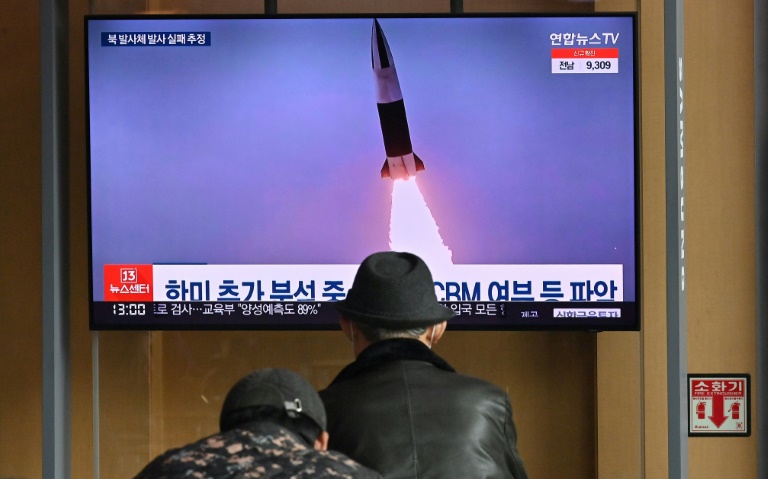
Pyongyang has conducted a blitz of sanctions-busting weapons tests this year, including launching an intercontinental ballistic missile (ICBM) at full range for the first time since 2017.

It was a dramatic return to long-range testing after a years-long pause while leader Kim Jong Un embarked on a round of failed diplomacy with then-US president Donald Trump in 2018.

Renewed North Korean sabre-rattling, coupled with the Russian invasion of Ukraine, has shifted the public mood in South Korea — with growing demand for their own deterrent.

“Discussions on South Korea possibly pursuing its own nuclear capability have been circulating,” said Soo Kim of the RAND Corporation.

“The nuclear option is likely to remain on the discussion table for Seoul’s decision-makers. But this, of course, will have implications and reach beyond the Korean Peninsula.”

The discussion on whether South Korea should pursue nuclear armaments extends beyond official circles, with a majority of citizens also appearing to support such a move.

Seventy-one percent of South Koreans now favour the country getting nuclear weapons, according to a research paper published in February by the US-based Carnegie Endowment and the Chicago Council on Global Affairs.

– Nuclear test expected –

North Korea has tested nuclear weapons six times since 2006 and touted the success of its last and most powerful one in 2017 — a hydrogen bomb with an estimated yield of 250 kilotons.

As North Korea’s ICBMs are still in development there is a “high risk of failure” each time, said Cha Du-hyeogn, a researcher at Seoul’s Asan Institute for Policy Studies. 

Last month, a North Korean missile exploded in the skies above Pyongyang.

“That cramps Pyongyang’s style,” said Cha, adding a nuclear test is less risky.

Another test is likely soon, South Korean officials and the top US envoy on North Korea say, as part of the celebrations for the 110th anniversary of the birth of founding leader Kim Il Sung on Friday.

Satellite imagery shows signs of new activity at a tunnel at the Punggye-ri testing site, which North Korea said was demolished in 2018 ahead of a Trump-Kim summit. 

The Vienna-based Open Nuclear Network says it has spotted signs of excavation and increased activity, indicating North Korea may be preparing it for a nuclear weapon test.

– South Korean nukes –

Seoul ran a covert nuclear programme in the 1970s, ending it up in return for security guarantees from the United States.

America stations 28,500 troops in South Korea to protect against its nuclear-armed neighbour, and has recently ramped up military displays, sending an aircraft carrier close by this week for the first time since 2017.

Many commentators see “too clear” parallels with Ukraine’s fate: Kyiv gave up its large stock of USSR-era nukes, over which it never had operational control, in return for security guarantees.

“An actual war that we couldn’t even imagine broke out and has heightened the importance of self-defence,” said Park Won-gon, a professor of North Korean Studies at Seoul’s Ewha University.

For its seventh nuclear test, North Korea will likely seek to miniaturise nuclear warheads to mount on its ICBMs aiming “to reach a point where no one can deny it is a de facto nuclear power,” he said.

– Nuclear proliferation –

Some South Korean politicians have proposed asking the United States to redeploy tactical nuclear weapons to South Korea — something analysts say US President Joe Biden has not shown much interest in.

On the campaign trail, South Korea’s hawkish new President-elect Yoon Suk-yeol opposed the idea, saying that “strengthening US extended deterrence would be the answer”.

This would be “far less politically complicating, economically costly, and regionally destabilising than nuclear proliferation”, said Leif-Eric Easley, a professor at Ewha University.

“The lesson of Russia’s invasion of Ukraine is not to go nuclear but rather to strengthen the kind of defense alliances that Ukraine wanted but couldn’t obtain,” he added.

But for many South Koreans, a US security guarantee is no longer enough.

While 56 percent of South Koreans support allowing the United States’ nuclear weapons in the country, the polled group “overwhelmingly” preferred an independent arsenal over the US deployment option, according to the February research paper.

“At this point, certainly judging by public opinion in South Korea, it doesn’t feel like it’s enough to know that your friend has a button that they can press,” said Scott Snyder, senior fellow at the US-based Council on Foreign Relations.

Close Bitnami banner
Bitnami