World

Pakistan PM alleges 'conspiracy' but accepts court ruling on confidence vote

Pakistan Prime Minister Imran Khan said Friday he accepted a supreme court ruling that will likely see him ousted from office, but insisted he was victim of a “regime change” conspiracy involving the United States.

The national assembly will sit Saturday to decide Khan’s fate, but the former international cricket star who became premier in 2018 is certain to lose a no-confidence vote following the defection of a coalition partner and several of his own party members.

The session was ordered by the Supreme Court Thursday when ruling that Khan acted illegally by dissolving parliament and calling fresh elections after the deputy speaker of the national assembly — a loyalist — refused to allow an earlier no-confidence vote because of “foreign interference”.

In a 40-minute address to the nation touching on familiar themes, Khan railed against the Pakistan Muslim League-N (PLM-N) and Pakistan People’s Party (PPP), two normally feuding dynastic groups who joined forces to oust Khan and his upstart Pakistan Tehreek-e-Insaf party (PTI).

With his majority gone, Khan accused the opposition of buying support in the assembly with “open horse-trading… selling of lawmakers like goats and sheep”.

He said they had conspired with Washington to bring the no-confidence vote because of his opposition to US foreign policy — particularly in Muslim nations such as Iraq and Afghanistan.

“I was disappointed with the Supreme Court decision but I want to make it clear that I respect the Supreme Court and Pakistan’s judiciary,” he said.

But he added that the court should also have examined the reason for the first vote being rejected.

“There is a conspiracy from abroad,” the 69-year-old Khan said. “This is a very serious allegation… that a foreign country conspired to topple an entire government.”

Washington has denied any involvement.

– Doctrine of necessity –

Constitutionalists on Friday praised the Supreme Court verdict, calling it an end to the so-called “doctrine of necessity” that has seen courts throughout Pakistan’s history rule against clear illegality, but accept the consequences as being good for the country.

PML-N leader Shehbaz Sharif, brother of three-time prime minister Nawaz Sharif and likely to replace Khan, said the decision “has saved Pakistan and the constitution”.

“Democracy is the best revenge”, tweeted PPP leader Bilawal Zardari Bhutto, the scion of another political dynasty. His parents are assassinated former prime minister Benazir Bhutto and ex-president Asif Ali Zardari.

How long the next government lasts is also a matter of speculation.

The opposition said previously they wanted an early election — which must be called by October next year — but taking power gives them the opportunity to set their own agenda and end a string of probes they said Khan launched vindictively against them.

It could also pave the way for a comeback by Nawaz Sharif, who has not returned from Britain since being allowed to leave jail in 2019 to seek medical treatment abroad.

He was barred by the Supreme Court from holding public office after graft revelations, and sentenced to 10 years in prison by an accountability court.

There had been high hopes for Khan when he was elected in 2018 on a promise of sweeping away decades of entrenched corruption and cronyism, but he struggled to maintain support with soaring inflation, a feeble rupee and crippling debt.

There has also been a rise in violence by Islamic militants encouraged by the return to power of the Taliban in neighbouring Afghanistan.

– Underlying issues remain –

Political analyst Hasan Askari told AFP any new government will still have to deal with the underlying issues.

“Conflict and confrontation will persist… the prospects of political harmony and long-term stability are minimal,” he said.

Pakistan has been wracked by political crises for much of its 75-year existence, and no prime minister has ever seen out a full term.

Publicly the military appears to be keeping out of the current fray, but there have been four coups since independence in 1947 and the country has spent more than three decades under army rule.

Khan, appearing to have accepted his fate, said Friday he would not work with any new government.

“I will not accept this imported government,” he said, urging his supporters to begin protesting against it.
US jury convicts ex-Goldman banker in 1MDB scandal

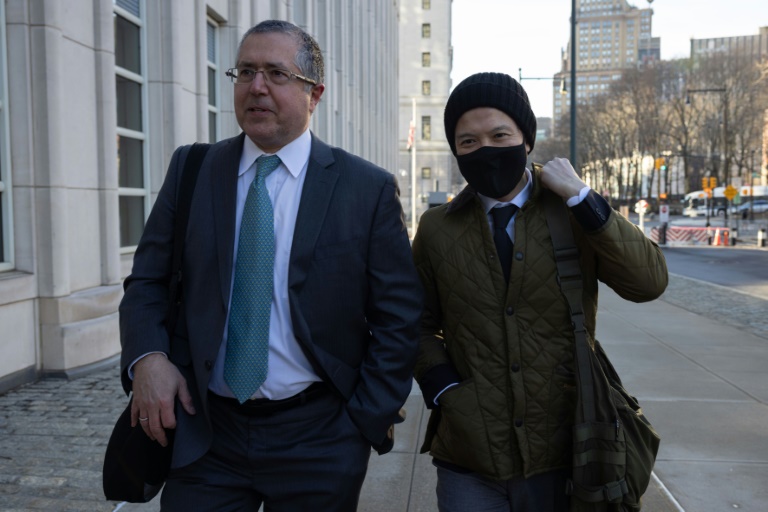
A New York jury on Friday convicted a former Goldman Sachs banker for his role in propagating a massive bribery and money laundering scheme involving a state-owned Malaysian investment fund.

The jury found Roger Ng, a managing director at Goldman from 2005 to 2014, guilty on all three counts connected to the massive 1MDB bribery scheme, which involved the embezzlement of billions of dollars of funds originally raised by investment bank.

The 1MDB fund was set up to promote the Malaysian economy, but was spectacularly looted in a scandal that roiled the country’s politics and marred Goldman’s reputation.

Ng and his co-conspirators paid more than $1 billion in bribes to government officials to secure three bond large transactions for Goldman with 1MDB, according to the US Department of Justice.

The conspirators laundered billions of dollars in funds from 1MDB, including some of the funds from the Goldman transactions. 

Some of the money went to luxury items, such as a $51 million Jean-Michael Basquiat painting and millions of dollars in Hermes handbags, the Justice Department said.

The eight-week trial included testimony from Timothy Leissner, a former Goldman partner who has pleaded guilty in the case and testified at length on his role and that of Ng in the scheme.

Attorneys for Ng had argued that Leissner’s testimony should be discounted in light of his plea and that Ng was a pawn in the larger conspiracy.

Ng faces up to a 30-year sentence following his conviction, a department spokesman said.

“Today’s verdict is a victory for not only the rule of law, but also for the people of Malaysia for whom the fund was supposed to help,” US Attorney Breon Peace said. 

“With today’s verdict, a powerful message has been delivered to those who commit financial crimes motivated by greed,” Peace said. “You will be caught, prosecuted and convicted, like Ng, and face a long prison sentence.”

The Goldman Sachs bond deals raised $6.5 billion, yielding the prestigious New York investment bank $600 million in fees and revenue, while Ng garnered some $35 million in kickbacks, the Justice Department said.

In October 2020, Goldman agreed to pay $2.9 billion in penalities in a DOJ settlement that included a guilty plea in US court by a Malaysian unit of the bank. 

Fifty killed in train station strike as civilians flee east Ukraine

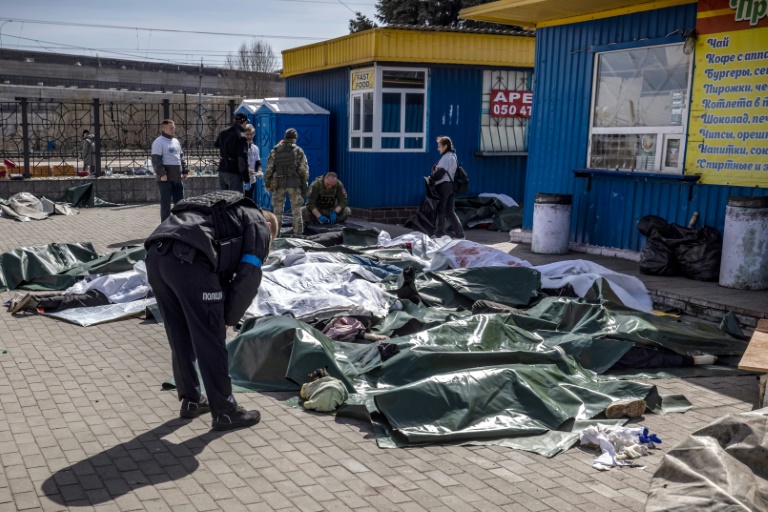
A rocket attack on a train station in the eastern Ukrainian city of Kramatorsk killed dozens on Friday, as civilians raced to flee the Donbas region bracing for a feared Russian offensive.

World leaders condemned the attack with US President Joe Biden accusing Russia of being behind an “horrific atrocity” while the French government called it a “crime against humanity” and British Prime Minister Boris Johnson described it as “unconscionable”.

Fifty people were killed, including five children, the regional governor of Donetsk, Pavlo Kyrylenko, said as the toll rose on one of the deadliest strikes of the six-week-old war.

President Volodymyr Zelensky reported 300 were injured, saying the strike showed “evil with no limits”. 

Odessa, fearing an attack on the Black Sea port city, imposed a weekend curfew “given events in Kramatorsk” and the “threat of a missile strike”.

AFP journalists at the scene of Friday’s strike saw the bodies of at least 30 people under plastic sheets next to the station.

There were pools of blood on the ground and packed bags were strewn outside the building where the remains of a large rocket was lying with the words “for our children” in Russian.

“I’m looking for my husband. He was here. I can’t reach him,” a woman told AFP, sobbing and holding her phone to her ear.

Another woman in a state of shock said: “I saw people covered in blood entering the station and bodies everywhere on the ground.”

Body parts, broken glass and abandoned baggage lay scattered around the station and across the platform.

Russia’s defence ministry said suggestions it had carried out the attack were “absolutely untrue”.

The bombing came as European Commission President Ursula von der Leyen and EU foreign policy chief Josep Borrell were in Kyiv to show solidarity with Ukraine.

Russia faces “decay” because of ever more stringent sanctions and Ukraine had a “European future”, she said at a news conference with Zelensky.

More than a month into President Vladimir Putin’s invasion of Ukraine, Moscow has shifted its focus to eastern and southern Ukraine after stiff resistance torpedoed plans to swiftly capture the capital Kyiv.

Instead, Russian troops appear set on creating a long-sought land link between occupied Crimea and the Moscow-backed separatist statelets of Donetsk and Lugansk in Donbas.

Heavy shelling has already begun to lay waste to towns in the region, and officials have begged civilians to flee, while the intensity of fighting is impeding evacuations.

But officials continued to press civilians to leave.

“There is no secret — the battle for Donbas will be decisive. What we have already experienced — all this horror — it can multiply,” warned Lugansk regional governor Sergiy Gaiday.

“Leave! The next few days are the last chances. Buses will be waiting for you in the morning,” he added.

– ‘More horrific’ –

Meanwhile, near the capital Kyiv, residents and Ukrainian officials returning after a Russian withdrawal from the area were trying to piece together the scale of the devastation.

Violence in the town of Bucha, where authorities say hundreds were killed — including some found with their hands bound — has become a byword for allegations of brutality inflicted under Russian occupation.

But Zelensky warned worse was being uncovered.

“They have started sorting through the ruins in Borodianka,” northwest of Kyiv, he said in his nightly address.

“It’s much more horrific there. There are even more victims of Russian occupiers.”

Violence in the area has caused massive destruction, levelling and damaging many buildings, and bodies are only now being retrieved.

Ukraine’s Prosecutor General Iryna Venediktova said on Thursday that 26 bodies had been recovered from two destroyed apartment buildings so far.

“Only the civilian population was targeted. There is no military site here,” she said, describing evidence of war crimes “at every turn”.

Fresh allegations emerged from other areas too, with villagers in Obukhovychi, northwest of Kyiv, telling AFP they were used as human shields.

– ‘Help us now’ –

Moscow has denied targeting civilians but growing evidence of atrocities has galvanised Ukraine’s allies to pile on more pressure.

On Thursday, the EU approved an embargo on Russian coal and the closure of its ports to Russian vessels as part of a “very substantial” new round of sanctions that also includes an export ban and new measures against Russian banks.

In addition, it backed a proposal to boost its funding of arms supplies to Ukraine by 500 million euros ($544 million), taking it to a total of 1.5 billion euros.

So far, the bloc has frozen 30 billion euros in assets from blacklisted Russian and Belarusian individuals and companies under sanctions, it said Friday.

In a show of support, the EU’s von der Leyen and Borrell were in Kyiv Friday for talks with Zelensky and to visit the scene of civilian deaths in Bucha.

En route to Kyiv, Borrell told journalists the EU would supply 7.5 million euros to train Ukrainian prosecutors to investigate war crimes, which Russia is accused of committing in the country.

The Group of Seven industrialised nations also agreed to more sanctions, including a ban on new investments in key sectors and fresh export restrictions, as well as the phasing out of Russian coal.

At the United Nations, 93 of the General Assembly’s 193 members voted on Thursday to suspend Russia from the body’s human rights council over its actions in Ukraine.

Russia blasted the move as “illegal and politically motivated”, while US President Joe Biden said it confirmed Moscow as an “international pariah”.

“Russia’s lies are no match for the undeniable evidence of what is happening in Ukraine,” Biden said, calling Russia’s actions in the country “an outrage to our common humanity”.

Ukraine has welcomed new measures on Moscow, as well as the UN suspension, but it continues to push for more support.

Zelensky called for a “cocktail” of sanctions in an address to the Finnish parliament, scolding “those who are making us wait, wait for the things that we need badly, wait for the means of protecting our lives”.

The president’s appeal echoed a call from his foreign minister, Dmytro Kuleba, who earlier asked NATO for heavy weaponry, including air defence systems, artillery, armoured vehicles and jets.

“Either you help us now — and I’m speaking about days, not weeks — or your help will come too late and many people will die, many civilians will lose their homes, many villages will be destroyed,” Kuleba said after meeting NATO foreign ministers in Brussels.

Following his latest appeal, Britain on Friday said it was sending Ukraine more “high-grade military equipment” including Starstreak anti-aircraft missiles and 800 anti-tank missiles, while Slovakia said it had given Ukraine an S-300 air defence system.

burs-sah-sea/jbr/har/pvh

First private mission launches for International Space Station

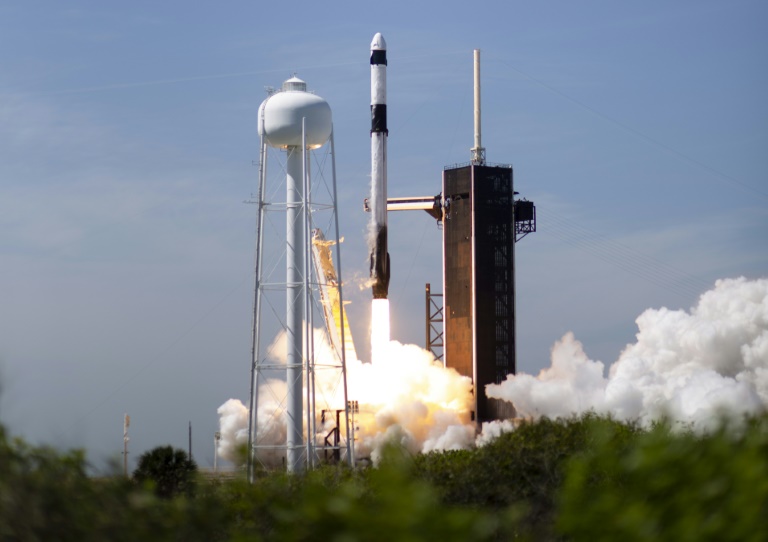
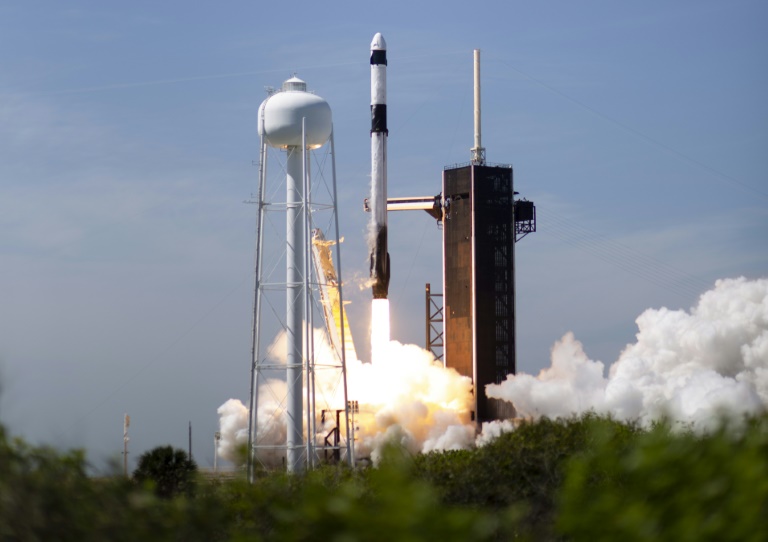
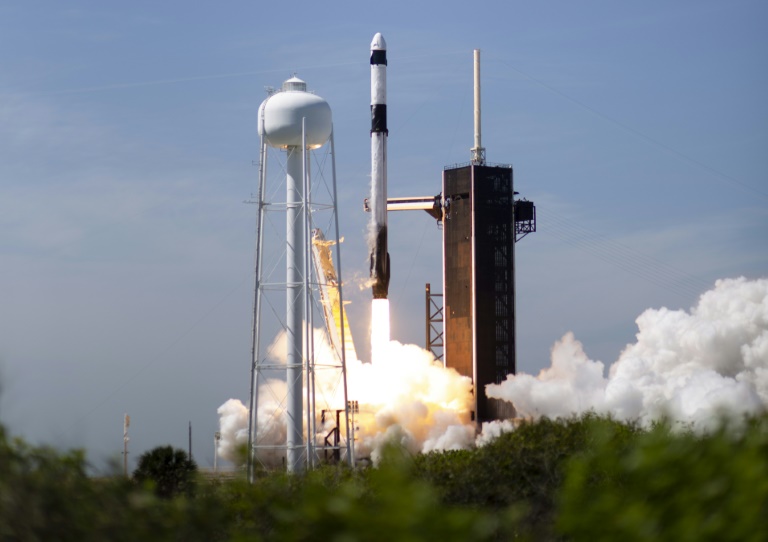
The first fully private mission to the International Space Station blasted off from Florida Friday with a four-member crew from startup company Axiom Space.

NASA has hailed the three-way partnership with Axiom and SpaceX as a key step towards commercializing the region of space known as “Low Earth Orbit,” leaving the agency to focus on more ambitious voyages deeper into the cosmos.

A SpaceX Falcon 9 rocket with the Crew Dragon capsule Endeavor launched at 11:17 am (1517 GMT) from the Kennedy Space Center, and the spaceship should dock at around 1145 GMT Saturday.

“We’re taking commercial business off the face of the Earth and putting it up in space,” said NASA chief Bill Nelson.

“To say that we’re excited is a huge understatement,” Axiom Space CEO Michael Suffredini told reporters after the launch, adding it was the culmination of years of work for the Houston-based company, founded in 2016.

Commanding the Axiom Mission 1 (Ax-1) is former NASA astronaut Michael Lopez-Alegria, a dual citizen of the United States and Spain, who flew to space four times over his 20-year-career, and last visited the ISS in 2007.

He is joined by three paying crewmates: American real estate investor Larry Connor, Canadian investor and philanthropist Mark Pathy, and Israeli former fighter pilot, investor and philanthropist Eytan Stibbe.

The widely reported price for tickets — which includes eight days on the outpost, before eventual splashdown in the Atlantic — is $55 million. 

While wealthy private citizens have visited the ISS before, Ax-1 is the first mission featuring an all-private crew flying a private spacecraft to the outpost. Axiom pays SpaceX for transportation, and NASA also charges Axiom for use of the ISS.

– Research projects –

On board the ISS, which orbits 250 miles (400 kilometers) above sea level, the quartet will carry out 25 research projects, including an MIT technology demonstration of smart tiles that form a robotic swarm and self-assemble into space architecture.

Another experiment involves using cancer stem cells to grow mini tumors, and then leveraging the accelerated aging environment of microgravity to identify biomarkers for early detection of cancers.

“The distinction is that our guys aren’t going up there and floating around for eight days taking pictures and looking out of the cupola,” Derek Hassmann, operations director of Axiom Space, told reporters at a pre-launch briefing. 

In addition, crewmember Stibbe plans to pay tribute to his late friend Ilan Ramon, Israel’s first astronaut, who died in the 2003 Space Shuttle Columbia disaster when the spaceship disintegrated upon reentry.

Surviving pages from Ramon’s space diary, as well as mementos from his children, will be brought to the station by Stibbe.

The Axiom crew will live and work alongside the station’s regular crew: currently three Americans and a German on the US side, and three Russians on the Russian side.

The company has partnered for a total of four missions with SpaceX, and NASA has already approved in principle the second, Ax-2. 

Axiom sees the voyages as the first steps of a grander goal: to build its own private space station. The first module is due to launch in 2024.

The plan is for the station to initially be attached to the ISS, before eventually flying autonomously when the latter retires and is deorbited sometime after 2030.

First private mission launches for International Space Station

The first fully private mission to the International Space Station blasted off from Florida Friday with a four-member crew from startup company Axiom Space.

NASA has hailed the three-way partnership with Axiom and SpaceX as a key step towards commercializing the region of space known as “Low Earth Orbit,” leaving the agency to focus on more ambitious voyages deeper into the cosmos.

A SpaceX Falcon 9 rocket with the Crew Dragon capsule Endeavor launched at 11:17 am (1517 GMT) from the Kennedy Space Center, and the spaceship should dock at around 1145 GMT Saturday.

“We’re taking commercial business off the face of the Earth and putting it up in space,” said NASA chief Bill Nelson.

“To say that we’re excited is a huge understatement,” Axiom Space CEO Michael Suffredini told reporters after the launch, adding it was the culmination of years of work for the Houston-based company, founded in 2016.

Commanding the Axiom Mission 1 (Ax-1) is former NASA astronaut Michael Lopez-Alegria, a dual citizen of the United States and Spain, who flew to space four times over his 20-year-career, and last visited the ISS in 2007.

He is joined by three paying crewmates: American real estate investor Larry Connor, Canadian investor and philanthropist Mark Pathy, and Israeli former fighter pilot, investor and philanthropist Eytan Stibbe.

The widely reported price for tickets — which includes eight days on the outpost, before eventual splashdown in the Atlantic — is $55 million. 

While wealthy private citizens have visited the ISS before, Ax-1 is the first mission featuring an all-private crew flying a private spacecraft to the outpost. Axiom pays SpaceX for transportation, and NASA also charges Axiom for use of the ISS.

– Research projects –

On board the ISS, which orbits 250 miles (400 kilometers) above sea level, the quartet will carry out 25 research projects, including an MIT technology demonstration of smart tiles that form a robotic swarm and self-assemble into space architecture.

Another experiment involves using cancer stem cells to grow mini tumors, and then leveraging the accelerated aging environment of microgravity to identify biomarkers for early detection of cancers.

“The distinction is that our guys aren’t going up there and floating around for eight days taking pictures and looking out of the cupola,” Derek Hassmann, operations director of Axiom Space, told reporters at a pre-launch briefing. 

In addition, crewmember Stibbe plans to pay tribute to his late friend Ilan Ramon, Israel’s first astronaut, who died in the 2003 Space Shuttle Columbia disaster when the spaceship disintegrated upon reentry.

Surviving pages from Ramon’s space diary, as well as mementos from his children, will be brought to the station by Stibbe.

The Axiom crew will live and work alongside the station’s regular crew: currently three Americans and a German on the US side, and three Russians on the Russian side.

The company has partnered for a total of four missions with SpaceX, and NASA has already approved in principle the second, Ax-2. 

Axiom sees the voyages as the first steps of a grander goal: to build its own private space station. The first module is due to launch in 2024.

The plan is for the station to initially be attached to the ISS, before eventually flying autonomously when the latter retires and is deorbited sometime after 2030.

First private mission launches for International Space Station

The first fully private mission to the International Space Station blasted off from Florida Friday with a four-member crew from startup company Axiom Space.

NASA has hailed the three-way partnership with Axiom and SpaceX as a key step towards commercializing the region of space known as “Low Earth Orbit,” leaving the agency to focus on more ambitious voyages deeper into the cosmos.

A SpaceX Falcon 9 rocket with the Crew Dragon capsule Endeavor launched at 11:17 am (1517 GMT) from the Kennedy Space Center, and the spaceship should dock at around 1145 GMT Saturday.

“We’re taking commercial business off the face of the Earth and putting it up in space,” said NASA chief Bill Nelson.

“To say that we’re excited is a huge understatement,” Axiom Space CEO Michael Suffredini told reporters after the launch, adding it was the culmination of years of work for the Houston-based company, founded in 2016.

Commanding the Axiom Mission 1 (Ax-1) is former NASA astronaut Michael Lopez-Alegria, a dual citizen of the United States and Spain, who flew to space four times over his 20-year-career, and last visited the ISS in 2007.

He is joined by three paying crewmates: American real estate investor Larry Connor, Canadian investor and philanthropist Mark Pathy, and Israeli former fighter pilot, investor and philanthropist Eytan Stibbe.

The widely reported price for tickets — which includes eight days on the outpost, before eventual splashdown in the Atlantic — is $55 million. 

While wealthy private citizens have visited the ISS before, Ax-1 is the first mission featuring an all-private crew flying a private spacecraft to the outpost. Axiom pays SpaceX for transportation, and NASA also charges Axiom for use of the ISS.

– Research projects –

On board the ISS, which orbits 250 miles (400 kilometers) above sea level, the quartet will carry out 25 research projects, including an MIT technology demonstration of smart tiles that form a robotic swarm and self-assemble into space architecture.

Another experiment involves using cancer stem cells to grow mini tumors, and then leveraging the accelerated aging environment of microgravity to identify biomarkers for early detection of cancers.

“The distinction is that our guys aren’t going up there and floating around for eight days taking pictures and looking out of the cupola,” Derek Hassmann, operations director of Axiom Space, told reporters at a pre-launch briefing. 

In addition, crewmember Stibbe plans to pay tribute to his late friend Ilan Ramon, Israel’s first astronaut, who died in the 2003 Space Shuttle Columbia disaster when the spaceship disintegrated upon reentry.

Surviving pages from Ramon’s space diary, as well as mementos from his children, will be brought to the station by Stibbe.

The Axiom crew will live and work alongside the station’s regular crew: currently three Americans and a German on the US side, and three Russians on the Russian side.

The company has partnered for a total of four missions with SpaceX, and NASA has already approved in principle the second, Ax-2. 

Axiom sees the voyages as the first steps of a grander goal: to build its own private space station. The first module is due to launch in 2024.

The plan is for the station to initially be attached to the ISS, before eventually flying autonomously when the latter retires and is deorbited sometime after 2030.

Ukraine war pushes world food prices to record high

World food prices hit an all-time high in March following Russia’s invasion of agricultural powerhouse Ukraine, a UN agency said on Friday, adding to concerns about the risk of hunger around the world.

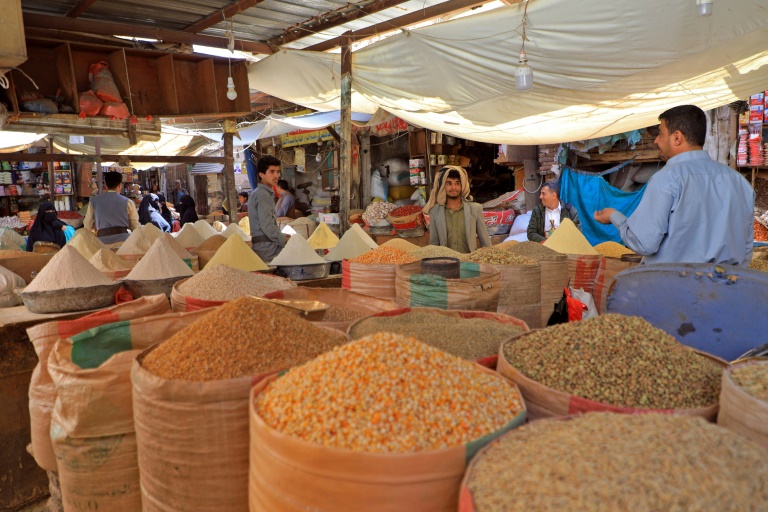
The disruption in export flows resulting from the February 24 invasion and international sanctions against Russia has spurred fears of a global hunger crisis, especially across the Middle East and Africa, where the knock-on effects are already playing out.

Russia and Ukraine, whose vast grain-growing regions are among the world’s main breadbaskets, account for a huge share of the globe’s exports in several major commodities, including wheat, vegetable oil and corn.

Ukrainian ports have been blocked by a Russian blockade and there is concern about this year’s harvest as the war rages on during the spring sowing season.

“World food commodity prices made a significant leap in March to reach their highest levels ever, as war in the Black Sea region spread shocks through markets for staple grains and vegetable oils,” the Food and Agriculture Organization said in a statement.

The FAO’s food price index, which had already reported a record in February, surged by 12.6 percent last month, “making a giant leap to a new highest level since its inception in 1990”, the UN agency said.

The index, a measure of the monthly change in international prices of a basket of food commodities, averaged 159.3 points in March.

The jump includes new all-time highs for vegetable oils, cereals and meats, the FAO said, adding that prices of sugar and dairy products “also rose significantly”.

– Famine fears –

Russia and Ukraine together accounted for around 30 percent and 20 percent of global wheat and maize exports respectively, over the past three years, the FAO said.

Wheat prices rose by almost 20 percent, with the problem exacerbated by concerns over crop conditions in the United States, the organization said.

The FAO’s vegetable oil price index surged by 23.2 percent, driven by higher quotations for sunflower seed oil, of which Ukraine is the world’s leading exporter.

Spanish supermarkets have rationed the sale of sunflower oil to stop customers stockpiling over shortage fears due to the war.

The United States has accused Russian President Vladimir Putin of creating “this global food crisis”.

France has warned that the war has increased the risk of famine around the world.

The FAO estimates famine in West Africa and the Sahel regions, both highly dependent on Russian and Ukrainian grains, could worsen and affect over 38 million people by June if no measures are taken. 

Ukraine on Thursday called on the European Union to provide aid to its farmers. The European Commission has been asked to coordinate the delivery of fuel, seeds, fertilisers and agricultural machines to the country.

For his part, Putin warned on Tuesday that, against the backdrop of global food shortages, Russia would “have to be prudent with supplies abroad and carefully monitor such exports to countries that are clearly hostile towards us”.

FAO chief Qu Dongyu called Friday on countries not to restrict food exports, which would only worsen the situation for countries dependent imports.

“Above all, we must not shut down our global trade system, and exports should not be restricted or taxed,” he said. 

The FAO also called for aid to vulnerable nations to boost planting.

“One and a half billion dollars would be sufficient for immediate agricultural assistance that would save the lives of some 50 million people by allowing the growing of food where the need is most keen,” said Rein Paulsen, head of the agency’s emergencies office, in a letter to AFP.

The conflict has also sent oil and gas prices through the roof, causing inflation to rise further across the world and raising concerns that it could derail global economic growth.

Record 1st-quarter deforestation in Brazilian Amazon

Deforestation in the Brazilian Amazon set a new quarterly record in the first three months of 2022 compared to a year earlier, official data showed Friday.

Satellite images revealed the destruction of 941 square kilometers (363 square miles) of rain forest — the highest quarterly rate since the start of Brazil’s Deter monitoring program in 2015.

This is an area about the size of Dallas.

For the month of March, deforestation slowed by 15 percent year-on-year to 312 km2, according to data from the INPE Brazilian space agency.

But this followed on two months of record highs under far-right President Jair Bolsonaro, who has pushed to open protected Amazonian lands to agribusiness and mining.

Since he entered office in 2019, Brazil’s average annual deforestation in the Amazon, a crucial resource in the race to curb climate change, has risen more than 75 percent from the previous decade.

The destruction is driven mainly by farming and land speculation in agricultural powerhouse Brazil, the world’s biggest exporter of beef and soy. 

The country hosts about 60 percent of the Amazon forest.

“Clearly, we have seen in recent years a setback in environmental policy and the result is seen with deforestation records for the first quarter of 2022 and in previous years”, Greenpeace Brazil spokeswoman Cristiane Mazzetti said in a statement.

The new figures suggest Brazil may be on track to set a new yearly deforestation record in 2022.

Record 1st-quarter deforestation in Brazilian Amazon

Deforestation in the Brazilian Amazon set a new quarterly record in the first three months of 2022 compared to a year earlier, official data showed Friday.

Satellite images revealed the destruction of 941 square kilometers (363 square miles) of rain forest — the highest quarterly rate since the start of Brazil’s Deter monitoring program in 2015.

This is an area about the size of Dallas.

For the month of March, deforestation slowed by 15 percent year-on-year to 312 km2, according to data from the INPE Brazilian space agency.

But this followed on two months of record highs under far-right President Jair Bolsonaro, who has pushed to open protected Amazonian lands to agribusiness and mining.

Since he entered office in 2019, Brazil’s average annual deforestation in the Amazon, a crucial resource in the race to curb climate change, has risen more than 75 percent from the previous decade.

The destruction is driven mainly by farming and land speculation in agricultural powerhouse Brazil, the world’s biggest exporter of beef and soy. 

The country hosts about 60 percent of the Amazon forest.

“Clearly, we have seen in recent years a setback in environmental policy and the result is seen with deforestation records for the first quarter of 2022 and in previous years”, Greenpeace Brazil spokeswoman Cristiane Mazzetti said in a statement.

The new figures suggest Brazil may be on track to set a new yearly deforestation record in 2022.

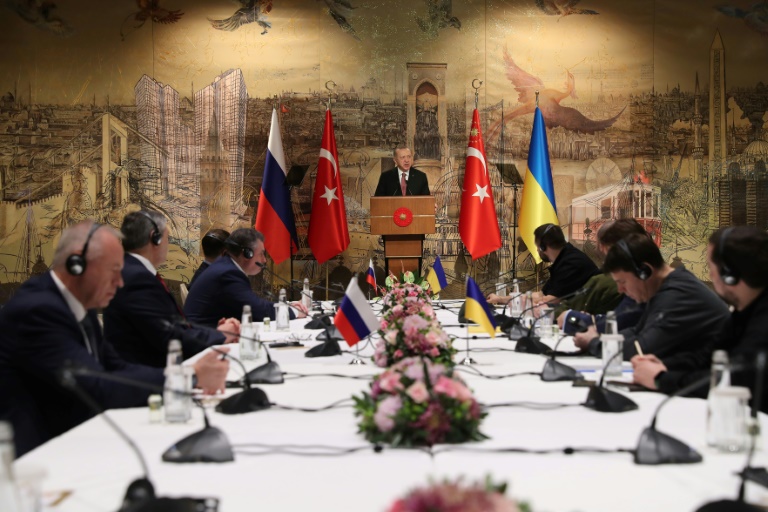
Turkey still hopes to host Russia, Ukraine talks after attacks

Turkey is pushing to revive talks between Russia and Ukraine stalled after atrocities were uncovered in Bucha and other regions near Kyiv, saying the two countries are still ready to meet on its soil. 

The positive atmosphere that emerged after the Istanbul talks last week between Russian and Ukrainian negotiators were “overshadowed” by “shameful” images from Bucha, Foreign Minister Mevlut Cavusoglu said on Thursday. 

Ankara assures that the two warring sides are still “willing to hold talks” in Turkey in a bid to move towards a solution to the six-weeks war. 

“Both Russia and Ukraine are willing to hold the talks in Turkey but they are far away from agreeing on a common text,” a high-ranking Turkish official told a small group of journalists on Friday. 

There are “some issues pending” including the status of the Donbas and Crimea regions as well as security guarantees, according to the official, who added there was no date fixed for the next round of negotiations. 

Turkey, which hosted talks last week between Russian and Ukrainian negotiators, has been mediating for an end to the conflict. 

“We are the only country that can talk to both parties, the only country able to talk to Russia,” the official stressed. 

“We are not proposing anything but we are trying to facilitate what they are discussing.”

– ‘Guarantees’ –

Turkey has strong ties with both Russia and Ukraine. As a NATO member, it has supplied Kyiv with drones but has shied away from joining Western sanctions against Moscow. 

“Imposing sanctions is not a good way to solve the issue,” the Turkish official said, adding that Ankara would only join UN sanctions. 

The official said the most delicate issues were discussed in Istanbul between the two countries’ negotiators, without providing any details. 

After the negotiators met in Istanbul on March 29, President Recep Tayyip Erdogan placed phone calls to Russian leader Vladimir Putin and Ukrainian counterpart Volodmyr Zelensky, renewing his invitation to host a leaders’ summit. 

A senior Western source referred to the existence of a “peace treaty” being negotiated between Moscow and Kyiv where the status of the Donbas and Crimea regions remain to be defined. 

The Turkish official close to the talks said: “We have some ideas about the content but is it a peace treaty? We cannot qualify the document.” 

According to the Turkish official, the two countries have “agreed on some issues” including the so-called de-Nazification, Ukraine’s neutrality and security guarantees. 

But they have to define the security guarantees because some countries “are concerned this could lead to direct confrontation with Russia,” the official said. 

“There are some legal issues to be solved as part of guarantors.”

– Russia’s UN veto power –

At the earlier peace talks in Istanbul, Ukrainian negotiators said Kyiv was ready to accept neutrality in return for security guarantees to be provided by the five permanent members of the UN Security Council as well as some other countries including Turkey, Germany, Canada and Israel. 

Ukrainian negotiators have compared the security guarantees they want to the NATO treaty’s Article 5 where members agree to come to the defence of one another in case of military aggression. 

For its part, Moscow has demanded “the unanimity of all guarantors” for any decision, according to the Western source, deeming it “unacceptable” for Kyiv because with Russia holding the veto-power the same as in the UN Security Council. 

Turkey has stepped up diplomacy from the first days of the war — and even before, when the crisis was brewing, with Erdogan offering good offices without alienating Russia, according to the Turkish official.  

Russian and Ukrainian foreign ministers also met in southern Turkish province of Antalya in March, ahead of the technical negotiations in Istanbul.  

On March 31, Foreign Minister Mevlut Cavusoglu had said the Russian and Ukrainian foreign ministers could meet within two weeks. 

But while Russia had pledged in Istanbul to scale down its military activity on the ground, the images that emerged from Bucha last weekend and a fatal rocket attack on Friday on a train station in the eastern Ukrainian city of Kramatorsk have cast a shadow on the peace talks, according to the Turkish government.  

An official cited an ancient proverb, saying: “If you go to bed with a Russian, don’t forget your knife.”

Close Bitnami banner
Bitnami