World

Shanghai social media unpicks China's virus lockdown story

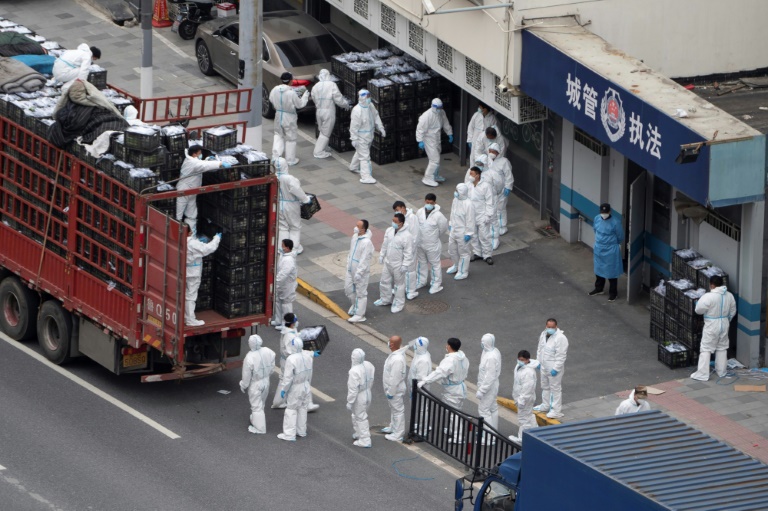
Videos of a pet dog killed in the name of Covid controls, expletive-strewn songs aimed at Communist authorities and scuffles with hazmat-suited officials –- seething, locked-down Shanghai residents are pouring scorn on China’s hardline virus measures via social media.

The world’s most populous country is glued to an aggressive “zero-Covid” strategy, with Beijing extracting political value from China’s relatively low death rates since the pandemic began and gloating over its handling of the virus compared to Western rivals.

But well over two years since the virus first emerged, Shanghai now simmers under an Omicron-fulled outbreak that has 25 million city residents locked down.

Record caseloads have topped 20,000 a day and the lockdown — initially billed as a phased, localised measure — appears set to drag on, even as much of the world learns to live with Covid.

Many residents have tired of the government’s grandstanding and social media has opened a window into their fury at food shortages, strict quarantines and overzealous officialdom.

In one particularly egregious video clip verified by AFP, a person in a hazmat suit is seen bludgeoning a corgi dog to death in the street.

A state-run Shanghai media outlet said Thursday the local neighbourhood committee had admitted culling the creature because they were “afraid of being infected”, but conceded the act was “thoughtless”.

The video has zipped across social media despite China’s strict internet censorship.

“That post about the corgi just keeps getting reshared on my WeChat moments,” a Shanghai resident told AFP, requesting anonymity.

“I think a lot of people are going to be trying to be taking action through petitions and talking to their community… so hopefully the anger and fear turns into something more positive.”

– Shortages –

In another dystopia-tinged viral video, a drone whirrs through a housing compound at night broadcasting a message urging residents to “control your soul’s desire for freedom”. 

The video is unverified, but was billed as a local government reaction to a Shanghai neighbourhood, which serenaded officials with swear-word laden chants in a widely-shared clip.

Other viral videos — whose locations have been verified by AFP — appear to show residents scuffling with hazmat-clad officials and bursting through a barricade onto a street, yelling “we want to eat cheap vegetables!”

Sudden stay-at-home orders have left residents short of fresh food, while delivery apps are overwhelmed each morning as demand surges and many drivers are reportedly off work fearing a positive Covid test could send them into state quarantine.

Taken together, the videos form a rare montage of public anger and a riposte to the government’s narrative that it is in complete control of the pandemic.

– Covid conundrum –

China has refused to abandon its “dynamic zero” Covid strategy of border restrictions, lengthy quarantines and targeted lockdowns, even as new variants test the limits of the policy.

Any shift is unlikely while Beijing touts its pandemic controls as vindication of its right to rule, said Steve Tsang, director of the SOAS China Institute in London. 

“Zero-Covid is not just a Party policy, but … a Xi policy”, he said, referring to China’s President Xi Jinping.

“As such it cannot be wrong and cannot be abandoned — at least not until Xi sees its continuation will harm himself or his hold on power.”

Official figures show the vast majority of the more than 100,000 cases in Shanghai in the past month show no symptoms of Covid-19.

Yet tens of thousands of beds have been set up in centres to quarantine the infected.

Officials only softened a policy of splitting Covid-positive children and babies from their virus-free parents after videos of wards full of young kids stoked public outrage.

For experts, what is happening in Shanghai — and the social media backlash — is exposing the conundrum at the heart of the central policy.

“In terms of … balancing the need to protect health against the need to protect socioeconomic stability, I’m not sure that this is the right approach,” said Yanzhong Huang, senior fellow for Global Health at the Council on Foreign Relations.
Civilians try to flee east Ukraine as Russia prepares attack

Desperate evacuation attempts from eastern Ukraine were under way Thursday as authorities warned of an imminent Russian offensive, following the devastation around Kyiv that has shocked the world.

Russian troops have been withdrawing from around the capital and Ukraine’s north, leaving a trail of destruction, as they prepare for an expected assault on the country’s southeast.

Scenes of carnage that Ukrainian officials have accused retreating troops of leaving behind in towns including Bucha have sparked outrage and led to a wave of fresh sanctions against Moscow. 

But on Thursday, Ukrainian President Volodymyr Zelensky warned that Russia was undeterred and continued “to accumulate fighting force to realise their ill ambitions in (eastern) Donbas”.  

“They are preparing to resume an active offensive,” he said. 

Begging civilians to leave the region “while it is still possible”, local officials in Donbas’ Lugansk and Donetsk said the region was already facing constant indiscriminate shelling. 

“We can see clearly that before the enemy goes to full attack, they will just destroy places completely,” local governor Sergiy Gaiday in Lugansk told Ukrainian broadcaster Channel 24.

– ‘Nowhere to go’ –

Gaiday said on Facebook that more than 1,200 people had been evacuated from Lugansk on Wednesday, but that efforts were being hampered by artillery fire, with some areas already inaccessible.  

For those unable to leave, he said, tonnes of food, medicine and hygiene products were being delivered as part of a massive humanitarian effort.  

The head of the Donetsk Regional Military Administration said strikes had targeted aid points. 

“The enemy aimed directly there with a goal to destroy the civilians,” Pavlo Kyrylenko wrote on Facebook. 

He added that people were heeding calls to flee and he would be coordinating evacuation to make it “faster and more effective”. 

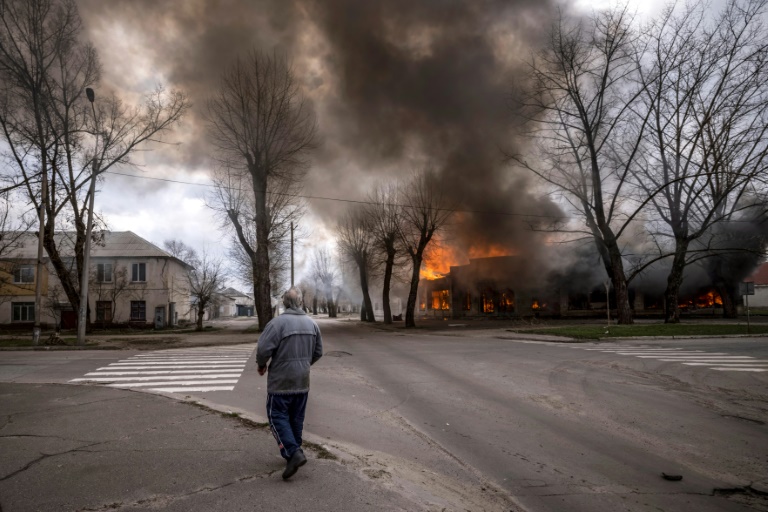
Shells and rockets were also slamming into the industrial city of Severodonetsk, the easternmost city held by Ukrainian forces. 

“We have nowhere to go, it’s been like this for days,” 38-year-old Volodymyr told AFP, standing opposite a burning building in Severodonetsk.

More than 11 million people have been displaced since Russia invaded on February 24, aiming to seize the capital.

With that goal thwarted, Russia is instead trying to create a land link between occupied Crimea and Moscow-backed separatist statelets in Donbas.

Ukrainian forces are also regrouping for the offensive, including on a two-lane highway through the rolling eastern plains connecting Kharkiv and Donetsk.

Trench positions were being dug, and the road was littered with anti-tank obstacles. 

“We’re waiting for them!” said a lieutenant tasked with reinforcing the positions, giving a thumbs up.

As preparations on the ground ramped up, Foreign Minister Dmytro Kuleba demanded NATO members help Ukraine boost its firepower.  

“My agenda is very simple. It has only three items on it. It’s weapons, weapons, and weapons,” Kuleba told journalists on Thursday.

“I call on all allies to put aside their hesitations, their reluctance, to provide Ukraine with everything it needs,” he said. 

– ‘Brutality and inhumanity’ –

The evacuation calls are being fuelled by fears of fresh atrocities, after chilling discoveries in areas from which Moscow’s troops have withdrawn.

US President Joe Biden said “major war crimes” were being committed in Ukraine, where images have emerged in recent days of bodies with their hands bound or in shallow graves.

“Civilians executed in cold blood, bodies dumped into mass graves, the sense of brutality and inhumanity left for all the world to see, unapologetically,” Biden said. 

In one of the worst affected towns, Bucha, some residents were still trying to learn the fate of loved ones, while others were hoping to forget. 

Tetiana Ustymenko’s son and his two friends were gunned down in the street, and she buried them in the garden of the family home. 

“How can I live now?” she said.

The Kremlin denies responsibility for any civilian deaths and President Vladimir Putin on Wednesday accused Ukrainian authorities of “crude and cynical provocations” in Bucha.

But the German government pointed to satellite pictures taken while the town was still under Moscow’s control, which appear to show bodies in the streets.

Russia’s denials “are in our view not tenable”, said German government spokesman Steffen Hebestreit. 

And Ukrainian officials have warned other areas may have suffered worse than Bucha, including nearby Borodianka.

“Locals talk about how planes came in during the first days of the war and fired rockets at them from low altitudes at these buildings,” Ukraine’s Interior Minister Denys Monastyrsky told local media.

Officials have alleged that Russian troops are now trying to cover up atrocities elsewhere to prevent further international outcry, including in the besieged city of Mariupol.

Ukrainian human rights official Lyudmila Denisova said on Telegram Wednesday, citing witness testimony, that Russian forces have brought mobile crematoria to burn bodies and other heavy equipment to clear debris in the city.

– Sanctions ‘not enough’ –

Western powers have already pummelled Russia with debilitating economic sanctions, which have forced Moscow to make foreign debt payments on dollar-denominated bonds in rubles, raising the prospect of a potential default.

British energy giant Shell warned Thursday that it would write off up to $5 billion (4.6 billion euros) after signalling its gradual withdrawal from the country last month.

On Wednesday, the White House unveiled further measures targeting Russia’s top banks and two of Putin’s daughters, while Britain sanctioned two banks and vowed to eliminate all Russian oil and gas imports by the end of the year. 

The European Union is also poised to implement a fifth round of sanctions cutting off Russian coal imports — and European Council chief Charles Michel said that “sooner or later”, it must also impose oil and gas sanctions.

Elsewhere, the United States and Britain have pressed to have Russia excluded from the UN Human Rights Council, with a vote in the General Assembly scheduled for Thursday.

But in his nightly address, Zelensky said although the sanctions package had “a spectacular look… this is not enough”. 

He urged countries to completely cut off Russia’s banks from the international financial system, and to stop buying the country’s oil. 

“It is the export of oil that is one of the foundations of Russian aggression,” he said. 

“One of the foundations that allows the Russian leadership not to take seriously the negotiations on ending the war.” 

Peace talks between the sides have made little progress so far, and NATO chief Jens Stoltenberg has said there is no sign Putin has dropped “his ambition to control the whole of Ukraine”.

burs-reb/sah/axn

Turkey court confirms transfer of Khashoggi murder trial to Saudis

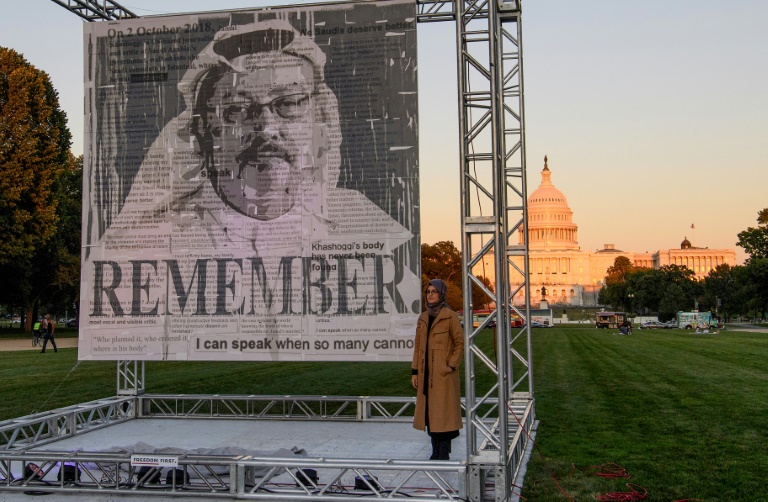
A Turkish court on Thursday confirmed a halt of the trial in absentia of 26 suspects linked to the killing of Saudi critic Jamal Khashoggi and its transfer to Riyadh, a decision that has angered rights groups.  

The 59-year-old journalist was killed inside the Saudi consulate in Istanbul on October 2, 2018 in a gruesome murder that shocked the world.

A Turkish court began the trial in 2020 with relations tense between the two Sunni Muslim regional powers.  

But with Turkey desperate for investment to help pull it out of economic crisis, Ankara has sought to heal the rift with Riyadh. 

The judge told the court: “We decided to halt and hand over the case to Saudi Arabia.” 

The court decision comes almost a week after Justice Minister Bekir Bozdag said that he would greenlight a Turkish prosecutor’s request to hand the case over to Saudi Arabia, at the demand of the latter. 

The prosecutor said the case was “dragging” because the court’s orders could not be carried since the defendants were foreigners. 

-‘Entrusting lamb to wolf’-

Defence lawyer Ali Ceylan told the court on Thursday that there would not be a fair trial in Saudi Arabia. 

“Let’s not entrust the lamb to the wolf,” he said, using a Turkish saying. 

Another defence lawyer, Gokmen Baspinar, denounced the justice ministry’s move as “against law.”

“There is no prosecution going on in Saudi Arabia at the moment,” he said. 

“Saudi authorities have concluded the trial and acquitted many suspects.”

He said the decision to hand over the case to Riyadh would be tantamount to a “breach of Turkish sovereignty” and “an example of irresponsibility against Turkish people”. 

The decision has deeply upset rights groups.

The Istanbul tribunal “agreed to transfer the case to the Saudi authorities — in one sentence, just like that. Didn’t even bother to state the lawyers’ requests are rejected,” Milena Buyum, of Amnesty International, said.

She tweeted: “Appalling and clearly political decision.”

Five people were handed death sentences by the kingdom over Khashoggi’s killing but a Saudi court in September 2020 overturned them while giving jail terms of up to 20 years to eight unnamed defendants following secretive legal proceedings.

– Boycott –

To Riyadh’s dismay, Turkey pressed ahead with the Khashoggi case and President Recep Tayyip Erdogan had at the time said the order to kill him came from the “highest levels” of government.

In the years that followed, Saudi Arabia sought to unofficially put pressure on Turkey’s economy, with a boycott on Turkish imports.

Last year, Foreign Minister Mevlut Cavusoglu visited Riyadh to mend fences with the kingdom. 

The transfer of the case to Riyadh removes the last obstacle to normalising ties. 

But Khashoggi’s Turkish fiancee Hatice Cengiz, who attended Thursday’s hearing, urged Ankara to insist on justice despite rapprochement with Saudi in an interview with AFP in February. 

“In order for such a thing to not happen again…(Turkey) should not abandon this case,” said Cengiz.

She was left waiting outside the consulate for Khashoggi when he was murdered. He had gone there to obtain paperwork to marry her. His remains have never been found. 

Erdogan has sought to improve ties with regional rivals including Egypt and the United Arab Emirates in the face of increasing diplomatic isolation that has caused foreign investment to dry up — particularly from the West.

In January, he said he was planning a trip to Saudi Arabia as the economy went through a tumultuous period. 

Turkey’s annual inflation has soared to 61.1 percent, according to official data Monday. 

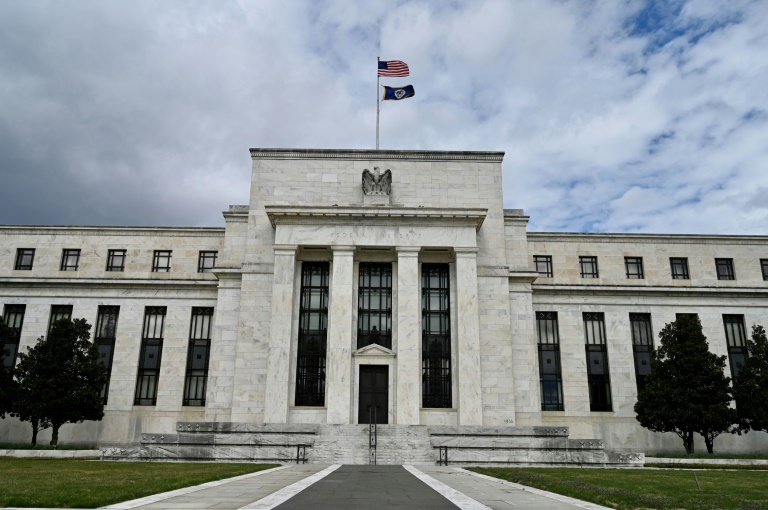
Asian markets track Wall St down with Fed set to tighten screws

Asian equity markets fell Thursday after minutes from the Federal Reserve’s latest policy meeting indicated it is preparing to aggressively wind back its monetary policy, while oil prices rebounded from another big drop.

The eagerly awaited summary dealt another blow to traders, who have grown increasingly concerned that officials will not be able to rein in 40-year-high inflation while also preventing the world’s top economy from tipping into recession.

According to the minutes, several policymakers were in favour of lifting interest rates half a percentage point while they also talked about offloading their bond holdings at a rate of $95 million per month — a process known as quantitative tightening.

The Fed’s balance sheet runs to about $9 trillion. 

News that such measures were being considered comes after several members of the policy board made hawkish comments about lifting rates. The next meeting takes place May 3-4.

The prospect of borrowing costs rising at a quicker pace and to a higher level over the coming months has added to a wave of uncertainty across trading floors caused by the war in Ukraine.

And while data at the moment points to a healthy economy, commentators warn of possible hard times ahead.

“This job of orchestrating a soft landing (for the economy) is going to be difficult,” Tracie McMillion, at Wells Fargo Investment Institute, told Bloomberg Television.

“We’ve only seen quantitative tightening once before and it was to a lesser degree than it will be this time, and it ended shortly after it started.”

Wall Street tumbled for the second day in a row, with the Nasdaq again losing more than two percent, as tech firms are more susceptible to higher rates.

“The minutes… show that Fed officials are becoming increasingly alarmed at how inflationary pressures are increasing and are determined to send a message to markets that they will act decisively to keep it in check,” said CMC markets analyst Michael Hewson.

Investors are now awaiting the release of minutes from the European Central Bank’s most recent meeting, looking for signs that officials there are preparing to change from their more dovish approach to policy.

Asia broadly followed New York down, with Tokyo, Sydney, Seoul, Taipei, Singapore, Mumbai, Wellington, Bangkok and Manila all in the red.

Hong Kong and Shanghai were also sharply lower, having given up early gains fuelled hopes that China will ease monetary policy as its giant economy struggles under the weight of lockdowns in various parts of the country.

London opened lower but Paris and Frankfurt edged up.

Authorities will step in to use tools at an “appropriate time”, according to the readout of a State Council meeting chaired by Premier Li Keqiang, adding they would also look at other ways to increase consumption. 

On oil markets, both main contracts enjoyed healthy gains of more than one percent a day after tanking more than five percent on concerns about demand caused by a possible economic slowdown.

The commodity had also been hit by an announcement from the International Energy Agency that it will release tens of millions of barrels to offset those lost through sanctions on Russia, and owing to China’s Covid lockdowns.

“With the IEA release and the US (reserves) releases now priced in, Asia has walked in and bought the dips in both contracts,” said OANDA’s Jeffrey Halley.

“That is consistent with the usual behaviour of buyers from the energy-hungry region, with plenty of Asian interest to buy on any and all pullbacks.”

– Key figures around 0720 GMT –

Tokyo – Nikkei 225: DOWN 1.7 percent at 26,888.57 (close)

Hong Kong – Hang Seng Index: DOWN 0.9 percent at 21,891.51

Shanghai – Composite: DOWN 1.4 percent at 3,236.70 (close)

London – FTSE 100: DOWN 0.1 percent at 7,578.56

Brent North Sea crude: UP 1.1 percent at $102.20 per barrel

West Texas Intermediate: UP 1.2 percent at $97.38 per barrel

Euro/dollar: UP at $1.0915 from $1.0900 late Wednesday

Pound/dollar: UP at $1.3089 from $1.3071

Euro/pound: UP at 83.39 pence from 83.38 pence

Dollar/yen: UP at 123.80 yen from 123.79 yen

New York – Dow: DOWN 0.4 percent at 34,496.51 (close)

Shell to take hit of up to $5 bn on Russia exit

British energy giant Shell warned Thursday that it would take a hit of up to $5 billion (4.6 billion euros) on its exit from Russia, following Moscow’s invasion of Ukraine.

Impairment from assets and additional charges relating to Russia activities were expected to be between $4 billion and $5 billion in the first quarter, Shell said in a statement after recently signalling its gradual withdrawal.

The news comes after the London-listed energy major announced in late February that it would sell its stakes in all joint ventures with Russian state energy giant Gazprom after the Kremlin launched its assault on Ukraine.

The group said at the time that the ventures were worth about $3 billion.

Shell then announced in March that it would withdraw from Russian gas and oil in line with UK government policy, and also immediately stopped purchases of its crude on the spot market.

The company had also apologised for buying a cargo of Russian oil at a vast discount, adding that it should not have happened.

However, Shell revealed Thursday that it would continue to fulfil contracts on buying fuel from Russia that had been signed before the Ukraine war.

“Shell has not renewed longer-term contracts for Russian oil, and will only do so under explicit government direction, but we are legally obliged to take delivery of crude bought under contracts that were signed before the invasion,” it said in the statement.

And the group warned that the state of global oil markets remains “volatile” after prices rocketed to near record levels last month on the back of the conflict.

Britain, which is far less dependent than the rest of Europe on Russian energy, plans to phase out oil imports by the end of the year and eventually stop importing its gas. 

A wide range of international companies have stopped doing business in Russia since President Vladimir Putin ordered the invasion of Ukraine on February 24.

– Oil prices jump –

Shell’s main rival BP has also announced its departure.

BP said in late February that it would pull its 19.75-percent stake in state energy giant Rosneft, ending more than three decades of investment in Russia.

Shell’s first-quarter earnings are scheduled for publication on May 5.

It had swung back into massive profit last year, as oil and gas prices jumped on recovering demand and geopolitical unrest.

Net profit stood at $20.1 billion after a loss after tax of $21.7 billion in 2020, as economies reopened from pandemic lockdowns.

The Ukraine crisis then sent shockwaves across the global oil market because Russia is a major producer.

Oil prices rocketed close to record levels of close to $140 per barrel in early March, although they have since fallen back to around $100 on peace talk hopes.

Shell this year switched headquarters from the Netherlands to Britain after a century and dropped Royal Dutch from its name, in a move aimed at simplifying tax and share arrangements.

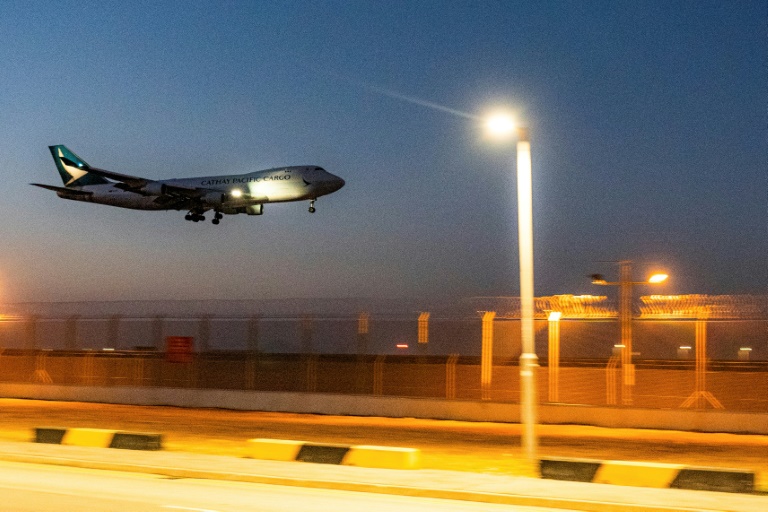
Hong Kong leader defends Covid flight ban policy

Hong Kong’s leader on Thursday defended her policy of temporarily banning flight routes that bring in coronavirus cases, as a leading airline industry figure warned the city had fallen “off the map” as an aviation hub.

The city’s airport was previously one of the world’s busiest but has been largely cut off throughout the pandemic as Hong Kong hews to China’s strict zero-Covid policy.

“Circuit breaker” rules mean any airline that brings in three or more infected passengers on a single flight is suspended from flying that route for seven days.

City leader Carrie Lam defended the policy on Thursday, saying flights were bringing in infections “probably because of the very relaxed approach adopted in many places” around the world.

Authorities have given some ground, lifting a complete flight ban on nine countries earlier this month following growing anger from the business community and Hong Kongers stranded overseas.

Lam said more than 1,000 residents have returned to Hong Kong daily this month, compared to just 200 a day previously.

“It is not right to say that this travel easing has no impact,” she said.

Her comments came as the director general of the International Air Transport Association, Willie Walsh, warned Hong Kong was “effectively off the map”.

“(Hong Kong) is going to lag significantly behind the recovery that we’re seeing elsewhere,” Walsh told reporters on Wednesday in quotes carried by Bloomberg News and the South China Morning Post.

Temporary flight bans have been frequently invoked, throwing travel plans into chaos as residents scramble to book new routes and change mandatory hotel quarantine bookings.

Six airlines including Emirates and Cathay Pacific have had routes banned this week.

Emirates’ Dubai-Bangkok-Hong Kong route has been suspended six times for a total of 77 days this year, according to Bloomberg.

Walsh said Hong Kong’s restrictions have been “very severe and have led directly to the cancellation of a lot of services, with airlines effectively finding it incredibly difficult, if not impossible, to operate there”.

Last month 11 airlines and logistics giants sent a letter to the government calling for the removal of Covid-19 testing requirements for flight crews before take-off and on arrival.

Prior to the pandemic, Hong Kong’s airport hosted about 200,000 passengers a day.

But the finance hub — which dubs itself “Asia’s World City” — is now one of the world’s most isolated places.

Lam’s administration says there can be no change from zero-Covid even though the controls proved largely ineffective this year when the Omicron variant tore through.

Hong Kong has since recorded one of the world’s highest mortality rates from the virus.

The race to dominate satellite internet heats up

Though satellite internet has existed for years, the competition is about to rapidly intensify, with companies planning to launch thousands of their own systems into low Earth orbit.

The latest move in the industry came on Tuesday from Amazon, which took a major step towards getting its $10 billion Kuiper constellation off the ground by sealing deals with three rocket companies.

The US online retail giant wants to strengthen its lucrative diversification into IT services, and “provide low-latency broadband to a wide range of customers,” including those “working in locations without a reliable internet connection.”

“Satellite solutions are an indispensable complement to fiber,” said Stephane Israel, chief executive of Arianespace, one of the Amazon rocket providers.

“There are situations in which fiber is much too expensive compared to satellite connections, especially to reach the last inhabitant of a remote area,” he explained.

In addition to the satellites themselves, Amazon plans “small, affordable client terminals” along the lines of Echo smart-homes and Kindle e-readers, and promises to “provide service at a price that is affordable and accessible to customers,” with no further pricing details immediately.

Will Amazon be able to break through the increasingly crowded market?

Satellite internet already exists: US customers have access to HughesNet and Viasat, while in Europe, Orange subsidiary Nordnet — among others — uses the power of the Eutelsat Konnect satellite to offer broadband to its customers.

Costs for users start under 60 euros ($70) per month, excluding terminal and antenna, and increase according to the bandwidth.

But because these services use satellites at geostationary orbit —  more than 35,000 kilometers (22,000 miles) from Earth’s surface — their speed cannot match that of fiber, prohibiting use for high-speed tasks like gaming.

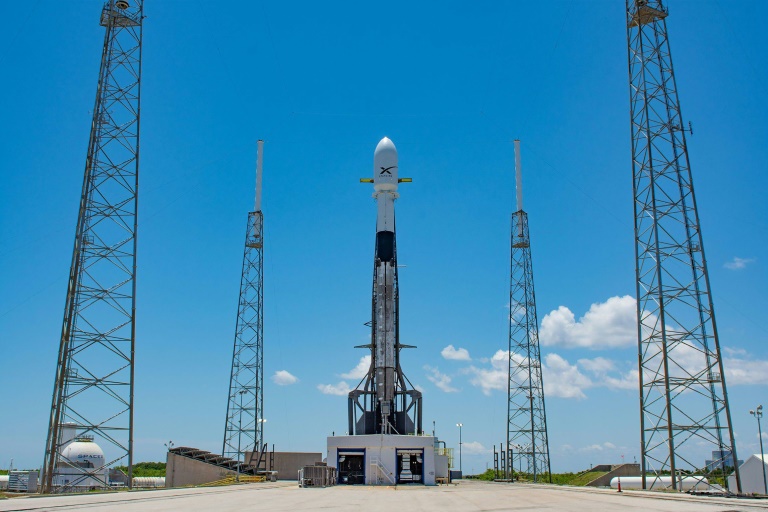
Amazon’s future satellites, like those already launched by Starlink, a subsidiary of Elon Musk’s SpaceX, will operate in low Earth orbit (LEO), only 600 km high. 

– Low orbit more vulnerable –

“The advantage of LEO is that you reduce the latency, (and) by reducing the latency you maximize the uses,” said Israel.

On the other hand, being closer to Earth makes it necessary to send many more spacecraft into orbit: more than 3,200 for Amazon, and thousands for Starlink, of which around 1,500 are already active.

British company OneWeb has launched 428 of the 648 satellites in its LEO constellation, and China plans to deploy around 13,000 “GuoWang” satellites.

Beyond the issues of national competition, the rapid expansion responds to an equally growing need.

In late March, the United Nation’s International Telecommunication Union remarked that “once considered a luxury, internet connectivity became crucial for many during the COVID-19 pandemic as populations faced stay-at-home orders and many practices moved online.”

“The need for bandwidth has skyrocketed around the world, and we will never launch enough satellites to meet the demand,” predicts an executive AFP met this week in Colorado Springs, on the sidelines of the world’s biggest space technology trade show.

But the bandwidth marketing specialist, who asked to remain anonymous, also noted that low-orbiting spacecraft are far more vulnerable than geostationary ones, as demonstrated by the recent loss of dozens of Starlinks after a magnetic storm.

As a result, “they will have to be constantly replaced.”

The rocket companies will not mind that.

Civilians try to flee east Ukraine as Russia prepares attack

Desperate evacuation attempts from eastern Ukraine were under way Thursday as authorities warned of an imminent Russian offensive, following the devastation around Kyiv that has shocked the world.

Russian troops have been withdrawing from around the capital and Ukraine’s north, leaving a trail of destruction behind them, as they prepare for an expected assault on the country’s southeast. 

The scenes of carnage left behind by retreating troops in towns like Bucha have caused outrage and led to a wave of fresh sanctions against Moscow. 

But on Thursday, Ukrainian President Volodymyr Zelensky warned that Moscow was undeterred and continued “to accumulate fighting force to realise their ill ambitions in (eastern) Donbas”.  

“They are preparing to resume an active offensive,” he said. 

Begging civilians to leave the region “while it is still possible”, local officials in Donbas’ Lugansk and Donetsk said the region was already facing constant indiscriminate shelling. 

“We can see clearly that before the enemy goes to full attack, they will just destroy places completely,” local governor Sergiy Gaiday in Lugansk told Ukrainian broadcaster Channel 24.

– ‘Nowhere to go’ –

Gaiday said on Facebook that more than 1,200 people had been evacuated from Lugansk on Wednesday, but that efforts were being hampered by artillery fire, with some areas already inaccessible.  

For those that unable to leave, he said, tonnes of food, medicine and hygiene products were being delivered as part of a massive humanitarian effort.  

The head of the Donetsk Regional Military Administration said strikes had targeted aid points. 

“The enemy aimed directly there with a goal to destroy the civilians,” Pavlo Kyrylenko wrote on Facebook. 

He added that people were heeding calls to flee and he would be coordinating evacuation to make it “faster and more effective.” 

Shells and rockets were also slamming into the industrial city of Severodonetsk, the easternmost city held by Ukrainian forces. 

“We have nowhere to go, it’s been like this for days,” 38-year-old Volodymyr told AFP standing opposite a burning building in the city.

More than 11 million people have been displaced since Russia invaded on February 24, aiming to seize the capital.

With that goal thwarted, it is instead trying to create a land link between occupied Crimea and Moscow-backed separatist statelets in Donbas.

Ukrainian forces are also regrouping for the offensive, including on a two-lane highway through the rolling eastern plains connecting Kharkiv and Donetsk.

Trench positions were being dug, and the road was littered with anti-tank obstacles. 

“We’re waiting for them!” said a lieutenant tasked with reinforcing the positions, giving a thumbs up.

– ‘Brutality and inhumanity’ –

The evacuation calls are being fuelled by fears of fresh atrocities, after chilling discoveries in areas from which Moscow’s troops have withdrawn.

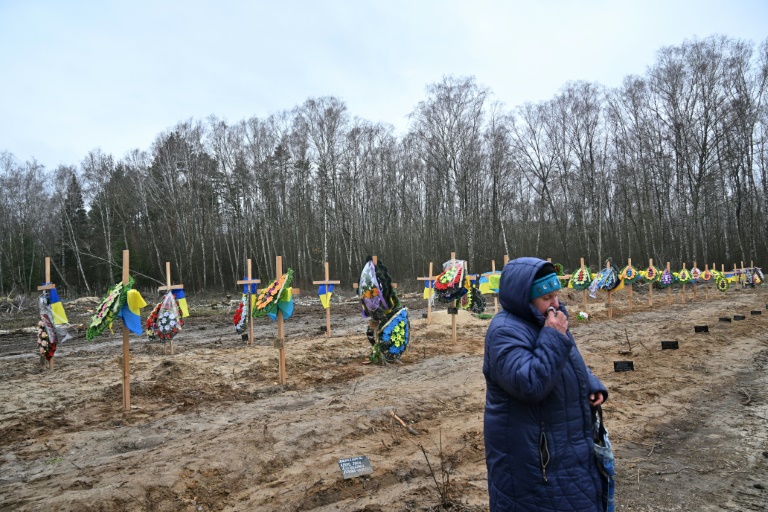
US President Joe Biden said “major war crimes” were being committed in Ukraine, where images have emerged in recent days of bodies with their hands bound or in shallow graves.

“Civilians executed in cold blood, bodies dumped into mass graves, the sense of brutality and inhumanity left for all the world to see, unapologetically,” Biden said. 

In one of the worst affected towns, Bucha, some residents were still trying to learn the fate of loved ones, while others were hoping to forget. 

Tetiana Ustymenko’s son and his two friends were gunned down in the street, and she buried them in the garden of the family home. 

“How can I live now?” she said.

The Kremlin denies responsibility for any civilian deaths and Putin on Wednesday accused Ukrainian authorities of “crude and cynical provocations” in Bucha.

But the German government pointed to satellite pictures taken while the town was still under Moscow’s control, which appear to show bodies in the streets.

Russia’s denials “are in our view not tenable”, said German government spokesman Steffen Hebestreit. 

And Ukrainian officials have warned other areas may have suffered worse than Bucha, including nearby Borodianka.

“Locals talk about how planes came in during the first days of the war and fired rockets at them from low altitudes at these buildings,” Ukraine’s Interior Minister Denys Monastyrsky told local media.

Officials have alleged that Russian troops are now trying to cover up atrocities elsewhere to prevent further international outcry, including in the besieged city of Mariupol.

Ukrainian human rights official Lyudmila Denisova said on Telegram on Wednesday, citing witness testimony, that Russian forces have brought mobile crematoria to burn bodies and other heavy equipment to clear debris in the city.

– Sanctions ‘not enough’ –

Western powers have already pummelled Russia with debilitating economic sanctions, which forced Moscow on Wednesday to make foreign debt payments on dollar-denominated bonds in rubles, raising the prospect of a potential default.

On Wednesday, the White House unveiled further measures targeting Russia’s top banks and two of President Vladimir Putin’s daughters, while Britain sanctioned two banks and vowed to eliminate all Russian oil and gas imports by the end of the year. 

The EU is also poised to implement a fifth round of sanctions cutting off Russian coal imports — and European Council chief Charles Michel said that “sooner or later”, it must also impose oil and gas sanctions.

Elsewhere, the US and Britain have pressed to have Russia excluded from the UN Human Rights Council, with a vote in the General Assembly scheduled for Thursday.

But in his nightly address, Zelensky said although the sanctions package had “a spectacular look… this is not enough.” 

He urged countries to completely cut off Russia’s banks from the international financial system, and to stop buying the country’s oil. 

“It is the export of oil that is one of the foundations of Russian aggression,” he said. 

“One of the foundations that allows the Russian leadership not to take seriously the negotiations on ending the war.” 

Peace talks between the sides have made little progress so far, and NATO chief Jens Stoltenberg has said there is no sign Putin has dropped “his ambition to control the whole of Ukraine”.

burs-reb/sah/jfx

War in Ukraine: Latest developments

Here are the latest developments in the war in Ukraine:

– Residents in East told to leave –

Ukraine tells residents in the country’s east to evacuate “now” or “risk death” ahead of a feared Russian onslaught on the Donbas region, which Moscow has declared its top prize.

President Volodymyr Zelensky says Russia is working to “accumulate fighting force to realise their ill ambitions in Donbas.”

– Ukraine FM asks NATO for weapons –

Ukraine’s Foreign Minister Dmytro Kuleba calls on NATO members to provide Kyiv with all the weaponry it needs to fight Russia.

“My agenda is very simple. It has only three items on it. It’s weapons, weapons, and weapons,” Kuleba tells journalists at NATO headquarters in Brussels. 

– Bucha killings ‘war crimes’: Biden – 

US President Joe Biden denounces the killing of Ukrainian civilians in the town of Bucha allegedly by Russian troops as “war crimes”.

“Civilians executed in cold blood, bodies dumped into mass graves, the sense of brutality and inhumanity left for all the world to see, unapologetically. There’s nothing less happening than major war crimes,” he says, urging the world to hold the killers accountable.

– Putin speaks on Bucha –

Russian President Vladimir Putin meanwhile accuses Ukrainian authorities of being behind “crude and cynical provocations” in Bucha, with Moscow denying any responsibility.

– Denials ‘not tenable’ –

The German government says that satellite images of Bucha from last month undercut Russian claims that its troops were not involved in deaths there.

Claims of “posed scenes or that they were not responsible for the murders are in our view not tenable”, government spokesman Steffen Hebestreit says.

– Putin daughters sanctioned –

The United States announces sanctions on two of Putin’s daughters, saying family members are known to hide the Russian president’s wealth.

It also declared “full blocking” sanctions on Russia’s largest public and private financial institutions, Sberbank and Alfa Bank, and says all new US investments in Russia are now prohibited.

The EU is also looking to add Putin’s daughters to its sanctions blacklist, European diplomats tell AFP.

– More UK sanctions –

Britain slaps new sanctions on Russia, targeting two banks and eliminating all Russian oil and coal imports by the end of the year.

The latest UK measures also outlaw all new British investment into Russia.

– Putin ‘still wants all Ukraine’ –

NATO chief Jens Stoltenberg says there is no sign Putin has dropped “his ambition to control the whole of Ukraine”.

– Orban invites Putin, Zelensky –

Hungarian Prime Minister Viktor Orban, one of Putin’s rare allies in Europe, says he has urged the Russian leader to declare an immediate ceasefire in Ukraine.

He also invites the leaders of France, Germany and Ukraine to meet Putin in Budapest.

– UN rights body suspension –

The UN General Assembly votes Thursday on suspending Russia from the UN Human Rights Council as punishment for invading Ukraine.

Ukrainian President Volodymyr Zelensky has called for Russia to be expelled from the UN Security Council “so it cannot block decisions about its own aggression, its own war.”

– Marathon bars Russians, Belarusians –

Organisers of the Boston Marathon say Russian and Belarusian runners will be barred over the invasion of Ukraine.

burs-sah/reb

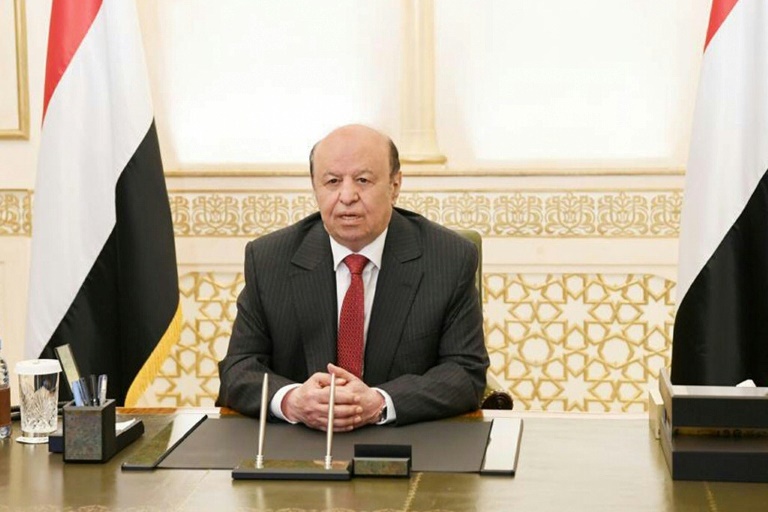
Yemen's president transfers power to new leadership council

Yemen’s president announced Thursday he is handing his powers to a new leadership council, in a major shake-up in the coalition battling Huthi rebels as a fragile ceasefire takes hold.

“I irreversibly delegate to this presidential leadership council my full powers,” President Abedrabbo Mansour Hadi said in a televised statement early Thursday, the final day of peace talks held in the Saudi capital Riyadh.

Hadi’s internationally recognised government has been locked in conflict with Iran-backed Huthi rebels who control the capital Sanaa and most of the north despite a Saudi-led intervention launched in 2015.

A United Nations-brokered truce that took effect on Saturday — the first day of the Muslim holy month of Ramadan — has offered a glimmer of hope in the conflict which has triggered what the UN describes as the world’s worst humanitarian crisis.

The truce came as the peace talks were unfolding in Riyadh without the participation of the Huthis, who refused to attend talks on “enemy” territory.

Some analysts had cast doubt on what the negotiations could achieve in the absence of the Huthis, but Thursday’s news may help the sometimes fractious coalition battling the rebels to speak with one voice in any future peace negotiations.

Hadi also announced he had sacked Vice President Ali Mohsen Al-Ahmar.

The new council will consist of eight members and be led by Rashad al-Alimi, a former interior minister and adviser to Hadi.

Hadi said it would “negotiate with the Huthis to reach a ceasefire all over Yemen and sit at the negotiating table to reach a final political solution.”

Hadi has been based in Saudi Arabia since fleeing to the kingdom in 2015 as rebel forces closed in on his last redoubt, the southern port city of Aden.

– A ‘new page’? –

The formation of the council represents “the most consequential shift in the inner workings of the anti-Huthi bloc since the war began”, Peter Salisbury, senior Yemen analyst for the International Crisis Group, said on Twitter.

But he cautioned that implementing the arrangement would be “complicated to say the least.”

Saudi Arabia’s de facto ruler, Crown Prince Mohammed bin Salman, met the council and said he hoped for a “new page” in Yemen, footage aired by state media showed.

Saudi Arabia said it welcomed Hadi’s announcement and pledged $3 billion in aid and support, some of it to be paid by the United Arab Emirates.

Yemen’s 30 million people are in dire need of assistance. 

A UN donors’ conference this month raised less than a third of its $4.27 billion target, prompting dark warnings for a country where 80 percent of the population depends on aid.

The UN special envoy for Yemen, Hans Grundberg, said Wednesday that there had been a “significant reduction of violence” since the truce took effect but both sides have accused each other of minor “breaches” of the ceasefire.

Close Bitnami banner
Bitnami