World

Energy giant Shell hikes Russian exit hit to $5 bn

Shell on Thursday warned that its exit from Russia over the Ukraine war would cost the British energy giant up to $5 billion, but it would fulfil pre-conflict contracts to buy fuel from Moscow.

Despite the massive financial hit, energy majors are generally enjoying soaring revenues as oil and gas prices remain high on tight supply worries caused by the war and as economies reopen from pandemic lockdowns.

Shell, which is gradually withdrawing from Russia owing to the war, said impairment from assets — or loss in their value — and extra charges relating to activities in the country would be between $4 billion and $5 billion (3.7 billion and 4.6 billion euros) in the first quarter just ended.

The London-listed company in late February announced that it would sell its stakes in all joint ventures with Russian state energy giant Gazprom after the Kremlin launched its assault on Ukraine.

At the end of last year, Shell valued these Russian ventures at $3 billion.

– ‘Legally obliged’ –

Shell is withdrawing from Russian gas and oil in line with UK government policy.

However, the company on Thursday revealed it is “legally obliged to take delivery of crude bought under contracts that were signed before the invasion”.

Shell previously apologised for buying a cargo of Russian oil at a vast discount following the invasion.

Britain, which is far less dependent than the rest of Europe on Russian energy, plans to wean itself off oil imports by the end of the year and eventually stop importing its gas.

A UK government energy strategy update Thursday called for more renewable power from nuclear, offshore wind and solar.

Nations around the globe and their companies have axed business ties with Russia since President Vladimir Putin ordered the invasion of Ukraine on February 24.

Shell’s rival BP is pulling its near 20-percent stake in state energy giant Rosneft.

– Oil prices jump –

The Ukraine crisis has sent shockwaves across the global oil and gas markets because Russia is a major producer of fossil fuels.

Oil prices, which rocketed close to $140 per barrel in early March, have since fallen back to around $100 on peace talk hopes.

Shell, which on Thursday cautioned that the crude market remains “volatile”, saw its share price slide 1.4 percent in morning deals on London’s benchmark FTSE 100 index, which was steady.

“Shell has put an even higher figure of the costs of its write-down… which appears to have unnerved investors,” noted Susannah Streeter, senior investment and markets analyst at Hargreaves Lansdown.

“But despite the eye watering costs, the share price should continue to stay reasonably resilient given the divestment far outweighs the reputational damage which could be caused had it not pulled out.”

Its first-quarter earnings are due on May 5.

Shell had swung back into massive profit last year, as oil and gas prices jumped on recovering demand and geopolitical unrest.

Net profit stood at $20.1 billion after a loss after tax of $21.7 billion in 2020 at the height of the pandemic.

At the start of 2022, Shell switched headquarters from the Netherlands to Britain after a century and dropped Royal Dutch from its name.

Shell said the move was designed to strengthen its competitiveness, while accelerating shareholder distributions and its transition to a net-zero emissions business.
Australia, Myanmar junta meeting 'unacceptable': HRW

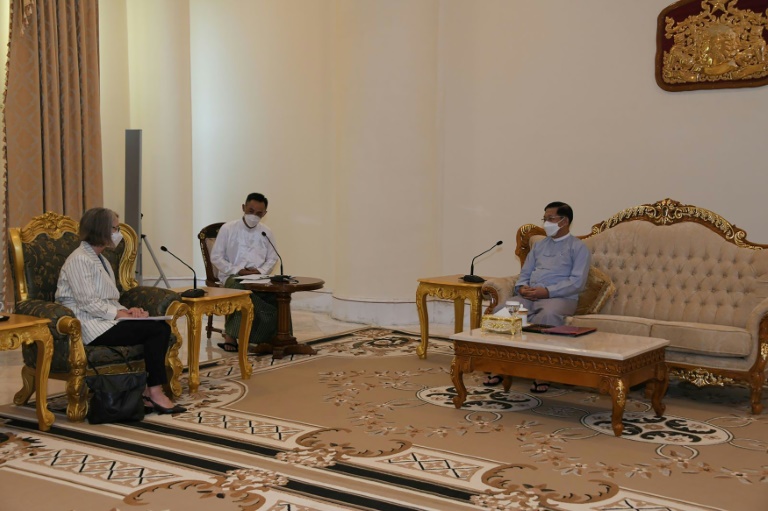
Human Rights Watch on Thursday slammed a meeting between Australia’s ambassador to Myanmar and the military junta chief, saying it was “lending credibility” to a regime accused of war crimes. 

Since a military-led coup ousted Aung San Suu Kyi’s administration last year, Myanmar has been increasingly isolated internationally — with foreign governments urging an end to deadly crackdowns on mass democracy protests. 

Australia’s outgoing ambassador Andrea Faulkner met with junta leader Min Aung Hlaing in Naypyidaw on Wednesday, with state-owned media outlet Global New Light of Myanmar reporting the pair discussed “enhancement of cooperation in various sectors”. 

The ambassador was accompanied by Australia’s defence attache to Myanmar, Colonel Tony Egan, the report said.

Katrina Cooper from Australia’s foreign affairs department said the ambassador had used the meeting to reiterate calls for Myanmar to cease violence and release detainees. 

“The Australian government does not consider that the outgoing meeting legitimises the current regime,” Cooper told a Senate committee in Canberra.

But HRW said the meeting and subsequent coverage in state media did just that. 

“This is meeting is not only deeply unacceptable, but it undercuts efforts by other governments to isolate the military commander implicated in serious abuses,” HRW’s Myanmar researcher Manny Maung said.

“By taking photo ops and accepting gifts, Australia only serves to lend credibility to a military junta that is accused of committing war crimes and crimes against humanity against its own population.” 

Maung urged Australia to “align with its traditional allies”  by avoiding further high-level meetings with the junta and immediately imposing sanctions. 

Australian officials outlined seven other meetings and phone calls with the junta since the coup, but denied any sectors were engaging with the regime. 

Canberra has repeatedly called for the release of Australian economist Sean Turnell, who was working as an adviser to Suu Kyi when he was detained shortly after the coup. 

He has been charged with violating Myanmar’s official secrets law and faces a maximum penalty of 14 years in prison if found guilty.

Myanmar has been in chaos since a putsch in February 2021, with more than 1,700 people killed in crackdowns on dissent, according to a local monitoring group.

Taiwan to move away from zero-Covid strategy: minister

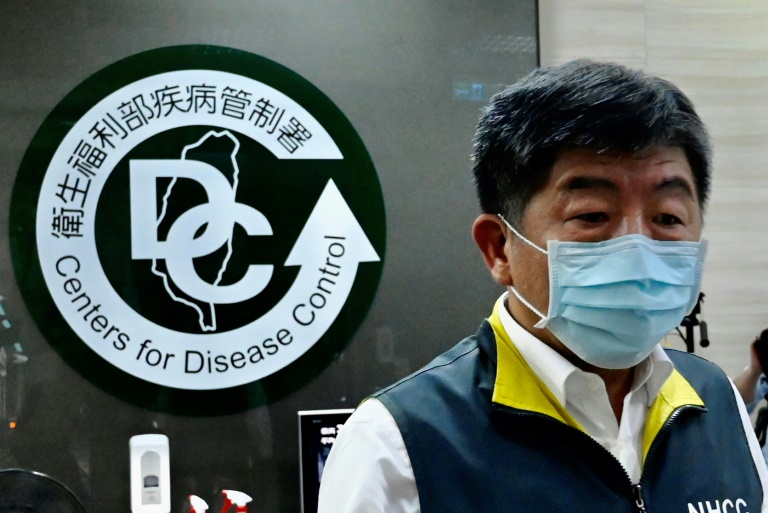
Taiwan will move away from a zero-Covid policy and instead focus on tackling the most severe infections in an effort to live with the coronavirus, its health minister said Thursday.

The decision leaves China — and its financial hub Hong Kong — as the only major economy still sticking to the strategy even as Omicron breaks through those defences.

Taiwan has largely closed its borders and implemented strict quarantine rules throughout the pandemic, keeping infection numbers low.

An outbreak last year prompted the temporary reimposition of economically painful social distancing measures until it was brought under control.

Infections are once again rising but Taiwan’s leaders have signalled they will follow other former zero-Covid economies like Singapore, Australia and New Zealand by opening up.

Asked at a parliamentary session on Thursday if Taiwan was in a “transitional phase” from pursuing zero cases to living with the virus, health minister Chen Shih-chung replied: “Yes, you can say so.” 

“We will not stop our journey towards opening up, this is our direction but we will maintain effective management. The main goal now is harm mitigation,” he said.

Chen’s remarks came a day after President Tsai Ing-wen called for calm and confidence in the island’s ability to confront the surge in cases.

“With ongoing vaccination and targeted use of medical resources, we continue to pursue our goal of mitigating harm while also ensuring the health of our economy,” she tweeted on Wednesday. 

For most of March, Taiwan recorded case numbers in the single digits, but infections have been steadily increasing since 87 were reported on March 31.

On Thursday new infections rose to 382, a record this year and the seventh straight day with the number over 100. 

Chen said Taiwan cannot yet fully live with the virus but plans to “gradually loosen” quarantine requirements.

One sticking point could be lacklustre vaccination rates. Currently 79 percent of the population have received two doses but only 51 percent have had a booster.

Vaccination rates among the elderly, the most vulnerable demographic, are also low.

Taiwan’s plan to shift tactics comes as an outbreak in China’s economic heartland of Shanghai is exposing the limits of strict zero-Covid controls.

Residents in the city of 25 million have been confined to their homes and authorities are now recording about 20,000 new infections a day.

Chinese social media has been filled with stories of people struggling to secure food deliveries and medicine.

In Hong Kong, the zero-Covid strategy collapsed when Omicron broke through at the start of the year, leaving the city with one of the world’s highest mortality rates from the virus.

UK denies climate retreat despite rethink on fossil fuels

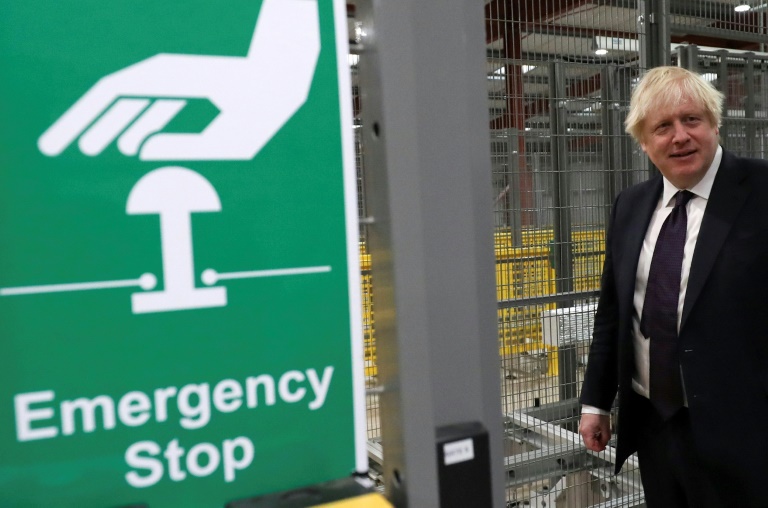
Britain insisted Thursday it was sticking to its climate change goals despite unveiling a new energy strategy that foresees new drilling for North Sea fossil fuels.

After weeks of cabinet infighting, the government finally released its strategy as Britons struggle with soaring energy prices following Russia’s invasion of Ukraine.

The plan envisions eight new nuclear power stations, a five-fold increase in solar and enough electricity from offshore wind to power every UK home by 2030.

But to the dismay of environmentalists, the politically charged problem of onshore wind turbines — cheaper and quicker to build than offshore — was left on the backburner. 

And campaign groups said plans to offer new licences to drill for North Sea oil and gas made a mockery of Prime Minister Boris Johnson’s legally enshrined commitment to make Britain carbon net zero by 2050.

“This isn’t an energy security strategy and will do nothing to bring down energy bills,” argued Ed Matthew, campaigns director at climate change think tank E3G. 

“It is a national security threat and the person who will be happiest with it is (Russian President) Vladimir Putin,” he said.

But the government says the market shock from sanctions on Russia has forced a temporary reappraisal of fossil fuels, as Britons confront the worst cost-of-living crisis since the 1950s.

Business and Energy Secretary Kwasi Kwarteng denied the government had turned its back on net zero.

“Not at all,” he told Sky News. “It’s still in the law of the land, we’re focused on that.

“But of course given what’s happening around the world, given the pressure on energy prices, we’re also doing lots of other things to make sure we get energy independence back into the UK,” he said.

The government acknowledges that the strategy will do little to curb household energy bills in the near term, which Johnson said had “absolutely soared” after Putin’s invasion of Ukraine.

– ‘Madness’ –

But in a social media video promoting the new strategy, the prime minister stressed: “We just can’t carry on like this.”

The plan would make British energy “cleaner, more affordable and more secure”, he said.

Johnson vowed that “instead of a new reactor every decade, we will have a new reactor every year”.

He went on to visit a new nuclear plant under construction at Hinkley Point in southwest England — which is years overdue and billions over budget.

The plan flagged a new competition to find UK manufacturers of electric heat pumps — which are much more efficient than gas-fired household boilers, but also much more expensive.

Otherwise, as critics noted, it had nothing to say about cutting down on energy wastage and improving efficiency in homes, after the finance ministry reportedly vetoed new spending on that front.

“This strategy comprehensively fails to stand up to Putin’s violence, to take the sting out of soaring energy bills, or take control of the spiralling climate crisis,” said Rebecca Newsom, head of politics at Greenpeace UK.

United Nations secretary-general Antonio Guterres, marking the launch Monday of the latest UN report on climate change, said it was “moral and economic madness” to invest any more in fossil fuels.

The 3,000-page report warned that countries risk ending up with trillions in worthless assets such as offshore platforms and pipelines when demand for fossil fuels wanes in coming decades.

For the UK government, however, political pressure to tackle the energy crisis has been heating up ahead of nationwide local elections on May 5.

Ed Miliband, climate spokesman for the opposition Labour party, said Conservative backbenchers opposed to onshore turbines in rural England were “holding the government’s energy policy to ransom”.

“And people are paying higher bills as a result,” he told BBC radio.

UK denies climate retreat despite rethink on fossil fuels

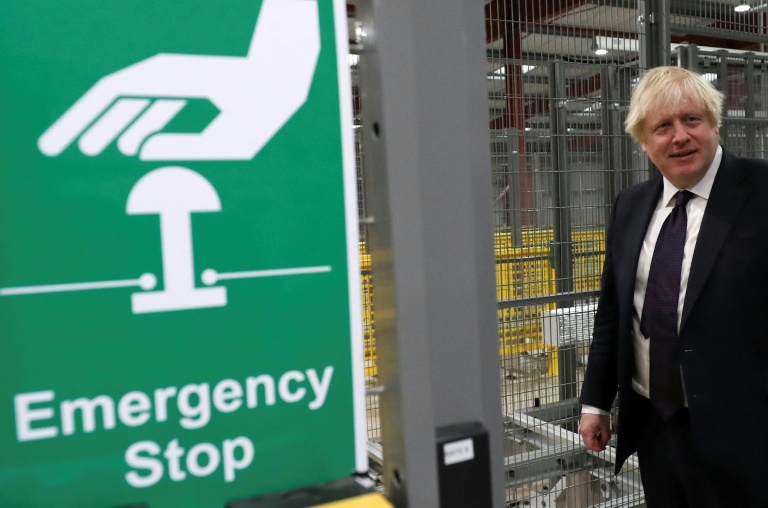
Britain insisted Thursday it was sticking to its climate change goals despite unveiling a new energy strategy that foresees new drilling for North Sea fossil fuels.

After weeks of cabinet infighting, the government finally released its strategy as Britons struggle with soaring energy prices following Russia’s invasion of Ukraine.

The plan envisions eight new nuclear power stations, a five-fold increase in solar and enough electricity from offshore wind to power every UK home by 2030.

But to the dismay of environmentalists, the politically charged problem of onshore wind turbines — cheaper and quicker to build than offshore — was left on the backburner. 

And campaign groups said plans to offer new licences to drill for North Sea oil and gas made a mockery of Prime Minister Boris Johnson’s legally enshrined commitment to make Britain carbon net zero by 2050.

“This isn’t an energy security strategy and will do nothing to bring down energy bills,” argued Ed Matthew, campaigns director at climate change think tank E3G. 

“It is a national security threat and the person who will be happiest with it is (Russian President) Vladimir Putin,” he said.

But the government says the market shock from sanctions on Russia has forced a temporary reappraisal of fossil fuels, as Britons confront the worst cost-of-living crisis since the 1950s.

Business and Energy Secretary Kwasi Kwarteng denied the government had turned its back on net zero.

“Not at all,” he told Sky News. “It’s still in the law of the land, we’re focused on that.

“But of course given what’s happening around the world, given the pressure on energy prices, we’re also doing lots of other things to make sure we get energy independence back into the UK,” he said.

The government acknowledges that the strategy will do little to curb household energy bills in the near term, which Johnson said had “absolutely soared” after Putin’s invasion of Ukraine.

– ‘Madness’ –

But in a social media video promoting the new strategy, the prime minister stressed: “We just can’t carry on like this.”

The plan would make British energy “cleaner, more affordable and more secure”, he said.

Johnson vowed that “instead of a new reactor every decade, we will have a new reactor every year”.

He went on to visit a new nuclear plant under construction at Hinkley Point in southwest England — which is years overdue and billions over budget.

The plan flagged a new competition to find UK manufacturers of electric heat pumps — which are much more efficient than gas-fired household boilers, but also much more expensive.

Otherwise, as critics noted, it had nothing to say about cutting down on energy wastage and improving efficiency in homes, after the finance ministry reportedly vetoed new spending on that front.

“This strategy comprehensively fails to stand up to Putin’s violence, to take the sting out of soaring energy bills, or take control of the spiralling climate crisis,” said Rebecca Newsom, head of politics at Greenpeace UK.

United Nations secretary-general Antonio Guterres, marking the launch Monday of the latest UN report on climate change, said it was “moral and economic madness” to invest any more in fossil fuels.

The 3,000-page report warned that countries risk ending up with trillions in worthless assets such as offshore platforms and pipelines when demand for fossil fuels wanes in coming decades.

For the UK government, however, political pressure to tackle the energy crisis has been heating up ahead of nationwide local elections on May 5.

Ed Miliband, climate spokesman for the opposition Labour party, said Conservative backbenchers opposed to onshore turbines in rural England were “holding the government’s energy policy to ransom”.

“And people are paying higher bills as a result,” he told BBC radio.

Yemen's Hadi cedes powers to new leadership council as peace talks beckon

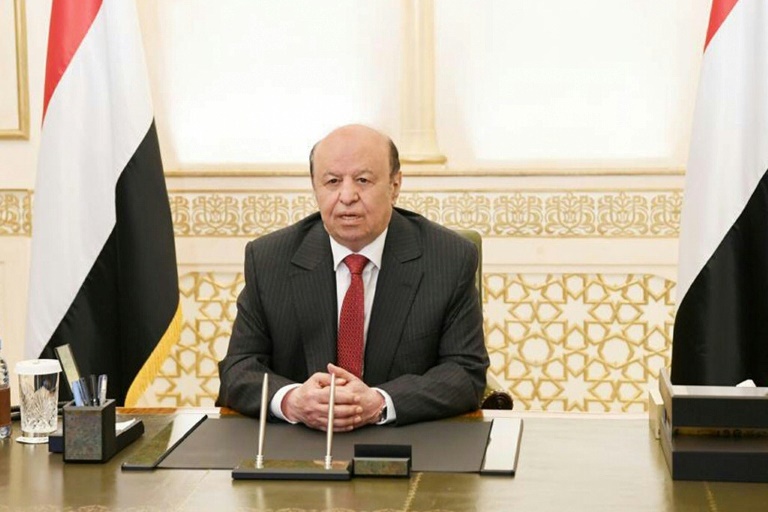
Yemen’s president announced Thursday he is handing his powers to a new leadership council, in a major shake-up in the coalition battling Huthi rebels as a fragile ceasefire takes hold.

“I irreversibly delegate to this presidential leadership council my full powers,” Abedrabbo Mansour Hadi said in a televised statement early Thursday, the final day of Yemen talks held in the Saudi capital Riyadh.

Saudi Arabia said it welcomed Hadi’s announcement and pledged $3 billion in aid and support for its war-torn neighbour, some of it to be paid by the United Arab Emirates.

Hadi’s internationally recognised government has been locked in conflict with Iran-backed Huthi rebels who control the capital Sanaa and most of the north despite a Saudi-led military intervention launched in 2015.

A United Nations-brokered truce that took effect on Saturday — the first day of the Muslim holy month of Ramadan — has offered a glimmer of hope in the conflict which has triggered what the UN describes as the world’s worst humanitarian crisis.

The truce came as discussions on Yemen were unfolding in Riyadh without the participation of the Huthis, who refused to attend talks on “enemy” territory.

Some analysts had cast doubt on what the negotiations could achieve in the absence of the Huthis, but Thursday’s news may help the sometimes fractious coalition battling the rebels to speak with one voice in any future peace negotiations.

Hadi also announced he had sacked Vice President Ali Mohsen Al-Ahmar.

The new council will consist of eight members and be led by Rashad al-Alimi, a former interior minister and adviser to Hadi.

Hadi said it would be tasked with “negotiating with the Huthis for a permanent ceasefire”.

He said it should also sit down for talks “to reach a final and comprehensive political solution that includes a transitional phase that will move Yemen from a state of war to a state of peace”.

Hadi has been based in Saudi Arabia since fleeing to the kingdom in 2015 as rebel forces closed in on his last redoubt, the southern port city of Aden.

– A ‘new page’? –

The formation of the council represents “the most consequential shift in the inner workings of the anti-Huthi bloc since the war began”, Peter Salisbury, senior Yemen analyst for the International Crisis Group, said on Twitter.

But he cautioned that implementing the arrangement would be “complicated to say the least”.

Saudi Arabia’s de facto ruler, Crown Prince Mohammed bin Salman, met the council and said he hoped for a “new page” in Yemen, footage aired by state media showed.

Secretary-general of the Gulf Cooperation Council Nayef al-Hajraf also welcomed Hadi’s announcement, pledging the bloc’s support for the new leadership council “in its tasks to achieve safety and security” in Yemen. 

Yemen’s 30 million people are in dire need of assistance. 

A UN donors’ conference this month raised less than a third of its $4.27 billion target, prompting dark warnings for a country where 80 percent of the population depends on aid.

As part of the truce, the Saudi-led coalition agreed to ease its longstanding air and sea blockade to allow commercial flights to fly into the rebel-held capital and fuel and more food shipments into the rebel-held port of Hodeida, an aid lifeline.

The UN special envoy for Yemen, Hans Grundberg, said Wednesday that there had been a “significant reduction of violence” since the truce took effect but both sides have accused each other of minor “breaches” of the ceasefire.

Turkey court confirms transfer of Khashoggi murder trial to Saudis

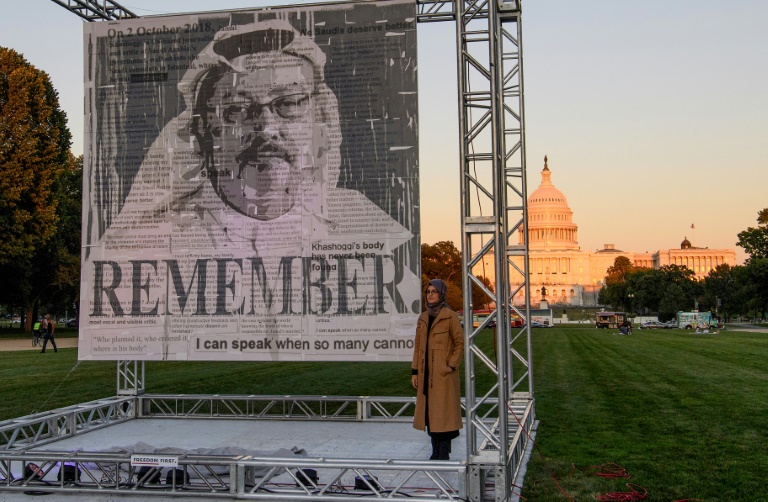
A Turkish court on Thursday confirmed a halt to the trial in absentia of 26 suspects linked to the killing of Saudi critic Jamal Khashoggi and its transfer to Riyadh, a decision that has angered rights groups.  

The 59-year-old journalist was killed inside the Saudi consulate in Istanbul on October 2, 2018, in a gruesome murder that shocked the world.

A Turkish court began the trial in 2020 with relations tense between the two Sunni Muslim regional powers.  

But with Turkey desperate for investment to help pull it out of economic crisis, Ankara has sought to heal the rift with Riyadh. 

The judge told the court: “We decided to halt and hand over the case to Saudi Arabia.” 

The court decision comes almost a week after Justice Minister Bekir Bozdag said that he would approve a Turkish prosecutor’s request to hand the case over to Saudi Arabia, at the latter’s demand.

The prosecutor said the case was “dragging” because, as the defendants were foreigners, the court’s orders could not be carried out. 

-‘Entrusting lamb to wolf’-

Defence lawyer Ali Ceylan told the court on Thursday that there would not be a fair trial in Saudi Arabia. 

“Let’s not entrust the lamb to the wolf,” he said, using a Turkish saying. 

Another defence lawyer, Gokmen Baspinar, said that the justice ministry’s move was “against the law.”

“There is no prosecution going on in Saudi Arabia at the moment,” he said. “Saudi authorities have concluded the trial and acquitted many suspects.”

He said the decision to hand over the case to Riyadh would be tantamount to a “breach of Turkish sovereignty” and “an example of irresponsibility against Turkish people”. 

The decision has deeply angered rights groups.

The Istanbul tribunal “agreed to transfer the case to the Saudi authorities — in one sentence, just like that. Didn’t even bother to state the lawyers’ requests are rejected,” Milena Buyum, of Amnesty International, said.

She tweeted: “Appalling and clearly political decision.”

Five people were sentenced to death by the kingdom over Khashoggi’s killing, but a Saudi court in September 2020 overturned the sentences, handing jail terms of up to 20 years to eight unnamed defendants following secretive legal proceedings.

– Appeal –

Khashoggi’s fiancee Hatice Cengiz, who was present at the hearing on Thursday, said that she would appeal the decision.

Turkey “is not ruled by a family like in Saudi Arabia. We have a justice system that addresses citizens’ grievances,” she told journalists outside Istanbul’s main court. 

“We will appeal the decision in line with our legal system”.

Speaking to AFP, she vowed to “continue to fight. Whoever gives up has given up. I will continue. Sometimes the legal battle itself is more important than the results.” 

To Riyadh’s dismay, Turkey pressed ahead with the Khashoggi case and President Recep Tayyip Erdogan had, at the time, said the order to kill him came from the “highest levels” of government.

Subsequently, Saudi Arabia sought unofficially to put pressure on Turkey’s economy, with a boycott on Turkish imports.

Last year, Foreign Minister Mevlut Cavusoglu visited Riyadh to mend fences with the kingdom. 

Transferring the case to Riyadh removes the last obstacle to a normalisation of ties. 

In an interview with AFP in February, Cengiz urged Ankara to insist on justice despite the rapprochement with Saudi Arabia. 

“In order for such a thing to not happen again…(Turkey) should not abandon this case,” she said.

Cengiz had been waiting outside the consulate for Khashoggi when he was murdered. He had gone there to obtain paperwork to marry her. His remains have never been found. 

Erdogan has sought to improve ties with regional rivals including Egypt and the United Arab Emirates in the face of increasing diplomatic isolation that has caused foreign investment to dry up — particularly from the West.

In January, he said he was planning a trip to Saudi Arabia as the economy went through a tumultuous period. 

Turkey’s annual inflation has soared to 61.1 percent, according to official data Monday. 

Sri Lanka president asks experts to plan debt restructure

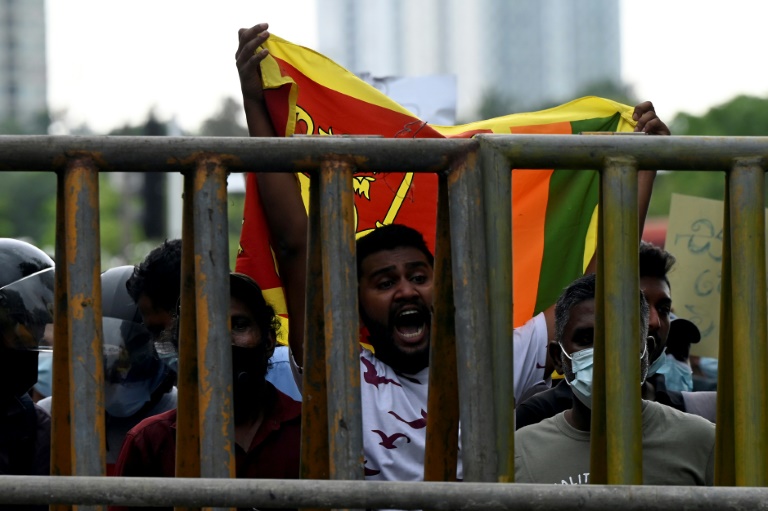
Sri Lanka’s beleaguered president has appointed an expert panel to organise a debt restructure to claw the country out of a crippling economic crisis that has sparked huge protests demanding his resignation.

Scarce supplies of food and fuel, along with record inflation and regular blackouts, have inflicted widespread misery in the country’s most painful downturn since independence from Britain in 1948.

Rating agencies have warned of a potential default on Sri Lanka’s $51 billion foreign debt, and authorities have been unable to raise more commercial loans because of credit downgrades.

President Gotabaya Rajapaksa’s office said late Wednesday that the three-member advisory panel had been tasked with guiding Sri Lanka through a “sustainable and inclusive recovery”.

His government is preparing for bailout negotiations with the International Monetary Fund, and finance ministry officials told AFP the trio will prepare a programme for sovereign bond holders and other creditors to take a haircut.

“What Sri Lanka is keen to do is avoid a hard default,” a source from the ministry, who requested anonymity, told AFP. 

“It will be a negotiated restructuring of the debt with the help of the IMF.”

Parliamentary Speaker Mahinda Yapa Abeywardana warned Wednesday that the economic crisis could lead to starvation unless addressed within the week.

Meetings with the IMF are set to begin by next week but Finance Minister Basil Rajapaksa — the president’s brother — resigned on Sunday night along with nearly the entire cabinet. 

The country is still without a replacement, with his successor quitting after just one day in office.

Public anger is at fever pitch, with crowds attempting to storm the homes of several government figures and demanding President Rajapaksa’s resignation.

Security forces have dispersed protests with tear gas, water cannon and rubber bullets, and dozens have been arrested — many saying they were tortured in police custody. 

Opposition parties have rejected the president’s overture to form a unity administration and joined calls for him to step down.

But chief government whip Johnston Fernando reiterated Thursday that Rajapaksa would stay in office to lead the country out of the crisis.

The government has lost its majority in parliament but there has so far been no clear signal that opposition legislators will attempt a no-confidence motion to topple the administration.

A critical foreign currency shortage has left Sri Lanka struggling to import essential goods, with the pandemic torpedoing vital revenue from tourism and remittances.

Rating agencies have warned of a potential default on Sri Lanka’s $51 billion foreign debt, and authorities are unable to raise more commercial loans because of credit downgrades.

Economists say the crisis has been exacerbated by government mismanagement, years of accumulated borrowing and ill-advised tax cuts.

Asian markets track Wall St down with Fed set to tighten screws

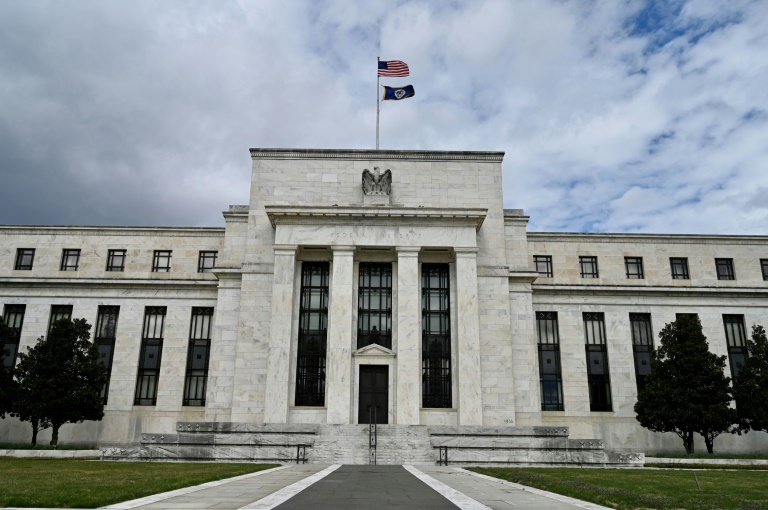
Asian equity markets fell Thursday after minutes from the Federal Reserve’s latest policy meeting indicated it is preparing to aggressively wind back its monetary policy, while oil prices pared another big drop.

The eagerly awaited summary dealt another blow to traders, who have grown increasingly concerned that officials will not be able to rein in 40-year-high inflation while also preventing the world’s top economy from tipping into recession.

According to the minutes, several policymakers were in favour of lifting interest rates half a percentage point while they also talked about offloading their bond holdings at a rate of $95 million per month — a process known as quantitative tightening.

The Fed’s balance sheet runs to about $9 trillion. 

News that such measures were being considered comes after several members of the policy board made hawkish comments about lifting rates. The next meeting takes place May 3-4.

The prospect of borrowing costs rising at a quicker pace and to a higher level over the coming months has added to a wave of uncertainty across trading floors caused by the war in Ukraine.

And while data at the moment points to a healthy economy, commentators warn of possible hard times ahead.

“This job of orchestrating a soft landing (for the economy) is going to be difficult,” Tracie McMillion, at Wells Fargo Investment Institute, told Bloomberg Television.

“We’ve only seen quantitative tightening once before and it was to a lesser degree than it will be this time, and it ended shortly after it started.”

Wall Street tumbled for the second day in a row, with the Nasdaq again losing more than two percent, as tech firms are more susceptible to higher rates.

“The minutes… show that Fed officials are becoming increasingly alarmed at how inflationary pressures are increasing and are determined to send a message to markets that they will act decisively to keep it in check,” said CMC markets analyst Michael Hewson.

Investors are now awaiting the release of minutes from the European Central Bank’s most recent meeting, looking for signs that officials there are preparing to change from their more dovish approach to policy.

Asia broadly followed New York down, with Tokyo, Sydney, Seoul, Taipei, Singapore, Mumbai, Wellington, Bangkok and Manila all in the red.

Hong Kong and Shanghai were also sharply lower, having given up early gains fuelled by hopes that China will ease monetary policy as its giant economy struggles under the weight of lockdowns in various parts of the country.

Authorities will step in to use tools at an “appropriate time”, according to the readout of a State Council meeting chaired by Premier Li Keqiang, adding they would also look at other ways to increase consumption. 

London fell in the morning but Paris and Frankfurt rose.

On oil markets, both main contracts enjoyed gains a day after tanking more than five percent on concerns about demand caused by a possible economic slowdown.

The commodity had also been hit by an announcement from the International Energy Agency that it will release tens of millions of barrels to offset those lost through sanctions on Russia, and owing to China’s Covid lockdowns.

“With the IEA release and the US (reserves) releases now priced in, Asia has walked in and bought the dips in both contracts,” said OANDA’s Jeffrey Halley.

“That is consistent with the usual behaviour of buyers from the energy-hungry region, with plenty of Asian interest to buy on any and all pullbacks.”

– Key figures around 0810 GMT –

Tokyo – Nikkei 225: DOWN 1.7 percent at 26,888.57 (close)

Hong Kong – Hang Seng Index: DOWN 1.2 percent at 21,808.98 (close)

Shanghai – Composite: DOWN 1.4 percent at 3,236.70 (close)

London – FTSE 100: DOWN 0.3 percent at 7,562.36

Brent North Sea crude: UP 0.4 percent at $101.44 per barrel

West Texas Intermediate: UP 0.4 percent at $96.62 per barrel

Euro/dollar: UP at $1.0900 from $1.0900 late Wednesday

Pound/dollar: UP at $1.3087 from $1.3071

Euro/pound: UP at 83.67 pence from 83.38 pence

Dollar/yen: DOWN at 123.72 yen from 123.79 yen

New York – Dow: DOWN 0.4 percent at 34,496.51 (close)

Australia frees refugees from Djokovic detention hotel: activists

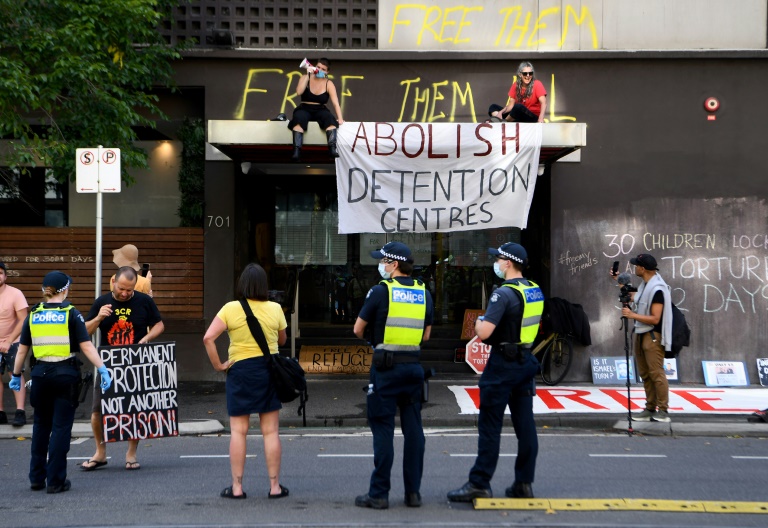
Australia on Thursday released the last refugees held in a former hotel where tennis superstar Novak Djokovic was spectacularly detained earlier this year, activists said.

The eight men held in the Melbourne facility were originally in a group of refugees and asylum seekers transferred to Australia from offshore facilities to receive medical care. They were then detained for several years.

Djokovic’s detention in January for entering the country without a Covid-19 vaccination for the Australian Open drew global attention to the fate of the refugees and asylum seekers held alongside him in rooms at the Park Hotel.

“Three months since the world’s media watched Novak Djokovic come and go from the Park Hotel, the refugees who were detained alongside him are finally free,” Graham Thom of Amnesty Australia said.

“Sadly these men were unnecessarily detained for more than two years in hotels in Australia, following the years of trauma they suffered offshore.”

The Park Hotel detainees were among around 20 people freed on Thursday from immigration detention across Australia, according to refugee advocates.

The government did not release a statement on the latest release of refugees. AFP has reached out to Australia’s Department of Home Affairs for comment.

Mostafa Azimitabar, a Kurd who fled Iran and spent 2,737 days in Australian immigration detention — both offshore and in a Melbourne hotel — said Thursday that “these hotels should never again be used to detain us”.

“We celebrate this day with everyone who has stood with us!” he tweeted.

Last week, Home Affairs told senators that 31 “transitory persons” — a term used to define refugees and asylum seekers transferred for medical treatment — remained in immigration detention.

The Asylum Seeker Resource Centre estimated that after Thursday’s releases, some 10 people remained in detention around Australia — but it was unclear why they had not yet been released into the community or if they would ever be.

Under Australia’s hardline immigration policy, asylum seekers who attempt to reach the country by boat have for years been sent to remote detention centres on Papua New Guinea’s Manus Island and the Pacific island nation of Nauru.

Prime Minister Scott Morrison once had a boat-shaped trophy in his office, emblazoned with the words “I Stopped These” — a reference to his time as immigration minister, when stopping migrant vessels was his top priority.

Close Bitnami banner
Bitnami