World

BirdLife Cyprus sees 'worrying' spike in migratory bird killings

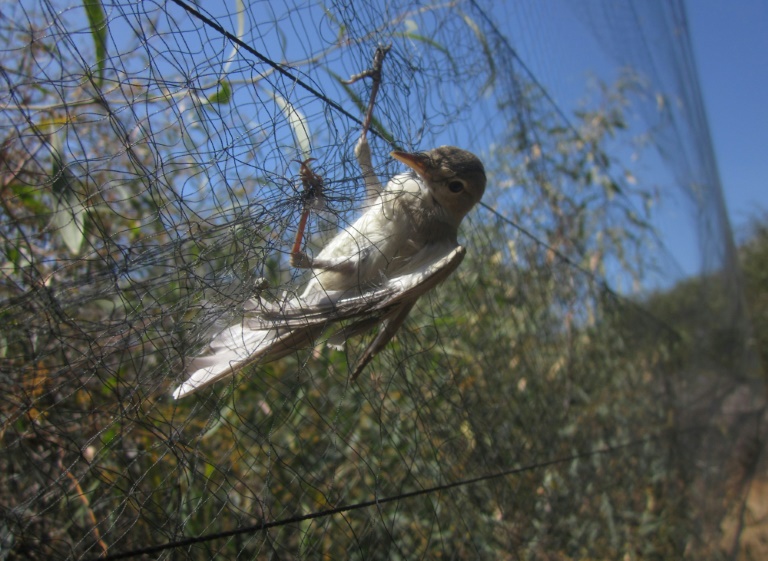
Conservation group BirdLife Cyprus reported Wednesday a “worrying increase” in illegal bird trappings last year, blaming authorities for reducing fines for killing protected species. 

“This sadly comes as no surprise, following a shameful relaxation of the Cyprus bird-protection law in December 2020,” the group said in a statement.

It has systematically monitored bird trapping levels for the past 20 years in the Republic of Cyprus and a British military base area on the Mediterranean island.

Its autumn 2021 report showed a big increase in trapping levels with so-called “mist nets” within the survey areas compared to 2020.

Autumn is when trappers target migratory birds, especially Blackcaps and other migrant songbirds.

Late last year, activity using mist nets — which are barely visible and designed to entangle the birds — was 132 percent higher than for autumn 2020.

At Dhekelia, a British base area, mist netting activity showed an increase of 46 percent from 2020.

Last year’s increase is similar to the past four years but significantly lower than the peak 2016 trapping season when 2.3 million songbirds were killed.

– ‘Troubling trend’ –

“These recorded trapping levels amount to just over 600,000 birds that might have been illegally trapped and killed in the autumn of 2021 within the survey areas,” said BirdLife Cyprus. 

“This troubling increasing trend in trapping activity comes after a series of retrograde steps on a policy level that sent a general message of decriminalising bird trapping.” 

It said fines that were reduced from 2,000 euros (about $2,200) to 200 euros “are non-deterrent and non-punitive, and clearly not proportionate to the profit one would make by illegally selling these birds”.

The illicit trade in migratory birds is estimated at 15 million euros per year, although it has been illegal for decades. Critics blame lax enforcement.

In a letter to the Cyprus government last October, the European Commission expressed concern and urged Nicosia to annul this law amendment and restore the fines starting at 2,000 euros.

“The state’s objective should be the protection and conservation of our natural heritage, starting from re-instating a strict and deterrent law,” said the group.

“Cyprus is very likely to be taken to the EU Court of Justice for the insufficient protection of migratory birds, as highlighted in the Commission’s letter.”

War fears mount as Ukraine mobilises, Russia evacuates diplomats

Ukraine mobilised its military reserves and Russia evacuated its Kyiv embassy on Wednesday as fears reached fever pitch of a full-scale conflict breaking out in eastern Europe.

Kremlin chief President Vladimir Putin has defied an avalanche of international sanctions to put his forces on stand-by to occupy and defend two rebel-held areas of eastern Ukraine.

In response, Kyiv’s President Volodymyr Zelensky has put Ukraine’s more than 200,000 reservists on notice that they will receive summons to return to their units.

Ukraine also urged its approximately three million citizens living in Russia to leave and prepared to declare a national state of emergency.

“We are united in believing that the future of European security is being decided right now, here in our home, in Ukraine,” Zelensky said during a joint media appearance with the visiting leaders of Poland and Lithuania.

“Ukraine needs security guarantees. Clear, specific, and immediate,” Zelensky said, adding: “I believe that Russia must be among those countries giving clear security guarantees.”

Western capitals say Russia has amassed 150,000 troops in combat formations on Ukraine’s borders with Russia, Belarus and Russian-occupied Crimea and on warships in the Black Sea.

Ukraine has around 200,000 military personnel and Wednesday’s call up could see up to 250,000 reservists aged between 18 and 60 receive their mobilisation papers. 

Moscow’s total forces are much larger — around a million active duty personnel — and have been modernised and re-armed in recent years.

– High cost of war –

But Ukraine has received advanced anti-tank weapons and some drones from NATO members. More have been promised as the allies try to deter a Russian attack or at least make it costly.

Shelling has intensified in recent days between Ukrainian forces and Russia-backed separatists, and civilians living near the front are fearful.

Dmitry Maksimenko, a 27-year-old coal miner from government-held Krasnogorivka, told AFP that he was shocked when his wife came to tell him that Putin had recognised two Russian-backed separatist enclaves.

“She said: ‘Have you heard the news?’. How could I have known? There’s no electricity never mind internet. I don’t know what is going to happen next, but to be honest, I’m afraid,” he said.

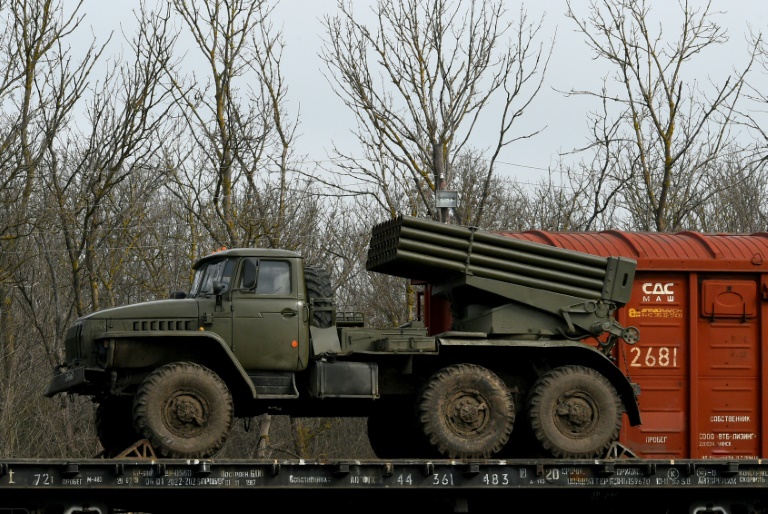
In a Russian village around 50 kilometres from the border, AFP reporters saw military equipment including rocket launchers, howitzers and fuel tanks mounted on trains stretching for hundreds of metres.

Washington and Britain say Russia’s force is poised to strike Ukraine and trigger the most serious war in Europe for decades, but Putin says he is open to negotiation — within limits.

Russia has demanded that Ukraine be forbidden from ever joining the NATO alliance and that US troops pull out from Eastern Europe. 

“The interests of Russia, the security of our citizens, are non-negotiable for us,” Putin declared, in a video address to mark the Defender of the Fatherland Day, a public holiday.

On Tuesday, the Federation Council, Russia’s upper house, gave him unanimous approval to deploy troops to two breakaway Ukrainian regions now recognised by Moscow as independent, Donetsk and Lugansk. 

Russia said it had established diplomatic relations “at the level of embassies” with the separatist statelets, which broke away from Kyiv in 2014 in a conflict that has cost more than 14,000 lives.

Moscow also said it would evacuate diplomatic personnel from Ukraine to “protect their lives.”

The Russian flag was lovered over the embassy building in Kyiv Wednesday, eyewitnesses said. An AFP reporter saw several families leaving the embassy with suitcases.

Speaking to journalists, Putin on Tuesday set out a number of stringent conditions if the West wanted to de-escalate the crisis, saying Ukraine should drop its NATO ambition and become neutral.

US President Joe Biden later announced tough new sanctions targeting financial institutions and Russia’s “elites” for “beginning” an invasion of Ukraine, but said there was still time to avoid war.

The Russian foreign ministry on Wednesday said it was preparing a “strong response” to Biden.

It said this would be “well-calibrated and sensitive for the American side”.

Australia, Britain, Japan and the European Union have all also announced sanctions.

Germany has said it is halting certification of the Nord Stream 2 gas pipeline from Russia.

– ‘Full-scale invasion’ –

Kremlin officials have responded scornfully to the sanctions, and observers point out that energy-rich Russia has huge reserves of $639 billion and an $182-billion sovereign wealth fund to see it through a crisis.   

Putin’s plans remain unclear, but Western officials have been warning for weeks he has been preparing an all-out invasion of Ukraine, a move that could spark a catastrophic war in Europe. 

The White House signalled it no longer believes Russia is serious about avoiding conflict, Secretary of State Antony Blinken cancelling a meeting with Russian Foreign Minister Sergei Lavrov scheduled for Thursday.

Speaking to reporters on Tuesday, Putin said Moscow had recognised the independence of Ukraine’s separatist regions within their administrative borders, including territory still controlled by Kyiv — raising the spectre of a clash. 

He added that Western-brokered peace agreements on Ukraine’s conflict no longer existed and stressed that the deployment of Russian troops would “depend on the specific situation… on the ground”.

On a visit to Berlin, French Foreign Minister Jean-Yves Le Drian said: “When or how should we believe what President Putin says? I don’t know if anyone knows.” 

burs-dt/oc/jj

Olympic champion Zverev says behaviour was 'unacceptable' in Acapulco

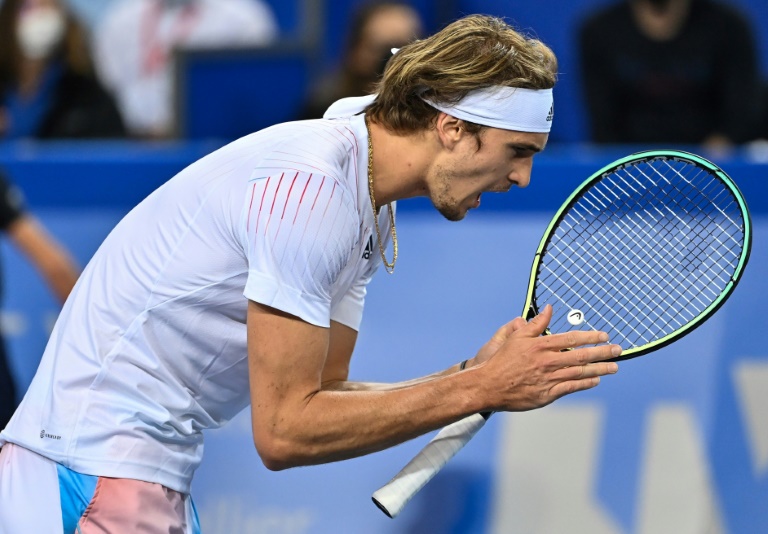
German Olympic tennis champion Alexander Zverev said there “was no excuse” for smashing his racket on the umpire’s chair several times and his foul-mouthed rant at the official was “unacceptable”, as he was expelled from the Acapulco Open by the ATP.

Zverev, ranked three in the world, posted an apology posted on his Instagram account a few hours after his expulsion.

“It is difficult to put into words how much I regret my behavior during and after the doubles match yesterday,” he wrote.

“I have privately apologised to the chair umpire because my outburst towards him was wrong and unacceptable.” 

Zverev lost his cool after he and doubles partner Marcelo Melo of Brazil fell 6-2, 4-6, 10-6 to Briton Lloyd Glasspool and Finn Harri Heliovaara.

The 24-year-old defending singles champion smashed his racket three times just below umpire Alessandro Germani’s feet before taking his seat and then rising again to shout at the official and smash the chair once more.

He had apparently been irked by a line call during the match.

Zverev had been involved in a marathon first-round singles clash with American Jenson Brooksby that finished at 4:54 am local time (1054 GMT) Tuesday morning, the latest-ever finish to a professional tennis match.

Zverev’s mood may have been affected by fatigue after another long match in the doubles ended in defeat, but he nevertheless risks further punishment from the ATP.

“If the Senior Vice President Rules & Competition determines that the default was particularly injurious to the success of the tournament or detrimental to the integrity of the sport, he may consider additional penalties,” reads the ATP rule book

– ‘Dangerous, reckless’ –

Zverev said he would be reflecting on his behaviour.

“As you know I leave everything out on the court,” he wrote.

“Yesterday I left too much. I am going to take the coming days to reflect on my actions and how I can ensure that it will not happen again.”

His behaviour quickly became a talking point across the tennis world.

After losing to Jannik Sinner in the Dubai Open on Wednesday, former world number one Andy Murray, who received a code violation for racquet abuse during the match, faced questions about Zverev.

“It was not good. It was dangerous, reckless,” replied the Scot. 

“I obviously understand lots of players, athletes across lots of sports, can get very frustrated. Certainly me, myself, I’ve not always acted in the way I would want on the tennis court. I’m certainly not claiming to be an angel.” 

“However, when you’re ripping your tennis racquet right next to the umpire multiple times, yeah, you can’t be doing that.”

Zverev is no stranger to controversy — he is still being investigated by the ATP over allegations he was violent towards a former girlfriend.

He denies the accusation.

In June 2020, he was criticised for partying in a bar, when he had promised to self-isolate for two weeks, after competing in a tournament organised by Novak Djokovic in front of spectators, against medical advice on the Covid-19 pandemic.

Several players including Djokovic contracted Covid-19.

Zverev’s expulsion is a relatively rare occurrence.

– ‘Always got to watch the ball’ –

The famously temperamental John McEnroe was disqualified from the 1990 Australian Open for insulting the umpire as was Argentinian David Nalbandian in the 2012 Queen’s final for kicking out and unintentionally connecting with a line judge.

Djokovic was disqualified from the 2020 US Open for accidentally hitting a lineswoman.

Maverick Australian Nick Kyrgios was expelled from the Rome tournament in 2019 for throwing a chair and Canada’s Denis Shapovalov in the Davis Cup tie with Britain in 2017 after inadvertently hitting the umpire in the face with a ball. 

Zverev’s tantrum was not the only notable incident on Tuesday in a tournament that has attracted world number two Daniil Medvedev and Rafael Nada.

Australian John Millman retired from his match after defecting the ball into his eye as he prepared to serve.

The 32-year-old made light of it in an Instagram post with a patch over the eye and the tag “Always got to watch the ball.”

Hostage in Amsterdam drama hailed as 'hero'

Police hailed a hostage held by a gunman in an Apple store in Amsterdam as a hero Wednesday after he helped end the tense, hours-long ordeal that gripped the Dutch city. 

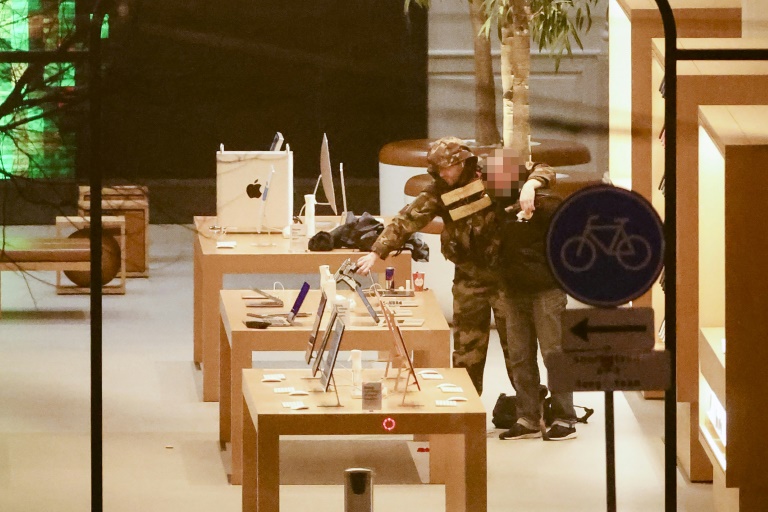
A 27-year-old man carrying a handgun and a semi-automatic weapon entered the store late Tuesday, taking a Bulgarian man hostage and demanding 200 million euros ($230 million) in cryptocurrency.     

Police were called to the building at 5:30 pm after the camouflage-wearing suspect entered the store in the popular Leidseplein neighbourhood, prompting a chaotic exodus from the building. 

Around 70 people fled the building and four people hid in a closet, apparently unknown to the suspect.   

Five hours later, the suspect asked for water.  

Footage showed the hostage bending down as the water was delivered, before running out of the building followed closely by the suspect. 

The suspect was then hit by a police car before a robot checked him for explosives as he lay on the road, lit up with lasers from police snipers. 

“A car from the special forces reacted very adequately and alertly,” police chief Frank Paauw said in an overnight press conference, hailing the hostage’s bravery. 

“The hostage has played a hero role. In a few split seconds he escaped this hostage situation, otherwise it would have been an even longer night and nasty night.”

– ‘Seriously injured’ – 

Police later confirmed that the suspect was wearing an explosive device, but “that it was not primed” during the incident.

He was taken to hospital “seriously injured”, police said, adding that a “wide-ranging” investigation had been launched. 

“All options are open over a possible motive,” they added, saying at least two homes around the Dutch capital had been searched. 

The suspect aimed an automatic weapon at police, Paauw said, as special police units arrived at the scene Tuesday and cordoned off the area around the shop. 

All Apple stores across the Netherlands were closed Wednesday, and the site of Tuesday’s hostage taking will remain closed Thursday, the company said.

Leidseplein is popular with tourists and known for its lively bars and cafes. The area was quickly closed and the restaurants, bars and theatres were shut after the hostage taking.

The incident happened close to where well-known Dutch crime reporter Peter R. de Vries was gunned down in broad daylight last year.

“Just when the city was about to reopen and return to normal life, violence is again emerging in the heart of Amsterdam,” deputy mayor Rutger Groot Wassink said late on Tuesday.

Dutch Justice Minister Dilan Yesilgoz-Zegerius praised the quick action by the police.

“Their controlled and decisive action deserves nothing but compliments,” she said in a tweet.

“It prevented worse,” the minister added.

France's Macron to kick off re-election bid in March

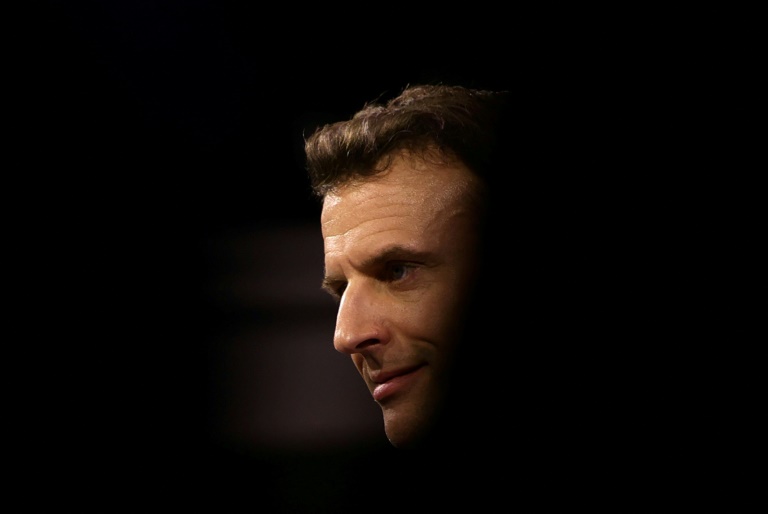
French President Emmanuel Macron will launch his re-election bid at a campaign rally on March 5, sources in his party said Wednesday, opening a new phase in a contest that polls indicate he is likely to win.

The 44-year-old has so far kept away from formal campaigning ahead of the first round of voting on April 10, most recently with a marathon effort to avert a Russian invasion of Ukraine.

The declaration of his candidacy is now expected next week, just ahead of a March 4 deadline. Three sources in his centrist Republic on the Move (LREM) party told AFP his first rally would then be on March 5 in Marseille.

Polls have steadily put Macron on top in the first round of voting, against a diverse field of rivals on both the left and right.

Yet they also suggest that securing a second five-year term in the run-off vote on April 24 is far from a foregone conclusion, as the far right has continued to make inroads in recent years.

“Emmanuel Macron’s entry in the race could change things, and truly open up the contest,” said Bernard Sananes, president of the Elabe polling institute.

Analysts say low turnout — nearly one in four voters did not cast ballots in the presidential election five years ago — could add another layer of uncertainty to the first-round outcome.

“Voting intentions of the French are still four to five percentage points below those of 2017,” Sananes noted.

Macron, a former investment banker and economy minister under Socialist president Francois Hollande, swept to power as an outsider from “neither the right nor the left,” promising wide-ranging reforms to revive French growth.

He moved quickly to cut taxes and loosen labour laws, and pushed through an overhaul of the state-owned railway SNCF despite fierce resistance from labour unions.

But many of his policies were also highly divisive and criticised as favouring the rich, culminating in the fiery “yellow vest” protests of 2018 and 2019 that forced him into a series of concessions for low-income households.

For Brice Teinturier of the Ipsos polling institute, voters are waiting above all “for what he’s going to announce, so that a confrontation will gradually take shape.”

– Five more years? –

Macron’s rivals have accused him of smothering discussion over his record by refusing to declare his candidacy until the last minute, and his team has indicated he is unlikely to participate in any debates ahead of the first round.

The president has instead projected an image of being busy with global affairs, though his failure to prevent Vladimir Putin from sending Russian troops into breakaway Ukraine enclaves could open him to attacks of political naivete or miscalculation.

But analysts say Macron might also get credit for trying against the odds to avert a conflict, bolstering his credentials as a respected statesman on the international stage.

An Elabe poll released Wednesday put him at 24.5 percent of intentions to vote in the first round, followed by 18 percent for Marine Le Pen, the veteran far-right leader who lost out to Macron in the second round five years ago.

Media pundit Eric Zemmour was at 13.5 percent, while conservative Valerie Pecresse slipped to fourth place at 11.5 percent after a Paris campaign rally this month that was widely panned as both stilted and pandering to fears over immigration.

On the left, the biggest threat appears to come from the firebrand candidacy of Jean-Luc Melenchon at 11 percent, with the rest of the field sharply divided and struggling to gain traction.

The March 4 deadline looms for all candidates to secure  500 endorsements from elected officials in order to appear on the ballot.

While Macron and most other main hopefuls have cleared this hurdle, Melenchon, Le Pen and Zemmour are still scrambling for the support, prompting their backers to warn of a democratic deficit if they are kept off the ballot.

On Tuesday, Le Pen suspended her on-the-ground campaign events so her team could focus on securing the remaining 100 or so endorsements she still needs.

Disbelieving but fretful, Kyiv hears nearing drumbeats of war

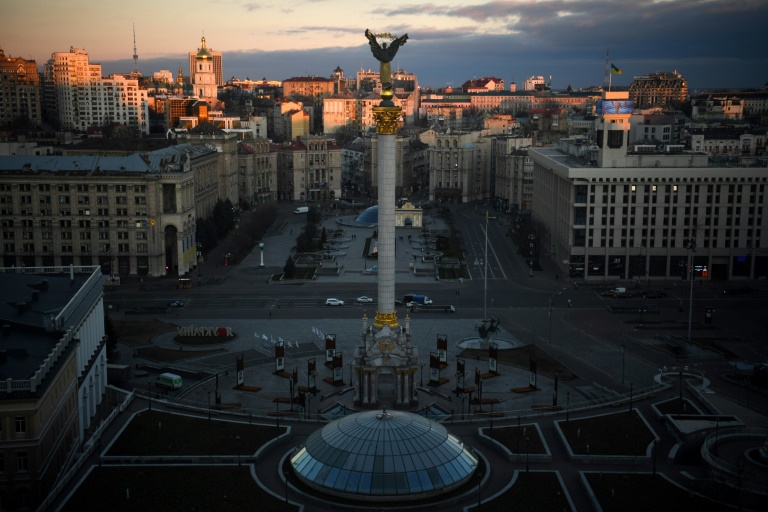
Every hour, from dawn til dusk, Ukraine’s soulful national anthem echoes across Kyiv’s expansive Maidan Square, just as it did in 2014.

Back then, it was a rousing call to join the masses braving the bitter cold on the square during Kyiv’s historic — and ultimately bloody — pro-EU revolution. Today it is playing again as the former Soviet republic girds for all-out war.

Russia has amassed more than 150,000 Russian soldiers on Ukraine’s borders, according to US estimates.

Russia’s parliament has approved sending its “peacekeepers” into parts of Ukraine’s east that Moscow has recognised as independent statelets and President Vladimir Putin’s rhetoric is sounding militant.

But on the spring-like streets of sunny Kyiv, no one stops to look at the giant screen showing pixelated images of the country’s yellow and blue flag, the anthem blasting from speakers.

“Everything will be fine,” said Zoya Rozuman, a cleaning lady, her blue outfit partially unzipped on a warm afternoon.

“I don’t think the Russian people, those who live around Moscow and Vladimir, want our sons to die. And we don’t want their sons to die.”

Instead of worrying about the war, the 59-year-old plans to spend the coming weeks tending her garden.

– War footing –

The anthem started playing on Tuesday, when Russian lawmakers sitting 800 kilometres (500 miles) from Ukraine’s eastern front in Moscow unanimously authorised the use of military force abroad.

In the Kremlin, Putin is coy about his plans, telling reporters that the deployment of Russian forces would “depend on the situation on the ground”.

But the nearing drumbeats of war have many in Kyiv worried, even it they do not think that the Ukrainian capital itself will come under attack.

“We are afraid of war, but we are ready to fight, because this is a defensive war,” said Atantoliy Tarasenko, 74.

Like many others, the pensioner still seethes that his Western-backed government “did not lift a finger” to keep Russia from annexing Ukraine’s Crimea peninsula in 2014.

Now, Moscow has recognised the independence of two eastern Ukrainian regions that began waging a deadly insurgency at around the same time.

The government in Kyiv says it is ready to fight, with the defence ministry warning of “hardship” and human “losses”.

Students and workers have started receiving emailed instructions from their schools and bosses about how to prepare for the worst, including what to stockpile and where to find the nearest bomb shelter.

– Anger at Putin –

Oleg Koras, 38, has joined a “territorial defence” unit in Kyiv.

But despite going to training twice a week, he acknowledged feeling slightly helpless.

“If the bombs start falling on our city, what can you do but jump in a shelter,” he said, before adding: “But then we will know how to respond.”

Besides nerves, a palpable level of anger is rising at Putin, who has tried to keep Ukraine under Russia’s influence for the past two decades.

Putin’s tactics sparked two pro-Western revolutions — one in 2004 and the other a decade later — and are bringing the two countries dangerously close to war today.

“He is not someone you can reach deals with,” said Maksym Dizhechko, a 41-year-old lawyer.

“He is like this huge kid in shool who beats everyone up, and who only understands things when he gets punched back.”

The sentiment was shared by Ksenya Baliy, a 31-year-old DJ.

“I still feel hatred toward that man. I don’t think he deserves to be where he is,” she said. “I want him to disappear as soon as possible from our beautiful planet.”

Yet the cultural and familial links between the two neighbours linger, rising up above the fury at political figures.

Volodymyr Khroviy, 39, identifies himself as a “Russian from Ukraine”, with his family living on the other side of the border.

But his home is Ukraine, Khroviy says, “and if they come with their tanks and weapons, I will certainly not be pleased to see them”.

Amsterdam hostage taker asked for 200 mn in cryptocurrency

A man who held several people hostage at an Apple store in Amsterdam demanded 200 million euros ($230 million) in cryptocurrency before he was taken to hospital “seriously injured”, police said Wednesday.  

The man, identified as a 27-year-old from Amsterdam, entered the Apple store carrying a firearm in the busy Leidseplein neighbourhood late Tuesday afternoon, sparking a tense five-hour long ordeal. 

The camouflage-wearing assailant held one man hostage, a Bulgarian national, while four others hid in a closet.   

It was initially feared the suspect was holding several people hostage, but he was reportedly not aware that others were in hiding in the building. 

In an overnight press conference, police chief Frank Paauw said the suspect demanded 200 million in cryptocurrency before he was eventually apprehended by police. 

The dramatic ordeal finally ended around 10:30 pm (2130 GMT) when the suspect asked for water. The hostage fled after the water was delivered, closely followed by the suspect.

The suspect was then hit hard by a police car before a robot checked him for explosives as he lay on the road, painted by laser sights from police snipers.  

“A car from the special forces reacted very adequately and alertly,” Paauw said hailing the hostage for his bravery. 

“The hostage has played a hero role. In a few split seconds he escaped this hostage situation, otherwise it would have been an even longer night and nasty night.”

Around 70 people in total were evacuated from the building and the area around the store was cordoned off.

The suspect was taken to hospital “seriously injured”, Paauw said, and an investigation into the incident was ongoing. 

Police were called at about 5:30 pm (1630 GMT) on Tuesday about an armed man in the Apple store, and images suggested he might have been wearing an explosive vest. 

Several special police units were deployed with the first to arrive targeted by an automatic weapon, Paauw said.

He later tweeted the man did not have explosives on him. 

All Apple stores across the Netherlands were closed Wednesday, and the site of Tuesday’s hostage taking will remain closed Thursday, the company said. 

Leidseplein is popular with tourists and known for its lively bars and cafes. The area was quickly closed and the restaurants, bars and theatres were shut after the hostage taking.

Iran says nuclear talks at 'critical' stage

Negotiations to revive the Iran nuclear deal have entered a “critical” stage during which some key issues still need to be resolved, Tehran’s top diplomat said on Wednesday.

The 2015 accord had offered Iran sanctions relief in return for curbs on its nuclear programme, but the US unilaterally withdrew in 2018 under then-president Donald Trump.

Western powers that have been locked in nuclear talks with Iran have said in the past week that a deal was within reach while stressing the ball was in the Islamic republic’s court.

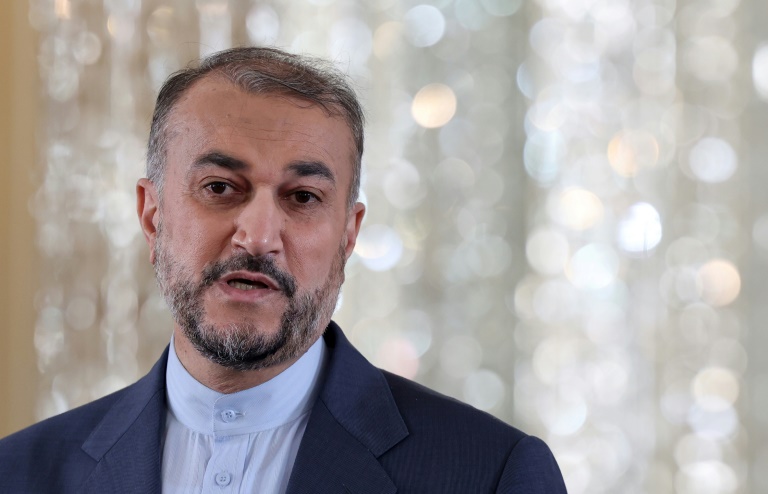
Iran’s Foreign Minister Hossein Amir-Abdollahian said on Wednesday that the negotiations had “reached a critical and important stage”.

“We hope that some sensitive and important issues remaining in the negotiations will be resolved in the coming days with realism from the Western side,” he said at a joint press conference with his Oman counterpart Sayyid Badr al-Busaidi.

Amir-Abdollahian said he was “optimistic” about a deal, while insisting Iran would not give up its “red lines” in the negotiations. He did not elaborate.

The Vienna talks, which involve Iran as well as Britain, China, France, Germany and Russia directly, and the United States indirectly, resumed in November. 

In recent days, progress in the negotiations has been reported by France, Germany, the United States and even Iran.

Signs of an agreement coming together emerged over the past week, with France warning that Iran has just days left to accept a deal.

“It is not a question of weeks, it is a question of days,” said its Foreign Minister Jean-Yves Le Drian.

“We need political decisions from the Iranians. They have a very clear choice,” he told the French Senate on February 16.

Two days later, German Chancellor Olaf Scholz said the process had reached “the moment of truth”.

He said there “was the chance to reach an agreement that will allow sanctions to be lifted” but also warned that the talks could still collapse.

Most recently, Iran’s sworn enemy Israel said on Sunday that a deal may be agreed soon while warning that it would be “weaker” than the original 2015 agreement.

Lebanon says thwarts IS bomb plot targeting Hezbollah bastion

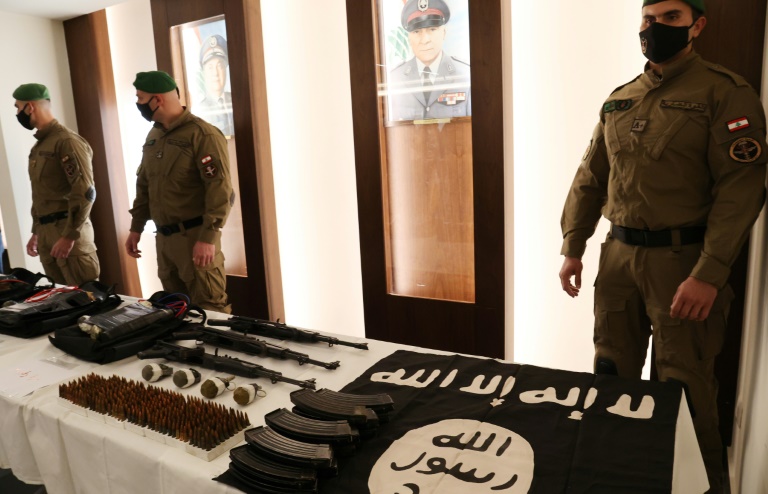
Lebanon has thwarted a plan by the Islamic State group to carry out three suicide bombings targeting Shiite religious compounds in Beirut’s southern suburbs, the interior ministry said Wednesday.

“A terrorist group had recruited young Palestinian men in Lebanon to carry out major bombing attacks using explosive belts” and other munitions, Interior Minister Bassam Mawlawi told a press conference.

“Three separate targets were to be hit at the same time,” the ministry said, in an operation Mawlawi said would have caused significant loss of life.

Lebanon’s Internal Security Forces (ISF) said the instructions for the bomb plot came from an IS operative based in the Palestinian refugee camp of Ain al-Hilweh, who is in touch with fellow Sunni extremists in Syria.

The instructions were passed to an undercover agent recruited by the ISF to infiltrate IS networks in Lebanon.

On February 7, the agent was instructed to prepare attacks on a Shiite religious compound in the Al-Laylaki neighbourhood, the Imam al-Kazem compound in Haret Hreik and the Al-Nasser religious centre in Beirut’s Ouzai suburb, the ISF said. 

He was given three explosive vests and other weapons to conduct the attacks on February 16, the ISF added.

Security forces have since identified four suspected militants residing in the Ain al-Hilweh camp who are believed to have been involved in the bomb plot. 

Mawlawi said two suspects had been arrested, although he did not specify whether they were among the four identified in Ain al-Hilweh. 

The camp outside the main southern city of Sidon is the largest Palestinian settlement in Lebanon.

It has gained notoriety as a refuge for extremists and other fugitives.

By longstanding convention, the Lebanese army does not enter the country’s camps, leaving security inside in the hands of Palestinian factions.

– IS recruits –

Beirut’s southern suburbs, a stronghold of Shiite militant group Hezbollah, saw a wave of bombings between 2013 and 2015 carried out by Sunni extremists in retaliation for Hezbollah’s intervention in the civil war in neighbouring Syria on the side of the Damascus government.

In 2015, twin suicide bombings claimed by IS killed more than 40 people in the area. 

The latest IS plot came after the group’s leader Ibrahim al-Hashimi al-Qurashi was killed in a US raid on his home in rebel-held northwestern Syria earlier this month.

IS operatives asked for a video to be recorded ahead of the planned attack, in which militants said they were carrying it out in Qurashi’s honour, the ISF said. 

IS is believed to be exploiting an unprecedented financial crisis in Lebanon to lure recruits with the promise of hefty salaries.

A security source told AFP this month that around 48 Lebanese from the impoverished northern city of Tripoli have joined IS ranks in Iraq since August.

At least eight Tripoli men have been reported killed in Iraq since December. 

At the start of February, Iraq’s National Security Adviser Qassem al-Araji said that Lebanese authorities had opened talks with Baghdad over the IS threat.

Mawlawi is expected to visit Baghdad soon to discuss Lebanese concerns, he added.

“We are following up on the case of Lebanese leaving Tripoli and joining IS in Iraq,” Mawlawi said Wednesday.

“We are monitoring their movements and the movement of their relatives,” he added.

Close Bitnami banner
Bitnami