World

US launches biggest yet auction for offshore wind

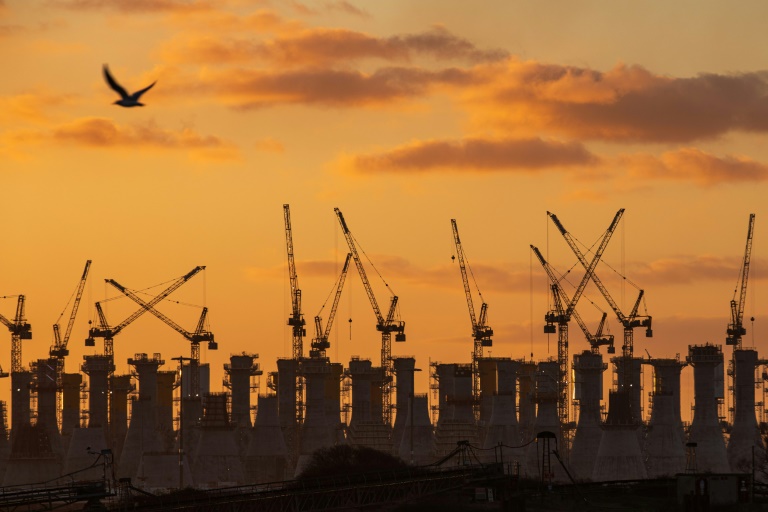
Bidding began Wednesday in the biggest US offshore wind energy auction yet, involving nearly 500,000 acres off the coasts of New York and New Jersey.

Through 13 rounds of bids by mid-afternoon, companies had offered $817 million for leases on on six tracts up for grabs, according to data from the Bureau of Ocean Energy Management.

The agency, part of the US Department of the Interior,  has said it could extend the bidding process through to Friday.

Development of all six tracts could generate as much seven gigawatts of wind energy, enough to power some two million homes, the agency said.

Nearly 25 firms were authorized to participate in the auction, including European companies Avangrid Renewables, Equinor ASA and EDF Renewables Development, as well as US groups Invenergy and Arevia Power.

“People are excited because this is the first lease sale that has been held by the federal government since 2018,” said Lesley Jantarasami, an energy specialist at the Bipartisan Policy Center, a US think tank.

Jantarasami noted that the Biden administration has set a goal of producing 30 gigawatts of offshore wind energy by 2030.

“For a long time, everybody has been saying it’s poised to take off,” she said, alluding to the interest of European companies in the US offshore market. 

“But we had not seen the federal government take concrete action to make this a reality,” she said.

In 2018, 11 companies bid on three tracts across 390,000 acres near Massachusetts. That sale raised $405 million following 32 rounds of bidding.

Iran says nuclear talks at 'critical' stage

Negotiations to revive the Iran nuclear deal have entered a “critical” stage during which some key issues still need to be resolved, Tehran’s top diplomat said on Wednesday.

The 2015 accord had offered Iran sanctions relief in return for curbs on its nuclear programme, but the US unilaterally withdrew in 2018 under then-president Donald Trump.

Western powers that have been locked in nuclear talks with Iran have said in the past week that a deal was within reach, while stressing the ball was in the Islamic republic’s court.

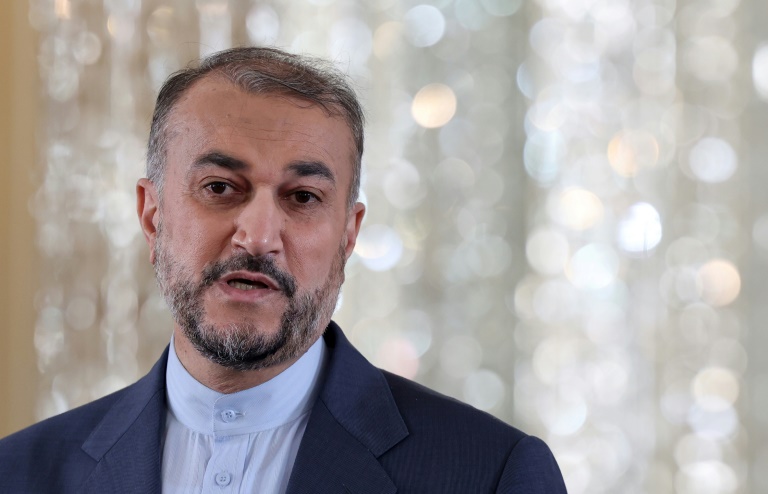
Iran’s Foreign Minister Hossein Amir-Abdollahian said on Wednesday that the negotiations had “reached a critical and important stage”.

“We hope that some sensitive and important issues remaining in the negotiations will be resolved in the coming days with realism from the Western side,” he said at a joint press conference with his Omani counterpart Sayyid Badr al-Busaidi.

Amir-Abdollahian said he was “optimistic” about a deal, while insisting Iran would not give up its “red lines” in the negotiations. He did not elaborate.

The Vienna talks, which involve Iran as well as Britain, China, France, Germany and Russia directly, and the United States indirectly, resumed in November. 

In recent days, progress in the negotiations has been reported by France, Germany, the United States and even Iran.

Iran’s chief negotiator Ali Bagheri plans to return to Tehran briefly in order to consult with the country’s leaders, while “dialogue continues in Vienna”, a source told AFP on Wednesday.

Signs of an agreement coming together emerged over the past week, with France warning that Iran has just days left to accept a deal.

“It is not a question of weeks, it is a question of days,” said French Foreign Minister Jean-Yves Le Drian.

“We need political decisions from the Iranians. They have a very clear choice,” he told the French Senate on February 16.

Two days later, German Chancellor Olaf Scholz said the process had reached “the moment of truth”.

He said there “was the chance to reach an agreement that will allow sanctions to be lifted” but also warned that the talks could still collapse.

Iran’s sworn enemy Israel said on Sunday that a deal may be agreed soon while warning that it would be “weaker” than the original 2015 agreement.

Rescue effort starts as Cyclone Emnati lashes Madagascar

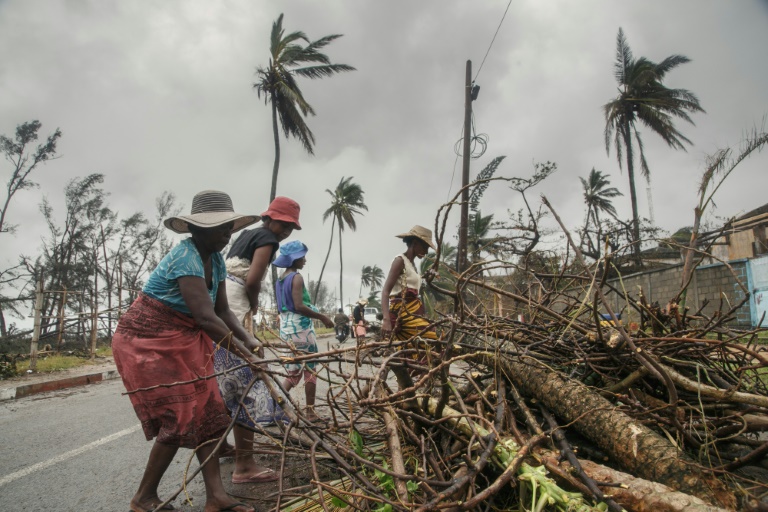
Rescuers in Madagascar on Wednesday began to assess the damage caused by Cyclone Emnati, which overnight lashed the island nation still reeling from the impact of another cyclone earlier this month.

Faly Aritiana Fabien, a senior official at Madagascar’s National Risk Management Office (BNGRC), told AFP no human casualties had been reported but said it was important to “remain cautious” less than 24 hours after Emnati’s arrival.

Houses were submerged in brown water, debris and uprooted trees, an AFP correspondent saw, as the weather conditions prevented rescuers from carrying out thorough searches in the worst-affected areas in the south and southeast.

Emnati “made landfall around 2300 GMT just north of the southeastern district of Manakara”, Fabien had earlier told AFP. 

The storm, which passed just north of the Indian Ocean islands of Mauritius and Reunion, had weakened slightly by the time it reached the eastern coast of Madagascar. 

But it was still packing winds of around 100 kilometres per hour (62 miles per hour) and gusts of 140 kph, according to Meteo-France. 

The cyclone is forecast to exit Madagascar Wednesday night, but national weather forecaster Meteo-Madagascar warned of strong gusts, heavy rain and widespread flooding around the southern and southeastern districts.

Meteo-France has warned that another tropical storm may form in the next five days.

UN agencies had on Tuesday said they were preparing “for the worst”. 

Another storm, Cyclone Batsirai, struck the island on February 5, affecting some 270,000 people and claiming 121 lives.

At the same time, some 21,000 people remain displaced from when Tropical Storm Ana struck in late January.

Another 5,000 were affected last week by Tropical Storm Dumako.

More than 37,000 people have been moved to emergency shelters as a precautionary measure.

One of the poorest countries in the world, Madagascar’s southern region has been ravaged by drought.

The UN says it is the worst in 40 years and blames climate change for the crisis.

Madagascar is prone to numerous storms and cyclones between November and April every year.

On Ukraine border, Russian soldiers await orders

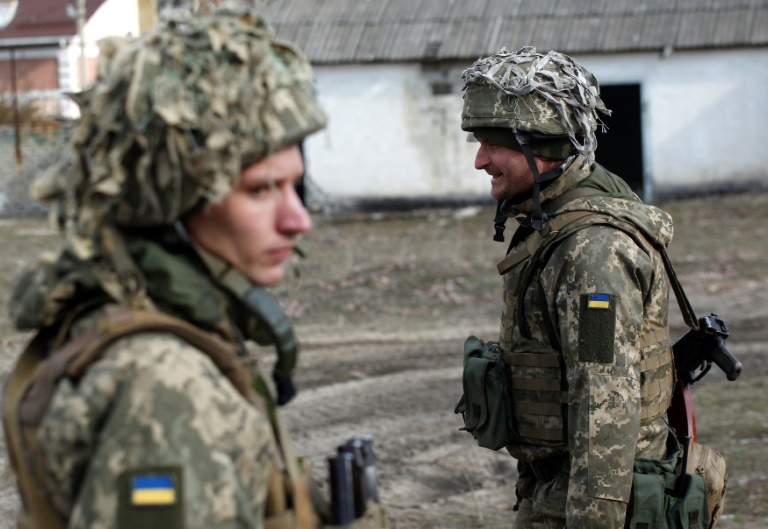
In a roadside cafe a few dozen kilometres from the border between Russia and rebel-held areas in Ukraine, some Russian soldiers were eating as they rested, the smell of frying in the air.

“Thank you, we’ll come back,” said one of them as he got up after finishing his cheburek — a type of fried turnover filled with meat and onion.

Another soldier knocked at the door of a small room where an AFP team sat working — the only civilian customers seen on Wednesday at the cafe.

“Do you want to buy some dry rations?” he asked.

On a screen above showing music videos, some soldiers could be seen running in a muddy field. But it was just a video of the 1980s British rock classic “In the Army Now” by Status Quo.

Outside in the village, soldiers were everywhere — some wearing camouflage hats, others in army-issue grey synthetic fur hats.

They smoked in the parking lot, drank their coffee or kept busy working on the military vehicles on flatbed train wagons parked in railway sidings stretching for hundreds of metres.

The wagons carried rocket launchers, artillery pieces and fuel tanks.

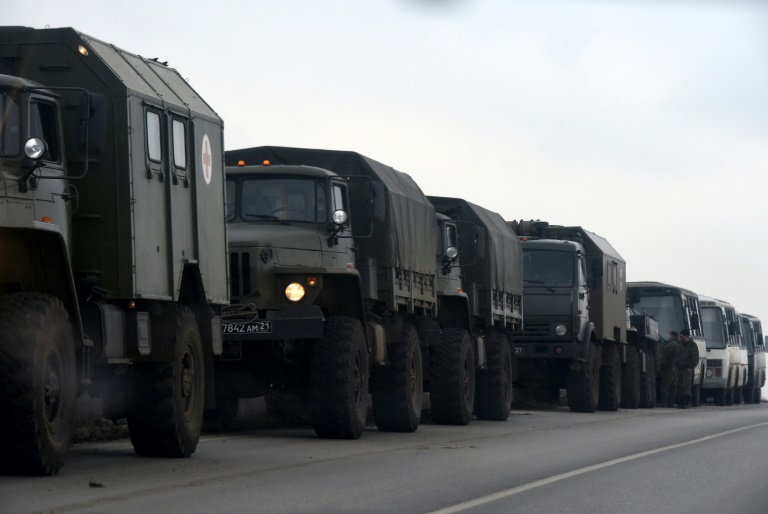
On the road leading to the border, empty heavy military trucks and a convoy of military green-coloured vehicles crossed paths.

Russia’s Rostov region, which borders the self-proclaimed separatist republics of Donetsk and Lugansk, was silent and shrouded in heavy fog on Wednesday — a Russian public holiday celebrating the military.

After being crossed in recent days by thousands of refugees leaving the separatist statelets one way and military convoys heading the other way, the region is now in a mood of tense anticipation.

Russia has massed some 150,000 soldiers on Ukraine’s borders, according to Western estimates.

It has said it is prepared to send in troops, ostensibly to protect Donetsk and Lugansk after recognising their independence this week, raising fears of an all-out war with Ukraine.

The separatist conflict in eastern Ukraine, which has dragged on since 2014, has already claimed more than 14,000 lives.

– ‘Afraid to go back’ –

A group of middle-aged men passed the time playing football.

Valery Belik, a 52-year-old retired policeman wearing a cap reading “No Fear”, was in goal.

“Of course, we are all worried for the People’s Republic of Donetsk, for Lugansk.

“It’s a shame for people who are suffering the terror of a war that Ukrainian authorities have unleashed,” he said, echoing the Kremlin message of Russia coming to the aid of the separatists against supposed Ukrainian aggression.

On the way to the border, a bus was parked on the side of the road.

“I went to pick up my Russian passport,” said Grigory, a 35-year-old mechanic from Shakhtarsk, located in one of the rebel regions.

“I am a bit afraid to go back, we hear shooting and explosions,” he said. “But my family is there. I won’t leave. My work, my whole life are there.”

Nearer to the border, the streets empty out.

– ‘Everything is so frightening’ –

In the last village before the border, Valentina Druzhinenko, a 75-year-old pensioner, sat on a bench with her neighbour.

She had mixed feelings about Russian President Vladimir Putin’s move to recognise the independence of the separatists this week.

“I understand the consequences, they will be terrible,” she said. “Our grandchildren will not be able to handle them.

“But if Vladimir Putin did it, it means it was necessary. I respect and love him.”

Her neighbour, Maria Yagnuk, born in 1941, spoke in Ukrainian about having lived under Nazi occupation in the area during the Second World War.

“How can we not be afraid? Who can not be afraid? I myself was born during the war.”

“We don’t even watch the news. Everything is so frightening.”

UN warns of dire global impact of a Russian invasion of Ukraine

A United Nations meeting on Ukraine Wednesday heard that a full-scale Russian invasion of the country would have a devastating global impact that would likely spark a new “refugee crisis.”

The United States said a war could displace up to five million people while Ukraine’s foreign minister said such a conflict would mark “the end of the world order as we know it.”

The dire warnings were made during an annual General Assembly session on “temporarily occupied Ukrainian territories” that has been held at UN headquarters in New York every year since Russia annexed Crimea in 2014.

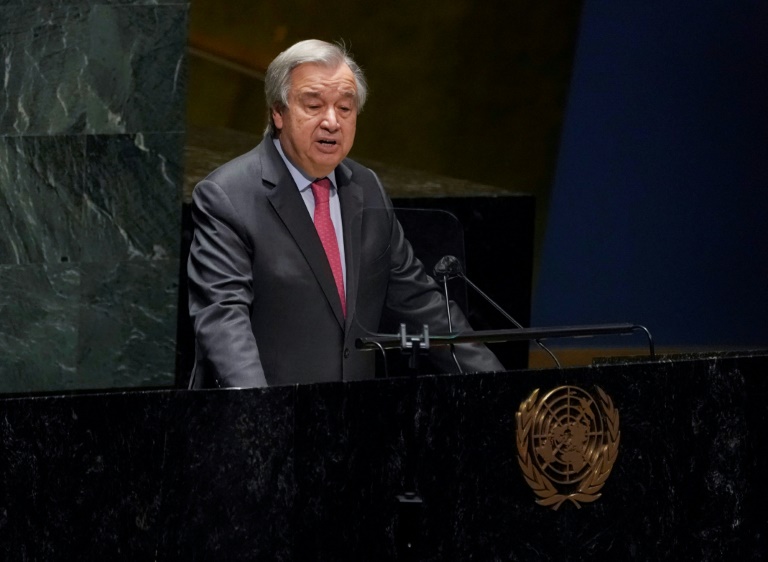
UN Secretary-General Antonio Guterres warned the body that “our world is facing a moment of peril” over the crisis.

“If the conflict in Ukraine expands, the world could see a scale and severity of need unseen for many years,” he said.

“It is time for restraint, reason and de-escalation,” Guterres added, stressing there was no room for actions or statements that would “take this dangerous situation over the abyss.”

America’s ambassador to the UN, Linda Thomas-Greenfield, said an invasion could displace as many as another five million people on top of the three million she said had already been impacted by Russian military action in eastern Ukraine.

“If Russia continues down this path, it could — according to our estimates – create a new refugee crisis, one of the largest facing the world today,” she said.

Thomas-Greenfield added that since Ukraine is one of the world’s largest wheat suppliers to the developing world, Russian military operations “could cause a spike in food prices and lead to even more desperate hunger in places like Libya, Yemen, and Lebanon.”

“The tidal waves of suffering this war will cause are unthinkable,” she said.

Earlier, Ukrainian Foreign Minister Dmytro Kuleba pleaded with the UN to hold Moscow accountable for what he called its attack on “the core principles of international law.”

“If Russia does not get a severe, swift and decisive response now, this will mean a total bankruptcy of the international security system and international institutions, which are tasked with maintaining the global security order.

“This is a grim scenario, which will throw us back to the darkest times of the 20th century,” he said.

Kuleba called Russian claims that it is acting to prevent planned military operations by Kyiv in Donbas area as “absurd” and called on Russia to withdraw troops from Ukrainian soil.

“We Ukrainians want peace and we want to resolve all issues through diplomacy,” he said.

All 193 members of the UN attended the meeting, the vast majority speaking out against Moscow.

Russia’s UN ambassador, Vassily Nebenzia, said today’s tensions were the result of the 2014 “coup” that ousted pro-Russian, ex-Ukrainian prime minister Viktor Yanukovych.

He said that since then Ukraine’s government has been carrying out a “genocide” in Donbas.

War fears mount as Ukraine mobilises, Russia evacuates diplomats

Ukraine mobilised reservists and Russia evacuated its Kyiv embassy on Wednesday, as eastern Europe slid ever closer towards a potentially catastrophic conflict.

Kremlin chief President Vladimir Putin has defied a barrage of international sanctions to put his forces on stand-by to occupy and defend two rebel-held areas of eastern Ukraine.

In response, Kyiv’s President Volodymyr Zelensky has put Ukraine’s more than 200,000 reservists on notice that they will receive summons to return to their units.

Western diplomatic efforts to halt the march to war have so far proved fruitless, but European Union leaders announced one more last ditch summit in Brussels on Thursday to address the crisis.  

United Nations Secretary-General Antonio Guterres warned the body that “our world is facing a moment of peril” and that “the world could see a scale and severity of need unseen for many years”.

The US ambassador to the United Nations, Linda Thomas-Greenfield, warned that an all-out Russian invasion could displace five million people, triggering a new European refugee crisis. 

Ukraine also urged its approximately three million citizens living in Russia to leave and MPs prepared to vote on a state of emergency, allowing security forces and regional governments to step-up controls like ID checks and roadblocks.

“We are united in believing that the future of European security is being decided right now, here in our home, in Ukraine,” Zelensky said during a joint media appearance with the visiting leaders of Poland and Lithuania.

“Ukraine needs security guarantees. Clear, specific, and immediate,” Zelensky said, adding: “I believe that Russia must be among those countries giving clear security guarantees.”

Western capitals say Russia has amassed 150,000 troops in combat formations on Ukraine’s borders with Russia, Belarus and Russian-occupied Crimea and on warships in the Black Sea.

Ukraine has around 200,000 military personnel and Wednesday’s call up could see up to 250,000 reservists aged between 18 and 60 receive their mobilisation papers. 

Moscow’s total forces are much larger — around a million active-duty personnel — and have been modernised and re-armed in recent years.

– High cost of war –

But Ukraine has received advanced anti-tank weapons and some drones from NATO members. More have been promised as the allies try to deter a Russian attack or at least make it costly.

Shelling has intensified in recent days between Ukrainian forces and Russia-backed separatists — a Ukrainian soldier was killed on Wednesday, the sixth in four days — and civilians living near the front are fearful.

Dmitry Maksimenko, a 27-year-old coal miner from government-held Krasnogorivka, told AFP that he was shocked when his wife came to tell him that Putin had recognised two Russian-backed separatist enclaves.

“She said: ‘Have you heard the news?’. How could I have known? There’s no electricity, never mind internet. I don’t know what is going to happen next, but to be honest, I’m afraid,” he said.

In a Russian village around 50 kilometres (30 miles) from the border, AFP reporters saw military equipment including rocket launchers, howitzers and fuel tanks mounted on trains stretching for hundreds of metres.

Washington and Britain say Russia’s force is poised to strike Ukraine and trigger the most serious war in Europe for decades, but Putin says he is open to negotiation — within limits.

Russia has demanded that Ukraine be forbidden from ever joining the NATO alliance and that US troops pull out from Eastern Europe. 

“The interests of Russia, the security of our citizens, are non-negotiable for us,” Putin declared, in a video address to mark the Defender of the Fatherland Day, a public holiday.

On Tuesday, the Federation Council, Russia’s upper house, gave him unanimous approval to deploy troops to two breakaway Ukrainian regions now recognised by Moscow as independent, Donetsk and Lugansk. 

Russia said it had established diplomatic relations “at the level of embassies” with the separatist statelets, which broke away from Kyiv in 2014 in a conflict that has cost more than 14,000 lives.

Moscow also said it would evacuate diplomatic personnel from Ukraine to “protect their lives”.

The Russian flag was lowered over the embassy building in Kyiv Wednesday, witnesses said. An AFP reporter saw several families leaving the embassy with suitcases.

Speaking to journalists, Putin on Tuesday set out a number of stringent conditions if the West wanted to de-escalate the crisis, saying Ukraine should drop its NATO ambition and become neutral.

US President Joe Biden later announced tough new sanctions targeting financial institutions and Russia’s “elites” for “beginning” an invasion of Ukraine, but said there was still time to avoid war.

The Russian foreign ministry on Wednesday said it was preparing a “strong response” to Biden.

It said this would be “well-calibrated and sensitive for the American side”.

Australia, Britain, Japan and the European Union have all also announced sanctions.

Germany has said it is halting certification of the Nord Stream 2 gas pipeline from Russia.

– ‘Full-scale invasion’ –

Kremlin officials have responded scornfully to the sanctions, and observers point out that energy-rich Russia has huge reserves of $639 billion and an $182-billion sovereign wealth fund to see it through a crisis.   

The White House signalled it no longer believes Russia is serious about avoiding conflict, with Secretary of State Antony Blinken cancelling a meeting with Russian Foreign Minister Sergei Lavrov scheduled for Thursday.

Speaking to reporters on Tuesday, Putin said Moscow had recognised the independence of Ukraine’s separatist regions within their administrative borders, including territory still controlled by Kyiv — raising the spectre of a clash. 

burs-dc/gw

Melting glaciers, fast-disappering gauge of climate change

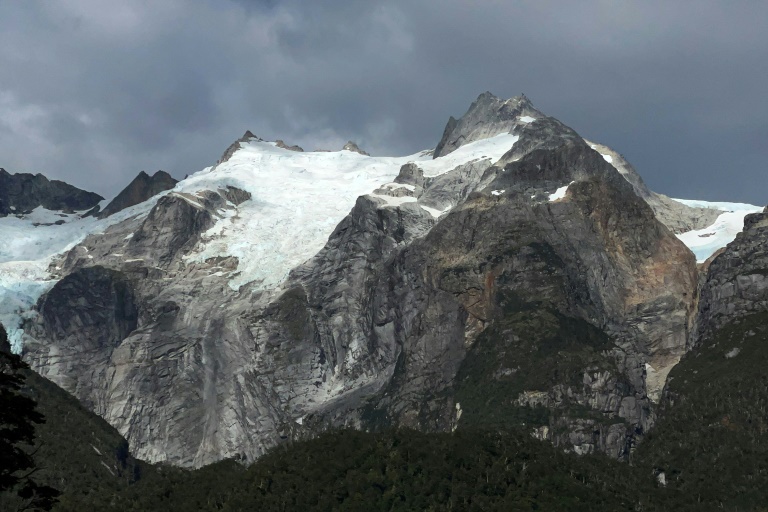
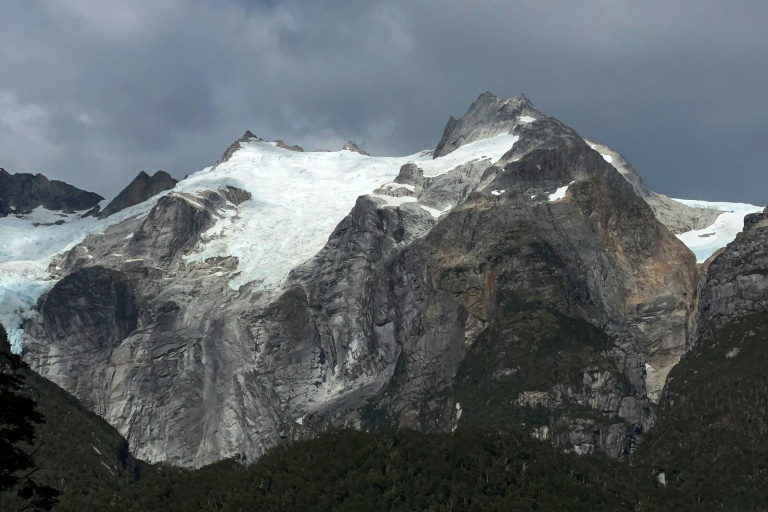
A crack widens in the San Rafael glacier in Chile’s extreme south, and a ten-storey iceberg crashes into the lake by the same name — a dramatic reminder of the impacts of global warming.

In the lake San Rafael, about 100 icebergs float today, pieces broken off from the glacier that 150 years ago stretched out over two-thirds of the body of water now free of ice cover.

The San Rafael glacier is one of 39 in the Northern Patagonian Ice Field (3,500 square kilometers or 1,350 square miles), which with the Southern Patagonian Ice Field (11,000 km2) in Chile’s Aysen region forms one of the world’s biggest ice masses.

According to the European Space Agency satellite images show San Rafael to be one of the world’s most actively calving glaciers and the fastest-moving in Patagonia, “flowing” at a speed of about 7.6 kilometers (4.7 miles) per year — “receding dramatically under the influence of global warming.”

Glaciers are bodies of slowly-moving ice on land that can be several hundred or several thousand years old.

Seasonal glacier melt is a natural phenomenon that with global warming has accelerated “significantly,” Jorge O’Kuinghttons, a regional head of glaciology at Chile’s water directorate, told AFP.

– ‘Excellent indicator’ –

At the moment, Patagonia’s glaciers are retreating faster than anywhere else in the world.

“Glaciers are an excellent indicator of climate change,” said Alexis Segovia, another government glaciologist who works in the remote region of southern Chile.  

All but two of Chile’s 26,000 glaciers are shrinking, he said, due to rising temperatures caused by manmade greenhouse gas emissions.

It is a vicious cycle. 

Ice-covered surfaces of Earth reflect excess heat back into space, and if these are reduced through melting, temperatures rise even more.

Melting glaciers also add to sea level rise, which increases coastal erosion and elevated storm surges.

And water dammed by glaciers can be released by a sudden collapse.

“Areas are being flooded these days that were never flooded before,” said O’Kuinghttons.

To learn more about what to expect in the future, glaciologists study the evolution of Chile’s glaciers, which contain a frozen record of how the climate has changed over time.

According to the WWF, more than a third of the world’s remaining glaciers will melt before 2100 even if mankind manages to curb emissions from the burning of fossil fuels.

– The heat is ‘strong’ –

East of San Rafael, on the lake General Carrera that is shared by Chile and Argentina, small-scale sheep and cattle farmer Santos Catalan has been living on the forefront of the change.

To augment his income, he criss-crosses the lake in a wooden boat with glacier-watching tourists.

Over the last 15 to 20 years, he told AFP, the landscape has become a lot less white as the ice has melted and snow dwindled. 

“Things have changed a lot,” he said. “The heat is very strong.”

Melting glaciers, fast-disappering gauge of climate change

A crack widens in the San Rafael glacier in Chile’s extreme south, and a ten-storey iceberg crashes into the lake by the same name — a dramatic reminder of the impacts of global warming.

In the lake San Rafael, about 100 icebergs float today, pieces broken off from the glacier that 150 years ago stretched out over two-thirds of the body of water now free of ice cover.

The San Rafael glacier is one of 39 in the Northern Patagonian Ice Field (3,500 square kilometers or 1,350 square miles), which with the Southern Patagonian Ice Field (11,000 km2) in Chile’s Aysen region forms one of the world’s biggest ice masses.

According to the European Space Agency satellite images show San Rafael to be one of the world’s most actively calving glaciers and the fastest-moving in Patagonia, “flowing” at a speed of about 7.6 kilometers (4.7 miles) per year — “receding dramatically under the influence of global warming.”

Glaciers are bodies of slowly-moving ice on land that can be several hundred or several thousand years old.

Seasonal glacier melt is a natural phenomenon that with global warming has accelerated “significantly,” Jorge O’Kuinghttons, a regional head of glaciology at Chile’s water directorate, told AFP.

– ‘Excellent indicator’ –

At the moment, Patagonia’s glaciers are retreating faster than anywhere else in the world.

“Glaciers are an excellent indicator of climate change,” said Alexis Segovia, another government glaciologist who works in the remote region of southern Chile.  

All but two of Chile’s 26,000 glaciers are shrinking, he said, due to rising temperatures caused by manmade greenhouse gas emissions.

It is a vicious cycle. 

Ice-covered surfaces of Earth reflect excess heat back into space, and if these are reduced through melting, temperatures rise even more.

Melting glaciers also add to sea level rise, which increases coastal erosion and elevated storm surges.

And water dammed by glaciers can be released by a sudden collapse.

“Areas are being flooded these days that were never flooded before,” said O’Kuinghttons.

To learn more about what to expect in the future, glaciologists study the evolution of Chile’s glaciers, which contain a frozen record of how the climate has changed over time.

According to the WWF, more than a third of the world’s remaining glaciers will melt before 2100 even if mankind manages to curb emissions from the burning of fossil fuels.

– The heat is ‘strong’ –

East of San Rafael, on the lake General Carrera that is shared by Chile and Argentina, small-scale sheep and cattle farmer Santos Catalan has been living on the forefront of the change.

To augment his income, he criss-crosses the lake in a wooden boat with glacier-watching tourists.

Over the last 15 to 20 years, he told AFP, the landscape has become a lot less white as the ice has melted and snow dwindled. 

“Things have changed a lot,” he said. “The heat is very strong.”

UN chief, Ukraine FM warn of dire global impact of a Russian invasion

The UN chief and Ukraine’s foreign minister told the General Assembly in New York Wednesday that a full-scale invasion of Ukraine by Russia would have a devastating global impact.

United Nations Secretary-General Antonio Guterres warned the body that “our world is facing a moment of peril” over Ukraine’s crisis with Russia.

“If the conflict in Ukraine expands, the world could see a scale and severity of need unseen for many years,” he said.

Guterres called for “all sides to allow safe and unimpeded access by humanitarian agencies, including in non-government controlled areas of eastern Ukraine.”

He called Russia’s recognition of the breakaway regions of Donetsk and Luhansk as independent states as “violations of the territorial integrity and sovereignty of Ukraine.”

“It is time for restraint, reason and de-escalation,” Guterres said, stressing there was no room for actions or statements that would “take this dangerous situation over the abyss.”

Ukrainian Foreign Minister Dmytro Kuleba warned diplomats that “the beginning of a large-scale war in Ukraine will be the end of the world order as we know it.”

He pleaded with the United Nations to hold Moscow accountable for what he called its attack on “the core principles of international law.”

“If Russia does not get a severe, swift and decisive response now, this will mean a total bankruptcy of the international security system and international institutions, which are tasked with maintaining the global security order.

“This is a grim scenario, which will throw us back to the darkest times of the 20th century,” he said.

Kuleba called Russian claims that it is acting to prevent planned military operations by Kyiv in the Donbas area, which incorporates Donetsk and Luhansk, as “absurd.” 

“Ukraine has never threatened or attacked anyone,” he said. “Ukraine has never planned and does not plan any such action.”

He called on Russia to withdraw troops from Ukrainian soil and pursue diplomacy.

“Russia must stop destabilizing the international security situation. We Ukrainians want peace and we want to resolve all issues through diplomacy,” Kuleba said.

Belarus independence 'under threat' by Russian troops: opposition

The presence of tens of thousands of Russian troops inside Belarus, which the West fears could be used to invade Ukraine, represents a threat to Belarusian independence, the country’s exiled opposition leader said Wednesday.

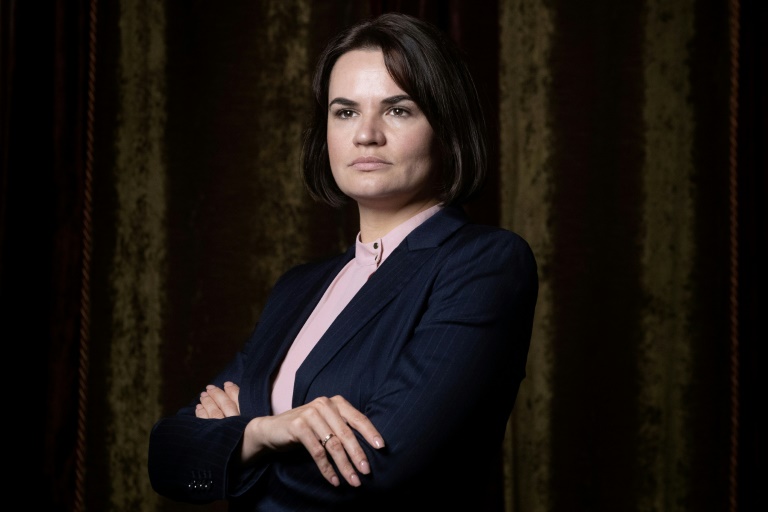
Svetlana Tikhanovskaya, who the West believes was the true winner of August 2020 presidential elections that kept autocratic leader Alexander Lukashenko in power, told Agence France-Presse that her country now needed to fight “for our independence” as well as “against dictatorship”.

She also expressed horror that a referendum in Belarus this weekend could give Lukashenko the legal means to house Russian nuclear weapons in the country.

Lukashenko was prepared to sacrifice the country’s sovereignty because he was “grateful” for the Kremlin’s support in the aftermath of the 2020 vote that prompted mass protests, said Tikhanovskaya, who now lives in Lithuania.

“We want to be friends with our neighbours but we do not want to be the appendix of another country,” she said during a visit to Paris.

“We see that our independence now is under threat… We see the threat of a slow occupation of our country.”

Tikhanovskaya said she believed there were now some 30,000 Russian troops in Belarus — ostensibly there for carrying out military drills — as well as even more units of military hardware.

“Lukashenko was supported by the Kremlin and now he is showing his loyalty to the Kremlin — he is grateful for the support he got, and now he is giving lands for military drills to show this loyalty,” she said.

“But it’s not in our national interest. People do not want these troops on our lands, we do not want to be a country that is an aggressor to our Ukrainian brothers.”

The military exercises were supposed to end last weekend but Minsk then announced that the troops would remain to carry out more manoeuvres for an unspecified duration.

The Ukrainian capital of Kyiv lies just 150 kilometres (90 miles) south of the Belarusian border, while the northern Ukrainian city of Chernigiv is a mere 60 kilometres (40 miles) east of Belarus.

– ‘Threat to Europe’ –

Tikhanovskaya urged Western powers to denounce the February 27 referendum on constitutional reform called by Lukashenko, who has been in power for almost three decades and is accused of brutally repressing the 2020 post-election protests.

Opposition activists say there are now over 1,000 political prisoners in Belarus.

Tikhanovskaya said the most concerning aspect of the referendum was proposed changes to Belarus’ neutrality that would allow it to house Russian nuclear weapons. 

“It shows us where Lukashenko wants to go. He can use our territory for nuclear weapons and this will be a huge threat to Europe,” she said.

Lukashenko had already raised the prospect earlier this month that Belarus could host nuclear weapons. 

“All countries must declare they do not accept any result of this referendum, it is illegitimate. If something happens with a nuclear weapon, Lukashenko will bear all the responsibility,” said.

“We want to be neutral,” she added, noting that the presence of Russian troops in Belarus also represented a risk for Lukashenko, who was dependent on the Kremlin rather than popular support to stay in power.

“The illegitimate leader understands this is a threat to himself as well,” she said. “He is weak and he may also think that one day when the Kremlin does not need him, they can get rid of him.”

Close Bitnami banner
Bitnami