World

Prince Andrew settles sex assault lawsuit with Virginia Giuffre

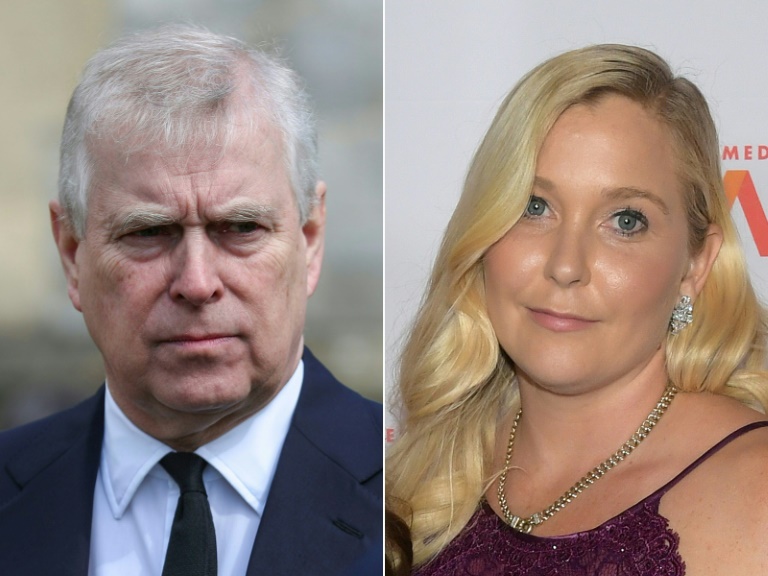
Prince Andrew and his accuser Virginia Giuffre have settled a sexual assault lawsuit for an unspecified sum, according to a court filing Tuesday.

In a letter sent to a New York judge on behalf of both parties, Giuffre’s lawyer David Boies wrote that they “have reached an out of court settlement,” without disclosing the financial terms.

As part of the agreement, the British royal will make a “substantial donation” to a charity established by Giuffre that supports sex trafficking victims, Boies said.

Giuffre has said she had sex with Andrew when she was 17 and a minor under US law after meeting him through the late US financier Jeffrey Epstein, who committed suicide in prison two years ago while awaiting trial for sex crimes.

The prince has not been criminally charged and has denied the allegations.

The settlement means the civil case will not go to a jury trial. It also means Andrew will no longer be questioned under oath by Giuffre’s lawyers.

“The parties will file a stipulated dismissal upon Ms. Giuffre’s receipt of the settlement (the sum of which is not being disclosed),” said the court filing.

“Prince Andrew has never intended to malign Ms. Giuffre’s character, and he accepts that she has suffered both as an established victim of abuse and as a result of unfair public attacks,” the letter said.

“He pledges to demonstrate his regret for his association with Epstein by supporting the fight against the evils of sex trafficking, and by supporting its victims,” it added.

Last month Andrew was stripped of his honorary military titles and charitable roles after New York Judge Lewis Kaplan denied his plea to dismiss Giuffre’s case.

– Private island –

Giuffre, who is now 38, alleges that Andrew sexually assaulted her at the London home of socialite and Epstein friend Ghislaine Maxwell after a night out dancing in March 2001.

She sued the prince last year for unspecified damages, alleging that she was trafficked to him by Epstein and Maxwell.

In December, Maxwell was convicted of recruiting and grooming young girls to be sexually abused by Epstein, exposing a murky world of sex trafficking among the rich and powerful.

As well as the London allegations, Giuffre also said Andrew assaulted her at Epstein’s home in New York, and on Epstein’s private island in the US Virgin Islands.

Andrew, the second son of Britain’s Queen Elizabeth II, withdrew from public life as a royal in 2019 after a widely ridiculed BBC interview where he sought to vindicate himself of the accusation.
Israel PM meets Bahrain king, Jewish community on landmark visit

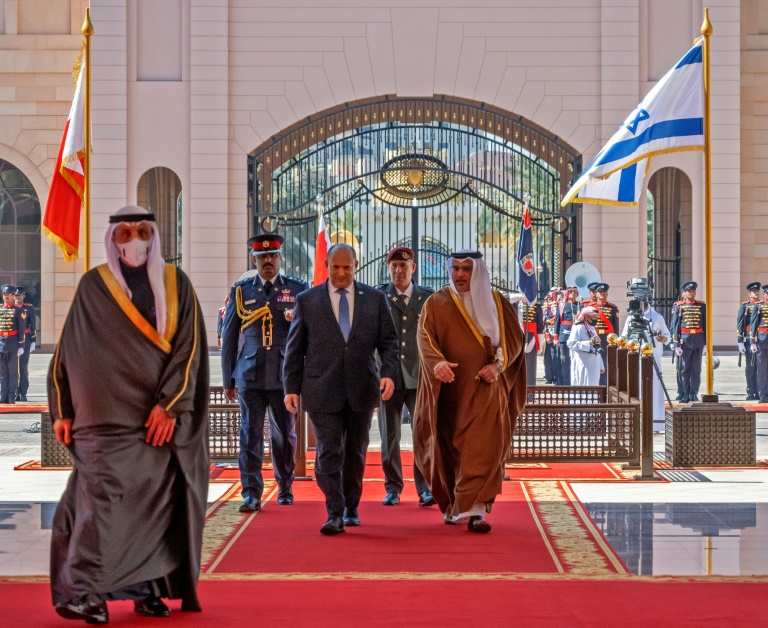
Israeli Prime Minister Naftali Bennett met Bahrain’s king on a landmark visit Tuesday to the small, oil-rich Gulf country, 17 months after they ended decades of tensions to normalise ties.

It was the latest diplomatic breakthrough since several Arab states under the US-brokered 2020 Abraham Accords ended their isolation of Israel, despite the fact the Israel-Palestinian conflict remains unresolved.

Israel’s new alliances reflect the fact that major Arab Gulf powers, the Jewish state and their common ally the United States share an animosity toward Iran and concerns about its nuclear programme.

“In these tumultuous times, it’s important that from this region we send a message of goodwill, of cooperation, of standing together against common challenges,” Bennett said.

On Tuesday, he met King Hamad bin Isa Al-Khalifa and Crown Prince Salman bin Hamad Al-Khalifa, who is also prime minister of the island nation that is close to top regional power Saudi Arabia, and which hosts the US Navy’s Fifth Fleet.

Bennett, the first Israeli head of government to visit Bahrain, discussed “deepening cooperation” in meetings with the defence and other ministers, his office said.

“We want to fill this relationship with substance in energy, in drive, in economy, in tourism and in the regional architecture,” Bennett said. “We spoke about opportunities where we can strengthen the bridge.”  

Bennett also met US Fifth Fleet commander Vice Admiral Brad Cooper, said the premier’s office, stressing its role in maintaining regional stability in the face of threats.

– ‘Seeing my family’ –

Bahrain and the United Arab Emirates became only the third and fourth Arab states — following Egypt and Jordan — to establish ties with Israel in the pacts negotiated under then US president Donald Trump. 

Bennett visited the UAE in December.

Bahrain’s king welcomed Bennett’s visit and emphasised the importance of strengthening the bilateral partnership in light of the Abraham Accords, said the official Bahrain News Agency.

Bennett also met the small Jewish community of Bahrain, about 50 people, who had practised their faith behind closed doors since the 1947 start of the Arab-Israeli conflict.

After the Abraham Accords, a small synagogue in the heart of Manama was renovated and reopened.

Bennett told Jewish community members there that “I’m very delighted to be here in Bahrain, and I could think of no better way to kick off this visit than seeing my family here”.

Bennett’s Bahrain trip follows a visit by Israeli Defence Minister Benny Gantz earlier this month, that saw the two countries sign a defence agreement.

That deal covered intelligence, procurement and joint training. As part of the agreements, Israel is set to post a naval official in Bahrain. 

Bennett also held discussions with Bahraini youth, highlighting cooperation in the face of threats. 

“The fault lines used to be between Arabs and Israelis,” he said, adding that now the divisions were between them and the “agents of terror and chaos.”

“I am convinced that Israel’s growing friendships with Bahrain and other countries in the region are a leading force in the profound change,” he said.

– ‘Absolutely’ about Iran –

Dore Gold, head of the Jerusalem Centre for Public Affairs, said Israel and Bahrain have been pushed towards closer ties as both are “under threat by Iranian actions”.

Yoel Guzansky, a senior researcher at the Institute for National Security Studies in Tel Aviv, also said the focus of Bennett’s trip was “absolutely” on Iran. 

Iran is now engaged in talks in Vienna with Britain, China, France, Germany and Russia directly, and with the United States indirectly, to revive the 2015 nuclear deal.

The agreement offered Tehran sanctions relief in exchange for curbs on its nuclear programme. The US unilaterally withdrew from it in 2018 under Trump. 

Bennett’s government strongly opposes a return to the deal, and has warned repeatedly that lifting sanctions would give Iran more money to buy weapons for use against Israelis.

Guzansky said that Bennett’s trip, “in light of the talks in Vienna, it is a show of force, symbolism that the countries are working together”.

He pointed to unrest in Bahrain blamed on Iran-backed opposition groups and the range of threats that Israel says Iran poses, notably its arming of Lebanese militant group Hezbollah.

Guzansky said that, in several respects, Bahrain has been perceived as moving slower than the UAE in terms of consolidating ties with Israel. 

Allowing an Israeli military officer to be based in Bahrain was “significant”, he said, as Bahrain “does not want to be seen as an Israeli base in the Gulf”.

Virgin Galactic re-opens ticket sales for $450,000

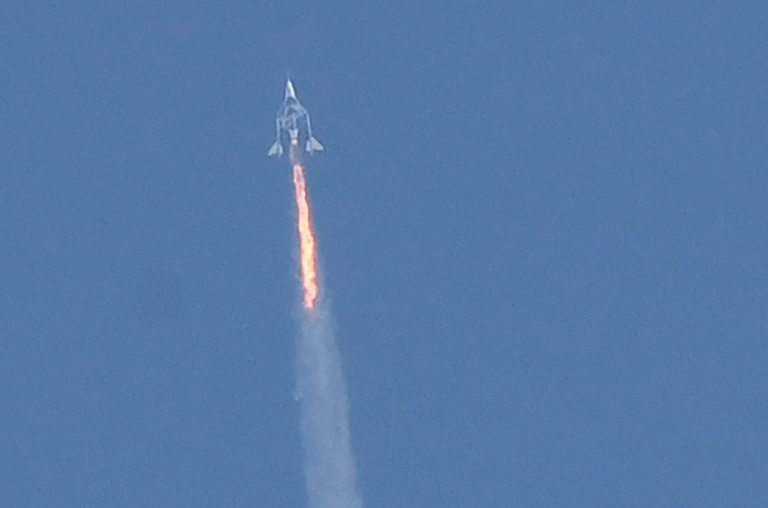
Virgin Galactic, which last year flew its flamboyant founder Richard Branson to space, will re-open ticket sales to the general public starting Wednesday, for the sum of $450,000.

Previously, only people who had paid a deposit to be on a waiting list could buy new tickets — but now sales are once more open to everyone.

“We plan to have our first 1,000 customers on board at the start of commercial service later this year, providing an incredibly strong foundation as we begin regular operations and scale our fleet,” said CEO Michael Colglazier in a statement.

Established in 2004, Virgin Galactic is looking to build on the success of a high profile test mission last July, which saw Branson beat Blue Origin founder Jeff Bezos in their billionaire space race by a few days. 

But Virgin has not flown since then. In October it announced it was entering an “enhancement period” to make safety upgrades to its fleet, and pushed back a planned test flight with the Italian Air Force to this year. 

Its target to fly its first paying individual customers towards the end of 2022 puts it behind its competition in the nascent space tourism sector — Blue Origin and Elon Musk’s SpaceX — which have already flown commercial passengers. 

Blue Origin’s suborbital rockets have now carried out three crewed flights with customers and guests, though the price is thought to be significantly higher.

Privately-held Blue Origin and SpaceX have not revealed their exact ticket costs, unlike publicly-traded Virgin Galactic, which is required to be more transparent.

Virgin’s spaceflights launch from Spaceport America in New Mexico. 

A massive carrier aircraft takes off horizontally, gains high altitude, and drops a rocket-powered spaceplane that soars into space at Mach-3, before gliding back to Earth.

The total journey time is 90 minutes, with passengers experiencing a few minutes of weightlessness in the spaceplane’s cabin, from where they can also observe the Earth’s curvature through 17 windows.

As of last November, the company said it had sold 700 tickets. The current fare, which includes a $150,000 deposit, is well above the $200,000-$250,000 paid by some waiting 600 customers from 2005 to 2014.

At new fraud trial, Navalny vows to fight on against Kremlin

Imprisoned Kremlin critic Alexei Navalny said Tuesday he would keep challenging Russia’s leadership during the opening of a new fraud trial that could extend his jail term by more than a decade.

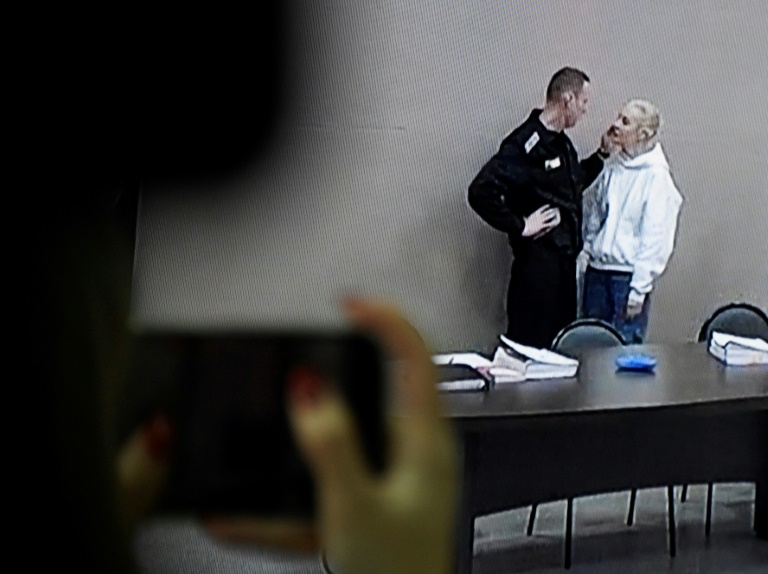
Navalny appeared at the beginning of the hearing via video link wearing a prison uniform and flanked by guards at the makeshift court inside his penal colony, smiling and embracing his wife.

German Chancellor Olaf Scholz said the new case was “incompatible” with the rule of law, speaking during a press conference with Russian leader Vladimir Putin in Moscow.

The 45-year-old opposition leader has already been behind bars for a year, after surviving a poison attack he blames on the Kremlin.

He is serving out a two-and-a-half year sentence on old embezzlement charges, but the fresh charges could see his time behind bars significantly extended.

“You’re going to increase my term indefinitely. What can we do about it?” Navalny said during the court hearing.

“The activities of people are more important than the fate of one individual. I’m not afraid.”

The new case was launched in December 2020, when Navalny was recovering in Germany after a poisoning attack with Soviet-designed poison.

The Russian authorities have repeatedly any involvement.

– ‘Illegal persecution’ –

Rights groups have criticised authorities for holding the closed-door hearing inside the maximum-security prison in Pokrov, some 100 kilometres (60 miles) east of Moscow.

Investigators accuse Navalny of stealing for personal use more than $4.7 million in donations that were given to his political organisations. The charges carry a maximum penalty of 10 years in prison.

A prosecutor during the trial accused Navalny and his allies of “misleading citizens” with the “deliberate” aim of stealing funds.

Navalny grew a wide following among liberal-leaning Russians with videos exposing the corruption among the elite. Many of the investigations gained millions of views online.

Navalny’s allies decried the trial as a sham and his lawyer said it came as part of Kremlin efforts to remove him from political life.

“We believe the persecution of Navalny is illegal, is distinctly political in nature, and aimed at discrediting and removing him from political activity,” lawyer Olga Mikhailova said.

– ‘Incompatible’ with rule of law – 

The start of the trial comes during a week of intensive talks between Russia and the West over Ukraine, with Scholz the latest leader in Moscow for talks with Putin.

During a press conference with the Russian leader, Scholz condemned legal proceedings against Navalny, following appeals earlier from the opposition leader’s allies to raise his case with Putin. 

“My position on the Navalny case is very clear: his judgement is incompatible with the principles of the rule of law and I have expressed this view on many occasions,” Scholz said.

Navalny was treated by doctors in Berlin and Germany blamed his near-fatal poisoning on the Kremlin. Former chancellor, Angela Merkel, used her final visit to Moscow last year to ask Putin to free Navalny. 

On the eve of the hearing Amnesty International criticised the “sham trial, attended by prison guards rather than the media”.

“It’s obvious that the Russian authorities intend to ensure that Navalny doesn’t leave prison any time soon,” it said on Monday.

In separate charges, Navalny also faces up to six months in prison if convicted of contempt of court.

Navalny’s poisoning and arrest sparked widespread condemnation abroad as well as sanctions from Western capitals.

After his arrest, Navalny’s political organisations across the country were declared “extremist” and shuttered, while many key aides fled Russia fearing prosecution. 

West sees 'positive signs' as Russia says some troops pull back

Western leaders said Tuesday they were seeing positive signs that Russia was looking to ease tensions over Ukraine, after Moscow announced it was pulling back some of the troops deployed on its neighbour’s borders.

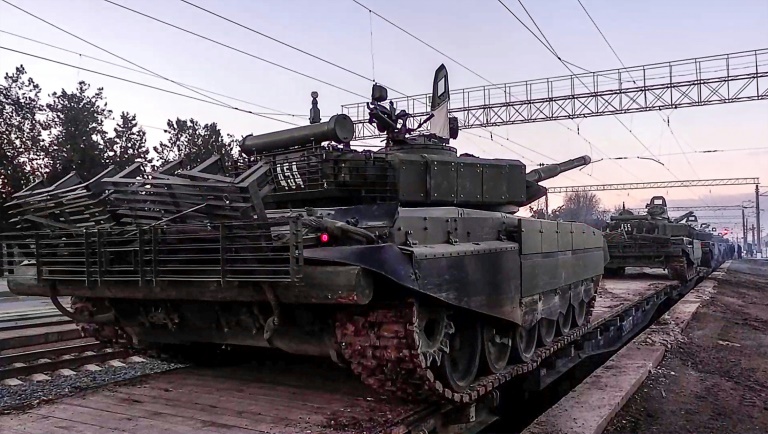
In the first announced withdrawal from among more than 100,000 troops Russia amassed on the Ukrainian border, the defence ministry in Moscow said some soldiers and hardware were returning to bases at the end of planned exercises.

Western leaders had accused Moscow of positioning the troops in advance of a possible invasion of pro-Western Ukraine, warning that any attack would be met with severe economic sanctions.

After a meeting Tuesday with German Chancellor Olaf Scholz in Moscow, President Vladimir Putin said Russia “of course” did not want war, and was willing to look for solutions with the West.

“We are ready to work further together. We are ready to go down the negotiations track,” Putin told a joint press conference with Scholz, confirming a “partial pullback of troops”.

The German leader joined others in the West in expressing hope that steps were being taken towards de-escalation in the crisis.

“That we are now hearing that some troops are being withdrawn is in any case a good sign,” Scholz said.

“For Europeans it is clear that lasting security cannot be achieved against Russia but only with Russia.”

– ‘Reason for hope’ –

Moscow released few details about the troop withdrawal and there was no immediate outside confirmation.

NATO chief Jens Stoltenberg said in Brussels there was not yet “any sign of de-escalation on the ground” but that there were “grounds for cautious optimism”.

A French government spokesman said it was a “positive signal” if Russian forces were indeed withdrawing, while Germany’s Foreign Minister Annalena Baerbock said “every real step of de-escalation would be a reason for hope”.

British Prime Minister Boris Johnson said there were “signs of a diplomatic opening” with Russia, but that intelligence on a possible invasion was “still not encouraging”.

The crisis — the worst between Russia and the West since the Cold War ended — reached a peak this week, with US officials warning that a full-scale invasion, including an assault on Kyiv, was possible within days.

Washington took the dramatic step on Monday of relocating its embassy in Kyiv to the western city of Lviv, after previously urging US citizens to leave Ukraine.

The Russian defence ministry announced the partial withdrawal on Tuesday morning, saying some forces deployed near Ukraine had finished their exercises and were packing up to leave.

“Units of the southern and western military districts, having completed their tasks, have already begun loading onto rail and road transport and today they will begin moving to their military garrisons,” the ministry’s chief spokesman, Igor Konashenkov, said in a statement.

It was not immediately clear how many units were involved and what impact the withdrawals would have on the overall number of troops surrounding Ukraine.

Konashenkov said “large-scale” Russian military drills were continuing in many areas, including joint exercises in Belarus and naval exercises in the Black Sea and elsewhere.

Kremlin spokesman Dmitry Peskov told reporters that the pullback was the “usual process” after military exercises and blamed the West for the crisis.

“This is nothing but a totally unprecedented campaign to provoke tensions,” he said, calling decisions to move embassies to western Ukraine “ostentatious hysteria”.

– ‘Believe what you see’ –

Ukraine said deterrence efforts against Russia appeared to be working but that it would watch to see if any Russian withdrawal was real.

“We have a rule: don’t believe what you hear, believe what you see. When we see a withdrawal, we will believe in a de-escalation,” Foreign Minister Dmytro Kuleba told reporters.

In a separate move likely to anger Kyiv, Russian lawmakers on Tuesday voted to urge Putin to recognise two breakaway regions in eastern Ukraine as “sovereign and independent states”.

This would allow Russia to abandon the Minsk agreements peace plan for eastern Ukraine and potentially move in Russian troops — giving Putin a strong hand to play in any future negotiations with Kyiv.

The European Union “strongly” condemned the move, saying it would violate the Minsk agreements that Moscow had signed up to.

Russia has repeatedly blamed the Ukraine crisis on the West, saying the United States and western Europe are ignoring Russia’s legitimate security concerns.

The Kremlin insists NATO must give assurances Ukraine will never be admitted as a member and roll back its presence in several eastern European and ex-Soviet countries. 

Russia already controls the Crimean Peninsula that it seized from Ukraine in 2014 and supports separatist forces who have taken control of parts of eastern Ukraine, in a conflict that has claimed more than 14,000 lives.

Honduran ex-president faces US extradition for alleged drug trafficking

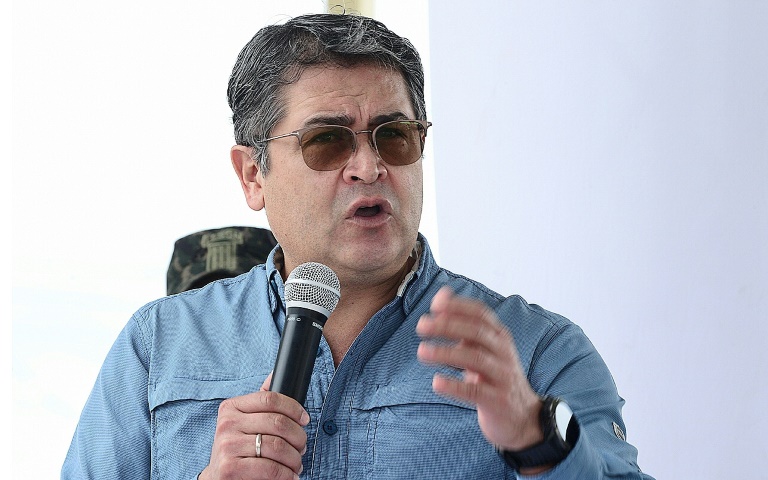
Honduran ex-president Juan Orlando Hernandez, accused by Washington of ties with drug traffickers, vowed Tuesday to cooperate with domestic justice in a US bid to extradite him.

Honduras’s Supreme Court of Justice will meet Tuesday to assign a judge to weigh the US request even as Hernandez’s lawyer claimed the politician enjoyed immunity from prosecution.

In an audio message on Twitter, Hernandez said his team had already informed the police “that I am ready to collaborate and to come voluntarily… at the time the judge will decide.”

He would do so, said Hernandez, “to confront this situation and defend myself.”

Special forces agents encircled Hernandez’s home in the capital Tegucigalpa after an official, who declined to be named, confirmed to AFP Monday that Washington had asked for him to be extradited.

The official said Hernandez was in the country.

The ex-president’s lawyer, Hermes Ramirez, said the police deployment constituted an “attack” on the ex-president’s rights as it had prevented advisers from coming to the residence.

Dozens of people with banners, meanwhile, celebrated outside Hernandez’s home, while in other cities people took to the streets with loudspeakers singing “Juancho goes to New York,” using a nickname for the ex-president.

Hernandez, a former US ally who left office last month, has been linked to drug trafficking operations by New York prosecutors. 

– ‘Significant corruption’ –

Even though he officially supported US anti-drug campaigns during his two terms in office, traffickers caught in the United States claimed to have paid bribes to the president’s inner circle.

Alleged associate Geovanny Fuentes Ramirez was sentenced in the United States last week to life in prison and a fine of $151.7 million for smuggling tons of cocaine into the United States — with Hernandez’s aid, according to prosecutors.

And in March 2021, Hernandez’s brother, former Honduran congressman Tony Hernandez, was given life in prison in the United States for drug trafficking.

Last week, US Secretary of State Antony Blinken said that “according to multiple, credible media reports” Hernandez “has engaged in significant corruption by committing or facilitating acts of corruption and narco-trafficking and using the proceeds of illicit activity to facilitate political campaigns.”

Hernandez denies the claims, which he said were part of a revenge plot by drug lords that his government had captured or extradited to the United States.

– ‘Bankrupt’ state –

Lawyer Ramirez insisted Monday that his client enjoyed immunity from prosecution as a member of the Guatemala-based Central American Parliament, Parlacen.

Hernandez joined Parlacen hours after leaving office on January 27, when leftist Xiomara Castro was sworn in with vows to transform the “bankrupt” state he left behind.

Several analysts approached by AFP said that any immunity conferred by Parlacen membership could be waived by the regional body at the request of a national government.

Ramirez said no arrest warrant had yet been served on Hernandez, who had sought to cultivate close ties with Washington during eight years in office dogged by accusations of corruption.

Blinken said last week that Hernandez was added to a list last year of people denied entry to the United States for corrupt or anti-democratic actions.

Attending Castro’s swearing-in last month, US Vice President Kamala Harris was the first foreign official to have a bilateral meeting with her, and welcomed the new leader’s commitment to combating corruption and impunity.

Castro has promised to undo laws passed under Hernandez that reduced penalties for drug trafficking and corruption.

Kyiv residents resolute as Russia signals pullback

At 80 years old, Kyiv retiree Yuriy Mykhailin has seen Ukraine battle through a lot to forge its own path in the world, and he’s not going to let Russian pressure daunt him now.

On Tuesday, hearing reports from Moscow that suggested some Russian forces were pulling back from the border, he choked back tears of emotion.

“I want to sign up to the Kyiv territorial defence to protect my family, my children and grandchildren,” he said told AFP.

A poll this month said nearly 60 percent of Ukrainians “would resist” Russia if it invades.

“That way, I think the victory will be ours,” Mykhailin said.

Ukraine has faced sporadic fighting with Russian-backed separatists in the southeast of the country for the past eight years.

But the recent massive deployment of Russian forces on its borders — including in Belarus, a few hours drive from Kyiv — brought the pressure to a new level.

Alongside threats from Moscow, Ukraine’s airwaves were filled with dire warnings from US officials that a Russian invasion could be just days away.

The US embassy in Kyiv shut up shop, and a “core team” of diplomats moved to Lviv in western Ukraine, considered further from the potential frontline.

– ‘We are strong!’ –

Washington insisted it would stand by its partner and, with the EU, has threatened Russia with economic sanctions if it does invade.

US charge d’affaires Kristina Kvien took to the streets of her new home town safely 470 kilometres (290 miles) west of the capital to try to reassure Ukrainians.

“I’d like to just reiterate that this is a temporary move and, as much as we love Lviv, we hope very much to be back in Kyiv very soon,” she said.

“It’s Russia that has caused this change in our posture,” she said, denouncing Moscow’s troop build-up and “aggressive and hostile rhetoric”.

But, with foreign nationals rushing to leave and airlines beginning to cancel flights into Ukrainian air space, some here complain they are being abandoned.

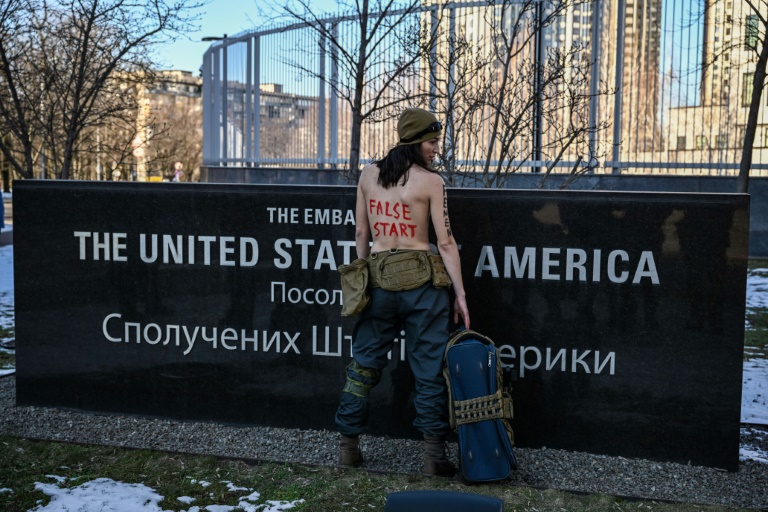
On Tuesday, a bare-breasted protester from the Ukrainian activist group Femen mocked the US fall back to the west outside the closed Kyiv mission.   

President Volodymyr Zelensky has responded to the mood by declaring Wednesday — the day some US reports suggested an invasion could begin — a day of unity.

“On this day we will hang our national flags, put on blue and yellow ribbons and show our unity to the whole world,” he declared in a televised statement. 

“We are calm! We are strong! We are together!”

– Pride in unity –

But in truth there has been little sign of panic in the streets of Kyiv, lit brightly this week by chilly but cheerful spring-like sunshine.

Ukrainians have gone about their business, some expressing pride that Russian warnings and intense media reporting of their plight have not shaken them.

There was a protest in Kyiv on Tuesday morning. Around 100 demonstrators gathered in front of the parliament, watched by a larger group of police.

But they were not responding to the threat to the border, nor denouncing the government response: they were quietly opposed to coronavirus vaccine mandates. 

In a street near the central Maidan square 22-year-old lawyer Artem Zaluzhniy admitted that he sometimes shunned media reports to avoid too much stress.

But he gave Zelensky some credit for his work to deter the Russian threat, and said he might turn up on Wednesday to see Day of Unity events.

“I work nearby, so I will probably come and take a look. In general, I think such a celebration is urgently needed in Ukraine today,” he told AFP. 

“Because in times like this the national idea and the unity of the nation is formed.”

'Now or never': Victims of Italy's predator priests urge inquiry

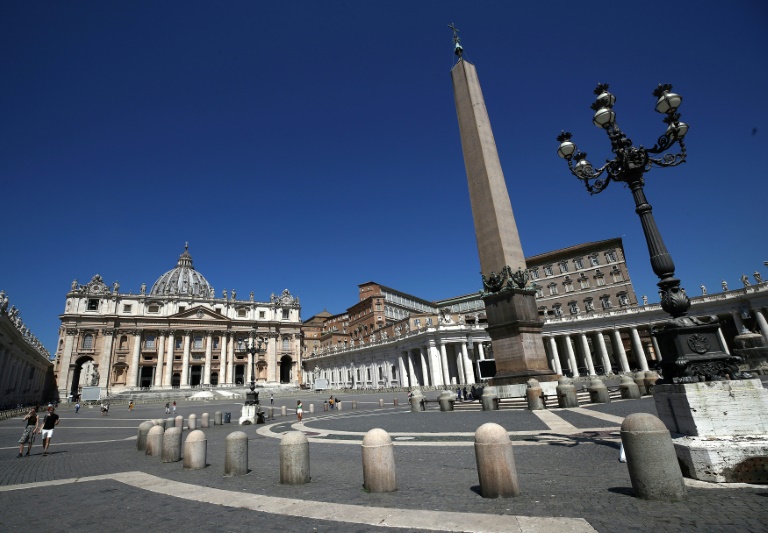
Victims of paedophile priests in Italy unveiled Tuesday a campaign dubbed “Beyond the Great Silence”, pushing for an independent investigation into clerical abuse carried out on the Vatican’s doorstep.

Inquiries across the United States, Europe and Australia have exposed the scale of abuse within the Catholic Church — and a decades-long cover-up — and many groups say Italy can no longer avoid scrutiny.

“The government must act, must take advantage of the momentum created by impartial investigations elsewhere,” Francesco Zanardi, founder of Rete L’Abuso (Abuse Network), told AFP.

“If Italy doesn’t do it now, I fear it never will,” said Zanardi, who was abused by a priest as a young teen.

Nine groups have formed a consortium aimed at putting pressure on the country to launch a probe, like recent inquiries in France and Germany.

Cristina Balestrini, who set up a support group for families after her son was abused by a priest, told AFP that the most important thing for survivors was “to make sure it never happens again”.

Not all those molested will survive, “there are many victims who commit suicide, and no one knows about it,” she said.

– ‘Bitterness and disappointment’ –

“I am the son of (a) paedophile priest,” Erik Zattoni, 40, told the press conference held Tuesday to launch the consortium.

“My mother was sexually abused at the age of 14,” but when her family reported the rape and refused to hush up the crime, the young teenager, her parents and a newborn Zattoni were evicted from their house, which was church property, he said.

Years later the family applied to a court for a paternity test. It would prove the priest, aged 54 at the time of the attack, was Zattoni’s father, and prompted a confession from the cleric.

“He continued to be a priest for another year and a half,” said Zattoni, adding that he felt “a lot of bitterness and disappointment”. The priest has since died.

“Nothing was done, nothing. What do we have to do to make sure that these priests, these criminals, are convicted, are removed?”

Rete L’Abuso has recorded more than 300 cases of priests accused or convicted of child sexual abuse in the past 15 years in Italy, out of a total of 50,000 priests across the country.

Precise figures on the scale of the problem are impossible to come by.

But the network has joined forces with the Left weekly magazine to create a database of cases, which will go online from Friday and already has details of abuse affecting more than 140 victims.

Journalist Federico Tulli said the magazine had received reports of new cases in the run-up to the launch.

The initiative was a response to the “unacceptable inattention” by politicians to children’s wellbeing, he said.

– ‘Victims twice over’ –

The Vatican’s top clerical abuse advisor, Hans Zollner, told AFP this month that after investigations elsewhere, it was time for Italy to act.

The church is not as powerful as it once was in the historic home of popes. But it retains a huge influence and two-thirds of Italians are believers, according to a 2019 survey.

Pope Francis, who has toughened the punishments meted out to abusing priests under Vatican law, on Monday streamlined the Vatican office that processes abuse complaints, in an attempt to expedite cases.

But Zanardi of Rete L’Abuso said he “would have little faith” in an in-house investigation.

Balestrini, 56, is also distrustful of the church since “they acted as if we were the enemy, making us victims twice over” after her teenage son was abused in 2011.

The cleric in question, Mauro Galli, was initially moved to another parish, but was later convicted.

She hopes the new consortium will be able to pressure the church to open its archives, because the scandal, she said, “is much bigger than you can imagine”.

Unearthing the truth would not be easy for Italy, but the church would be wise to act, Balestrini said.

“At the moment, they are trying to keep a lid on it, but it’s better to choose to take the lid off yourself, than have it blown off,” she said.

Macron expected to announce Mali withdrawal

French President Emmanuel Macron this week will announce that French troops will be withdrawn from Mali and redeployed elsewhere in the Sahel following a breakdown in ties with the country’s military regime, concurring sources say.

Several security sources, speaking on condition of anonymity, told AFP that Macron’s announcement to end the nine-year French mission in Mali will coincide with a European Union-African Union summit in Brussels on Thursday and Friday.

France initially deployed troops in 2013 to beat back advancing jihadist fighters in northern Mali.

But the extremists regrouped and in 2015 moved into central Mali, an ethnic powder-keg, before launching cross-border attacks on neighbouring Niger and Burkina Faso. 

Now, sporadic raids on countries to the south have raised fears of a jihadist push to the Gulf of Guinea.

The expected pullout amounts to a major strategic shift by France, spurred by a breakdown in its relations with Mali, a former colony and traditional ally, after two military coups.

The withdrawal will end a mission that successive French presidents had argued was crucial for regional and European security.

“If the conditions are no longer in place for us to be able to act in Mali — which is clearly the case — we will continue to fight terrorism side-by-side with Sahel countries who want it,” French Foreign Minister Jean-Yves Le Drian said Monday.

Macron, who was already planning to reduce the almost 5,000 troops deployed in the Sahel region, is expected to announce redeployments to other bases operated by French forces in neighbouring countries such as Niger. 

He is due to host allied African leaders for informal talks in Paris Wednesday ahead of the summit, diplomatic sources said.

With a presidential election looming in April, Macron is eager to avoid comparisons with the US’ chaotic withdrawal from Afghanistan last year — or any suggestion that the deaths of 48 French soldiers have been in vain.

– European fight –

After two coups in Mali since 2020, France and other Western nations complain that the junta has missed deadlines to restore civilian rule and become increasingly hostile to the presence of French and European soldiers on its soil.

This has coincided with the regime developing close ties with Russia, including turning to suspected mercenaries from Russia’s private military contractor Wagner.

Last year, Macron announced a reduction of France’s Barkhane force amid questions over both the financial cost of the nearly decade-long mission and its rising human toll, prompting a furious reaction from Mali.

In recent years, fellow EU nations had joined France in the Sahel, sharing the military and financial burden and — Paris hoped — limiting long-standing allegations of French interference in its former African colonies.

But the bell is tolling for this mission. 

Denmark announced it was withdrawing its contingent of elite soldiers in late January and Norway has abandoned a planned deployment.

“It’s impossible to continue in such conditions,” Estonian Defence Minister Kalle Laanet told the Postimees daily on Saturday.

Sources familiar with negotiations said there had been disagreement among Europeans as well as with the British and Americans about a wider departure, including over the risks of leaving Mali open to Russian influence.

But France believes it has smoothed these concerns.

France is promising to coordinate its move with the UN’s MINUSMA peacekeeping force and to continue to support an EU training mission for the Malian army, providing them with air power and medical support for the time being, a source close to the French presidency said.

“The real game changer is that the Malian army will lose our air support from one day to the next, that poses a risk of a security gap,” the source added.

– ‘In the neighbourhood’ –

Even if European forces quit Mali, “there will always be some kind of cooperation” between EU and Sahel states, said Ornella Moderan of the Institute for Security Studies.

“The Europeans can’t do without the Sahel, it’s in their neighbourhood.”

Just this weekend, France said its troops had killed 40 jihadists in Burkina Faso, including individuals believed to be behind three improvised bomb attacks in northern Benin that killed nine people including one French national.

European governments fear that shifting relationships with the region’s rulers risk leaving a vacuum for movements tied to Al-Qaeda and the Islamic State group.

As well as Mali, Burkina Faso and Guinea Bissau have been hit by recent military coups. 

In Mali, the government failed to commit resources to re-impose its authority on areas that had been cleared of jihadists by French troops, and the armed forces remain weak despite years of effort to train them up.

“It will be important to learn the lessons from the Sahel” if the action expands to Gulf of Guinea countries, said Bakary Sambe of the Timbuktu Institute thinktank.

Close Bitnami banner
Bitnami