World

Russia says pulling back some forces from Ukraine border

Russia said Tuesday it was pulling back some of its forces near the Ukrainian border to their bases, in what could be the first major step towards de-escalation in weeks of crisis with the West.

Moscow released few details and there was no immediate outside confirmation of the withdrawal, which the Kremlin said had always been planned despite Western “hysteria” over a feared invasion of Ukraine.

It came amid an intense diplomatic effort to avert a war in Europe after Russia amassed more than 100,000 troops on the borders of its pro-Western neighbour.

Western leaders accused Moscow of preparing for a possible invasion, a claim Russia repeatedly denied, and threatened wide-ranging sanctions if an attack took place.

NATO chief Jens Stoltenberg said in Brussels there were “grounds for cautious optimism” in signs coming from Russia, but warned: “We have not seen any sign of de-escalation on the ground.”

In Moscow, German Chancellor Olaf Scholz became the latest world leader to meet Vladimir Putin in recent days, sitting for talks with the Kremlin leader that were to finish with a news conference later Tuesday.

On the streets of the Ukrainian capital Kyiv, residents enjoying bright winter sunshine were warily optimistic, and grateful that Ukraine and its allies appeared to have held their nerve.

“There is no panic in society… You see how many people are walking around, they are all smiling, they are all happy,” lawyer Artem Zaluznyi, 22, told AFP on the city’s main thoroughfare, Khreschatyk Street.

But there was also caution, with many doubting that Russia would honour any promise to withdraw.

“To believe it fully would be neither smart nor wise,” Zaluznyi said.

The crisis — the worst between Russia and the West since the Cold War ended — reached a peak this week, with US officials warning a full-scale invasion, including an assault on Kyiv, was possible within days.

Washington took the dramatic step on Monday of relocating its embassy in Kyiv to the western city of Lviv, after previously urging US citizens to leave Ukraine.

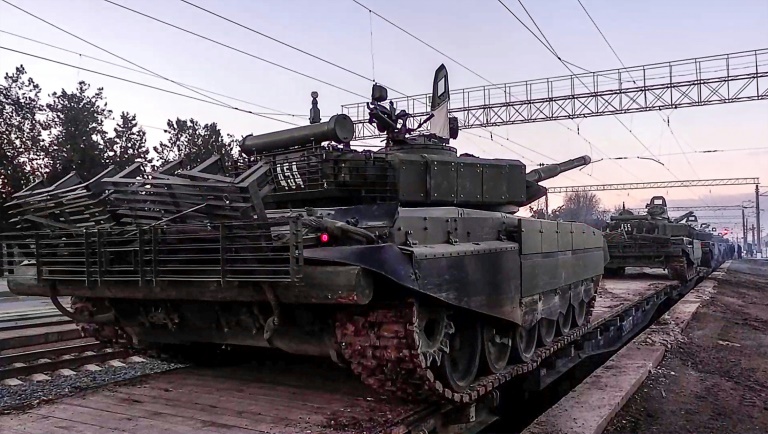
On Tuesday morning, the Russian defence ministry spokesman said some forces deployed near Ukraine had completed their exercises and were packing up to leave.

“Units of the southern and western military districts, having completed their tasks, have already begun loading onto rail and road transport and today they will begin moving to their military garrisons,” the ministry’s chief spokesman, Igor Konashenkov, said in a statement.

– ‘Large-scale’ drills continue –

The ministry released a video that it said showed Russian tanks climbing on to rail cars to leave an area where drills had been taking place.

It was not immediately clear how many units were involved and what impact the withdrawals would have on the overall number of troops surrounding Ukraine, but it was the first announcement of a Russian drawdown in weeks.

Konashenkov said “large-scale” Russian military drills were continuing in many areas, including joint exercises in Belarus and naval exercises in the Black Sea and elsewhere.

Russian Foreign Ministry spokeswoman Maria Zakharova suggested Tuesday’s news would show it was the West that had been ratcheting up tensions with its claims.

“February 15, 2022, will go down in history as the day Western war propaganda failed. Humiliated and destroyed without a single shot being fired,” she wrote on social media.

Kremlin spokesman Dmitry Peskov told reporters that the pullback was the “usual process” after military exercises and again blamed the West for the crisis.

“This is nothing but a totally unprecedented campaign to provoke tensions,” he said, calling decisions to move embassies to western Ukraine “ostentatious hysteria”.

– ‘Believe what you see’ –

Ukraine said deterrence efforts against Russia appeared to be working but that it would watch to see if any Russian withdrawal was real.

“We have a rule: don’t believe what you hear, believe what you see. When we see a withdrawal, we will believe in a de-escalation,” Foreign Minister Dmytro Kuleba told reporters.

And in a separate move that would be sure to anger Kyiv, Russia’s parliament on Tuesday voted to urge Putin to recognise two breakaway regions in eastern Ukraine as “sovereign and independent states”.

This would allow Russia to abandon the Minsk agreements peace plan for eastern Ukraine and potentially move in Russian troops — giving Putin a strong card to play in any future negotiations with Kyiv.

Moscow has repeatedly blamed the crisis on the West, saying the United States and western Europe are ignoring Russia’s legitimate security concerns on its doorstep.

The Kremlin insists NATO must give assurances Ukraine will never be admitted as a member and roll back its presence in several eastern European and ex-Soviet countries. 

Russia already controls the Crimean Peninsula that it seized from Ukraine in 2014 and supports separatist forces who have taken control of parts of eastern Ukraine, in a conflict that has claimed more than 14,000 lives.
Taliban declare Soviet exit holiday, six months after seizing power

The Taliban on Tuesday declared February 15 a national holiday to mark the anniversary of the Soviet withdrawal from Afghanistan — six months after they stormed into Kabul to topple the US-backed government.

After invading on Christmas Eve in 1979, the Red Army pulled out a decade later having lost nearly 15,000 troops fighting Western-backed Mujahideen forces, precipitating a civil war that gave rise to the Taliban and their first stint in power from 1996 to 2001.

Forty years of conflict has left Afghanistan one of the world’s most impoverished nations, and the Taliban’s return on August 15 plunged the country deeper into a humanitarian crisis the United Nations says threatens more than half its 38 million population.

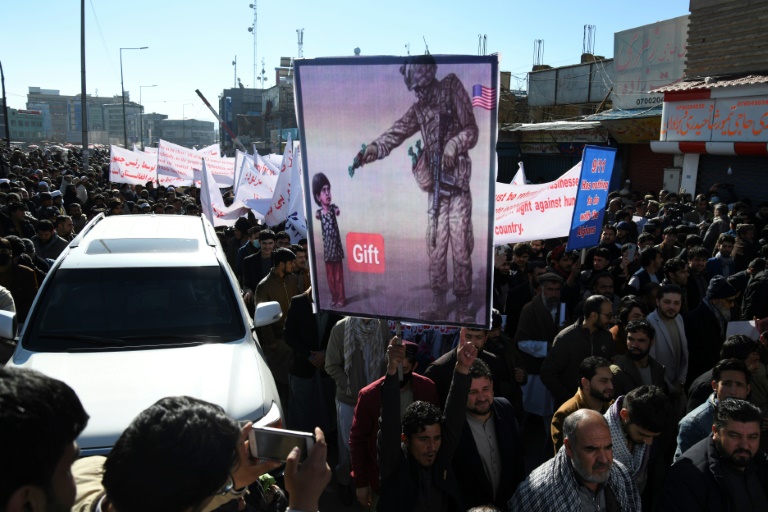
Thousands marched through Afghan cities on Tuesday to protest against President Joe Biden’s decision last week to seize almost half the country’s overseas assets — about $3.5 billion — as compensation for victims of the September 11, 2001 attacks carried out by Al-Qaeda that prompted the US-led invasion later that year.

“If someone wants compensation, it should be Afghans,” said Mir Afghan Safi, the chairman of the country’s forex traders association, as he marched in Kabul. 

“Their two towers have been destroyed, but all our districts and all of our country have been destroyed.”

The Taliban, who said they wanted good relations with Washington after the US withdrawal in August, called the asset seizure “theft”.

Many Afghans have agreed, including those in exile after fleeing the country to avoid the Taliban’s hardline rule.

Some in the crowd chanted “death to America”, and “death to Joe Biden”. 

The Taliban warned late Monday they would be forced to reconsider their policy towards the United States unless Washington releases the assets.

“The 9/11 attacks had nothing to do with Afghanistan,” the group’s deputy spokesman said in a statement.

– Rights eroded –

It is not clear what action the Taliban could take, but they have previously said they would allow thousands of Afghans who worked for the United States and other Western powers to leave the country for promised sanctuary abroad.

The Soviets introduced laws giving women rights in education, work and marriage, benefiting mainly those in cities. The United States introduced similar measures over the last 20 years, but these have been drastically eroded since the hardline Islamists’ return.

Women are effectively barred from most government employment, while schools for teenaged girls are shut across much of the country.

The Taliban have also cracked down hard on protests against their rule, including detaining women activists, prompting strong protests from the United Nations and rights groups.

“The Soviet withdrawal was not an achievement but only the start of crises,” said exiled Afghan analyst Ahmad Saeedi.

“Afghanistan is again at the brink of failure with challenges only increasing,” he told AFP.

He said the Taliban had “lost a lot of time” in the six months since taking power.

“Because of this situation they are also not able to form an inclusive government… and that is expected to increase pressure on them from within the country and outside.”

While signs of the US-led occupation are still starkly apparent on the streets of Kabul — from the weapons the Taliban plundered as they swept to victory, to the concrete barriers erected to try to stop their 20-year insurgency — there is little evidence of the Soviet era.

Still, veteran Hayatullah Ahmadzai, who fought with the Mujahideen against Moscow’s might, says the Taliban are a direct consequence.

After the Soviets left, the 74-year-old told AFP, the situation “ended up in disorder, giving birth to the Taliban”.

Japan PM calls Ukraine leader over Russia tensions

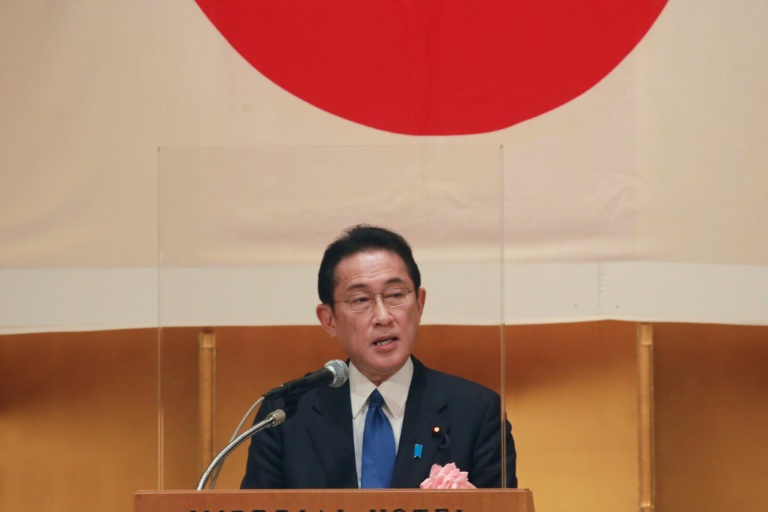
Japanese Prime Minister Fumio Kishida spoke Tuesday with Ukraine’s president to back the country’s territorial integrity in the face of a possible Russian invasion and urge a diplomatic resolution to the stand-off.

The call came as the Kremlin said it had pulled some forces back from Ukraine’s borders, and President Vladimir Putin began talks in Moscow with German Chancellor Olaf Scholz.

Kishida “reiterated my consistent support for the integrity of sovereignty and territory (of Ukraine)” in the conversation with President Volodymyr Zelensky.

Japan is also ready to provide assistance to Ukraine in the form of loans of at least $100 million, Kishida told the Ukrainian leader.

The Japanese prime minister expressed “grave concern” about the situation and urged a diplomatic solution, while warning that if Russia invaded “we would respond appropriately, including sanctions, in cooperation with the G7 and the international community”.

He declined to be drawn on what Zelensky had said during the call, which came as Ukraine’s foreign minister said he believed a further Russian escalation had been prevented.

Kishida spoke earlier with European Commission President Ursula von der Leyen, pledging to “continue close coordination for de-escalation”.

On Monday, a statement by finance ministers from the G7 group of most developed nations warned they were ready to impose sanctions that would “have massive and immediate consequences on the Russian economy” in the event of an invasion.

Japan’s Foreign Minister Yoshimasa Hayashi on Tuesday declined to specify what form sanctions might take but said the measures would be implemented multilaterally.

Japan’s defence minister also warned Tuesday of an increased Russian naval presence in the Sea of Japan and the southern part of the Sea of Okhotsk, which he suggested was intended “to show off the capability to operate in the East and West, along with the Russian military’s recent movement around Ukraine”.

Japan and Russia have complex relations and did not sign a peace treaty after World War II because of a lingering dispute over four islands claimed by Moscow in the closing days of the conflict.

The islands, off the northern coast of Japan’s northernmost island of Hokkaido, are known as the southern Kurils in Russia and the Northern Territories in Japan.

Tokyo has shown support for its allies in Europe by offering liquified natural gas imports to help allay fears of a supply crunch if tensions around Ukraine disrupt energy supplies.

Last week, Japan announced it had diverted multiple gas shipments to Europe, with delivery expected this month and more on the way in March.

No details on the amount of gas were given, but in their call Tuesday, von der Leyen expressed “appreciation” for the move and Kishida pledged to continue cooperation to ensure energy security.

Cambodia delays controversial internet gateway

Cambodia is delaying an internet gateway that had raised concerns around privacy and free speech, halting its planned mid-week implementation  due to Covid-19 related disruptions, a government official said Tuesday.

Activists and UN rights experts had called for a halt to the project, which will funnel all web traffic through a state-controlled entry point, saying it would have a “devastating” effect on freedom of expression and privacy.

“The implementation of (National Internet Gateway) will be postponed due to the disruption caused by the spreading of Covid-19,” So Visothy, secretary of state for the Telecommunications Ministry told AFP.

“We will keep you updated when we have the new date,” he said, but declined to comment on if part of the system was already in operation.

The gateway, due to come into effect February 16, appeared to be taking Cambodia down a path beaten by Phnom Pehn’s major economic partner China — which keeps the online world behind a “Great Firewall” and blocks major Western platforms such as Twitter, Facebook and YouTube.

Earlier on Tuesday, the Cambodian Foreign Affairs Department issued a statement attacking foreign media reporting critical of the scheme.

A spokesman insisted it was being set up in a “transparent manner” and that consultations had been held with experts and relevant institutions.

“The establishment of a national internet gateway… serves as an effective tool to enhance national revenue collection,” the spokesman said, adding it would also help thwart cyber crimes, illicit online gambling and internet scams.

“The government respects the individuals rights to privacy and freedom of expression and protects personal data,” the spokesman said.

They said allegations that Cambodian authorities would monitor and conduct surveillance of internet activity, intercept and censor digital communication, and collect personal data were “unfounded”.

In 2021, at least 39 Cambodians were arrested, jailed or had arrest warrants issued against them for online posts that fell foul of government censors, according to the Cambodian Center for Human Rights (CCHR).

The gateway, announced last year, comes ahead of expected elections in 2023 and the CCHR said its completion could allow the government to block dissenting views online in the run-up to polls.

Reporters Without Borders denounced the scheme as “a level of information control unseen since the Khmer Rouge dictatorship”.

UN human rights experts warned earlier this month the gateway could pose a serious negative impact on internet freedom, human rights defenders and civil society in the country, further shrinking the already-restrictive civic space in Cambodia.

“Once the genie is out of the bottle it is very hard to be contained again,” UN experts said in a statement.

Navalny faces extra decade in jail as prison trial begins

President Vladimir Putin’s main political opponent, Alexei Navalny, went on trial from inside prison on Tuesday, in a new fraud case that could see his jail time extended by more than a decade.

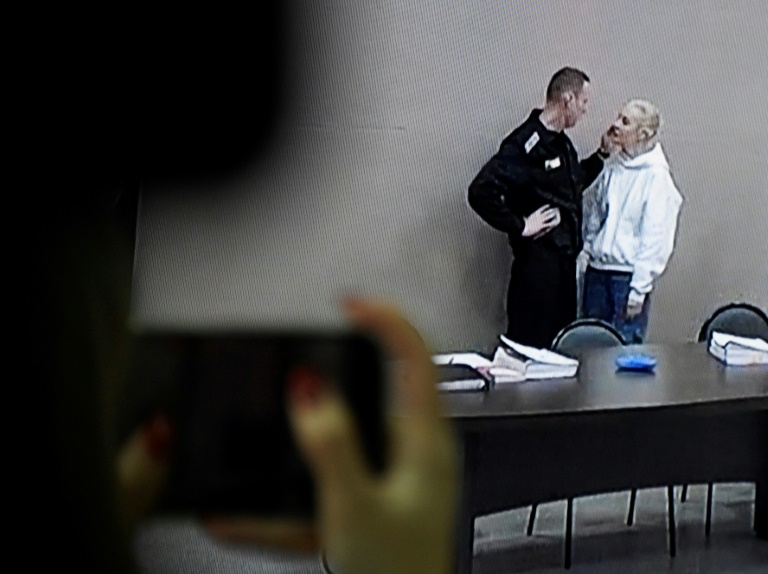
A video link showed Navalny dressed in prison uniform at the makeshift court inside his penal colony, smiling and embracing his wife, Yuliya Navalnaya, while guards stood either side of them.

Rights groups have criticised authorities for holding the closed-door hearing inside the maximum-security prison in Pokrov, some 100 kilometres (60 miles) east of Moscow.

Navalny said he was being tried in prison because Russian officials are “scared of what I will say.” 

“I have not yet been found guilty in this case, but they keep me in uniform so a grandmother watching on television will think ‘well, he’s in prison anyway'”, he said.

Navalny’s allies decried the trial as a sham.

He has already been behind bars for a year, after surviving a poison attack that he blames on the Kremlin.

He is currently serving a two-and-a-half year sentence, but the fresh fraud charges could see his time behind bars significantly extended.

The new fraud case against Navalny was launched in December 2020, while the 45-year-old was recovering in Germany after narrowly surviving a nerve agent poisoning.

Investigators accuse Navalny of stealing for personal use more than $4.7 million in donations that were given to his political organisations. The charges carry a maximum penalty of 10 years in prison.

– Allies say timed with Ukraine crisis – 

The start of the trial comes during a week of intensive talks between Russia and the West over Ukraine, with German Chancellor Olaf Scholz the latest leader due in Moscow for talks with Putin.

Navalny allies have called on Scholz to raise the fate of the politician in his talks with Putin on Tuesday.

“Germany stands for peace and justice,” his spokesperson Kira Yarmysh wrote on Twitter. “And now its stance on this is more important than ever.”

Navalny was treated by doctors in Berlin and Germany blamed his near-fatal poisoning on the Kremlin.

The country’s former chancellor, Angela Merkel, used her final visit to Moscow last year to ask Putin to free Navalny. 

Maria Pevchikh, another key Navalny ally, suggested that the trial was “purposefully scheduled to coincide with the most tense week of the Ukrainian crisis.”

“They are planning to extend his sentence for another 15 years while everyone’s distracted with something bigger,” she wrote on Twitter.

Amnesty International described the hearing as a “sham trial, attended by prison guards rather than the media.”

“It’s obvious that the Russian authorities intend to ensure that Navalny doesn’t leave prison any time soon,” it said on Monday.

Navalny also faces up to six months in prison if convicted of a contempt of court charge.

Navalny’s poisoning and arrest sparked widespread condemnation abroad as well as sanctions from Western capitals.

After his arrest, Navalny’s political organisations across the country were declared “extremist” and shuttered, while many key aides fled Russia fearing prosecution. 

Russia says pulling back some forces from Ukraine border

Russia said Tuesday it was pulling back some of its forces near the Ukrainian border to their bases, in what would be the first major step towards de-escalation in weeks of crisis with the West.

The move came amid an intense diplomatic effort to avert a feared Russian invasion of its pro-Western neighbour and after Moscow amassed more than 100,000 troops near Ukraine’s borders.

German Chancellor Olaf Scholz was set to be the latest European leader to meet Russian President Vladimir Putin on Tuesday, with talks due later in Moscow.

The crisis — the worst between Russia and the West since the end of the Cold War — reached a peak this week, with US officials warning that a full-scale invasion, including an assault on the Ukranian capital Kyiv, was possible within days.

On Tuesday morning, the Russian defence ministry spokesman said some forces deployed near Ukraine had completed their exercises and were packing up to leave.

“Units of the southern and western military districts, having completed their tasks, have already begun loading onto rail and road transport and today they will begin moving to their military garrisons,” the ministry’s chief spokesman, Igor Konashenkov, said in a statement.

– ‘Large-scale’ exercises continue –

It was not immediately clear how many units were involved and what impact the withdrawals would have on the overall number of troops surrounding Ukraine, but it was the first announcement of a Russian drawdown in weeks.

Konashenkov said “large-scale” Russian military drills were continuing in many areas, including joint exercises in Belarus and naval exercises in the Black Sea and elsewhere.

If Western officials confirm that Moscow is taking steps to reduce its forces, it would help ease fears of a major war in Europe that have been rising for weeks.

Russian Foreign Ministry spokeswoman Maria Zakharova suggested Tuesday’s news would show it was the West that had been raising tensions with its accusations of an invasion plan.

“February 15, 2022, will go down in history as the day Western war propaganda failed. Humiliated and destroyed without a single shot being fired,” she wrote on social media.

Comments from Putin’s foreign and defence ministers on Monday had already offered some hope of a de-escalation.

During a carefully choreographed meeting Monday with Putin, Foreign Minister Sergei Lavrov said “there is always a chance” of reaching an agreement with the West over Ukraine.

He told Putin that exchanges with leaders in European capitals and Washington showed enough of an opening for progress on Russia’s goals to be worth pursuing.

Defence Minister Sergei Shoigu meanwhile told Putin that some Russian military drills launched in December were “ending” and more would end “in the near future”.

Ukraine said Tuesday that it appeared that Kyiv and the West had been able to deter an invasion.

“We and our allies have managed to prevent Russia from any further escalation,” Foreign Minister Dmytro Kuleba told reporters on Tuesday, though he added a note of caution. 

“We have a rule: don’t believe what you hear, believe what you see. When we see a withdrawal, we will believe in a de-escalation,” he said.

– ‘Crucial window’ still open –

Scholz was to meet Putin a day after talks with Ukrainian President Volodymyr Zelensky in Kyiv, where the German leader urged Moscow “to take up the existing offers of dialogue”. 

Support from Germany, a major economic partner for Moscow and importer of Russian gas, is crucial for the package of crippling sanctions that Western leaders say would be imposed in response to an invasion.

Ahead of Tuesday’s talks, German Foreign Minister Annalena Baerbock warned that “the situation is particularly dangerous and can escalate at any moment”.

“The responsibility for de-escalation is clearly with Russia, and it is for Moscow to withdraw its troops,” she said in a statement.

Moscow has repeatedly blamed the crisis on the West, saying the United States and western Europe are ignoring Moscow’s legitimate security concerns.

The Kremlin insists NATO must give assurances Ukraine will never be admitted as a member and roll back its presence in eastern European countries. 

Russia already controls the Crimean Peninsula that it seized from Ukraine in 2014 and supports separatist forces who have taken control of parts of eastern Ukraine, in a conflict that has claimed more than 14,000 lives.
US President Joe Biden and British Prime Minister Boris Johnson agreed in a call late Monday that “a crucial window for diplomacy” remained. 

“The leaders emphasised that any further incursion into Ukraine would result in a protracted crisis for Russia, with far-reaching damage for both Russia and the world,” a Downing Street spokesman said.

Amid some claims from US officials that an invasion was being prepared for Wednesday, Zelensky declared it a “Unity Day”, urging Ukrainians to take the streets in peaceful demonstrations of solidarity.

Japan PM to call Ukraine leader over invasion fears

Japanese Prime Minister Fumio Kishida will speak with Ukrainian President Volodymyr Zelensky later Tuesday, a government official said, as Tokyo expressed “grave concern” about the risk of a Russian invasion.

Ahead of the discussions, Kishida spoke with European Commission President Ursula von der Leyen and the leaders offered their support “for the sovereignty and territorial integrity of Ukraine,” Japan’s foreign ministry said.

Kishida and von der Leyen expressed “grave concern” about the situation around Ukraine, pledging to “continue close coordination for deescalation,” the statement added.

The calls come with diplomatic efforts for a peaceful resolution of the Ukraine stand-off ratcheting up, after an apparent opening from Russia, and with German Chancellor Olaf Scholz due in Moscow later in the day.

On Monday, a statement by finance ministers from the G7 group of most developed nations warned they were ready to impose sanctions that would “have massive and immediate consequences on the Russian economy” in case of an invasion.

Japan’s Foreign Minister Yoshimasa Hayashi on Tuesday declined to give details on what form any sanctions might take.

“If a Russian invasion occurs, Japan will deal with it appropriately, including through imposing sanctions, in response to what has actually happened and in cooperation with the international community including the G7,” he told reporters.

Japan’s defence minister meanwhile warned of an increased Russian naval presence in the Sea of Japan and the southern part of the Sea of Okhotsk, which he suggested was intended “to show off the capability to operate in the East and West, along with the Russian military’s recent movement around Ukraine.”

Japan and Russia have complex relations and did not sign a peace treaty after World War II because of a lingering dispute over four islands claimed by Moscow in the closing days of the conflict.

The islands, off the northern coast of Japan’s northernmost island of Hokkaido, are known as the southern Kurils in Russia and the Northern Territories in Japan.

Tokyo has sought to show its support for its allies in Europe by offering liquified natural gas imports to help allay fears of a supply crunch if tensions around Ukraine disrupt energy supplies.

Last week, Japan announced it had diverted multiple gas shipments to Europe, with delivery expected this month and more on the way in March.

No details on the amount of gas were given, but in their call Tuesday, von der Leyen expressed “appreciation” for the move and Kishida pledged to continue cooperation to ensure energy security.

Interpol issues warrants for Canadians over gangster's murder in Thailand

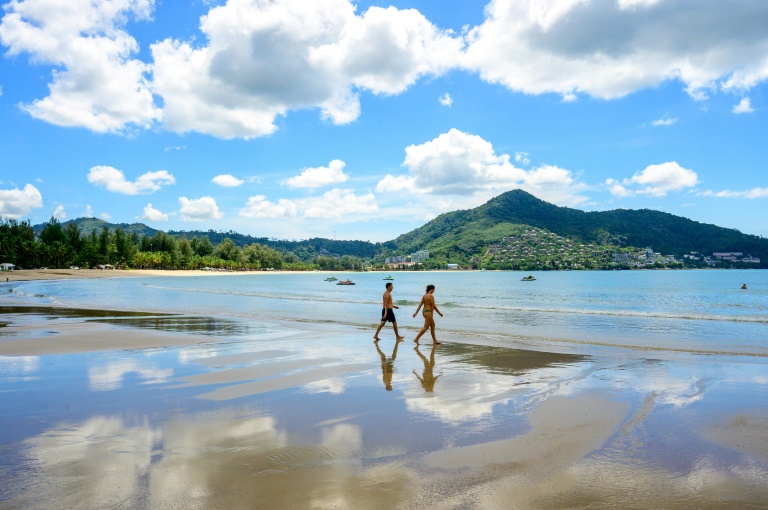
Interpol has issued two “red notice” arrest warrants for a pair of Canadians over the suspected murder of an Indian gangster outside a luxury villa on Thailand’s Phuket island.

Jimi ‘Slice’ Sandhu — whose nickname comes from a distinctive scar on his face — was gunned down on February 5 after having flown in on a private jet from Malaysia last month, according to Thai police and local media reports.

Following a Thai police investigation, Interpol issued non-binding arrest warrants or “red notices” for Canadian citizens Matthew Leandre Ovide Dupre and Gene Karl Lahrkamp, both 36, in connection with Sandhu’s murder.

“I think this case is unique,” said Khemmarin Hassiri, commander of the foreign affairs division of the Royal Thai Police, confirming the Interpol notices issued late Monday.

“This is not just a hit and run, they have masterminded it, they would have someone who supported them in Canada and Thailand,” he told AFP, adding the investigation into the death of the 32-year-old was ongoing.

He said police were gathering biological and ballistic evidence, in addition to investigating how the gunmen obtained weapons.

The two suspects — described by Interpol as armed and dangerous — left Thailand on February 6, according to the international agency’s notice.

Police obtained CCTV footage showing two unidentified men jumping from bushes near the beachside villa to open fire on Sandhu before fleeing into the night.

Interpol also said the suspects taped a GPS device to the victim’s car ahead of the shooting.

Hassiri said Thai officers were working with the Royal Canadian Mounted Police.

“We learned from the Royal Canadian Police that Jimi ‘Slice’ Sandhu was involved in criminal activity,” Hassiri said, without giving further details.

Canadian media has reported Sandhu was deported from the country in 2016 over a string of criminal offences. 

He resurfaced when he was detained by officials over a ketamine factory in the southern Indian state of Goa in 2018, local outlets said.

Canada and Thailand have an agreement to provide mutual assistance, including extradition, in criminal cases.

The Royal Canadian Mounted Police did not respond to requests for comment from AFP.

Israel PM meets Bahrain's Jewish community on landmark visit

Israel’s Prime Minister Naftali Bennett met with Bahrain’s Jewish community Tuesday after arriving for the first visit by an Israeli head of government to the Gulf country, 17 months after they defied decades of tensions to normalise ties.

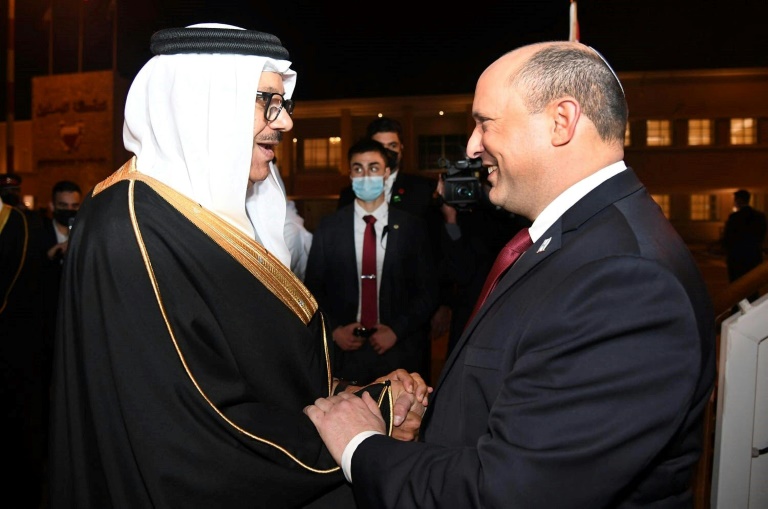
Bennett was welcomed by Bahrain’s Foreign Minister Abdullatif bin Rashid Al-Zayani at Manama airport, which was decorated with the flags of both countries, late on Monday. He will meet King Hamad and Crown Prince Salman, who is also prime minister, on Tuesday.

Bennett’s visit is the latest such initiative following the US-brokered 2020 Abraham Accords, which ran counter to the longstanding Arab consensus that ruled out ties with Israel in the absence of a solution to the Israeli-Palestinian conflict.

“I’m very delighted to be here in Bahrain, and I could think of no better way to kick off this visit than seeing my family here,” he said during a meeting with members of the Jewish community, according to his office.

Israel’s ambassador to Bahrain, Eitan Naeh, Jewish community president Ebrahim Nonoo, Jewish community member and former Bahraini ambassador to the US Houda Nonoo were also present. 

In September, Ebrahim Nonoo led prayer services in Manama’s renovated synagogue, bringing Jewish traditions into plain view after decades of worship in private.

“We’re very happy to be out in the open,” Nonoo told AFP at the time. 

Bahrain’s tiny Jewish community, about 50 people, have practised their faith behind closed doors since 1947, when the Gulf country’s only synagogue was destroyed in disturbances at the start of the Arab-Israeli conflict. 

But when Bahrain normalised ties with Israel, it opened everything up, with the small synagogue in the heart of the capital renovated at a cost of $159,000.

Bahrain and its close ally the United Arab Emirates became only the third and fourth Arab states — following Egypt and Jordan — to establish ties with Israel when they signed on to the pacts negotiated under US president Donald Trump. Bennett visited the UAE in December.

“In these tumultuous times it’s important that from this region we send a message of goodwill, of cooperation of standing together against common challenges,” Bennett said before his departure.

The trip follows a visit to Manama by Israeli Defence Minister Benny Gantz earlier this month that saw the two countries sign a defence agreement. 

That deal covered intelligence, procurement and joint training, with Gantz boasting that it further consolidated the fledgling diplomatic relationship.

– ‘Absolutely’ about Iran –

The visit also comes at a time of regional tensions over Iran’s nuclear programme.

Iran is engaged in negotiations with Britain, China, France, Germany and Russia directly and with the United States indirectly to revive the deal formally called the Joint Comprehensive Plan of Action.

The deal offered Tehran sanctions relief in exchange for curbs on its nuclear programme. The US unilaterally withdrew from the JCPOA in 2018 under Trump. The drive to salvage it resumed in late November. 

Bennett’s government strongly opposes a return to the 2015 agreement, warning repeatedly that lifting sanctions against Iran would give it more money to buy weapons for use against Israelis.

Yoel Guzansky, a senior researcher at the Institute for National Security Studies in Tel Aviv, said Bennett’s trip is “absolutely” about Iran.

“In light of the talks in Vienna, it is a show of force, symbolism that the countries are working together,” he said.

Dore Gold, head of the Jerusalem Centre for Public Affairs, said Israel and Bahrain have been pushed towards closer ties as both are “under threat by Iranian actions”.

He pointed to unrest in Bahrain blamed on Iran-backed opposition groups and the range of threats that Israel says Iran poses, notably its arming of the Lebanese militant group Hezbollah. 

As part of their defence agreements, Israel is set to post a naval official in Bahrain, which hosts a base for the US Navy’s Fifth Fleet. 

Guzansky said that in several respects Bahrain has been perceived as moving slower than the UAE in terms of consolidating ties with Israel. 

He said allowing an Israeli military officer to be based in Bahrain was “significant”, however, noting that Bahrain “does not want to be seen as an Israeli base in the Gulf”.

Close Bitnami banner
Bitnami