World

Hong Kong leader rules out China-style lockdown as virus spreads

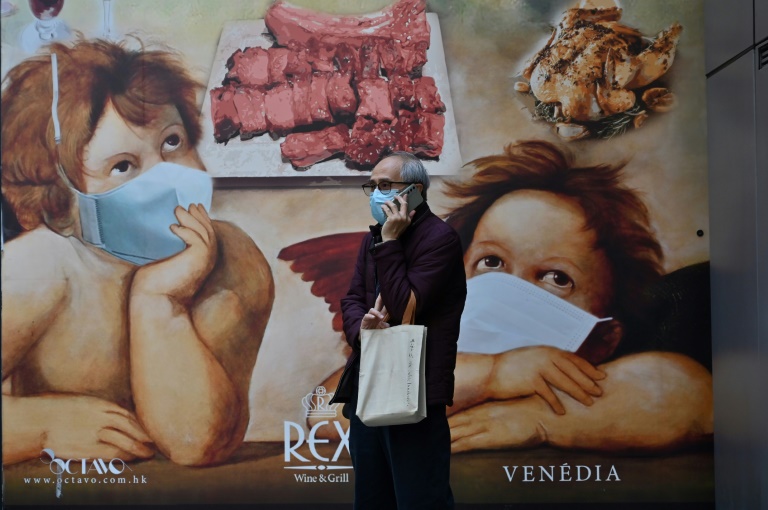
Hong Kong’s leader on Tuesday said she would not impose a mainland China-style hard lockdown as the city faces its worst coronavirus wave to date, even as she vowed no switch to living with Covid-19.

For more than two years, Hong Kong has followed China’s zero-Covid strategy, but a wave of the highly transmissible Omicron virus variant has battered the city’s capacity for testing, quarantine and treatment.

No place in the world has managed to return to zero Covid cases after such an outbreak except mainland China, which has imposed citywide lockdowns and mass stay-at-home orders when even a handful of cases are detected.

Hong Kong Chief Executive Carrie Lam ruled out that approach.

“We have no plans whatsoever to impose a complete, wholesale lockdown,” she told reporters.

But she also rejected calls from some public health experts and business figures to switch from zero-Covid to a mitigation strategy.

“We have to continue to fight this anti-epidemic battle. Surrendering to the virus is not an option,” Lam said.

Authorities will continue to use smaller-scale district lockdowns, with testing of all residents in housing blocks where cases are detected, she added.

Like mainland China, Hong Kong has tackled the virus with largely closed borders, lengthy quarantines, contact tracing and stringent social distancing laws.

With more than 2,000 new daily infections reported Monday, and the figure hovering over 1,000 for much of the last week, the current wave is testing that policy like never before.

Local researchers have warned that new daily cases could exceed 28,000 a day by March.

– Supply crunch –

Before this outbreak, Hong Kong treated all coronavirus patients in dedicated isolation wards, but beds at hospitals and a temporary mass treatment facility near the airport have quickly filled.

An AFP photographer on Tuesday saw patients lying on stretchers outside a hospital in the Yuen Long district, with police officers in full protective gear nearby.

Close contacts of virus cases were earlier sent to a government quarantine camp, but many are now being told to isolate at home.

Lam said 3,000 flats in newly constructed public housing blocks will be converted for quarantine use and that officials are seeking 10,000 hotel rooms too.

Last week saw long queues of people waiting to get tested, and many who tested positive reported being turned away from hospitals.

Hong Kong has sourced 100 million rapid test kits and will distribute a million of them a day to high-risk individuals once they arrive, Lam said Tuesday.

Scenes from the city in recent days resembled the early phase of the pandemic, as shoppers cleared out supermarket shelves to stock up on food and essentials.

Hong Kong imports most of its fresh food and produce from mainland China, and vegetable prices spiked last week due to a virus-related supply disruption.

Lam on Tuesday said her administration was recruiting more cross-border drivers and will look into waterborne freight as an option.

Accountants drop Trump, say records can't be relied upon

Donald Trump’s longtime accountants have ditched the former US president as a client, saying a decade’s worth of financial statements could not be relied upon, court documents showed Monday.

Mazars informed the Trump Organization in a letter last Wednesday that it would no longer work for the company, which is being probed by New York prosecutors for alleged fraud.

The letter was revealed in court by New York state attorney general Letitia James as she asked a judge to force Trump to comply with subpoenas seeking testimony in her investigation.

James announced last month that her civil inquiry into Trump’s family firm had uncovered “significant evidence” of misleading business practices, including the fraudulent valuation of assets.

Mazars wrote that James’s findings had contributed towards it deciding that accounts for Trump for the years ending June 30, 2011 to June 30, 2020 “should no longer be relied upon.”

The accounting firm added that an investigation of its own and “information received from internal and external sources” had also played a part in it reaching that conclusion.

“While we have not concluded that the various financial statements, as a whole, contain material discrepancies, based upon the totality of the circumstances, we believe our advice to you to no longer rely upon those financial statements is appropriate,” it said.

The letter added that in part because of the decision regarding the statements, Mazars “are not able to provide any new work product to the Trump Organization.”

The financial records are at the heart of James’s investigation and a criminal probe by the Manhattan District Attorney’s office.

The twin inquiries are investigating whether the Trump Organization defrauded lenders into providing favorable loans.

James, a Democrat, said in January that her ongoing inquiry had found that the Trump Organization fraudulently overvalued multiple assets to secure loans and then undervalued them to minimize taxes.

She said the company had “misrepresented” the valuation of assets to financial institutions including the Internal Revenue Service, banks and insurers for “economic benefit.”

– Parallel investigations –

If James finds evidence of financial misconduct she can sue the Trump Organization for damages but cannot file criminal charges.

The probe, however, is running alongside a similar criminal investigation by the Manhattan DA for possible financial crimes and insurance fraud.

Last July the Trump Organization and its long-serving finance chief, Allen Weisselberg, pleaded not guilty to 15 felony fraud and tax evasion charges.

The DA’s office in January 2021 finally received roughly eight years of Trump tax returns from Mazars following a marathon legal battle that went to the Supreme Court.

Trump has slammed both probes as politically motivated.

A spokesperson for the Trump Organization said in a statement Monday evening that they were “disappointed” by Mazars’ decision to cut ties.

The firm’s “letter confirms that after conducting a subsequent review of all prior statements of financial condition, Mazars’ work was performed in accordance with all applicable accounting standards and principles and that such statements of financial condition do not contain any material discrepancies,” the spokesperson said, calling both investigations in New York therefore “moot.”

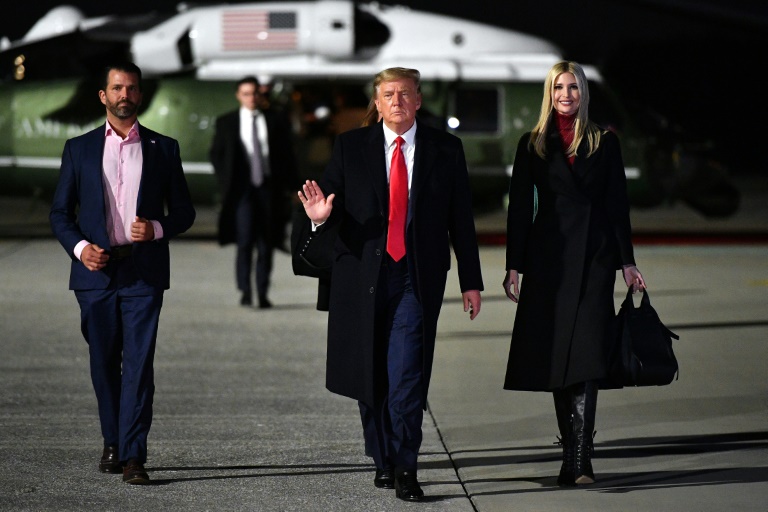
In her filing Monday, James repeated her request that the former president, Donald Trump Jr, and Ivanka Trump give evidence under oath. Her office has already questioned Eric Trump.

The legal woes could make a second White House run more difficult for the 75-year-old Trump, who has kept Americans guessing about his plans.

Plastic, chemical pollution beyond planet's safe limit: study

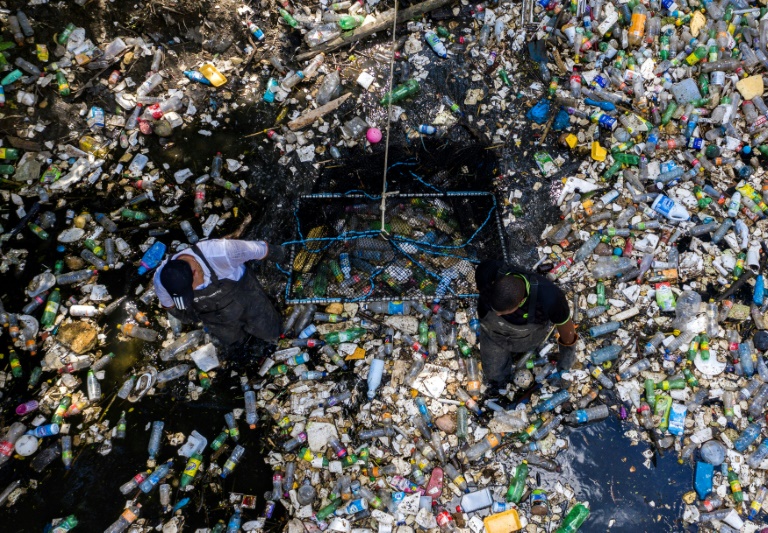
The torrent of man-made chemical and plastic waste worldwide has massively exceeded limits safe for humanity or the planet, and production caps are urgently needed, scientists have concluded for the first time.

There are an estimated 350,000 different manufactured chemicals on the market and large volumes of them end up in the environment.

“The impacts that we’re starting to see today are large enough to be impacting crucial functions of planet Earth and its systems”, Bethanie Carney Almroth, co-author of a new study told AFP in an interview.

The study, by the Stockholm Resilience Centre, comes ahead of a UN meeting in Nairobi at the end of the month on tackling plastic pollution “from source to sea”, UN Environment Programme head Inger Andersen said on Monday.

Chemicals and plastics are affecting biodiversity, piling additional stress on already stressed ecosystems.

Pesticides kill living organisms indiscriminately and plastics are ingested by living things.

“Some chemicals are interfering with hormone systems, disrupting growth, metabolism and reproduction in wildlife,” Carney Almroth said.

While greater efforts are needed to prevent these substances being released into the environment, scientists are now pushing for more drastic solutions, such as production caps.

– ‘Enough is enough’ –

Recycling has so far yielded only mediocre results.

Less than 10 percent of the world’s plastic is currently recycled, even as production has doubled to 367 million tonnes since 2000. 

Today, the total weight of plastic on Earth is now four times the biomass of all living animals, according to recent studies.

“What we’re trying to say is that maybe we have to say, ‘Enough is enough’. Maybe we can’t tolerate more,” the Sweden-based researcher said.

“Maybe we have to put a cap on production. Maybe we need to say, ‘We can’t produce more than this’.”

For several years, the Stockholm Resilience Centre has been conducting studies on “planetary boundaries” in nine areas that influence Earth’s stability, such as greenhouse gas emissions, freshwater usage and the ozone layer.

The aim is to determine if mankind is in a “safe operating space” or if the limits are being exceeded and threaten the future of the planet.

The impact of so-called “novel entities” — or man-made chemical products such as plastics, antibiotics, pesticides, and non-natural metals — has until now been a big question.

And the answer is complex.

“We are only beginning to understand the large-scale, long-term effects of these exposures,” Carney Almroth said.

Not only are there thousands of these products but the data on the risks they pose is often non-existent or classified as corporate secrets.

Additionally, the chemicals are relatively recent, most of them developed in the past 70 years.

“And we’re talking about 350,000 different substances,’ Carney Almroth said.

“We don’t have knowledge on the vast majority of those, in terms of how much are produced or their stability. Or their fate in the environment or their toxicity.”

“We know what some of them are. For most of them, we have no clue.”

Even the most comprehensive databases, such as the European Union’s REACH inventory, only cover 150,000 products, and only a third of those have been the subject of detailed toxicity studies.

– ‘No silver bullet’ –

As a result, the team of researchers focused on what is known, and this partial information was enough to draw an alarming conclusion.

“Looking at changes over time and trends in production volumes lost in the environment … and connecting that to the little bit we do know about impacts, we could say that every arrow is pointing in the wrong direction”, Carney Almroth said.

There is still “time to revert this situation” but it will take “urgent and ambitious actions … at an international level”, she added.

Furthermore, “there’s no silver bullet”.

“No one answer is going to solve all of this, because a lot of these chemicals and materials are things that we use and that are necessary for our lives as of right now,” she said.

Regardless of how much effort is made during the production or waste management phase, production volumes need to come down, she stressed.

“This seems very obvious to say but it’s only recently accepted as truth: The more you produce, the more you release”.

Plastic, chemical pollution beyond planet's safe limit: study

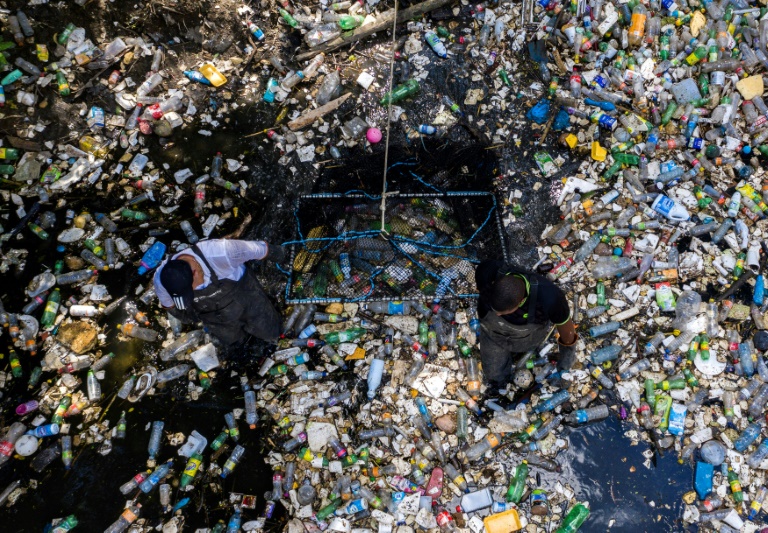
The torrent of man-made chemical and plastic waste worldwide has massively exceeded limits safe for humanity or the planet, and production caps are urgently needed, scientists have concluded for the first time.

There are an estimated 350,000 different manufactured chemicals on the market and large volumes of them end up in the environment.

“The impacts that we’re starting to see today are large enough to be impacting crucial functions of planet Earth and its systems”, Bethanie Carney Almroth, co-author of a new study told AFP in an interview.

The study, by the Stockholm Resilience Centre, comes ahead of a UN meeting in Nairobi at the end of the month on tackling plastic pollution “from source to sea”, UN Environment Programme head Inger Andersen said on Monday.

Chemicals and plastics are affecting biodiversity, piling additional stress on already stressed ecosystems.

Pesticides kill living organisms indiscriminately and plastics are ingested by living things.

“Some chemicals are interfering with hormone systems, disrupting growth, metabolism and reproduction in wildlife,” Carney Almroth said.

While greater efforts are needed to prevent these substances being released into the environment, scientists are now pushing for more drastic solutions, such as production caps.

– ‘Enough is enough’ –

Recycling has so far yielded only mediocre results.

Less than 10 percent of the world’s plastic is currently recycled, even as production has doubled to 367 million tonnes since 2000. 

Today, the total weight of plastic on Earth is now four times the biomass of all living animals, according to recent studies.

“What we’re trying to say is that maybe we have to say, ‘Enough is enough’. Maybe we can’t tolerate more,” the Sweden-based researcher said.

“Maybe we have to put a cap on production. Maybe we need to say, ‘We can’t produce more than this’.”

For several years, the Stockholm Resilience Centre has been conducting studies on “planetary boundaries” in nine areas that influence Earth’s stability, such as greenhouse gas emissions, freshwater usage and the ozone layer.

The aim is to determine if mankind is in a “safe operating space” or if the limits are being exceeded and threaten the future of the planet.

The impact of so-called “novel entities” — or man-made chemical products such as plastics, antibiotics, pesticides, and non-natural metals — has until now been a big question.

And the answer is complex.

“We are only beginning to understand the large-scale, long-term effects of these exposures,” Carney Almroth said.

Not only are there thousands of these products but the data on the risks they pose is often non-existent or classified as corporate secrets.

Additionally, the chemicals are relatively recent, most of them developed in the past 70 years.

“And we’re talking about 350,000 different substances,’ Carney Almroth said.

“We don’t have knowledge on the vast majority of those, in terms of how much are produced or their stability. Or their fate in the environment or their toxicity.”

“We know what some of them are. For most of them, we have no clue.”

Even the most comprehensive databases, such as the European Union’s REACH inventory, only cover 150,000 products, and only a third of those have been the subject of detailed toxicity studies.

– ‘No silver bullet’ –

As a result, the team of researchers focused on what is known, and this partial information was enough to draw an alarming conclusion.

“Looking at changes over time and trends in production volumes lost in the environment … and connecting that to the little bit we do know about impacts, we could say that every arrow is pointing in the wrong direction”, Carney Almroth said.

There is still “time to revert this situation” but it will take “urgent and ambitious actions … at an international level”, she added.

Furthermore, “there’s no silver bullet”.

“No one answer is going to solve all of this, because a lot of these chemicals and materials are things that we use and that are necessary for our lives as of right now,” she said.

Regardless of how much effort is made during the production or waste management phase, production volumes need to come down, she stressed.

“This seems very obvious to say but it’s only recently accepted as truth: The more you produce, the more you release”.

German chancellor to meet Putin as Ukraine's fate in the balance

German Chancellor Olaf Scholz was due in Moscow Tuesday in search of a diplomatic solution to avoid a war in Ukraine as the West and Russia signalled tentative hopes of an easing in the tense standoff.

His talks with Vladimir Putin are the latest in an intense diplomatic scramble to dissuade the Russian leader from attacking his ex-Soviet neighbour Ukraine.

Western leaders consider the Russian troop build-up on its border with Ukraine to be the worst threat to the continent’s security since the Cold War, and have prepared a crippling package of economic sanctions in response to any attack on its neighbour.

While Western intelligence officials warned Wednesday could mark the start of an invasion, comments from Putin and his foreign and defence ministers seemed to offer hope of a de-escalation.

During a carefully choreographed meeting Monday with Putin, Russian Foreign Minister Sergei Lavrov said “there is always a chance” of reaching an agreement with the West over Ukraine.

He told Putin that exchanges with leaders in European capitals and Washington showed enough of an opening for progress on Russia’s goals to be worth pursuing.

“I would suggest continuing,” Lavrov said in televised remarks, to which Putin replied — “fine”.

The Russian leader and his top aides have consistently argued that the current crisis is the result of the United States and western Europe ignoring Moscow’s legitimate security concerns.

Russia, which denies any plan to invade Ukraine, already controls the Crimea territory seized in 2014 and supports separatist forces controlling the Donbas region in the east.

The Kremlin insists NATO must give assurances Ukraine will never be admitted as a member and withdraw from eastern European countries already in the alliance, effectively carving Europe into spheres of influence. The United States and its European allies reject the demands.

– ‘Crucial window’ –

Washington said Russia had strengthened its forces on the Ukrainian border over the weekend but US officials insisted that “diplomacy continues to be viable”.

US President Joe Biden and British Prime Minister Boris Johnson agreed in a call late Monday that “a crucial window for diplomacy” remained. 

“The leaders emphasised that any further incursion into Ukraine would result in a protracted crisis for Russia, with far-reaching damage for both Russia and the world,” a Downing Street spokesman said.

UN Secretary-General Antonio Guterres spoke with the foreign ministers of Russia and Ukraine on Monday to express his serious concern over the heightened tensions and insisted “there is no alternative to diplomacy”.

Russia has amassed more than 100,000 troops on the Ukrainian border but Pentagon spokesman John Kirby said US defence officials still did not believe Moscow had made a final decision on whether to invade.

Alarm has also been fuelled by recent Russian military exercises, including with Belarus, where Washington said Moscow had dispatched 30,000 troops for more than a week of drills.

Russian Defence Minister Sergei Shoigu told Putin that some of the drills were “ending” and more would end “in the near future”, signalling a possible easing of the crisis.

Ukrainian leader Volodymyr Zelensky meanwhile declared Wednesday — the day US officials warn might mark the start of a feared Russian invasion — national “Unity Day”.

– Digging trenches –

Ahead of his trip to Moscow, Scholz visited Kyiv on Monday, vowing that Berlin and its Western allies would maintain support for Ukraine’s security and independence and urging Russia to take up “offers of dialogue”.

Germany plays a central role in efforts to mediate in eastern Ukraine, where a gruelling conflict with Russian-backed separatists has claimed more than 14,000 lives.

But Berlin’s close business relations with Moscow and heavy reliance on Russian natural gas imports have been a source of lingering concern for Kyiv’s pro-Western leaders and Biden’s team.

Scholz has hedged against unequivocally backing Biden’s pledge to “bring an end” to Russia’s new Nord Stream 2 gas link to Germany.

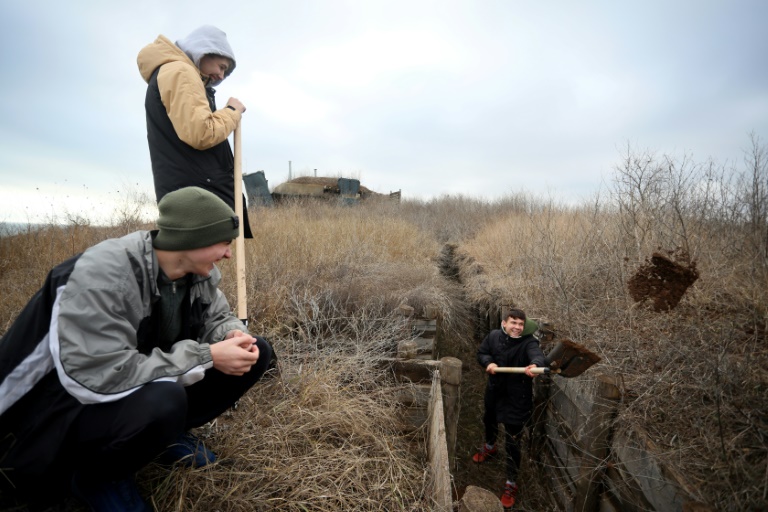
While waiting for diplomacy to bear fruit, near the front line separating Kyiv-held territory from areas under the control of Moscow-backed insurgents in the east, underprivileged children in the care of church groups were helping with war preparations. 

“We are digging trenches that Ukrainian soldiers could quickly jump into and defend in case the Russians attack,” Mykhailo Anopa, 15, told AFP.

In Moscow, Russians showed no appetite for war.

“People in the West do not understand that we are one people,” Pavel Kuleshov, a 65-year-old pensioner, told AFP, referring to Russians and Ukrainians. “Nobody wants a civil war.”

A growing number of Western countries are withdrawing staff from their Kyiv embassies and urging their citizens to leave Ukraine immediately, while Washington moved its mission west to Lviv.

burs-ach/gw/mtp/oho

Mongolia reopens borders for vaccinated travellers

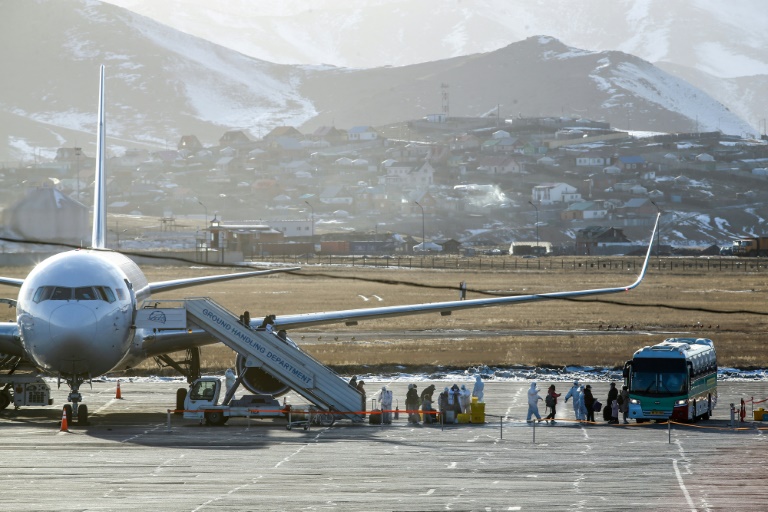
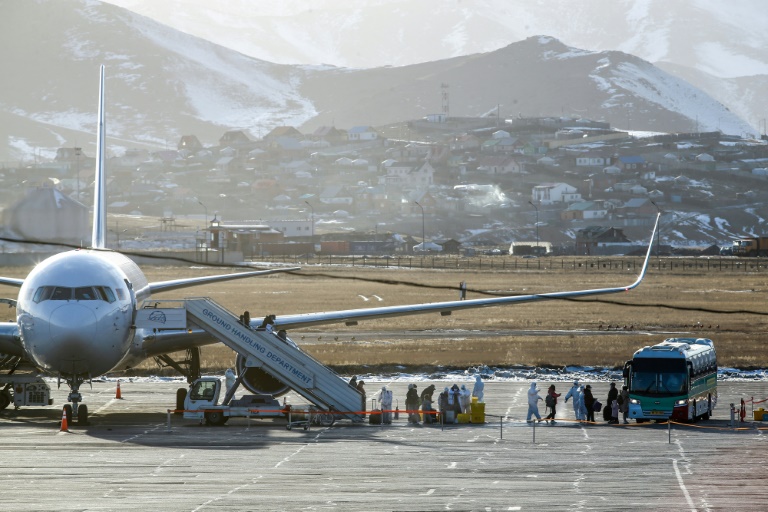
Mongolia has reopened its borders to fully vaccinated international travellers, state media reported, rolling back coronavirus curbs that had kept the country isolated for two years.

The nation has implemented some of the world’s toughest anti-Covid measures since the start of the pandemic, largely sealing off its borders and imposing several lockdowns.

The curbs have battered its economy as businesses closed, exports plunged and hundreds of thousands faced precarious employment.

Mongolia’s cabinet approved a resolution downgrading the pandemic “state of readiness” from orange to yellow, effectively lifting all restrictions on business operations, state news agency Montsame reported Monday.

The move means the country of three million “fully opens its borders to international travel”, Prime Minister Luvsannamsrai Oyun-Erdene said, according to Montsame.

Declaring Mongolia open to fully jabbed tourists and investors, he reportedly said the government would “put efforts into creating the necessary conditions to ensure safety… for all those arriving in the country for business and tourism purposes”.

Oyun-Erdene’s predecessor resigned last year during protests and public anger over the treatment of a coronavirus-positive woman and her newborn baby.

She had been transferred to a disease control centre in hospital pyjamas and plastic slippers despite temperatures of minus 25 degrees Celsius.

An aggressive Covid vaccination campaign has since helped turn the tide, with 92 percent of Mongolian adults now fully inoculated and more than half in targeted groups having received a booster, according to Montsame.

Mongolia has recorded 885,000 coronavirus cases and more than 2,000 deaths during the pandemic, according to World Health Organisation data.

The border reopening follows the easing of restrictions last month under the orange and yellow readiness levels.

Official advisories on wearing face masks, social distancing and hand sanitising remain in place.

Mongolia reopens borders for vaccinated travellers

Mongolia has reopened its borders to fully vaccinated international travellers, state media reported, rolling back coronavirus curbs that had kept the country isolated for two years.

The nation has implemented some of the world’s toughest anti-Covid measures since the start of the pandemic, largely sealing off its borders and imposing several lockdowns.

The curbs have battered its economy as businesses closed, exports plunged and hundreds of thousands faced precarious employment.

Mongolia’s cabinet approved a resolution downgrading the pandemic “state of readiness” from orange to yellow, effectively lifting all restrictions on business operations, state news agency Montsame reported Monday.

The move means the country of three million “fully opens its borders to international travel”, Prime Minister Luvsannamsrai Oyun-Erdene said, according to Montsame.

Declaring Mongolia open to fully jabbed tourists and investors, he reportedly said the government would “put efforts into creating the necessary conditions to ensure safety… for all those arriving in the country for business and tourism purposes”.

Oyun-Erdene’s predecessor resigned last year during protests and public anger over the treatment of a coronavirus-positive woman and her newborn baby.

She had been transferred to a disease control centre in hospital pyjamas and plastic slippers despite temperatures of minus 25 degrees Celsius.

An aggressive Covid vaccination campaign has since helped turn the tide, with 92 percent of Mongolian adults now fully inoculated and more than half in targeted groups having received a booster, according to Montsame.

Mongolia has recorded 885,000 coronavirus cases and more than 2,000 deaths during the pandemic, according to World Health Organisation data.

The border reopening follows the easing of restrictions last month under the orange and yellow readiness levels.

Official advisories on wearing face masks, social distancing and hand sanitising remain in place.

'Life-changing' or scam? Axie Infinity helps Philippines' poor earn

Dominic Lumabi sits on the computer in his Manila bedroom pitting his puffer fish-like cartoon NFT characters against others. But this is not just a game — he is earning cryptocurrency to support his family during the pandemic.

The source of his income is Axie Infinity, a blockchain-based play-to-earn game that exploded in popularity in developing nations such as the Philippines as Covid-19 destroyed jobs and forced many to stay home.

Its fans, financial backers and creators — Vietnam-based Sky Mavis — say it is a revolutionary step towards the future of the internet.

Detractors warn the game is a “house of cards”, some likening it to a fraud scheme driven by hype and speculation.

“At first, I was sceptical because I thought it was a Ponzi scam,” said Lumabi, 26, who began playing last June after losing his job at an advertising firm and making a failed foray into online selling.

About 35 percent of Axie Infinity traffic — and the biggest share of its 2.5 million daily active users — comes from the Philippines, where high proficiency in English, strong gaming culture and widespread smartphone usage have fuelled its popularity, Sky Mavis said.

In Axie Infinity, players participate in battles using colourful blob-like Axies, and are mainly rewarded “Smooth Love Potion” (SLPs) that can be exchanged for cryptocurrency or cash — or invested back into the game’s virtual world Lunacia.

Lumabi plays for two hours a day in the tiny house he shares with his parents and four sisters, earning 8,000 to 10,000 pesos ($155 to $195) per month — nearly half of what he makes at his current job as a content moderator working nine-hour graveyard shifts.

He has used Axie Infinity earnings for his sister’s university fees, groceries and bills -– expenses his father’s struggling electrical repair business cannot cover.

The pandemic was the perfect environment for this game to attract players from all walks of life, said Leah Callon-Butler, a blockchain consultant based in the Philippines.

“They could sit at home, protected from the virus, and play a cute game and earn money from it.”

– Rent-an-Axie –

But there is a catch.

To play the game, players first have to purchase at least three Axies.

An Axie is an NFT — a unique, non-fungible token, with a particular set of abilities and characteristics. Like NFT pieces of art, they are stored on the blockchain — a digital ledger that cannot be changed.

Axies can be bought, sold or rented to other players. Owners can also breed them to create new Axies that provide more value.

At the peak of the game’s growth last year, a starter team of Axies could cost hundreds of dollars, far beyond the reach of aspiring players in poorer countries.

When AFP accessed the game’s marketplace on February 9, the cheapest Axies cost $37 each, putting the cost of a basic team at $111.

However, players who spend more get better Axies, giving them a better chance of winning battles to earn SLPs and — from some activities — the game’s other crypto token AXS.

Those with the capital to assemble more lucrative Axie teams have set up guilds and “scholarships” — profit-sharing systems where players are charged a percentage of their earnings.

The owners’ take can reportedly go as high as 30 percent.

“We provide the players with the assets that they need to generate income for themselves,” said Luis Buenaventura, who runs Yield Guild Games in the Philippines, one of the many companies offering scholarships.

“In exchange for that, we ask for 10 percent of their earnings.”

YGG alone has 8,000 scholars and a queue of around 60,000 people waiting to join its programme that offers training and mentoring to a limited number of players at a time.

Buenaventura said many of his players were in their early 20s and from households making less than $400 a month.

He described their monthly Axie winnings — around $200 — as “life-changing”.

– ‘House of cards’ –

As the number of daily active players skyrocketed in 2021, the price of Axies and SLPs also soared, raising questions about the game’s sustainability.

Sky Mavis earns revenue from the game mainly through breeding and marketplace fees, and Axie Infinity has generated more than $1.2 billion in revenue. It has also attracted deep-pocketed backers, including US billionaire Mark Cuban.

But some gaming industry analysts say its business model is unsustainable, pointing to the need for new players to keep money coming in.

Jonathan Teplitsky of blockchain firm Horizen Labs warned most play-to-earn games were a “house of cards”, fuelled by “hype and price speculation”.

“This entire system works well while the Axie company is flush with cash and willing to fuel a massive marketing machine,” he said.

“If Axie wants to survive the next market crash, they will need to build some real-world utility into their game that does not depend on the mood of the markets.”

Sky Mavis co-founder and chief executive Trung Nguyen told AFP Axie Infinity, which is partly owned by players, was “not a zero sum game”.

“There are a lot of things other than monetary value that people can get from the game.”

– Unfazed by volatility –

It had been clear for months, however, that the game was facing an issue with its economy, and the SLP and the AXS have experienced the kind of volatility seen in many other crypto assets.

Last year, as the game upgraded to allow easier and cheaper trading, the value of SLP rocketed from 3.5 cents on April 26 to 36.5 cents on May 2 — more than 900 percent in less than a week — according to crypto data provider CoinGecko.

But by the end of January this year, it had plunged to just a cent — a huge impact on how much fiat currency players could earn.

Sky Mavis has made some tweaks to the game to limit how many SLPs a player can generate, acknowledging concerns about inflation and unsustainability.

The currency has since recovered slightly to around three cents, but still far from the 2021 gold rush peak.

“People are starting to understand that it’s not free money falling from out of the sky, you do have to understand how to play this game well,” said YGG’s Buenaventura.

Adding to the woes of players in the Philippines, the country’s tax authority said last year that players should pay tax on their winnings from the game.

In Manila, Lumabi’s monthly earnings have more than halved since he started playing, but he is unfazed by the volatility.

He recently bought two teams of Axies for his girlfriend and one of his sisters. He plans to turn them into Axie Infinity scholars.

“As long as I can earn 100 pesos or a thousand a month, my perspective is it is still a profit,” he said.

“It’s still another source of income.”

burs-amj/lto/qan/oho

Brazil reaffirms ties with Ukraine, as Bolsonaro jets to Russia

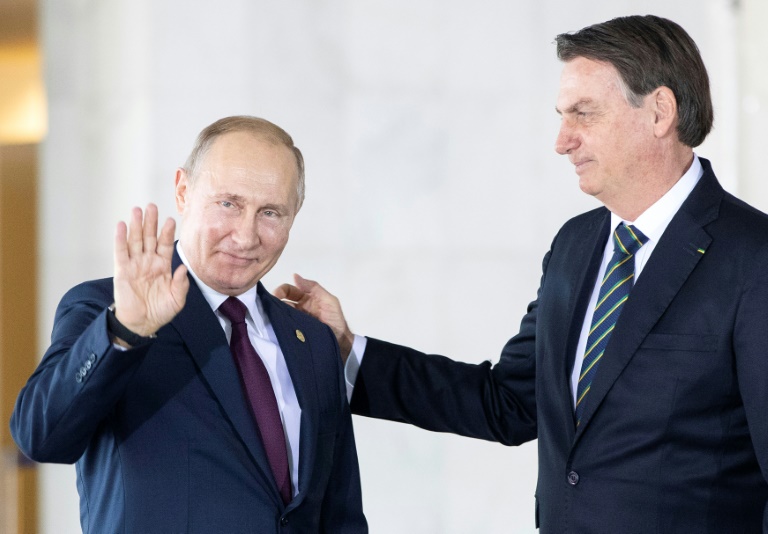
Brazil publicly reaffirmed its diplomatic ties with Kyiv on Monday as far-right President Jair Bolsonaro set off on an official visit to Russia amid soaring tensions between Moscow and the West over Ukraine. 

“The Minister of Foreign Affairs, Carlos Franca, spoke by phone today with the Ukrainian Foreign Minister Dmytro Kuleba,” the foreign ministry said on Twitter shortly before Bolsonaro took off for Russia.

Franca “listened to his counterpart’s assessment of the current situation on the border between Ukraine and Russia” and reiterated Brazil’s support of a “peaceful resolution” of the crisis, said the ministry, noting that Brazil and Ukraine recently celebrated 30 years of diplomatic ties.

Brushing off pressure from traditional ally the United States and within his own cabinet, Bolsonaro decided to go ahead with meeting Russian counterpart Vladimir Putin, a visit he says is about building bilateral trade relations.

Brazil, a major global agricultural producer and exporter, “depends largely on fertilizers from Russia,” Bolsonaro said to justify the trip. On Thursday he visits Hungary, led by his ally, the far-right Prime Minister Viktor Orban.

Analysts have noted the terrible timing of the trip, coming in the midst of the worst crisis since the Cold War. Western countries fear Russia will invade Ukraine after deploying more than 100,000 troops and huge amounts of military hardware near or on the borders of the former Soviet republic.

Washington has warned that Russia could launch an invasion at any time, something Moscow has repeatedly denied. 

'Now or never': Victims of Italy's predator priests urge inquiry

Victims of paedophile priests in Italy will unveil Tuesday a campaign dubbed “Beyond the Great Silence”, pushing for an independent investigation into clerical abuse carried out on the Vatican’s doorstop.

As inquiries across the United States, Europe and Australia have exposed the scale of the sex abuse problem within the Church — and also a decades-long cover-up — many groups say Italy can no longer avoid scrutiny.

“The government must act, must take advantage of the momentum created by impartial investigations elsewhere,” Francesco Zanardi, founder of Rete l’Abuso (Abuse Network), told AFP.

“If Italy doesn’t do it now, I fear it never will,” said Zanardi, who was abused by a priest as a young teen.

Nine groups are now forming a consortium aimed at putting pressure on the country to launch a probe, like the ones seen recently in France and Germany.

Cristina Balestrini, who set up a support group for families after her son was abused by a priest, told AFP that the most important thing for survivors was “to make sure it never happens again”.

Not all those molested will survive, “there are many victims who commit suicide, and no one knows about it,” Balestrini said.

– ‘Total silence’ –

Rete L’Abuso has recorded more than 300 cases of priests accused or convicted of child sexual abuse in the past 15 years in Italy, out of a total of 50,000 priests across the country.

Giada Vitale is just one example the group cites. She was a shy 13-year old organ player when her parish priest, Marino Genova, abused her in the vestry. She would be molested for three years.

Vitale’s tormentor was convicted in 2020, but victim groups say such a conviction is rare because Italy lags behind other countries in tackling predators.

Precise figures on the scale of the problem are impossible to come by.

The Vatican’s top clerical abuse advisor told AFP this month it was time for the Catholic-majority country to hold its own reckoning.

The church is not as powerful as it once was in Italy, the historic home of popes. But it retains a huge influence and two-thirds of the population are believers, according to a 2019 survey.

Pope Francis, who has toughened the punishments meted out to abusing priests under Vatican law, on Monday streamlined the Vatican office that processes abuse complaints, in an attempt to expedite cases.

But Zanardi of Rete l’Abuso said he “would have little faith” in an in-house investigation.

– ‘Victims twice over’ –

Balestrini, 56, is also distrustful of the church since “they acted as if we were the enemy, making us victims twice over” after her teenage son was abused in 2011.

The cleric in question, Mauro Galli, as initially quietly moved to another parish. He would later be convicted.

She hopes the consortium will be able to pressure the church to open its archives, because the scandal, she said, “is much bigger than you can imagine”.

Balestrini said unearthing the truth would not be easy for Italy, but the church would be wise to take an active role in cleaning itself up.

“At the moment, they are trying to keep a lid on it, but it’s better to choose to take the lid off yourself, than have it blown off.”

Close Bitnami banner
Bitnami