World

US urges its citizens to immediately leave Belarus

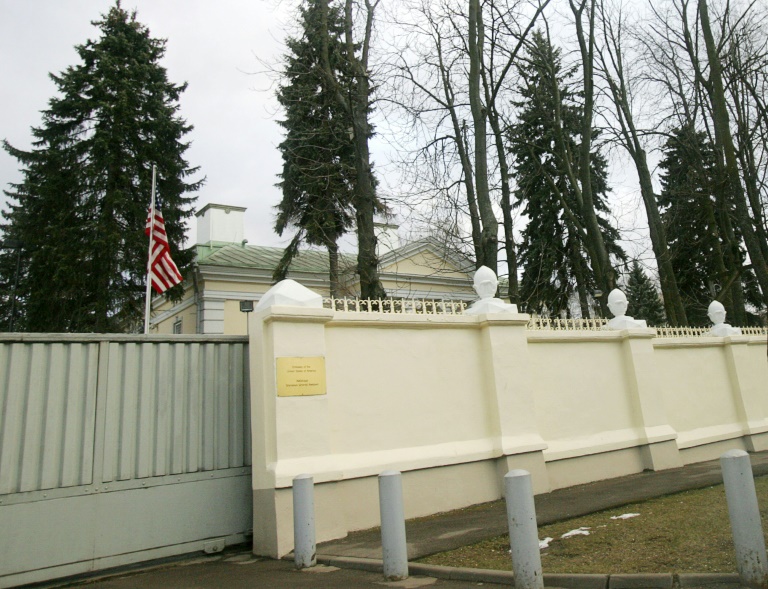
The United States has urged its citizens to immediately leave Belarus, citing a buildup of Russian troops along the border with neighboring Ukraine. 

The travel advisory, issued Monday, came the same day that Washington announced it was closing its Kyiv embassy and relocating staff to the Ukrainian city of Lviv 335 miles (540 kilometers) away due to a “dramatic acceleration” in the buildup of Russian forces.

Last week, Washington warned that Russia could attack “any day now.”

“Due to an increase in unusual and concerning Russian military activity near the border with Ukraine, U.S. citizens located in or considering travel to Belarus should be aware that the situation is unpredictable and there is heightened tension in the region,” the advisory said.

It also noted that last month, the State Department ordered all family members of the Minsk embassy to leave.

American citizens have already been urged to leave Ukraine, with the West accusing Russia of sending more than 100,000 soldiers to encircle the former Soviet state.

In addition to fears of a possible military conflict on the border, Washington’s “do not travel” advisory for Belarus flagged the risk of detention, arbitrary enforcement of laws and Covid-19 entry restrictions as reasons for Americans to get out. 

“The U.S. government’s ability to provide routine or emergency services to U.S. citizens in Belarus is already severely limited due to Belarusian government limitations on U.S. Embassy staffing,” it said.

US asks Honduras to extradite ex-president suspected of drug trafficking

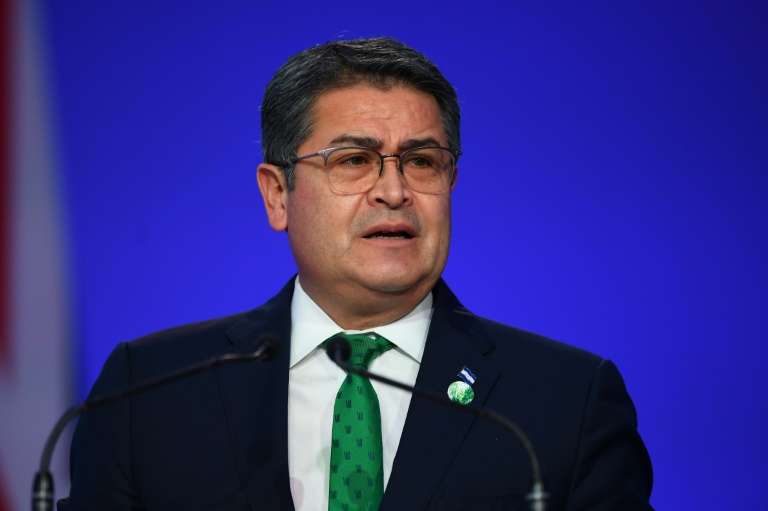
The United States has asked Honduras to extradite former president Juan Orlando Hernandez who is suspected of drug trafficking, a Honduran official told AFP on Monday.

Police special forces were seen encircling Hernandez’s residence in the capital Tegucigalpa on Monday evening, while the official, who declined to be named, said the former president is currently in Honduras.

Hernandez, a former US ally who left office last month, has been linked to drug trafficking operations by New York prosecutors. 

Earlier, the Honduran foreign ministry had said on Twitter that an “official communication from the US Embassy” was sent to the Supreme Court formally asking for the provisional arrest of a “Honduran politician” for extradition.

The ministry did not name the politician. 

News channel CNN broadcast images of the document, which made a “formal request for provisional arrest for the purpose of extradition to the United States of America of Juan Orlando Hernandez Alvarado.”

AFP has learned that the Supreme Court will meet in an emergency session on Tuesday to appoint a judge to consider the request.

Speaking to a local TV channel, Hernandez’s attorney Hermes Ramirez said the police deployment constituted an “attack” on the ex-president’s rights as it they had prevented advisers from coming to the residence.

Ramirez said no arrest warrant had been served to Hernandez, who has repeatedly denied any involvement in drug trafficking.

During his eight years in office, Hernandez cultivated close ties with Washington, though his tenure was dogged by accusations of corruption, and of his relatives and alleged associates having links to the drug trade.

US Secretary of State Antony Blinken revealed this month that Hernandez had been blacklisted last year, with his name added to a register of people denied entry to the United States for corrupt or anti-democratic action in El Salvador, Guatemala and Honduras.

“The United States is advancing transparency and accountability in Central America by making public visa restrictions against Honduras’ former president, Juan Orlando Hernandez, on account of corrupt actions,” Blinken tweeted on February 7.

“No one is above the law.”

– Immunity? –

Hernandez’s lawyer said the former president has immunity, however, because he has joined the Guatemala-based Central American Parliament.

The regional body, called Parlacen, offers its members immunity from prosecution.

Hernandez joined Parlacen hours after leaving office on January 27, when leftist Xiomara Castro was sworn in and vowed to transform the “bankrupt” country she intended to turn into a “socialist and democratic state.”

Even though Hernandez supported US anti-drug campaigns, traffickers caught in the United States claimed to have paid bribes to the president’s inner circle.

Alleged associate Geovanny Fuentes Ramirez was sentenced by the United States this month to life in prison for drug trafficking. 

In March 2021, Hernandez’s brother, former Honduran congressman Tony Hernandez, was also sentenced to life imprisonment in the United States for drug trafficking.

Blinken said in a statement last week that “according to multiple, credible media reports” Hernandez “has engaged in significant corruption by committing or facilitating acts of corruption and narco-trafficking and using the proceeds of illicit activity to facilitate political campaigns.”

Hernandez has denied all charges and claims the accusations are a part of a revenge plot from the same drug lords that his government captured or extradited to the United States. 

'Our responsibility': Ukraine teens dig trenches facing Russia threat

Ukrainian teenager Mykhailo Anopa had been suffering sleepless nights worrying about a full-on attack from Russia. Then he decided to do something about it.

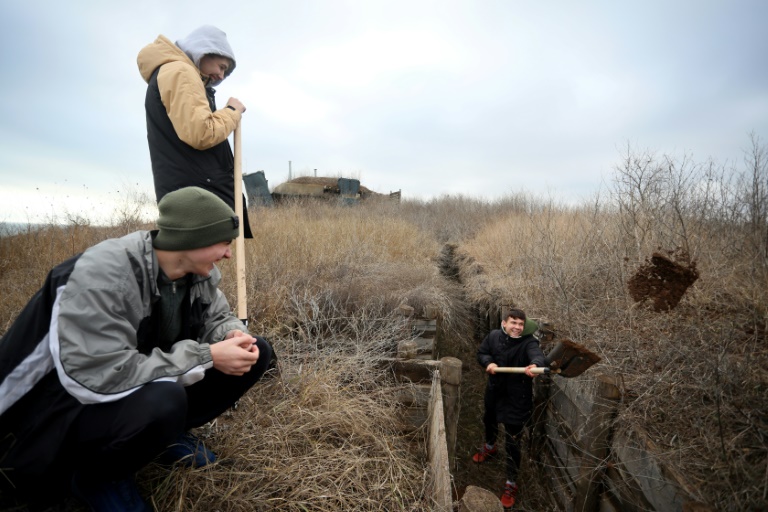
The 15-year-old joined other boys from disadvantaged families digging trenches for soldiers serving on his country’s eastern front and facing off with Russian-backed separatists.

“When our father, the pastor, said there might be shelling, that Putin might attack, I started having nightmares, because that’s what I would think about before bed,” he said.

“We dug trenches to help Ukrainian soldiers. Now, we are reinforcing them. This has become our responsibility,” he said with pride.

Ukraine has been trapped in a festering conflict across parts of its mostly Russian-speaking industrial east ever since a pro-EU revolt deposed a Moscow-backed president in 2014.

The war has claimed more than 14,000 lives and forced 1.5 million people from their homes.

It has also drained Ukraine’s economy and remained a constant drag on the former Soviet republic’s aspirations to enter the Western fold.

Now Ukrainians fear Putin’s confrontation with the West over NATO’s expansion could lead to an all-out invasion by the more than 100,000 Russian troops poised just across the border.

Anopa belongs to a centre for children from broken homes overseen by Pentecostal pastor Gennadiy Mokhnenko.

The 53-year-old has just returned to the Ukrainian front after a trip to the United States and is busy instructing his group of 40 or so boys about discipline and proper trench-digging techniques.

“Today, we are going to reinforce basements,” the pastor says, after leading a group prayer.

“We will buy some more gas canisters, develop an evacuation plan. Each one of us has to prepare a small bag with clothes and documents,” he tells the group.

“In the evening, I will check how ready you are.”

– ‘Huge fears’  –

Pro-Western sentiment runs high in Mokhnenko’s class. The pastor’s office is adorned with Ukrainian and US flags whose poles are supported by empty artillery shells.

Mokhnenko himself is dressed in house slippers and a camouflage Western-style uniform.

“The situation is very serious,” he tells the boys gravely. “But we will be ready.”

The trenches around the eastern village of Chervone, on the Sea of Azov coast, were first dug during another but much smaller military escalation in November 2018.

Then, a Russian warship shot at and intercepted a Ukrainian ship that had tried to pass from Ukraine’s Black Sea port of Odessa to the Sea of Azov.

But the Kremlin’s annexation of Ukraine’s Crimea region in the weeks following the 2014 revolution makes such trips treacherous.

Crimea is a peninsula that controls a strait connecting the two seas, and the strait is patrolled by Russian gunboats.

The resulting clash in 2018 saw shells fall near Chervone and prompted Ukrainian soldiers to start preparing for a bigger war.

On a clear day, the boys in Mokhnenko’s class can now see more Russian warships moving across the Sea of Azov.

A week of much bigger naval manoeuvres involving more than a dozen Russian warships and nearly 20 other boats are setting nerves jangling in the Black Sea.

Pastor Mokhnenko says boys such as Anopa are more cheerful when they feel like they are doing something constructive such as digging trenches.

“The children laugh and play a lot,” he says. 

“But buried beneath that are huge fears. Years of their lives were spent watching the backs of soldiers. And out of their windows, all they see is the front.”

Djokovic 'not anti-vax' but would rather skip events than be forced into jab

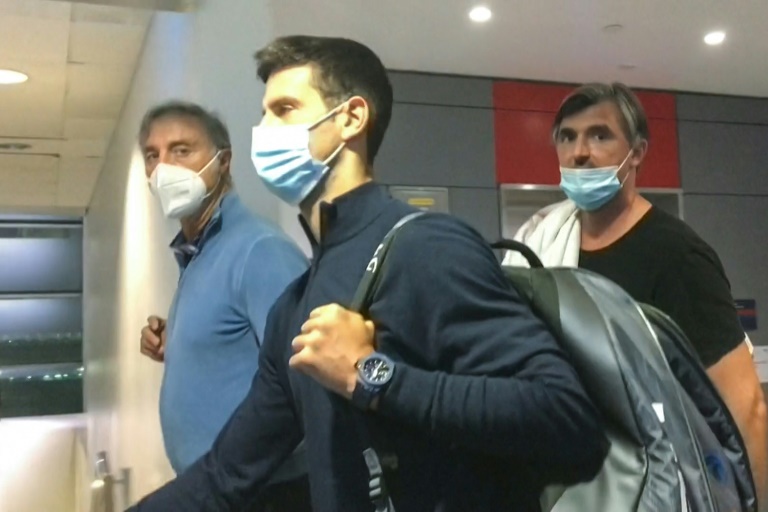
World number one Novak Djokovic has claimed he is not anti-vaccination but would rather skip Grand Slams than be forced to get a Covid jab.

The Serbian was deported in extraordinary circumstances on the eve of last month’s Australian Open where Rafael Nadal won a record 21st Grand Slam trophy to move ahead of Djokovic and Roger Federer on the all-time men’s list.

Djokovic was asked in an interview with the BBC, published on Tuesday, if he would sacrifice taking part in events such as Wimbledon and the French Open over his stance on the vaccine.

“Yes, that is the price that I’m willing to pay,” Djokovic said, referring to giving up his chance to become the leading men’s Grand Slam winner.

Djokovic said he did not want to be associated with the anti-vax movement, but supported an individual’s right to choose.

“I was never against vaccination,” he said, adding he had received vaccines as a child. “But I’ve always supported the freedom to choose what you put in your body.”

“The principles of decision making on my body are more important than any title or anything else,” he said. 

“I’m trying to be in tune with my body as much as I possibly can.”

Djokovic arrived in Melbourne in January for the first Grand Slam of the year claiming he had obtained a medical exemption to enter the country without being vaccinated as he had recently recovered from Covid-19.

But Australian border officials said he did not meet requirements to be exempted from strict vaccination rules, his visa was cancelled and a protracted legal appeal failed.

In his first interview since leaving Melbourne, Djokovic said he hoped vaccination requirements would change and that he could “play for many more years”.

Djokovic said he was keeping an open mind about being vaccinated in the future “because we are all trying to find collectively, a best possible solution to end Covid.

“I was never against vaccination. I understand that globally, everyone is trying to put a big effort into handling this virus and seeing, hopefully, an end soon to this virus.”

Djokovic said he was “sad” with how events played out in Australia, where he spent days in detention at a notorious immigration hotel.

“I was really sad and disappointed with the way it all ended for me in Australia,” he said. “It wasn’t easy.

“The reason why I was deported from Australia was because the minister for immigration used his discretion to cancel my visa based on his perception that I might create some anti-vax sentiment in the country or in the city, which I completely disagree with.”

Israel PM to meet Bahrain king on landmark visit

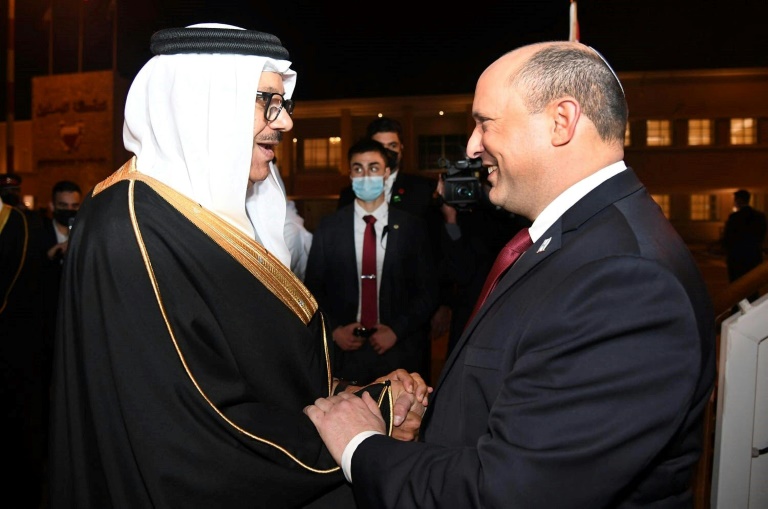
Israel’s Prime Minister Naftali Bennett will meet Bahrain’s king on Tuesday after arriving for the first visit by an Israeli head of state to the Gulf country, 17 months after they defied decades of tensions to normalise diplomatic ties.

Bennett was welcomed by Bahrain’s Foreign Minister Abdullatif bin Rashid Al-Zayani at Manama airport, which was decorated with the flags of both countries, late on Monday. He will meet King Hamad and Crown Prince Salman, who is also prime minister, on Tuesday.

Bennett’s visit is the latest such initiative following the US-brokered 2020 Abraham Accords, which ran counter to the longstanding Arab consensus that ruled out ties with Israel in the absence of a solution to the Israeli-Palestinian conflict.

Bahrain and its close ally the United Arab Emirates became only the third and fourth Arab states — following Egypt and Jordan — to establish ties with Israel when they signed on to the pacts negotiated under US president Donald Trump. Bennett visited the UAE in December.

“In these tumultuous times it’s important that from this region we send a message of goodwill, of cooperation of standing together against common challenges,” Bennett said before his departure.

The trip follows a visit to Manama by Israeli Defence Minister Benny Gantz earlier this month that saw the two countries sign a defence agreement. 

That deal covered intelligence, procurement and joint training, with Gantz boasting that it further solidified the fledgling diplomatic relationship.

– ‘Absolutely’ about Iran –

The visit also comes at a time of regional tensions over Iran’s nuclear programme.

Iran is engaged in negotiations with Britain, China, France, Germany and Russia directly and with the United States indirectly to revive the deal formally called the Joint Comprehensive Plan of Action.

The deal offered Tehran sanctions relief in exchange for curbs on its nuclear programme. The US unilaterally withdrew from the JCPOA in 2018 under Trump. The drive to salvage it resumed in late November. 

Bennett’s government strongly opposes a return to the 2015 agreement, warning repeatedly that lifting sanctions against Iran would give it more money to buy weapons for use against Israelis.

Yoel Guzansky, a senior researcher at the Institute for National Security Studies in Tel Aviv, said Bennett’s trip is “absolutely” about Iran.

“In light of the talks in Vienna, it is a show of force, symbolism that the countries are working together,” he said.

Dore Gold, head of the Jerusalem Centre for Public Affairs, said Israel and Bahrain have been pushed towards closer ties as both are “under threat by Iranian actions”.

He pointed to unrest in Bahrain blamed on Iran-backed opposition groups and the range of threats that Israel says Iran poses, notably its arming of the Lebanese militant group Hezbollah. 

As part of their defence agreements, Israel is set to post a naval official in Bahrain, which hosts a base for the US Navy’s Fifth Fleet. 

Guzansky said that in several respects Bahrain has been perceived as moving slower than the UAE in terms of consolidating ties with Israel. 

He said allowing an Israeli military officer to be based in Bahrain was “significant”, however, noting that Bahrain “does not want to be seen as an Israeli base in the Gulf”.

German chancellor to meet Putin as Ukraine's fate in the balance

German Chancellor Olaf Scholz was due in Moscow Tuesday in search of a diplomatic solution to avoid a war in Ukraine as the West and Russia signalled tentative hopes of an easing in the tense standoff.

His talks with Vladimir Putin are the latest in an intense diplomatic scramble to dissuade the Russian leader from attacking his ex-Soviet neighbour Ukraine.

Western leaders consider the Russian troop build-up on its border with Ukraine to be the worst threat to the continent’s security since the Cold War, and have prepared a crippling package of economic sanctions in response to any attack on its neighbour.

While Western intelligence officials warned Wednesday could mark the start of an invasion, comments from Putin and his foreign and defence ministers seemed to offer hope of a de-escalation.

During a carefully choreographed meeting Monday with Putin, Russian Foreign Minister Sergei Lavrov said “there is always a chance” of reaching an agreement with the West over Ukraine.

He told Putin that exchanges with leaders in European capitals and Washington showed enough of an opening for progress on Russia’s goals to be worth pursuing.

Ahead of Tuesday’s talks, German Foreign Minister Annalena Baerbock warned that “the situation is particularly dangerous and can escalate at any moment”.

“The responsibility for de-escalation is clearly with Russia, and it is for Moscow to withdraw its troops,” she said in a statement, adding that “we must use all opportunities for dialogue in order to reach a peaceful solution”.

The Russian leader and his top aides have consistently argued that the current crisis is the result of the United States and western Europe ignoring Moscow’s legitimate security concerns.

Russia, which denies any plan to invade Ukraine, already controls the Crimea territory seized in 2014 and supports separatist forces controlling the Donbas region in the east.

The Kremlin insists NATO must give assurances Ukraine will never be admitted as a member and withdraw from eastern European countries already in the alliance, effectively carving Europe into spheres of influence. The United States and its European allies reject the demands.

– ‘Crucial window’ –

Washington said Russia had strengthened its forces on the Ukrainian border over the weekend but US officials insisted that “diplomacy continues to be viable”.

US President Joe Biden and British Prime Minister Boris Johnson agreed in a call late Monday that “a crucial window for diplomacy” remained. 

“The leaders emphasised that any further incursion into Ukraine would result in a protracted crisis for Russia, with far-reaching damage for both Russia and the world,” a Downing Street spokesman said.

UN Secretary-General Antonio Guterres spoke with the foreign ministers of Russia and Ukraine on Monday to express his serious concern over the heightened tensions and insisted “there is no alternative to diplomacy”.

Russia has amassed more than 100,000 troops on the Ukrainian border but Pentagon spokesman John Kirby said US defence officials still did not believe Moscow had made a final decision on whether to invade.

Alarm has also been fuelled by recent Russian military exercises, including with Belarus, where Washington said Moscow had dispatched 30,000 troops for more than a week of drills.

Russian Defence Minister Sergei Shoigu told Putin that some of the drills were “ending” and more would end “in the near future”, signalling a possible easing of the crisis.

Ukrainian leader Volodymyr Zelensky meanwhile declared Wednesday — the day US officials warn might mark the start of a feared Russian invasion — national “Unity Day”.

– Digging trenches –

Ahead of his trip to Moscow, Scholz visited Kyiv on Monday, vowing that Berlin and its Western allies would maintain support for Ukraine’s security and independence and urging Russia to take up “offers of dialogue”.

Germany plays a central role in efforts to mediate in eastern Ukraine, where a gruelling conflict with Russian-backed separatists has claimed more than 14,000 lives.

But Berlin’s close business relations with Moscow and heavy reliance on Russian natural gas imports have been a source of lingering concern for Kyiv’s pro-Western leaders and Biden’s team.

Scholz has hedged against unequivocally backing Biden’s pledge to “bring an end” to Russia’s new Nord Stream 2 gas link to Germany.

While waiting for diplomacy to bear fruit, near the front line separating Kyiv-held territory from areas under the control of Moscow-backed insurgents in the east, underprivileged children in the care of church groups were helping with war preparations. 

“We are digging trenches that Ukrainian soldiers could quickly jump into and defend in case the Russians attack,” Mykhailo Anopa, 15, told AFP.

In Moscow, Russians showed no appetite for war.

“People in the West do not understand that we are one people,” Pavel Kuleshov, a 65-year-old pensioner, told AFP, referring to Russians and Ukrainians. “Nobody wants a civil war.”

A growing number of Western countries are withdrawing staff from their Kyiv embassies and urging their citizens to leave Ukraine immediately, while Washington moved its mission west to Lviv.

burs-ach/gw/mtp-yad/axn

Trudeau invokes emergency powers to quell Canada protests

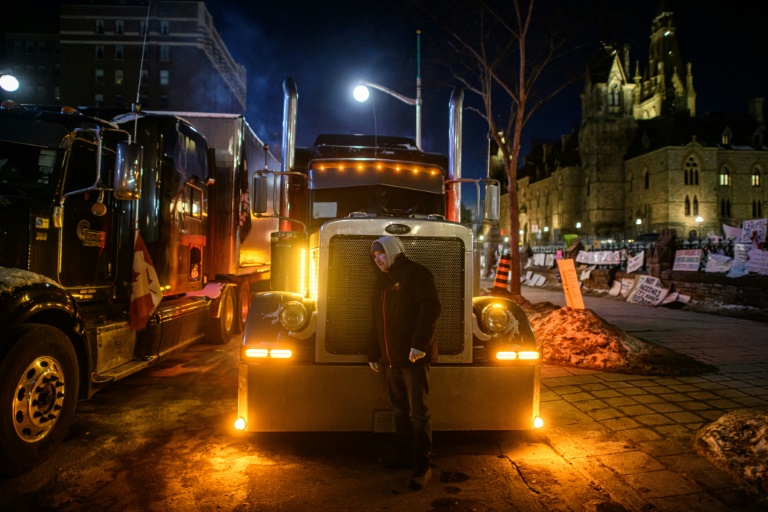
Canadian Prime Minister Justin Trudeau on Monday invoked rarely used emergency powers to bring an end to trucker-led protests against Covid health rules, after police arrested 11 people with a “cache of firearms” blocking a border crossing with the United States.

It marked only the second time in Canadian history such powers have been invoked in peacetime, and came as hundreds of big rigs still clogged the streets of the capital Ottawa, as well as two border crossings.

“The federal government has invoked the Emergencies Act to supplement provincial and territorial capacity to address the blockades and occupations,” Trudeau told a news conference.

The prime minister said the military would not be deployed at this stage, but that authorities would be granted more powers to arrest protesters and seize their trucks in order to clear blockades, as well as ban funding of the protests.

“We cannot and will not allow illegal and dangerous activities to continue,” Trudeau said.

“This is about keeping Canadians safe, protecting people’s jobs and restoring confidence in our institutions,” he added, noting that the scope of the measures would be “time-limited” and “geographically targeted,” but without providing specifics.

As the threat of violence lingered, federal police said they arrested 11 protesters with rifles, handguns, body armor and ammunition at the border between Coutts, Alberta and Sweet Grass, Montana, just a day after another key US-Canada border crossing was cleared in Ontario.

“The group was said to have a willingness to use force against the police if any attempts were made to disrupt the blockade,” the Royal Canadian Mounted Police said in a statement.

The protests by Canadian truckers and their supporters — opposed to mandatory coronavirus vaccines and pushing a wider anti-establishment agenda — have triggered copycat movements from France to New Zealand, with US truckers mulling similar rallies.

Under pressure to act, Trudeau on Sunday convened a special federal response group on efforts to end the occupation of Ottawa and the remaining, economically damaging, blockades of border crossings in Alberta and Manitoba.

The Emergencies Act was previously used by Trudeau’s father, former prime minister Pierre Trudeau, during the October Crisis of 1970. 

It saw troops sent to Quebec to restore order after the kidnappings by militant separatists of a British trade attache and a Quebec minister, Pierre Laporte, who was found strangled to death in the trunk of a car.

– Protests spreading –

Canada’s so-called “Freedom Convoy” started with truckers protesting against mandatory vaccines to cross the border with the United States.

But its demands now include an end to all Covid-19 health measures and, for many of the protesters, for the toppling of Trudeau’s Liberal government — only five months after he won re-election.

The truckers have found support among conservatives and vaccine mandate opponents across the globe, even as Covid-19 measures are being rolled back in many places.

In Paris on the weekend, police fired tear gas and issued hundreds of fines in an effort to break up convoys coming from across France.

The Netherlands, Switzerland and Austria have also seen copycat movements, and Belgian authorities said Monday they had intercepted 30 vehicles as police scrambled to stop a convoy of trucks.

– Truckers dig in –

Canadian police over the weekend cleared a blockade on the Ambassador Bridge, which handles an estimated 25 percent of trade with the United States, and had disrupted business in the world’s largest economy.

But Monday morning in Ottawa, as a deep freeze rolled in, protesters remained defiant despite threats of jail and fines of up to Can$100,000 (US$80,000). 

Leaving “is not in my plans,” Phil Rioux, behind the wheel of a large truck, told AFP before Trudeau’s announcement.

“It’s by maintaining the pressure that we have a better chance of achieving our goal,” the 29-year-old explained. 

“There are other customs checkpoints that are blocked, more will be blocked elsewhere,” he added.

Protest organizer Tamara Lich also told a news conference, “We are not afraid… We will hold the line.”

Earlier Ontario Premier Doug Ford announced the lifting of vaccine passport requirements by March 1 in the province — following in Alberta and Saskatchewan’s footsteps.

Ontario, Canada’s most populous province, had reimposed at the end of December among the most restrictive health measures in the world.

Residents of the capital, meanwhile, have grown increasingly frustrated, saying the protest has made them prisoners in their own homes.

Most businesses downtown are also closed or have had almost no customers after officials warned residents to stay clear.

“It’s a little quieter now, there are less honking but it’s annoying… (because) there’s no other way to get to work than by walking” past the demonstrations, said Haley, a young woman on her way to work who declined to give her last name.

Like thousands of counter-protesters who blocked more trucks from entering the downtown this weekend, she’d been looking to the prime minister to end the crisis.

US asks Honduras to extradite ex-president suspected of drug trafficking

The United States has asked Honduras to extradite former president Juan Orlando Hernandez who is suspected of drug trafficking, a Honduran official who declined to be named told AFP on Monday. 

The official added that Hernandez, who left office last month, is currently in Honduras as police special forces could be seen encircling his residence in the capital Tegucigalpa on Monday evening. 

The Honduran Foreign Ministry had said earlier on Twitter that an “official communication from the US Embassy” was sent to the Supreme Court formally asking for the provisional arrest of an unnamed “Honduran politician” for extradition. 

News channel CNN broadcast images of the document, which made a “formal request for provisional arrest for the purpose of extradition to the United States of America of Juan Orlando Hernandez Alvarado.”

Last week, US Secretary of State Antony Blinken said Hernandez was included on a list last year of people accused of corruption or undermining democracy in El Salvador, Guatemala and Honduras. 

“The United States is advancing transparency and accountability in Central America by making public visa restrictions against Honduras’ former president, Juan Orlando Hernandez, on account of corrupt actions,” Blinken said on Twitter on February 7. “No one is above the law.”

Hernandez, who left office on January 27 after eight years as president, has been linked to drug trafficking operations by New York prosecutors. 

His brother, former Honduran congressman Tony Hernandez, was sentenced in March 2021 to life imprisonment in the US for drug trafficking. 

Blinken said in a statement last week that “according to multiple, credible media reports” Hernandez “has engaged in significant corruption by committing or facilitating acts of corruption and narco-trafficking and using the proceeds of illicit activity to facilitate political campaigns.”

Hernandez has denied all charges and claims the accusations are a part of a revenge plot from the same drug lords that his government captured or extradited to the United States. 

Myanmar junta says 'easy to substitute' Japan's Kirin after exit

Myanmar’s junta on Tuesday dismissed the latest exit from the country by a foreign company after last year’s coup, saying beer brewed in partnership with departing Japanese drinks giant Kirin would be “easy to substitute.”

Human rights groups have pressed foreign companies to rethink their activities in Myanmar following the February 2021 coup and a subsequent crackdown which, according to local monitoring groups, has left more than 1,500 people dead.

Kirin on Monday became the latest to turn off the taps in recent weeks, following energy giants TotalEnergies, Chevron and Woodside — although junta has not commented directly on any of these.

The junta said in a statement it had no comment on Kirin’s “internal company affairs” and its decision to end its involvement in Myanmar Brewery Limited.

But it added “the withdrawal of beer business is easy to substitute… people will switch to other beer.”

Kirin said its decision came after months of wrangling following the February 2021 coup which toppled Aung San Suu Kyi’s government and prompted the company to express concerns about human rights.

The junta statement also said it had yet to receive any submission by Kirin regarding the sale or transfer of shares in the firm’s joint partnership in the country.

The Japanese firm ran a brewery in a joint venture with Myanma Economic Holdings (MEHPCL), one of the military junta’s sprawling conglomerates.

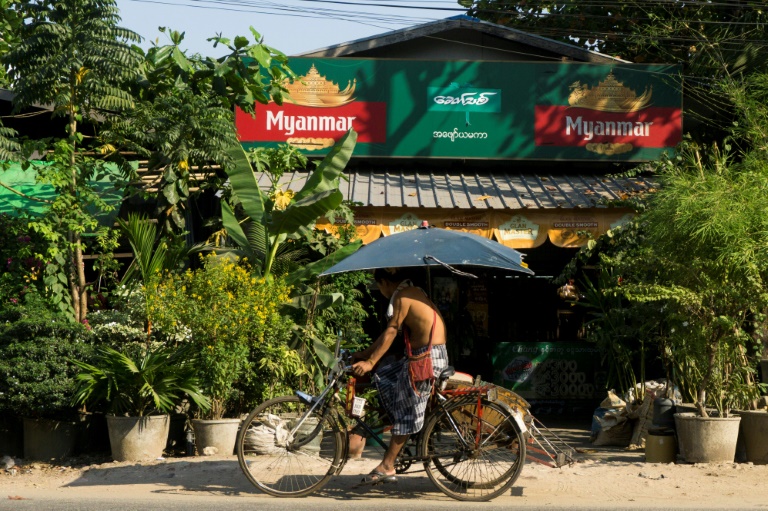
Myanmar Brewery, whose beverages include its flagship and ubiquitous Myanmar Beer brand, boasted a market share of nearly 80 percent of the brewery, according to figures published by Kirin in 2018.

Kirin had been under pressure even before the coup over its ties to Myanmar’s military, and launched an investigation after rights groups called for transparency into whether money from its joint venture had funded rights abuses.

Its beer has been widely boycotted since the coup.

– Sales losing fizz –

The pandemic and supply chain disruptions have also hit the country, with Kirin saying in its earnings report released Monday that Myanmar’s beer market has shrunk by about 20 percent.

It said Myanmar Brewery’s sales volumes had decreased by around 30 percent compared to the same period last year. 

Investors flocked to the country after the military relaxed its iron grip in 2011, paving the way for democratic reforms and economic liberalisation in the country of more than 50 million people.

But human rights groups have since the coup pressed foreign companies to rethink their activities in Myanmar.

The US government last month warned companies worldwide that doing business with Yangon ran “the risk of engaging in conduct that may expose them to significant reputational, financial, and legal risks.”

Teenage skater Valieva in action as fury mounts over Olympic reprieve

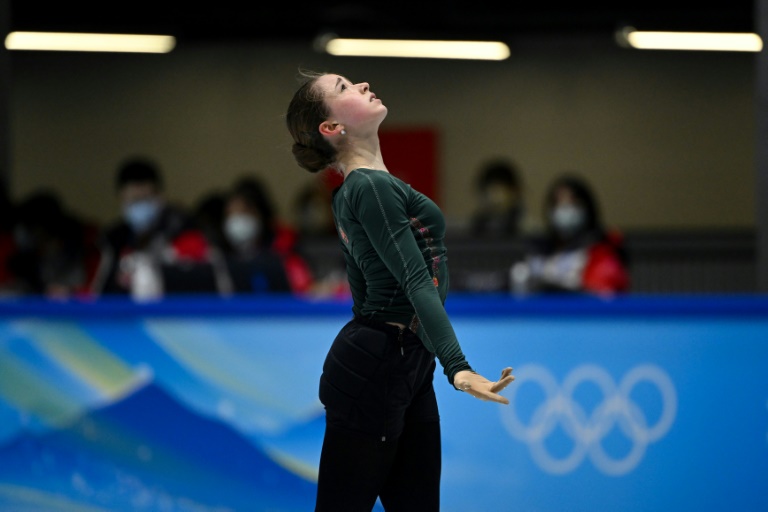
Teenage Russian figure skater Kamila Valieva starts her bid for a second gold medal on Tuesday at the Beijing Olympics, as anger mounts over the decision to allow her to compete despite failing a drugs test.

The 15-year-old is at the centre of a raging controversy after the Court of Arbitration for Sport ruled on Monday that she could carry on at the Games even though she tested positive in December for the banned substance trimetazidine, which boosts endurance.

It also put the spotlight once more on doping by Russian athletes, who are not allowed to take part at the Games under their flag because of a state-sponsored doping programme that reached its peak at its home 2014 Sochi Olympics.

The CAS ruling was celebrated in Russia but provoked fury elsewhere, with the United States Anti-Doping Agency (USADA) accusing the country of “hijacking” the Beijing Olympics.

Valieva, who has not been cleared of doping and could still face punishment at a later date, told Russian television: “These last few days have been very difficult for me.

“I am happy but at the same time tired emotionally.”

Starting to cry, she added: “These are tears of happiness, but also it seems sadness.”

Valieva is favourite to win gold in the women’s singles skating, which starts on Tuesday, but the International Olympic Committee says there will be no medal ceremony in Beijing if she comes in the top three — unprecedented in the history of the Games.

Valieva led Russia to team gold last week, before a Stockholm laboratory reported that she had failed a drugs test from December 25, but the medal ceremony for that competition will also not take place.

In ruling that Valieva should not be suspended, CAS said that there were “exceptional circumstances”, including her age and the fact it had taken six weeks for her failed test to be reported.

Matthieu Reeb, CAS director general, said Monday preventing Valieva from competing would have caused her “irreparable harm”.

Denis Oswald, a senior IOC official who oversaw an investigation into widespread Russian doping in Sochi, said that Valieva’s case was different. 

“The state doping was a big system and it doesn’t seem to be such a situation here,” he told a press conference on Tuesday, adding they will look into the coaches and others surrounding the teenager.

“Of course you can imagine a girl of 15 does not do something wrong alone,” he said.

“The entourage will be investigated.”

In the United States, USADA expressed sympathy for Valieva but chief executive Travis Tygart said that “for the sixth consecutive Olympic Games, Russia has hijacked the competition and stolen the moment from clean athletes and the public”.

US sprinter Sha’Carri Richardson, who was barred from competing at last summer’s Tokyo Olympics after testing positive for marijuana before those Games, angrily contrasted her treatment with Valieva’s.

Valieva will go in the short programme of the figure skating on Tuesday but gold will not be decided until after the free skate on Thursday.

– Gu settles for silver –

Nine gold medals were up for grabs in the Chinese capital on Tuesday.

World champion Corinne Suter confirmed Switzerland’s alpine skiing dominance at the Games when she streaked to victory in the women’s downhill for the country’s fourth gold.

Two-time skiing gold medallist Mikaela Shiffrin, who is yet to win a medal in Beijing, came 18th.

There was another Swiss winner earlier in the day in the form of Mathilde Gremaud in women’s freestyle slopestyle.

Gremaud triumphed ahead of Californian-born Chinese sensation Eileen Gu, the face of the Games and gold-medal winner last week. Gu, 18, had to settle for silver.

“I wanted to get on the podium more than anything, so landing I just felt relieved,” said Gu, who was third after her first run and took a hefty backwards tumble on her second, leaving her sweating for a medal going into her third and final go.

“I’m out here representing myself and the sport to people so just to be able to put down a run and show people what’s possible when you’re under pressure is another thing that I’m proud to represent.”

Gu will have another shot at a medal in freeski halfpipe, with the qualification round taking place on Thursday and the final on Friday.

Austria’s Anna Gasser won a dramatic snowboard Big Air gold to retain her title.

Close Bitnami banner
Bitnami