World

The Brazil resort town disappearing into the sea

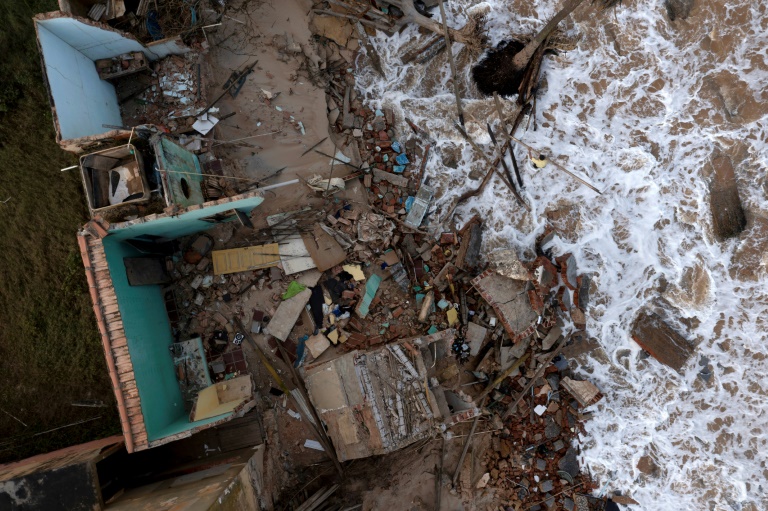
Vultures roam the sand in the Brazilian resort town of Atafona amid the ruins of the latest houses destroyed by the sea, whose relentless rise has turned the local coastline into an apocalyptic landscape.

The Atlantic Ocean advances an average of six meters (nearly 20 feet) a year in this small town north of Rio de Janeiro, which has long been prone to extreme erosion — now exacerbated by climate change.

The sea has already submerged more than 500 houses, turning the once idyllic coastline into an underwater graveyard of wrecked structures.

One of the next to lose his home will be Joao Waked Peixoto.

Walking through the jumbled rubble of what was once his neighbors’ house, he looks at what is left: a fragment of a blue-painted room strewn with tattered magazines, a bicycle and other remnants of life.

“When will we have to leave? That’s an unknown,” he says.

“The sea advanced three or four meters in 15 days. Our wall might not last until next week.”

Waked Peixoto’s grandfather built the house as a vacation home, a beachfront getaway with large rooms and a garden.

During the coronavirus pandemic, Waked Peixoto and his family moved in full-time.

But it now looks inevitable the house will be swallowed by the sea.

“It will be a shame to lose this house, because it holds so many memories of my whole family,” he says.

– Extreme erosion –

Atafona, a town of some 6,000 people, has long suffered from extreme erosion. It is part of the four percent of coastlines worldwide that lose five meters or more every year.

The problem is being exacerbated by global warming, which is causing sea levels to rise and making currents and weather patterns more extreme, says geologist Eduardo Bulhoes of Fluminense Federal University.

But Atafona has had a “chronic problem” for decades, he says.

The Paraiba do Sul river, whose mouth is in Atafona, has shrunk because of mining, agriculture and other activities that drain it upstream.

“In the last 40 years, that has drastically reduced the river’s volume, meaning it transports less sand to Atafona,” says Bulhoes.

With less sand, the town’s beaches have stopped regenerating naturally, ceding ground to the sea.

Construction on the coast has only made the problem worse, by stripping away sand dunes and vegetation, the beaches’ natural defenses.

The result has been disastrous for the tourism and fishing industries.

“Large boats can’t come through the river delta anymore… and the money disappeared along with them,” says Elialdo Bastos Meirelles, head of a local fishermen’s community of some 600 people.

“The river is dead.”

– ‘Abandoned’ –

Local authorities have studied several plans to curb the erosion, including building dikes to reduce the force of the ocean’s waves and hauling sand from the river delta to the beach.

Bulhoes, the geologist, proposed the latter, which is modeled on similar initiatives in the Netherlands, Spain and the United States.

But the projects exist only on paper so far.

The county under-secretary for the environment, Alex Ramos, told AFP no one had yet come up with a definitive solution, and that any plan would have to gain environmental regulators’ approval first.

In the meantime, the county has launched a social assistance program that pays 1,200 reais ($230) a month to more than 40 families who lost their homes to erosion.

But critics accuse the local government of a lack of political will.

“We keep hearing promises,” says Veronica Vieira, head of neighborhood association SOS Atafona.

“But this town has been abandoned. It’s an apocalypse. It makes you want to cry.”

Kupp, Donald star as Rams down Bengals in Super Bowl thriller

Cooper Kupp scored two touchdowns and Aaron Donald spearheaded a fearsome defensive display as the Los Angeles Rams defeated the Cincinnati Bengals 23-20 to win the Super Bowl on Sunday.

Kupp scored a decisive touchdown with 1min 25sec remaining to give the Rams the lead at SoFi Stadium before Donald grabbed the Rams’ record-equalling seventh sack of Bengals quarterback Joe Burrow to seal a blockbuster victory.

Donald’s sack of Burrow was the dramatic final act of a gripping contest between the star-studded Rams and the Bengals, whose bid to win a first-ever Vince Lombardi Trophy fell agonizingly short.

“I’m just so happy,” said Rams defensive star Donald. “I wanted this so bad. I dreamed this.”

“One play and we’re world champs,” Donald added of his crucial late sack of Burrow. “Any way to get to him. We made it.”

Wide receiver Kupp was named the Super Bowl Most Valuable Player three years after missing the Rams’ prior appearance in a Super Bowl through injury. 

“It is unbelievable,” Kupp said. “To be able to experience this with my family. It has been such a fun ride. Up and down but fun.”

Rams quarterback Matthew Stafford, meanwhile, paid tribute to his team’s never-say-die approach.

“I’m so proud of this team,” Stafford said. “There are so many guys on our team that deserve this, so many guys who gave their heart and soul to this team.

“That game today is the story of our season. It’s up and down it’s tough. We’re a tough team. We showed up late and got it done.”

The Bengals had stormed into a 20-13 lead early in the second half after a controversial Tee Higgins touchdown and an Evan McPherson field goal.

Higgins raced for a 75-yard score but replays showed he grabbed Rams’ safety Jalen Ramsey’s facemask before breaking clear — an infringement that should have led to a penalty.

– ‘Stars came to life’ –

But the Rams, who had struggled to build momentum on offense after a game-ending injury to Odell Beckham Jr. in the first half, clawed their way back into the game thanks to their rampant defense led by Donald.

Burrow was sacked repeatedly at key moments to prevent the Bengals from extending their lead. 

Matt Gay’s field goal pulled the Rams back to 20-16 heading into the fourth quarter.

Stafford then led a 15-play, 79-yard drive that benefited from three crucial Bengals penalties near the goal line before Kupp plucked a one-yard pass in the end zone for the go-ahead touchdown.

“Stafford and Kupp came to life,” said Rams head coach Sean McVay — who becomes the youngest ever head coach to win the Super Bowl at the age of 36. “Our best players shined the brightest when they had to and that’s why we got it done.”

Kupp and Beckham had both scored early touchdowns to give the Rams a 13-3 lead in the second quarter before the Bengals battled back into the contest.

The defeat was brutal on Bengals quarterback Burrow, the 25-year-old rising star who has helped transform Cincinnati’s fortunes this season.

Burrow finished with 263 passing yards and one touchdown but was buffeted all night and sacked seven times, equalling the record for the most sacks in a Super Bowl.

“It stings, but we had a great year,” Burrow said. “I was disappointed in my performance. I thought I could have given us a chance to win. You live and learn.”

Stafford, meanwhile, finished with 283 yards and two touchdowns with two interceptions.

It was the Rams second franchise Super Bowl victory and their first since returning to Los Angeles from St. Louis in 2016. Their previous win came in 2000.

It was the third Super Bowl defeat in as many appearances for the Bengals, who also dropped the title contest in 1982 and 1989.

Sunday’s showstopping finale was a fitting end to one of the most gripping NFL post-seasons in years.

With Los Angeles basking in a February heatwave, a 70,000-capacity crowd packed with Hollywood celebrities were given a show-stopping halftime show led by icons Snoop Dogg, Dr.Dre, Eminem and Mary J. Blige.

Vietnam to lift Covid-19 restrictions on international flights

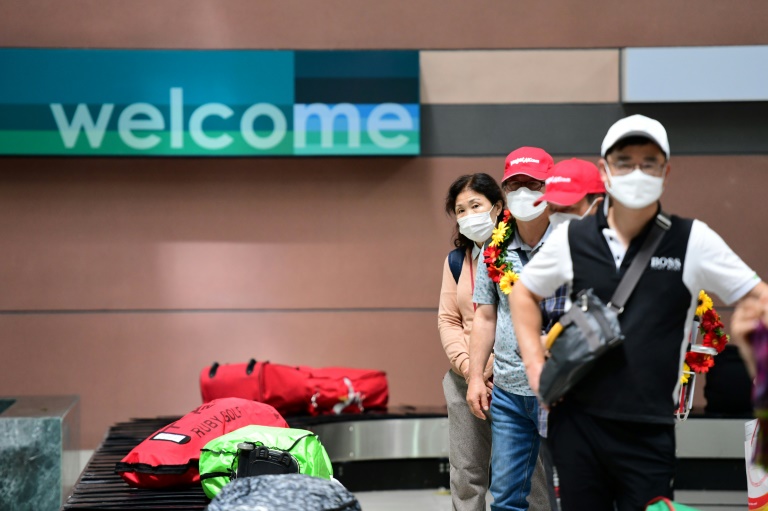
Vietnam will lift coronavirus restrictions on international flights for fully vaccinated passengers from Tuesday, the country’s aviation authority said in a statement.

The communist nation has virtually closed itself to the world since March 2020 due to the pandemic, dealing a severe blow to its vital tourism sector.

Authorities have slowly eased the curbs in recent months, with visitors trickling in under a bubble arrangement since November.

Starting Tuesday (1700 GMT Monday), “Vietnam will lift restrictions on passenger carriage on scheduled flights and non-scheduled flights,” the civil aviation authority said.

The statement, released Sunday, did not say how many flights would be allowed to enter, but indicated arrivals could be permitted to return to pre-pandemic levels.

Anyone wanting to enter Vietnam must be fully vaccinated and will have to observe a three-day quarantine, either at home or in a hotel, according to regulations.

Travellers must still abide by existing entry-exit regulations and pre-pandemic healthcare requirements, the authority said.

More than 90 percent of adults in the country have received two Covid-19 vaccine doses. The government is considering inoculating young teenagers as it accelerates the rollout of booster shots.

Vietnam is currently reporting around 20,000 new daily cases, and has recorded more than 2.5 million infections with nearly 39,000 deaths since the beginning of the pandemic.

Thai metal band rocks against royal insult law

Hundreds of headbanging metalheads rock out to the roaring guitars and thundering drums of Thai band Defying Decay, chanting along to their latest politically charged tune.

The group’s single “The Law 112: Secrecy and Renegades” is a raucous, defiant anthem with a taboo-defying message — challenging Thailand’s draconian lese majeste laws.

Criticising the royal family is punishable by up to 15 years in jail, but calls for royal reform — once completely off-limits — spilled into the open during a series of major youth-led street protests against the government in 2020.

Saturday night’s energetic Bangkok crowd was the first in Thailand to see a live performance of the song, which had already found an audience on US rock stations in November.

The 112 of the title refers to the lese majeste section of Thailand’s criminal code, but the song’s lyrics avoid criticising any person or institution by name.

“I like to have the lyrics open for interpretation and for everyone to have their own meaning… when I write my songs,” vocalist and lyricist Poom Euarchukiati told AFP.

A line in the song about corruption could also find support from royalists or the police, not just anti-government protesters, said the 25-year-old frontman.

Despite the song’s contentious title, the main source of inspiration comes from the plot of fantasy video game “Dark Souls”, in which corruption is a major theme, Poom said.

– Political music –

The protests calling for political reform that rocked Bangkok in 2020 exposed a generational split in Thailand between youngsters yearning for change and a more conservative older generation.

Poom said his mother was not happy when news of the song’s contentious title emerged.

“My mother originally said ‘you can’t do this’. But then I showed her the lyrics and she was fine with it,” he said.

Defying Decay are the latest Thai band to use their music to challenge the establishment.

Released more than three years ago, Rap Against Dictatorship’s “Prathet Ku Mee (My Country Has)” made headlines at home and abroad with its politically driven lyrics and aggressive rhymes, narrating a slew of corruption cases.

The hip-hop collective’s in-your-face music video, which includes a re-enactment of a notorious 1976 student massacre, also sent a powerful message to the global audience about the country’s dark past.

With a limited market for their brand of alternative metal in Thailand, the seven-member band mainly focuses on touring overseas.

– Calls for reform –

At its peak in the second half of 2020, the protests demanding royal reform and the resignation of Prime Minister Prayut Chan-O-Cha — who took power in a 2014 coup — drew tens of thousands to the streets of Bangkok.

But the movement petered out as coronavirus restrictions hampered rallies and demonstrators were hit with lese majeste charges.

There have been 170 individuals charged under the royal insult law since November 2020, according to the Thai Lawyers for Human Rights organisation.

Political activist Parit Chiwarak, known by his nickname “Penguin”, faces the most charges with 23. He has been held in pre-trial detention since August.

At a UN rights meeting last year, the Thai government’s representative defended the lese majeste legislation, saying it “reflects the culture and history of Thailand, where the monarchy is one of the main pillars of the nation”.

But from a musician’s perspective, the law needs to be “updated” to be compatible with the modern world and prevent “misuse,” Poom said.

A “clear standard” of wrongdoings committed under lese majeste legislation should also be established to ensure fair trials, Defying Decay lead guitarist Chitipat Wanyasurakul, 26, told AFP.

But imminent change could be far away.

“People who listen to (rebellious) music are mostly teenagers and young workers — society isn’t comprised of this group of people alone,” 29-year-old concertgoer Chawanut Rattanaphun told AFP.

Cambodia steps up surveillance with new internet gateway

Cambodia is powering up its new National Internet Gateway, a move activists say will allow the government to further silence the country’s embattled opposition voices.

UN rights experts warn the gateway, which will funnel all web traffic through a state-controlled entry point from February 16, will have a “devastating” effect on privacy and free speech.

It is the latest move by authoritarian ruler Hun Sen to clamp down on dissent in a country that has arrested dozens for online posts in recent years, critics say.

Hip-hop artist Kea Sokun, whose lyrics about injustice and corruption have struck a chord with Cambodia’s disaffected youth, was among those jailed.

As his music clocked up millions of views on YouTube, plainclothes police came knocking in September 2020.

“They kept asking who was backing me?” Kea Sokun told AFP.

He was arrested and convicted of incitement, spending a year behind bars, and now fears the new gateway will lead to more people suffering the same fate.

“It will be difficult to freely express opinions,” he said.

“They arrested me in order to intimidate others.”

Last year, an autistic teenager, the son of a jailed opposition figure, was sentenced to eight months in jail for Telegram messages deemed insulting to the government.

– Clampdown on dissent –

Internet gateways are the points on a network where a country connects to the worldwide web.

Once fully operational, Cambodia’s new National Internet Gateway will channel all traffic through a single entry point controlled by the government.

Internet service providers will be ordered to block websites and connections that adversely affect “national revenue, safety, social order, morality, culture, traditions and customs”.

UN rights experts warned earlier this month that the sweeping new powers will further shrink what is left of the space for dissent in Cambodia, where Hun Sen has buttressed his 37-year rule by steadily rolling back democratic freedoms.

The Cambodian Center for Human Rights (CCHR) says the new gateway will give the former Khmer Rouge cadre yet more ways to silence opposing voices.

In 2021, at least 39 Cambodians were arrested, jailed or had arrest warrants issued against them for online posts that fell foul of government censors, according to the CCHR.

Elections are expected next year, and the CCHR says the completion of the gateway now could allow the government to block dissenting views online in the run-up to polls.

Cybersecurity expert Matt Warren, from Australia’s RMIT University, said there could be attempts to silence high-profile opposition figures living in exile from weighing into the domestic political debate ahead of the 2023 polls.

“Will Cambodians outside the country be able to take part in the social dialogue during the election?” Warren said.

Thailand’s then-ruling junta mulled introducing a single internet gateway in 2015 but backed down in the face of opposition from business.

Aside from the privacy and rights concerns, industry figures warn that funneling all traffic through a single point leaves the country highly vulnerable to being cut off — either due to a technical fault or a cyber attack.

– ‘Balkanisation’ –

Government spokesman Phay Siphan insisted the internet gateway is needed to crack down on cyber-crime, maintain national security and collect revenue.

Cambodians needed to understand that freedom of “expression comes with responsibilities” and that “insulting or manipulating information can affect national security or individuals’ reputations,” he said.

But the new gateway appears to be taking Cambodia down a path beaten by China, which maintains even more sophisticated digital tools to monitor and censor the internet for its citizens, keeping the online world behind a “Great Firewall” and blocking major Western platforms such as Twitter, Facebook and YouTube.

“It’s the Balkanisation of the internet. You’ve got the internet in China, you’ve got the Russian internet, you’ve got the internet in Saudi Arabia, where they are isolated and monitored,” Warren told AFP.

“It’s not just about censorship, it’s also about control.”

The Cambodian government’s biggest fear, Warren said, is that its people could take inspiration from anti-coup campaigners in Myanmar, who used social media platforms to organise mass protests against the junta.

As the gateway’s completion day looms, many Cambodians are turning to virtual private networks (VPNs) to skirt online censorship.

Top10VPN, a Britain-based digital security advocacy group, said there had been a 56 percent surge in demand for VPN accounts in Cambodia in December.

So far, there are no reports of authorities cracking down on VPN use.

“However, wherever there are long-term government restrictions on internet access, VPN bans are sure to follow,” head researcher Simon Migliano told AFP.

Fan fury in China after 'Friends' LGBTQ plotline censored

The highly anticipated return of “Friends” to Chinese streaming platforms soured quickly after fans noticed an LGBTQ plotline was cut from the American sitcom — and their complaints were censored too.

China’s top platforms started streaming the series on Friday, but the back story of a lesbian character was absent from the first season’s second episode.

Fans flooded social media with complaints about the removal, with the top-trending hashtag “Friends censored” racking up tens of millions of views on the Twitter-like Weibo platform.

“I compared this episode and found that all the lines referring to Ross’s ex-wife Carol being a lesbian were deleted. It’s very clearly disjointed,” wrote one user, whose post gained more than 177,000 likes.

Foreign films and television programmes that include content authorities consider “sensitive”, such as LGBTQ themes, sex, politics and violence, are routinely censored in China.

“Why would there be a need to mention it? Homosexuality doesn’t exist here, so it’s perfect forever. Everyone’s happy living under this government,” read another apparently sarcastic comment.

The criticism was also censored on the weekend, and the protest hashtag was replaced by “Why is friends so popular” on Sunday.

“Friends”, which follows a group of six young people in New York, originally ran from 1994 to 2004 in the United States.

It also became an international phenomenon, including in China, where it is hugely popular among millennials. Many young Chinese learned English by watching it on DVDs.

The series first ran in China — uncensored — on the streaming platform Sohu between 2012 and 2013.

Following the popularity of last year’s reunion show, the country’s streaming giants including Bilibili, Tencent, iQiyi and Youku decided to relaunch a censored version.

In addition to omitting the LGBTQ plotline in season one, sexually suggestive lines have been translated differently in the Chinese subtitles of the relaunched version to remove the innuendo.

The fan furore over “Friends” was the latest such wave of complaints from Chinese fans.

The original ending of the cult classic American film “Fight Club” was restored in China following online criticism of the censored version, which concluded with a black screen and a coda explaining the police had caught all the criminals.

In 2019, multiple scenes in the film “Bohemian Rhapsody” referencing queer music superstar Freddie Mercury’s sexuality were dropped in its China release.

Under President Xi Jinping, Chinese authorities have pushed to purge society and culture of elements they deem unhealthy.

Guidelines released by the top media regulator in 2016 prohibited “vulgar, immoral and unhealthy content” in TV shows such as homosexuality, smoking, extramarital affairs and underage relationships.

IAEA begins mission to review Fukushima water release

An International Atomic Energy Agency taskforce began a mission Monday in Japan to review the controversial planned release of treated water from the Fukushima nuclear plant into the ocean.

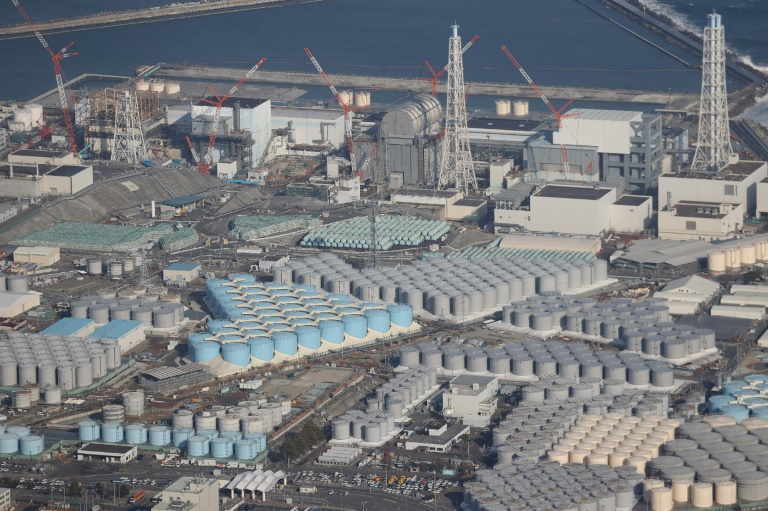
More than a million tonnes of processed water has accumulated in tanks at the crippled plant since it went into meltdown following a tsunami in 2011 and storage space is running out.

An extensive pumping and filtration system removes most radioactive elements, and Japan says the plan to dilute and release the water over several decades is safe.

The IAEA has endorsed the release, which it says is similar to the disposal of wastewater at nuclear plants elsewhere.

But the plan adopted by the government last April, which is expected to begin as soon as March 2023, sparked ire from neighbouring countries over environmental and safety concerns.

It also generated fierce opposition from local fishing communities, who fear it will undermine years of work to restore confidence in their seafood.

Plant operator TEPCO and the Japanese government are hopeful that IAEA monitoring of the process will boost confidence.

“This week we will conduct a mission to review the action, plans, data, and relevant documents, to assess their compliance against the provisions included in international safety standards,” said Gustavo Caruso, director and coordinator of the IAEA’s nuclear safety and security department.

He said the taskforce would be scrutinising elements including the “radiological characterisation of the water to be discharged” and as well the impact on people and the environment.

TEPCO’s chief officer for the treated water management, Junichi Matsumoto, said the firm was already studying infrastructure design and operations for the discharge plan “with the priority on safety and also to contain the impact on the region’s reputation.”

“We hope to further improve the objectivity and transparency of this process through this review,” he added, at a meeting with IAEA and Japanese government officials.

Debate over how to handle the water has dragged on for years, as space to store it at the site runs out, though some critics have suggested there could be ways to store more water until a new plan is devised.

The liquid includes water used to cool damaged reactors, as well as rain and groundwater that seeps into the area.

The filtration process removes most radioactive elements from the water, but some remain, including tritium.

Experts say the element is only harmful to humans in large doses and with dilution the treated water poses no scientifically detectable risk.

The IAEA team will be in Japan February 14-18 and will visit the plant site and give a press conference at the end of their trip.

Nations to review harrowing catalogue of climate impacts

Nearly 200 nations kick off a virtual UN meeting Monday to finalise what is sure to be a harrowing catalogue of climate change impacts — past, present and future.

Species extinction, ecosystem collapse, mosquito-borne disease, deadly heat, water shortages, and reduced crop yields are already measurably worse due to global heating.

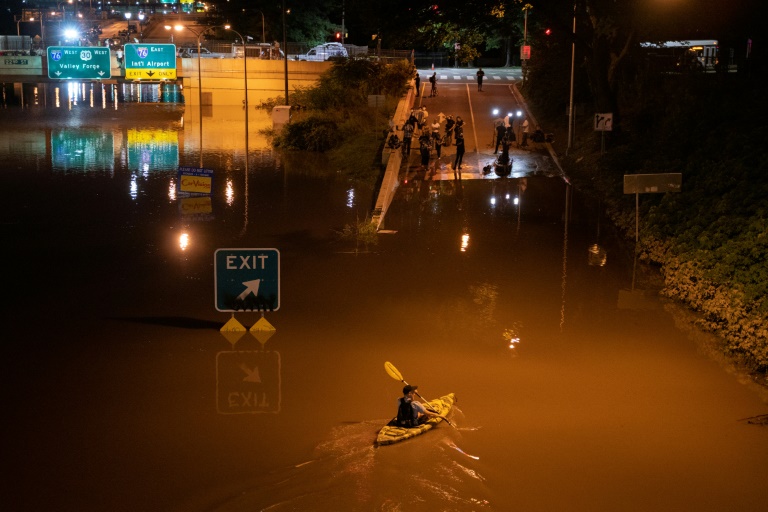
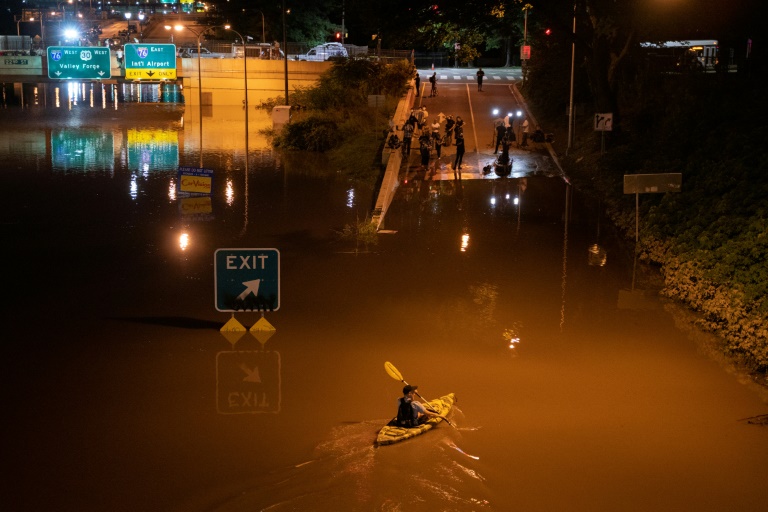
Just in the last year, the world has seen a cascade of unprecedented floods, heatwaves and wildfires across four continents.

All these impacts will accelerate in the coming decades even if the carbon pollution driving climate change is rapidly brought to heel, the Intergovernmental Panel on Climate Change (IPCC) report is likely to warn.

A crucial, 40-page Summary for Policymakers — distilling underlying chapters totalling thousands of pages, and reviewed line-by-line — is to be made public on February 28.

“This is a real moment of reckoning,” said Rachel Cleetus, Climate and energy policy director at the Union of Concerned Scientists.

“This not just more scientific projections about the future,” she told AFP. “This is about extreme events and slow-onset disasters that people are experiencing right now.”

The report will also underscore the urgent need for “adaptation” — climate-speak which means preparing for devastating consequences that can no longer be avoided, according to an early draft seen by AFP in 2021.

In some cases this means that adapting to intolerably hot days, flash flooding and storm surges has become a matter of life and death.

– Billions in damages –

“Even if we find solutions for reducing carbon emissions, we will still need solutions to help us adapt,” said Alexandre Magnan, a researcher at the Institute for Sustainable Development and International Relations in Paris and a co-author of the report, without commenting on its findings. 

IPCC assessments — this will be the sixth since 1990 — are divided into three sections, each with its own volunteer “working group” of hundreds of scientists.

In August 2021, the first instalment on physical science found that global heating is virtually certain to pass 1.5 degrees Celsius (2.7 degrees Fahrenheit), probably within a decade.

Earth’s surface has warmed 1.1 degrees Celsius since the 19th century.

The 2015 Paris deal calls for capping global warming at “well below” 2C, and ideally 1.5C.

This report is sure to reinforce this more ambitious goal. 

It will likewise underscore that vulnerability to extreme weather events — even when they are made worse by global warming — can be reduced by better planning and preparation, according to the draft seen by AFP.

This is not only true in the developing world, noted Imperial College professor Friederike Otto, pointing to massive flooding in Germany last year that killed scores and caused billions in damage. 

– Finite set of choices –

“Even without global warming there would have been a huge rainfall event in a densely populated geography where the rivers flood very easily,” said Otto, a pioneer in the science of quantifying the extent to which climate change makes extreme weather events more likely or intense.

The report will zero in on how climate change is widening already yawning gaps in inequality, both between regions and within nations. 

The simple fact is that the people least responsible for climate change are the ones suffering the most from its impacts.

Not only is this unjust, experts and advocates say, it is a barrier to tackling the problem.

“I do not think there are pathways to sustainable development that do not substantively address equity issues,” said Clark University professor Edward Carr, a lead author of one of the report’s chapters.

The report is also likely to highlight dangerous “tipping points”, invisible temperature trip wires in the climate system for irreversible and potentially catastrophic change.

Some of them — such as the melting of permafrost housing twice as much carbon as in the atmosphere — could fuel global warming all on their own.

“There is a finite set of choices we can make that would move us productively into the future,” said Carr. “Every day we wait and delay, some of those choices get harder or go away.”

The third and final instalment of the IPCC assessment currently unfolding, due out in early April, examines options for curbing carbon emissions and removing carbon from the atmosphere.

Nations to review harrowing catalogue of climate impacts

Nearly 200 nations kick off a virtual UN meeting Monday to finalise what is sure to be a harrowing catalogue of climate change impacts — past, present and future.

Species extinction, ecosystem collapse, mosquito-borne disease, deadly heat, water shortages, and reduced crop yields are already measurably worse due to global heating.

Just in the last year, the world has seen a cascade of unprecedented floods, heatwaves and wildfires across four continents.

All these impacts will accelerate in the coming decades even if the carbon pollution driving climate change is rapidly brought to heel, the Intergovernmental Panel on Climate Change (IPCC) report is likely to warn.

A crucial, 40-page Summary for Policymakers — distilling underlying chapters totalling thousands of pages, and reviewed line-by-line — is to be made public on February 28.

“This is a real moment of reckoning,” said Rachel Cleetus, Climate and energy policy director at the Union of Concerned Scientists.

“This not just more scientific projections about the future,” she told AFP. “This is about extreme events and slow-onset disasters that people are experiencing right now.”

The report will also underscore the urgent need for “adaptation” — climate-speak which means preparing for devastating consequences that can no longer be avoided, according to an early draft seen by AFP in 2021.

In some cases this means that adapting to intolerably hot days, flash flooding and storm surges has become a matter of life and death.

– Billions in damages –

“Even if we find solutions for reducing carbon emissions, we will still need solutions to help us adapt,” said Alexandre Magnan, a researcher at the Institute for Sustainable Development and International Relations in Paris and a co-author of the report, without commenting on its findings. 

IPCC assessments — this will be the sixth since 1990 — are divided into three sections, each with its own volunteer “working group” of hundreds of scientists.

In August 2021, the first instalment on physical science found that global heating is virtually certain to pass 1.5 degrees Celsius (2.7 degrees Fahrenheit), probably within a decade.

Earth’s surface has warmed 1.1 degrees Celsius since the 19th century.

The 2015 Paris deal calls for capping global warming at “well below” 2C, and ideally 1.5C.

This report is sure to reinforce this more ambitious goal. 

It will likewise underscore that vulnerability to extreme weather events — even when they are made worse by global warming — can be reduced by better planning and preparation, according to the draft seen by AFP.

This is not only true in the developing world, noted Imperial College professor Friederike Otto, pointing to massive flooding in Germany last year that killed scores and caused billions in damage. 

– Finite set of choices –

“Even without global warming there would have been a huge rainfall event in a densely populated geography where the rivers flood very easily,” said Otto, a pioneer in the science of quantifying the extent to which climate change makes extreme weather events more likely or intense.

The report will zero in on how climate change is widening already yawning gaps in inequality, both between regions and within nations. 

The simple fact is that the people least responsible for climate change are the ones suffering the most from its impacts.

Not only is this unjust, experts and advocates say, it is a barrier to tackling the problem.

“I do not think there are pathways to sustainable development that do not substantively address equity issues,” said Clark University professor Edward Carr, a lead author of one of the report’s chapters.

The report is also likely to highlight dangerous “tipping points”, invisible temperature trip wires in the climate system for irreversible and potentially catastrophic change.

Some of them — such as the melting of permafrost housing twice as much carbon as in the atmosphere — could fuel global warming all on their own.

“There is a finite set of choices we can make that would move us productively into the future,” said Carr. “Every day we wait and delay, some of those choices get harder or go away.”

The third and final instalment of the IPCC assessment currently unfolding, due out in early April, examines options for curbing carbon emissions and removing carbon from the atmosphere.

Covid-pass protest convoy heads for banned Brussels rally

Hundreds of cars, campervans and trucks taking part in a Canada-style protest convoy against Covid regulations were preparing to enter Brussels Monday where Belgian officials have already banned a demonstration following a weekend attempt in Paris.

Around 1,300 vehicles from across France had arrived near the French border town of Lille by late Sunday, according to police.

The protest is one of several worldwide inspired by the truckers’ standoff with authorities in Canada.

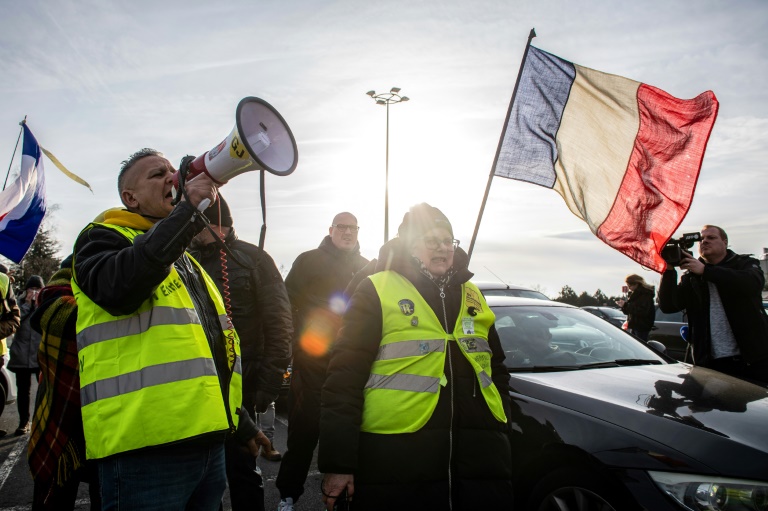
Camped at a parking lot near Lille, protesters brandished French flags and chanted “We won’t give up” and “Freedom, freedom.”

“We’ll go to Brussels to try to block it, to fight against this policy of permanent control,” said Jean-Pierre Schmit, an unemployed 58-year-old who came from Toulouse.

For Sandrine, 45, who came from Lyon, the government’s response to the Covid crisis had revealed that “we’re losing our freedoms bit by bit, in an insidious way.”

The latest self-proclaimed “freedom convoy” comes after 97 people were arrested at the weekend in Paris where thousands of demonstrators defied a ban on attempting to blockade the French capital.

In France, the demonstrators took aim at the “vaccine pass” required to enter restaurants, cafes and many other public venues implemented as part of President Emmanuel Macron’s inoculation drive.

– Border checks –

Belgian authorities have banned all demonstrations in the capital with “motorised vehicles” and said they had taken measures to prevent the blocking of the Brussels region.

Brussels police have posted on social media warning that vehicle protests are banned and advising against travelling to the capital by car, channelling convoys to a parking lot on the outskirts of the city as the only place where a static protest will be tolerated.

Some participants in a similar demonstration organised in The Hague have also announced their intention to go to Belgium.

Belgian Prime Minister Alexander De Croo had however advised the demonstrators to abandon their plans to come to Brussels.

“I say to those who come from abroad: look at the rules in Belgium. We never had rules that were too hard and we don’t have so many anymore. So complain at home,” he said Friday.

Checks are planned at the border and vehicles coming to the capital despite the ban will be diverted, Belgian authorities warned.

Brussels airport also advised travellers to take precautions on Monday and come by train for fear of blocking access routes.

The self-proclaimed “freedom convoy” is one of several worldwide inspired by a truckers’ standoff with authorities in Canada over vaccine mandates.

While French police counted 3,000 vehicles outside Paris on Friday evening, only around a hundred made it to the Champs-Elysees avenue in the heart of the capital on Saturday before being forced out after officers deployed tear gas to disperse the protesters.

In Canada, police on Sunday cleared demonstrators who had occupied a key US border bridge for a week but thousands of protesters remained in the capital Ottawa, where they have paralysed the city centre.

The French protest movement brings together those opposed to the Covid vaccine pass required to access many public venues but also some angry at rising energy and food prices, issues which ignited the “yellow vest” protests that shook France in late 2018 and early 2019.

The French government has said it plans to relax face mask mandates by February 28, and is hoping to end the vaccine pass requirement by late March or early April.

burs-ob/roc/mtp/jfx

Close Bitnami banner
Bitnami