World

Bitter row erupts over Anne Frank betrayal book

It was meant to put one of World War II’s greatest mysteries to rest, but instead a new book about young diarist Anne Frank has stirred up ghosts from the past.

A heated debate has erupted over “The Betrayal of Anne Frank” by Canadian author Rosemary Sullivan after it named a Jewish notary as the prime suspect in giving up Anne and her family.

Dutch historians and Jewish groups have criticised the “sensationalist” book, the result of a six-year cold case investigation, while its local publisher has halted further reprints.

But the former FBI agent who led the probe, Vince Pankoke, angrily hit back this week alleging that the “venomous attack” may have been motivated by the book’s controversial conclusion that a Jew was responsible.

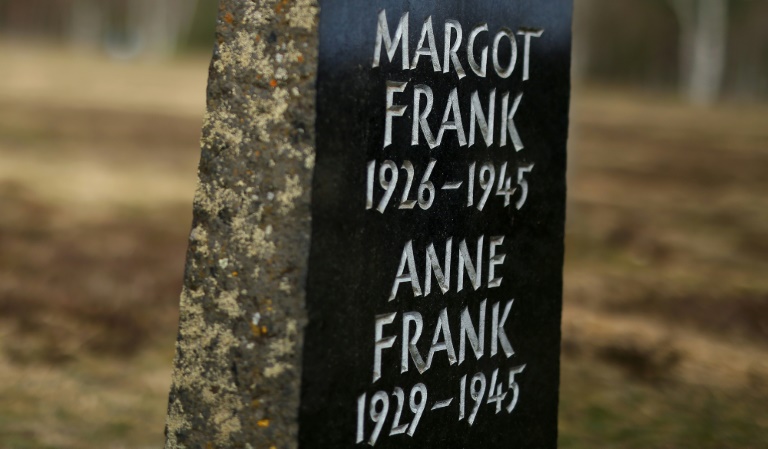
The book caused an international storm when it was published on January 18 with its claims about the betrayal of Frank, a Jewish teen whose diary was published after her death in the Bergen-Belsen concentration camp in 1945.

It identified Amsterdam notary Arnold van den Bergh, a Jew, as “most likely” the man who in 1944 gave up the location of the canalside annexe where Frank penned her diary during two years in hiding, most likely to save his own family from the Nazis.

Researchers said they used modern criminal investigative techniques, complex algorithms and witness statements — and most tellingly a note given to Anne’s father Otto shortly after the war which named Van den Bergh.

– ‘Speculative’ –

But there was a fierce reaction in the Netherlands, which is still haunted by guilt over the deportation of more than 100,000 Jews during the war.

The results were “extremely speculative and sensationalist”, the Amsterdam-based Central Jewish Consultation (CJO) organisation said.

“There is no smoking gun or hard evidence. The findings are… mainly based on one note, written after the war,” CJO chairman Ronny Naftaniel told AFP.

Van den Bergh died in 1950 and “cannot defend himself”, Naftaniel said, adding that the investigation “would never stand up in a court of law”.

Jewish organisations in the Netherlands have asked that the book be removed from local shelves, and the Swiss-based Anne Frank Fonds foundation president John Goldsmith told Swiss daily Blick the findings “bordered on a conspiracy theory”.

The book’s Dutch publisher Ambo Anthos last week said it was putting all reprints on ice and apologised “for not adopting a more critical stance”, local media reported.

The publisher did not respond to a query from AFP.

Dutch holocaust historians also raised doubts.

“Although the research is impressive, the story simply has too many loose ends,” Johannes Houwink ten Cate, professor of genocide and holocaust studies at the University of Amsterdam, told AFP.

Documents showed Van den Bergh and his family went underground by the beginning of 1944, months before the Nazis arrested the Franks, said Ten Cate.

“Why would Van den Bergh later risk giving up his own hiding place? It’s beyond belief.”

– ‘Disparaging remarks’ –

But those behind the book, published internationally by HarperCollins, struck back this week.

Author Sullivan said in a statement on Monday that the probe was “professional” and “thorough”, adding that the book was a “compelling portrait” of a time when people faced impossible choices to save their families.

Pankoke meanwhile insisted that his team’s theory remained the most plausible, in a statement on Wednesday.

“I was shocked at the disparaging remarks put forth by critics of our investigation,” he said, adding that it was “now time for me to respond and set the record straight.

“At least in our theory, there is a pattern of evidence, backed by witness statements, and a copy of a piece of physical evidence presented… by Otto Frank himself,” said Pankoke.

One of the main reasons for the furore was the contention that “Jews were forced to turn against one another”, along with a misunderstanding about how criminal investigations are conducted, he said.

But he too stressed that by identifying a suspect, they were not necessarily condemning him.

“Our message from the very beginning of our investigation was, and always will be, had it not been for the Nazi occupiers, none of this would have happened,” Pankoke said.

For Georgians, Ukraine tensions revive painful war memories

As tens of thousands of Russian troops mass near Ukraine’s border, many in fellow ex-Soviet state Georgia are feeling a frightening sense of deja vu.

In 2008, during the Summer Games in Beijing, Russia launched a devastating ground assault against the small Caucasus country on its southern border.

Georgia was battling pro-Russian militia in its separatist region of South Ossetia, after they shelled Georgian villages.

The fighting in August 2008 only lasted several days, but claimed more than 700 lives and displaced tens of thousands of ethnic Georgians.

Today Georgians are seeing frightening parallels as Western capitals warn of another possible Russian attack on Ukraine.

“It’s horrible what we see these days in Ukraine,” said Zina Tvaladze, a mother of two displaced from separatist-controlled South Ossetia.

“It looks like Russian President Vladimir Putin is ready to shed the blood of Ukrainians and of his own soldiers just because he wants to restore the Soviet Union,” she said. 

In 2008, the 53-year-old told AFP, the separatists “burned our house as Russian troops nearby watched. We were lucky to escape execution.”

At the centre of both crises is a years-old Western promise that the two ex-Soviet countries would be able to join the US-led NATO military alliance.

Just three months before the Georgian war, NATO heads of state had agreed that both Ukraine and Georgia would “become members of NATO”.

The move angered Putin, who views any expansion towards Russia’s borders as a security threat, despite the West stressing that NATO is purely a defence organisation.

– ‘Solidarity’ –

The 2008 fighting in Georgia ended after just five days with a European Union-mediated ceasefire.

The Kremlin recognised independence for the two breakaway statelets of South Ossetia and Abkhazia, and established permanent Russian military bases there.

Several years later, in 2014, Russian troops annexed the Crimean peninsula from Ukraine.

They began backing Kremlin-friendly separatists in Ukraine’s east in an ongoing conflict that the United Nations says has since killed 13,000 people.

More than 13 years after the war in South Ossetia, China is holding the Winter Olympics.

As European leaders scramble to avert any Russian invasion, Georgian politicians have been voicing solidarity with Ukraine.

President Salome Zurabishvili last week criticised Russia’s policy of “provocation,” saying it posed a threat to both Georgia and Europe at large.

Georgia understands “very well what the people of Ukraine feel today”, she said.

“This is solidarity from a country that has already suffered and is still suffering from occupation” by the Russians.

But for some in the small Black Sea country, words are not enough.

Mamuka Mamulashvili fought against Russian forces in South Ossetia in 2008. 

Today, he is the commander of the “Georgian Legion”, a unit of some 100 former Georgian soldiers fighting in the Ukrainian army.

“Many Georgians have enrolled in the Ukrainian military,” he told AFP.

“We are fighting for Ukraine, but also for Georgia’s freedom,” he said, adding that a dozen Georgian volunteers have died fighting separatists in Ukraine since 2014.

– ‘Next trophy’? –

Analyst Gela Vasadze said the Ukraine crisis was worrying “deja vu for Georgians”.

“There is a consensus in Georgia that the fall of Ukraine would spell the end of Georgia’s statehood,” he said.

Putin has dismissed claims that Russia plans to attack Ukraine, but demanded “security guarantees” that include the reversal of NATO’s promise to admit Ukraine and Georgia to the 27-nation military bloc.

Fourteen years on from that assurance, however, the two pro-Western nations are still not on a formal membership path.

“The United States has so far rejected Putin’s demands to close NATO’s doors to Ukraine and Georgia,” but any membership still “remains a distant — if not unlikely — prospect,” Vasadze said. 

For many Georgians, the stakes are high.

Nona Mamulashvili, a leader of Georgia’s main opposition party, said Putin’s goal now was to force the West to break ties with both Ukraine and Georgia.

“Georgia’s fate is being decided today in Ukraine,” said the member of the United National Movement. 

Tvaladze, the woman displaced from South Ossetia, feared a Russian victory in Ukraine could embolden Putin to finish what he started in Georgia.

“If Ukraine is defeated, Georgia will be his next trophy,” she said.

Australia warns koalas 'endangered' as numbers plunge

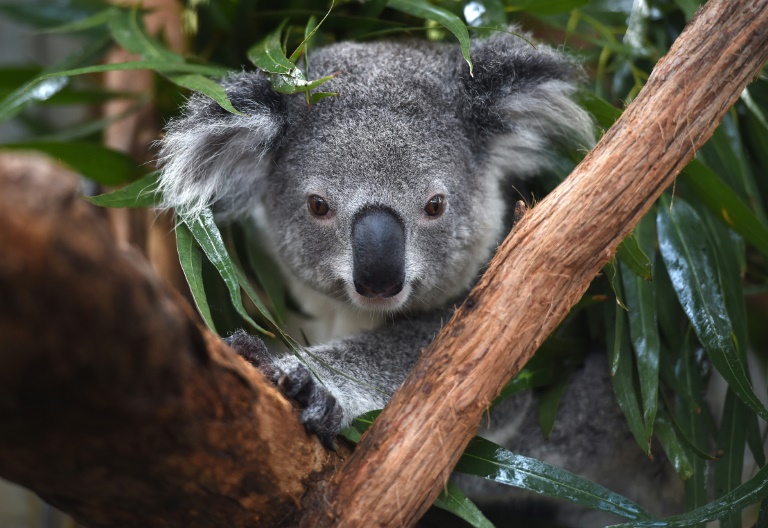
Australia officially listed koalas across a swathe of its eastern coast as “endangered” on Friday, with the marsupials fighting to survive the impact of bushfires, land-clearing, drought and disease.

Conservationists said koala populations had crashed in much of eastern Australia over the past two decades, warning that they were now sliding towards extinction.

Environment Minister Sussan Ley said she had designated koala populations as “endangered” to offer them a higher level of protection in New South Wales, the Australian Capital Territory and Queensland.

The koala, a globally recognised symbol of Australia’s unique wildlife, had been listed as “vulnerable” on the eastern coast just a decade earlier.

“We are taking unprecedented action to protect the koala,” the minister said, highlighting a recent government promise of Aus$50 million (US$36 million) to protect and recover koala habitats.

Environmentalists welcomed the koalas’ new status but condemned Australia’s failure to protect the species so far.

“Koalas have gone from no-listing to vulnerable to endangered within a decade. That is a shockingly fast decline,” said WWF-Australia conservation scientist Stuart Blanch.

“Today’s decision is welcome but it won’t stop koalas from sliding towards extinction unless it’s accompanied by stronger laws and landholder incentives to protect their forest homes.”

Conservationists said it was hard to give precise figures on koala populations in the affected eastern states.

But estimates by an independent government advisory body — the Threatened Species Scientific Committee — indicated that koala numbers had slumped from 185,000 in 2001 to just 92,000 in 2021.

– ‘Losing a national icon’ –

Alexia Wellbelove of the Humane Society International said east coast koalas could be extinct by 2050 if no action was taken. 

“We can’t afford any more clearing,” she said.

The Australian Conservation Foundation said its own research showed that the federal government had approved the clearing of more than 25,000 hectares of koala habitat since the species was declared vulnerable a decade ago.

“Australia’s national environment laws are so ineffective they have done little to stem the ongoing destruction of koala habitat in Queensland and NSW since the species was supposedly protected a decade ago,” said the foundation’s nature campaign manager, Basha Stasak.

“The extinction of koalas does not have to happen,” Stasak added.

“We must stop allowing their homes to be bulldozed for mines, new housing estates, agricultural projects and industrial logging.”

Australia’s koalas had been living on a “knife edge” even before the devastating “Black Summer” bushfires of 2019-2020 because of land-clearing, drought, disease, car strikes and dog attacks, said Josey Sharrad, wildlife campaign manager at the International Fund for Animal Welfare.

“We should never have allowed things to get to the point where we are at risk of losing a national icon,” Sharrad said.

“The bushfires were the final straw. This must be a wake-up call to Australia and the government to move much faster to protect critical habitat from development and land-clearing and seriously address the impacts of climate change.”

Australia warns koalas 'endangered' as numbers plunge

Australia officially listed koalas across a swathe of its eastern coast as “endangered” on Friday, with the marsupials fighting to survive the impact of bushfires, land-clearing, drought and disease.

Conservationists said koala populations had crashed in much of eastern Australia over the past two decades, warning that they were now sliding towards extinction.

Environment Minister Sussan Ley said she had designated koala populations as “endangered” to offer them a higher level of protection in New South Wales, the Australian Capital Territory and Queensland.

The koala, a globally recognised symbol of Australia’s unique wildlife, had been listed as “vulnerable” on the eastern coast just a decade earlier.

“We are taking unprecedented action to protect the koala,” the minister said, highlighting a recent government promise of Aus$50 million (US$36 million) to protect and recover koala habitats.

Environmentalists welcomed the koalas’ new status but condemned Australia’s failure to protect the species so far.

“Koalas have gone from no-listing to vulnerable to endangered within a decade. That is a shockingly fast decline,” said WWF-Australia conservation scientist Stuart Blanch.

“Today’s decision is welcome but it won’t stop koalas from sliding towards extinction unless it’s accompanied by stronger laws and landholder incentives to protect their forest homes.”

Conservationists said it was hard to give precise figures on koala populations in the affected eastern states.

But estimates by an independent government advisory body — the Threatened Species Scientific Committee — indicated that koala numbers had slumped from 185,000 in 2001 to just 92,000 in 2021.

– ‘Losing a national icon’ –

Alexia Wellbelove of the Humane Society International said east coast koalas could be extinct by 2050 if no action was taken. 

“We can’t afford any more clearing,” she said.

The Australian Conservation Foundation said its own research showed that the federal government had approved the clearing of more than 25,000 hectares of koala habitat since the species was declared vulnerable a decade ago.

“Australia’s national environment laws are so ineffective they have done little to stem the ongoing destruction of koala habitat in Queensland and NSW since the species was supposedly protected a decade ago,” said the foundation’s nature campaign manager, Basha Stasak.

“The extinction of koalas does not have to happen,” Stasak added.

“We must stop allowing their homes to be bulldozed for mines, new housing estates, agricultural projects and industrial logging.”

Australia’s koalas had been living on a “knife edge” even before the devastating “Black Summer” bushfires of 2019-2020 because of land-clearing, drought, disease, car strikes and dog attacks, said Josey Sharrad, wildlife campaign manager at the International Fund for Animal Welfare.

“We should never have allowed things to get to the point where we are at risk of losing a national icon,” Sharrad said.

“The bushfires were the final straw. This must be a wake-up call to Australia and the government to move much faster to protect critical habitat from development and land-clearing and seriously address the impacts of climate change.”

New Zealand Covid protest grows after police draw back

Protester numbers outside New Zealand’s parliament swelled Friday as police scaled back efforts to clear anti-vaccine demonstrators involved in violent clashes a day earlier.

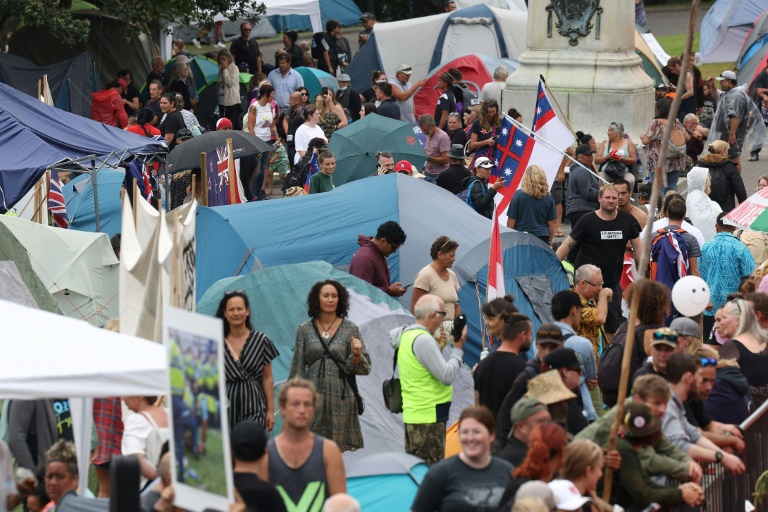
A festive mood prevailed at a makeshift tent settlement inhabitants have dubbed “Camp Freedom”, with music and dancing as police looked on from behind barricades.

It was a stark contrast to the fiery scenes Thursday, when a phalanx of officers attempted to evict the protesters, arresting 122 people and using pepper spray to quell scuffles.

Wellington police described the hands-off tactics as a “measured approach”, pointing to the presence of children among the crowd.

“Police are continuing to monitor and contain protest activity at parliament grounds,” Superintendent Corrie Parnell said in a statement.

“Police have identified a range of different causes and motivations among the protestors, making it difficult to open clear and meaningful lines of communication.”

Activists have been camped on the lawns of parliament for four days in a protest that began Tuesday as a copycat of a “Freedom Convoy” action by Canadian truckers in Ottawa.

The parliamentary precinct has been declared closed to the public but the measure has not been strictly enforced and the number of protesters on the lawns increased from about 250 to around 1,500 throughout Friday.

A protester named Carrie, who declined to give her surname, said the activists remained committed to their goal of ending vaccine mandates.

“The way the police handled us has shocked us all to the core,” she told AFP.

“What they did yesterday was way beyond any of our expectations. Brutal, absolutely brutal.”

New Zealand requires mandatory Covid vaccinations for people working in sectors such as health, law enforcement, education and defence, with those who refuse the jab facing the sack.

Proof of vaccination must also be shown to enter restaurants, sports events and religious services.

US, Asia allies meet to deepen bulwark against China

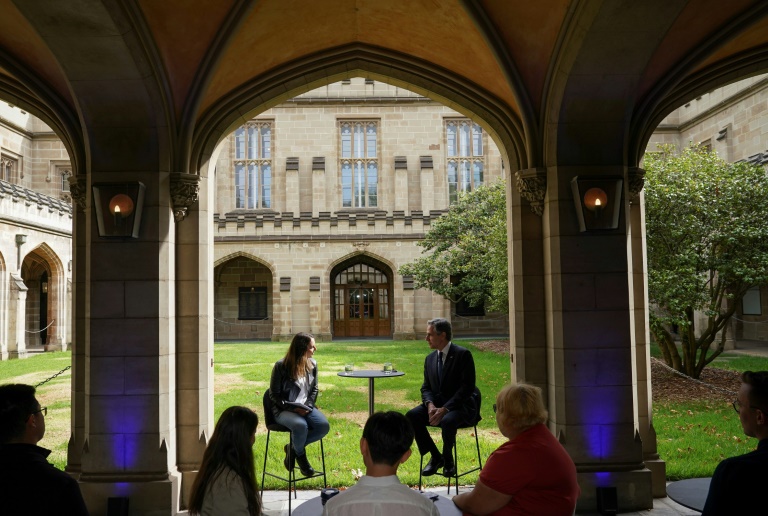
The top diplomats of the United States, Australia, Japan and India opened talks in Melbourne Friday on deepening their Quad alliance, hoping to blunt China’s expanding power across the Asia-Pacific region.

Australian Prime Minister Scott Morrison kicked off the day by highlighting the group’s importance in building cooperation among democracies, while making a thinly-veiled allusion to his country’s troubled relationship with Beijing.

“We live in a very fragile, fragmented and contested world,” he told the visiting officials.

“We stand up to those who would seek to coerce us,” he said.

Without mentioning China by name, Morrison said it was a “great comfort” that the three fellow Quad members understand “the coercion and the pressure that Australia has been placed under.”

US Secretary of State Antony Blinken said that even though Russia’s threat to Ukraine occupies Washington right now, the longer-term issue is China’s rising power.

“To my mind, there’s little doubt that China’s ambition over time is to be the leading military, economic, diplomatic and political power not just in the region but in the world,” he told The Australian newspaper on the eve of the talks.

– Tech, health, climate –

The Quad was first launched in 2007, but only took root a decade later after China aggressively projected its military power into the South China Sea, and following violent border clashes with India.

While the four held joint naval exercises in 2020 in the Bay of Bengal, the meetings in Melbourne are aimed at deepening cooperation across other fields like fighting Covid-19 and coordinating on critical information technology issues, including the global rollout of 5G telecommunications networks.

Blinken said they were seeking to develop and “affirmative vision” on a range of challenges, such as agreeing on technology standards, and cooperating on health issues and climate change. 

The Covid-19 pandemic has been central to giving the grouping greater meaning beyond its image of trying to “contain” China.

The four countries used the Quad framework to commit to distributing 1.3 billion vaccine doses, with more than 500 million already delivered, according to Payne.

As for Washington, the meeting is a chance to reaffirm its decision to make Asia and the Pacific the centrepiece of foreign and defense policy, even as the White House and Pentagon are currently consumed by the potential for a Russian invasion of Ukraine.

While Ukraine is “front and center” in Washington right now, Blinken said ahead of his arrival in Australia: “The world is a big place.”

“Our interests are global and you all know very well the focus that we put on the Asia-Pacific and the Indo-Pacific regions,” he said.

Musk 'confident' of Starship orbital launch this year

Elon Musk delivered updates on SpaceX’s efforts to develop its interplanetary Starship rocket on Thursday night, but stopped short of announcing a firm launch date for an orbital test or new  missions, despite considerable buildup ahead of the rare presentation.

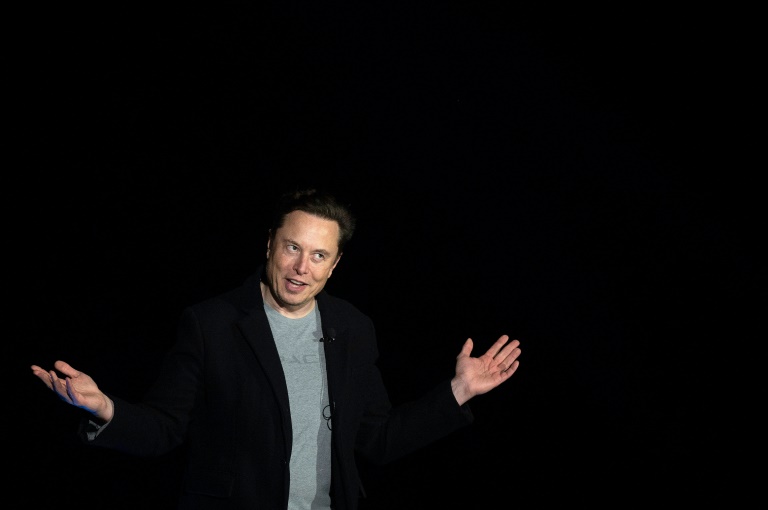
Addressing an audience at the company’s Starbase facility near Boca Chica, south Texas, the tycoon merely said: “I feel at this point highly confident that we’ll get to orbit this year,” while hinting at a potential pivot to launching from Florida if the company encounters regulatory hurdles.

Musk was speaking against the impressive backdrop of the spacecraft in its fully-stacked configuration, standing 394 feet (120 meters) tall, with a matte black upper-stage placed on a shimmering silver Super Heavy first-stage rocket. 

Together, they make the biggest spacecraft ever built: taller than even the Saturn V rockets that took astronauts to the Moon during the Apollo era. 

Made of stainless steel and designed to be fully reusable, Starship is also intended to be the world’s most powerful rocket, and will be capable of lifting up to 100 metric tonnes to Earth orbit.

SpaceX envisages the ship carrying crew and cargo to the Moon, Mars and beyond — and last year, NASA awarded the company a contract for a version of Starship to ferry astronauts on the Artemis program from lunar orbit to the surface.

– $10 million launches? – 

In his first detailed progress report on the project since 2019, Musk recapped his ultimate vision for colonizing Mars as a “life insurance” in case of catastrophe on Earth, and as the first step in expanding humanity’s footprint beyond the solar system.

The speech was peppered with dry humor, such as his “sales pitch” for Mars: “It’s going to be cramped, dangerous, difficult, very hard word, you might die” — though he eventually hopes to terraform the Red Planet. 

Musk also included some updates for fans, such as an illustration of how one Starship would be sent to refuel another on deep space voyages, and the thrust advantage and neater design of the latest generation of Raptor engines compared to the first iteration.

Each Starship booster is planned to have 33 Raptors, and a bottleneck in the production is expected to ease in the coming weeks, with as many as one engine manufactured per day by next month, said Musk.

He also revealed that within years the cost of launch could be as little as $10 million — a price point that could revolutionize the industry by making rockets attractive for commercial transportation purposes.

A flight to Singapore from the US is 20 hours “while in a rocket it would be less than an hour. So like 45 minutes or there abouts.”

Starship’s upper stage has already made several suborbital flights. After multiple tests that ended in impressive explosions, SpaceX finally succeeded in landing the spacecraft last May.

– Possible pivot to Florida –

But a far more ambitious orbital test is pending an environmental impact clearance from the Federal Aviation Administration.

The FAA said in a December release it would deliver a report by February 28.

Musk said that while he was optimistic of receiving approval, he was prepared to shift launch operations to the company’s launch site at the Kennedy Space Center in Florida, if it was held up. 

Former deepwater oil drilling rigs the company has acquired to convert into rocket launch and land sites could also come into play, he added.

Beyond exploration missions, Starship’s tremendous payload capacity could also be a boon for astronomers seeking to place bigger telescopes into space, while the US military has given SpaceX a five-year contract to demonstrate its capacity to whizz cargo around the world in ultra quick time. 

Japanese billionaire Yusaku Maezawa has contracted Starship for a journey around the Moon with a crew of artists, and Musk hinted there would soon be “future announcements that I think people will be pretty fired up about,” without divulging more.

Colombia eyes 200 tonnes of galleon gold

Colombia took a step Thursday toward recovering a long-lost Spanish wreck and its fabled riches, but it may be a rough ride as Spain and native Bolivians have also staked claims on the booty.

Long the daydream of treasure hunters worldwide, the wreck of the San Jose galleon was first located off Columbia’s coast in 2015, but has been left untouched as the government determines rules for its recovery.

Colombia was a colony of Spain when the San Jose was sunk, and gold from across South America, especially modern-day Peru and Bolivia, was stored in the fort of its coastal city, Cartagena, before being shipped back to Europe.

The Colombian government considers the booty a “national treasure” and wants it to be displayed in a future museum to be built in Cartagena.

According to a presidential decree released Thursday, companies or individuals interested in excavating the ship will have to sign a “contract” with the state and submit a detailed inventory of their finds to the government as well as plans for handling the goods.

The uber-loot, which experts estimate to include at least 200 tonnes of gold, silver and emeralds, will be a point of pride for Colombia, Vice President and top diplomat Marta Lucia Ramirez said in a statement.

Long the daydream of treasure hunters worldwide, the San Jose galleon was sunk by the British Navy on the night of June 7, 1708, off Cartagena de Indias. 

The San Jose was at the time carrying gold, silver and precious stones which were to be delivered from the Spanish colonies in Latin America to the court of King Philip V.

Only a few of the San Jose’s 600-member crew survived the wreck. 

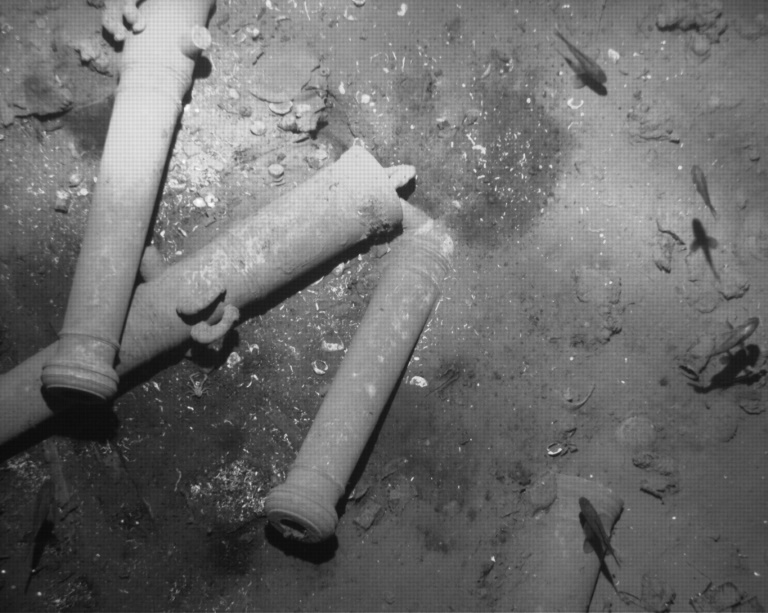
At the end of 2015, then-Colombian President Juan Manuel Santos announced the discovery of the exact location of the wreck, which was confirmed by the ship’s unique bronze cannons with dolphin engravings.

Colombia has said it will cost about $70 million to carry out a full salvage operation on the wreckage, which is at a depth of between 600 and 1000 meters (2000-3200 feet).

Spain says the wreck is its own, as a ship of state; and an indigenous group in Bolivia, the Qhara Qhara, says the treasure belongs to them, since their ancestors were forced to mine it from what was in the 1500s the world’s largest silver mine.

Tesla undertaking 4th car recall in two weeks

Tesla was recalling over a half a million US electric cars due to a “Boombox” feature that can drown out audible warnings for pedestrians, in the fourth recall made public in two weeks, records showed Thursday.

The automaker faces increasing scrutiny from American regulators, as watchdogs have accused Elon Musk’s firm of pushing safety limits. 

US authorities have set specific standards for the sounds that electric and hybrid vehicles must make, which are quieter than vehicles with internal combustion engines, in order to warn pedestrians.  

Yet the “Boombox” option launched by Tesla in late 2020, which allows custom sounds like music to be emitted from an outdoor speaker when the car is parked or moving, could interfere with that warning, the National Highway Traffic Safety Administration found. 

This “could increase the risk of a collision,” NHTSA said in a recall report dated February 4, which notes Tesla is not aware of any accidents caused by this problem.

The regulator said about 578,600 cars were potentially involved in the recall, which Tesla plans to solve by remotely updating its software rather than forcing owners to come to service centers. 

The agency sent an initial request for information to Tesla about “Boombox” back in January 2021 and then held several meetings with the manufacturer, which tried to defend the compliance of this option. 

But Tesla eventually agreed to disable the feature when the vehicle is in drive, reverse or neutral mode. 

The “Boombox” recall is the fourth for Tesla made public in the United States in a matter of weeks.

NHTSA announced on February 1 the recall of nearly 54,000 vehicles to end a drive-assist feature that allows Tesla cars in certain conditions to go through a stop sign without fully stopping.

Two days later it announced a recall of 817,143 vehicles to adjust the seatbelt warning system, which may not activate under certain conditions.

And on Wednesday, the agency announced a recall of 26,681 cars to correct a software error related to a valve in the heat pump that can affect the ability to defrost the windshield.

Tesla has long regularly performed remote software updates without necessarily notifying users or regulators.

But NHTSA has stepped up its actions against the company in recent months, including launching an investigation last summer after several crashes with emergency vehicles and requesting more information from the company.  

Prehistoric drum is top ancient find: British Museum

A carved stone drum unearthed in England is one of the most significant pieces of prehistoric art ever found in the country, the British Museum said Thursday.

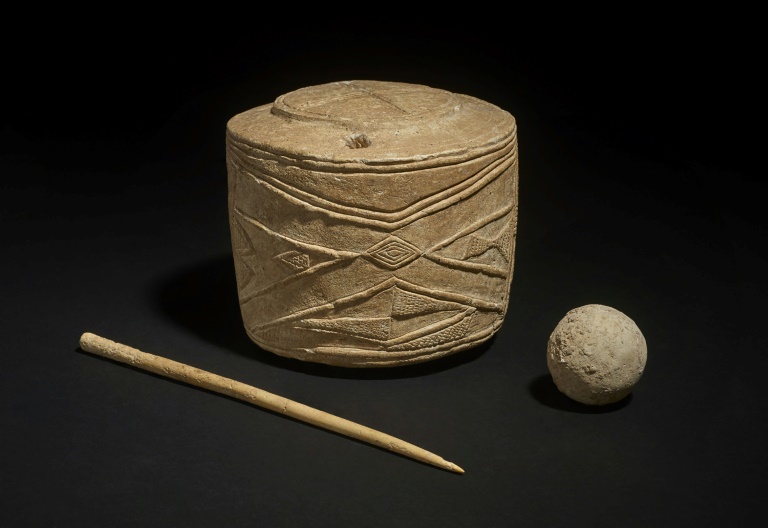
The 5,000-year-old drum carved from chalk is set to go on display for the first time in a major exhibition about the Neolithic site of Stonehenge and its historical context.

Extensive research into the drum, uncovered near a village in Yorkshire in northern England in 2015, has confirmed it is one of the most significant ancient objects ever found in the British Isles, the museum said.

“This is a truly remarkable discovery, and is the most important piece of prehistoric art to be found in Britain in the last 100 years,” said Neil Wilkin, curator of the exhibition “The World of Stonehenge”, which opens February 17.

The drum is “one of the most elaborately decorated objects of this period found anywhere in Britain and Ireland”, and its style echoes that of objects from Stonehenge and related sites, the museum said. 

Seemingly created as a sculpture or talisman rather than a functional musical instrument, the drum is one of only four known examples.

It was found alongside the grave of three children who were buried close together, touching or holding hands. The drum was placed just above the head of the eldest child, accompanied by a chalk ball and a polished bone pin.

The drum was found around 240 miles (380 kilometres) from Stonehenge near the village of Burton Agnes.

A similar ball and pins have been found in and near Stonehenge.

This suggests that communities across Britain and Ireland shared “artistic styles, and probably beliefs, over remarkable distances”, the British Museum said.

“Analysis of its carvings will help to decipher the symbolism and beliefs of the era in which Stonehenge was constructed,” said Wilkin.

The British Museum’s collection includes a group of three similar drums found in 1889 at the burial site of a single child around 15 miles (24 kilometres) away from the latest find.

The museum describes these three, known as the Folkton Drums, as “some of the most famous and enigmatic ancient objects ever unearthed in Britain”. 

Radiocarbon dating has revealed they were created at the same time as the first phase of construction of Stonehenge, between 3005 and 2890 BC. 

Close Bitnami banner
Bitnami