World

EU seeks to deploy border agency to Senegal

European Commissioner Ylva Johansson on Friday offered to deploy the EU’s border agency to Senegal to help combat migrant smuggling, following a surge in perilous crossings to Spain’s Canary Islands. 

At a news conference in the Senegalese capital Dakar, Johansson said the arrangement would mark the first time that the EU border agency Frontex would operate outside Europe. 

Should the Senegalese government agree, the commissioner added, the EU could send surveillance equipment such as drones and vessels, as well as Frontex personnel.

Deployed alongside local forces, the agents would “work together to fight the smugglers,” she said.

“This is my offer and I hope that Senegal’s government is interested in this unique opportunity,” said Johansson, the EU’s home affairs commissioner. 

The announcement comes amid a sharp jump in attempts to reach the Canary Islands — a gateway to the EU — as authorities have clamped down on crossings to Europe from Libya.

The Spanish archipelago lies just over 100 kilometres (60 miles) from the coast of Africa at its closest point.

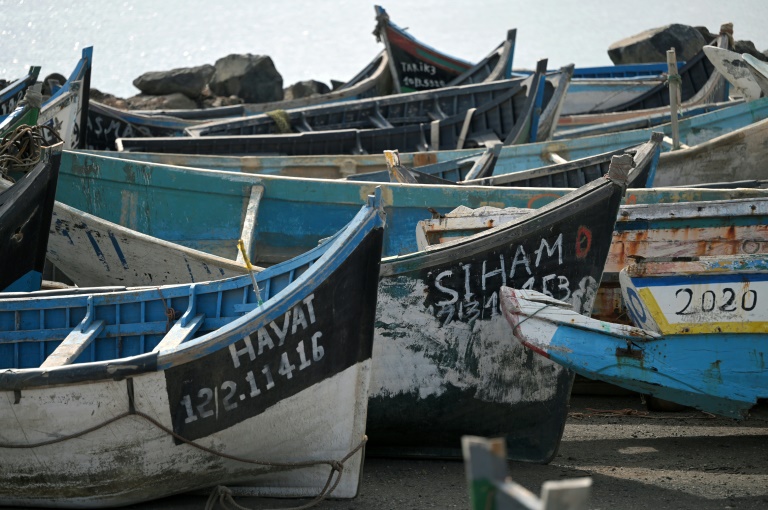
But the conditions in the open Atlantic are often dangerous, and would-be migrants often brave the trip in rickety wooden canoes known as pirogues. 

About 1,200 people died or went missing attempting the crossing in 2021, according to the UN’s International Organization for Migration (IOM). 

Spanish NGO Caminando Fronteras last month put the figure at over 4,400 people. 

Johansson also said on Friday that the 1,200-person figure was likely an underestimate. 

She added that she had discussed her Frontex proposal with Senegal’s armed-forces minister and foreign minister, and was due to continue talks with the interior minister on Friday. 

An agreement that would see Frontex agents deployed in Senegal could be finalised by the summer, she said.

EU Competition Commissioner Margrethe Vestager, who was also at the news conference, said a Frontex mission in Senegal could also help tackle illegal fishing.

Several top European Commission officials, including President Ursula von der Leyen, arrived in Senegal this week to prepare for a summit between the EU and the African Union on February 17-18.
Paris braces for Canada-style convoys against Covid rules

Thousands of protesters in convoys were heading to Paris from across France on Friday, with some hoping to blockade the capital in opposition to Covid restrictions despite police warnings to back off.

Inspired by Canadian truckers paralysing border traffic with the US, the French protesters have been setting off from Bayonne, Perpignan, Lyon, Lille, Strasbourg and elsewhere since Wednesday with the aim of converging on Paris by Friday evening.

They include many anti-Covid vaccination activists, but also people protesting against fast-rising energy prices that they say are making it impossible for low-income families to make ends meet.

“People need to see us, and to listen to the people who just want to live a normal and free life,” said Lisa, a retired 62-year-old, as she joined a convoy of over 1,000 vehicles leaving Chateaubourg in the western Britanny region.

Like many protesters, Lisa has been an activist in the “yellow vest” movement which erupted in 2018 over fuel prices, but then became a platform for many other grievances linked to economic hardship.

The yellow vests have sometimes clashed with police, but Lisa said she hoped that the protests on Friday would go off peacefully. “It would really annoy me if things got out of hand,” she told AFP.

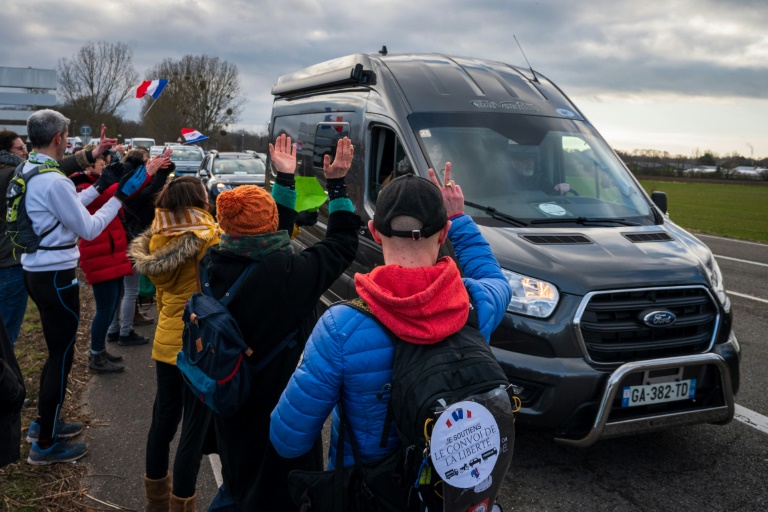
After spending a cold night in a parking lot, the drivers in Chateaubourg set off around 9:00 am (0800 GMT) in a long single file of trucks, passenger cars and campers, as sympathetic passers-by waved from bridges and wished them luck.

– ‘Population on our side’ –

Paris police have been instructed to deal “firmly” with any attempt to block the capital’s roads.

“If people want to demonstrate normally, they can,” Interior Minister Gerald Darmanin said late Thursday. “If they want to block traffic, we will intervene.”

The protesters meanwhile shared information about police deployment around Paris, often via the Telegram messaging service, and exchanged tips about the easiest access routes.

“It’s important that we don’t interfere with other people on the roads,” said one activist, Robin, on his way from Illkirch-Graffenstaden in the eastern Alsace region. “That way we’ll keep the population on our side, like they did in Canada,” he said.

Many demonstrators are planning to stay in Paris overnight, and then join one of the regular Saturday protests against the government’s vaccine pass.

Some then want to travel on to Brussels for a “European convergence” of protesters planned there for Monday.

The government has expressed some understanding for the protests, which its spokesman Gabriel Attal said were due to French people’s “fatigue and weariness” after long-lasting Covid restrictions.

But, he said Friday, some politicians were trying to hijack the movement for their own aims.

“They are looking to gain political capital from this weariness and this fatigue in order to launch their own movements,” Attal said, singling out Florian Philippot, a far-right candidate in April’s presidential election.

Another hopeful for the presidential vote, left-wing firebrand Jean-Luc Melenchon, said Thursday he could give the movement his blessing.

“Yes, of course I could support them,” he told the France 2 broadcaster, adding he would first see “how all this takes shape”.

Another candidate, the Green party’s Yannick Jadot, said he was against the demonstration. “I perfectly understand the government not wanting Paris to be blockaded,” he said.

The government has meanwhile been announcing an easing of Covid rules, with indoor mask wearing set to go at the end of this month, except on transport.

Attal also said this week that the vaccine pass could be scrapped in late March or early April, which would be in time for the first round of elections on April 10 where President Emmanuel Macron is expected to seek a new term.

burs-jh/sjw/lc

Iranians get behind wheel to mark Islamic revolution

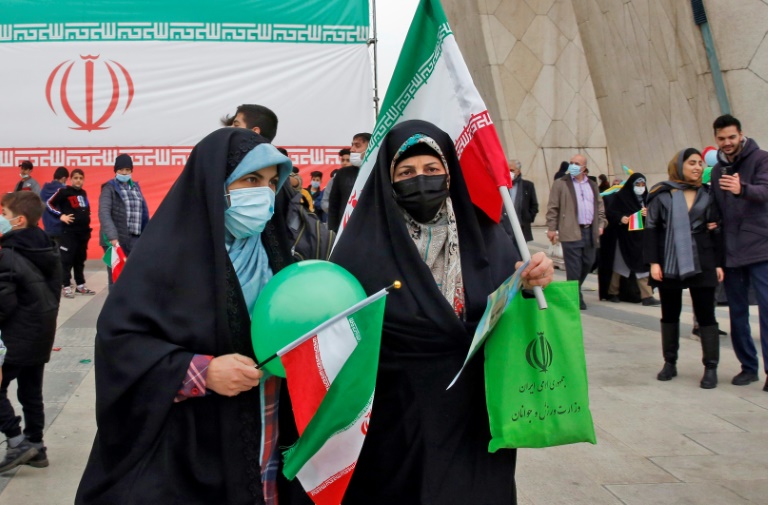
Thousands of Iranians drove through Tehran on Friday to mark the 43rd anniversary of the country’s Islamic Revolution, staying in vehicles rather than marching on foot amid Covid restrictions.

Due to the pandemic, state television said this year, as the previous year, there should be “no gathering or marching” by those celebrating the 1979 overthrow of the shah’s regime.

Instead, people travelled by car, motorcycle and bicycle, to converge on the capital’s iconic Azadi Square, despite chilly temperatures.

Some had painted their cars in the red, white and green colours of the Iranian flag, while others chanted slogans of “Death to America” and “We will resist until the end” from windows as they drove by.

A number of US flags were also burnt by people chanting “We will not surrender” at Azadi Square, an AFP photographer said.

State television broadcast footage of similar rallies in other major cities, including Isfahan, Mashhad, Tabriz and Shiraz.

Demonstrators bore portraits of Iran’s supreme leader Ayatollah Ali Khamenei as well as the late Ayatollah Ruhollah Khomeini, founder of the Islamic republic, and revered general Qasem Soleimani, killed by a US air strike at Baghdad airport in January 2020.

This year’s anniversary is the first since ultraconservative President Ebrahim Raisi took office in August last year.

The celebrations mark the day that the shah’s government fell after Shiite cleric Khomeini returned from exile.

Shah Mohammad Reza Pahlavi had already fled Iran after months of protests against his rule.

The coronavirus has infected over 6.7 million people in Iran and killed more than 133,000, according to official figures.

Iran, which has a population of around 85 million, is the Middle East country hardest hit by the pandemic.

Nearly 55 million people have so far received two doses of anti-Covid vaccines.

Alongside the pandemic, Iran’s economy has been battered by sanctions reimposed by the United States since 2018, when then president Donald Trump unilaterally withdrew from a landmark nuclear deal.

Iran is currently engaged in negotiations with Britain, China, France, Germany and Russia directly and with the United States indirectly to revive the deal formally called the Joint Comprehensive Plan of Action, or JCPOA.

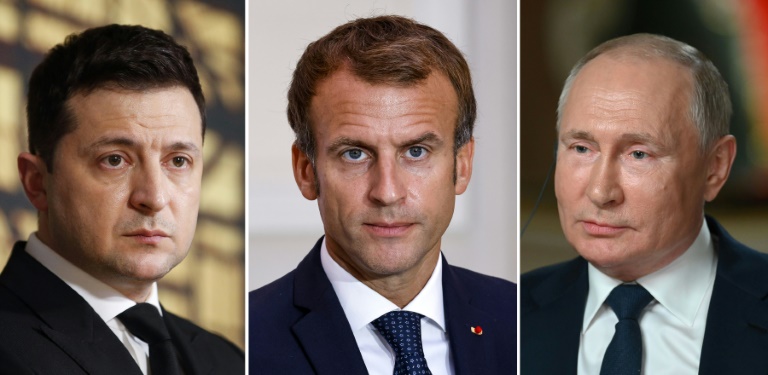
Macron kept at distance from Putin after refusing Covid test

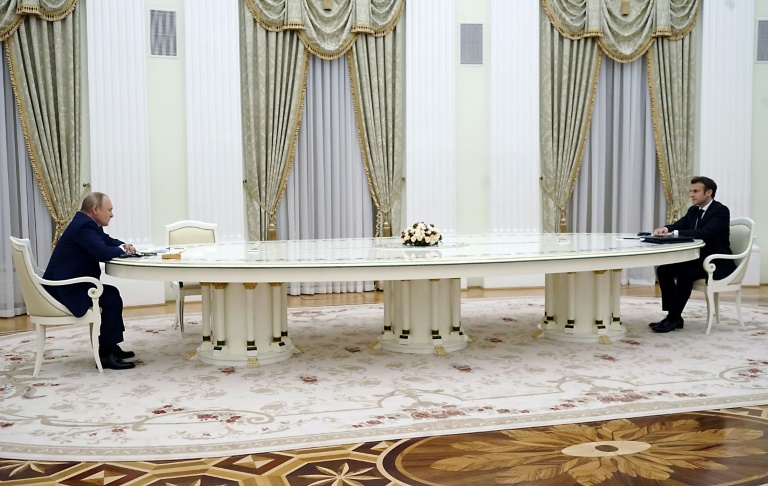
Russia on Friday said French President Emmanuel Macron was made to sit at an enormously long table for his talks with Vladimir Putin because he refused to take a Kremlin-performed Covid test.  

The leaders sat at opposite ends of an unusually long table in the Kremlin on Monday, when Macron came to Moscow with a mission to defuse fears of a Russian invasion of Ukraine. 

The table drew much ridicule online, and raised more eyebrows when Putin sat at a tiny table with the Kazakh president, a close ally, three days later.

Putin’s spokesman Dmitry Peksov said the decision to subject Macron to the huge table was taken after the French leader refused to take a Covid test performed by the Kremlin’s medics. 

“Talks with some are being held at a long table, the distance (across the table) is about six meters,” Peskov said. 

“It is linked to the fact that some follow their own rules, they don’t cooperate with the host side,” he said. 

In such cases, he said, the Kremlin has to take “additional sanitary protocol on protecting the health of our president and his guests.”

He said the decision on who is subjected to the long table is not political. 

“There is no politics here and this in no way interferes with negotiations,” Peskov said. 

He said that if medics from both sides of diplomatic meetings cooperate, then “Putin communicates with his guests directly, sitting very close and shaking hands.”

A source in Macron’s entourage told AFP that the French president “did everything as he had to as always when he travels.”

Without going into full details, a French presidential official, who asked not to be named, confirmed that the issue has come about over the conditions of the PCR test demanded by the Russian side.”

Hungarian Prime Minister Viktor Orban and Iranian President Ebrahim Raisi were also subjected to the long-table diplomacy, made to sit at a distance from Putin when they visited earlier this year.

Putin and Orban also drank champagne while standing at opposite ends of a large carpet in the Kremlin. 

The Kremlin has gone to extreme lengths to protect 69-year-old Putin, who is vaccinated with Russia’s home-grown Sputnik V, from being infected with Covid. 

While social distancing has been lax in many places in Moscow, the long-time Russian leader has been extremely careful with Covid. 

Under Russia’s current Covid rules, foreigners travelling to Russia are required to take a PCR test before a flight to the country but do not have to take one on arrival.

Paris braces for Canada-style 'Freedom Convoys'

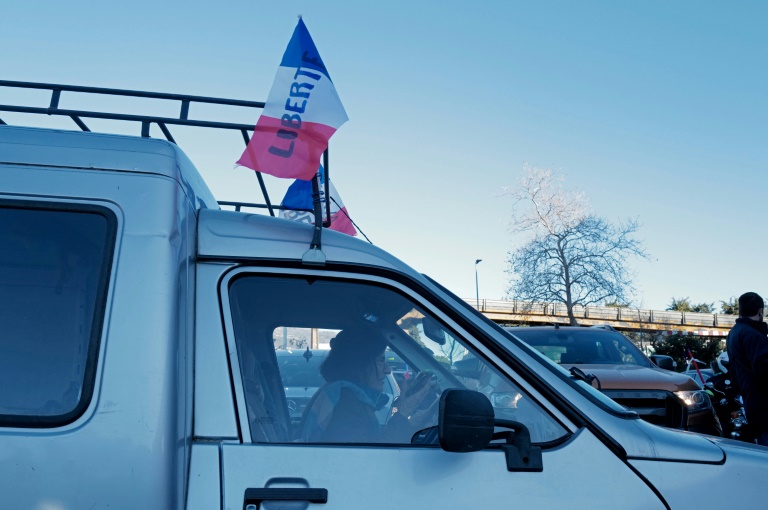
Thousands of protesters in “Freedom Convoys” were heading to Paris from across France on Friday, hoping to blockade the capital in opposition to Covid restrictions despite police warnings to back off.

Inspired by Canadian truckers paralysing border traffic with the US, the French protesters have been setting off from Bayonne, Perpignan, Lyon, Lille, Strasbourg and elsewhere since Wednesday with the aim of converging on Paris by Friday evening.

They include many anti-Covid vaccination activists, but also people protesting against fast-rising energy prices that they say are making it impossible for low-income families to make ends meet.

“People need to see us, and to listen to the people who just want to live a normal and free life,” said Lisa, a retired 62-year-old, as she joined a convoy of over 1,000 vehicles leaving Chateaubourg in the western Britanny region.

Like many protesters, Lisa has been an activist in the “yellow vest” movement which erupted in 2018 over fuel prices, but then became a platform for many other grievances linked to economic hardship.

The yellow vests have sometimes clashed with police, but Lisa said she hoped that the protests on Friday would go off peacefully. “It would really piss me off if things got out of hand,” she told AFP.

After spending a cold night in a parking lot, the drivers in Chateaubourg set off around 9:00 am (0800 GMT) in a long single file of trucks, passenger cars and campers, as sympathetic passers-by waved from bridges and wished them luck.

Paris police have been instructed to deal “firmly” with any attempt to block the capital’s roads.

“If people want to demonstrate normally, they can,” Interior Minister Gerald Darmanin said late Thursday. “If they want to block traffic, we will intervene.”

The government has expressed some understanding for the protests, which its spokesman Gabriel Attal said were due to French people’s “fatigue and weariness” after long-lasting Covid restrictions.

But, he said Friday, some politicians were trying to hijack the movement for their own aims.

“They are looking to gain political capital from this weariness and this fatigue in order to launch their own movements,” Attal said, singling out Florian Philippot, a far-right candidate in April’s presidential election.

Another hopeful for the presidential vote, left-wing firebrand Jean-Luc Melenchon, said Thursday he could give the movement his blessing.

“Yes, of course I could support them,” he told the France 2 broadcaster, adding he would first see “how all this takes shape”.

Another candidate, the Green party’s Yannick Jadot, said he was against the demonstration. “I perfectly understand the government not wanting Paris to be blockaded,” he said.

burs-jh/tgb/spm

Double trouble: Fears of violence over Libya's 2 PMs

Libyans found themselves with two prime ministers on Friday, raising the spectre of renewed violence in a country where elites have ignored the wishes of citizens to choose their leaders, analysts say.

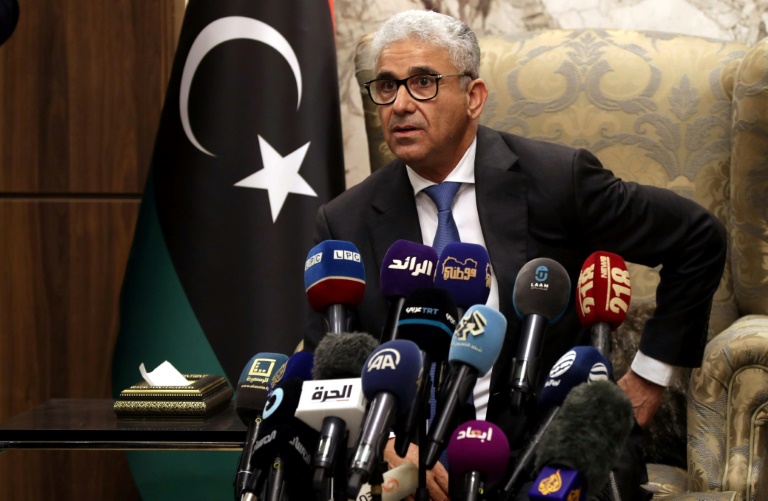
After weeks of manoeuvering since December 24 elections were indefinitely postponed, the House of Representatives in the country’s east on Thursday picked former interior minister and ex-fighter pilot Fathi Bashagha to replace interim prime minister Abdulhamid Dbeibah.

But Dbeibah, a construction tycoon appointed a year ago as part of United Nations-led peace efforts, has vowed only to hand power to an elected government.

Peter Millett, a former British ambassador to the country, told AFP the main division now “is between the Libyan people — who want elections — and the political elite, who don’t.”

He noted that more than two million Libyans, out of a total population of seven million, had collected voter cards last year, showing a desire to pick new representatives in December when both legislative and presidential polls were supposed to be held.

“The motivation of many MPs is to hang on to jobs and privileges rather than allow for a smooth process leading to elections,” Millett said.

It’s not the first time the oil-rich North African country has found itself with two premiers.

Torn apart by a decade of strife since a 2011 NATO-backed uprising that toppled dictator Moamer Kadhafi, Libya had two rival heads of government between 2014 and 2016.

The UN has been working to reunite the country’s divided institutions since the end of the last major fighting in 2020, but many analysts have accused the entrenched political elite of blocking reconciliation efforts.

– Militias –

The country’s infrastructure is ruined and its economy battered, meaning that for normal Libyans, the stakes couldn’t be higher.

“The cost of living is obscene,” said Abdul Mawla al-Kaseh, a resident of Shahat in northeastern Libya.

Salem Bakkar, also from Shahat, said it doesn’t matter who heads the government as long as they “stress the importance of reconciliation and urge the holding of elections.”

Libya has seen months of relative stability since a landmark October 2020 ceasefire which formally ended eastern military chief Khalifa Haftar’s bid to seize by force the capital Tripoli in the west.

But a patchwork of local militias, with foreign backing and linked to political figures, continue to vie for control.

Dbeibah and his unity government were appointed with a mandate to steer the country to the polls, which were eventually derailed by differences over their legal basis and contentious candidates.

That left question marks over the UN’s roadmap.

The eastern-led parliament — whose own mandate ended in 2015 — argued that Dbeibah’s administration was past its sell-by date, and stepped up efforts to remove him.

With Bashagha now challenging his power, backed by Haftar’s forces, some analysts fear a return to conflict. 

Yet that could look very different from the previous rounds of violence fuelled by the country’s geographic divisions.

“There really isn’t an East-West division as there was a year ago,” said Amanda Kadlec, a former member of the UN panel of experts on Libya. 

“What is potentially dangerous is violence in Tripoli, as Bashagha and Dbeibah both have deep connections across western Libya,” she added.

Millett also warned of “potential instability in Tripoli” and said: “The international community should aim for a clear and transparent, process that sets out a clear roadmap to elections.”

– ‘A lot can happen’ –

The UN said Thursday it still recognised Dbeibah’s administration.

But on the ground, the delicate balance of power could easily shift, Kadlec said.

“The militias will move with whomever they perceive as having power,” she said.

Kadlec added that armed groups backing Dbeibah could easily shift behind Bashagha, providing he is “willing to give them positions in government, keep paying their salaries and giving them weapons”.

Claudia Gazzini, senior Libya analyst with the International Crisis Group, wrote on Twitter that the parliament was set to hold a vote of confidence on Bashagha’s proposed cabinet two weeks from now. 

“As recent events in Libya showed us, a lot can happen in two weeks,” she said.

Just hours before the parliamentary vote to replace him, gunmen in Tripoli fired on Dbeibah’s convoy in Tripoli. 

The interior ministry said nobody was hurt — but there are fears it could be the opening volley of another ruinous battle.

NY Times pulls 'Singapore curry' video after backlash

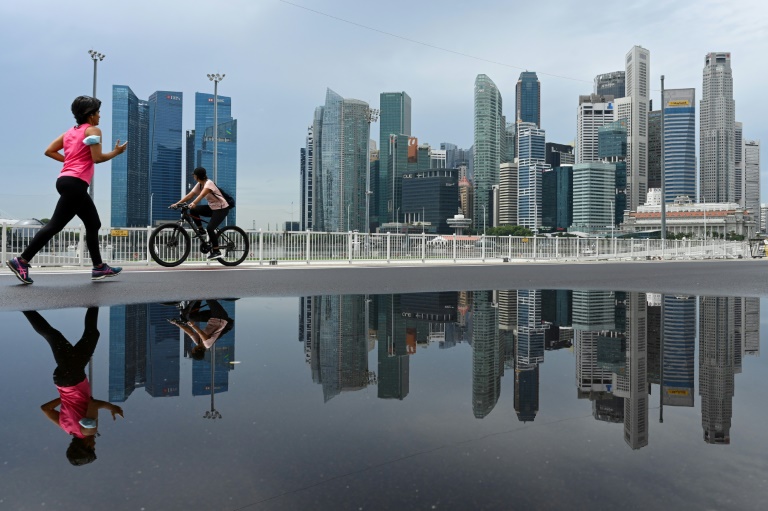
The New York Times pulled a video Friday showing a Taiwan-based writer making a “Singaporean chicken curry” after furious critics in the city-state said it resembled sewage rather than a local dish.

Singaporeans are fiercely proud of their culinary traditions, which fuse influences from the country’s multi-ethnic population, and are sensitive to botched attempts by outsiders to portray their cherished dishes. 

The controversy began when the Times posted a video this month on its “nytcooking” Instagram account showing Clarissa Wei, a Taipei-based American freelance journalist, demonstrating how to make a “Singaporean chicken curry”.

Social media in the city-state lit up with anger, with critics saying the end product looked like filthy drain water rather than an authentic local curry. 

“I’m sorry but what even is this? As a Singaporean, I’ve never seen any version of chicken curry that looks like this from any of the major ethnic groups,” one comment on social media said.

Dubbed “Currygate” by the local media, the saga received non-stop critical coverage for days before the US outlet finally bowed to pressure and pulled the video. 

“After hearing your feedback, we’ve removed the video,” said a message on the “nytcooking” account, which has 3.4 million followers. 

The video accompanied an article that Wei had written for the Times about the varied food enjoyed by Singaporeans during Lunar New Year celebrations. 

Singaporean Shila Das contributed a recipe for chicken biryani for the piece, but the article split the recipe into two parts — one called “Nasi Biryani” and the other “Singaporean Chicken Curry”.

It was the curry recipe that Wei cooked in the video. 

The Times conceded on Instagram that “the video demonstration didn’t faithfully follow the recipe” contributed by Das.

Das, who received hate mail after the video was uploaded, welcomed the decision to remove it. 

“It is long overdue,” she was quoted as saying in Singapore’s Straits Times newspaper.

US silent on whether Macron's Russia visit helped ease Ukraine crisis

The French president’s visit to Russia this week drew a chorus of cautiously optimistic comments about averting an invasion of Ukraine but the United States has stayed conspicuously reticent about the diplomatic mission.

Since Emmanuel Macron met Monday with President Vladimir Putin to try to defuse the crisis on the Russia-Ukraine border, US officials have either remained silent or even sounded skeptical about what European countries have called progress in averting war.

US officials have openly expressed doubt about what Macron said were assurances he obtained from Putin to the effect that there will be no further Russian escalation.

Russia now has more than 100,000 troops and a vast array of weaponry and other material assembled on the border with its pro-Western neighbor, with the US and European countries fearing it could invade. 

“Certainly, if there was diplomatic progress, we would welcome that but we will believe it when we see it with our own eyes at the border,” White House press secretary Jen Psaki said Tuesday while major US news outlets highlighted statements from the Kremlin that could temper France’s upbeat tone.

The day after the Macron trip, as if to downplay any promise Russia may have made to France, the Pentagon said Russia continued to beef up its forces on the border.

On Thursday, Moscow rolled its tanks across Belarus for live-fire drills that drew an ominous warning from NATO. Russia also sent six warships through the Bosphorus for planned naval drills on the Black Sea and the neighboring Sea of Azov.

Kyiv has condemned both actions. 

Deputy Secretary of State Wendy Sherman told MSNBC on Thursday that major military maneuvers launched in Belarus by that country’s forces and others from Russia amount to “in our view, an escalation, not a de-escalation.” 

– Coordinated messages –

Washington at first largely avoided even commenting on Macron’s visit, saying it wanted to hear directly from the French president. 

That partially changed on Wednesday when President Joe Biden spoke by telephone with Macron and their foreign ministers followed on Thursday. But US statements released afterward said very little.

A White House communique simply noted the two leaders talked about Macron’s meetings in Russia and also Ukraine. 

The State Department did not even allude to the Macron visit. It referred more broadly in a statement to “joint efforts by NATO Allies, EU partners, G7 members, and other partners to address Russia’s continued military build-up on Ukraine’s borders.”

Still, the United States insists there is unprecedented coordination with its allies in this crisis, and French and other European diplomats readily agree: Biden and Macron have spoken on the phone three times in eight days.

“The United States welcomes these initiatives because they allow for sending more messages to Moscow, insofar as they are coordinated beforehand and there will be no dissonance among allies,” said Pierre Morcos, a French researcher at the Center for Strategic and International Studies in Washington.

Western countries are united in the threat of severe economic sanctions against Russia if it does invade Ukraine, although, Morcos said, “Paris tries to stress the diplomatic route and invest all it can in it.”

“For now, the United States has cautiously supported Macron’s effort at diplomacy. But skepticism runs high, as Washington believes Putin is determined to invade either way,” wrote Celia Belin, a French researcher at the US think tank Brookings Institution.

In an article published Thursday on the website of the journal Foreign Affairs, Belin said that “in contrast to the United States and other Western powers, Macron has suggested that Russia is ‘legitimate’ in stating that its security needs should be discussed.”

She said this reflects a French desire for renewed dialogue with Russia and a retooling of Europe’s security architecture so it relies less on the United States.

But Macron, Belin said, “must tread lightly in order not to appear to be opening a rift among allies at a time when unity is the best deterrence against Russia.”

Turbine 'torture' for Greek islanders as wind farms proliferate

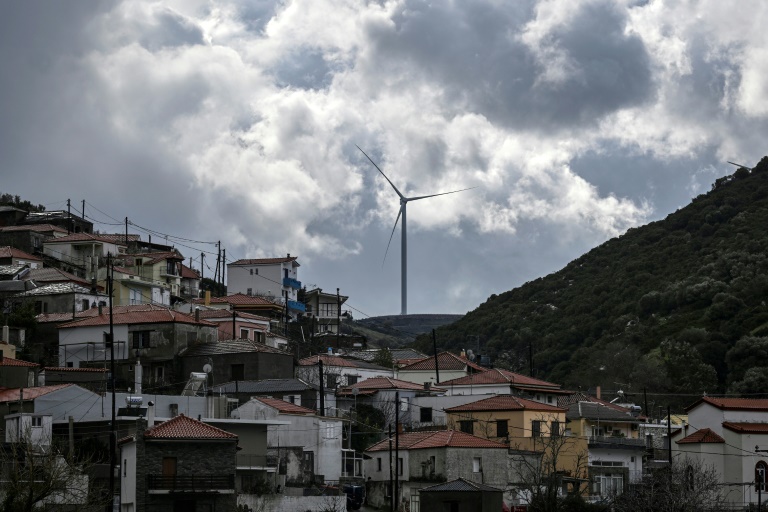
Until a few years ago, Agii Apostoli was a picturesque seaside village on the eastern coast of Evia, drawing a modest income from tourism and fishing.

Now it is ringed by towering wind turbines whose night lights and whirring sounds are tantamount to daily “torture”, locals say.

“Longterm visitors ask us, why did you allow this crime to take place?” laments Stamatoula Karava, a local employee involved in a local cultural association.

With their aviation lights flashing through the night in the surrounding hills, the turbines “have completely ruined the view,” she says.

Evia, 80 kilometres (50 miles) east of Athens and Greece’s second largest island after Crete, was among the first of the country’s regions to host wind farms some two decades ago.

But they have since mushroomed, mainly in the more sparsely populated south of the island, environment groups say.

The municipality of Karystos alone, with an area of 672 square kilometres, has more than 400 turbines, some of them along the area’s main road.

The oldest ones have now fallen into disuse, yet there are no plans to remove them and recycle their parts, says Chryssoula Bereti, who chairs the Karystos anti-wind farm front.

“It’s a scandal,” she fumes.

In line with EU clean energy targets, Greece has reduced its once-overwhelming reliance on lignite for electricity production to around 10 percent currently.

Forty percent of Greek power plants are now gas-fired and 30 percent run on renewable resources, of which 18 percent are wind turbines.

Hydroelectric plants and imports account for the remainder. 

According to the Regulatory Authority for Energy (RAE), Greece’s power production watchdog, the maximum capacity of wind turbines in the country increased more than sixfold between 2019 and 2021 to 8,205 MW.

With its propensity for high winds, Evia is a natural location for wind farms, notes RAE chairman Athanasios Dagoumas.

But critics say that this expansion has gone too far.

“Wind turbines have been installed on mountain peaks, in forests, near archaeological sites, on islands, in protected habitats… it’s as if energy production is the only possible activity in this country”, says Dimitris Soufleris, a lawyer and spokesman of the environmental association of the Evia town of Kymi.

“We cannot have so many wind farms in Greece,” he told AFP.

– ‘We can’t sleep’ –

In past months, protests against wind farm development have been held in Agrafa, central Greece, as well as the islands of Andros, Skyros and Tinos.

Soufleris notes that another 18 turbines are scheduled to be installed near Agii Apostoli. 

Nikos Balaskas, a local engineer whose house in Agii Apostoli is less than 400 metres (450 yards) from the nearest wind turbine, has sued the company.

“As an engineer, I’m not opposed to green energy. But there have to be standards. This is torture, we can no longer sleep for the noise,” he said.

There are similar concerns in the nearby coastal town of Styra, where another 14 wind turbines are to be located.

“This is going to cause enormous damage to our region,” says local hotel chairwoman Afroditi Lekka, noting that thousands of hikers visit the area annually.

In response to the mounting criticism, the conservative government of Prime Minister Kyriakos Mitsotakis last month announced that six mountain ranges in central Greece, the Peloponnese, Crete and the island of Samothrace would be given additional protection status against future energy infrastructure development.

“Planned licences in these areas were withdrawn,” says RAE’s Dagoumas.

Similar steps have also been taken in the north of Evia, which was devastated by wildfires this summer, he adds.

RAE’s Dagoumas notes in the past two years solar parks have overtaken wind farm investments owing mainly to “the implementation of a new automatic system” that facilitates the application for the investors and lower average cost.  

“The wind farms cannot been implemented everywhere, it has to be high wind capacity, for the photovoltaics there is much more space for them”, he says.

Close Bitnami banner
Bitnami