World

Germany taps Greenpeace chief Morgan as first climate envoy

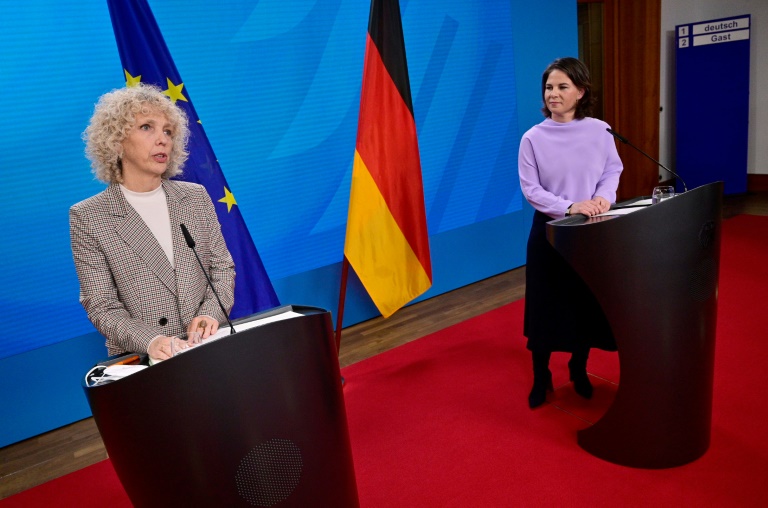
Germany’s foreign minister on Wednesday unveiled former Greenpeace chief Jennifer Morgan as her special climate envoy, as part of a pledge to put the battle against global warming “at the top” of the diplomatic agenda.

US-born Morgan, 55, who had been co-leader of Greenpeace International since 2016, will be the first person to hold the newly created role in Europe’s top economy. 

The eye-catching appointment comes as Germany’s two-month-old coalition government, led by Social Democrat Chancellor Olaf Scholz, aims to pursue more global cooperation against climate change.

Foreign Minister Annalena Baerbock, from the ecologist Green party, introduced Morgan as “the face of Germany’s international climate policy”.

“Even in our foreign policy we are putting the climate crisis where it belongs: at the top of the agenda,” Baerbock told reporters after Scholz’s cabinet approved Morgan’s appointment.

The appointment caused a stir in Germany, with supporters hailing it as a coup for Baerbock while critics accused the minister of blurring the line between lobbying and governing.

Morgan’s US nationality also drew scrutiny, which Baerbock countered by saying Morgan was in the process of applying for German citizenship and that it suited the foreign ministry to have international staff.

The new role will see Morgan work as a special representative for international climate policy initially and as state secretary in the foreign ministry once she has acquired German citizenship.

Morgan said “time is running out” to limit global warming to 1.5 degrees Celsius, requiring “international cooperation like we have never seen before”.

After 30 years of environmental activism, Morgan said Germany’s foreign ministry was where she could now “make the biggest difference”.

Among Morgan’s key tasks will be preparing Germany for global climate conferences like the COP27 in Egypt in November.

The German government has also pledged to use its G7 presidency this year to create a “climate club” of leading economies. 

The aim is to agree common climate protection standards and avoid competitive disadvantages as countries transform their industries to reach carbon neutrality.

Germany itself is planning massive investments to green its economy, including by scaling up the use of renewable energy, to achieve net-zero emissions by 2045.

The Greens’ Robert Habeck, who heads Germany’s new “super ministry” of economy, energy and climate protection, warned last month that the country had a “gigantic” task ahead.

– ‘Radical views’ –

Karsten Smid, a climate and energy campaigner for Greenpeace in Germany, congratulated Morgan on Twitter. “We will miss you,” he said. 

Thomas Silberhorn, a lawmaker from the opposition CSU conservative party, condemned the appointment.

“The government apparently has a problem differentiating between government, activists and lobbyists,” he told German media.

Lawmaker Lukas Koehler from the pro-business FDP, the other junior partner in Scholz’s three-way coalition, told the Handelsblatt daily that Morgan’s hiring had raised eyebrows given her “radical views” in the past.

Over three decades in the climate action arena, Morgan has developed a reputation as an uncompromising champion of peoples and nations worst affected by global warming and least able to protect themselves against its ravages.

She has attended every UN climate summit since 1995, and has close ties to US climate envoy John Kerry and EU Commission vice president Frans Timmermans.

Prior to becoming head of Greenpeace International alongside Bunny McDiarmid in 2016, Morgan worked for the Climate Action Network, WWF’s global climate change programme and the World Resources Institute, among others.

Greenpeace drew controversy in Germany last year when a protester parachuted into a Munich stadium during a Euro 2020 football match, injuring two people. It later apologised for the botched stunt.
Madagascar cyclone toll rises to 80

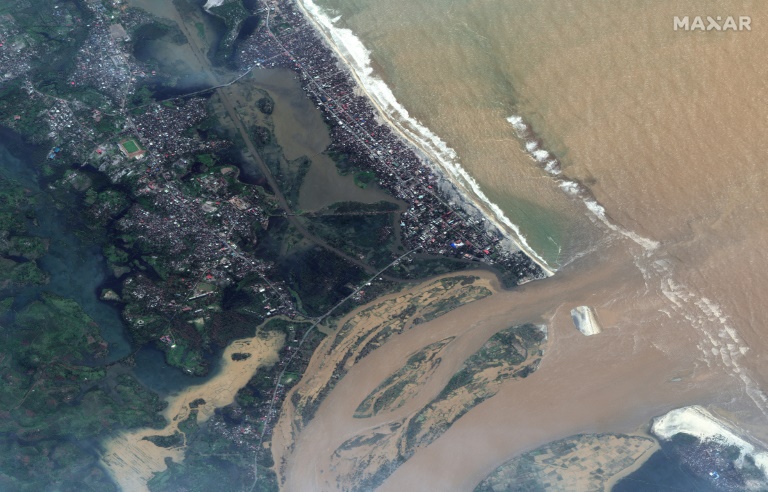
The death toll from Tropical Cyclone Batsirai has risen to 80, Madagascar’s authorities said Wednesday, releasing data from the regions hardest-hit by the storm that left bodies buried under their collapsed homes.

The National Office for Risk and Disaster Management (BNGRC) said the toll had jumped from 30 since Tuesday, with 60 of the dead found in Ikongo district, near the east coast of the Indian Ocean island nation.

The BNGRC said that Batsirai, which made landfall on the weekend, had left 94,000 people in need of emergency assistance and forced 60,000 from their homes.

“It’s devastation here,” said Brunelle Razafintsiandrofa, a lawmaker from Ikongo who spoke to AFP by phone. 

“Most of the victims died after their homes collapsed.”

Many NGOs and UN agencies have begun to deploy resources and teams to help the victims of the cyclone which brought heavy rain and winds of 165 kilometres (102 miles) per hour.

France sent 60 emergency workers to help set up facilities for purifying drinking water, and to fly drones to assess damage in areas that are difficult to reach even at the best of times. 

The tropical cyclone hit Madagascar on Saturday night, on a 150-kilometre long, sparsely populated and agricultural eastern coastal area. 

As the cyclone moved inland, it caused flooding that ravaged rice fields in the country’s central “breadbasket”, raising fears of a humanitarian crisis. 

– Food security ‘seriously affected’ – 

German experts have arrived in the country, one of the poorest on the planet, to “support the humanitarian response in the Batsirai passage areas”, the BNGRC said.

Work is underway on the 20 roads and the 17 bridges that were cut and had isolated villages, it added.

“We know for sure that rice fields, that rice crops will be damaged, will be lost,” said Pasqualina DiSirio, director of the World Food Program in the country.

“This is the main crop for Malagasy people and they will be seriously affected in food security in the next three to six months if we don’t do something immediately.”

The UN agency distributed hot meals in Manakara, one of the most affected areas. 

Numerous aid organisations, including Action Against Hunger, Handicap International, Save the Children and Medecins du Monde, were mobilised ahead of the cyclone, organising equipment and medicines. 

Alongside the aid provided by the government, they provided assistance to the victims: food, primary health care and the distribution of kitchen equipment, blankets, hygiene products.

Some 77 percent of Madagascar’s 28 million people live below the poverty line, and the latest blow comes during a severe drought in the south which has plunged more than a million people into acute malnutrition, some facing famine.

Madagascar was still picking up the pieces after Tropical Storm Ana affected at least 131,000 people across the island late last month, with most of the 55 deaths occurring in the capital Antananarivo. 

Ana also hit Malawi, Mozambique and Zimbabwe, causing dozens of deaths.

England could end Covid isolation requirement by March: Johnson

England will scrap the legal requirement to self-isolate after testing positive for Covid-19 later this month if infection levels remain stable, Prime Minister Boris Johnson unexpectedly announced Wednesday.

The proposed move would be one of the most dramatic easings of coronavirus rules taken by any country so far in the pandemic, as Johnson doubles down on a strategy of trying to “live with Covid”. 

However it is likely to prove controversial, with health experts warning much of the world still needs to be vaccinated and UK opposition politicians asking whether the government’s scientific advisers support the planned change. 

Johnson, dogged by revelations of apparent breaches of the Covid rules at Downing Street that have led to calls for him to quit, had earlier said he aimed to end the self-isolation rules on March 24.

But addressing lawmakers before parliament goes into recess on Thursday until February 21, he said he would bring the change forward by a month, to cheers from hordes of his fellow Conservative MPs who have grown increasingly weary with the restrictions.

“It is my intention to return on the first day after the half-term recess to present our strategy for living with Covid,” Johnson told parliament. 

“Provided the current encouraging trends in the data continue, it is my expectation that we will be able to end the last domestic restrictions — including the legal requirement to self-isolate if you test positive — a full month early.”

Johnson’s spokesman later told reporters it was justified by falling case numbers and hospitalisation rates but noted the law to self-isolate could be reimposed promptly in response to a dangerous new variant.

– ‘Burden of disease’ –

The UK government only has responsibility for health policy in England, with devolved administrations in Scotland, Wales and Northern Ireland setting their own rules.

England lifted almost all coronavirus restrictions in late January that had been reimposed in early December to tackle the Omicron variant, with masks no longer required in enclosed places and vaccine passports shelved.

That came weeks after the government cut the minimum self-isolation period for those with Covid-19 from seven to five days to help boost economic activity.

Meanwhile, it has been gradually easing rules around international travel, with the need for fully vaccinated travellers to test for Covid-19 before or after arriving in the UK set to end later this week.

The number of positive Covid-19 cases has fallen sharply since the new year. Although still at high levels, the figures have kept falling in the weeks following the easing of the measures.

The government announced 66,183 new infections on Tuesday, as well as 314 new deaths from the virus, taking the country’s total toll to nearly 159,000 — one of the highest in Europe.

Ahead of Johnson’s unexpected announcement, Bruce Aylward, senior advisor to the World Health Organisation director-general, warned that Covid-19 numbers globally are still “absolutely staggering”.

“What we’re learning to live with is not just this virus, but what should be an unacceptable burden of disease, an unacceptable number of deaths every single day,” he told BBC radio.

Aylward urged Western countries such as Britain to step up investment in the global vaccination efforts.

'I didn't kill anyone,' Paris terror attacker claims

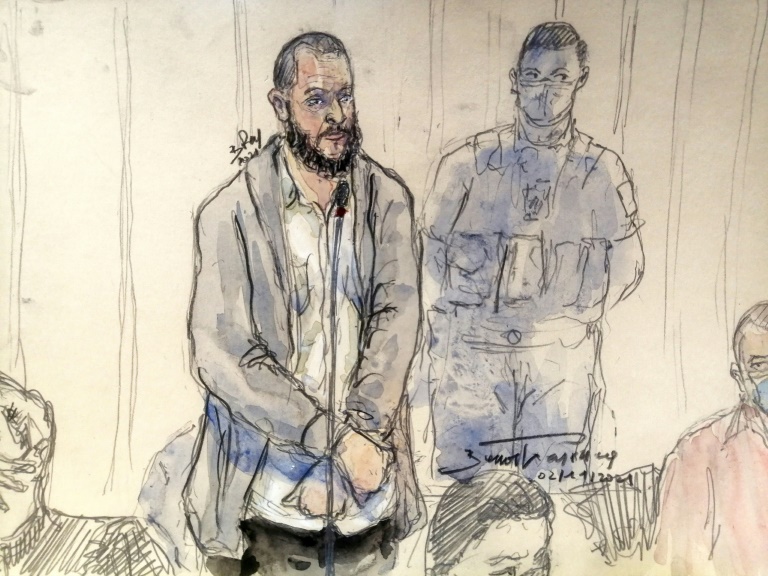
The only assailant still alive after the terror attacks that rocked Paris in November 2015 said Wednesday that “I didn’t kill anyone, I didn’t hurt anyone” as he took the stand for the first time in the trial over the jihadist massacres.

“I didn’t cause even a scratch,” Salah Abdeslam told the court in a sudden outburst before he was to be questioned over the worst peacetime atrocity carried out on French soil, which saw 130 people killed.

Abdeslam, 32, reiterated his claim of being a member of the Islamic State group, but said the court was making a mistake in wanting to “make an example” of him by inflicting a potential life sentence.

He sought to distance himself from the team of assassins who were all killed in the wake of the attacks, appearing to imply that he had had a last minute change of mind.

“In the future, when someone gets in a metro or a bus with a suitcase stuffed with 50 kilogrammes of explosives, and at the last minute decides ‘I’m not doing this,’ he will know that he can’t, because otherwise he will be locked away or killed,” he said.

Abdeslam has so far largely refused to answer investigators’ questions since his March 2016 arrest in Belgium, where police found him after months of searching for the men behind the massacres.

But he has claimed he discarded his suicide vest and fled the French capital in the chaotic aftermath of the bloodshed, eluding an intense manhunt to return to Molenbeek, the Brussels district where he grew up.

– Trial enters new phase –

The questioning that begins Wednesday will focus initially on Abdeslam’s background and events before the attacks. Prosecutors have already established that he spent much of his youth as a pot-smoking fan of nightclubs and casinos.

But they are seeking information on his brother Brahim, who travelled to Syria in early 2015 and detonated his suicide belt in a bar during the Friday night attack in Paris; and on Abdelhamid Abaaoud, the alleged ringleader who was killed by police a few days later.

Abdeslam’s mother, sister and ex-fiancee had also been scheduled to take the stand on Wednesday, but the presiding judge informed the court that they would not be coming, without giving further details.

Abdeslam has been unrepentant so far in court

In one of a series of outbursts, he said that France “knew the risks” of attacking jihadist targets in Syria as part of a coalition fighting the Islamic State group.

After four months of proceedings, the trial — the biggest in modern French history, attended by hundreds of plaintiffs and victims’ relatives — has entered a new phase in which the 14 suspects present are to be questioned. 

So far two of Abdeslam’s co-defendants have invoked their right to silence.

– ‘Incomprehension’ –

“When I look at him, it’s just a feeling of incomprehension. How could he do what he did, what they did?” Philippe Duperron, whose son was killed when the gunmen stormed the Bataclan concert hall, told France 2 television on Wednesday.

“What could explain it? But once again, I think this trial will end without us being able to understand,” said Duperron, who is president of the 13onze15 Fraternite-Verite victims’ association (“November 13, 2015, Brotherhood and Truth”).

The horror was unleashed on a Friday night when the first attackers detonated suicide belts outside the Stade de France stadium where France was playing a football match against Germany. 

A group of gunmen later opened fire from a car on half a dozen restaurants, and Abdeslam’s brother Brahim blew himself up in a bar.

And at the Bataclan, 90 people were massacred by other attackers as they watched a rock concert.

Abdeslam’s co-defendants are answering charges ranging from providing logistical support to planning the attacks, as well as supplying weapons.

The trial, which is expected to last nine months, sees 20 defendants, including Abdeslam, facing sentences of up to life in prison. Six of the suspects are being tried in absentia.

Vietnam arrests green activist on tax charges

Vietnam on Wednesday arrested a high-profile environmentalist known for taking on the energy industry on suspicion of tax evasion, state media said.

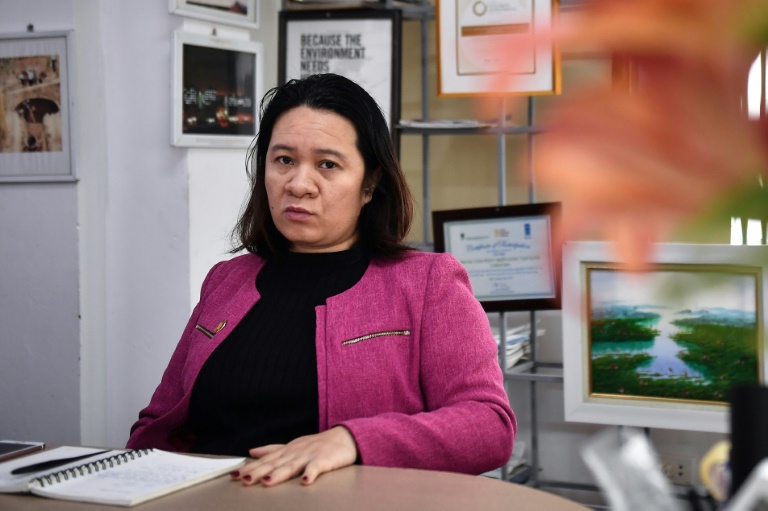
Nguy Thi Khanh, 46, has been one of the few voices in Vietnam prepared to challenge plans to increase coal power to fuel economic development.

Her organisation GreenID, Vietnam’s best-known environmental NGO, convinced the government to reduce some of its coal targets and sparked a national conversation about rising air and water pollution.

But while she has won international plaudits, she has also been the target of smear campaigns on state-sponsored media sites and is routinely attacked by trolls on Facebook who criticise her work.

The state-owned Tuoi Tre newspaper on Wednesday said Khanh had been arrested by police in the capital Hanoi “on a tax evasion accusation”. No further details were given.

Communist Vietnam tolerates no dissent, and numerous activists have wound up in jail for speaking out against the government.

Authorities have recently stepped up raids on corrupt officials as well as people involved in financial or economic scandals.

Khanh’s organisation has been successful in persuading the government to strip 20,000 megawatts of coal power from the national energy plan by 2030.

Her goal for the coming years is for Vietnam to scale back its ambitious coal plans in favour of more renewable energy options.

In a 2020 interview with AFP, she acknowledged the risks her activism brought.

“When we got global recognition, vested interest groups recognised who their enemy is, and they are very powerful,” she said.

Vietnam arrests green activist on tax charges

Vietnam on Wednesday arrested a high-profile environmentalist known for taking on the energy industry on suspicion of tax evasion, state media said.

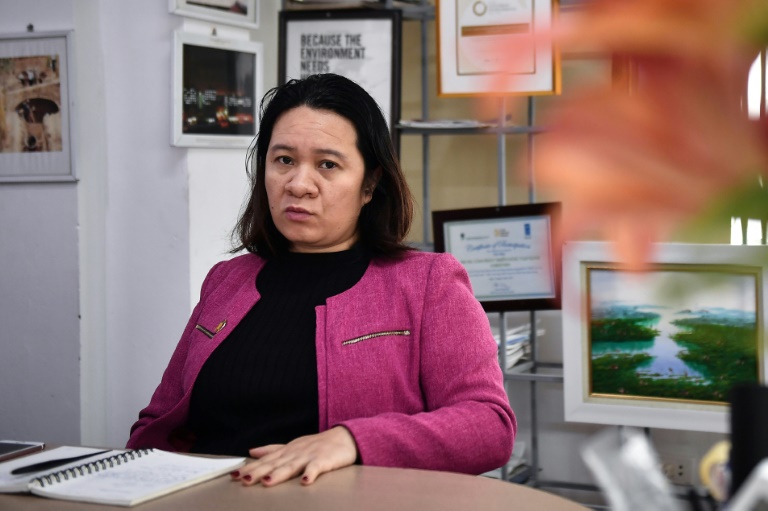
Nguy Thi Khanh, 46, has been one of the few voices in Vietnam prepared to challenge plans to increase coal power to fuel economic development.

Her organisation GreenID, Vietnam’s best-known environmental NGO, convinced the government to reduce some of its coal targets and sparked a national conversation about rising air and water pollution.

But while she has won international plaudits, she has also been the target of smear campaigns on state-sponsored media sites and is routinely attacked by trolls on Facebook who criticise her work.

The state-owned Tuoi Tre newspaper on Wednesday said Khanh had been arrested by police in the capital Hanoi “on a tax evasion accusation”. No further details were given.

Communist Vietnam tolerates no dissent, and numerous activists have wound up in jail for speaking out against the government.

Authorities have recently stepped up raids on corrupt officials as well as people involved in financial or economic scandals.

Khanh’s organisation has been successful in persuading the government to strip 20,000 megawatts of coal power from the national energy plan by 2030.

Her goal for the coming years is for Vietnam to scale back its ambitious coal plans in favour of more renewable energy options.

In a 2020 interview with AFP, she acknowledged the risks her activism brought.

“When we got global recognition, vested interest groups recognised who their enemy is, and they are very powerful,” she said.

Japan offers gas to Europe over Ukraine fears

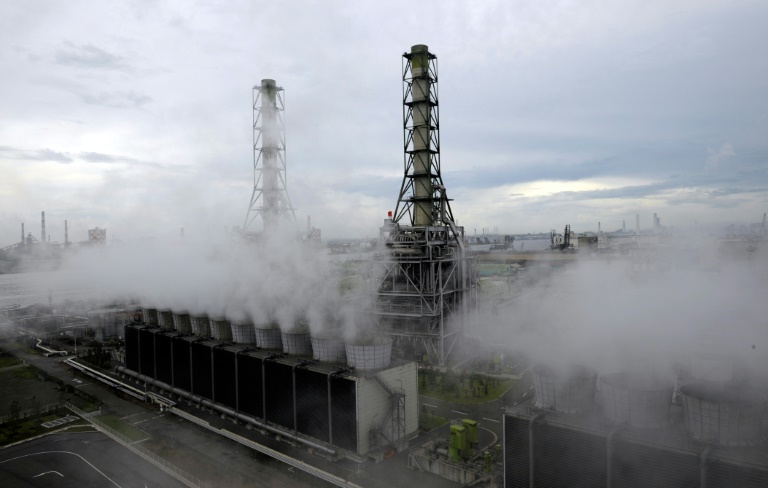
Japan is offering Europe part of its liquified natural gas imports over fears supplies will be disrupted by tensions surrounding a possible Russian invasion of Ukraine, Tokyo’s trade minister said Wednesday.

Multiple gas shipments are already being diverted to Europe by private Japanese firms and will arrive this month, Koichi Hagiuda said, declining to give details of how many boats or how much LNG is involved.

More ships will head to Europe in March, but the supplies will be strictly contingent on ensuring domestic demand is met, he said.

Fears are mounting that a conflict in Ukraine could cause an energy crisis in Europe, which depends heavily on Russian supplies.

Analysts judge it unlikely Russia would completely halt supplies to Europe in the case of conflict, and Japan’s reserves are likely to be insufficient to make up the difference if Moscow did so.

But Tokyo’s offer comes with frenetic diplomatic manoeuvring under way in an attempt to ease tensions with Russia over Ukraine.

Hagiuda told reporters he had received requests from the US and EU ambassadors “to accommodate the need” for the fuel in Europe.

“We have communicated to both the US and EU that this co-operation is to be carried out only to the extent that it does not affect Japan’s electricity and gas supplies,” he said.

Japan was the world’s top LNG importer until last year, and is heavily dependent on the fuel. Reports suggest it may not have much to give, with stockpiles low even as record snow hits parts of the country.

Japanese gas companies will receive market price for the fuel, a trade ministry official said.

The US embassy said in a statement that the move shows “Japan is standing resolute with the United States and our European partners, and against the exercise of raw power.” 

Hagiuda evoked memories of similar co-operation after a devastating quake, tsunami and nuclear disaster hit Japan over a decade ago.

“After the Great East Japan earthquake of March 11, 2011, it was the people of Europe and the people of the United States who were first to send us gas,” he said.

On Tuesday, German Chancellor Olaf Scholz backed a threat by US President Joe Biden that the controversial Nord Stream 2 gas pipeline would not proceed if Russia invades Ukraine.

The pipeline, set to double natural gas supplies from Russia to Germany, has become a key bargaining chip for the West in its bid to stop Moscow from invading Ukraine.

Close Bitnami banner
Bitnami