World

Diplomatic flurry to avert Russia-NATO clash over Ukraine

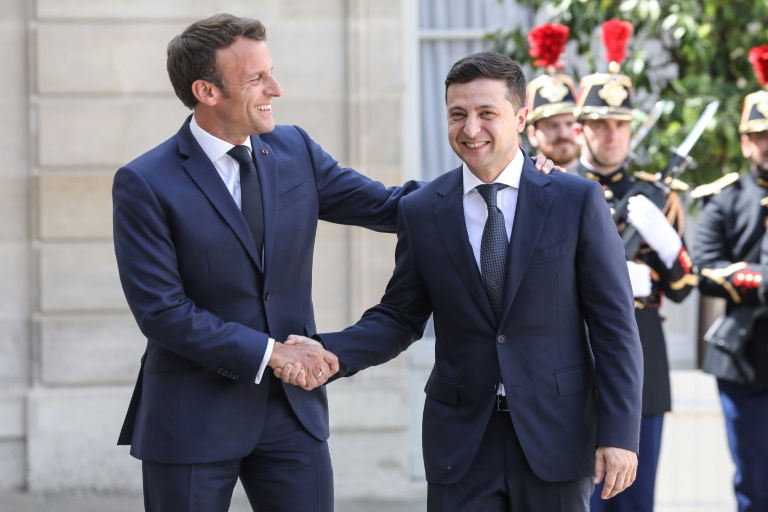
With war clouds gathering over Ukraine, international diplomacy goes into overdrive on Monday with the French and Russian presidents to meet in Moscow and the German chancellor heading to the White House to meet with US leader Joe Biden.

Also Monday, the German, Czech, Slovak and Austrian foreign ministers were expected in Kyiv, which has played down dire US warnings that Moscow had stepped up preparations for a major incursion into Ukraine.

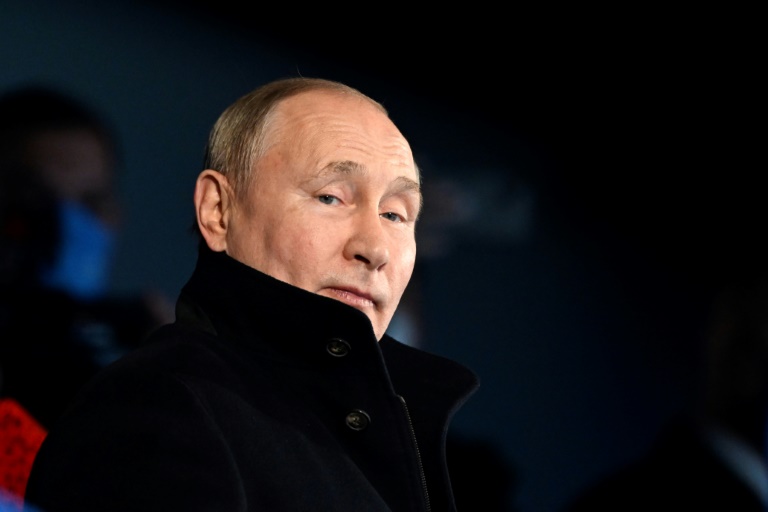
US officials have said the Kremlin has assembled 110,000 troops along the border with its pro-Western neighbour but intelligence assessments have not determined whether President Vladimir Putin has actually decided to invade.

They said Russia is on track to amass a large enough force — some 150,000 soldiers — for a full-scale invasion by mid-February.

Such a force would be capable of taking the capital Kyiv in a matter of 48 hours in an onslaught that would kill up to 50,000 civilians, 25,000 Ukrainian soldiers and 10,000 Russian troops and trigger a refugee flood of up to five million people, mainly into Poland, the officials added.

On top of the potential human cost, Ukraine fears further damage to its already struggling economy.

And if Moscow attacks Ukraine it could face retaliation over the Nord Stream 2 pipeline — set to double natural gas supplies from Russia to Germany — with Berlin threatening to block it.

Russia is seeking a guarantee from NATO that Ukraine will not enter the alliance and wants the bloc to withdraw forces from member states in eastern Europe. 

– ‘Apocalyptic predictions’ –

Moscow denies that it is planning to invade Ukraine, and Kyiv’s presidency advisor said the chances of a diplomatic solution to the crisis remained “substantially higher than the threat of further escalation”.

On Twitter, Ukraine’s Foreign Minister Dmytro Kuleba sought to calm tensions, saying: “Do not believe the apocalyptic predictions. Different capitals have different scenarios, but Ukraine is ready for any development.”

President Emmanuel Macron of France, which currently holds the rotating presidency of the EU, will be in Moscow on Monday and Kyiv on Tuesday to spearhead efforts to de-escalate the crisis.

He is expected to push forward a stalled peace plan for the festering conflict with Russian-backed separatists in eastern Ukraine. 

The trip will be a political gamble for Macron, who faces a re-election challenge in April.

Also on Monday, German Chancellor Olaf Scholz will meet with Biden in Washington.

Biden has reacted to the Russian troop buildup by offering 3,000 American forces to bolster NATO’s eastern flank, with a batch of the troops promised arriving in Poland on Sunday.

But US National Security Advisor Jake Sullivan told Fox News Sunday that Biden “is not sending forces to start a war or fight a war with Russia in Ukraine”.

“We have sent forces to Europe to defend NATO territory,” he said.

Scholz said Sunday that Berlin was prepared to send extra troops to the Baltics in addition to 500 soldiers already stationed in Lithuania under a NATO operation.

While he is in Washington, his foreign minister, Annalena Baerbock, will be in Kyiv along with her Czech, Slovak and Austrian counterparts for a two-day visit.

Scholtz will be in Moscow and Kyiv next week for talks with Putin and Ukrainian President Volodymyr Zelensky. 

burs/gd/har
Ecuador capital flooding toll raised to 28

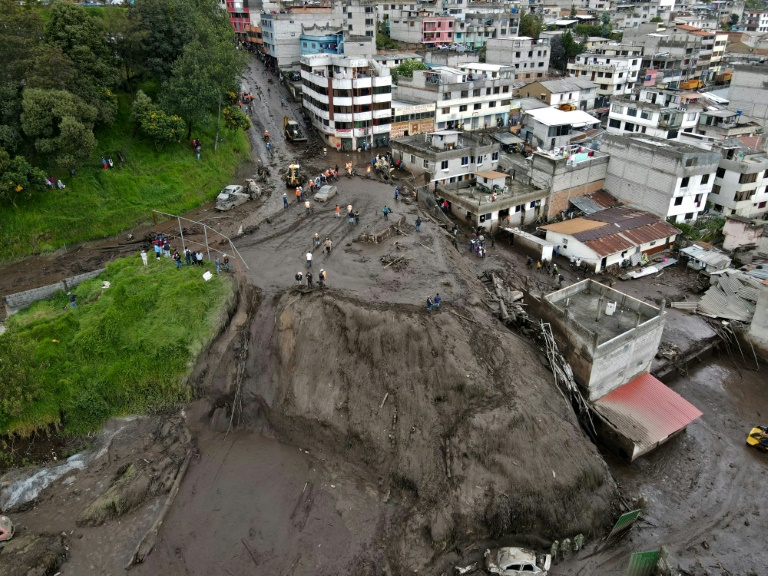
The heaviest flooding to hit Ecuador in two decades claimed 28 lives in the capital Quito this week and left 52 people injured, the city’s mayor said Sunday.

The floods inundated homes, carried off cars and swept away volleyball players and spectators on a sports field.

Rescuers are still searching for a missing 38-year-old woman who lived in the popular La Comuna neighborhood.

Rain that drenched Quito for 17 straight hours caused flooding and surges of mud that damaged roads, agricultural areas, clinics, schools, a police station and an electric power substation.

“The total number of dead is 28, 52 people were injured, seven of whom were hospitalized,” Quito mayor Santiago Guarderas told a press conference.

Earlier in the week, Guarderas said Monday’s rains overwhelmed a hillside water catchment structure that had a capacity of 4,500 cubic meters but was inundated with more than four times that volume.

Guarderas said Monday’s downpour brought down 75 liters per square meter (1.8 gallons per square foot) following 3.5 liters on Saturday.

This is “a record figure, which we have not had since 2003,” he added.

Three days of mourning were observed in Quito, a city of some 2.7 million people.

Heavy rains have hit 22 of Ecuador’s 24 provinces since October, claiming at least 44 lives.

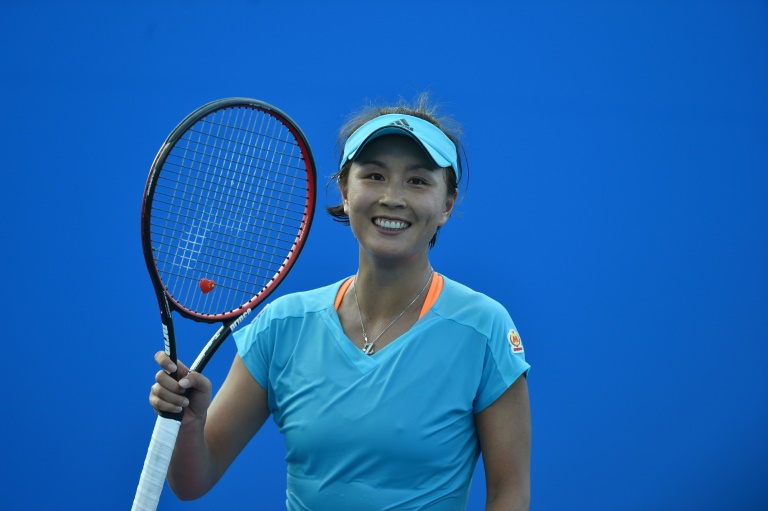
Chinese tennis star Peng Shuai repeats sexual assault denial

Chinese tennis star Peng Shuai said she never accused anyone of sexual assault, according to an interview published Monday, again walking back an allegation that sparked worldwide concern about her safety.

The former doubles world number one alleged in a social media post in November that former Chinese vice-premier Zhang Gaoli forced her into sex during a years-long relationship.

The post was swiftly deleted and Peng was not heard from for nearly three weeks. She has since emerged at some public events, denying in December that she ever made the accusation.

“I never said anyone had sexually assaulted me in any way,” Peng told the French sports daily L’Equipe, reiterating a similar comment she gave to a Singaporean newspaper back in December.

The 36-year-old added that she was the one who deleted her allegation from Weibo, China’s Twitter-like platform.

It was widely suspected that the country’s strict internet censors, sensitive about any criticism of the government, had removed it.

But when L’Equipe asked her why she deleted it, Peng said: “Because I wanted to.”

“There was a huge misunderstanding in the outside world following this post,” she said.

“I don’t want the meaning of this post to be twisted anymore. And I don’t want any further media hype around it.”

When asked about the concern her absence sparked, Peng said she had “never disappeared”.

“It’s just that many people, like my friends or people from the IOC messaged me, and it was simply impossible to answer so many messages.”

Concerns have swirled about Peng’s safety despite her appearances following the three-week absence, which showed her attending sporting events.

After she denied making any sexual assault allegations in December, the Women’s Tennis Association (WTA) said it was still not convinced of her well-being.

– Bach meeting –

International Olympic Committee President Thomas Bach held a video conference with Peng on November 21, but that led to accusations that he was trying to protect the hosts of the 2022 Winter Games.

Bach said ahead of the Games that the IOC would back an inquiry into her allegations if she wanted one, saying the meeting was to “know better about her physical integrity and her mental state”.

He met Peng in person on the weekend, Peng told L’Equipe during the interview, which was held inside the Beijing Olympics bubble.

“We had dinner together on Saturday and we had a nice discussion and exchange,” said Peng, who also announced her retirement from tennis in the interview.

“He asked me whether I am considering competing again, what my projects are, what I’m planning to do, and so on,” she added.

Peng was accompanied by Chinese Olympic Committee chief of staff Wang Kan during the interview.

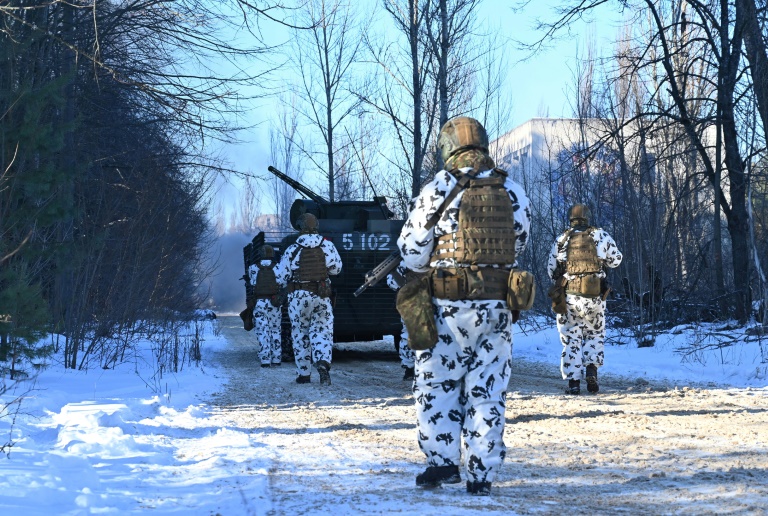
Ukraine plays down Russian invasion fears as US sounds alarm

Ukraine on Sunday pushed back at “apocalyptic predictions” over a potential Russian invasion, after US officials sounded dire warnings that Moscow had stepped up its preparations for a major incursion.

US officials said the Kremlin had assembled 110,000 troops along the border with its pro-Western neighbour but intelligence assessments have not determined whether President Vladimir Putin has actually decided to invade. 

The Russian force amassed on the frontier is growing at a rate that would give Putin the firepower he needs for a full-scale invasion — some 150,000 soldiers — by mid-February, US officials have said.

They assess that Putin wants all options at his disposal, from a limited campaign in the pro-Russian Donbas region of Ukraine to a full-scale invasion.

Russia denies that it is planning an incursion into Ukraine.

Kyiv — backed up by some European allies — has consistently sought to play down fears of an imminent attack as it tries to prevent further harm to its struggling economy.

“Do not believe the apocalyptic predictions. Different capitals have different scenarios, but Ukraine is ready for any development,” Foreign Minister Dmytro Kuleba wrote on Twitter. 

“Today, Ukraine has a strong army, unprecedented international support and the faith of Ukrainians in their country. It is the enemy who should fear us.”

Ukraine presidency advisor Mykhailo Podolyak said the latest Russian moves were “no surprise” as Moscow has sought to keep up pressure on Kyiv by conducting large-scale troop rotations, manoeuvres and weapon deployments on a regular basis since massing forces at the border last spring. 

– European diplomatic push –

The stark warnings from the United States — part of a deliberate attempt from Washington to pre-empt any Russian actions — come as Europe pushes to defuse the crisis. 

French President Emmanuel Macron heads to Moscow on Monday and Kyiv on Tuesday seeking to de-escalate the crisis and push forward a stalled peace plan for the festering conflict with Russian-backed separatists in eastern Ukraine.

On Sunday Macron discussed the crisis with US counterpart Joe Biden.

“The leaders discussed ongoing diplomatic and deterrence efforts in response to Russia’s continued military build-up on Ukraine’s borders, and affirmed their support for Ukraine’s sovereignty and territorial integrity,” the White House said in a statement.

“We have to be very realistic,” Macron told the JDD weekly.

“We will not obtain unilateral gestures” from Russia “but it is essential to avoid a deterioration of the situation before building mechanisms and reciprocal gestures of trust”, he said.

German Chancellor Olaf Scholz will travel to Washington for the first meeting of his chancellorship with Biden on Monday.

The following week Scholz will visit the region for talks with Putin and Ukrainian President Volodymyr Zelensky.

US officials said if Moscow does opt for a full-scale attack, the invading force could take the capital Kyiv and topple Zelensky in a matter of 48 hours.

They estimated such an attack would leave 25,000 to 50,000 civilians dead, along with 5,000 to 25,000 Ukrainian soldiers and 3,000 to 10,000 Russian ones.

It could also trigger a refugee flood of one to five million people, mainly into Poland, the officials added.

Biden has reacted to the buildup by dispatching some 3,000 American forces to bolster NATO’s eastern flank, with a new batch of US soldiers arriving in Poland on Sunday.

Scholz said Berlin was prepared to send extra troops to the Baltics in addition to 500 soldiers already stationed in Lithuania under a NATO operation.

Moscow has issued demands for NATO to guarantee that Ukraine will not enter the alliance and to withdraw forces from member states in eastern Europe. 

But US National Security Advisor Jake Sullivan told Fox News Sunday that Biden “is not sending forces to start a war or fight a war with Russia in Ukraine”.

“We have sent forces to Europe to defend NATO territory,” he said.

– Special forces, naval buildup –

US intelligence has concluded that Russia is continuing to muster a major military force on its border with Ukraine.

Two weeks ago, a total of 60 Russian army battalions were positioned to the north, east and south of Ukraine, particularly in the Crimean peninsula, which Russia annexed after an invasion in 2014.

By Friday, there were 80 battalions and 14 more were en route, US officials said. 

They added that some 1,500 Russian “Spetsnaz” special forces arrived along the Ukraine border a week ago.

Russia has also announced what it calls joint military manoeuvres with Belarus, where it has sent several battalions to the north of Kyiv.

A major Russian naval force is also positioned in the Black Sea, equipped with five amphibious vessels that could be used to land troops on Ukraine’s southern coast, the US officials said.

In other deployments, Russia has positioned fighter planes near Ukraine, as well as bombers, missile batteries and anti-aircraft batteries, US officials said.

Soviet-era outpost helps Russia retain a foot in Norwegian Arctic

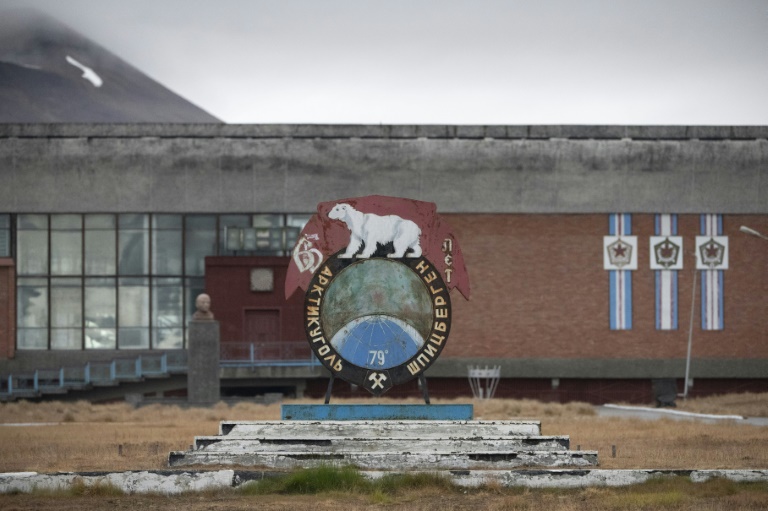
With its bust of Lenin, cultural centre and KGB offices, the abandoned Soviet outpost of Pyramiden may seem like a time-warped Arctic oddity but is valued by Moscow as it vies for clout in the warming region.

Russia has made the development of the Arctic a strategic priority, pinning its hopes for supremacy in the region on a fleet of giant nuclear-powered icebreakers. 

The tiny ex-mining settlement of Pyramiden, meanwhile, helps Moscow retain a footprint in Norway’s Svalbard archipelago, high above the Arctic Circle.

Norway — a NATO member — was afforded sovereignty of Svalbard under the 1920 Treaty of Paris but all signatories, which included the Soviet Union, were given equal rights to explore and exploit its mineral resources.

Russia began coal mining in Barentsburg, another settlement in the archipelago, in 1931, and later in Pyramiden, where the Russian community grew to up to 1,200 between 1960 and 1980.

Being sent to Pyramiden was considered a plum job for a miner, a tour guide told AFP.

On the Western side of the Iron Curtain, it provided a window on Soviet power, culture and self-sufficiency, from pig breeding to its 300-seat cinema, swimming pool, gymnasium and hospital.

But as the Soviet Union fell apart, while mining continued in Barentsburg, it stopped in Pyramiden in 1998 as its performance dwindled, and the miners left.

– ‘Interesting future?’ –

At first sight, Pyramiden now looks like a ghost town.

No one lives there apart from a handful of Russians who run a hotel — and the polar bears with whom visitors risk coming face-to-face.

But even though the mining community has long gone, nothing has been destroyed, an AFP photographer saw, and its vestiges offer a glimpse into the heyday of the Soviet era.

Buildings built to last are just weather-beaten from decades of harsh winters.

The rails of the funicular on which the trailers of coal were hauled down are still visible on the pyramid-shaped mountain, which gave the village its name.

Inside the buildings, it’s as if time has stood still, with the occupants having left suddenly but expected back at any moment.

Phials of ore are lined up in display cabinets in administrative offices, where calendars still hang on the walls, while the KGB premises have reinforced doors and miners’ files spread out on the tables.

Classrooms are adorned with children’s drawings and the teacher’s cup is still there.

But Yury Ugryumov, of the Arctic and Antarctic Research Institute based in Saint Petersburg, said Pyramiden was not just a place of historical memory.

“This village is not abandoned, it has been temporarily put on hold,” he told AFP.

Russia is currently developing tourism and research in Pyramiden, drawing glaciologists, hydrologists and marine experts there for scientific work.

“There’s hopes for an interesting future here,” said Ugryumov, who heads the Russian Arctic expedition to the archipelago.

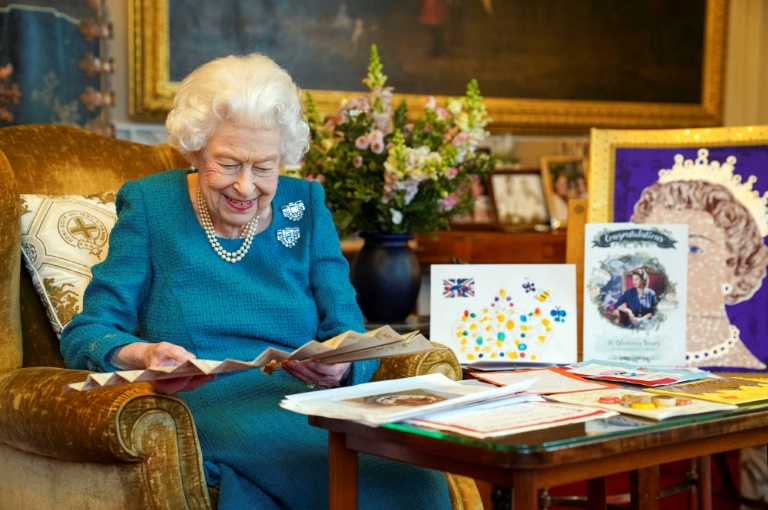
Elizabeth II marks Platinum Jubilee with 'Queen Camilla' announcement

Queen Elizabeth II on Sunday became the first British monarch to reign for seven decades, announcing her “sincere wish” that Camilla, the wife of her heir Prince Charles, should ultimately be known as Queen Consort.

Britain’s longest-serving monarch acceded to the throne aged 25 on February 6, 1952, following the death of her father King George VI.

She marked the historic date quietly at Sandringham, her estate in eastern England where her father died.

But in a major statement on the future of the royal family, the 95-year-old released a message to the nation, saying “it is my sincere wish that, when that time comes, Camilla will be known as Queen Consort”.

This means Camilla, now 74, would be crowned alongside Charles, now 73, and known to the public as Queen Camilla, royal experts said.

Charles said the couple were “deeply conscious of the honour represented by my mother’s wish”, which would accord Camilla the full title of a monarch’s wife.

He praised Camilla, saying: “my darling wife has been my own steadfast support throughout”.

The heir to the throne also paid tribute to the Queen’s “devotion to the welfare of all her people”, which “inspires still greater admiration with each passing year”.

The Queen said she hoped that when Charles becomes king, the British people would give him and Camilla “the same support that you have given me”.

Camilla was long vilified for her role in the break-up of Charles’ marriage to Princess Diana.

Recognising the sensitivities, when the couple married in 2005, the royal family announced she would be known as Princess Consort after Charles became king.

But she has gradually won plaudits as the future king’s loyal wife.

– ‘Historic reign’ –

Londoners who spoke to AFP were divided over the announcement.

“I’m delighted. I think it’s high time,” said Angela Roberts, an 80-year-old retiree.

“It’s before my time but a lot of the people who grew up with Diana being the next Queen effectively, they feel like she was wronged by the royal institution,” said Tobias Fox, a 24-year-old software engineer.

“I don’t think a lot of people will be too happy that Camilla has got this role.”

“I think she’ll do well, but I think there will always be that shadow of the past that overcasts her reign,” said Alice Tomlinson, a 25-year-old working in marketing.

Princess Diana died in a car crash in Paris in 1997.

Stressing that the Queen is still actively working, Buckingham Palace released a photo taken at Sandringham this week showing her going through one of her famous red dispatch boxes used for government business.

Behind her is a photo of her late father.

Prime Minister Boris Johnson praised the Queen’s “inspirational sense of duty and unwavering dedication”.

With the main Platinum Jubilee celebrations set for June, he said wanted “to come together as a country to celebrate her historic reign”.

– ‘Shared ideals’ –

World leaders paid tribute Sunday including German Chancellor Olaf Schulz and Canada’s Justin Trudeau, who said she “has been a constant presence in the life of Canadians, offering steadfast leadership in times of change, hardship, or uncertainty”.

The White House on Twitter congratulated the monarch on the “historic” milestone.

“Throughout the past 70 years, she has strengthened the ties of friendship, shared ideals, and faith in democracy that forever unite our countries,” it said.

Four days of festivities are planned for early June, coinciding with the anniversary of her 1953 coronation, including a military parade and music concert, street parties, a nationwide “Big Jubilee Lunch” and a “Platinum Pudding Competition”.

During her reign, the Queen has remained a constant through periods of huge social and political upheaval — a living link to Britain’s post-war and imperial past.

In her message addressed to the public signed “Your servant, Elizabeth R”, the Queen renewed a pledge she first gave in a broadcast on her 21st birthday “that my life will always be devoted to your service”.

In September 2015, she surpassed Queen Victoria’s 63 years and seven months on the throne and, despite some health concerns over the past year, her latest message showed she is determined to continue her record-breaking reign.

After husband Philip’s death in April last year, the Queen returned to public and official engagements, including hosting world leaders at the G7 summit.

She was forced to slow down on advice from doctors, however, after an overnight hospital stay in October sparked public concern.

Since then, she has largely stayed at Windsor Castle and made few public appearances.

But on Saturday, the Queen held a reception for locals at Sandringham, reportedly her largest in-person public engagement since the autumn health scare.

jj-video-am/har/pvh

Ottawa mayor declares state of emergency over 'out of control' Truckers' protest

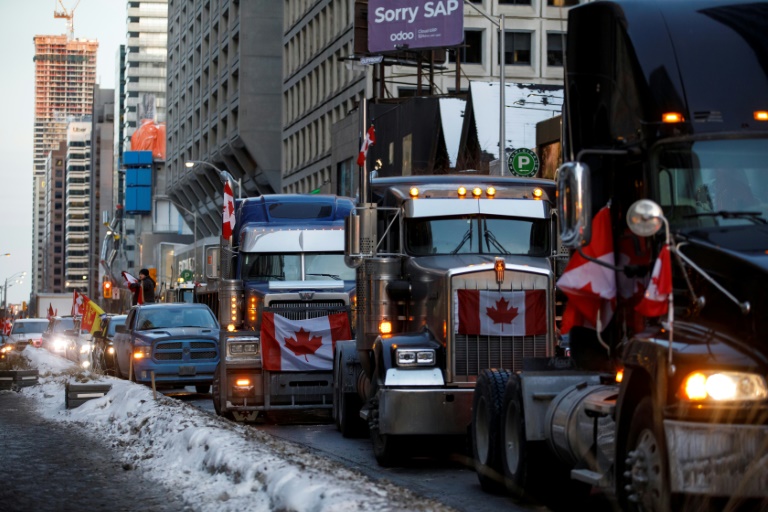
The ongoing truckers’ protest in the Canadian capital is “out of control,” the Ottawa mayor said Sunday, announcing a state of emergency as the city center remained blocked by opponents of anti-Covid measures.

The protesters, who first reached the capital on January 29, have parked their big rigs on city streets and put up tents and temporary shacks — paralyzing the capital to the consternation of officials and the mounting frustration of many residents.

Mayor Jim Watson announced a state of emergency that “reflects the serious danger and threat to the safety and security of residents posed by the ongoing demonstrations and highlights the need for support from other jurisdictions and levels of government,” a statement from the city said.

Earlier in the day, Watson had described the situation as “completely out of control,” adding that the protesters “have far more people than we have police officers.”

“Clearly, we are outnumbered and we are losing this battle,” he told CFRA radio. “This has to be reversed; we have to get our city back.”

Watson called the truckers “insensitive,” as they have continued “blaring horns and sirens and fireworks, and turning it into a party.”

The demonstrations began as protests by truckers angry with vaccine requirements when crossing the US-Canadian border, but have morphed into broader protests against Covid-19 health restrictions and the government of Prime Minister Justin Trudeau.

Locals have complained of the ceaseless sound of air horns and of being harassed, insulted or blocked by the protesters.

The truckers and their supporters have dug in, however, saying the protests will continue until the Covid-related restrictions are lifted.

Police on Sunday announced new measures to stop people from helping the protesters keep up their sit-in. 

“Anyone attempting to bring material supports (gas, etc.) to the demonstrators could be subject to arrest,” the force tweeted.

– ‘Extremely disruptive’ –

Similar, if smaller, demonstrations hit the cities of Toronto, Quebec and Winnipeg on Saturday. Police in Quebec said some 30 big trucks were blocking a major artery and had been warned they would face fines if they did not move soon.

In an emergency meeting Saturday with Ottawa officials, police chief Peter Sloly complained that he lacked the resources to end what he called a “siege,” and asked for reinforcements. 

Ottawa police are due to soon be reinforced by some 250 Royal Canadian Mounted Police — a federal force.

“This group is a threat to our democracy,” city council member Diane Deans said of the protesters on Saturday. “What we’re seeing is bigger than just a city of Ottawa problem, this is a nationwide insurrection. This is madness.”

The police said Sunday that they had issued some 450 tickets since Saturday morning, for a variety of mostly minor infractions including excessive noise and use of fireworks, though one truck that turned out to be stolen was seized. 

They said “extremely disruptive” protesters had in some cases endangered public safety, causing “unacceptable distress” to local residents. 

Police have opened 97 investigations into possible criminal offenses, the statement said.

In addition, it said, the police are “actively working with Canadian, US and international security agencies/authorities to investigate email-based threats to public officials.”

Cuba marks six decades under US sanctions

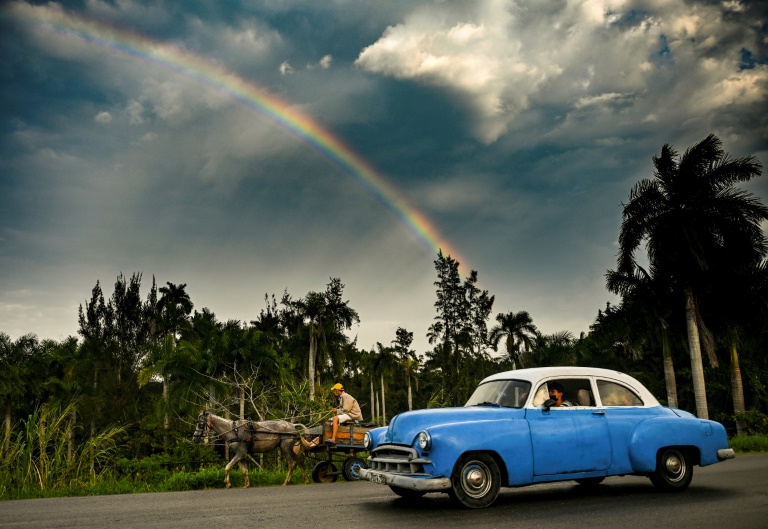
Cuba on Monday marks 60 years under a US economic blockade that has deeply affected the communist nation’s fortunes and shows no signs of being lifted.

Decreed by US president John F. Kennedy on February 3, 1962, the embargo on all bilateral trade came into effect four days later.

Its purpose, said Kennedy’s executive order, was to reduce the threat posed by the island nation’s “alignment with the communist powers.”

Despite failing to force a change in tack from Havana since then, the sanctions remain in place six decades later, and are blamed by Cuban authorities for damage to the country’s economy amounting to some $150 billion.

Cuba is experiencing its worst economic crisis in 30 years, with inflation at 70 percent and a severe shortage of food and medicines as the Covid-19 pandemic dealt a hefty blow to a key source of income: tourism.

Long lines for essential goods are common, as food imports have been slashed due to dwindling government reserves.

Havana blames the sanctions for all the island’s woes.

The message that “the embargo is a virus too” has been hammered home by authorities for months, as they organize caravans of cars, bikes and motorcycles to criss-cross the country and denounce the sanctions.

But detractors say inefficiencies and structural problems in the economy controlled by the one-party state are also to blame.

– ‘Counterproductive’ –

“The real blockade was imposed by the Cuban state,” said activist Rosa Maria Paya of lobby group Cubadecide, which she directs from exile.

The embargo would only be lifted, she believes, through “a transition to representative democracy.”

Cuba has little productive capacity and relies on imports for about 80 percent of its food needs. 

A monetary reform launched a year ago to try and alleviate pressures on Cubans brought about a significant wage increase in a country where most workers are employed by the government, but further fueled price inflation.

Since 2000, food has been excluded from the US blockade, and between 2015 and 2000, Cuba imported some $1.5 billion worth of food from its neighbor.

But the purchases have to be paid in cash and upfront, onerous conditions for a country with limited reserves. 

According to Carlos Gutierrez, a Cuban-American and former US Secretary of Commerce, the embargo has proven to be “counterproductive.”

“Absolutely nothing has been obtained from Havana” in response, he said.

– Geopolitical interests –

Instead, Cuba has looked to US rivals such as China and Russia for support.

Two weeks ago, Cuba’s President Miguel Diaz-Canel and his Russian counterpart Vladimir Putin discussed “strategic partnership” in a phone call.

And Russian Deputy Foreign Minister Sergei Riabkov recently said Moscow would not rule out a military deployment to Cuba — just a few hundred kilometers (miles) from Miami in the US state of Florida — if tensions with Washington over ex-Soviet state Ukraine escalated.

For some, such posturing recalls the Cold War and the Cuban missile crisis between the United States and the former Soviet Union, which brought the world to the brink of nuclear warfare and was a major motivation for the blockade against Cuba.

Conflict was averted when Moscow agreed to remove Soviet missiles from Cuban soil.

The US blockade started out as a “strategic and military instrument” in the context of war, said political scientist Rafael Hernandez.

And although the Cold War is over, it is still the United States’ “geopolitical interests” that determine its stance towards Cuba, he said.

US domestic politics also play a role, with the vote of a large and vocal anti-Havana Cuban expat community holding the potential to swing battleground states such as Florida.

Somewhat relaxed under a brief period of detente under Barack Obama, sanctions were strengthened by his successor Donald Trump, who added 243 new measures.

And despite campaign promises, current President Joe Biden has done nothing to relieve the blockade, instead announcing new measures against Cuban leaders in response to a clampdown on historic anti-government protests last July.

For the US administration, said James Buckwalter–Arias of the Cuban-American Association for Engagement, “electoral considerations weigh heavier than humanitarian duty.”

No clear favorite as Costa Ricans elect new president

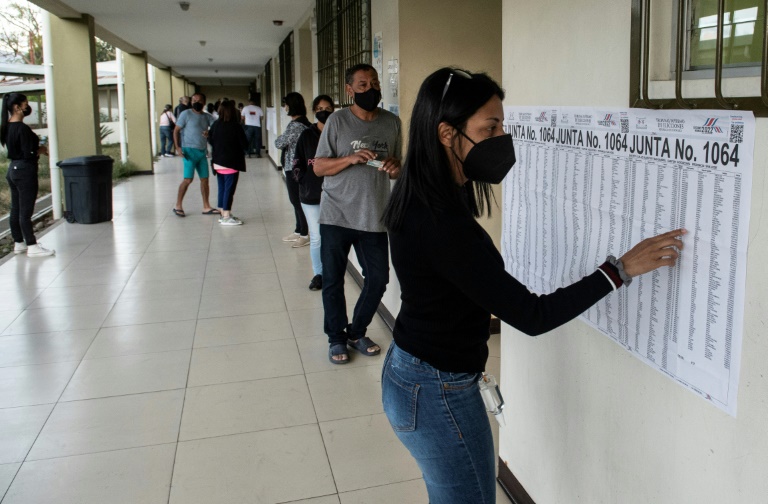
Costa Ricans voted for a new president Sunday from a crowded field of candidates, with no clear favorite to tackle a worsening economy in one of Latin America’s stablest democracies.

Twelve hours of voting closed at 6:00 pm (midnight GMT) in what is frequently rated the region’s “happiest” country, a tourist mecca and a leading green economy.

However, polls show unemployment, corruption and creeping living costs topping the concerns of 3.5 million eligible voters in the Central American country of five million people.

Unemployment has been steadily rising for more than a decade and reached 14.4 percent in 2021.

Poverty was at 23 percent last year, and a public debt at 70 percent of GDP has raised flags for multilateral agencies.

Costa Rica’s problems have worsened with the Covid-19 pandemic dealing a hard blow to its critical tourism sector.

“Voting is the most important weapon we have to solve problems,” said 35-year-old Francisco Zeledon, the first voter in line at his polling station. 

“We have to solve poverty and create jobs for people,” he said.

Polls showed about a third of voters undecided, faced with a choice from 25 presidential candidates.

But one trend was clear: the ruling Citizens’ Action Party (PAC) appeared set for a bruising defeat amid sky-high anti-government sentiment. 

Its candidate, former economy minister Welmer Ramos polled at only about 0.3 percent.

– Record unpopularity –

“The ruling party is completely weakened and has no chance” after two successive terms in office, said political analyst Eugenia Aguirre.

“The presidential unpopularity figure of 72 percent is the highest since the number was first recorded in 2013,” she added.

This meant the country’s traditional political heavyweights — the centrist National Liberation Party (PLN) and the right-wing Social Christian Unity Party (PUSC) — could return to the fore after decades of a near political duopoly only recently broken by the PAC.

According to polling, former president Jose Maria Figueres (1994-98) of the PLN was leading with about 17 percent of stated support, followed by the PUSC’s Lineth Saborio on about 13 percent.

“This country has a million and a half people living in poverty and half a million in extreme poverty,” Figueres said on Sunday. 

“There is a housing shortage of 160,000 homes. We have never experienced these things in this magnitude.”

Polls showed evangelical Christian singer Fabricio Alvarado Munoz of the right-wing New Republic Party (PNR) in third spot with just over 10 percent.

He commands support from the evangelical community, which makes up about 20 percent of Costa Rica’s population.

Fourth-placed was economist Rodrigo Chaves of the newly formed centrist Social Democratic Progress Party with just over eight percent.

The highest-polling left-wing candidate was Jose Maria Villalta of the Broad Front with about 7.6 percent of stated support.

Presidents in Costa Rica cannot seek immediate re-election, leaving incumbent Carlos Alvarado Quesada out of the running.

– Problems have ‘worsened’ –

Costa Rica is known for its eco-tourism and green policies: its energy grid is entirely run on renewable sources.

Unlike many of its volatile Central American neighbors, Costa Rica has no army, has had no armed conflicts since 1948 and no dictator since 1919.

But the worsening economic situation has hit confidence in the political class.

Voters under 40 have only known “periods in which not only problems have not been resolved, but they have worsened,” university student Edgardo Soto, an undecided voter, told AFP.

Apathy and abstentionism are features of Costa Rican elections.

In 2018, 34 percent of voters stayed away, though participation is technically obligatory.

Eugenia Zamora, president of Costa Rica’s electoral tribunal, said Sunday’s vote kicked off with high turnout in the morning, and proceeded without incident.

“This is a country with a robust democracy… It offers lessons for other countries,” added Isabel de Saint Malo, head of the Organization of American States observer mission.

Outgoing president Alvarado, for his part, said Sunday’s vote was an affirmation of Costa Rica’s place among “the world’s strongest democracies.”

Costa Ricans also cast their vote Sunday for the 57-member Congress.

Initial results are expected about three hours after polls close at 6.00 pm.

If no single presidential candidate receives 40 percent of the ballots cast, there will be a runoff between the top two on April 3.

“I hope that whoever wins really thinks of the people,” said 77-year-old Mayra Sanchez after voting in the canton of Moravia, “and not of themselves.”

Ukraine plays down Russian invasion fears as US sounds alarm

Ukraine on Sunday pushed back at “apocalyptic predictions” over a potential Russian invasion, after US officials sounded dire warnings that Moscow had stepped up its preparations for a major incursion.

US officials said the Kremlin had assembled 110,000 troops along the border with its pro-Western neighbour but intelligence assessments have not determined whether President Vladimir Putin has actually decided to invade. 

The Russian force amassed on the frontier is growing at a rate that would give Putin the firepower he needs for a full-scale invasion — some 150,000 soldiers — by mid-February, US officials have said.

They assess that Putin wants all options at his disposal, from a limited campaign in the pro-Russian Donbas region of Ukraine to a full-scale invasion.

Russia denies that it is planning an incursion into Ukraine.

Kyiv — backed up by some European allies — has consistently sought to play down fears of an imminent attack as it tries to prevent further harm to its struggling economy.

“Do not believe the apocalyptic predictions. Different capitals have different scenarios, but Ukraine is ready for any development,” Foreign Minister Dmytro Kuleba wrote on Twitter. 

“Today, Ukraine has a strong army, unprecedented international support and the faith of Ukrainians in their country. It is the enemy who should fear us.”

Ukraine presidency advisor Mykhailo Podolyak said the latest Russian moves were “no surprise” as Moscow has sought to keep up pressure on Kyiv by conducting large-scale troop rotations, manoeuvres and weapon deployments on a regular basis since massing forces at the border last spring. 

– European diplomatic push –

The stark warnings from the United States — part of a deliberate attempt from Washington to pre-empt any Russian actions — come as Europe pushes to defuse the crisis. 

French President Emmanuel Macron heads to Moscow on Monday and Kyiv on Tuesday seeking to de-escalate the crisis and push forward a stalled peace plan for the festering conflict with Russian-backed separatists in eastern Ukraine.

On Sunday Macron discussed the crisis with US counterpart Joe Biden.

“The leaders discussed ongoing diplomatic and deterrence efforts in response to Russia’s continued military build-up on Ukraine’s borders, and affirmed their support for Ukraine’s sovereignty and territorial integrity,” the White House said in a statement.

“We have to be very realistic,” Macron told the JDD weekly.

“We will not obtain unilateral gestures” from Russia “but it is essential to avoid a deterioration of the situation before building mechanisms and reciprocal gestures of trust”, he said.

German Chancellor Olaf Scholz will travel to Washington for the first meeting of his chancellorship with Biden on Monday.

The following week Scholz will visit the region for talks with Putin and Ukrainian President Volodymyr Zelensky.

US officials said if Moscow does opt for a full-scale attack, the invading force could take the capital Kyiv and topple Zelensky in a matter of 48 hours.

They estimated such an attack would leave 25,000 to 50,000 civilians dead, along with 5,000 to 25,000 Ukrainian soldiers and 3,000 to 10,000 Russian ones.

It could also trigger a refugee flood of one to five million people, mainly into Poland, the officials added.

Biden has reacted to the buildup by dispatching some 3,000 American forces to bolster NATO’s eastern flank, with a new batch of US soldiers arriving in Poland on Sunday.

Scholz said Berlin was prepared to send extra troops to the Baltics in addition to 500 soldiers already stationed in Lithuania under a NATO operation.

Moscow has issued demands for NATO to guarantee that Ukraine will not enter the alliance and to withdraw forces from member states in eastern Europe. 

But US National Security Advisor Jake Sullivan told Fox News Sunday that Biden “is not sending forces to start a war or fight a war with Russia in Ukraine”.

“We have sent forces to Europe to defend NATO territory,” he said.

– Special forces, naval buildup –

US intelligence has concluded that Russia is continuing to muster a major military force on its border with Ukraine.

Two weeks ago, a total of 60 Russian army battalions were positioned to the north, east and south of Ukraine, particularly in the Crimean peninsula, which Russia annexed after an invasion in 2014.

By Friday, there were 80 battalions and 14 more were en route, US officials said. 

They added that some 1,500 Russian “Spetsnaz” special forces arrived along the Ukraine border a week ago.

Russia has also announced what it calls joint military manoeuvres with Belarus, where it has sent several battalions to the north of Kyiv.

A major Russian naval force is also positioned in the Black Sea, equipped with five amphibious vessels that could be used to land troops on Ukraine’s southern coast, the US officials said.

In other deployments, Russia has positioned fighter planes near Ukraine, as well as bombers, missile batteries and anti-aircraft batteries, US officials said.

Close Bitnami banner
Bitnami