World

'Act of arson' at S.Africa church where Tutu is buried

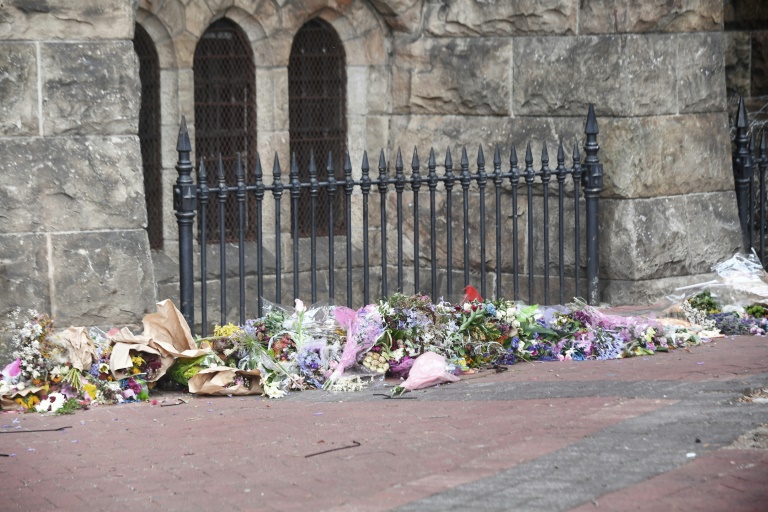
A fire started by an arsonist broke out overnight at the cathedral where South Africa’s spiritual father and anti-apartheid hero Archbishop Desmond Tutu is buried, a church leader announced Sunday.

The fire was detected in the basement of a section of St. George’s Cathedral in Cape Town at around 2 am (midnight GMT).

“The fire was an act of arson,” father Michael Weeder, dean at the cathedral, said in an note to his parish.

“It appears that a lit piece of cotton/gauze was thrown through the small, barred window near the steps leading up to the cathedral’s (main)… entrance,” he said.

“Someone was spotted running away from the cathedral.”

Firefighters quickly put out the fire, and other than “traces of smoke… there was no discernable damage done,” he added.

Nobel Peace Prize winner Tutu died in late December aged 90 after a life spent fighting injustice.

The cathedral where his ashes were interred on January 2 is just blocks way from the country’s parliament, which was set ablaze on the same day he was buried.

A man suspected to be the arsonist who started the fire that gutted the parliament is in custody awaiting trial after his application for bail was denied on Friday.

Cape Town suffered another major fire in April last year, when a blaze on the famed Table Mountain, which overlooks the city, ravaged part of the University of Cape Town’s library holding a unique collection of African archives.

Olympic diplomacy blitz nets Argentina for China's Belt and Road

China welcomed Argentina into its global Belt and Road Initiative Sunday as President Xi Jinping capped a weekend of frenetic diplomatic activity on the sidelines of the Winter Olympics.

Xi has not left his country since the coronavirus first emerged in the city of Wuhan, with China now the only major economy still pursuing a strict zero-Covid strategy.

But the Beijing Games have allowed Xi to hold a flurry of face-to-face meetings with fellow world leaders for the first time in nearly two years.

On Sunday, state broadcaster CCTV reported that China and Argentina have inked an agreement on “jointly promoting the construction of the Silk Road Economic Belt and 21st Century Maritime Silk Road”, marking Argentina’s entry into the initiative.

China’s BRI is a trillion-dollar push to improve trade links across the globe by building landmark infrastructure, and the inclusion of Argentina is a major win for Beijing in Latin America. 

Chinese companies invested more than $20 billion in non-financial direct investment on projects in BRI countries in 2021, according to China’s commerce ministry.

The deal came as Argentine President Alberto Fernandez made a three-day visit to China during which both sides also said they would continue to support each other on issues concerning sovereign interests.

Xi also met with Pakistani Prime Minister Imran Khan on Sunday, shortly after Pakistan’s army said troops had put an end to four days of assaults by separatists in Balochistan province.

China has invested significantly in the region where separatists have waged an insurgency for years, fuelled by anger that its abundant reserves of natural resources are not relieving citizens from crushing poverty.

During the meeting, Xi stressed that “the Chinese side firmly supports Pakistan in safeguarding its national independence, sovereignty and dignity, as well as in combating terrorism”, according to state media.

He added that China is willing to work with Pakistan in “aligning development strategies”.

Xi also met with Polish President Andrzej Duda and Singaporean President Halimah Yacob on Sunday.

His most significant meeting took place on Friday when Xi held talks with Russia’s Vladimir Putin just before the opening ceremony of the Olympics.

Lata Mangeshkar: 'Nightingale of India' dies aged 92

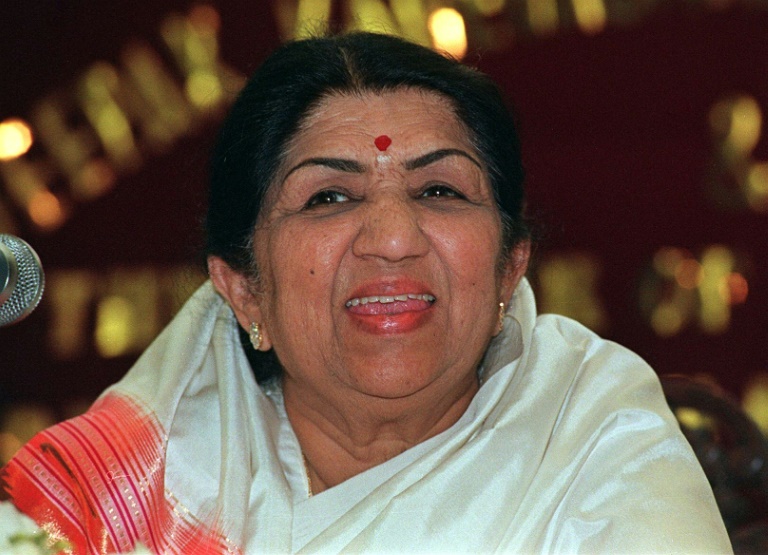
Bollywood superstar Lata Mangeshkar, known to millions as the “Nightingale of India” and a regular fixture of the country’s airwaves for decades, died Sunday morning at the age of 92.

Mangeshkar’s high-pitched melodies were an instantly recognisable feature of Indian cinema, with her work appearing in more than 1,000 films, and news of her passing prompted a wave of grief from industry luminaries.

“Heartbroken, but blessed to have known & loved this incredible soul,” said veteran Bollywood actor Anil Kapoor, best known internationally for his role as a game show host in Danny Boyle’s “Slumdog Millionaire”.

“Lataji holds a place in our hearts that will never be taken by anyone else. That’s how profoundly she has impacted our lives with her music.”

Mangeshkar was born in 1929 in Indore, central India, and started her musical training early under the tutelage of her father Deenanath, singing in his theatrical productions when she was just five.

Her father’s death when she was 13 forced her to take on the role of breadwinner for four younger siblings, and the family eventually moved to Mumbai in 1945.

There she pursued a career as a playback singer, recording tracks to be mimed by actors, and her voice soon became a staple of Bollywood blockbusters.

In a move reflecting her huge following, she was invited by the government to sing a patriotic tribute to the soldiers killed in the 1962 Indo-China war at India’s Republic Day commemorations in January 1963.

Her rendition of “Oh the People of My Country” reportedly moved then prime minister Jawaharlal Nehru to tears.

In the following decades, composers and film producers alike vied to sign the prolific Mangeshkar for their movies.

“I composed keeping Lata Mangeshkar’s range and voice quality in mind,” composer Anil Biswas said in an interview.

“She had a wide range, and one could think of more complicated melodies than with the earlier untrained singers.”

– ‘Stalwart of Indian culture’ –

Together with her younger sister Asha Bhonsle — a superstar in her own right — Mangeshkar dominated Bollywood music for more than half a century, and is considered by many to be the Indian film industry’s greatest-ever playback singer.

Mangeshkar was not shy about taking a stand when it came to raising her prices or asking for a share of the royalties earned on her songs.

Her longevity and discipline saw her lend her voice to teenage actresses who were 50 years her junior. 

Critics complained that her dominance left little room for newer singers to thrive, but her audience remained loyal, ensuring that her songs ruled the charts.

She was also known for her quirks, such as never singing with her shoes on and always writing out each song by hand before recording it.

Mangeshkar was in 2001 awarded the Bharat Ratna, India’s highest civilian honour, and received France’s Legion d’Honneur in 2009 in recognition of her contribution to Indian music and cinema.

“Coming generations will remember her as a stalwart of Indian culture, whose melodious voice had an unparalleled ability to mesmerise people,” Prime Minister Narendra Modi said.

She passed away in a Mumbai hospital on Sunday after being admitted to its intensive care unit on January 11 with Covid-19 symptoms.

Authorities announced a state funeral and two days of national mourning for the singer.

Though she dropped out of school, saying she only ever took classes for one day, Mangeshkar was fluent in several languages. 

Her oeuvre included devotional and classical albums and spanned around 27,000 songs in dozens of languages including English, Russian, Dutch and Swahili.

Cyclone Batsirai weakens after hitting Madagascar, floods feared

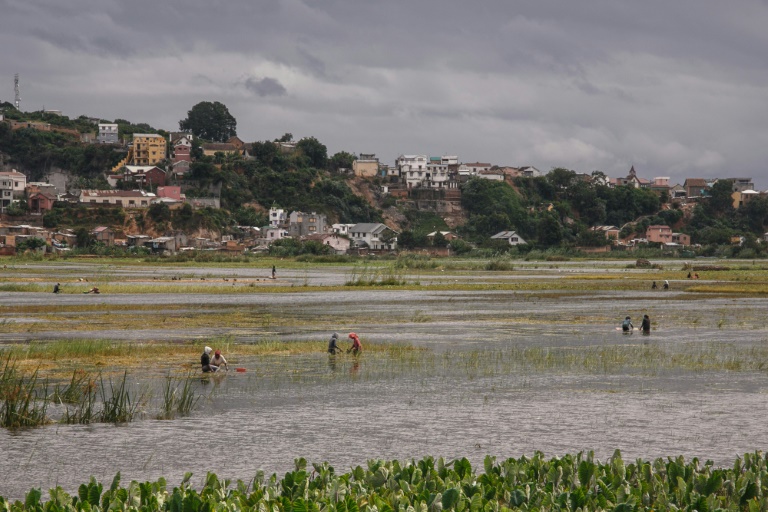
Cyclone Batsirai weakened overnight but floods were still expected due to heavy rain after it hit eastern Madagascar with strong winds, the island’s meteorological office said Sunday.

“Batsirai has weakened,” Meteo Madagascar said, adding that the cyclone’s average wind speed had almost halved to 80 kilometres per hour (50 miles per hour), while the strongest gusts had scaled back to 110 km/h from the 235 km/h recorded when it made landfall on Saturday evening.

The cyclone, the second storm to hit the large Indian Ocean island nation in just a few weeks, was moving westwards at a rate of 19 km/h, the meteorological services said.

But “localised or generalised floods are still feared following the heavy rains,” it said, adding that Batsirai should emerge at sea in the Mozambique Channel later Sunday.

Batsirai made landfall in Mananjary district, more than 530 kilometres (310 miles) southeast of the capital Antananarivo, around 8 pm local time (1700 GMT) Saturday.

It reached the island as an “intense tropical cyclone”, packing winds of 165 kilometres per hour (102 miles per hour), Faly Aritiana Fabien of the country’s disaster management agency told AFP.

The national meteorological office has said it fears “significant and widespread damage”.

Just an hour and a half after it first hit land, nearly 27,000 people had been counted as displaced from their homes, Fabien said.

He said his office has accommodation sites, food and medical care ready for victims, as well as search and rescue plans already in place.

– ‘Very serious threat’ –


The Meteo-France weather service had earlier predicted Batsirai would present “a very serious threat” to Madagascar, after passing Mauritius and drenching the French island of La Reunion with torrential rain for two days.

In the hours before the cyclone hit, residents hunkered down in the impoverished country, still recovering from the deadly Tropical Storm Ana late last month.

In the eastern coastal town of Vatomandry, more than 200 people were crammed in one room in a Chinese-owned concrete building. 

Families slept on mats or mattresses.

Community leader Thierry Louison Leaby lamented the lack of clean water after the water utility company turned off supplies ahead of the cyclone.

“People are cooking with dirty water,” he said, amid fears of a diarrhoea outbreak.

Outside plastic dishes and buckets were placed in a line to catch rainwater dripping from the corrugated roofing sheets.

“The government must absolutely help us. We have not been given anything,” he said.

Residents who chose to remain in their homes used sandbags and yellow jerrycans to buttress their roofs.

– Cyclone still ‘dangerous’ –

Other residents of Vatomandry were stockpiling supplies in preparation for the storm.

“We have been stocking up for a week, rice but also grains because with the electricity cuts we cannot keep meat or fish,” said Odette Nirina, a 65-year-old hotelier in Vatomandry. 

“I have also stocked up on coal. Here we are used to cyclones,” she told AFP.

Winds of more than 50 kilometres per hour (30 miles per hour) pummelled Vatomandry on Saturday morning, accompanied by intermittent rain.

The disaster agency said the cyclone was expected to remain “dangerous” as it swept across the large island overnight and in the morning.

Flooding is expected due to excessive rainfall in the east, southeast and central regions of the country, it warned.

The United Nations was ramping up its preparedness with aid agencies, placing rescue aircraft on standby and stockpiling humanitarian supplies.

At least 131,000 people were affected by Ana across Madagascar in late January. Close to 60 people were killed, mostly in the capital Antananarivo.

That storm also hit Malawi, Mozambique and Zimbabwe, causing dozens of deaths.

The UN’s World Food Programme pointed to estimates from national authorities that some 595,000 people could be directly affected by Batsirai, and 150,000 more might be displaced due to new landslides and flooding.

The storm poses a risk to at least 4.4 million people in one way or another, the International Federation of Red Cross and Red Crescent Societies said.

burs-str-sn/dl

Philippines' raucous election campaign season to kick off

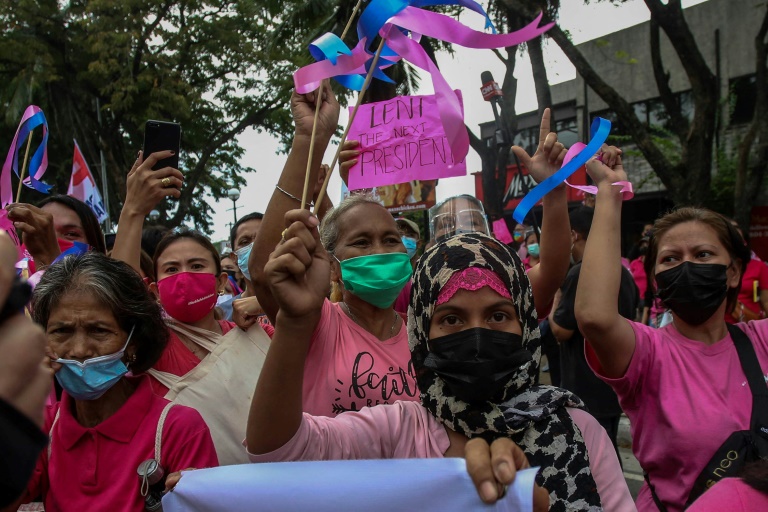
Philippine election candidates will hit the hustings Tuesday for the official start of campaigning, with the son and namesake of former dictator Ferdinand Marcos leading the presidential race as he seeks the ultimate revival of the family brand.

Political scions, celebrities and ex-convicts are among the contenders vying for more than 18,000 posts in the May 9 polls, with most interest on the contest to succeed authoritarian firebrand Rodrigo Duterte, whose six-year presidency has been marked by foul-mouthed tirades and a deadly drug war.

More than 35 years after the Philippines emerged from his father’s dictatorship, voter surveys show Ferdinand Marcos Jr heading towards a landslide victory as a massive social media campaign cranks up support and, critics say, whitewashes the clan’s history.

Boosted by a formidable alliance with first daughter and vice-presidential candidate Sara Duterte, Marcos Jr — one of the most polarising figures in the Philippines — has vowed “to unify the country and give our fellowmen the future that they deserve”.

In the Philippines, the president and vice-president are elected separately.

Efforts to disqualify Marcos Jr over a decades-old tax conviction sparked a public spat between election officials, while allegations of cocaine snorting and corruption among presidential candidates have fuelled a political atmosphere of chaos and skulduggery. 

As usual, personality will trump politics for many of the roughly 65 million voters deciding who to support. 

“This will be a campaign dominated by personalities and political dynasties, rather than a contest over policies or economic ideologies,” said Eurasia Group analyst Peter Mumford.

Outgoing presidents usually identify their preferred successor, who they hope will keep them out of prison as much as protect their legacy.

But Duterte has been silent since his choice, loyal aide Senator Christopher Go, pulled out of the contest.

Polls show Marcos Jr, popularly known as “Bongbong”, with a huge lead in a field of five credible candidates for president.

Some analysts are still cautious about calling a winner in a race that only requires the victor to get more votes than anyone else. 

Vice-President Leni Robredo — the opposition candidate and nemesis of both Marcos Jr and Duterte — is a distant second, ahead of celebrity mayor Francisco Domagoso, retired boxing champion Manny Pacquiao and ex-police chief Panfilo Lacson.

“Nothing is set in stone — it’s a very fluid race,” political analyst Richard Heydarian told a briefing.

– ‘Enough wiggle room’ –

Victory for Marcos Jr would mark the ultimate political comeback for his controversial clan, which was chased into US exile after the patriarch’s humiliating downfall in 1986.

The dictator oversaw widespread human rights abuses to maintain his control of the country and enable his massive plundering, with thousands of people killed or tortured, previous Philippine governments said.

Opponents seeking to block the Marcos family’s return to the presidential palace have filed petitions with the Commission on Elections to have the son thrown out of the race over a previous conviction for failing to file income tax returns.

He has already beaten one of the challenges, but a key ruling on several disqualification cases has been delayed.

One of the election officials involved in hearing those cases retired last week — but not before she broke ranks and published her decision to disqualify Marcos Jr and lobbed accusations of political interference.

“I think there’s enough wiggle room to actually let him off,” said a long-time observer of Philippine politics.

“This country would probably explode if Bongbong Marcos was disqualified.”

Marcos Jr has tried to defend his father’s rule by citing economic growth, and minimised the human rights abuses during that regime.

But questions over his family’s past and alleged ill-gotten wealth have become a source of irritation.

He recently snubbed an invitation to talk to a respected television journalist, calling her biased, and told another he would no longer “return to 35-year-old issues”.

Robredo, who narrowly defeated Marcos Jr in the 2016 vice-presidential race, entered the presidential contest following pressure from supporters and opposition groups.

While her volunteer-driven campaign has struck a chord with progressives, her mild-mannered personality is hurting her appeal in the deeply macho country.

University of the Philippines political science professor Jean Franco said: “We want a leader who is feisty.”

Tunisian president dissolves top judicial watchdog, accuses it of bias

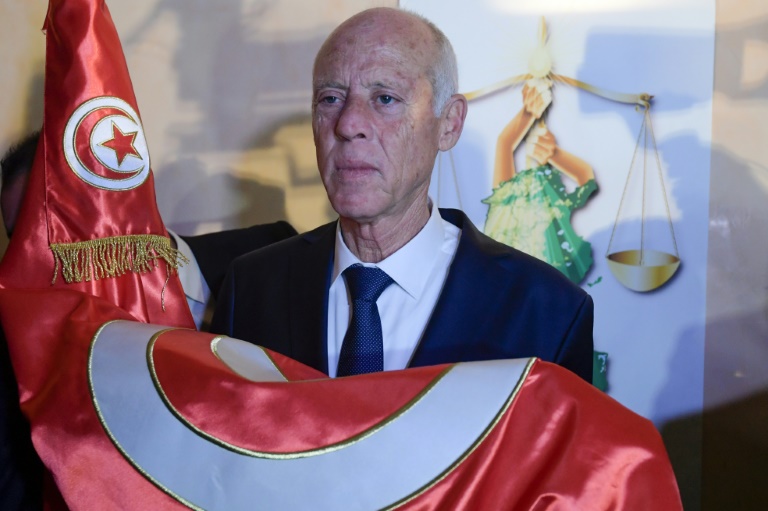
Tunisian President Kais Saied has dissolved a major independent judicial watchdog, he said Sunday, accusing it of bias and working for special interests.

The Superior Council of the Judiciary (CSM) “is a thing of the past”, the president said in a video, accusing the body responsible for appointing judges of corruption and delaying politically sensitive investigations, including into the assassinations of left-wing activists in 2013.

Tunisia was the only democracy to emerge from the Arab Spring revolts of a decade ago, but civil society groups and Saied’s opponents have expressed fear of a slide back to the authoritarianism seen under long-time dictator Zine El Abidine Ben Ali.

Observers say the government is seeking to clamp down on the Islamist-inspired Ennahda party, which has controlled parliament and the various governments since the 2011 revolution which toppled Ben Ali.

Saied has concentrated all executive power since July 25, when he dismissed his Prime Minister and suspended parliament — a decision described as a coup by Ennahda and other opposition figures. He has since ruled by decree.

The “July 25 movement” — composed of his top supporters — Saturday called on the president to dissolve the CSM in order to “purge” the judiciary of “corrupt magistrates”.

“Unfortunately in this country, some judges in the courts have manipulated the Chokri Belaid case,” said Saied, referring to a leftist leader who was shot three times outside his home in February 2013.

“This is not the first trial where they have tried to hide the truth for years,” he added.

A major demonstration is planned for Sunday in Tunis to commemorate the assassination of Belaid and of Mohamed Brahmi, killed in similar circumstances in July the same year. 

“In this council, positions and appointments are sold and made according to affiliations,” said the head of state.

“You cannot imagine the money that certain judges have been able to receive, billions and billions,” he added.

Lata Mangeshkar 'Nightingale of India' dies aged 92

Bollywood superstar Lata Mangeshkar, known to millions as the “Nightingale of India” and a regular fixture of the country’s airwaves for decades, died Sunday morning at the age of 92.

Mangeshkar was born in 1929 and started her musical training early under the tutelage of her father Deenanath, singing in his theatrical productions when she was just five.

Her father’s death when she was only 13 forced her to take on the role of breadwinner to support four younger siblings, and the family eventually moved to Mumbai in 1945.

There she pursued a career as a playback singer, recording tracks to be mimed by actors, and her high-pitched voice soon became a staple of Bollywood blockbusters.

In a move reflecting her huge following, she was invited by the government to sing a patriotic tribute to the soldiers killed in the 1962 Indo-China war at India’s Republic Day commemorations in January 1963.

Her rendition of “Oh the People of my Country” reportedly moved then Prime Minister Jawaharlal Nehru to tears.

In the following decades, composers and film producers alike vied to sign the prolific Mangeshkar for their movies.

“I composed keeping Lata Mangeshkar’s range and voice quality in mind,” composer Anil Biswas said of her in an interview published in the “Encyclopedia of Hindi Cinema”.

“She had a wide range, and one could think of more complicated melodies than with the earlier untrained singers,” he added.

– ‘Stalwart of Indian culture’ –

Together with her younger sister Asha Bhonsle — a superstar in her own right — Mangeshkar dominated Bollywood music for more than half a century, and is considered by many to be the Indian film industry’s greatest-ever playback singer.

Mangeshkar was not shy about taking a stand when it came to raising her prices or asking for a share of the royalties earned on her songs.

Her longevity and discipline saw her lend her voice to teenage actresses who were 50 years her junior. 

Critics complained that her dominance left little room for newer singers to thrive but her audience remained loyal, ensuring that her songs ruled the charts.

She was also known for her quirks, such as never singing with her shoes on and always writing out each song by hand before recording it.

Mangeshkar was in 2001 awarded the Bharat Ratna, India’s highest civilian honour, and received France’s Legion d’Honneur in 2009 in recognition of her contribution to Indian music and cinema.

“Coming generations will remember her as a stalwart of Indian culture, whose melodious voice had an unparalleled ability to mesmerise people,” Prime Minister Narendra Modi said.

She passed away in a Mumbai hospital on Sunday after being admitted to its intensive care unit on January 11 with Covid-19 symptoms.

Public broadcaster Doordarshan announced a state funeral and two days of national mourning for the singer after news of her death broke. 

A school dropout in her hometown of Indore who said she only attended classes for one day, Mangeshkar was fluent in several languages. 

She sang in more than 1,000 films, in addition to recording devotional and classical albums. Her oeuvre spanned around 27,000 songs in dozens of languages including English, Russian, Dutch and Swahili.

US officials say Russia preparing full-scale invasion of Ukraine

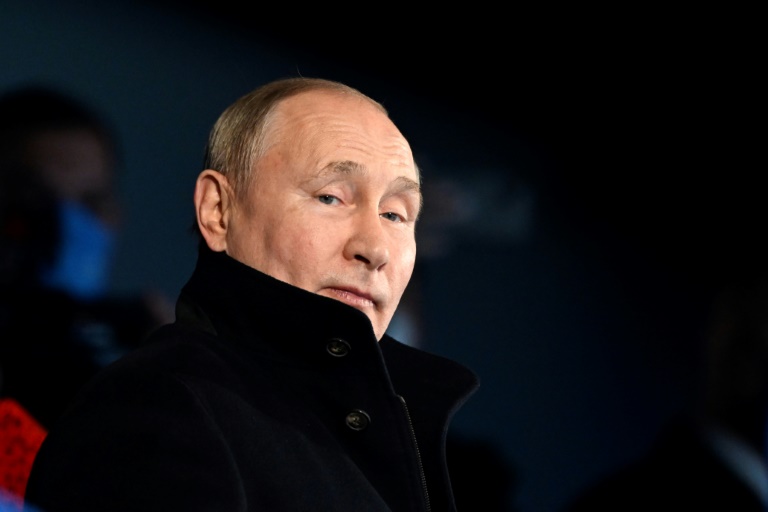
Russia has stepped up preparations for an all-out invasion of Ukraine but it is not clear if Moscow has decided to take such a step, US officials have said citing intelligence assessments.

Russia has assembled 110,000 troops along the border with its pro-Western neighbor but US intelligence has not determined if President Vladimir Putin has actually decided to invade, according to the officials who in recent days briefed members of Congress and European allies.

The officials warned lawmakers that the assembled Russian force on the frontier is growing at a rate that would give Putin the force he needs for a full-scale invasion — some 150,000 soldiers — by mid-February.

They said Putin wants all possible options at his disposal: from a limited campaign in the pro-Russian Donbas region of Ukraine to a full-scale invasion.

Russia denies that it is planning to invade Ukraine.

If Moscow does opt for a full-scale attack, the invading force could take the capital Kyiv and topple President Volodymyr Zelensky in a matter of 48 hours, the officials said.

They estimated such an attack would leave 25,000 to 50,000 civilians dead, along with 5,000 to 25,000 Ukrainian soldiers and 3,000 to 10,000 Russian ones.

It could also trigger a refugee flood of one to five million people, mainly into Poland, the officials added.

– Special forces –

President Joe Biden has decided to send American forces to Poland to protect NATO members, as diplomats work furiously to try to persuade Russia to pull its troops back from the border with Ukraine.

The first contingent of US soldiers arrived Saturday.

Russia has also announced what it calls joint military maneuvers with Belarus, where it has sent several battalions to the north of Kyiv and in the Brest region, not far from the border with Poland.

US intelligence has concluded that Russia is continuing to muster a major military force on its border with Ukraine.

Two weeks ago, a total of 60 Russian army battalions were positioned to the north, east and south of Ukraine, particularly in the Crimean peninsula, which Russia annexed after an invasion in 2014.

But on Friday, there were 80 battalions and 14 more were en route from elsewhere in Russia, US officials said.

They added that some 1,500 Russian special forces soldiers known as Spetsnaz arrived along the Ukraine border a week ago.

– Naval forces assembling –

A major Russian naval force is also positioned in the Black Sea, equipped with five amphibious vessels that could be used to land troops on Ukraine’s southern coast, the US officials said.

They added that another six amphibious craft were observed leaving the Barents Sea north of Russia, sailing past Britain and through the Strait of Gibraltar, apparently on their way to the Black Sea.

In other deployments, Russia has positioned fighter planes near Ukraine, as well as bombers, missile batteries and anti-aircraft batteries, US officials said.

On Thursday, the United States said it had evidence that Russia was preparing a video depicting a bogus attack by Ukraine that would serve as a pretext for a real Russian assault on Ukraine.

Morocco in shock after tragic death of 'little Rayan'

Morocco was in shock Sunday after emergency crews found a five-year-old boy dead at the bottom of a well in a tragic end to a painstaking five-day rescue operation that gripped the nation and the world.

The ordeal of “little Rayan” since he fell down the well on Tuesday afternoon gained global attention and sparked an outpouring of sympathy online, with the Arabic hashtag #SaveRayan trending.

Throughout the operation to extricate him from the bottom of the 32-metre (100-foot) well shaft, authorities had cautioned that they did not know whether he was alive.

And reflecting the emotions provoked by the drama, it was Morocco’s royal cabinet that announced he had been found dead.

“Following the tragic accident which cost the life of the child Rayan Oram, His Majesty King Mohammed VI called the parents of the boy who died after falling down the well,” a statement from the royal court said.

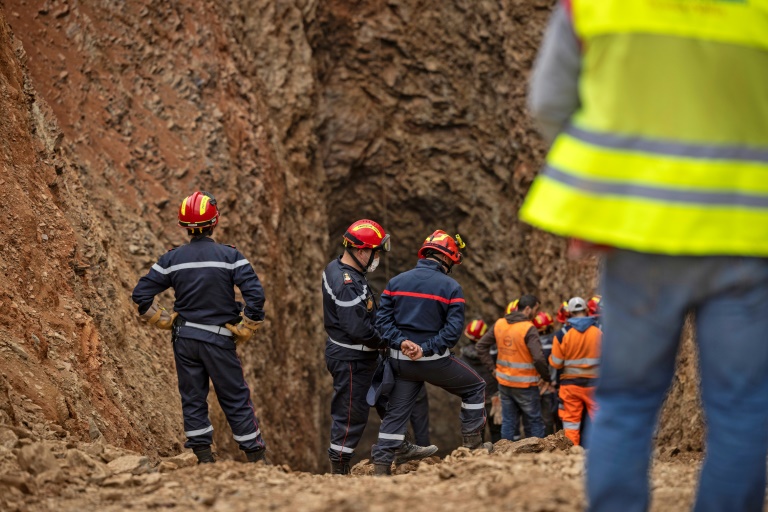
By mid-afternoon Saturday, rescue crews, using bulldozers and front-end loaders, had excavated the surrounding red earth down to the level where the boy was trapped, and drill teams began creating a horizontal tunnel to reach him from the side. 

But progress slowed to a snail’s pace as the drill teams worked by hand to avoid any vibrations that might bring the brittle soil down on the stricken child, local authorities said.

AFP correspondents saw the boy’s parents walk down the slope into the horizontal tunnel, visibly crushed, before returning and boarding an ambulance without saying a word.

After a period of confusion, a crowd of onlookers began dispersing in sombre silence.

The family was yet to announce the date of the funeral, but according to Muslim tradition it must take place soon, in principle as early as Sunday.

– ‘So tragic’ –

Tributes poured in in the wake of the news that the rescue efforts had failed to recover Rayan alive.

“I want to say to the family of little Rayan and to the Moroccan people that we share your pain,” French President Emmanuel Macron said on Facebook.  

“Rayan’s courage will stay in our memories and continue to inspire us,” wrote AC Milan’s Algerian midfielder Ismael Bennacer in a tweet accompanied by a drawing of a child being lifted into the sky, carried by a heart-shaped balloon marked with the colours of Morocco.

“We all of us had been holding out hope that little Rayan would make it,” Moroccan-American novelist Laila Lalami wrote on Twitter. “This is all so tragic.”

– Race against time –

Thousands of people had gathered and even camped in solidarity around the site in recent days, where AFP reporters have said the tension has been palpable.

Some had applauded to encourage the rescuers, sang religious songs or prayed, chanting in unison “Allahu akbar” (God is greatest).

Workers had tried to get oxygen and water down to the child but it was not clear whether he was able to use them, AFP correspondents reported.

“I keep up hope that my child will get out of the well alive,” Rayan’s father had told public television 2M on Friday evening. “I thank everyone involved and those supporting us in Morocco and elsewhere.”

He said earlier in the week that he had been repairing the well when the boy fell in.

The shaft, just 45 centimetres (18 inches) across, was too narrow for the boy to be reached directly, and widening it was deemed too risky — so earth-movers dug a wide slope into the hill to reach him from the side.

The operation made the landscape resemble a construction site, and red-helmeted civil defence personnel had at times been suspended by rope, as if on a cliff face. 

Overnight they worked non-stop under powerful floodlights that gave a gloomy air to the scene. 

hic-fs-ko-agr/fka/alc/roc/oho/leg

Elizabeth II says wants Camilla to be Queen Consort as Platinum Jubilee begins

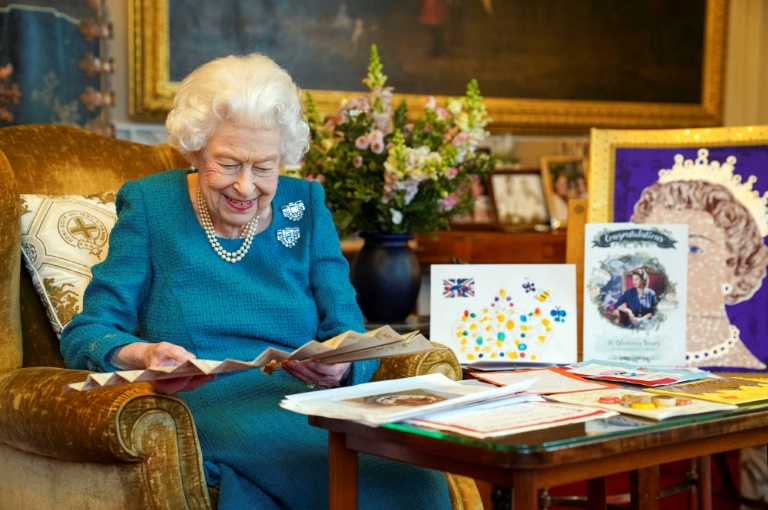
Queen Elizabeth II has announced that she wants Camilla, the wife of her heir Prince Charles, to ultimately be known as Queen Consort, as she became the first British monarch to reign for seven decades Sunday.

The 95-year-old said she hoped her daughter-in-law will be known as Queen Consort when Charles accedes to the throne, in a remarkable journey to public acceptance for Camilla after being vilified for her role in the break-up of Charles’ marriage to Princess Diana.

Addressing the nation in a written statement on the eve of the 70th anniversary of her accession to the throne, the Queen said that when Charles becomes monarch she hoped the British people would give him and Camilla “the same support that you have given me”.

Charles and Camilla, now known as the Duke and Duchess of Cornwall, had a highly publicised relationship that ended their previous marriages and there had been doubts over whether the public would accept her.

They married in 2005, with a royal announcement that Camilla would become known as Princess Consort due to the sensitivity of the issue, but she gradually won plaudits as the future king’s loyal wife.

Charles has always been adamant his “darling wife” should receive the title, The Times reported citing a source, with a spokesperson for the couple saying Saturday they were “touched and honoured” by the news.

– ‘Tireless service’ –

Britain’s Sunday newspapers swiftly put the story on their front pages.

“Camilla WILL become Queen,” wrote the Daily Mail, while The Sunday Times said “Queen anoints Queen Camilla”, saying the move ended “years of controversy and confusion over Camilla’s future title”.

The announcement came as Elizabeth II began her Platinum Jubilee in subdued fashion at Sandringham in eastern England, the 20,000-acre (8,100-hectare) estate near the north Norfolk coast which is close to her heart.

Four days of festivities are planned for early June, coinciding with the anniversary of her 1953 coronation, including a military parade and music concert, street parties, a nationwide “Big Jubilee Lunch” and a “Platinum Pudding Competition”.

On Monday, there will be ceremonial gun salutes in London’s Green Park, close to Buckingham Palace, and at Edinburgh Castle in Scotland — traditionally not held at weekends.

Britain’s longest-serving monarch acceded to the throne aged 25 on February 6, 1952, following the death of her father King George VI.

During her reign, she has remained a constant through periods of huge social and political upheaval — a living link to Britain’s post-war and imperial past.

In September 2015, she surpassed Queen Victoria’s 63 years and seven months on the throne and, despite some health concerns over the past year, has appeared determined to continue her record-breaking reign.

Speaking in parliament this week, Prime Minister Boris Johnson said Sunday was “a moment of national celebration” while noting it was “a day of mixed emotions for Her Majesty”.

After husband Philip’s death in April last year, the Queen returned to public and official engagements, including hosting world leaders at the G7 summit.

She was forced to slow down on advice from doctors, however, after an overnight hospital stay in October sparked public concern.

Since then, she has largely stayed at Windsor Castle and made few public appearances.

But on Saturday, the Queen held a reception for locals at Sandringham, reportedly her largest in-person public engagement since the autumn health scare.

Close Bitnami banner
Bitnami