World

Wind powers change in England's industrial heartland

On the banks of the River Humber in northern England, the winds of change are blowing through Hull, where factory workers busily craft turbine blades in a green revolution.

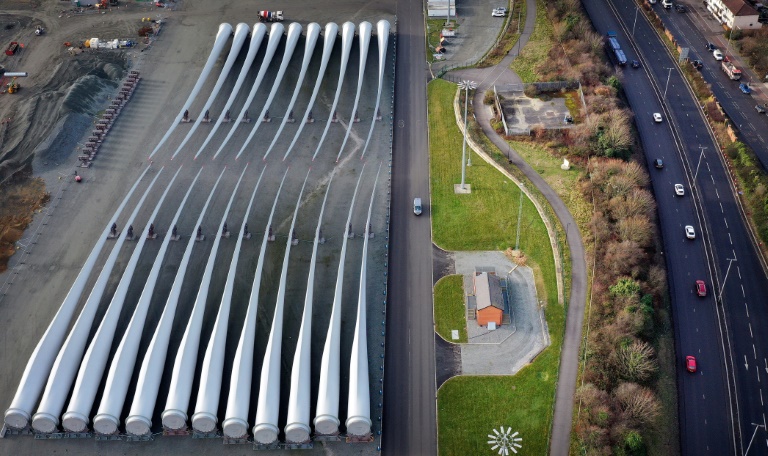
Hull, known for a once-thriving fishing industry, the poet Philip Larkin, rugby league, and the city’s eponymous football club recently bought by Turkish TV personality Acun Ilicali, is home to Britain’s biggest wind turbine blade plant.

That has placed Hull at the centre of the UK government’s long-term plan to slash carbon emissions, tackle climate change and cut rocketing household energy bills.

German-Spanish giant Siemens Gamesa is rapidly expanding its facility to meet booming demand and keep the country’s much-trumpeted 2050 net-zero target on track.

The need for cheaper sources of energy became increasingly urgent this week, as the government scrambled to head off a cost of living crisis, faced with runaway electricity and gas costs that are fuelling decades-high inflation.

Britain unveiled financial support for households after the UK energy regulator lifted prices to reflect the spiking natural gas market.

– ‘Cheaper and cleaner’ –

“We are doing our bit to tidy the world up and get cheaper and cleaner energy for everybody,” blade painter Carl Jackson, 56, told AFP from the factory floor.

“I think wind power is a big part of the future. It’s been a massive boost to jobs and the economy in Hull,” added Jackson, who joined when Siemens Gamesa opened six years ago.

The hub has since manufactured 1,500 hand-made turbine blades and now employs more than 1,000 people.

Prime Minister Boris Johnson, host of last November’s UN climate change summit in Glasgow, has vowed to “level up” economic opportunity in places like Hull, which voted overwhelmingly for Brexit.

Siemens Gamesa built the £310-million plant jointly with Associated British Ports in 2016, and it is now undergoing a major extension to build bigger blades.

The Hull factory manufactures about 300 turbine blades per year, with each measuring 81 metres in length — about the same as the wingspan of an Airbus A380 aircraft.

A wind turbine, comprising three such blades, can power an average house for 24 hours with one single rotation.

New, even longer 100-metre blades will provide enough power for up to two days.

– ‘Driving down energy costs’ –

In the cavernous Hull factory, staff assemble balsa wood, fibreglass and resin into vast blade moulds to start a journey that will eventually harness the ferocious winds of the North Sea.

That enables Britain to cut carbon emissions while curbing its dependency on imported energy and lowering prices in the long term, said plant director Andy Sykes.

“Over the course of last year, 25 percent of the UK’s (electricity) was delivered from wind power,” said Sykes.

“That will only continue to grow and help drive down the cost of energy by reducing the need for the import of energy.”

The group will open another factory in Le Havre, northern France, this year in a push for cleaner energy across Europe, where wind generated an average 16 percent of electricity according to 2020 industry data.

Scotland recently awarded a string of vast offshore wind projects after Johnson vowed to make Britain the “Saudi Arabia of wind”.

Hull is also expanding into the broader renewable sector, with plans for biofuels, green hydrogen, and carbon capture, as well as solar and tidal power generation under the city’s “Green Port” initiative.

The local authority is eager to slash carbon output from the Humber estuary region, which accounts for 40 percent of Britain’s industrial emissions — particularly from the cement, gas, oil, petrochemicals and steel sectors.

“You really have to decarbonise the Humber area for the UK to be really able to address significant parts of its net zero challenge,” Hull City Council climate officer Martin Budd told AFP.

“And this Siemens offshore wind plant provides a key activator to achieve that.”

The Humber estuary’s high seabed makes it ideal for offshore turbines.

At the same time, the estuary expels an estimated 12.3 million tonnes of carbon per year.

– Ensuring survival –

Budd said tackling climate change was vital to saving low-lying Hull from flooding.

“We are the second most vulnerable UK city after London to flooding. So the survival of the city depends on tackling climate change,” he added.

“It’s integral that we tackle climate change and that as a city we take those steps by supporting manufacturing in industries that are going to tackle climate change.”

The UK wants offshore wind farms to provide one-third of the country’s electricity by 2030.

Climate change specialist Nick Cowern, an emeritus professor at Newcastle University, cautioned that Britain also needed to develop chemical storage capability.

“It’s realistic to put wind power at the centre of the UK’s low carbon electricity generation approach, which is a major part of the effort towards net zero,” he told AFP.

He added that while wind and solar were safe long-term bets, gas still had a significant role to play.

“Until we have the ability to store electricity as hydrogen — or alternatives like ammonia — and be better grid-connected to our neighbours in continental Europe and the Nordic countries, gas will still be needed during periods of low wind speeds and low solar generation.”
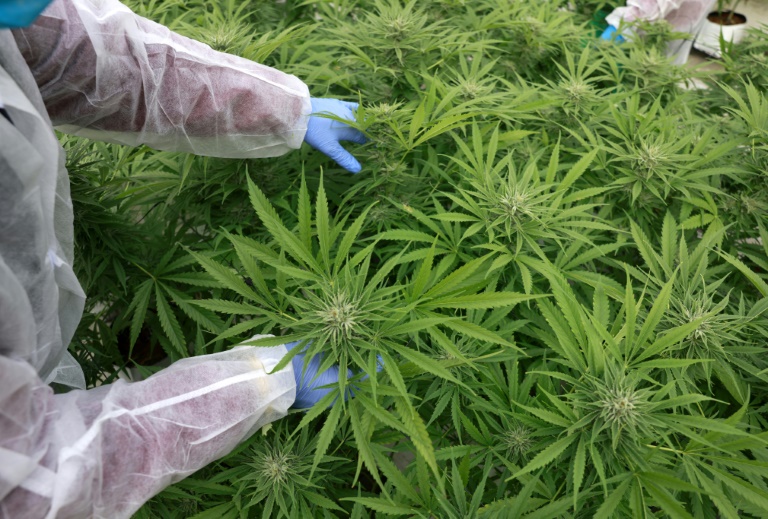
Israeli desert town aims to be medical 'cannabis capital'

In Israel’s Negev desert, far from the skyscrapers of Tel Aviv, the town of Yeruham hopes to cultivate an international reputation as the country’s medical cannabis technology powerhouse.

Dozens of start-ups are already working on medical cannabis in Israel, where new legislation is expected to lead to further market growth in the fast-expanding sector.

Some believe that cannabis could help Yeruham tackle unemployment among its 12,000 residents, with initial efforts being led by a firm called CanNegev. 

The company is known as an incubator, helping foster the growth of infant firms. CanNegev shelters four start-ups and is Israel’s first medical cannabis technology incubator.

“We have decided to make medical cannabis the heart of our activity, here in Yeruham, one of the most peripheral towns in Israel — a forgotten city,” said CanNegev founder Zvi Bet Or.

He discovered a receptive audience in Tal Ohana, elected in 2018 to be Yeruham’s first female mayor. 

“My dream is to make Yeruham the capital of medical cannabis in Israel,” Ohana told AFP. 

“It’s not every day that a new market is born” in the country, added Ohana, 37. “I told myself I have to do everything to be at the avant-garde of science and technology in this field.”

CanNegev’s modern building, facing the desert sands, stands out almost like a mirage, a symbol of the hoped-for future in the town whose stuccoed blocks of social housing were built in the 1950s for newly arrived immigrants.

But Yeruham is part of an economic priority zone that offers concessions to firms willing to set up there.

Ohana said the cannabis tech sector could transform the image of her town and help bring down its persistently higher-than-average unemployment, which is around eight percent.

“My goal is to create quality jobs” and to offer high incomes to attract a new population of workers, she said.

– World’s leading importer – 

Recreational use of cannabis is illegal though tolerated in Israel. However, authorities have encouraged its therapeutic use for the past decade to treat severe medical conditions and post-traumatic stress in former soldiers.

In October, Israel’s parliament advanced a bill aimed at making medical cannabis more available.

It would expand a market that has already drawn scores of entrepreneurs including two former prime ministers: Ehud Olmert is business adviser to UNIVO Pharmaceuticals, and Ehud Barak chairs the board of InterCure.

About 100 start-ups are working on cannabis, said Dana Gourevich, Chief Technology Officer at the Israel Innovation Authority, adding that a quarter of those companies were founded in a single year, 2019.

“The medical cannabis ecosystem has received $60 million in investments in recent years,” said Gourevich.

She said a key factor in developing Israel’s homegrown cannabis industry was imports from overseas, especially Canada, where recreational use is legal. 

According to health ministry data, Israel imported 22 tonnes of medical cannabis in 2021 compared to just over 14 tonnes a year before, making it the world’s largest importer, the Israeli Cannabis Magazine noted. 

By contrast, exporting cannabis is legal in theory but faces significant hurdles complying with international standards, Gourevich said.

– CBD for all –

The health ministry recently indicated it was examining the possibility of removing cannabidiol (CBD) from the list of dangerous drugs. The measure could open a new arena for companies to market CBD products at scale. 

In southern Israel, near the city of Ashdod, BOL Pharma grows 400,000 cannabis plants annually on 3.5 hectares (8.6 acres), exclusively for therapeutic use. 

“About 110,000 patients have (medical cannabis) licences today in Israel, but when CBD becomes available to everyone, millions of people, families, will be able to use it in cosmetics and everyday products,” said Dvir Taler, 50, director of agriculture at BOL Pharma.

The company, currently the largest in the field of medical cannabis in Israel, partnered with the CanNegev incubator and supplies it with cannabis flowers for scientific experiments.

Taler said the incubator is developing a robot capable of autonomously harvesting flowers.

In its drive to become Israel’s hub for green gold, the municipality of Yeruham has also allocated 50 hectares for the cultivation of medical cannabis, arguing that the desert climate is ideal for the crop’s cultivation.

The user of that plot has not yet been determined. 

Agreements have also been reached for two factories manufacturing non-medical cannabis products — “self-care” goods such as oils used for cosmetics — to be set up in Yeruham in the coming years, Ohana, the mayor said.

Resident Avraham Elbaz, 67, a retiree, said that “of course” he was in favour of these factories, which would help create jobs — though he had not tried cannabis before.

“I have never smoked,” he said.

Australia urges Myanmar to free detained economist

Australia’s foreign minister called Sunday for the “immediate release” of economist Sean Turnell, who has been detained by Myanmar’s military junta for the past year.

Turnell, an Australian economics professor, was working as an advisor to civilian leader Aung San Suu Kyi when he was arrested last February, just days after a military coup.

He has been charged with violating Myanmar’s official secrets law and faces a maximum penalty of 14 years in prison if found guilty.

“Professor Turnell’s detention is unjust, and we reject the allegations against him,” Australian Foreign Minister Marise Payne said in a statement.

“We once again call for Professor Turnell’s immediate release.”

The coup triggered mass protests and a bloody military crackdown, with more than 1,500 civilians killed and nearly 12,000 arrested as of February 4, according to a local monitoring group.

Human rights groups have raised concerns about Turnell’s prosecution, particularly after the Australian embassy was denied access to his court hearing in September.

“Consistent with basic standards of justice and transparency, we expect that Professor Turnell should have unimpeded access to his lawyers, and that Australian officials be able to observe his court proceedings,” Payne said.

Turnell was in the middle of a phone interview with the BBC when he was detained after the coup.

“I’ve just been detained at the moment, and perhaps charged with something, I don’t know what that would be, could be anything at all of course,” Turnell told the broadcaster at the time.

“Everyone’s been very polite and all that, but obviously I’m not free to move or anything like that.”

Last month, a coalition of NGOs, including Human Rights Watch and the Refugee Council of Australia, called on the Australian government to impose targeted sanctions on Myanmar’s military leaders.

Elizabeth II says wants Camilla to be Queen Consort as Platinum Jubilee starts

Queen Elizabeth II on Sunday became the first British monarch to reign for seven decades, marking the landmark date with an announcement that she wants Camilla, the wife of her heir Prince Charles, to ultimately be known as Queen Consort.

The 95-year-old monarch begins her Platinum Jubilee in subdued fashion at her Sandringham estate in eastern England, where she traditionally spends anniversaries of her accession.

Four days of festivities are planned for early June, coinciding with the anniversary of her 1953 coronation, including a military parade and music concert, street parties, a nationwide “Big Jubilee Lunch” and a “Platinum Pudding Competition”.

Commemorative coins have been minted to mark Sunday’s unprecedented milestone and eight new celebratory postage stamps have been issued by the Royal Mail.

On Monday there will be ceremonial gun salutes in London’s Green Park, close to Buckingham Palace, and at Edinburgh Castle in Scotland. Traditionally these are not held at weekends.

Addressing the nation in a written statement late Saturday, the Queen said she wanted Camilla, the wife of her heir Prince Charles, to ultimately be known as Queen Consort.

The statement shows that the Queen is planning for the future after her death and holds Camilla, who married Charles in a civil ceremony in 2005, in high esteem.

– ‘Tireless service’ –

Britain’s longest-serving monarch acceded to the throne on February 6, 1952, following the death of her father King George VI. 

Aged just 25, she learned of the news while watching wildlife in a remote part of Kenya with her now late husband, Prince Philip.

During her subsequent decades-spanning reign, she has remained the one constant through periods of huge social and political upheaval, a living link to Britain’s post-war and imperial past.

In September 2015 she surpassed Queen Victoria’s 63 years and seven months on the throne and, despite some health concerns over the past year, has appeared determined to continue her record-breaking reign.

Speaking in parliament this week, Prime Minister Boris Johnson said Sunday was “a moment of national celebration” while noting it was “a day of mixed emotions for Her Majesty”.

“I know the whole House (of Commons) will want to join me in thanking Her Majesty for her tireless service,” he added. 

“We look forward to celebrating her historic reign with a series of national events in June.”

– ‘Ma’am you’re the tops’ –

On Saturday, the Queen held a reception for local people at her Sandringham estate in eastern England, reportedly her largest in-person public engagement since she suffered health problems last autumn. 

The monarch smiled as she cut a cake decorated with the jubilee emblem and received a posy featuring the same flowers as her Coronation bouquet.

The guests included Angela Wood, a woman who was involved in creating the recipe for coronation chicken in 1953. The bright yellow mildly curried dish was reportedly on the menu on Saturday.

After Philip’s death in April last year, the queen returned to public and official engagements, including hosting world leaders at the G7 summit in Cornwall, southwest England.

But she was forced to slow down on advice from doctors, after an overnight hospital stay in October sparked public concern. 

Since then she has largely stayed at Windsor Castle and made few public appearances.

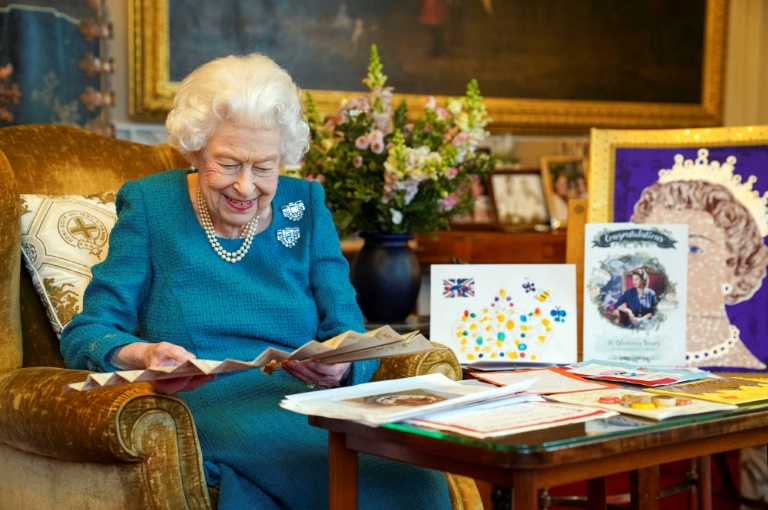
The queen was filmed last month at Windsor viewing an array of memorabilia created for previous jubilees from the Royal Archives.

These included a homemade card created by a child for her Golden Jubilee in 2002 with bottle caps glued to its front, alongside the message: “Ma’am you’re the tops.”

“That’s good: simple but ingenious,” the Queen said at last month’s viewing, when she was also accompanied by one of her dogs — a corgi and dachshund cross-breed called Candy.

She was also shown Queen Victoria’s famed “autograph fan”, gifted to that monarch in 1887 for her Golden Jubilee by the Prince and Princess of Wales, who became King Edward VII and Queen Alexandra. 

Numerous relations and friends subsequently signed their names on the fan, including Alix (of Hesse, later Tsarina of Russia) and Nick (later Tsar Nicholas II of Russia).

The Queen also took a first look at some early entries for the Platinum Pudding Competition, a nationwide baking competition to find a new pudding recipe dedicated to her.

The winning recipe will be made available to the public and enjoyed at the so-called “Big Jubilee Lunches” to be held during the June four-day weekend celebrations, which will see Britons enjoy two public holidays.

– Sandringham retreat –

The Queen will spend Sunday at Sandringham, the 20,000-acre (8,100-hectare) estate near the north Norfolk coast which is close to her heart.

Not only was it a retreat for Philip until he joined her in Covid isolation at Windsor Castle in 2020, but also for her father, who died there of lung cancer aged 56.

It was also a favoured residence for her grandfather, King George V, who also died there, and her great-grandmother, Queen Alexandra.

Costa Ricans choose among 25 presidential candidates

Costa Ricans head to the polls Sunday with a crowded presidential field and no clear favorite for tackling growing economic concerns in one of Latin America’s stablest democracies.

Often referred to as the region’s “happiest” country, Costa Rica is nonetheless grappling with a growing economic crisis, and the ruling Citizen’s Action Party (PAC) is set for a bruising defeat.

The economy has tanked under President Carlos Alvarado Quesada. And the PAC candidate, former economy minister Welmer Ramos, seems to be paying the price for sky-high anti-government feeling, polling at just 0.3 percent.

“The ruling party is completely weakened and has no chance” after two successive terms in office, said political analyst Eugenia Aguirre.

“The presidential unpopularity figure of 72 percent is the highest since the number was first recorded in 2013,” she added.

It means the country’s traditional political heavyweights — the centrist National Liberation Party (PLN) and the right-wing Social Christian Unity Party (PUSC) — could return to the fore after decades of a near political duopoly only recently broken by the PAC.

According to one poll published this month, former president Jose Maria Figueres (1994-98) of the PLN leads the race with just over 17 percent of stated support, followed by the PUSC’s Lineth Saborio on just under 13 percent.

Presidents cannot seek successive reelection.

– Problems have ‘worsened’ –

To win outright in Sunday’s first round, a candidate needs 40 percent of the vote, otherwise there will be a runoff on April 3 between the top two.

Polls show that about a third of the country’s 3.5 million voters are undecided as they are faced with a choice from 25 presidential candidates.

Unemployment, corruption and living costs are the top concerns. 

Costa Rica is known for its eco-tourism and green policies: its energy grid is entirely run on renewable sources.

Unlike many of volatile Central American neighbors, Costa Rica has no army, has had no armed conflicts since 1948 and no dictator since 1919.

But the worsening economic situation has hit confidence in the political class. 

Voters under 40 have only known “periods in which not only problems have not been resolved, but they have worsened,” university student Edgardo Soto, one undecided voter, told AFP.

– ‘Frustration’ –

Unemployment has been steadily rising for more than a decade and reached 14.4 percent in 2021.

Apathy and abstentionism are features of Costa Rican elections.

In 2018, 34 percent of voters stayed away, though participation is technically obligatory.

Polls show evangelical Christian singer Fabricio Alvarado Munoz of the right-wing New Republic Party (PNR) in third spot with just over 10 percent.

He commands support from the evangelical community, which makes up about 20 percent of Costa Rica’s five million people.

In fourth place is economist Rodrigo Chaves of the newly-formed centrist Social Democratic Progress Party. The highest-polling left-wing candidate is Jose Maria Villalta of the Broad Front. 

For the PLN’s Figueres, 67, the crowded field “is a reflection of this whole frustration that has built up.”

“If there are 25 options it is because the parties are not understanding the needs of a society that is changing right before their eyes,” he said.

Canada protests against Covid measures gain steam

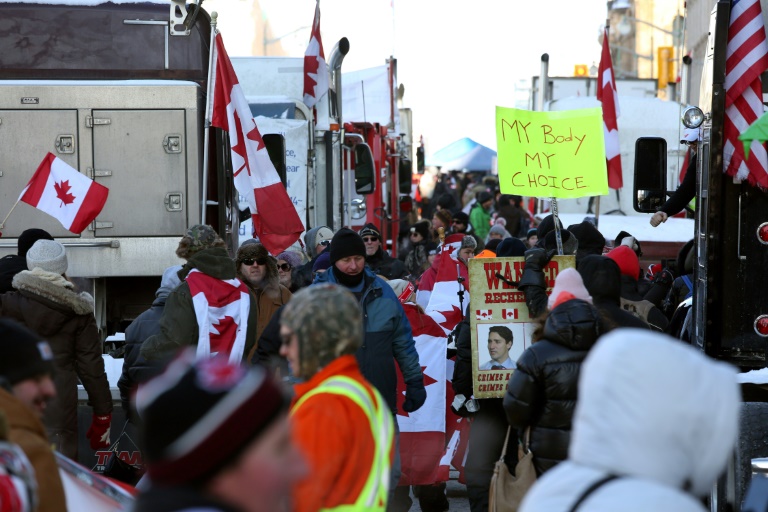
More demonstrators poured onto the streets of Ottawa and other Canadian cities on Saturday demanding an end to Covid vaccine mandates, as protests against pandemic restrictions entered their second week.

In the capital, demonstrators huddled around campfires in bone-chilling temperatures and erected portable saunas and bouncy castles for kids outside Parliament, while waving Canadian flags and shouting anti-government slogans.

Their chants of “freedom” were met with cries of “go home” by a smaller group of counter-protestors fed up with the week-long occupation of the capital.

The atmosphere, however, appeared more festive — with dancing and fireworks — than a week earlier, when several protesters waved Confederate flags and Nazi symbols and clashed with locals.

The demonstrations, which started out as protests by truckers angry with vaccine requirements when crossing the US-Canadian border, have morphed into broader protests against Covid health restrictions.

Police were out in force and put up barriers to limit vehicle access to the city center, as many thousands of protestors — including two on horseback — joined truckers already jamming Ottawa streets.

Similar protests were happening in almost every major Canadian city, including Toronto — where a man was charged with assault after throwing a smoke bomb into a crowd.

In Winnipeg, a driver was arrested for slamming his SUV into demonstrators. Four people were treated for minor injuries, police said.

And in southern Alberta province, truckers continued to block a major border crossing to the US state of Montana.

– ‘Nationwide insurrection’ –

At an emergency meeting late Saturday, Ottawa police chief Peter Sloly requested “an additional surge of resources” to bring an end to what police board chair Diane Deans described as a “siege” of the capital.

“This group is a threat to our democracy,” Deans said. “What we’re seeing is bigger than just a city of Ottawa problem, this is a nationwide insurrection. This is madness.”

With public anger rising — thousands of residents have complained of harassment by protesters, and an online petition demanding action has drawn 40,000 signatures — Sloly has faced increased pressure to end what he has called an “unlawful” occupation of the city.

Reached for comment by AFP, protest coordinator Jim Torma said the protesters would not back down.

“They’re not going to hide us,” Torma said. “We’re going to be in (politicians’) faces as long as it takes” to force an end to public health restrictions aimed at slowing the spread of Covid-19.

Kimberly Ball, who with her husband drove five hours from a small town west of Toronto to join the Ottawa protest, told AFP, “It’s about our freedom.” 

Holding back tears, she said, “A couple of people we know, friends, lost their jobs because of these (vaccine) mandates” and her own parents have disowned her for not getting a jab.

Ball has had Covid and said she questions whether the vaccines are safe and effective.

She is, however, in the minority in Canada, where 90 percent of adults are fully vaccinated.

– A ‘fringe minority’? –

The Freedom Convoy started on Canada’s Pacific coast in late January and picked up supporters along the long trek to the capital — as well as millions of dollars in an online fundraiser that GoFundMe cancelled late Friday after receiving reports of “violence and unlawful activity.”

The number of protesters in Ottawa had peaked last Saturday at several thousand before dwindling to a few hundred by midweek, officials said.

They received support from tech magnate Elon Musk and former US president Donald Trump, who in a statement Friday called Prime Minister Justin Trudeau a “far left lunatic” for imposing “insane Covid mandates.”

Trudeau has said the protesters represent only a “fringe minority,” though polls show one-third of Canadians support the call to lift all Covid restrictions.

Vaccine mandates for travelers are set by the federal government, but most other Covid measures are the responsibility of provincial authorities in Canada.

Following a backlash, Quebec last month walked back plans for a health tax on unvaccinated residents, while Saskatchewan this week announced an imminent lifting of all pandemic restrictions, despite pushback from doctors.

“What’s necessary is your freedom,” Saskatchewan Premier Scott Moe said in a video address. “What’s necessary is getting your life back to normal.”

Ottawa residents, meanwhile, have had enough of the chaos the protests have brought to their streets and launched a class action seeking almost 10 million Canadian dollars (US$8 million) from organizers. 

“The truckers have been terrorizing us for seven, eight days now,” university student Saffron Binder told AFP. “The occupation must end.”

French far-right hopeful Zemmour attacks welfare handouts

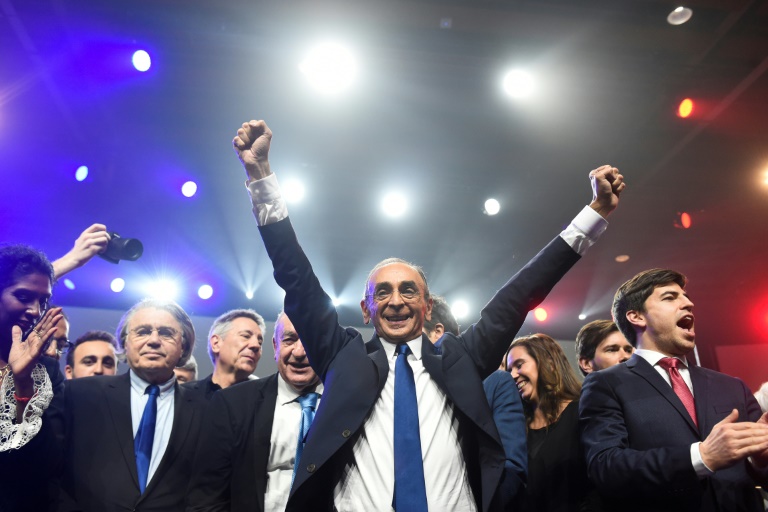
French far-right presidential candidate Eric Zemmour on Saturday used a meeting in the northern city of Lille to launch a tirade against welfare handouts.

Looking to outmanoeuvre fellow far-right rival Marine Le Pen in April polls, Zemmour told 6,000 supporters he was on the side of a “France that works”.

At her first campaign rally in Reims, northeast of Paris, Le Pen meanwhile spoke to a crowd of some 4,000 people, most of whom believed she represents a less “extremist” view of the world.

Choosing Reims, a city where numerous French kings were crowned down the centuries, Le Pen beamed as one backer, 58-year-old businesswoman Annick, said she would get her vote.

“I am doing well economically but with Marine Le Pen there are values — attachment to our French identity, an image of firmness,” said Annick.

She dubbed Zemmour “an extremist in his attitude and words” who “has no sincerity”.

Both far-right candidates are looking to sweep up support in their bid to reach a presidential run-off vote in the industrial north of the country which is a traditional hotbed of support.

The north is also a region, Zemmour suggested, where “handouts are an insult”.

Promising to tackle low salaries, he scoffed: “When you get up every morning to go and work… you don’t accept that your neighbour lives better than you do thanks to welfare without having to work.”

Lille’s Socialist mayor Martine Aubry had earlier said Zemmour was not welcome in the town and joined a peaceful demonstration against “hate” organised by anti-racism group SOS Racisme.

Police said a little over 1,000 people — including a few hundred from the hard left — staged another protest, during which security forces fired tear gas towards a handful of people dressed in black.

Among the protesters, Christian, a 68-year-old retiree, said he was there because he was worried his fellow French were being “deaf and blind” to far-right ideas he believes are dangerous.

During Zemmour’s rally, one journalist with private broadcaster LCI told AFP one of his supporters had spat in her face.

In a recent survey of voters by polling firm Ipsos, Zemmour and Le Pen both scored 14 percent.

The poll put President Emmanuel Macron in the lead with 24 percent, followed by right-wing contender Valerie Pecresse with 16.5 percent.

Honduran president grants amnesty to husband's allies

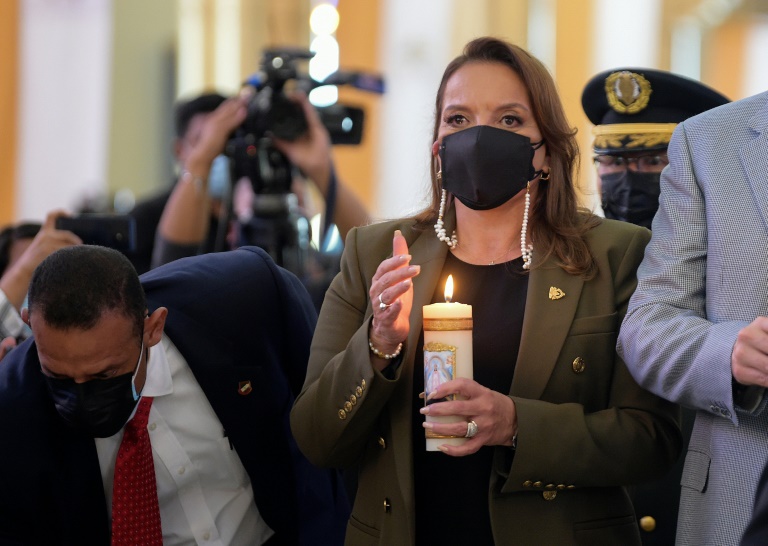
Honduras’ new president, leftist Xiomara Castro, who came to power promising to fight corruption, granted amnesty Saturday to many officials who served in her husband’s government more than a decade ago.

Manuel Zelaya was president from 2006-2009 until he was ousted.

The measure was approved on Thursday by the legislature led by Luis Redondo, a Castro loyalist, amid an ongoing dispute with a rival congressional faction over who should lead the body.

Despite that, Castro has pushed ahead with the amnesty and the measure was published Saturday in the Official Gazette, which gave it force of law.

The move drew criticism even from her new special advisor on transparency.

The unconditional amnesty is for officials who served in her husband’s government and those who were imprisoned for demonstrating against the re-election of President Juan Orlando Hernandez in 2017. He was Castro’s predecessor.

Zelaya was overthrown in 2009 by a civic-military alliance, which questioned his closeness to Venezuela’s socialist government.

Anti-corruption activists have claimed Castro’s pardons could cover the past deeds of people who engaged in corruption. 

Castro replaced the right-wing Hernandez, who left power dogged by allegations of drug trafficking and corruption in a country where at least 60 percent of the 10 million inhabitants live in poverty.

Elected in November, the country’s first woman president faces an uphill struggle to reform a country with one of the highest murder rates in the world. Tens of thousands of its citizens have tried to flee to the United States.

Queen Elizabeth II says Camilla should become Queen Consort

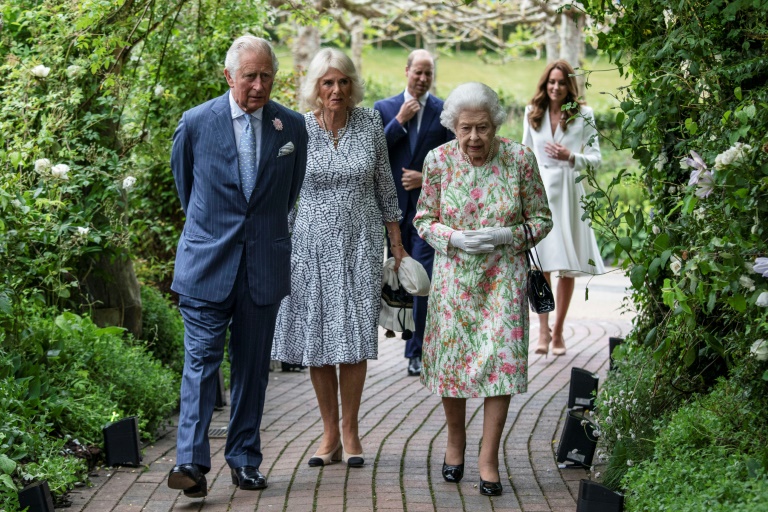
Queen Elizabeth II on Saturday said she wanted Camilla, the wife of her heir Prince Charles, to ultimately be known as Queen Consort, in a major statement on the eve of the 70th anniversary of her accession to the throne.

The 95-year-old British monarch said it was her “sincere wish” that when Charles becomes king, Camilla will be known as Queen Consort. It had been previously expected that Camilla, 74, would be known as Princess Consort when Charles, 73, accedes to the throne.

Addressing the nation in a written statement signed “Your Servant, Elizabeth R,” the Queen said that when “in the fullness of time, my son Charles becomes King, I know you will give him and Camilla “the same support that you have given me”.

“It is my sincere wish that, when that time comes, Camilla will be known as Queen Consort as she continues her own loyal service,” she added.

The statement shows that the Queen is planning for the future after her death and holds Camilla, who married Charles in a civil ceremony in 2005, in high esteem.

The couple, now known as the Duke and Duchess of Cornwall, had a highly publicised relationship that ended their previous marriages and there had been doubts over whether the public would accept Camilla becoming known as queen.

But she has become a hard-working member of the royal family and has seen her public approval rating grow.

In December, the Queen appointed Camilla, a member of the ancient Order of the Garter, the only spouse of her children to be granted this honour.

Britain’s Sunday newspapers swiftly put the story on their front pages.

“Camilla WILL become Queen,” wrote the Daily Mail, while The Sunday Times wrote “Queen anoints Queen Camilla”, saying the move ended “years of controversy and confusion over Camilla’s future title”.

A spokesperson for the couple said they were “touched and honoured”.

– Pledge of service –

The Queen issued a personal and significant message on the eve of the 70th anniversary of the day that her father, King George VI, died from lung cancer and she became monarch at 25.

As usual, the Queen is at her Sandringham estate for the anniversary.

She wrote in her message that: “It is a day that, even after 70 years, I still remember as much for the death of my father, King George VI, as for the start of my reign.”

On Sunday, she will become the only British monarch ever to have reigned for 70 years.

“As we mark this anniversary, it gives me pleasure to renew to you the pledge I gave in 1947 that my life will always be devoted to your service,” the Queen said, referring to a speech she gave on her 21st birthday.

The Queen said she looks ahead “with a sense of hope and optimism” as the nation is set for a summer of Platinum Jubilee celebrations including a four-day weekend in June.

“As I look forward to continuing to serve you with all my heart, I hope this Jubilee will bring together families and friends, neighbours and communities – after some difficult times for so many of us,” she added.

She called for the nation to “enjoy the celebrations and to reflect on the positive developments in our day-to-day lives that have so happily coincided with my reign”.

In her message, the Queen referred to her own 73-year marriage to Philip, who died last April at 99.

When she became Queen, he gave up a successful naval career to become her loyal consort. 

“I was blessed that in Prince Philip I had a partner willing to carry out the role of consort and unselfishly make the sacrifices that go with it,” she said.

The Queen marks a historic milestone in her reign as the royal family faces the hugely embarrassing possibility of her middle son Prince Andrew testifying in a US court in a civil sexual assault case.

She moved swiftly to remove Andrew from public life, while he has been staying at her royal residences.

Cuba slaps new tax on food sales as economic woes hit hard

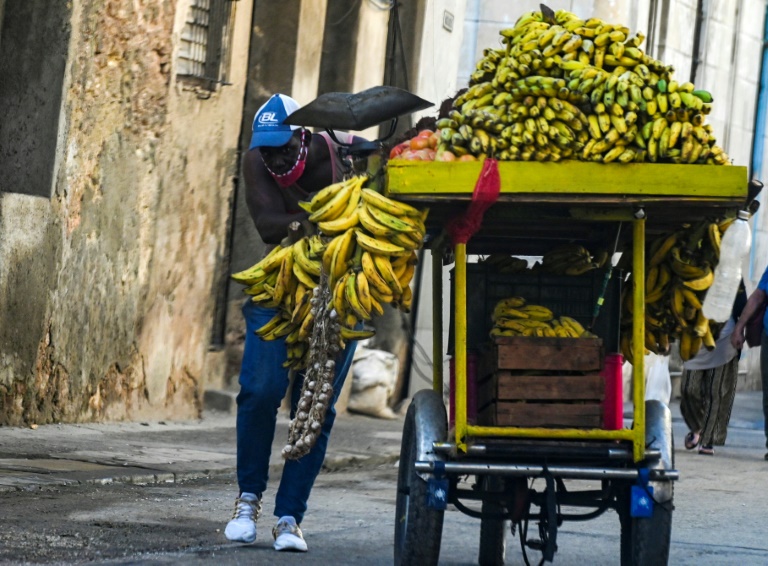
Cuba on Saturday announced a new 10 percent tax on retail food sales, as the country endures economic woes marked by rampant inflation.

The levy taking effect Monday will target self-employed people and small- and medium-sized companies in the retail food sector, said the decree published in the official government gazette. These sales were only allowed starting in August of last year as part of reforms in the communist run island.

Cuban economist Pedro Monreal wrote on Twitter that the new tax will probably have two effects: higher food prices and more inequality among the Cuban people.

Monreal said it will hurt “lower income households that spend a relatively higher percentage of their resources on food.”

Monetary reforms applied last year caused prices of goods and services to shoot up in Cuba, mainly those of food. Inflation last year came in at 70 percent.

People have to wait in long lines for scarce supplies of food and medicine.

Cuba imports 80 percent of the food it consumes. Its purchases have declined drastically due to a shortage of hard currency and because of international transport problems stemming from the Covid pandemic.

Close Bitnami banner
Bitnami