World

Meet two women who uncovered clergy sex abuse in Colombia

They were working for a Catholic bishop and had clear-cut orders from Pope Francis himself — probe reports of pedophile priests in a city in Colombia.

What these two investigators — two Catholic women with experience conducting criminal probes — found was an utter bombshell: a network of predatory clergymen that sexually abused at least 20 people, reportedly taking turns with one of them.

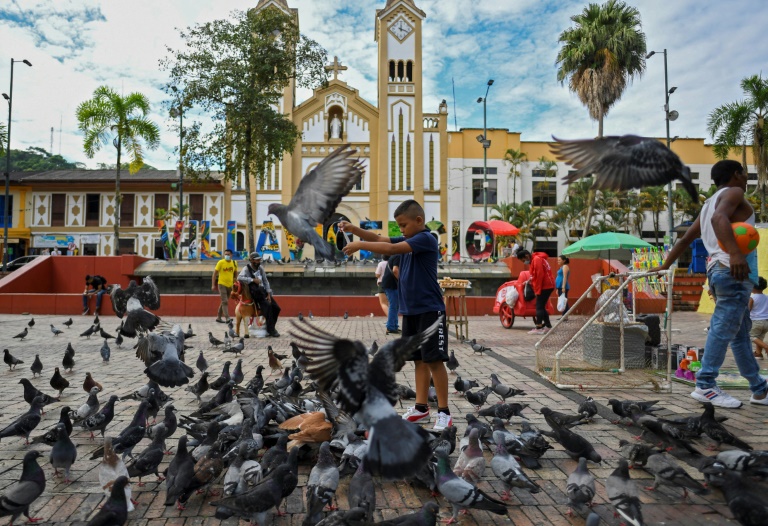
The abuse was committed in Villavicencio, a central Colombian city of half a million people with a cathedral in the town square, and parts of the surrounding area that fall under one archdiocese.

The pope says fighting clergy sex abuse is one of his priorities, and in 2019, he told the bishop of Villavicencio, Oscar Urbina, to investigate alleged abuses by priests.

The bishop turned to Olga Cristancho, 68, a seasoned former prosecutor, and Socorro Martinez, 59, who used to work in the attorney general’s office and has experience probing massacres in Colombia, a country that endured decades of conflict involving government forces, leftist rebels, right-wing paramilitaries and drug traffickers.

But shortly after the church probe began, these two women distanced themselves from Urbina, suspecting a cover-up and launching an investigation of their own.

Cristancho said she was shocked by what she learned. 

“I never dreamed of such a thing,” she told AFP. The women sleuths gathered evidence despite what they called interference from the bishop.

Among their finds: one man told them priests started abusing him at age 15 and took turns doing so.

Priests also used code words to communicate with each other, Cristancho said.  

“One would say to the other, ‘I am sending you a CD,’ but that meant, ‘I am sending you that boy’,” Cristancho said.

The two investigators sent the conclusions of their effort to the Vatican in 2019 — and are still awaiting a response.

A book published last year by journalist Juan Pablo Barrientos is based on their work and goes further, with testimony implicating 38 priests in sexual abuse. The church tried in vain to censor it.

– ‘I felt dirty’ –

The church has quietly sent away 20 of the priests accused of abuse. So far, two others are in prison after being convicted of abusing a 13-year-old choir boy.

“It will be up to the courts, both judicial and canon, to render a verdict,” said William Prieto, a priest and spokesman for the archdiocese, in the church’s only public comment on this scandal.

Colombian prosecutors opened their own investigation, and in late January, Cristancho and Martinez gave testimony. The attorney general’s office declined an AFP request for comment.

Urbina’s office also declined AFP requests for comment.

One of the victims is a man who for this story is being identified as Miguel. 

As a child, his family used to vacation in Villavicencio, and his parents would send him to a rectory to see an uncle who was a priest.

There, a seminarian abused Miguel, forcing him into oral sex.

“He knew how to manipulate my uncle’s trust, my family’s trust, so that I would go to bed with him,” Miguel said in an interview during which he hid his face.

As an adult, he said he suffered from suicidal thoughts and depression. 

“I wanted to end my life,” he said. “I felt dirty.”

He filed a complaint with church authorities but has not received an answer.

Martinez says she hardly goes out anymore, and her son received a call in which she was described as a “sapa,” or snitch.

The church hierarchy considers her an enemy, she said.

“We were the pebble in their shoe,” Martinez said.
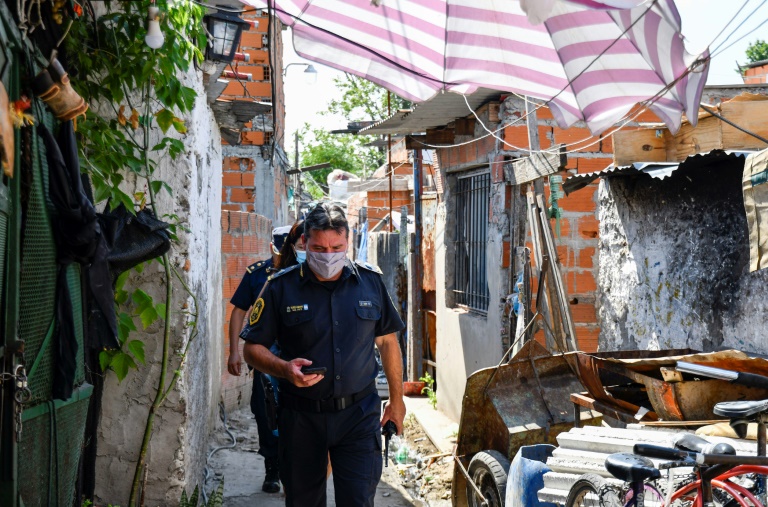
20 dead in Argentina after taking toxic cocaine

At least 20 people died and 74 more were hospitalized in a Buenos Aires suburb after consuming cocaine cut with a toxic substance, possibly opioids, Argentine authorities said Wednesday.

Officials said they were working quickly to determine what the cocaine was mixed with and “remove it from circulation”, warning those who bought the drug over the last 24 hours to dispose of it.

Buenos Aires provincial security chief Sergio Berni described the additive as “a key ingredient that is attacking the central nervous system” while speaking to television channel Telefe.

Beatriz Mercado told AFP she had found her 31-year-old son, one of the victims, lying face-down on the kitchen floor.

“He was almost not breathing, his eyes were rolling back,” she said. She took him to the hospital, where he was on life support as of Wednesday evening.

“I hope in God, nothing else. A miracle.”

About 10 people were arrested after police raided a house in the poor Tres de Febrero neighborhood where they believe the cocaine was sold and packets of the substance similar to those described by the victims’ families were seized. 

The drugs were taken to a laboratory in La Plata, the capital of Buenos Aires province, for analysis.

Authorities issued an urgent warning early Wednesday after three separate hospitals reported several deaths and serious cases of poisoning.

Several of those being treated told doctors they had taken cocaine together.

An initial toll of 12 deaths and 50 hospitalizations kept rising — with victims admitted to eight different hospitals, a Buenos Aires province government spokesperson told AFP.

Earlier reports said the victims suffered convulsions and sudden heart attacks.

Health authorities said at least four of the victims were men aged between 32 and 45.

“We are desperate, we want to know why one person is dying after another here,” said Maria Morales, outside the hospital where her brother-in-law was being treated.

Berni’s office said late in the day that emergency services were reporting new patients in “critical condition” being brought to hospitals.

– Cut with harmful substance –

“Every dealer that buys cocaine cuts it. Some do it with non-toxic substances such as starch. Others put hallucinogens in it, and if there is no form of control, this kind of thing happens,” Berni said. 

But on this occasion the drug was cut with a harmful substance as part of a “war between drug traffickers,” he added.

But San Martin public prosecutor, Marcelo Lapargo, said the idea of a battle between drug traffickers was “conjecture” at this point.

Lapargo told Radio Mitre that authorities’ main concern “is to be able to communicate so that those who are in possession of this poison know that they should not consume it.”

Investigators fear the toll could rise, with some people who bought the cocaine unable to reach a care center in time.

Lapargo said that this case was “absolutely exceptional”.  

Police clashed briefly with residents in a part of Tres de Febrero who were protesting the arrest of local young people in the drug raid.

W. African leaders hold emergency summit after spate of coups

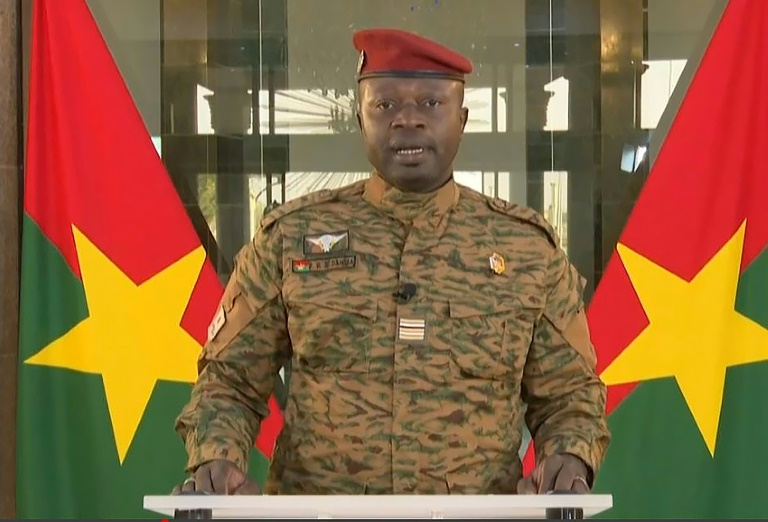
West African leaders hold a key summit on Thursday as a wave of coups buffet a region struggling with poverty and a long history of turbulence.

Emergency talks in the Ghanaian capital Accra were triggered after Burkina Faso on January 24 became the third member of the 15-nation Economic Community of West African States (ECOWAS) to be overtaken by the military in less than two years.

Burkina followed Mali, where a coup in September 2020 was followed by a second in May 2021, and Guinea, where elected president Alpha Conde was ousted last September.

Adding to the region’s turmoil was a gun attack on Tuesday on the president of Guinea-Bissau, Umaro Sissoco Embalo, stoking fears that years of efforts to steer West Africa towards stability and democracy are failing.

Thursday’s one-day meeting, scheduled to start at 1000 GMT, will assess the outcome of two missions to Burkina following the coup.

Burkina was suspended from ECOWAS after rebel soldiers arrested President Roch Marc Christian Kabore amid public anger at his handling of a jihadist insurgency.

The question now is whether the country — ranked a wretched 182nd out of 189 countries in the UN’s worldwide development index — will escape economic punishment.

ECOWAS has already slapped crippling sanctions on Mali and Guinea for dragging their feet on commitments to restore civilian rule.

Those measures have included the closure of borders by ECOWAS members, an embargo on trade and financial transactions and sanctions against individuals.

The sanctions prevented Mali honouring its latest bond payments, a move that could, potentially, mark the first step towards a default on its debt.

– Positive signs –

Military chiefs from ECOWAS flew to Ouagadougou on Saturday for talks with the junta, and this was followed on Monday by a diplomatic mission led by Ghana’s foreign minister, Shirley Ayorkor Botchwey.

Early reactions from the envoys have been positive.

“They seemed very open to the suggestions and proposals that we made. For us it’s a good sign,” Botchwey told reporters after meeting with strongman Lieutenant-Colonel Paul-Henri Sandaogo Damiba and other junta members.

The talks were attended by the UN’s special representative for West Africa and the Sahel (UNOWAS), Mahamat Saleh Annadif, who described a “very frank exchange”.

The delegation notably met Kabore, whose wellbeing and demands for release from house arrest are major issues.

During the visit, the junta declared it had restored the constitution, which it had swiftly suspended following the coup, and named Damiba as president and head of the armed forces during a transition period.

And on Tuesday, Damiba met political party chiefs, many of whom said they were keen to take part in the restoration of civilian rule.

But major questions remain unanswered, including the key issue of a date for elections. On January 24, the junta vowed to re-establish “constitutional order” within a “reasonable time”.

In deciding whether to impose sanctions, ECOWAS leaders have to balance the credibility of their organisation against the fragility of some of their states, especially in the Sahel.

Mali and Burkina Faso are in the throes of a nearly decade-old jihadist emergency that has claimed thousands of lives and forced at least one and a half million people from their homes.

Escalating political friction with the junta in Mali has driven Bamako closer to the Kremlin and cast a shadow over France’s anti-jihadist mission in the country.

On Wednesday, the Malian government warned of the risk of sanctions triggering a wider crisis.  It said the restrictions imposed on it in January by ECOWAS and the region’s economic and monetary union (WAEMU) had prevented it honouring its latest bond payments.  

In a statement that sought to reassure its investors, the junta in Bamako said it had the necessary funds in its coffers but the regional issuing bank, the Central Bank of West African States, had refused to allow the payment.

Wreck of British explorer James Cook's Endeavour found: researchers

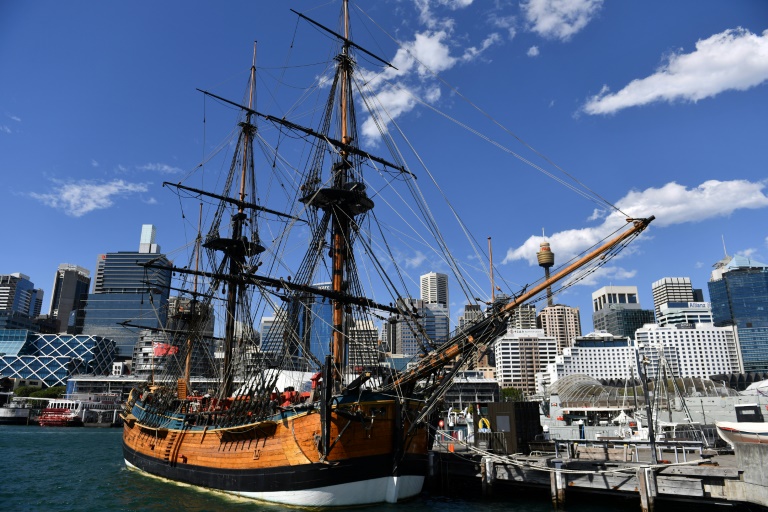
The wreck of Captain James Cook’s famed vessel the Endeavour has been found off the coast of the US state of Rhode Island, Australian researchers said Thursday.

Their research partners in the United States, however, have described the announcement as premature.

The Endeavour, which the British explorer sailed in an historic voyage to Australia and New Zealand between 1768 and 1771, was scuttled in Newport Harbour during the American War of Independence.

For more than two centuries, it lay forgotten.

“Since 1999, we have been investigating several 18th-century shipwrecks in a two-square-mile area where we believed that Endeavour sank,” Kevin Sumption, director of the Australian National Maritime Museum, told a Thursday media briefing. 

“Based on archival and archaeological evidence, I’m convinced it’s the Endeavour.”

But the Rhode Island Marine Archaeology Project said it was too early to draw that conclusion.

In a statement, project executive director DK Abbass said the announcement was a “breach of contract”, adding that “conclusions will be driven by proper scientific process and not Australian emotions or politics”.

A spokesperson for the Australian museum said Abbass was “entitled to her own opinion regarding the vast amount of evidence we have accumulated.”

The museum does not believe it is in breach of any contracts.

Sumption was among a team of archaeologists that announced in 2018 they believed the Endeavour’s remains were at the Rhode Island site, but said then more analysis had to be done. 

The Endeavour was the ship Cook sailed from England to Tahiti and then New Zealand before reaching Australia in 1770 and charting the continent’s east coast.

By the time the ship sank in Newport Harbor in August 1778, it had been renamed the Lord Sandwich and was being used by the British to hold prisoners of war during the American revolution.

The British scuttled the ship, along with others, to block a French fleet from sailing into Newport Harbour to support the Americans.

This was just a few months before Cook’s death in Hawaii in February 1779.

After two centuries at the bottom of the harbour, only about 15 percent of the Endeavour remains intact, according to the Australian National Maritime Museum. 

“The focus is now on what can be done to protect and preserve it,” Sumption said Thursday. 

Wreck of British explorer James Cook's Endeavour found: researchers

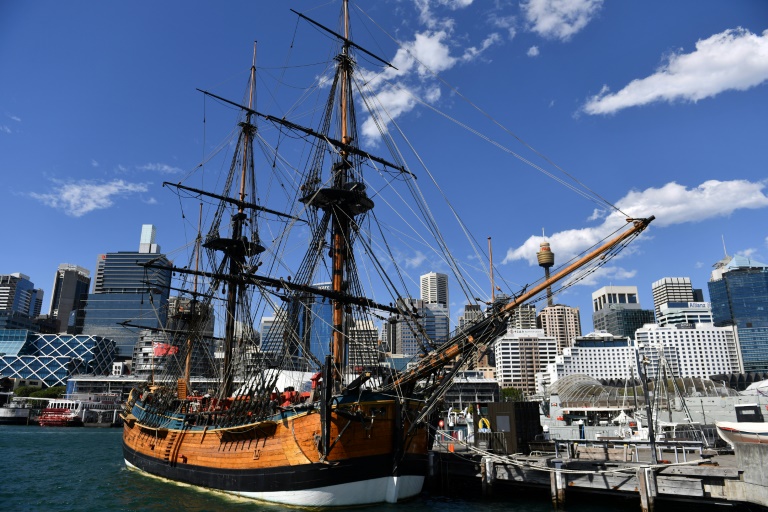
The wreck of Captain James Cook’s famed vessel the Endeavour has been found off the coast of the US state of Rhode Island, Australian researchers said Thursday.

Their research partners in the United States, however, have described the announcement as premature.

The Endeavour, which the British explorer sailed in an historic voyage to Australia and New Zealand between 1768 and 1771, was scuttled in Newport Harbour during the American War of Independence.

For more than two centuries, it lay forgotten.

“Since 1999, we have been investigating several 18th-century shipwrecks in a two-square-mile area where we believed that Endeavour sank,” Kevin Sumption, director of the Australian National Maritime Museum, told a Thursday media briefing. 

“Based on archival and archaeological evidence, I’m convinced it’s the Endeavour.”

But the Rhode Island Marine Archaeology Project said it was too early to draw that conclusion.

In a statement, project executive director DK Abbass said the announcement was a “breach of contract”, adding that “conclusions will be driven by proper scientific process and not Australian emotions or politics”.

A spokesperson for the Australian museum said Abbass was “entitled to her own opinion regarding the vast amount of evidence we have accumulated.”

The museum does not believe it is in breach of any contracts.

Sumption was among a team of archaeologists that announced in 2018 they believed the Endeavour’s remains were at the Rhode Island site, but said then more analysis had to be done. 

The Endeavour was the ship Cook sailed from England to Tahiti and then New Zealand before reaching Australia in 1770 and charting the continent’s east coast.

By the time the ship sank in Newport Harbor in August 1778, it had been renamed the Lord Sandwich and was being used by the British to hold prisoners of war during the American revolution.

The British scuttled the ship, along with others, to block a French fleet from sailing into Newport Harbour to support the Americans.

This was just a few months before Cook’s death in Hawaii in February 1779.

After two centuries at the bottom of the harbour, only about 15 percent of the Endeavour remains intact, according to the Australian National Maritime Museum. 

“The focus is now on what can be done to protect and preserve it,” Sumption said Thursday. 

Kenya under fire over calls to 'weaken' forest protections

In his 15 years defending one of Nairobi’s last green spaces, Simon Nganga has seen off brazen attempts to seize what’s left of the lush forest bordered by highways and housing estates.

Persistent efforts by developers and powerful individuals to seize chunks of the bush as their own were defeated under historic laws enacted to protect Kenya’s dwindling forests from unchecked logging and environmental destruction.

But a proposal expected before parliament on Thursday seeks a major change to these protections, by allowing politicians to determine if public forest can be carved out and handed over to private interests.

Under the contentious amendment, anyone wishing to alter forest boundaries to claim ownership of land could lobby parliament directly, bypassing approval from the Kenya Forest Service (KFS), which is currently mandated to scrutinise such bids.

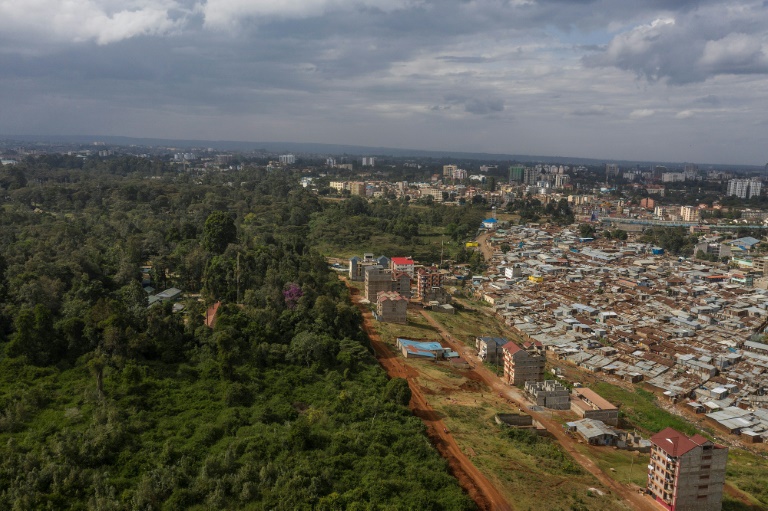
“If it goes through… that will open a Pandora’s Box,” Nganga told AFP beneath the canopy of Ngong Road Forest, a 1,224-hectare (3,025-acre) tract of indigenous woodland inhabited by bush bucks, Sykes monkeys and over 100 species of birds.

“Everyone will want a piece of the forest, which is very dangerous for our forests, and our future.”

The amendment to the Forest Conservation and Management Act –- reforms passed after decades of rampant land clearing — has been  opposed by the environment ministry and the KFS, and has roused significant community anger.

It has also drawn rare criticism from the United Nations, which headquarters its environment programme in Nairobi, and is just weeks away from staging the world’s highest-level decision-making assembly on nature and biodiversity in the Kenyan capital.

– Environmentalists blindsided –

The amendment argues that granting KFS primary authority over hearing and ruling on changes to forest boundaries “unnecessarily limits the right of any person to petition Parliament” as granted under the constitution. 

Environmentalists were blindsided by the proposal, which they say would shift power over Kenya’s forests from a dedicated government agency with a record of fighting land theft, to political elites trying to win a bitterly-contested election.

“Why do members of parliament want to condemn Kenya and the world to an unbearably hot future by weakening the Forest Act?” said conservation group Nature Kenya.

Nganga said the forest laws had proved a bulwark against encroachment — since first passing in 2005, no land within Ngong Road Forest had been legally hived off, keeping its boundary firmly intact.

It is a remarkable achievement for an urban forest pressed in on all sides by one of Africa’s fastest-growing cities, but it still bears the scars of battles won and lost.

A major highway slices through its interior, one unfenced side opens onto the vast Kibera slum, while forest doled out years ago to connected elites saw trees razed for apartments.

But it survived as a whole only because strong laws had kept land grabbers at bay, said Nganga, vice chairman of the Ngong Road Forest Association.

“It has been a success,” Nganga said at the forest edge overlooking Kibera, where men walked by carrying trees they had felled for firewood.

“We cannot talk about winding back success. We know what happened before the Act, when individuals could give out land. We don’t want to get back there.”

– ‘We’ll lose everything’ –

Parliament is considering the amendment as Nairobi this month prepares to host the UN Environment Assembly, where countries will be asked to commit to stronger protections for biodiversity.

In a letter to parliament, a top UN official in Nairobi warned the proposed changes threatened Kenya’s reputation and undermined its efforts to expand forest cover and tackle climate change.

“Unfortunately, we believe the proposed amendment takes us in a contrary direction, incompatible with Kenya’s laudable commitments and trajectory hitherto,” resident coordinator Stephen Jackson wrote in a February 1 letter seen by AFP.

Kenyan Environment Minister Keriako Tobiko said his office learned about the amendment through the press and regretted it had caused “panic and doubt in the international community”.

Land is extremely contentious in Kenya, and disputes over ownership can turn violent.

Environmental activist Joannah Stutchbury was shot dead outside her home in Nairobi in July 2021 after spearheading a vocal campaign to protect a forest near the city from developers.

The timing of this bill in a closely-fought election year has also raised eyebrows.

Electoral cycles have often spelled destruction for forests as land is promised to communities and political allies in exchange for votes, said Paula Kahumbu, the head of conservation group Wildlife Direct.

“Forests have always been up for grabs when it comes to elections,” she told AFP.

“It is kind of like the bribe that is not cash.”

Nganga has fought for the forest before, and knows what is at stake now.

“We will lose everything,” he said.

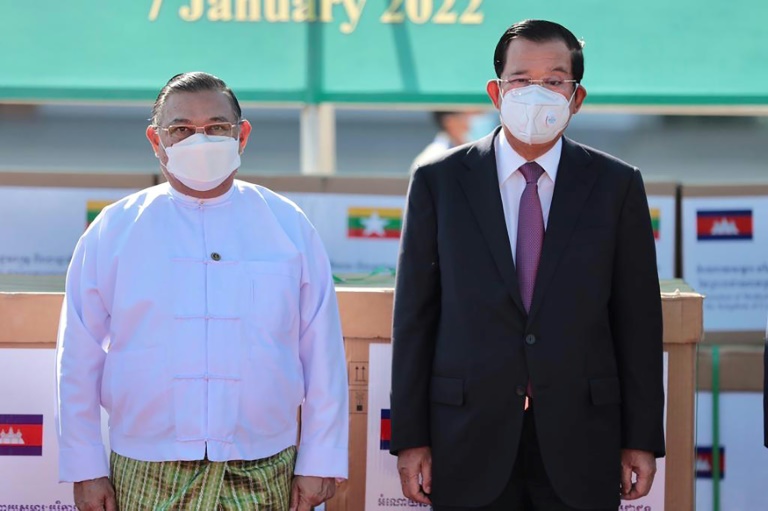
Myanmar foreign minister barred from ASEAN meet: Cambodia

Myanmar’s junta suffered a fresh diplomatic blow Thursday as regional bloc ASEAN barred its top diplomat from attending an upcoming meeting of foreign ministers.

Cambodia, which currently holds the bloc’s rotating chairmanship, said there had been too little progress on a “five-point consensus” agreed by leaders last year to try to defuse the crisis gripping Myanmar.

The country has been in turmoil since the military ousted Aung San Suu Kyi’s civilian government a year ago, with more than 1,500 civilians since killed in crackdowns on anti-junta protests, according to a local monitoring group.

“Since there has been little progress in carrying out ASEAN’s Five-Point Consensus, the ASEAN member states did not reach a consensus to invite Myanmar SAC’s foreign minister [Wunna Maung Lwin] to participate in the upcoming foreign ministers’ retreat,” Cambodia foreign ministry spokesman Chum Sounry told AFP. 

Myanmar’s military government calls itself the State Administration Council, or SAC.

“We have asked Myanmar to send a non-political representative instead,” Chum Sounry said.

The snub comes after the 10-nation Association of Southeast Asian Nations (ASEAN) took the unprecedented step of barring junta leader Min Aung Hlaing from a summit in October.

It represented a rare rebuke from ASEAN, long seen as a toothless talking shop, but which has sought to lead diplomatic efforts to tackle the Myanmar crisis.

Myanmar is increasingly isolated on the international stage, with Cambodian strongman ruler Hun Sen’s January visit the first by any foreign leader since the generals seized power.

But violence has continued, with anti-junta groups clashing regularly with the military, and the World Bank has warned Myanmar’s economy likely contracted by almost a fifth last year.

In a statement on Wednesday, ASEAN called for an immediate end to violence and for its special envoy to be allowed to visit the country soon.

Belgian Olympian 'safe' after tearful plea from Covid isolation

Skeleton racer Kim Meylemans said Thursday she was “safe” and back in the Beijing Olympic Village having been released from a Covid isolation facility following a tearful post on Instagram.

“It seems like the video and the efforts of my Olympic committee have really paid off,” the 25-year-old Belgian said in a video message.

“At 11.35pm there was a knock on my door and I was escorted to the Olympic Village.

“I am now in a wing that’s just isolation, but at least I am back in the village. I feel safe.

“I will be able to train a little better here, thank you all,” said Meylemans, who is due to race next week in the skeleton heats but tested positive for Covid after arriving in Beijing.

She was quickly moved from the Olympic Village, in the mountains north of the Chinese capital, and kept in an isolation facility, from where she was transferred after a few days following several negative test results.

However, rather than return to the athletes’ village as she had hoped, Chinese officials initially moved Meylemans by ambulance to another isolation centre.

In an emotional video posted Wednesday on Instagram, the Belgian vented her frustrations, saying, “This is obviously very hard for me,” with tears rolling down her cheeks.

Following her plea, Meylemans is now back in the village, but remains in isolation.

The Belgian Olympic Committee says she will be “closely monitored” over the next seven days.

She “will still be able to train on the track, but in isolation. In the village, she will be isolated in a separate room and will be tested twice a day during this period.”

Meylemans could still compete at her second Winter Olympics with the women’s skeleton heats starting February 11 at the Yanqing National Sliding Centre.

The International Olympic Committee said they were relieved to hear she is back in the Olympic Village.

“We are glad that all the efforts led to the successful resolution of this situation,” IOC spokesman Christian Klaue wrote on Twitter.

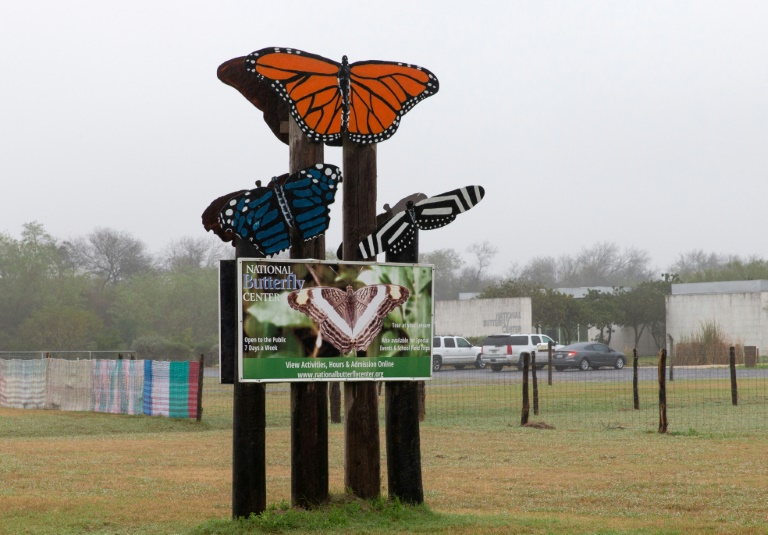
Texas butterfly sanctuary shuts citing threats from Trump supporters

A butterfly sanctuary caught in the crossfire of polarizing conspiracy theories on illegal immigration to the United States said it will shut its doors Thursday, citing security concerns after receiving threats from supporters of former president Donald Trump.

The National Butterfly Center in Texas, located on the banks of the Rio Grande that separates the United States from Mexico, had filed a complaint to block construction of the border wall that became a centerpiece of Trump’s presidency, saying it threatened the winged insects’ habitat.

The private sanctuary’s gardens are home to more than 200 species of butterfly as well as bobcats, coyotes, peccaries, armadillos and Texas tortoises. 

But it will now be closed until further notice because “the safety of our staff and visitors is our primary concern,” Jeffrey Glassberg, president of the North American Butterfly Association, which runs the organization, said in a statement Wednesday. 

Conspiracy theories targeting the sanctuary — which have been linked to far-right group QAnon by US media — have claimed it was helping to bring illegal migrants to America.

The facility already closed between January 28 and 30 because of “credible threats” related to an event held by supporters of the former president in nearby McAllen, Glassberg said. 

Photos purporting to be from the center had been circulating along with messages accusing the organization of helping smugglers bring migrants to the United States.

Several right-wing activists have posted videos on social media of themselves in front of the sanctuary.

“We don’t think the threat has passed,” the sanctuary’s executive director Marianna Trevino Wright told AFP on Wednesday, citing repeated “provocations” from these individuals.

Wright said she feared the allegations against the center would eventually push someone to “take action.”

“We look forward to reopening, soon, when the authorities and the professionals who are helping us get past this situation give us the green light,” Glassberg said in the statement, noting that employees would continue to receive their salaries during the closure. 

The QAnon far-right conspiracy movement began in 2017 with claims that the Democrats ran a satanic child-kidnapping sex-trafficking ring, and it has been blamed for fuelling a riot at the US Capitol on January 6 last year.

Trump has never condemned the movement and even fed QAnon fever before the US presidential election in 2020, floating his own conspiracy theories about a planeload of black-clad saboteurs disrupting his party convention.

Texas butterfly sanctuary shuts citing threats from Trump supporters

A butterfly sanctuary caught in the crossfire of polarizing conspiracy theories on illegal immigration to the United States said it will shut its doors Thursday, citing security concerns after receiving threats from supporters of former president Donald Trump.

The National Butterfly Center in Texas, located on the banks of the Rio Grande that separates the United States from Mexico, had filed a complaint to block construction of the border wall that became a centerpiece of Trump’s presidency, saying it threatened the winged insects’ habitat.

The private sanctuary’s gardens are home to more than 200 species of butterfly as well as bobcats, coyotes, peccaries, armadillos and Texas tortoises. 

But it will now be closed until further notice because “the safety of our staff and visitors is our primary concern,” Jeffrey Glassberg, president of the North American Butterfly Association, which runs the organization, said in a statement Wednesday. 

Conspiracy theories targeting the sanctuary — which have been linked to far-right group QAnon by US media — have claimed it was helping to bring illegal migrants to America.

The facility already closed between January 28 and 30 because of “credible threats” related to an event held by supporters of the former president in nearby McAllen, Glassberg said. 

Photos purporting to be from the center had been circulating along with messages accusing the organization of helping smugglers bring migrants to the United States.

Several right-wing activists have posted videos on social media of themselves in front of the sanctuary.

“We don’t think the threat has passed,” the sanctuary’s executive director Marianna Trevino Wright told AFP on Wednesday, citing repeated “provocations” from these individuals.

Wright said she feared the allegations against the center would eventually push someone to “take action.”

“We look forward to reopening, soon, when the authorities and the professionals who are helping us get past this situation give us the green light,” Glassberg said in the statement, noting that employees would continue to receive their salaries during the closure. 

The QAnon far-right conspiracy movement began in 2017 with claims that the Democrats ran a satanic child-kidnapping sex-trafficking ring, and it has been blamed for fuelling a riot at the US Capitol on January 6 last year.

Trump has never condemned the movement and even fed QAnon fever before the US presidential election in 2020, floating his own conspiracy theories about a planeload of black-clad saboteurs disrupting his party convention.

Close Bitnami banner
Bitnami