

World
Rights group slams Lebanon for "flawed" murder probes
Human Rights Watch accused Lebanon on Thursday of “flawed” assassination probes and urged donors to review millions of dollars in aid to security forces in a country where crimes often go unpunished.
“The unsolved murders and shoddy homicide investigations are a reminder of the dangerous weakness of Lebanon’s rule of law in the face of unaccountable elites and armed groups,” Aya Majzoub of Human Rights Watch said.
Lebanon is gripped by political and economic dysfunction to the point that even investigations into the 2020 Beirut port blast which killed more than 200 people and ravaged entire neighbourhoods have yet to identify a single culprit.
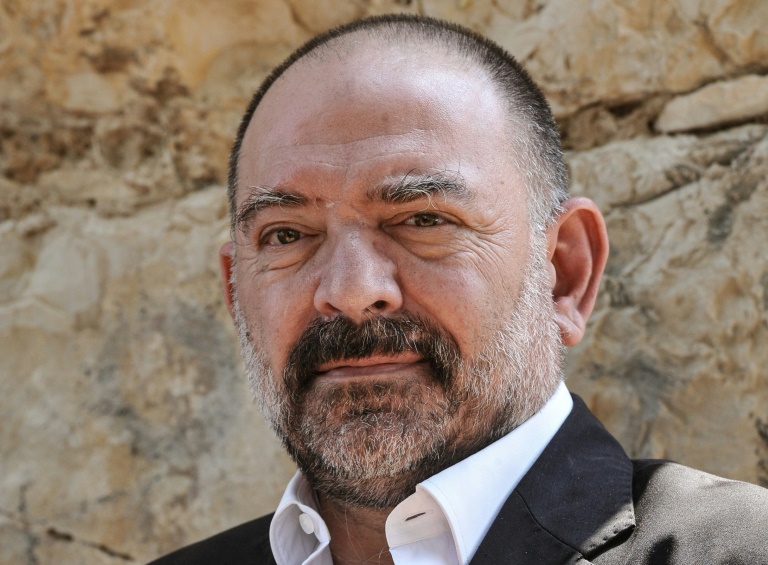
The US-based watchdog reviewed preliminary investigations into the murders of four people since 2020, including Lokman Slim, an intellectual and outspoken critic of the Iran-backed Shiite Hezbollah movement.
Slim was kidnapped in southern Lebanon exactly a year ago and his body found the next day. His family said Hezbollah had threatened Slim several times, most notably in December 2019.
The three other victims are a retired colonel from the customs administration, an amateur military photographer and a bank employee.
Lebanese authorities have not identified suspects in any of the killings and failed to follow clear investigative leads, “even though the murders were committed either in proximity to residential and densely inhabited areas, in broad daylight,” Human Rights Watch said.
In one case, the murder was even caught on camera.
Lawyers and relatives of the victims cited by the watchdog said the police only asked them “superficial” questions limited to “far-fetched potential personal motivations for the murders.” They ignored leads potentially linking the victims’ politically-sensitive work to their assassination.
The group urged authorities to open investigations into allegations of misconduct and gross negligence from officials dealing with the murder probes.
Donor countries, which have funnelled millions of dollars in assistance to Lebanon’s security apparatus, should review their contributions “to ensure that they are not funding units engaged in the cover-up of sensitive murders,” Majzoub said.
In a recent interview with AFP Slim’s widow, Monika Borgmann, expressed doubts that the local investigation into his murder would ever yield results. That, she said, would be like “giving the green light to the killers, whoever they are, to continue.”
There have been at least 220 assassinations and murder attempts since Lebanon’s independence in 1943 until Slim’s killing last year, according to Beirut-based consultancy firm Information International.
Investigations into these murders have rarely yielded results due to political interference or lack of evidence.
13 killed in rare NW Syria raid by US special forces
US special forces hunted down high-ranking jihadists in a rare airborne raid in northwestern Syria on Thursday, killing 13 people in an operation the Pentagon described as “successful”.
The operation was thought to be the biggest of its kind by US forces in the jihadist-controlled Idlib region since the 2019 raid that killed Islamic State group leader Abu Bakr al-Baghdadi.
The targets of the latest operation around the town of Atme, which residents and other sources said lasted around two hours, were not immediately clear.
Names circulating on social media and among local residents suggested the US raid was not aimed at IS operatives but at members of rival jihadist group Al-Qaeda.
The Pentagon stopped short of revealing its target in the nighttime raid but said more information would be provided later.
“US Special Operations forces under the control of US Central Command conducted a counterterrorism mission this evening in northwest Syria,” spokesman John Kirby said in a statement.
“The mission was successful. There were no US casualties,” he added, without elaborating.
The Syrian Observatory for Human Rights said seven civilians were among at least 13 people killed in the operation, which saw elite US forces make a perilous helicopter landing near Atme.
“13 people at least were killed, among them four children and three women, during the operation,” Observatory chief Rami Abdel Rahman told AFP.
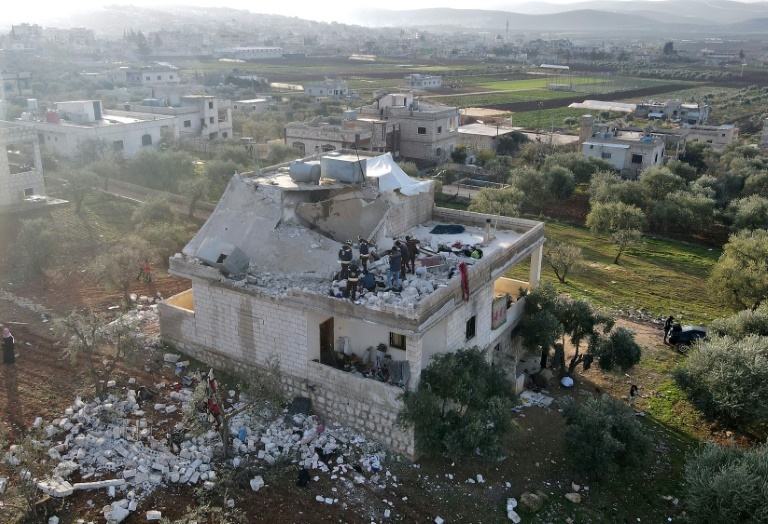
AFP correspondents were able to visit a home on the outskirts of Atme which appeared to be one of the main targets of the US special forces.
A witness told AFP he woke to the sound of helicopters.
“Then we heard small explosions. Then we heard stronger explosions,” Abu Ali, a displaced Syrian living in Atme said, adding that US forces told residents “not to worry”.
“We’re just coming to this house … to rid you of the terrorists,” the man quoted the US forces as saying in their loudspeaker messages.
– Fierce battle –
The two-storey building of raw cinder blocks bore the scars of an intense battle, with torn window frames, charred ceilings and a partly collapsed roof.
In some of the rooms, blood was splattered high on the walls and stained the floor, littered with foam mattresses and shards from smashed doors.
US special forces have carried out several operations against high-value jihadist targets in the Idlib area in recent months.
The area, the last enclave to actively oppose the government of Bashar al-Assad, is home to more than three million people and is dominated by jihadists.
The region is mostly administered by Hayat Tahrir al-Sham, a group led by former members of what was once Al-Qaeda’s franchise in Syria.
In recent years, it has tried to cast itself as a more moderate player focused only on Syrian matters and condemning international terrorism.
HTS has carried out military sweep operations to weed out more radical jihadist groups, such as Hurras al-Deen, which has more organic links with Al-Qaeda.
Atme is home to a huge camp for families displaced by the decade-old conflict and which experts have warned was being used by jihadists as a place to hide among civilians.
On October 23, the US military announced the killing of senior Al-Qaeda leader Abdul Hamid Al-Matar.
“Al-Qaeda uses Syria as a safe haven to rebuild, coordinate with external affiliates, and plan external operations,” said Central Command spokesman Army Major John Rigsbee in a statement at the time.
Syrian government forces and their main military backer Russia have carried out repeated attacks against jihadist and other rebel groups in the Idlib region.
However a ceasefire deal which was brokered by Moscow and Ankara, the two main foreign powers in the area, almost two years ago is still officially in place.
Assad has long insisted his goal was to recapture the whole of Syria, including Idlib province, but the contours of the jihadist-run enclave have remained largely unchanged since early 2020.
'Where is Scholz?': Germany's new chancellor under fire
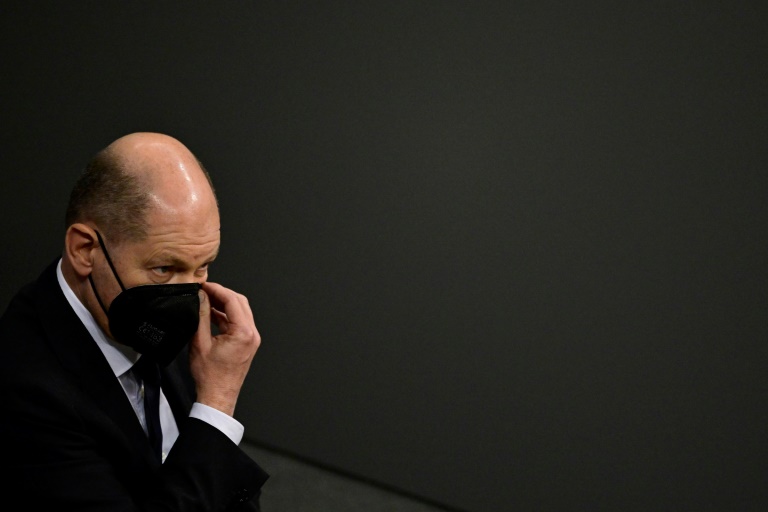
Two months into the job, the honeymoon is already over for German Chancellor Olaf Scholz, with critics accusing him of being “invisible” on the Ukraine crisis and the coronavirus pandemic.
The hashtag #woistscholz (“Where is Scholz?”) is doing the rounds on Twitter, and some say the famously taciturn politician needs to start speaking up.
Scholz was sworn in as chancellor on December 8 after leading his Social Democrats (SPD) to a sensational election win, ending 16 years in power for Angela Merkel’s conservatives.
But a Forsa survey this week showed the SPD behind Merkel’s CDU-CSU in the polls for the first time since the election — on 23 percent compared with 27 percent for the conservative bloc, which is now the main opposition party.
Scholz himself, feted for winning the September 26 election with a campaign that played on his calm demeanour and meticulous approach, is also seeing his popularity wane.
In a recent survey by public broadcaster ZDF on Germany’s most popular politicians, Scholz found himself lagging behind Merkel — who has retired from politics — and Health Minister Karl Lauterbach.
– ‘Scholzomat’ –
Scholz, who will fly to Washington to meet US President Joe Biden on Monday, has long been known for his understated style.
He was once dubbed “Scholzomat” for his dry, robotic speeches.
Merkel was hardly known for her media presence or rousing speeches, but Scholz “seems to want to surpass her in the art of disappearance”, according to Der Spiegel weekly, which accused him of being “almost invisible, inaudible”.
“The way the chancellor speaks and communicates seems inappropriate,” political scientist Ursula Muench told AFP.
“He is heard and seen very little, and when he does speak, he often does so in riddles and not in a clear and pointed manner as required by the current media world,” she said.
Though Scholz makes a habit of thanking journalists for their questions at press conferences, he often avoids answering the questions directly.
The chancellor may be trying to create an impression of “professionalism and seriousness” in a media environment “where everyone speaks and comments on everything”, according to Muench.
But if concrete results come too slowly or not at all, his “can-do” image — so skilfully harnessed during the election campaign — could be in danger.
“Telling people ‘You can rely on me, I am experienced and I know what I am doing’ is simply not enough in a pandemic or an international crisis,” political scientist Hajo Funke told AFP.
Scholz’s communication style leaves “a lot of room for improvement”, he believes.
– ‘Communication disaster’ –
Germany had vaccinated just 75.8 percent of its population against the coronavirus by the end of January, falling short of an 80 percent goal set by Scholz’s government.
Compulsory vaccination, first mooted by Scholz last year with a view to implementation by February or March, has still not been voted on in parliament and is looking an increasingly remote prospect.
Meanwhile, numbers of Covid-19 cases have soared to more than 100,000 cases a day, with a shortage of PCR tests adding to the country’s woes.
Europe’s biggest economy has also come under fire for its role in the Ukraine crisis, with some feeling Berlin is being too soft on Moscow.
Unlike French President Emmanuel Macron, who has had several phone conversations with Vladimir Putin, and Britain’s Boris Johnson, who travelled to Kyiv on Tuesday, Scholz has muddled his response with unclear statements and fluctuating positions.
Germany has also been criticised for its refusal to send weapons to Ukraine, though it did suggest sending 5,000 helmets instead — “a disaster in terms of communication”, according to Muench.
The pro-Russian stance of some Social Democrats, including former chancellor Gerhard Schroeder, has also done nothing to ease the problem.

Biden battles accusations of 'weakness' against US rivals
Is Joe Biden “weak” in the face of Russia, Iran or North Korea? This is the accusation leveled by opponents of the US president, who is trying to balance a firm hand with pragmatism to overcome multiple international crises and focus on a rising China.
“Is it any surprise that Chinese planes are flying over Taiwan? Or that North Korea is testing missiles again? Or that Iran is ramping up its nuclear program? They all sense Biden’s weakness,” Nikki Haley, who served as UN ambassador under Donald Trump, tweeted this week, summing up grievances of Republican hawks.
The standoff with Russia over its buildup of troops on Ukraine’s borders fanned the flames of these accusations, which broke out in earnest amid the chaotic US withdrawal from Afghanistan in late August.
The Democratic president may have adopted a martial tone, amped up warnings and even sent troops to Eastern Europe this week, but his resolve is being called into question.
The Republican opposition, including its moderate fringe, have reproached Biden for ruling out preemptive sanctions against Moscow to discourage an attack on Ukraine.
The choice is, in fact, in the hands of Biden’s administration, which is betting that the threat of “devastating” punitive measures in the event of an invasion will dissuade Russian President Vladimir Putin.
– ‘Minor incursion’ –
Some of the most hawkish in Washington have criticized the president for ruling out the option of direct military intervention to defend Ukraine.
But criticism came from many more corners when Biden made an apparent gaffe in mid-January.
The 79-year-old leader had sowed confusion by suggesting a “minor incursion” by Russia would prompt less pushback from the West, and indicated divisions between NATO countries on the scale of response that such an invasion would warrant.
Republican lawmakers quickly blasted Biden, accusing him of having tacitly “green-lighted” an invasion and forcing the White House to backpedal.
“It’s typical of Biden: he responds often more like an analyst than a president,” said Celia Belin, a researcher at the Brookings Institution think tank in Washington.
She nonetheless deems the US handling of the Ukraine crisis effective so far.
But his analytical responses are “a mistake as a leader,” she said, especially as “Republicans harp on the idea of weakness because it resonates with the general perception of Biden as elderly, frail and not determined enough.”
However, she underscored that this “trial of weakness” is typical of America, with a “constant” push and pull between a neoconservative bent toward the use of force to re-establish order and a camp that prefers to “choose its battles.”
For Kori Schake, Director of Foreign and Defense Policy Studies at the American Enterprise Institute, a right-leaning think tank, these disparities don’t negate that the US government is doing a “pretty good job balancing the competing demands” in the crisis.
– Hesitation –
US intelligence agencies quickly identified the “pattern of Russian aggression,” allies were consulted early enough to “come to consensus,” and the Pentagon has displayed “steadiness and readiness,” she told AFP.
Biden entered the White House with a promise to US allies that “America is back,” indicating a willingness to seek compromise at the risk of giving an impression of hesitation.
But this re-investment in the international arena, after the unilateralism of the Trump era, does not mean that Washington intends to play policeman everywhere at all times.
Democrats want to extract the United States from protracted conflicts and concentrate on a rising China, which the Biden and Trump administrations characterized as the top challenge of the 21st century.
Though Belin warned that pulling out isn’t without consequence, like the withdrawal from Afghanistan “at the cost of a debacle,” which she said may have pushed “Putin to legitimately say, ‘I’m taking advantage of this.'”
And there is no shortage of challenges to divert the 46th US president from this priority, both new and protracted.
Iran looms large, with Biden in need of a deal to round off long-running multilateral talks with Tehran aimed at salvaging a 2015 nuclear deal and avoiding another crisis.
Here, too, he will likely be accused of weakness, even among Democrats, over the hot-button issue of containing Iran’s nuclear program.
At the same time, the United States seems for the moment to be turning a blind eye to the recent flurry of North Korean missile launches.
On China, while Biden has held up the hard line adopted by predecessor Trump, some conservatives continue to criticize the current president for his willingness to engage in dialogue on climate issues or his refusal to boycott the Beijing Olympics entirely.
But for Schake, “Biden is no weaker on China or North Korea than the prior administration.”
Cuba runs out of milk, breaking Castro's promise
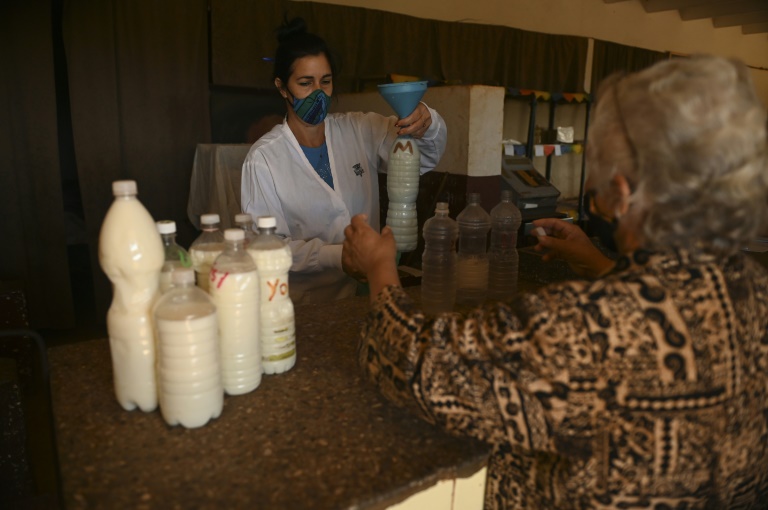
In the early days of communism in Cuba, Fidel Castro had pledged that every child under seven would have a liter of subsidized milk every day.
For some time, they did — but today, many go without.
To circumvent the US embargo against Cuba and lagging domestic production, milk has to come from the other side of the world in an obstacle race that deprives many on the island of the staple.
Regla Caridad Zayas, a 59-year-old diabetic, said the milk powder that the Cuban state supplies monthly to her and others with special dietary needs dried up months ago.
She is supposed to get a kilo of powder, which makes 10 liters (2.6 gallons) of milk, every month.
Sitting at a rickety table from which she sells coffee outside her house, Zayas said the bodegas, or subsidized food stores, no longer carry the commodity.
In the supermarket, it is also nigh impossible to find: milk has become the latest casualty in a long history of chronic food shortages in Cuba, which on Monday marks six decades of US sanctions.
And it will continue to be in short supply in Havana and four other provinces, due to a lack of “financing, boats and suppliers,” Internal Trade Minister Betsy Diaz said in October.
To find milk powder, Cuba looks all the way to New Zealand — its main supplier with 18,470 tons in 2020 — as well as Belgium (6,628 tons) and Uruguay (3,695 tons), according to specialized export and import data site Trade Map.
– Containers stuck –
Official Cuban data shows that the island produced 455 million kilograms of fresh milk in 2020, far short of what it needs.
According to the PanAmerican Dairy Federation, each person should have access to 150 liters of milk per year — some 1.6 billion liters, and about the same in kilograms, for Cuba’s 11.2 million inhabitants.
The cheapest and easiest would be to get the milk from the United States — one of the world’s largest exporters and less than 200 kilometers (124 miles) from Cuba’s coastline.
Since 2000, food products have been excluded from the US embargo on trade with Havana. But Cuba must pay cash and in advance — onerous conditions for a country in deep economic crisis, with little foreign exchange and no access to loans.
Getting products from the other side of the planet is not easy, either: more than 10,000 containers of food and other products were stuck last month in ports around the world due to pandemic supply chain issues, the government said.
For decades, revolutionary leader-turned-president Fidel Castro made a point of supplying cheap, subsidized milk to all children under the age of seven and people with chronic diseases.
His brother and successor Raul proposed in 2007 to go even further by “producing milk so that all those who want to drink a glass of milk can do it.”
But today, even the guaranteed monthly ration of three kilos of powdered milk for children is running out. For other recipients such as Zayas, there is none.
– Milk was ‘sacrosanct’ –
“Truly, everything is disappearing,” said Claudia Coronado, a 29-year-old mother of two children aged three and seven, while standing in one of Havana’s ubiquitous food queues.
“We were used to not having chicken for a month, but milk, that was always sacrosanct.”
“I have a daughter of eight, she’s no longer getting milk,” said Jenny Mora, 29, who said she often has no choice but to turn to the black market and pay exorbitant prices.
The store outside of which the two women are queuing only accepts foreign currency — itself also only available on the parallel market.
A sachet of one kilogram (two pounds) of milk powder costs $6.30 — a fortune in a country where the average monthly salary is $163.
Economist Omar Everleny Perez said that without government help, it was more profitable for farmers to sell their product on the black market.
– Lean cow, low yield –
Farmer Domingo Diaz, 79, blames the US embargo for “about 90 percent” of the milk shortage.
He blames the communist government for the rest.
Though it raised the purchase price to help producers, the government did nothing to secure access to cow feed, he said.
Undernourished, the animals produce very little.
“The milk problem affects everyone, it drives me mad, too,” said Diaz, as he tried to squeeze milk from a lean beast.
Oil everywhere: Ecuador Amazonians seethe over new spill
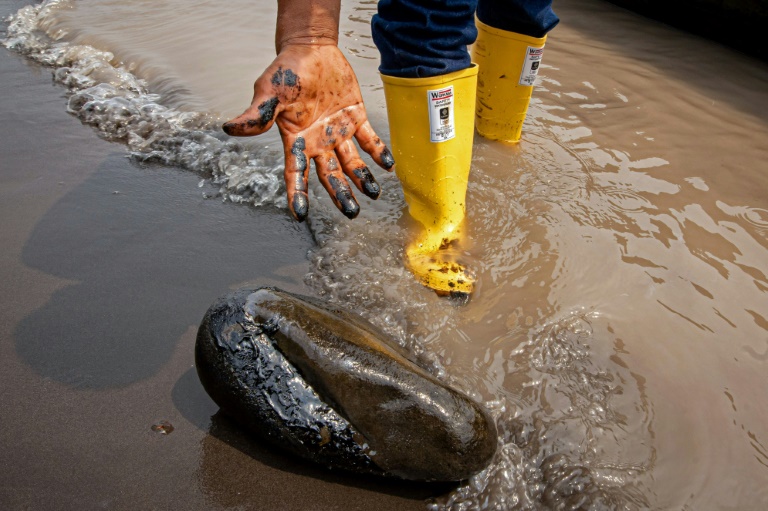
There is oil in the water, on the rocks and in the sand where children normally play on the banks of the Coca River in Ecuador.
Residents of Puerto Maderos make no effort to hide their anger at the latest crude spill to hit the Ecuadoran Amazon.
“This damage is not for a month, two months… it will be 20 years” before things return to normal, said Bolivia Buenano, a merchant from the area some 120 kilometers (75 miles) from where the spill occurred.
Buenano joined a cleanup crew put together by oil transport company OCP, whose pipeline was responsible for the leak, to bring some relief to the community of 700-odd people.
No one can “bathe normally in the river, nor drink from here, there is no fish, there is nothing,” she exclaimed while scrubbing a polluted containment buoy.
Buenano complained about a lack of state investment in the Amazon provinces, which hold much of the country’s oil wealth but are most affected by industrial disasters such as this one.
– ‘Like a waterfall’ –
On Friday, almost 6,300 barrels of oil leaked into an environmental reserve in Ecuador’s east, when heavy rains caused a boulder to fall on a pipeline.
Cesar Benalcazar was one of several people who rushed to the scene to stem the flow of oil.
“We tried to stop the crude from reaching the river, but the slope made it descend like a waterfall,” said Benalcazar, 24.
OCP has said more than 84 percent of the crude has been recovered.
But not before about 21,000 square meters (226,000 square feet) of the Cayambe-Coca nature reserve were polluted and crude flowed into the Coca River — one of the largest in the Ecuadoran Amazon and an important source for many riverbank communities.
Rains and currents spread the stain for many miles.
“We are tired because this is not a normal life. Nature is not healthy, it is contaminated,” said Buenano.
“And this will continue as long as the pipeline and the crude oil network continue.”
In 2020, a mudslide damaged pipelines that spilled about 15,000 barrels of oil into three Amazon basin rivers, affecting several communities.
– Biggest export –
Crude petroleum is Ecuador’s biggest export product.
Between January and November 2021, the country extracted 494,000 barrels per day.
Buenano and the rest of the cleanup team mutter indignantly while filling containers with polluted sand, which they stacked together for removal later.
“We are the forgotten of God,” said Rosa Capinoa, leader of the Fecunae Indigenous organization visiting the affected areas.
“I know this is not something that can be fixed overnight, it will take a long time. Looking at this natural disaster is very painful,” she told AFP.
“The oil leaves here, and we as communities do not share in the profit. All we get is a water bottle, water tanks,” added Capinoa in response to OCP delivering drinking water to affected populations.
According to Ecuador’s environment ministry, Friday’s spill occurred within the Cayambe-Coca reserve of some 403,000 hectares, home to a vast collection of animals and plants.
From there, it spread to the Coca River.
“We feel quite outraged because we experience this every two or three years,” said Romel Buenano, a 35-year-old farmer in Puerto Maderos, who is not related to Bolivia Buenano.
The 2020 disaster, he said, put an end to fishing for some time, and killed animals on the islets of the Coca.
“It is not that with the cleaning, the pollution is over,” he told AFP.
Five things to know about 60 years of US sanctions on Cuba
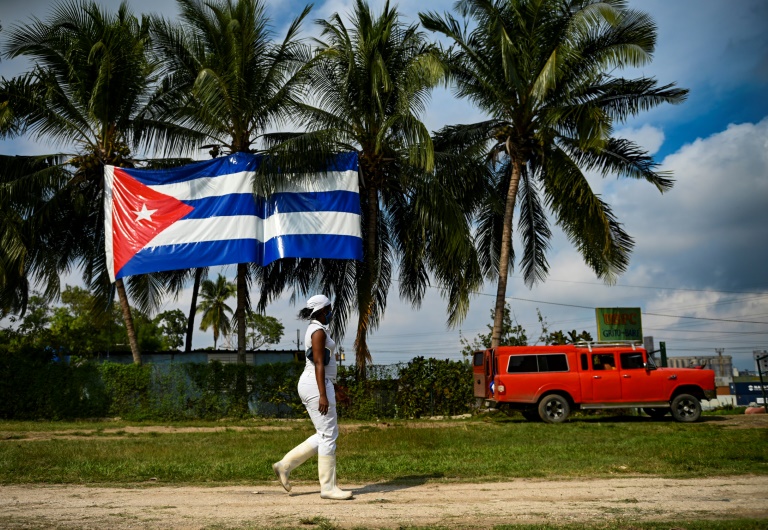
Decreed in February 1962 and still in place today, American sanctions against Cuba is one of the world’s longest-running boycotts by one country against another.
Here are five things to know about the six-decade old trade ban.
– Objective: Regime change –
Executive order 3447 signed by John F Kennedy on February 3, 1962, proclaimed “an embargo upon all trade between the United States and Cuba,” citing the island nation’s “alignment with the communist powers.”
On the eve of the embargo’s entry into force on February 7, Kennedy ordered for himself a shipment of 1,200 Cuban cigars — a product since illegal for US citizens.
John Kavulich, president of the US-Cuba Trade and Economic Council, said the goal of such embargoes — publicly at least — is “a change in behavior of the regime.”
In recent years, Washington has justified the sanctions by pointing to rights violations by Havana and its support for the government of Venezuela’s Nicolas Maduro.
Cuba has not budged on either issue.
– Expanded –
“Not only the justification has evolved, but also the types of actions” taken against Cuba, said Alina Lopez Hernandez, a Cuban researcher and editorial writer.
“For as long as it was bilateral, it was easier for Cuba,” she said. It was a subject “barely mentioned (by the Cuban government) in the first three decades of the revolution” when Havana had Soviet backing.
But since the Torricelli laws and Helms-Burton laws of 1992 and 1996 that ramped up the punitive measures, companies and foreign banks operating in Cuba have faced harsh penalties for doing business there.
“With these two laws (the embargo) lost its bilateral character, it became externalized and became a blockade,” said Lopez.
The Cuban government, which also uses the term blockade, estimates its economy has been damaged to the extent of some $150 billion.
Since 2000, food has been excluded from the sanctions, but Cuba must pay cash.
– 30 years of UN opprobrium –
Every year since 1992, Cuba has presented a motion condemning the sanctions at the UN General Assembly. The first time, 59 countries voted for it, now most are in favor.
Only the United States and Israel vote consistently against the motion, except in 2016 under a brief period of diplomatic detente under then-President Barack Obama.
The Helms-Burton act, said Ric Herrero of the Cuba Study Group, “was intended to create an international embargo against Cuba.”
But the UN’s consistent rejection shows how this has been “a resounding failure.”
– How to lift it? –
America’s policy towards Cuba has been dictated by internal politics ever since the end of the Cold War, when Cuba lost strategic value, said Herrero.
Traditionally, the electoral weight of Florida — a state that can sway US elections and has a strong presence of Cuban immigrants — has stood in the way of relaxation.
However, “the Democrats are not competitive right now in Florida so there’s no real expectation the Democrats are gonna win Florida,” Herrero said.
The pressure, instead, is coming from New Jersey and its Democratic senator Bob Menendez, a child of Cuban immigrants who supports the embargo.
“Because you have a 50-50 split in the Senate, you need his vote in order to pass your legislative agenda and in order to keep him happy this administration has been willing to follow his lead on Cuba,” said Herrero.
Even Obama, who had relaxed some sanctions, could not lift them entirely due to the Helms Burton law which interdicts any president from changing the embargo by decree.
– Internal blockade –
In Cuba, it is called an “internal blockade” — “the bureaucracy, excessive centralization, the lack of incentives for producers,” said economist Omar Everleny Perez.
“Economically, the (American) blockade is one of the causes of the situation in Cuba, but not the only one.”
Unable to produce what it needs, the island nation imports 80 percent of what it consumes.
Steps to liberalize the private sector have come late and have been slow to change the situation on the ground, with much of the economy still in state hands.
For Lopez, “internal policies weigh more on the situation of Cuba than the (US) blockade, because the strengthening of the embargo dates back to the 1990s but the bad policies are historic, they date back to the 1960s.”

