World

Jordan to host MidEast summit in bid to defuse regional tensions

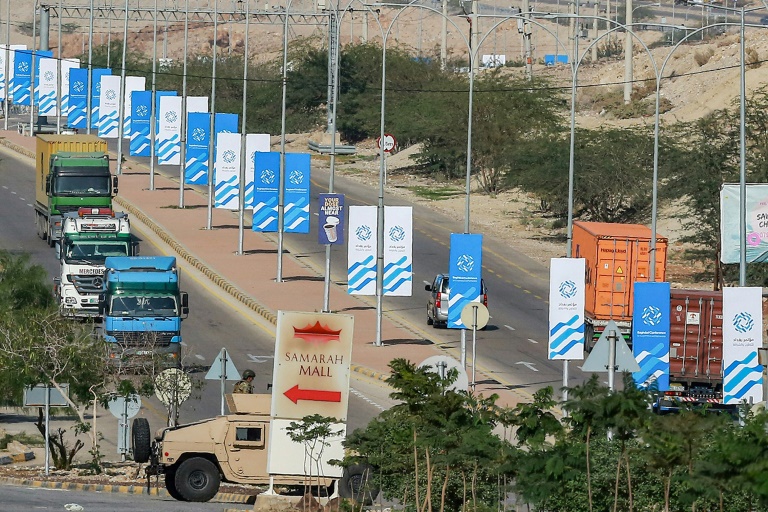
Jordan hosts a Middle East summit Tuesday bringing together regional and international players hoping to help resolve regional crises, particularly in neighbouring Iraq.

The “Baghdad II” meeting, which will also include officials from France and the European Union, follows an August 2021 summit in Iraq’s capital organised at the initiative of French President Emmanuel Macron.

Iraq only recently arrived at a fragile compromise government after a year of political stalemate.

The summit, held on the shores of the Dead Sea, aims to “provide support for the stability, security and prosperity of Iraq,” the French presidency said in a statement, adding it hopes this will benefit “the entire region”.

The meeting takes place as several countries in the region are mired in unrest.

For over three months, Iran has bloodily suppressed a wave of popular demonstrations sparked by the September 16 death in custody of Mahsa Amini, a 22-year-old Iranian of Kurdish origin.

The meeting will also be attended by the EU’s top diplomat, Josep Borrell, who has been mediating talks aimed at reviving Iran’s nuclear deal with world powers.

Syria continues to be a battleground for competing geopolitical interests and Lebanon remains in an economic and political quagmire.

Baghdad II will see Jordan host Iraq’s new Prime Minister Mohammed Shia al-Sudani, Iran’s foreign minister and delegations from Turkey and Saudi Arabia.

Jordan, which has seen strikes and protests against rising fuel prices in recent days, has said the army will deploy on the road from Amman airport to the Dead Sea conference centre, about 50 kilometres (31 miles) west of the capital.

– ‘No one expects miracles’ –

“This summit has great ambitions but no one expects miracles,” says Riad Kahwaji, director of the Institute for Near East and Gulf Military Analysis. 

Iran’s Foreign Minister Hossein Amir-Abdollahian is expected to be busy on the sidelines of the conference.

France’s role as a mediator is crucial, Kahwaji said, with Paris “keeping the thread of dialogue on behalf of Westerners with Iran, especially as the Vienna nuclear negotiations are currently in stalemate”.

The Dubai-based analyst said it is necessary to gauge the “disposition of Tehran — which plays a central role in the crises of the region from Iraq to Syria through to Lebanon and Yemen — to compromise”.

Iran’s involvement in the Ukrainian conflict through the supply of drones to Russia further complicates the discussions, Kahwaji said.

Tehran has accused regional rival Saudi Arabia — with which it has had no diplomatic relations since 2016 — of fomenting unrest in Iran as protests rage on.

On Monday, Iran’s Amir-Abdollahian said Tehran was “ready to return to normal relations” with Riyadh “whenever the Saudi side is ready”.

– Test for Iraq –

The conference will also be a test for Iraq’s Sudani, appointed prime minister in late October after more than a year of political deadlock.

Considered closer to Iran than his predecessor, Mustafa al-Kadhemi, this will be Sudani’s first major international meeting.

In its statement, the French presidency said it hoped for “continuity” from the new Iraqi leader.

Hamzeh Hadad, a visiting scholar at the European Council on Foreign Relations, believes the first summit in 2021 had been intended to allow Kadhemi to show he could “gather neighbouring leaders, in particular the Gulf states, in Baghdad”.

During this meeting, Sudani will have to demonstrate “he can maintain these relations and show that they do not depend on personal ties”, Hadad said.

“I think this time around, both Iraqis and non-Iraqis would like to see a more serious agenda coming from this conference,” he added.

The meeting is also expected to address issues such as global warming, food security, water resources and energy cooperation.

Macron will also meet with Jordan’s King Abdullah II, an “ally in the fight against terrorism”, according to Paris. 
World Bank slashes China growth forecasts on Covid woes, property crisis

The World Bank on Tuesday slashed its China growth forecast for the year as the pandemic and weaknesses in the property sector hit the world’s second largest economy.

In a statement, the institution slashed its forecast to 2.7 percent from 4.3 percent predicted in June. It also revised its forecast for next year from 8.1 percent down to 4.3 percent.

Both figures are well below Beijing’s GDP growth target of around 5.5 percent for the year, a figure many analysts believe is now unattainable.

“Economic activity in China continues to track the ups and downs of the pandemic — outbreaks and growth slowdowns have been followed by uneven recoveries,” the World Bank said. 

“Real GDP growth is projected to reach 2.7 percent this year, before recovering to 4.3 percent in 2023, amid a reopening of the economy.” 

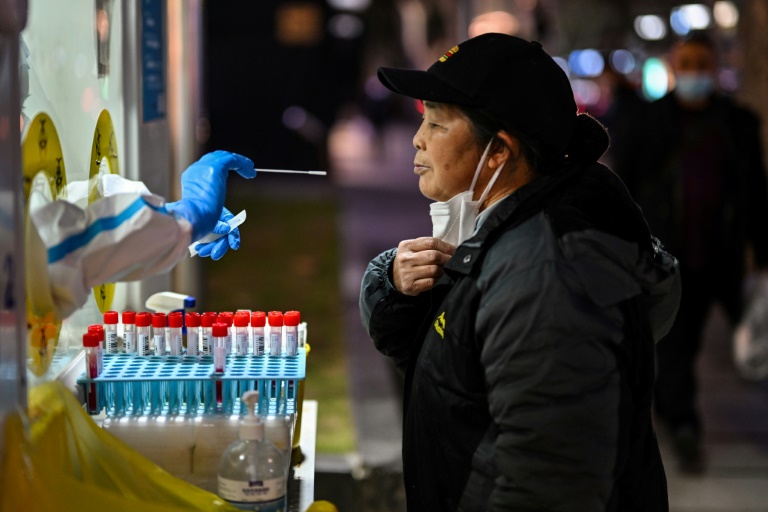
After years of sudden lockdowns, mass testing, long quarantines and travel restrictions, China this month abruptly abandoned its zero-Covid policy. 

But disruption to businesses has continued as cases surge and some restrictions remain in place.

Health authorities have admitted that official figures no longer capture the full picture of domestic infections now that mass testing requirements have been dropped.

“Continued adaptation of China’s Covid-19 policy will be crucial, both to mitigate public health risks and to minimise further economic disruption,” Mara Warwick, World Bank Country Director for China, Mongolia and Korea, said. 

Last week the IMF warned it too would likely downgrade its projections for China again, blaming a predicted continued rise in cases. 

The fund cut its growth projection for China in October to 3.2 percent this year — the lowest in decades — while expecting growth to rise to 4.4 percent next year.

But “very likely, we will be downgrading our growth projections for China, both for 2022 and for 2023”, IMF chief Kristalina Georgieva told AFP. 

– Other stresses –

Experts fear China is ill-equipped to manage the exit wave of infections as it presses ahead with reopening, with millions of vulnerable elderly people still not fully vaccinated.

“Accelerated efforts on public health preparedness, including efforts to increase vaccinations especially among high-risk groups, could enable a safer and less disruptive reopening,” Warwick said. 

The economy is under pressure on other fronts, too. 

“Persistent stress” in the real estate sector — which accounts for about a quarter of annual GDP — could have wider macroeconomic and financial effects, the World Bank noted.

And it added that youth unemployment, the risks from extreme weather caused by climate change and the wider global slowdown also threatened growth.

The world economy is being battered by surging interest rates aimed at fighting runaway inflation that has been triggered by Russia’s war in Ukraine as well as global supply chain snarls.

Beijing has sought to mitigate low growth with a series of easing measures to provide support, slashing key interest rates and pumping cash into the banking system. 

“Directing fiscal resources towards social spending and green investment would not only support short-term demand but also contribute to more inclusive and sustainable growth in the medium term,” said the World Bank’s Lead Economist for China Elitza Mileva.

Ukraine's ballerinas defy war woes with Paris shows

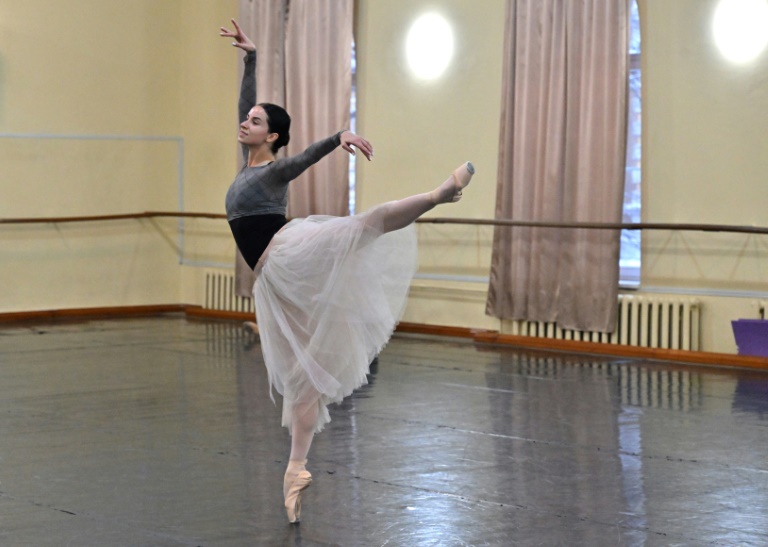
One of Ukraine’s most storied ballet companies embarks this week on a run of shows in Paris, a welcome break from airstrikes and blackouts that have bedevilled performances back home. 

The production of the classic “Giselle” being brought to the French capital by the Kyiv-based National Opera Ballet of Ukraine caps a period of intense hardship for the company.

Since Russia’s invasion in February, the usual stress of rehearsals has been compounded by fleeing dancers and performances interrupted by air raids.

One dancer has even been killed after volunteering to fight.

But the show must go on and performers and audiences alike have been forced to adapt.

Prima ballerina Natalia Matsak recalled how one loud siren during a performance several months ago forced a hasty intermission as everyone rushed for cover.

“We went out to bow and the curtain fell immediately. We didn’t even have time to bow properly,” she told AFP.

Russian aerial assaults have become a regular feature of life in Kyiv — missile attacks on Friday left swathes of the city without power, water and heat amid sub-zero temperatures. 

Every time a raid occurs, the audience at the National Opera — a Neo-Renaissance landmark near the famed Golden Gate — also has to take refuge in the bomb shelters.

Dancers join the audience members in the shelters, but face having to remain limber for breaks that can last more than an hour. 

“After all, as soon as the alarm is lifted, we must be ready to continue the performance,” Matsak said. 

“This is very exhausting… a serious test of strength for artists.”

But, she added, the pressure doesn’t let up once everyone goes home. 

“After such shelling, we do not sleep at night. We are nervously exhausted.” 

– Fleeing dancers –

The company suffered a mass exodus of dancers when the war began and millions of Ukrainians fled their homes. 

“A lot of women left the troupe. The changes in the composition of the troupe are colossal,” said leading soloist Sergiy Kryvokon.

Male dancer Oleksandr Shapoval volunteered to go to the front the day after Russia invaded, leaving behind two teenage daughters. 

He died in mortar shelling in September in the eastern industrial Donbas region. 

But these days, dancers are returning as they miss their homes and work, Kryvokon said. 

In Paris, he will perform the part of Prince Albrecht alongside Matsak in the titular role. 

The tour at the Theatre des Champs-Elysees involves 17 performances over 16 days.

The theatre’s website describes the tragic love story as “one of the great classical ballets of their repertoire”.

Both Kryvokon and Matsak have performed the ballet with other partners but it will be their first time doing the piece together. 

“We’ve been working on this performance for less than two weeks,” Kryvokon said, beads of sweat visible on his forehead after an intense rehearsal. 

– No Tchaikovsky –

In past years, the National Opera Ballet of Ukraine — which is in the middle of its 155th season — has toured France with Tchaikovsky’s Christmastime favourite “The Nutcracker”. 

But the current wartime climate makes such a selection impossible.

“Tchaikovsky is a symbol of Russia, so neither the ‘Nutcracker’ nor his other ballets are danced by our theatre,” said Sergiy Skuz, the company’s administrative head. 

On the Russian side too, ballet has not escaped the impact of the conflict.

The celebrated Bolshoi Ballet Academy has seen expatriate dancers leave, while its tours in the West have been cancelled in protest of Moscow’s invasion. 

The Bolshoi, in turn, has scrapped performances by directors who have denounced the war. 

The Ukrainian dancers are eager instead to promote “Giselle” by French composer Adolphe Adam. 

It is a “respected world classic” that has appeared “on our stage for many decades”, Kryvokon said. 

The dancers are also keen to show that, despite the many trials of the past year, they can still deliver a first-rate performance. 

“Every trip abroad is of great importance for us now,” Kryvokon said. 

“We have to be on top there, and we will show the level with pleasure.”

Japan central bank tweaks monetary policy, yen strengthens

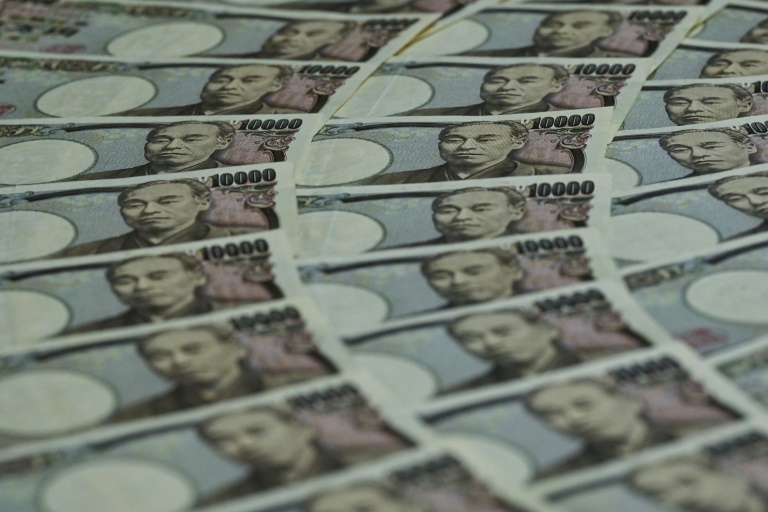
Japan’s central bank tweaked its longstanding monetary easing programme on Tuesday, in a surprise move that saw the yen strengthen quickly against the dollar while Tokyo stock markets fell.

The change marks a rare shift of gears for the dovish central bank, which has largely left its policy intact even as counterparts in other major economies hike rates to tackle inflation.

After a two-day policy meeting, the bank said it would widen the band in which it would allow rates for 10-year Japan government bonds to move, saying it would “improve market functioning”.

“The Bank will expand the range of 10-year JGB yield fluctuations from the target level: from between around plus and minus 0.25 percentage points to between around plus and minus 0.5 percentage points,” it said in a statement.

The move saw the yen strengthen rapidly against the dollar, with the greenback falling from a daily high of 137 yen to 133 yen within minutes of the decision.

The announcement came during the morning break in Tokyo trade, but the key Nikkei 225 index plunged as it reopened, falling as much as three percent before recovering slightly.

Few had anticipated the shift, with all 47 of the economists surveyed by Bloomberg ahead of the decision saying they expected no change in policy.

The bank left the rest of its longstanding loose monetary programme intact, including its years-old inflation target of two percent.

Governor Haruhiko Kuroda, whose term ends next spring, has for years struggled to steer the world’s third largest economy towards sustained two percent inflation, seen as necessary for growth.

Prices in Japan have risen sharply this year, with the consumer price index in October at 3.6 percent, the highest in four decades.

But Kuroda and the central bank consider the increases temporary, citing a lack of strong demand and wage rises.

– ‘A sense of policy flexibility’ –

Still, the BoJ has come under pressure to move away from its ultra-loose policy as central banks in other major economies hike interest rates to tackle inflation.

The resulting differential has seen the yen nosedive about 20 percent against the dollar this year.

Hideo Kumano, chief economist at Dai-ichi Life Group, said the decision showed the bank recognised its existing policy was no longer tenable.

“It has been unrealistic to try to cap the long-term yield with the fixed-rate bond-buying operations at 0.25 percent,” he told AFP.

“It seems to me that the bank wanted to create a little bit of a sense of policy flexibility or room for policy choices and pass the baton to the next governor,” he added.

Kuroda’s term ends in April, and over the weekend reports suggested Japan’s government could work with his successor to move away from the longstanding two-percent price target.

The bank’s decision Tuesday sent shockwaves through Asian markets, with stocks falling on regional bourses as investors digested the news.

“In reality the long-term rate will become 0.5 percent. It will reduce the rate gap between Japan and the US,” said Kumano.

Saisuke Sakai, chief economist of Mizuho Research & Technologies, said the move would help address the weaker yen caused by the growing gulf between US and Japanese central bank policy.

But “unlike rate hikes by the Fed and European central banks aimed at cooling down overheated economies… this is aimed chiefly at stabilising market function,” he told AFP.

“Japan’s economy has not recovered to the pre-pandemic level yet, in contrast to the US economy,” he noted.

UK nurses stage new walkout over pay

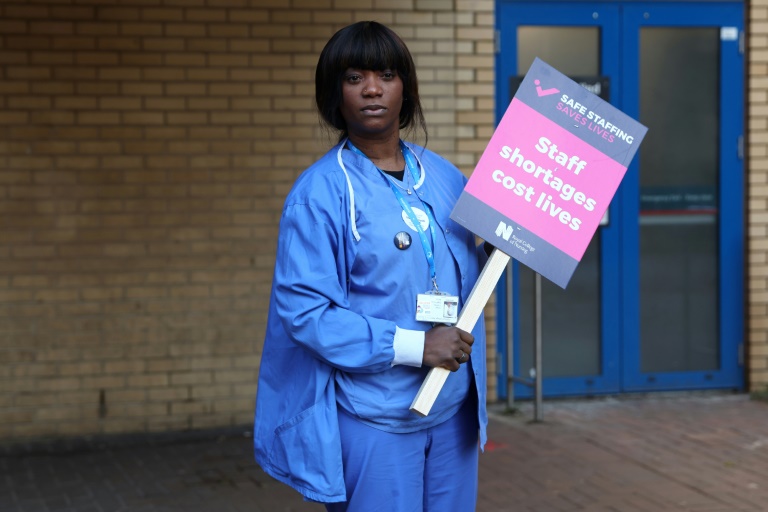
UK nurses on Tuesday stage a second unprecedented strike amid an increasingly acrimonious fight with the government for better wages and warnings that patient safety could be jeopardised.

Up to 100,000 members of the Royal College of Nursing (RCN) in England, Wales and Northern Ireland are holding the latest one-day stoppage after walking out last Thursday for the first time in the union’s 106-year history.

They are demanding an inflation-busting pay increase to make up for years of real-terms salary cuts, but the government insists recession-hit Britain cannot afford anything above a roughly 4-5 percent rise.

The striking nurses are just one of numerous UK public and private sector workers taking industrial action over pay and working conditions, as they grapple with a cost-of-living crisis worsened by decades-high inflation.

The UK consumer prices index is currently running at nearly 11 percent.

Ambulance workers, including paramedics and call handlers, are set to strike on Wednesday. 

A second such walkout is scheduled for December 28, while others, including postal, railway and Border Force staff are staging stoppages over the Christmas period.

– ‘Entrenched’ –

The RCN has criticised Prime Minister Rishi Sunak’s government for refusing to discuss pay as part of stalled negotiations to end the dispute, and warned the strikes could be repeated in the coming months.

“The only reason we’re entrenched is because we’ve got no one to talk to about what the issue is,” the union’s director in England, Patricia Marquis, told Times Radio on Monday.

“Sadly, if there is no resolution, then our members have taken a vote to take strike action and the mandate that lasts for six months.”

The union has also accused Health Secretary Steve Barclay of adopting a “macho” negotiating style during brief meetings held recently.

“The RCN’s demands are unaffordable during these challenging times and would take money away from frontline services while they are still recovering from the impact of the pandemic,” Barclay said Monday.

He and other ministers have reiterated that they can only accept the recommendations of an independent pay review body.

The government-appointed body, comprised of economists and human resources experts, urged hiking healthcare sector pay at least £1,400 ($1,740) on top of a 3.0 percent increase last year.

But critics argue it is constrained by government-imposed budget limits and that its assessment, published in July, predates current higher inflation rates. 

– ‘Fair and reasonable’ –

Sunak is set to be quizzed by a cross-party watchdog panel of lawmakers on Tuesday, with the issue of strikes likely to feature.

On the eve of the nurses’ latest strike, he insisted the government has adopted a “responsible and fair approach” to public sector pay. 

“When it comes to pay it’s because these things are difficult that we have an independent process,” he said while on a visit to Latvia.

Ministers from various departments held their latest contingency meeting Monday as they bid to mitigate the fallout from the growing number of public sector strikes.

They plan to draft in 750 military personnel to drive ambulances and perform logistics roles.

A further 625 soldiers will be involved in “contingency planning” to replace Border Force staff striking over numerous days from Friday through to New Year’s Eve.

Despite the government’s dogged insistence it will not negotiate over pay, polls indicate the majority of people support the nurses’ stance, and to a lesser extent other workers walking out.

YouGov polling during December reported by The Sunday Times showed nearly two-thirds back the nurses, while half are supportive of ambulance staff stoppages.

However, after a year of strikes on the railways, only 37 percent backed its workers amid their ongoing dispute over pay and conditions.

Twitter users vote to oust Elon Musk as CEO

Twitter users voted on Monday to oust owner Elon Musk as chief executive in a highly unscientific poll he organized and promised to honor, just weeks after he took charge of the social media giant.

A total of 57.5 percent of more than 17 million accounts voted for him to step down. Musk, who also runs car maker Tesla and rocket firm SpaceX, has not yet reacted publicly to the results.

“The question is not finding a CEO, the question is finding a CEO who can keep Twitter alive,” the South African-born billionaire tweeted before the vote closed.

In a response to another tweet, he added: “No one wants the job who can actually keep Twitter alive. There is no successor.”

Musk has fully owned Twitter since October 27 and has repeatedly courted controversy as CEO, sacking half of its staff, readmitting far-right figures to the platform, suspending journalists and trying to charge for previously free services.

Analysts have also pointed out that the stock price of Tesla has slumped by one-third since Musk’s Twitter takeover. The share price briefly rallied by 3.3 percent on Monday before fading.

“It’s hard to ignore the numbers since [the Twitter] deal closed,” tweeted investment expert Gary Black, saying he reckoned Tesla’s board was putting pressure on Musk to quit his Twitter role.

In discussions with users after posting his latest poll, Musk renewed his warnings that the platform could be heading for bankruptcy.

– ‘Won’t happen again’ –

Resorting to Twitter’s polling feature has been a favorite strategy of Musk’s to push through policy decisions, including the reinstatement of the account of former president Donald Trump.

Paris-based Reporters Without Borders, which defends press freedom around the world, said the polls were a “crude and cynical” ploy.

“These methods appear to be democratic procedures, but in reality they are… the opposite of democracy,” said the group’s head, Christophe Deloire.

Unpredictable entrepreneur Musk posted his latest poll shortly after trying to extricate himself from yet another controversy.

On Sunday, Twitter users were told they would no longer be able to promote content from other social media sites.

But Musk seemed to reverse course a few hours later, writing that the policy would be limited to “suspending accounts only when that account’s *primary* purpose is promotion of competitors.”

“Going forward, there will be a vote for major policy changes. My apologies. Won’t happen again,” he tweeted.

The attempted ban had prompted howls of disapproval and even bemused Twitter cofounder Jack Dorsey, who had backed Musk’s takeover.

Dorsey questioned the new policy with a one-word tweet: “Why?”

– ‘Perfect storm’ –

Musk has generated a series of controversies in his short reign, one which analyst Dan Ives from Wedbush described as a “perfect storm.” 

He noted that “advertisers have run for the hills and left Twitter squarely in the red ink potentially on track to lose roughly $4 billion per year.”

Shortly after taking over the platform, Musk announced it would charge $8 per month to verify account holders’ identities, but had to suspend the “Twitter Blue” plan after an embarrassing rash of fake accounts. It has since been relaunched.

On November 4, with Musk saying the company was losing $4 million a day, Twitter laid off half of its 7,500-strong staff.

Musk also reinstated Trump’s account — though the former US president indicated he had no interest in the platform — and said Twitter would no longer work to combat Covid-19 disinformation.

In recent days, he suspended the accounts of several journalists after complaining some had published details about the movements of his private jet, which he claimed could endanger his family.

Employees of CNN, The New York Times and The Washington Post were among those affected in a move that drew sharp criticism, including from the European Union and the United Nations.

Washington Post executive editor Sally Buzbee said the suspension of journalist Taylor Lorenz’s account “further undermines Elon Musk’s claim that he intends to run Twitter as a platform dedicated to free speech.”

Some of the suspended accounts have since been reactivated.

On Monday, the head of the European Parliament, speaker Roberta Metsola, sent a letter to Musk inviting him to testify before the legislature, her spokesman said.

The parliament has no power to compel Musk to turn up, and his response was not immediately known.

Japan central bank tweaks monetary policy, yen strengthens

Japan’s central bank tweaked its longstanding monetary easing programme on Tuesday, in a surprise move that saw the yen strengthen quickly against the dollar while Tokyo stock markets fell.

After a two-day policy meeting, the bank said it would widen the band in which it would allow rates for 10-year Japan government bonds to move, saying it would “improve market functioning”.

“The Bank will expand the range of 10-year JGB yield fluctuations from the target level: from between around plus and minus 0.25 percentage points to between around plus and minus 0.5 percentage points,” it said in a statement.

The move saw the yen strengthen rapidly against the dollar, with the greenback falling from a daily high of 137 yen to 133 within minutes of the decision.

The announcement came during the morning break in Tokyo trade, but the key Nikkei 225 index plunged as it reopened, falling more than two percent.

The Bank of Japan left the rest of its longstanding loose monetary policy intact, including its years-old inflation target of two percent.

Governor Haruhiko Kuroda, whose term ends next spring, has for years struggled to steer the world’s third largest economy towards sustained two percent inflation, seen as necessary for growth.

Prices in Japan have risen sharply this year, with the consumer price index in October at 3.6 percent, the highest in four decades.

But Kuroda and the central bank consider the increases temporary, citing a lack of strong demand and wage rises.

Still, the BoJ has come under pressure to move away from its ultra-loose policy as central banks in other major economies hike interest rates to tackle inflation.

The resulting differential has seen the yen nosedive about 20 percent against the dollar this year.

Biden says 'will not be silent' over rising anti-Semitism

Joe Biden on Monday promised he will not remain silent in the face of growing anti-Semitism in the United States, as the president hosted a White House reception celebrating Hanukkah, the Jewish festival of lights.

“I recognize your fear, your hurt, your worry that this vile and venom is becoming too normal,” Biden said as he stood next to a menorah, a traditional Jewish candelabra, lit by guests to mark the second of the festival’s eight nights. 

“Silence is complicity,” said the president. “We must not remain silent… I will not be silent. America will not be silent.”

Among the guests were Holocaust survivor Bronia Brandman, and Charlie Cytron-Walker, the rabbi at Congregation Beth Israel, a synagogue in Colleyville, Texas that was the scene of a hostage-taking in January.

According to the Anti-Defamation League, the United States experienced a record 2,717 anti-Semitic acts such as assaults, verbal attacks and property damage in 2021, a year-on-year increase of 34 percent.

In its own report, the American Jewish Committee, one of the country’s oldest Jewish advocacy organizations, said that 39 percent of US Jews acknowledged they had “changed their behavior, limiting their activities and concealing their Jewishness due to concerns about anti-Semitism,” while about one in four had themselves been a victim of anti-Semitism over the past year.

Experts have voiced concern they are witnessing a trivialization of anti-Jewish rhetoric, highlighted by public figures including the rapper Kanye West, who recently blurted out “I like Hitler” during an online interview with a conspiracy theorist.

For his part, former president Donald Trump sparked a wave of outrage for dining with a known white supremacist and Holocaust denier last month at his Mar-a-Lago home in Florida.

Kim's sister defends North Korea's spy satellite capabilities

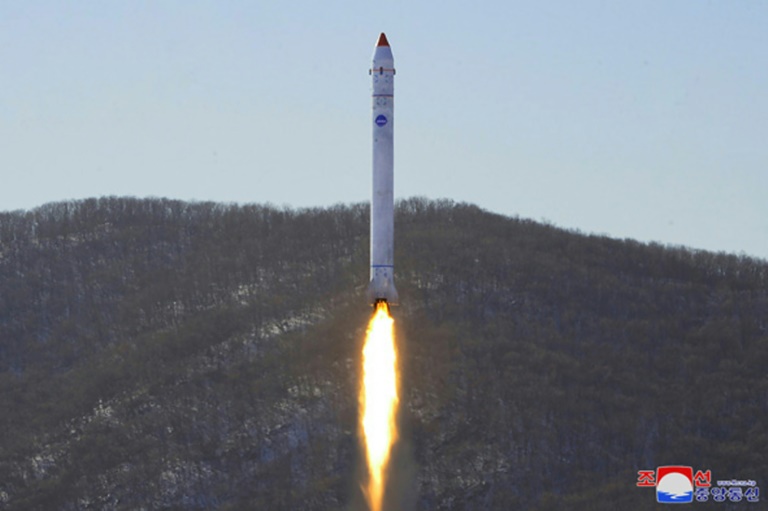
North Korea has developed advanced technologies to take images from space using a spy satellite, the powerful sister of leader Kim Jong Un insisted Tuesday, after experts mocked black-and-white images supposedly taken from space in a weekend launch.

Kim Yo Jong’s defense of North Korea’s satellite capabilities comes after the isolated country said it conducted an “important final-stage” test for the development of a reconnaisance satellite.

But experts in Seoul quickly raised doubts, saying the quality of the photos — presumably taken from the satellite — were too poor. 

In a lengthy, vitriolic statement carried by the official Korean Central News Agency, Kim said it was “too inappropriate and careless” to evaluate Pyongyang’s satellite development progress and capability based on the two images.

She insisted a camera installed on the satellite had the “reliability of ground control including attitude control and shooting control command in a suitable space flight environment”. 

Kim also said the satellite’s data transmission devices and encryption processing technology were reliable. 

“We carried out a necessary test and reported the significant and satisfying result, which was not lacking,” she said. 

The development of a military reconnaissance satellite was one of Pyongyang’s key defence projects outlined by her elder brother leader Kim Jong Un last year.

North Korea is under biting international sanctions for its nuclear weapons programmes, but peaceful satellite launches are not subject to the same level of restrictions.

Analysts however say developing such a satellite would provide North Korea with cover for testing banned intercontinental ballistic missiles (ICBMs), as they share much of the same technology.

Earlier this year, Pyongyang carried out two launches, claiming it was testing components for a reconnaissance satellite, which the United States and South Korea said likely involved components of its new Hwasong-17 intercontinental ballistic missile (ICBMs). 

The younger Kim rebuked these claims that the North’s satellite launches were thinly disguised firings of banned ICBMs. 

“If we develop ICBMs, we will fire ICBMs, and not test long-range rockets disguised as satellites,” she said.

Kim also dismissed analysts doubting that the North has the advanced technology needed for the rocket to survive re-entry into the Earth’s atmosphere, saying she would explain it in “an easy-to-understand manner” to their naysayers. 

“If the atmospheric re-entry technology was insufficient, it would not be possible to receive remote data from the pilot combat unit until the moment of impact,” she said.

The weekend’s launch comes after a year of unprecedented blitz of weapons tests by North Korea, including the launch of its most advanced intercontinental ballistic missile the month before.

The United States and South Korea have warned for months that Pyongyang is preparing to conduct its seventh nuclear test.

Thai rescuers hopeful for missing sailors as search enters second day

Rescuers in helicopters scoured the Gulf of Thailand on Tuesday for dozens of sailors who went missing when their naval vessel sank, hoping life jackets had helped them survive two nights in the choppy waters.

Seventy-six sailors from the HTMS Sukhothai were hauled from the sea after the vessel went down late Sunday in the Gulf of Thailand, roughly 37 kilometres (22 miles) off the Southeast Asian country’s southeastern coast.

Thai warship the HTMS Kraburi left port to resume the search early Tuesday, scanning the turbulent waters for 30 missing sailors alongside other naval vessels and two Seahawk helicopters.

“I am hopeful we will find some survivors, because they have life vests,” said naval officer Narong Khumburi.

“But I imagine they must be exhausted.”

Efforts to find the missing crew were focused on aerial searches, with the Royal Thai airforce assisting the operation.

HTMS Kraburi commander Kraiwit Kornraweeprapapitch said slightly improved weather would help the search.

“The format of searching is still the same, which is a joint operation with helicopters,” he said.

His ship and 176-strong crew will join the HTMS Angthong, HTMS Naresuan and HTMS Bhumibol Adulyadej in scanning an area roughly 30 miles by 30 miles stretching from Prachuab to upper Chumporn.

“Now, we are just surveilling the situation using the helicopter,” naval diver Prawit Gongnak told AFP at the pier in Prachuap Khiri Khan town.

Prawit, who was monitoring the bright if blustery weather conditions, said he was among 29 divers on standby.

“We haven’t been commanded to dive yet,” he added.

Sahachart Limcharoenphakdee, a member of the National Institute for Emergency Medicine, said they were working with naval personnel to help those plucked from the waters.

“I am hopeful, and have trust for the navy rescue team who are skilful,” he said.

Late Monday night, naval commander Pichai Lorchusakul told reporters at the pier that they remained focused on finding survivors.

“Our main priority is searching (for) and rescuing as many as we can,” he said.

Pichai added that this was the “first time” that the Thai navy had lost a ship this way.

– Electrical fault –

The vessel — a corvette, the smallest type of military warship — is believed to have run into trouble after its electronics system was damaged, according to the navy.

“The ship’s operating systems stopped working, causing the ship to lose control,” a spokesperson said.

Parts of southern Thailand have been hit by storms and flooding in recent days.

A warning from the Thai meteorological office remained in place Tuesday, with strong winds causing rough conditions in the Gulf of Thailand, cautioning seafarers to proceed with caution and small boats to stay ashore.

The HTMS Sukhothai was commissioned in 1987 and built in the United States by the now-defunct Tacoma Boatbuilding Company, according to the US Naval Institute.

Close Bitnami banner
Bitnami