World

Ghana labour unions call for strike over local debt swap

Ghana’s main unions on Monday called for a nationwide strike from next week in protest against the inclusion of workers’ pensions in a local debt swap programme as part of the terms for an IMF credit.

A top cocoa and gold producer, Ghana has oil and gas reserves but its debt payments are high and its revenues weak. 

Like the rest of Africa, it has been hit by economic fallout from the global pandemic and the Ukraine war. 

Two weeks ago, the west African nation offered investors a domestic debt swap to ease a crunch in payments. 

But labour unions refuse to have pension funds included in the exchange.

The unions met in the capital Accra on Monday and told reporters they had called a strike to compel the government to heed their demand.

“We have decided firmly that because the government has refused to grant us our request that all pension funds must be exempted from the domestic debt exchange programme, all workers of Ghana are going to strike on 27 December 2022,” said Yaw Baah, secretary general of Trades Union Congress.

“We will be on strike until our demand has been granted,” he said.

Baah called on workers to stay at home.

“We will stay at home until the government acts. That is straight forward and very simple,” he said. 

“We won’t sit down for the vulnerable people to suffer because somebody has made mistakes.”

Labour unions present at the press conference included the Ghana National Association of Teachers (GNAT), the Ghana Medical Association, the University Teachers Association of Ghana (UTAG), the Ghana Registered Nurses and Midwives Association and the Teachers and Educational Workers Union (TEWU).

The government has so far not responded to the strike threat.

The West African state is facing an economic crisis, with inflation at more than 50 percent and its cedi currency down sharply, hit by the adverse effects of the global pandemic and Ukraine conflict. 

The crisis forced President Nana Akufo-Addo’s government to reverse its position earlier this year and seek International Monetary Fund help as economists warned of a default on debt payments.

Ghana and the IMF have agreed on a three-billion-dollar credit, but the fund’s board has yet to approve the deal.

Ghana on Monday announced it was suspending payments on part of its foreign debts.

Hong Kong exchange headed to worst IPO finish in a decade

Hong Kong’s stock exchange is on track for its weakest year since 2012 for new listings as the city reeled from the pandemic, rising interest rates and China’s economic uncertainty, according to data released Tuesday.

Hong Kong Exchanges and Clearing (HKEX) said this year it had 69 new listings raising HK$87.8 billion ($11.3 billion) as of November 30, down 74 percent from the year before.

The bourse said “renewed momentum” in the second half of the year accounted for nearly two-thirds of the IPOs, following a slump during the city’s worst-ever coronavirus outbreak.

“The macroeconomic and geopolitical backdrop led to weak sentiment and softness in the global IPO market,” the exchange said.

The latest figures were a steep drop from peak levels in 2020 when IPOs raised HK$400 billion, as Hong Kong benefited from the bonanza of Chinese mega-companies opting to list closer to home.

Before the pandemic Hong Kong’s bourse was often crowned as the top IPO venue in the world, drawing more than 100 new listings annually between 2013 and 2020.

HKEX shares have lost 28.3 percent since the start of the year while the city’s flagship Hang Seng Index is down 18 percent.

But both have seen a rebound in the past six weeks. 

As China pivots towards reopening, bankers and analysts expect a slew of mid-sized Hong Kong deals in the first quarter will drive a recovery in listings.

“With the transition toward a reopening, we anticipate several delayed Chinese IPOs and follow-on transactions to occur in the near term,” Murli Maiya of JPMorgan Chase in Hong Kong told Bloomberg News.

Victoria Lloyd, a partner in Baker McKenzie’s Hong Kong office, said she expected the IPO pipeline to pick up after Chinese New Year.

“With China opening up, everyone is hoping that next year will be a better year — because there is a solid IPO pipeline, with a series of companies that have submitted applications for listings or are waiting to do so,” Lloyd told Bloomberg.

HKEX said Tuesday that it had bolstered its popular “Connect” franchise this year that links to bourses in Shanghai and Shenzhen, which will soon extend to interbank interest rate swap markets.

This year Hong Kong also saw the listing of four special purpose acquisition companies (SPACs) — investment vehicles sometimes called “blank cheque” companies.

HKEX started to allow SPAC listings this year, subject to a strict framework, in a bid to boost competitiveness following in the steps of regional rival Singapore.

But SPACs have largely fallen out of favour this year on Wall Street amid rising inflation, interest rate hikes and a looming recession.

Tokyo exhibit showcases Dior's passion for Japan

A hit exhibition showcasing Christian Dior’s work opens in Tokyo this week with a focus on the French designer’s fascination with Japan and the country’s influence on his pieces.

“Christian Dior: Designer of Dreams” arrives in Japan after drawing huge crowds in Paris, London and New York.

Opening Wednesday, the exhibition features 350 haute couture dresses — including Japan-inspired gowns displayed in settings intended to pay tribute to Japanese culture.

Architect Shohei Shigematsu created structures including a room covered with an undulating three-dimensional facade constructed from translucent traditional washi paper pasted over wooden frames.

“When Dior makes a skirt, there is a structure and then the fabric is laid on top of it,” he told AFP.

“I was asked to create a Japanese traditional structure, so I thought about shoji screens, for example, which have a wooden structure and are covered with paper.”

Each section features a different interior design intended to show various parts of Japanese culture. 

“There is a section inspired by an orderly tatami room separated by sliding doors. But not everything in Japan is simple and minimal,” he said.

“We have different designs like Japanese gardens and flashy kimonos. I wanted to show the sides of Japan people don’t know.”

The Dior house first presented a show in Japan in 1953, and the designer had a well-known fascination with the country.

“Dior had a lot of respect for traditional Japanese culture and he wrote about it in his memoir,” curator Florence Muller told AFP.

“I think there is a mutual fascination between France and Japan.”

Starting in the 1950s, Dior also collaborated with Japanese companies, giving them the rights to adapt and reproduce Dior looks to cater to local tastes.

In a sign of the brand’s popularity, Japan’s former empress Michiko chose a Dior gown made from Japanese textiles when she married then-prince Akihito in 1959.

The Tokyo show, which runs until May 28, includes archive pieces as well as works by more recent creative directors, and showcases several items inspired by Japan.

Among them is a John Galliano coat with “The Great Wave Off Kanagawa” print emblazoned on the base of its full skirt, and robes cinched with Japanese obi-style belts created by Raf Simons.

Dior’s austere jacket dress named “Rashomon” — the name of a Japanese novel and film directed by the legendary Akira Kurosawa — is also on display.

“This exhibition shows the mutual respect between Japan and France in their approach to crafts, fashion, design and art,” said Shigematsu.

Tokyo exhibit showcases Dior's passion for Japan

A hit exhibition showcasing Christian Dior’s work opens in Tokyo this week with a focus on the French designer’s fascination with Japan and the country’s influence on his pieces.

“Christian Dior: Designer of Dreams” arrives in Japan after drawing huge crowds in Paris, London and New York.

Opening Wednesday, the exhibition features 350 haute couture dresses — including Japan-inspired gowns displayed in settings intended to pay tribute to Japanese culture.

Architect Shohei Shigematsu created structures including a room covered with an undulating three-dimensional facade constructed from translucent traditional washi paper pasted over wooden frames.

“When Dior makes a skirt, there is a structure and then the fabric is laid on top of it,” he told AFP.

“I was asked to create a Japanese traditional structure, so I thought about that shoji screens, for example, which have a wooden structure and are covered with paper.”

Each section features a different interior design intended to show various parts of Japanese culture. 

“There is a section inspired by an orderly tatami room separated by sliding doors. But not everything in Japan is simple and minimal,” he said.

“We have different designs like Japanese gardens and flashy kimonos. I wanted to show the sides of Japan people don’t know.”

The Dior house first presented a show in Japan in 1953, and the designer had a well-known fascination with the country.

“Dior had a lot of respect for traditional Japanese culture and he wrote about it in his memoir,” curator Florence Muller told AFP.

“I think there is a mutual fascination between France and Japan.”

Starting in the 1950s, Dior also collaborated with Japanese companies, giving them the rights to adapt and reproduce Dior looks to cater to local tastes.

In a sign of the brand’s popularity, Japan’s former empress Michiko chose a Dior gown made from Japanese textiles when she married then-prince Akihito in 1959.

The Tokyo show, which runs until May 28, includes archive pieces as well as works by more recent creative directors, and showcases several items inspired by Japan.

Among them is a John Galliano coat with “The Great Wave Off Kanagawa” print emblazoned on the base of its full skirt, and robes cinched with Japanese obi-style belts created by Raf Simons.

Dior’s austere jacket dress named “Rashomon” — the name of a Japanese novel and film directed by the legendary Akira Kurosawa — is also on display.

“This exhibition shows the mutual respect between Japan and France in their approach to crafts, fashion, design and art,” said Shigematsu.

Thai rescuers hopeful for missing sailors as search enters second day

Rescuers in helicopters scoured the Gulf of Thailand on Tuesday for dozens of sailors who went missing when their naval vessel sank, hoping life jackets had helped them survive two nights in the choppy waters.

Seventy-five sailors from the HTMS Sukhothai were hauled from the sea after the vessel went down late Sunday in the Gulf of Thailand, roughly 37 kilometres (22 miles) off the country’s southeastern coast. 

Four vessels — the HTMS Kraburi, HTMS Angthong, HTMS Naresuan and HTMS Bhumibol Adulyadej — two planes, and four helicopters were scanning the turbulent waters for 30 missing sailors, the navy said.

“I am hopeful we will find some survivors, because they have life vests,” said naval officer Narong Khumburi.

“But I imagine they must be exhausted.”

The navy had initially reported that 106 people were aboard the vessel, but revised that figure down to 105 on Tuesday.

At the pier in Prachuap Khiri Khan province, families of those missing gathered to wait for news as anxiety over their loved ones mounted.

Malinee Pudpong, 54, from Roi Et province, said her sister’s son, 21-year-old Saharat Esa, was onboard.

“I came here to look at the waves and I’m thinking, ‘For god’s sake, where is my (nephew)?'” she said.

Efforts to find the missing crew were focused on aerial searches, with the Royal Thai airforce assisting the operation, which has been affected by strong winds.

Tuesday’s waves were still high, navy spokesperson Admiral Pogkrong Montradpalin said, noting the search area had grown and was focusing “on the area near shores, according to the currents and the wind”.

Naval commander Pichai Lorchusakul, speaking at the same pier, said that he remained confident.

“We have full hope,” he said.

Sahachart Limcharoenphakdee, a member of the National Institute for Emergency Medicine, said they were working with naval personnel to care for those plucked from the waters.

“I am hopeful, and have trust for the navy rescue team, who are skilful,” he said.

Mother Phongsri Suksawat, 50, said she hoped “100 percent” that her 22-year-old youngest son Chirawat Toophorm would come home.

“I thought it would be fine and nothing bad would happen from the storm,” she said, adding that before he went on the ship her son asked her to care for his wife.

“I would like to hug him.”

– Electrical fault –

Late Monday night, naval commander Pichai told reporters at the pier that they remained focused on finding survivors.

“Our main priority is searching (for) and rescuing as many as we can,” he said, adding it was the first time that the Thai navy had lost a ship this way.

The vessel — a corvette, the smallest type of military warship — is believed to have run into trouble after its electronics system was damaged, according to the navy.

“The ship’s operating systems stopped working, causing the ship to lose control,” a spokesperson said.

Parts of southern Thailand have been hit by storms and flooding in recent days.

A warning from the Thai meteorological office remained in place Tuesday, with strong winds causing rough conditions in the Gulf of Thailand, and seafarers cautioned to be careful and small boats to stay ashore.

The HTMS Sukhothai was commissioned in 1987 and built in the United States by the now-defunct Tacoma Boatbuilding Company, according to the US Naval Institute.

'Asterix' takes on new writer for 2023 instalment

Popular French comic book series “Asterix” will turn a new page for its forthcoming 40th volume, with a new writer chosen to pen next year’s instalment, the publisher said Tuesday.

French novelist and comic book author Fabcaro, who is known for his absurdist humour, will be the fourth scriptwriter to carry on the adventure of the indomitable Gaul who stood against the Romans.

As is tradition, the next volume will come out in an odd-numbered year, with the latest release planned for October 26, 2023, publisher Albert Rene said.

The title of the forthcoming book remains a secret.

Asterix — defender of the last Gaulish village holding out against the Roman empire — was dreamed up in 1959 by Rene Goscinny, who died in 1977, and Albert Uderzo, who died in 2020.

The comic books have sold hundreds of millions of copies worldwide.

Before the Asterix series, there was no history of comics having a scriptwriter.

Fabcaro, 49, said he was excited to be taking on the task.

“I was a huge fan of Asterix. This is a great gift to the child that I once was,” he said.

“I want to stay faithful to… what makes Asterix so appealing. With classic ingredients such as the anachronisms, the puns… And especially remain faithful to the characters.”

As the new writer Fabcaro follows in the footsteps of previous authors Goscinny, Uderzo and Jean-Yves Ferri.

He is well-known for his 2015 comic “Zai Zai Zai Zai”, in which a man goes on the run after forgetting a shop loyalty card.

The upcoming “Asterix” book is to be illustrated by Didier Conrad, who has been in the job since Uderzo named him as his successor for the 35th volume in 2013.

Greek woodcutters give energy crisis the chop

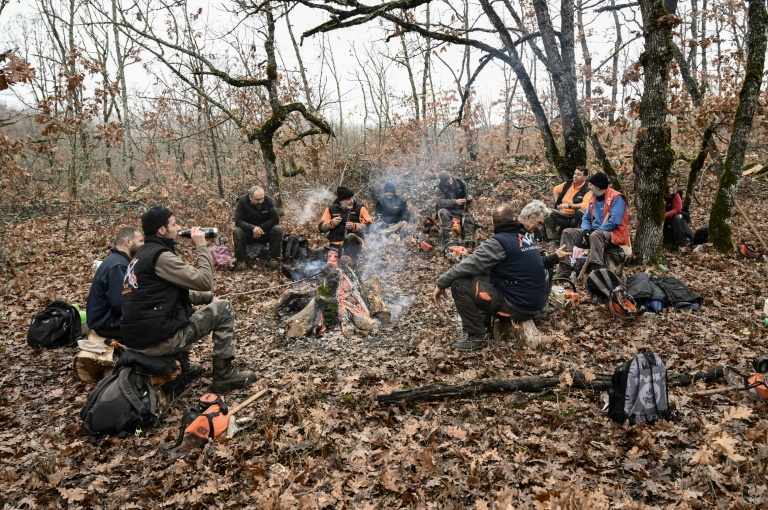
Huddled around a campfire sipping hot tea, a group of Greek lumberjacks take a badly needed break in an oak forest not far from the Albanian border.

With petrol and gas bills increasing, loggers in northern Greece say they are doing their best to keep up with rising demand for wood, considered a more affordable option for people to heat their homes.

Many Greeks, still reeling from their country’s decade-long economic crisis, are desperate to counteract energy prices soaring on the back of Russia’s war in Ukraine and national inflation running at over eight percent.

“We have had an increase in demand,” said timber transporter Yannis Paligiannis, 44.

“People are thinking of turning their heating to wood, but next year what will happen? Nobody is sure that next year wood won’t be more expensive than petrol. Everyone is wary,” he added.

For now, an abundant local supply makes firewood the best option in the north of Greece where temperatures dip well below zero Celsius (32 Fahrenheit) in deep winter.

“People here can get through winter by spending 300-400 euros ($320-425) on firewood, perhaps even cheaper if they transport it and chop it themselves,” Zisis Giakopoulos, a pensioner in his late 60s from the village of Aimilianos in the northwestern region of Grevena, told AFP.

“Many of them also use the firewood in stoves on which they also heat their food,” Giakopoulos added.”

In comparison, figures recently compiled by Greek insurance website Pricefox showed a 80-square-metre flat needing to spend some 650 euros on petrol fees, nearly 1,000 euros on air-conditioning and nearly 1,300 euros for gas heating to get through winter. 

Paligiannis says 70 percent of the firewood sold in Greece comes from Grevena, this mountainous region not far from the border with Albania.

“There is a higher demand for wood compared to last year because of the energy crisis, but we shouldn’t abuse the forest,” cautioned lumberjack Dimitris Basnas, 34.

“If the trees are old and tall, it’s slow work. You don’t get a lot of quantity. If it’s a younger forest you get more.”

– ‘Villages are deserted’ –

Greece has nearly 270 cooperatives with some 8,500 forestry workers registered at the environment ministry.

But despite heightened demand this year, the future of the profession is by no means guaranteed.

Numbers are dwindling, with younger people opting for less back-breaking work. Most of the wood is still transported by mule through thick foliage.

“We learnt this trade from our grandparents and we carry on the same way,” says Thanassis Papanikolaou, president of a forestry cooperative that produces about 10,000 tonnes of firewood every year.

Opening access roads to vehicles through the forest is forbidden, he adds.

“My father managed to raise five children doing this job,” says 62-year-old Yiorgos Koutoulas, the group’s eldest member, who is near retirement. 

“When I leave there is no young person to replace me,” he added.

“All the villages are deserted. The young people have left to work in the big cities,” he said.

According to forestry maps — which are a decade old in a country that experiences annual wildfires — nearly 50 percent of Greek territory is made up of forest cover.

Logging figures show a timber production of nearly 700,000 cubic metres last year, down from nearly 895,000 a decade ago and from nearly 720,000 in 2020.   

Verdict due in German trial of ex-Nazi camp secretary

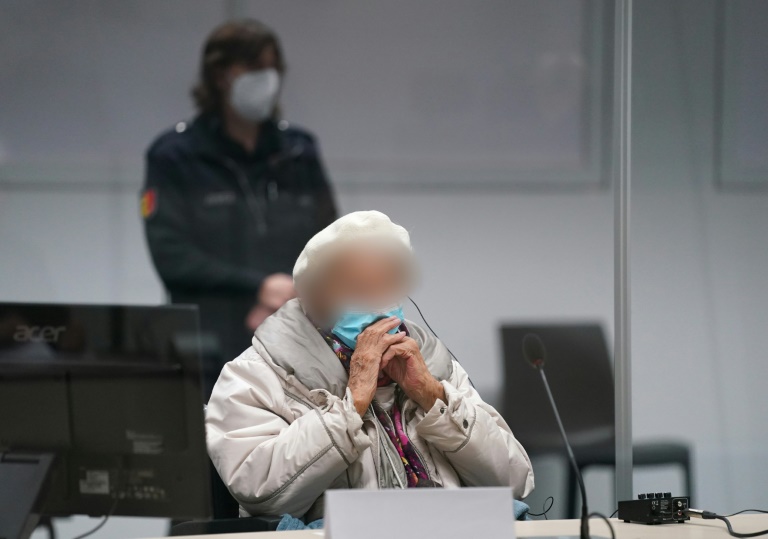
A German court is expected to deliver its verdict Tuesday in the case of a 97-year-old former Nazi camp secretary accused of complicity in the murder of more than 10,000 people.

In one of the country’s last Holocaust trials, prosecutors are seeking a two-year suspended sentence for defendant Irmgard Furchner for her alleged role in the “cruel and malicious murder” of prisoners at the Stutthof camp in occupied Poland.

Furchner, whose image the court ordered blurred in media photographs, expressed regret as the trial drew to a close this month, breaking her silence for the first time on the accusations.

“I’m sorry about everything that happened,” she told the regional court in the northern town of Itzehoe.

Furchner is the first woman to be tried in Germany for Nazi-era crimes in decades.

She had tried to abscond as the proceedings were set to begin in September 2021, fleeing the retirement home where she lives and heading to a metro station.

Furchner managed to evade police for several hours before being apprehended in the nearby city of Hamburg and held in custody for five days.

Her lawyers have called for her acquittal, saying the evidence presented in the course of the trial “had not shown beyond doubt” that she knew of the killings.

– ‘Last of its kind’ –

The defendant was a teenager when her alleged crimes were committed and has therefore been tried in a juvenile court.

An estimated 65,000 people died at the camp near today’s Gdansk, including “Jewish prisoners, Polish partisans and Soviet Russian prisoners of war”, prosecutors said.

Between June 1943 and April 1945, Furchner worked in the office of camp commander Paul Werner Hoppe.

According to the case against her, she took dictation of the SS officer’s orders and handled his correspondence.

Public prosecutor Maxi Wantzen late last month asked the judges to hand down a two-year suspended sentence, the longest possible without jail time. 

“This trial is of outstanding historical importance,” Wantzen said, adding that it was “potentially, due to the passage of time, the last of its kind”.

Furchner has sat impassively in a wheelchair throughout the proceedings in which several Stutthof camp survivors have offered wrenching accounts of their suffering.

Wantzen thanked the witnesses, many of whom also served as co-plaintiffs, saying they had told of the “absolute hell” of the camp.

“They feel it is their duty, even though they had to summon the pain again and again to fulfil it,” she said.

– Time running out –

The prosecutor told the judges the defendant’s clerical work “assured the smooth running of the camp” and gave her “knowledge of all occurrences and events at Stutthof”.

Moreover, “life-threatening conditions” such as food and water shortages and the spread of deadly diseases including typhus were intentionally maintained and immediately apparent, she said.

Although the camp’s abysmal conditions and hard labour claimed the most lives, the Nazis also operated gas chambers and execution-by-shooting facilities to exterminate hundreds of people deemed unfit for labour.

Wantzen said that despite the defendant’s advanced age, it was “still important today to hold such a trial”, and to complete the historical record as survivors die off.

Seventy-seven years after the end of World War II, time is running out to bring to justice criminals linked to the Holocaust.

In recent years, several cases have been abandoned as the accused died or were physically unable to stand trial.

The 2011 conviction of former guard John Demjanjuk, on the basis that he served as part of Hitler’s killing machine, set a legal precedent and paved the way for several trials.

Since then, courts have handed down several guilty verdicts on those grounds rather than for murders or atrocities directly linked to the individual accused.

Philippine corpse-whisperer seeks justice for drug war victims

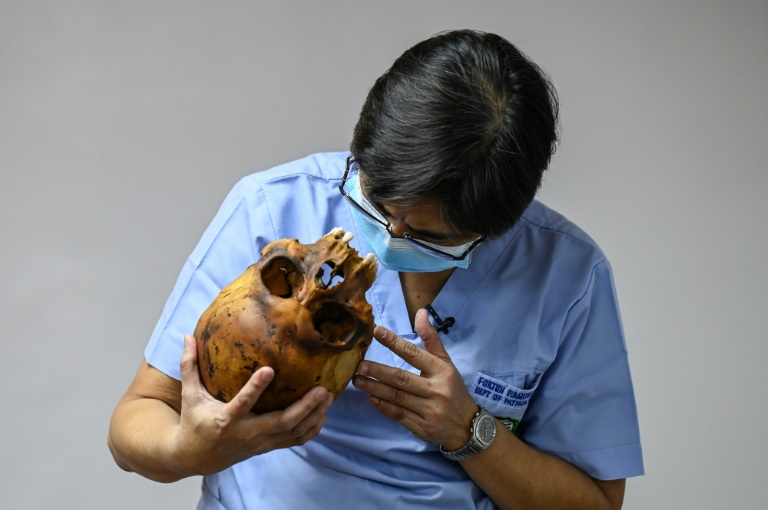
Raquel Fortun whispers to the human skeletal remains spread out in a makeshift morgue in the Philippine capital Manila. She is seeking the truth about their violent deaths — and justice for their families.

Six months after Rodrigo Duterte left office, Fortun, 60, continues to examine the bodies of some of the thousands of people killed during the former president’s brutal drug war.

One of only two forensic pathologists in the country, Fortun is helping rights groups gather evidence that one day could be used in court against police accused of carrying out extrajudicial killings. 

“I know they were killed violently and yes, I do whisper things to them. I do ask for help,” said Fortun, referring to the bones laid out on wooden tables.

Fortun works alone in a whitewashed room at the University of the Philippines College of Medicine, where she heads the pathology department.

Soiled clothing is piled on the floor near body bags and plastic boxes containing human remains.

They were exhumed from tombs by a Catholic priest, who is helping families find answers about the deaths of their loved ones.

As she painstakingly examines the bones, Fortun said the souls of the dead try to catch her attention. She believes they want to explain what happened to them.

“I would hear something falling on the floor, a very small object like a button, a coin… and of course you’d take a look and there’s nothing there,” she said.

It is grim and lonely work, and not without its dangers. 

Fortun’s findings and Twitter rants about the Philippine government and justice system often “ruffle feathers” of Duterte supporters and she gets frequent death threats. 

“I’m more afraid of the living than the dead,” said Fortun.

“At any time somebody can just drive next to my car… and shoot me. So the sense of mortality is very, very strong. Especially now.”

– Bodies keep piling up – 

More than 6,200 people died in Duterte’s anti-drug campaign, according to official figures. Rights groups estimate the true figure was in the tens of thousands. 

President Ferdinand Marcos Jr., who succeeded Duterte in June, has pledged to continue the drug war but with an emphasis on prevention and rehabilitation.

Yet the bodies keep piling up.

Rights groups estimate at least 150 people have been killed since Marcos took office. Police recently put the figure at 46. 

Fortun said she has so far examined the remains of 70 people killed during Duterte’s term. 

Eleven had their skulls or other bones punctured by bullets, some in the wrists indicating defensive wounds. 

Her findings contradict the official death certificates, which stated they died from natural causes. 

That has fuelled suspicions that medical examiners falsified their reports.

Fortun hopes her evidence could eventually be used in a Philippine court or at The Hague-based International Criminal Court (ICC).

In 2021, the ICC began a full-blown investigation into possible crimes against humanity committed during the drug war.

But Fortun is not holding her breath for that to happen anytime soon.

“Will I be called by the ICC or a similar court? I don’t know,” she said.

“Will anything happen to these cases in my lifetime? I also don’t know.”

– ‘The dead are keeping me alive’ – 

Since the start of the drug war in 2016, only three policemen have been convicted for killing a drug suspect. 

Another officer was jailed last month for torturing two teenagers who were killed at the height of the crackdown.

Despite her rare expertise, Fortun said authorities seldom called on her to investigate suspicious or unexplained deaths. 

Police typically relied on witness testimony, not forensic evidence, to build a case.

Autopsies also require the approval of the next of kin. When they are carried out, they are usually handled by the police medicolegal division or general practitioners when the bodies are in remote areas. 

Neither have the equipment or training required for forensic pathology, Fortun said.

“They don’t even know how to do autopsies,” she said.

But there are signs things might be changing. 

Recently, Fortun was brought in to perform a second autopsy on the body of an inmate who was accused of being involved in the high-profile murder of a journalist.

The police autopsy had found “no apparent sign of external physical injury”. 

Fortun determined he had been suffocated by a plastic bag, leading to criminal complaints being filed against the prisons chief and numerous inmates. 

Justice Secretary Crispin Remulla has also announced plans to train more forensic pathologists.

“I have a lot of health issues — sometimes I wonder why I’m still around,” said Fortun, who has survived pneumonia, sepsis and breast cancer in the past two years.

“Maybe the dead are keeping me alive.”

Off a desert highway, Israel Bedouins rejoice in horse racing

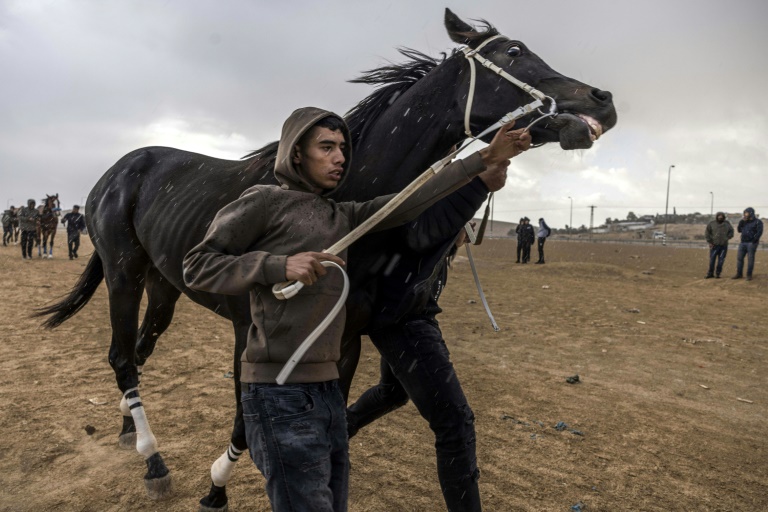
A stretch of dirt next to a desert highway in Israel’s south may not immediately seem an ideal spot, but for years it has attracted Bedouins weekly to enjoy horse racing.

There is no grandstand or fence separating the spectators’ area from the track — just some plastic tubing tied to posts.

But the Bedouins who gather there at sunrise most Fridays told AFP it suits them just fine.

They have been meeting at the venue in the Negev desert region to share a hobby they describe as a central part of their nomadic heritage.

Saher al-Qarnawi, standing along the makeshift barrier after keenly watching a two-horse race, told AFP earlier this month that Israeli police have tried to shut down the events, “but people are determined to keep them going.”

A police spokesman for the Negev, Zivan Freidin, said the races were not illegal.

“We don’t forbid these races,” he said.

“We only have a problem with when they constitute a public disorder or endanger people, as they sometimes take place close to roads.”

Horse racing and betting typically go hand-in-hand, but people at the Abu Tlul track refused to confirm reports that thousands of dollars are wagered, off site, each week.

Zakaria Shamroukh, an owner and trainer at the track, dismissed claims of illegal gambling.

“Do you see money here? It’s just a hobby,” he said.

Freidin indicated police were not particularly engaged with cracking down on betting, if it was taking place at all.

“I don’t know about bets, and not all race involves bets,” the police spokesman said.

– Social tensions –

There are more than 260,000 Bedouins in Israel, part of the country’s Arab minority that accounts for roughly a fifth of its 9.3 million population.

A partly nomadic group that is becoming increasingly urbanised, Bedouins consistently rank as Israel’s poorest group and, like other Arab people, complain of marginalisation and mistreatment by the government.

A long-standing source of friction is that many Bedouin villages are not recognised as official municipalities by Israel and lack basic utilities.

Tensions are also driven by accusations from some Jewish Israelis blaming Bedouins for a disproportionately high share of petty crime, particularly theft.

The all-men crowd at the track on a recent Friday included at least one Jewish Israeli, who identified himself as an owner whose horse was not racing that day, and declined to give his name.

In a rare study of Bedouin leisure practices, researchers at the Ben-Gurion University of the Negev explored the impact shared social spaces could have on relations between the Jewish majority and minority groups.

The 2021 study — focused on Bedouin use of an Israeli forest, not horse racing — found that Bedouins had “positive feelings” towards Israel’s Lahav Forest, even if the popular leisure area is managed by the Jewish-controlled state institutions.

Shamroukh said the horse races offer an opportunity to foster closer ties, calling on the state to support them.

“Sports brings together Arabs (and) Jews,” he said.

“They all come to the track and they like it, and they become avid followers and cheer for the horses.”

Close Bitnami banner
Bitnami