World

Germany to cut the ribbon on first LNG terminal

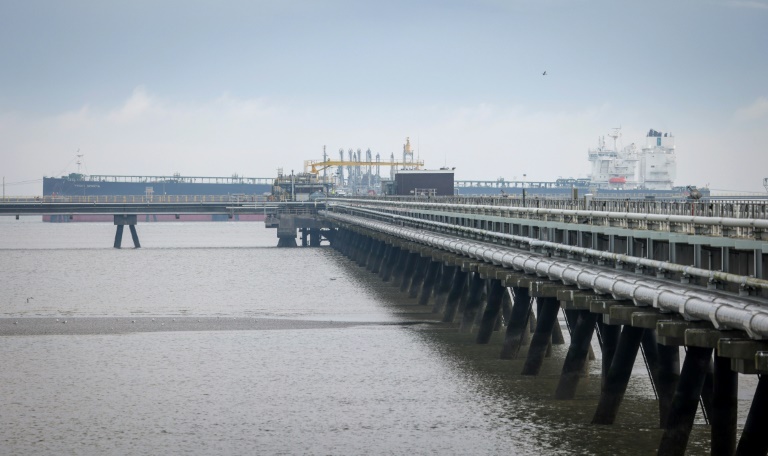
Germany will on Saturday inaugurate its first liquefied natural gas (LNG) terminal, built in record time, as the country scrambles to adapt to life without Russian energy.

The rig in the North Sea port of Wilhelmshaven will be opened by Chancellor Olaf Scholz at a ceremony on board a specialist vessel known as an FSRU, named the Hoegh Esperanza.

The ship has already been stocked with gas from Nigeria that could supply 50,000 homes for a year, and the terminal is set to begin deliveries on December 22.

Germany plans to open four more government-funded LNG terminals over the next few months as well as a private terminal in the port of Lubmin.

Together, the terminals could deliver 30 billion cubic metres of gas a year from next year, or a third of Germany’s total gas needs — if Berlin can find enough LNG to service them.

LNG terminals allow for the import by sea of natural gas which has been chilled and turned into a liquid to make it easier to transport.

The FRSU stocks the LNG, then turns it back into a ready-to-use gas.

Until now, Germany had no LNG terminals and relied on cheap gas delivered through pipelines from Russia for 55 percent of its supply.

– Supply worries –

But since Russia’s invasion of Ukraine, gas supplies to Germany have been throttled and Berlin has been forced to rely on LNG processed by Belgian, French and Dutch ports, paying a premium for transport costs.

The government decided to invest in building its own LNG terminals as quickly as possible and has spent billions of euros on hiring FSRUs to service them.

However, Germany has not yet signed a single major long-term contract to begin filling the terminals from January.

“The import capacity is there. But what worries me are the deliveries,” Johan Lilliestam, a researcher at the University of Potsdam, told AFP.

A contract has been signed with Qatar for LNG to supply the Wilhelmshaven terminal, but deliveries are not set to begin until 2026.

Suppliers want long-term contracts, while the German government is not keen to be locked into multi-year gas deals as it wants the country to become climate-neutral by 2045. 

“Companies need to know that the purchasing side in Germany will eventually diminish if we want to meet climate protection targets,” economy minister Robert Habeck has said.

– Cold winter –

The country could initially be forced to buy LNG from the expensive spot markets, which would lead to higher prices for consumers.

The market could also be squeezed next year by renewed demand in China as it emerges from strict Covid-19 curbs, Andreas Schroeder, an expert at the ICIS energy research institute, told AFP. 

“If Europe has been able to receive so much LNG in recent months, it is because Chinese demand was low,” Schroeder said. 

China recently signed a deal to buy gas from Qatar for 27 years — the longest such deal in history, according to Doha.

Germany has also had a cold winter so far, with the gas tanks emptying faster than expected.

“Gas consumption is increasing. This is a risk, especially if the cold spell continues,” said Klaus Mueller, the head of the country’s Federal Network Agency regulatory body, in a recent interview.

As a result, there is a real risk that Germany could experience temporary supply disruptions next winter, according to Schroeder.

Gas usage is currently down 13 percent compared to last year, but the government wants that figure to be closer to 20 percent.

In Europe, the gap between supply and demand could reach 27 billion cubic metres in 2023, according to an IEA report — equivalent to 6.5 percent of the EU’s annual consumption.
Malaysia landslide death toll rises to 21

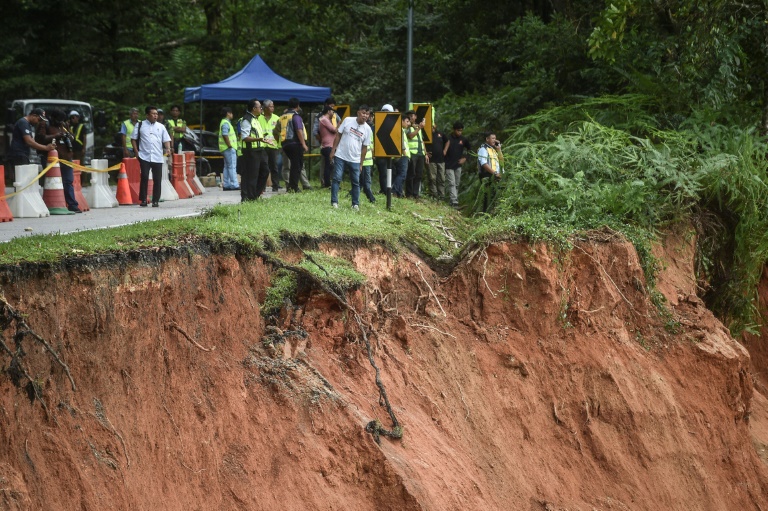
Rescue workers scoured muddy terrain for survivors and bodies on Saturday as the death toll from a landslide at a Malaysian campsite rose to 21, including five children, authorities said.

A dozen people were still missing after a predawn landslide hit a campsite at an organic farm on Friday near the town of Batang Kali just outside the capital Kuala Lumpur.

Officials said there had been more than 90 people, most of them asleep, at the campsite near a mountain casino resort when the landslide struck.

Authorities said 61 people had been found safe or rescued.

Two of the victims were “believed to be a mother and her child in a state of embrace buried under the earth”, Norazam Khamis, director of the Selangor state fire and rescue department, told reporters on Friday.

The farm did not have a licence to run a campsite and its operators would be punished if they were found to have broken the law, authorities said.

Prime Minister Anwar Ibrahim visited the area late Friday and said financial aid would be given to the families of those killed or injured in the disaster.

Selangor state chief minister Amirudin Shari tweeted that all picnic and camping sites in the state would be closed for a week.

Landslides are common in Malaysia after heavy rains, which are regular at the end of the year, and can occur after bouts of bad weather.

However, no heavy rains were recorded in the area on the night of the disaster.

The government has imposed strict rules on hillside development.

In March, four people were killed after a massive landslide triggered by heavy rains buried their homes in a Kuala Lumpur suburb.

In one of the deadliest such incidents, a huge mudslide in 1993 brought on by heavy rain caused a 12-storey residential building outside the capital to collapse, killing 48 people.

Robot plant grows, wilts on fate of UN nature talks

It’s not always easy to make sense of the complex environmental diplomacy taking place at a UN summit billed as humanity’s last hope to save nature.

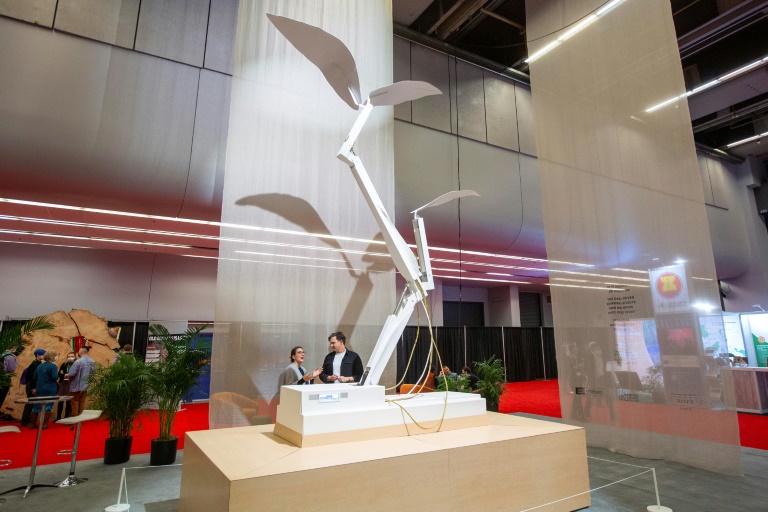
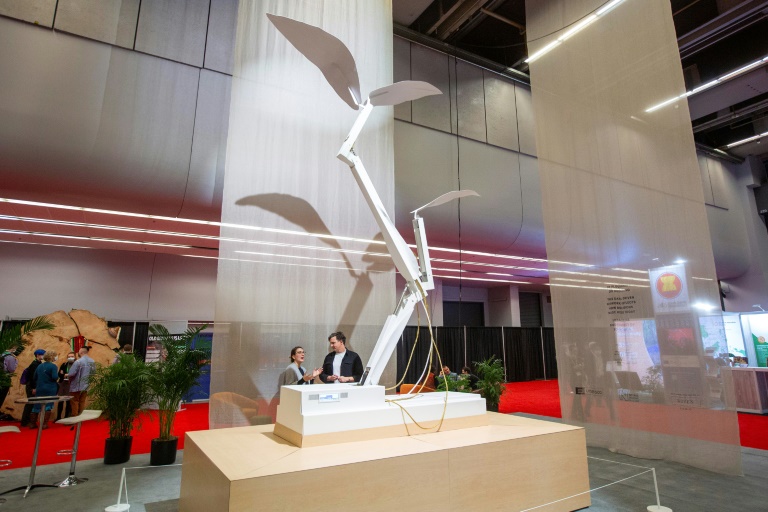
That’s why a scientist and artist have teamed up to build a large, data-driven robotic plant that withers or flourishes depending on countries’ policy commitments: a tangible demonstration of how human actions will impact the world’s threatened species.

Called “ECONARIO,” the 5.5-meter (18-foot) tall artwork took a year to build from recycled steel and is currently on display in Montreal Convention Centre, keeping policymakers at the COP15 meeting on their toes as they attempt to hammer out a deal to protect ecosystems.

Its creator, Dutch artist Thijs Biersteker, told AFP the idea behind it is simple: “If the research does not reach us, then how can the research teach us?”

“Art reflects the time we’re in, and it should reflect these important issues.”

The plant feeds on data from the Biodiversity Intactness Index (BII) — an estimated percentage of the original number of species that remain, and their abundance in any given area, despite human impacts.

Data scientist Adriana De Palma of London’s Natural History Museum, who serves as research lead for the BII, told AFP it is based on a robust, peer-reviewed and open access methodology.

As negotiations happen, the team behind BII input, for example, how many countries have committed to implement a cornerstone pledge of protecting 30 percent of lands and oceans by 2030.

“We can then predict what that is going to mean for biodiversity in 20, 50 or 100 years,” she said.

– Rooting for success –

New funding pledges by wealthy countries to assist lower income nations in protecting their biodiversity have helped to nudge up slightly the predicted global average of BII to 70.7 percent by 2050 — meaning the average ecosystem will have that percentage of its natural ecological community left.

The current figure is 68.5 percent, set to drop to 66.4 percent if “business as usual” continues but rise to 76.4 percent in case of “real action” which the UN summit was meant to deliver.

For now, ECONARIO is cycling between the pessimistic and optimistic scenarios in order to show what could be possible — but if policymakers fail to achieve an ambitious target, that will be reflected in a very sorry looking robotic plant.

“We shouldn’t shy away from the hard numbers, it’s not time to sugarcoat anymore,” said Biersteker.

De Palma added they were in talks with North American museums to loan the artwork out after the UN summit concludes, and it will eventually return to Europe. 

“Using a piece of art like this to really connect with people so they see the damage that individual choices, company choices and government choices are having on the world, is incredibly valuable,” she said.

Robot plant grows, wilts on fate of UN nature talks

It’s not always easy to make sense of the complex environmental diplomacy taking place at a UN summit billed as humanity’s last hope to save nature.

That’s why a scientist and artist have teamed up to build a large, data-driven robotic plant that withers or flourishes depending on countries’ policy commitments: a tangible demonstration of how human actions will impact the world’s threatened species.

Called “ECONARIO,” the 5.5-meter (18-foot) tall artwork took a year to build from recycled steel and is currently on display in Montreal Convention Centre, keeping policymakers at the COP15 meeting on their toes as they attempt to hammer out a deal to protect ecosystems.

Its creator, Dutch artist Thijs Biersteker, told AFP the idea behind it is simple: “If the research does not reach us, then how can the research teach us?”

“Art reflects the time we’re in, and it should reflect these important issues.”

The plant feeds on data from the Biodiversity Intactness Index (BII) — an estimated percentage of the original number of species that remain, and their abundance in any given area, despite human impacts.

Data scientist Adriana De Palma of London’s Natural History Museum, who serves as research lead for the BII, told AFP it is based on a robust, peer-reviewed and open access methodology.

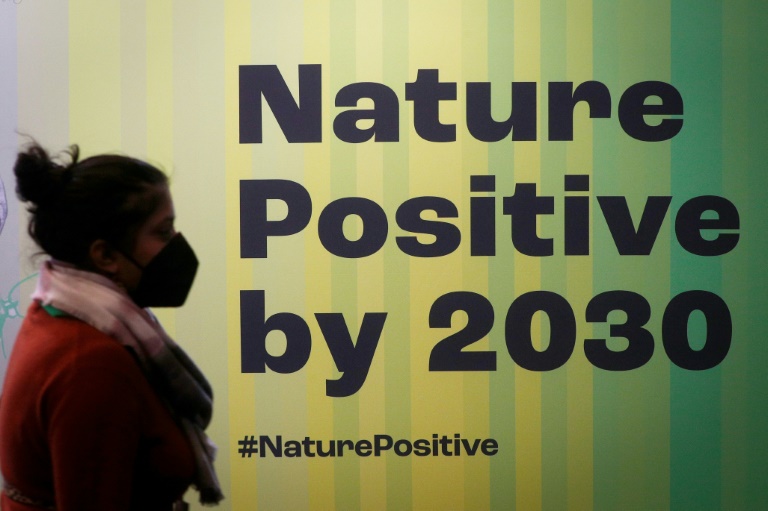
As negotiations happen, the team behind BII input, for example, how many countries have committed to implement a cornerstone pledge of protecting 30 percent of lands and oceans by 2030.

“We can then predict what that is going to mean for biodiversity in 20, 50 or 100 years,” she said.

– Rooting for success –

New funding pledges by wealthy countries to assist lower income nations in protecting their biodiversity have helped to nudge up slightly the predicted global average of BII to 70.7 percent by 2050 — meaning the average ecosystem will have that percentage of its natural ecological community left.

The current figure is 68.5 percent, set to drop to 66.4 percent if “business as usual” continues but rise to 76.4 percent in case of “real action” which the UN summit was meant to deliver.

For now, ECONARIO is cycling between the pessimistic and optimistic scenarios in order to show what could be possible — but if policymakers fail to achieve an ambitious target, that will be reflected in a very sorry looking robotic plant.

“We shouldn’t shy away from the hard numbers, it’s not time to sugarcoat anymore,” said Biersteker.

De Palma added they were in talks with North American museums to loan the artwork out after the UN summit concludes, and it will eventually return to Europe. 

“Using a piece of art like this to really connect with people so they see the damage that individual choices, company choices and government choices are having on the world, is incredibly valuable,” she said.

At COP15, businesses urged to act for nature

Widely blamed for ravaging Earth’s ecosystems, big businesses are nevertheless being turned to as key players in a deal to save nature at the COP15 biodiversity conference.

With hundreds of billions of dollars needed for the task, public funds can only fill part of the gap. Campaigners and experts at the talks are demanding companies act to reduce their impact — and firms in turn are asking for clear rules of engagement.

Ministers at the meeting in Montreal are thrashing out a global agreement for the next decade to curb damage to Earth’s forests, oceans and species — with conservation and finance top of the agenda.

“One of the other things at stake in this COP is getting businesses involved,” said Pierre Cannet of the Worldwide Fund for Nature, on the sidelines of the talks.

“Whatever the outcome of the summit, they will have to ask themselves how they can curb the fall in biodiversity.”

Elizabeth Mrema, the head of the UN Convention on Biological Diversity that underpins COP15, said a record number of private-sector parties registered for this year’s summit, where delegates are working on a new Global Biodiversity Framework.

“Clearly they’ve listened,” she told AFP.

“They have understood or they are getting there now, understanding also the impact of their operations on nature, the nature biodiversity which we all depend on and (they) also depend (on) for their businesses,” she added.

“If they are not part of the framework, their businesses will also suffer.”

– Invest in nature –

Some $900 billion a year is needed to move from “an economy that devours nature to a neutral and then a positive economy,” says Gilles Kleitz of the French state development agency AFD.

For this, “the role of businesses is fundamental,” said Didier Babin, a researcher at Cirad, an institute that focuses on sustainable agriculture.

“More businesses have to be brought on board” to help fund the targets, he added. “They depend on biodiversity and they must invest more in the capital of nature. Nature needs to be thought of as an asset.”

One of the targets in the framework under discussion at COP15 is a section aimed at obliging big companies and financial groups to measure and publish their impacts on the natural world and their exposure to it.

The World Economic Forum said in a 2020 report that more than half of global production depends heavily (15 percent) or moderately (37 percent) on nature and services related to it. 

It calculated the value of businesses’ exposure to degraded ecosystems at $44 trillion.

The report found that the construction sector was the most exposed with $4 trillion, followed by agriculture with $2.5 trillion and the food and drink industry with $1.4 trillion.

– Measuring biodiversity impact –

At COP15, a grouping of 330 businesses called Business for Nature is pushing for a uniform framework for all corporations to report their impacts and exposure.

With collective turnover of more than $1.5 trillion, they include big names such as Unilever, Ikea, Danone, BNP Paribas and Tata Steel.

“There will be no economy, there will be no business on a dead planet,” said the grouping’s executive director, Eva Zabey.

“And so now we need governments to adopt an ambitious global biodiversity framework that will provide the political certainty and it will require businesses to contribute.”

Brune Poirson, director of sustainable development at the hotel group Accor, said COP15 “must be a key milestone” in this process.

“We need a framework with all the actors in the sector,” she said.

Efforts are gaining pace to make companies disclose their contribution to the carbon emissions that drive climate change — but relatively few companies currently declare their impact on the ecosystems that support all life.

“This summit needs to be a turning point in humanity’s relationship with nature and to do so it needs to kick off fundamental changes in the way the economy works,” said Eliot Whittington of the Cambridge Institute for Sustainability Leadership.

“More and more businesses and financial institutions are realizing how essential action on nature and biodiversity is, but they need governments to provide the right rules and incentives to solve market failures and make change possible.”

At COP15, businesses urged to act for nature

Widely blamed for ravaging Earth’s ecosystems, big businesses are nevertheless being turned to as key players in a deal to save nature at the COP15 biodiversity conference.

With hundreds of billions of dollars needed for the task, public funds can only fill part of the gap. Campaigners and experts at the talks are demanding companies act to reduce their impact — and firms in turn are asking for clear rules of engagement.

Ministers at the meeting in Montreal are thrashing out a global agreement for the next decade to curb damage to Earth’s forests, oceans and species — with conservation and finance top of the agenda.

“One of the other things at stake in this COP is getting businesses involved,” said Pierre Cannet of the Worldwide Fund for Nature, on the sidelines of the talks.

“Whatever the outcome of the summit, they will have to ask themselves how they can curb the fall in biodiversity.”

Elizabeth Mrema, the head of the UN Convention on Biological Diversity that underpins COP15, said a record number of private-sector parties registered for this year’s summit, where delegates are working on a new Global Biodiversity Framework.

“Clearly they’ve listened,” she told AFP.

“They have understood or they are getting there now, understanding also the impact of their operations on nature, the nature biodiversity which we all depend on and (they) also depend (on) for their businesses,” she added.

“If they are not part of the framework, their businesses will also suffer.”

– Invest in nature –

Some $900 billion a year is needed to move from “an economy that devours nature to a neutral and then a positive economy,” says Gilles Kleitz of the French state development agency AFD.

For this, “the role of businesses is fundamental,” said Didier Babin, a researcher at Cirad, an institute that focuses on sustainable agriculture.

“More businesses have to be brought on board” to help fund the targets, he added. “They depend on biodiversity and they must invest more in the capital of nature. Nature needs to be thought of as an asset.”

One of the targets in the framework under discussion at COP15 is a section aimed at obliging big companies and financial groups to measure and publish their impacts on the natural world and their exposure to it.

The World Economic Forum said in a 2020 report that more than half of global production depends heavily (15 percent) or moderately (37 percent) on nature and services related to it. 

It calculated the value of businesses’ exposure to degraded ecosystems at $44 trillion.

The report found that the construction sector was the most exposed with $4 trillion, followed by agriculture with $2.5 trillion and the food and drink industry with $1.4 trillion.

– Measuring biodiversity impact –

At COP15, a grouping of 330 businesses called Business for Nature is pushing for a uniform framework for all corporations to report their impacts and exposure.

With collective turnover of more than $1.5 trillion, they include big names such as Unilever, Ikea, Danone, BNP Paribas and Tata Steel.

“There will be no economy, there will be no business on a dead planet,” said the grouping’s executive director, Eva Zabey.

“And so now we need governments to adopt an ambitious global biodiversity framework that will provide the political certainty and it will require businesses to contribute.”

Brune Poirson, director of sustainable development at the hotel group Accor, said COP15 “must be a key milestone” in this process.

“We need a framework with all the actors in the sector,” she said.

Efforts are gaining pace to make companies disclose their contribution to the carbon emissions that drive climate change — but relatively few companies currently declare their impact on the ecosystems that support all life.

“This summit needs to be a turning point in humanity’s relationship with nature and to do so it needs to kick off fundamental changes in the way the economy works,” said Eliot Whittington of the Cambridge Institute for Sustainability Leadership.

“More and more businesses and financial institutions are realizing how essential action on nature and biodiversity is, but they need governments to provide the right rules and incentives to solve market failures and make change possible.”

At COP15, businesses urged to act for nature

Widely blamed for ravaging Earth’s ecosystems, big businesses are nevertheless being turned to as key players in a deal to save nature at the COP15 biodiversity conference.

With hundreds of billions of dollars needed for the task, public funds can only fill part of the gap. Campaigners and experts at the talks are demanding companies act to reduce their impact — and firms in turn are asking for clear rules of engagement.

Ministers at the meeting in Montreal are thrashing out a global agreement for the next decade to curb damage to Earth’s forests, oceans and species — with conservation and finance top of the agenda.

“One of the other things at stake in this COP is getting businesses involved,” said Pierre Cannet of the Worldwide Fund for Nature, on the sidelines of the talks.

“Whatever the outcome of the summit, they will have to ask themselves how they can curb the fall in biodiversity.”

Elizabeth Mrema, the head of the UN Convention on Biological Diversity that underpins COP15, said a record number of private-sector parties registered for this year’s summit, where delegates are working on a new Global Biodiversity Framework.

“Clearly they’ve listened,” she told AFP.

“They have understood or they are getting there now, understanding also the impact of their operations on nature, the nature biodiversity which we all depend on and (they) also depend (on) for their businesses,” she added.

“If they are not part of the framework, their businesses will also suffer.”

– Invest in nature –

Some $900 billion a year is needed to move from “an economy that devours nature to a neutral and then a positive economy,” says Gilles Kleitz of the French state development agency AFD.

For this, “the role of businesses is fundamental,” said Didier Babin, a researcher at Cirad, an institute that focuses on sustainable agriculture.

“More businesses have to be brought on board” to help fund the targets, he added. “They depend on biodiversity and they must invest more in the capital of nature. Nature needs to be thought of as an asset.”

One of the targets in the framework under discussion at COP15 is a section aimed at obliging big companies and financial groups to measure and publish their impacts on the natural world and their exposure to it.

The World Economic Forum said in a 2020 report that more than half of global production depends heavily (15 percent) or moderately (37 percent) on nature and services related to it. 

It calculated the value of businesses’ exposure to degraded ecosystems at $44 trillion.

The report found that the construction sector was the most exposed with $4 trillion, followed by agriculture with $2.5 trillion and the food and drink industry with $1.4 trillion.

– Measuring biodiversity impact –

At COP15, a grouping of 330 businesses called Business for Nature is pushing for a uniform framework for all corporations to report their impacts and exposure.

With collective turnover of more than $1.5 trillion, they include big names such as Unilever, Ikea, Danone, BNP Paribas and Tata Steel.

“There will be no economy, there will be no business on a dead planet,” said the grouping’s executive director, Eva Zabey.

“And so now we need governments to adopt an ambitious global biodiversity framework that will provide the political certainty and it will require businesses to contribute.”

Brune Poirson, director of sustainable development at the hotel group Accor, said COP15 “must be a key milestone” in this process.

“We need a framework with all the actors in the sector,” she said.

Efforts are gaining pace to make companies disclose their contribution to the carbon emissions that drive climate change — but relatively few companies currently declare their impact on the ecosystems that support all life.

“This summit needs to be a turning point in humanity’s relationship with nature and to do so it needs to kick off fundamental changes in the way the economy works,” said Eliot Whittington of the Cambridge Institute for Sustainability Leadership.

“More and more businesses and financial institutions are realizing how essential action on nature and biodiversity is, but they need governments to provide the right rules and incentives to solve market failures and make change possible.”

Anti-corruption prosecutor in Guatemala given 4-year jail term

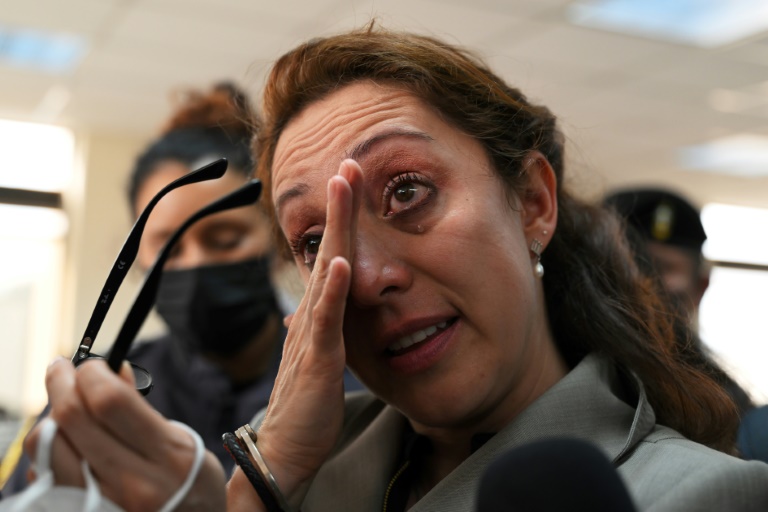
A Guatemalan court on Friday handed down a four-year jail term to a senior anti-corruption prosecutor in what critics assailed as a blatant effort to undermine a fight against corruption.

The sentence against Virginia Laparra, who has been imprisoned for 10 months already, was announced by Judge Oly Gonzalez after an unusually speedy 18-day trial that was largely confined to testimony from police, government functionaries and a judge once investigated for corruption.

Gonzalez said Laparra was convicted for “abuse of authority” and given a commutable term of four years, which, under Guatemalan law, means she could pay a fine and see her term reduced.

Laparra wept as she heard the sentence. 

“This is a legal aberration and a terrible precedent,” she said.

Amnesty International lambasted the conviction as a travesty.

“This conviction is yet another example of the criminalization of justice workers in Guatemala,” said Erika Guevara Rosas, Americas director for Amnesty International. “Virginia Laparra is a prisoner of conscience who is paying a high price for conducting her work as an anti-corruption prosecutor.

– ‘Vengeance’ campaign –

At the end of her hearing, Laparra was ushered away in handcuffs, escorted by two guards. Some 50 supporters shouted, “Virginia is innocent!” and “Down with the corrupt!”

In brief remarks to journalists, Laparra said “no prosecutor evermore will dare present a case.”

US State Department assistant secretary for the western hemisphere Brian Nichols this week tweeted that the US government is “deeply concerned” about Laparra’s prosecution. In a separate tweet, the department said Guatemala’s campaign against Laparra “for doing her job undermines the fight against corruption and impunity.” 

A day earlier, Laparra asserted as the trial wrapped up that the charges against her were part of a “vengeance” campaign by right-wing forces intent on protecting corruption rackets and military officers blamed for crimes during the 1960-1996 civil war.

Laparra was the chief of the Quetzaltenango region of the Special Prosecutor’s Office against Impunity when she was arrested as part of apparent payback for her anti-corruption efforts.

The only witnesses brought forth to testify in Laparra’s trial were the two police officers who arrested her, a lawyer for the plaintiff, a handwriting expert and former judge Lesther Castellanos, who Laparra denounced on four occasions for leaking sensitive information.

As part of the backlash against United Nations-financed anti-corruption efforts, some 25 prosecutors, former prosecutors and judges are either in jail or have fled the country. Laparra is the first to be brought to trial and convicted.

Canada increases biodiversity funding in crunch UN talks

Canada said Friday it was ramping up its international biodiversity funding, an overture to developing countries during difficult UN talks aimed at sealing a “peace pact with nature.”

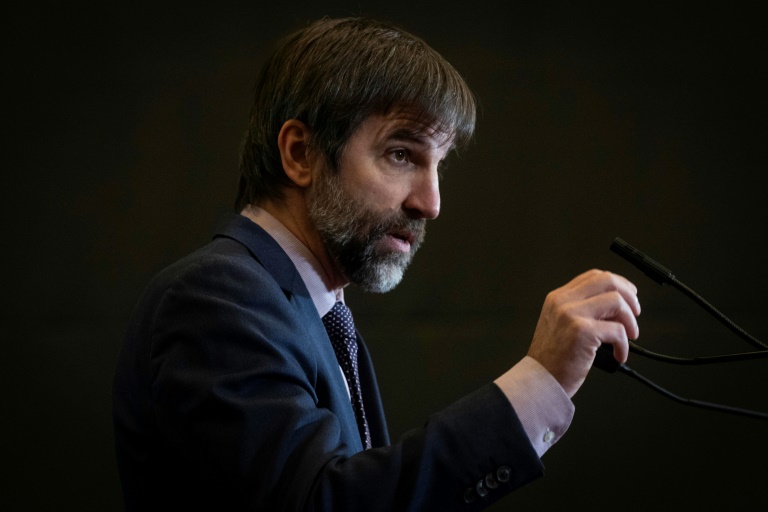
Environment minister Steven Guilbeault announced an increase of 255 million Canadian dollars (US$186 million) in the aid it will send to lower income countries to help them protect their ecosystems, bringing the total figure to 1.5 billion Canadian dollars annually.

It comes as the world’s environment ministers have converged on Montreal for the final phase of the summit, called COP15.

The talks’ success hinges on an agreement regarding the mobilization of funds to help developing countries meet the draft agreement’s more than 20 targets, including protecting 30 percent of lands and oceans by 2030.

Brazil — one of the most prominent voices at the summit — is seeking at least $100 billion from the Global North, a demand shared by India, Indonesia and African countries.

That is about ten times more than current flows, and about as much as has been pledged for adaptation against climate change (though not delivered).

When the ministers arrived on Thursday, a dozen developed countries touted new or recently increased commitments to biodiversity funding, in a move welcomed by observers and nonprofits.

The ambition remains to seal an agreement for biodiversity that is as historic as the Paris accord for climate was in 2015. 

At stake is the future of the planet and whether humanity can roll back habitat destruction, pollution and the climate crisis, which are threatening an estimated million plant and animal species with extinction.

Beyond the moral implications, there is the question of self-interest: $44 trillion of economic value generation — more than half the world’s total GDP — is dependent on nature and its services.

Fiji vote tightening as police question opposition leader

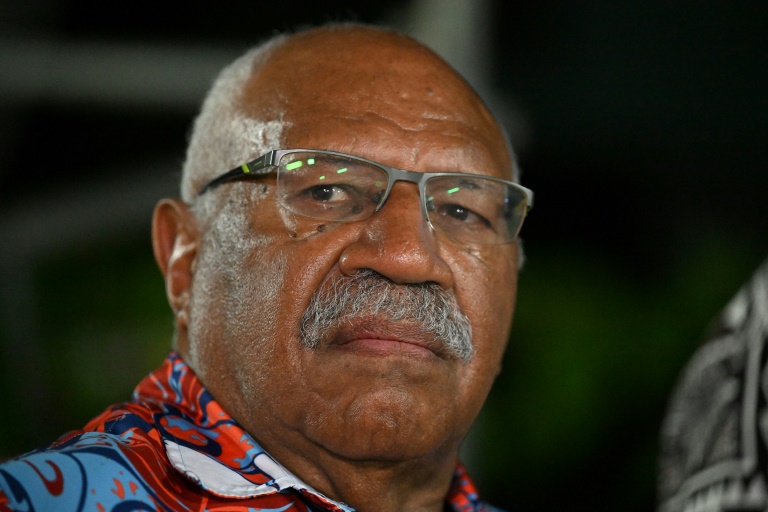
Fiji’s election count was tightening Saturday following a tumultuous night for opposition leader Sitiveni Rabuka, who police called in for questioning after he urged the military to intervene. 

Two-time coup leader and former prime minister Rabuka, 74, is challenging incumbent Frank Bainimarama, 68, an ex-navy commodore who has won two elections since first seizing control of the island nation in a 2006 putsch. 

Rabuka’s People’s Alliance party and its coalition partner held a 44 to 42 percent lead over Bainimarama’s Fiji First party Saturday morning, with almost half the country’s 2,071 stations having submitted their results. 

But Bainimarama — who has been silent since votes were cast Wednesday — is widely expected to move in front when booths in urbanised areas submit their tallies, with a final result anticipated by Sunday. 

Detectives summoned Rabuka to the Criminal Investigations Department late Friday after he repeatedly complained about “anomalies” in the results and asked the military to step in. 

People’s Alliance general-secretary Sakiasi Ditoka was also questioned. 

There was a sizable police presence outside the department overnight, with officers setting up temporary roadblocks. 

Rabuka later told AFP he believed the move was a government scare tactic. 

“The way this government has operated, we’ve been talking about a climate of fear. This is how they instill that fear,” he said.

It was not clear what, if any, charges were being considered.

The aftermath of Wednesday’s poll has grown increasingly tense since an election-night “anomaly” knocked results offline for four hours. 

Opposition parties led by Rabuka have said the incident cast doubt on the entire election process and that counting should be stopped immediately. 

Under a constitution drawn up in 2013 after a period of political turmoil, Fiji’s military has “overall” responsibility for maintaining stability. 

Rabuka’s hopes of stopping the count faded Friday, however, as military commander Jone Kalouniwai rebuffed his plea for the army to intervene. 

The answer was “no”, Rabuka said, “he will not be drawn into it”. 

International observers said Friday they had no significant concerns about the conduct of the vote. 

Rebekha Sharkie, an election observer and Australian member of parliament, said no “significant irregularities or issues” had been observed during pre-polling, postal voting or the casting of ballots on election day.

While the vote is seen as a test of Fiji’s often-fragile democracy, there is a regional significance as well — Bainimarama has been close to China, while Rabuka is likely to distance himself from Beijing. 

Four Fijian prime ministers have been toppled by coups in the past 35 years. 

Close Bitnami banner
Bitnami