World

Jordan arrests 44 after deadly fuel protests

Jordan has arrested dozens of people accused of involvement in protests against rising fuel prices in which a senior police officer was gunned down, the country’s security agency said Saturday.

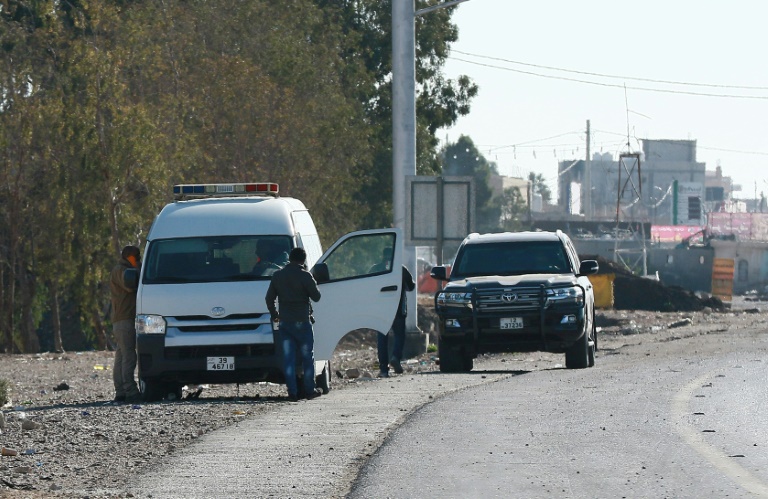
Colonel Abdul Razzaq Dalabeh, the deputy police chief of Maan province, died of a gunshot to the head in the town of Al-Husseiniya on Thursday while confronting what the authorities called “riots”.

“Forty-four people who participated in the riots in a number of regions in the kingdom have been arrested and they will be brought before the courts,” the Public Security Directorate said in a statement.

It said reinforcements had been sent to the provinces, and accused “vandals and outlaws” of being behind violence in Maan, in the country’s south.

Jordan’s King Abdullah II warned on Friday that “anyone who raises a weapon against the state will be dealt with firmly”.

Interior Minister Mazen al-Faraya, also on Friday, said “the security services are working to arrest the perpetrator and bring him to justice as soon as possible”.

Two other policemen were shot and wounded, also in Al-Husseiniya, the security directorate said.

Cab and truck drivers in several provinces of southern Jordan began strike actions more than a week ago.

They were joined by bus drivers, and merchants who closed their shops on Wednesday to protest higher fuel costs.

Protests broke out this week when demonstrators blocked roads with burning tyres and confronted security forces in some areas.

Fuel prices have nearly doubled in Jordan compared with a year earlier, particularly the diesel used by trucks and buses, and kerosene for heating.

The government has proposed relief measures including financial aid for the most-affected families.

Tunisians vote for toothless parliament in poll shunned by opposition

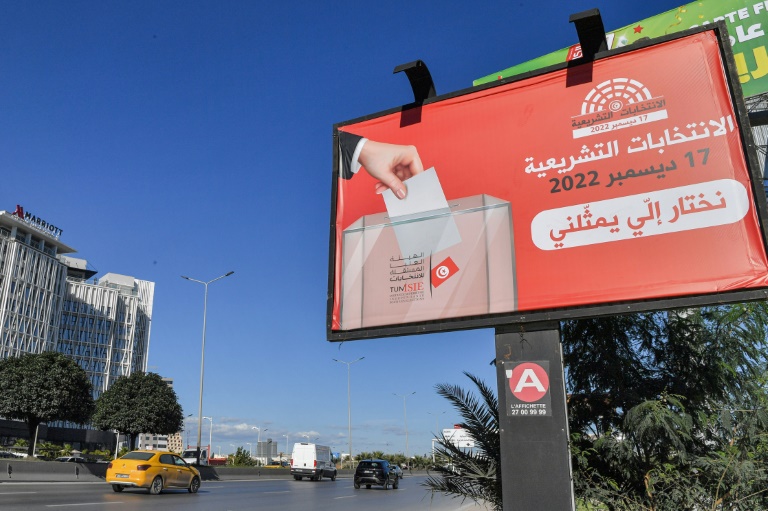
Tunisians started voting in a lacklustre election Saturday for a parliament with virtually no power, the final pillar in President Kais Saied’s political overhaul in the birthplace of the Arab Spring.

Opposition political groups in the North African country have called for a boycott. They say the poll is part of a “coup” against the only democracy to have emerged from the 2011 wave of uprisings across the region.

At a polling booth in central Tunis as the polls opened at 8:00 AM (0700 GMT), around 20 journalists looked on as two voters waited to cast their ballots.

The vote follows three weeks of barely noticeable campaigning, with few posters in the streets and no serious debate among a public largely preoccupied with pressing financial concerns.

Last year, after months of political deadlock and economic crisis exacerbated by the coronavirus pandemic, Saied suspended parliament and sent military vehicles to surround it in a dramatic power grab more than a decade after a popular revolution unseated dictator Zine El Abidine Ben Ali.

Saied, a former law professor, has since pushed through a new constitution giving the presidency almost unrestrained powers and laying the ground for a 161-seat rubber-stamp legislature.

His moves were initially supported by many Tunisians tired of the messy and corrupt democratic system in the post-Ben Ali era.

But almost a year and half on, the country’s economic woes have gone from bad to worse, with 10 percent inflation. Frequent shortages of milk, sugar and petrol fuel a growing wave of emigration.

– A ‘non-event’ –

The previous legislature had far-reaching powers in the mixed presidential-parliamentary system enshrined in Tunisia’s post-revolution constitution.

But candidates in Saturday’s poll are standing as individuals under a system that neuters political parties including Saied’s nemesis, the once powerful Islamist-leaning Ennahdha party.

The new chamber “won’t be able to appoint a government or censure it, except under draconian conditions that are almost impossible to meet,” said political scientist Hamadi Redissi.

Another analyst, Hamza Meddeb, told AFP the election was a “non-event” and predicted that few Tunisians would vote.

“This election is a formality to complete the political system imposed by Kais Saied and concentrate power in his hands,” said Meddeb, a fellow at the Carnegie Middle East Center.

“Tunisians know that this parliament will have no political weight and will be stripped of all power.”

Meddeb added that most of the candidates are “political newcomers” unable to mobilise a public struggling with “extremely difficult” economic conditions.

The Tunisian Observatory for Democratic Transition, a non-governmental organisation, said around half the candidates are either teachers or mid-level civil servants.

In contrast with the previous gender-equal system, women represent less than 15 percent of all candidates for the new parliament, according to the official list released by the election board.

– IMF bailout ‘easier’ –

Almost all of Tunisia’s political parties, including Ennahdha, have said they will boycott the vote.

The powerful UGTT trade union federation has called the poll meaningless.

Al Bawsala, a civil society group that has monitored Tunisia’s parliamentary politics since 2014, said it would boycott the activities of what it called a “puppet parliament” whose only role would be to “back the president’s programme”.

Hamish Kinnear, of risk intelligence firm Verisk Maplecroft, said the vote would “serve primarily as a tool for President Kais Saied to legitimise his grip on power”.

But it would also “ease Tunisia’s relations with key external partners by closing out 17 months of constitutional and governance uncertainty”, Kinnear added.

Tunisia is in the final stages of negotiating a nearly $2-billion bailout package from the International Monetary Fund (IMF) to rescue its crisis-hit public finances.

Kinnear said the vote meant “securing financial assistance… will be easier now that greater political predictability is returning, even if the democratic legitimacy of the (constitutional) referendum and upcoming legislative elections is weak.”

The IMF’s top committee was set to approve next week the country’s fourth loan in 10 years, but has postponed its decision until early January at the request of the Tunisian government, a source close to the talks told AFP.

Malaysia landslide death toll rises to 23

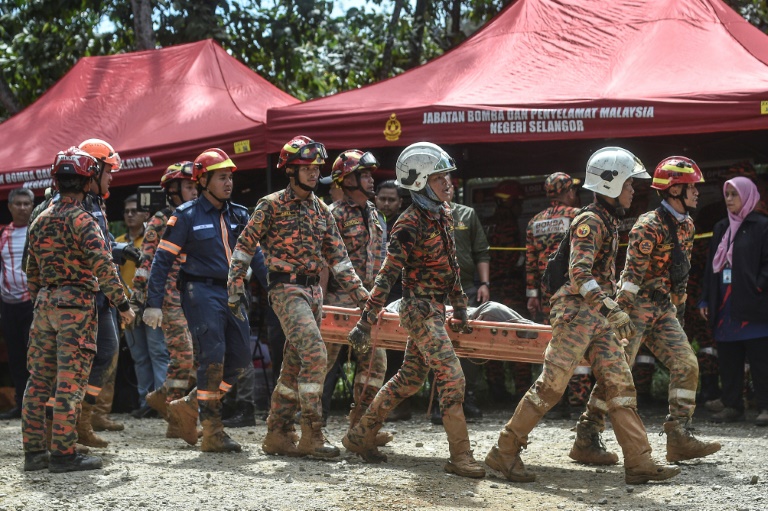
Rescue workers scoured muddy terrain for survivors and bodies on Saturday as the death toll from a landslide at a Malaysian campsite rose to 23, including six children, authorities said.

Ten people were still missing after a predawn landslide hit the site located at an organic farm near the town of Batang Kali just outside the capital Kuala Lumpur on Friday.

Selangor state fire and rescue director Norazam Khamis said the chances of finding survivors in the mud and debris a day after the disaster were “slim.”

Officials said there had been more than 90 people, most of them asleep, at the campsite near a mountain casino resort when the landslide struck.

Authorities said 61 people had been found safe or rescued.

Two of the victims were “believed to be a mother and her child in a state of embrace buried under the earth”, Norazam told reporters on Friday.

The farm did not have a licence to run a campsite and its operators would be punished if they were found to have broken the law, authorities said.

Prime Minister Anwar Ibrahim visited the area late Friday and said financial aid would be given to the families of those killed or injured in the disaster.

Selangor state chief minister Amirudin Shari tweeted that all picnic and camping sites in the state would be closed for a week.

Landslides are common in Malaysia after heavy rains, which are regular at the end of the year.

However, no heavy rains were recorded in the area on the night of the disaster.

The government has imposed strict rules on hillside development.

In March, four people were killed after a massive landslide triggered by heavy rains buried their homes in a Kuala Lumpur suburb.

In one of the deadliest such incidents, a huge mudslide in 1993 brought on by heavy rain caused a 12-storey residential building outside the capital to collapse, killing 48 people.

Malaysia landslide death toll rises to 23

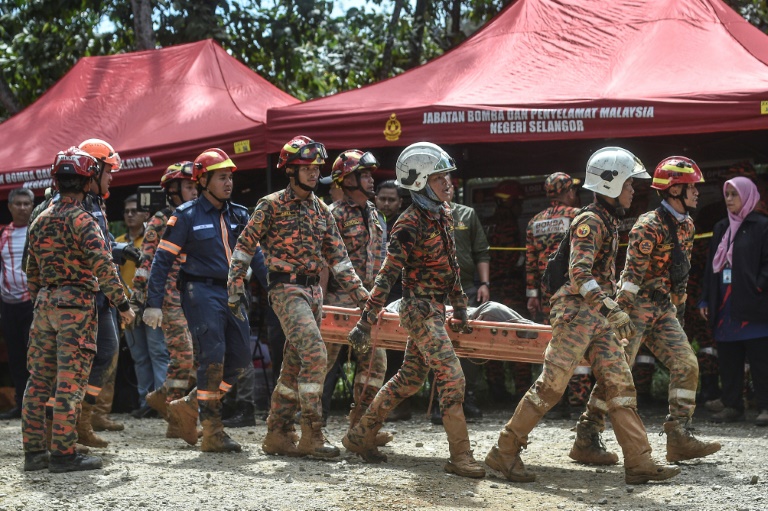
Rescue workers scoured muddy terrain for survivors and bodies on Saturday as the death toll from a landslide at a Malaysian campsite rose to 23, including six children, authorities said.

Ten people were still missing after a predawn landslide hit the site located at an organic farm near the town of Batang Kali just outside the capital Kuala Lumpur on Friday.

Selangor state fire and rescue director Norazam Khamis said the chances of finding survivors in the mud and debris a day after the disaster were “slim.”

Officials said there had been more than 90 people, most of them asleep, at the campsite near a mountain casino resort when the landslide struck.

Authorities said 61 people had been found safe or rescued.

Two of the victims were “believed to be a mother and her child in a state of embrace buried under the earth”, Norazam told reporters on Friday.

The farm did not have a licence to run a campsite and its operators would be punished if they were found to have broken the law, authorities said.

Prime Minister Anwar Ibrahim visited the area late Friday and said financial aid would be given to the families of those killed or injured in the disaster.

Selangor state chief minister Amirudin Shari tweeted that all picnic and camping sites in the state would be closed for a week.

Landslides are common in Malaysia after heavy rains, which are regular at the end of the year.

However, no heavy rains were recorded in the area on the night of the disaster.

The government has imposed strict rules on hillside development.

In March, four people were killed after a massive landslide triggered by heavy rains buried their homes in a Kuala Lumpur suburb.

In one of the deadliest such incidents, a huge mudslide in 1993 brought on by heavy rain caused a 12-storey residential building outside the capital to collapse, killing 48 people.

Musk says will restore suspended Twitter accounts of journalists

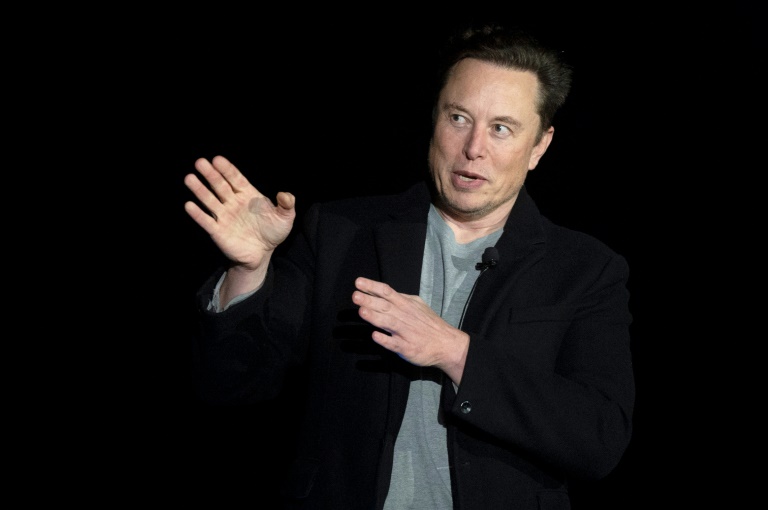
Elon Musk said late Friday he would reinstate the Twitter accounts of several journalists who were suspended after he accused them of endangering his family.

Musk had drawn anger and warnings from the EU and UN after suspending the accounts of more than half a dozen prominent journalists from the New York Times, CNN and the Washington Post.

“The people have spoken. Accounts who doxxed my location will have their suspension lifted now,” the Twitter owner tweeted.

Musk carried out a Twitter poll asking whether he should restore the suspended accounts now or in a week’s time. Nearly 59 percent of the 3.69 million who took part said he should restore the accounts now.

Some of the suspended accounts appeared to have been reactivated, with former Vox journalist Aaron Rupar tweeting again.

“I was pretty bummed about getting suspended initially but quickly realized it’d be fine because I’m blessed to have an amazing online community,” Rupar tweeted, thanking people for their support.

The latest controversy began when Musk on Wednesday suspended @elonjet, an account that tracked flights of his private plane.

Musk said the move was necessary after a car in Los Angeles carrying one of his children was followed by “a crazy stalker” and seemed to blame the tracking of his jet for the incident.

Some of the journalists had reported on the affair, including tweets linking to the suspended @elonjet account, which Musk said amounted to offering “assassination coordinates” against him and his family.

In a chat hosted live on Twitter, Musk had provided no evidence for his claim but told some of the suspended reporters that on Twitter “everyone’s going to be treated the same… they’re not special because you’re a journalist.”

Pressed further on his allegations, Musk ended the conversation. Twitter Spaces, the feature where the chat took place, was then suspended.

Musk’s move to suspend the journalists’ accounts had drawn sharp criticism from media organizations, the European Union and UN.

“News about arbitrary suspension of journalists on Twitter is worrying,” EU commissioner Vera Jourova posted on Twitter, warning the influential platform could face hefty fines through European laws.

“Elon Musk should be aware of that. There are red lines. And sanctions, soon,” she added.

The spokesman for UN chief Antonio Guterres called it a “dangerous precedent at a time when journalists all over the world are facing censorship, physical threats and even worse.”

– Controversies –

Twitter has lurched from one controversy to the next since Musk took control after paying $44 billion, mainly by selling shares in Tesla, his successful electric car company. 

The billionaire’s talk of unfettered speech has scared off major advertisers and caught the attention of regulators.

Musk has reinstated the account of former US president Donald Trump and lashed out against the outgoing key advisor for the US response to the Covid-19 pandemic, Anthony Fauci, a frequent target of vitriol in right-wing media.

CNN has reported that Twitter’s former head of trust and safety fled his home after baseless attacks on Twitter content moderation, endorsed by Musk.

Meanwhile, a purge initiated by Musk at Twitter left more than half of its 7,500 employees out of work, and now many of them are taking the SpaceX and Tesla tycoon to court.

Musk at one point signaled he was going to war with Apple over the App Store, only to later tweet that it was a “misunderstanding.”

Market tracker Insider Intelligence forecast that Twitter would experience an exodus of users.

“There won’t be one catastrophic event that ends Twitter,” said Insider Intelligence analyst Jasmine Enberg.

“Instead, users will start to leave the platform next year as they grow frustrated with technical issues and the proliferation of hateful or other unsavory content.”

Musk says will restore suspended Twitter accounts of journalists

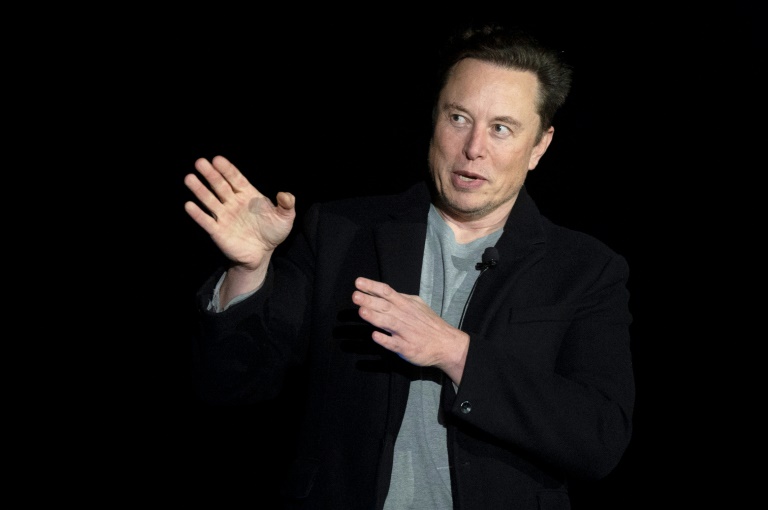
Elon Musk said late Friday he would reinstate the Twitter accounts of several journalists who were suspended after he accused them of endangering his family.

Musk had drawn anger and warnings from the EU and UN after suspending the accounts of more than half a dozen prominent journalists from the New York Times, CNN and the Washington Post.

“The people have spoken. Accounts who doxxed my location will have their suspension lifted now,” the Twitter owner tweeted.

Musk carried out a Twitter poll asking whether he should restore the suspended accounts now or in a week’s time. Nearly 59 percent of the 3.69 million who took part said he should restore the accounts now.

Some of the suspended accounts appeared to have been reactivated, with former Vox journalist Aaron Rupar tweeting again.

“I was pretty bummed about getting suspended initially but quickly realized it’d be fine because I’m blessed to have an amazing online community,” Rupar tweeted, thanking people for their support.

The latest controversy began when Musk on Wednesday suspended @elonjet, an account that tracked flights of his private plane.

Musk said the move was necessary after a car in Los Angeles carrying one of his children was followed by “a crazy stalker” and seemed to blame the tracking of his jet for the incident.

Some of the journalists had reported on the affair, including tweets linking to the suspended @elonjet account, which Musk said amounted to offering “assassination coordinates” against him and his family.

In a chat hosted live on Twitter, Musk had provided no evidence for his claim but told some of the suspended reporters that on Twitter “everyone’s going to be treated the same… they’re not special because you’re a journalist.”

Pressed further on his allegations, Musk ended the conversation. Twitter Spaces, the feature where the chat took place, was then suspended.

Musk’s move to suspend the journalists’ accounts had drawn sharp criticism from media organizations, the European Union and UN.

“News about arbitrary suspension of journalists on Twitter is worrying,” EU commissioner Vera Jourova posted on Twitter, warning the influential platform could face hefty fines through European laws.

“Elon Musk should be aware of that. There are red lines. And sanctions, soon,” she added.

The spokesman for UN chief Antonio Guterres called it a “dangerous precedent at a time when journalists all over the world are facing censorship, physical threats and even worse.”

– Controversies –

Twitter has lurched from one controversy to the next since Musk took control after paying $44 billion, mainly by selling shares in Tesla, his successful electric car company. 

The billionaire’s talk of unfettered speech has scared off major advertisers and caught the attention of regulators.

Musk has reinstated the account of former US president Donald Trump and lashed out against the outgoing key advisor for the US response to the Covid-19 pandemic, Anthony Fauci, a frequent target of vitriol in right-wing media.

CNN has reported that Twitter’s former head of trust and safety fled his home after baseless attacks on Twitter content moderation, endorsed by Musk.

Meanwhile, a purge initiated by Musk at Twitter left more than half of its 7,500 employees out of work, and now many of them are taking the SpaceX and Tesla tycoon to court.

Musk at one point signaled he was going to war with Apple over the App Store, only to later tweet that it was a “misunderstanding.”

Market tracker Insider Intelligence forecast that Twitter would experience an exodus of users.

“There won’t be one catastrophic event that ends Twitter,” said Insider Intelligence analyst Jasmine Enberg.

“Instead, users will start to leave the platform next year as they grow frustrated with technical issues and the proliferation of hateful or other unsavory content.”

Kyiv warns of long cuts after Russian missiles batter grid

Ukraine was working Saturday to restore electricity to hospitals, heating systems and other critical infrastructure in major cities after Russia’s latest wave of attacks on the power grid prompted accusations of “war crimes”.

The volley of missiles unleashed Friday pitched multiple cities into darkness, cutting water and heat and forcing people to endure below-freezing temperatures. 

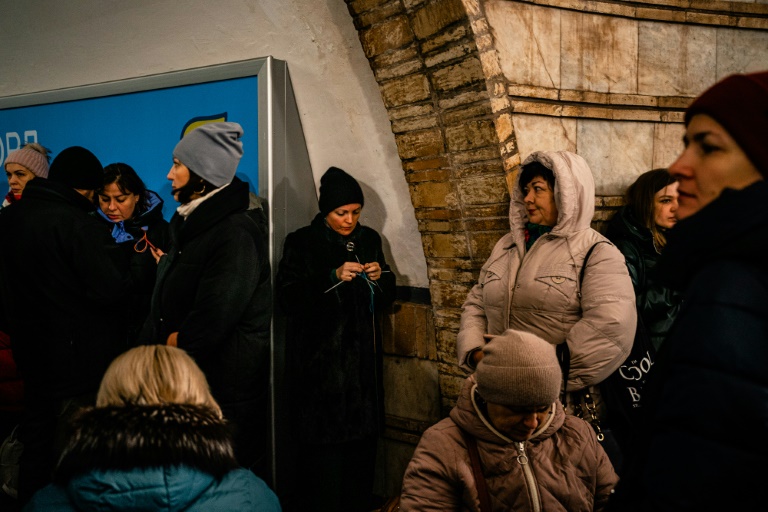
In the capital, where the mayor said only a third of residents had heat or water, people wrapped in winter coats crammed into underground metro stations after air raid sirens rang out in the morning.

“I woke up, I saw a rocket in the sky,” Kyiv resident 25-year-old Lada Korovai said. “I saw it and understood that I have to go to the tube.”

Ukraine’s national energy provider imposed emergency blackouts, saying its system had lost more than half its capacity after strikes targeted “backbone networks and generation facilities”. 

Ukrenergo warned the extent of the damage in the north, south and centre of the country meant it could take longer to restore supplies than after previous attacks.

“Priority will be given to critical infrastructure: hospitals, water supply facilities, heat supply facilities, sewage treatment plants,” Ukrenergo said in a statement Friday.

By evening, second city Kharkiv had restored power to just over half its residents, while hoping to have a fully operational grid by midnight. 

After a series of embarrassing battlefield defeats, Russia since October has pursued an aerial onslaught against what Moscow says are military-linked facilities.

But France and the European Union said the suffering inflicted on freezing civilians constitutes war crimes, with the bloc’s foreign policy chief calling the bombings “barbaric”.

“These cruel, inhumane attacks aim to increase human suffering and deprive Ukrainian people,” Josep Borrell said.

– ‘Biggest’ missile attack –

Russia fired 74 missiles — mainly cruise missiles — on Friday, 60 of which were shot down by anti-aircraft defences, according to the Ukrainian army. 

Ukrainian President Volodymyr Zelensky said the strikes left the capital Kyiv and 14 regions affected by power and water cuts.

“All their targets today are civilian, and these are mainly energy and heat supply facilities,” he said in his nightly address.

“Probably, as a result of this war, the meaning of the word ‘terror’ for most people in the world will be associated primarily with such crazy actions of Russia.”

In the central city of Kryvyi Rig, where Zelensky was born, the airstrikes hit a residential building.

“A 64-year-old woman and a young couple died. Their little son still remains under the rubble of the house,” regional governor Valentyn Reznichenko said, adding that 13 others had been wounded.

Oleksandr Starukh, head of the frontline Zaporizhzhia region, home to Europe’s largest nuclear power plant, said his territory had been targeted by more than a dozen Russian missiles.

Kyiv, meanwhile, withstood one of the biggest missile attacks since the beginning of the full-scale invasion. Regional officials said their air defence forces had shot down 37 out of 40 missiles.

Kyiv Mayor Vitali Klitschko said only 40 percent of residents had electricity and that the metro had stopped running so people could take shelter underground.

– ‘Survive winter’ –

With about half of Ukraine’s energy grid damaged, the national operator warned Friday of emergency blackouts.

In Ukrainian-held Bakhmut — an eastern city at the epicentre of the war — some residents received wood stoves distributed by volunteers, AFP journalists said.

Oleksandra, 85, braved the cold to collect medication at a pharmacy in the Donetsk region city.

“I’ll survive winter. I’ll just walk more to get warm,” the old woman told AFP. 

In the south, fresh Russian shelling in Kherson, recently recaptured by Ukraine, killed one person and wounded three more.

Kherson has been subjected to persistent Russian shelling since Moscow’s forces retreated in November, and power was cut in the city earlier this week.

On Thursday, Russian attacks killed 14 people, deputy head of the president’s office Kyrylo Tymoshenko said. 

In the Russian-controlled region of Lugansk in eastern Ukraine, Moscow-installed officials said shelling from Kyiv’s forces had killed eight and wounded 23.

“The enemy is conducting barbaric shelling of cities and districts of the republic,” Leonid Pasechnik, the Russian-installed leader of Lugansk, said on social media.

– Protracted war –

Moscow has said the strikes on Ukrainian infrastructure are a response to an explosion on the Kerch bridge connecting the Russian mainland to the Crimean peninsula.

The Kremlin has said it holds Kyiv ultimately responsible for the humanitarian impact for refusing Russian negotiation terms.

Ukrainian defence officials said this week that their forces had shot down more than a dozen Iranian-made attack drones launched at Kyiv, a sign that Western-supplied systems are having an impact.

Ukrainian military leaders have warned Moscow is preparing for a major winter offensive, including a fresh attempt to take Kyiv.

Aiming to push Moscow to the negotiating table, the EU on Friday imposed further sanctions, adding restrictions on the export of drone engines to Russia or countries like Iran looking to supply Moscow with weapons. 

But NATO chief Jens Stoltenberg told AFP that Russia was readying for a protracted war. 

“We see that they are mobilising more forces, that they are willing to suffer also a lot of casualties, that they are trying to get access to more weapons and ammunition,” he said.

Repent Ye: UK studio helps ex-fans of Kanye get rid of their tattoos

Kimberley Westgarth says she was so disgusted by Kanye West’s recent anti-Semitic comments that she is getting rid of her tattoo of him.

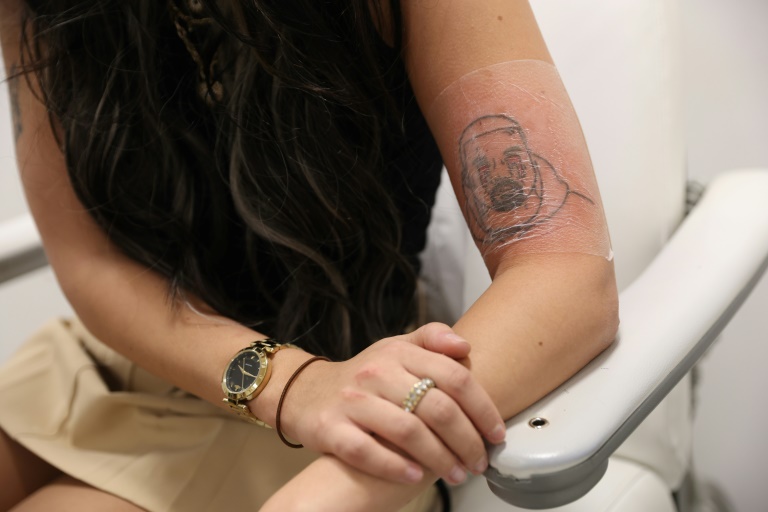
Two years ago, the 24-year-old architecture student had her upper left arm inked with an image of West’s face, with tears of blood from his eyes.

“I loved his music and at the time I did like him as a person. I liked what he stood for, how he stuck up for the bipolar community,” she told AFP.

“I did idolise him at the time but obviously people change, so I want him off my skin.”

West, now known as Ye, sparked outrage earlier this month by declaring his “love” of Nazis and admiration for Adolf Hitler.

His rambling, hours-long appearance with conspiracy theorist Alex Jones on the latter’s Infowars livestream saw him kicked off Twitter.

It was the latest in a series of anti-Semitic comments that have seen the troubled one-time titan of fashion and music’s commercial relationships crumble.

For Westgarth, the comments hit home hard, as her best friend is Jewish.

But she is not spending a penny to get the tattoo of him removed. NAAMA Studios in London’s upmarket Marylebone district is doing it for free.

It is providing her with 12 sessions of laser treatment over the course of a year under a special programme it runs called “Second Chance”.

– Painful past –

The initiative was set up to provide the free removal of tattoos that have come to be a constant reminder of an individual’s painful past.

That could be tattoos about gang membership, a stretch in prison, a toxic relationship or hate symbols.

It has now been extended to include those of Kanye West. Already, about 100 people have got in touch with NAAMA Studios via their website, said owner Melina Lawson.

Two people have been selected and are receiving treatment, she added.

“It is a journey for the client, especially with any history on their tattoo, especially if you don’t like the tattoo or what it represents to you anymore,” said Lawson.

“It can be a bit sensitive to the client but as they progress into the treatment, they start to change themselves. They can see that actually it’s being removed. They can be something else.”

The total cost of removing a tattoo is on average £2,000 ($2,400) but varies according to the size of the inking and the number of sessions required.

But the social impact of a removal and the positivity it can bring to a client “is much bigger” than money, said Lawson.

“I was so pleased,” said Westgarth. 

“I’ve been looking to get it removed for about a couple of months now and everywhere was so expensive.

“So when I’ve seen this opportunity, I leapt for this opportunity. And to get it for free — I can’t thank them enough.”

video-spe/phz/gil/lb

Kyiv warns of long cuts after Russian missiles batter grid

Ukraine was working Saturday to restore electricity to hospitals, heating systems and other critical infrastructure in major cities after Russia’s latest wave of attacks on the power grid prompted accusations of “war crimes”.

The volley of missiles unleashed Friday pitched multiple cities into darkness, cutting water and heat and forcing people to endure freezing cold. 

In the capital, where the mayor said only a third of residents had heat or water, people wrapped in winter coats crammed into underground metro stations after air raid sirens rang out in the morning.

“I woke up, I saw a rocket in the sky,” Kyiv resident 25-year-old Lada Korovai said. “I saw it and understood that I have to go to the tube.”

Ukraine’s national energy provider said its system had lost more than half its capacity after strikes targeted “backbone networks and generation facilities”.

Ukrenergo warned the extent of the damage in the north, south and centre of the country meant it could take longer to restore supplies than after previous hits. 

“Priority will be given to critical infrastructure: hospitals, water supply facilities, heat supply facilities, sewage treatment plants,” Ukrenergo said in a statement Friday.

By evening, second city Kharkiv had restored power to just 55 percent of residents, with plans to have a fully operational grid by midnight. 

After a series of embarrassing battlefield defeats, Russia has since October pursued an aerial onslaught against what Moscow says are military-linked facilities.

But France and the European Union said the suffering inflicted on freezing civilians constitutes war crimes, with the bloc’s foreign policy chief calling the bombings “barbaric”.

“These cruel, inhumane attacks aim to increase human suffering and deprive Ukrainian people,” Josep Borrell said.

– ‘Biggest’ missile attack –

Russia fired 74 missiles — mainly cruise missiles — on Friday, 60 of which were shot down by anti-aircraft defence, according to the Ukrainian army. 

Ukrainian President Volodymyr Zelensky said the strikes left capital Kyiv and 14 regions affected by power and water cuts.

He called for “increased pressure” from the West on the Kremlin and for more air defence systems.

“Our power engineers and repair crews have already started working during the air alert and are doing everything possible to restore generation and supply. It takes time. But it will be (done),” Zelensky said.

In the central city of Kryvyi Rig, where Zelensky was born, the airstrikes hit a residential building.

“A 64-year-old woman and a young couple died. Their little son still remains under the rubble of the house,” the region’s governor Valentyn Reznichenko said, adding that 13 others had been wounded.

Oleksandr Starukh, head of the frontline Zaporizhzhia region, home to Europe’s largest nuclear power plant, said his territory had been targeted by more than a dozen Russian missiles.

Kyiv, meanwhile, withstood one of the biggest missile attacks since the beginning of the full-scale invasion. Regional officials said their air-defence forces had shot down 37 out of 40 missiles.

Kyiv Mayor Vitali Klitschko said only 40 percent of people had electricity and that the metro had stopped running so people could shelter underground.

– ‘Survive winter’ –

With about half of Ukraine’s energy grid damaged, the national operator warned Friday of emergency blackouts.

In Ukrainian-held Bakhmut — an eastern city at the epicentre of the war — some residents received wood stoves distributed by volunteers, AFP journalists said.

Oleksandra, 85, braved the cold to collect medication at a nearby pharmacy in the Donetsk region city.

“I’ll survive winter. I’ll just walk more to get warm,” the old woman told AFP. 

In the south, fresh Russian shelling in Kherson, recently recaptured by Ukraine, killed one person and wounded three more.

Kherson has been subjected to persistent Russian shelling since Moscow’s forces retreated in November, and power was cut in the city earlier this week.

On Thursday, Russian attacks killed 14 people, deputy head of the president’s office Kyrylo Tymoshenko said. 

In the Russian-controlled region of Lugansk in eastern Ukraine, Moscow-installed officials said shelling from Kyiv’s forces had killed eight and wounded 23.

“The enemy is conducting barbaric shelling of cities and districts of the republic,” the Russian-installed leader of Lugansk Leonid Pasechnik said on social media.

– Protracted war –

Moscow has said the strikes on Ukrainian infrastructure are a response to an explosion on the Kerch bridge connecting the Russian mainland to the Crimean peninsula.

The Kremlin has said it holds Kyiv ultimately responsible for the humanitarian impact for refusing Russian negotiation terms.

Ukrainian defence officials said this week that their forces had shot down more than a dozen Iranian-made attack drones launched at Kyiv, a sign that Western-supplied systems are having an impact.

Ukrainian military leaders have warned Moscow is preparing for a major winter offensive, including a fresh attempt to take Kyiv.

Aiming to push Moscow to the negotiating table, the EU on Friday imposed further sanctions, adding restrictions on the export of drone engines to Russia or countries like Iran looking to supply Moscow with weapons. 

But NATO chief Jens Stoltenberg told AFP that Russia was readying for a protracted war. 

“We see that they are mobilising more forces, that they are willing to suffer also a lot of casualties, that they are trying to get access to more weapons and ammunition,” he said.
Thousands of tourists stranded but Peru rejects bringing forward vote

Peru’s Congress on Friday rejected a move to bring forward elections as deadly protests left thousands of tourists stranded in the gateway city to Machu Picchu.

Protesters are demanding the release of ousted president Pedro Castillo, the resignation of his successor Dina Boluarte and for fresh elections to be held.

But Congress voted against a bill to bring forward elections by more than two years from 2026 to December 2023.

It comes with demonstrations escalating and the death toll rising after protesters on Thursday night tried to storm the airport in the southern city of Ayacucho that was being guarded by soldiers.

Health minister Rosa Gutierrez said on Friday that 18 people had been killed in clashes since Castillo was arrested on December 7, with two cabinet ministers resigning over the deaths.

Peru was plunged into political crisis last week after Castillo was impeached and arrested following his attempt to dissolve parliament and rule by decree.

Initially detained for seven days, Castillo was on Thursday ordered to spend 18 months in pre-trial detention.

The leftist former schoolteacher stands accused of rebellion and conspiracy, and could be jailed for up to 10 years if found guilty, according to public prosecutor Alcides Diaz.

Boluarte declared a nationwide state of emergency for 30 days and said she wanted to bring forward elections.

Friday’s vote in Congress needed 87 votes to pass, but it garnered only 49 in favor of bringing forward elections with 33 against and 25 abstentions.

The rising death toll seemed to weaken Boluarte’s grip on the presidency.

“Due to the number of dead Peruvians, Mrs. Boluarte needs to resign,” said Susel Paredes, a centrist legislator.

– Tourists in limbo –

Several airports around the country have been closed, including the international terminal in Cusco, which acts as the gateway city to the jewel of Peruvian tourism, the Inca citadel of Machu Picchu.

Cusco’s airport is the third largest in Peru and serves numerous tourist sites in the region.

It has been closed since Monday when protesters tried to storm the terminal, leaving thousands of tourists in limbo.

“There are 5,000 tourists stranded in the city of Cusco, they are in their hotels waiting for flights to restart,” Darwin Baca, mayor of the nearby town of Machu Picchu, told AFP.

The rail service that serves Machu Picchu has been suspended since Tuesday, leaving around 800 tourists stranded in the small town at the foot of the mountain where the Inca citadel stands.

An army helicopter is due to arrive at Machu Picchu on Saturday to begin shuttling stranded tourists to Cusco, town officials said.  

Around 200 mostly American and European tourists have left the town on foot along the train tracks in a bid to reach the town of Ollantaytambo, 30 kilometers (20 miles) away, from where they would be able to take a train to Cusco.

“What they fear is getting to Cusco and then not being able to go to their country because this could get worse,” said Baca.

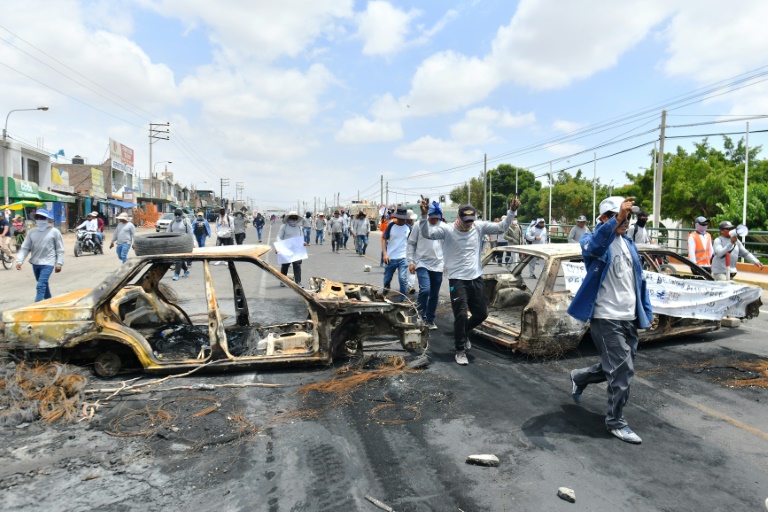
Several major roads in Cusco, the old Inca capital, have also been blocked by protesters, as have more than 100 roads around the country.

– ‘Criminal investigation needed’ –

The death toll rose sharply on Thursday when soldiers protecting the Ayacucho airport shot at protesters.

Soldiers “found themselves surrounded with the masses closing in,” rights ombudsman Eliana Revollar told AFP.

The army says its soldiers would have first raised their weapons and then shot into the air, but Revollar said that shots were fired at protesters.

“This merits a criminal investigation, these people have died from gunshot wounds,” she said.

Soldiers have been deployed due to the state of emergency but Revollar said they need to understand that their role is simply to support police.

“A state of emergency does not remove the protection of the right to life,” she added.

On top of the deaths in clashes, another six people have died in incidents related to roadblocks, such as being prevented from reaching a hospital.

The nation’s human rights ombudsman’s office said 518 people have been injured in the clashes, among them 268 police. Human rights groups said 147 people have been detained.

“This needs to stop,” Boluarte said Friday about the violence.

Close Bitnami banner
Bitnami